
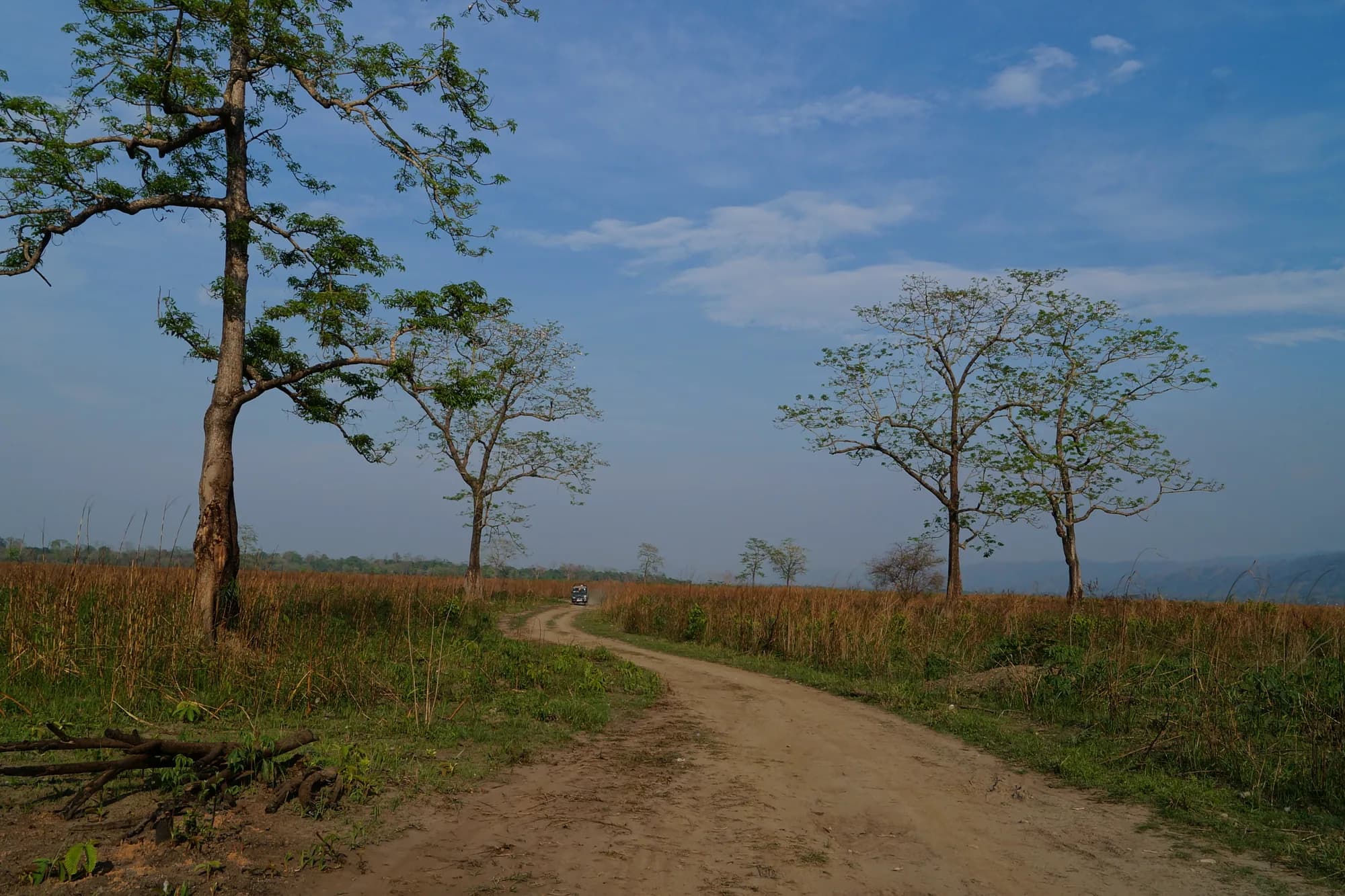
Experience
Walking safari
Permitted in very few Indian reserves, offering an immersive foot-level experience under armed forest escort.
Checked 22 Sept 2026
- Offered at
- Satpura, Nameri, Pakke, select buffer zones
- Duration
- 2–3 hours on foot
- Best months
- November–March
- Fitness level
- Moderate walking fitness required
- Group limit
- Maximum 4–6 visitors per trail
Almost all Indian tiger reserves strictly prohibit walking inside core areas. The handful of reserves that permit guided foot safaris under armed forest guards offer a completely different way of understanding the jungle.
The foot tracking concept
In a vehicle, speed masks details. On foot, the safari shifts from chasing apex predators to reading the forest floor. You learn to identify fresh pugmarks in dry sand, distinguish tiger scat from leopard scat, recognize territorial claw marks on sal bark, and interpret bird alarm calls.
Walking safaris bring you eye-to-eye with smaller fauna — native butterflies, wood spider webs, rare orchids, medicinal trees, and dung beetles — while remaining alert to large mammal movements.
Where walking safaris are allowed
Because of safety regulations, walking safaris operate only in designated reserves with specialized escort protocols:
- Satpura Tiger Reserve (Madhya Pradesh) — The flagship destination in India for core and buffer walking safaris. Guided trails operate across Pachmarhi, Kangar, and Parsapani buffer zones.
- Nameri National Park (Assam) — Armed forest guards lead 2-to-3-hour nature walks through riverine forest along the Jia Bhoroli river, premier for hornbills and lowland forest birds.
- Pakke Tiger Reserve (Arunachal Pradesh) — Local Nyishi eco-guides lead foot treks along forest streams, focusing on four hornbill species and rare flora.
- Corbett & Kanha Buffer Zones — Select eco-development buffer trails permit guided walks accompanied by village naturalists and forest department guards.
Safety & armed escort protocols
Safety on foot relies on strict discipline. Every walking group is escorted by an armed forest department guard carrying traditional single-barrel rifles or safety gear, alongside a trained naturalist.
- Single-File Formation — Guests walk in a strict single-file line behind the lead guard and naturalist.
- Total Silence — Talking is kept to hushed whispers; sudden movements or loud noises are forbidden.
- Distance Maintenance — Guards maintain safe buffer distances from thick bamboo thickets and dense river beds where sloth bears or megaherbivores rest.
Gear & clothing recommendations
Neutral earth tones (khaki, olive green, beige, or brown) are mandatory to blend into the dry deciduous or riverine forest. Bright colors (white, red, yellow) startle wildlife and are discouraged. Wear sturdy, ankle-supporting trekking shoes, long trousers, and lightweight breathable socks. In northeastern reserves like Nameri, leech socks are provided during damp months.
Questions people ask
Is a walking safari safe in tiger country?
Will I see a tiger on foot?
What is the minimum age for a walking safari?
Read next
Field naturalist notes
Satpura on foot
Madhai and Churna shut on 16 June. Pachmarhi does not, which makes Satpura a legitimate monsoon visit.
Footwear & clothing guide
What to pack
Most of what gets recommended online is sold by whoever is recommending it. This is the list that is actually short.
Species profile
Sloth bear