
🇺🇬 Uganda
What to come to Uganda for
21 animals with a page here are a reason to travel to Uganda — 18 mammals and 2 birds among them. Each one says which of the country's 10 national parks give you the odds, which month, and where it is honestly not worth looking.
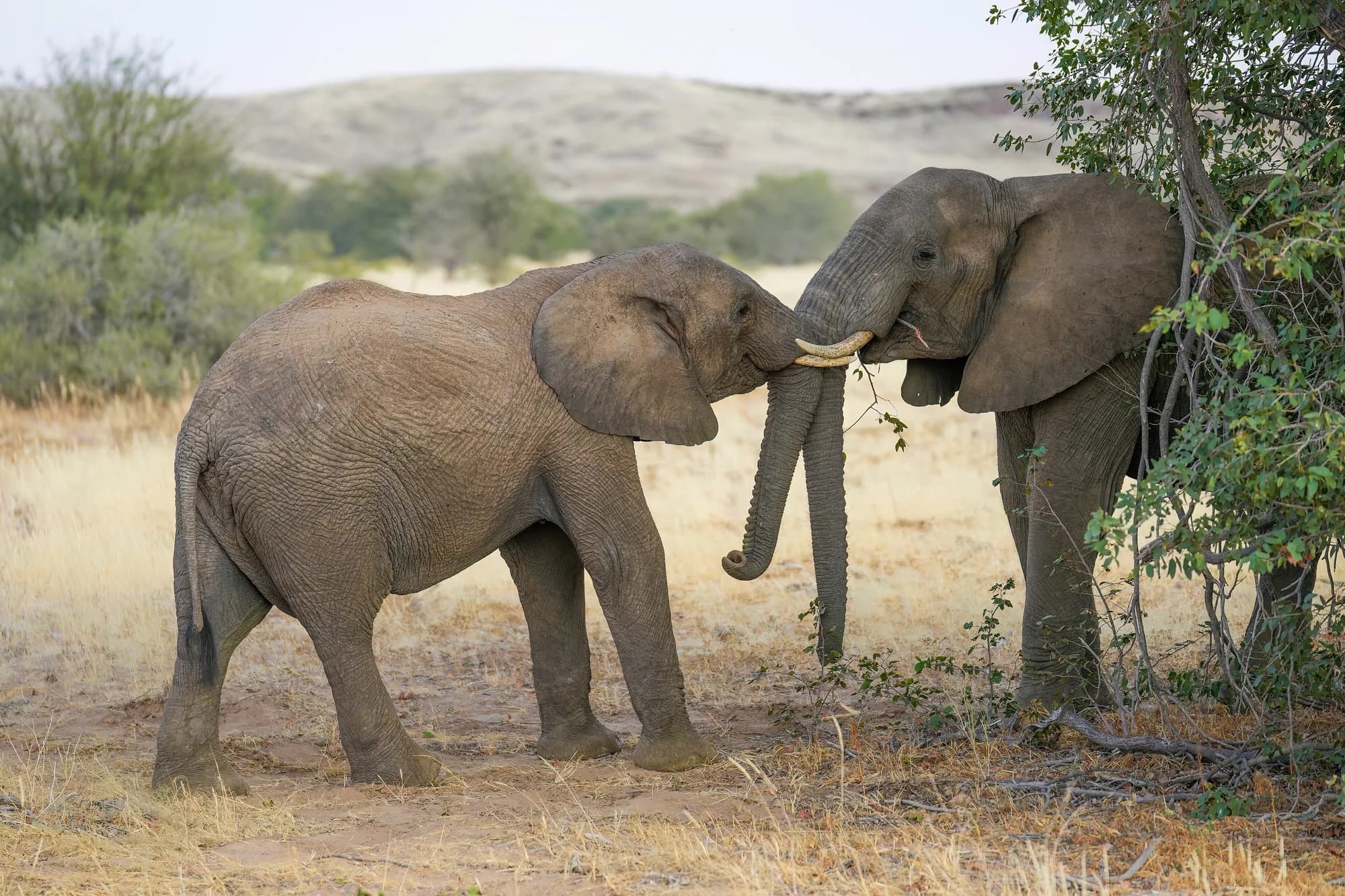 101 · Mammal
African savanna elephant
The animal most people have already seen by lunchtime on day one, which is exactly why it is worth reading about. The question on an African trip is almost never whether you will see elephants — it is whether you will see the thing that makes a herd worth two hours of your time.
Nine countries on this site, and the easiest of the big animals
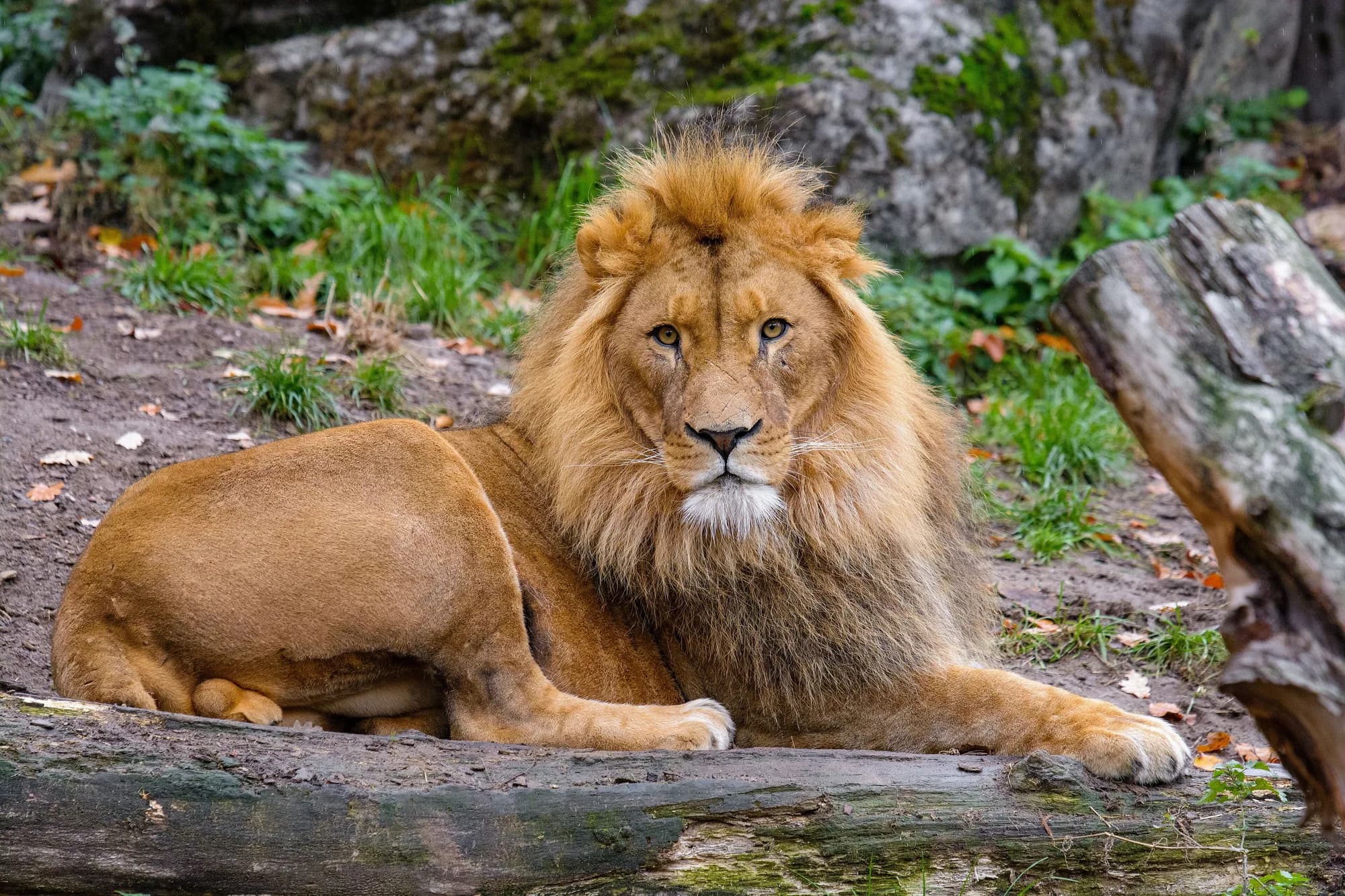 102 · Mammal
African lion
The animal everyone books the trip for, and the one most often seen asleep. Lions are not hard to find in a good park — they are hard to find doing anything, and the difference between those two sentences is most of what separates a good lion trip from a disappointing one.
Nine countries here, and thinner on the ground than it looks
- 103 · Mammal
Hippopotamus
Easy to find and almost always seen badly — a row of ears and nostrils in brown water. The trip worth planning is the one that puts you level with them from a boat, or at a pod out of the water after dark.
Seven countries here, wherever the water is permanent
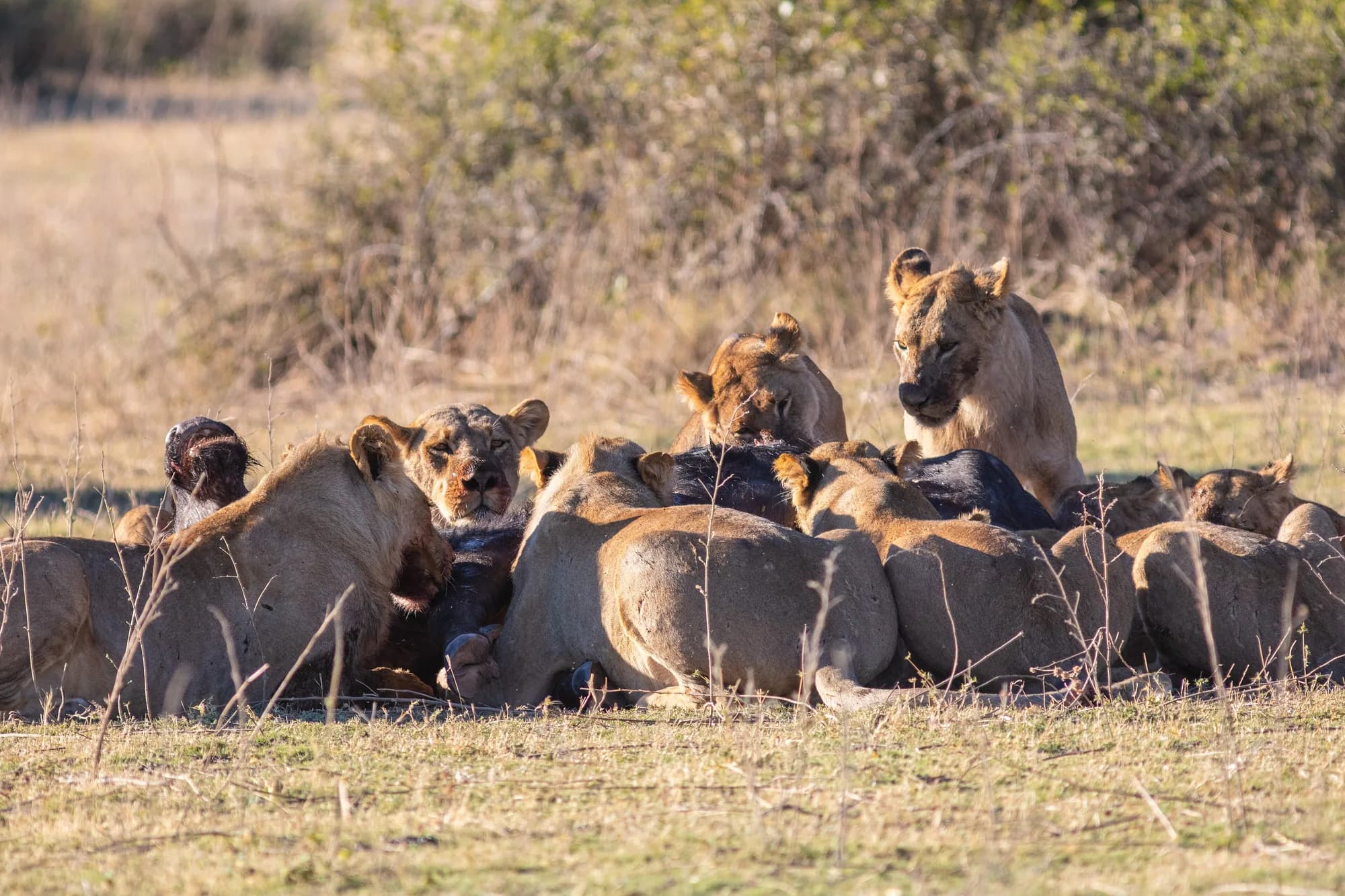 104 · Mammal
African buffalo
The Big Five animal nobody books for and every guide respects. A herd of a thousand moving to water at dusk is one of the genuine spectacles of a dry-season safari, and a lone old bull in long grass is the reason walking safaris are led by someone armed.
Eight countries here, and the least glamorous of the five
- 105 · Mammal
African leopard
Present in almost every park on this site and seen in very few of them. Leopards are the one big cat where the park choice is not a preference but the whole answer — outside a handful of reserves with habituated animals, a sighting is luck.
Six countries here, and three parks worth booking for
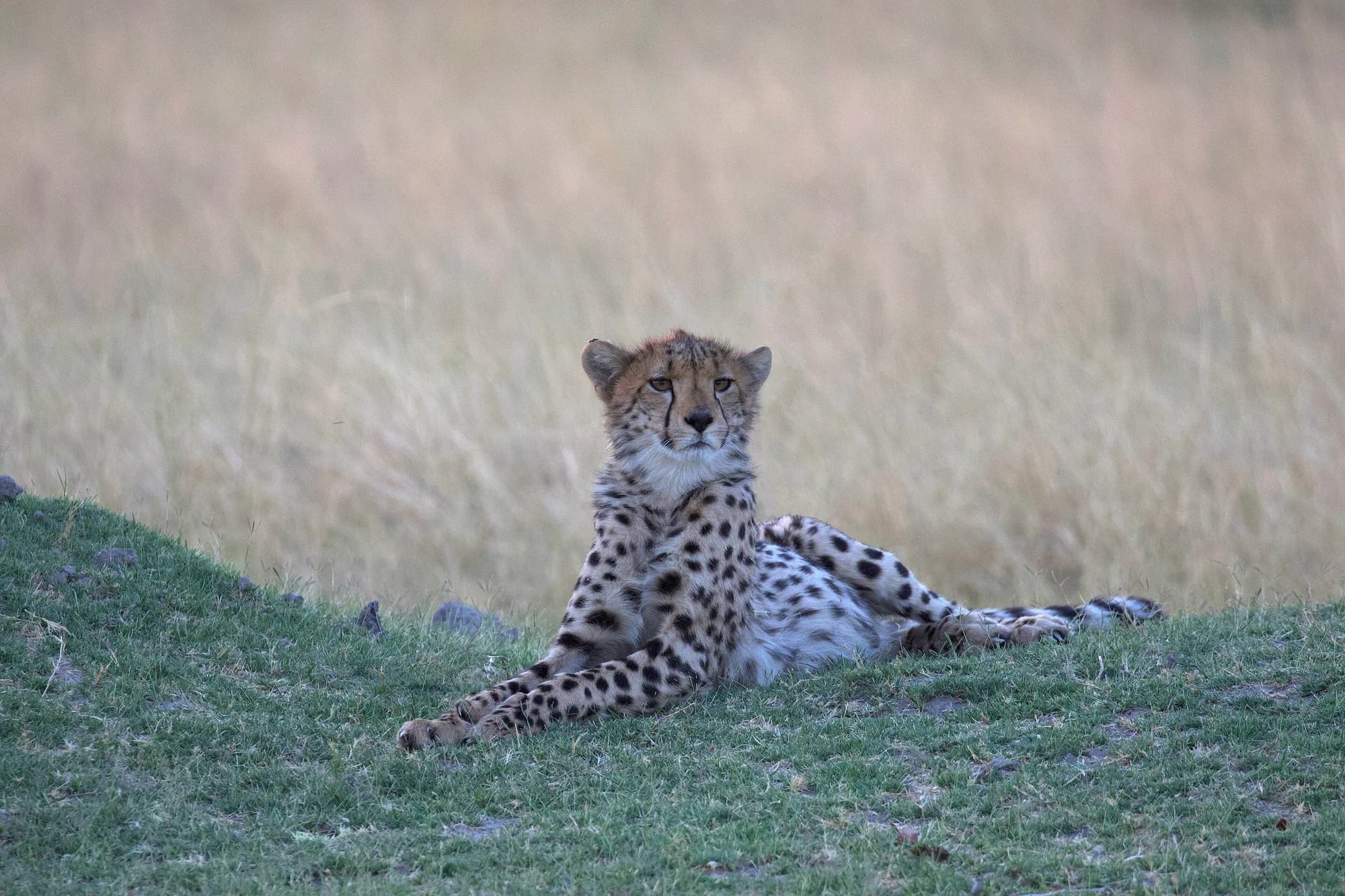 106 · Mammal
Cheetah
The one large African predator that hunts in daylight, which makes it the most watchable and the most photographed. It is also the rarest of the big cats on this site, and it loses kills to almost everything.
Six countries here, and it needs open country
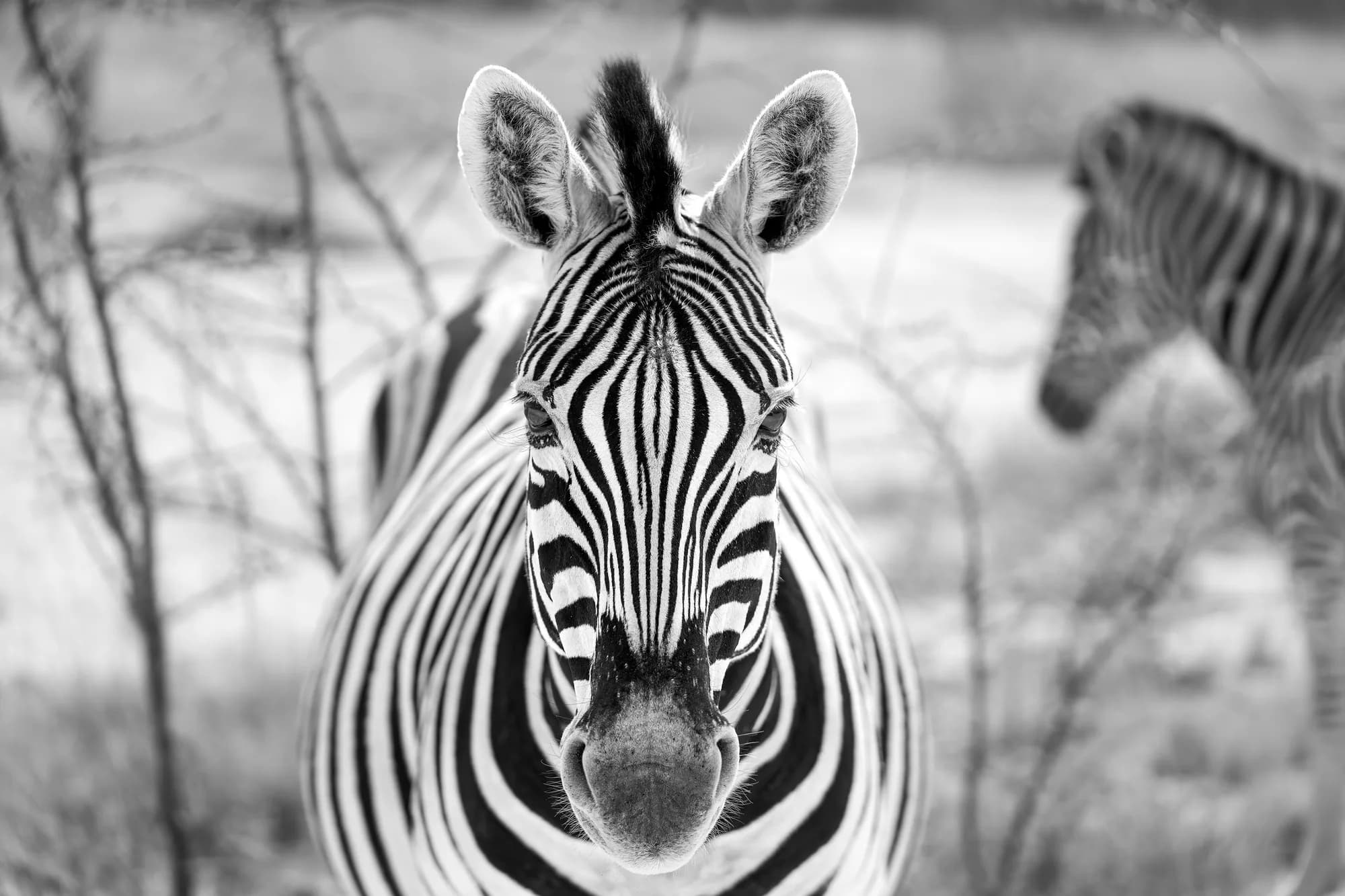 112 · Mammal
Plains zebra
Seen on the first morning of every trip and worth more attention than it gets. Zebra make up a large part of the great migration, they are the reason the wildebeest can eat, and the three zebra species on this site are not interchangeable.
Five countries here, and half the migration
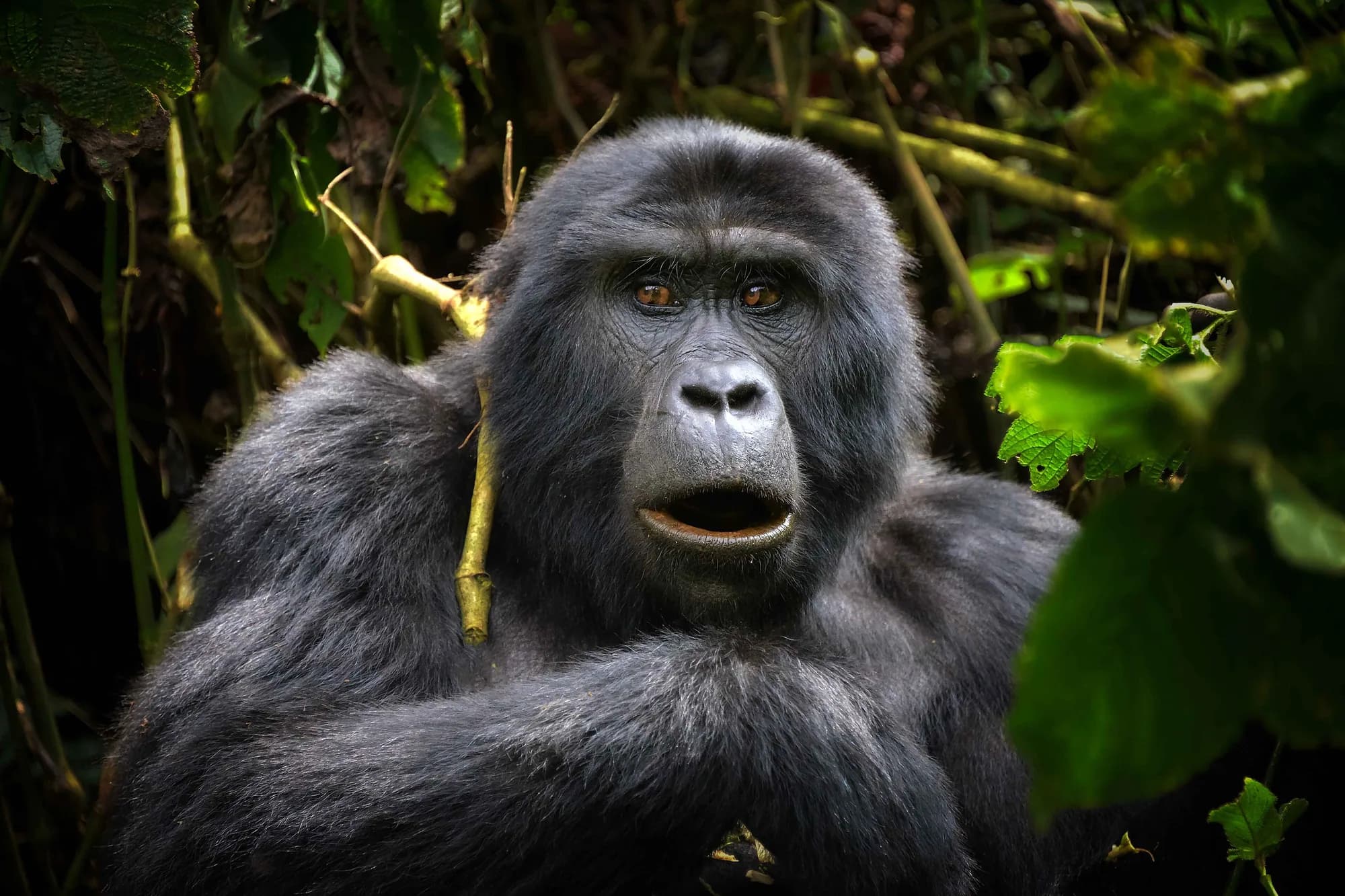 114 · Mammal
Mountain gorilla
Three national parks on this site hold the entire world population, and one hour with a habituated group is the most expensive and most reliably delivered wildlife encounter in Africa. It is also the rare conservation story that has gone the right way.
Bwindi, Mgahinga, Volcanoes — and nowhere else on earth
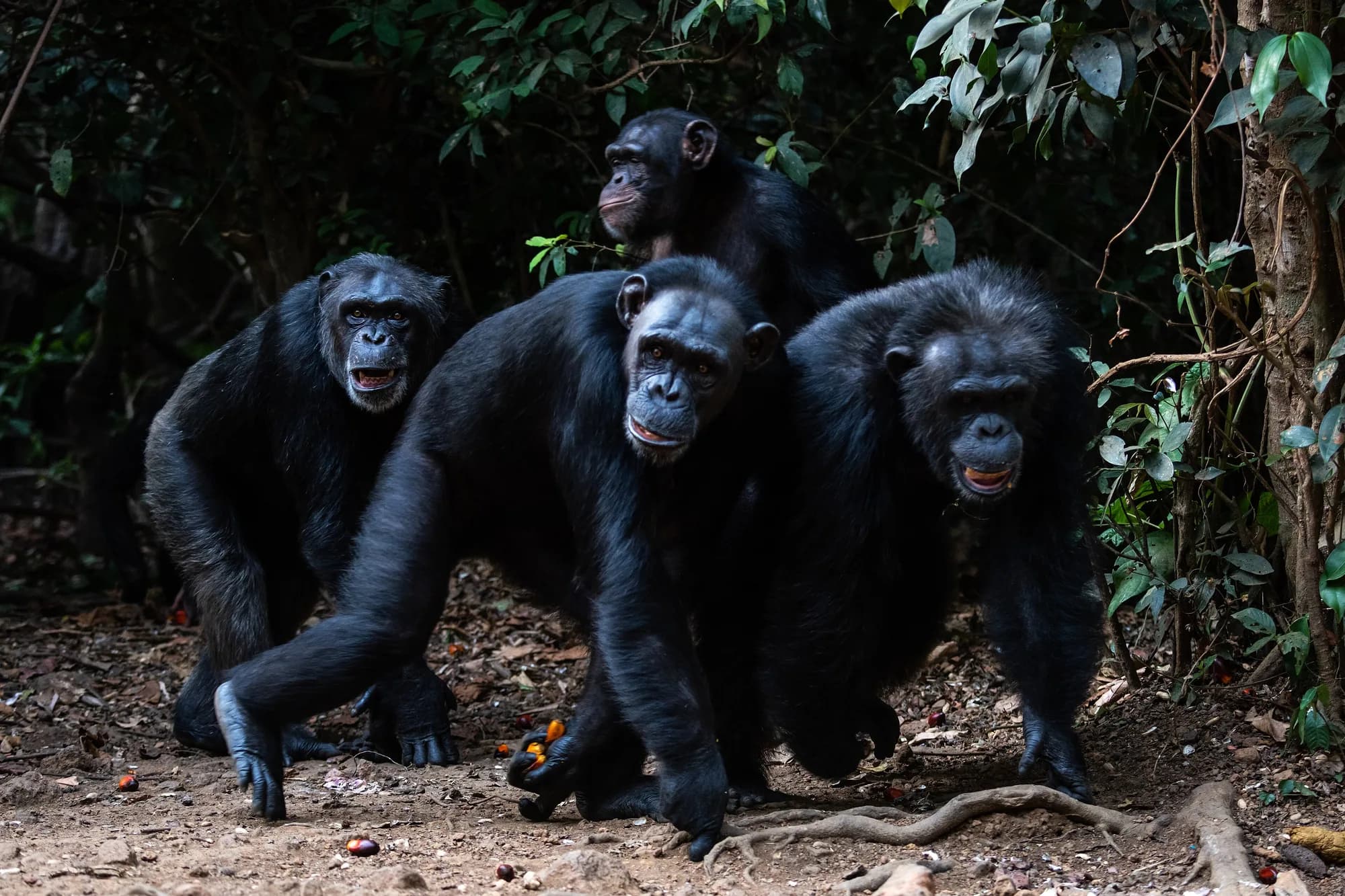 115 · Mammal
Chimpanzee
Louder, faster and far harder to keep up with than a gorilla, and the trek is nothing like the same experience. Kibale is the reliable one; Mahale, on the shore of Lake Tanganyika, is the one people remember.
Uganda, Rwanda and western Tanzania
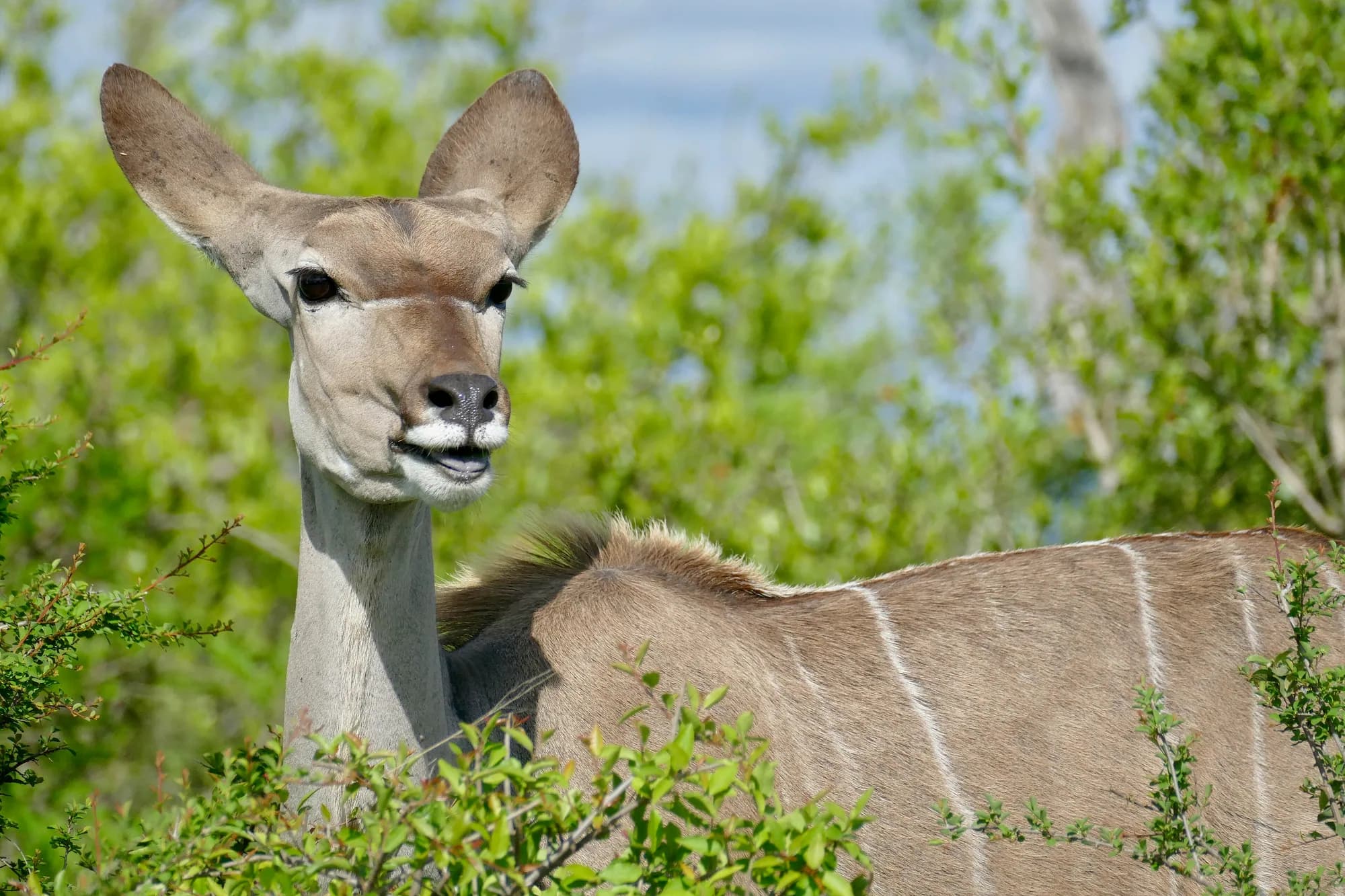 118 · Mammal
Greater kudu
A very large antelope with spiral horns over a metre long, and the animal people most often fail to see because it is standing still ten metres away. Kudu are a bush species, and their whole defence is not moving.
Seven parks here, in thick bush
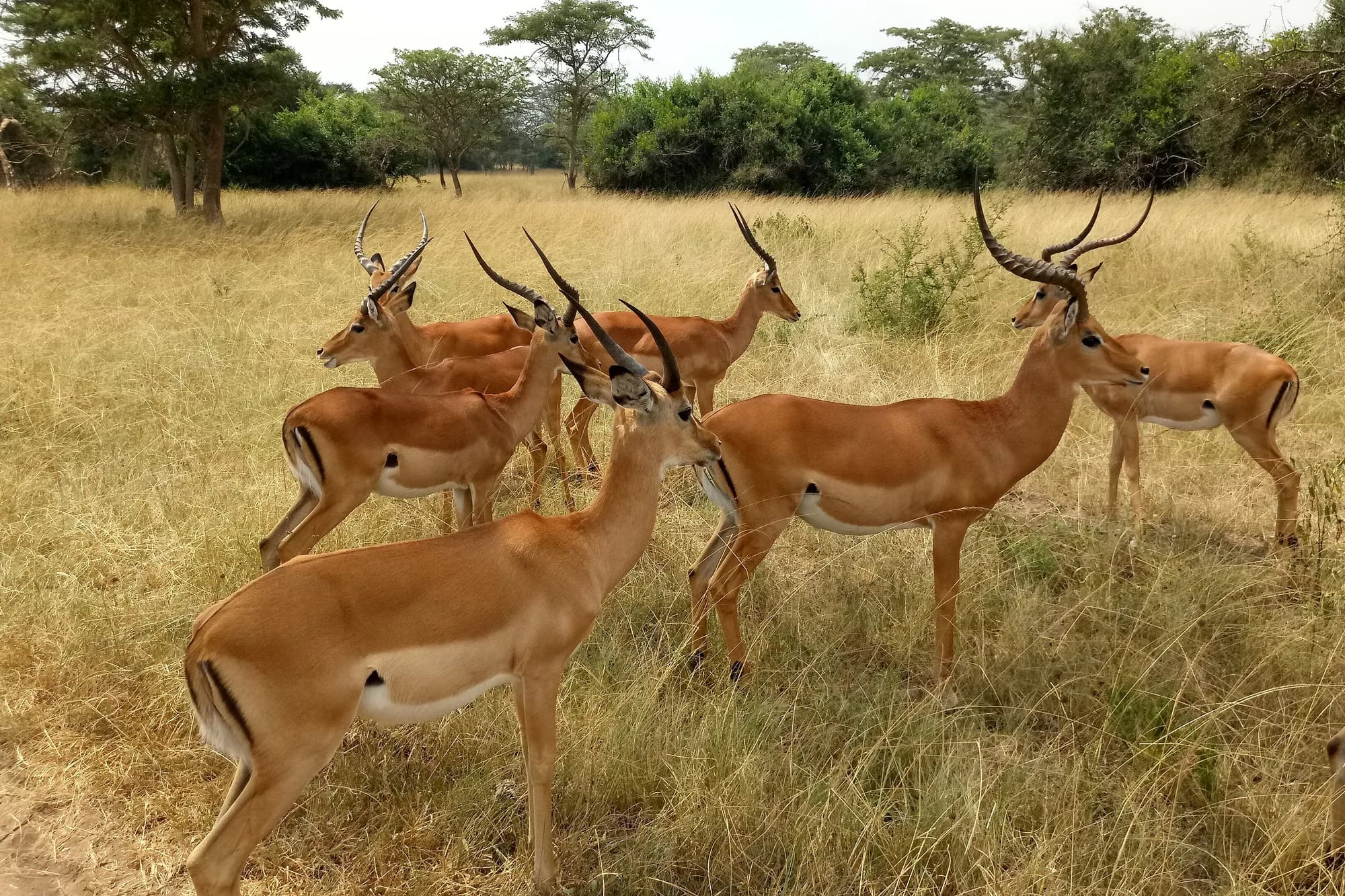 119 · Mammal
Impala
The animal everybody stops photographing on day two, and the one most of the predators on this site are eating. Learning to read impala is the cheapest way to find cats, because they will tell you there is one before you see it.
Almost every savanna park here, in numbers
- 120 · Mammal
Common eland
A bull weighs close to a tonne and still clears a two-metre fence from standing. Eland are the biggest antelope in the world and among the shyest, which is why most people drive past a herd at four hundred metres and never look twice.
Four countries here, and the largest antelope on earth
- 122 · Reptile
Nile crocodile
The animal you will see on every sandbank and think nothing of, and the one that kills more people in Africa than any predator except the hippopotamus. A big male is five metres and eighty years old, and the Mara crossings are the only time most visitors take one seriously.
Five countries here, on every permanent river
- 126 · Mammal
Black-and-white colobus
The monkey with no thumbs and a white cape, and the one people photograph most on a forest trek without ever learning its name. A troop leaping between crowns with the mantle streaming is the best thing that happens on a gorilla trek that is not the gorillas.
Forest canopy in four countries here
- 133 · Mammal
Bat-eared fox
A small fox with ears a third the length of its body, and it uses them to listen for termites chewing underground. It has more teeth than any other placental land mammal and barely uses them for meat.
Short-grass and arid country, three countries here
- 135 · Mammal
Golden monkey
An orange-gold monkey confined to the bamboo of the Virunga volcanoes, and the best-value permit in the region. It costs a fraction of a gorilla trek, takes half a morning, and most people who go for the gorillas never hear of it.
Virunga bamboo — two parks here, and nowhere else
 139 · Bird
Shoebill
The bird more people fly to Africa for than any other, and one of the few that will still be exactly where you left it an hour later. A shoebill hunts by standing still, sometimes for a very long time, and the whole experience of seeing one is a boat, a wall of papyrus and a great deal of not moving.
Papyrus swamp, from the Sudd to Bangweulu
 142 · Bird
Rwenzori turaco
An Albertine Rift endemic that lives in exactly the forest people already travel to for gorillas, which makes it one of the easiest great birds in Africa to add to a trip you are taking anyway. Most visitors hear it long before they see it, and a good many never connect the barking in the canopy with the crimson flash that goes across the trail.
Albertine Rift montane forest, above about 2,000 m
 143 · Mammal
Lesser kudu
The shyest antelope most people will ever try to see, and the one genuinely hard animal in the dry-country bush. It lives in thick acacia and commiphora scrub, it freezes rather than runs, and it is gone before most vehicles have stopped. Tsavo West and Ruaha are the two places worth planning around.
Dry thornbush in East Africa and the Horn
 148 · Mammal
L'Hoest's monkey
A dark monkey with a white bib and a chestnut saddle that spends much of its day walking on the forest floor, which no other monkey in these forests does. Almost nobody books a trip for it and almost everybody who treks for gorillas or chimpanzees walks past one.
Albertine Rift forest — Nyungwe, Bwindi, Kibale
 149 · Mammal
Ugandan red colobus
This page is about one animal: Piliocolobus tephrosceles, the Ugandan red colobus, which despite the name is also the red colobus of Mahale and Gombe. Red colobus as a whole is a genus of seventeen or eighteen species with wildly different fortunes, and quoting one of them for another is the commonest mistake made about African monkeys.
Kibale, Mahale and Gombe — one species of many
A species is listed here when one of Uganda’s parks is a documented destination for it — not merely because the animal occurs in the country. Several of these animals are found in a dozen countries, so a page will send you elsewhere if elsewhere is better; that is the point of it. Every species page carries its IUCN category with the year it was assessed.