
By animal
Start with what you came to see
Most people book a park. Almost everyone actually wants an animal. These pages say which reserves give you the odds — and where they honestly do not.
- 01 · Mammal
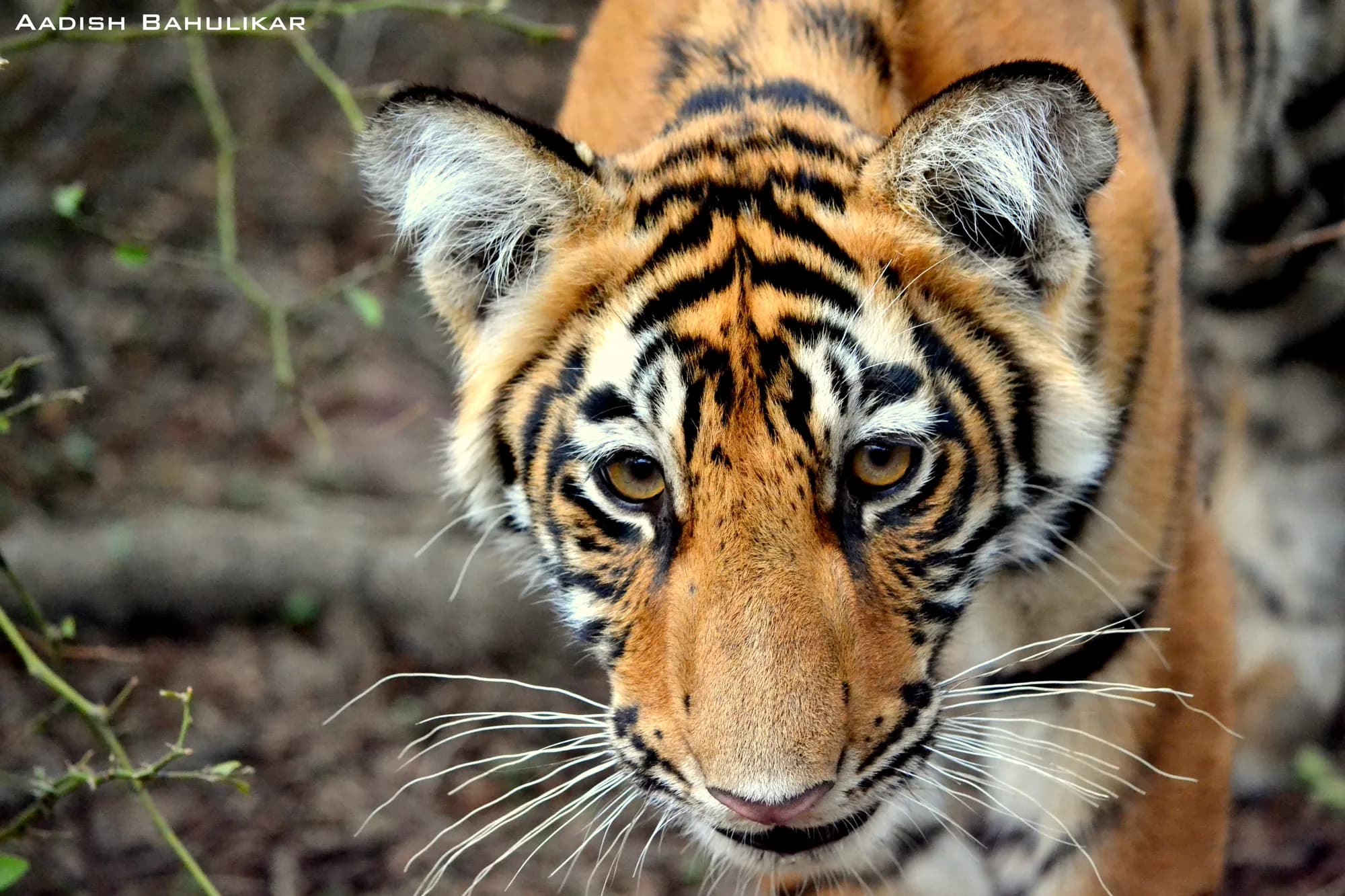
Tiger
The animal most people come for, and the one most often missed. Where the odds actually are, and how they move by month and by zone.
58 reserves, six worth the trip
 02 · Mammal
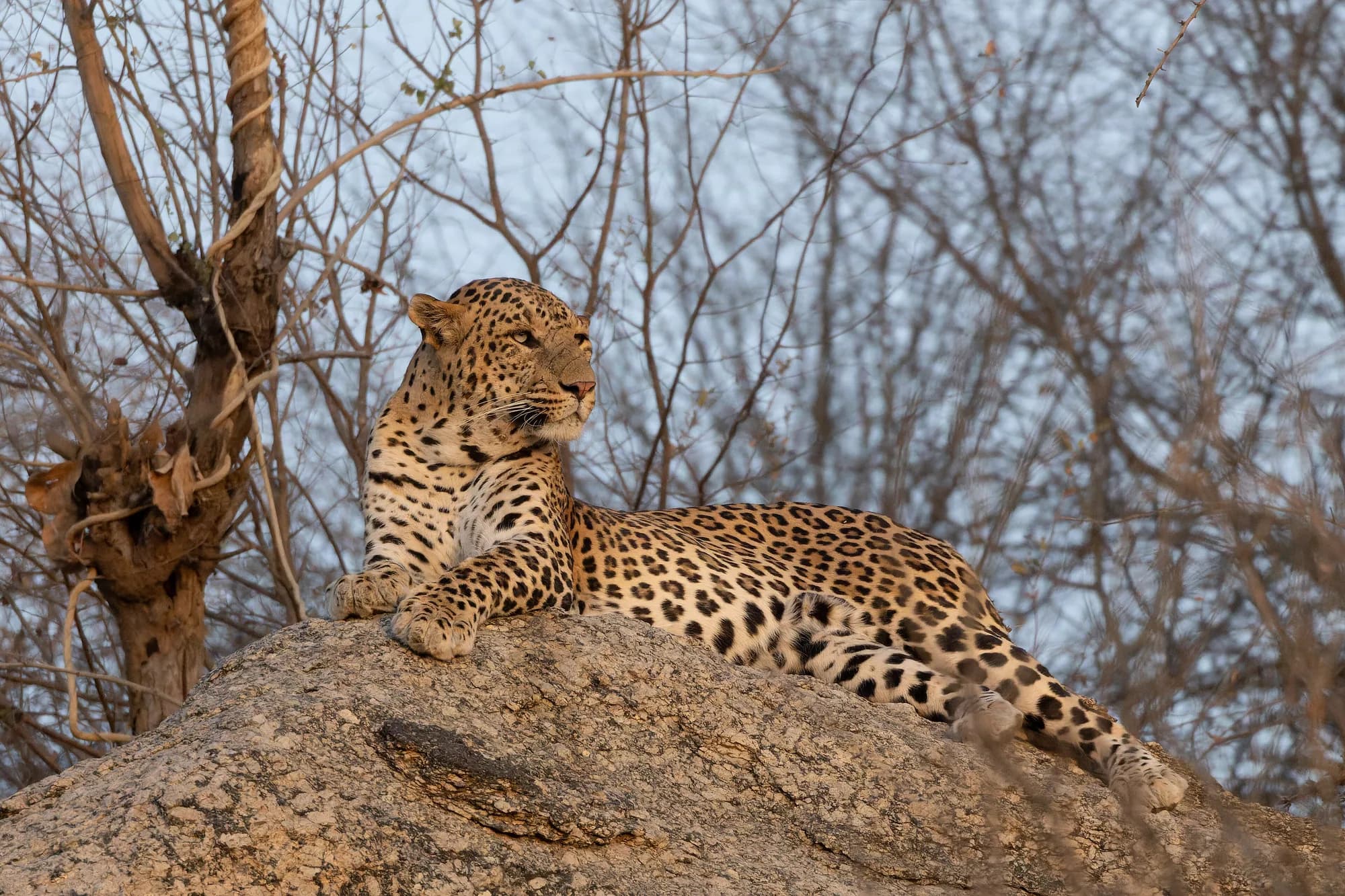
Indian leopard
Present in almost every reserve on this site and reliably seen in almost none of them. The two landscapes that change that, and why they do.
Everywhere, and reliably nowhere
 03 · Mammal
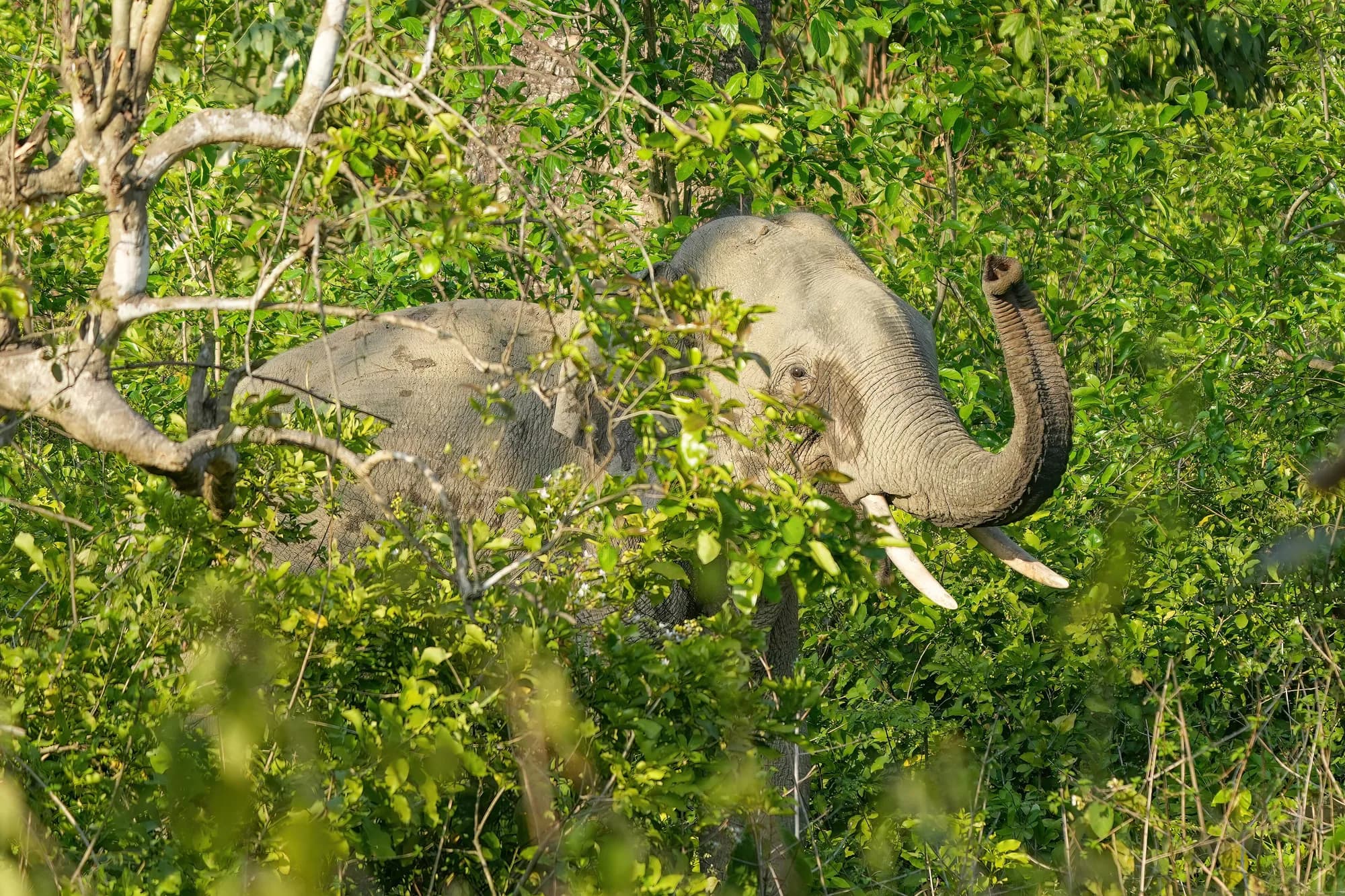
Indian elephant
One of the few sightings that is better in a herd than alone. Where the numbers gather, and the three months they are actually there.
Kabini backwaters at dusk
 04 · Mammal
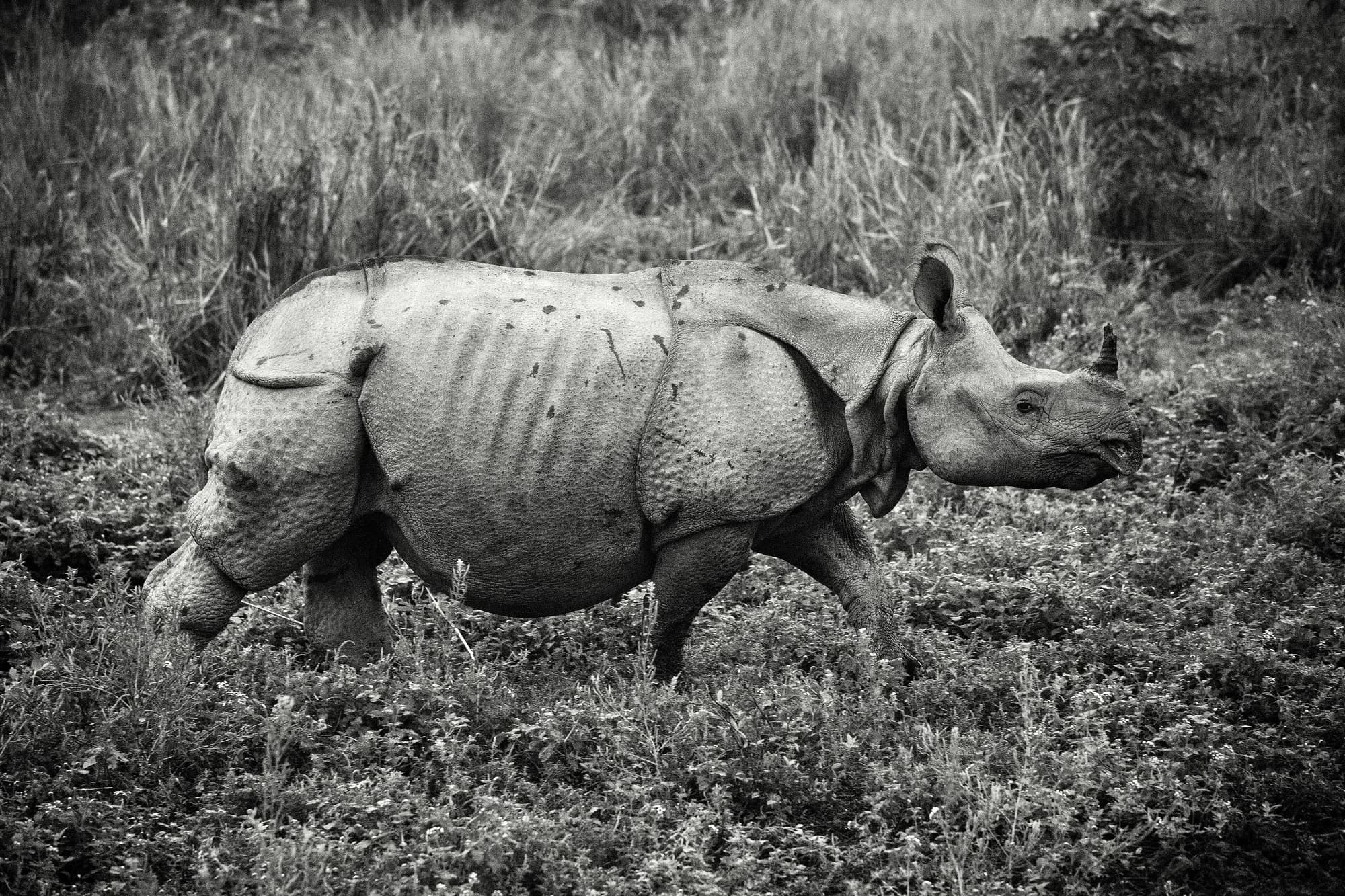
One-horned rhino
The easiest large mammal in India to see well. Two-thirds of the world's population stands in open grass, in daylight, in one Assam floodplain.
Assam floodplain, near-certain
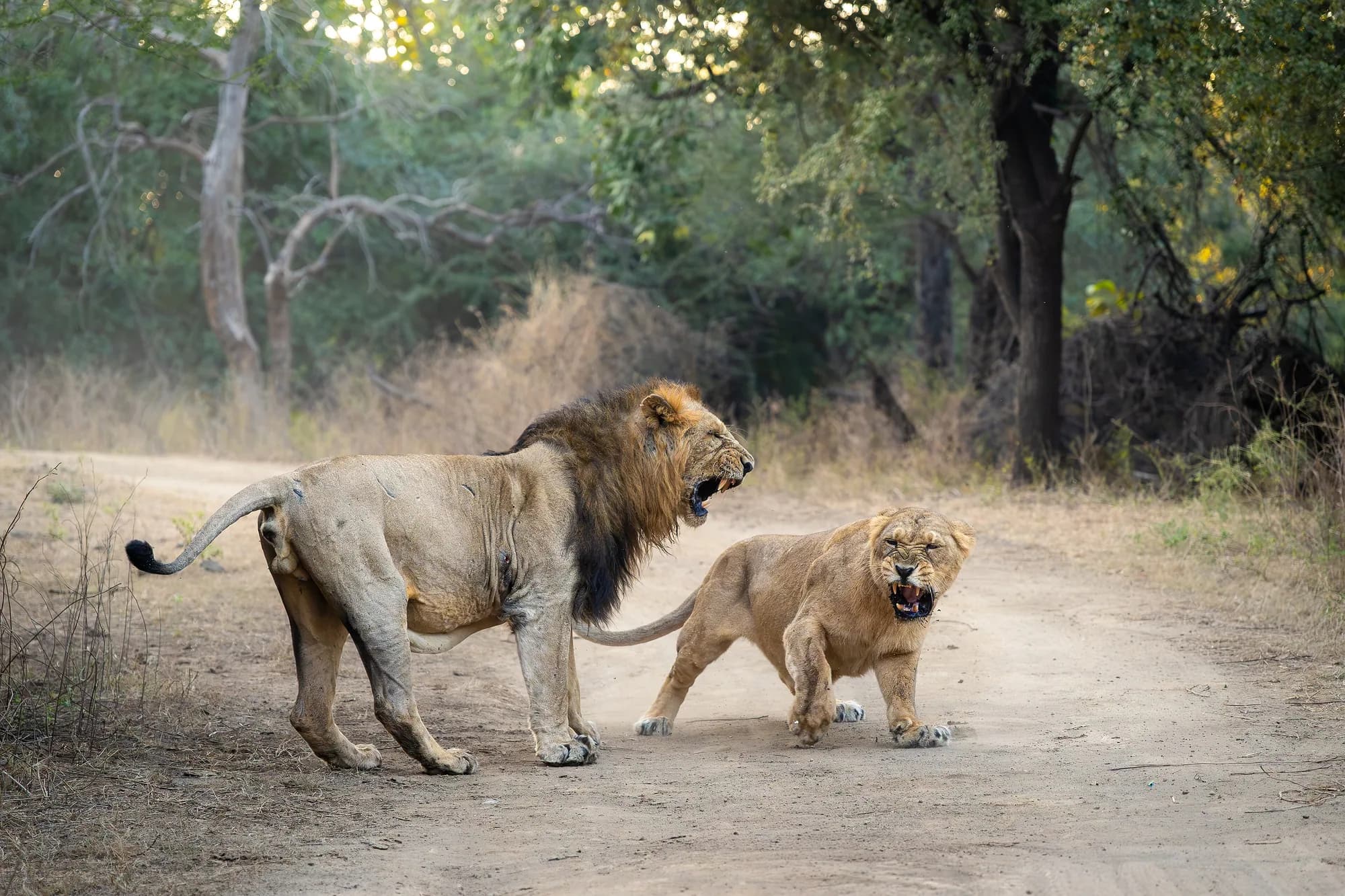 05 · Mammal
Asiatic lion
Every wild Asiatic lion alive lives in one Gujarat forest. What that does to the permits, and why the cool months are the only realistic window.
Gir, and nowhere else on earth
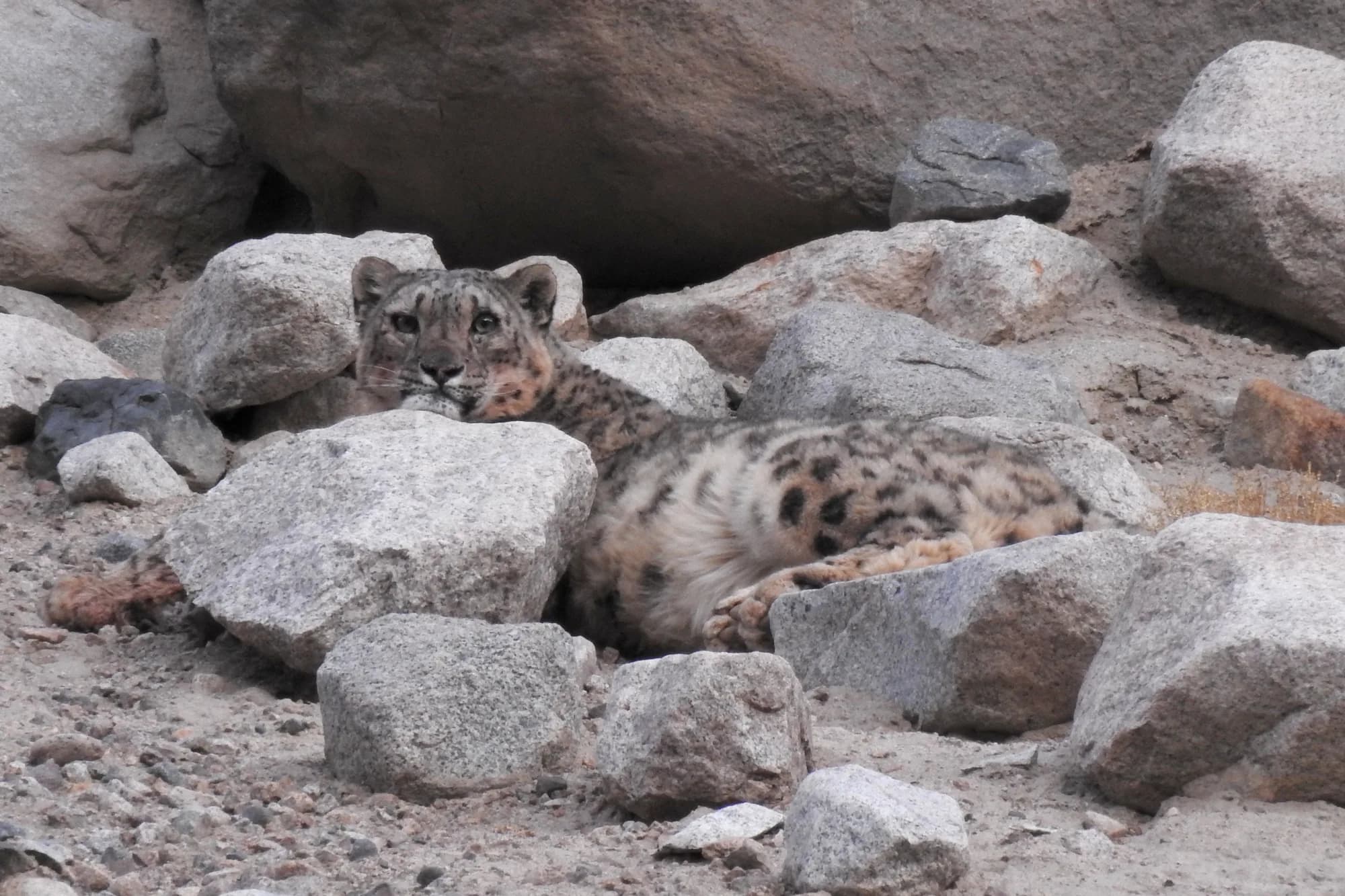 06 · Mammal
Snow leopard
Not a safari. A mountain expedition with a chance of the animal — cold, high, and measured in days of patience rather than in drives.
Ladakh and Spiti, in winter
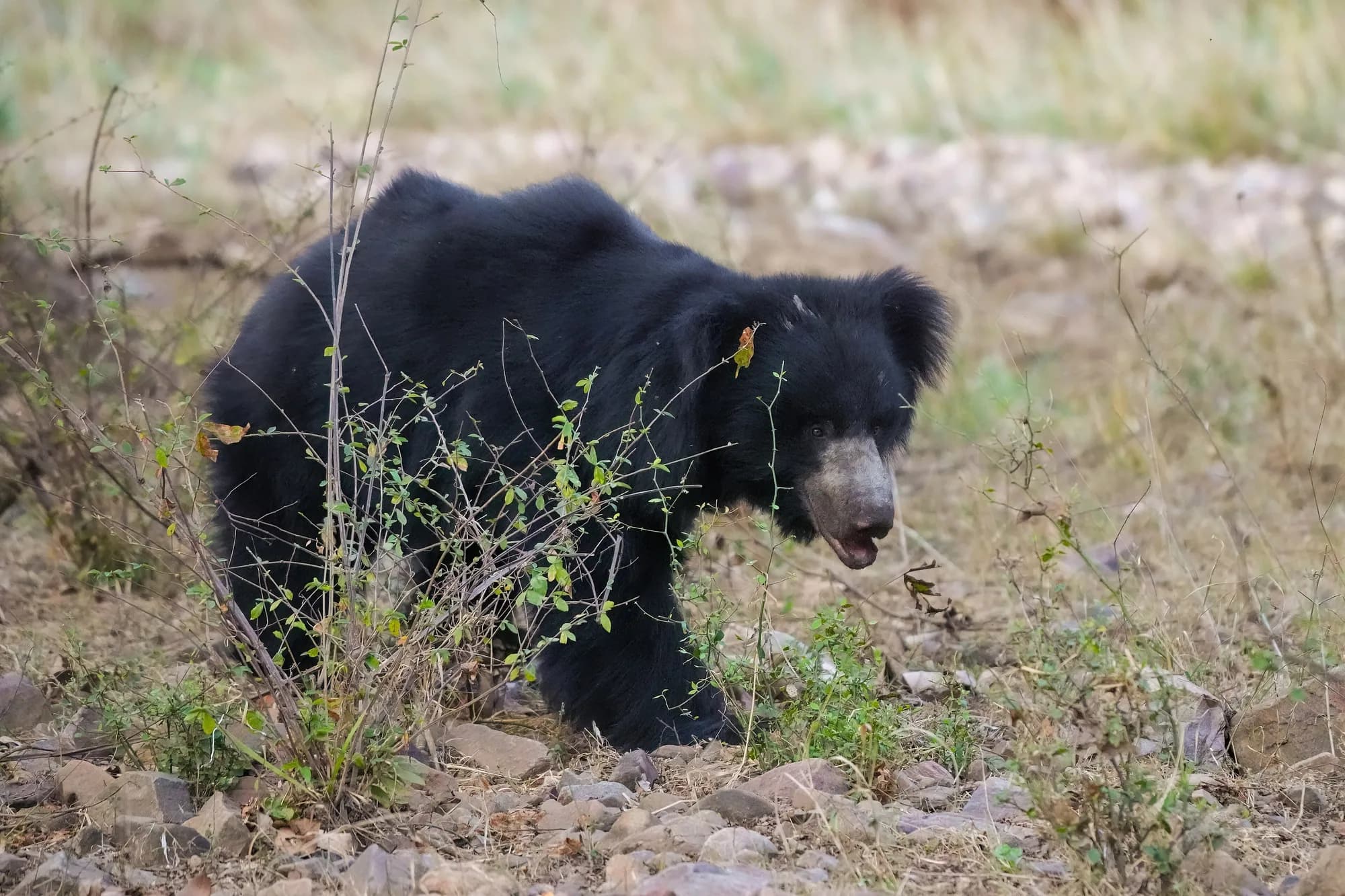 07 · Mammal
Sloth bear
The animal most guides would rather show you than a tiger, and the one most likely to be walked past in the dark. Where the diggings are, and why the odds are better on foot.
Nine reserves, and Satpura above all
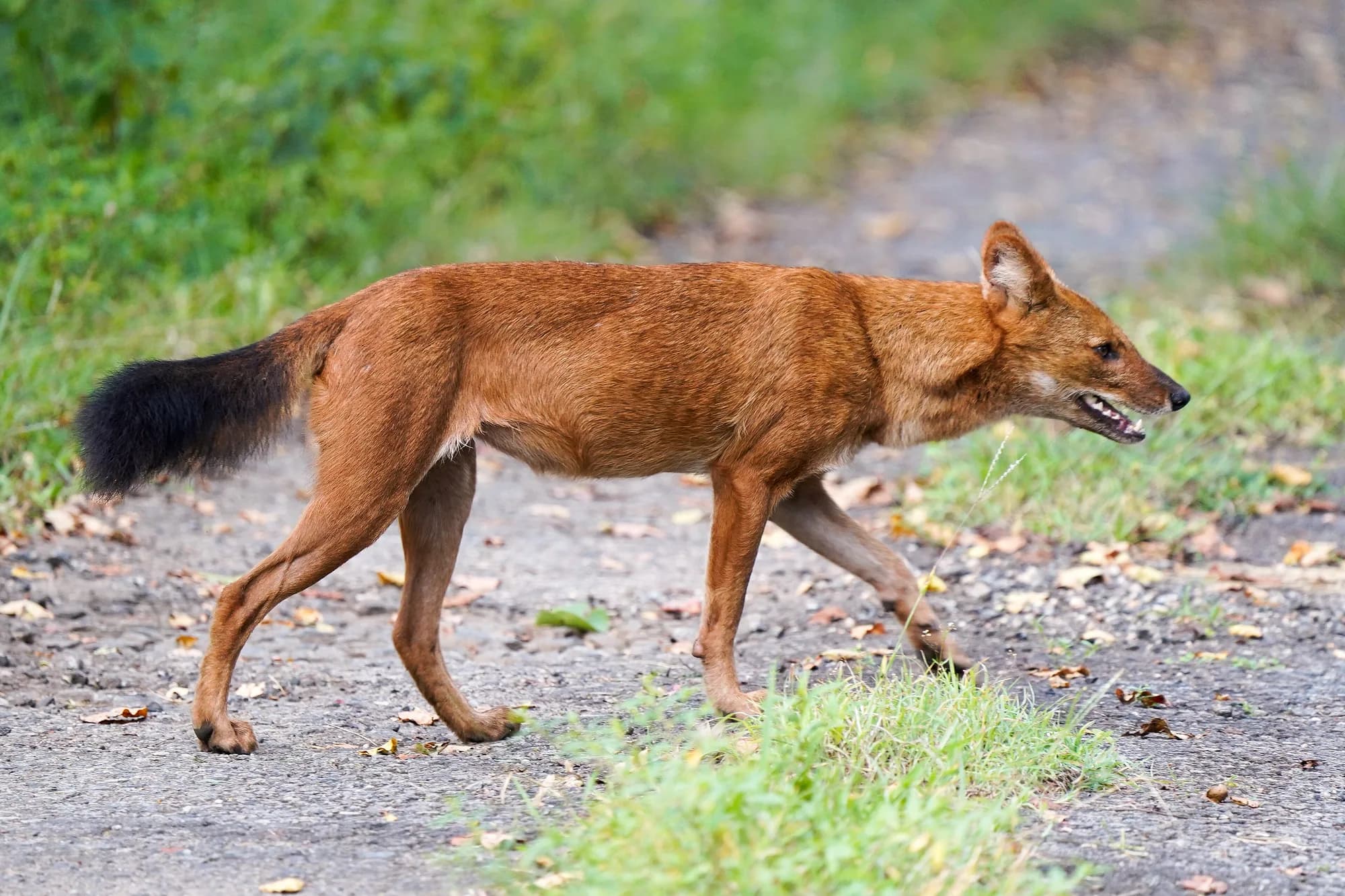 08 · Mammal
Dhole
The Asiatic wild dog hunts in the open, in the morning, in packs. Which makes a dhole sighting the best thing that can happen on an Indian drive, and the one nobody books for.
Six reserves, and it hunts in daylight
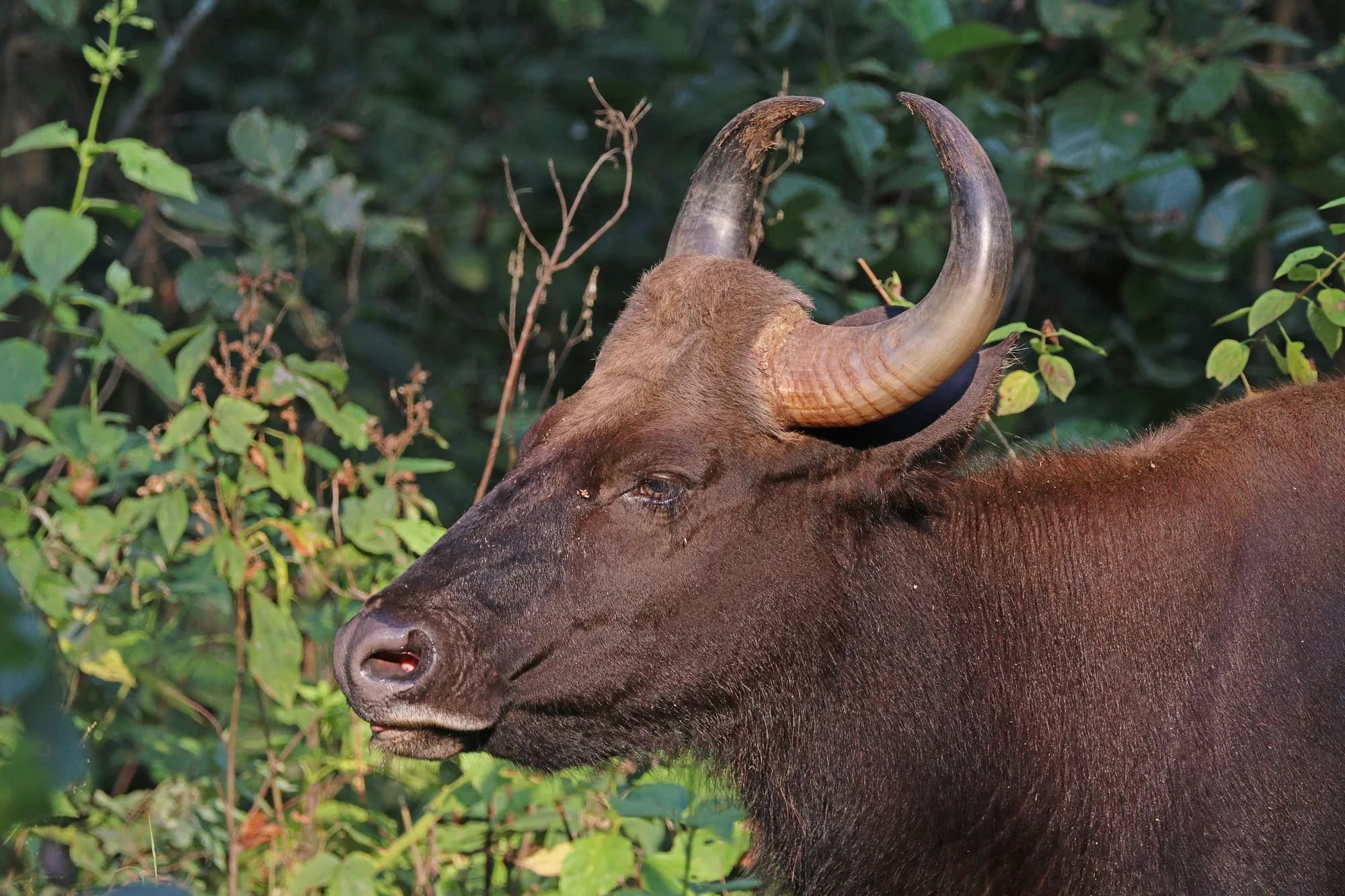 09 · Mammal
Gaur
The largest wild cattle on earth, standing taller at the shoulder than any bison, and routinely dismissed as livestock by people who have travelled a long way to see it.
Six reserves, and it is not a bison
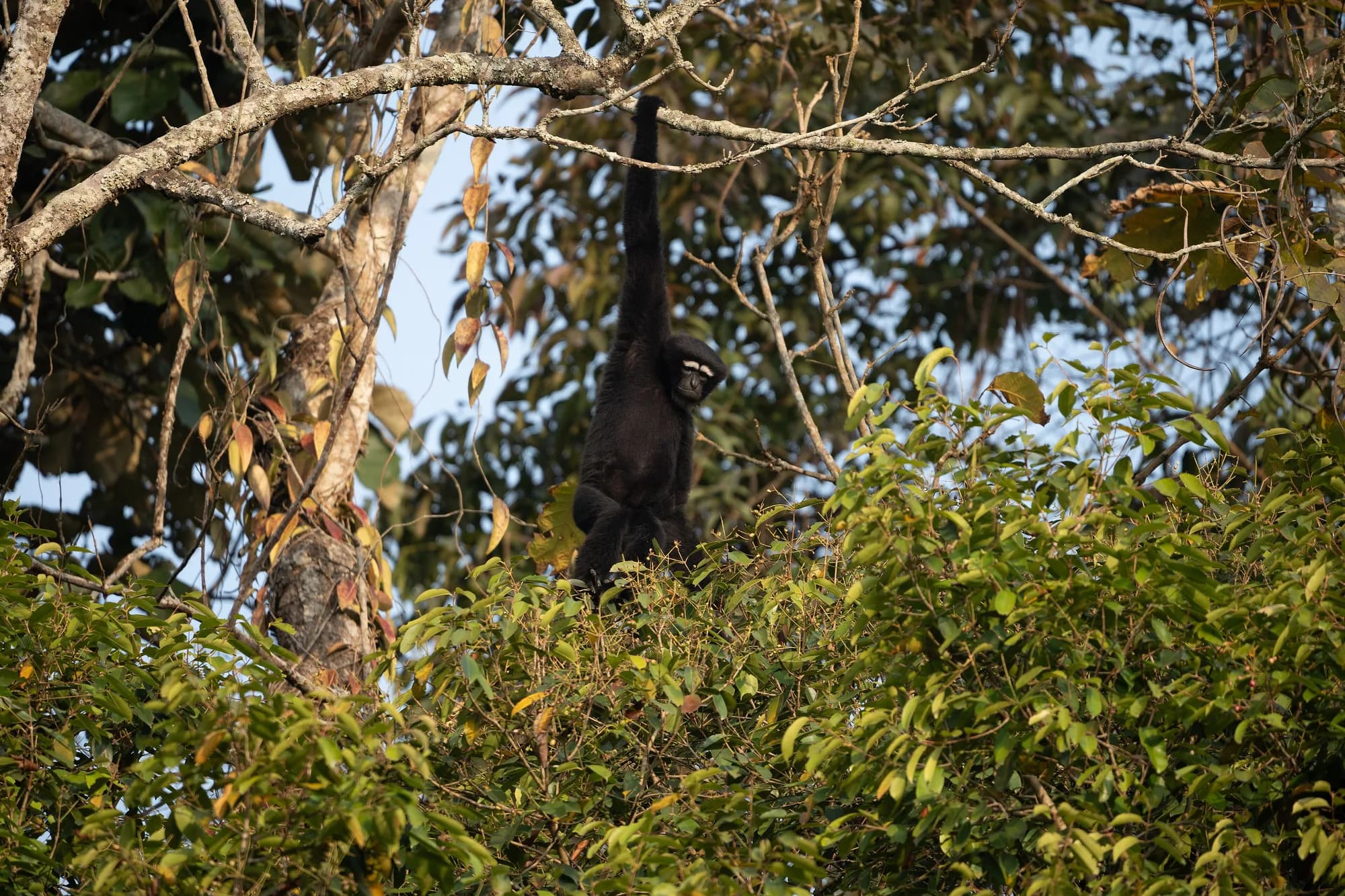 10 · Mammal
Western hoolock gibbon
The only ape in India, in a forest island surrounded by tea. You will hear the pair duet across a kilometre of canopy before you have any idea where to look.
Assam, and India's only ape
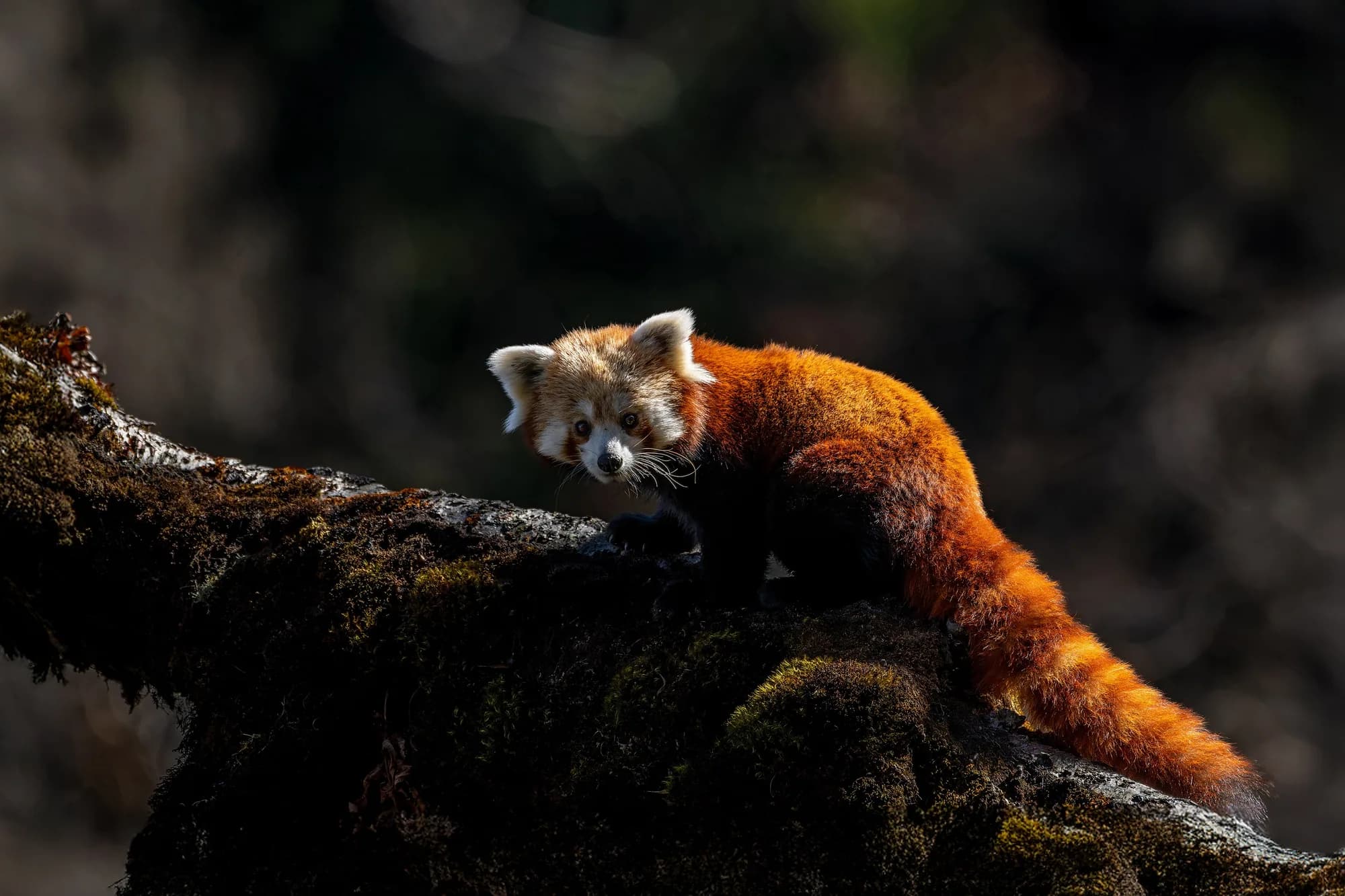 11 · Mammal
Red panda
Enormous recognition, almost no sightings. A bamboo-eating carnivore in cold cloud forest, found by walking a ridge in the wet and looking at the undersides of branches.
Singalila and Sikkim, above 2,400 m
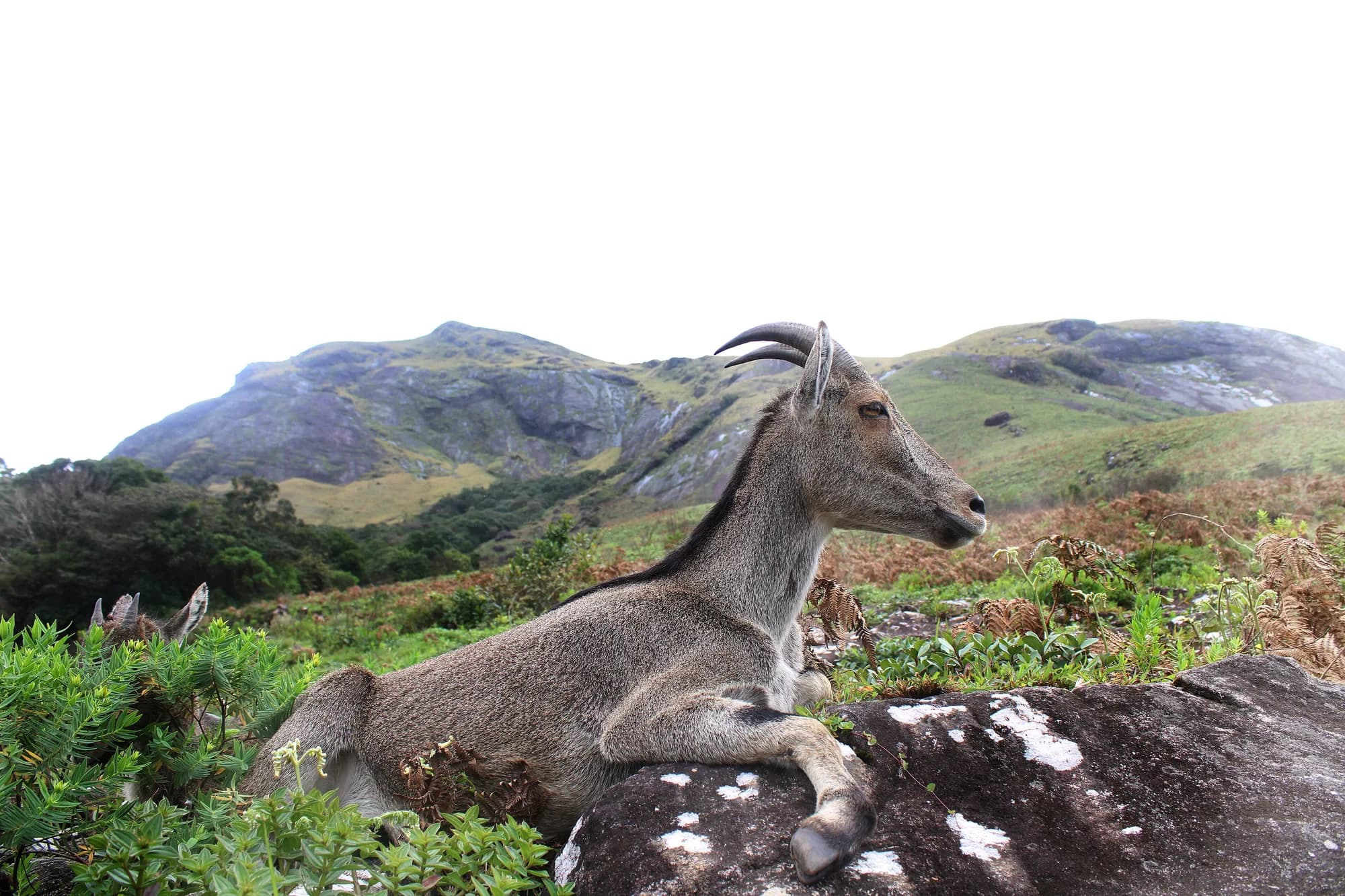 12 · Mammal
Nilgiri tahr
A wild goat on cliff grassland above two thousand metres, endemic to the Western Ghats, and the one endangered Indian endemic you can more or less count on seeing.
Eravikulam, and the high Ghats grasslands
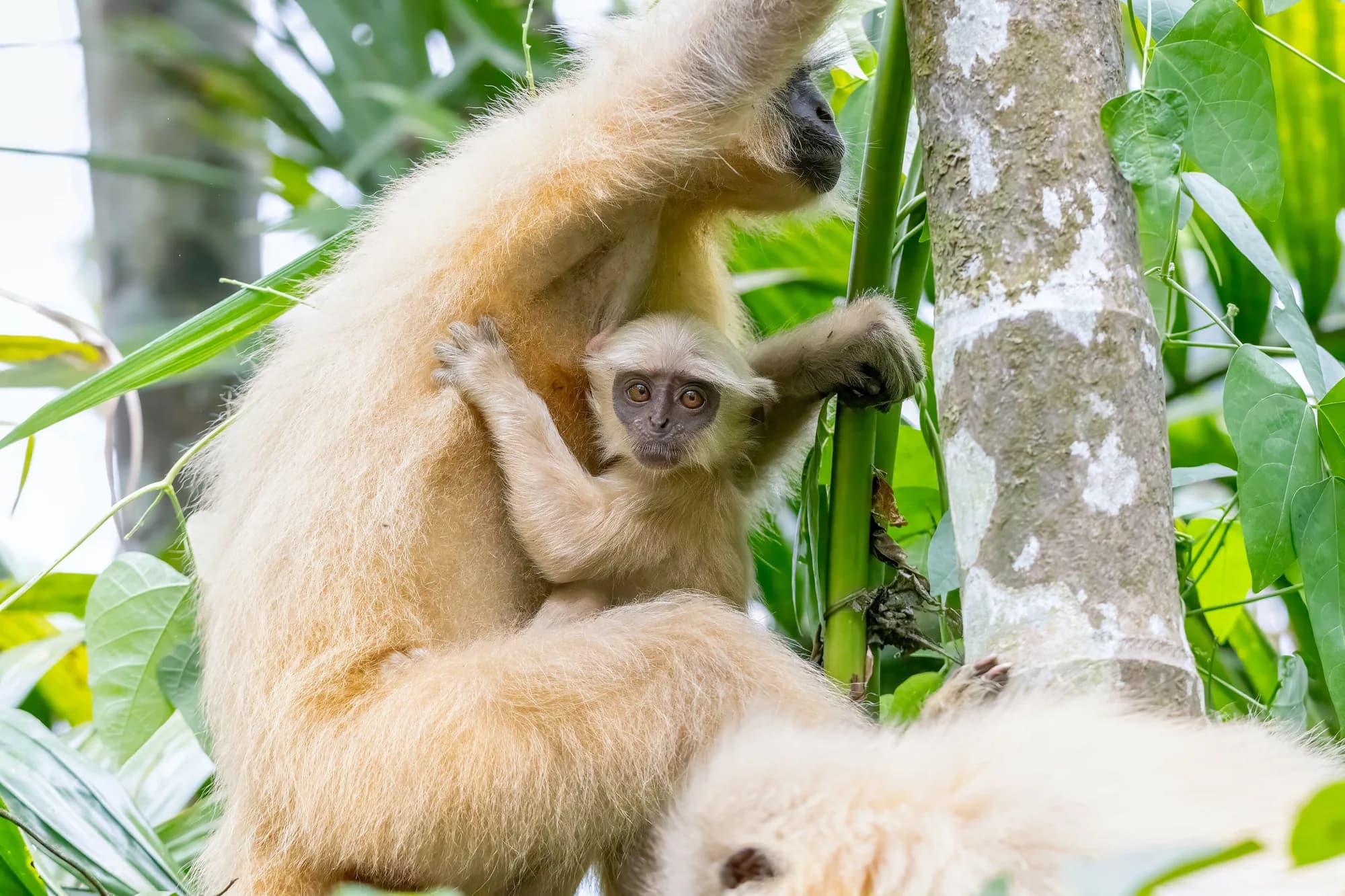 13 · Mammal
Gee's golden langur
A cream-and-gold monkey living in a wedge of forest between two Assamese rivers and the Bhutan border. Unmistakable, findable, and almost entirely absent from Indian safari itineraries.
Between two rivers, and nowhere else
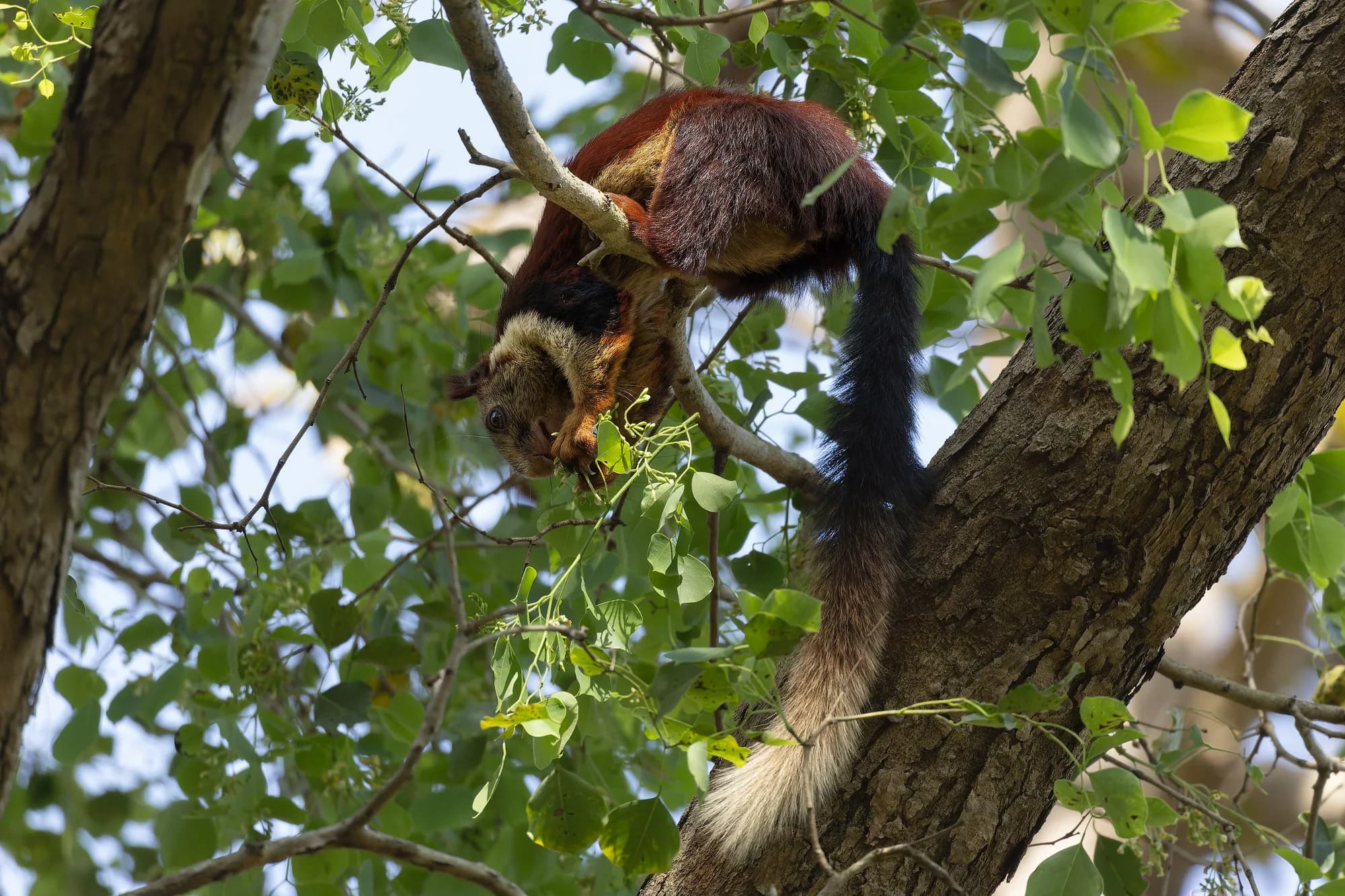 14 · Mammal
Indian giant squirrel
A squirrel the length of your arm, in maroon and cream, that leaps six metres between trees. The animal that most reliably delights people who came for a tiger and did not get one.
Six reserves, and always overhead
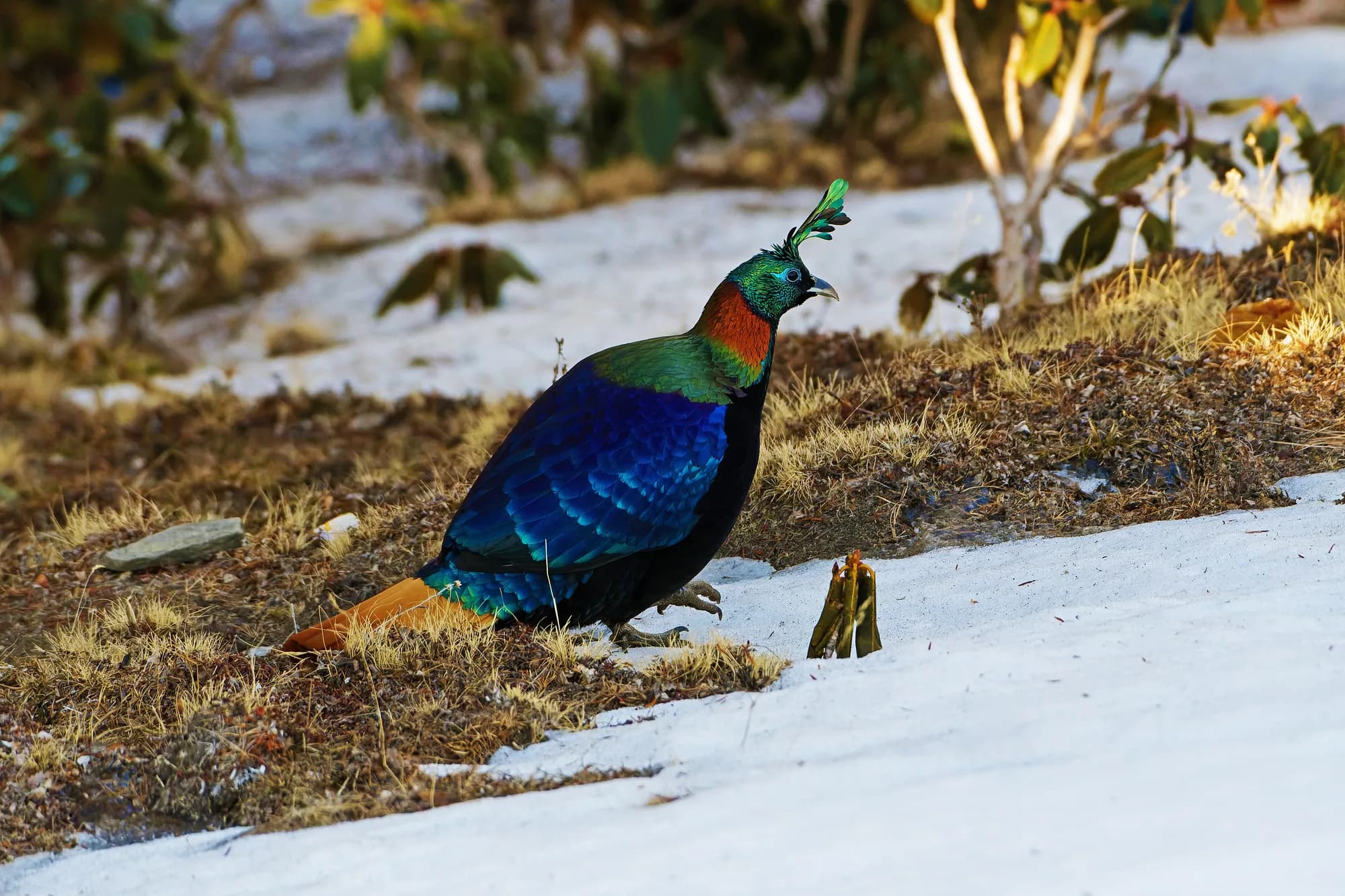 15 · Bird
Himalayan monal
A pheasant that looks like spilled petrol in sunlight, digging for roots on a snowy slope at three thousand metres. The bird international operators build entire Himalayan itineraries around.
Chopta, Tungnath and the high oak
- 16 · Mammal
Ganges river dolphin
A blind dolphin that swims on its side and finds everything by sound, in some of the most crowded river water on earth. India's national aquatic animal, and one most Indians have never seen.
The Ganges, Brahmaputra and Chambal
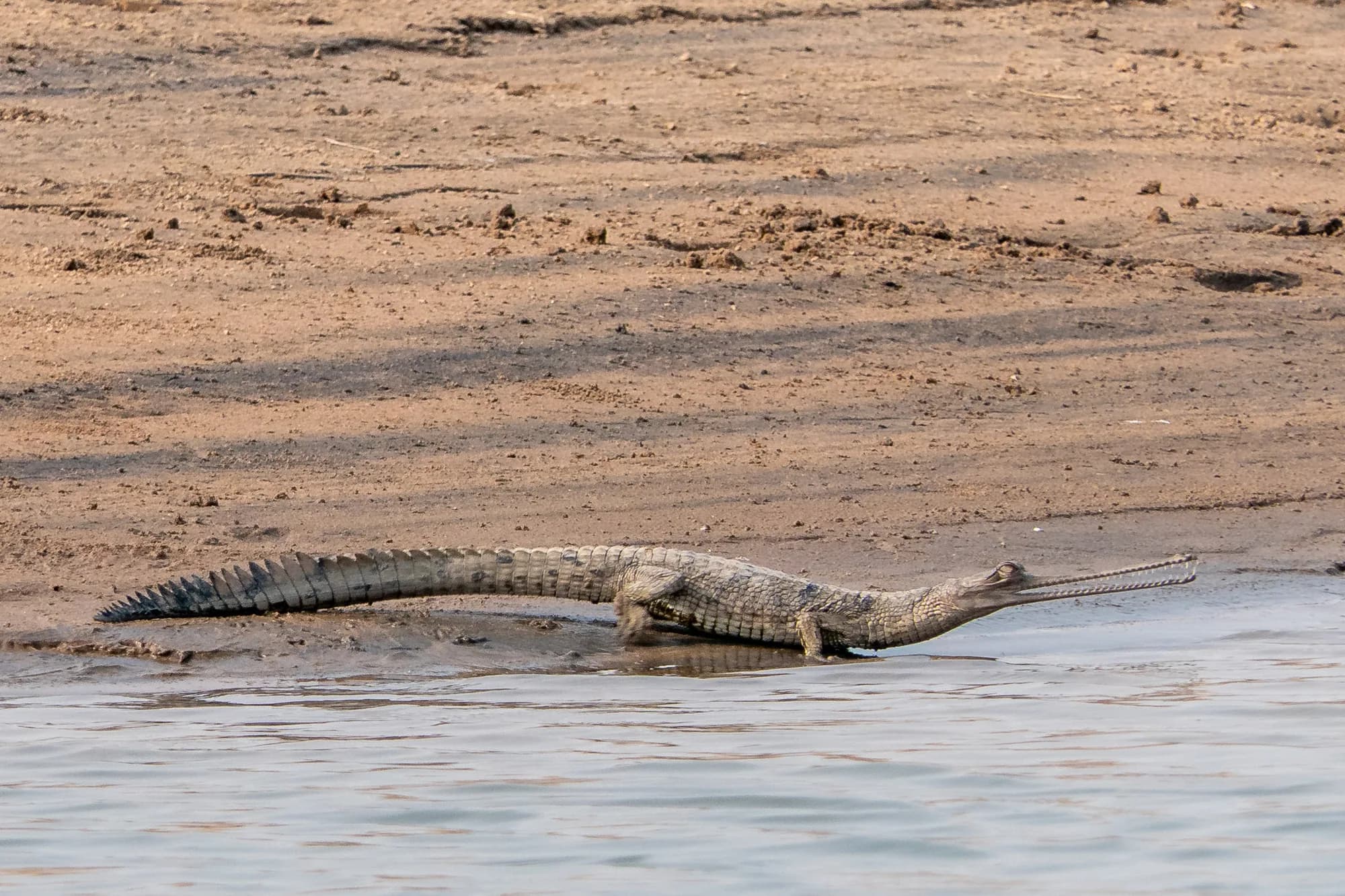 17 · Reptile
Gharial
A fish-eating crocodilian with a snout like a pair of tongs, down to a few hundred breeding adults, and hauled out on Chambal sandbanks in winter in numbers that make it look common.
The Chambal, above all
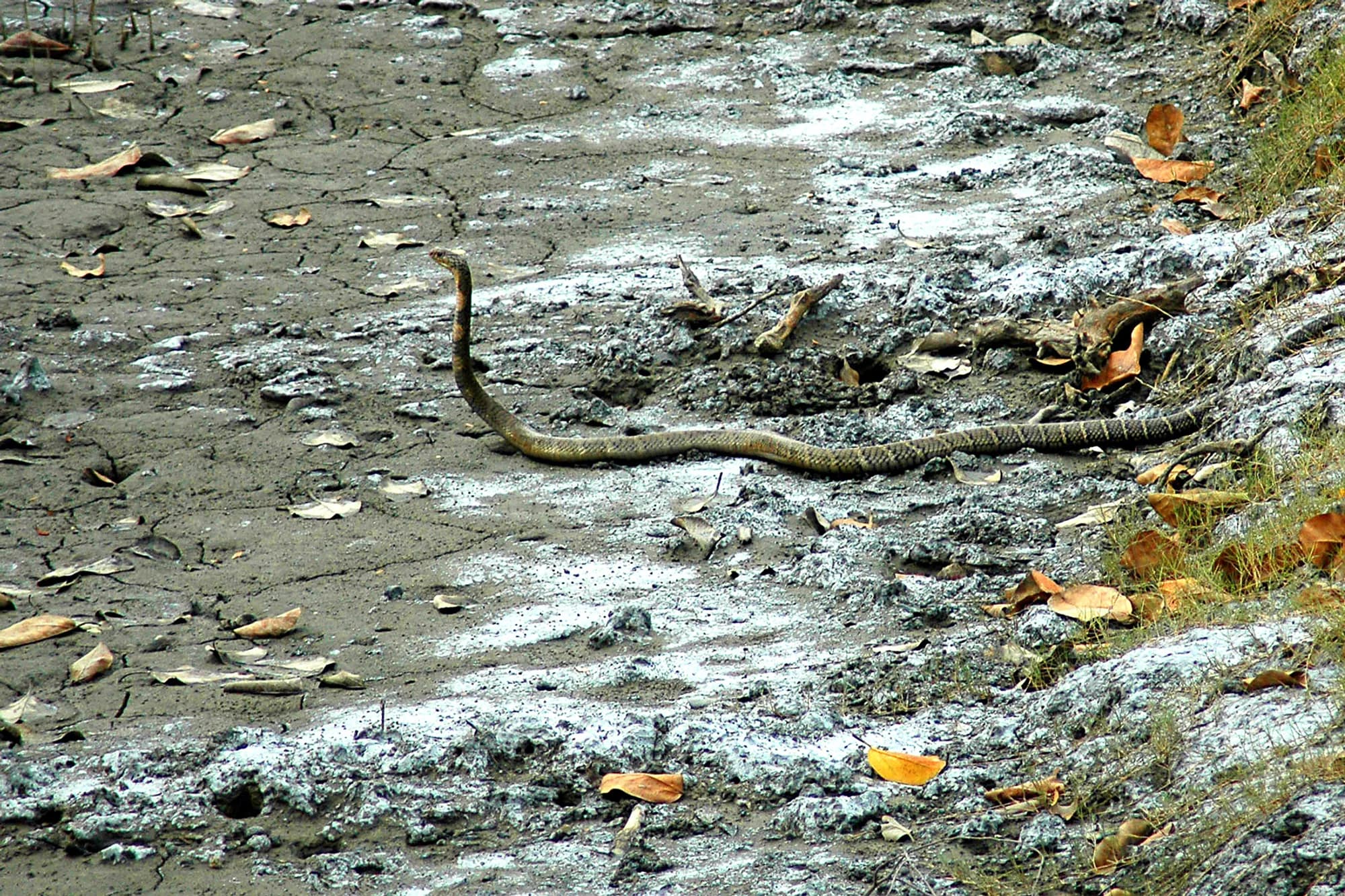 18 · Reptile
King cobra
The longest venomous snake on earth, which eats other snakes and builds a nest for its eggs. Enormous name recognition, and essentially no chance of a planned sighting.
The Ghats and the Northeast, and rarely
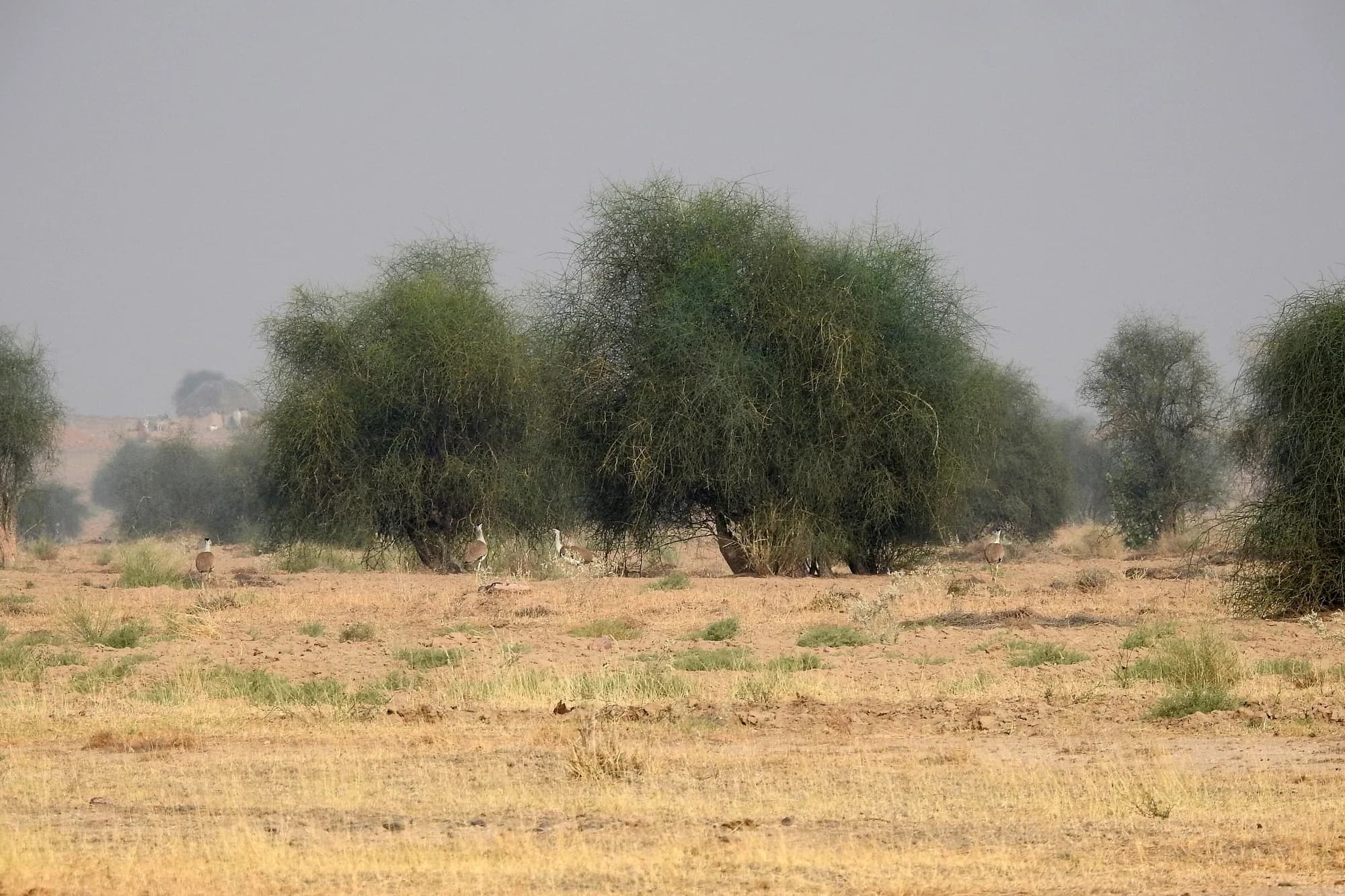 19 · Bird
Great Indian bustard
A metre-tall grassland bird down to double figures in the wild, killed mainly by power lines. The most urgent conservation emergency in Indian birding, and a sighting that will not be available much longer.
The Thar, and almost nowhere else now
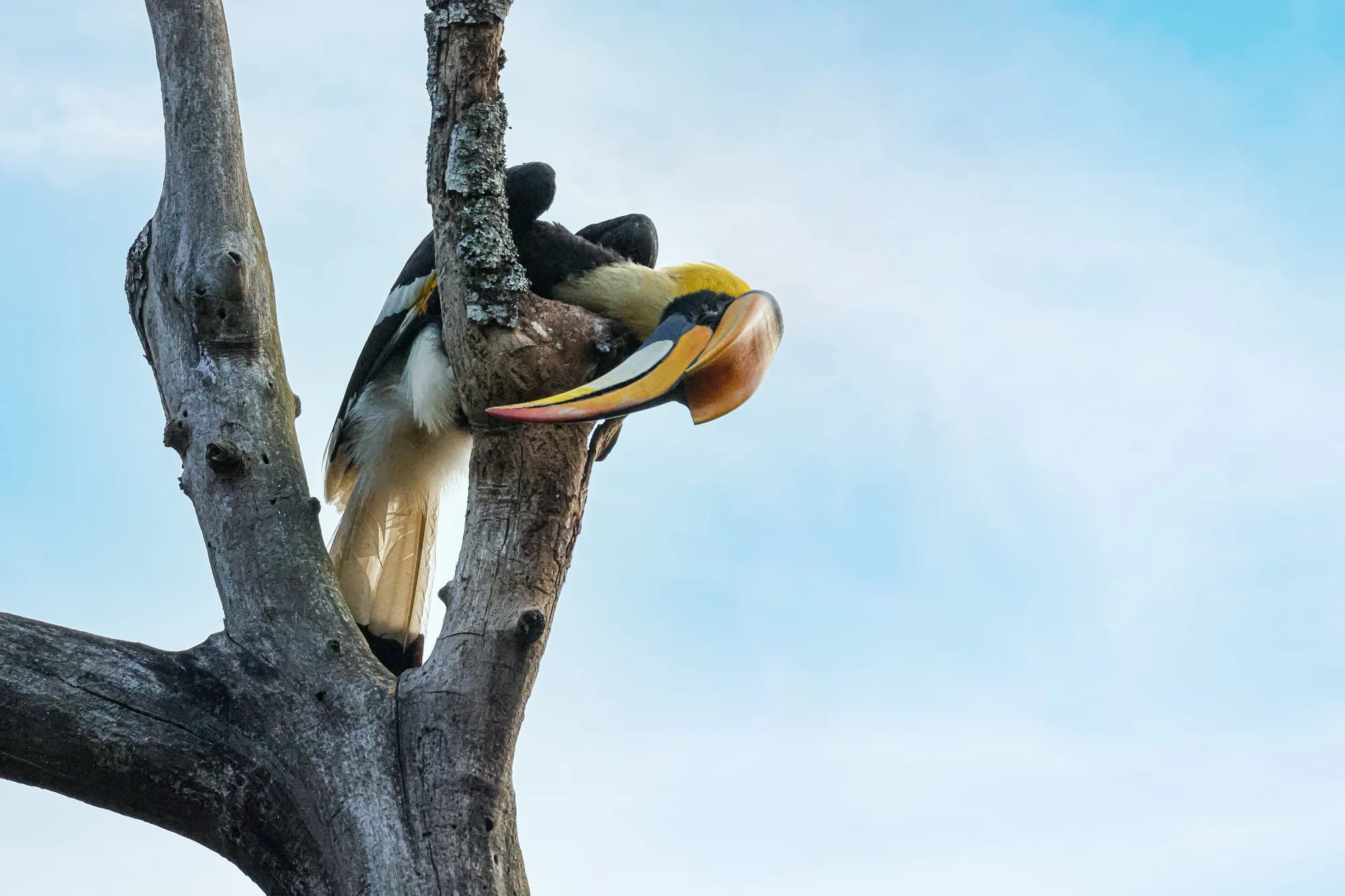 20 · Bird
Great hornbill
The bird non-birders stop the vehicle for. You hear the wingbeats several hundred metres before you see it, and the nesting behaviour is stranger than anything a mammal in the same forest does.
Three reserves, and you hear it first
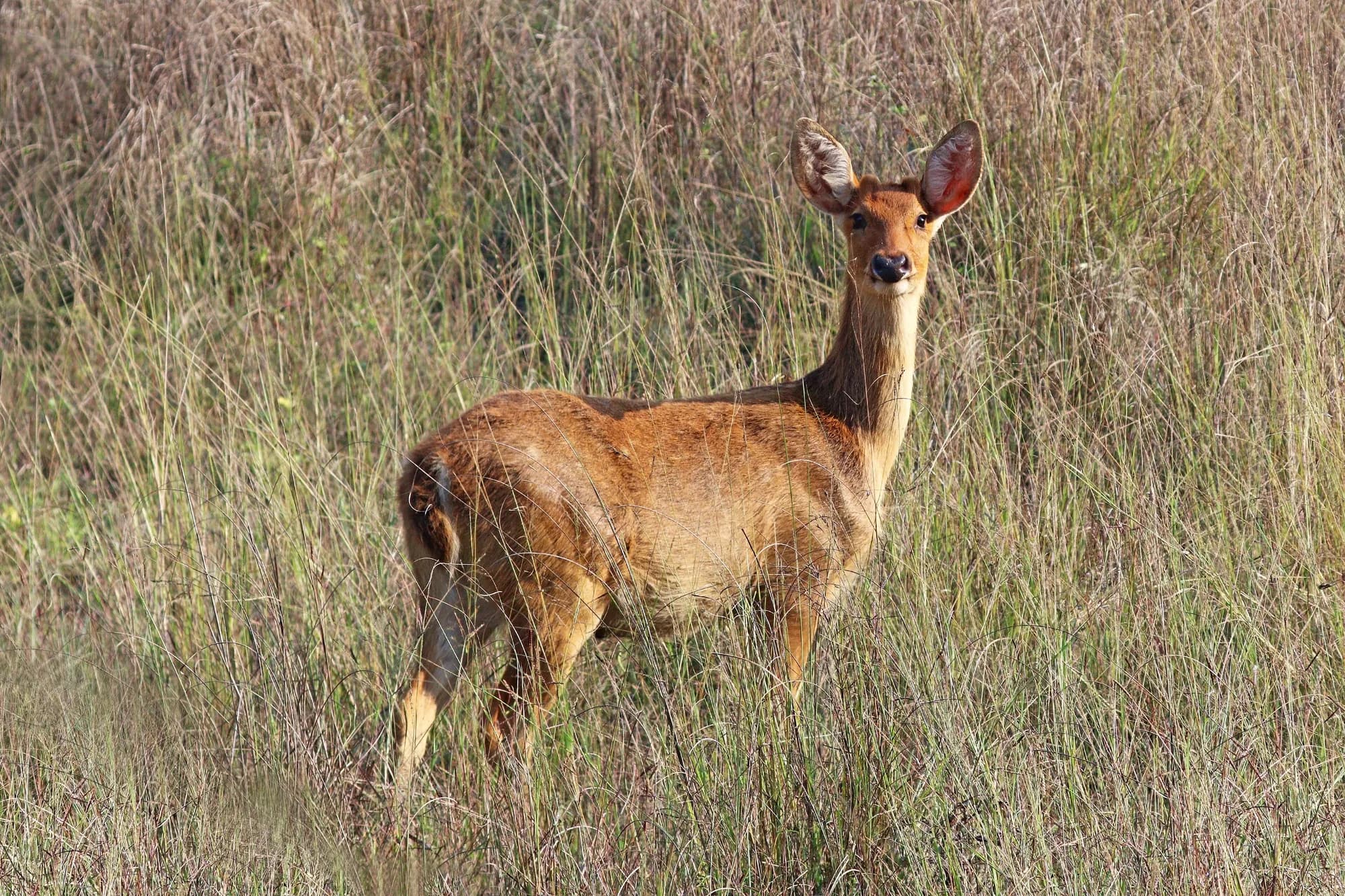 21 · Mammal
Barasingha
The hard-ground swamp deer was down to about sixty-six animals in the early 1970s. It survives in one reserve, and its recovery is the best thing that has happened in an Indian national park.
Kanha, and nowhere else on earth
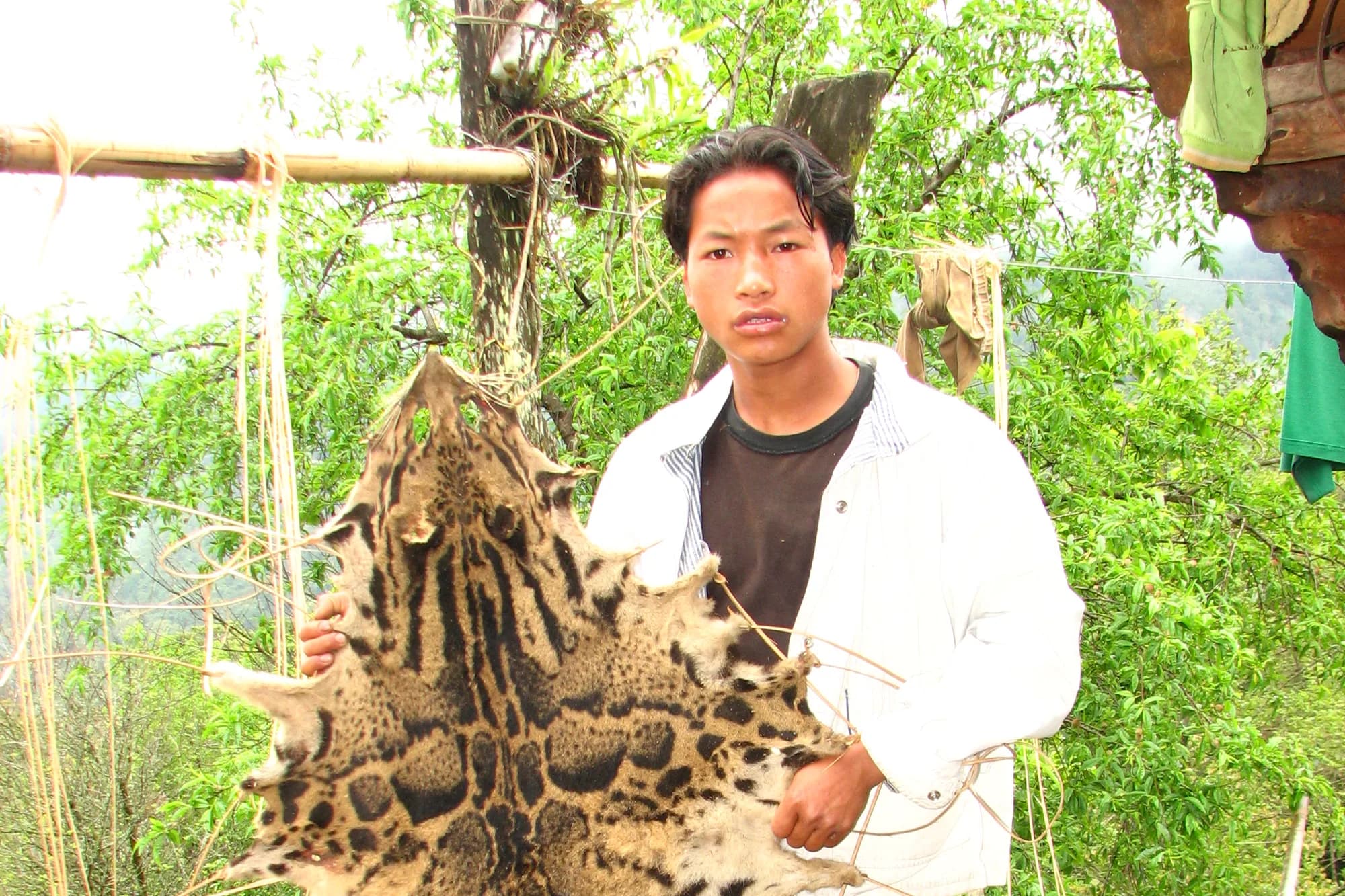 22 · Mammal
Clouded leopard
The most wanted cat in India and the least seen. A page whose main job is to be honest: there is no reserve, season or guide that will reliably show you one.
The Northeast, and almost never
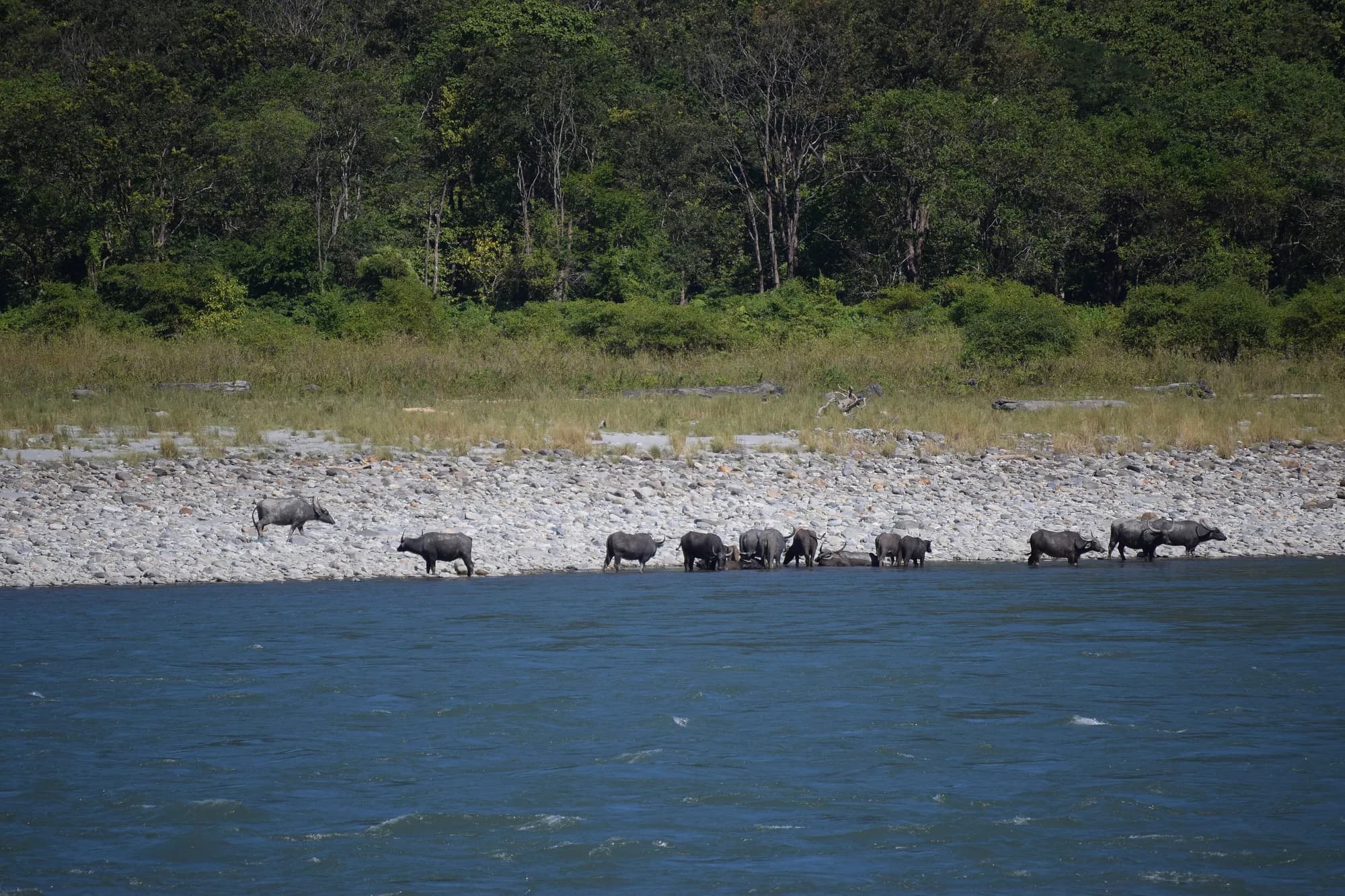 23 · Mammal
Wild water buffalo
The true wild buffalo, carrying the widest horn spread of any living bovid, standing in the same grassland as the rhinos and constantly written off as livestock.
Kaziranga, and the horns settle it
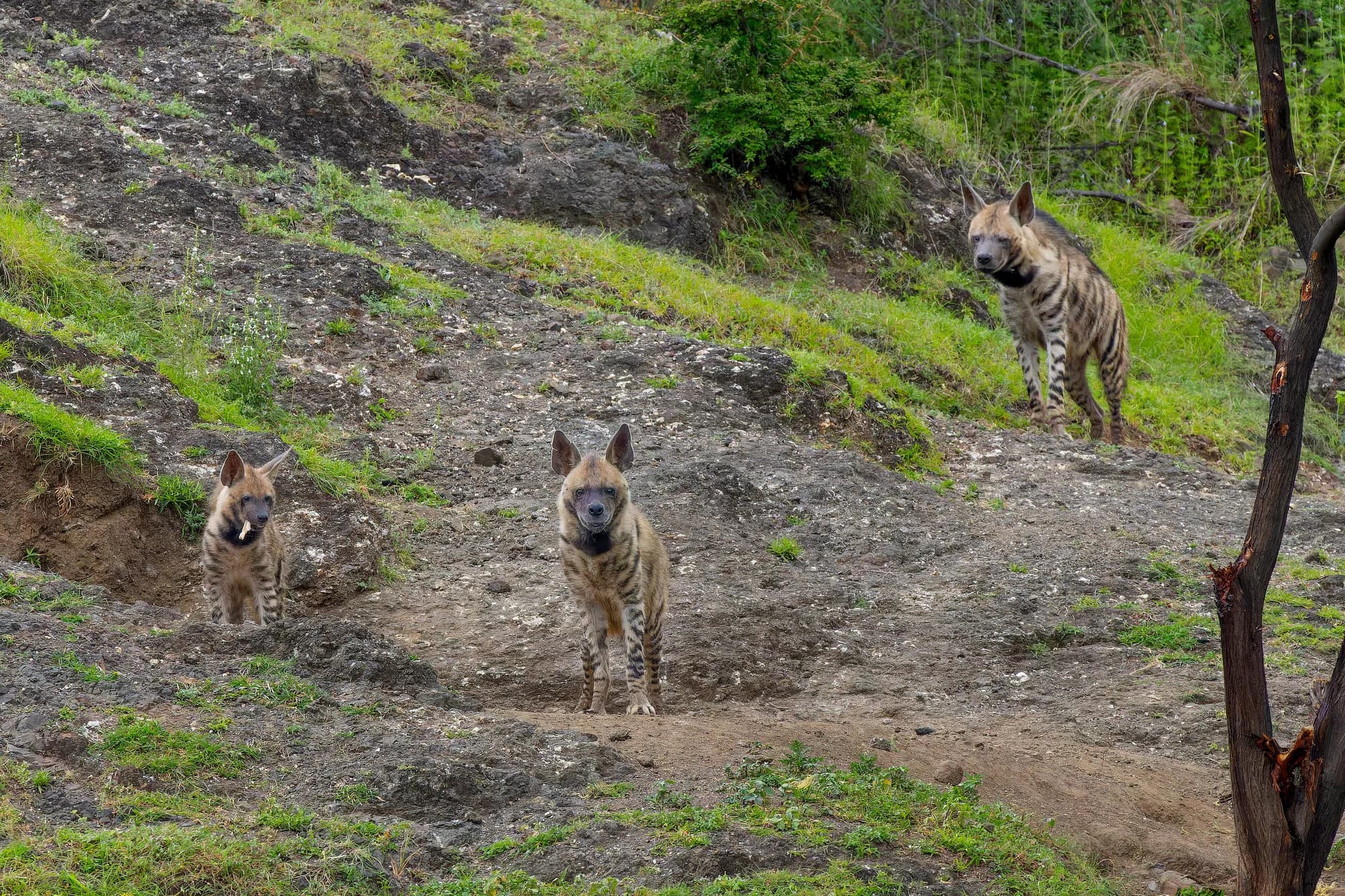 24 · Mammal
Striped hyena
A nocturnal scavenger with a mane it raises when alarmed, common across dry India and almost never on anyone's list. One of the best sightings you can have at Jawai.
Four reserves, at dusk, rarely looked for
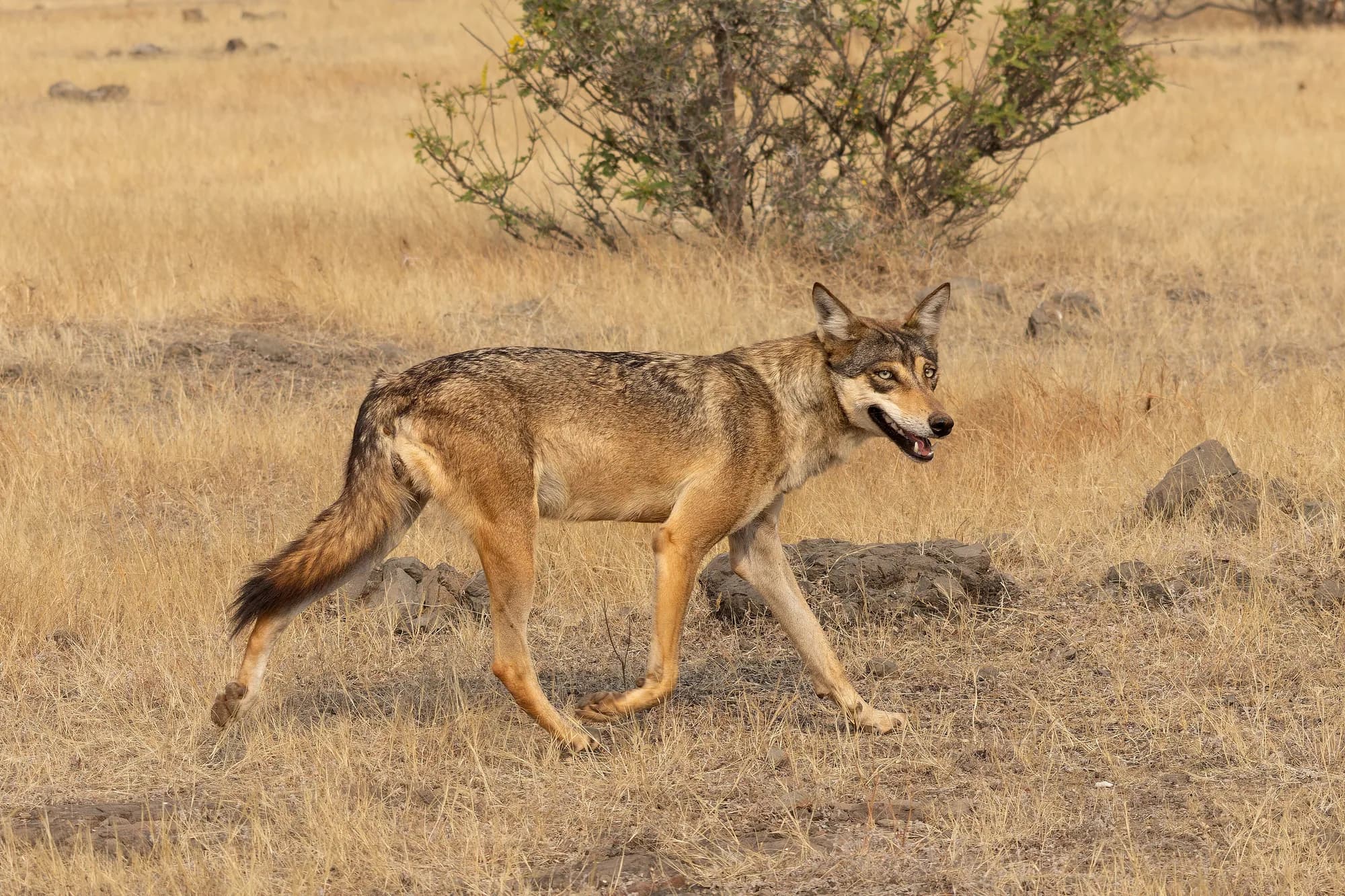 25 · Mammal
Indian wolf
One of the oldest wolf lineages alive, hunting blackbuck across grassland that almost nobody protects. Rarer in India than the tiger, and with a fraction of the attention.
Grassland, not forest
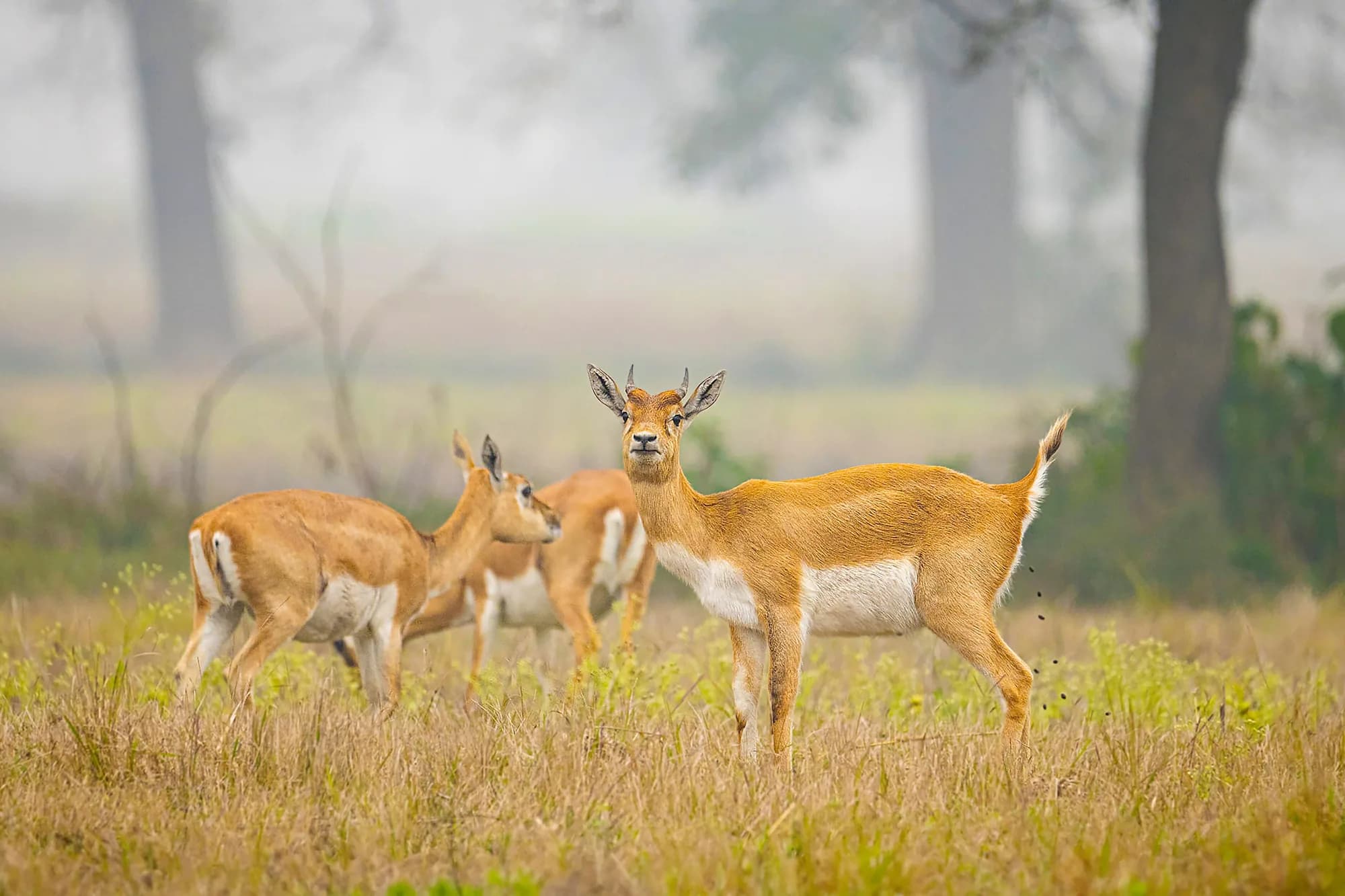 26 · Mammal
Blackbuck
India's most striking antelope — spiral horns, a hard black-and-white male in the rut — on flat open grassland where you can watch a hundred at once.
Grassland, and Velavadar above all
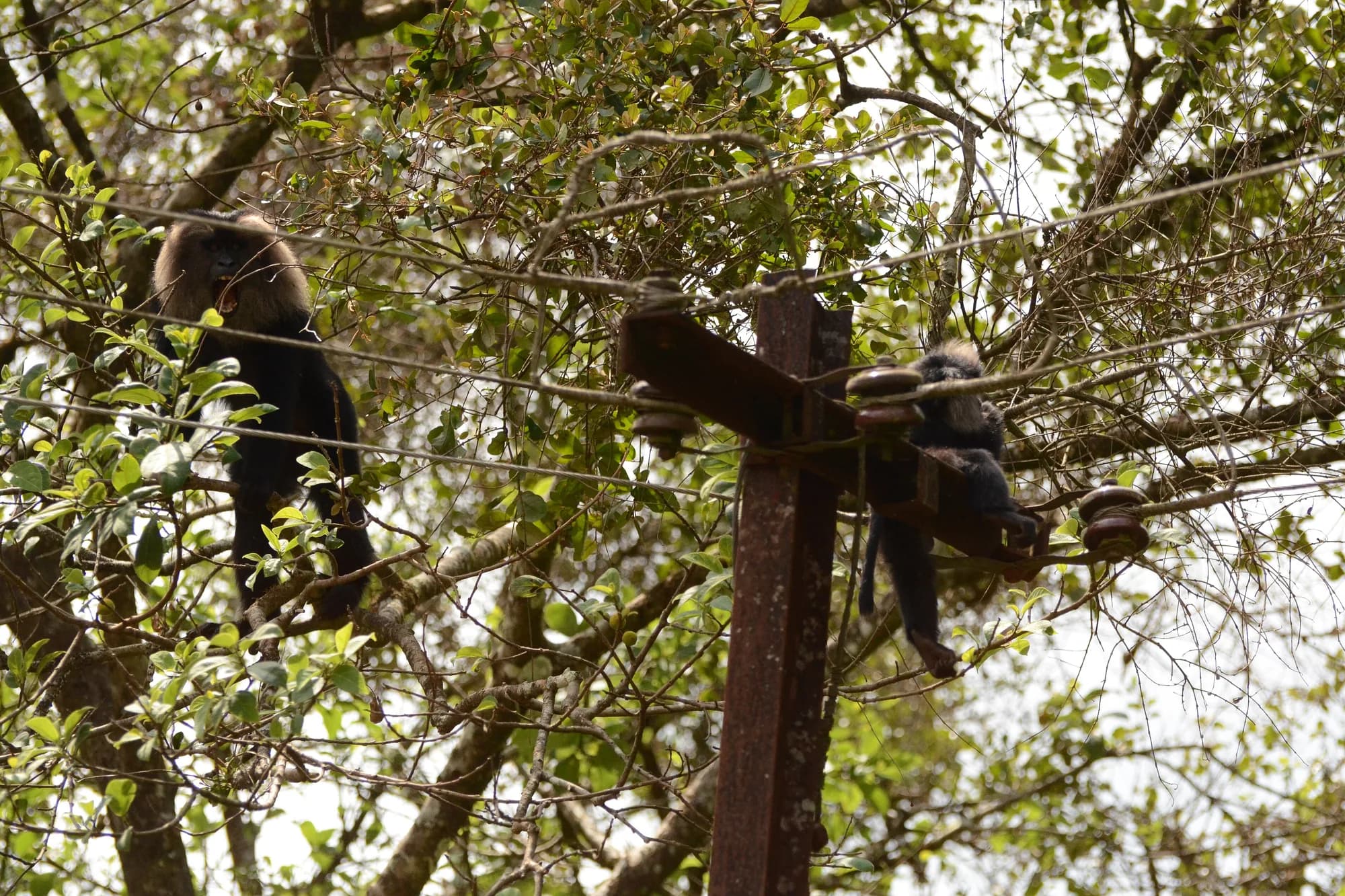 27 · Mammal
Lion-tailed macaque
A black macaque with a silver mane and a tufted tail, confined to fragments of Western Ghats rainforest. One of the most distinctive primates in Asia and among the least seen in India.
Western Ghats rainforest canopy
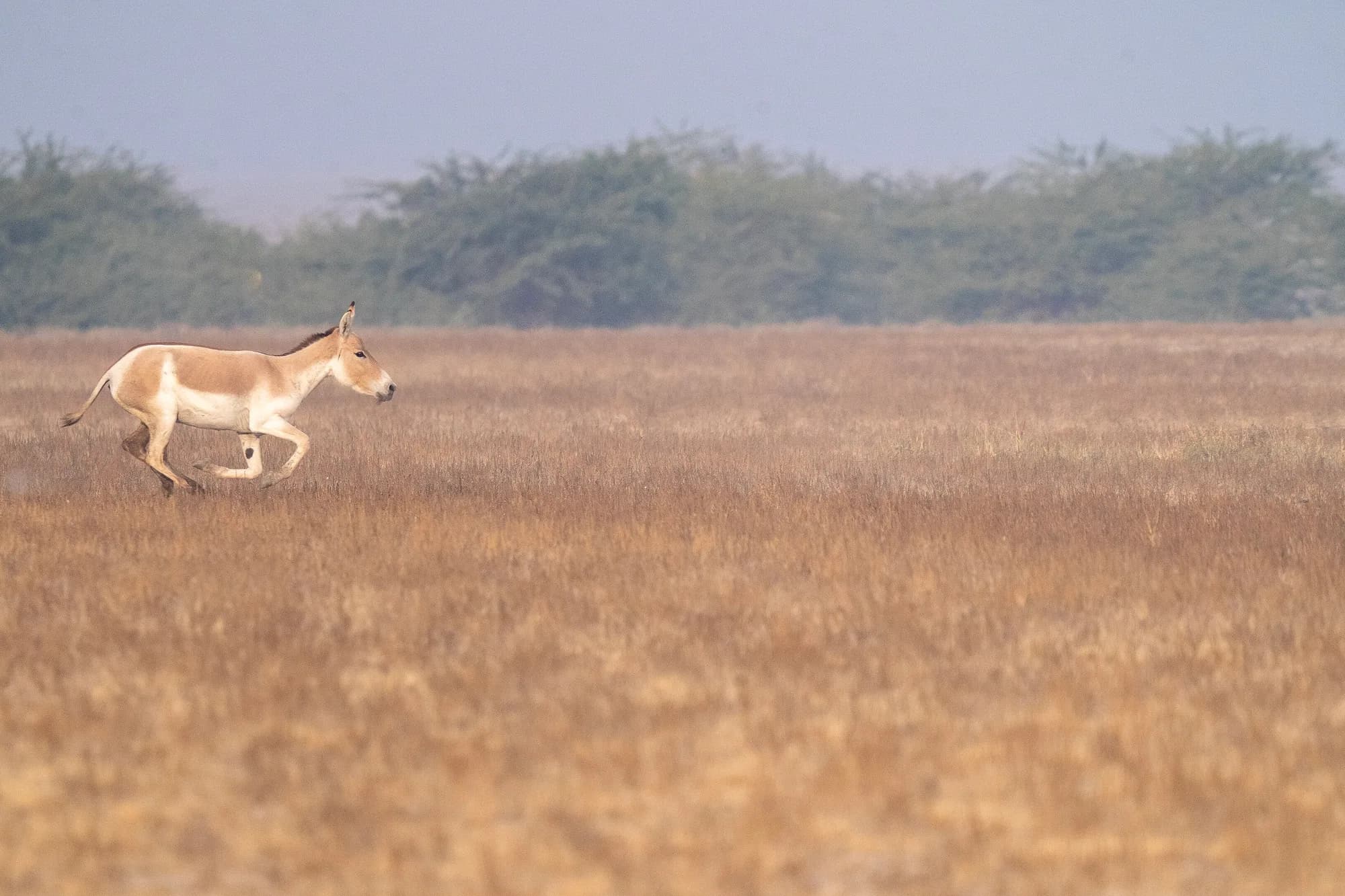 28 · Mammal
Indian wild ass
A wild equid running across a salt desert that floods every monsoon and bakes solid every summer. One of the few Indian populations whose numbers are genuinely going up.
The Little Rann of Kachchh
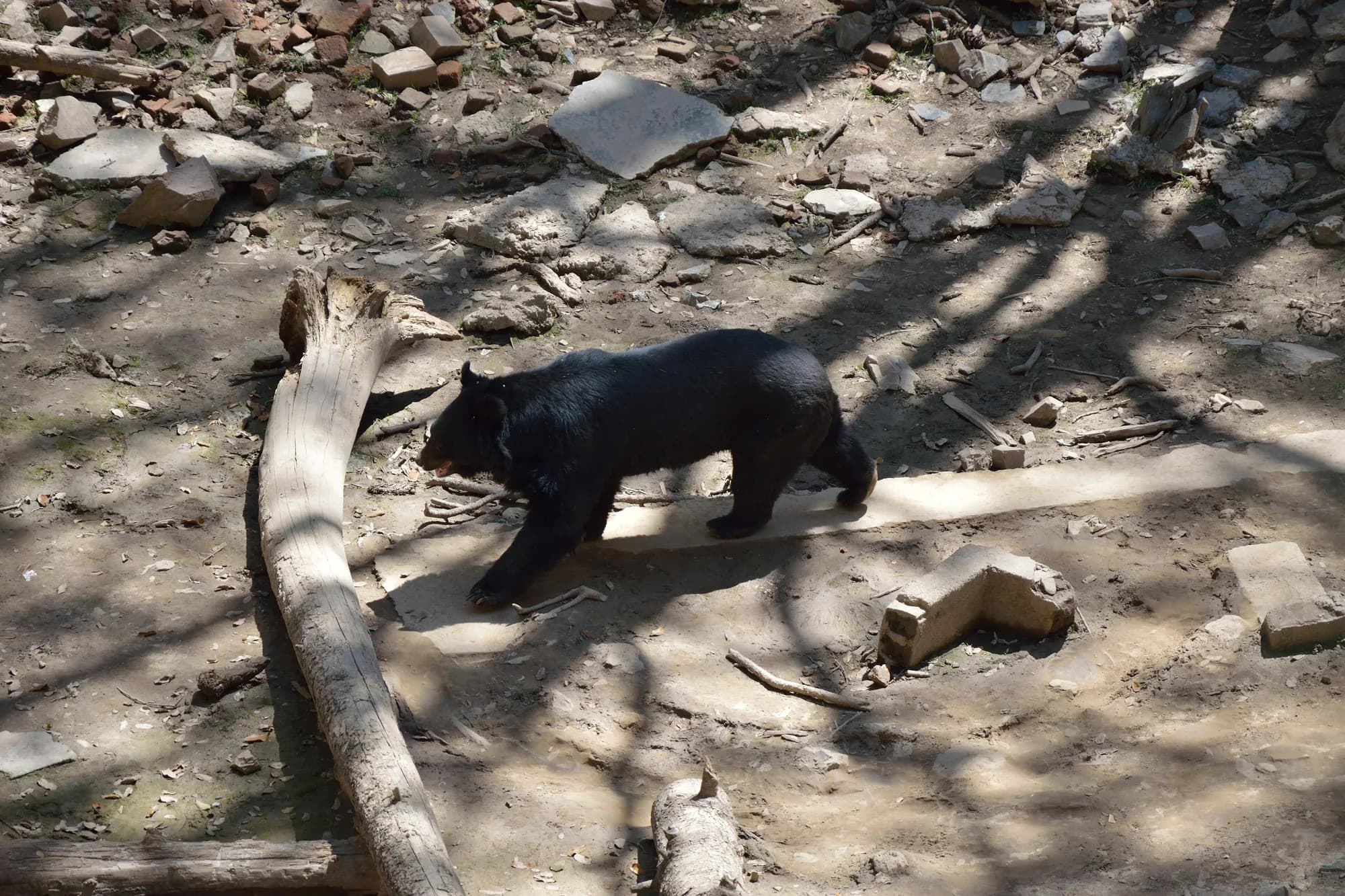 29 · Mammal
Asiatic black bear
The Himalayan bear, black with a white chevron on the chest. It is confused with the sloth bear constantly in trip reports, and the two do not overlap anywhere you are likely to be.
Himalayan oak forest, not the plains
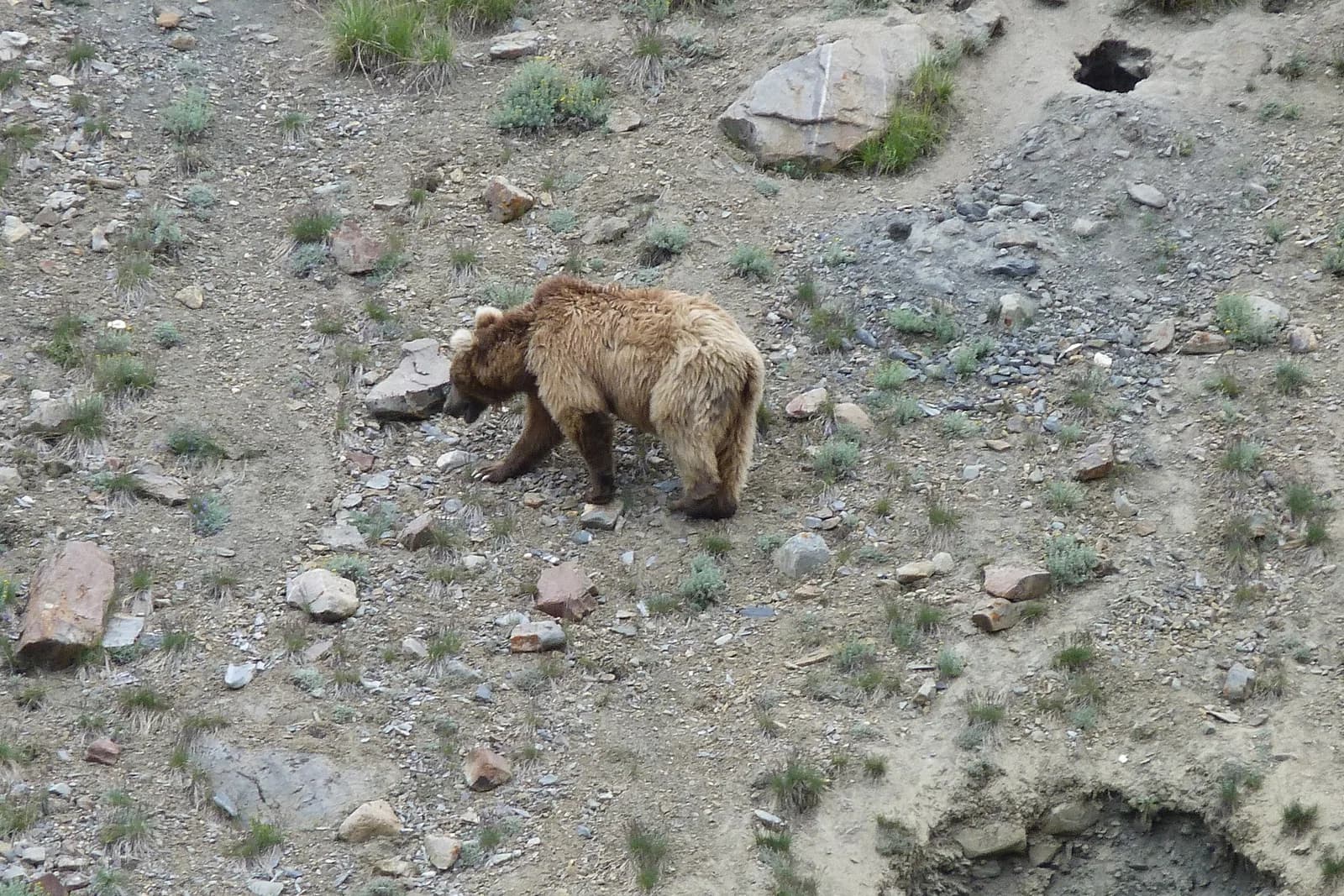 30 · Mammal
Himalayan brown bear
India's largest carnivore by weight, sandy-brown and confined to a handful of high valleys. It is sold as a bonus on snow leopard trips, and in the snow leopard season it is asleep.
Alpine meadow above the treeline
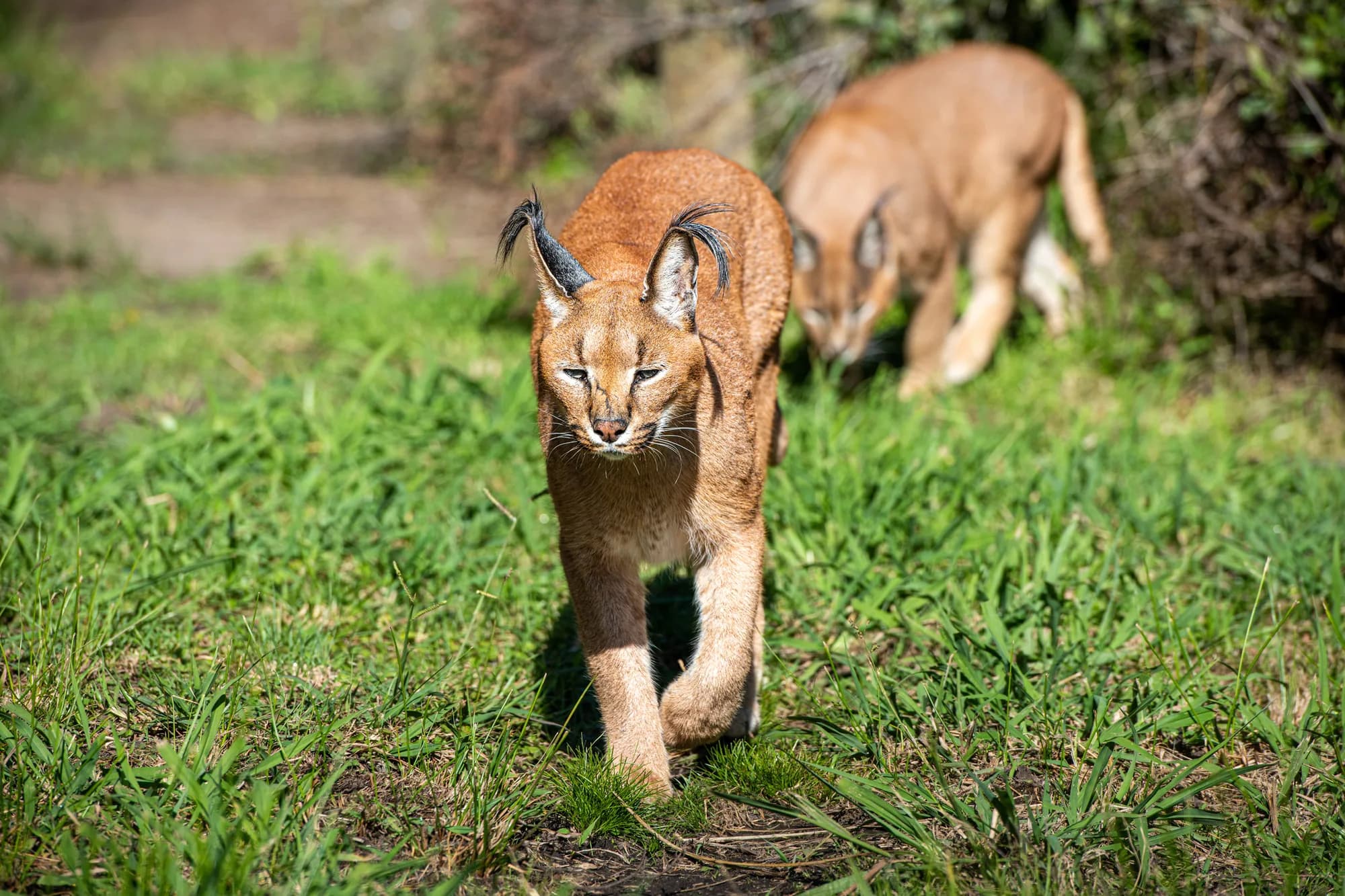 31 · Mammal
Caracal
Possibly the hardest cat to see in India. A handful of Ranthambore camera-trap records and a few sightings a decade carry the entire demand for this animal.
Ranthambore, and vanishingly rarely
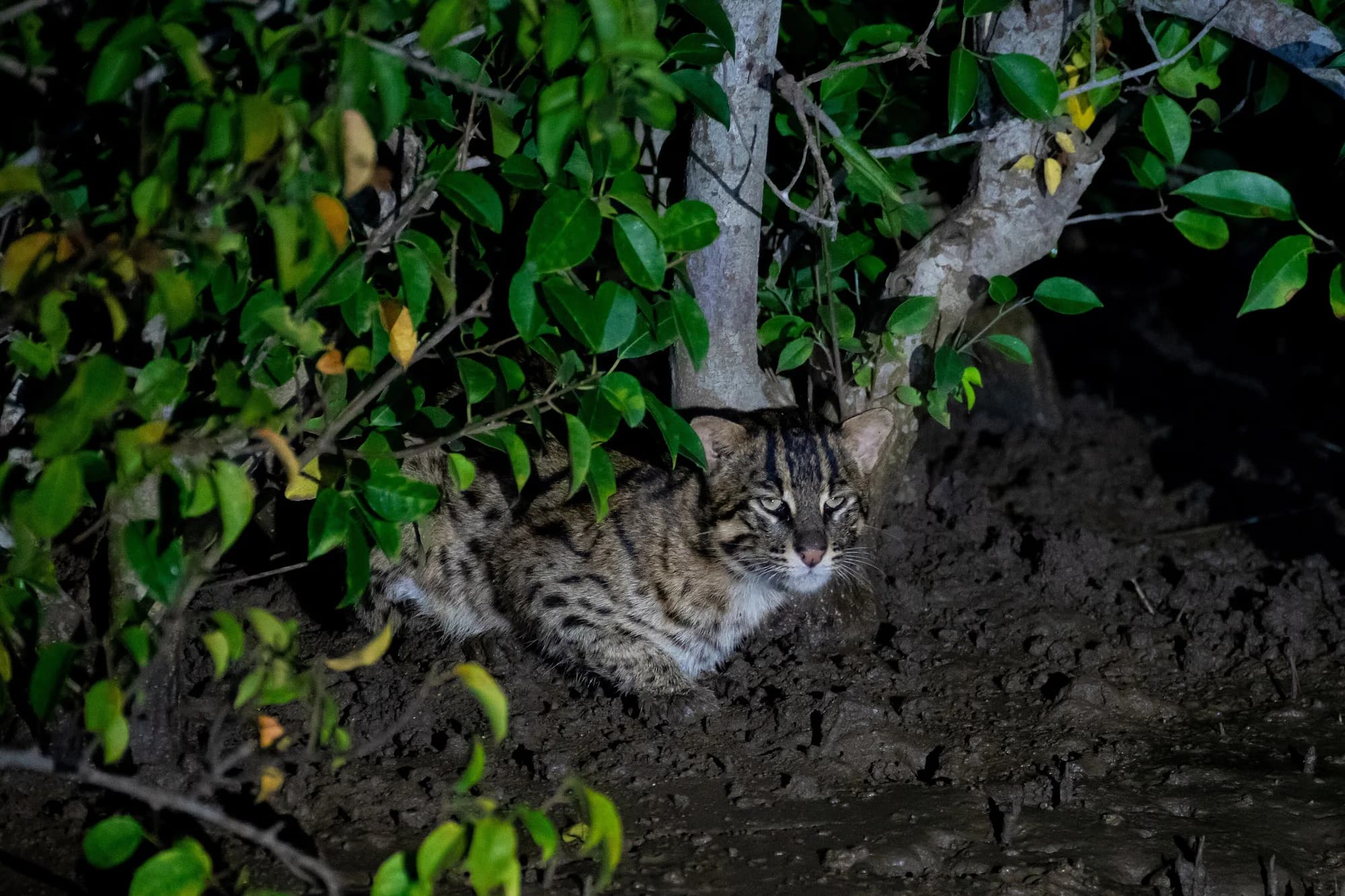 32 · Mammal
Fishing cat
A stocky, short-tailed wetland cat that hunts in the water. It is not a forest animal, which is why safari parks are the wrong place to look and Odisha's marshes are the right one.
Reed bed and mangrove, after dark
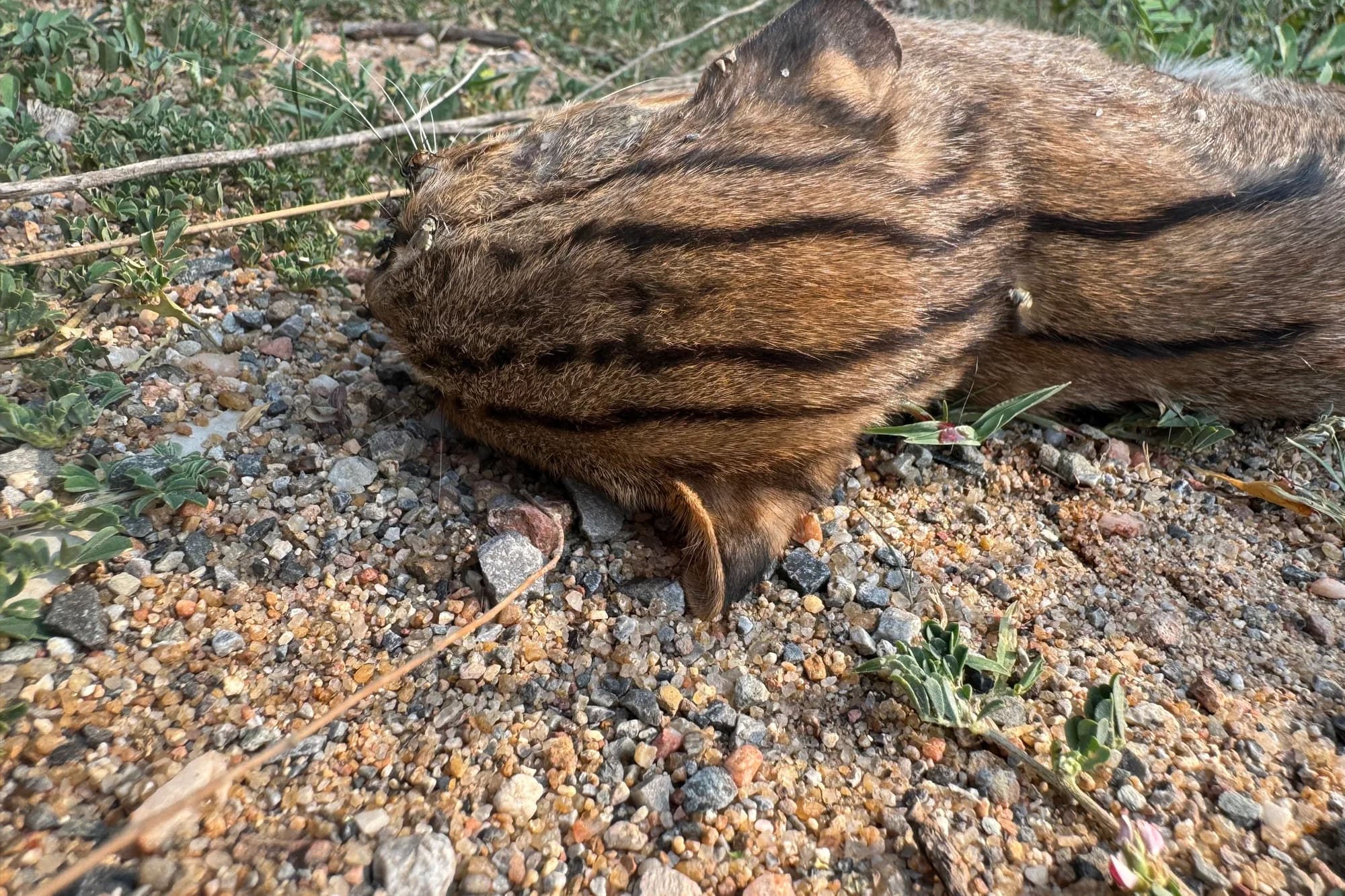 33 · Mammal
Rusty-spotted cat
The smallest wild cat in the world, roughly half the weight of a house cat, and Tadoba is the most reliable place on earth to see one.
Tadoba, and the smallest cat alive
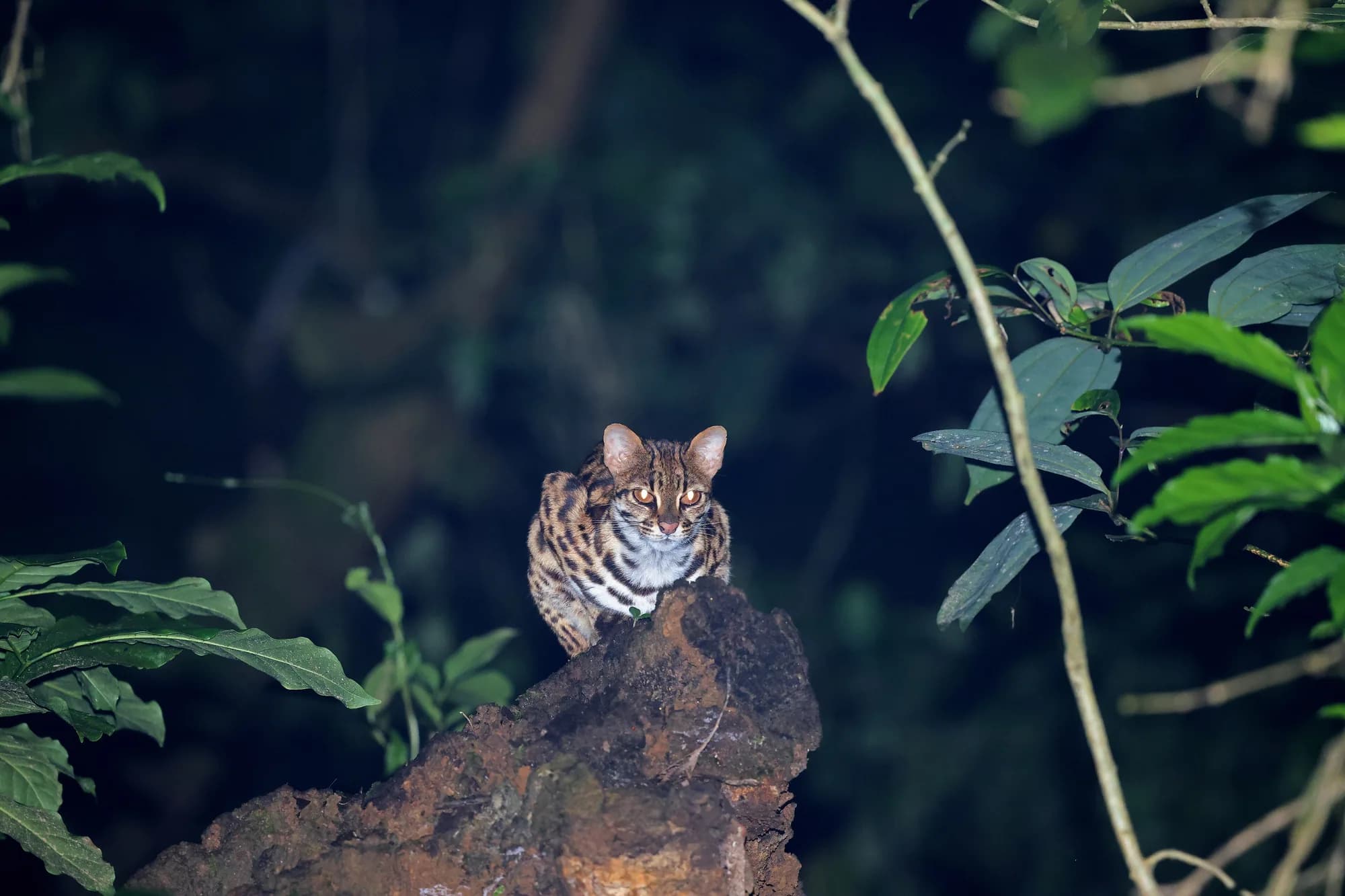 34 · Mammal
Leopard cat
A house-cat-sized spotted cat with bold white face stripes, common across forested India, and the animal most often reported as a leopard cub.
Night drives, and misreported constantly
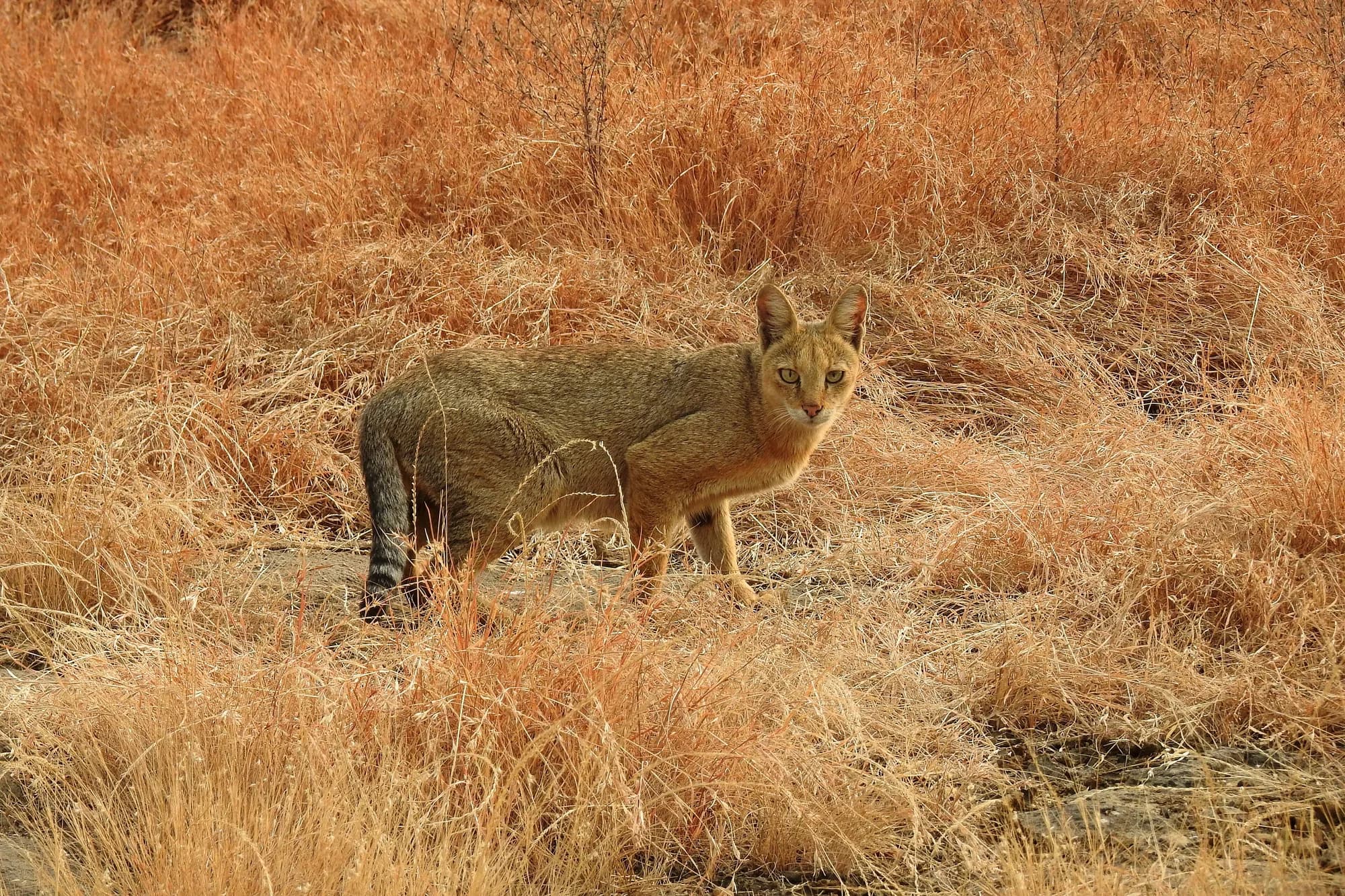 35 · Mammal
Jungle cat
India's most-seen wild cat and its most misidentified. Long-legged, plain sandy, tuft-eared, and reported variously as a caracal, a leopard cub and somebody's escaped tabby.
Everywhere, and always misnamed
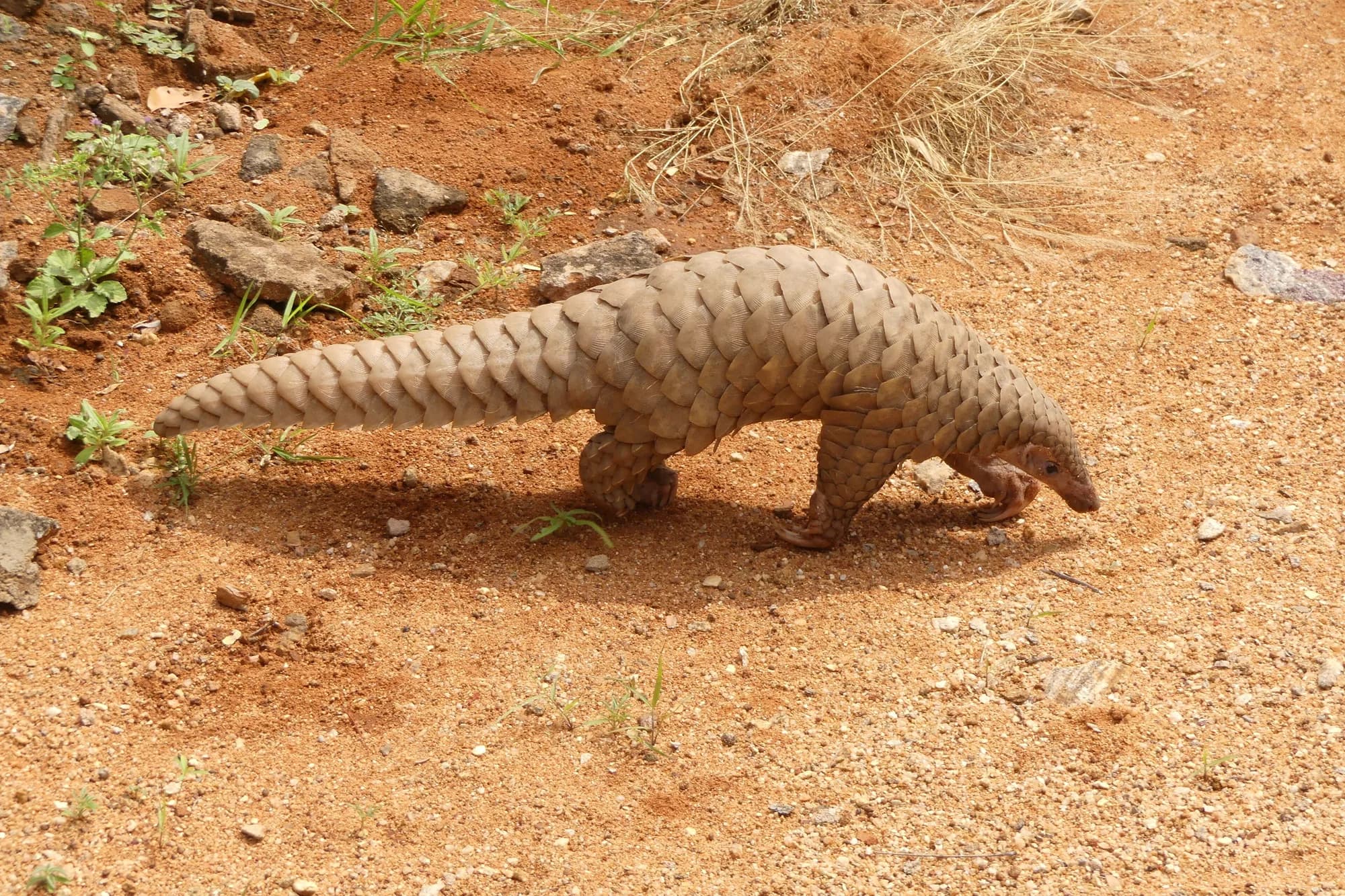 36 · Mammal
Indian pangolin
The most trafficked wild mammal on earth, and one almost nobody sees. It lives across most of India, comes out only at night, and the honest encounter is a burrow rather than an animal.
Almost everywhere, almost never seen
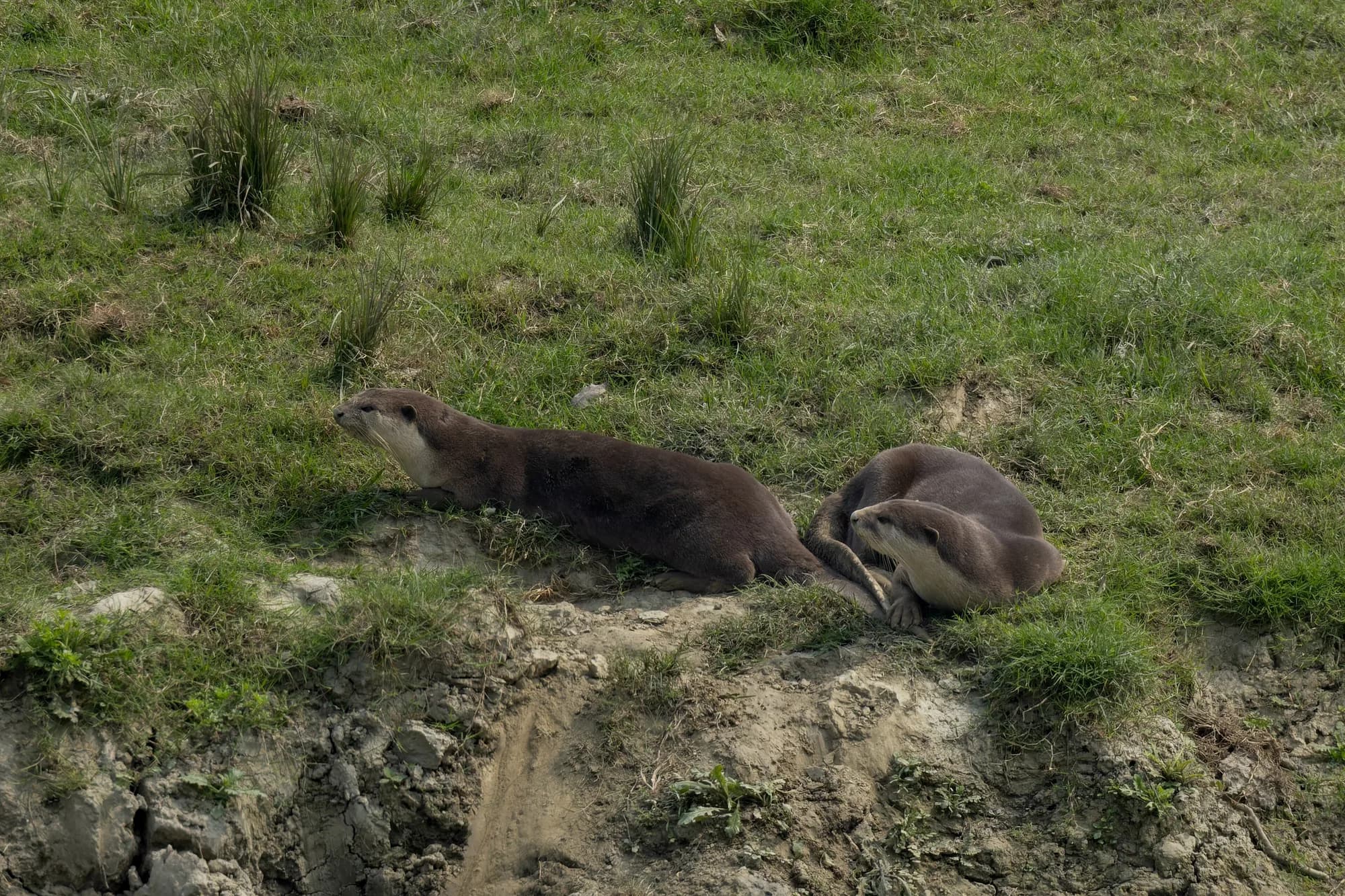 37 · Mammal
Smooth-coated otter
A family of otters working a river is one of the best sightings in India and almost nobody books for it. Loud, social, and easier to hear than to see.
Rivers, in noisy family groups
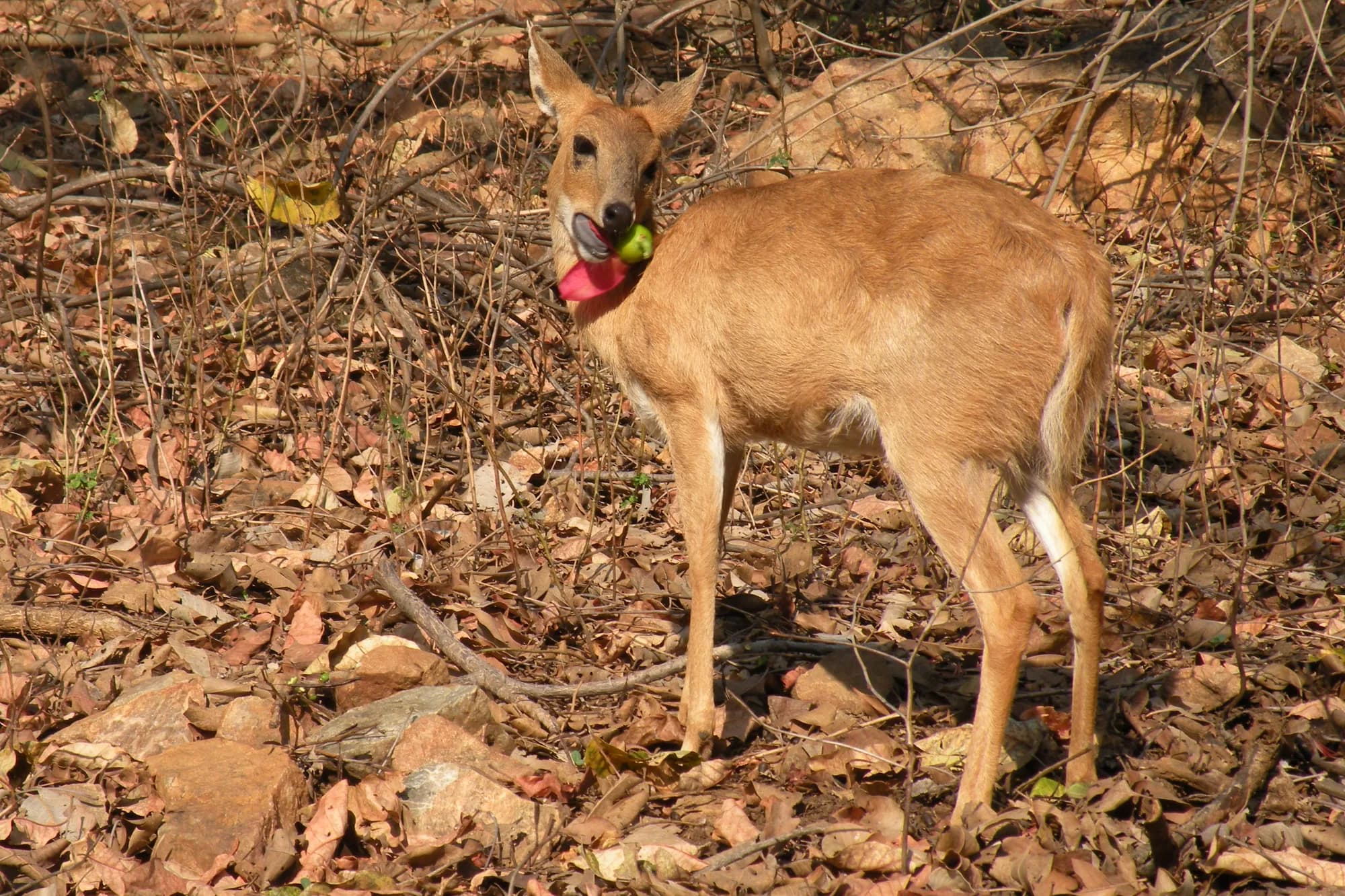 38 · Mammal
Four-horned antelope
The only four-horned antelope in the world, endemic to the subcontinent, small and shy and driven past by every vehicle heading for a tiger.
Central India, and walked past daily
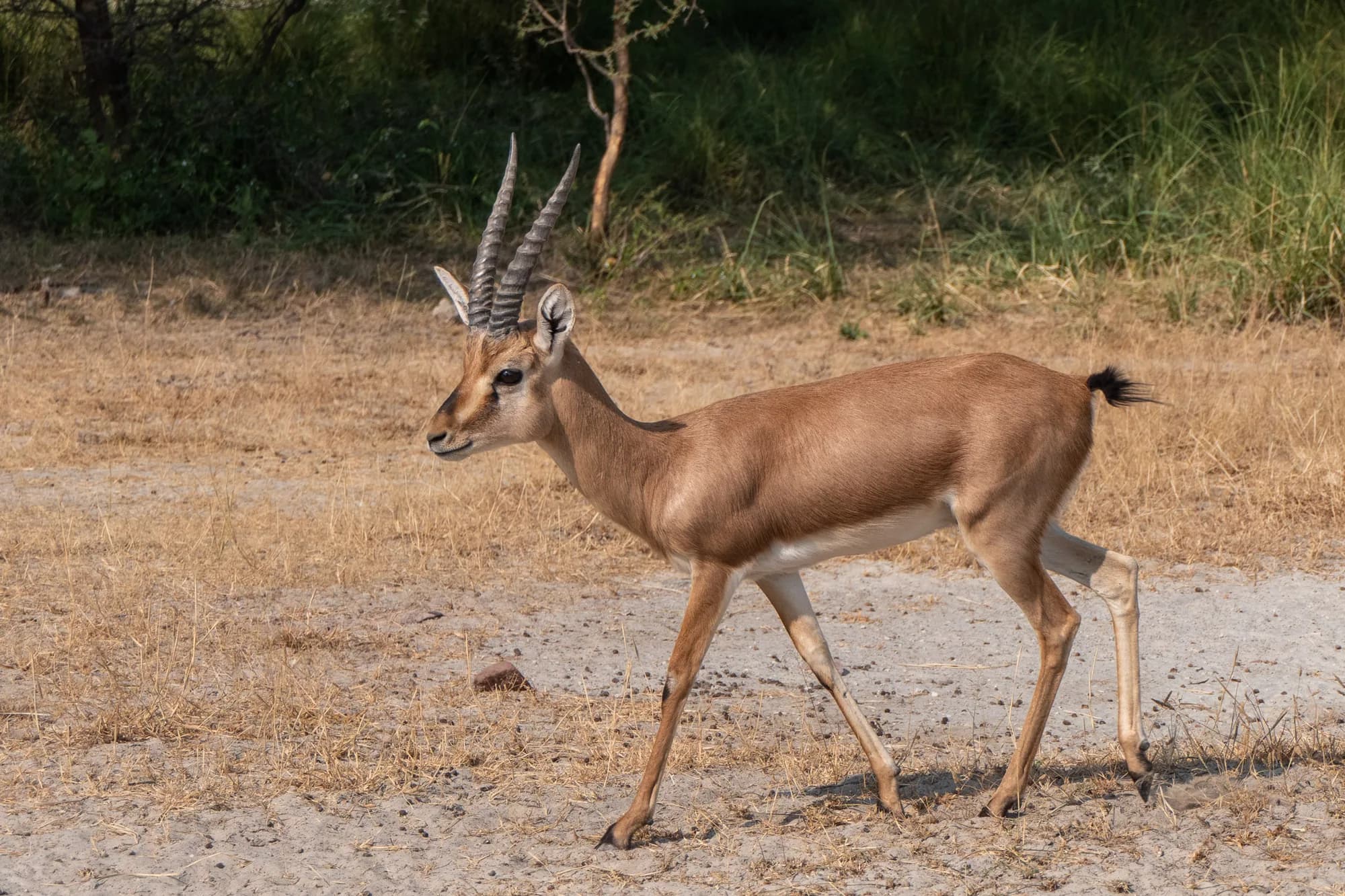 39 · Mammal
Chinkara
India's gazelle — small, sandy and built for heat, going long stretches without drinking. The animal that makes Ranthambore and Jawai look like the dry country they are.
The dry country, and it makes it read as desert
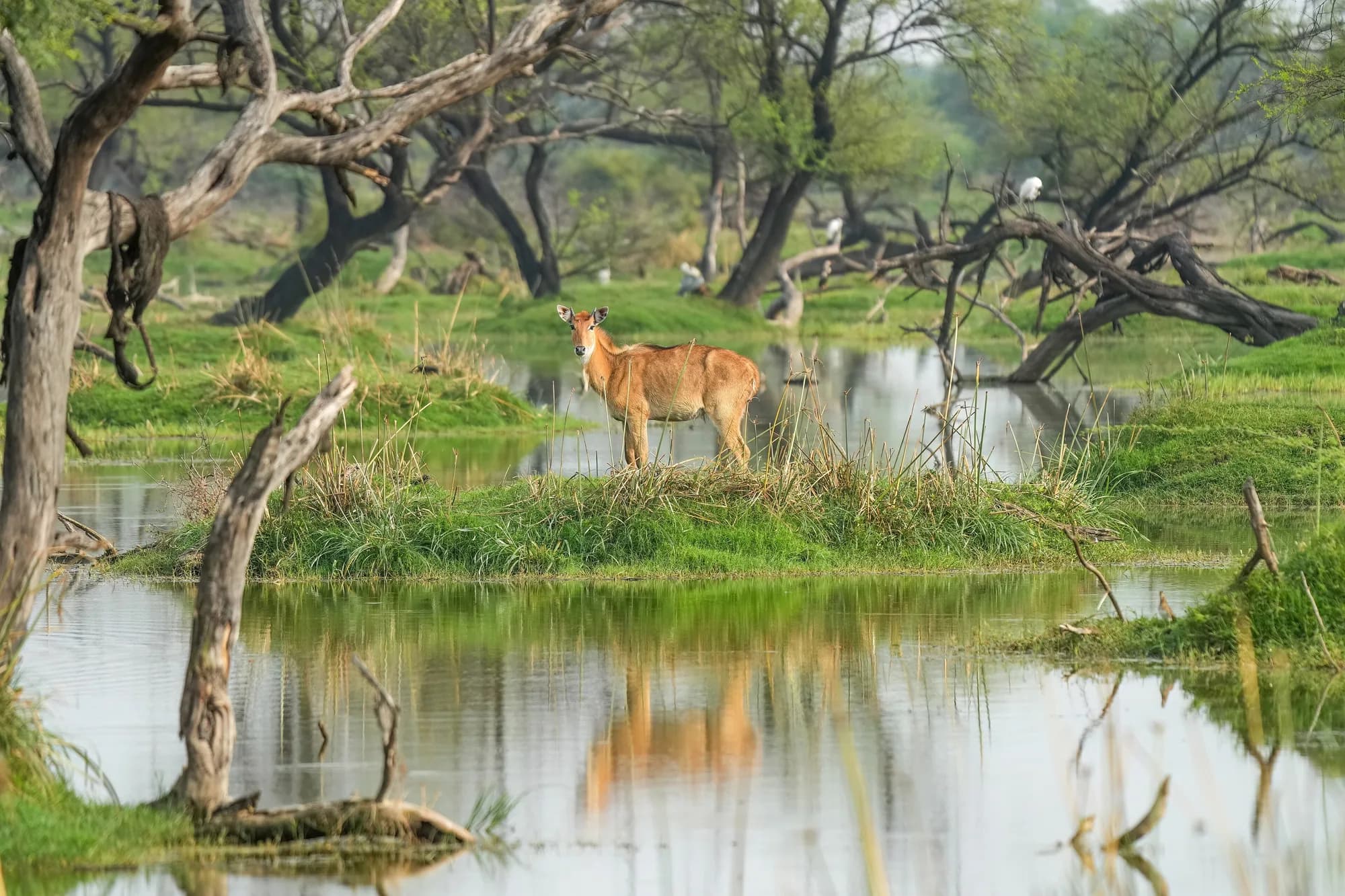
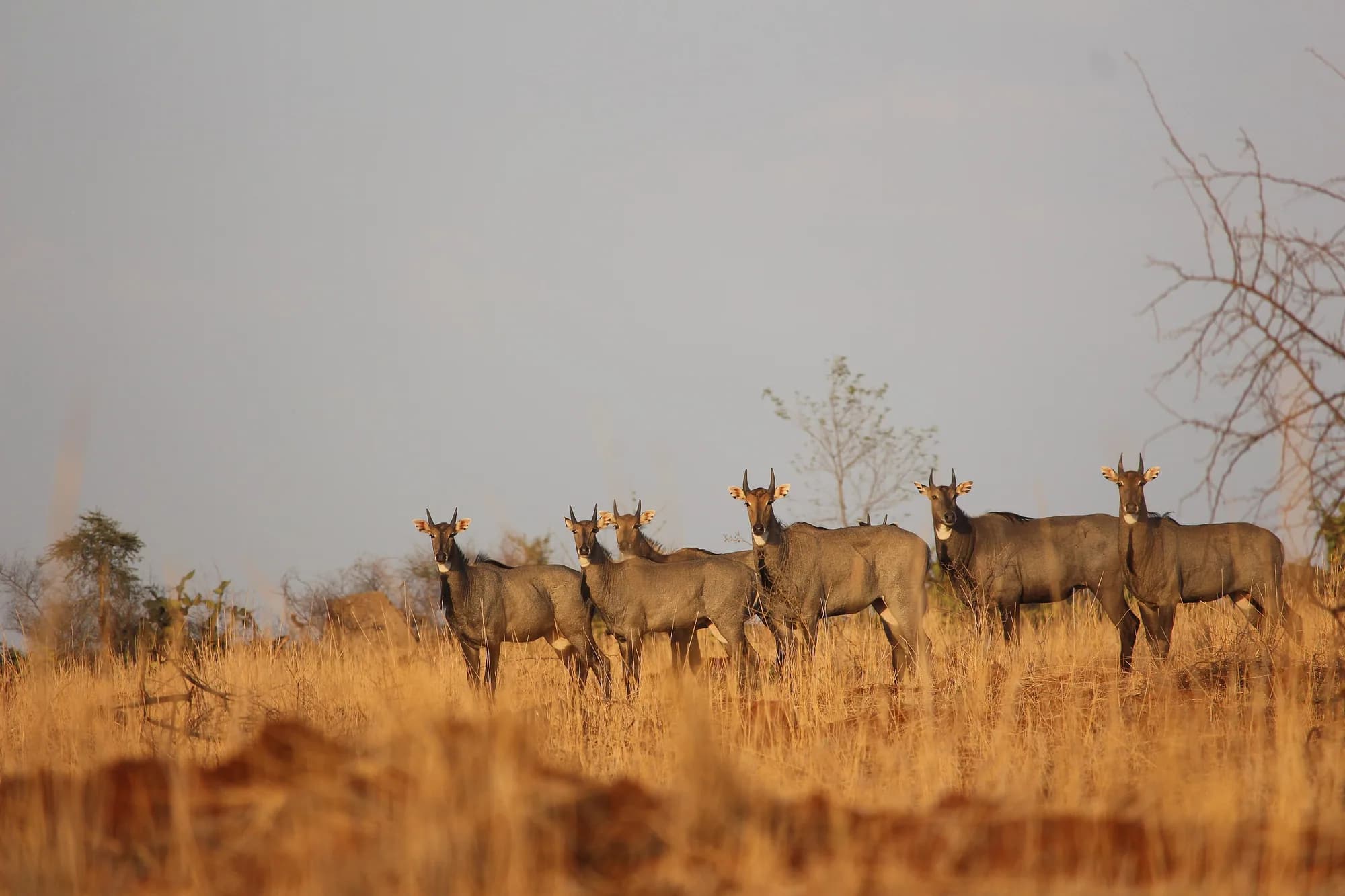 40 · Mammal
Nilgai
Asia's largest antelope, seen by every visitor to northern India and looked at by almost none of them. The bulls are slate blue-grey and genuinely strange animals.
Everywhere in the north, and ignored
 41 · Mammal
Sambar
India's largest deer, and the animal whose alarm call is worth more to you than any pugmark. When a sambar honks, the vehicle should stop.
Every reserve, and the call that matters most
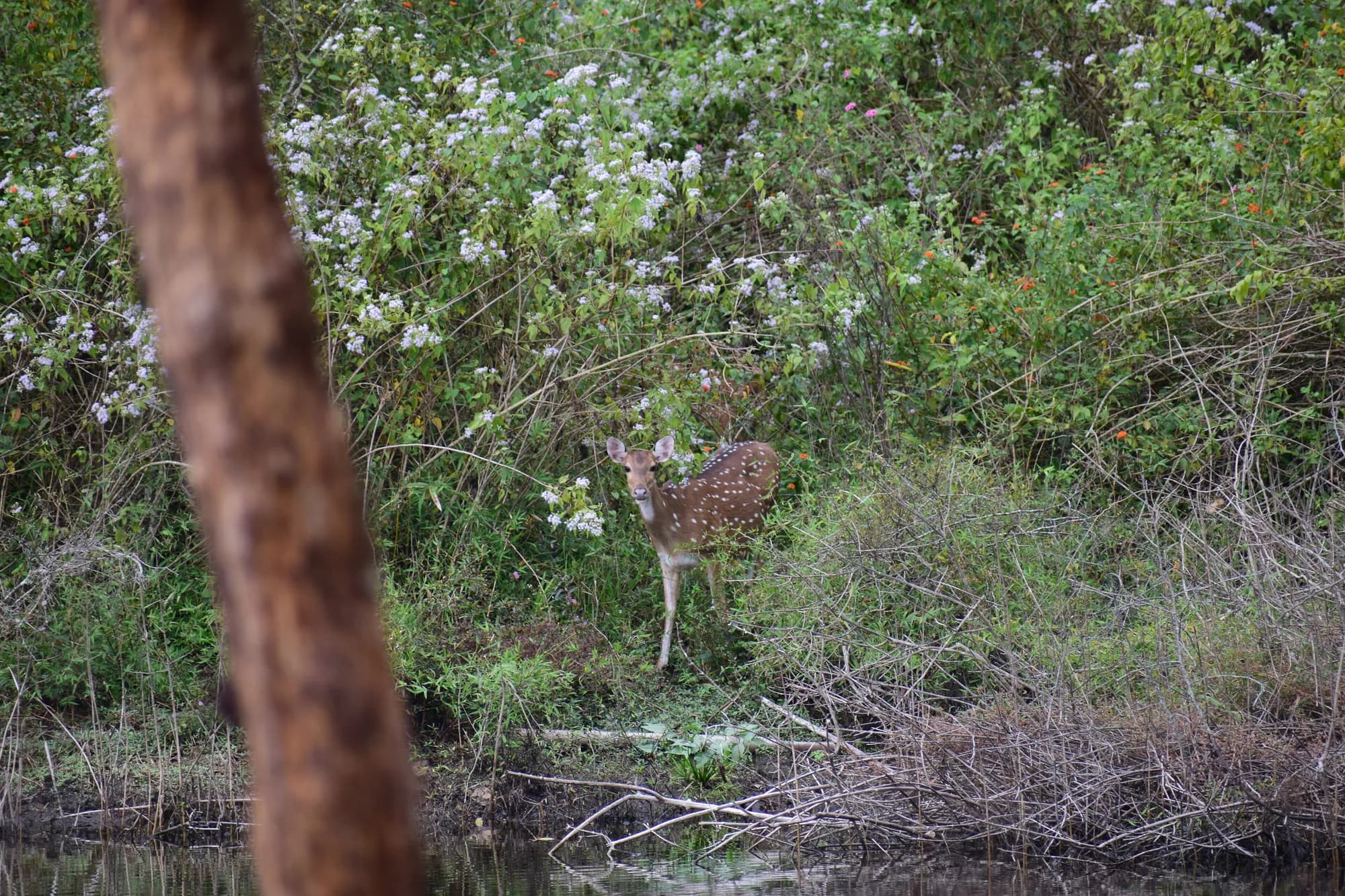 42 · Mammal
Chital
The spotted deer everyone sees within ten minutes and stops noticing by the second drive. Also the most common alarm call in central India, and the main reason tigers eat.
Every reserve, in very large numbers
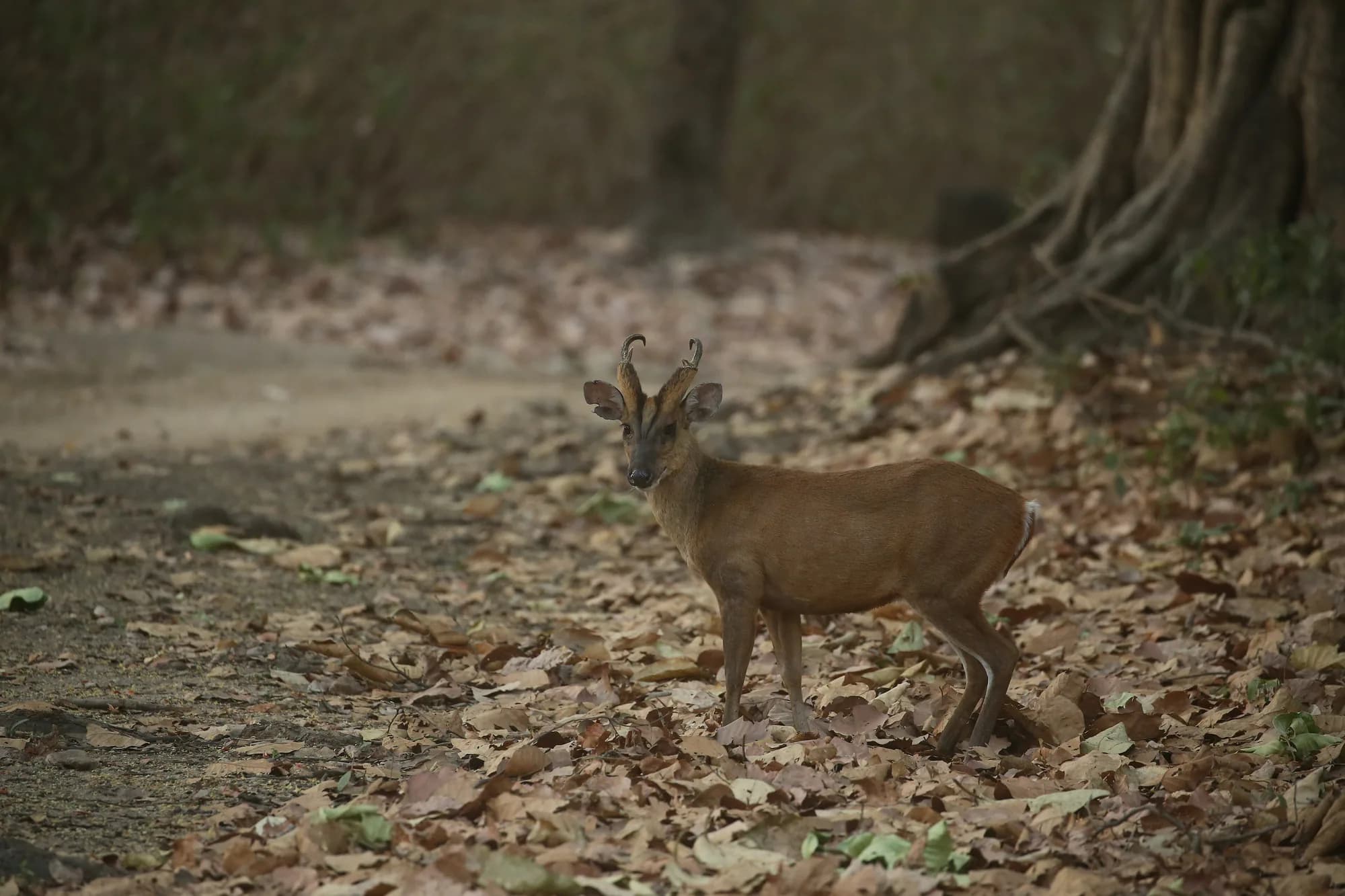 43 · Mammal
Indian muntjac
A small russet deer with tusks and a bark like a dog, solitary in thick cover. Its call is routinely mistaken for an alarm, and usually is not one.
Heard far more than seen
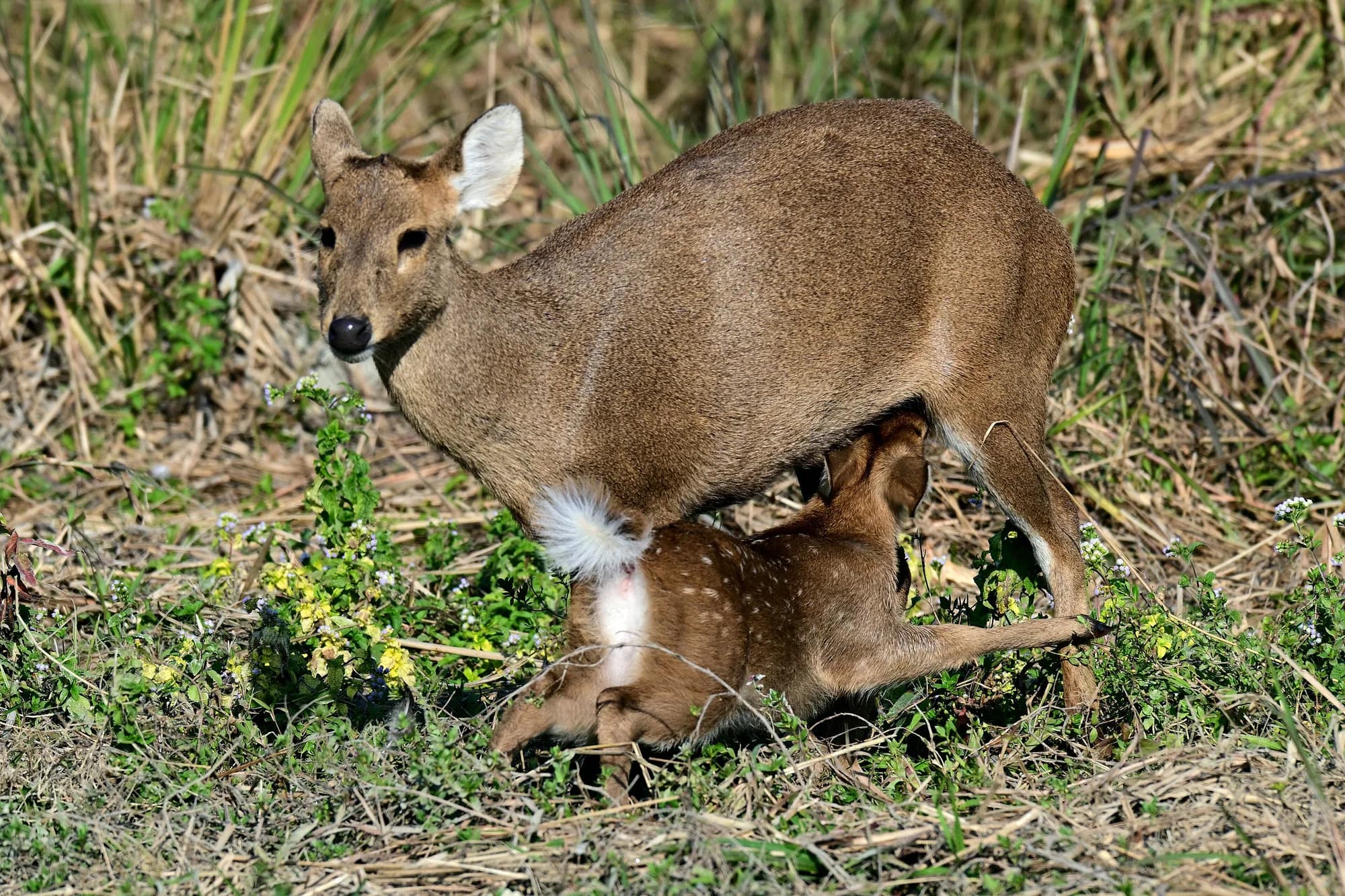 44 · Mammal
Hog deer
A small, heavy-bodied deer that runs with its head down instead of leaping. It is endangered, it is common where it survives, and in Kaziranga it is the animal chital gets called by mistake.
Tall grassland of the terai and Assam
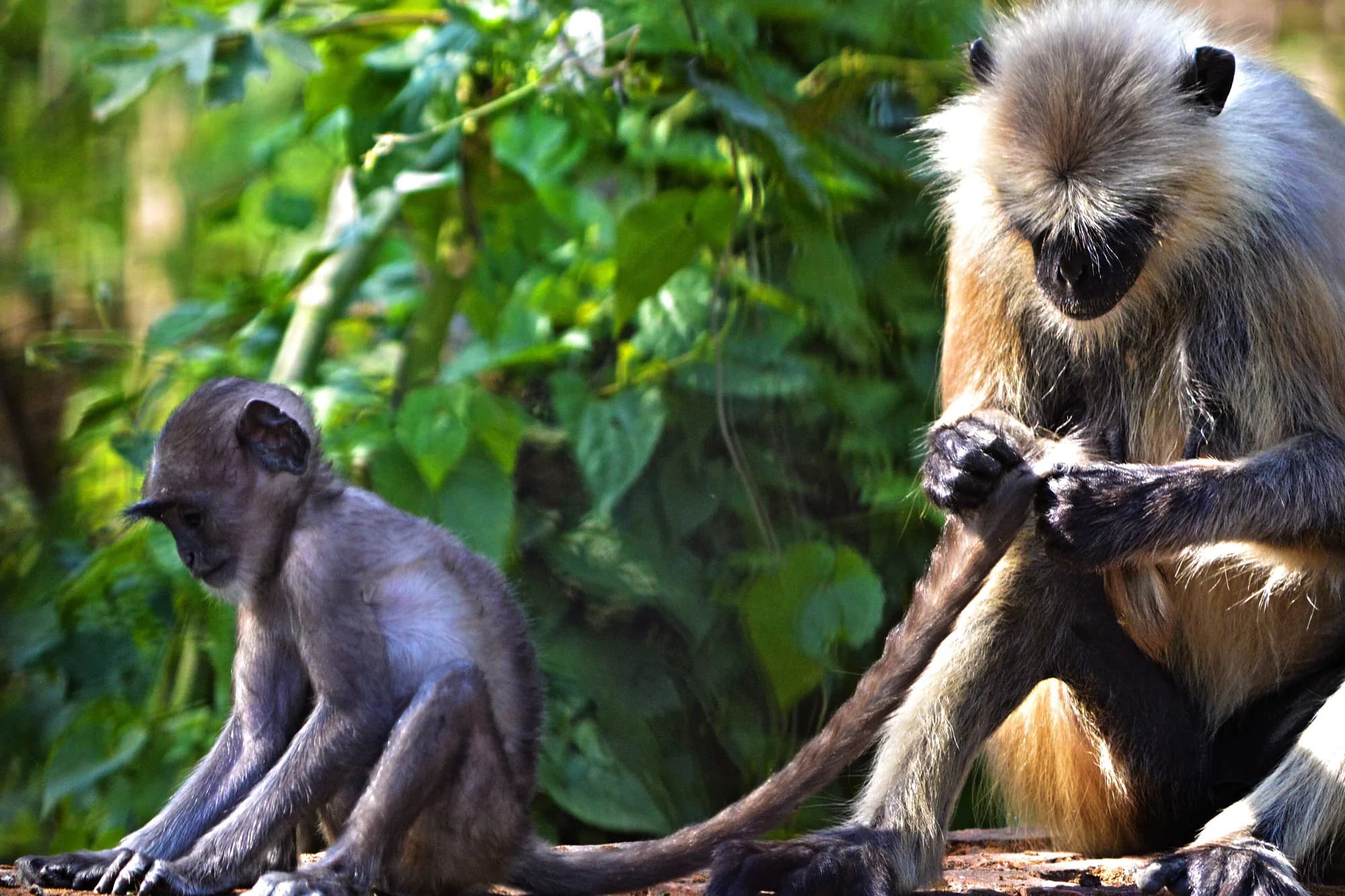 45 · Mammal
Hanuman langur
Grey, long-tailed and everywhere, and the single most useful animal on a drive. A langur troop has seen the leopard long before your guide has.
Every reserve, and your best spotter
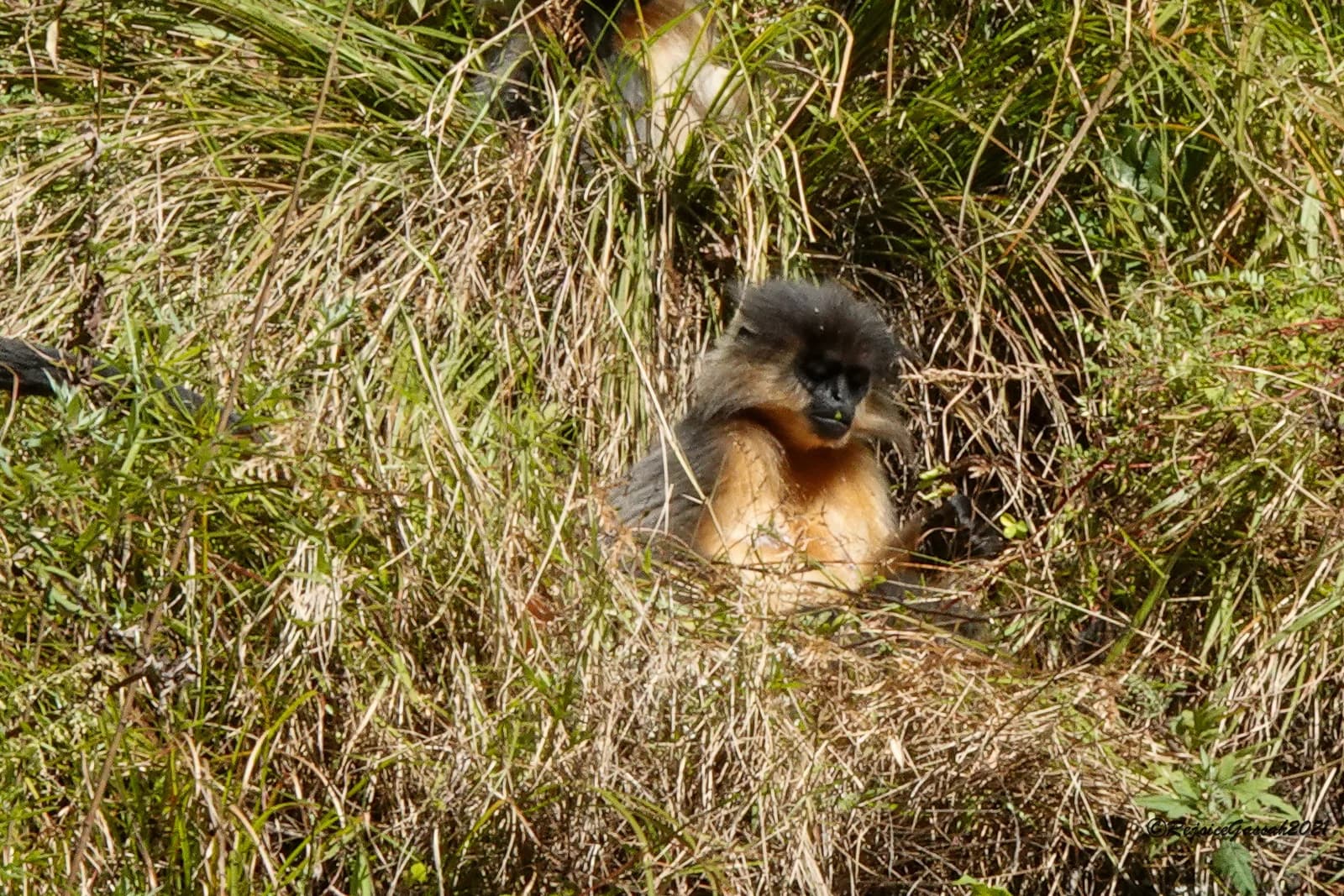 46 · Mammal
Capped langur
The common langur of the Northeast, dark-capped with orange underparts that only show when it moves. It is easy to see and easy to name wrong, because three langurs share that corner of India.
Northeast canopy, above the road
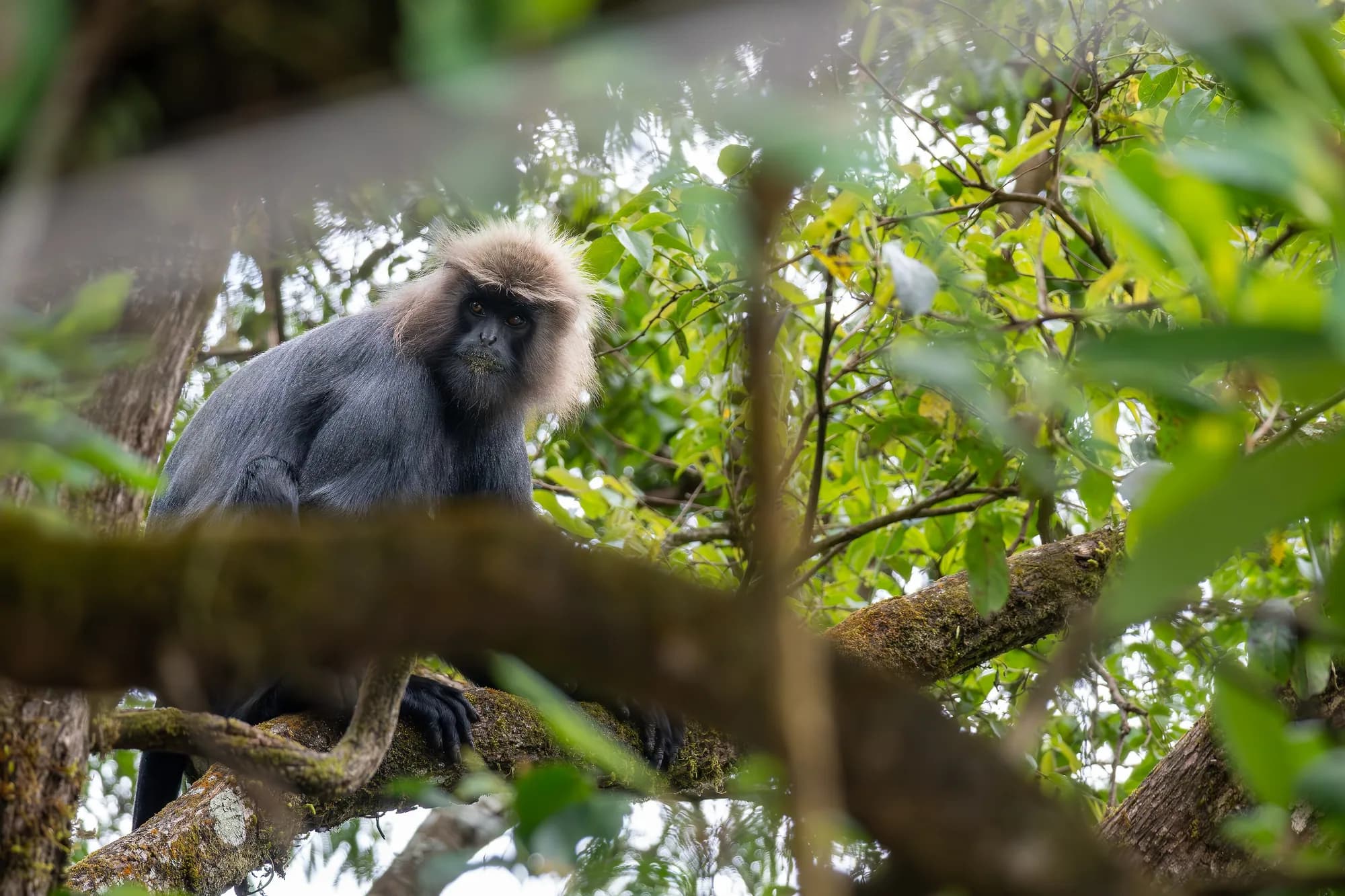 47 · Mammal
Nilgiri langur
Glossy black with a golden head, endemic to the Western Ghats and loud enough to find by ear. It is the easiest Ghats endemic to see, and the one most often mistaken for the lion-tailed macaque people came for.
Western Ghats, and only there
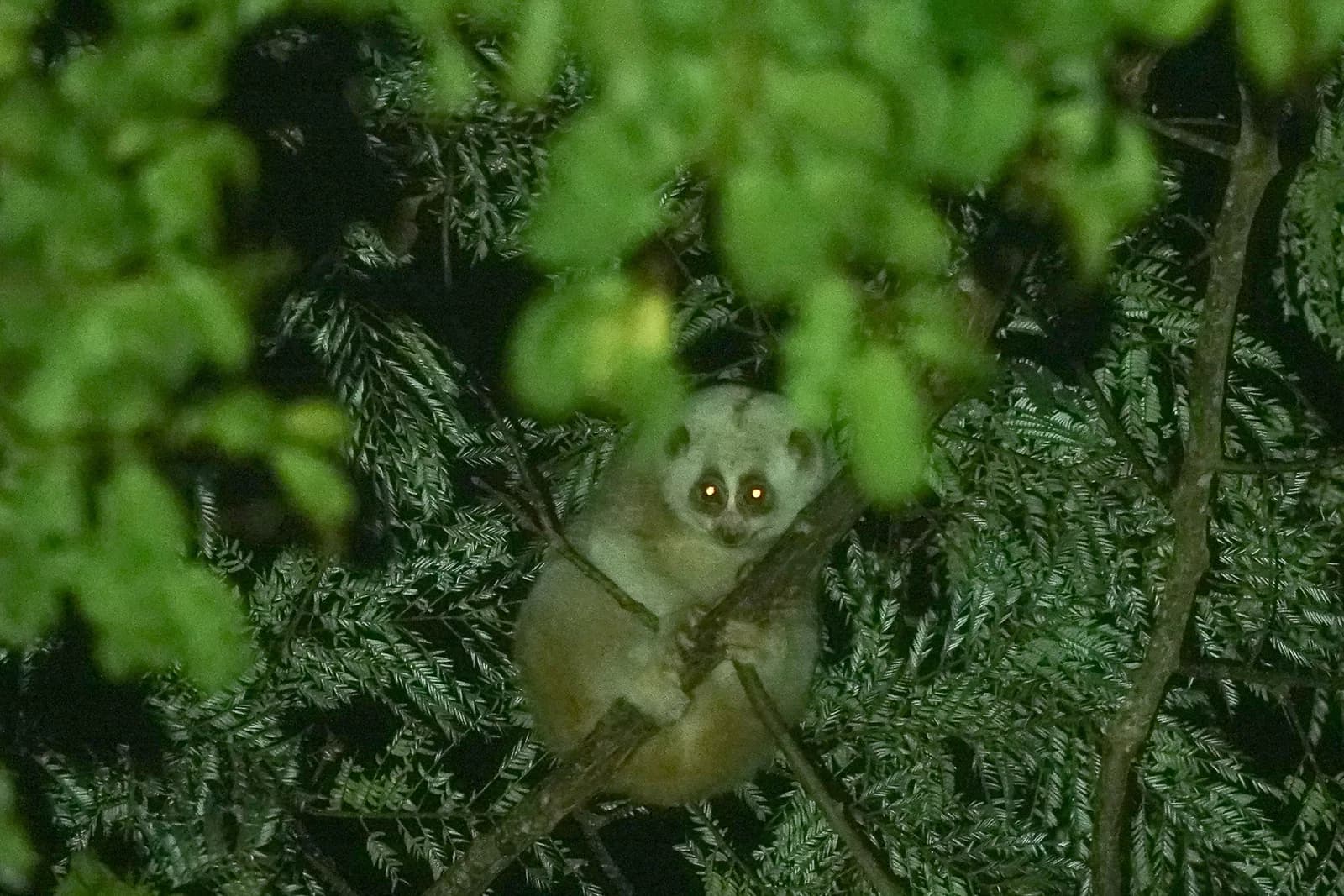 48 · Mammal
Bengal slow loris
India's only nocturnal primate outside the bushbabies of the imagination — slow, silent, and found by eyeshine. It is the single best reason to do a night walk in Assam.
Northeast forest, by torchlight
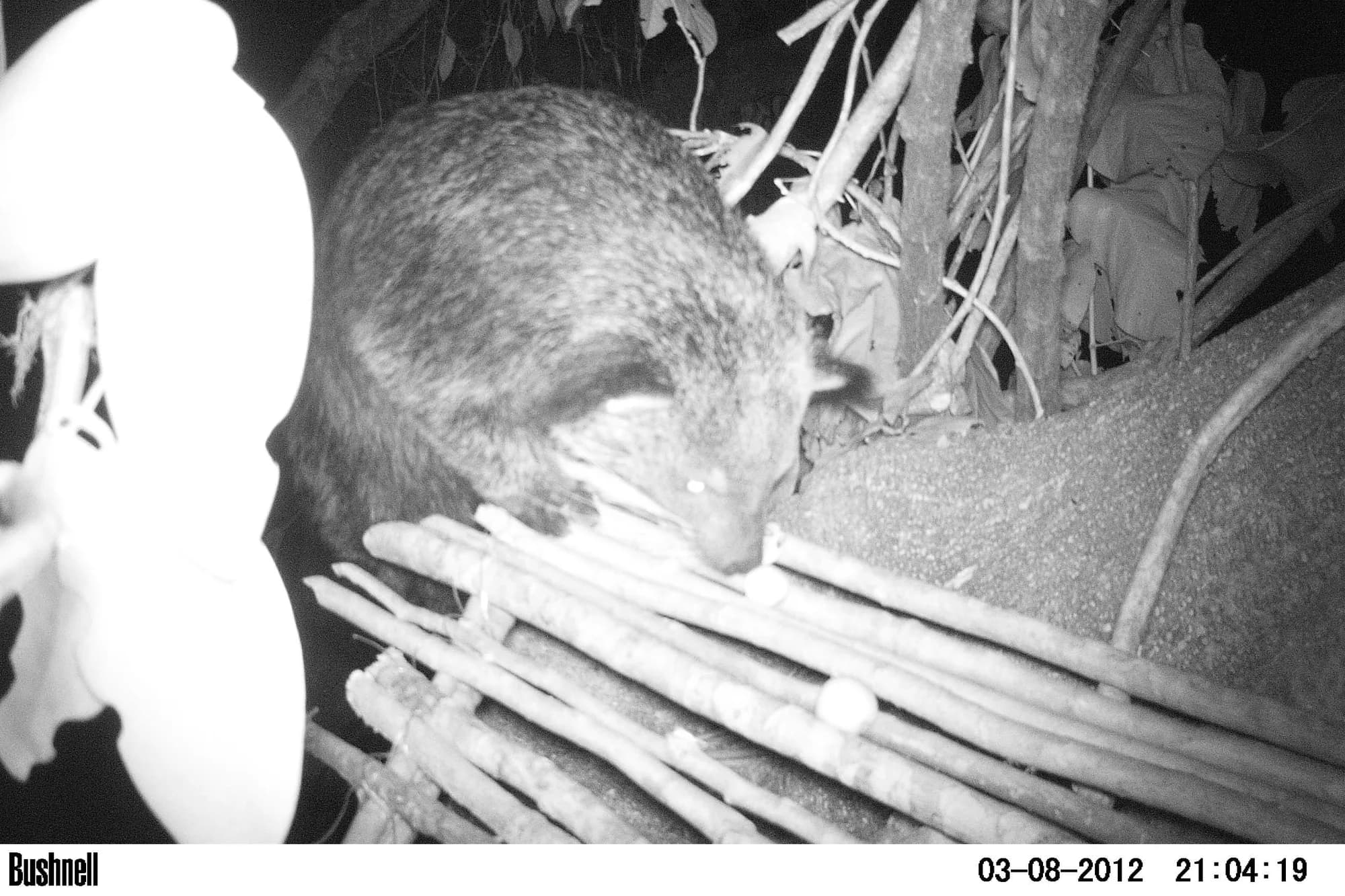 49 · Mammal
Binturong
A shaggy black civet the size of a dog, with a prehensile tail and a smell like hot popcorn. Everyone wants one. Almost nobody gets one.
Northeast canopy, and rarely
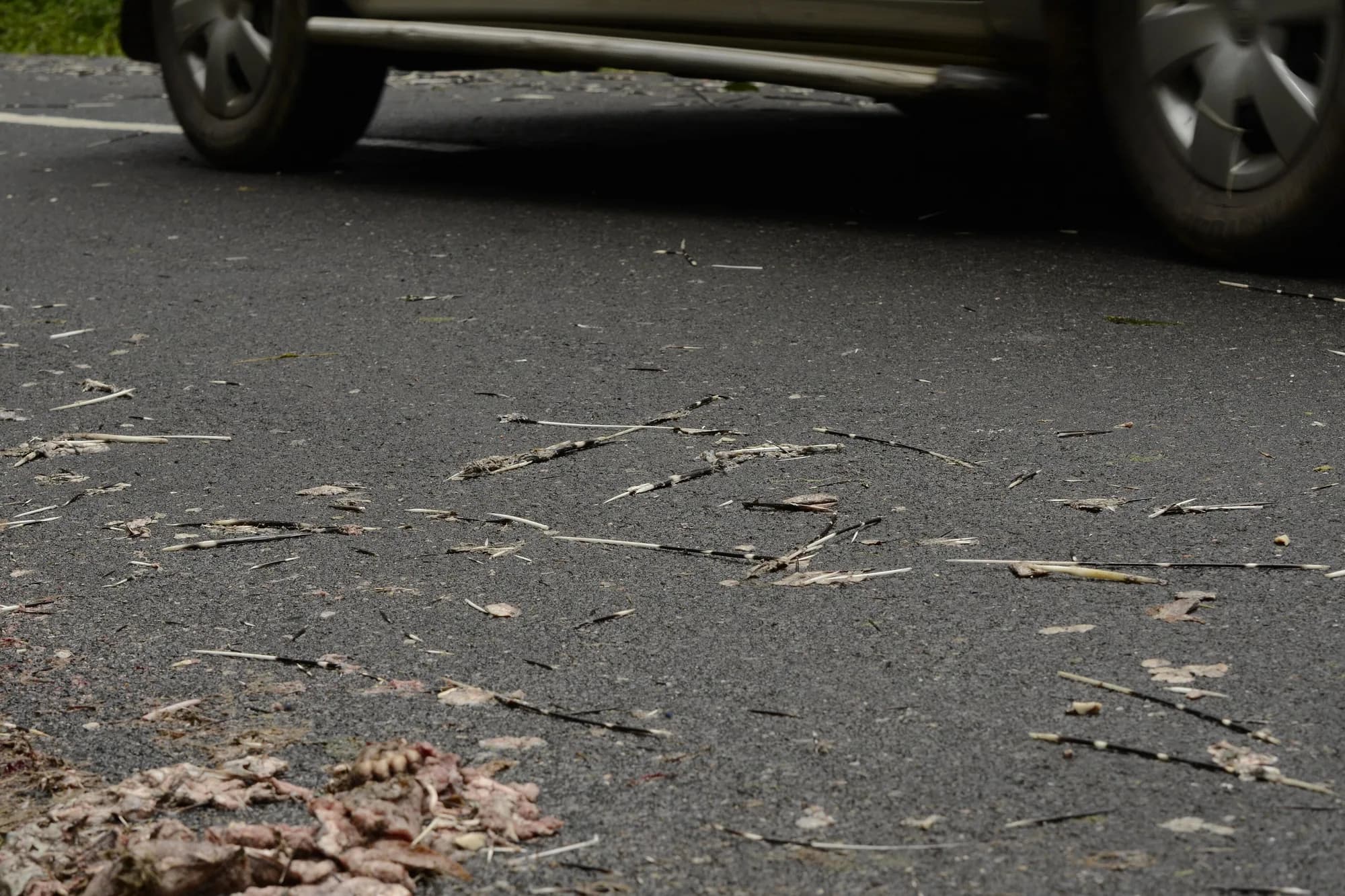 50 · Mammal
Indian crested porcupine
You will find the quills long before you find the animal. A large nocturnal rodent that walks off tigers, and the source of the most commonly picked-up field sign in India.
Quills on the track, animal rarely
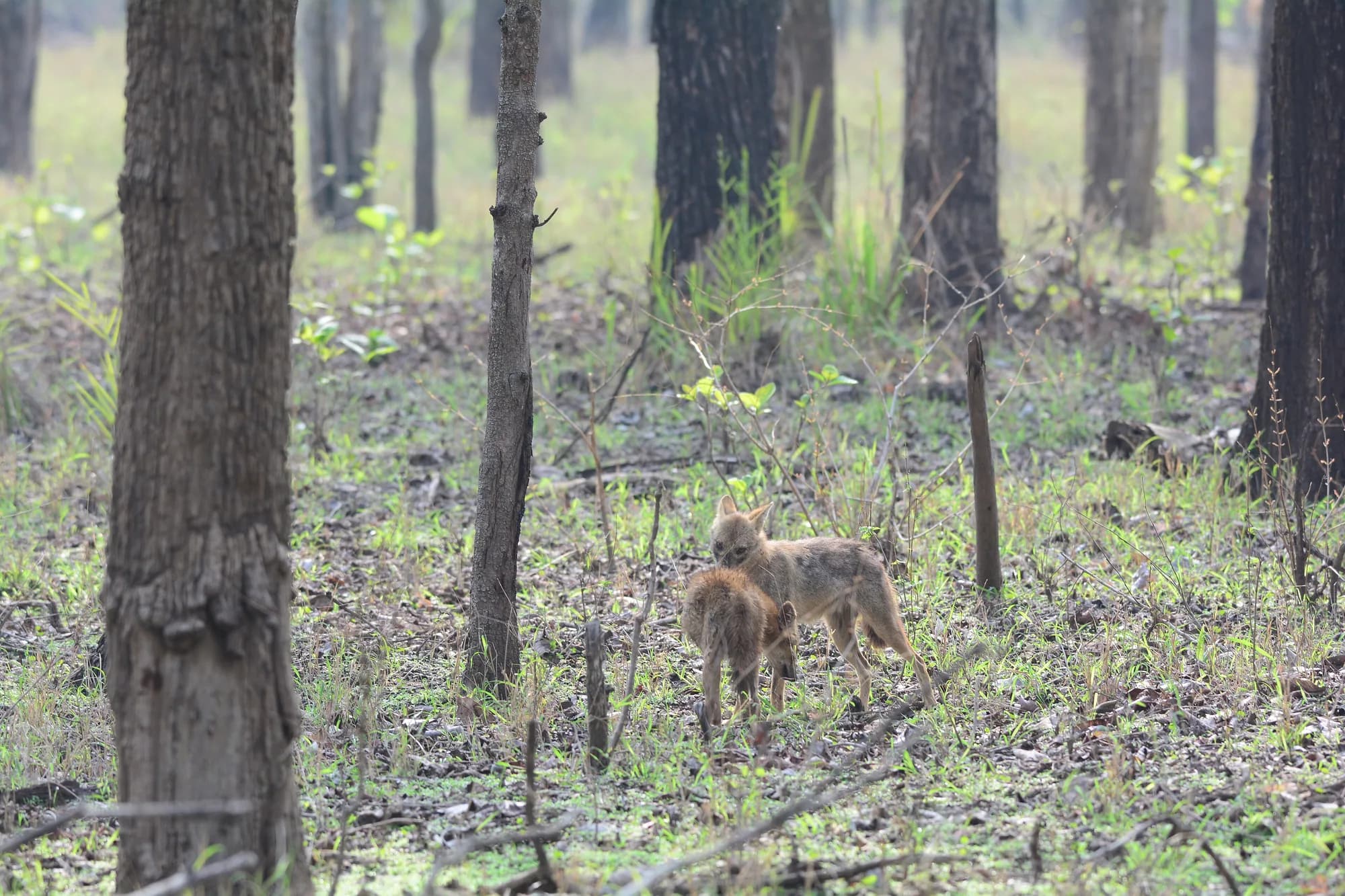 51 · Mammal
Golden jackal
The most widespread wild canid in India, seen on almost every drive and identified as almost everything else. The howling that wakes you at the lodge is this.
Every reserve, and the night chorus
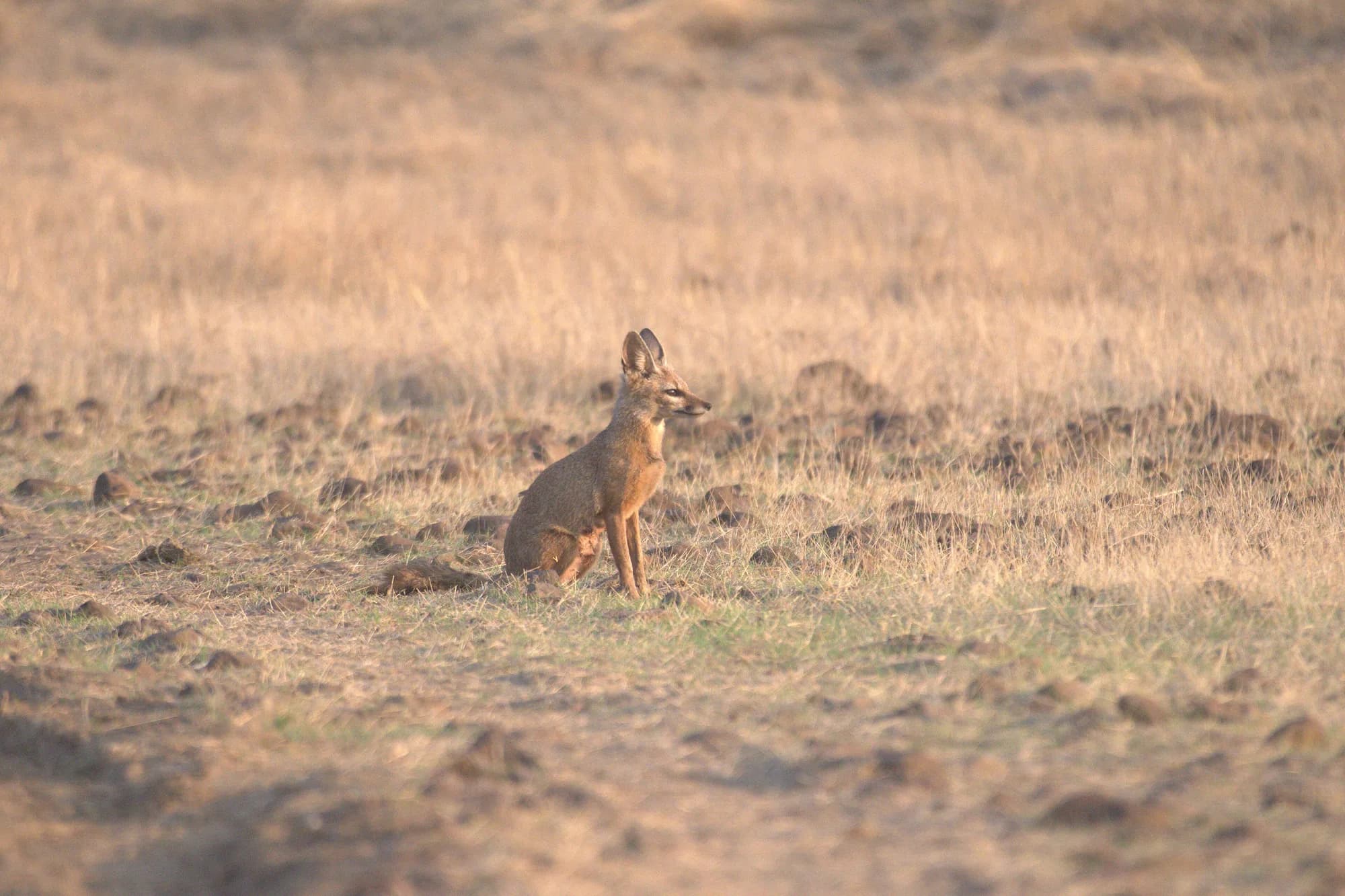 52 · Mammal
Indian fox
A small grassland fox with an enormous bushy black-tipped tail, endemic to the subcontinent, living on ground nobody protects.
Grassland at dusk, and overlooked
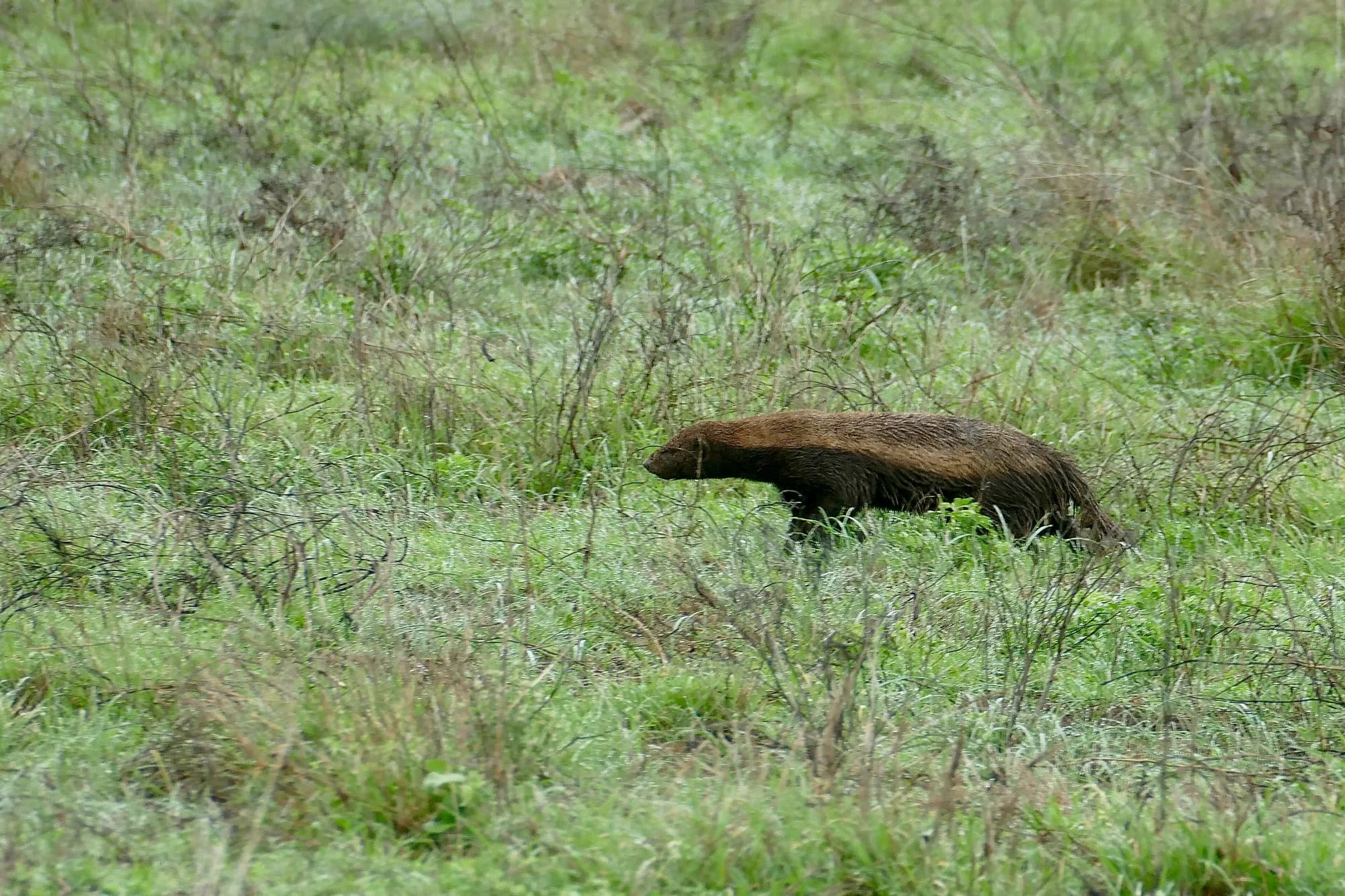 53 · Mammal
Honey badger
Global name recognition from television and near-zero sighting rate in India. Nocturnal, solitary, and genuinely as belligerent as advertised.
Present, and almost never seen
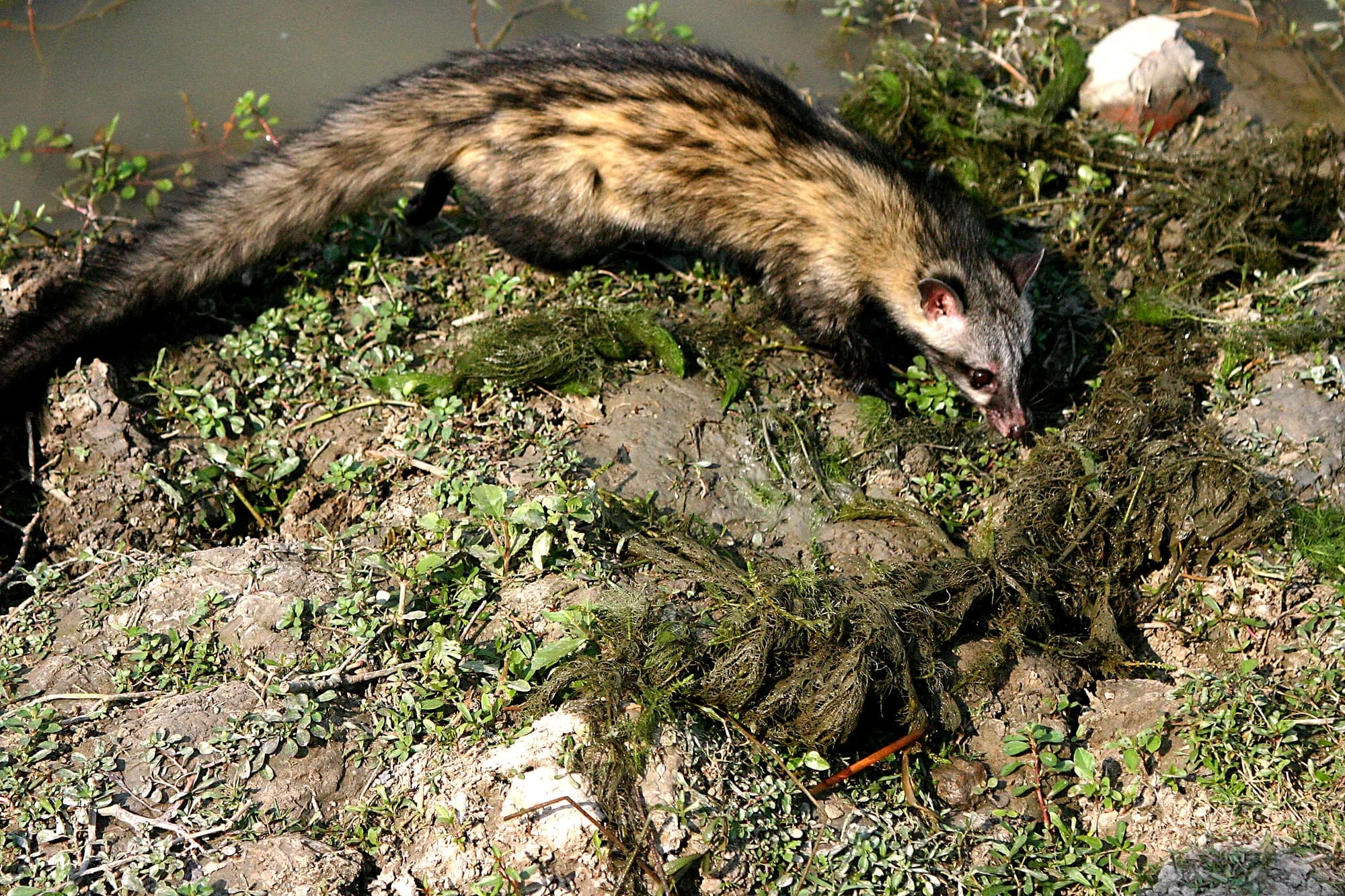 54 · Mammal
Asian palm civet
Grey, long-bodied and entirely nocturnal, sleeping in a roof beam by day and eating fruit by night. The mammal you are most likely to actually see after dark in India.
The most likely animal on a night drive
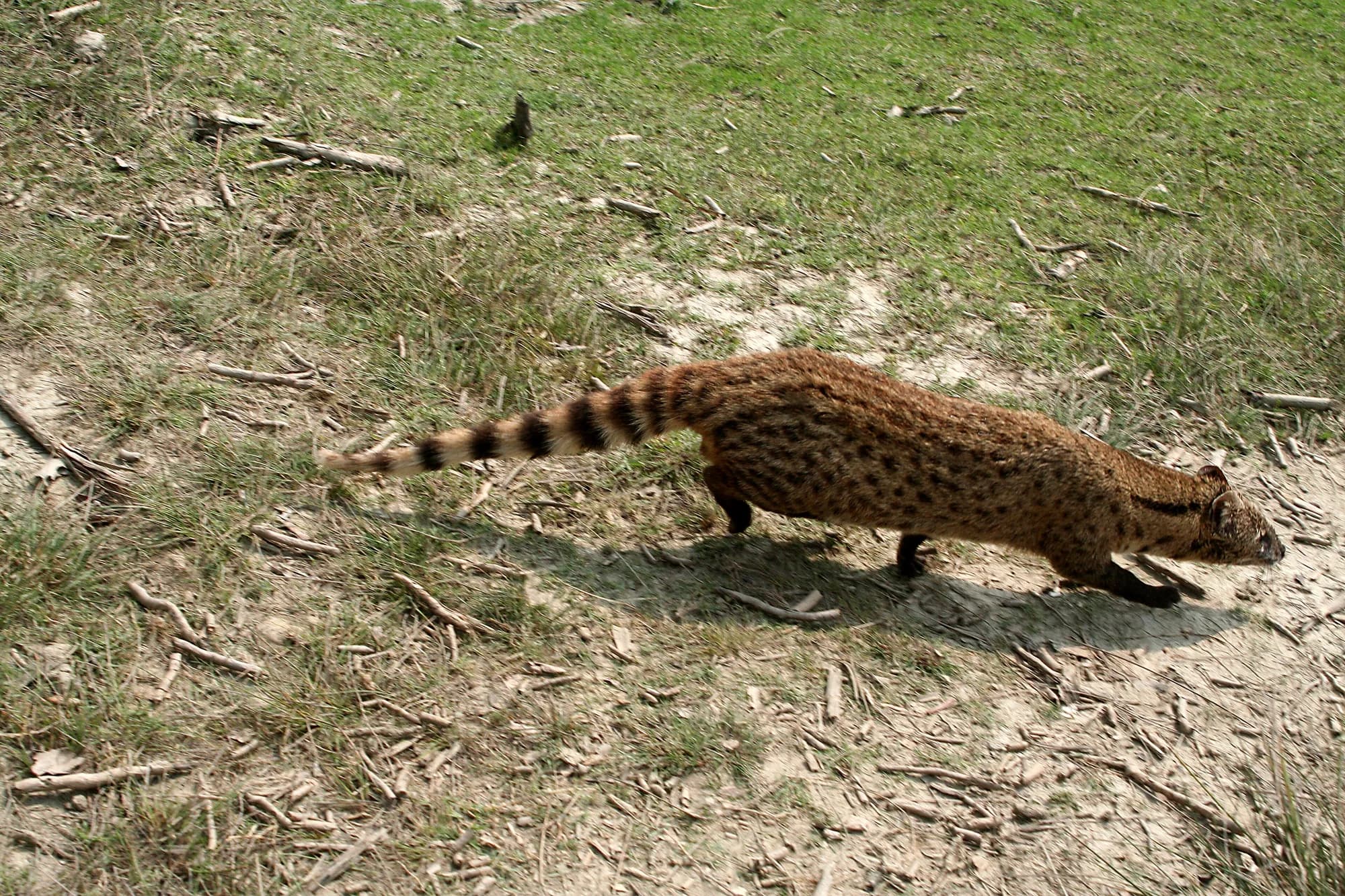 55 · Mammal
Small Indian civet
Spotted, banded-tailed and far more terrestrial than the palm civet it is constantly confused with. A regular on any Indian night drive, and rarely named correctly.
Night drives, on the ground
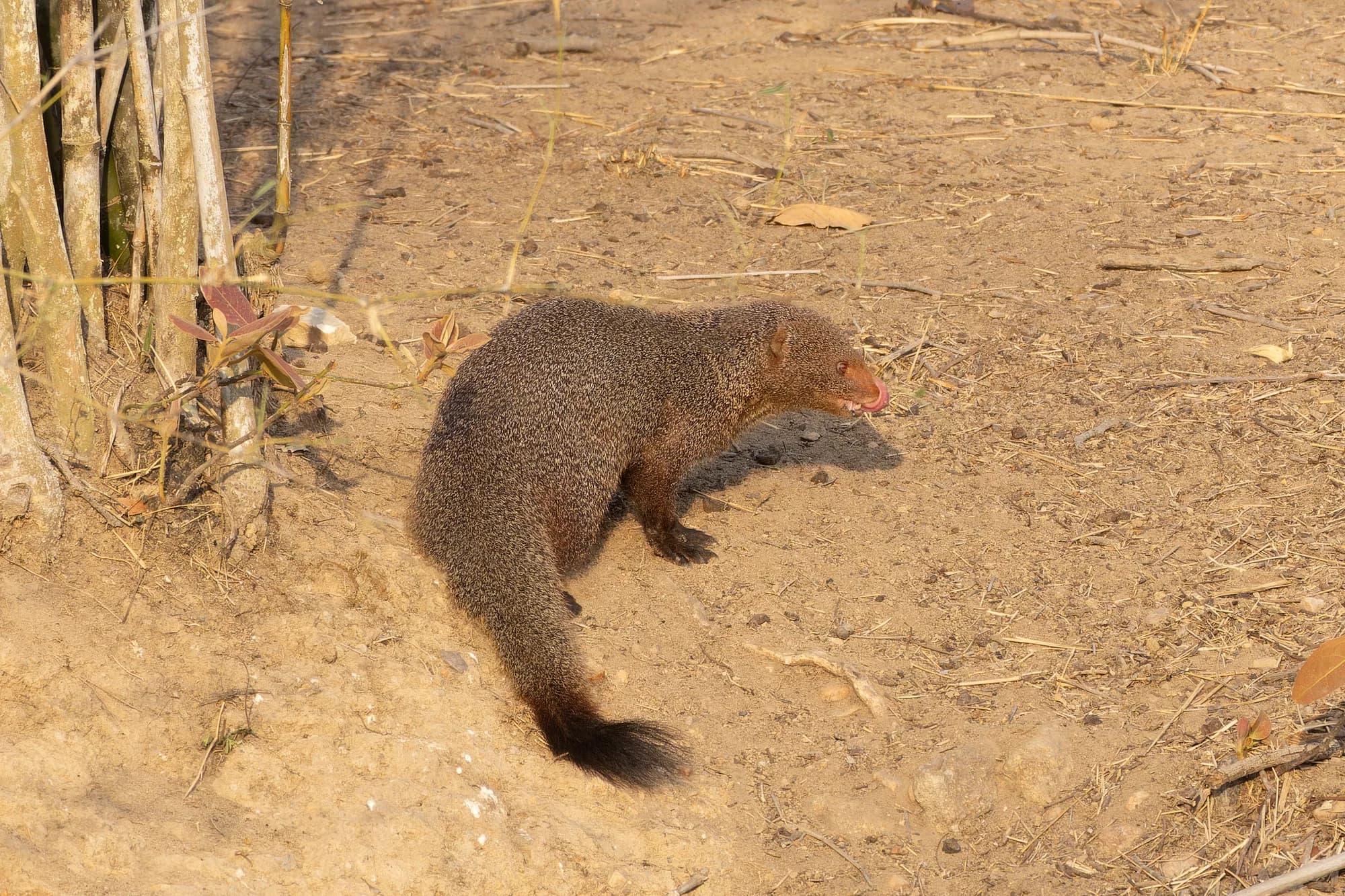 56 · Mammal
Ruddy mongoose
The forest mongoose, told from the common grey one by a black-tipped tail carried curled upward. Diurnal, confiding, and on almost every drive.
Forest tracks, tail held curled
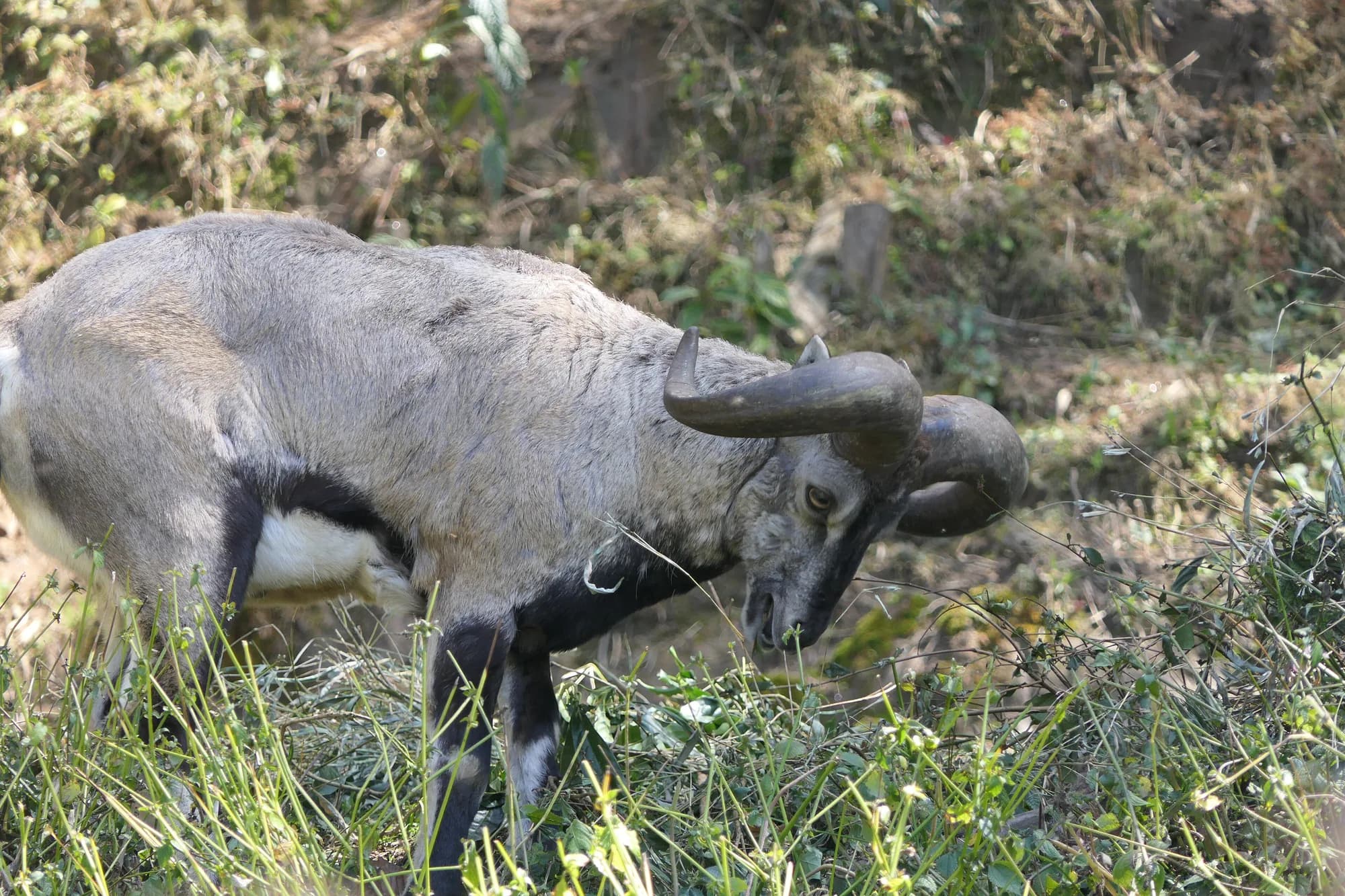 57 · Mammal
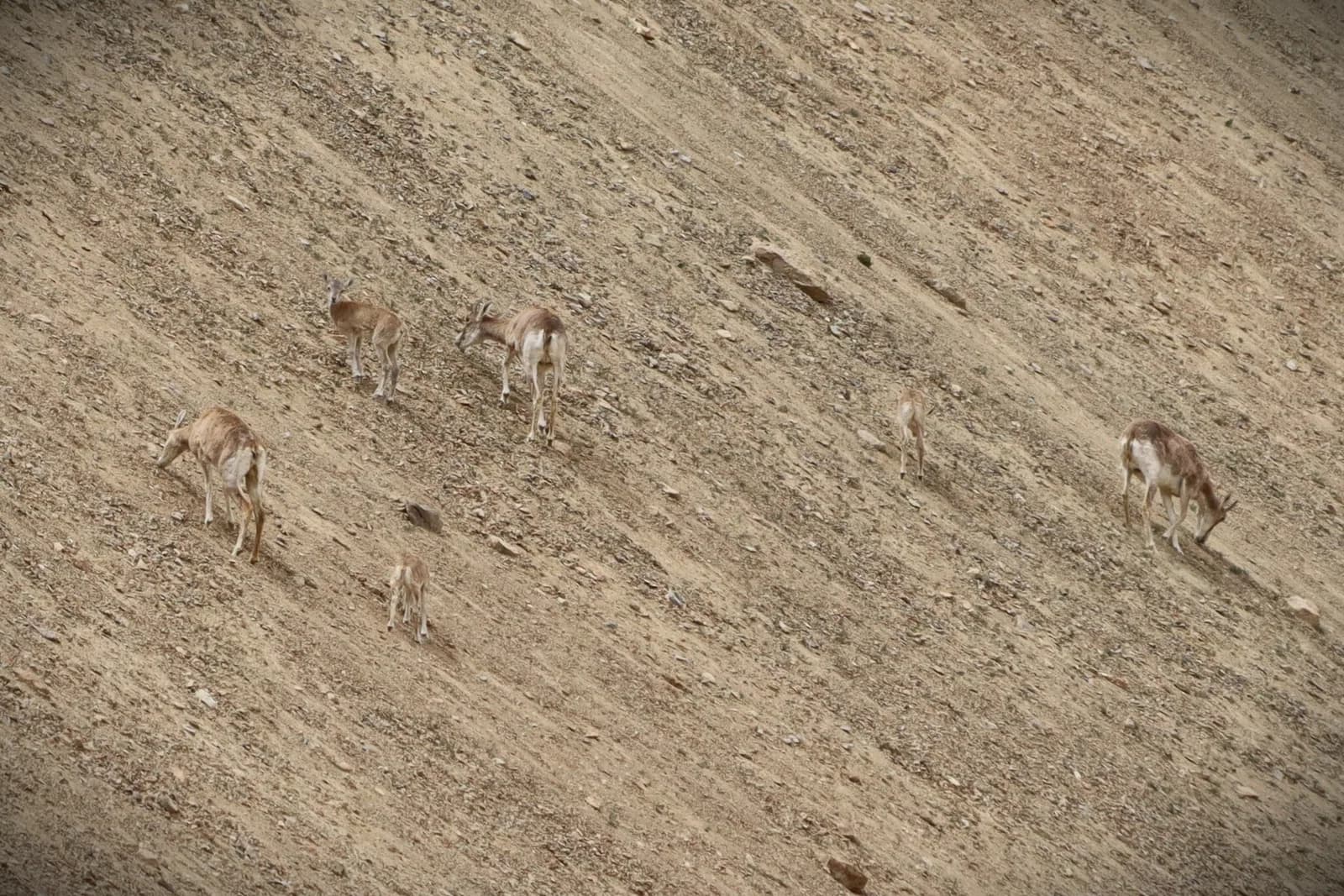
Blue sheep
Neither blue nor a sheep, and the animal a snow leopard trip actually revolves around. If you are watching bharal, you are watching the right slope.
Ladakh and Spiti, above the treeline
 58 · Mammal
Asiatic ibex
A big wild goat with scimitar horns, living on ground steep enough that nothing can follow it. It is the prey base that puts a snow leopard on a slope in Spiti, the way bharal does in Ladakh.
Cliff and crag above Spiti and Ladakh
 59 · Mammal
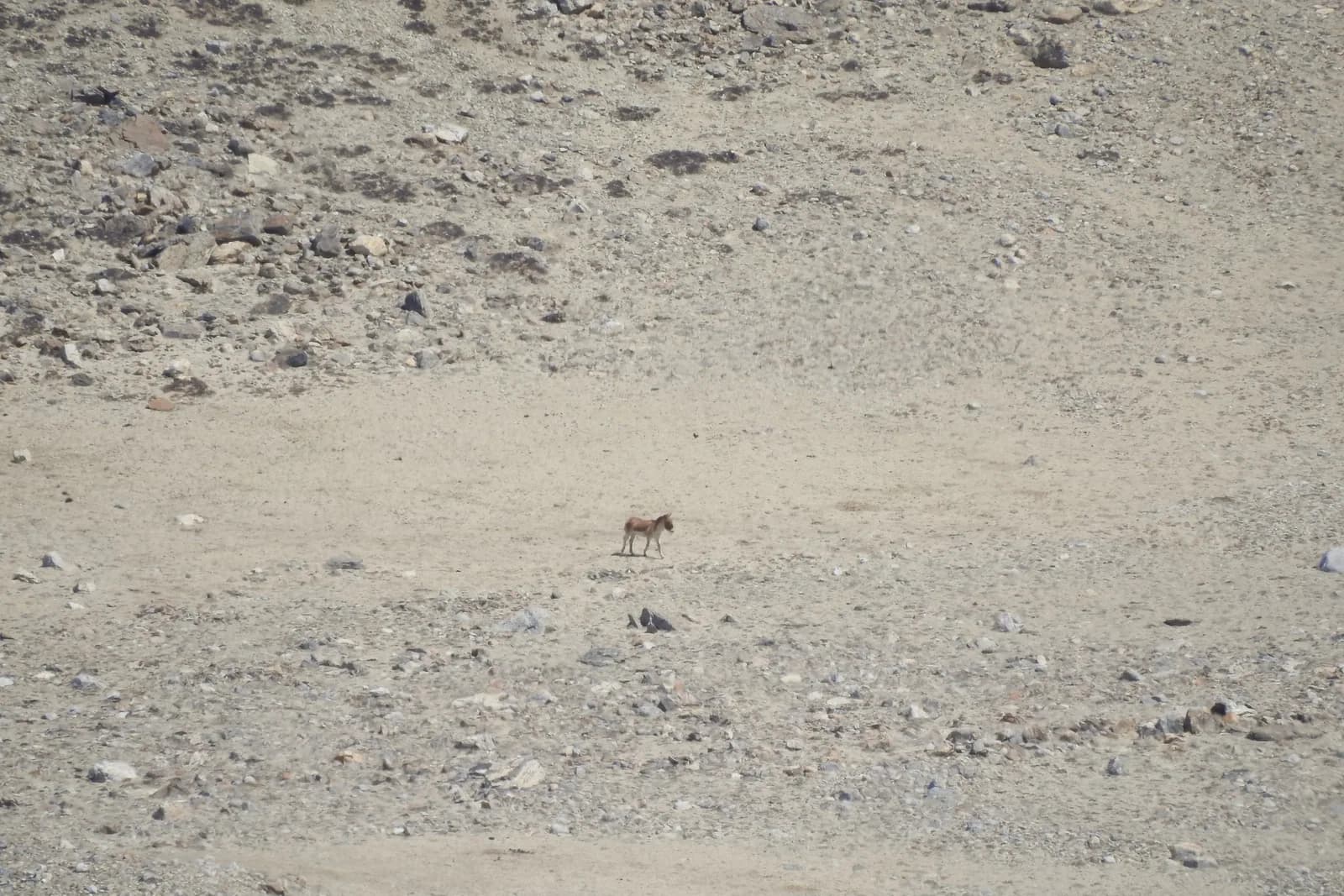
Kiang
The Tibetan wild ass — chestnut, white-bellied, and the defining large mammal of eastern Ladakh. It is the one big animal on the Changthang you are almost certain to see.
The Changthang plains, in herds
 60 · Mammal
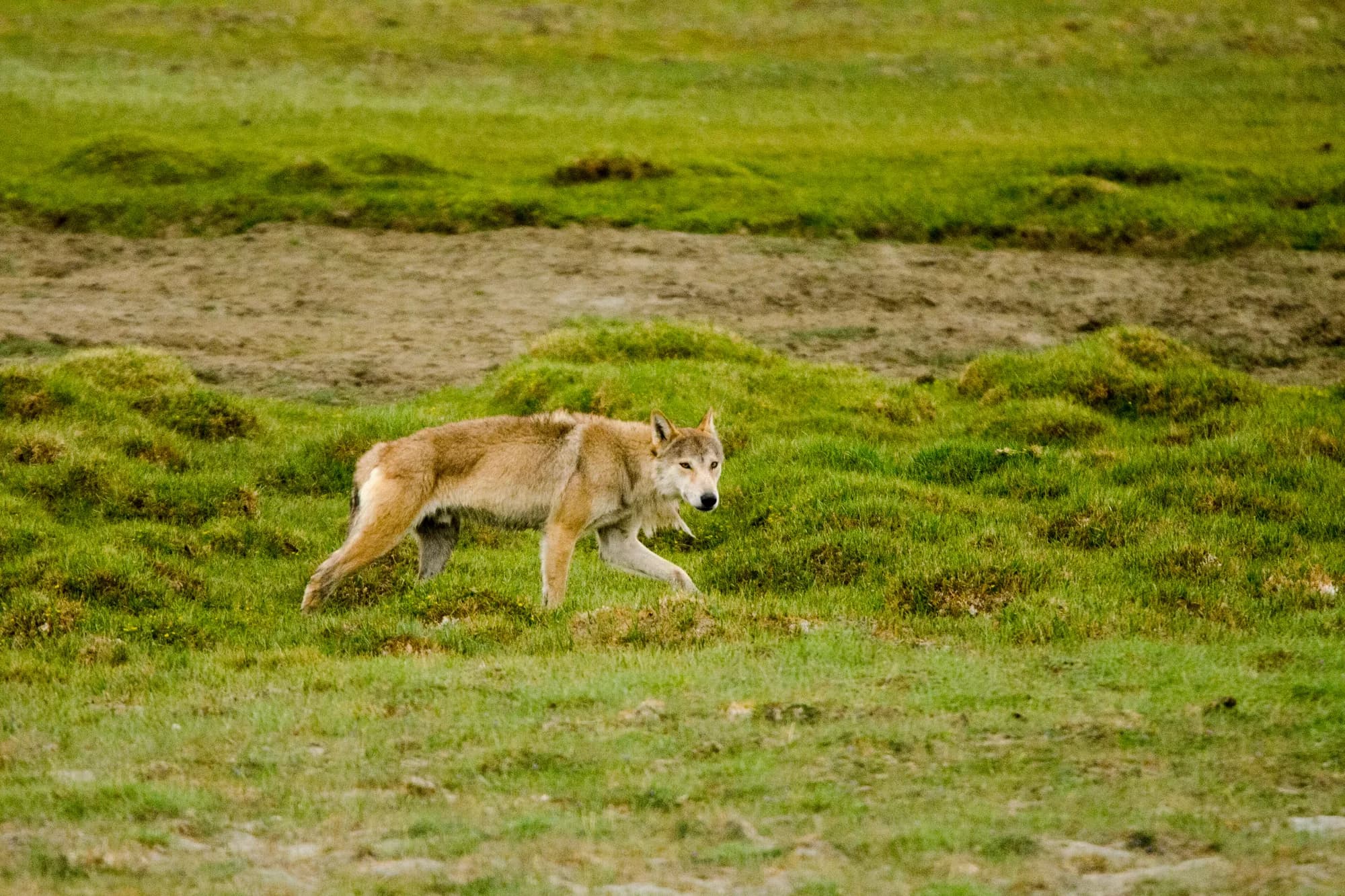
Tibetan wolf
The wolf of the high plateau — woolly, pale, and far more often seen on a snow leopard trip than anyone books it for. It is also the most persecuted large carnivore in Ladakh.
Open plateau, crossing at distance
 61 · Mammal
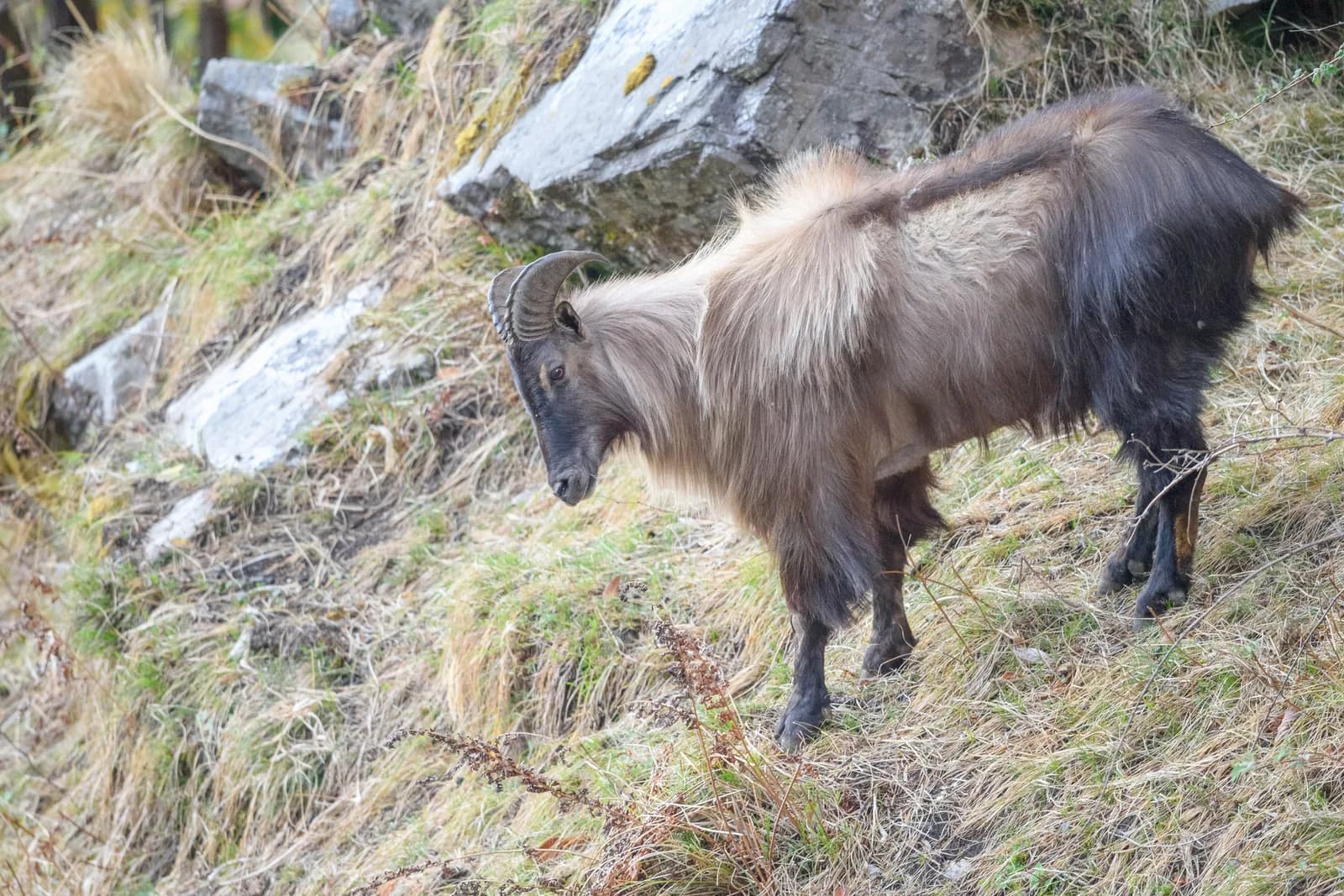
Himalayan tahr
A shaggy red-brown goat of the western and central Himalaya, the males maned like something from a bestiary. It shares a name with the Nilgiri tahr and nothing else — they live 2,000 kilometres apart.
Steep forested slopes below the crags
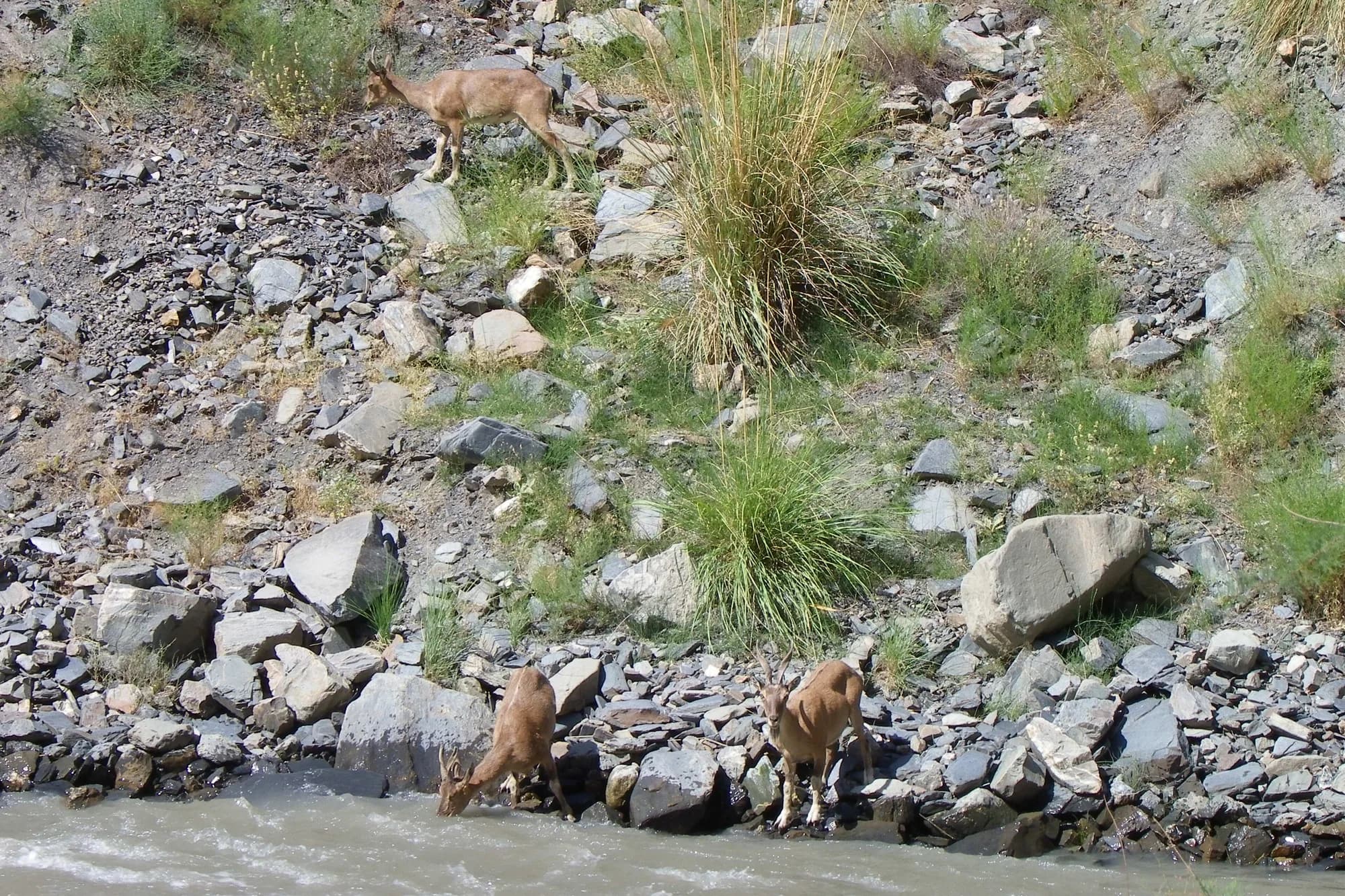 62 · Mammal
Markhor
The corkscrew-horned wild goat, and the scarcest large mammal in this catalogue. India holds a few hundred animals in a handful of Kashmir valleys, and seeing one takes a permit, a guide and a good deal of luck.
A few valleys in the Pir Panjal
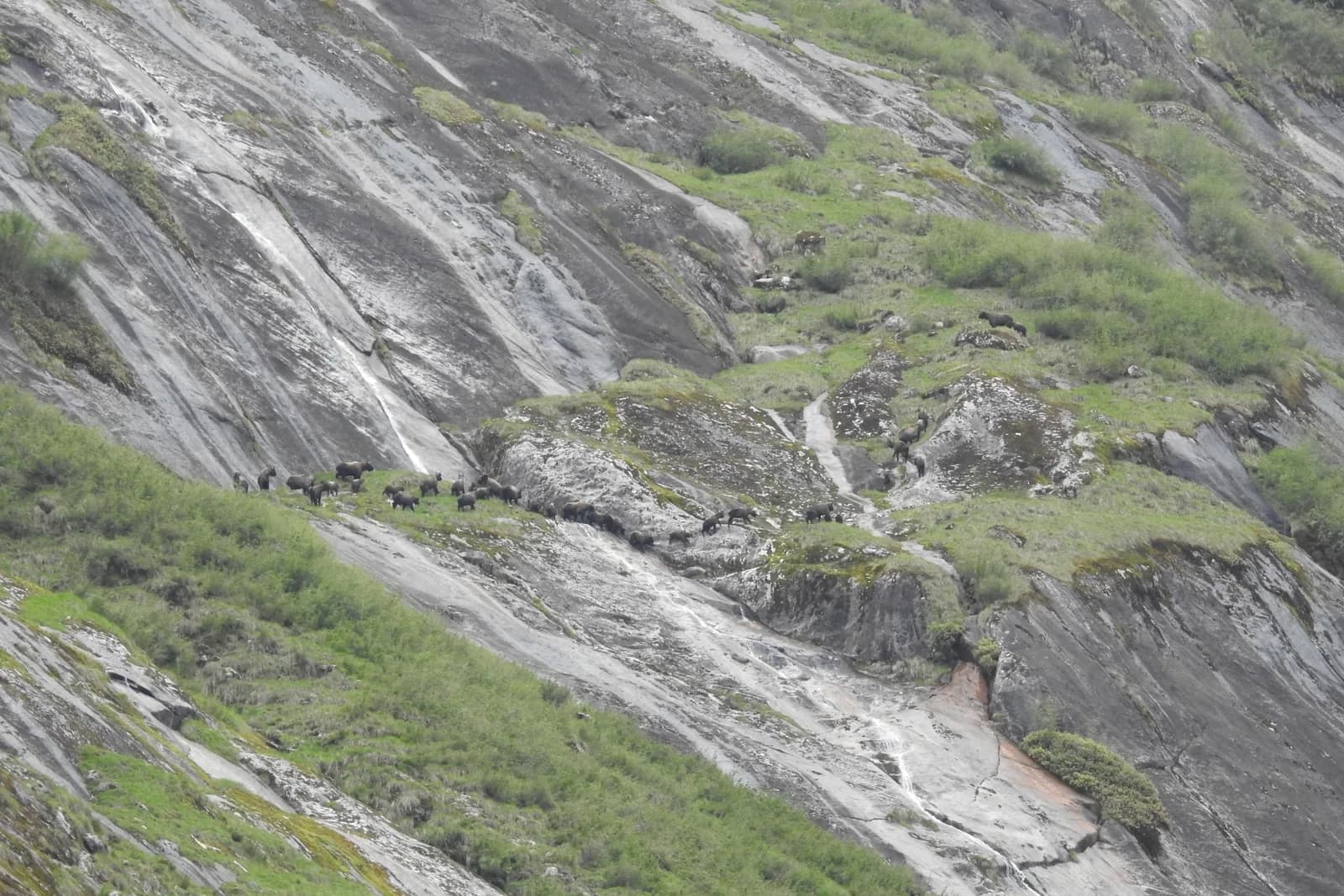 63 · Mammal
Mishmi takin
A heavy, humped, Roman-nosed animal that looks assembled from spare parts, in one of the least-visited corners of India. Almost no wildlife trip in the country goes anywhere near it.
Eastern Arunachal, and very few visitors
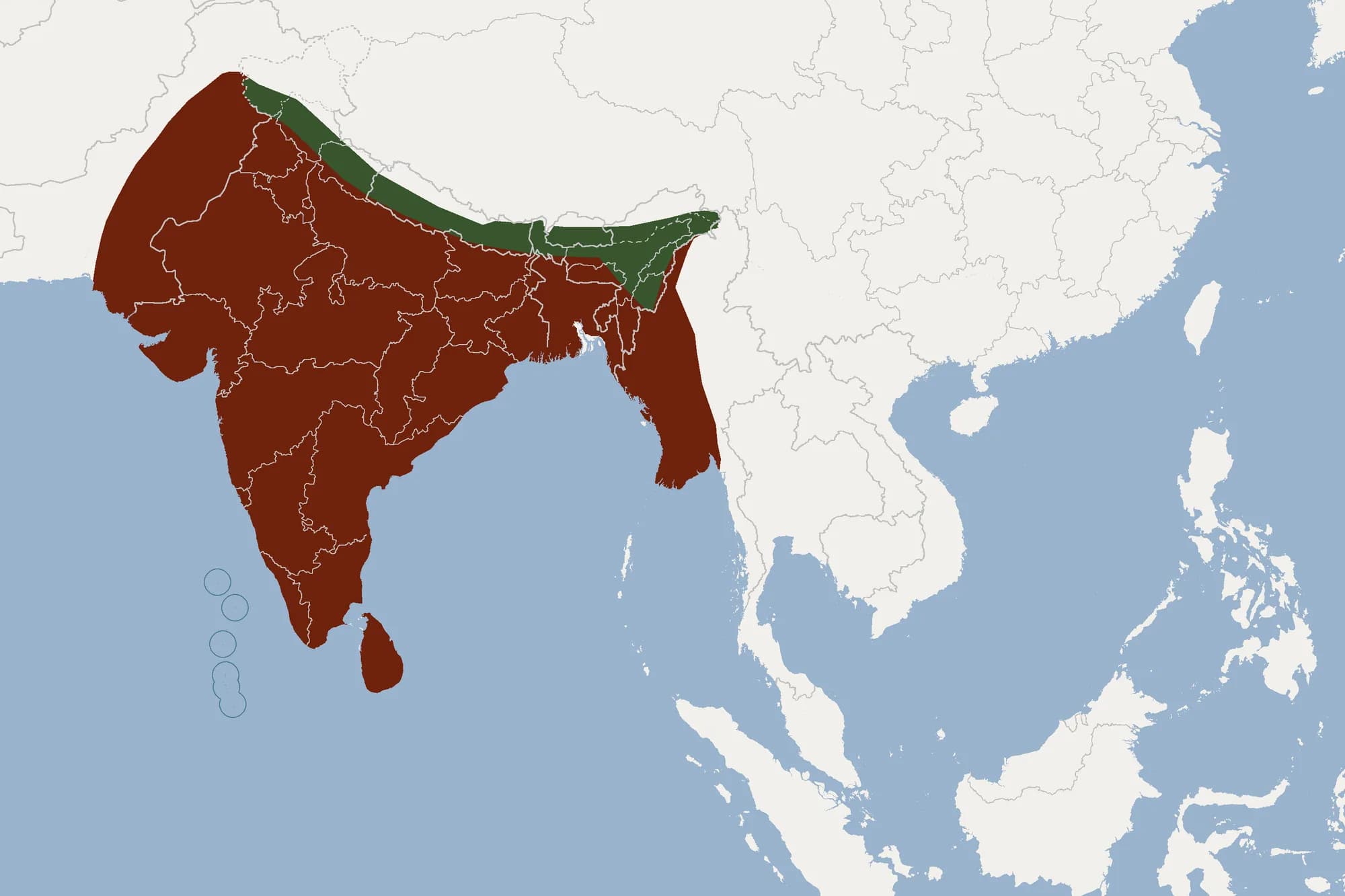 64 · Mammal
Indian flying fox
One of the largest bats in the world, hanging in hundreds from a single roost tree in broad daylight. The mammal most visitors photograph without meaning to.
A daytime roost, and it is a spectacle
 65 · Mammal
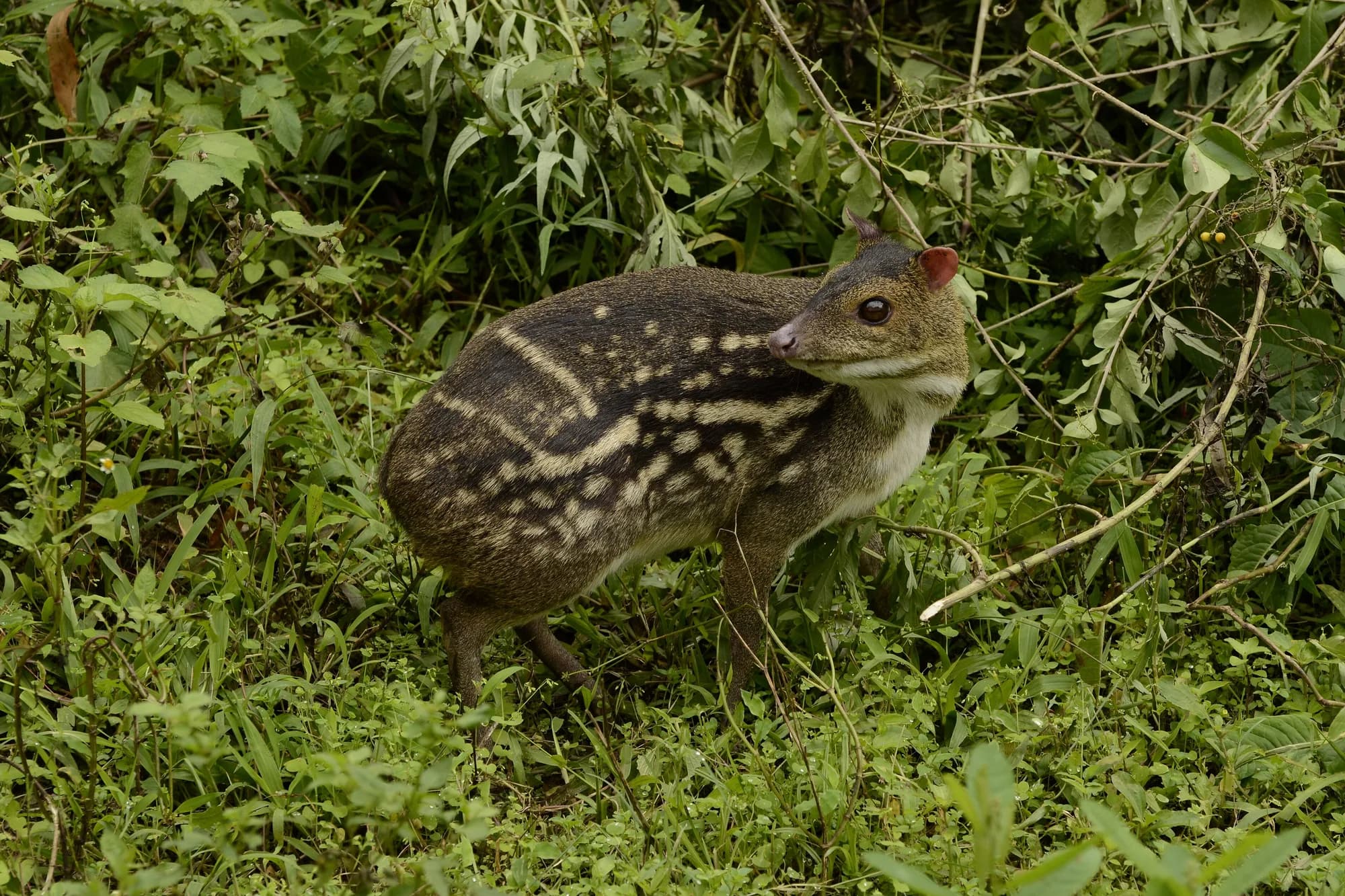
Indian chevrotain
Neither a mouse nor a deer, the size of a hare, spotted and striped, on legs the thickness of a pencil. One of the oldest ruminant lineages alive, and a night-drive prize.
A night drive in the Ghats, in the torch beam
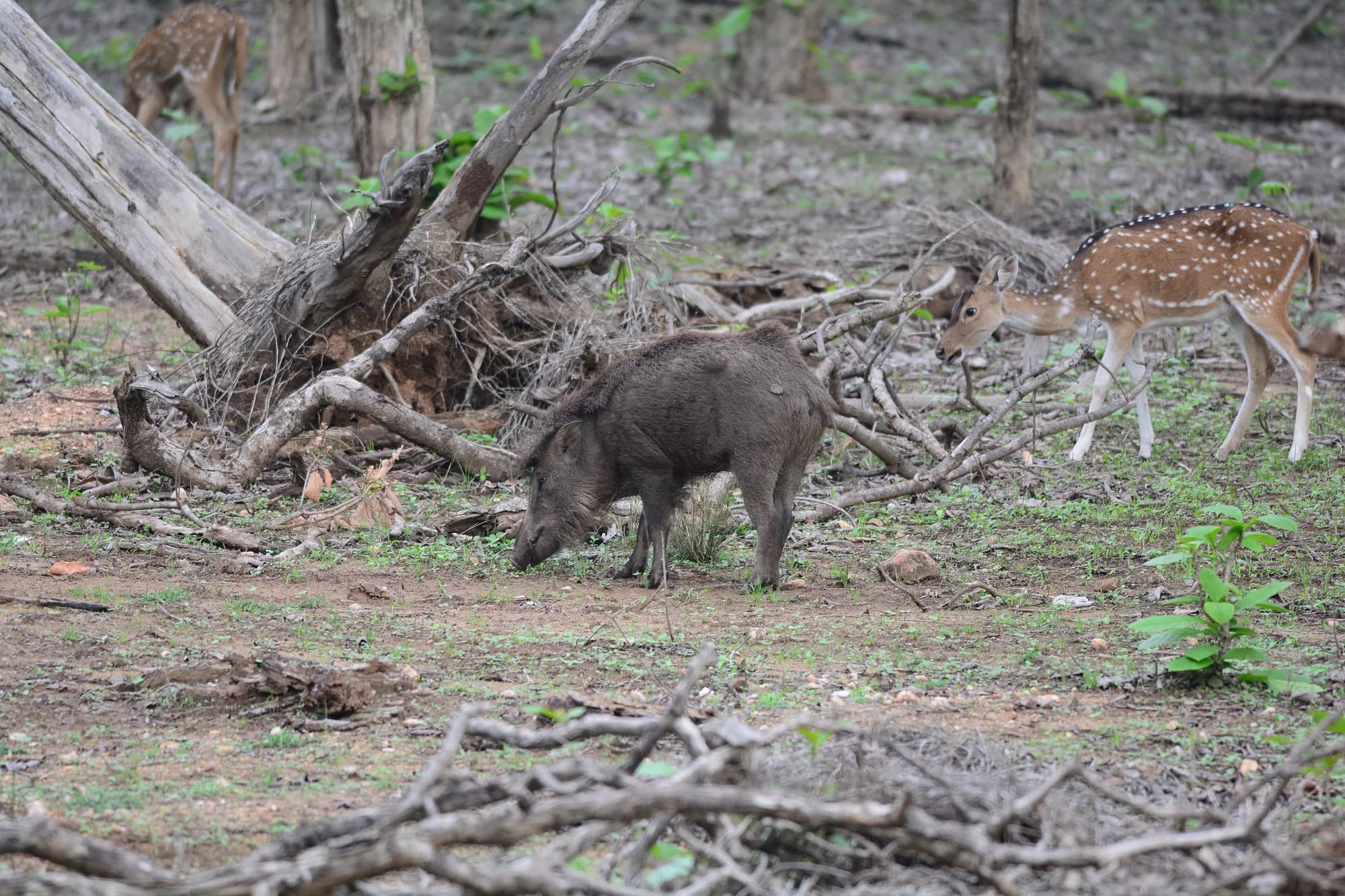 66 · Mammal
Indian wild boar
Seen on every drive, respected by every guide, and the animal that most often explains an alarm call that was not about a cat.
Every reserve, and major prey
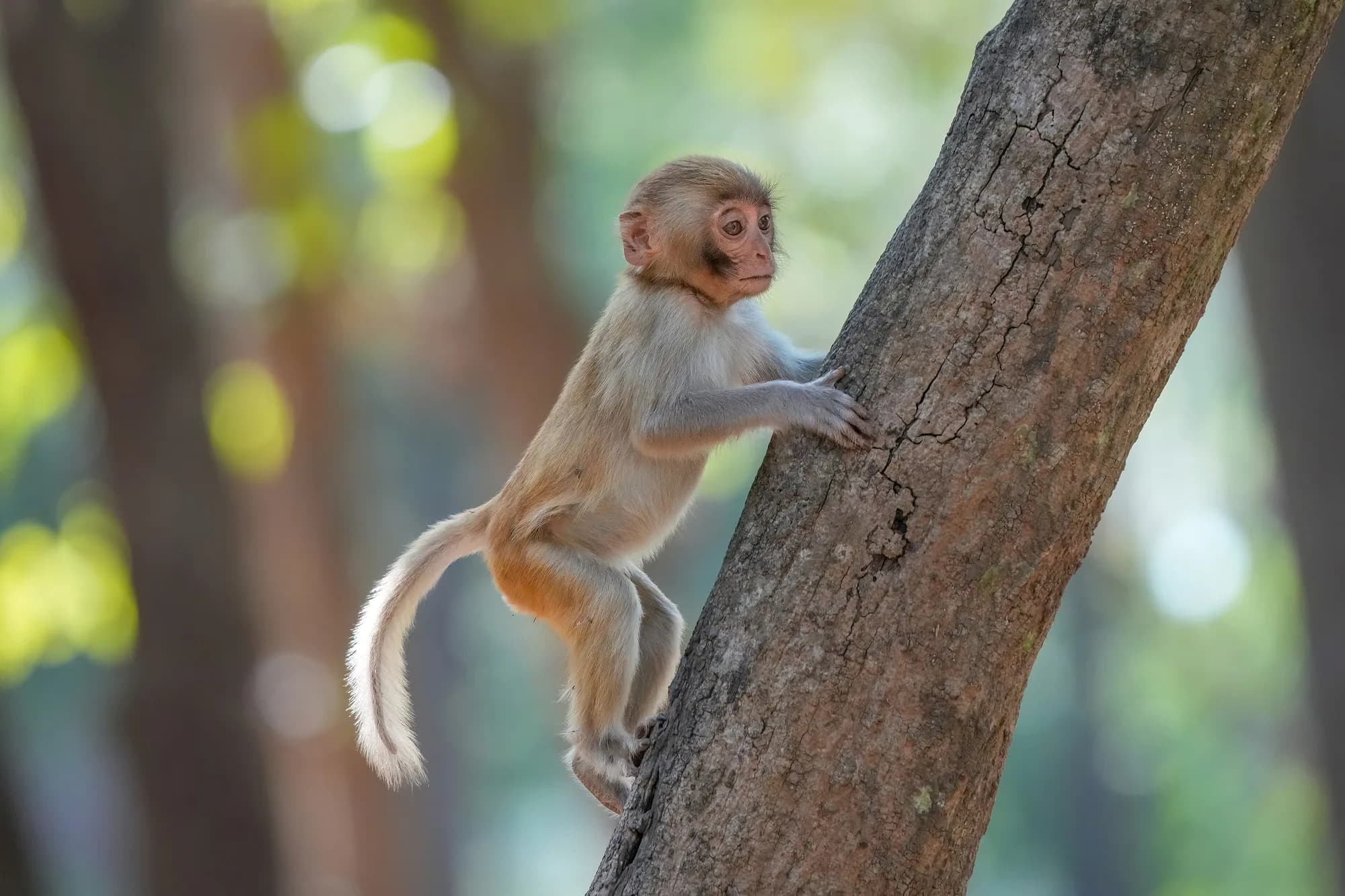 67 · Mammal
Rhesus macaque
The monkey you will actually meet: at temples, on roadsides, at park gates and on your lodge roof. Not a target species, and the one most likely to cost you a hospital visit.
Everywhere in the north — including the car park
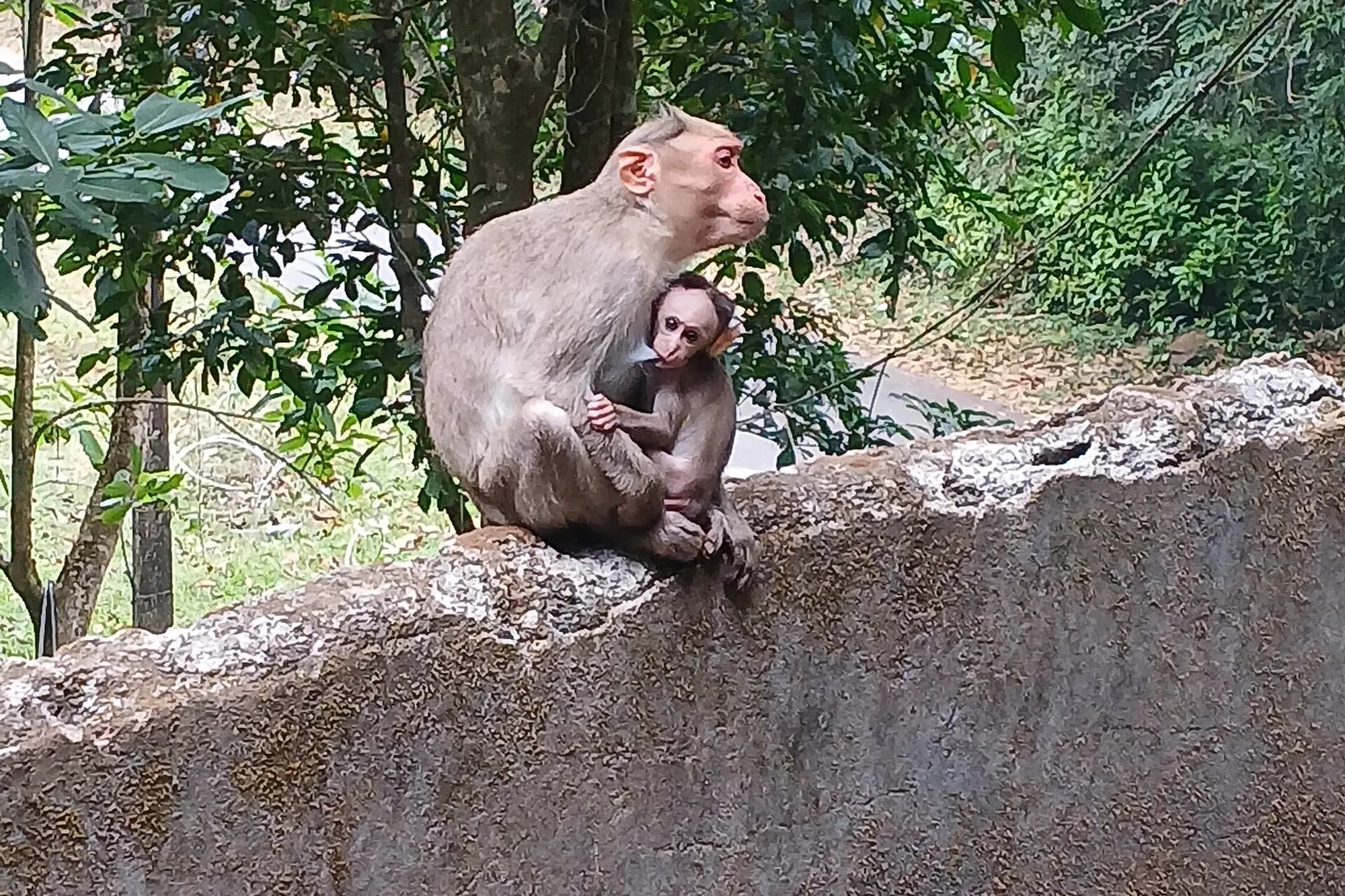 68 · Mammal
Bonnet macaque
The southern macaque, named for the neat parting of hair on its crown. It is the monkey on every Ghats roadside, it is now formally in decline, and almost nobody photographs it on purpose.
Peninsular India, usually on the road
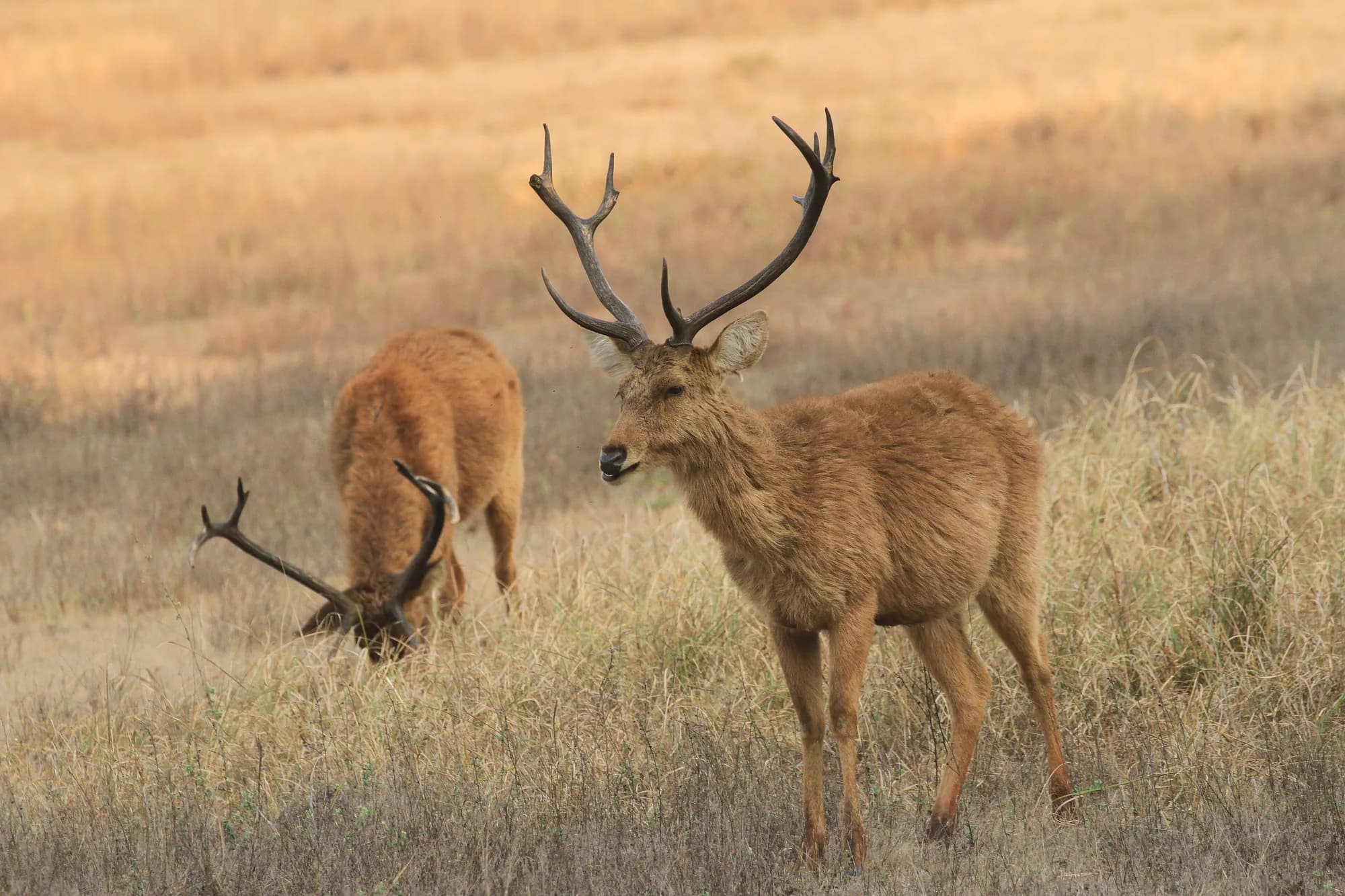 69 · Mammal
Northern swamp deer
The wetland barasingha — splay-hoofed, stag-antlered, standing in water. It is one of three subspecies that get called barasingha interchangeably, and the differences decide which park you should book.
Terai wetland, in Dudhwa and Kishanpur
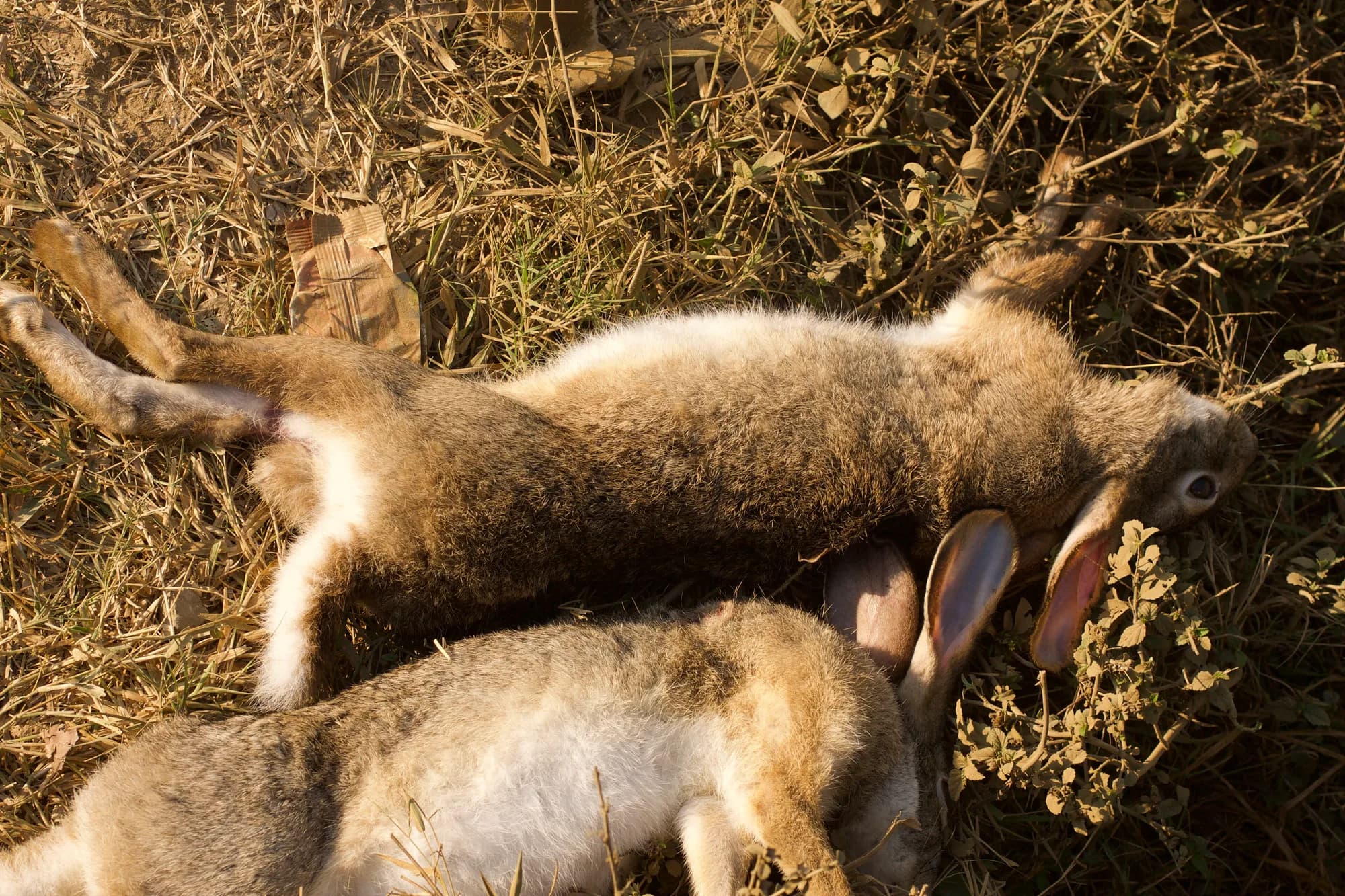 70 · Mammal
Indian hare
The most-seen mammal on an evening drive after the deer, and prey for almost everything with teeth. Worth a look for the black nape that names it.
Evening drives, in the headlights
 71 · Bird
Indian peafowl
The national bird, in every reserve and most villages, and a genuine part of the alarm-call system that finds you a leopard.
Every reserve, and an alarm caller
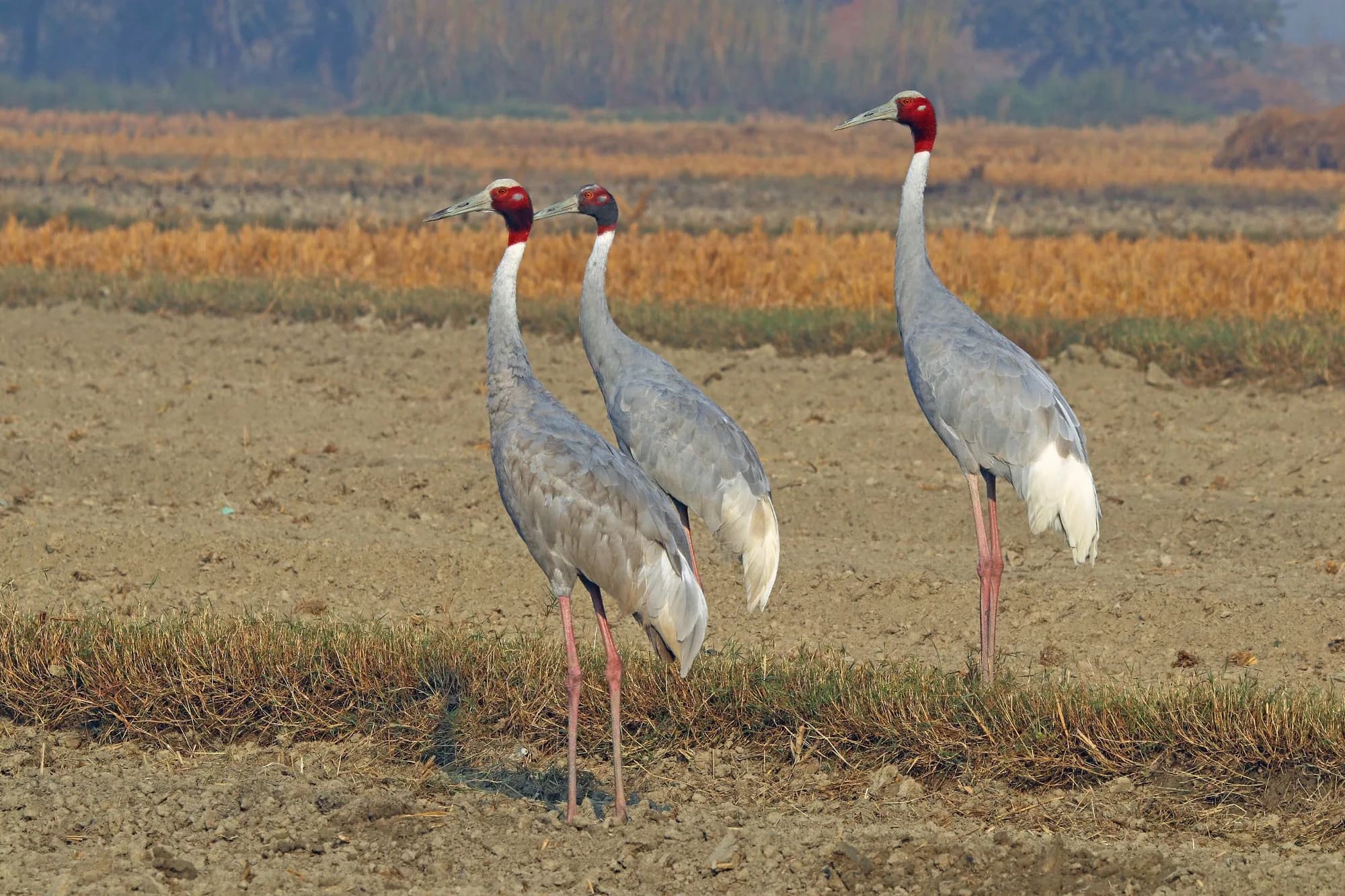 72 · Bird
Sarus crane
The tallest flying bird on earth, standing nearly as high as a person, living in farmland rather than wilderness and pairing for life.
Wetlands and paddy, in pairs for life
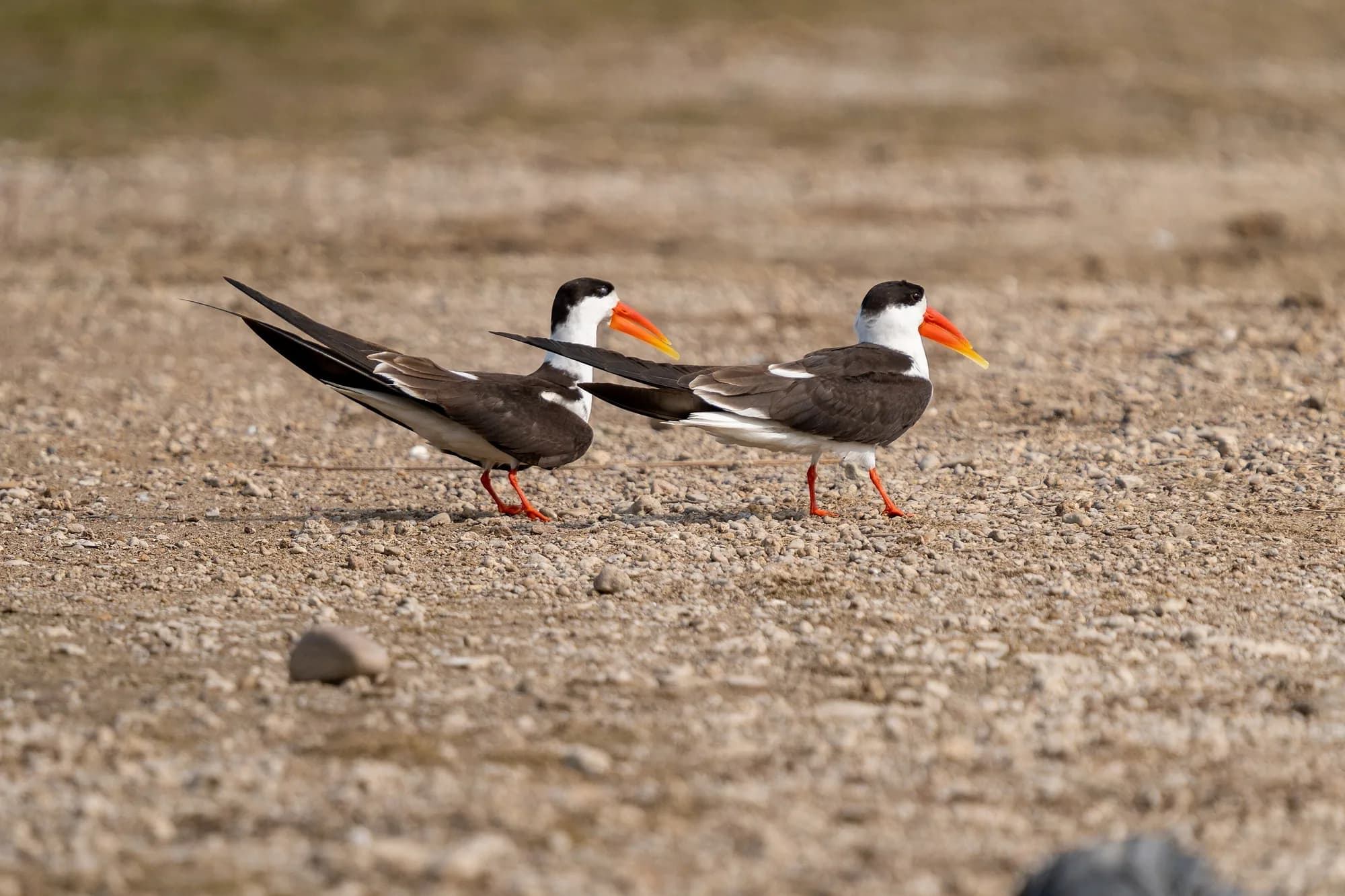 73 · Bird
Indian skimmer
A tern-like bird with an orange bill whose lower half is longer than the upper, feeding by ploughing the water surface at speed. The Chambal holds most of what is left.
The Chambal, and few rivers else
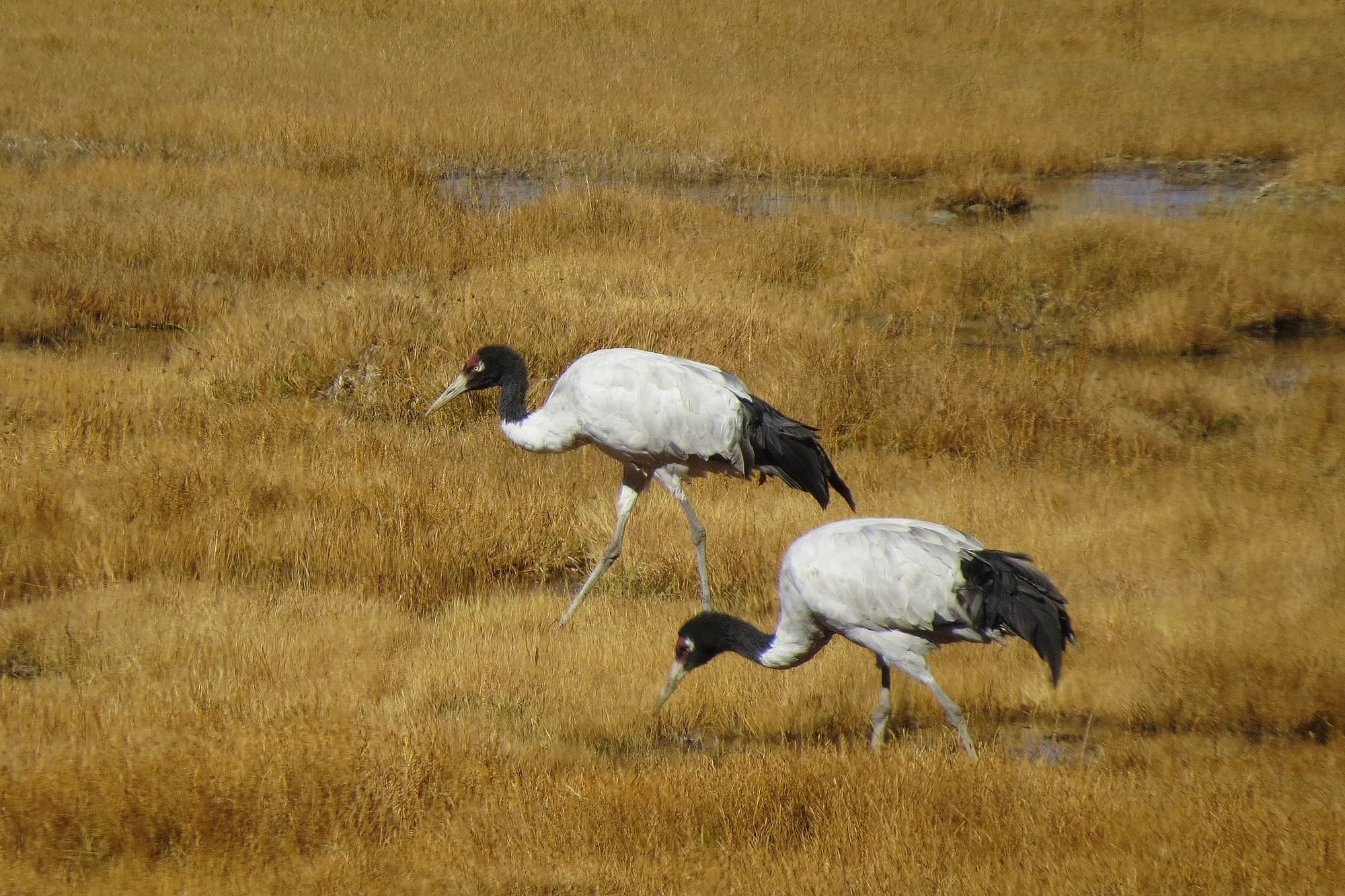 74 · Bird
Black-necked crane
The only crane that breeds on the Tibetan plateau, and in India only in Ladakh. A handful of pairs, on wetlands at four thousand metres, in the months everyone else visits for snow leopard's opposite season.
High-altitude marsh in Ladakh, in summer
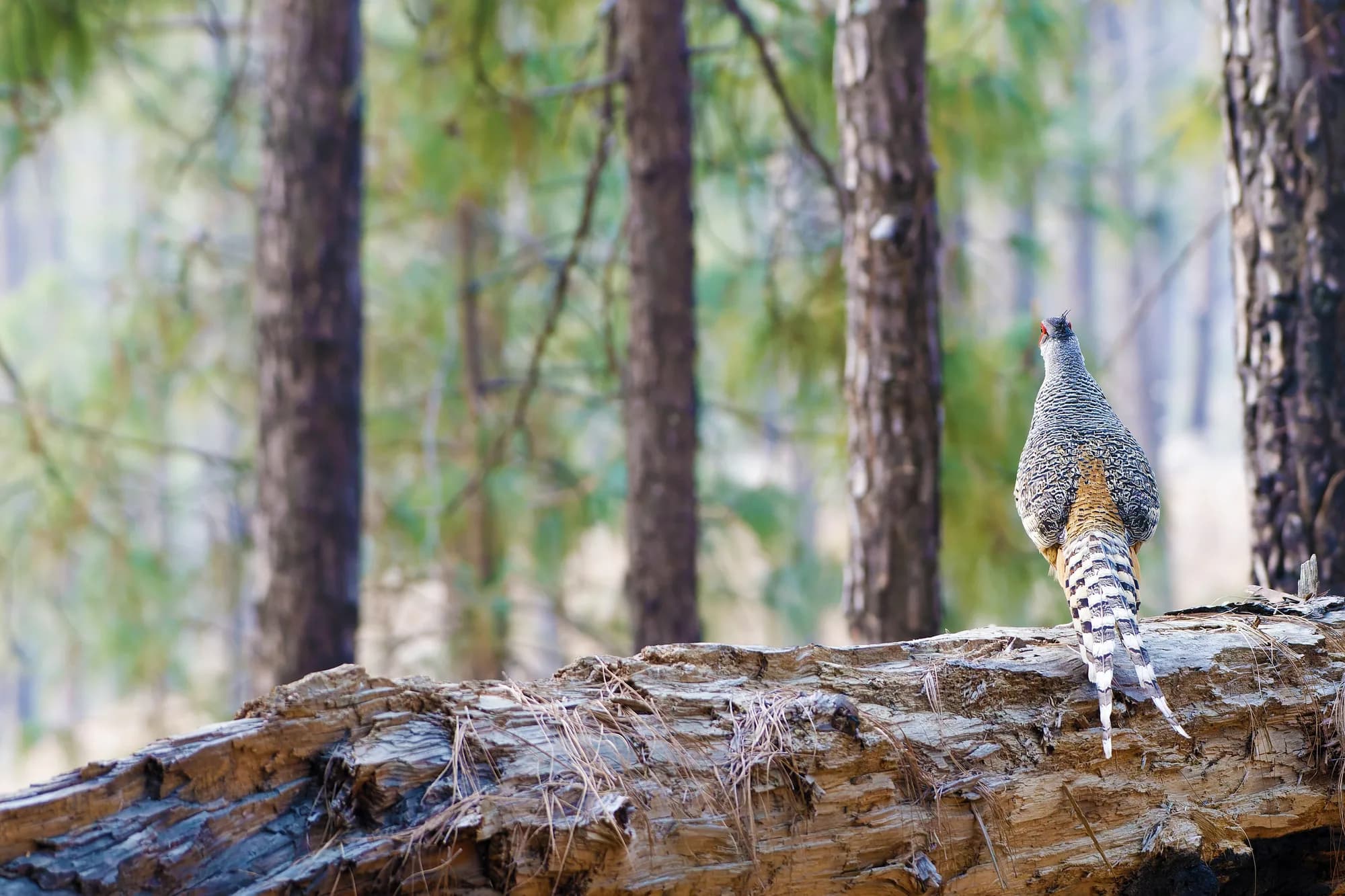 75 · Bird
Cheer pheasant
A long-tailed, pale barred pheasant on steep grass slopes, found by its dawn calling and named on every serious Himalayan birding itinerary.
Steep grassy scrub, western Himalaya
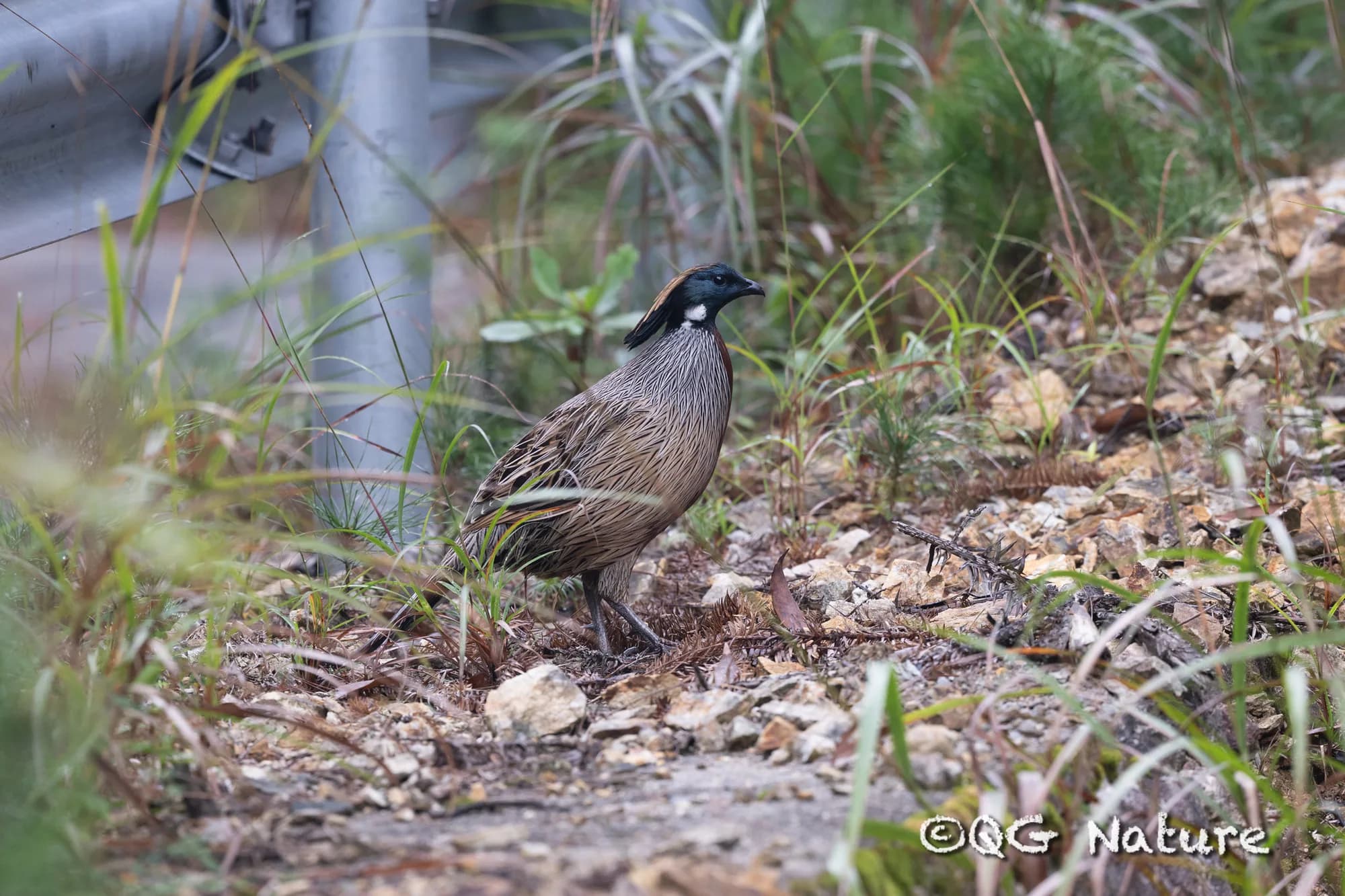 76 · Bird
Koklass pheasant
Drab, secretive and forest-bound, and named on the same operator itineraries as the monal. You will hear it long before you have any chance of seeing it.
Himalayan oak forest, heard at dawn
- 77 · Bird
Western tragopan
A black-headed, white-spotted pheasant in dense western Himalayan forest, and the hardest galliforme in India to see. A trip-defining bird for the people who want it.
Himachal, and the hardest of them
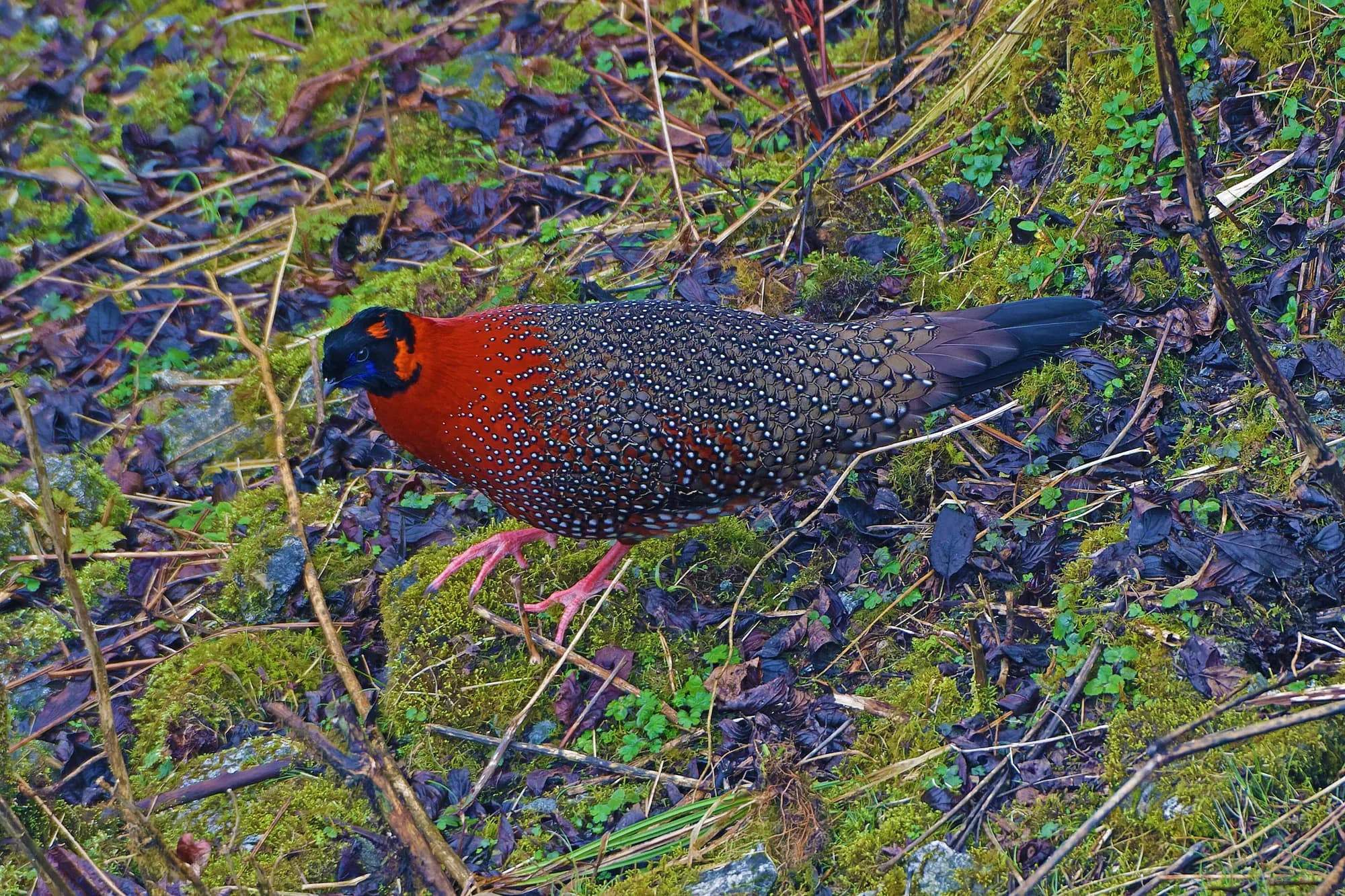 78 · Bird
Satyr tragopan
A crimson, white-spotted pheasant in eastern Himalayan rhododendron forest, and the other reason to walk the Singalila ridge in spring.
Singalila and Sikkim, in spring
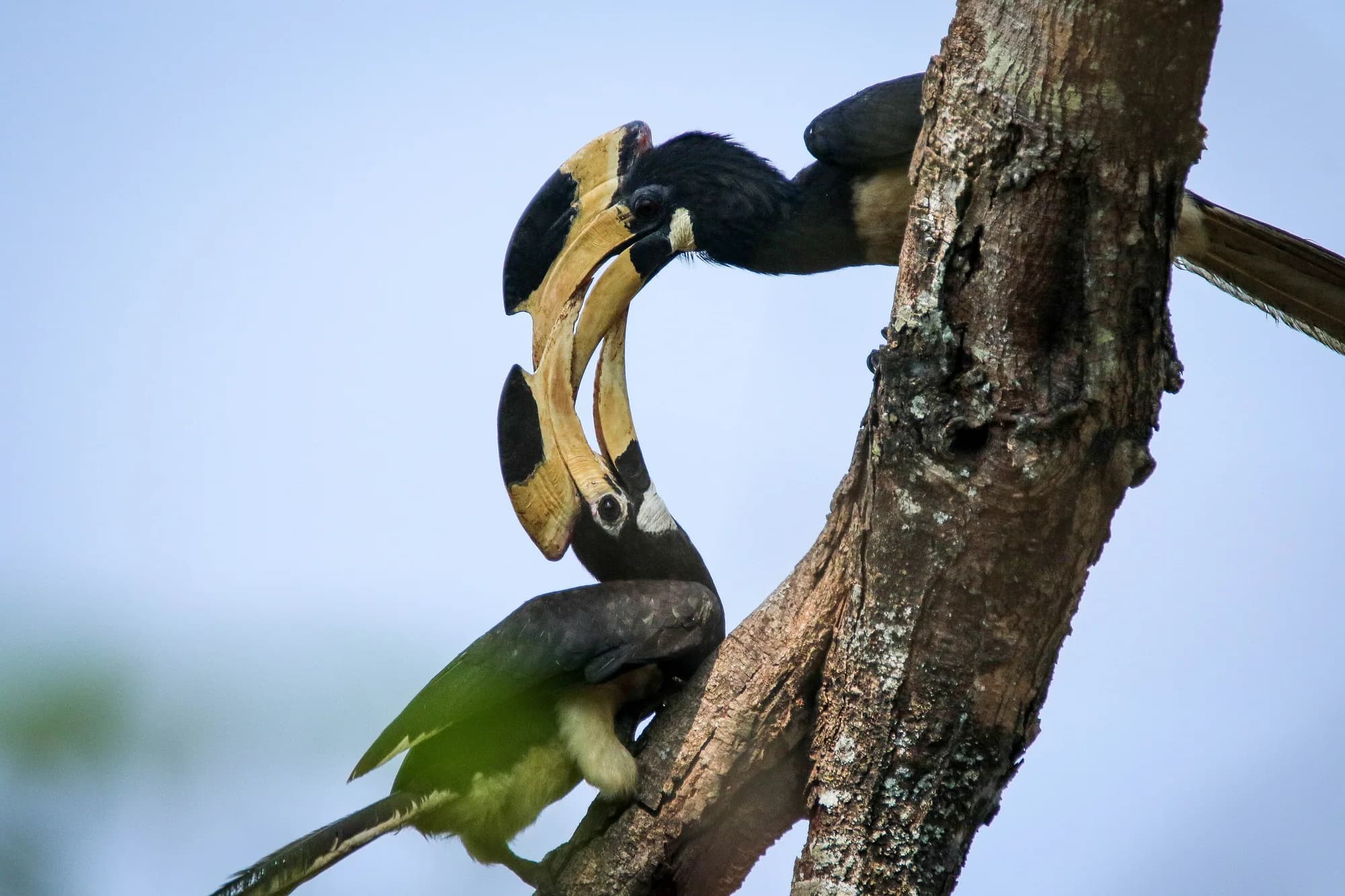 79 · Bird
Malabar pied hornbill
The hornbill most people actually see. Black and white, loudly present, and tied to fruiting fig trees along watercourses in the Western Ghats and central India.
Fruiting figs along a river
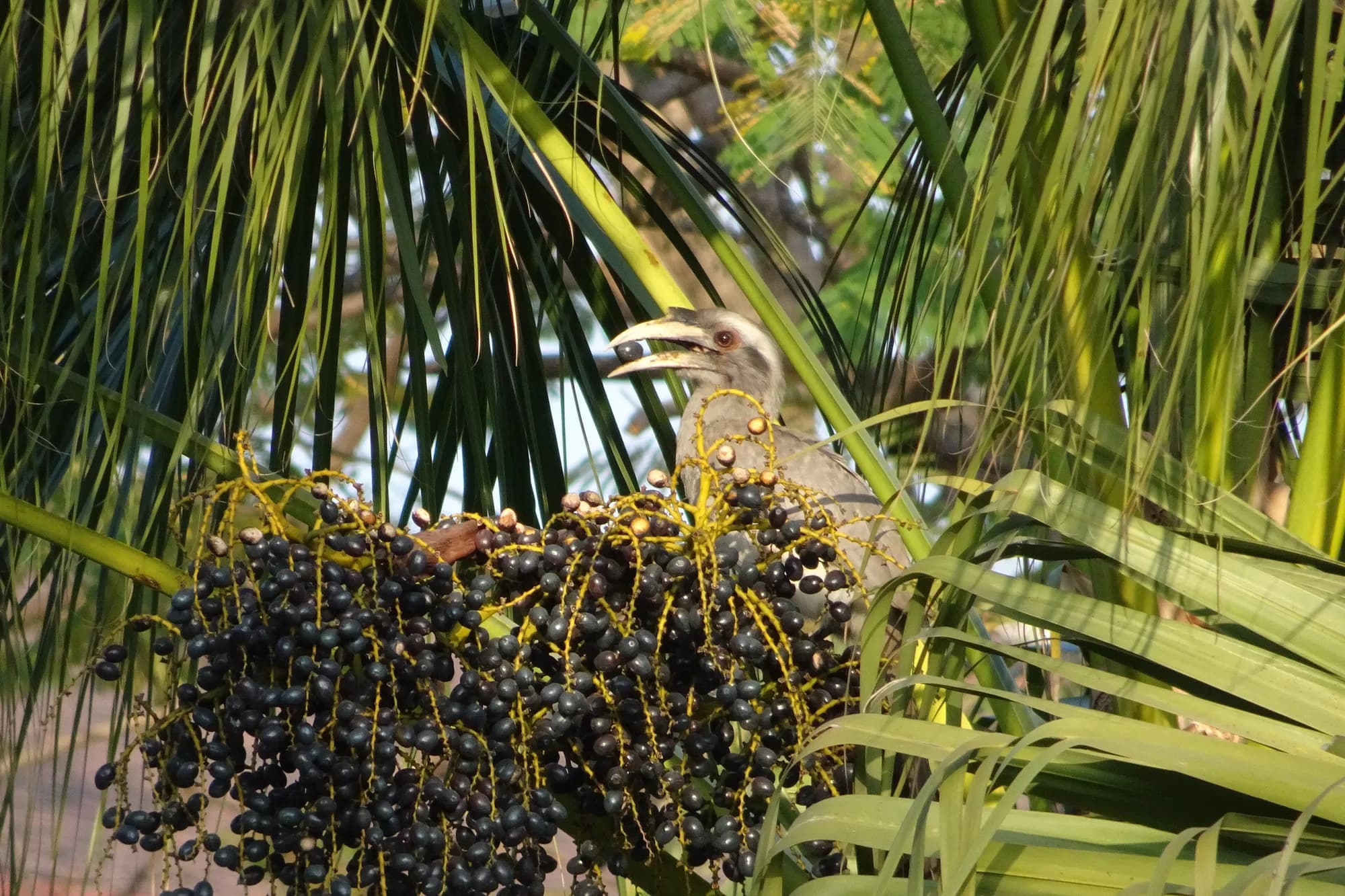 80 · Bird
Indian grey hornbill
The hornbill that turns up on the first morning of almost any north or central Indian safari, and in the trees outside the lodge. Small, grey, undramatic, and the one people actually photograph.
Dry forest, and the edges of towns
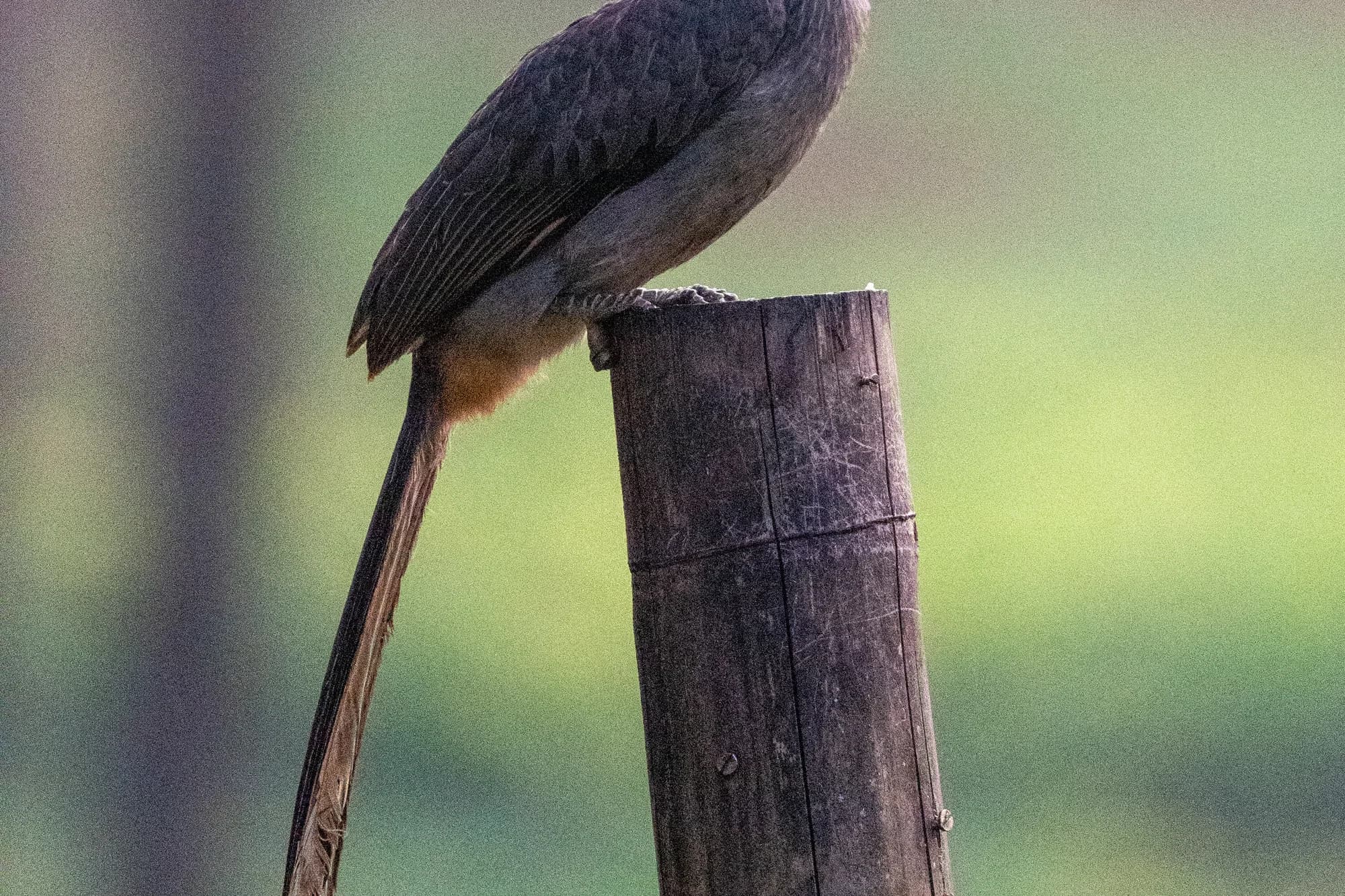 81 · Bird
Malabar grey hornbill
The Western Ghats' own hornbill — small, casque-less and endemic. It is common where the forest is intact, it announces itself constantly, and it is the easiest of India's four widespread hornbills to see badly and hardest to see well.
Western Ghats canopy, in noisy parties
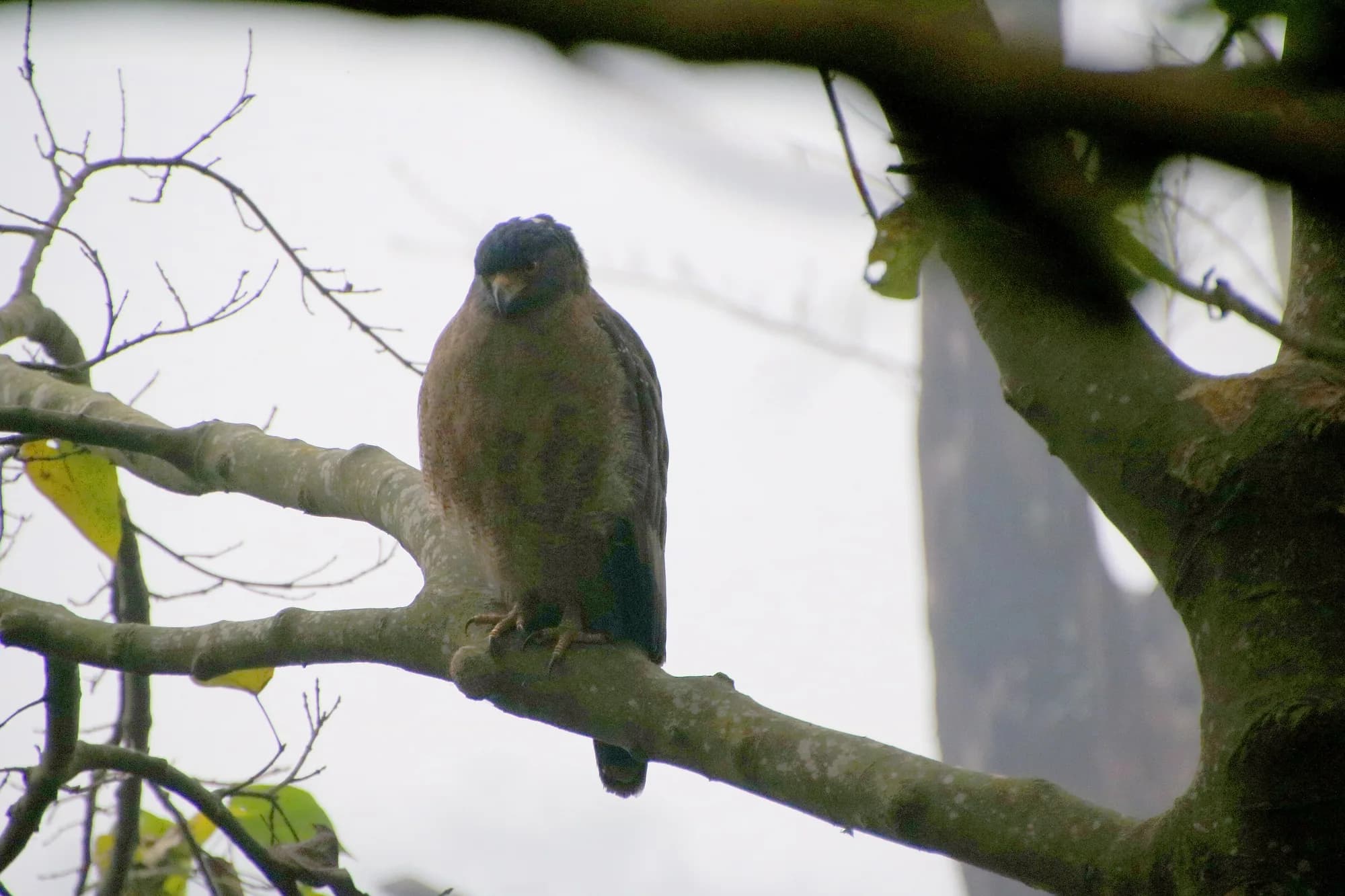 82 · Bird
Crested serpent eagle
The raptor every visitor photographs and nobody can identify. Its whistling call is part of the soundtrack of an Indian forest.
Every reserve, and nobody names it
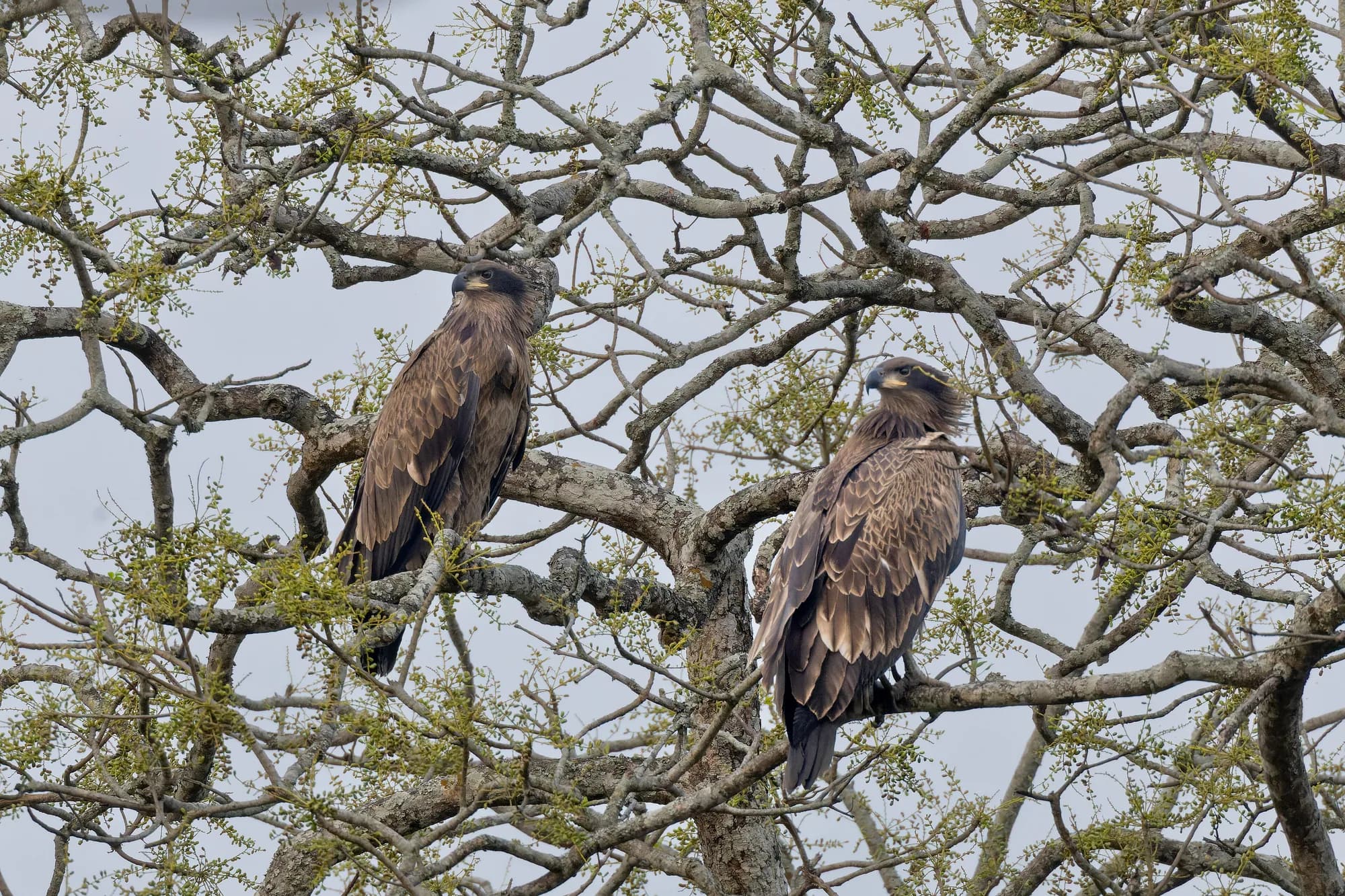 83 · Bird
Pallas's fish eagle
A huge, endangered fish eagle with a pale sandy head and one broad white band across a black tail. It breeds in the terai in winter, which is exactly when you will be there.
Big water — Corbett's reservoir, Kaziranga's beels
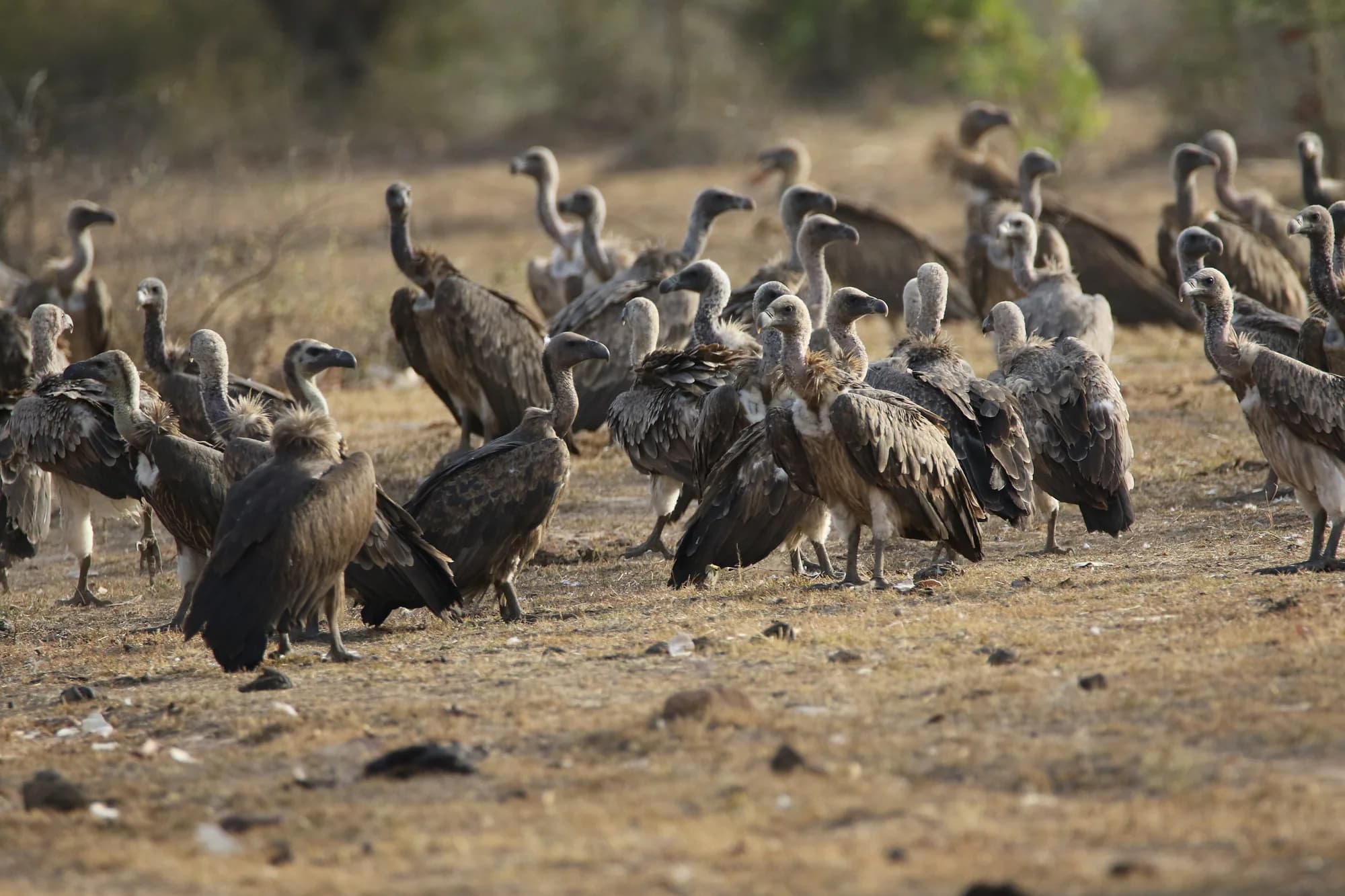 84 · Bird
Indian vulture
The cliff-nesting Gyps of peninsular India, hit by the same drug as its white-rumped cousin, and now most reliably found on the fort escarpments people drive past.
Cliffs at Ranthambore and Bandhavgarh
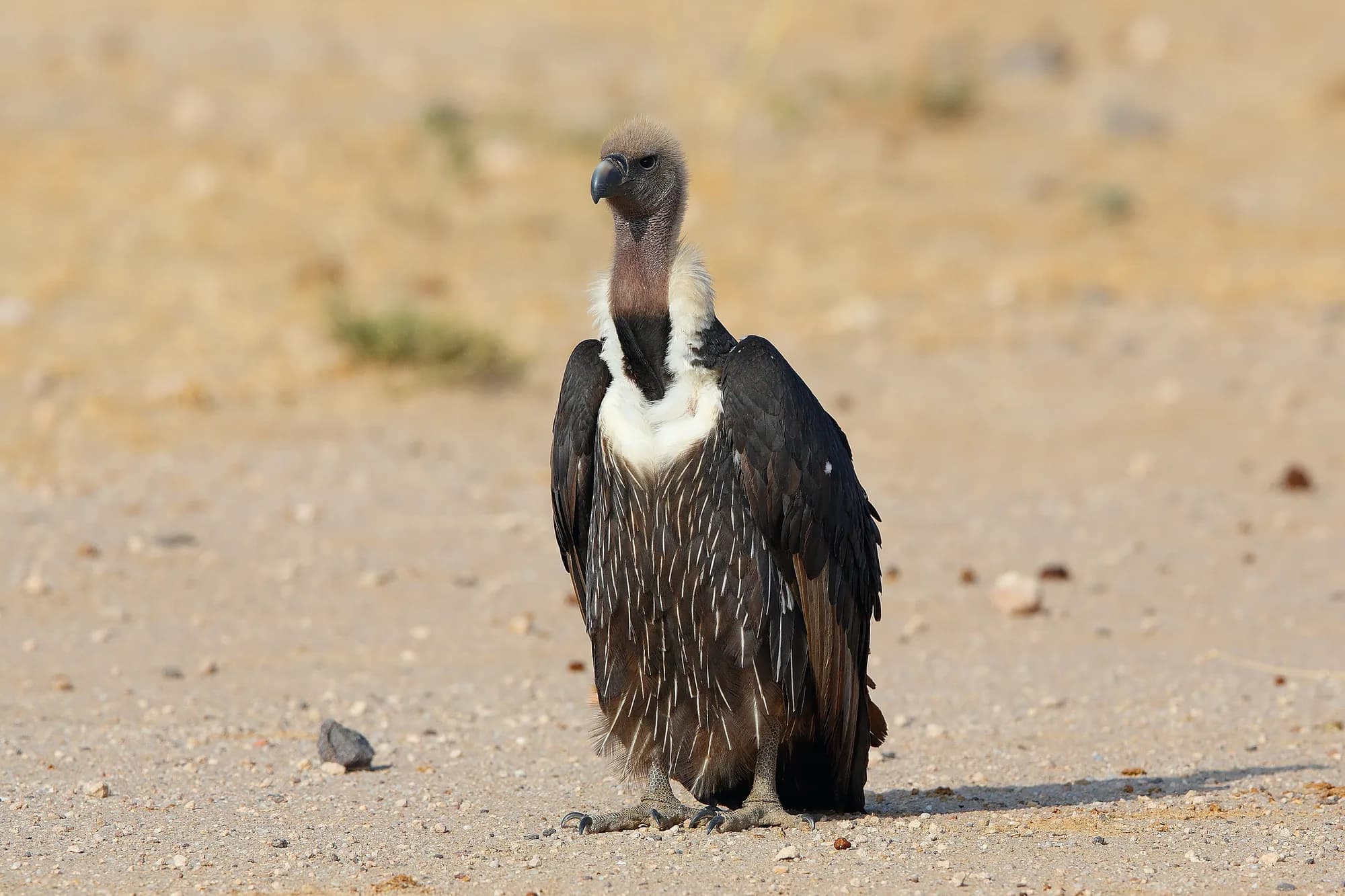 85 · Bird
White-rumped vulture
A bird that numbered in the tens of millions and lost more than ninety-nine per cent of its population in about a decade. The fastest collapse of any bird species ever recorded.
Once the commonest large raptor on earth
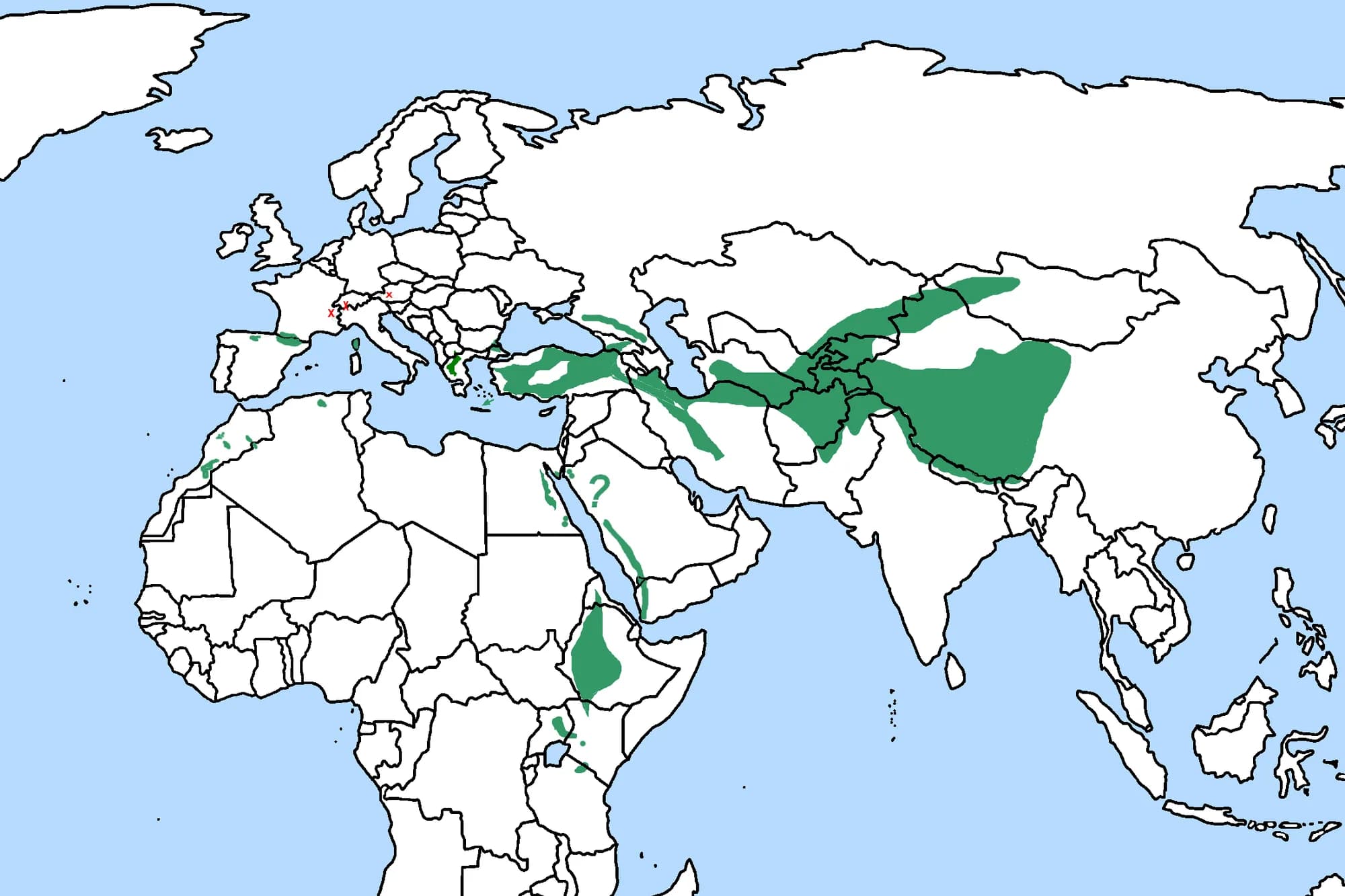 86 · Bird
Bearded vulture
Nearly three metres of wing passing below you on a ridge, orange-stained, with a diamond tail. The only bird in the world that lives mainly on bone, and the standard consolation on a blank snow leopard morning.
A Himalayan ridge, at eye level
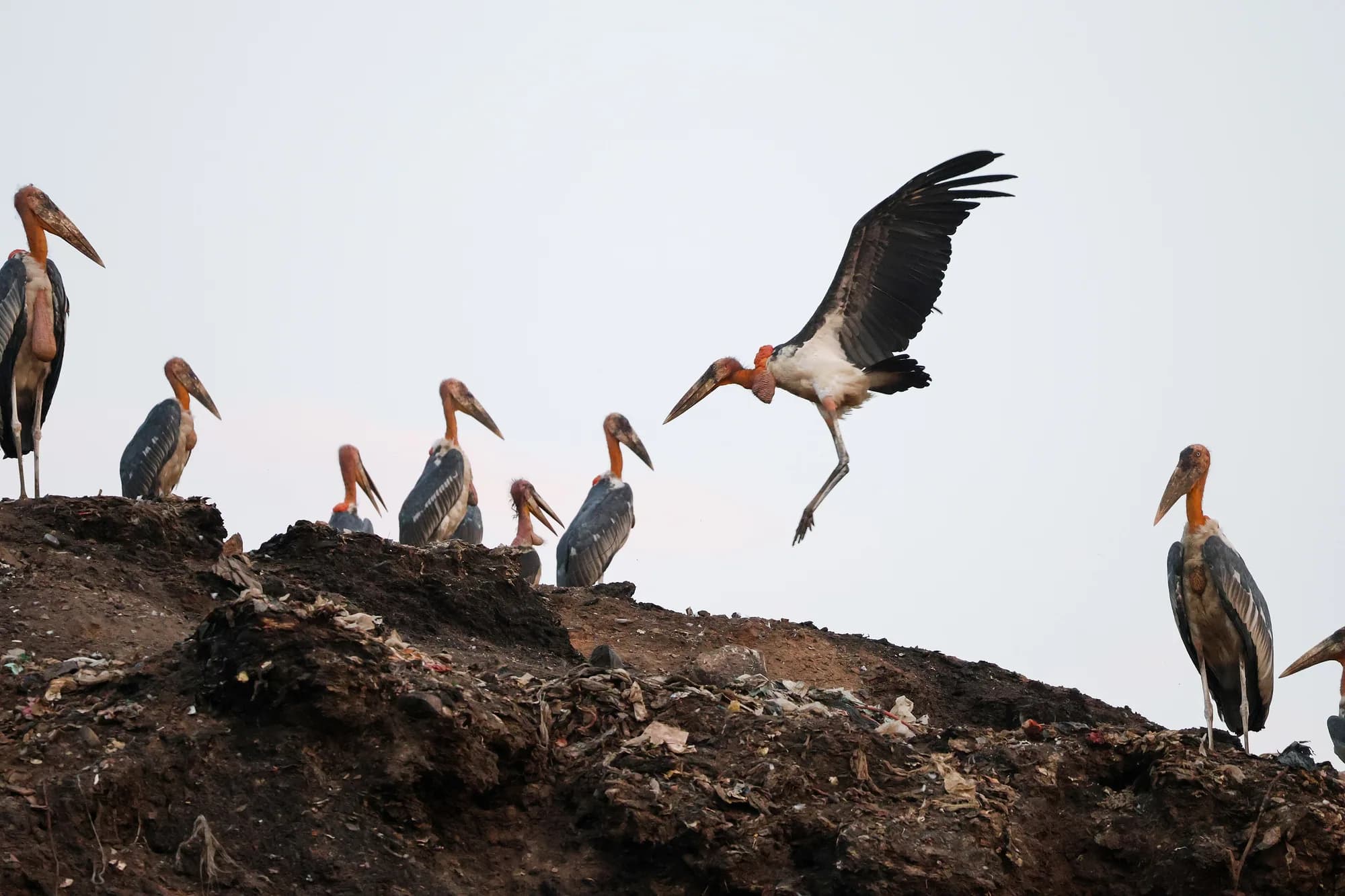 87 · Bird
Greater adjutant
One of the rarest storks alive, standing a metre and a half tall, and most of the world population lives around Guwahati — a good deal of it on a landfill.
Assam, and a rubbish dump
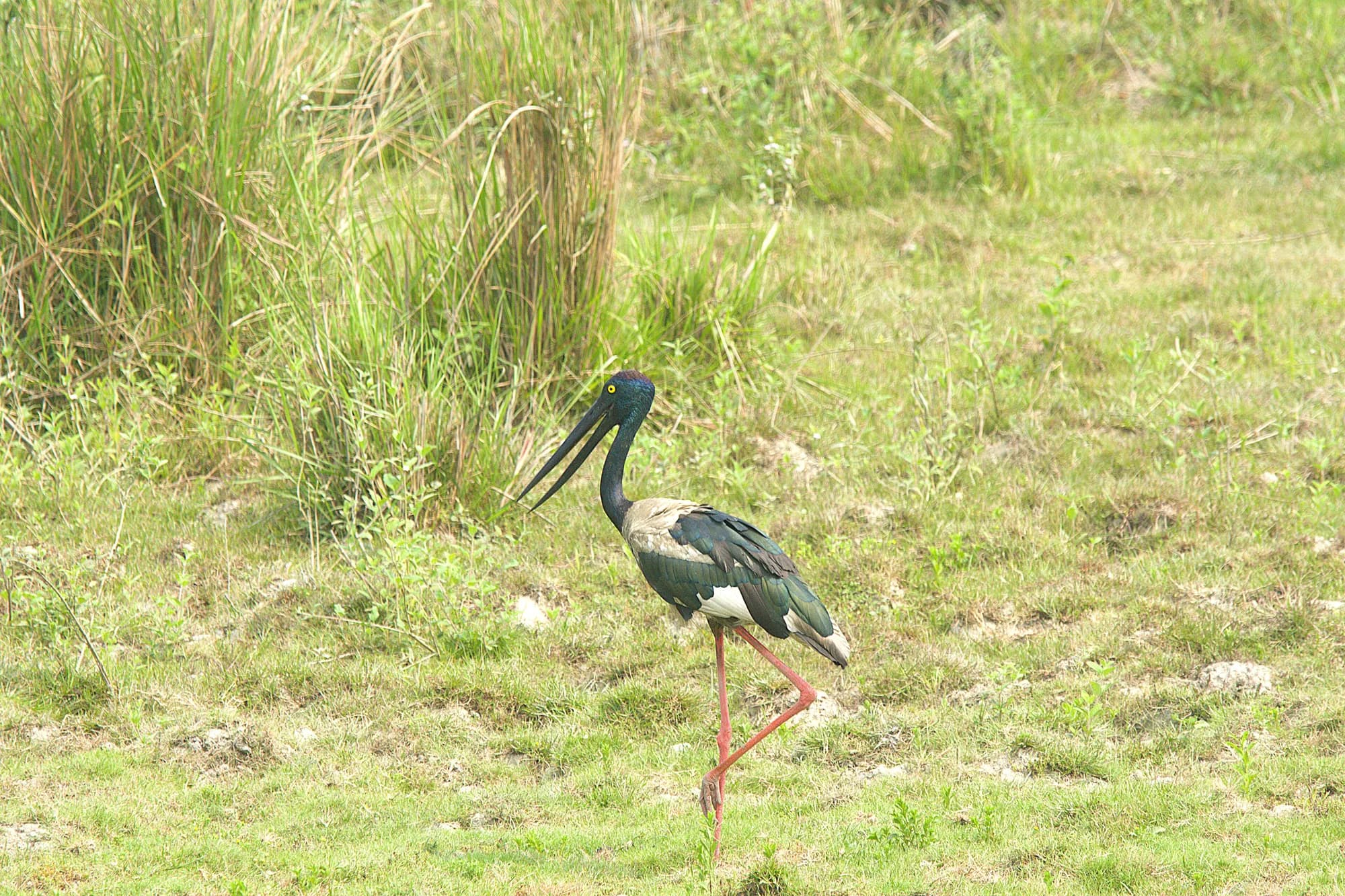 88 · Bird
Black-necked stork
A huge iridescent stork that holds the same wetland territory year after year. If your guide knows where the pair is, you will see them.
One pair, one wetland, for years
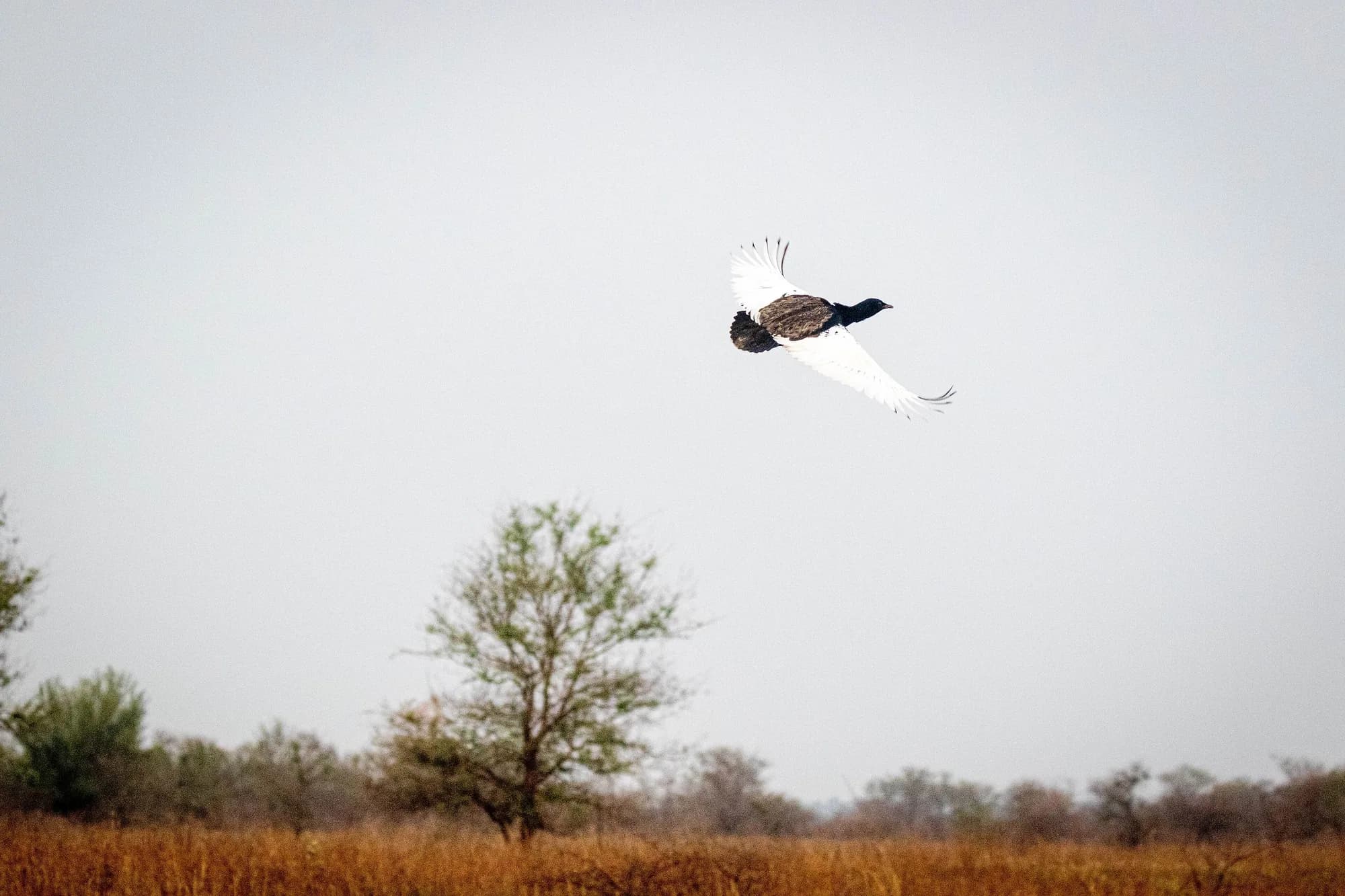 89 · Bird
Bengal florican
One of the rarest birds anyone reading this will realistically see. A few hundred remain in India, almost all of them in a handful of grasslands that are burned and cut on a schedule the bird depends on.
Tall terai grassland, from an elephant
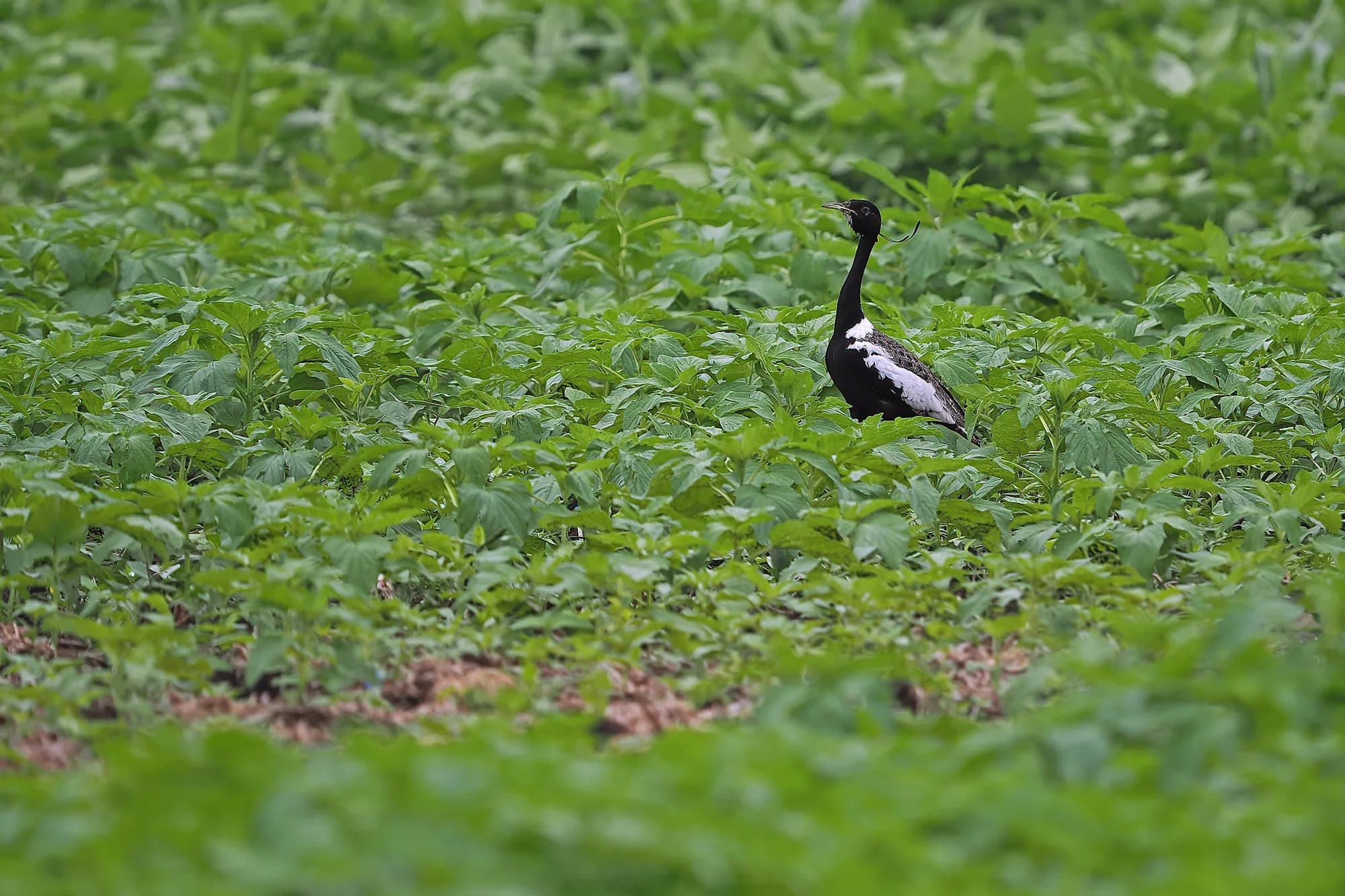 90 · Bird
Lesser florican
A small bustard whose male leaps two metres out of tall grass, several hundred times a day, for about eight weeks a year. Outside those weeks it is functionally invisible.
Standing grass in the monsoon, and nowhere else
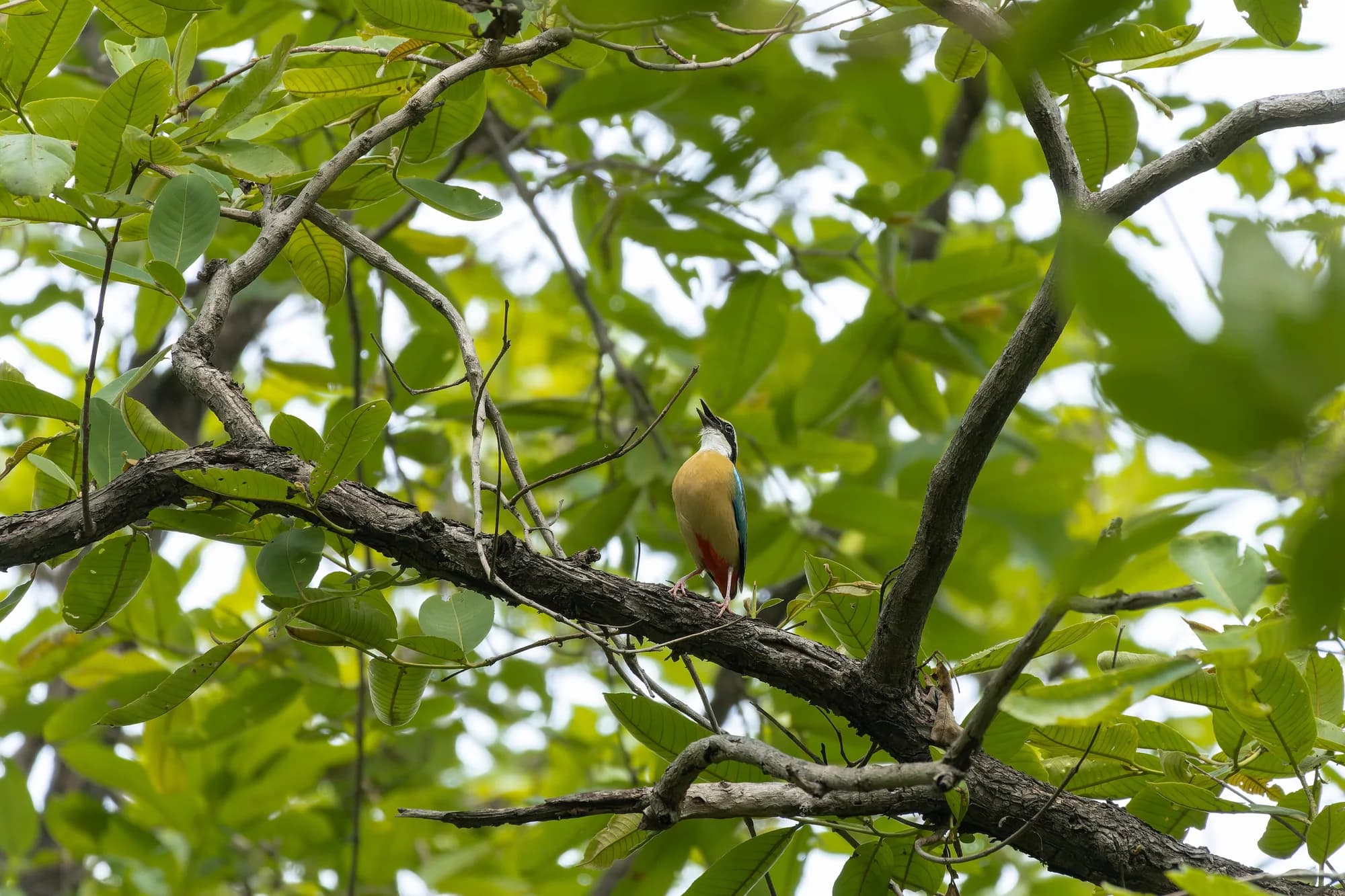 91 · Bird
Indian pitta
A ground bird in nine colours that most people hear and never see. The two-note dusk call is one of the defining sounds of the Indian monsoon.
Nine colours, two notes, and a monsoon arrival
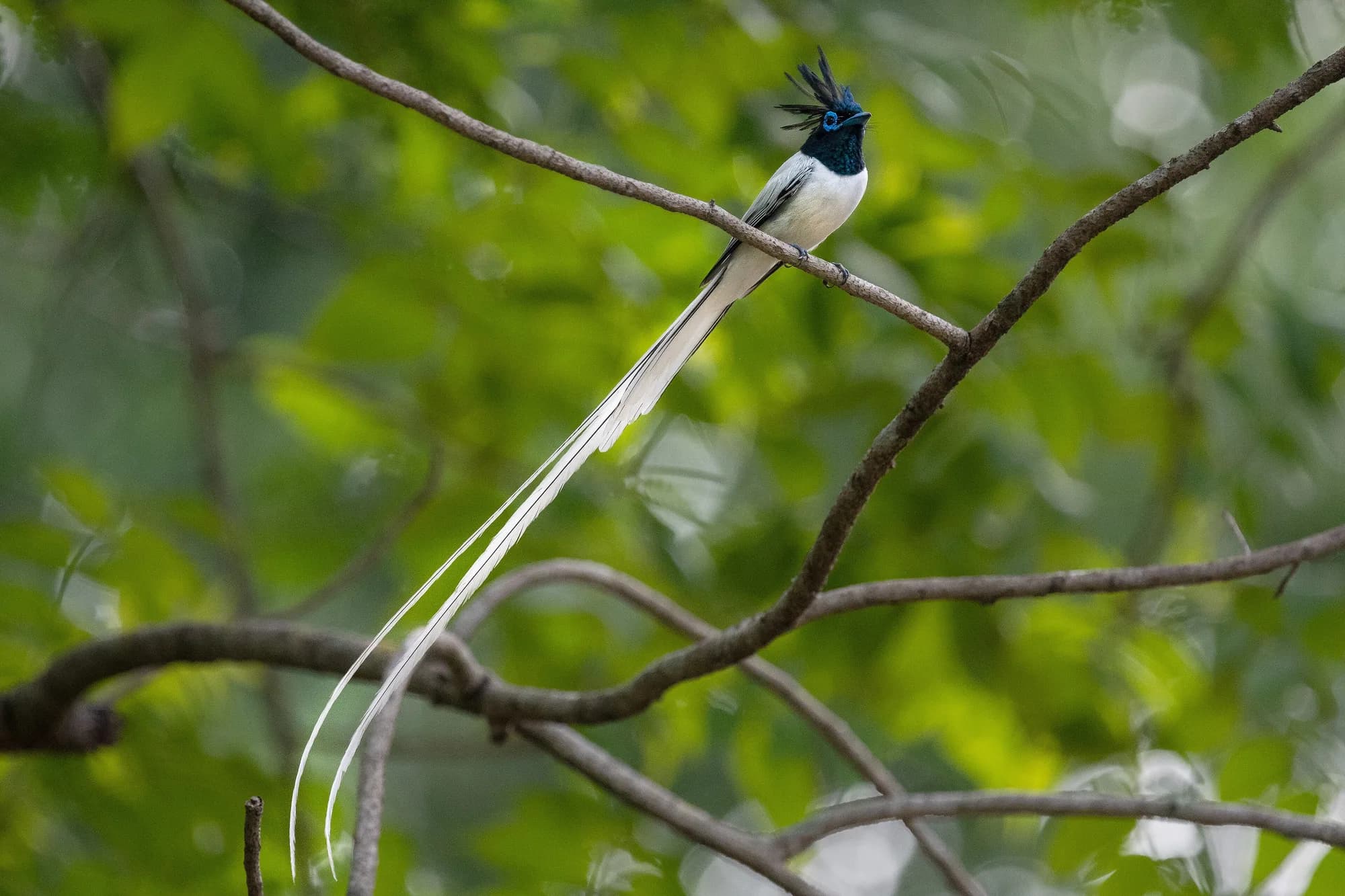 92 · Bird
Indian paradise flycatcher
The male trails two tail streamers twice his body length and turns white with age. The most photographed small bird in Indian reserves, and worth the frames.
The white ribbon through the forest
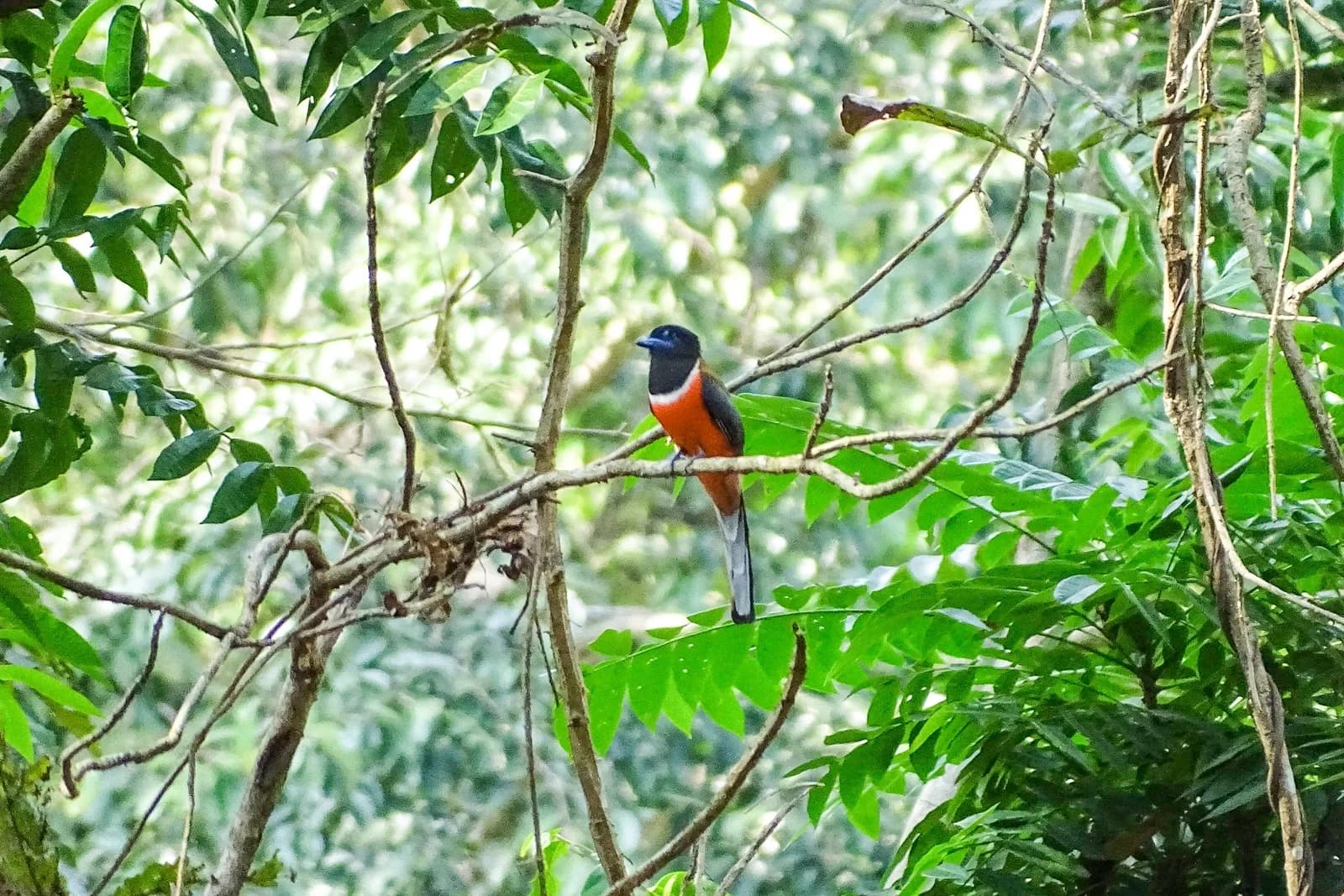 93 · Bird
Malabar trogon
Crimson, black and white, and almost impossible to see until it moves. It is the bird that teaches people the difference between looking at a forest and reading one.
Ghats understorey, sitting perfectly still
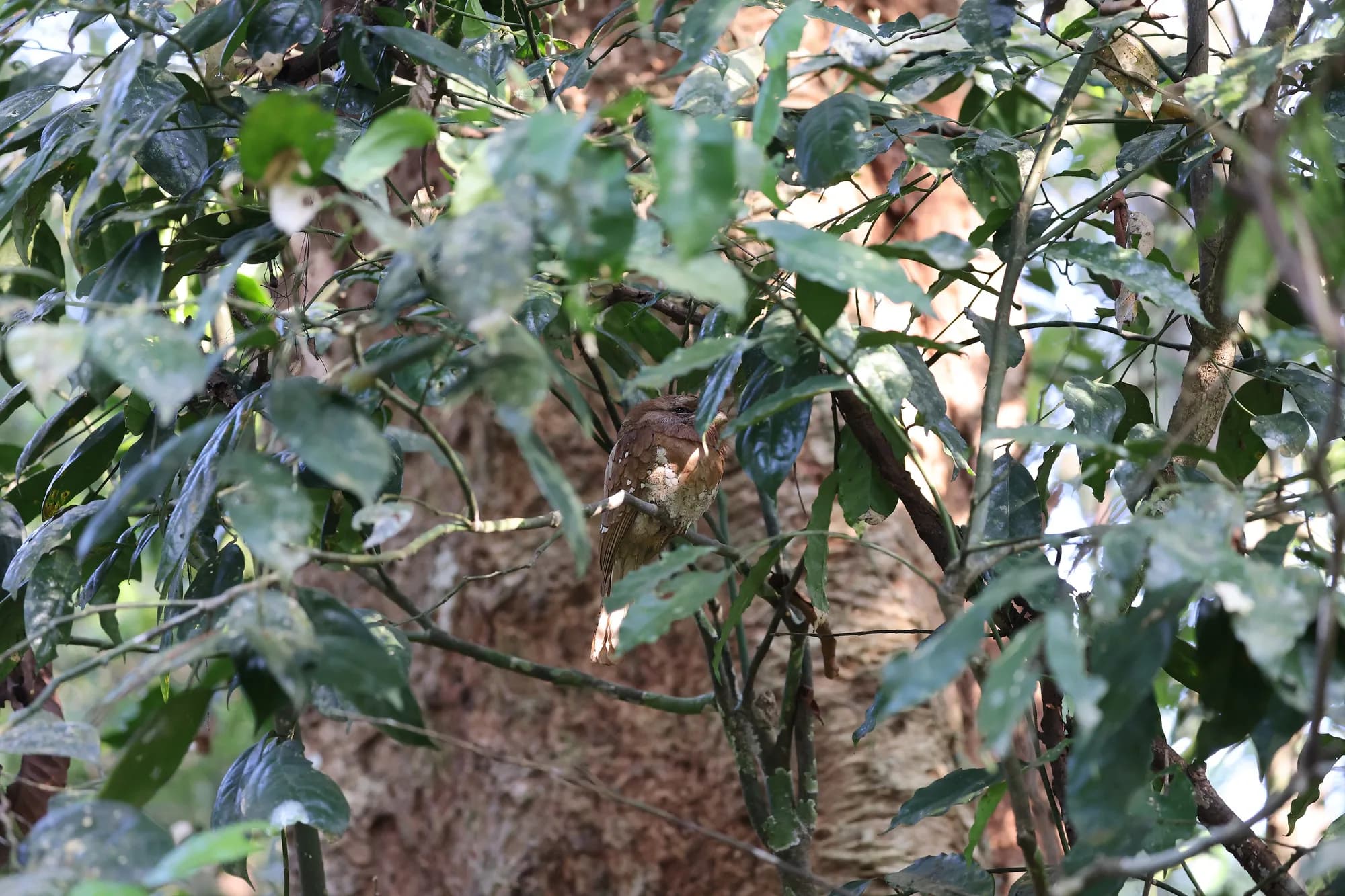 94 · Bird
Sri Lanka frogmouth
A bird you do not find. Local guides in the Western Ghats know individual roost trees and the pairs that use them, and a sighting is somebody walking you to a specific branch.
A known roost tree, shown to you
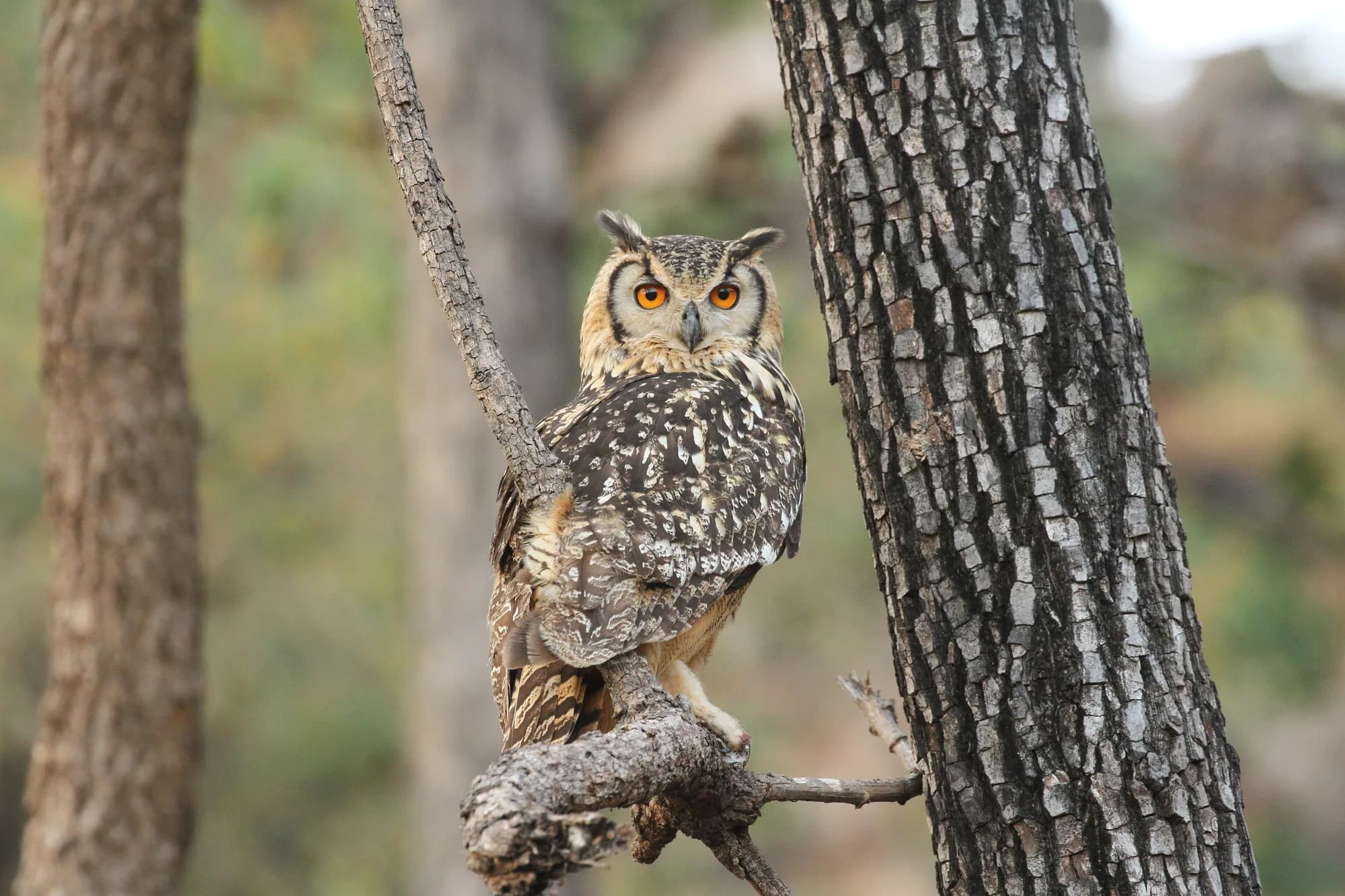 95 · Bird
Indian eagle-owl
A large horned owl of ravines and rocky ground, frequently found roosting in the open in daylight — which makes it the easiest big owl in India to see properly.
Ravines and fort walls, often in daylight
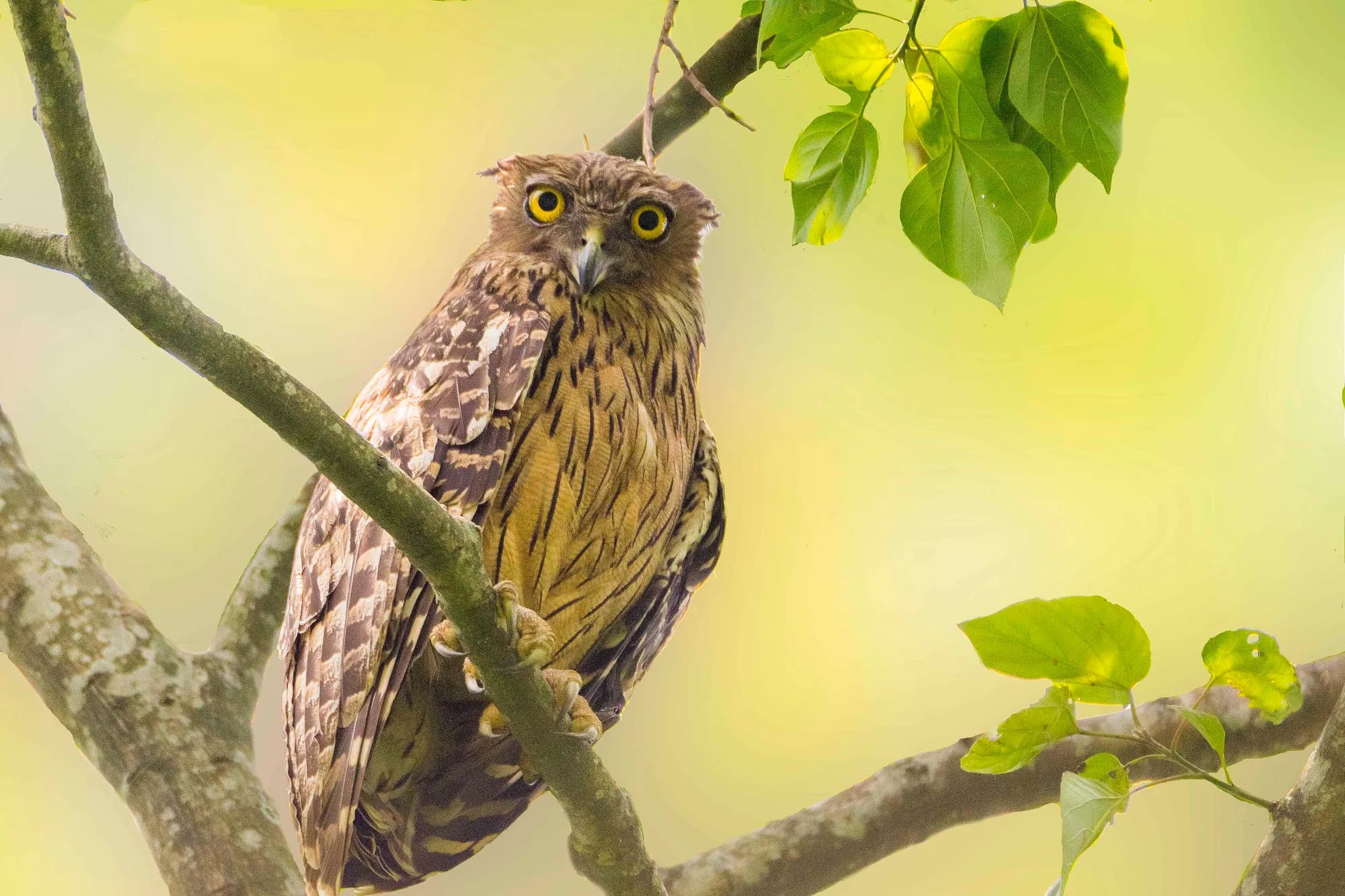 96 · Bird
Brown fish owl
A large owl that hunts fish from riverside branches and roosts above the crossings every vehicle drives through. Regularly overhead, and almost always missed.
Over a river crossing, in plain sight
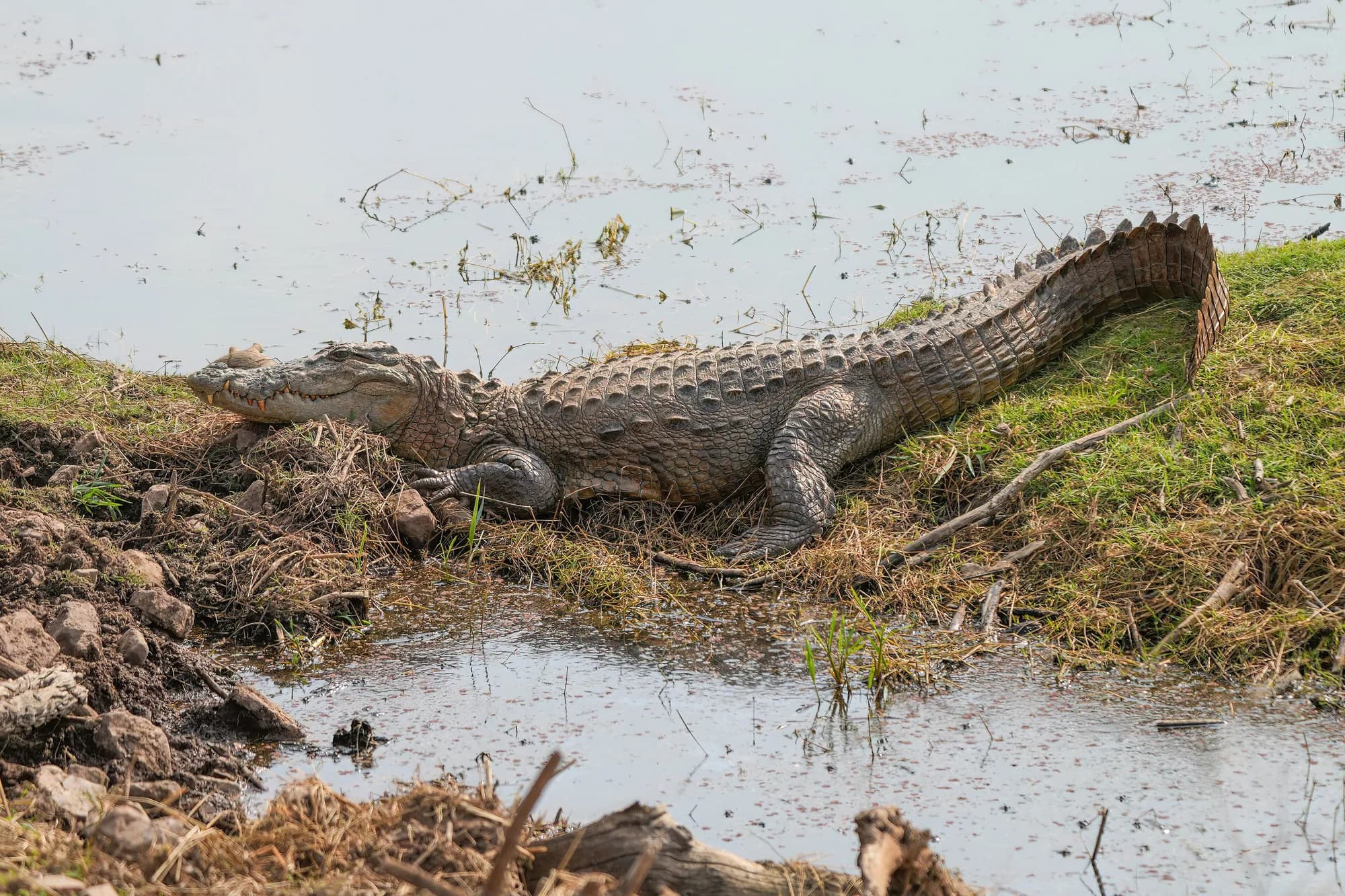 97 · Reptile
Mugger crocodile
The crocodile you will actually see in India — broad-snouted, common, and basking on the bank of every dry-forest lake while everyone photographs the deer behind it.
Every waterhole in the dry reserves
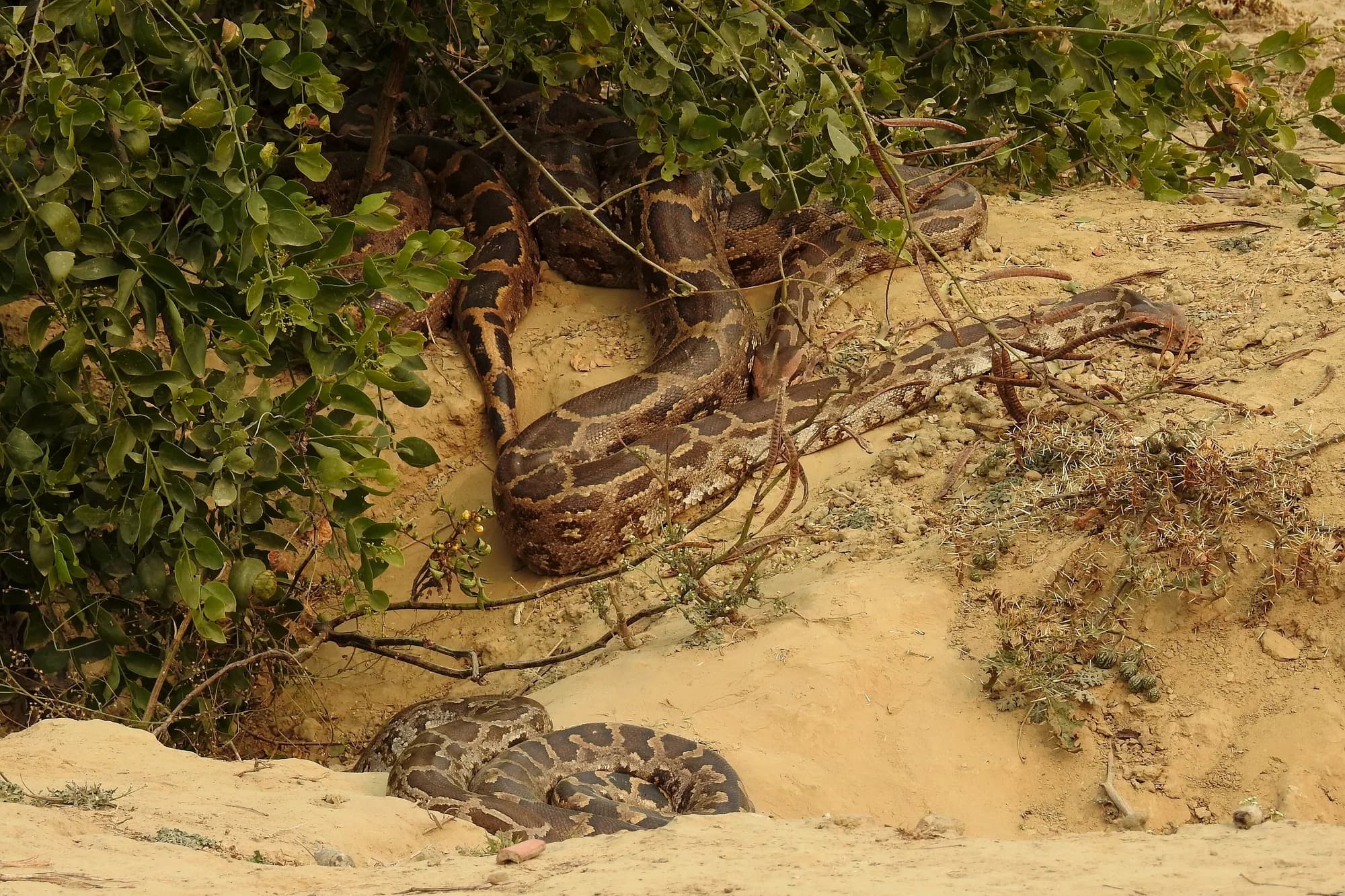 98 · Reptile
Indian rock python
A heavy-bodied constrictor up to four metres, and one of the few large snakes in India you can plan to see — on cold mornings, at known burrows.
Basking at a burrow mouth on a cold morning
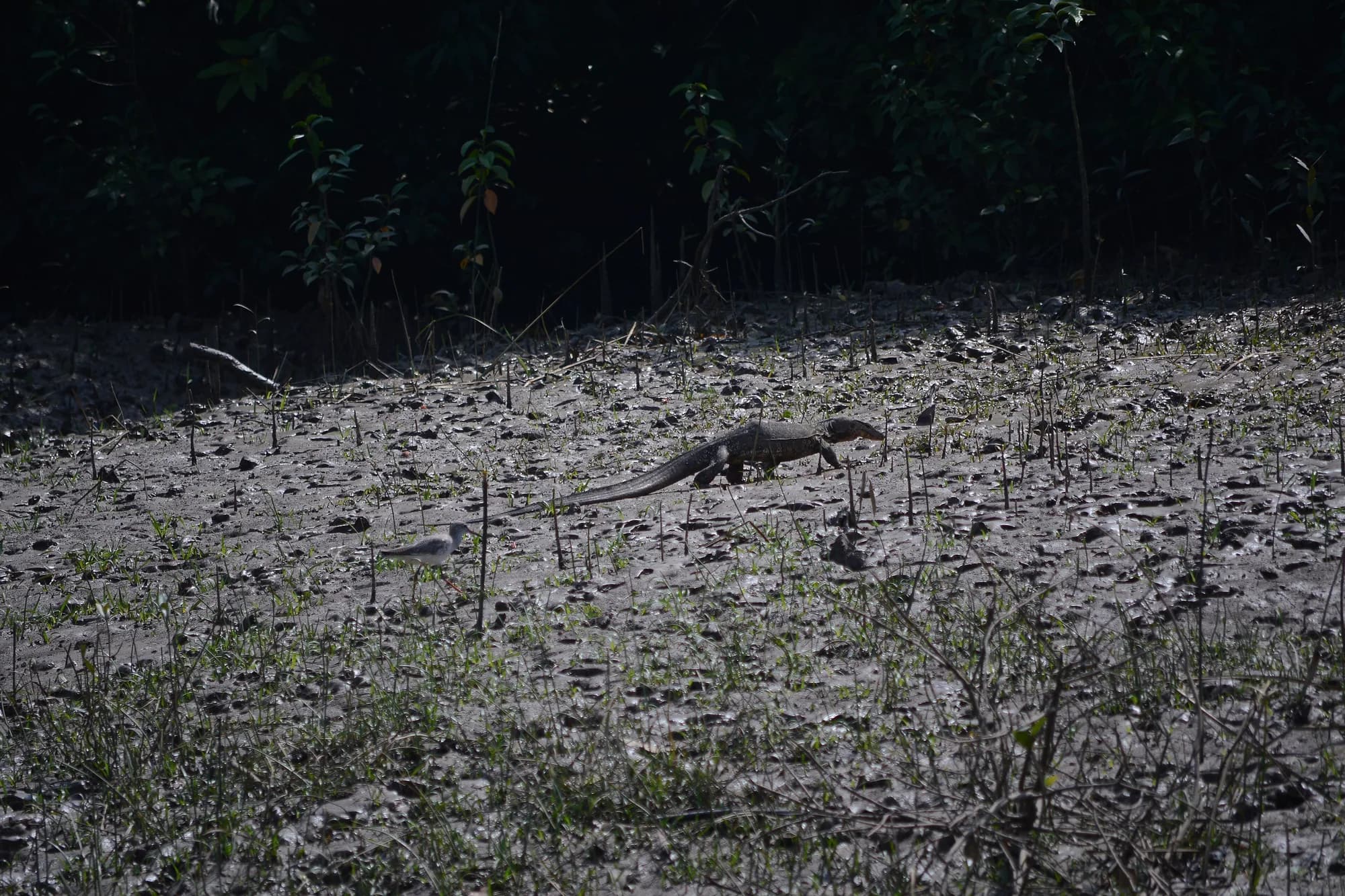 99 · Reptile
Bengal monitor
The large lizard everyone sees crossing a forest road and nobody can name. Up to a metre and a half, a strong climber, and entirely harmless.
Crossing the track, and nobody knows what it is
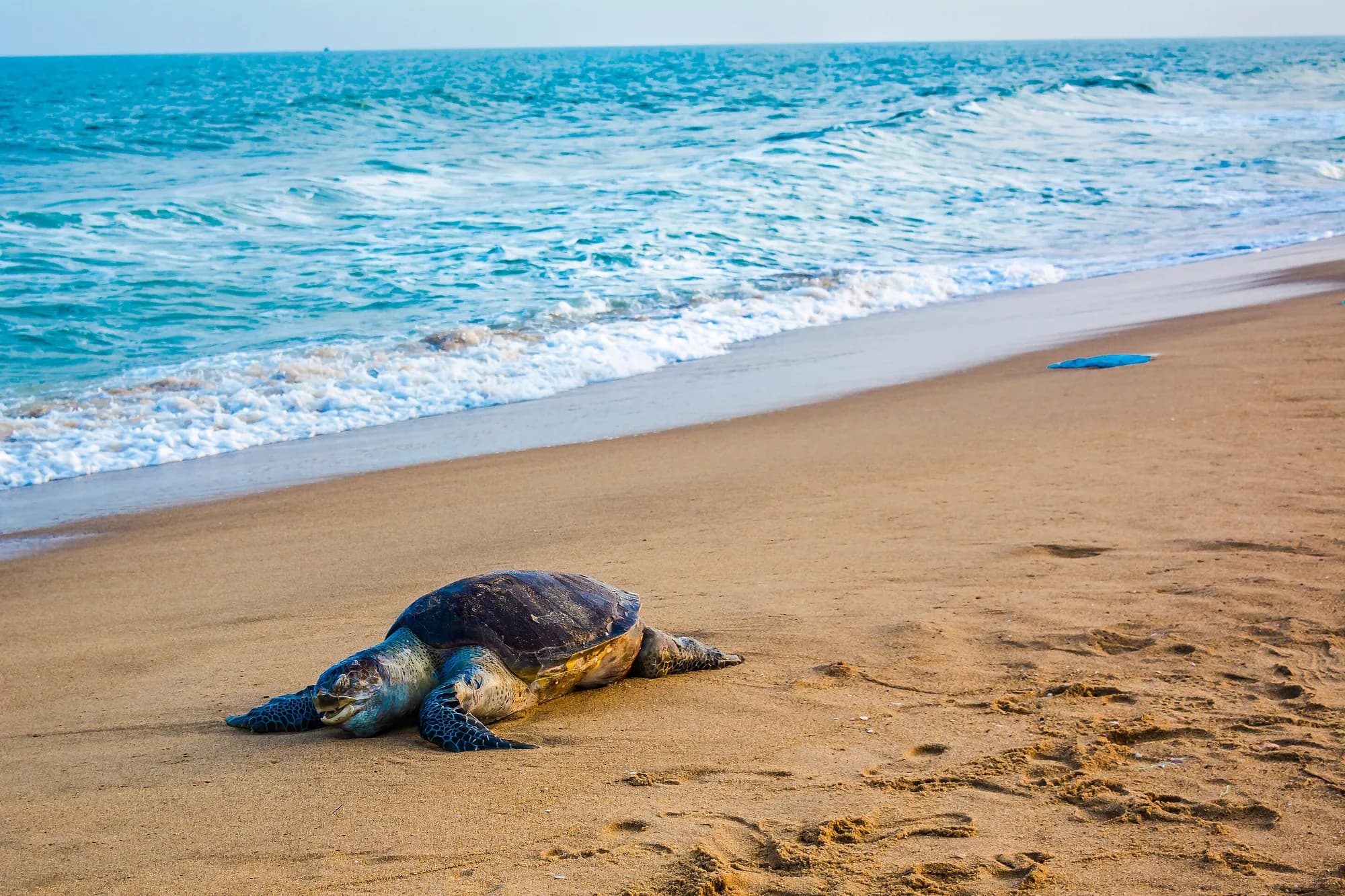 100 · Marine
Olive ridley turtle
The arribada is one of the largest wildlife aggregations on earth: hundreds of thousands of turtles coming ashore over a few nights to nest on the same stretch of sand. It has nothing to do with a safari, and that is why most visitors never hear about it.
An Odisha beach, at night, in the tens of thousands
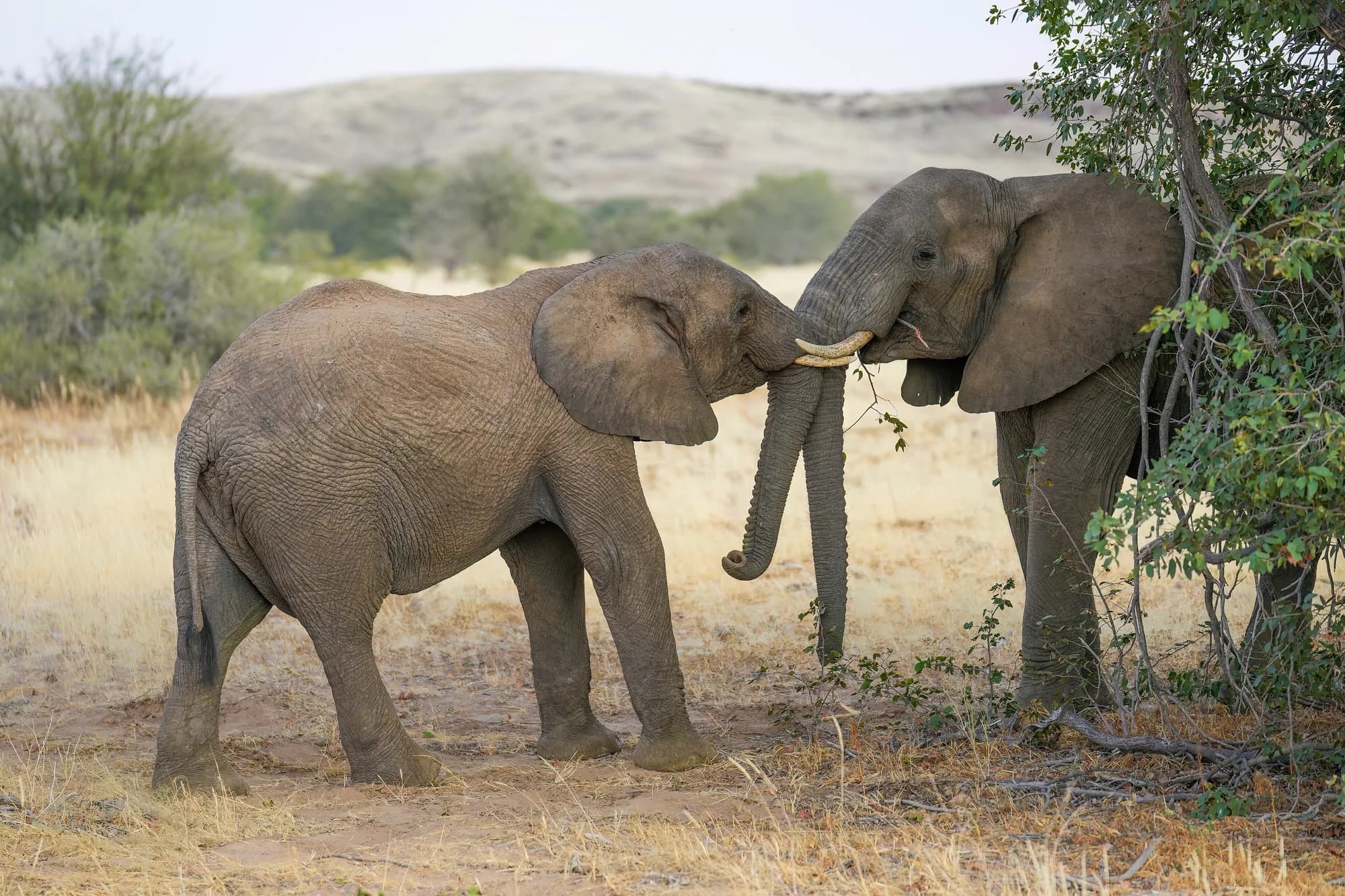 101 · Mammal
African savanna elephant
The animal most people have already seen by lunchtime on day one, which is exactly why it is worth reading about. The question on an African trip is almost never whether you will see elephants — it is whether you will see the thing that makes a herd worth two hours of your time.
Nine countries on this site, and the easiest of the big animals
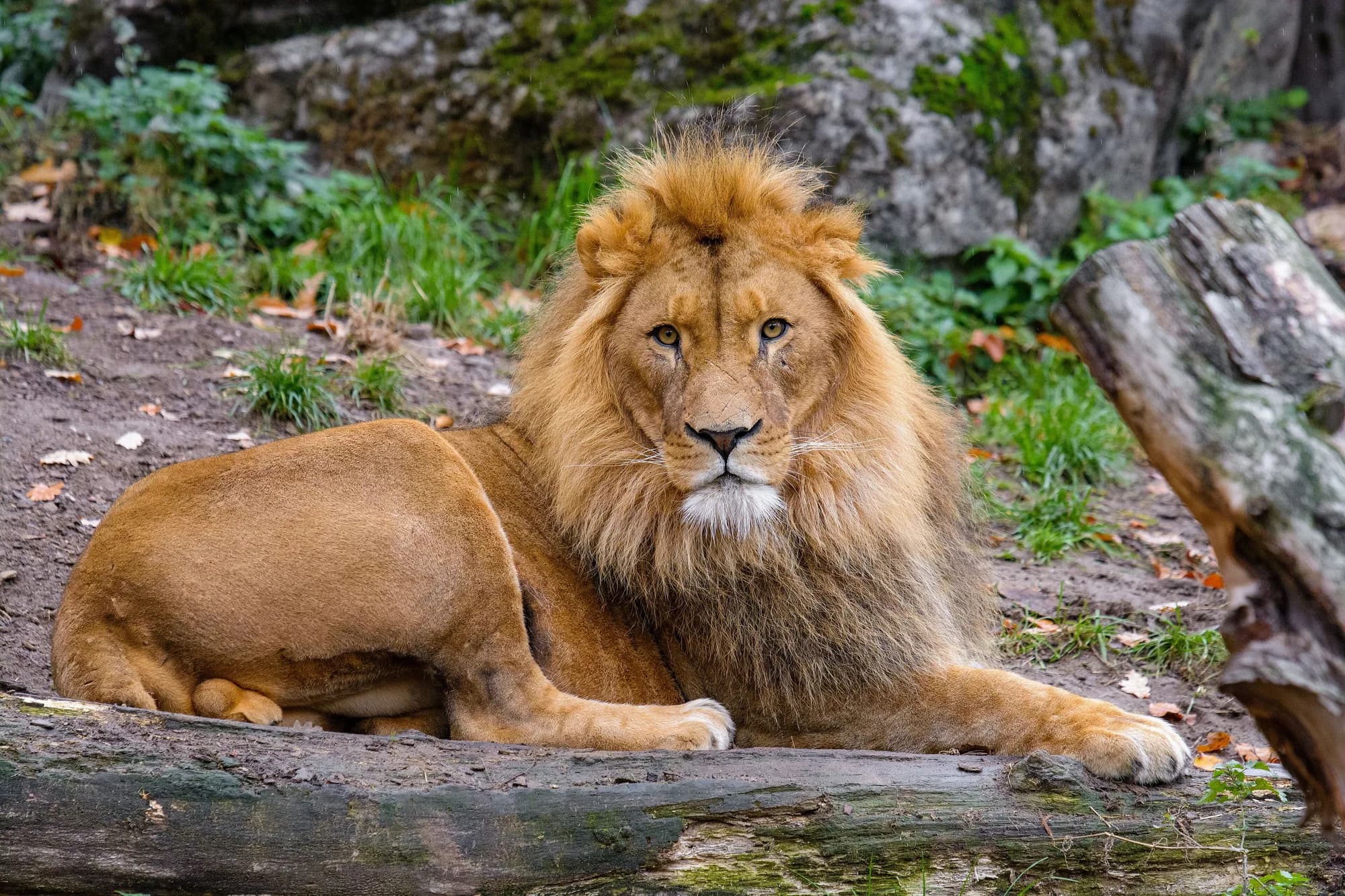 102 · Mammal
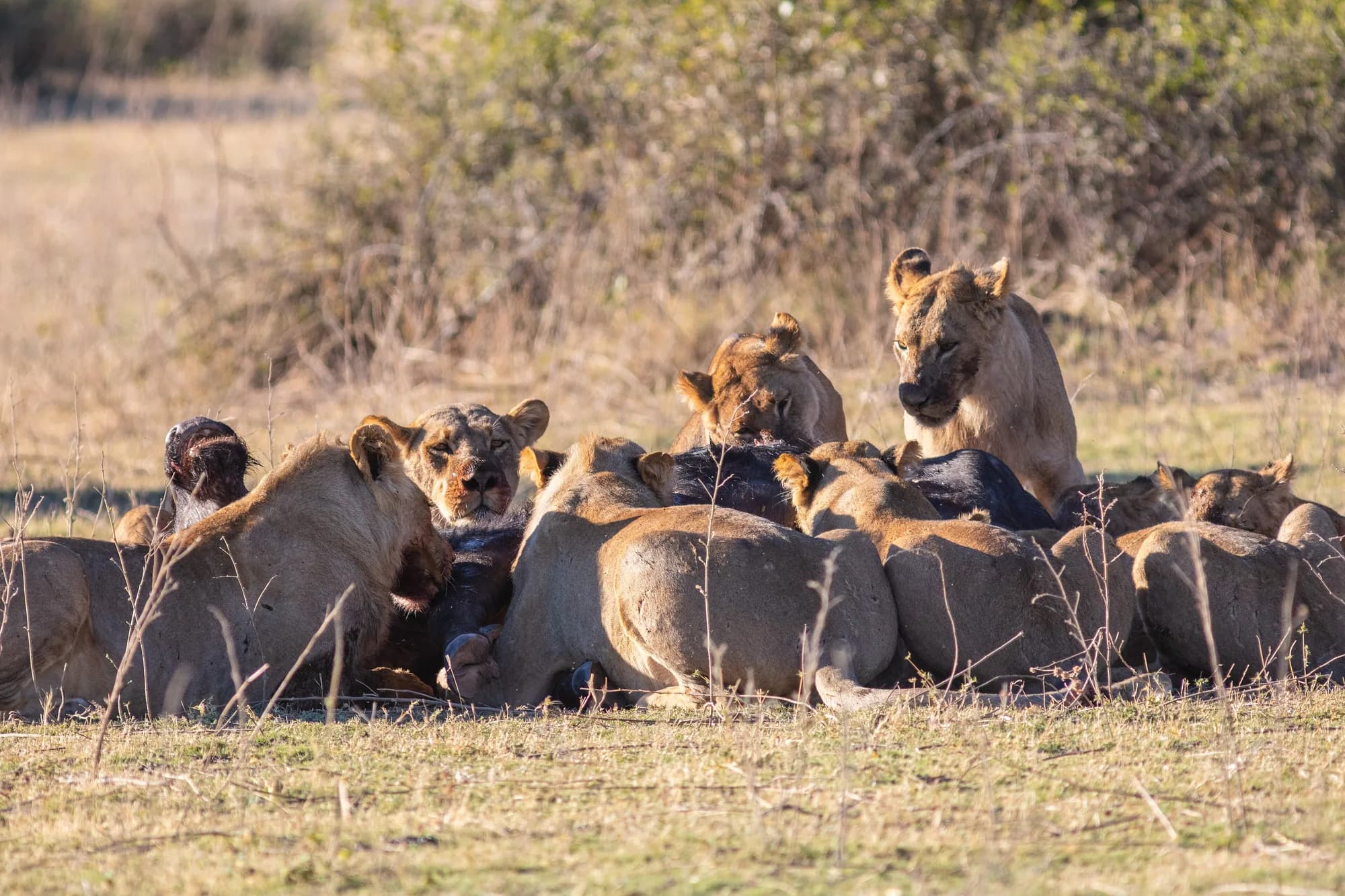
African lion
The animal everyone books the trip for, and the one most often seen asleep. Lions are not hard to find in a good park — they are hard to find doing anything, and the difference between those two sentences is most of what separates a good lion trip from a disappointing one.
Nine countries here, and thinner on the ground than it looks
- 103 · Mammal
Hippopotamus
Easy to find and almost always seen badly — a row of ears and nostrils in brown water. The trip worth planning is the one that puts you level with them from a boat, or at a pod out of the water after dark.
Seven countries here, wherever the water is permanent
 104 · Mammal
African buffalo
The Big Five animal nobody books for and every guide respects. A herd of a thousand moving to water at dusk is one of the genuine spectacles of a dry-season safari, and a lone old bull in long grass is the reason walking safaris are led by someone armed.
Eight countries here, and the least glamorous of the five
- 105 · Mammal
African leopard
Present in almost every park on this site and seen in very few of them. Leopards are the one big cat where the park choice is not a preference but the whole answer — outside a handful of reserves with habituated animals, a sighting is luck.
Six countries here, and three parks worth booking for
 106 · Mammal
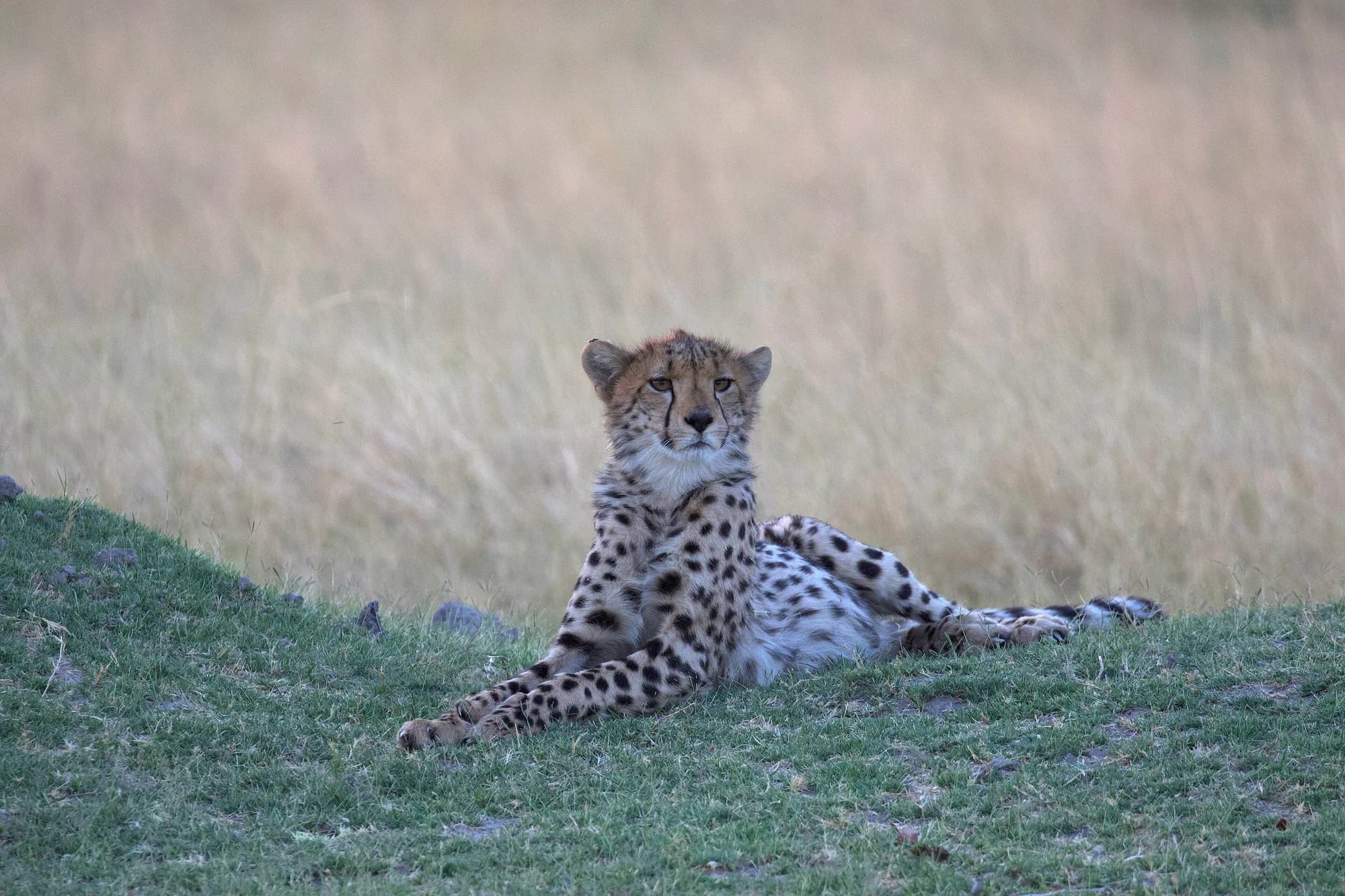
Cheetah
The one large African predator that hunts in daylight, which makes it the most watchable and the most photographed. It is also the rarest of the big cats on this site, and it loses kills to almost everything.
Six countries here, and it needs open country
 107 · Mammal
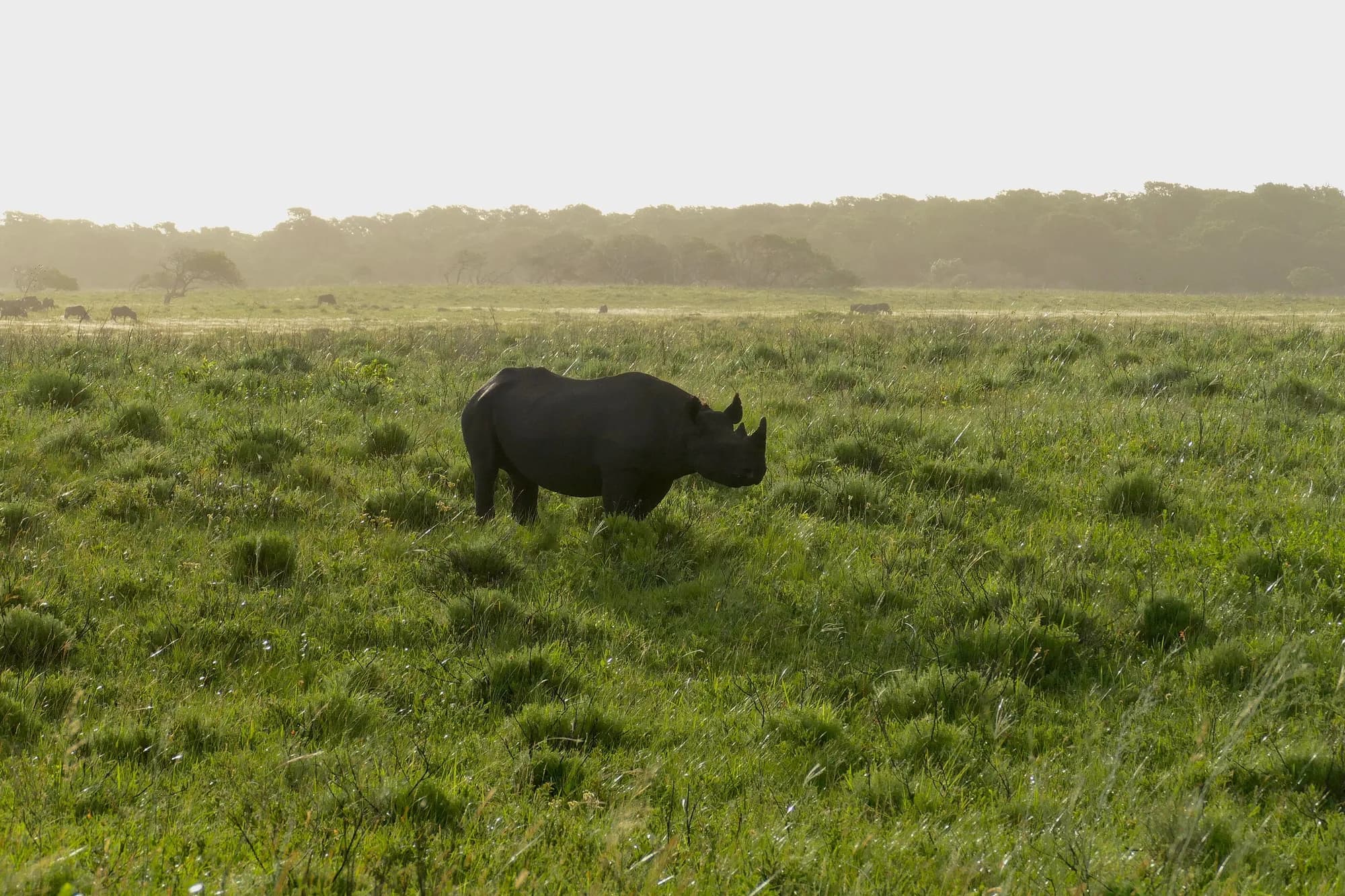
Black rhinoceros
A browser, usually alone, usually in thick bush, and the hardest of the Big Five to see well. Roughly 6,800 remain in the wild — fewer than the white rhino by a factor of two, and the two animals are told apart by the shape of the mouth, not the colour.
Seven countries here, and genuinely rare in all of them
- 108 · Mammal
Sable antelope
A jet-black bull with swept-back horns most of a metre long, and the animal experienced guides point at before they point at a lion. It is a woodland species, which is why it is missing from the parks most people visit.
Six countries here, in miombo woodland
 109 · Mammal
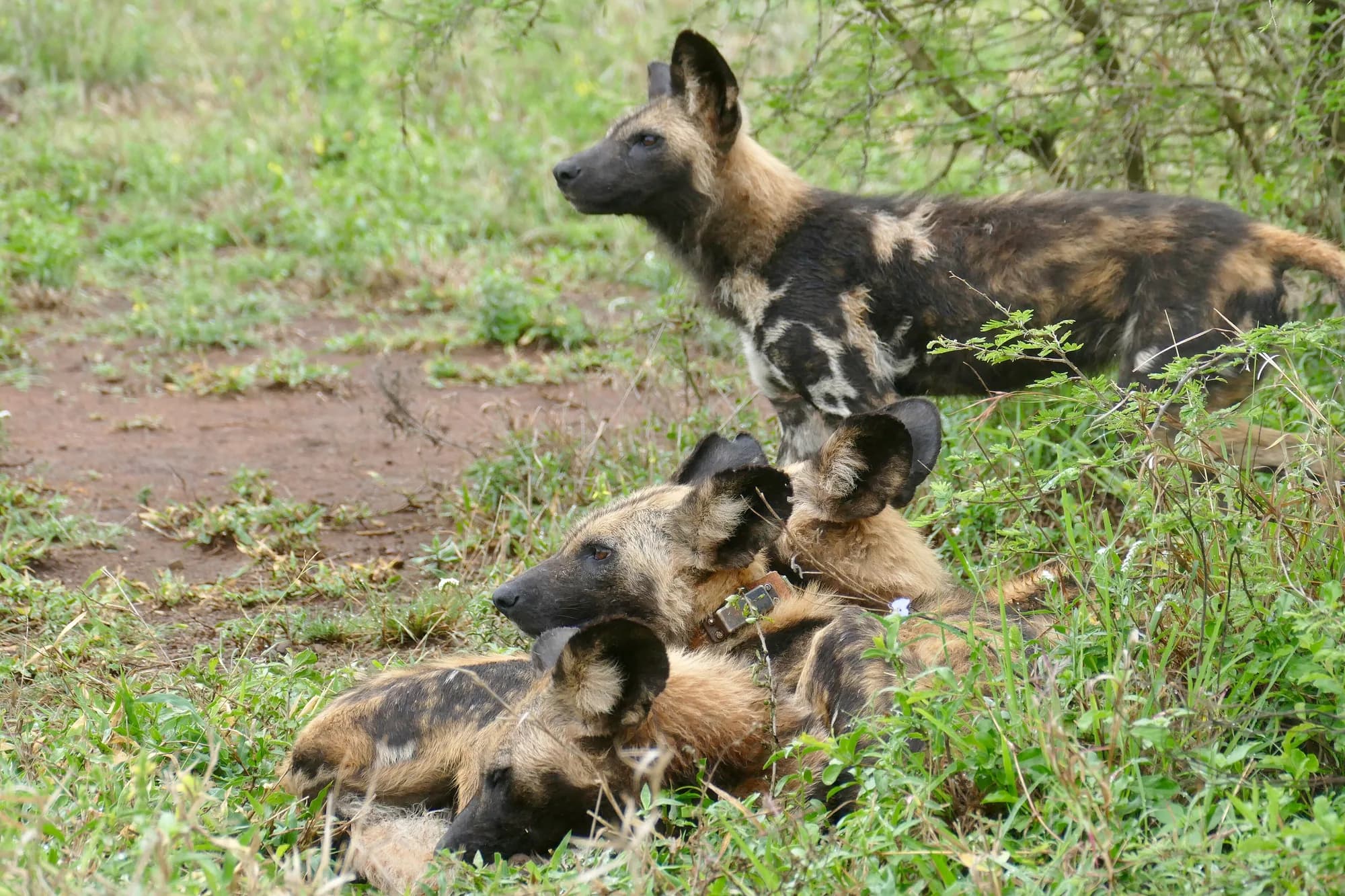
African wild dog
The rarest large carnivore most people will ever have a realistic chance of seeing, and the most rewarding to watch. A pack hunts as a unit in daylight, covers ground fast, and is gone — which is why the parks that deliver them are a short and specific list.
Six countries here, and about 6,600 left in all of Africa
 110 · Mammal
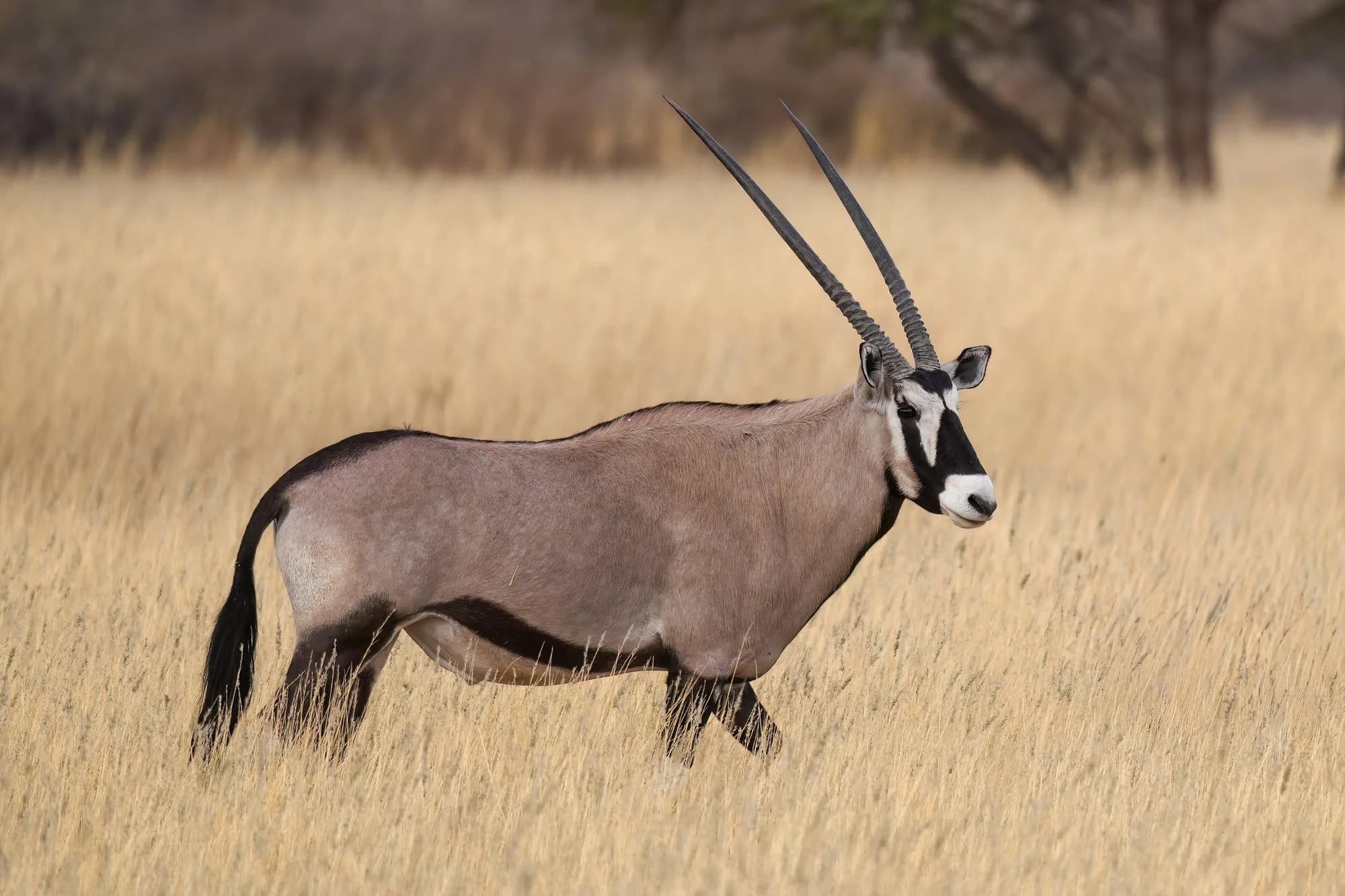
Gemsbok
The desert antelope on the red dunes, with a black-and-white face mask and rapier horns, and the animal that makes the arid parks worth the drive. It can go for long periods without drinking, which is why it is standing in country where nothing else is.
Botswana, Namibia and the Northern Cape
 111 · Mammal
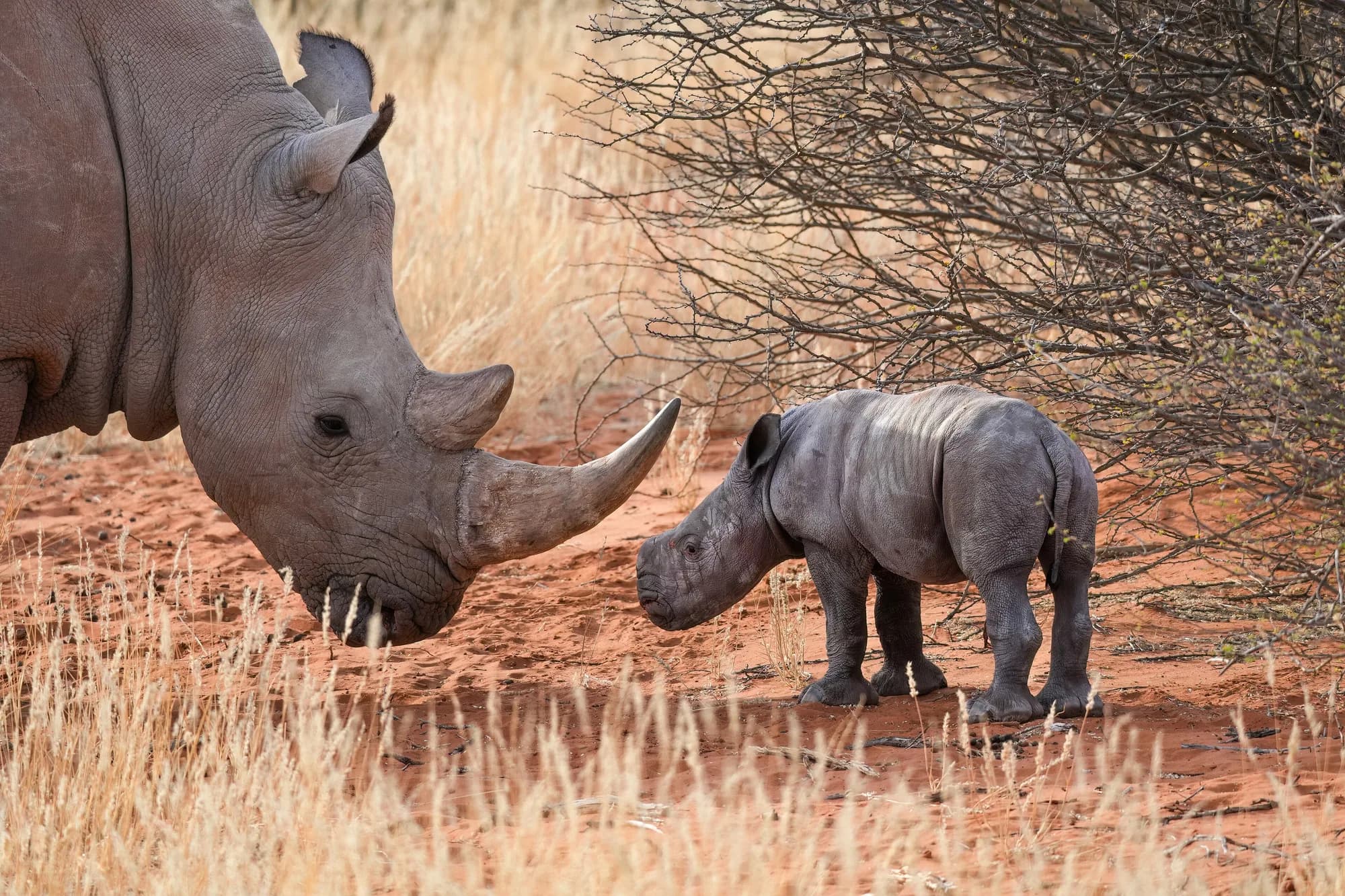
White rhinoceros
The bigger, calmer, grass-eating rhino, and the one most visitors actually see. About 15,750 remain — more than twice the black rhino — but the number fell roughly 11 per cent in a single year, and the northern subspecies is down to two animals.
Five countries here, most of them in South Africa
 112 · Mammal
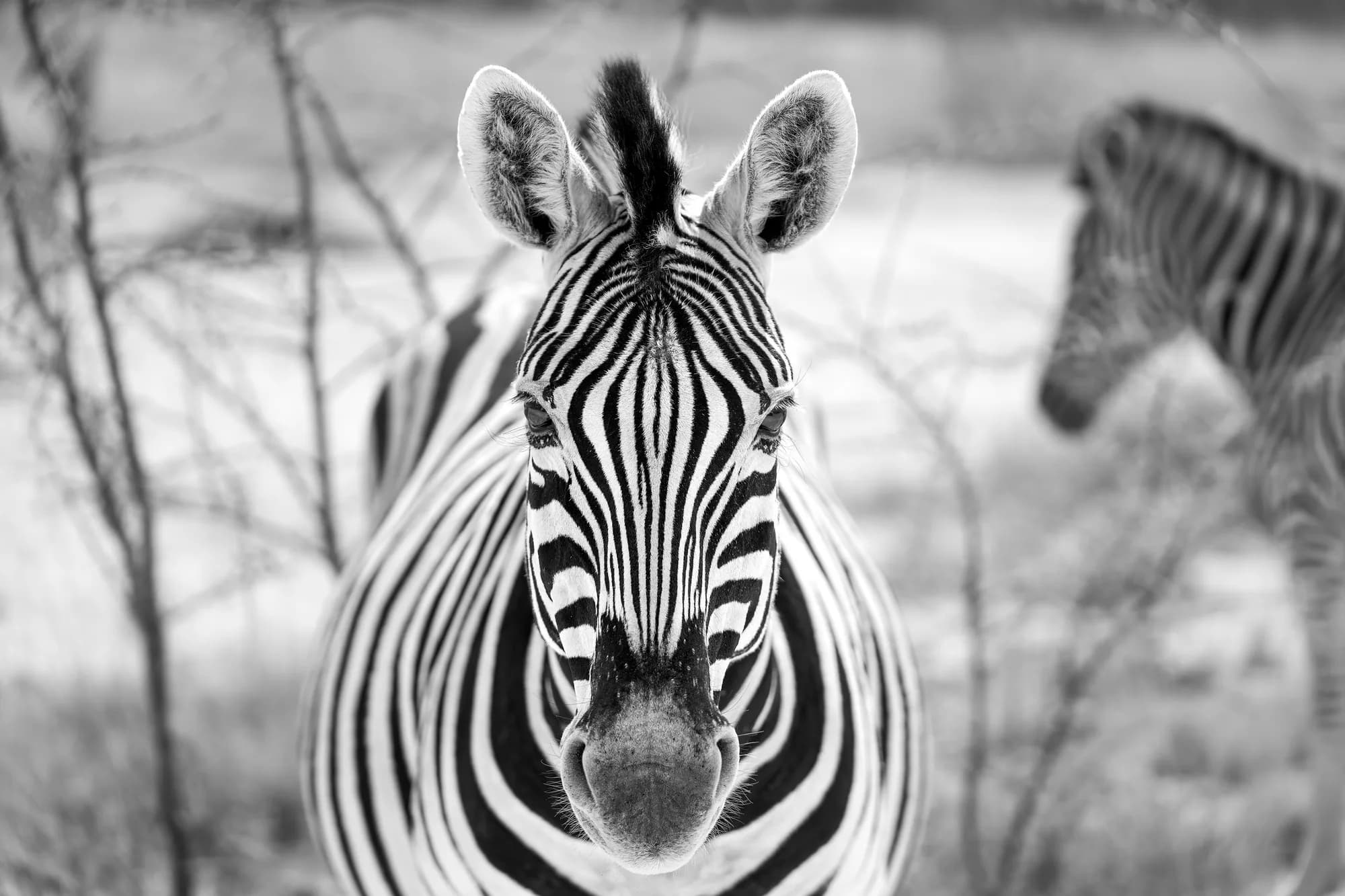
Plains zebra
Seen on the first morning of every trip and worth more attention than it gets. Zebra make up a large part of the great migration, they are the reason the wildebeest can eat, and the three zebra species on this site are not interchangeable.
Five countries here, and half the migration
 113 · Mammal
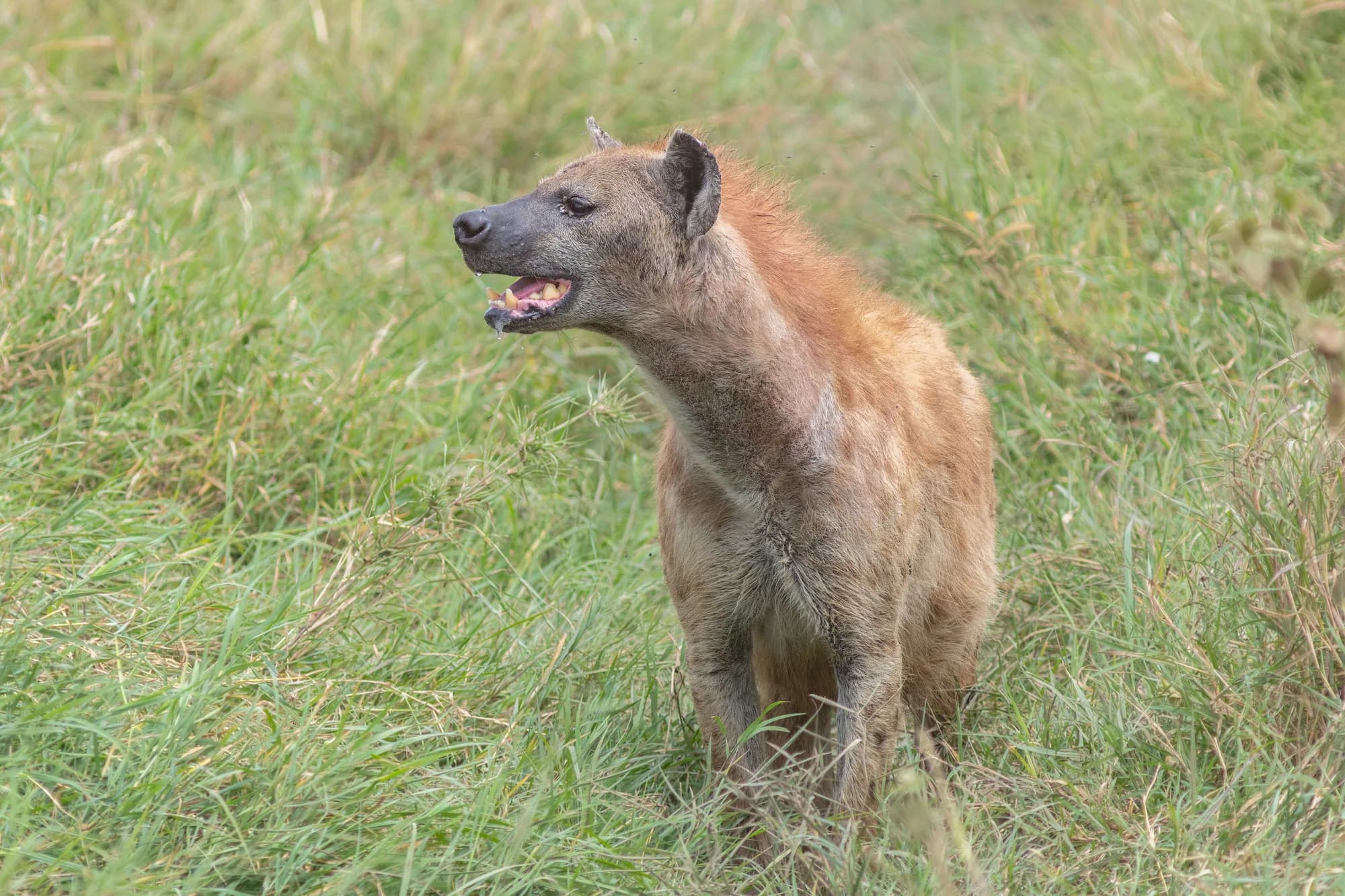
Spotted hyena
Not a scavenger that steals from lions so much as a highly successful hunter that lions steal from. A matriarchal clan of eighty animals with a rank order inherited down the female line is the most socially complex thing you will watch on a game drive.
Common across the savanna parks, and badly misunderstood
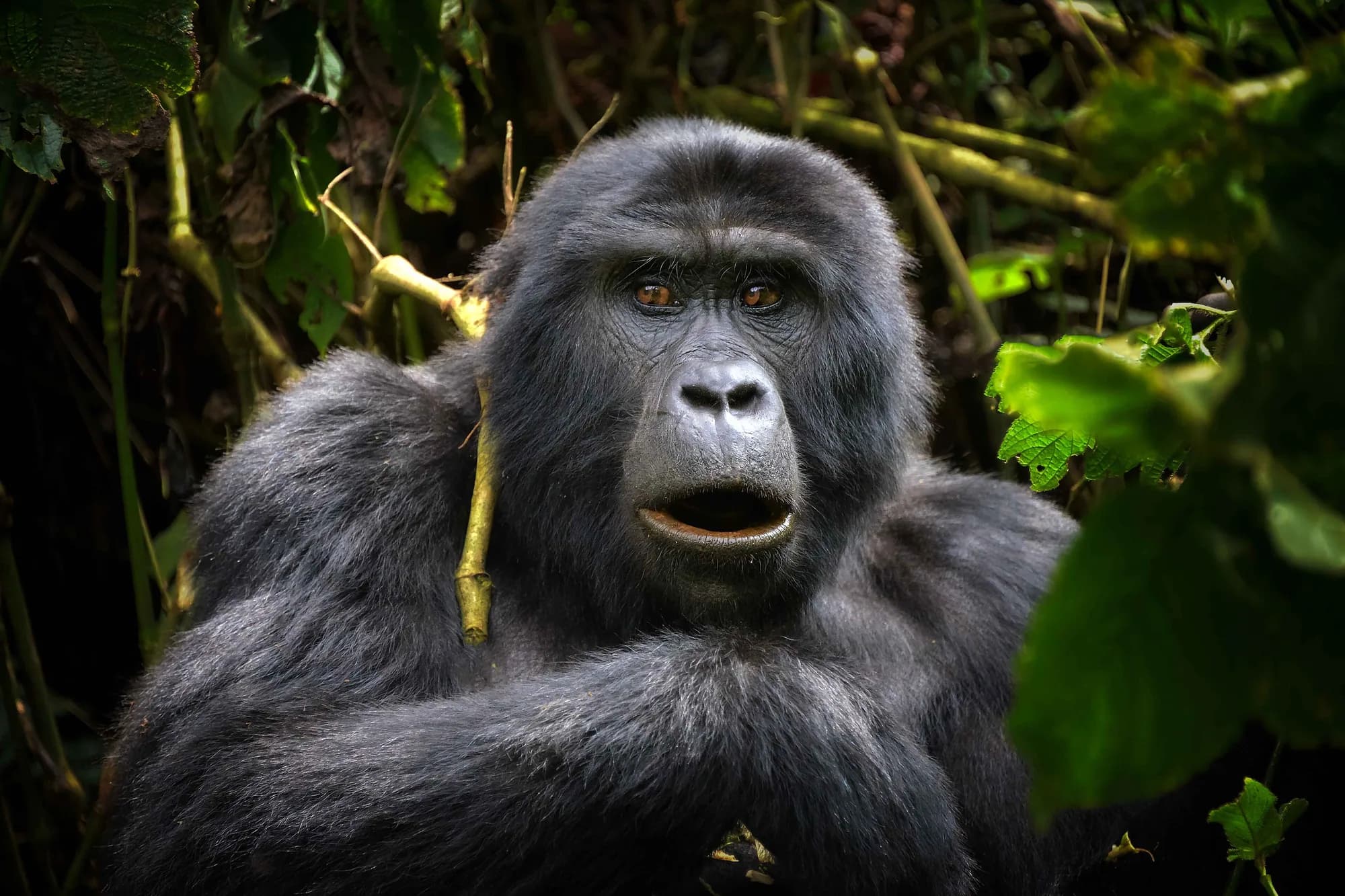 114 · Mammal
Mountain gorilla
Three national parks on this site hold the entire world population, and one hour with a habituated group is the most expensive and most reliably delivered wildlife encounter in Africa. It is also the rare conservation story that has gone the right way.
Bwindi, Mgahinga, Volcanoes — and nowhere else on earth
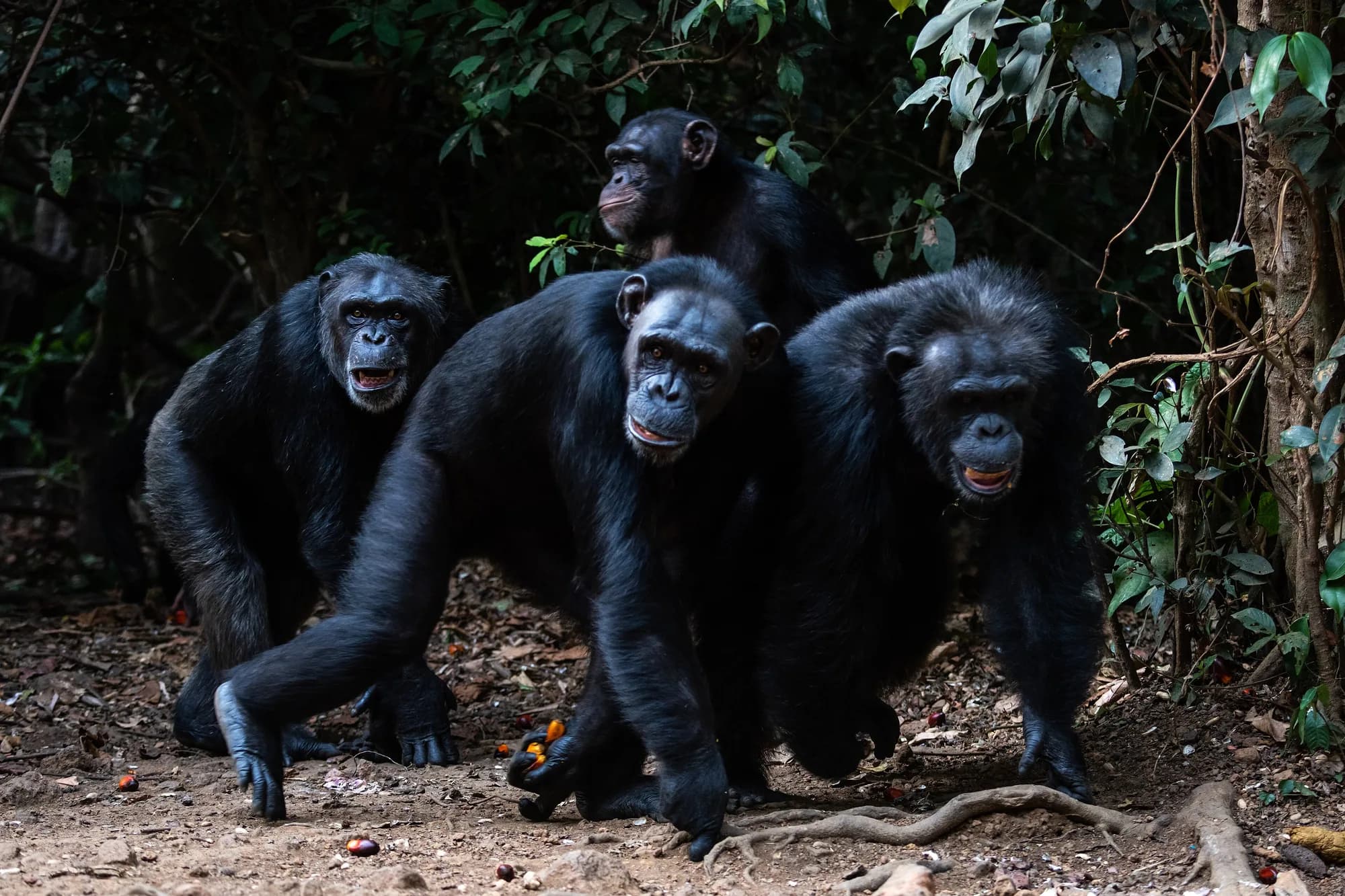 115 · Mammal
Chimpanzee
Louder, faster and far harder to keep up with than a gorilla, and the trek is nothing like the same experience. Kibale is the reliable one; Mahale, on the shore of Lake Tanganyika, is the one people remember.
Uganda, Rwanda and western Tanzania
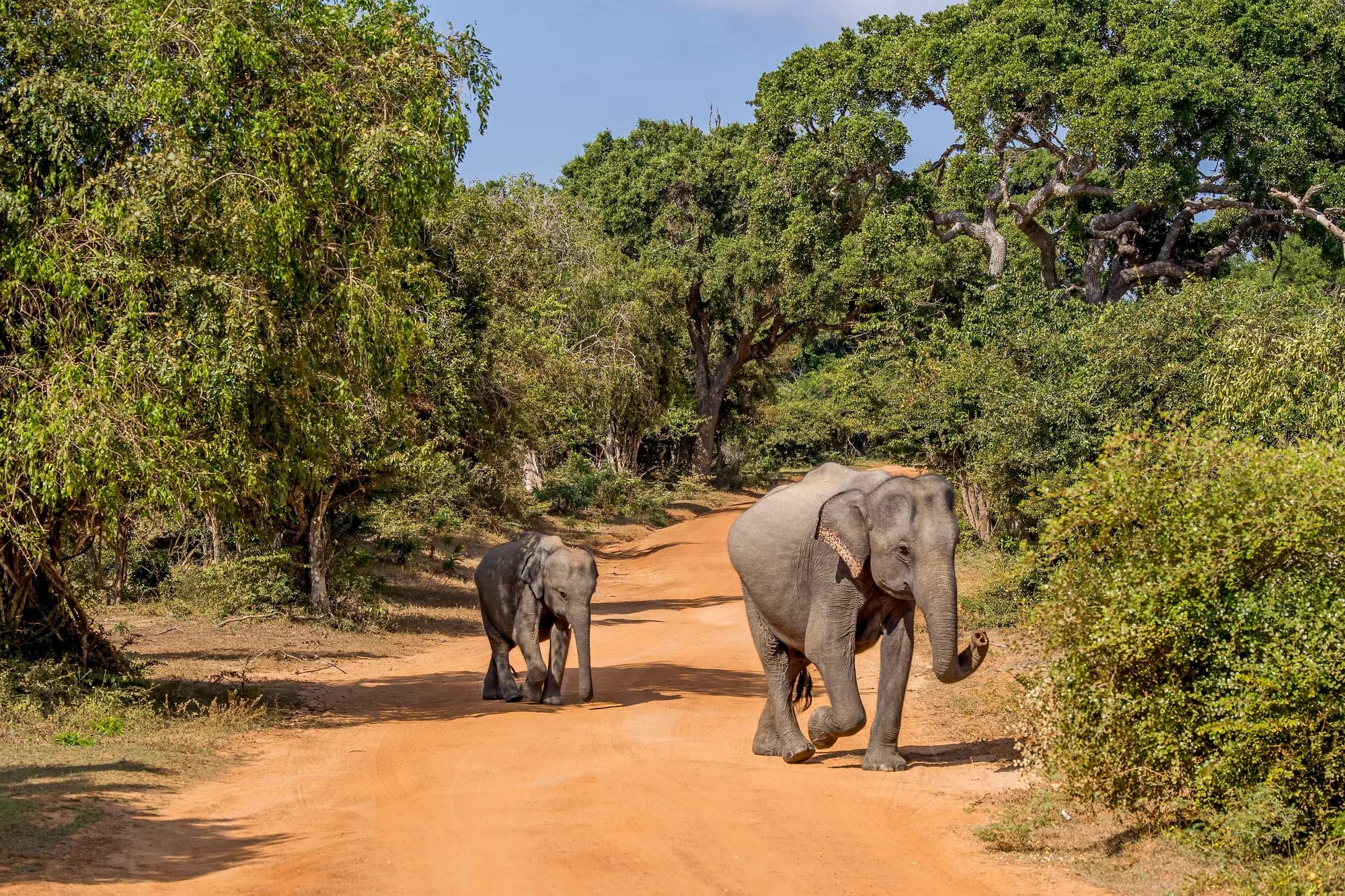 116 · Mammal
Sri Lankan elephant
The largest of the Asian elephant subspecies, on an island small enough that you can see several hundred in one afternoon. The Minneriya and Kaudulla gathering is the largest concentration of wild Asian elephants anywhere, and almost nobody outside Sri Lanka has heard of it.
Eight parks on this site, on one island
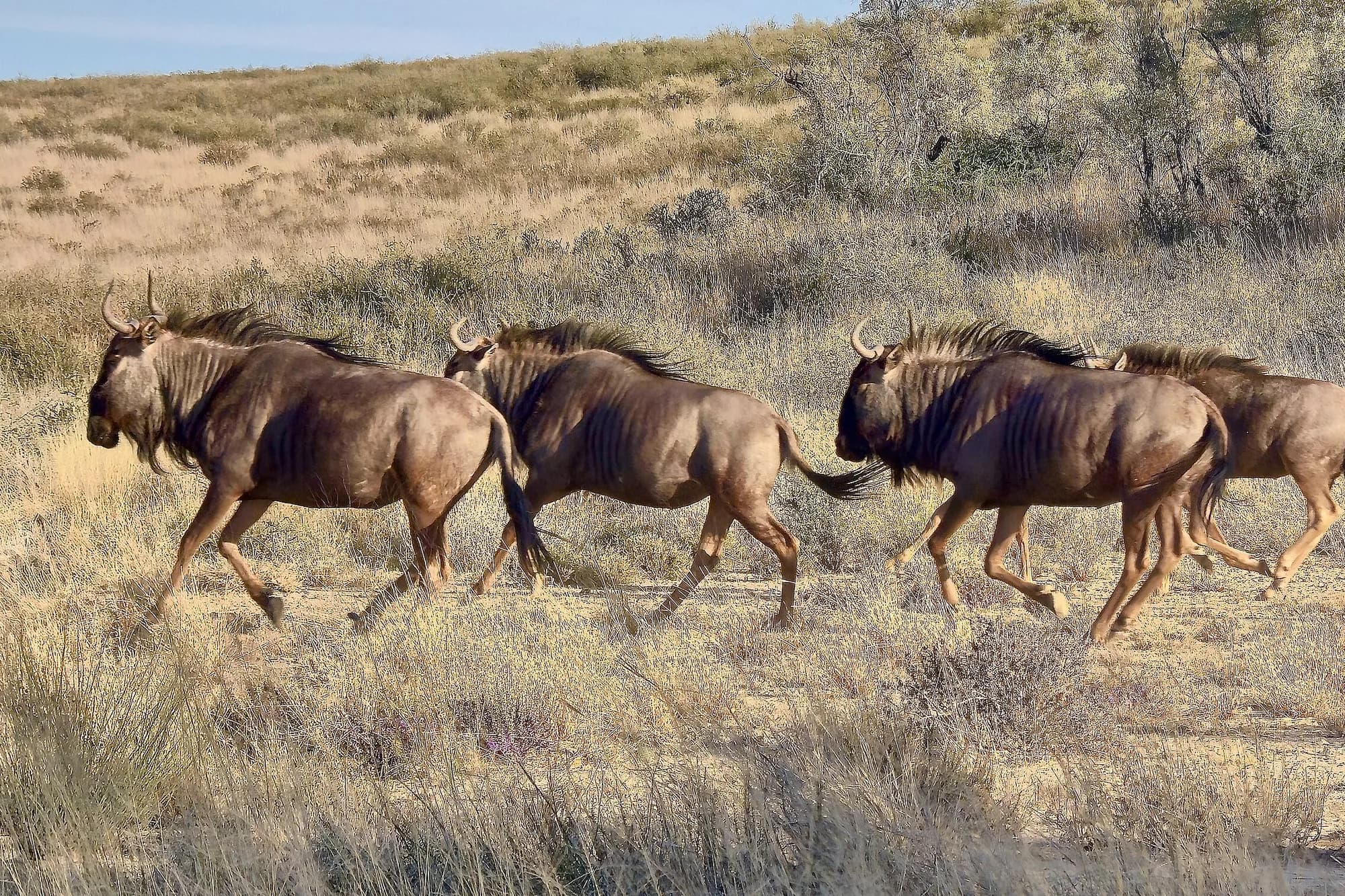 117 · Mammal
Blue wildebeest
Roughly 1.3 million of them make the Serengeti–Mara migration, which is the largest movement of land mammals on earth and the reason most people book East Africa at all. Away from it, a wildebeest is the animal everyone drives past.
The migration, and most southern savanna
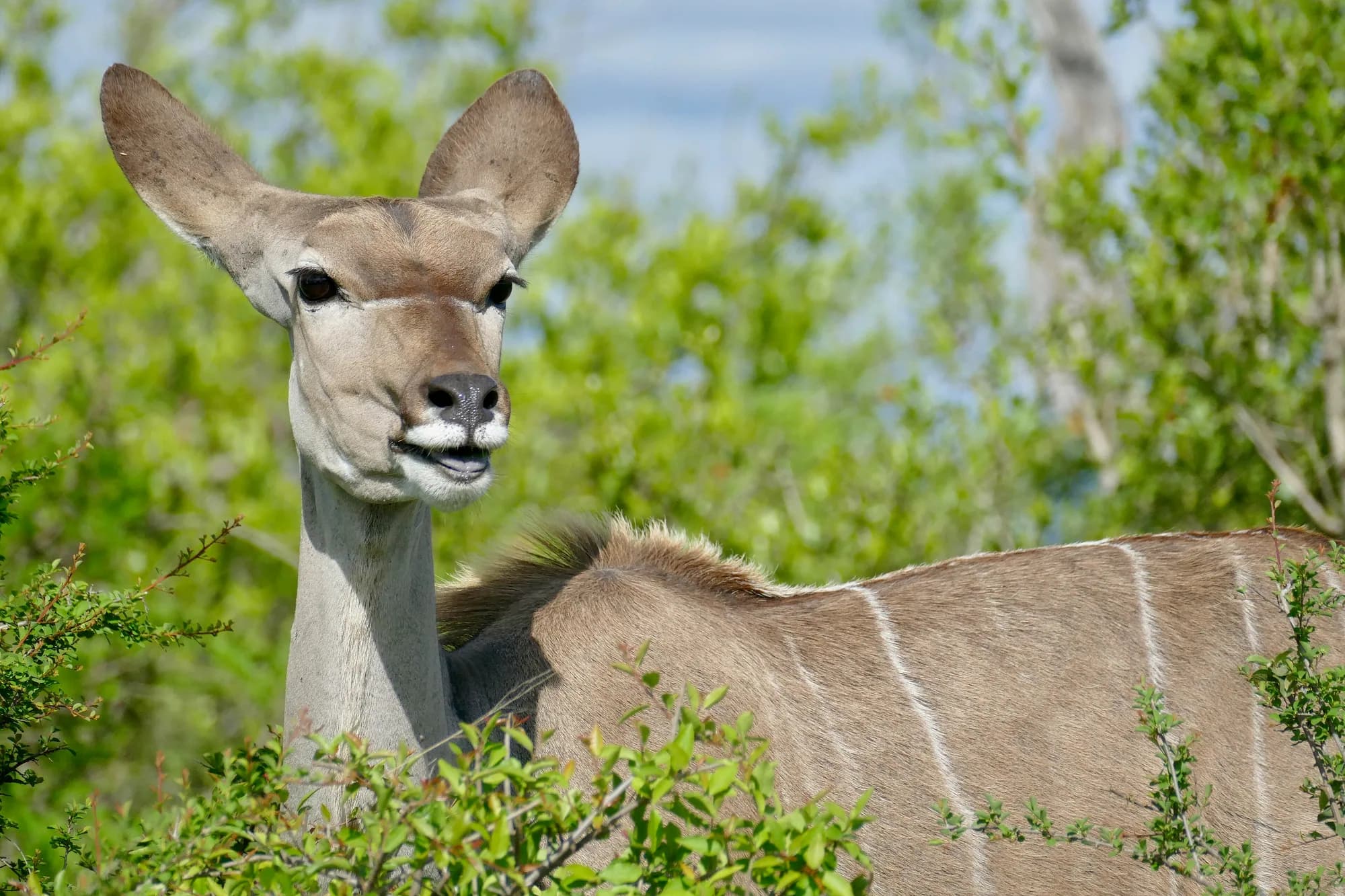 118 · Mammal
Greater kudu
A very large antelope with spiral horns over a metre long, and the animal people most often fail to see because it is standing still ten metres away. Kudu are a bush species, and their whole defence is not moving.
Seven parks here, in thick bush
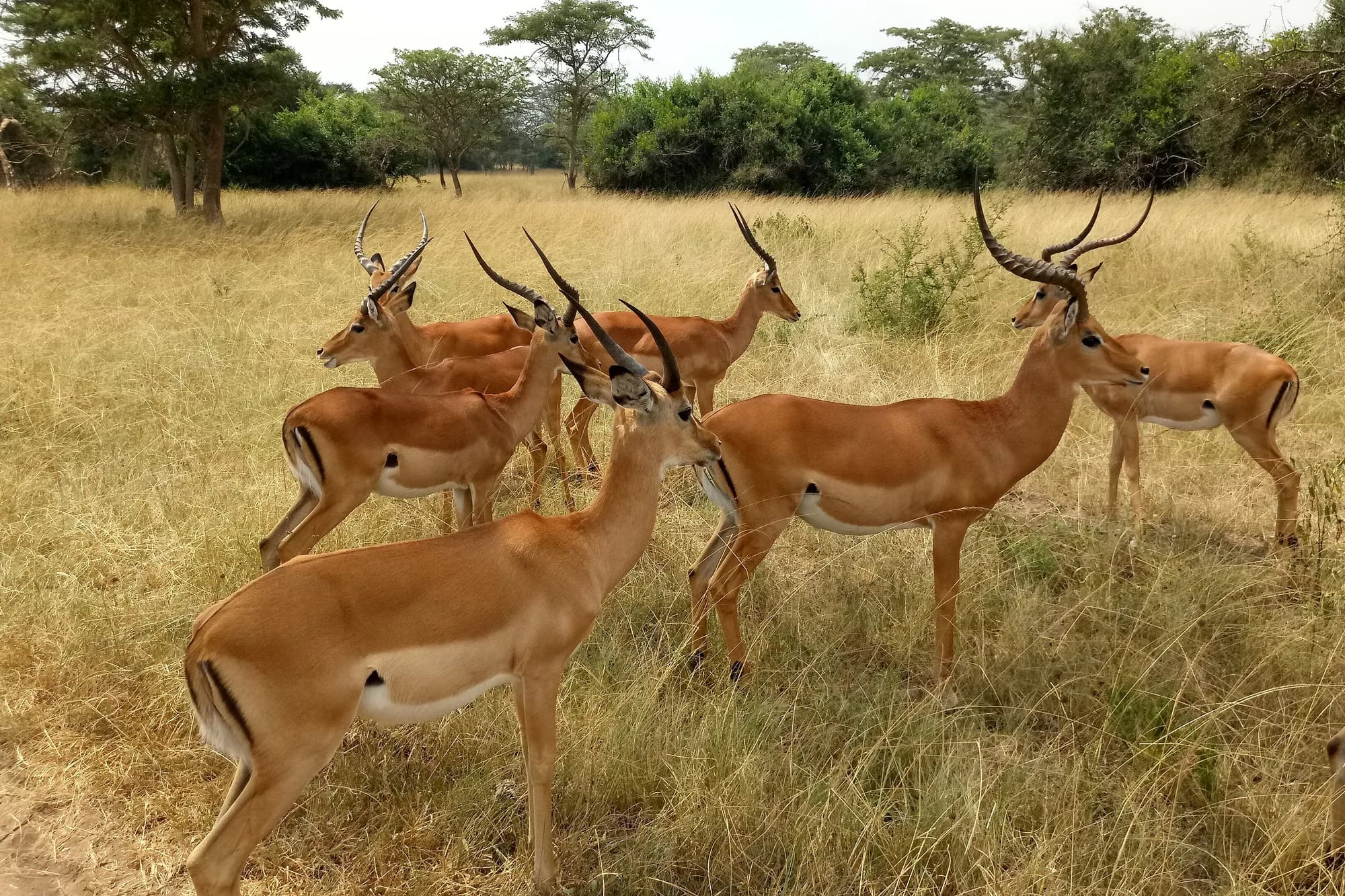 119 · Mammal
Impala
The animal everybody stops photographing on day two, and the one most of the predators on this site are eating. Learning to read impala is the cheapest way to find cats, because they will tell you there is one before you see it.
Almost every savanna park here, in numbers
- 120 · Mammal
Common eland
A bull weighs close to a tonne and still clears a two-metre fence from standing. Eland are the biggest antelope in the world and among the shyest, which is why most people drive past a herd at four hundred metres and never look twice.
Four countries here, and the largest antelope on earth
- 121 · Mammal
Brown hyena
Shaggy, solitary, almost entirely nocturnal, and confined to southern Africa — the rarest of the world's four hyenas and the one almost nobody plans for. The Skeleton Coast population that scavenges seal colonies is the strangest carnivore story on this site.
The Kalahari and the Namibian coast, and nowhere else
- 122 · Reptile
Nile crocodile
The animal you will see on every sandbank and think nothing of, and the one that kills more people in Africa than any predator except the hippopotamus. A big male is five metres and eighty years old, and the Mara crossings are the only time most visitors take one seriously.
Five countries here, on every permanent river
- 123 · Mammal
Springbok
South Africa's national animal, and the one antelope that does something no other antelope does — pronking, a stiff-legged vertical bounce with the back arched and a fan of white hair thrown open along the rump. It is also the only gazelle in southern Africa.
The Kalahari, the Karoo and the Namibian plains
- 124 · Mammal
Klipspringer
A small antelope that stands on the tips of its hooves, pairs for life, and lives on rock nothing else can climb. If you are looking at a kopje or a gorge and something is standing on the skyline, it is almost certainly this.
Rocky ground in four countries here — and only rocky ground
- 125 · Mammal
Roan antelope
The second-largest antelope in Africa after the eland, and the one most often mistaken for a female sable. Roan are scarce, declining across most of their range, and the reason a Kafue or Waterberg trip is worth more than its park list suggests.
Three countries here, in the same woodland as sable
- 126 · Mammal
Black-and-white colobus
The monkey with no thumbs and a white cape, and the one people photograph most on a forest trek without ever learning its name. A troop leaping between crowns with the mantle streaming is the best thing that happens on a gorilla trek that is not the gorillas.
Forest canopy in four countries here
- 127 · Bird
Greater flamingo
The taller, paler of Africa's two flamingos, and the one people photograph while telling you about the other. Where the birds number in the hundreds of thousands the birds are lesser flamingos; the greater is the big pale one standing among them.
Soda lakes and coastal pans in four countries here
- 128 · Mammal
Sitatunga
An antelope that lives in water. Splayed elongated hooves let it walk on floating papyrus that carries nothing else, and when threatened it submerges with only its nostrils above the surface. Almost nobody sees one without going somewhere specifically for it.
Papyrus swamp in four countries here
- 129 · Mammal
Red lechwe
The antelope of the flood. Red lechwe run into water rather than away from it, and the sight of a herd crossing a shallow Okavango channel at speed, throwing spray, is one of the things a mokoro trip is actually for.
Floodplains in three countries here
- 130 · Mammal
Grévy's zebra
The largest wild equid alive and the rarest of the three zebras — narrow stripes, a white belly and enormous rounded ears. Fewer than three thousand remain, most of them in northern Kenya, and Samburu is where you go.
Northern Kenya, and a remnant in Ethiopia
- 131 · Mammal
Meerkat
A small mongoose that stands upright on a mound at sunrise to warm its belly, and the most studied wild mammal society on earth. Habituated groups in the Kalahari will walk past your boots and occasionally use you as a lookout post.
The Kalahari, and only the Kalahari
- 132 · Mammal
Cape mountain zebra
It got down to about eighty animals in the 1950s and there are several thousand now — one of the few genuine recoveries on this site. A dewlap under the throat, an unstriped white belly and a gridiron of bars across the rump separate it from every other zebra.
The Eastern and Western Cape, and nowhere else on earth
- 133 · Mammal
Bat-eared fox
A small fox with ears a third the length of its body, and it uses them to listen for termites chewing underground. It has more teeth than any other placental land mammal and barely uses them for meat.
Short-grass and arid country, three countries here
- 134 · Mammal
Reticulated giraffe
The giraffe with the clean white lines — large liver-red panels separated by sharp pale seams, as if drawn with a ruler. It is confined to northern Kenya and fragments of Somalia and Ethiopia, and there are fewer than sixteen thousand left.
Northern Kenya, and almost nowhere else
- 135 · Mammal
Golden monkey
An orange-gold monkey confined to the bamboo of the Virunga volcanoes, and the best-value permit in the region. It costs a fraction of a gorilla trek, takes half a morning, and most people who go for the gorillas never hear of it.
Virunga bamboo — two parks here, and nowhere else
- 136 · Marine
Cape fur seal
A hundred thousand seals on one beach, audible and smellable long before you see them. Cape Cross is the largest breeding colony on the Namibian coast and the most overwhelming sensory experience on this site — and it is also where brown hyenas and black-backed jackals come to feed.
The Namibian and South African coast
- 137 · Mammal
Rock hyrax
A guinea-pig-shaped animal sunning itself on a kopje, and the closest living relatives are the elephant and the manatee. Every guide on the continent tells you that and most visitors assume it is a joke. It is not.
Rocky ground across the continent — three countries here
- 138 · Mammal
Masai giraffe
The giraffe almost everyone photographs on a first safari, with ragged vine-leaf blotches instead of clean lines. It is also the most numerous giraffe and the one that has lost the most animals — roughly half the population in three decades.
Kenya and Tanzania — the giraffe of the northern circuit
 139 · Bird
Shoebill
The bird more people fly to Africa for than any other, and one of the few that will still be exactly where you left it an hour later. A shoebill hunts by standing still, sometimes for a very long time, and the whole experience of seeing one is a boat, a wall of papyrus and a great deal of not moving.
Papyrus swamp, from the Sudd to Bangweulu
 140 · Bird
Cape vulture
Southern Africa's own vulture, and a colonial cliff-nester, which means the whole species is concentrated onto a short list of crags. That is a conservation problem and a travel opportunity at the same time: find the cliff and you have found several hundred birds.
Southern Africa only, and on cliffs
 141 · Bird
Verreaux's eagle
A very large black eagle that has bet almost everything on one prey animal. Where there are rocks and rock hyrax there are Verreaux's eagles, in numbers that make no sense until you understand the link; where the hyrax have gone, so has the eagle, whatever the cliffs look like.
Granite koppies, dolerite and gorges
 142 · Bird
Rwenzori turaco
An Albertine Rift endemic that lives in exactly the forest people already travel to for gorillas, which makes it one of the easiest great birds in Africa to add to a trip you are taking anyway. Most visitors hear it long before they see it, and a good many never connect the barking in the canopy with the crimson flash that goes across the trail.
Albertine Rift montane forest, above about 2,000 m
 143 · Mammal
Lesser kudu
The shyest antelope most people will ever try to see, and the one genuinely hard animal in the dry-country bush. It lives in thick acacia and commiphora scrub, it freezes rather than runs, and it is gone before most vehicles have stopped. Tsavo West and Ruaha are the two places worth planning around.
Dry thornbush in East Africa and the Horn
 144 · Mammal
Bushbuck
The most widely distributed antelope in Africa, and the one nobody books. You will meet it on a camp lawn at Victoria Falls, on a forest path at Gombe and in the coastal thicket of the Garden Route, and in almost every case it will be standing still, alone, watching you from the edge of cover.
Thicket and forest edge, across most of sub-Saharan Africa
 145 · Mammal
Black-backed jackal
The animal everybody sees and nobody photographs — trotting down a verge, crossing a riverbed, waiting out of range of something bigger. It is worth stopping for in exactly one place on this site: the Namibian coast, where jackals work a hundred thousand fur seals and live a life that has nothing in common with the one on a Johannesburg golf course.
Two separate halves of Africa, and every gravel road in Namibia
 146 · Mammal
Hartmann's mountain zebra
Read the trend before the category. This is a genuine subspecies assessment and it says Vulnerable and increasing — the listing records how far the animal fell, not where it is going. It lives on the arid escarpment above the Namib, it digs its own wells in dry riverbeds, and most of them are not in national parks at all.
The Namibian escarpment, from the Kunene to the Orange
 147 · Mammal
Blue monkey
It is not blue, it is not one animal, and the samango a guide pointed out to you in South Africa is the same species under a different name. This is the commonest forest monkey in East Africa and the one most people photograph without ever learning what they photographed.
Forest canopy, from Kakamega to Kasanka
 148 · Mammal
L'Hoest's monkey
A dark monkey with a white bib and a chestnut saddle that spends much of its day walking on the forest floor, which no other monkey in these forests does. Almost nobody books a trip for it and almost everybody who treks for gorillas or chimpanzees walks past one.
Albertine Rift forest — Nyungwe, Bwindi, Kibale
 149 · Mammal
Ugandan red colobus
This page is about one animal: Piliocolobus tephrosceles, the Ugandan red colobus, which despite the name is also the red colobus of Mahale and Gombe. Red colobus as a whole is a genus of seventeen or eighteen species with wildly different fortunes, and quoting one of them for another is the commonest mistake made about African monkeys.
Kibale, Mahale and Gombe — one species of many
 150 · Mammal
Purple-faced langur
An Endangered monkey found on one island and nowhere else, in four forms that look different enough to be argued over. The shaggy highland one at Horton Plains — the bear monkey — is what most visitors actually meet, and the lowland form in the wet zone west of Colombo is among the most threatened primates in South Asia.
Sri Lanka only — cloud forest to lowland rainforest
 151 · Mammal
Bontebok
Nearly gone by the 1830s, saved on private farmland by a handful of Overberg families who fenced what was left, and given a national park of its own in 1931 with seventeen animals in it. Almost nobody flies to South Africa to see one, and it is the best conservation story in the Cape.
A strip of the Western Cape, and three small parks
 152 · Mammal
Grey rhebok
A woolly grey antelope standing on a slope you were about to drive past, and the only species in its genus — no close living relatives anywhere. It is also the animal most often written into a notebook as something else, which is what most of this page is for.
Mountain grassland in South Africa, Lesotho and Eswatini
 153 · Mammal
Sri Lankan leopard
The only big cat on the island and the top of the food chain with nothing to argue with — no tiger, no lion, no hyena, no wild dog. That absence is the whole difference between this leopard and the African one: it works the ground rather than the canopy, it moves more freely in daylight, and it does not have to haul a kill into a tree to keep it.
One island, three dry-zone parks, and no competition
 154 · Bird
Painted stork
Least Concern and increasing, which is close to unheard of among large Asian waterbirds. It nests in noisy colonies in trees standing in water, it fishes by touch rather than by sight, and it has quietly done well out of two thousand years of Sri Lankan and Indian irrigation.
Dry-zone tanks, coastal lagoons and village heronries
Ordered by how much people actually want to see each animal. For all but nine of them that order is our editorial judgement rather than a measurement — no evidenced national ranking for Indian wildlife exists below the top tier, and we would rather say so than imply one.