
🇿🇦 South Africa
What to come to South Africa for
29 animals with a page here are a reason to travel to South Africa — 27 mammals and 2 birds among them. Each one says which of the country's 19 national parks give you the odds, which month, and where it is honestly not worth looking.
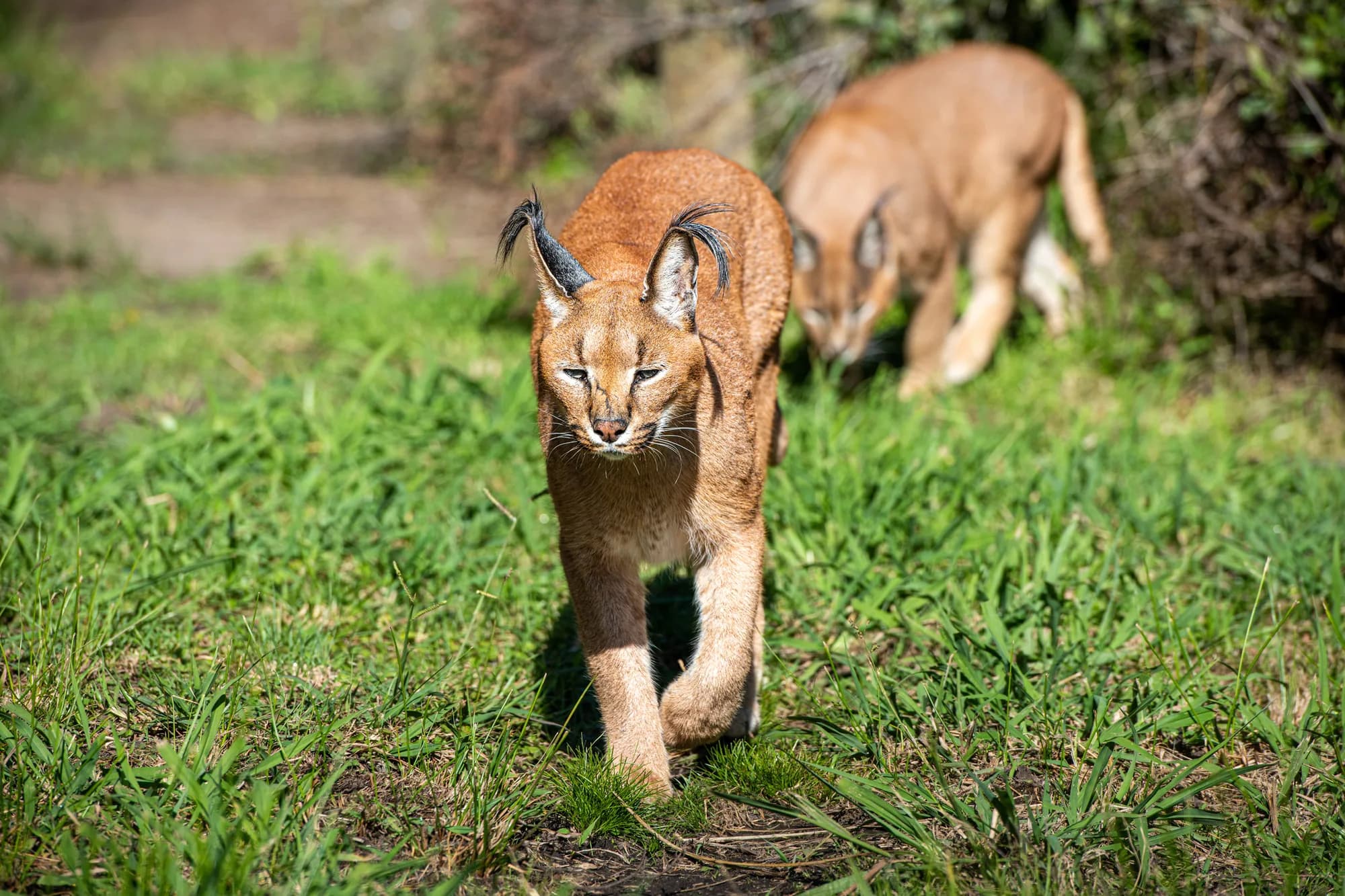 31 · Mammal
Caracal
Possibly the hardest cat to see in India. A handful of Ranthambore camera-trap records and a few sightings a decade carry the entire demand for this animal.
Ranthambore, and vanishingly rarely
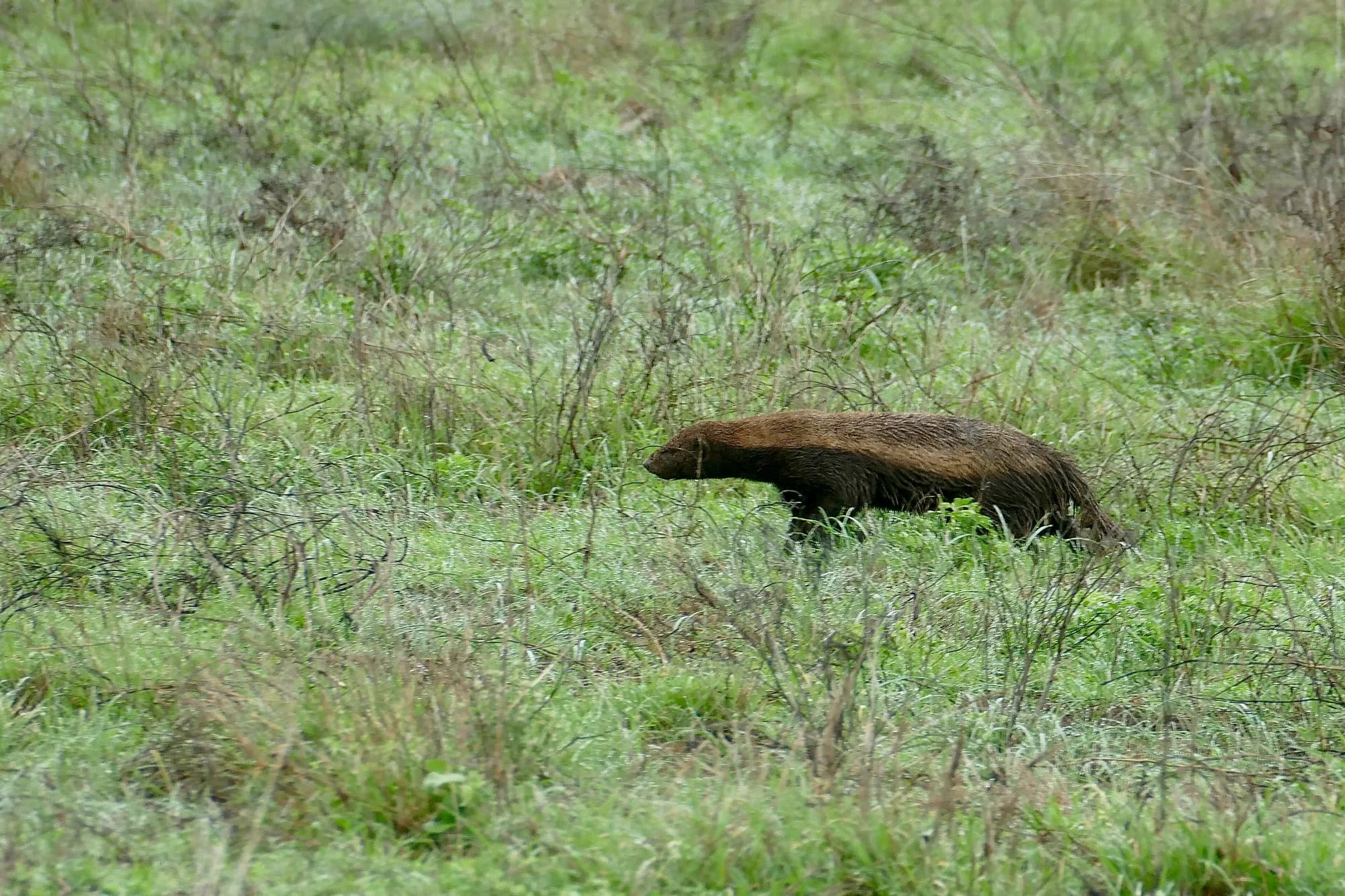 53 · Mammal
Honey badger
Global name recognition from television and near-zero sighting rate in India. Nocturnal, solitary, and genuinely as belligerent as advertised.
Present, and almost never seen
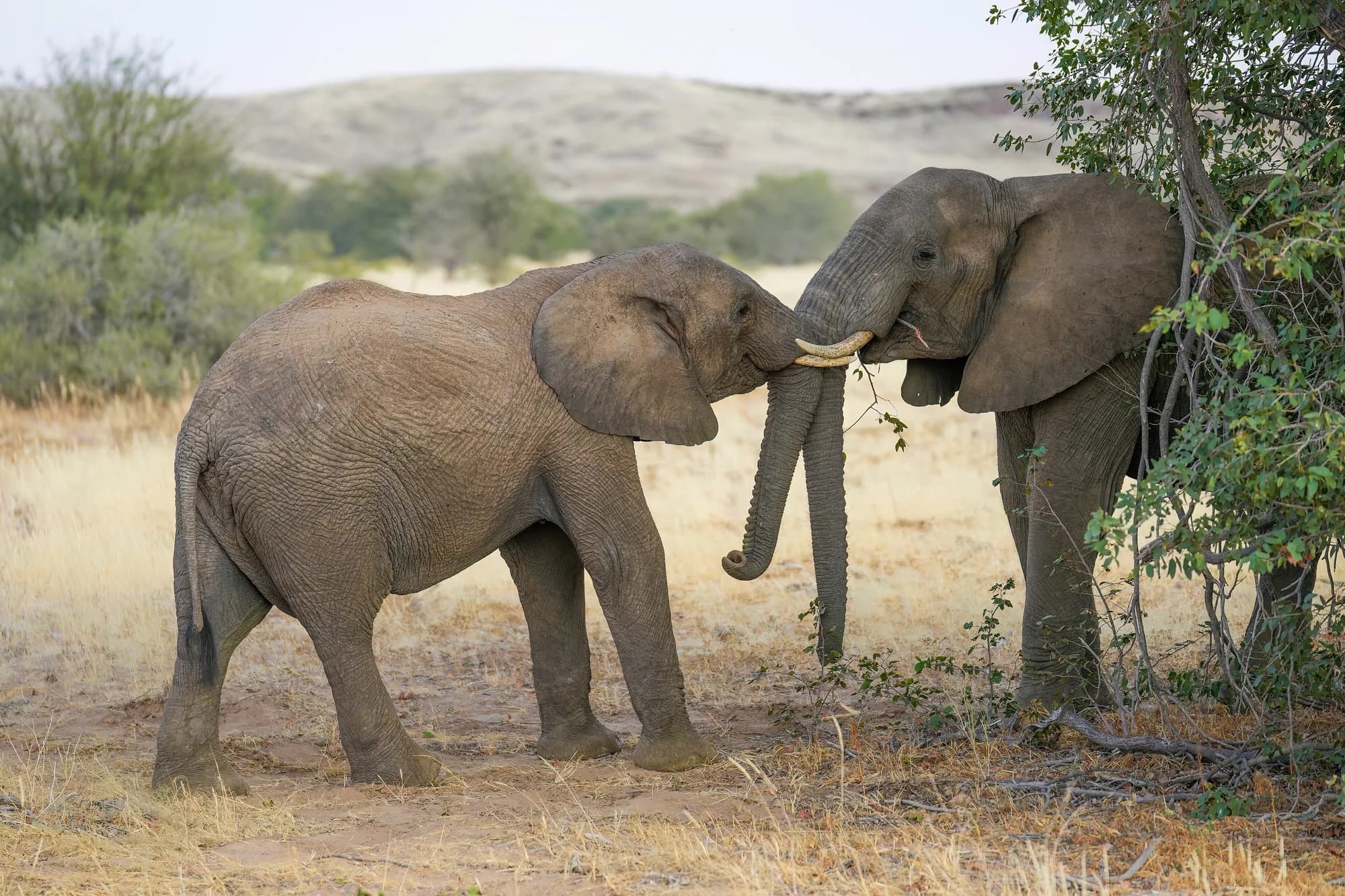 101 · Mammal
African savanna elephant
The animal most people have already seen by lunchtime on day one, which is exactly why it is worth reading about. The question on an African trip is almost never whether you will see elephants — it is whether you will see the thing that makes a herd worth two hours of your time.
Nine countries on this site, and the easiest of the big animals
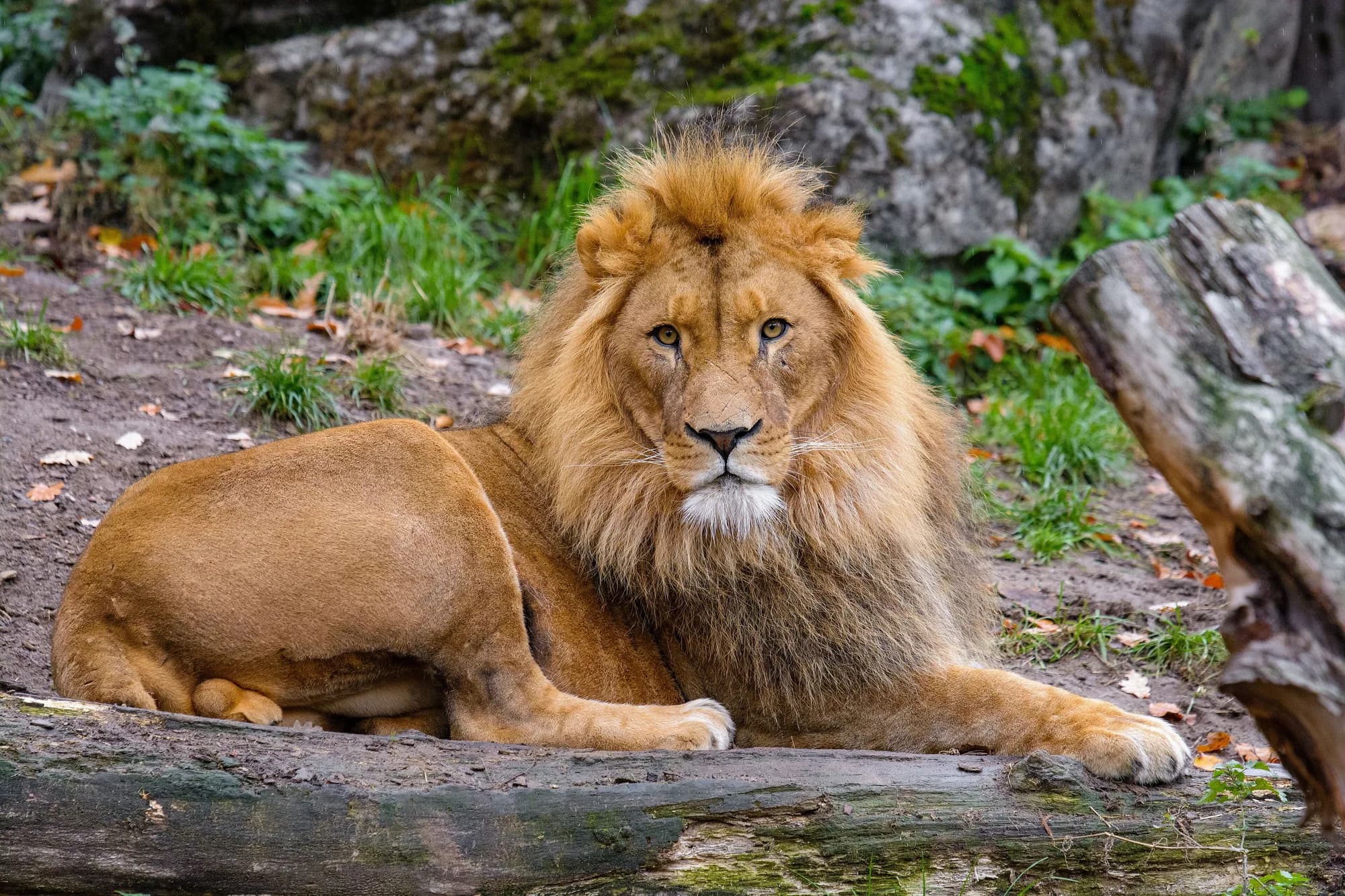 102 · Mammal
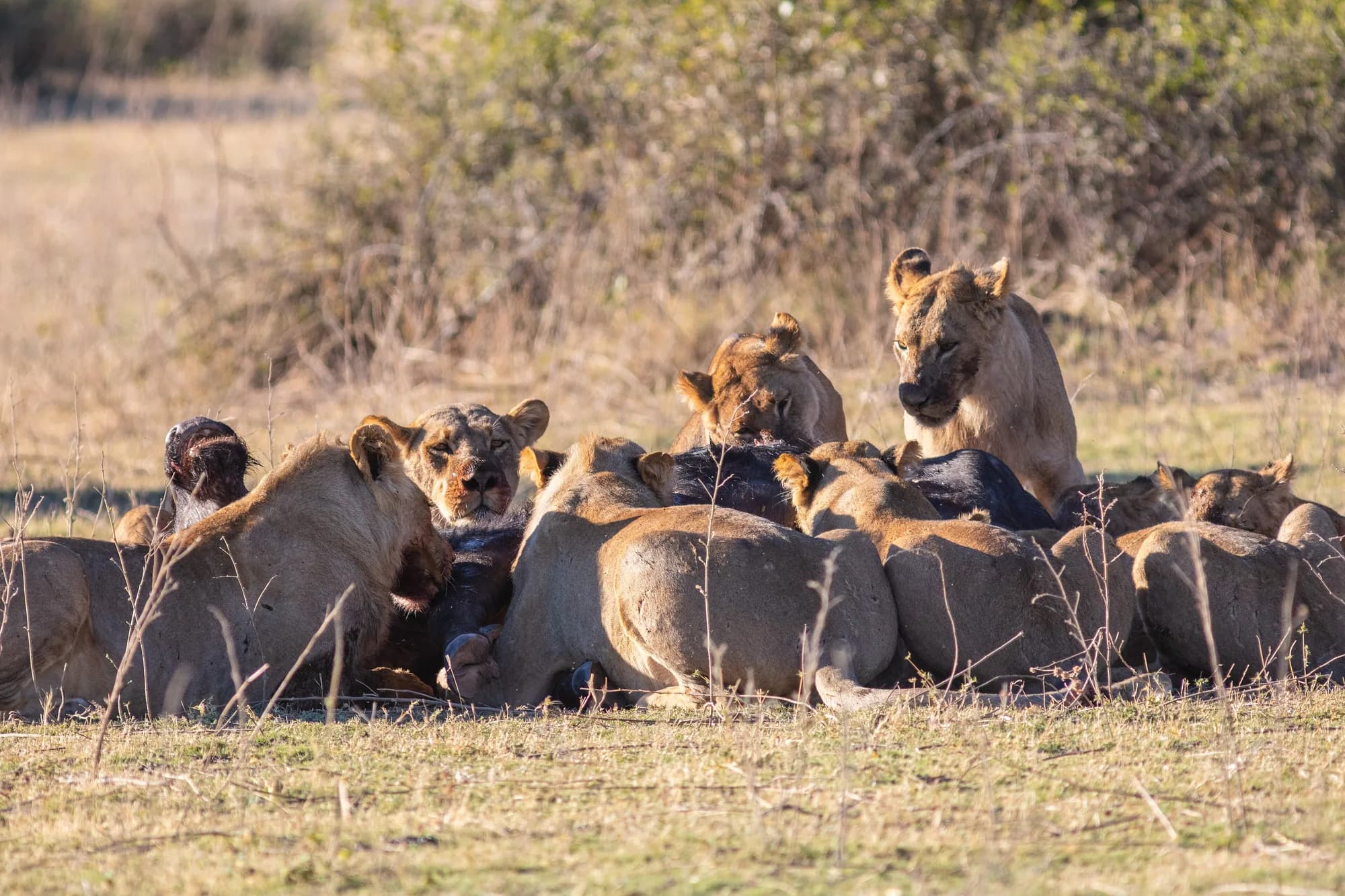
African lion
The animal everyone books the trip for, and the one most often seen asleep. Lions are not hard to find in a good park — they are hard to find doing anything, and the difference between those two sentences is most of what separates a good lion trip from a disappointing one.
Nine countries here, and thinner on the ground than it looks
 104 · Mammal
African buffalo
The Big Five animal nobody books for and every guide respects. A herd of a thousand moving to water at dusk is one of the genuine spectacles of a dry-season safari, and a lone old bull in long grass is the reason walking safaris are led by someone armed.
Eight countries here, and the least glamorous of the five
- 105 · Mammal
African leopard
Present in almost every park on this site and seen in very few of them. Leopards are the one big cat where the park choice is not a preference but the whole answer — outside a handful of reserves with habituated animals, a sighting is luck.
Six countries here, and three parks worth booking for
 106 · Mammal
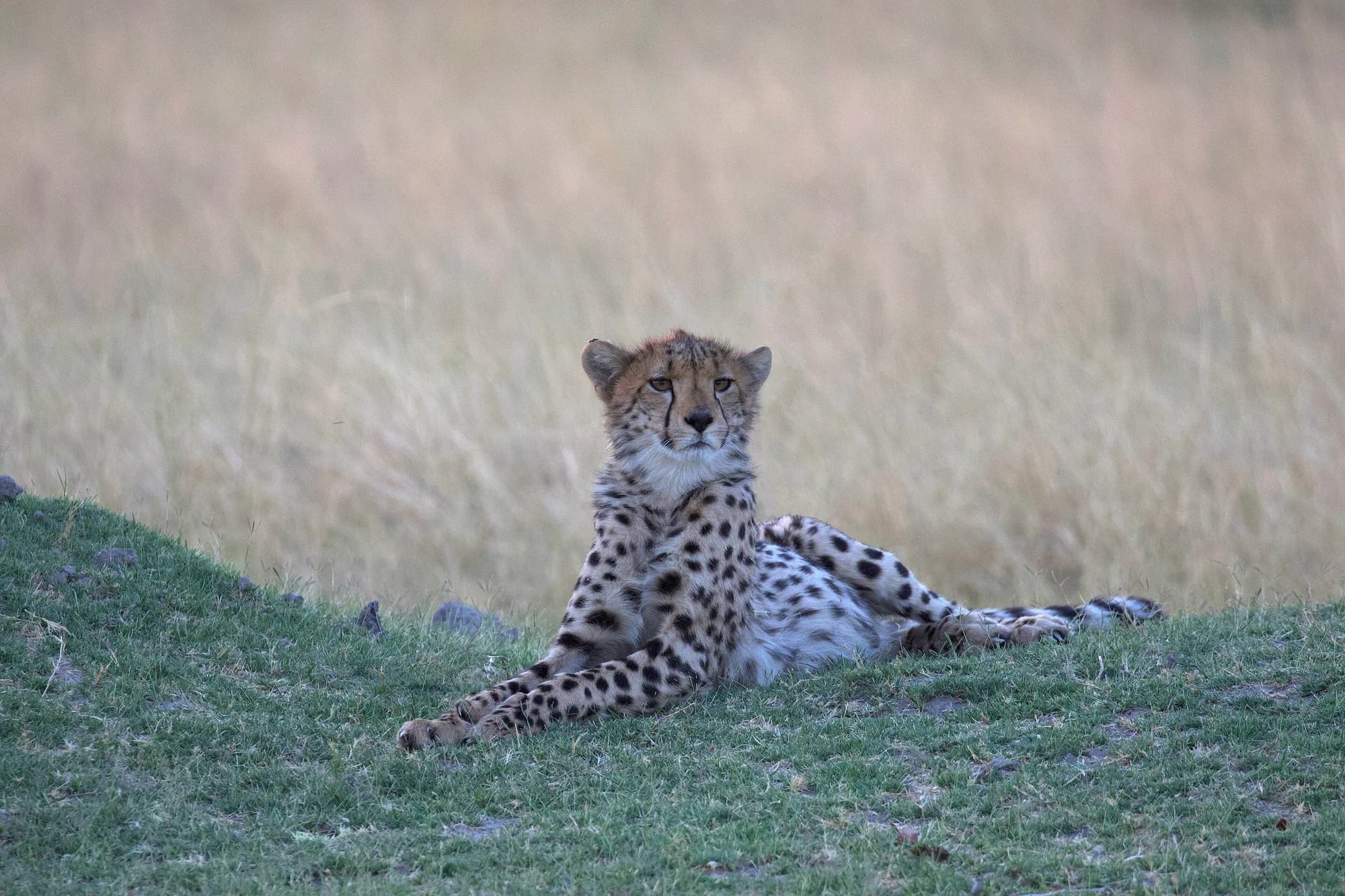
Cheetah
The one large African predator that hunts in daylight, which makes it the most watchable and the most photographed. It is also the rarest of the big cats on this site, and it loses kills to almost everything.
Six countries here, and it needs open country
 107 · Mammal
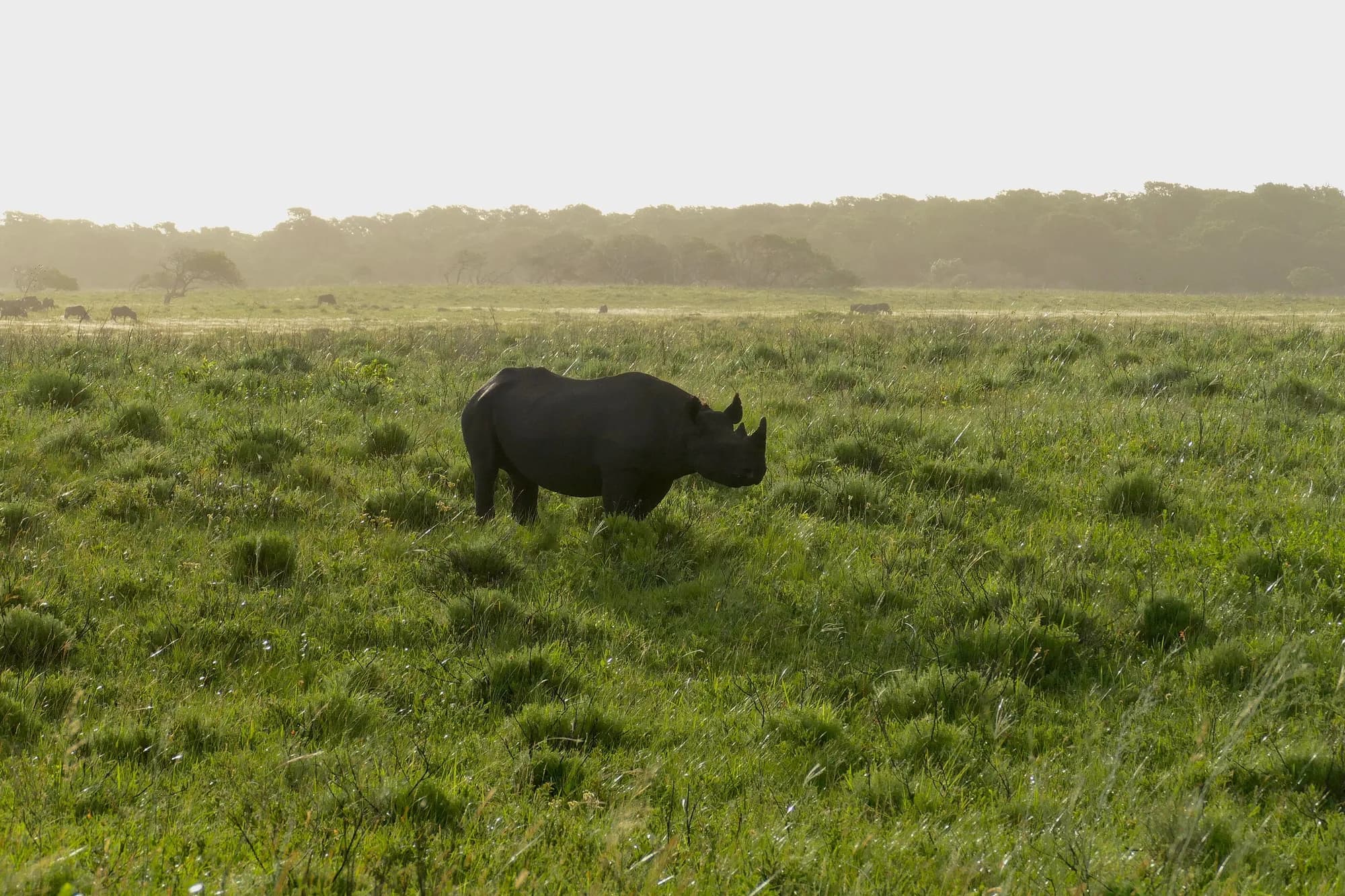
Black rhinoceros
A browser, usually alone, usually in thick bush, and the hardest of the Big Five to see well. Roughly 6,800 remain in the wild — fewer than the white rhino by a factor of two, and the two animals are told apart by the shape of the mouth, not the colour.
Seven countries here, and genuinely rare in all of them
- 108 · Mammal
Sable antelope
A jet-black bull with swept-back horns most of a metre long, and the animal experienced guides point at before they point at a lion. It is a woodland species, which is why it is missing from the parks most people visit.
Six countries here, in miombo woodland
 109 · Mammal
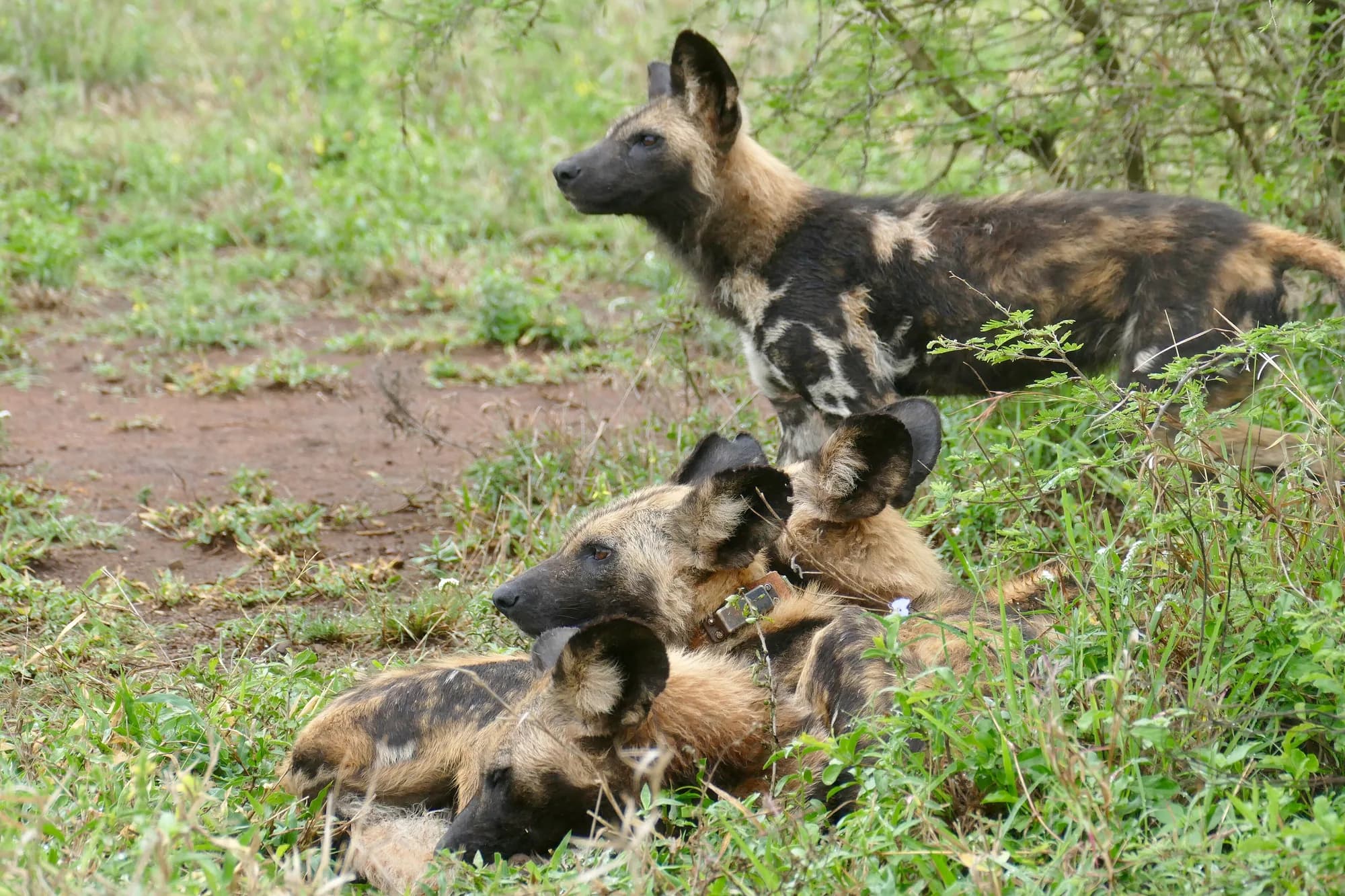
African wild dog
The rarest large carnivore most people will ever have a realistic chance of seeing, and the most rewarding to watch. A pack hunts as a unit in daylight, covers ground fast, and is gone — which is why the parks that deliver them are a short and specific list.
Six countries here, and about 6,600 left in all of Africa
 110 · Mammal
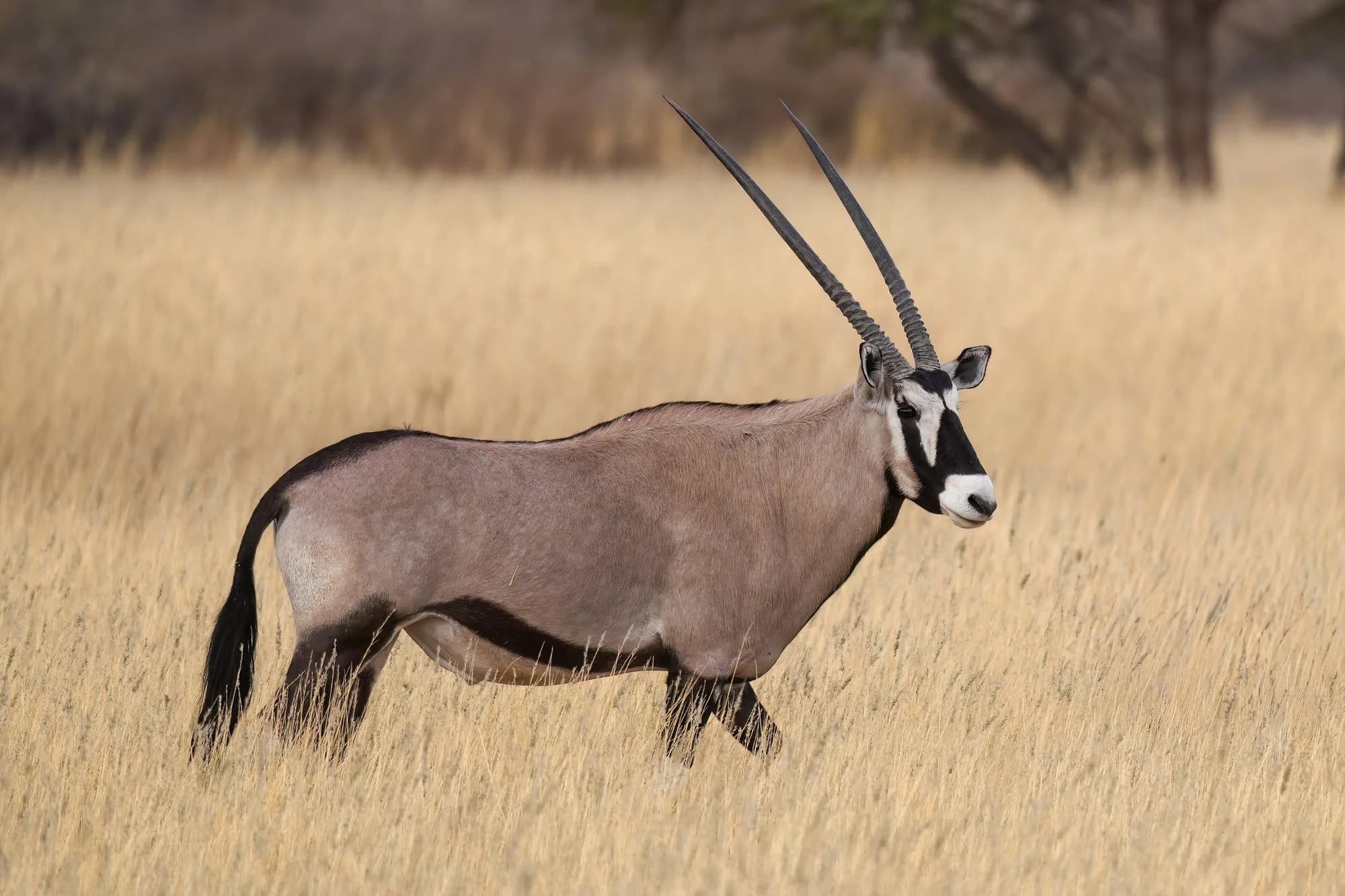
Gemsbok
The desert antelope on the red dunes, with a black-and-white face mask and rapier horns, and the animal that makes the arid parks worth the drive. It can go for long periods without drinking, which is why it is standing in country where nothing else is.
Botswana, Namibia and the Northern Cape
 111 · Mammal
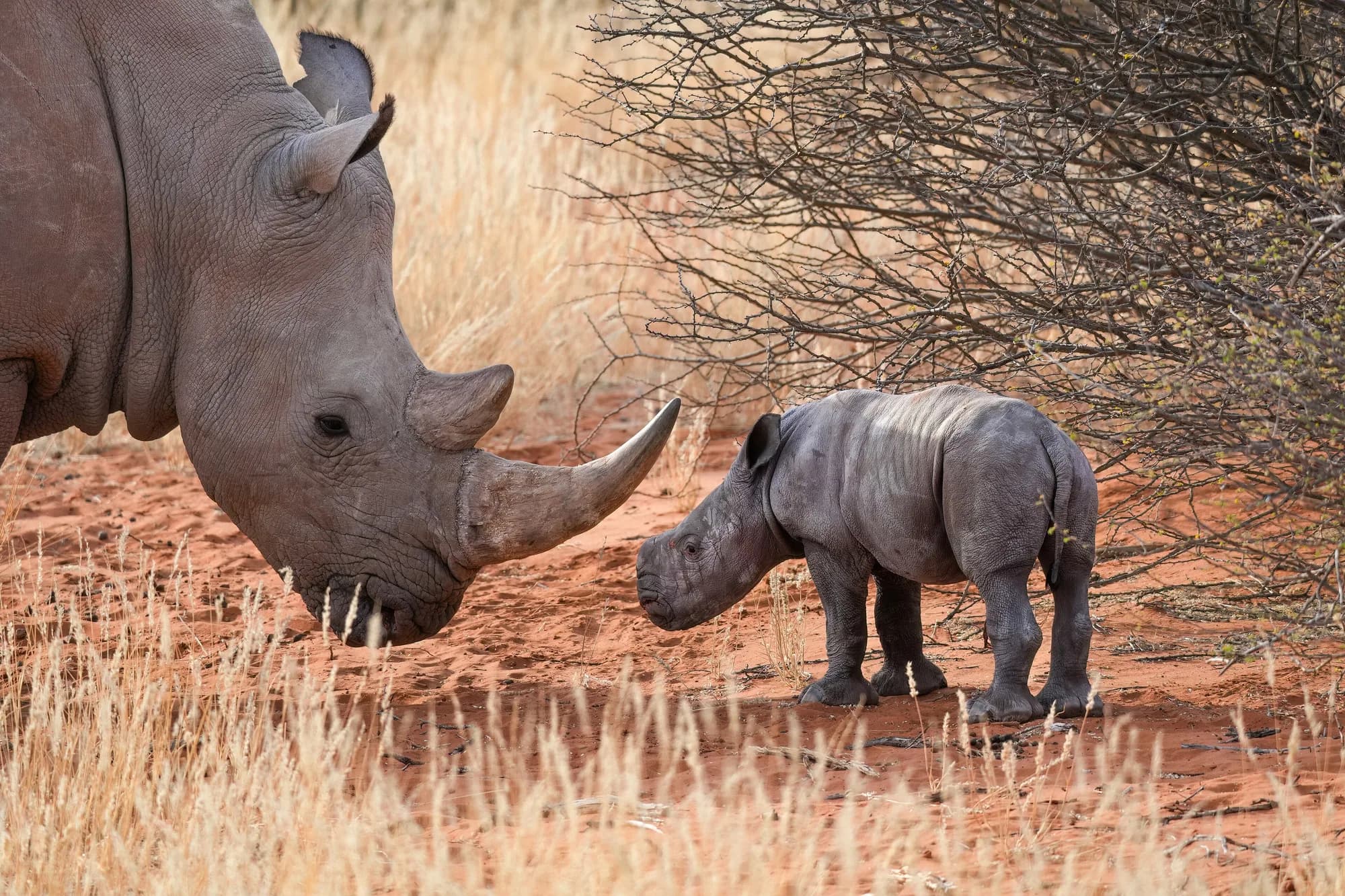
White rhinoceros
The bigger, calmer, grass-eating rhino, and the one most visitors actually see. About 15,750 remain — more than twice the black rhino — but the number fell roughly 11 per cent in a single year, and the northern subspecies is down to two animals.
Five countries here, most of them in South Africa
 113 · Mammal
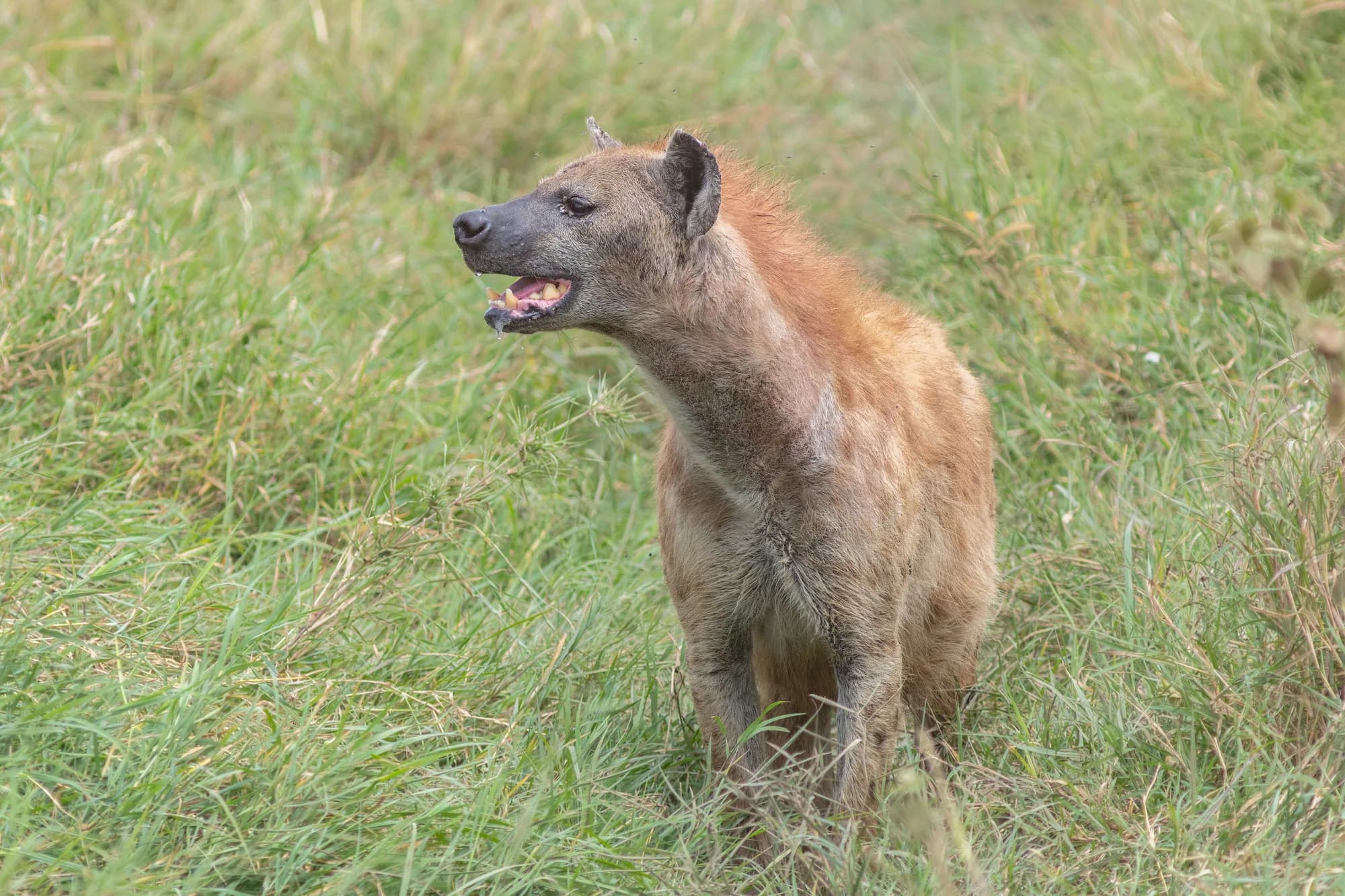
Spotted hyena
Not a scavenger that steals from lions so much as a highly successful hunter that lions steal from. A matriarchal clan of eighty animals with a rank order inherited down the female line is the most socially complex thing you will watch on a game drive.
Common across the savanna parks, and badly misunderstood
 118 · Mammal
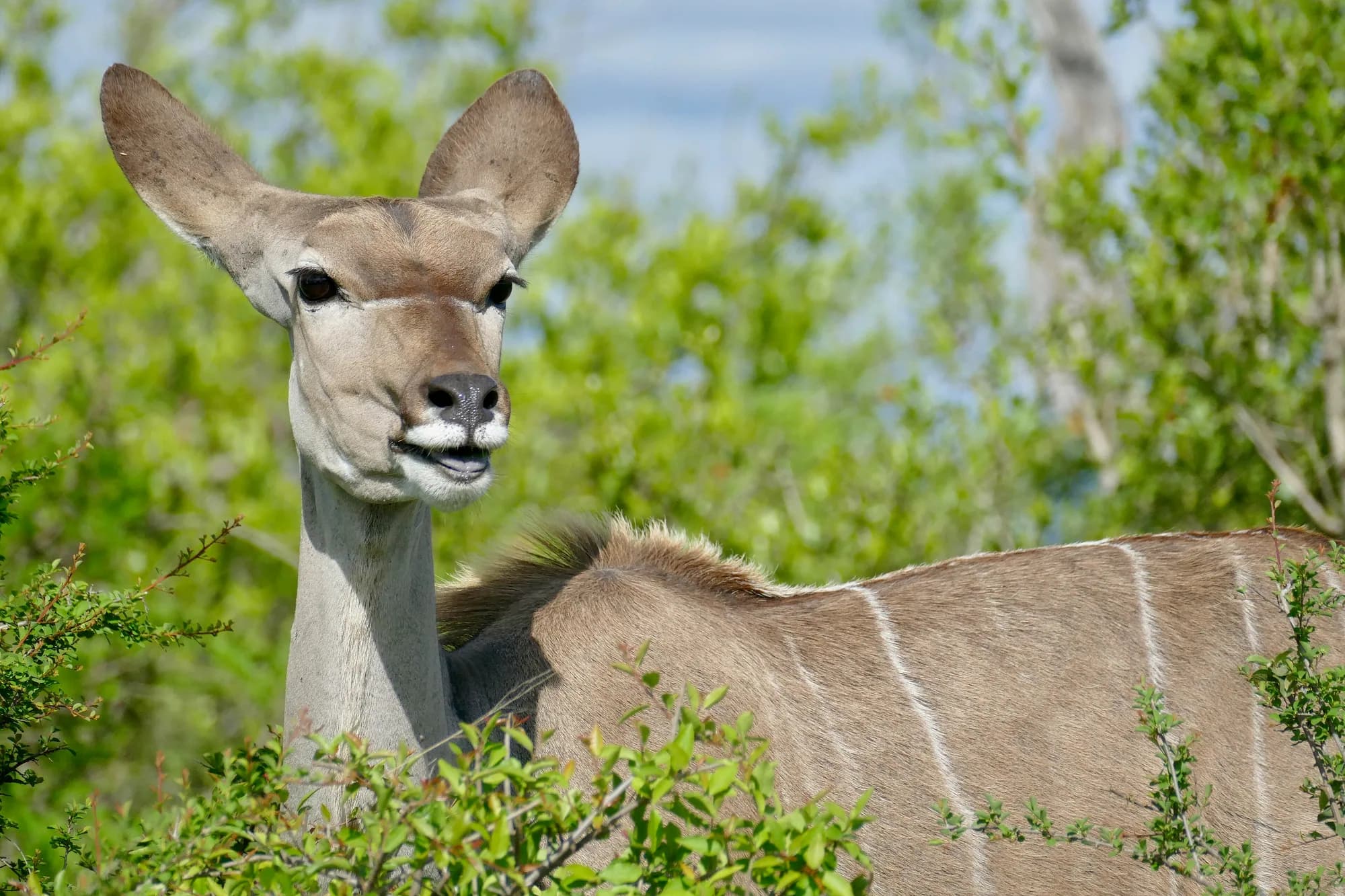
Greater kudu
A very large antelope with spiral horns over a metre long, and the animal people most often fail to see because it is standing still ten metres away. Kudu are a bush species, and their whole defence is not moving.
Seven parks here, in thick bush
- 120 · Mammal
Common eland
A bull weighs close to a tonne and still clears a two-metre fence from standing. Eland are the biggest antelope in the world and among the shyest, which is why most people drive past a herd at four hundred metres and never look twice.
Four countries here, and the largest antelope on earth
- 121 · Mammal
Brown hyena
Shaggy, solitary, almost entirely nocturnal, and confined to southern Africa — the rarest of the world's four hyenas and the one almost nobody plans for. The Skeleton Coast population that scavenges seal colonies is the strangest carnivore story on this site.
The Kalahari and the Namibian coast, and nowhere else
- 123 · Mammal
Springbok
South Africa's national animal, and the one antelope that does something no other antelope does — pronking, a stiff-legged vertical bounce with the back arched and a fan of white hair thrown open along the rump. It is also the only gazelle in southern Africa.
The Kalahari, the Karoo and the Namibian plains
- 124 · Mammal
Klipspringer
A small antelope that stands on the tips of its hooves, pairs for life, and lives on rock nothing else can climb. If you are looking at a kopje or a gorge and something is standing on the skyline, it is almost certainly this.
Rocky ground in four countries here — and only rocky ground
- 125 · Mammal
Roan antelope
The second-largest antelope in Africa after the eland, and the one most often mistaken for a female sable. Roan are scarce, declining across most of their range, and the reason a Kafue or Waterberg trip is worth more than its park list suggests.
Three countries here, in the same woodland as sable
- 131 · Mammal
Meerkat
A small mongoose that stands upright on a mound at sunrise to warm its belly, and the most studied wild mammal society on earth. Habituated groups in the Kalahari will walk past your boots and occasionally use you as a lookout post.
The Kalahari, and only the Kalahari
- 132 · Mammal
Cape mountain zebra
It got down to about eighty animals in the 1950s and there are several thousand now — one of the few genuine recoveries on this site. A dewlap under the throat, an unstriped white belly and a gridiron of bars across the rump separate it from every other zebra.
The Eastern and Western Cape, and nowhere else on earth
- 133 · Mammal
Bat-eared fox
A small fox with ears a third the length of its body, and it uses them to listen for termites chewing underground. It has more teeth than any other placental land mammal and barely uses them for meat.
Short-grass and arid country, three countries here
- 137 · Mammal
Rock hyrax
A guinea-pig-shaped animal sunning itself on a kopje, and the closest living relatives are the elephant and the manatee. Every guide on the continent tells you that and most visitors assume it is a joke. It is not.
Rocky ground across the continent — three countries here
 140 · Bird
Cape vulture
Southern Africa's own vulture, and a colonial cliff-nester, which means the whole species is concentrated onto a short list of crags. That is a conservation problem and a travel opportunity at the same time: find the cliff and you have found several hundred birds.
Southern Africa only, and on cliffs
 141 · Bird
Verreaux's eagle
A very large black eagle that has bet almost everything on one prey animal. Where there are rocks and rock hyrax there are Verreaux's eagles, in numbers that make no sense until you understand the link; where the hyrax have gone, so has the eagle, whatever the cliffs look like.
Granite koppies, dolerite and gorges
 144 · Mammal
Bushbuck
The most widely distributed antelope in Africa, and the one nobody books. You will meet it on a camp lawn at Victoria Falls, on a forest path at Gombe and in the coastal thicket of the Garden Route, and in almost every case it will be standing still, alone, watching you from the edge of cover.
Thicket and forest edge, across most of sub-Saharan Africa
 146 · Mammal
Hartmann's mountain zebra
Read the trend before the category. This is a genuine subspecies assessment and it says Vulnerable and increasing — the listing records how far the animal fell, not where it is going. It lives on the arid escarpment above the Namib, it digs its own wells in dry riverbeds, and most of them are not in national parks at all.
The Namibian escarpment, from the Kunene to the Orange
 151 · Mammal
Bontebok
Nearly gone by the 1830s, saved on private farmland by a handful of Overberg families who fenced what was left, and given a national park of its own in 1931 with seventeen animals in it. Almost nobody flies to South Africa to see one, and it is the best conservation story in the Cape.
A strip of the Western Cape, and three small parks
 152 · Mammal
Grey rhebok
A woolly grey antelope standing on a slope you were about to drive past, and the only species in its genus — no close living relatives anywhere. It is also the animal most often written into a notebook as something else, which is what most of this page is for.
Mountain grassland in South Africa, Lesotho and Eswatini
A species is listed here when one of South Africa’s parks is a documented destination for it — not merely because the animal occurs in the country. Several of these animals are found in a dozen countries, so a page will send you elsewhere if elsewhere is better; that is the point of it. Every species page carries its IUCN category with the year it was assessed.