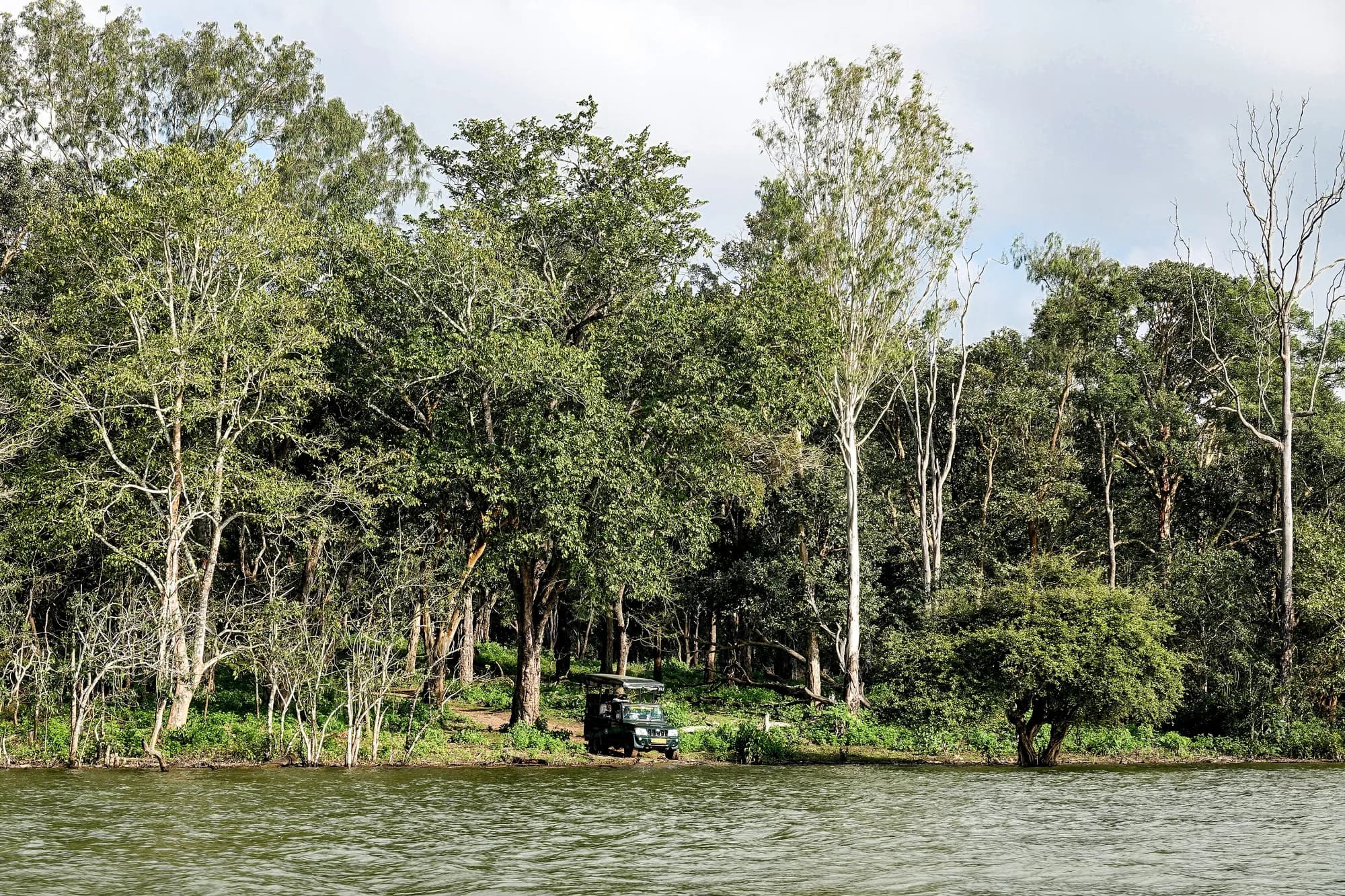
Species · Panthera uncia
Snow leopard
Not a safari. A mountain expedition with a chance of the animal — cold, high, and measured in days of patience rather than in drives.
Also called
- Shan · Ladakhi
- Him tendua (हिम तेंदुआ) · Hindi
- Sah · Tibetan
Checked 14 Aug 2026
- Where
- Ladakh, Spiti
- Best months
- January–March
- Trip length
- 8–12 days
- Population
- 718Snow Leopard Population Assessment in India, Wildlife Institute of India, surveyed 2019–2023, published Jan 2024A modelled estimate, not a headcount — 241 individuals were photographed across 180,000 trap-nights. Ladakh 477, Uttarakhand 124, Himachal 51, Arunachal 36, Sikkim 21, J&K 9. A 2025 peer-reviewed Ladakh assessment puts the national total nearer 709.
High Himalaya only. Ladakh holds two-thirds of India’s snow leopards, and Ladakh and Spiti are the two landscapes with established trips.
Where it is
- Hemis
- Spiti
Where to actually go
Ranked, with the reason each — these are not interchangeable.
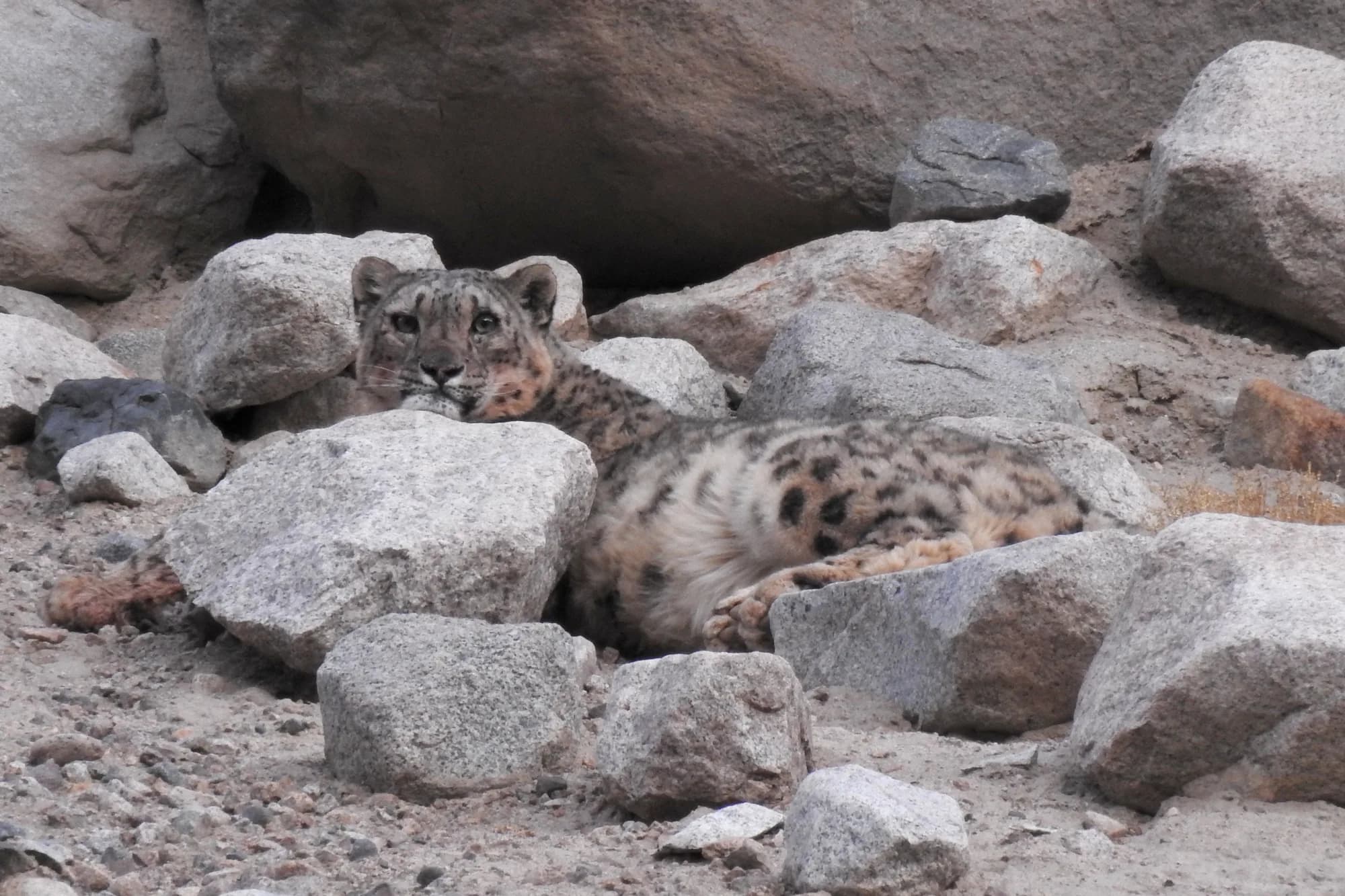
- 01Hemis, LadakhLadakhThe established landscape, with a local spotting network that has transformed the odds over the last decade.Acclimatisation days are the itinerary, not padding
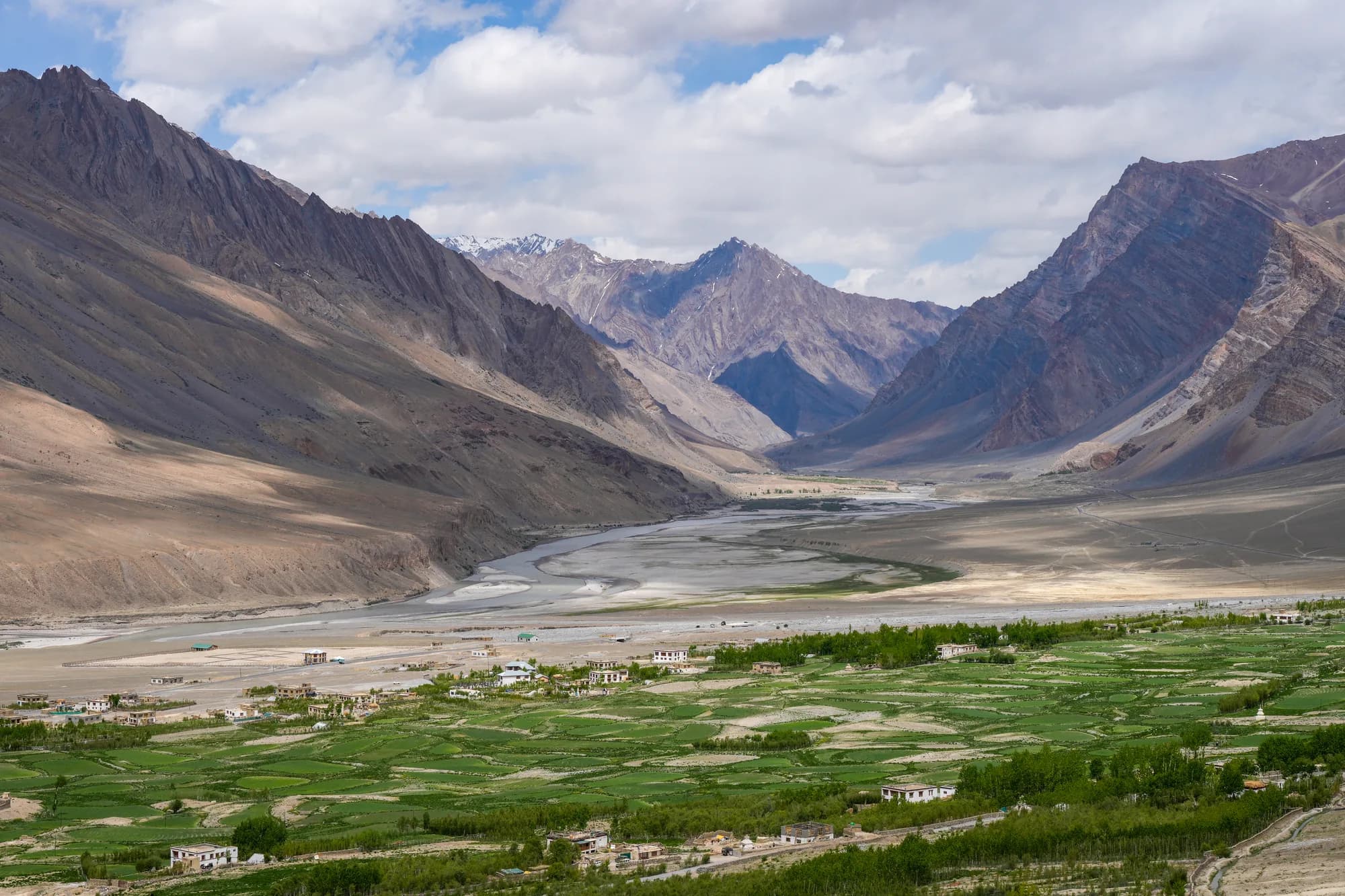
- 02SpitiHimachal PradeshHigher, emptier, harder to reach, and with fewer people in the valley when you get there.For a second attempt, or a first with more time
Where you will not see one
- Every reserve south of the HimalayaNo amount of time in central India puts you in snow leopard country. This is a Ladakh, Spiti and high-Uttarakhand animal, above roughly 3,000 m.
- Ladakh in summerThe trekking season and the sighting season are opposites. In summer the prey goes high and the cats follow, and the same valleys that produce February sightings produce nothing at all in July.
- From a vehicleThis is not a safari. It is days of glassing slopes from a fixed point in serious cold, and the sighting when it comes is very often a distant animal in a spotting scope rather than anything a phone can photograph.
When to go
When to go
- J
- F
- M
- A
- M
- J
- J
- A
- S
- O
- N
- D
January: best. February: best. March: best. April: marginal. May: closed or unproductive. June: closed or unproductive. July: closed or unproductive. August: closed or unproductive. September: closed or unproductive. October: closed or unproductive. November: marginal. December: good.
Through the day
- Dawn
- Morning
- Midday
- Afternoon
- Dusk
- Night
Dawn: active. Morning: most active. Midday: usually resting. Afternoon: active. Dusk: active. Night: not normally seen.
What it looks like in the field
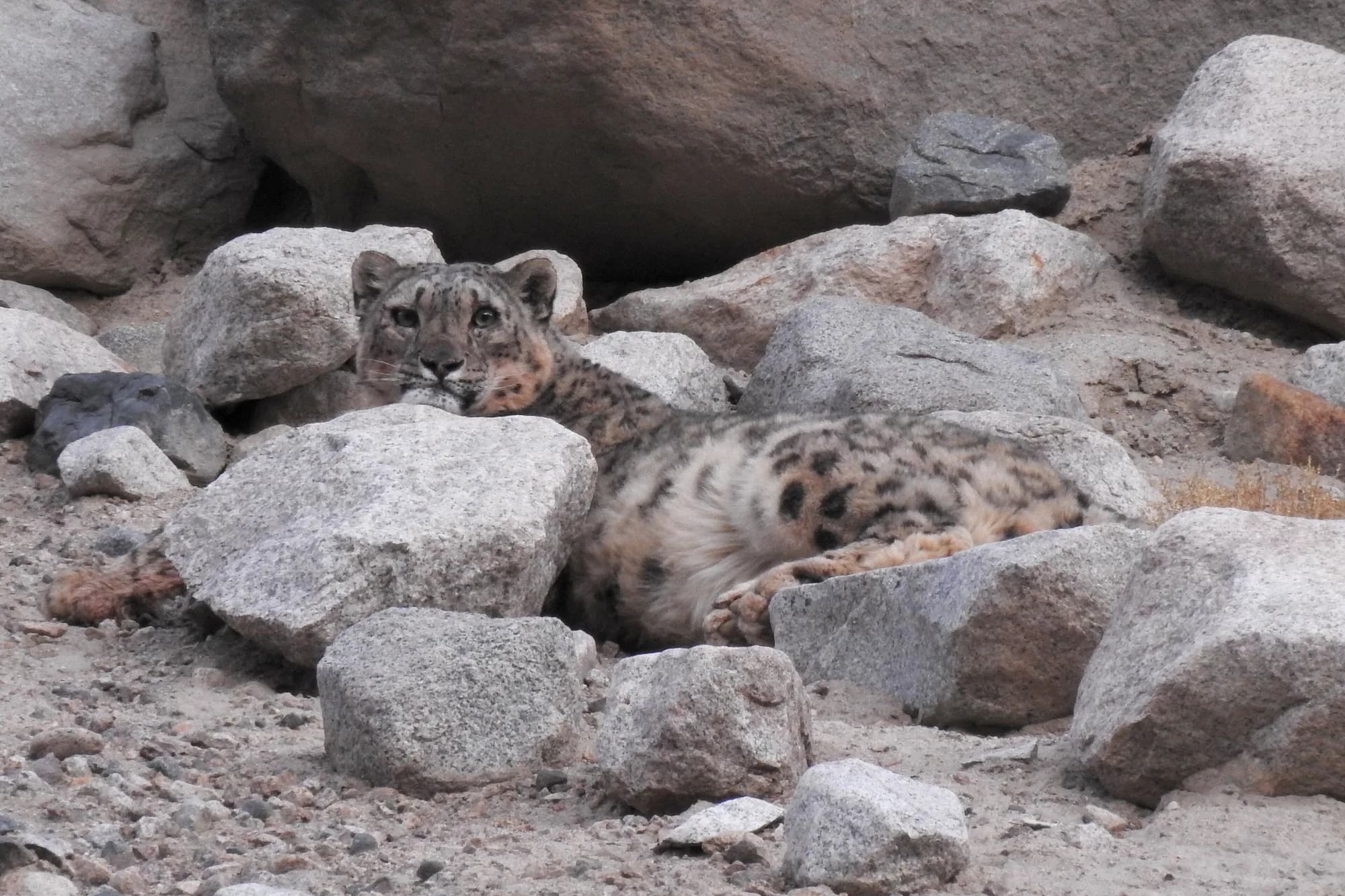
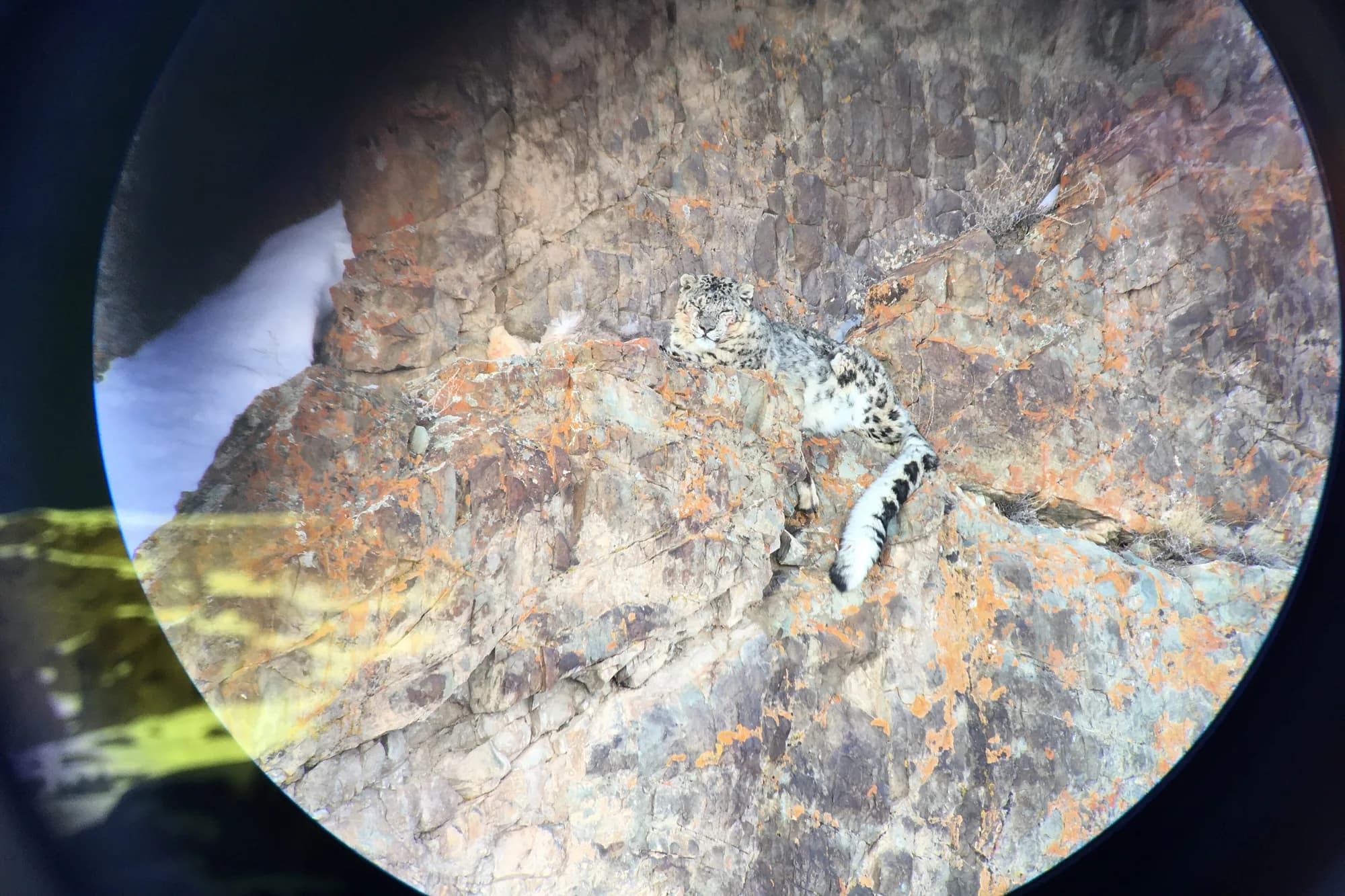
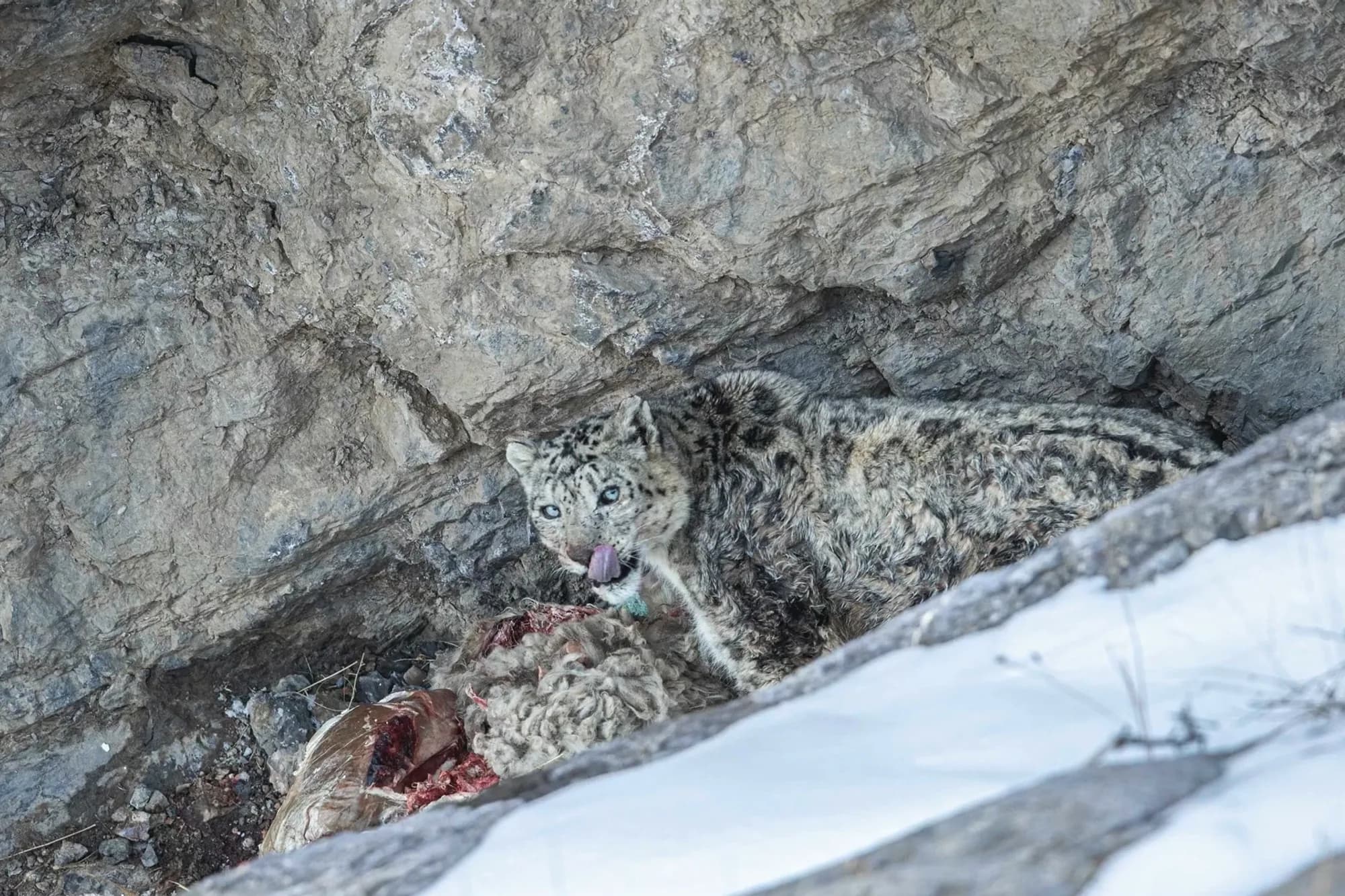
Photographs of Snow leopard in the wild, in Indian reserves. We publish no captive, baited or digitally composited images, and no photograph whose licence we cannot show.
What it actually involves
There is no jeep, no shift, and no permit queue. There is a valley, a spotting scope, a great deal of cold, and a line of people scanning scree for something the colour of scree. Sightings, when they come, are often at considerable distance through glass.
Go expecting a big-cat safari and you will be disappointed. Go expecting a mountain and you will not.
On the odds
Better than they were, because local spotting networks have improved enormously — and still not a guarantee. Anyone quoting you a percentage is estimating, and the honest version is that eight days gives you a real chance and three days gives you a holiday in a cold valley.
Status and protection
Status and protection
- IUCN Red List
- Vulnerable
- Population trend
- ↓ Decreasing
- Wildlife Protection Act 1972
- Schedule I (post-2022 amendment numbering)
- CITES
- Appendix I
Species-level assessment for Panthera uncia (e.T22732A50664030; last assessed 8 November 2016, published 2017). The binomial given is the full species;
Assessed 2017 · IUCN Red List assessment
What to book to see one
What you would be booking
- How it is seen
- A dedicated winter trip with local spotters, based in homestays in the Rumbak, Ulley or Tar valleys. Not a jeep safari, and not a park permit.
- Drives to book
- Eight to twelve days on the ground. Fewer than a week is a serious gamble on a very expensive trip.
- Zone or shift
- Hemis National Park and the Sham valleys, in February, when prey has dropped low and the cats have followed.
Altitude is the constraint people underestimate. The bases sit around 3,500–4,000 m and the glassing points higher, in temperatures well below freezing for hours at a time. Build two acclimatisation days into Leh before anything else, and treat that as non-negotiable rather than as slack.
When to go, month by monthOn the same trip you would also get
- Blue sheep — the prey, and how the cat is actually found
- Himalayan monal — lower on the same mountains, in winter
- Red panda — the other high-altitude trip, at the far end of the range
- Cheer pheasant — the western Himalayan galliforme circuit