
🇿🇲 Zambia
What to come to Zambia for
17 animals with a page here are a reason to travel to Zambia. Each one says which of the country's 8 national parks give you the odds, which month, and where it is honestly not worth looking.
 101 · Mammal
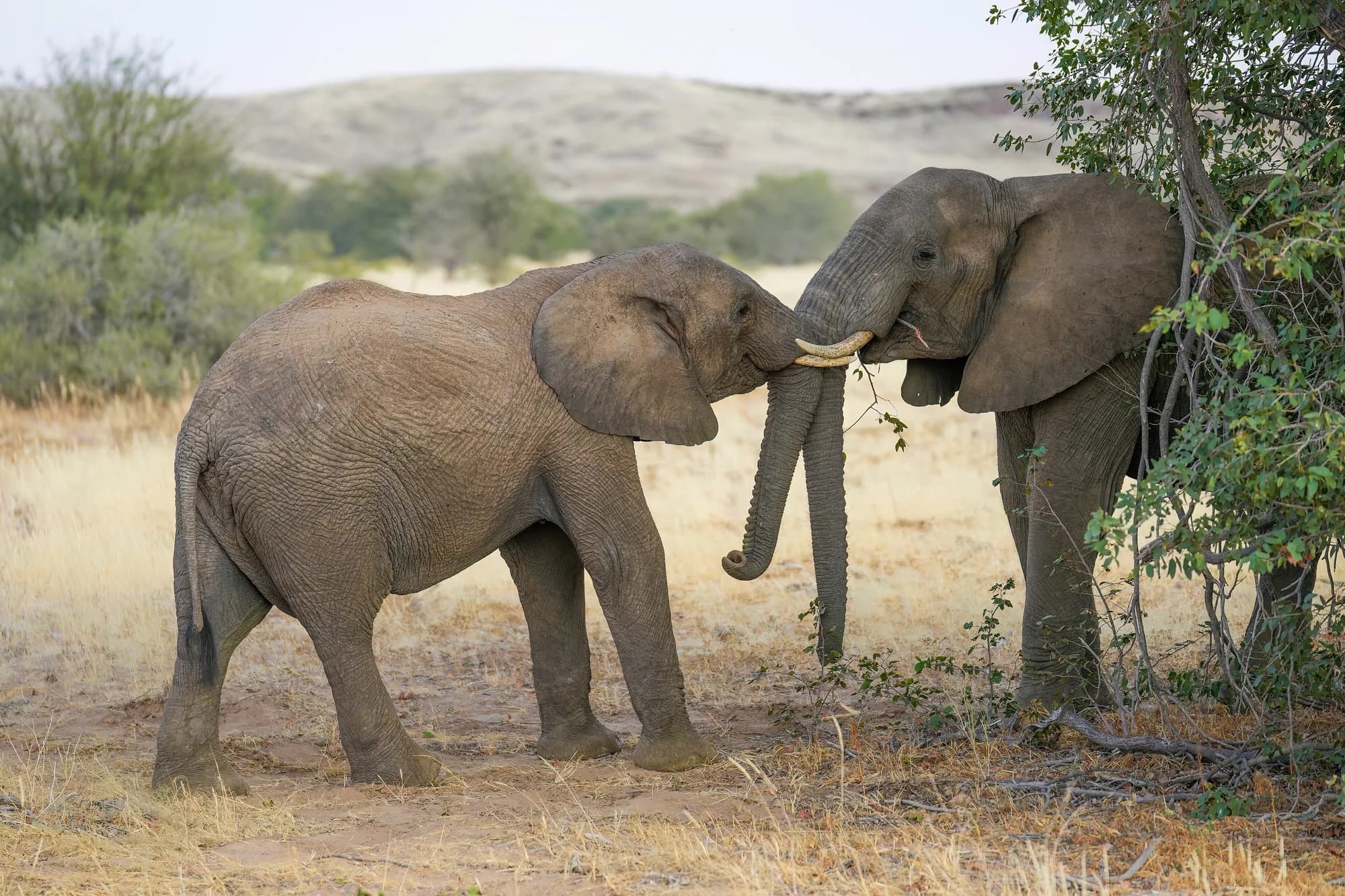
African savanna elephant
The animal most people have already seen by lunchtime on day one, which is exactly why it is worth reading about. The question on an African trip is almost never whether you will see elephants — it is whether you will see the thing that makes a herd worth two hours of your time.
Nine countries on this site, and the easiest of the big animals
 102 · Mammal
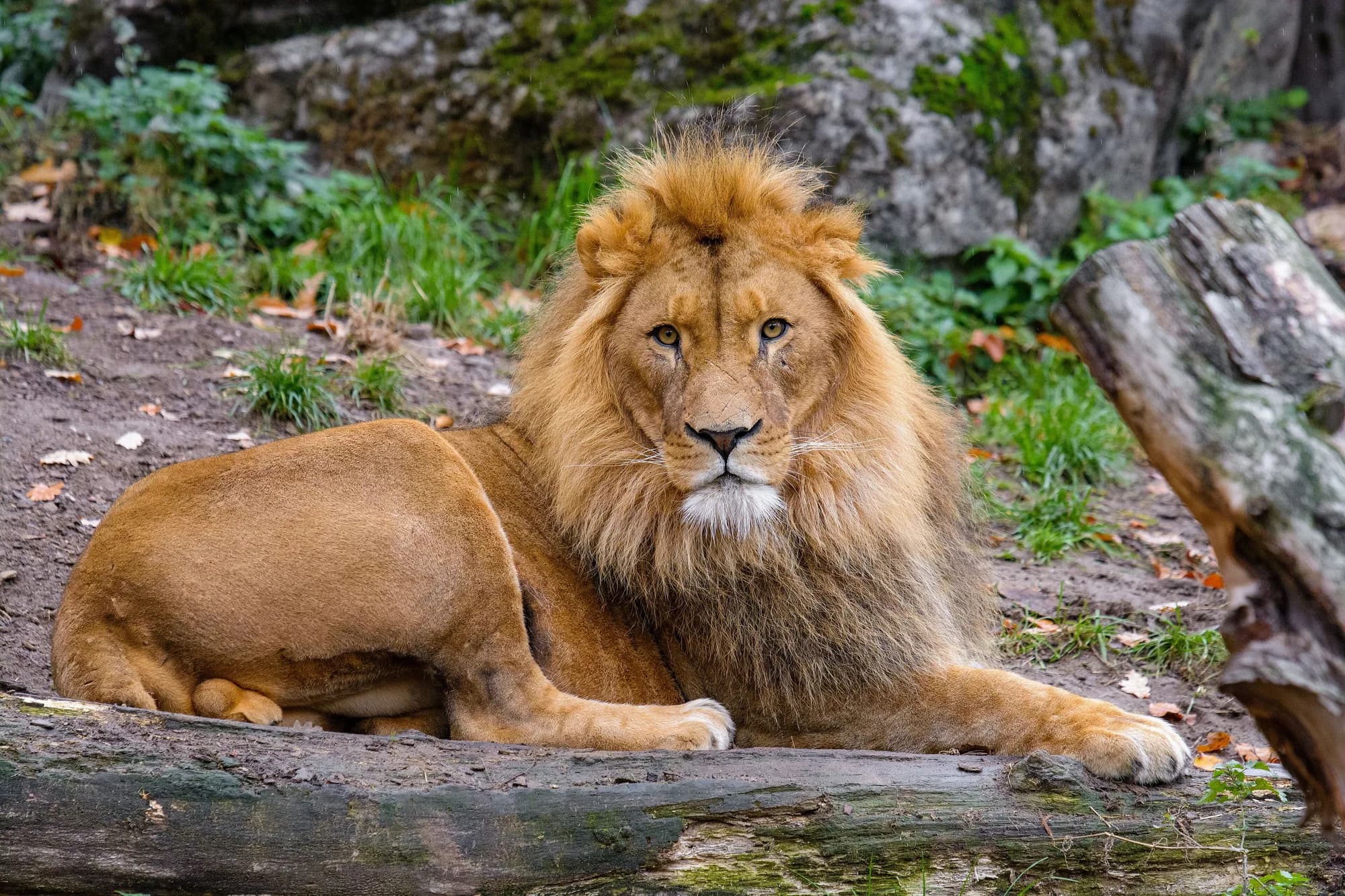
African lion
The animal everyone books the trip for, and the one most often seen asleep. Lions are not hard to find in a good park — they are hard to find doing anything, and the difference between those two sentences is most of what separates a good lion trip from a disappointing one.
Nine countries here, and thinner on the ground than it looks
- 103 · Mammal
Hippopotamus
Easy to find and almost always seen badly — a row of ears and nostrils in brown water. The trip worth planning is the one that puts you level with them from a boat, or at a pod out of the water after dark.
Seven countries here, wherever the water is permanent
 104 · Mammal
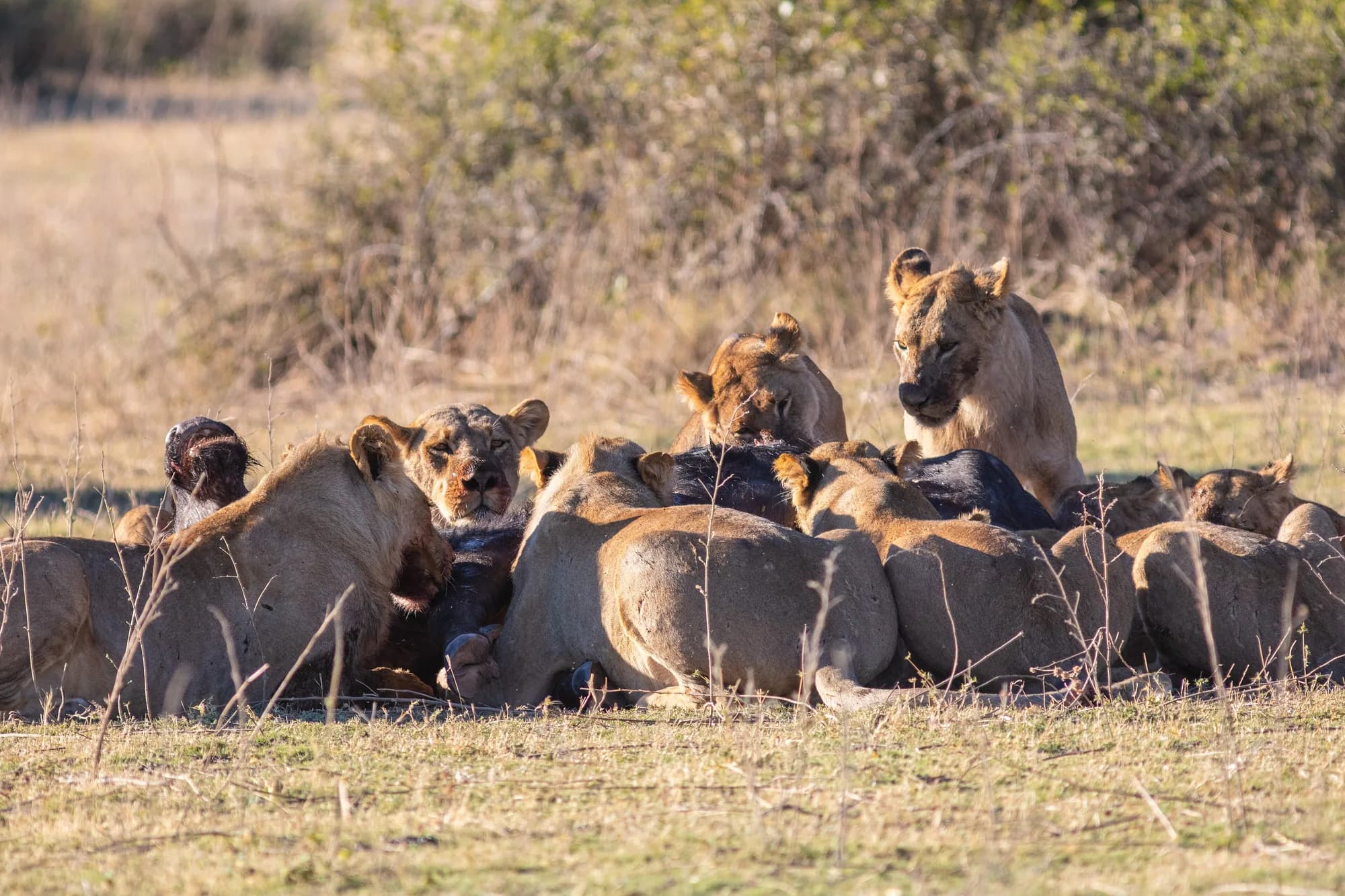
African buffalo
The Big Five animal nobody books for and every guide respects. A herd of a thousand moving to water at dusk is one of the genuine spectacles of a dry-season safari, and a lone old bull in long grass is the reason walking safaris are led by someone armed.
Eight countries here, and the least glamorous of the five
- 105 · Mammal
African leopard
Present in almost every park on this site and seen in very few of them. Leopards are the one big cat where the park choice is not a preference but the whole answer — outside a handful of reserves with habituated animals, a sighting is luck.
Six countries here, and three parks worth booking for
 106 · Mammal
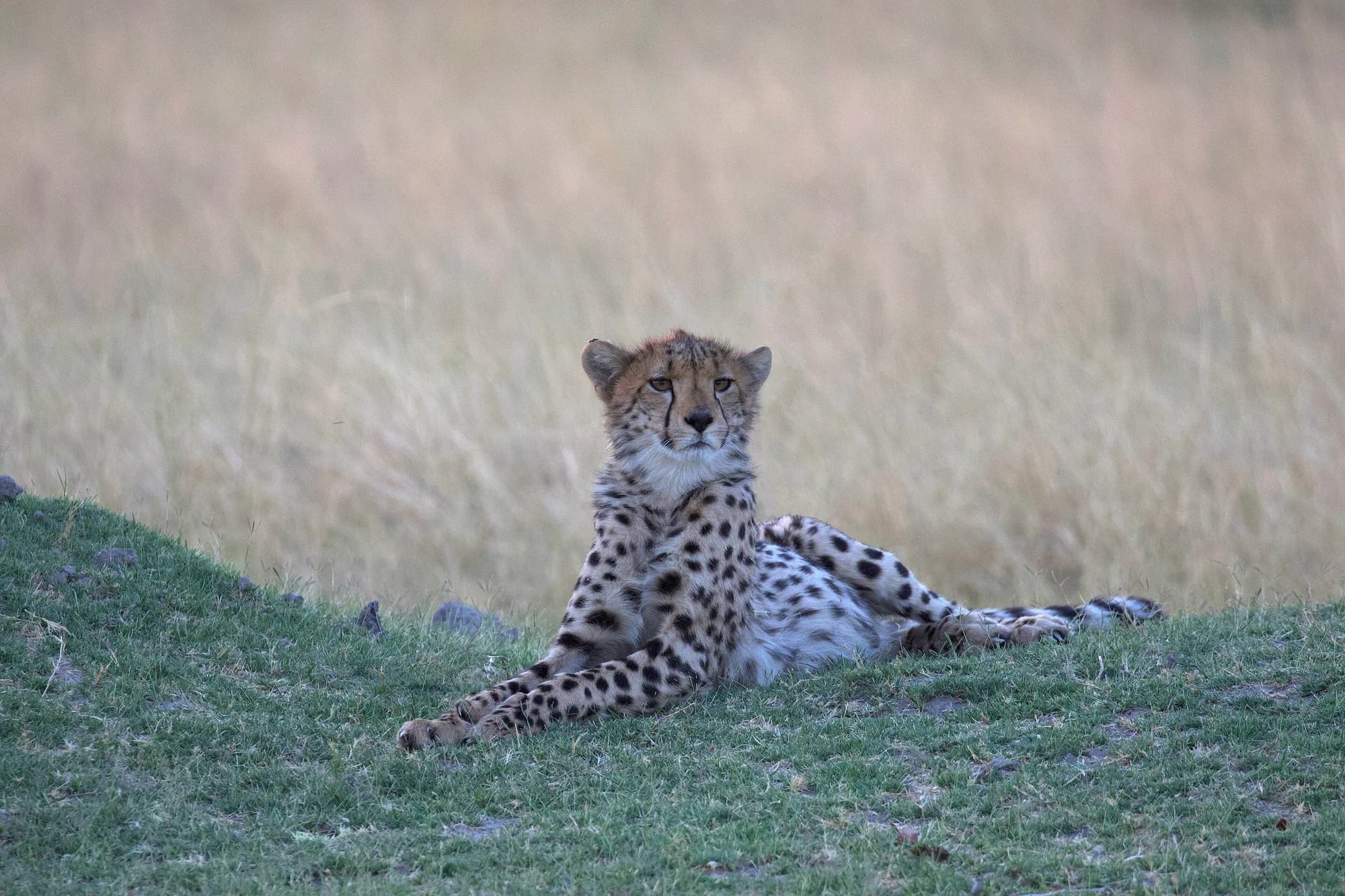
Cheetah
The one large African predator that hunts in daylight, which makes it the most watchable and the most photographed. It is also the rarest of the big cats on this site, and it loses kills to almost everything.
Six countries here, and it needs open country
 107 · Mammal
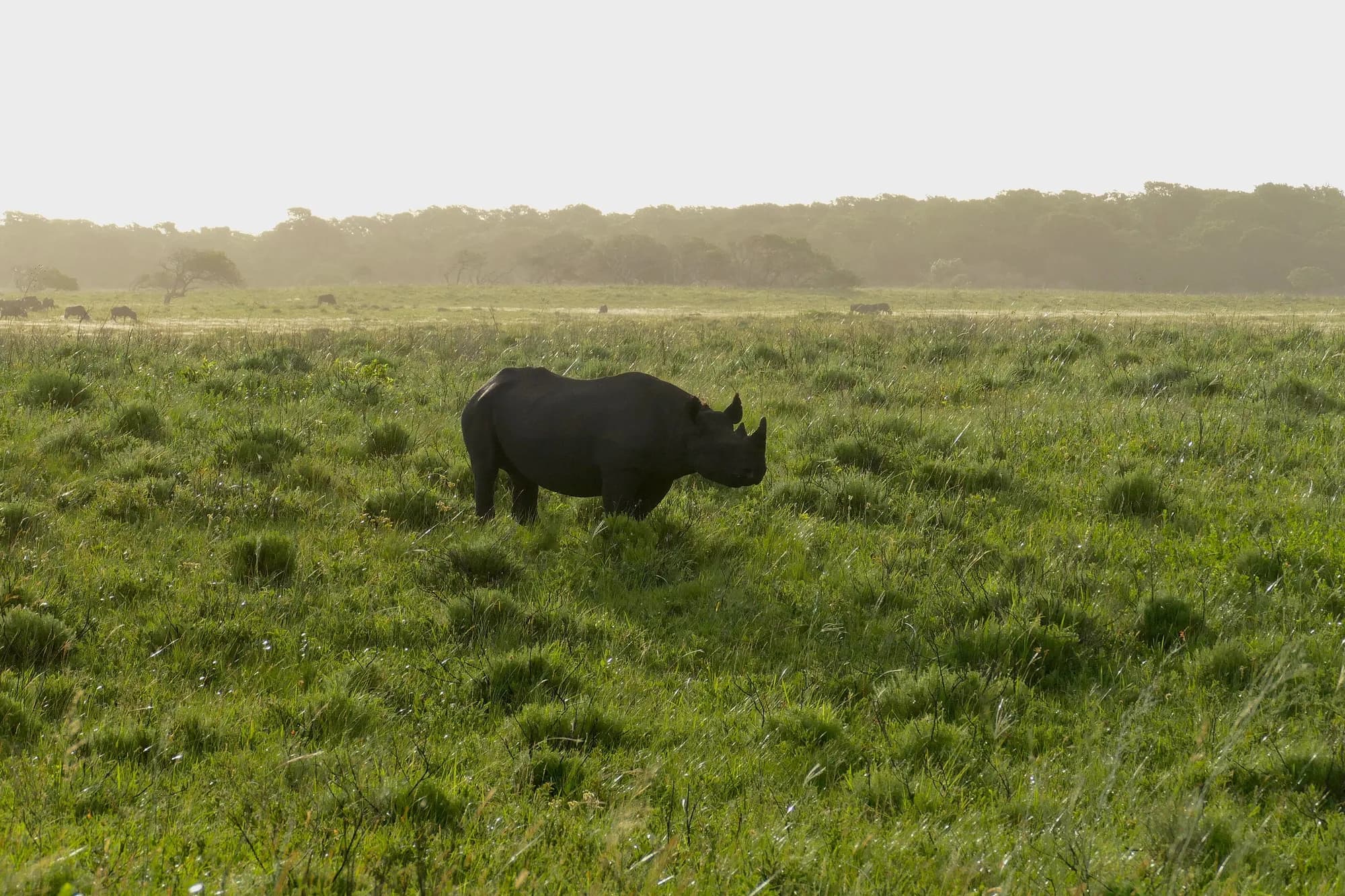
Black rhinoceros
A browser, usually alone, usually in thick bush, and the hardest of the Big Five to see well. Roughly 6,800 remain in the wild — fewer than the white rhino by a factor of two, and the two animals are told apart by the shape of the mouth, not the colour.
Seven countries here, and genuinely rare in all of them
- 108 · Mammal
Sable antelope
A jet-black bull with swept-back horns most of a metre long, and the animal experienced guides point at before they point at a lion. It is a woodland species, which is why it is missing from the parks most people visit.
Six countries here, in miombo woodland
 109 · Mammal
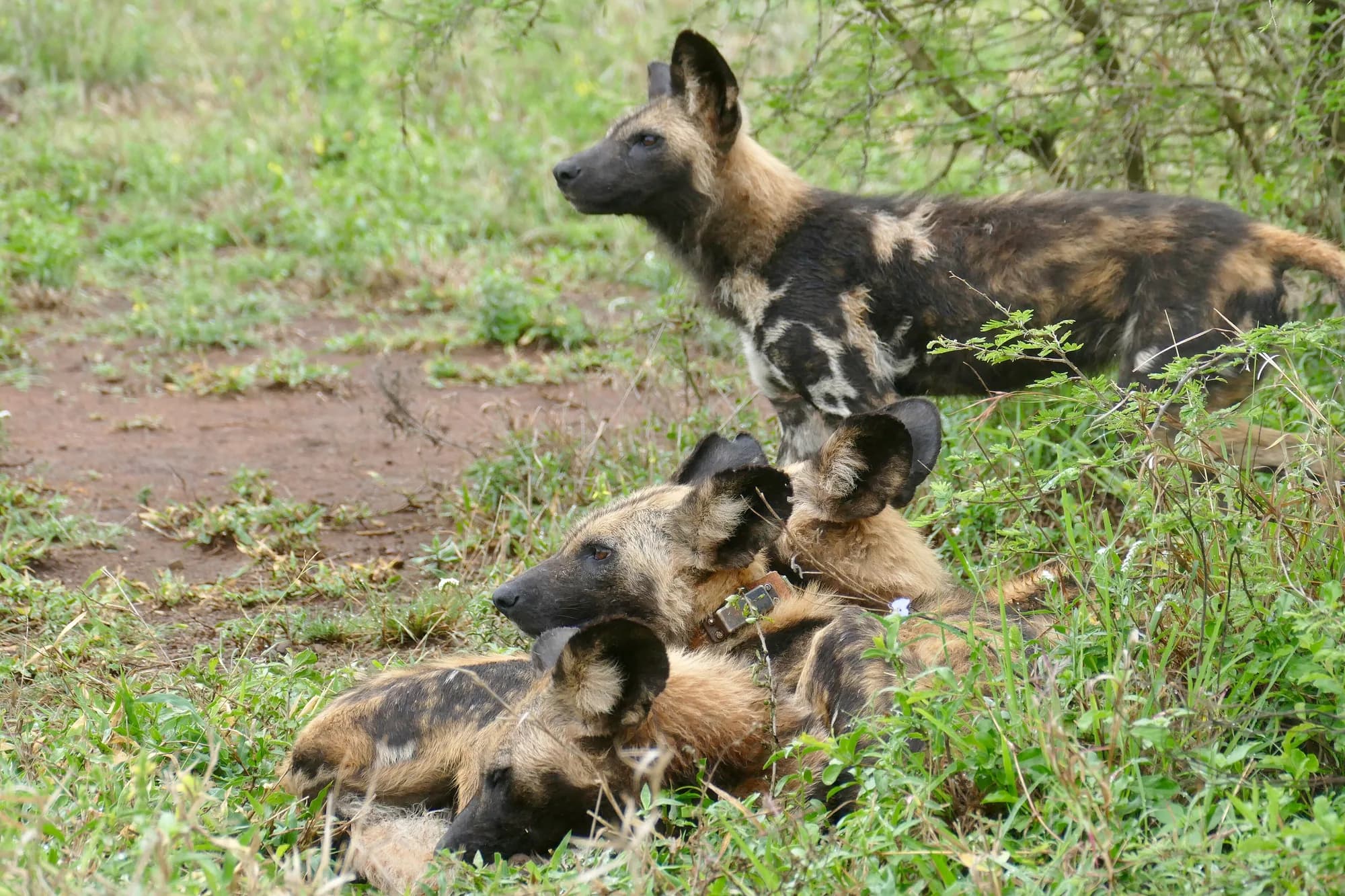
African wild dog
The rarest large carnivore most people will ever have a realistic chance of seeing, and the most rewarding to watch. A pack hunts as a unit in daylight, covers ground fast, and is gone — which is why the parks that deliver them are a short and specific list.
Six countries here, and about 6,600 left in all of Africa
 111 · Mammal
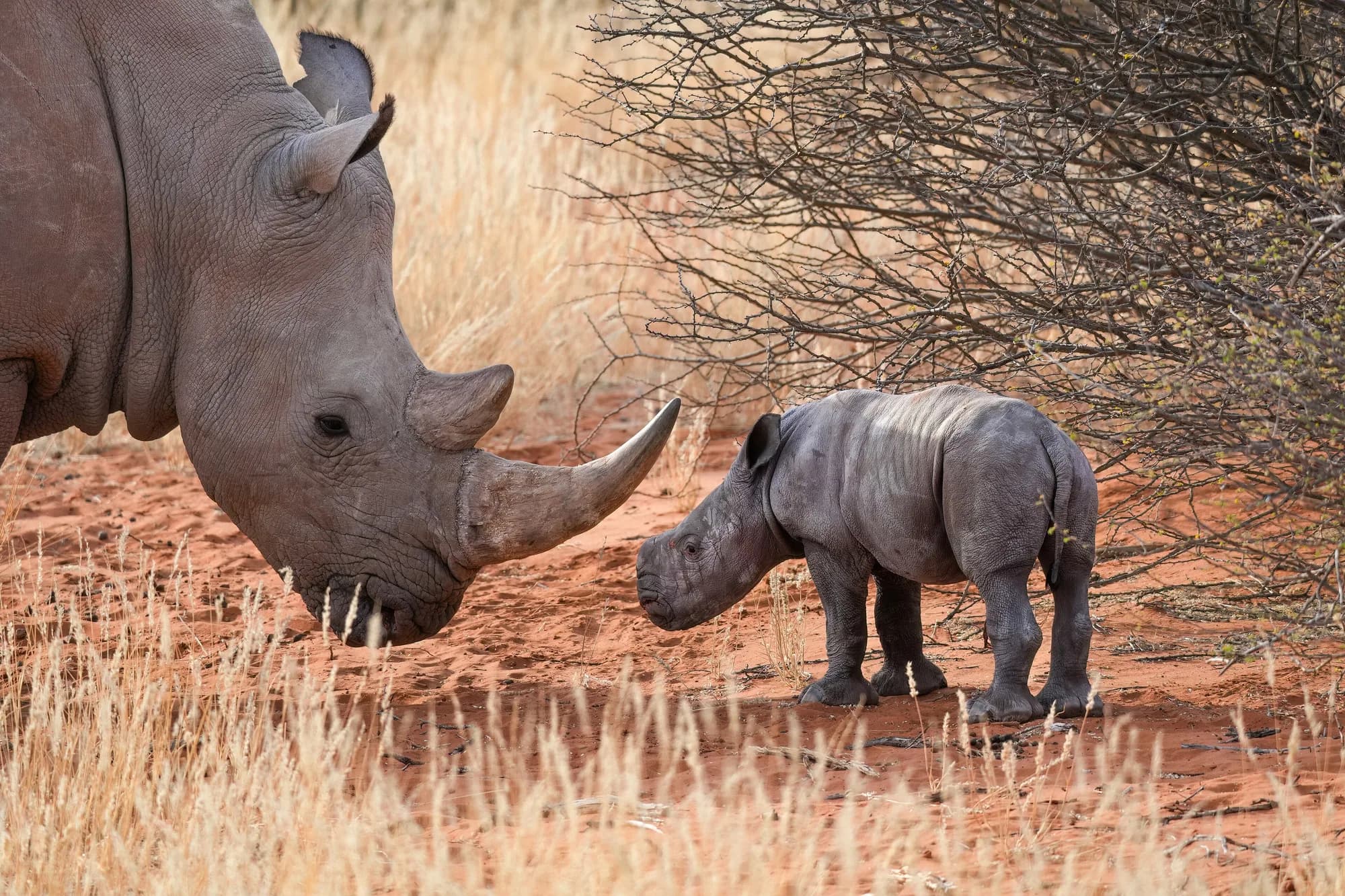
White rhinoceros
The bigger, calmer, grass-eating rhino, and the one most visitors actually see. About 15,750 remain — more than twice the black rhino — but the number fell roughly 11 per cent in a single year, and the northern subspecies is down to two animals.
Five countries here, most of them in South Africa
 112 · Mammal
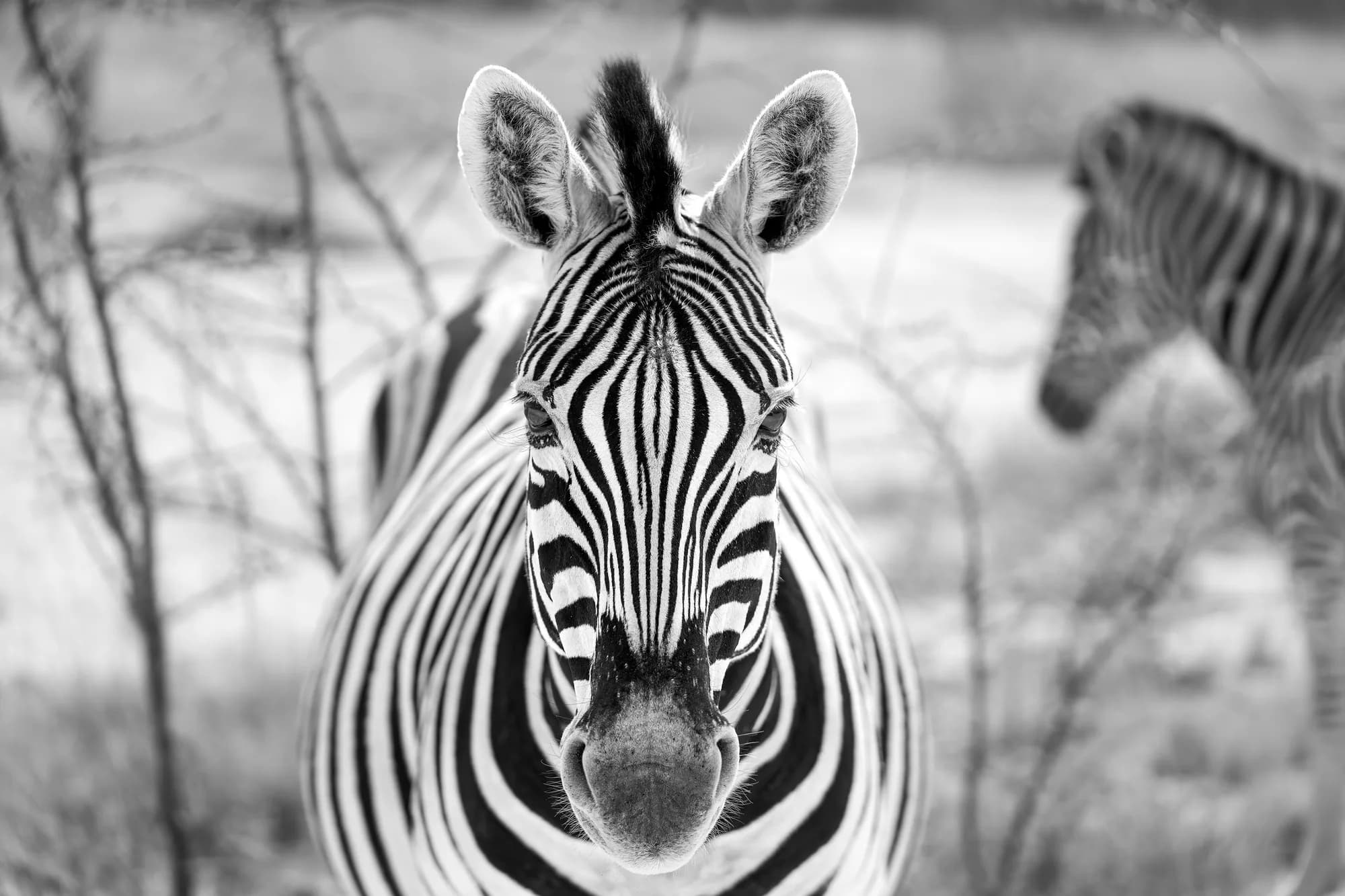
Plains zebra
Seen on the first morning of every trip and worth more attention than it gets. Zebra make up a large part of the great migration, they are the reason the wildebeest can eat, and the three zebra species on this site are not interchangeable.
Five countries here, and half the migration
 113 · Mammal
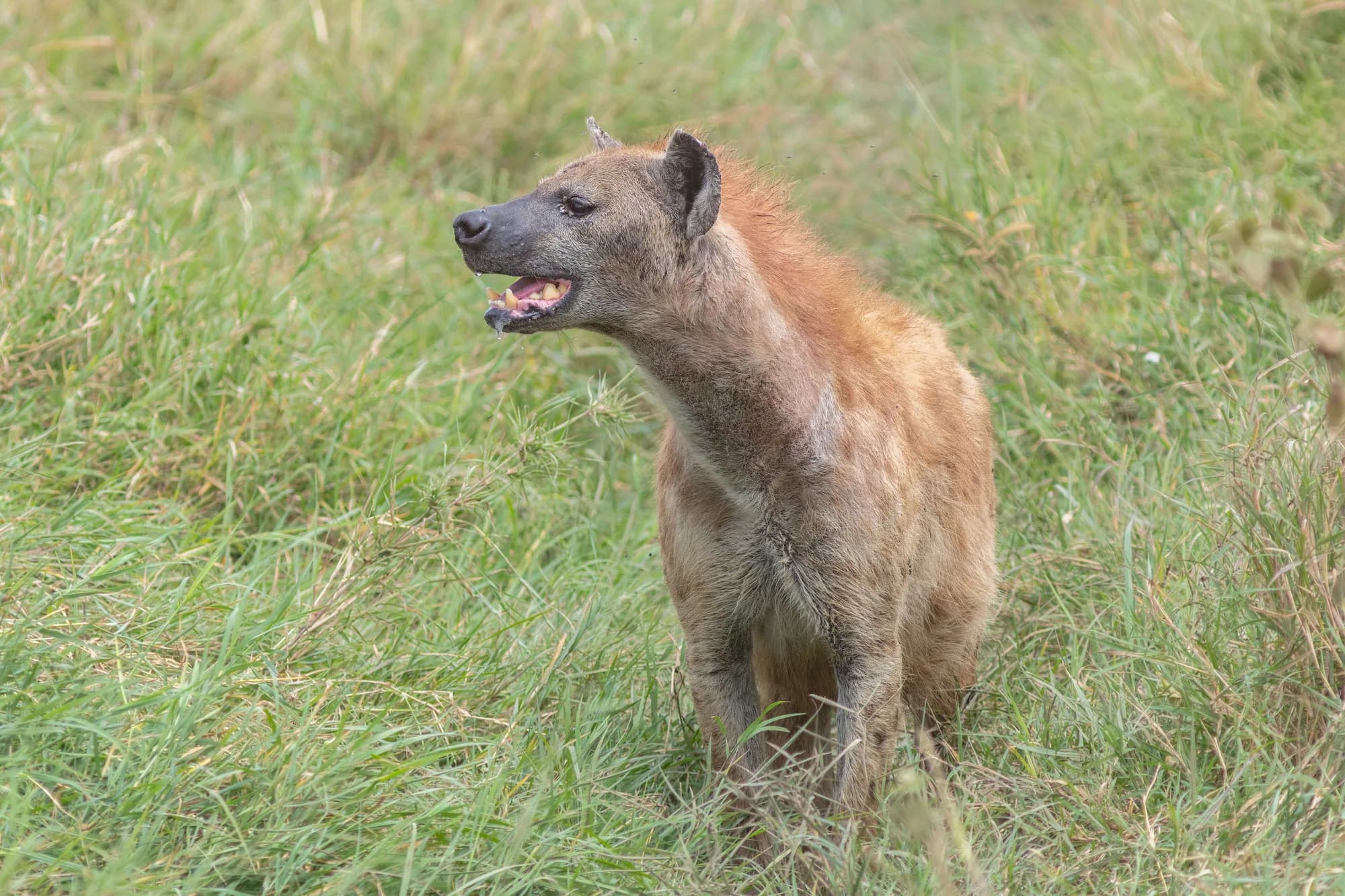
Spotted hyena
Not a scavenger that steals from lions so much as a highly successful hunter that lions steal from. A matriarchal clan of eighty animals with a rank order inherited down the female line is the most socially complex thing you will watch on a game drive.
Common across the savanna parks, and badly misunderstood
 117 · Mammal
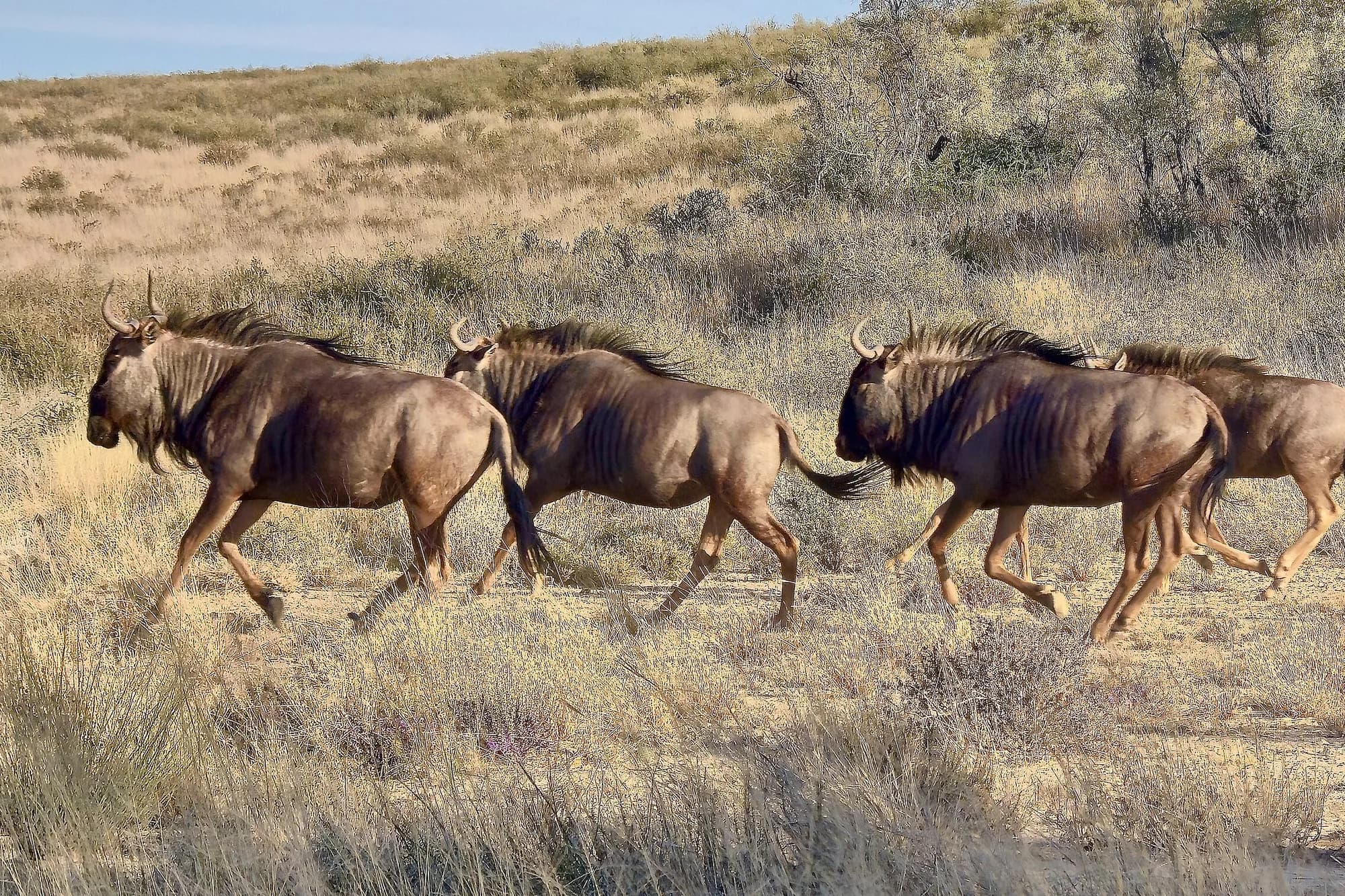
Blue wildebeest
Roughly 1.3 million of them make the Serengeti–Mara migration, which is the largest movement of land mammals on earth and the reason most people book East Africa at all. Away from it, a wildebeest is the animal everyone drives past.
The migration, and most southern savanna
- 122 · Reptile
Nile crocodile
The animal you will see on every sandbank and think nothing of, and the one that kills more people in Africa than any predator except the hippopotamus. A big male is five metres and eighty years old, and the Mara crossings are the only time most visitors take one seriously.
Five countries here, on every permanent river
- 128 · Mammal
Sitatunga
An antelope that lives in water. Splayed elongated hooves let it walk on floating papyrus that carries nothing else, and when threatened it submerges with only its nostrils above the surface. Almost nobody sees one without going somewhere specifically for it.
Papyrus swamp in four countries here
- 129 · Mammal
Red lechwe
The antelope of the flood. Red lechwe run into water rather than away from it, and the sight of a herd crossing a shallow Okavango channel at speed, throwing spray, is one of the things a mokoro trip is actually for.
Floodplains in three countries here
 147 · Mammal
Blue monkey
It is not blue, it is not one animal, and the samango a guide pointed out to you in South Africa is the same species under a different name. This is the commonest forest monkey in East Africa and the one most people photograph without ever learning what they photographed.
Forest canopy, from Kakamega to Kasanka
A species is listed here when one of Zambia’s parks is a documented destination for it — not merely because the animal occurs in the country. Several of these animals are found in a dozen countries, so a page will send you elsewhere if elsewhere is better; that is the point of it. Every species page carries its IUCN category with the year it was assessed.