Species · Panthera leo persica
Asiatic lion
Every wild Asiatic lion alive lives in one Gujarat forest. What that does to the permits, and why the cool months are the only realistic window.
Also called
- Sher (शेर) · Hindi
- Sinh (સિંહ) · Gujarati
- Simha · Sanskrit
Checked 14 Aug 2026
- Where
- Gir, Gujarat
- Best months
- December–March
- Reserves
- One
- Population
- 89116th Asiatic Lion Population Estimation, Gujarat Forest Department, counted 10–13 May 2025394 of them inside Gir and its adjoining sanctuaries.
One state, one forest. There is no second option and no comparison to make.
Where it is
Where to actually go
Ranked, with the reason each — these are not interchangeable.
Where you will not see one
- Anywhere outside Saurashtra, GujaratEvery wild Asiatic lion on earth lives in one landscape in one Indian state. There is no second population to fall back on, which is both the conservation story and the trip-planning constraint.
- The Devalia enclosureGir's interpretation zone is a fenced 400-hectare compound with a guaranteed sighting on a bus. It is a legitimate thing to visit and it is not a wild sighting. Sold alongside the real safari and frequently confused with it.
- Any central Indian tiger reserveKanha, Bandhavgarh, Tadoba, Ranthambore — none has lions, and none has had for well over a century.
When to go
When to go
- J
- F
- M
- A
- M
- J
- J
- A
- S
- O
- N
- D
January: best. February: best. March: best. April: marginal. May: marginal. June: closed or unproductive. July: closed or unproductive. August: closed or unproductive. September: closed or unproductive. October: marginal. November: good. December: best.
Through the day
- Dawn
- Morning
- Midday
- Afternoon
- Dusk
- Night
Dawn: most active. Morning: active. Midday: usually resting. Afternoon: active. Dusk: most active. Night: not normally seen.
What it looks like in the field
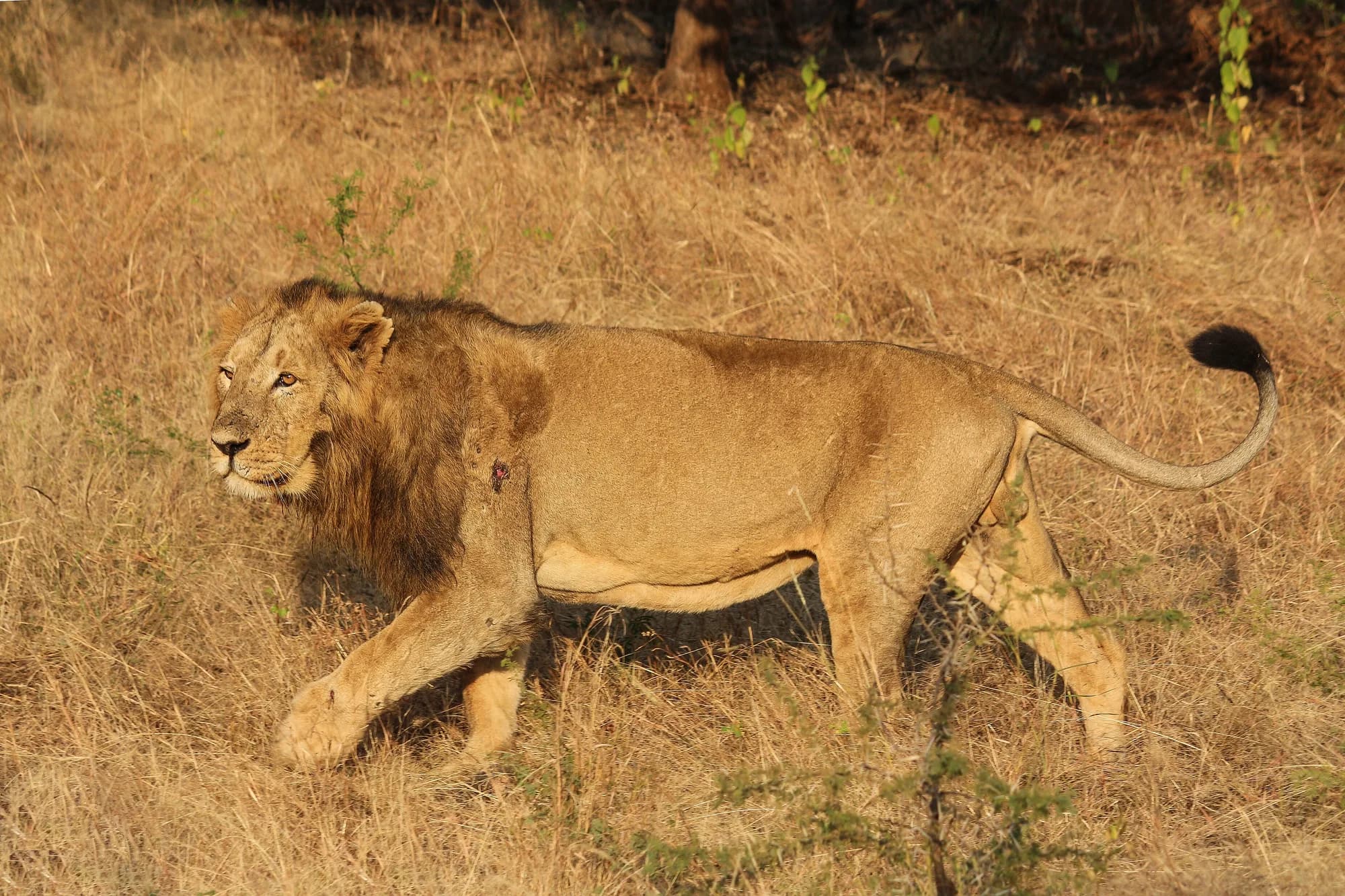
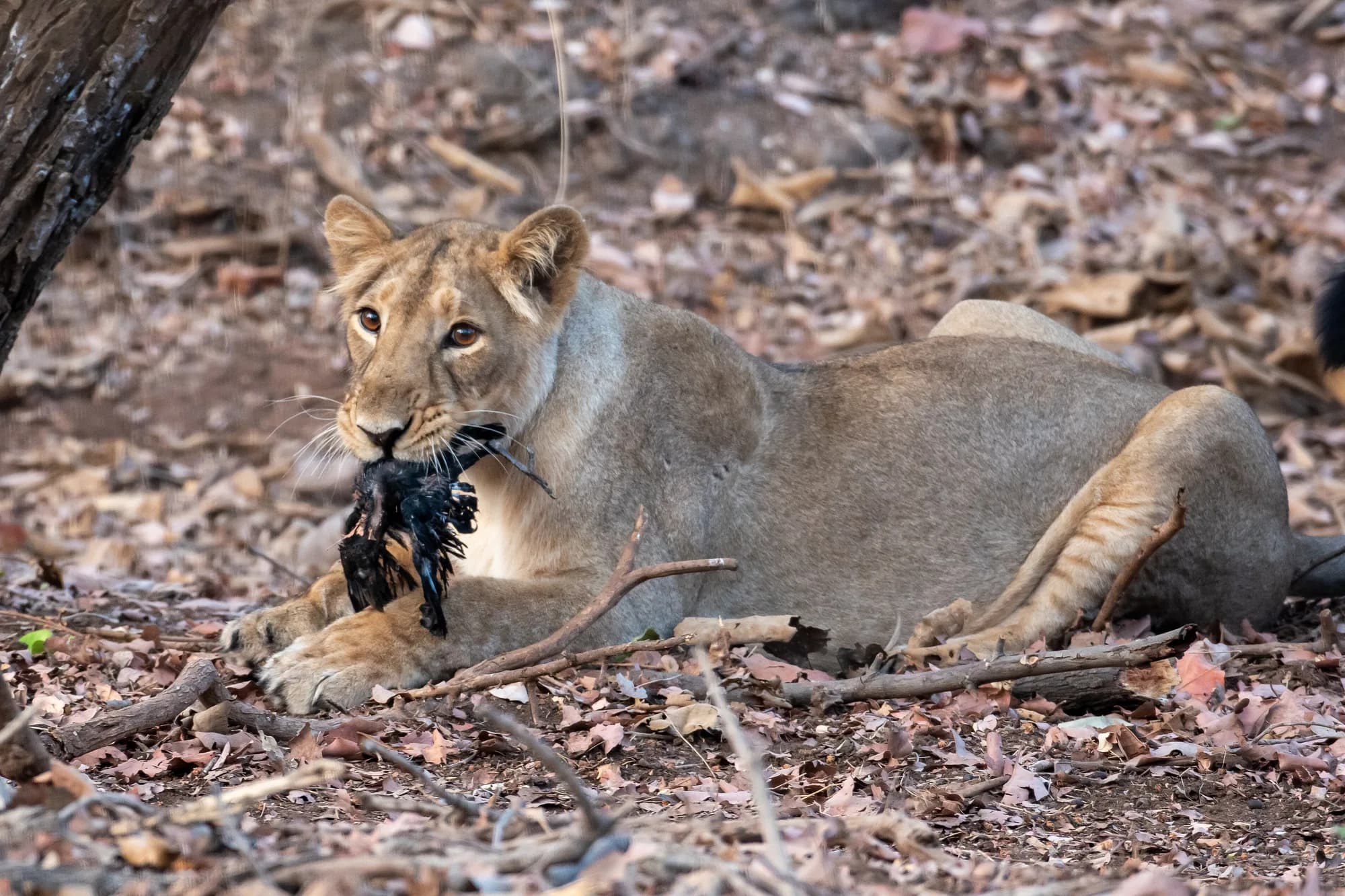
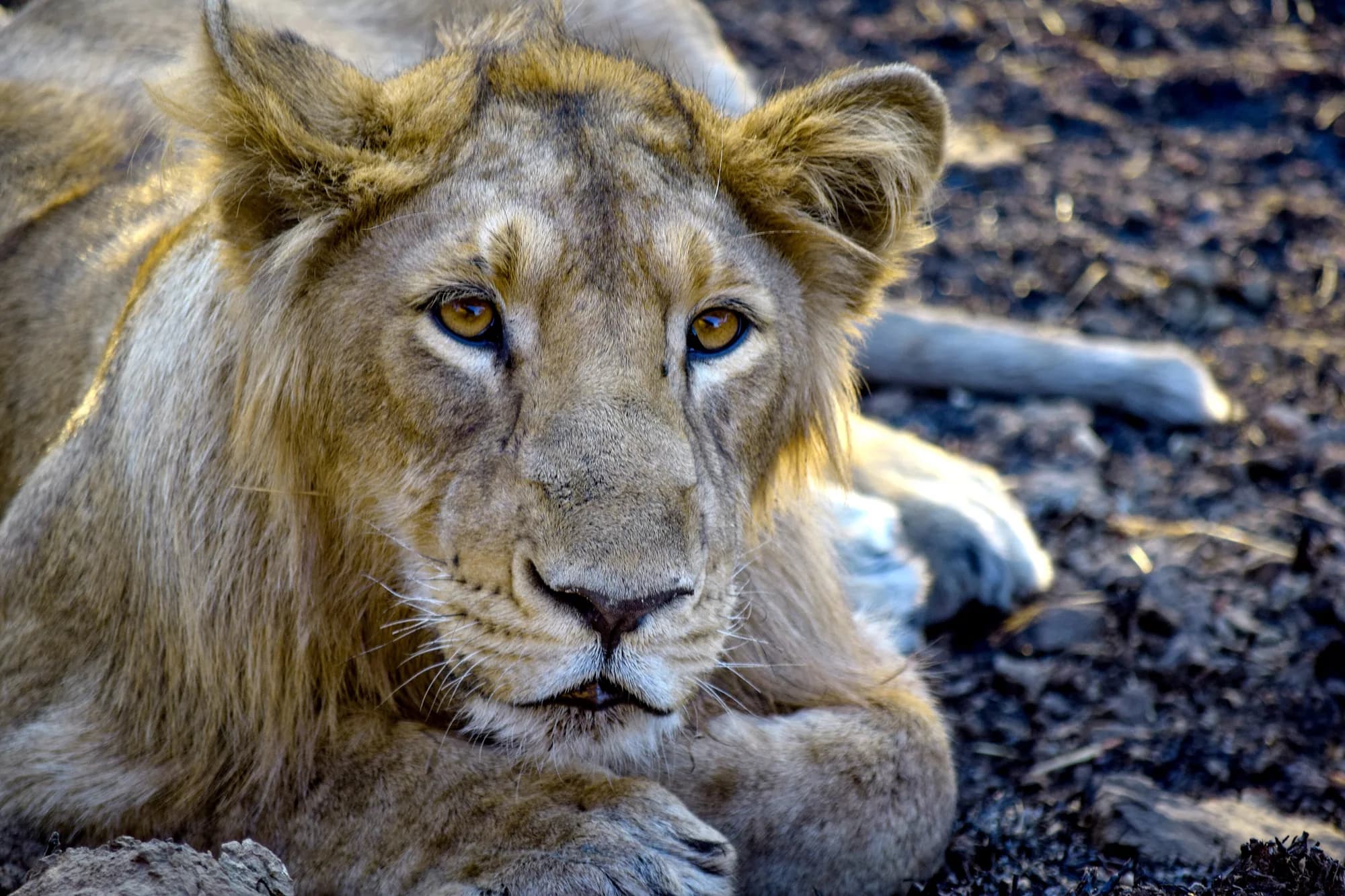
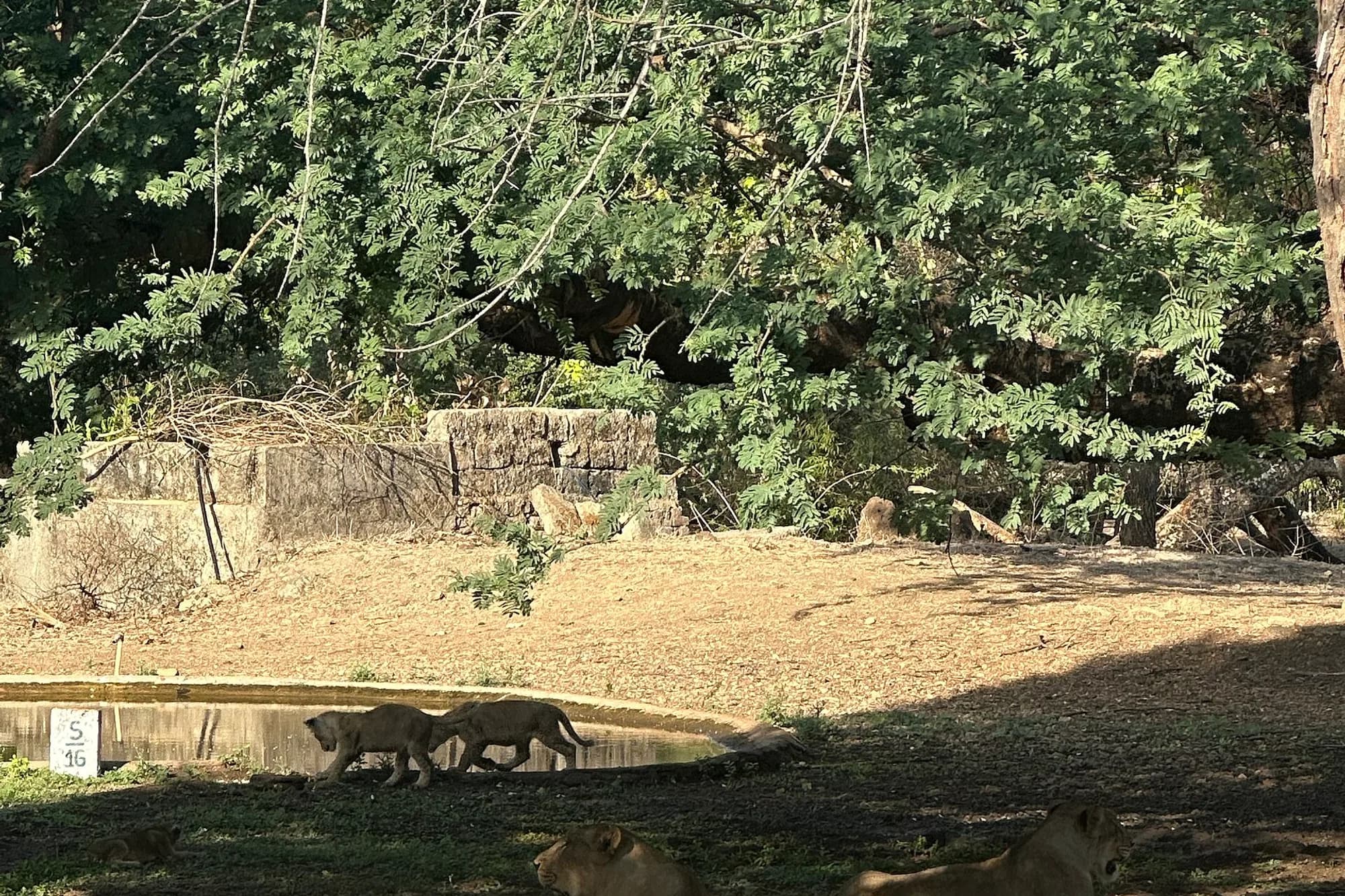
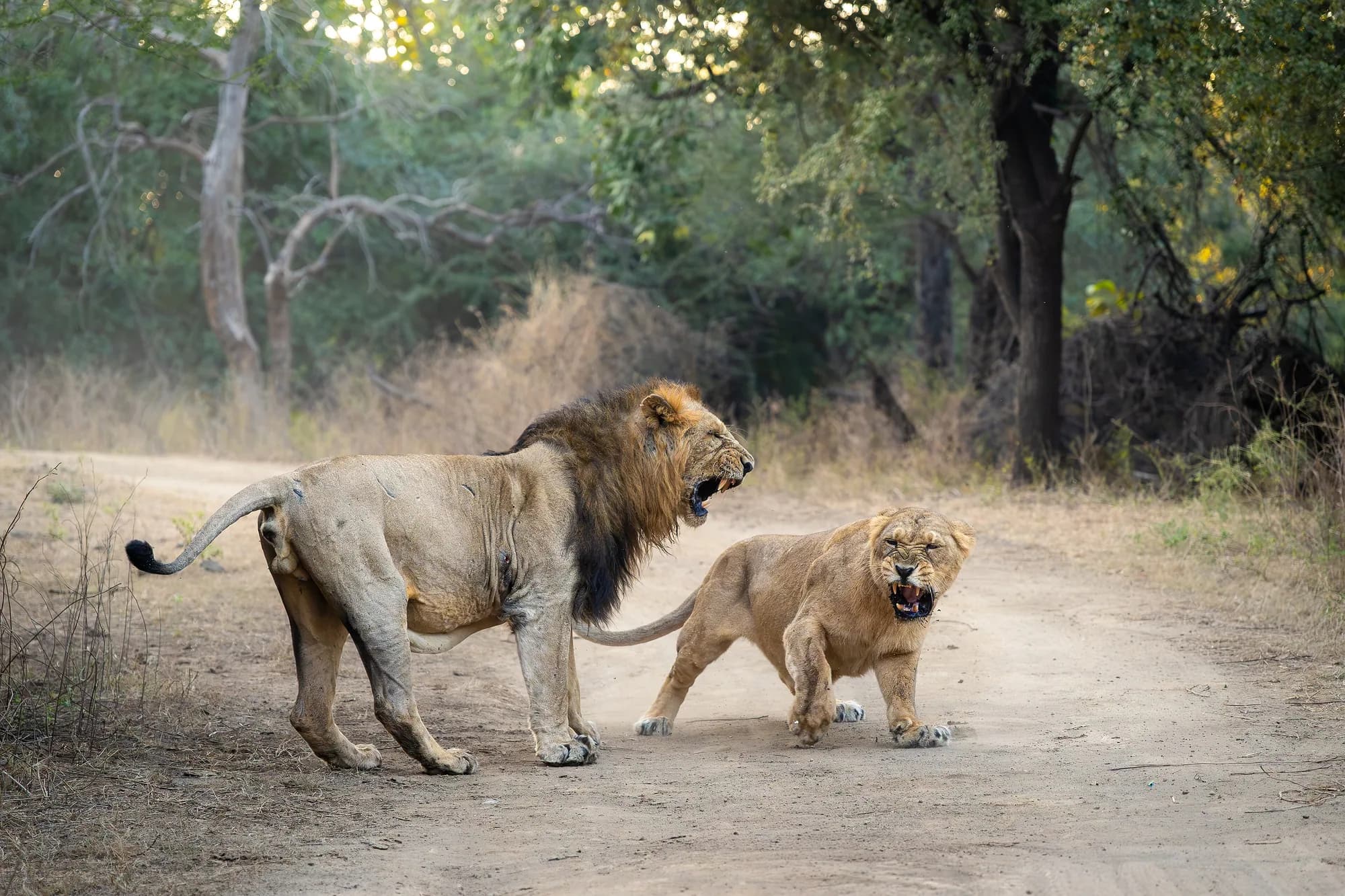
Photographs of Asiatic lion in the wild, in Indian reserves. We publish no captive, baited or digitally composited images, and no photograph whose licence we cannot show.
Permits are the whole problem
Gir runs a limited number of permits per shift and demand consistently exceeds them, particularly at weekends and through the Indian holiday season. Nothing about the animals is difficult here. Getting through the gate is.
The current allocation and booking window are not yet verified.
What it is like
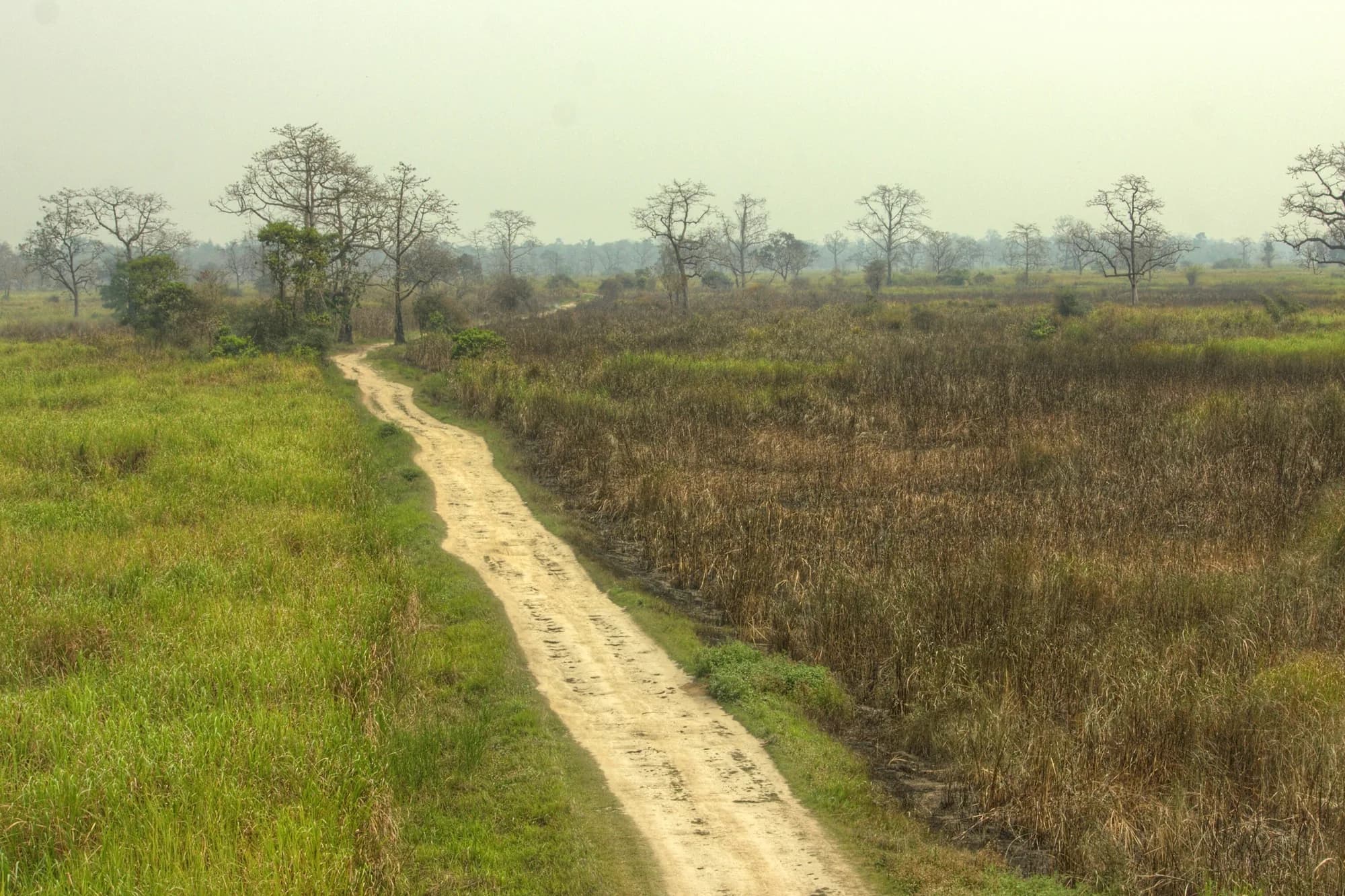
Gir is dry thorn scrub rather than the tall forest people picture, and lions here are often in the open in flat afternoon light — no drama, no chase, a pride asleep under a tree with the indifference of animals that have never had a reason to hide.
The rarest big cat on the list is also the easiest one to watch properly.
Status and protection
Status and protection
- IUCN Red List
- Endangered
- Population trend
- ↓ Decreasing
- Wildlife Protection Act 1972
- Schedule I (post-2022 amendment numbering)
- CITES
- Appendix I
Reported here is the subspecies assessment matching the binomial given: Panthera leo ssp. leo, e.T280668607A280668782, published 2025 (last assessed 5 May 2025; criteria A2a).
Assessed 2025 · IUCN Red List assessment
What to book to see one
What you would be booking
- How it is seen
- Jeep safari on a permit issued by the Gujarat Forest Department, three shifts a day.
- Drives to book
- Four across two days is usually enough. Gir is a smaller and more tractable proposition than the tiger reserves, and the odds are genuinely good.
- Zone or shift
- Routes are allotted by the department at the gate rather than chosen, so there is no zone to compete for — the useful lever is the number of permits, not which one.
Permits go on sale online well in advance and the season runs roughly mid-October to mid-June; the park closes for the monsoon. Book the permit before the lodge.
Gir — the park in fullOn the same trip you would also get
- Indian leopard — sharing the same Gir forest, and rarely looked for
- Striped hyena — the same scrub at dusk
- Chinkara — the dry-country gazelle on the same drives
- Sloth bear — in the Gir teak, and almost nobody asks