
🇳🇵 Nepal
What to come to Nepal for
17 animals with a page here are a reason to travel to Nepal — 14 mammals and 2 birds among them. Each one says which of the country's 6 national parks give you the odds, which month, and where it is honestly not worth looking.
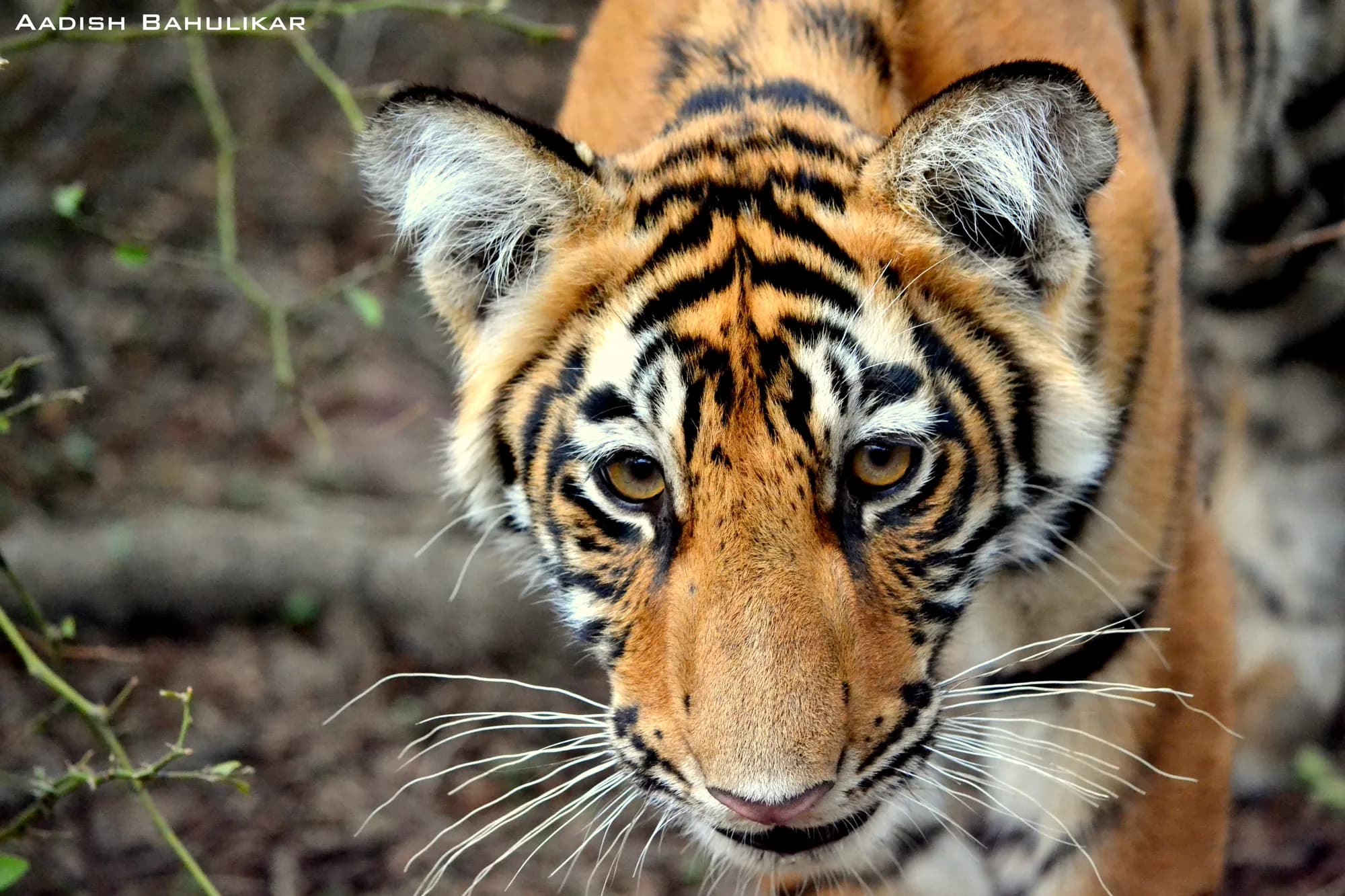 01 · Mammal
Tiger
The animal most people come for, and the one most often missed. Where the odds actually are, and how they move by month and by zone.
58 reserves, six worth the trip
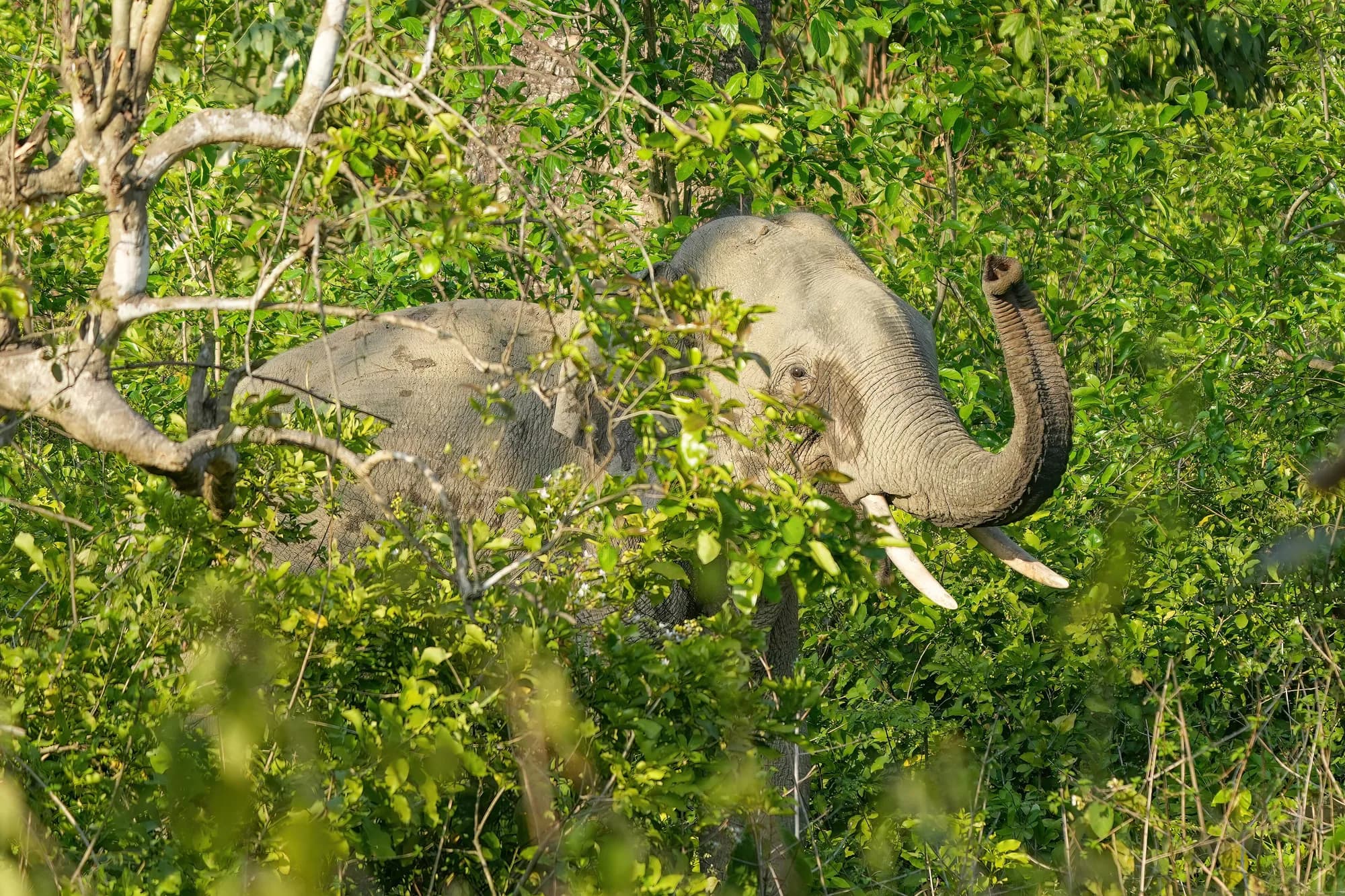 03 · Mammal
Indian elephant
One of the few sightings that is better in a herd than alone. Where the numbers gather, and the three months they are actually there.
Kabini backwaters at dusk
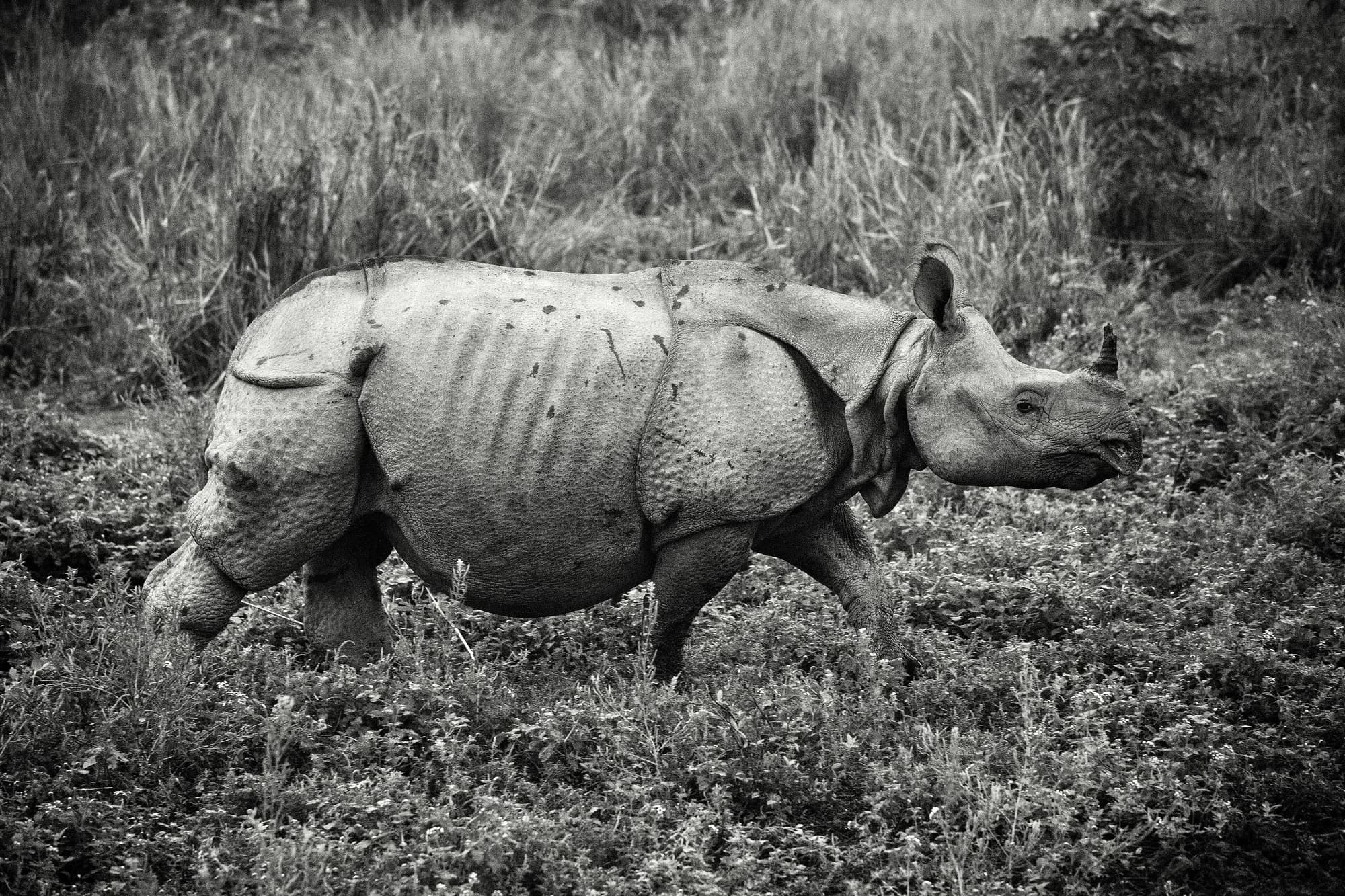 04 · Mammal
One-horned rhino
The easiest large mammal in India to see well. Two-thirds of the world's population stands in open grass, in daylight, in one Assam floodplain.
Assam floodplain, near-certain
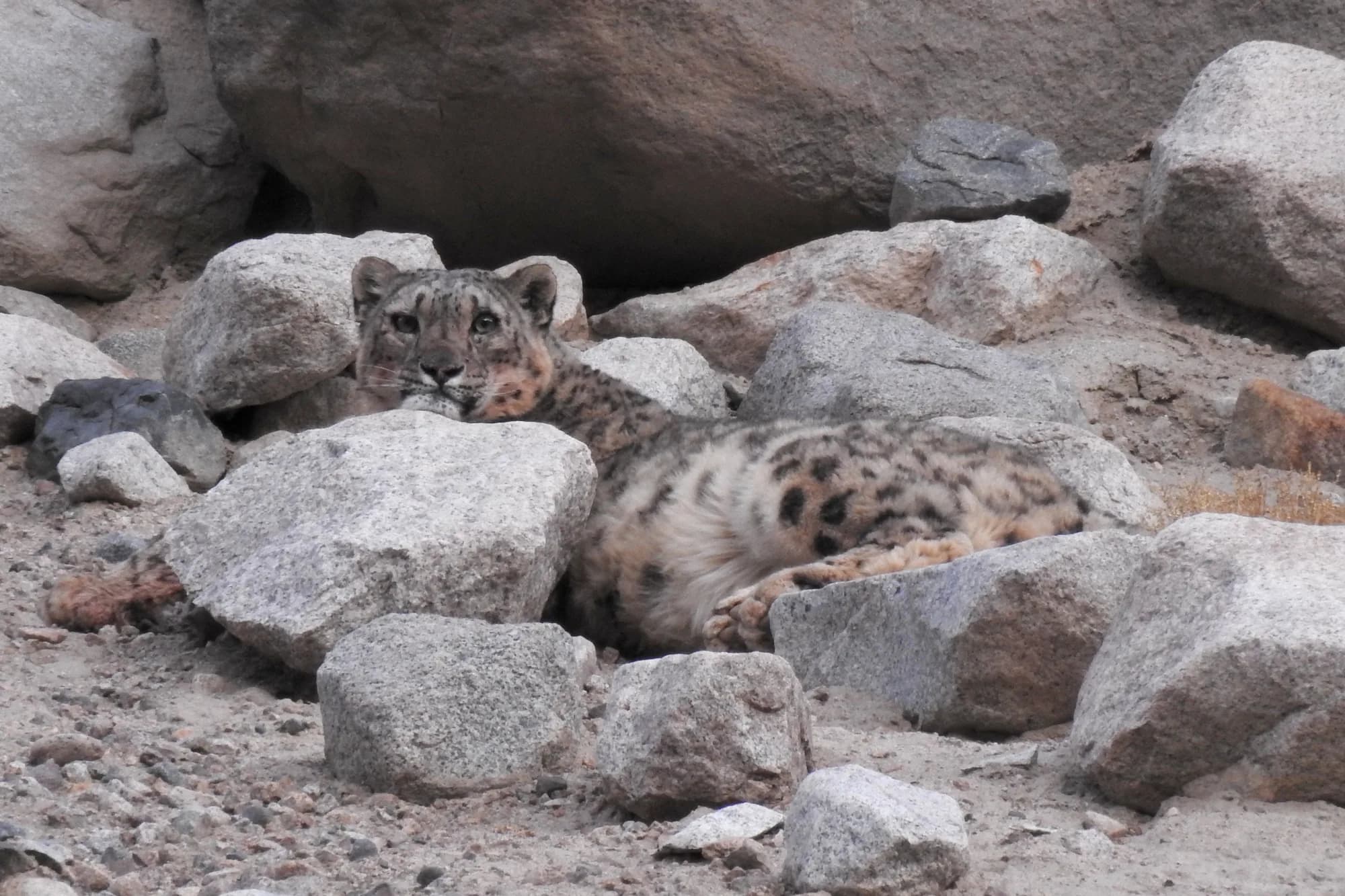 06 · Mammal
Snow leopard
Not a safari. A mountain expedition with a chance of the animal — cold, high, and measured in days of patience rather than in drives.
Ladakh and Spiti, in winter
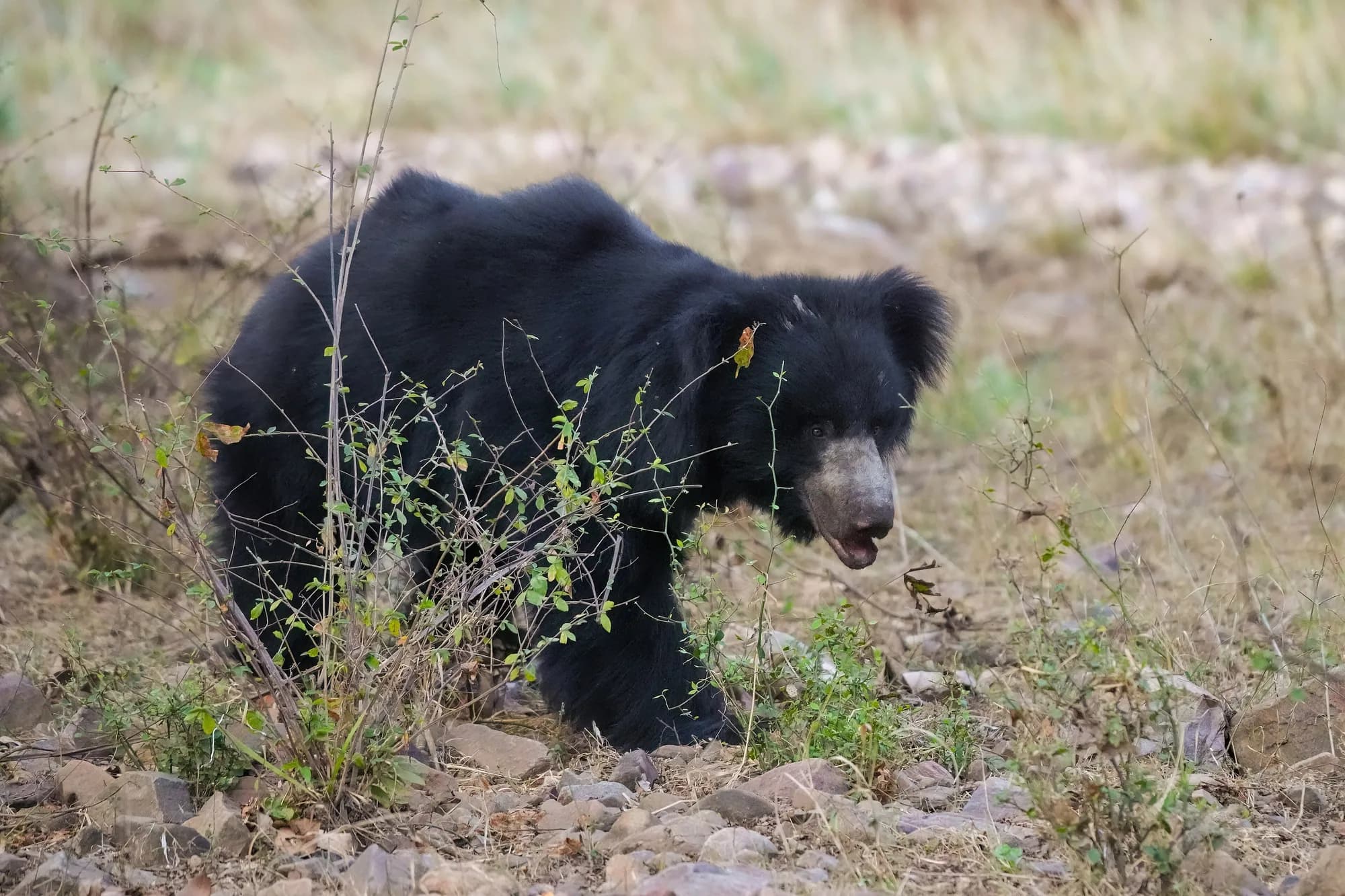 07 · Mammal
Sloth bear
The animal most guides would rather show you than a tiger, and the one most likely to be walked past in the dark. Where the diggings are, and why the odds are better on foot.
Nine reserves, and Satpura above all
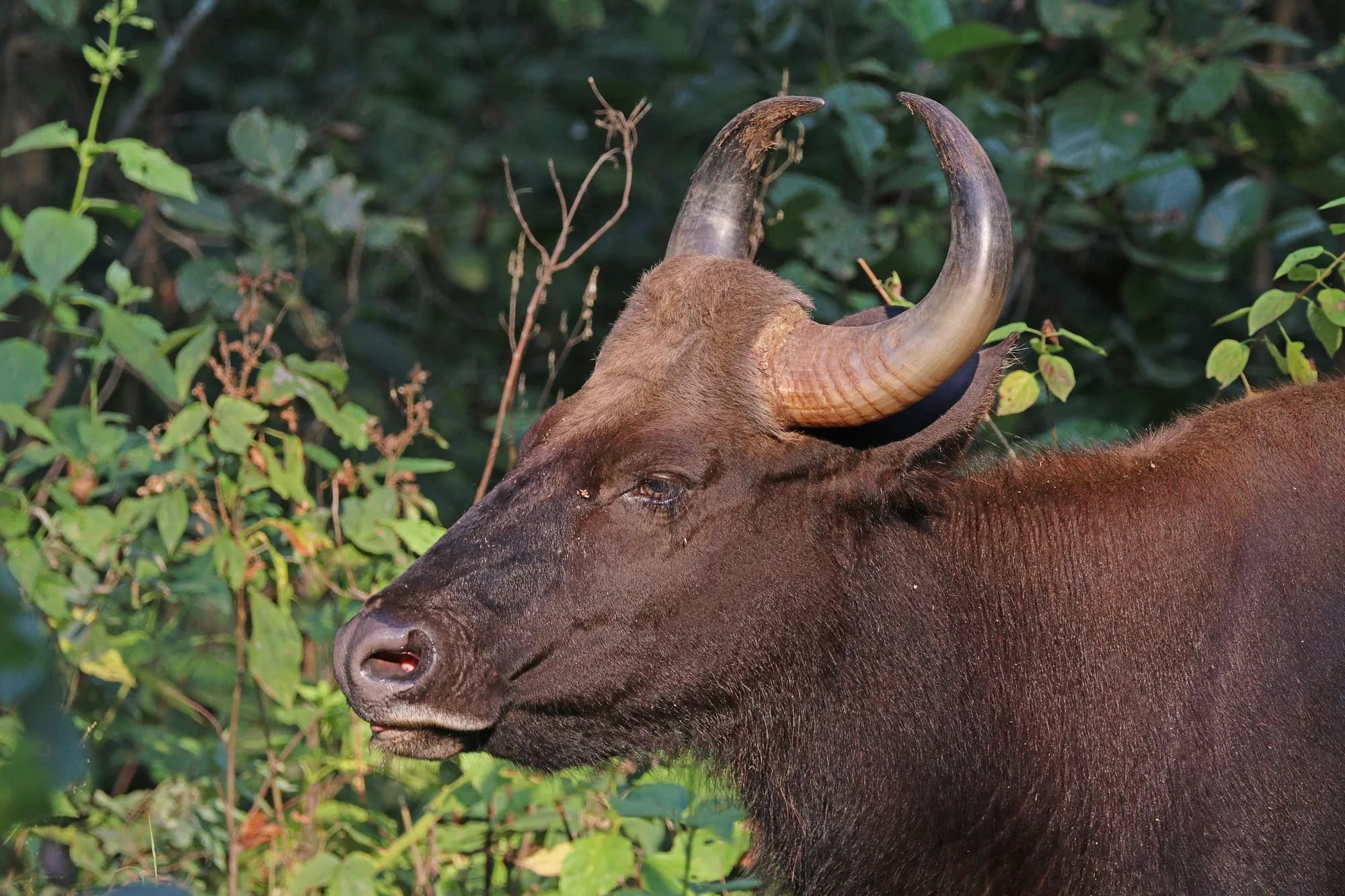 09 · Mammal
Gaur
The largest wild cattle on earth, standing taller at the shoulder than any bison, and routinely dismissed as livestock by people who have travelled a long way to see it.
Six reserves, and it is not a bison
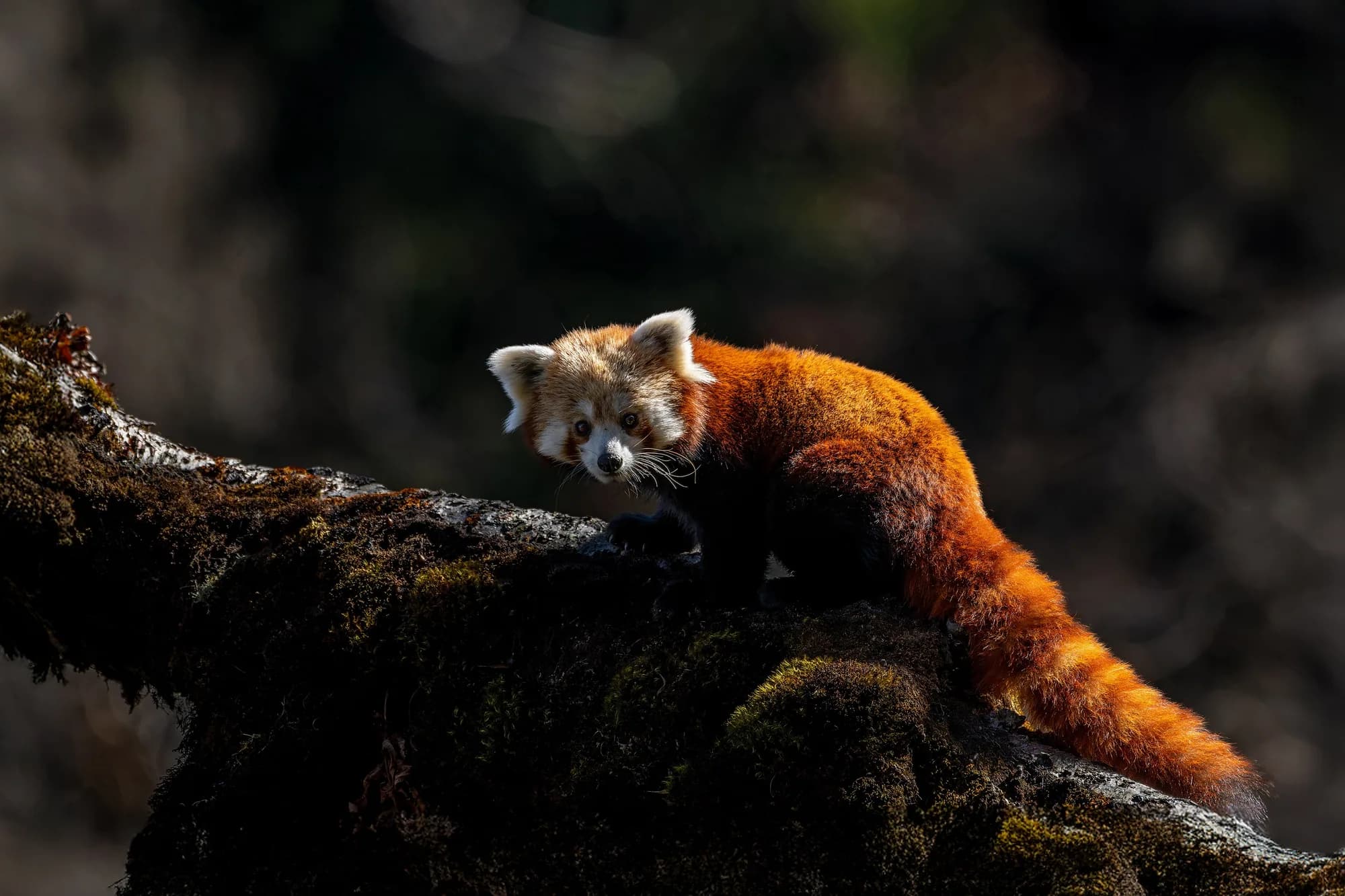 11 · Mammal
Red panda
Enormous recognition, almost no sightings. A bamboo-eating carnivore in cold cloud forest, found by walking a ridge in the wet and looking at the undersides of branches.
Singalila and Sikkim, above 2,400 m
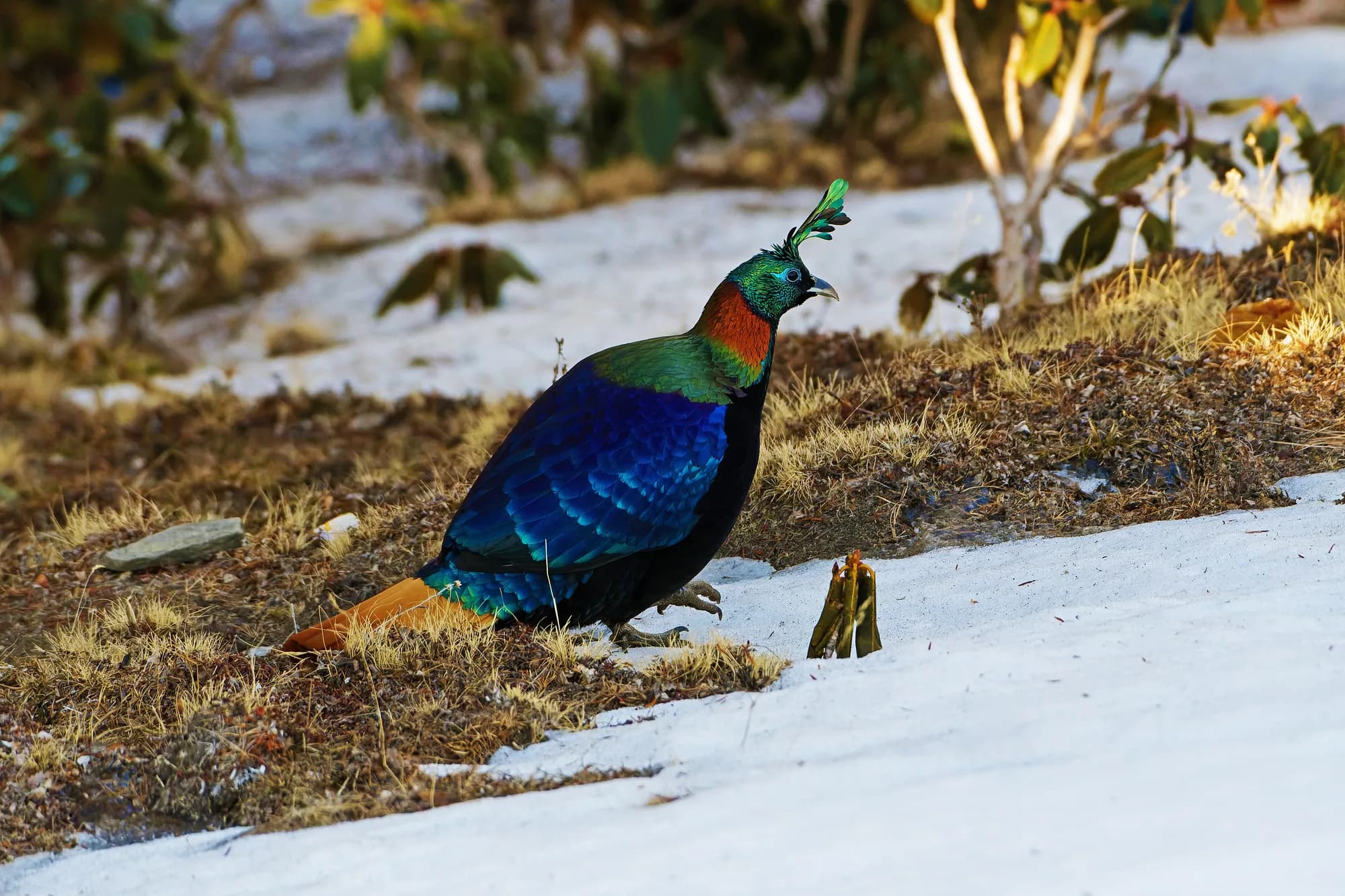 15 · Bird
Himalayan monal
A pheasant that looks like spilled petrol in sunlight, digging for roots on a snowy slope at three thousand metres. The bird international operators build entire Himalayan itineraries around.
Chopta, Tungnath and the high oak
- 16 · Mammal
Ganges river dolphin
A blind dolphin that swims on its side and finds everything by sound, in some of the most crowded river water on earth. India's national aquatic animal, and one most Indians have never seen.
The Ganges, Brahmaputra and Chambal
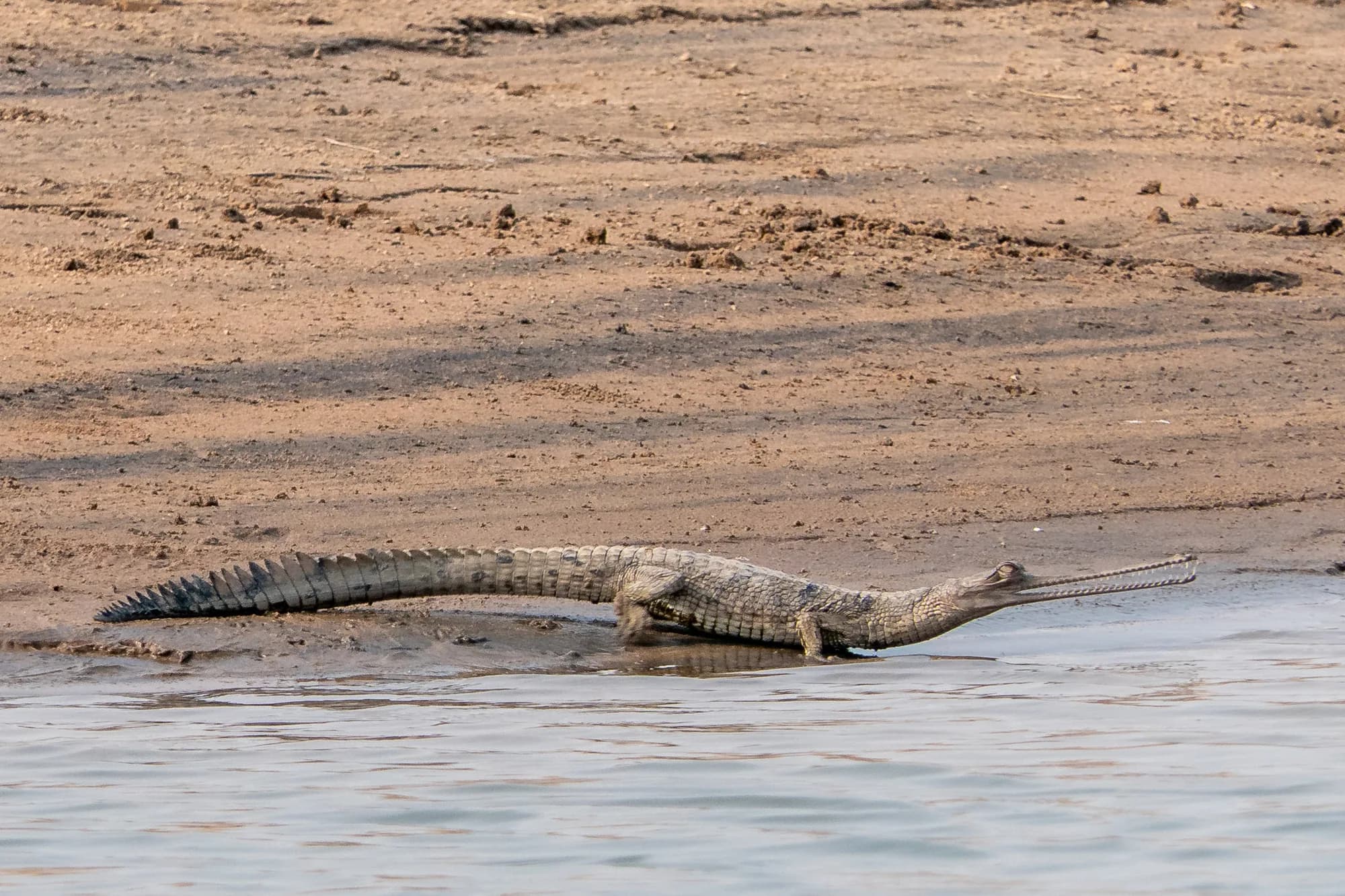 17 · Reptile
Gharial
A fish-eating crocodilian with a snout like a pair of tongs, down to a few hundred breeding adults, and hauled out on Chambal sandbanks in winter in numbers that make it look common.
The Chambal, above all
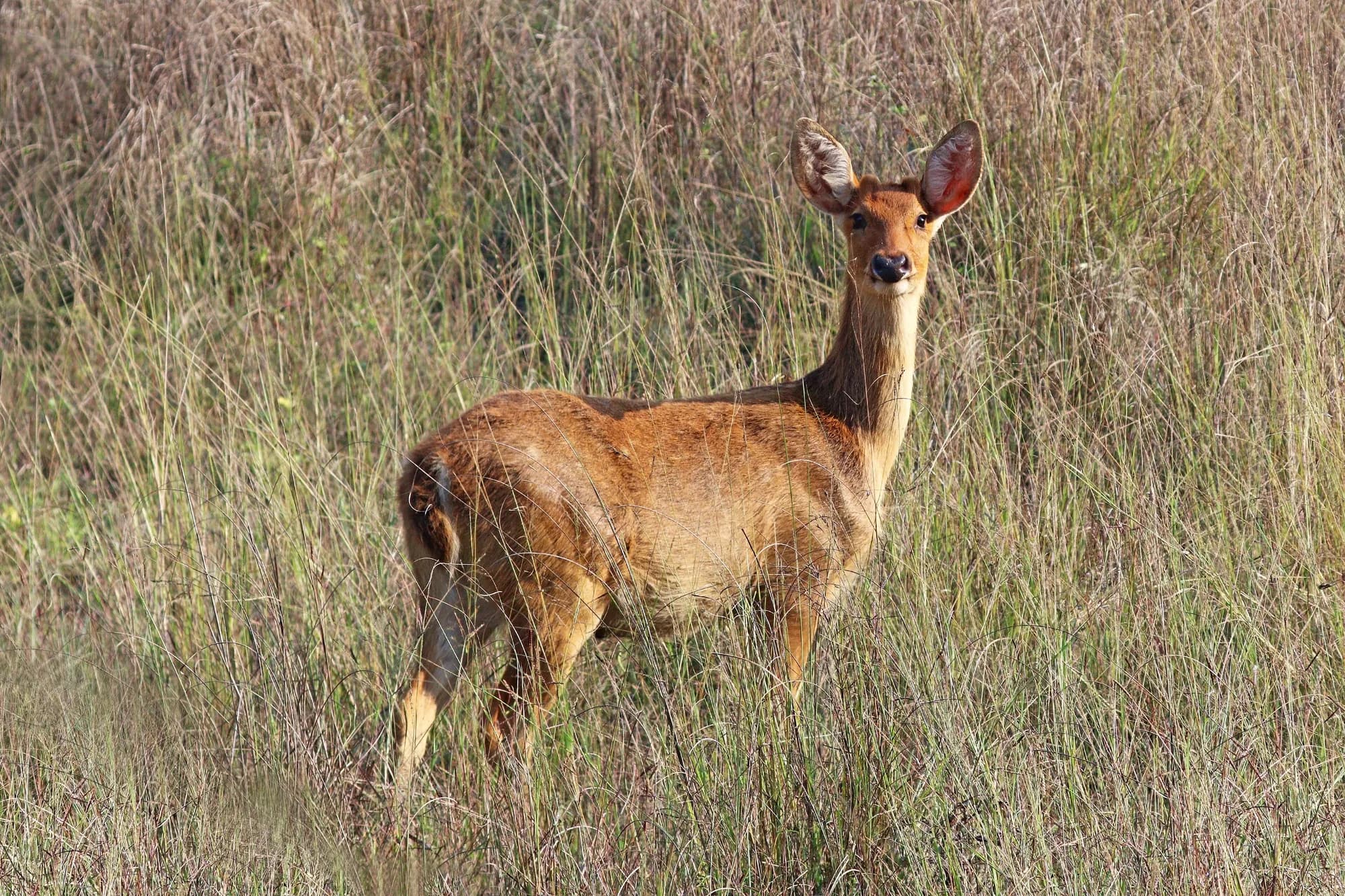 21 · Mammal
Barasingha
The hard-ground swamp deer was down to about sixty-six animals in the early 1970s. It survives in one reserve, and its recovery is the best thing that has happened in an Indian national park.
Kanha, and nowhere else on earth
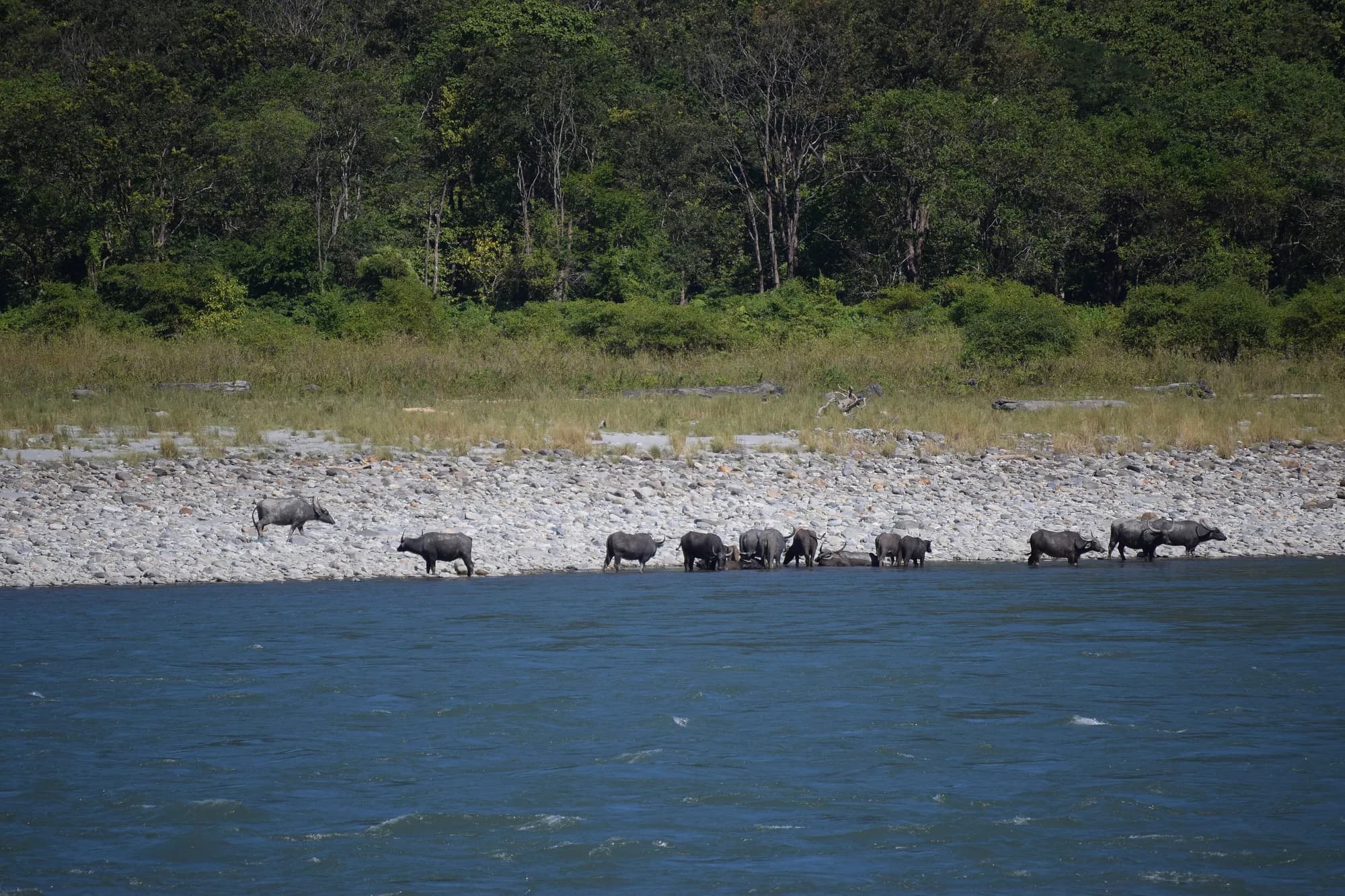 23 · Mammal
Wild water buffalo
The true wild buffalo, carrying the widest horn spread of any living bovid, standing in the same grassland as the rhinos and constantly written off as livestock.
Kaziranga, and the horns settle it
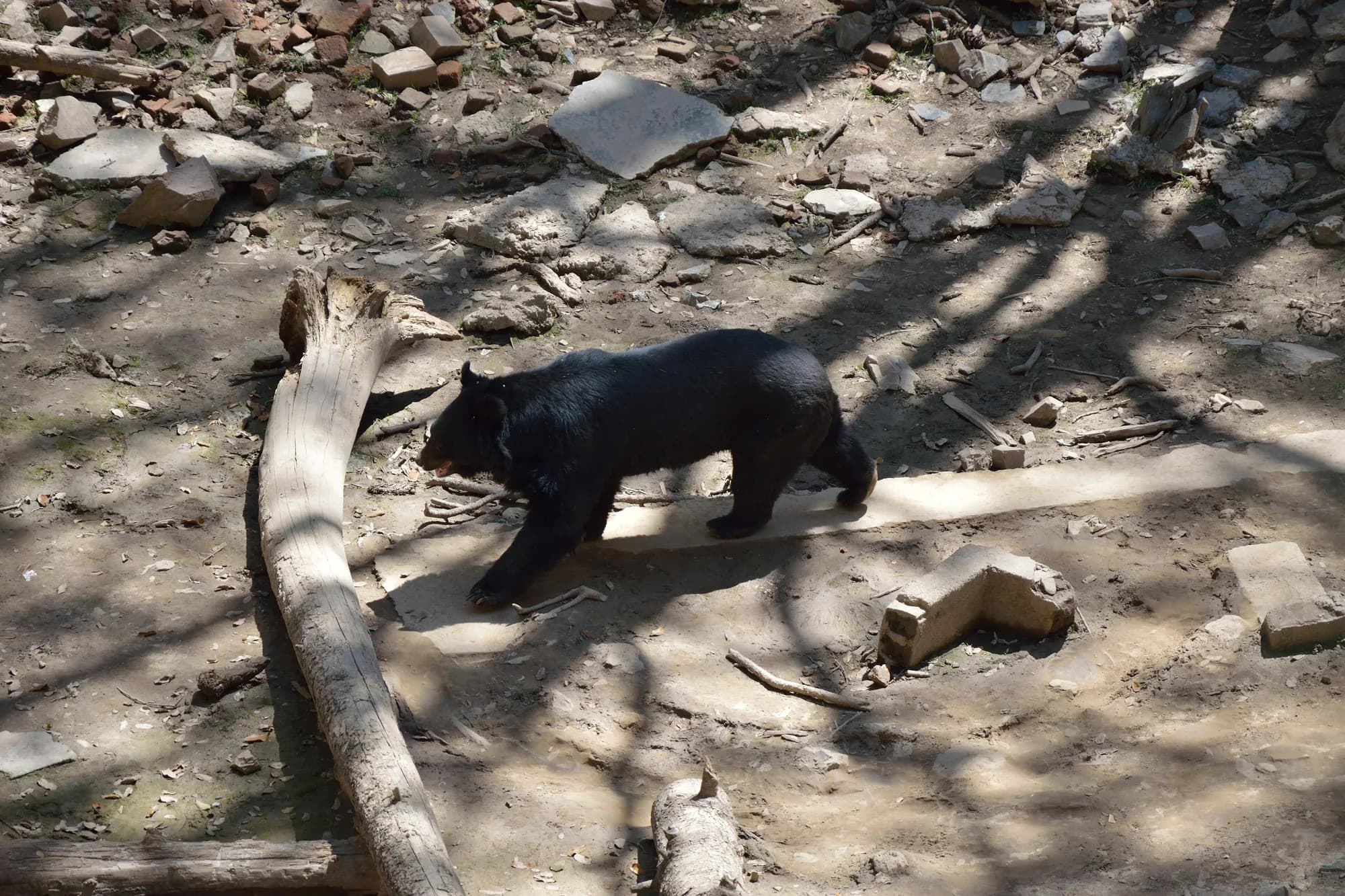 29 · Mammal
Asiatic black bear
The Himalayan bear, black with a white chevron on the chest. It is confused with the sloth bear constantly in trip reports, and the two do not overlap anywhere you are likely to be.
Himalayan oak forest, not the plains
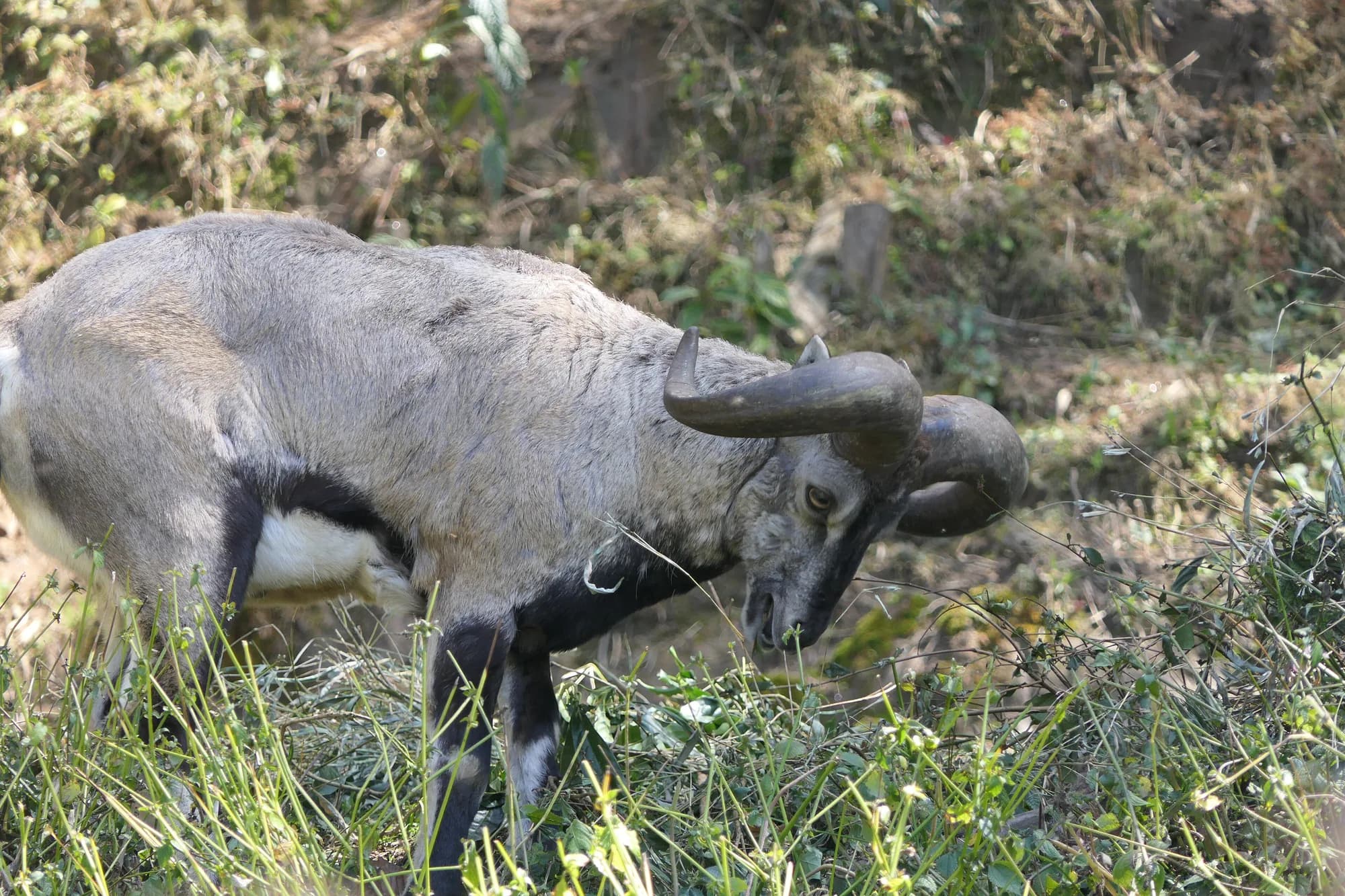 57 · Mammal
Blue sheep
Neither blue nor a sheep, and the animal a snow leopard trip actually revolves around. If you are watching bharal, you are watching the right slope.
Ladakh and Spiti, above the treeline
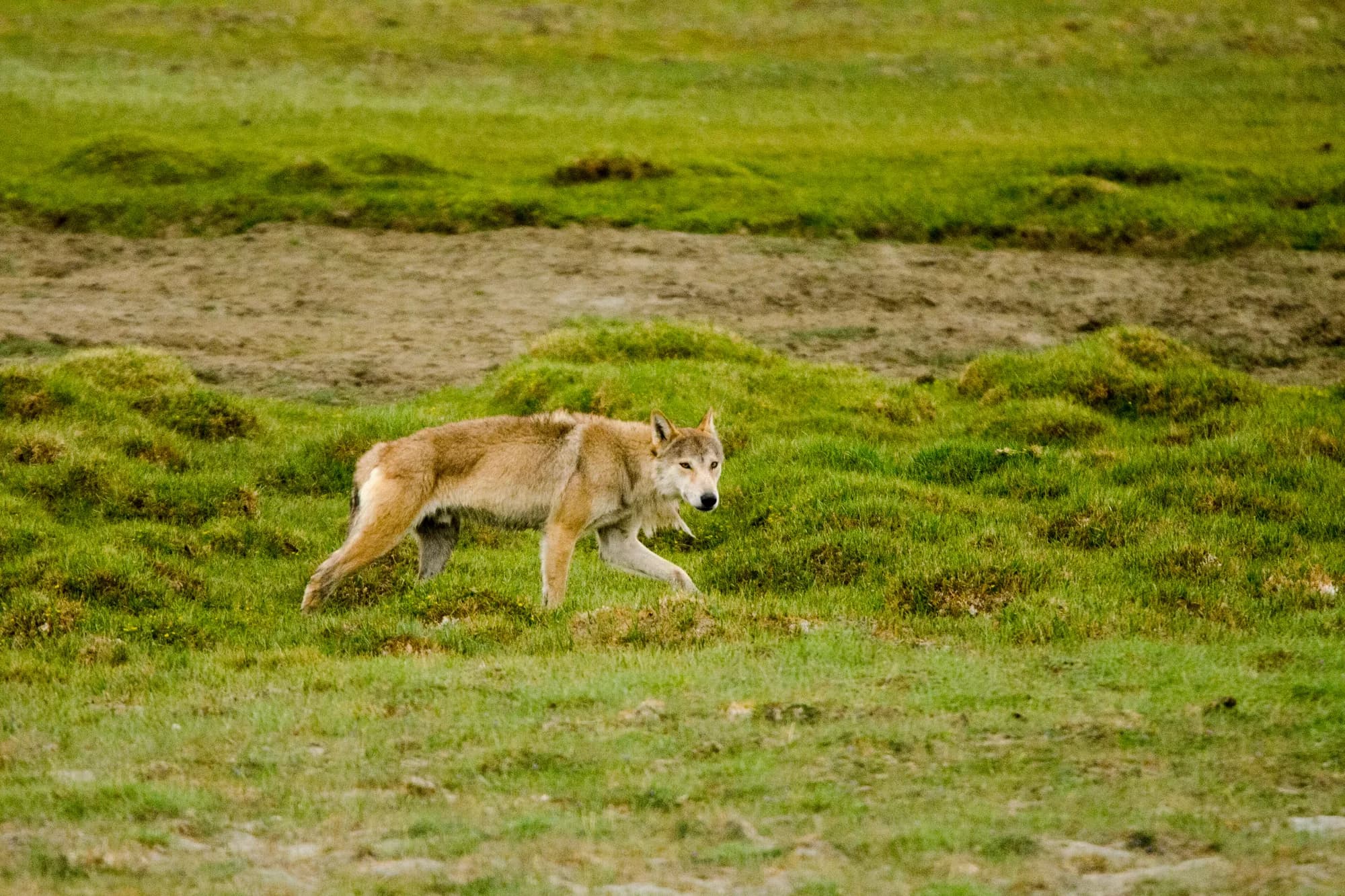 60 · Mammal
Tibetan wolf
The wolf of the high plateau — woolly, pale, and far more often seen on a snow leopard trip than anyone books it for. It is also the most persecuted large carnivore in Ladakh.
Open plateau, crossing at distance
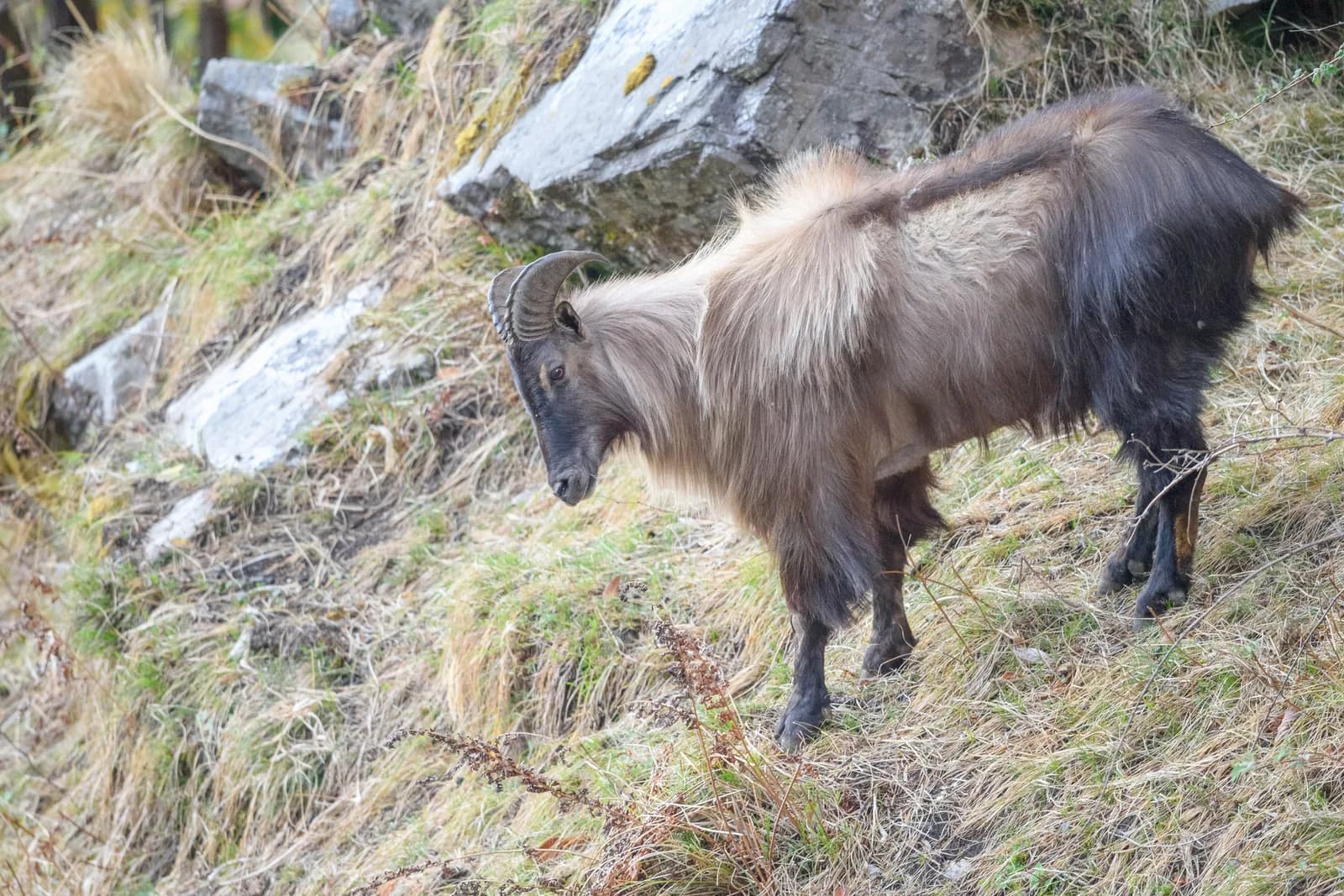 61 · Mammal
Himalayan tahr
A shaggy red-brown goat of the western and central Himalaya, the males maned like something from a bestiary. It shares a name with the Nilgiri tahr and nothing else — they live 2,000 kilometres apart.
Steep forested slopes below the crags
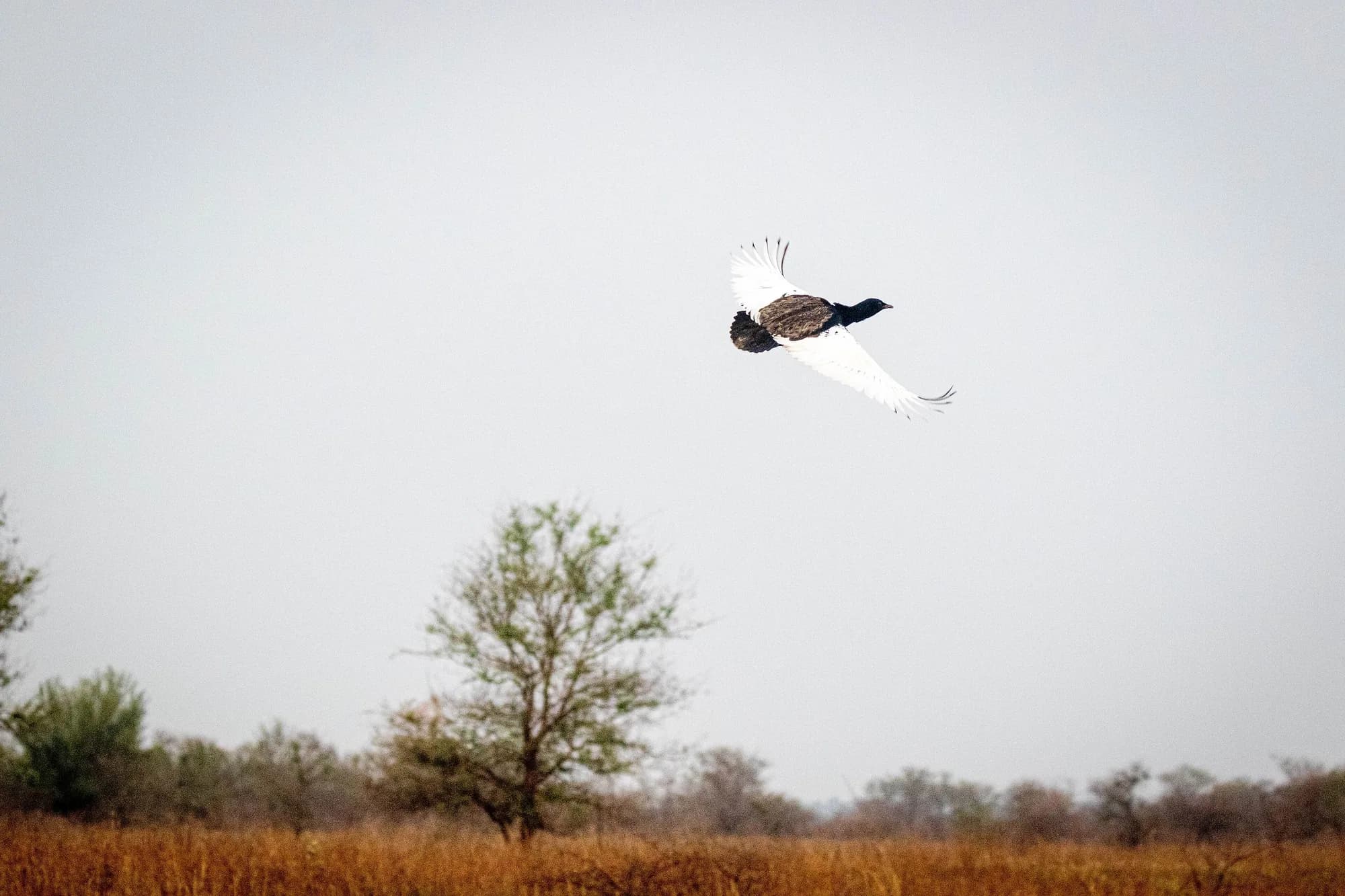 89 · Bird
Bengal florican
One of the rarest birds anyone reading this will realistically see. A few hundred remain in India, almost all of them in a handful of grasslands that are burned and cut on a schedule the bird depends on.
Tall terai grassland, from an elephant
A species is listed here when one of Nepal’s parks is a documented destination for it — not merely because the animal occurs in the country. Several of these animals are found in a dozen countries, so a page will send you elsewhere if elsewhere is better; that is the point of it. Every species page carries its IUCN category with the year it was assessed.