
🇮🇳 India
What to come to India for
100 animals with a page here are a reason to travel to India — 65 mammals and 29 birds among them. Each one says which of the country's 110 national parks give you the odds, which month, and where it is honestly not worth looking.
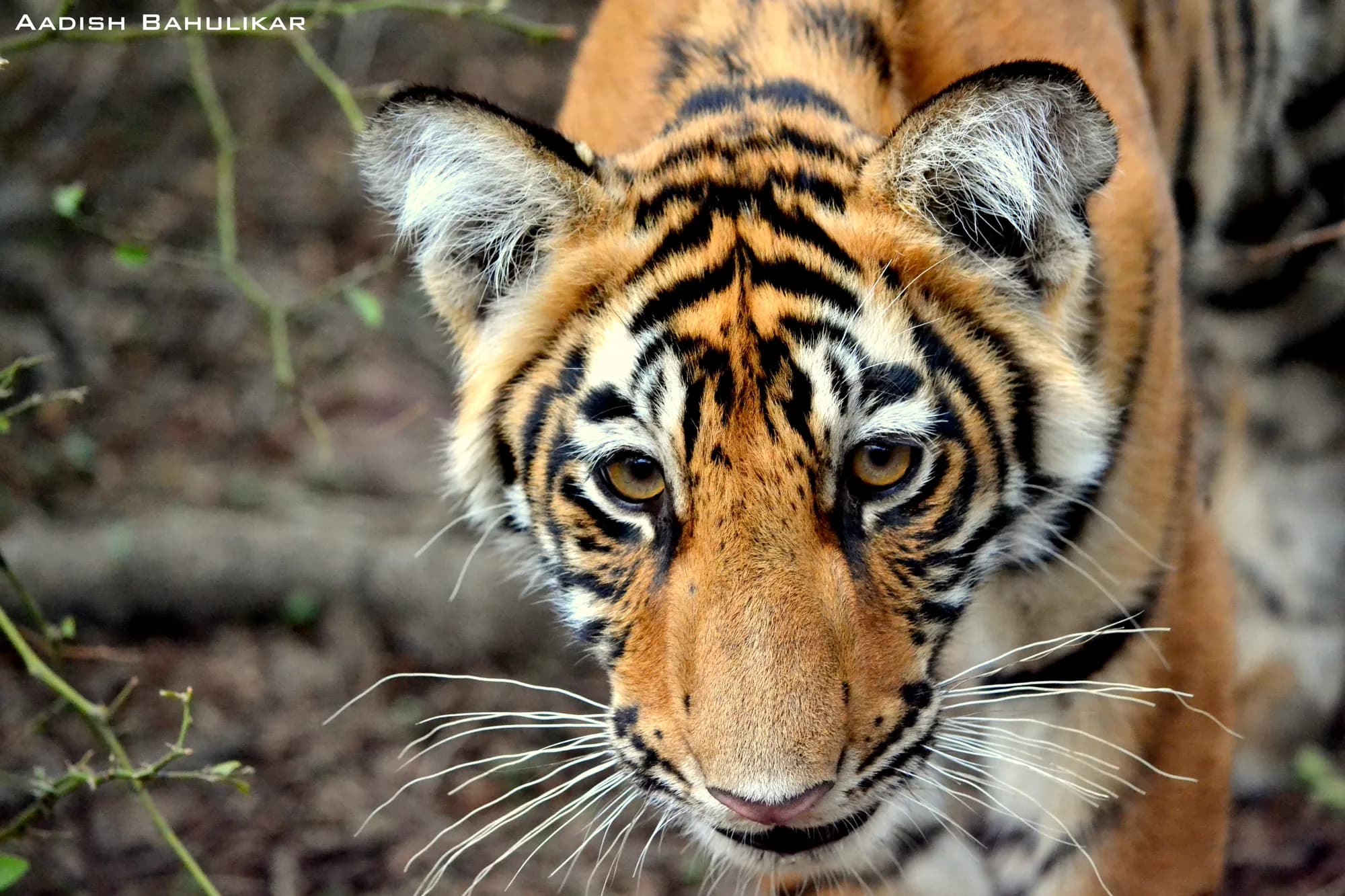 01 · Mammal
Tiger
The animal most people come for, and the one most often missed. Where the odds actually are, and how they move by month and by zone.
58 reserves, six worth the trip
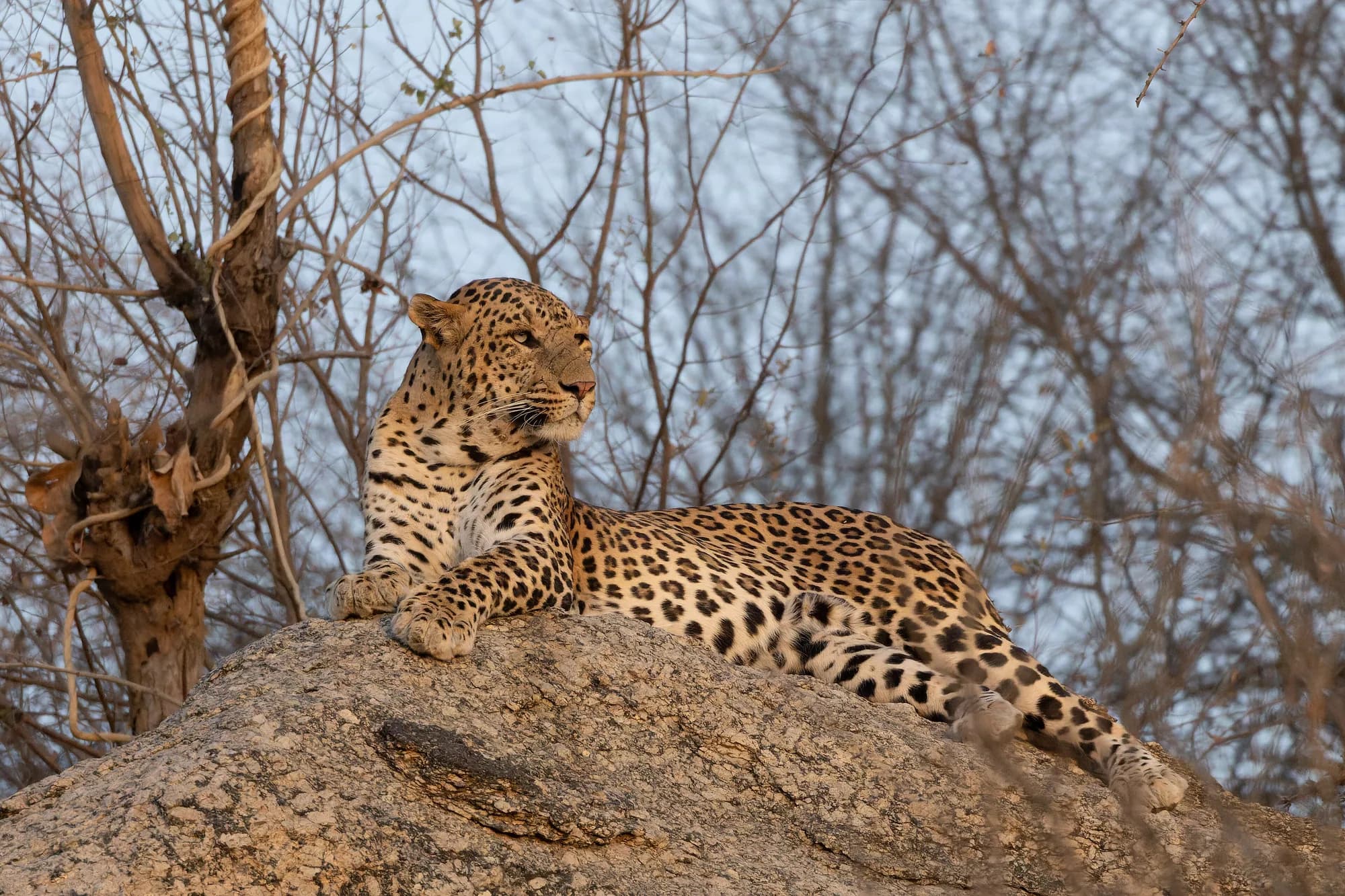 02 · Mammal
Indian leopard
Present in almost every reserve on this site and reliably seen in almost none of them. The two landscapes that change that, and why they do.
Everywhere, and reliably nowhere
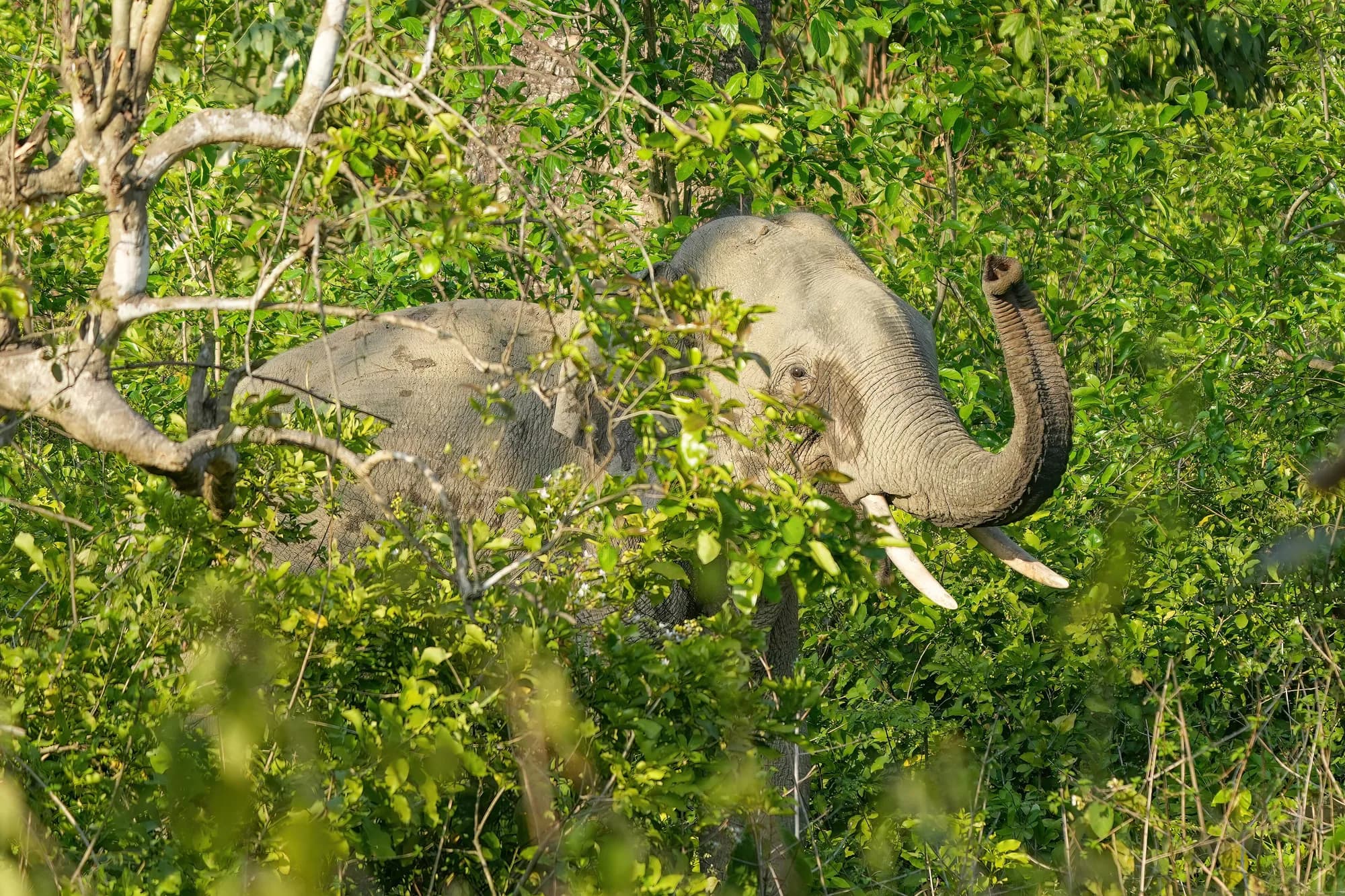 03 · Mammal
Indian elephant
One of the few sightings that is better in a herd than alone. Where the numbers gather, and the three months they are actually there.
Kabini backwaters at dusk
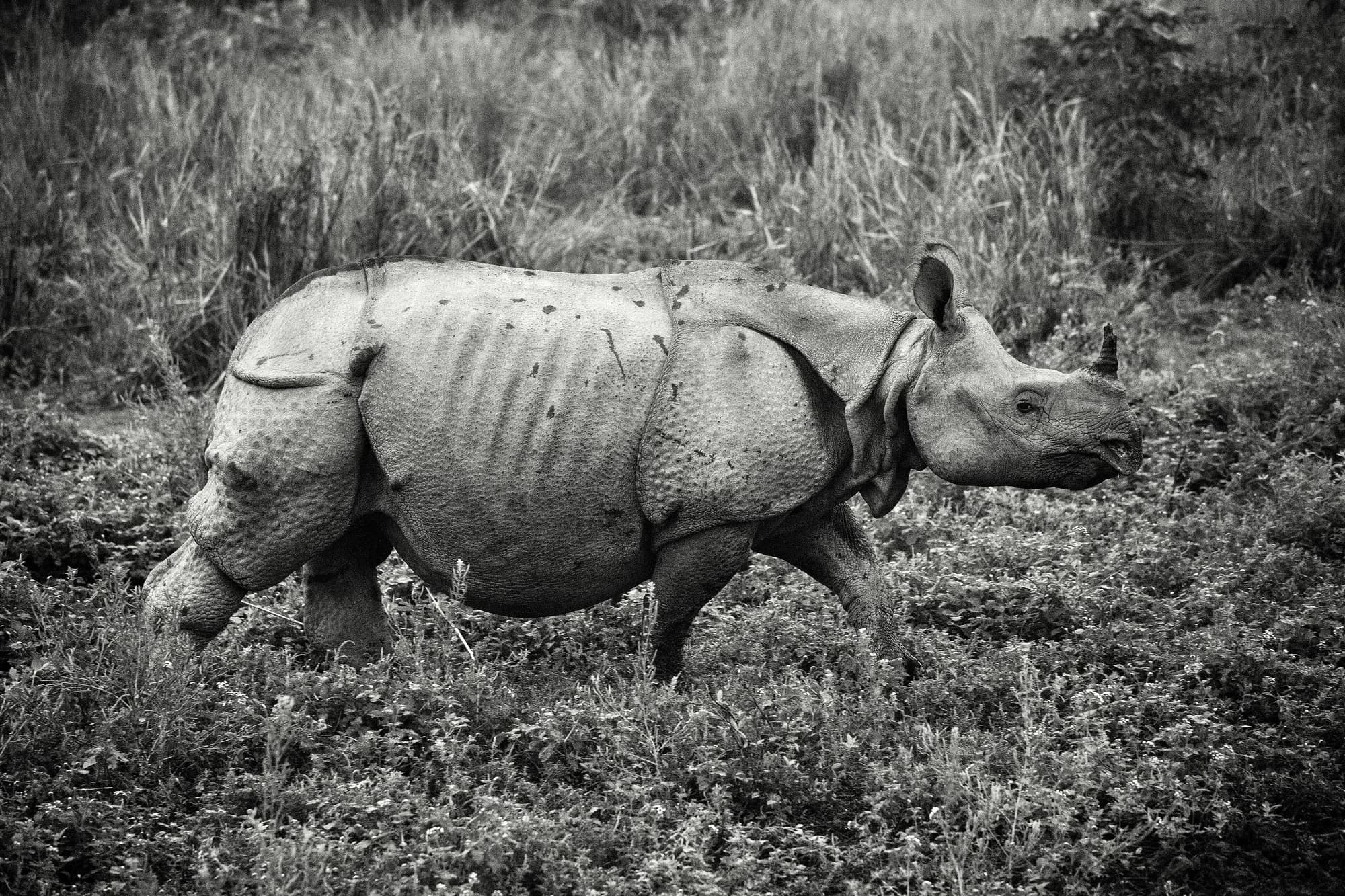 04 · Mammal
One-horned rhino
The easiest large mammal in India to see well. Two-thirds of the world's population stands in open grass, in daylight, in one Assam floodplain.
Assam floodplain, near-certain
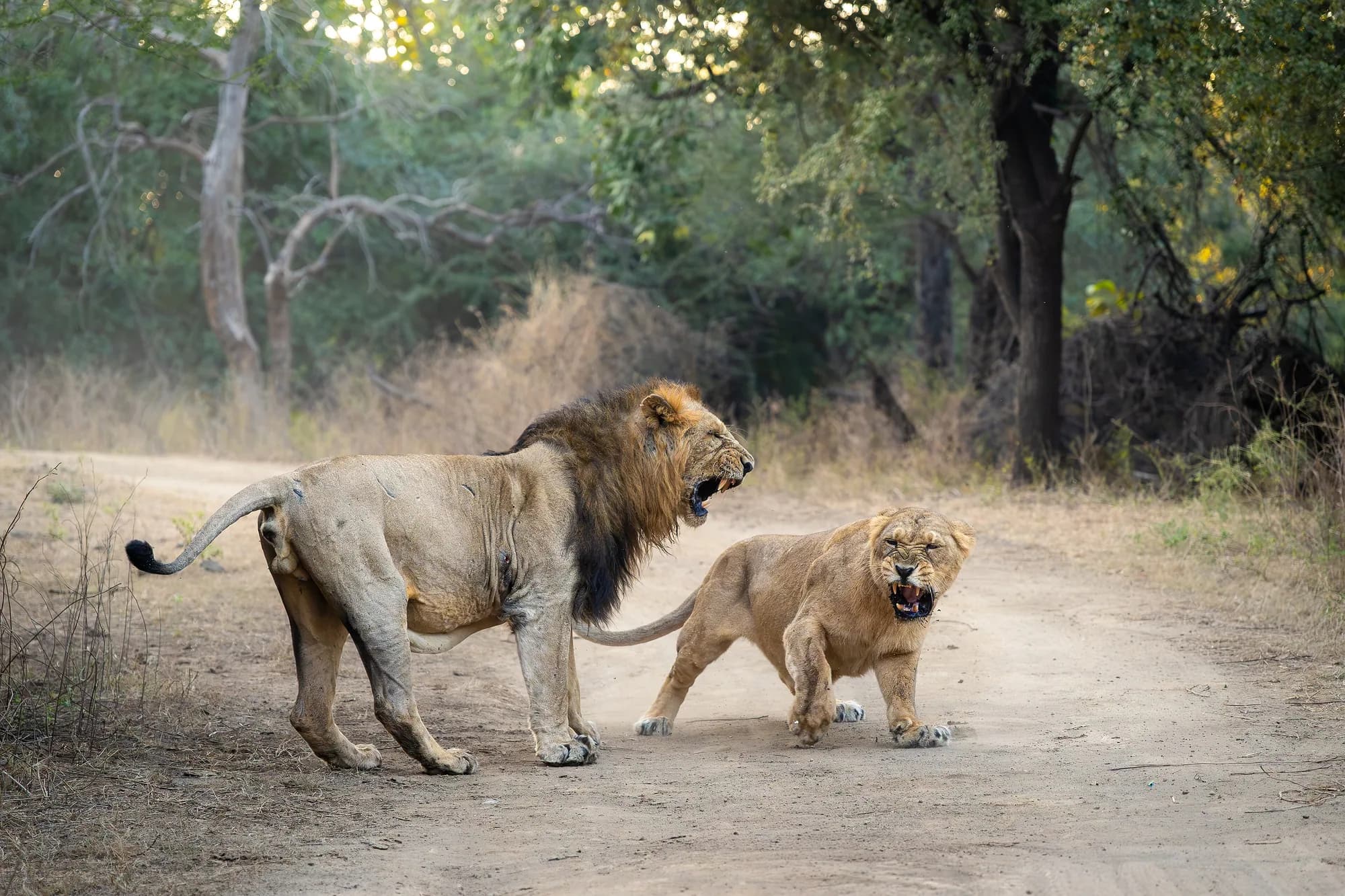 05 · Mammal
Asiatic lion
Every wild Asiatic lion alive lives in one Gujarat forest. What that does to the permits, and why the cool months are the only realistic window.
Gir, and nowhere else on earth
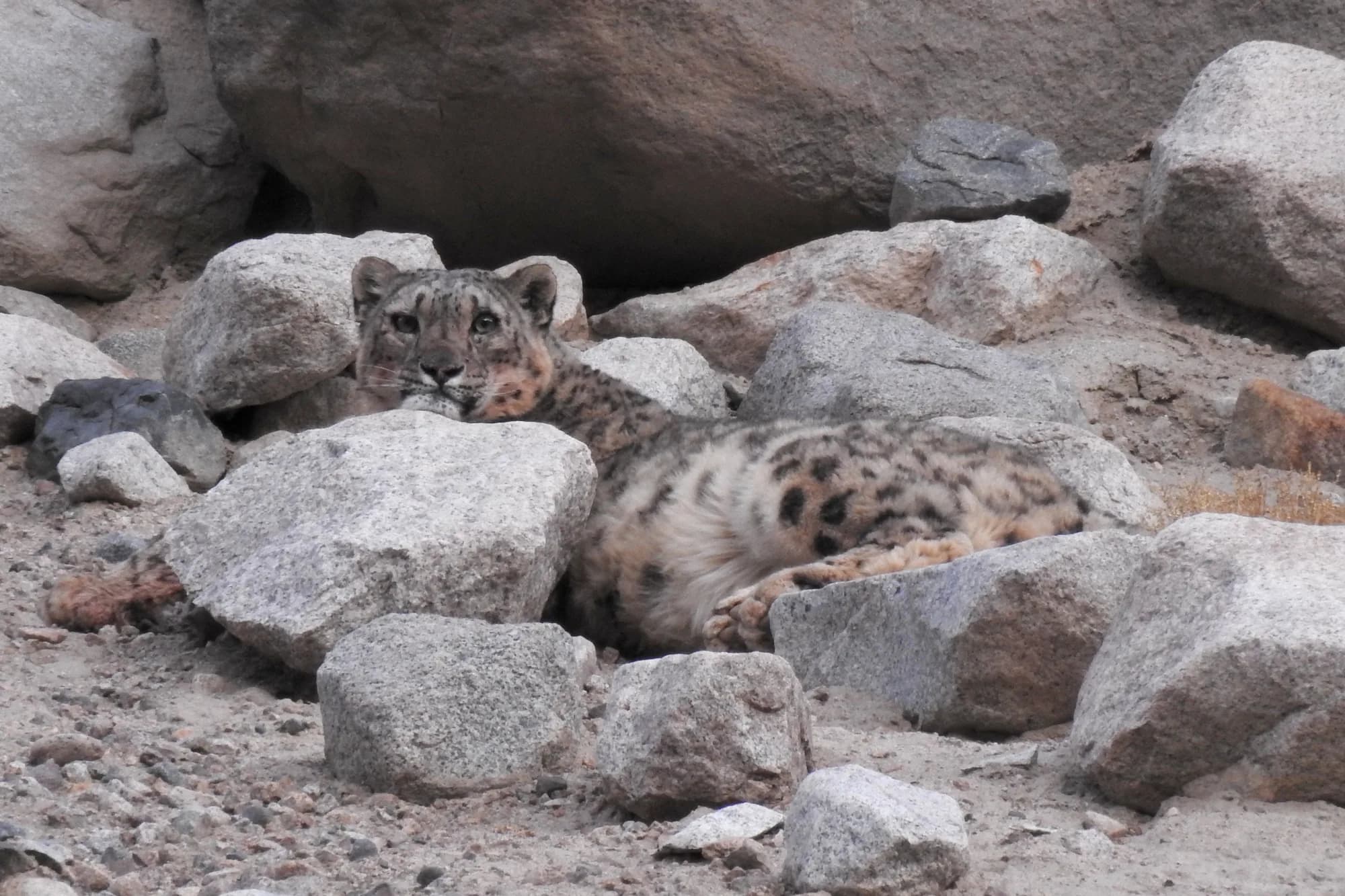 06 · Mammal
Snow leopard
Not a safari. A mountain expedition with a chance of the animal — cold, high, and measured in days of patience rather than in drives.
Ladakh and Spiti, in winter
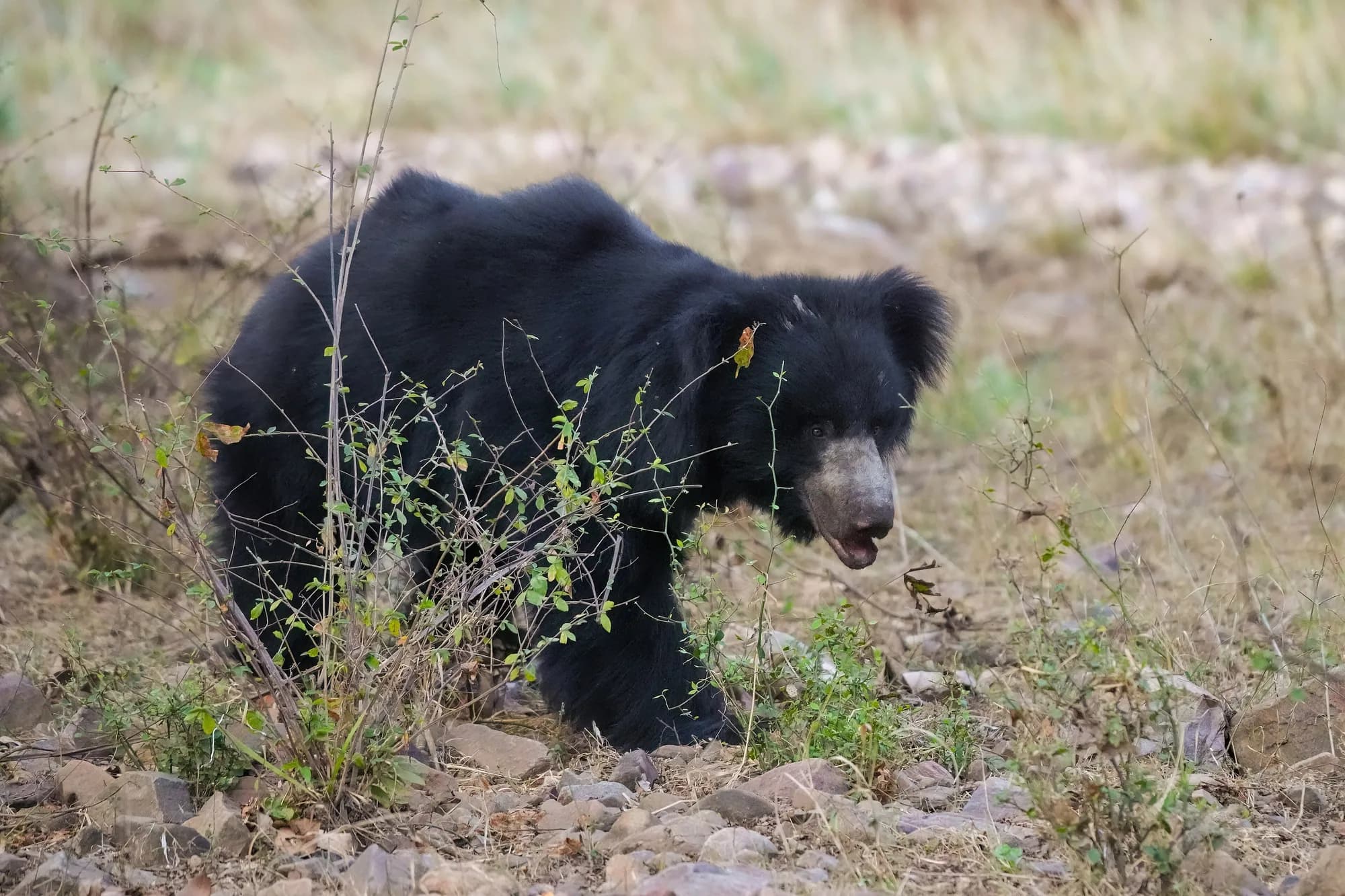 07 · Mammal
Sloth bear
The animal most guides would rather show you than a tiger, and the one most likely to be walked past in the dark. Where the diggings are, and why the odds are better on foot.
Nine reserves, and Satpura above all
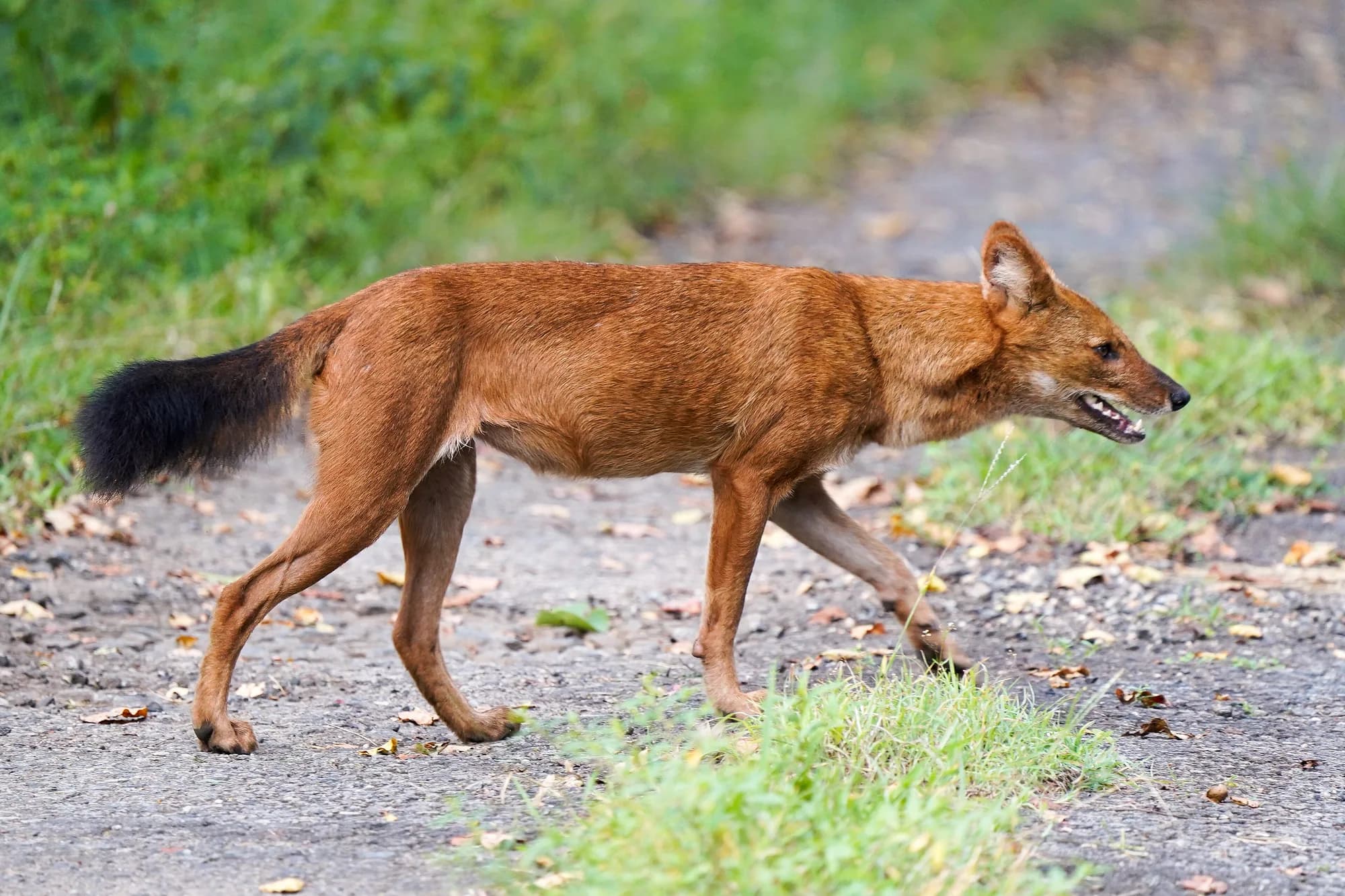 08 · Mammal
Dhole
The Asiatic wild dog hunts in the open, in the morning, in packs. Which makes a dhole sighting the best thing that can happen on an Indian drive, and the one nobody books for.
Six reserves, and it hunts in daylight
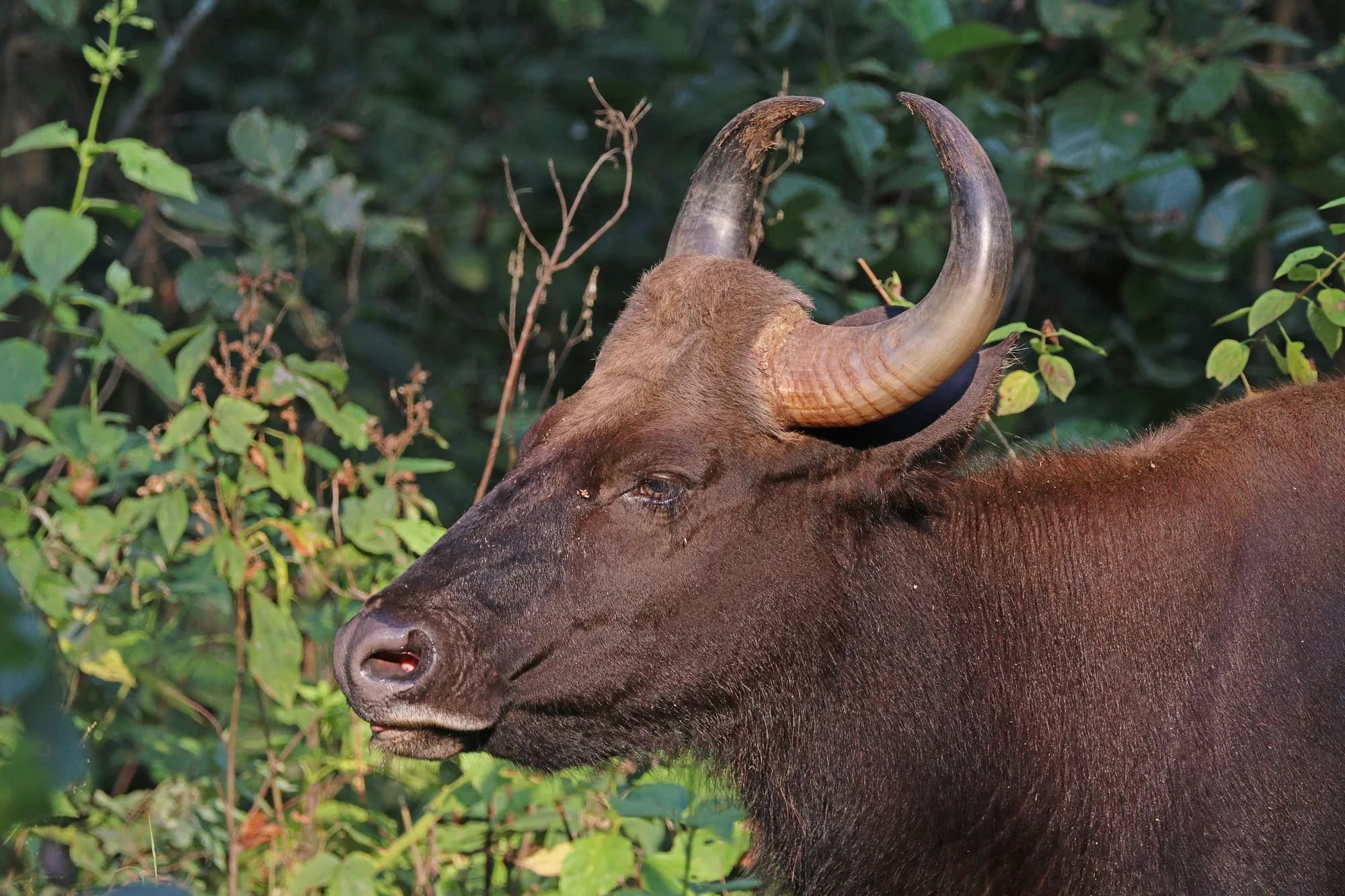 09 · Mammal
Gaur
The largest wild cattle on earth, standing taller at the shoulder than any bison, and routinely dismissed as livestock by people who have travelled a long way to see it.
Six reserves, and it is not a bison
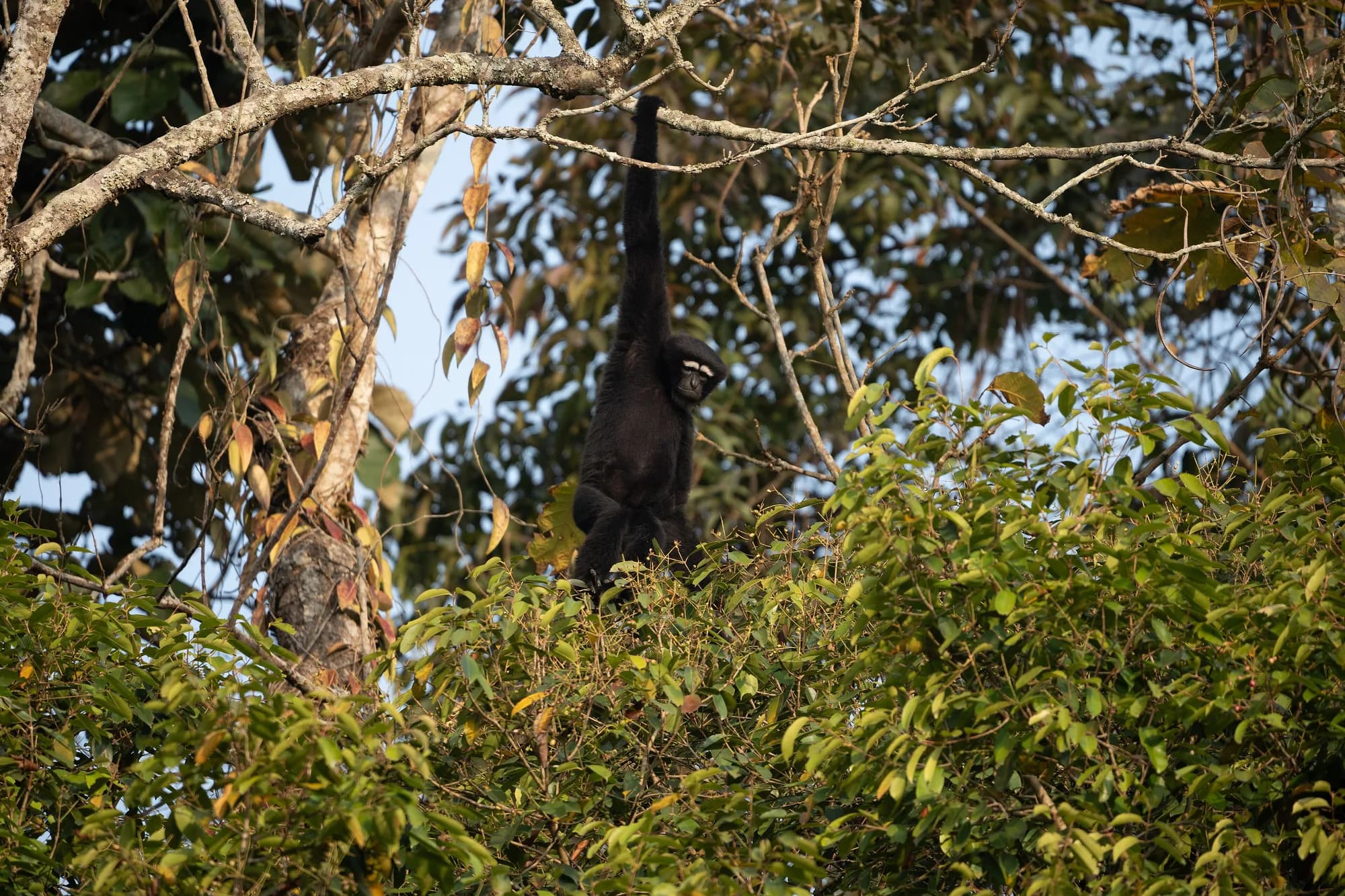 10 · Mammal
Western hoolock gibbon
The only ape in India, in a forest island surrounded by tea. You will hear the pair duet across a kilometre of canopy before you have any idea where to look.
Assam, and India's only ape
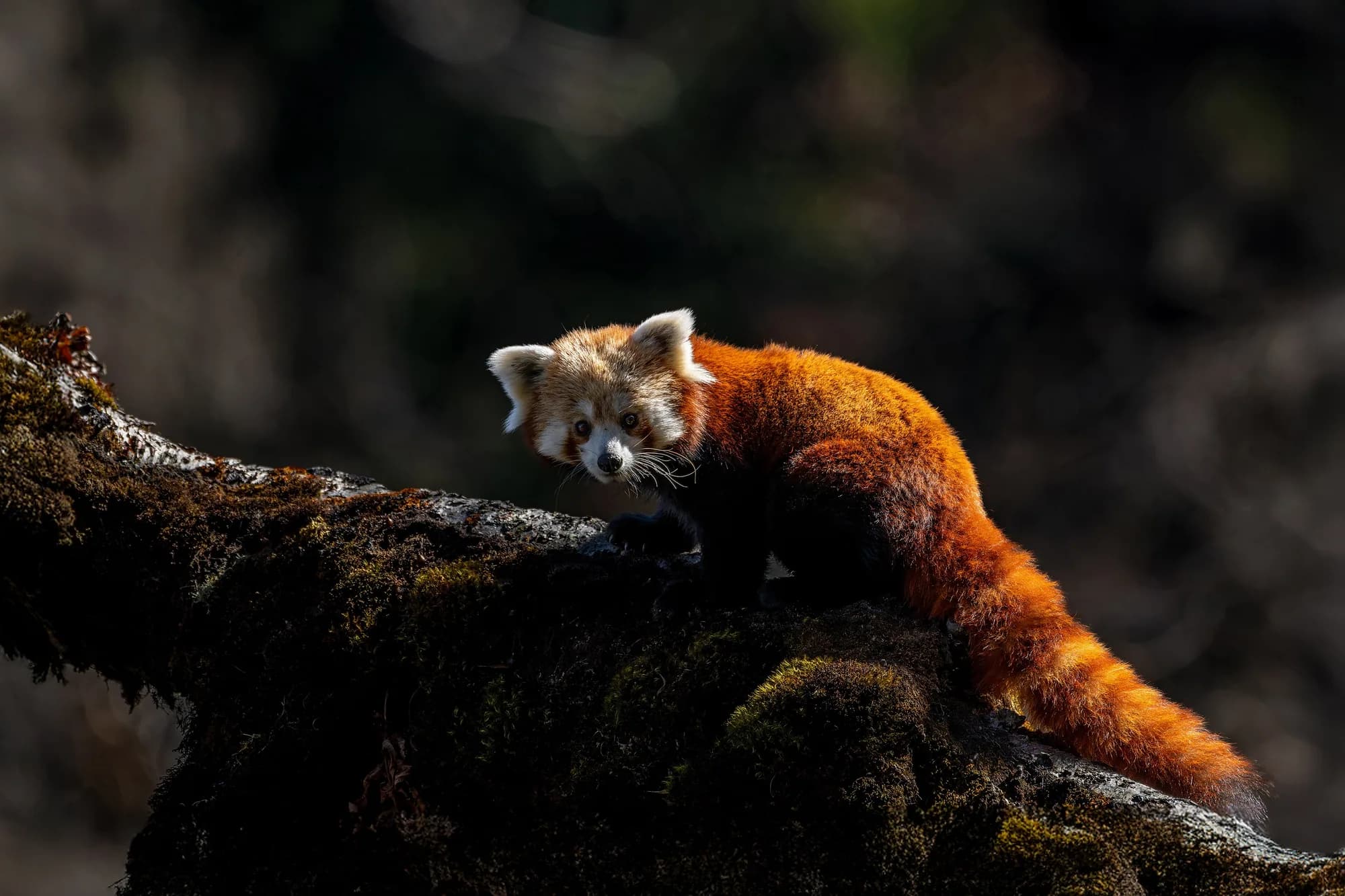 11 · Mammal
Red panda
Enormous recognition, almost no sightings. A bamboo-eating carnivore in cold cloud forest, found by walking a ridge in the wet and looking at the undersides of branches.
Singalila and Sikkim, above 2,400 m
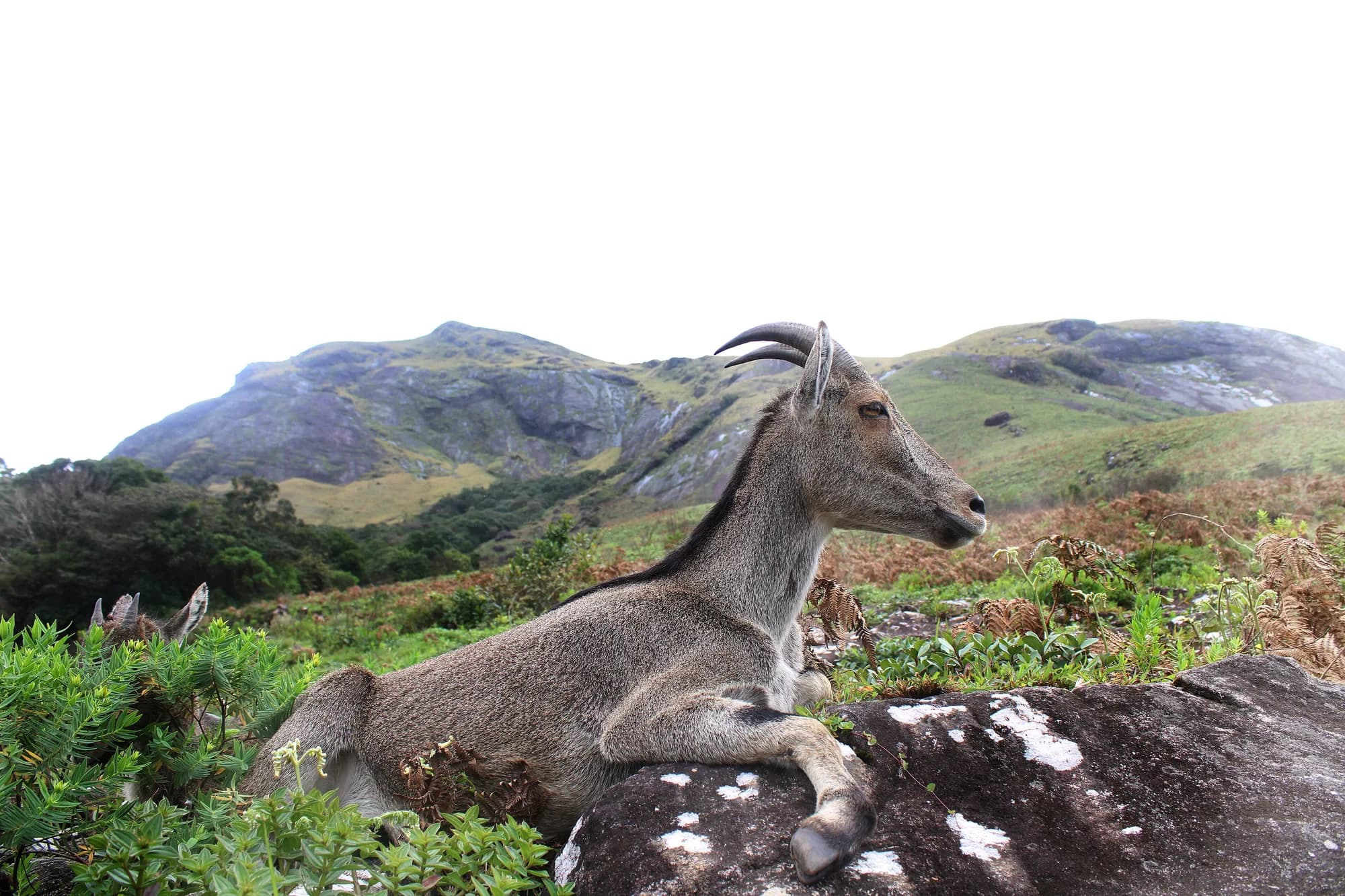 12 · Mammal
Nilgiri tahr
A wild goat on cliff grassland above two thousand metres, endemic to the Western Ghats, and the one endangered Indian endemic you can more or less count on seeing.
Eravikulam, and the high Ghats grasslands
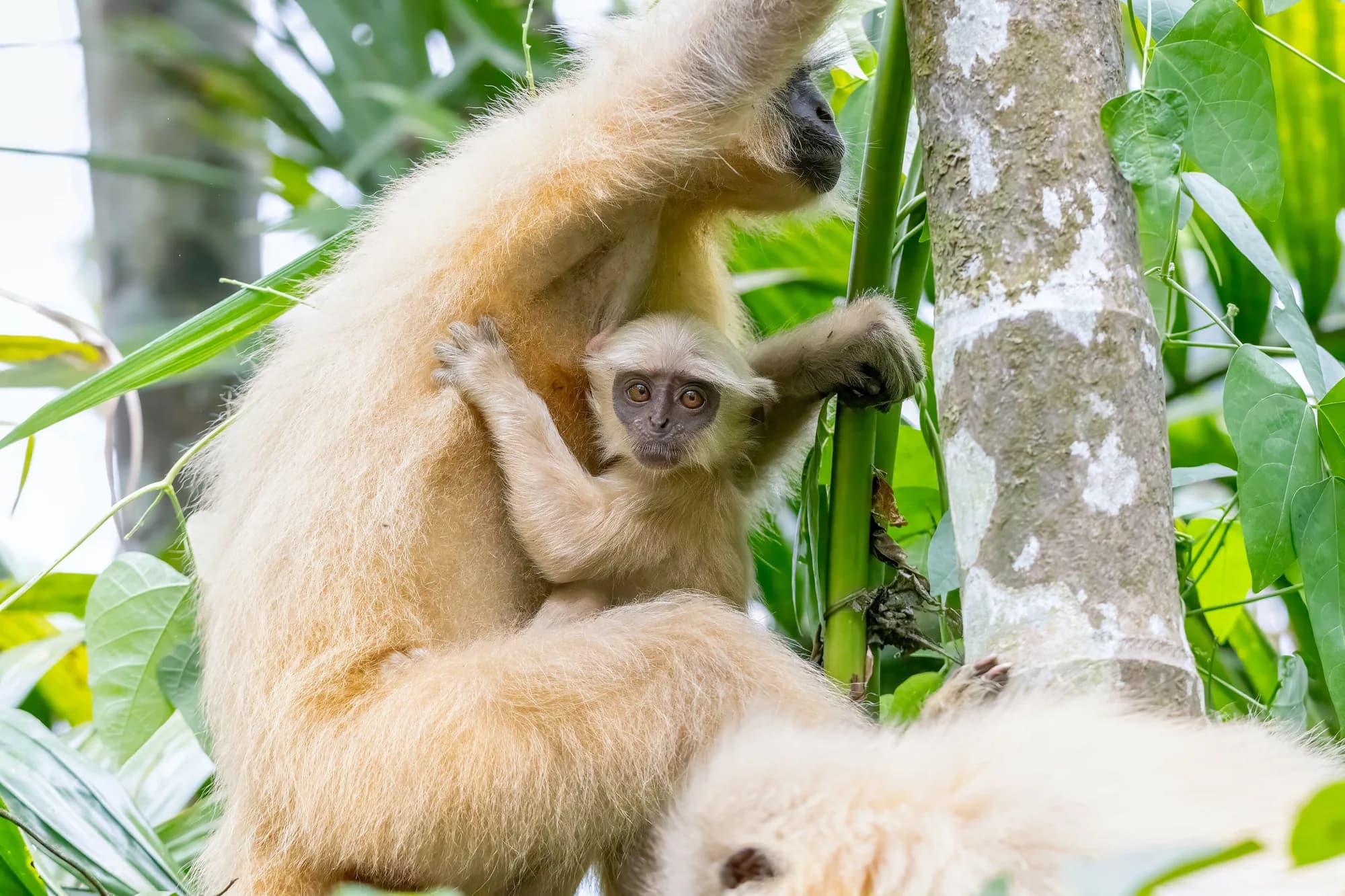 13 · Mammal
Gee's golden langur
A cream-and-gold monkey living in a wedge of forest between two Assamese rivers and the Bhutan border. Unmistakable, findable, and almost entirely absent from Indian safari itineraries.
Between two rivers, and nowhere else
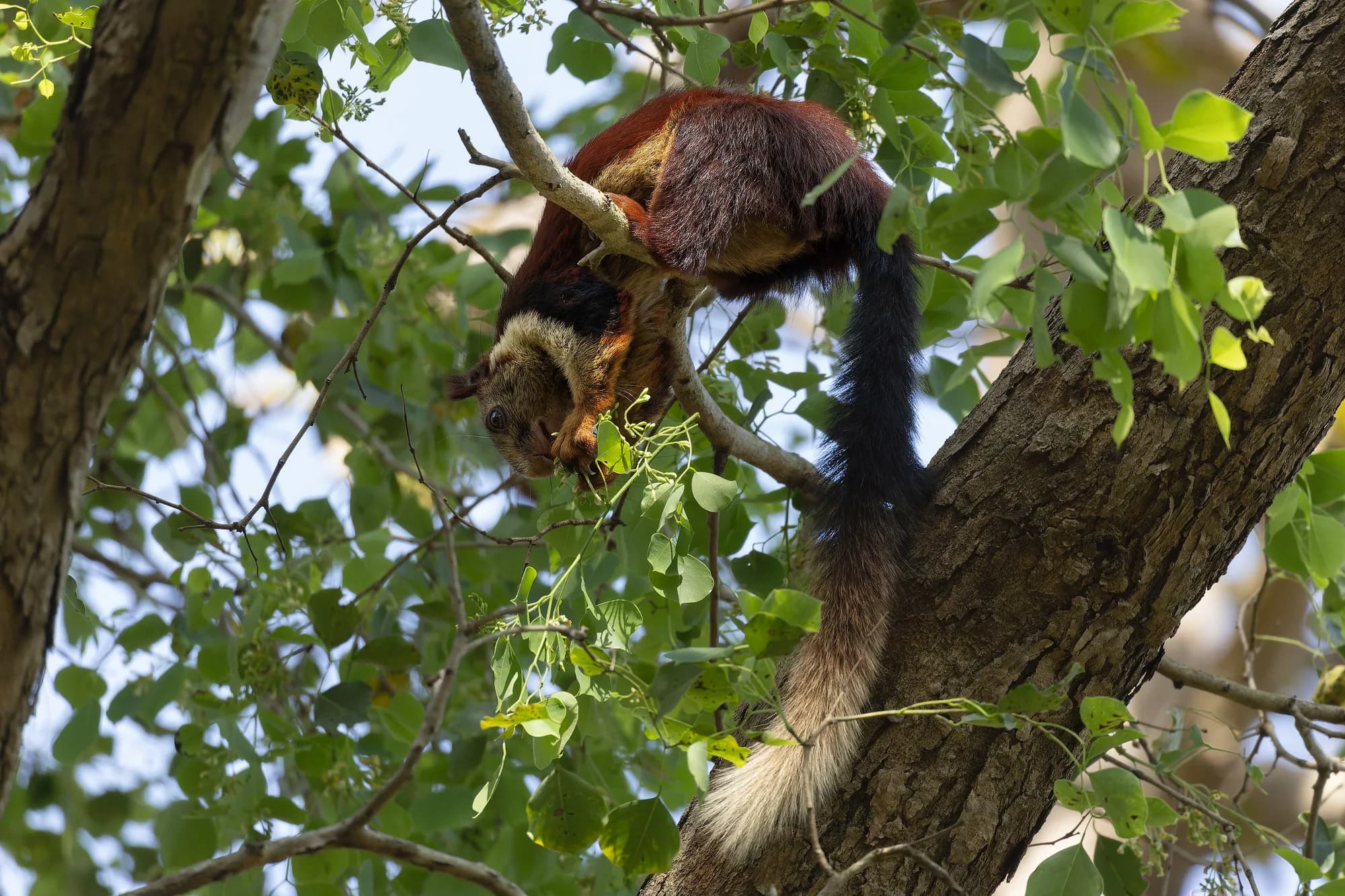 14 · Mammal
Indian giant squirrel
A squirrel the length of your arm, in maroon and cream, that leaps six metres between trees. The animal that most reliably delights people who came for a tiger and did not get one.
Six reserves, and always overhead
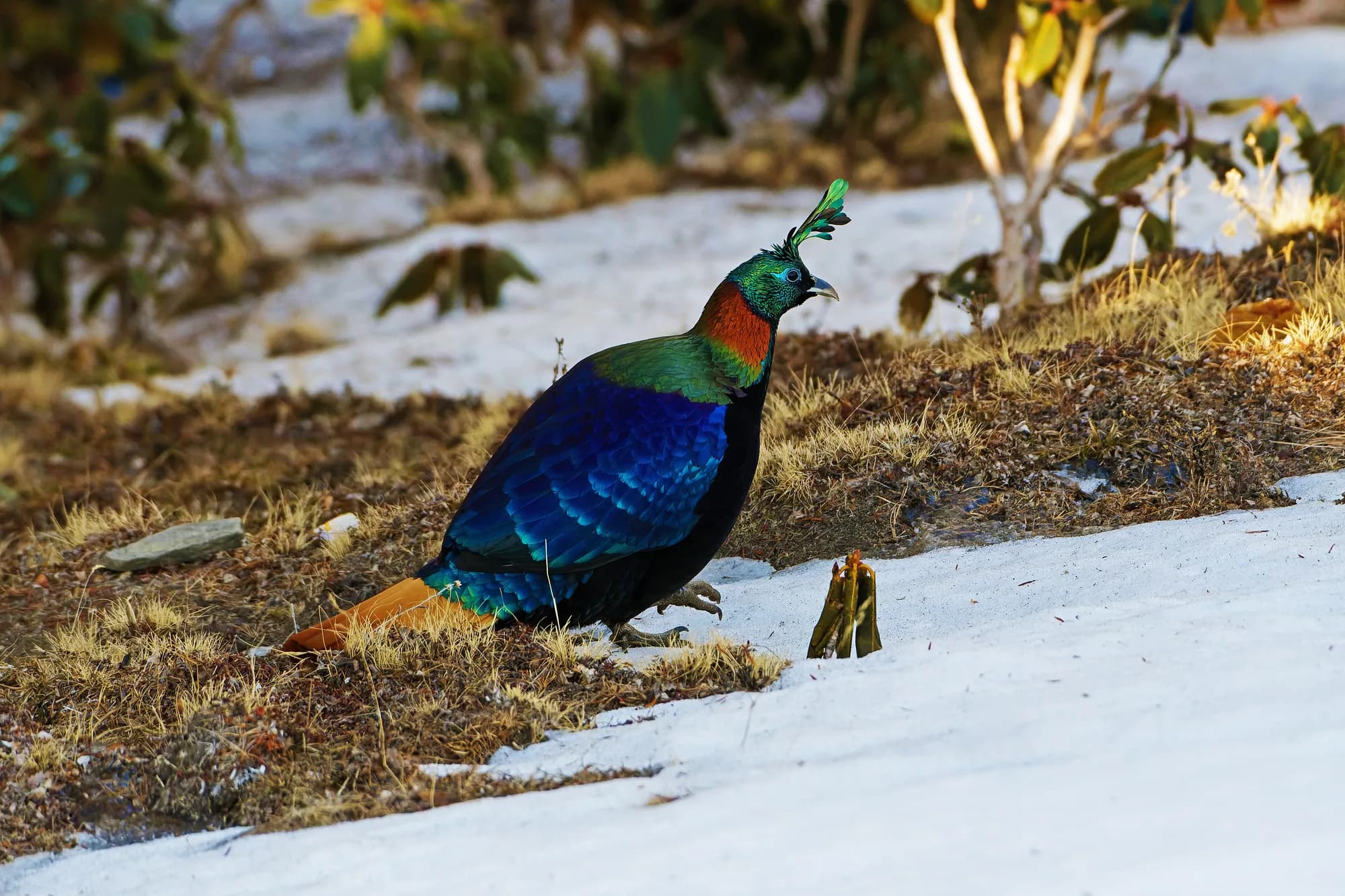 15 · Bird
Himalayan monal
A pheasant that looks like spilled petrol in sunlight, digging for roots on a snowy slope at three thousand metres. The bird international operators build entire Himalayan itineraries around.
Chopta, Tungnath and the high oak
- 16 · Mammal
Ganges river dolphin
A blind dolphin that swims on its side and finds everything by sound, in some of the most crowded river water on earth. India's national aquatic animal, and one most Indians have never seen.
The Ganges, Brahmaputra and Chambal
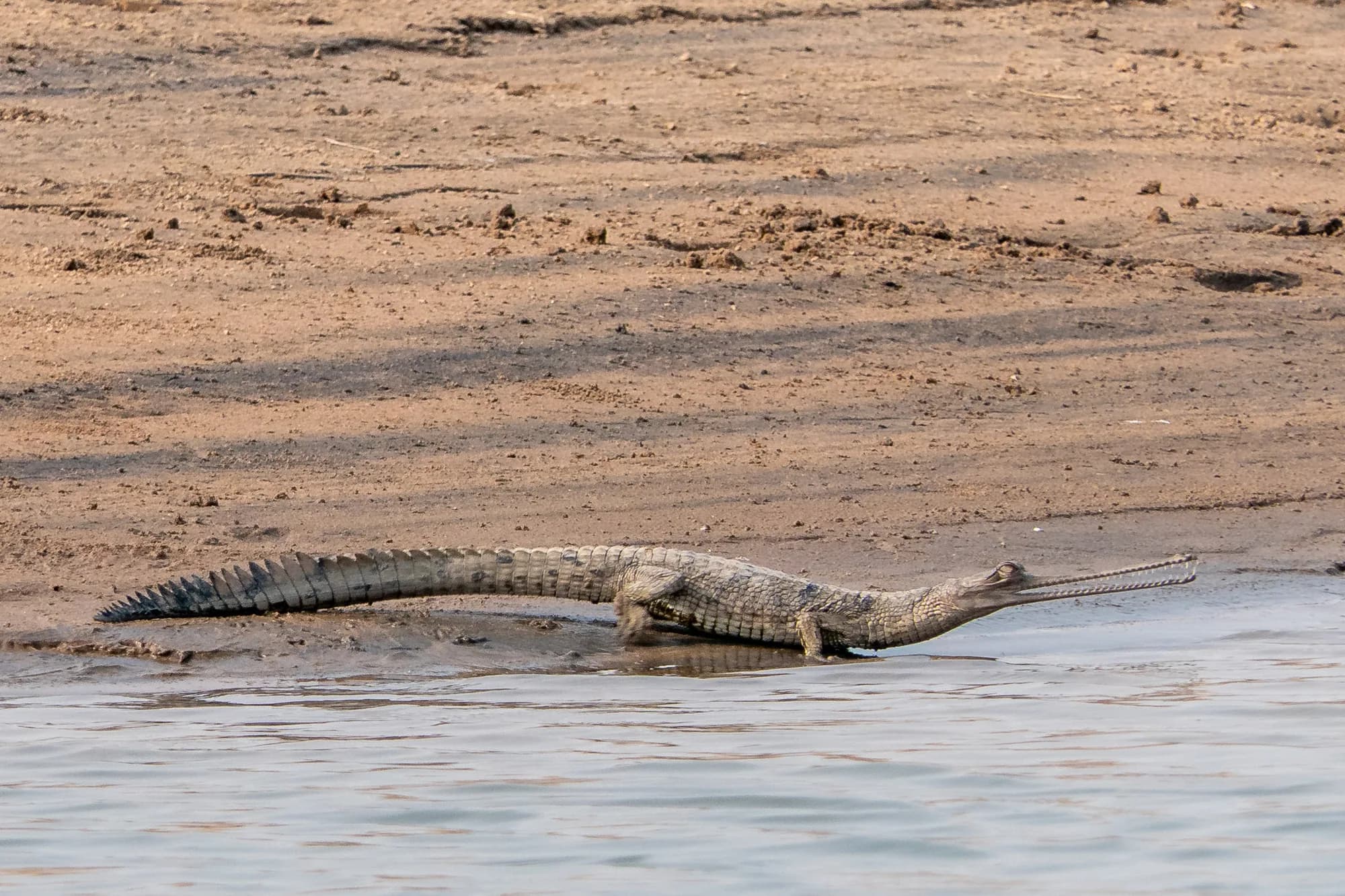 17 · Reptile
Gharial
A fish-eating crocodilian with a snout like a pair of tongs, down to a few hundred breeding adults, and hauled out on Chambal sandbanks in winter in numbers that make it look common.
The Chambal, above all
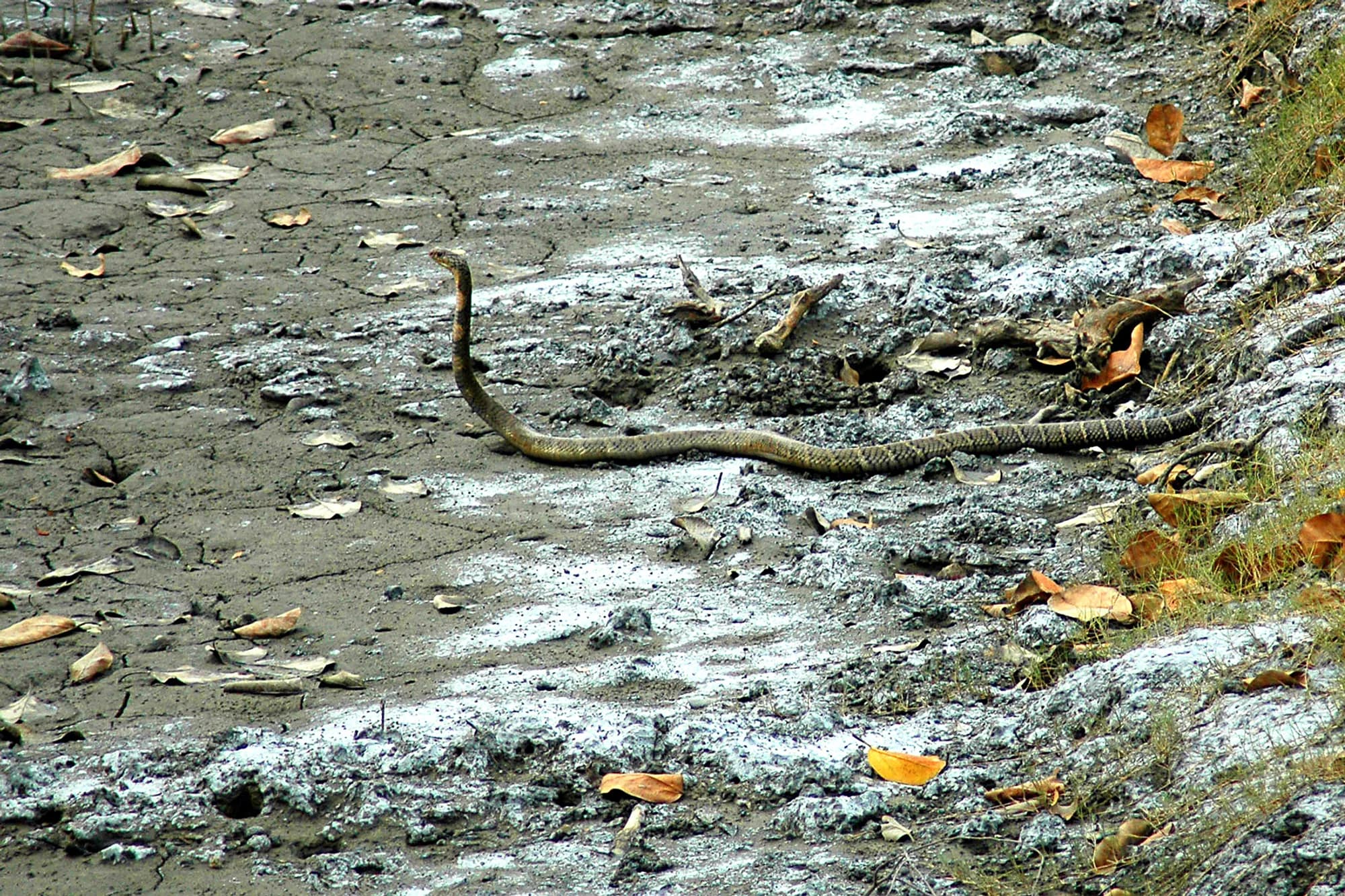 18 · Reptile
King cobra
The longest venomous snake on earth, which eats other snakes and builds a nest for its eggs. Enormous name recognition, and essentially no chance of a planned sighting.
The Ghats and the Northeast, and rarely
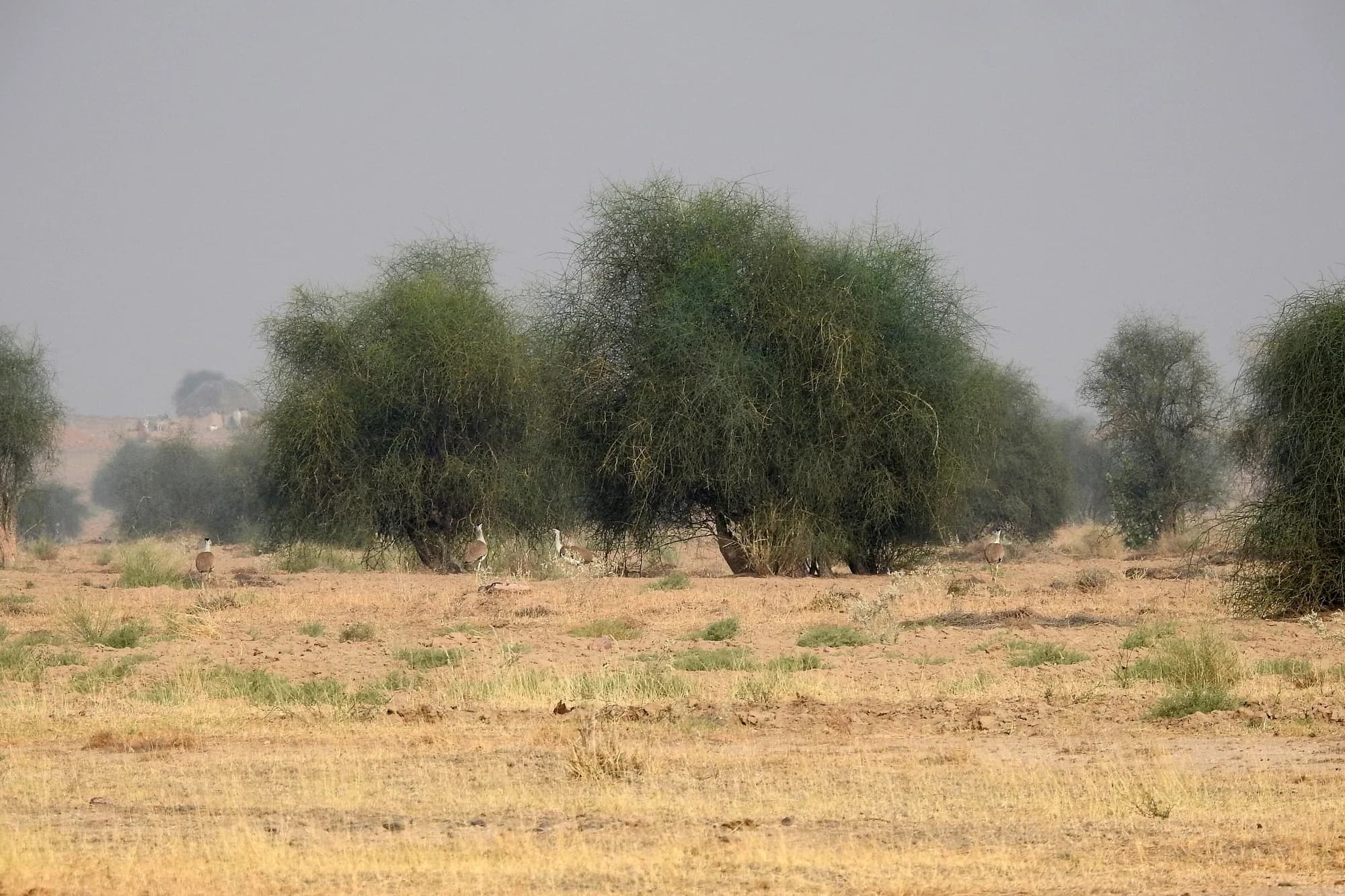 19 · Bird
Great Indian bustard
A metre-tall grassland bird down to double figures in the wild, killed mainly by power lines. The most urgent conservation emergency in Indian birding, and a sighting that will not be available much longer.
The Thar, and almost nowhere else now
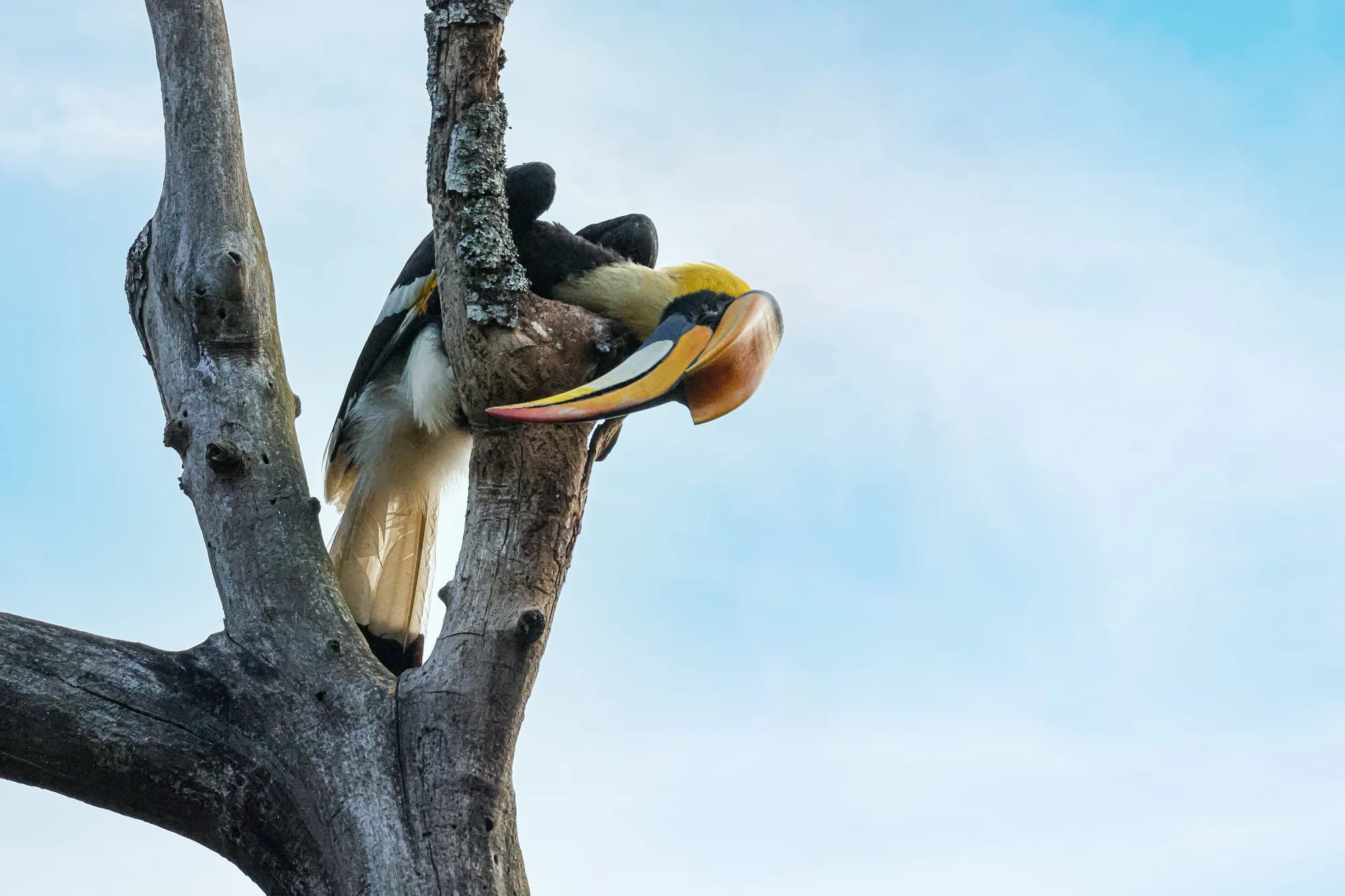 20 · Bird
Great hornbill
The bird non-birders stop the vehicle for. You hear the wingbeats several hundred metres before you see it, and the nesting behaviour is stranger than anything a mammal in the same forest does.
Three reserves, and you hear it first
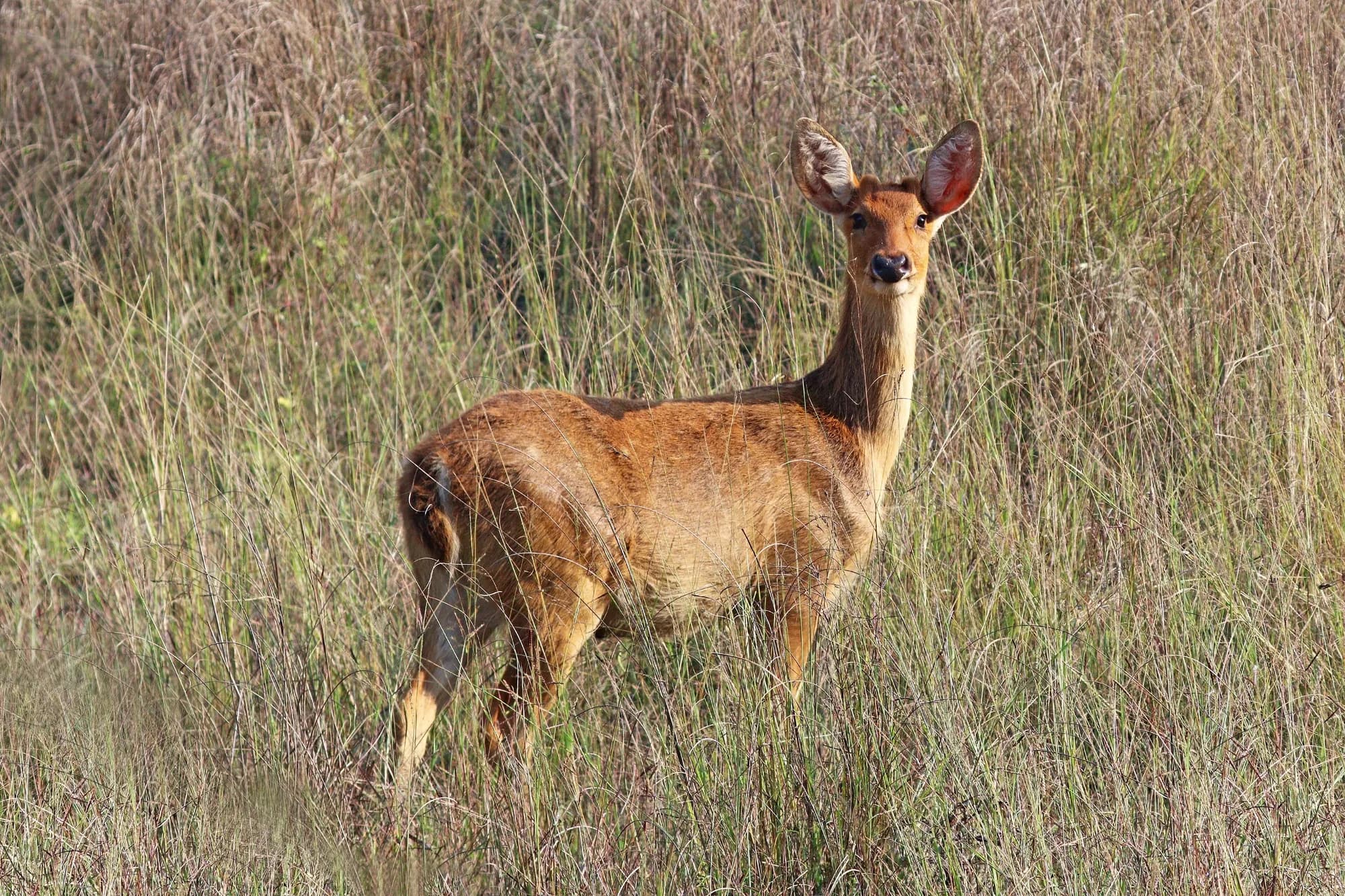 21 · Mammal
Barasingha
The hard-ground swamp deer was down to about sixty-six animals in the early 1970s. It survives in one reserve, and its recovery is the best thing that has happened in an Indian national park.
Kanha, and nowhere else on earth
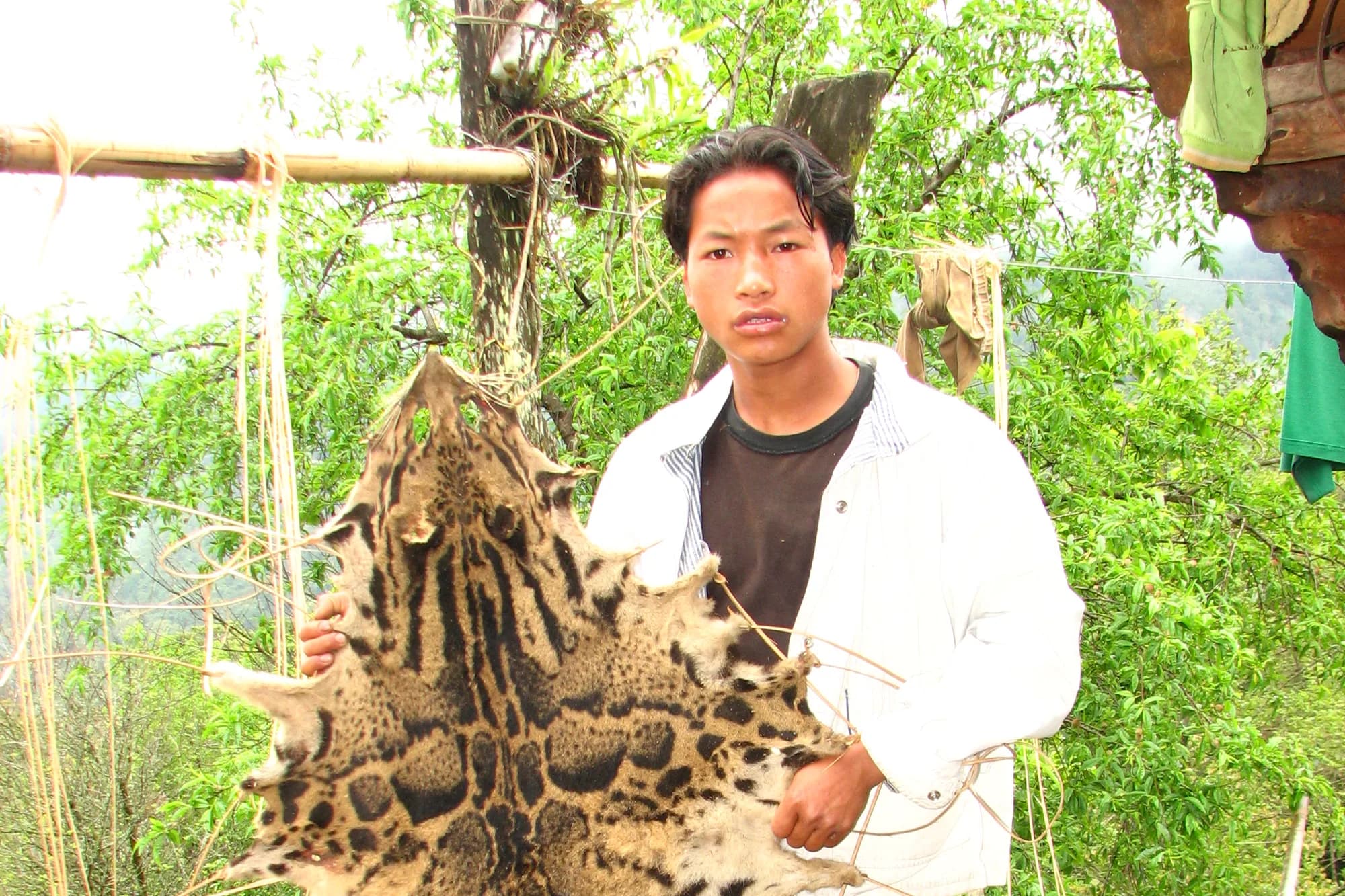 22 · Mammal
Clouded leopard
The most wanted cat in India and the least seen. A page whose main job is to be honest: there is no reserve, season or guide that will reliably show you one.
The Northeast, and almost never
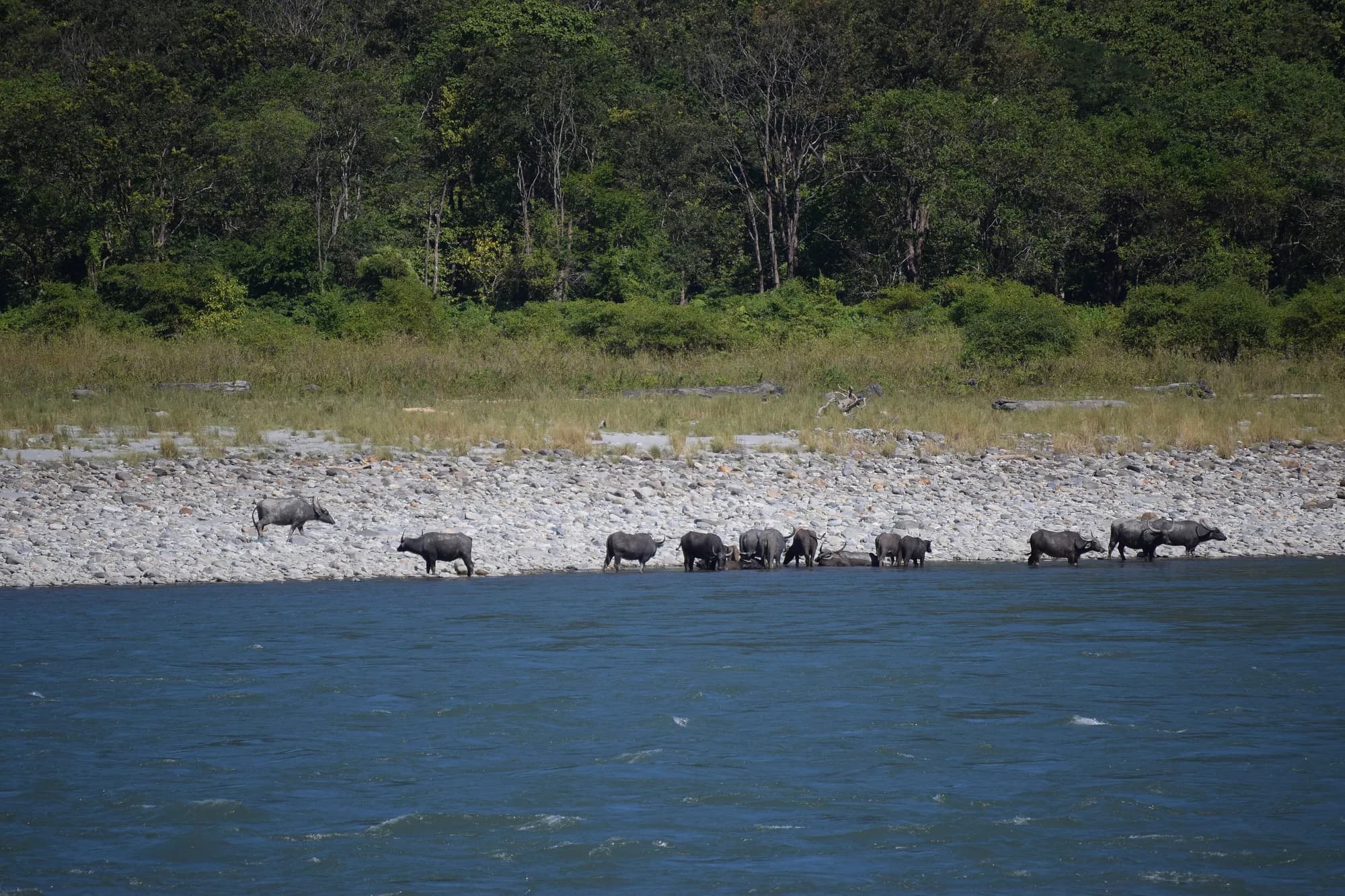 23 · Mammal
Wild water buffalo
The true wild buffalo, carrying the widest horn spread of any living bovid, standing in the same grassland as the rhinos and constantly written off as livestock.
Kaziranga, and the horns settle it
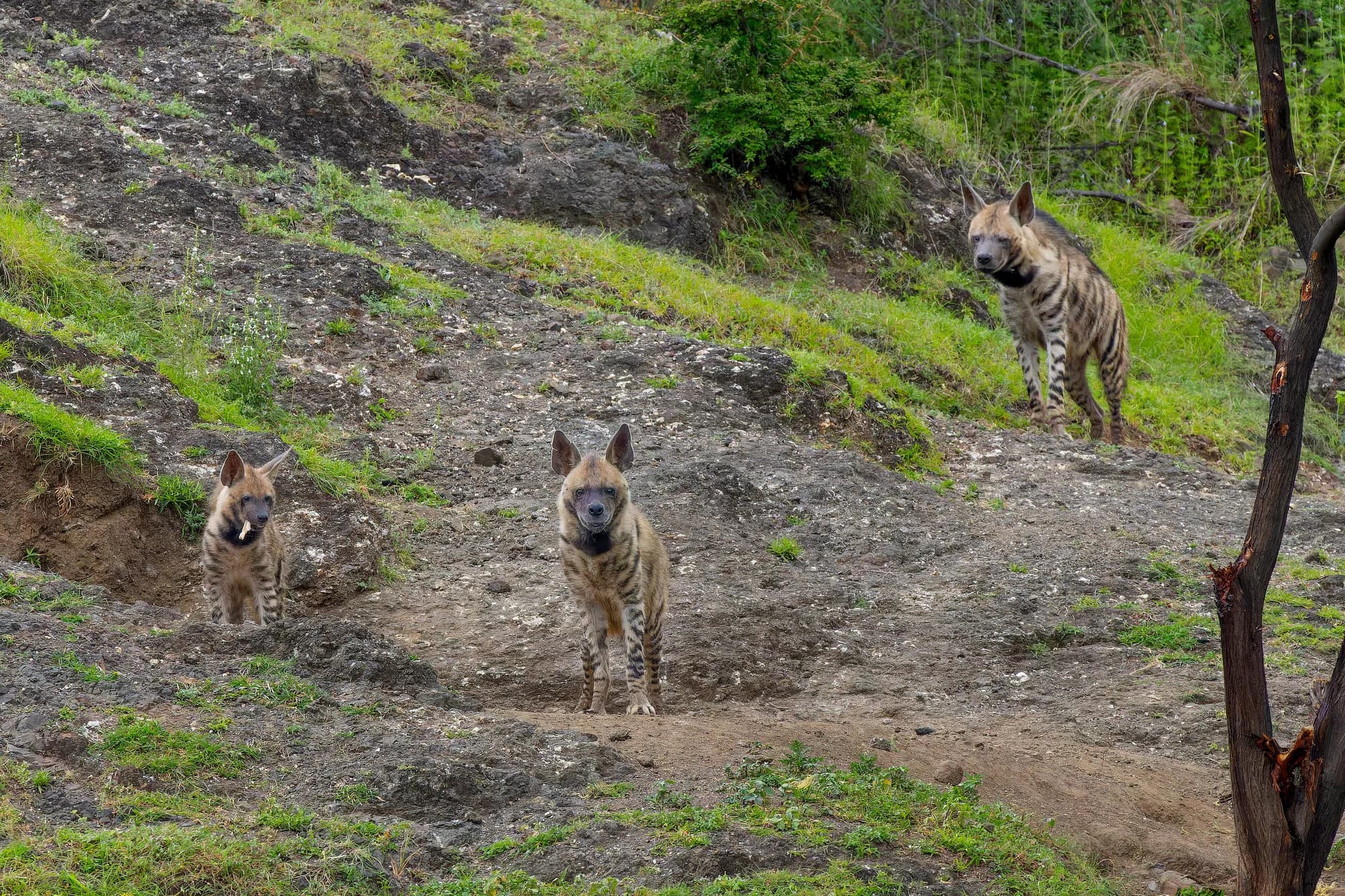 24 · Mammal
Striped hyena
A nocturnal scavenger with a mane it raises when alarmed, common across dry India and almost never on anyone's list. One of the best sightings you can have at Jawai.
Four reserves, at dusk, rarely looked for
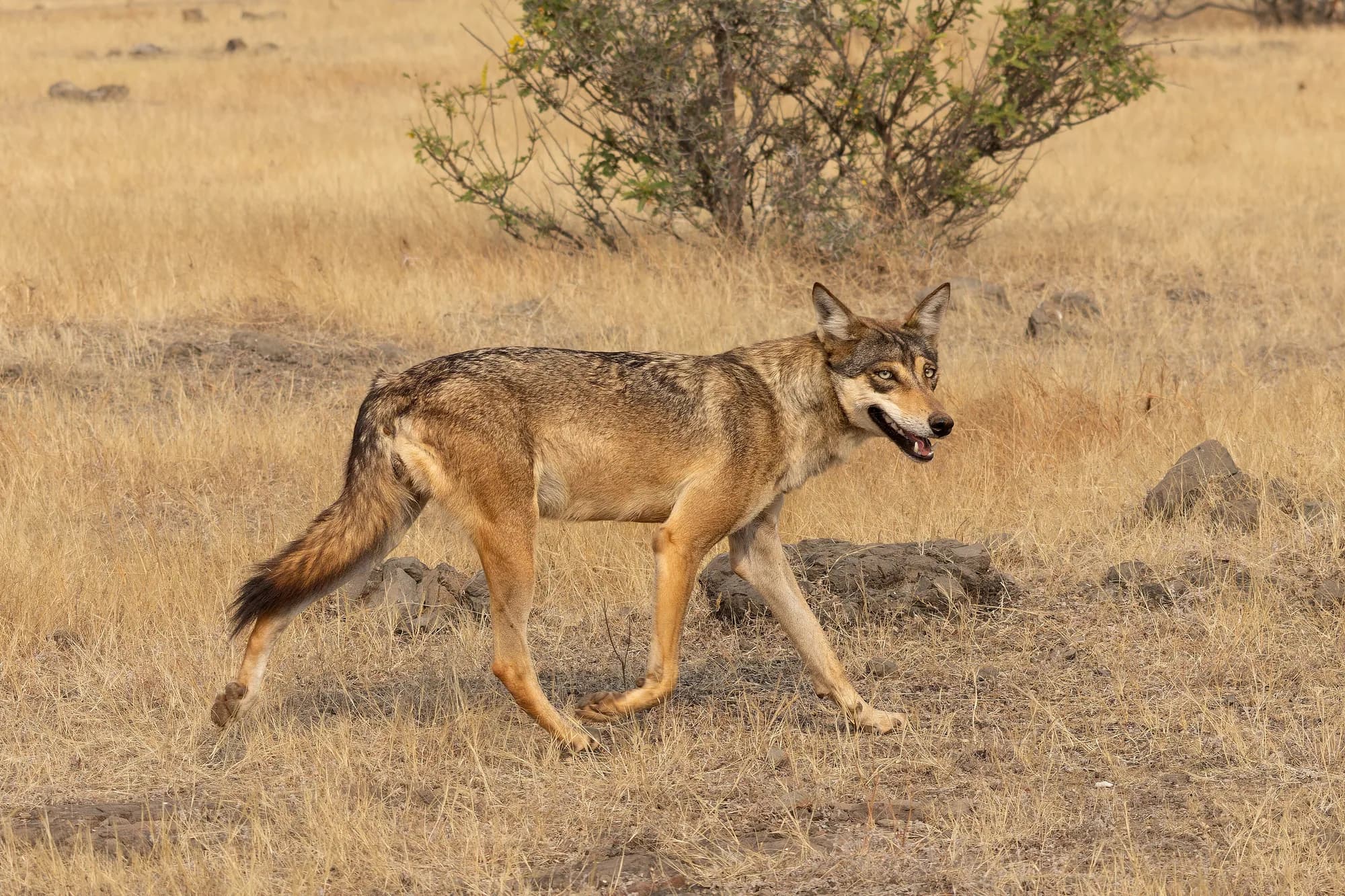 25 · Mammal
Indian wolf
One of the oldest wolf lineages alive, hunting blackbuck across grassland that almost nobody protects. Rarer in India than the tiger, and with a fraction of the attention.
Grassland, not forest
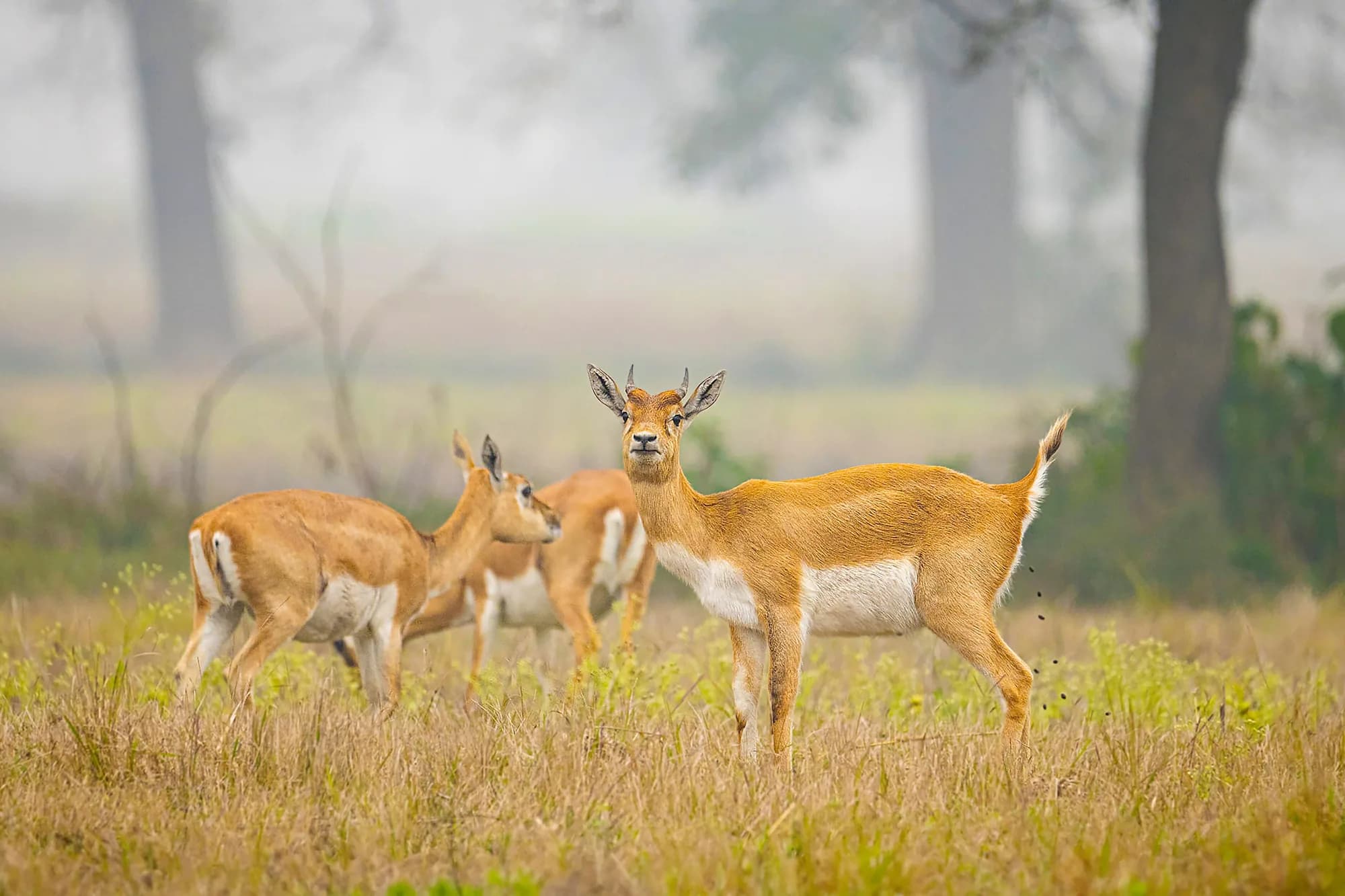 26 · Mammal
Blackbuck
India's most striking antelope — spiral horns, a hard black-and-white male in the rut — on flat open grassland where you can watch a hundred at once.
Grassland, and Velavadar above all
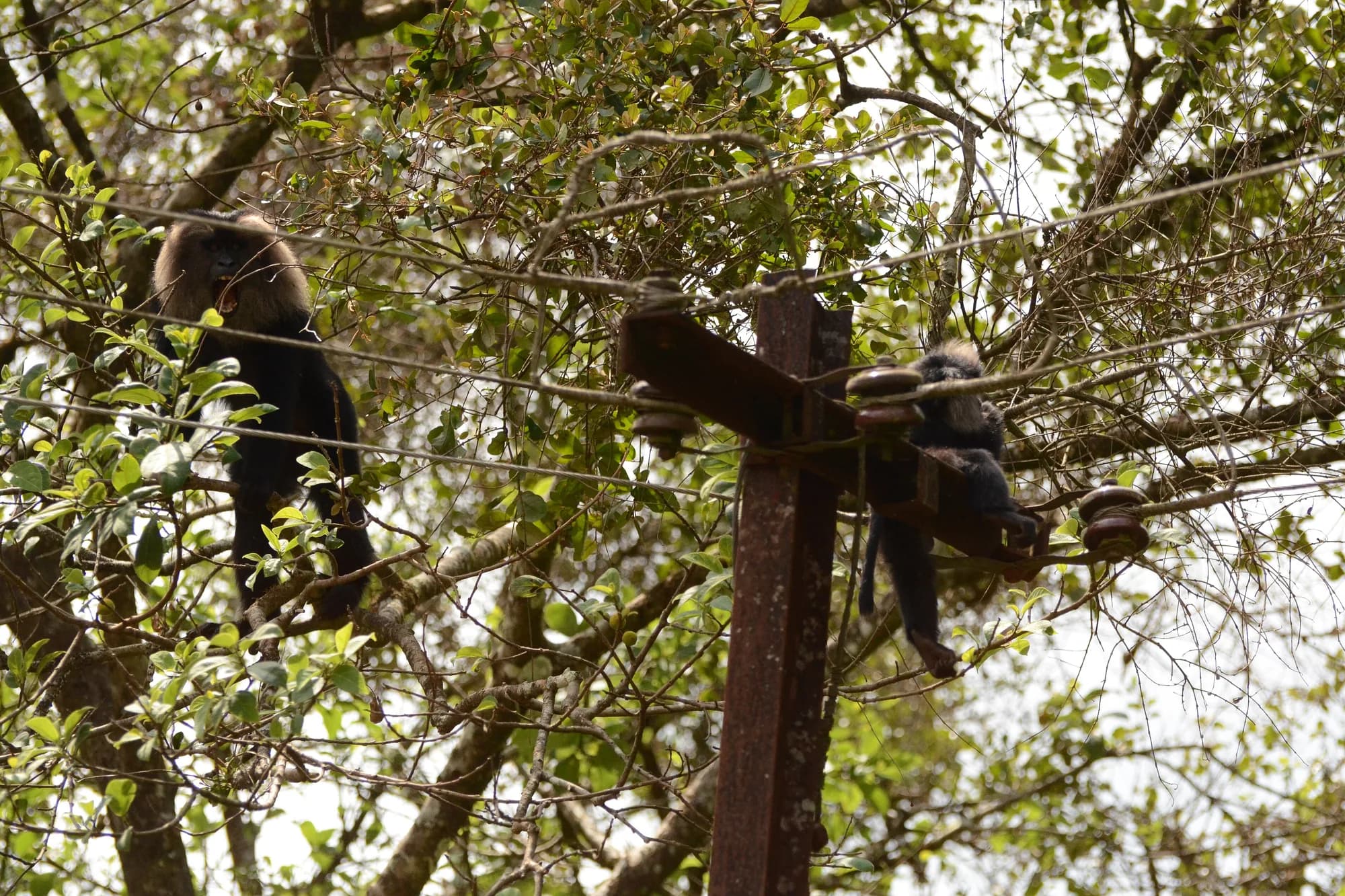 27 · Mammal
Lion-tailed macaque
A black macaque with a silver mane and a tufted tail, confined to fragments of Western Ghats rainforest. One of the most distinctive primates in Asia and among the least seen in India.
Western Ghats rainforest canopy
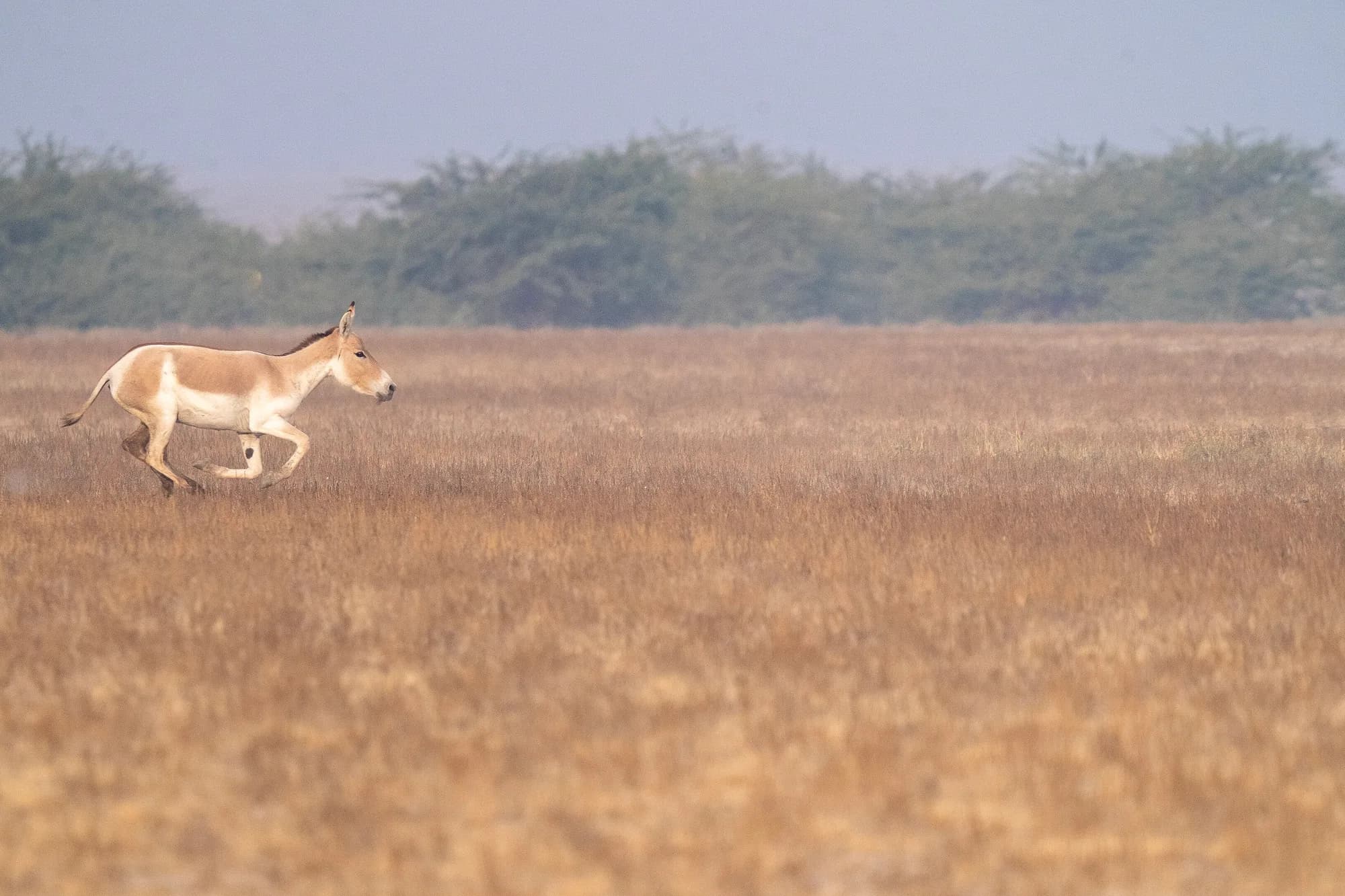 28 · Mammal
Indian wild ass
A wild equid running across a salt desert that floods every monsoon and bakes solid every summer. One of the few Indian populations whose numbers are genuinely going up.
The Little Rann of Kachchh
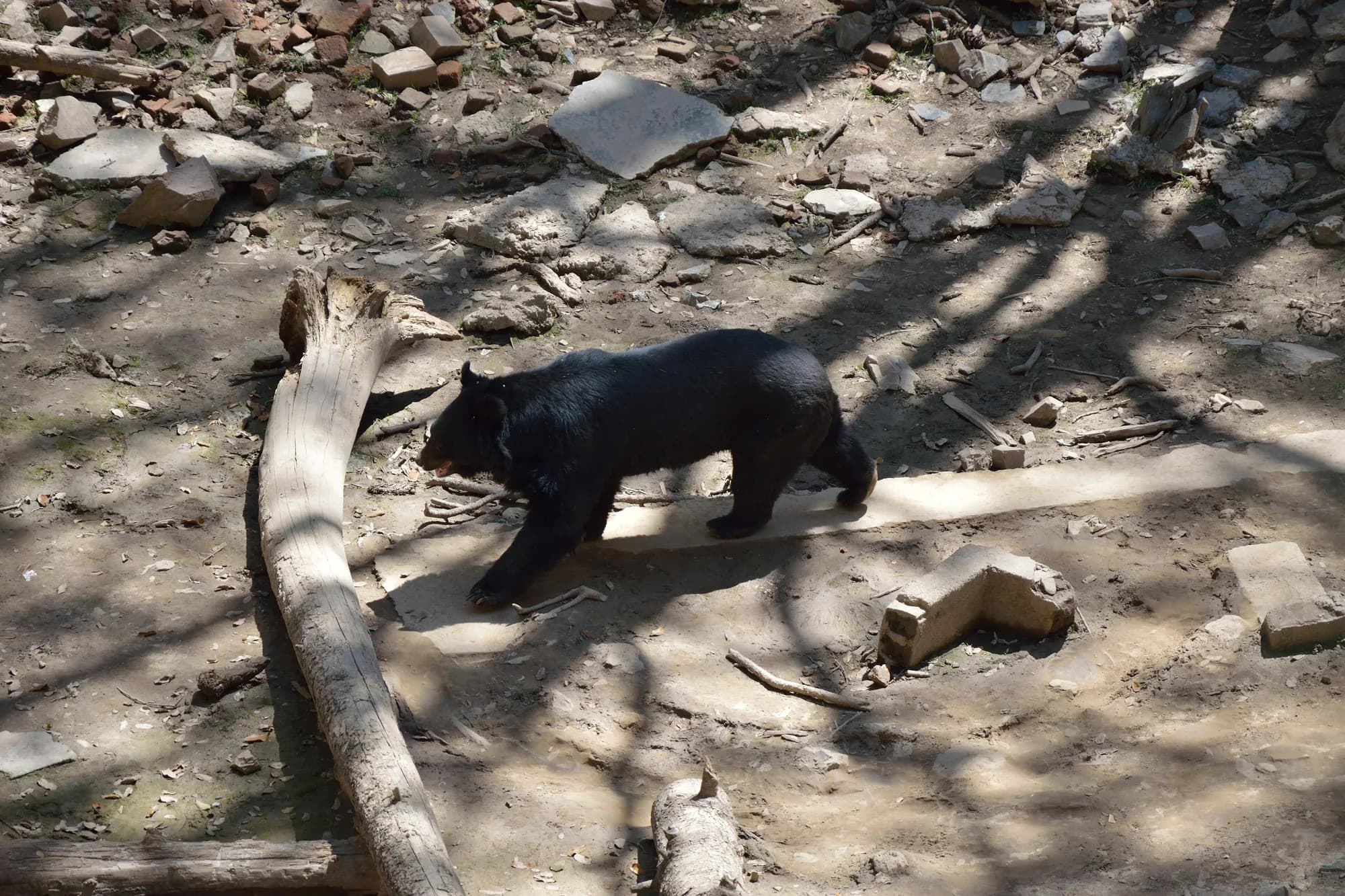 29 · Mammal
Asiatic black bear
The Himalayan bear, black with a white chevron on the chest. It is confused with the sloth bear constantly in trip reports, and the two do not overlap anywhere you are likely to be.
Himalayan oak forest, not the plains
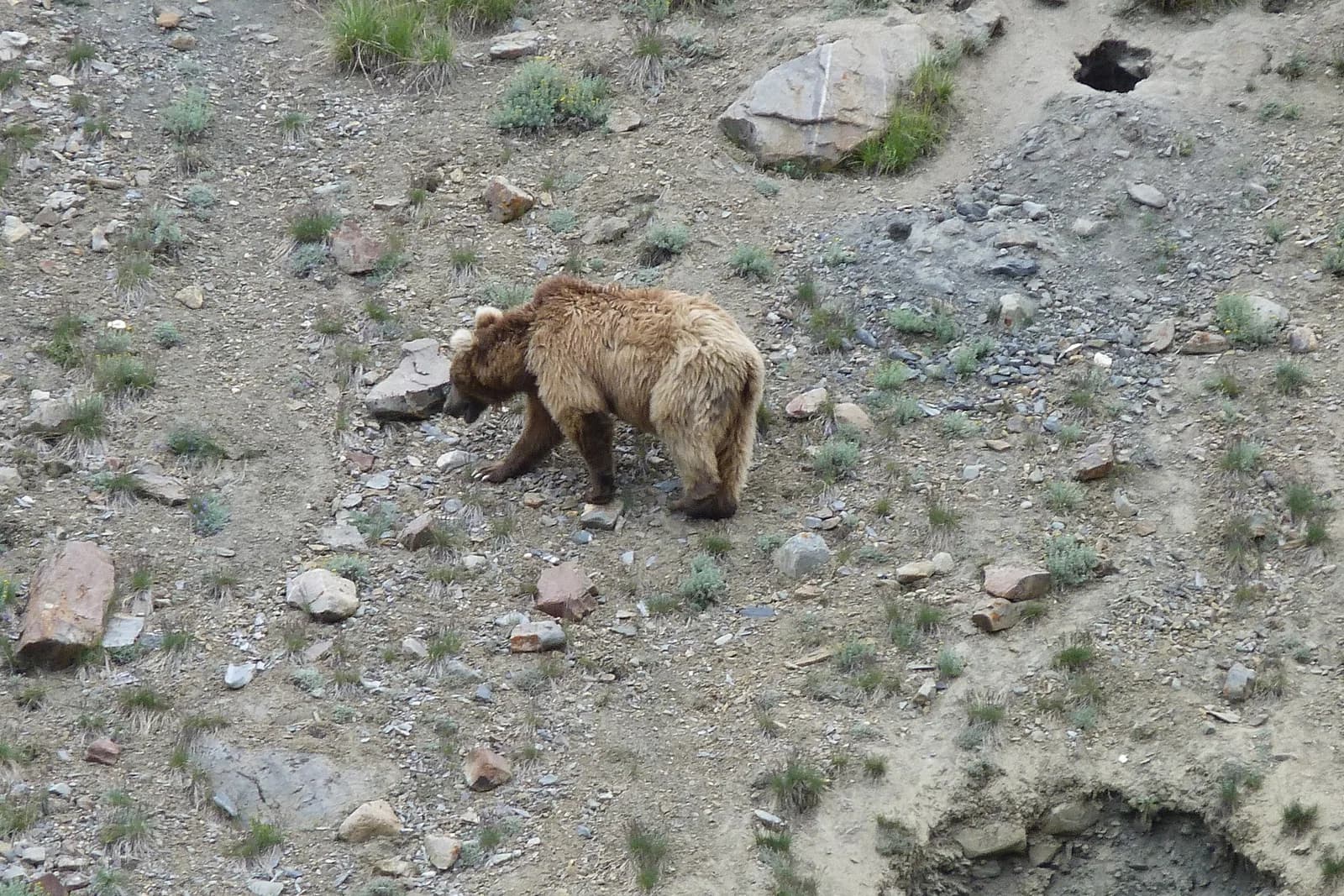 30 · Mammal
Himalayan brown bear
India's largest carnivore by weight, sandy-brown and confined to a handful of high valleys. It is sold as a bonus on snow leopard trips, and in the snow leopard season it is asleep.
Alpine meadow above the treeline
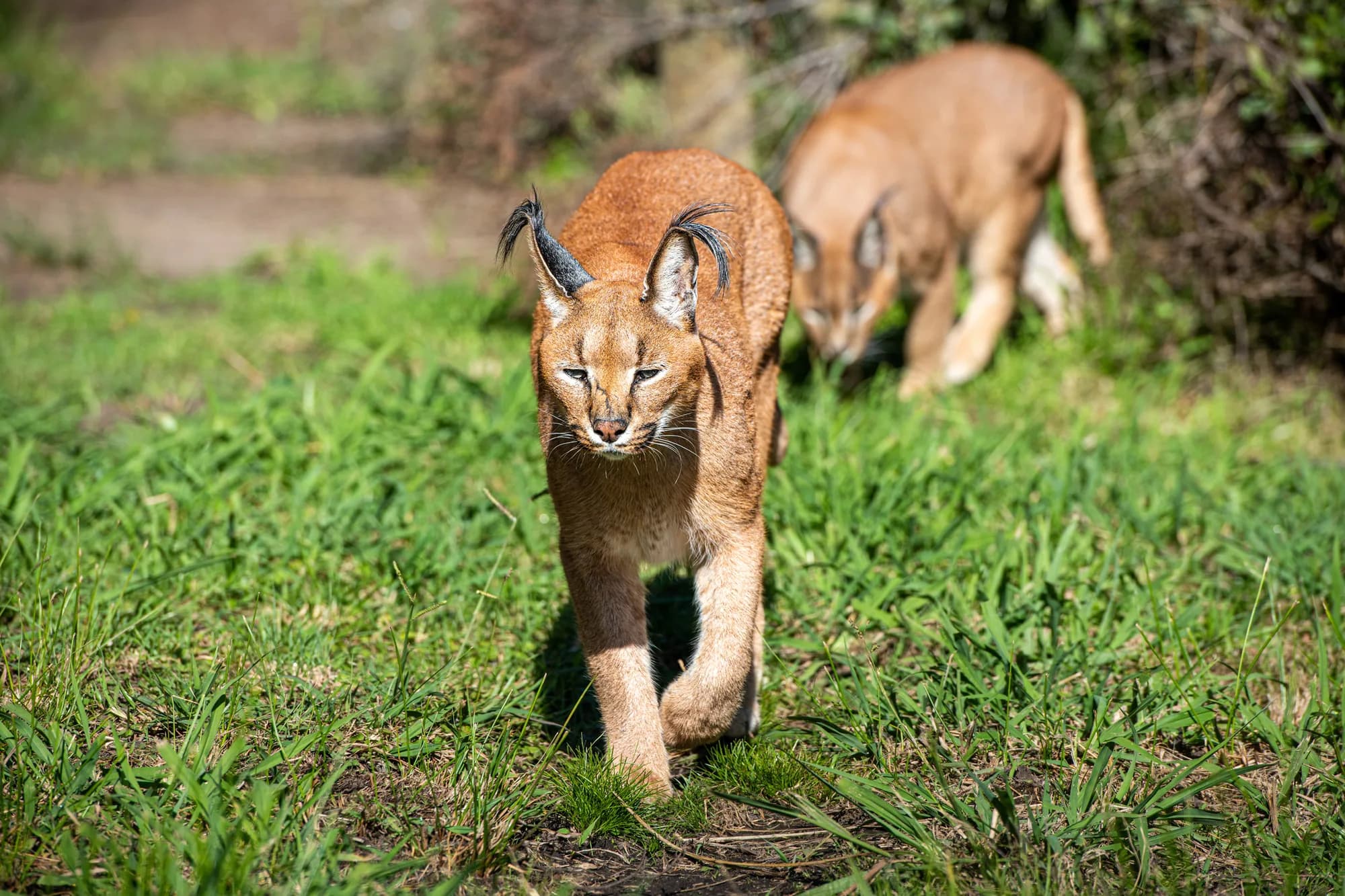 31 · Mammal
Caracal
Possibly the hardest cat to see in India. A handful of Ranthambore camera-trap records and a few sightings a decade carry the entire demand for this animal.
Ranthambore, and vanishingly rarely
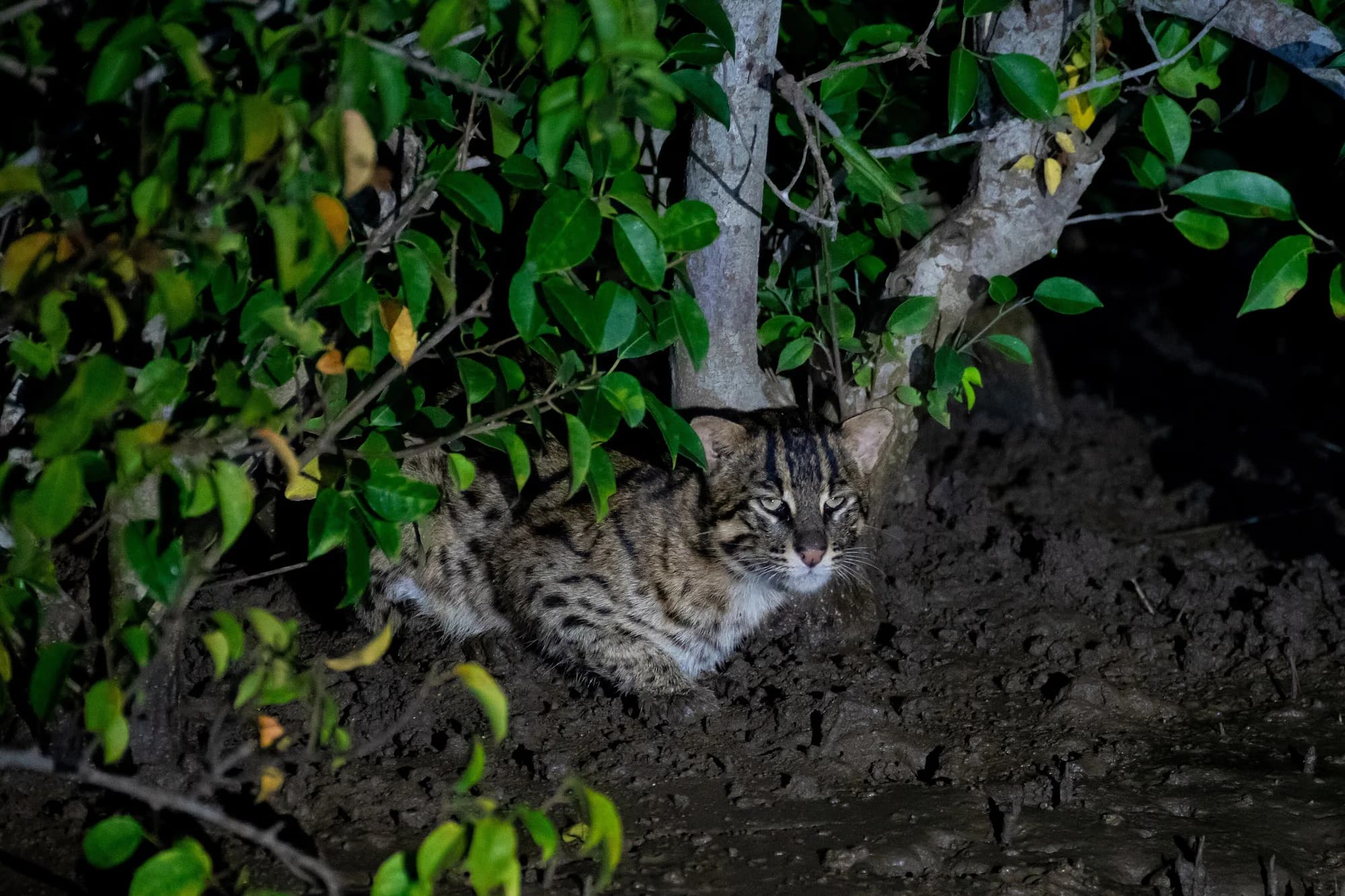 32 · Mammal
Fishing cat
A stocky, short-tailed wetland cat that hunts in the water. It is not a forest animal, which is why safari parks are the wrong place to look and Odisha's marshes are the right one.
Reed bed and mangrove, after dark
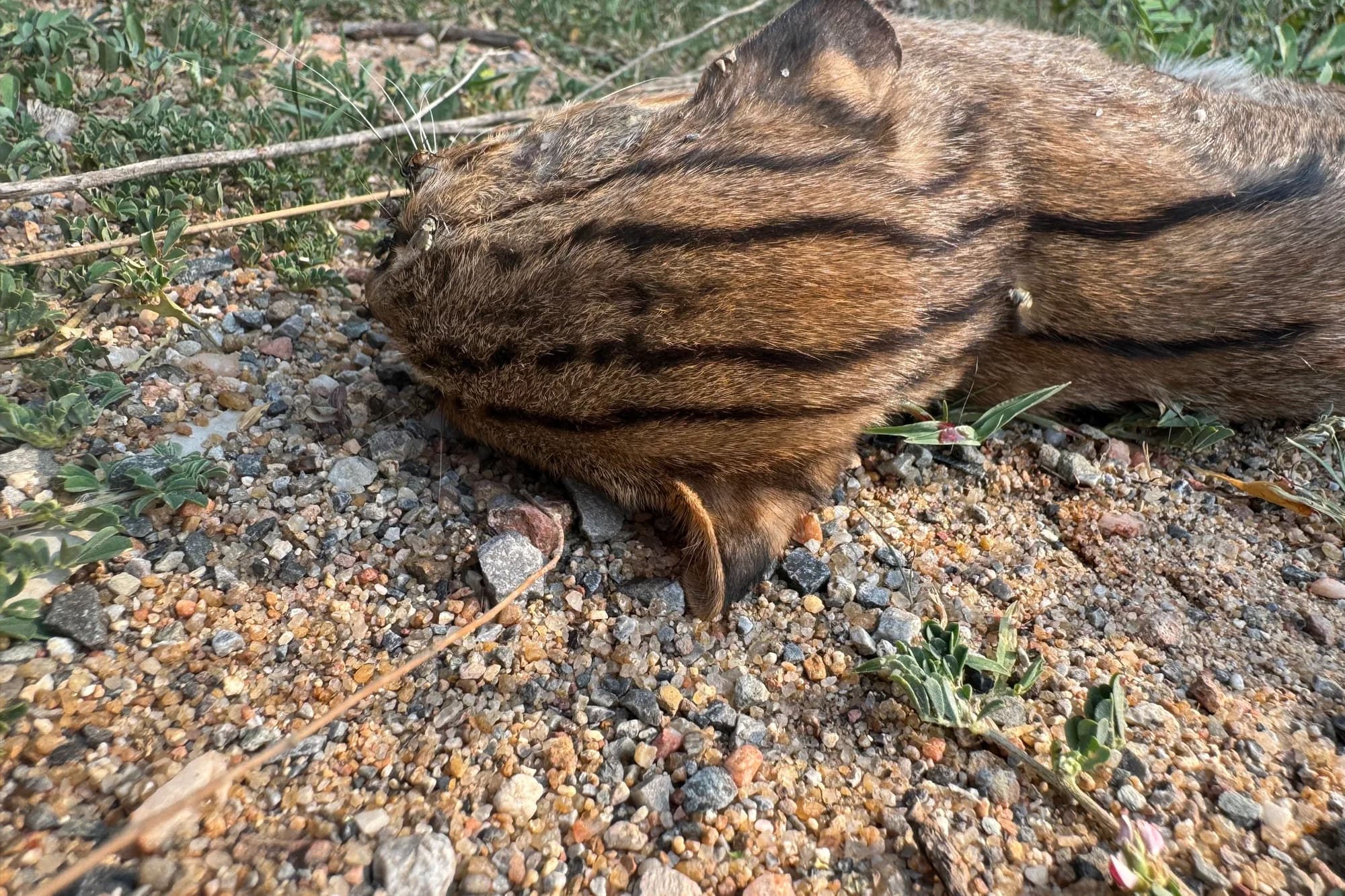 33 · Mammal
Rusty-spotted cat
The smallest wild cat in the world, roughly half the weight of a house cat, and Tadoba is the most reliable place on earth to see one.
Tadoba, and the smallest cat alive
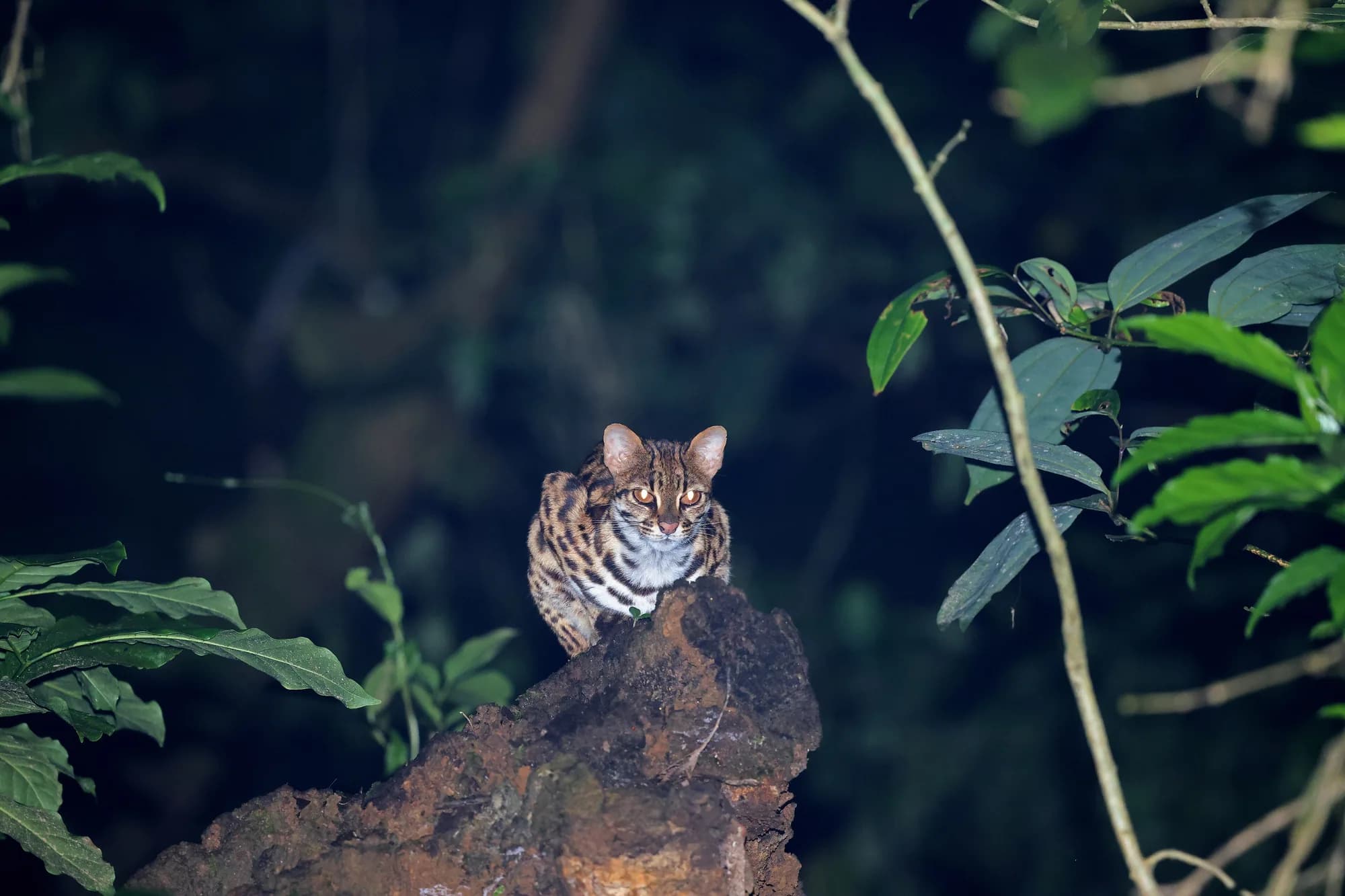 34 · Mammal
Leopard cat
A house-cat-sized spotted cat with bold white face stripes, common across forested India, and the animal most often reported as a leopard cub.
Night drives, and misreported constantly
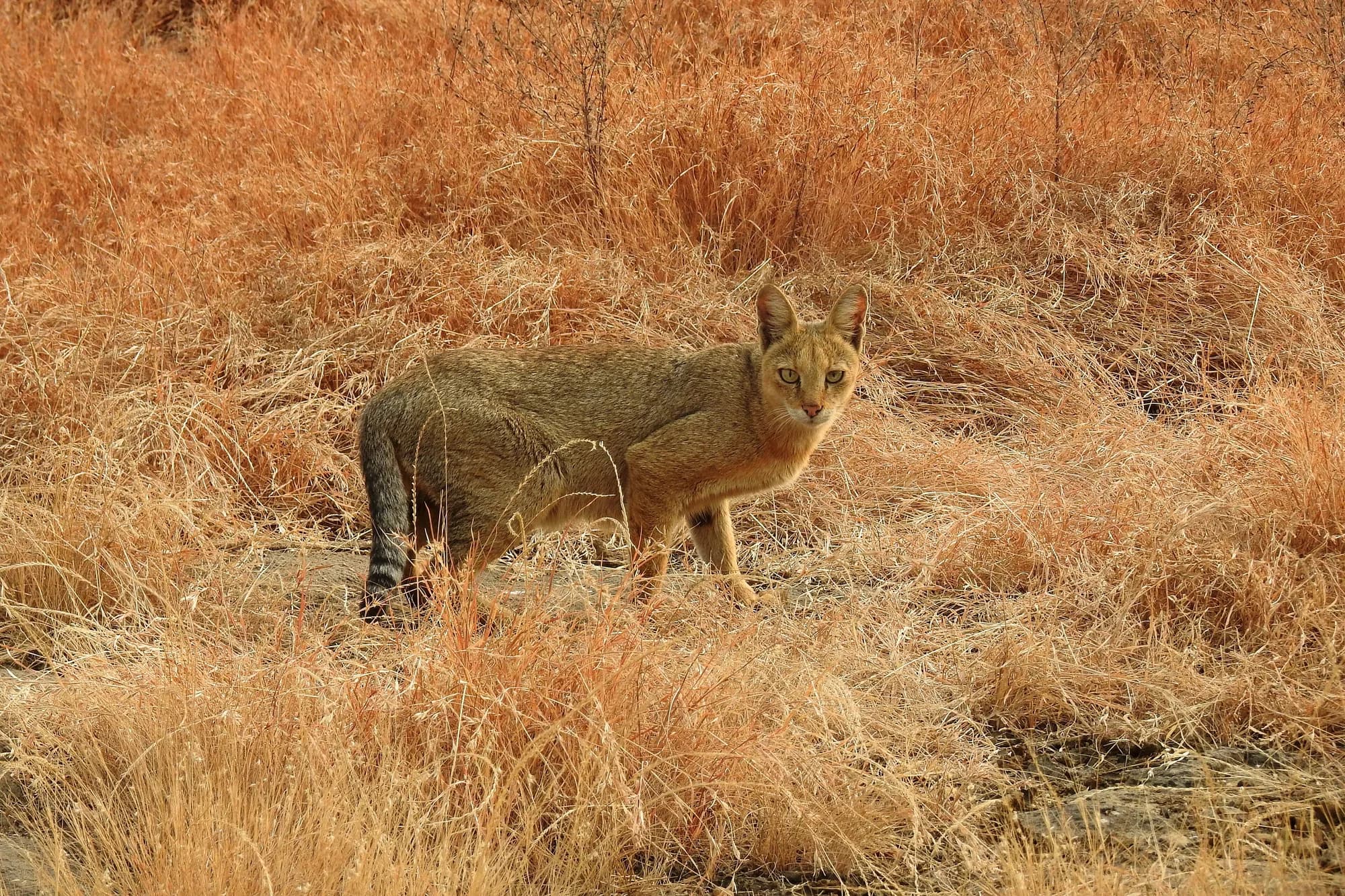 35 · Mammal
Jungle cat
India's most-seen wild cat and its most misidentified. Long-legged, plain sandy, tuft-eared, and reported variously as a caracal, a leopard cub and somebody's escaped tabby.
Everywhere, and always misnamed
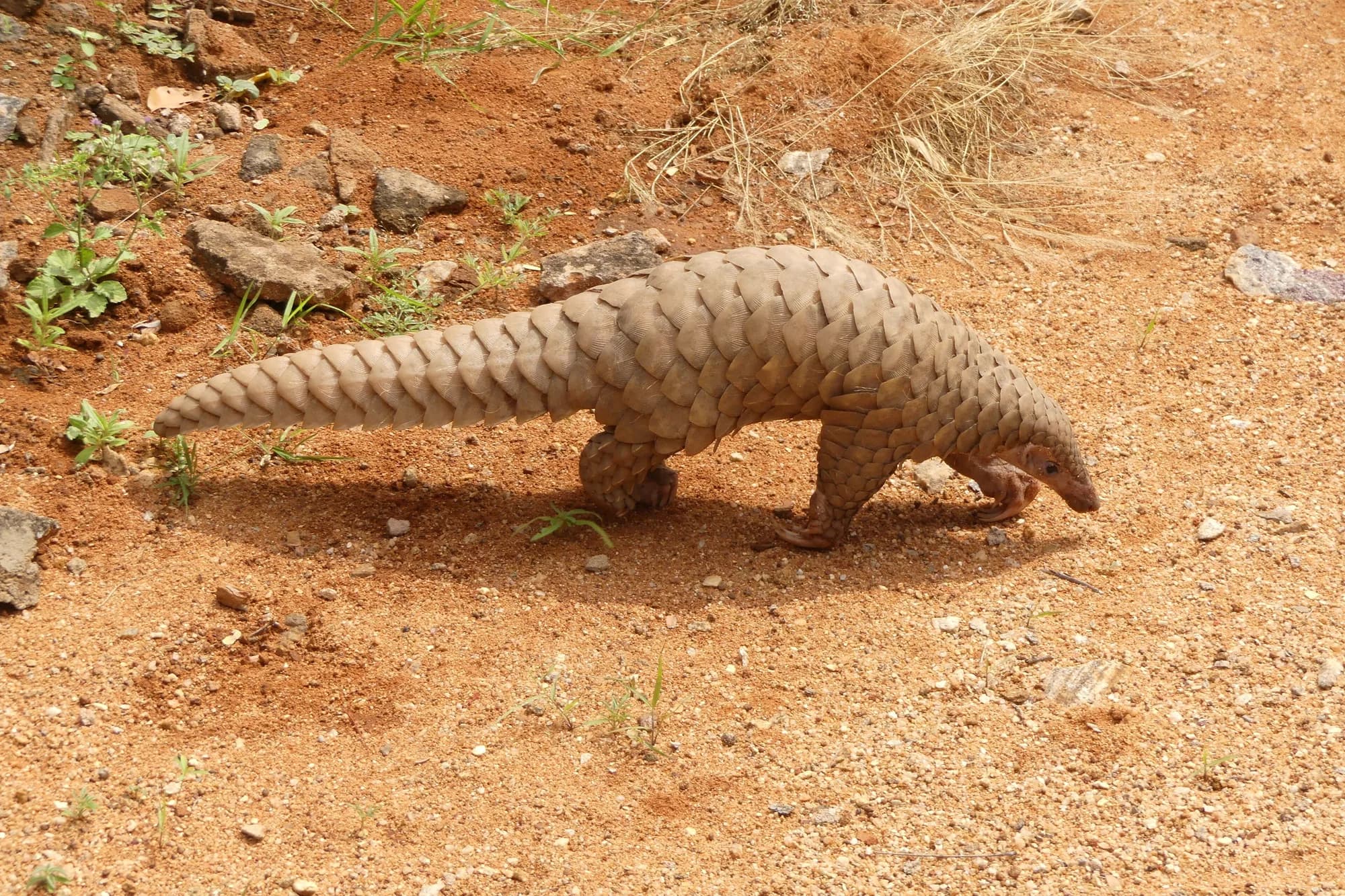 36 · Mammal
Indian pangolin
The most trafficked wild mammal on earth, and one almost nobody sees. It lives across most of India, comes out only at night, and the honest encounter is a burrow rather than an animal.
Almost everywhere, almost never seen
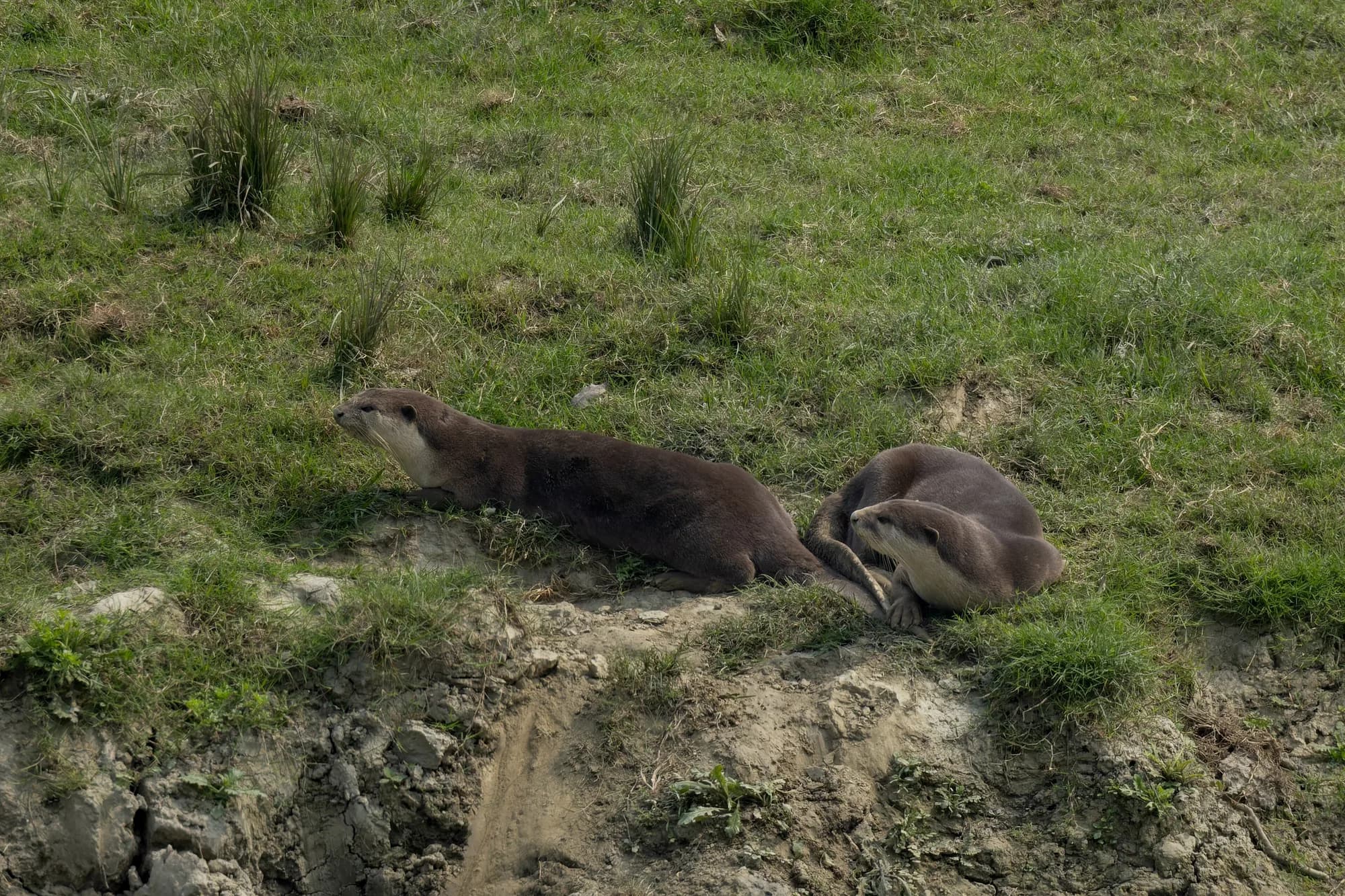 37 · Mammal
Smooth-coated otter
A family of otters working a river is one of the best sightings in India and almost nobody books for it. Loud, social, and easier to hear than to see.
Rivers, in noisy family groups
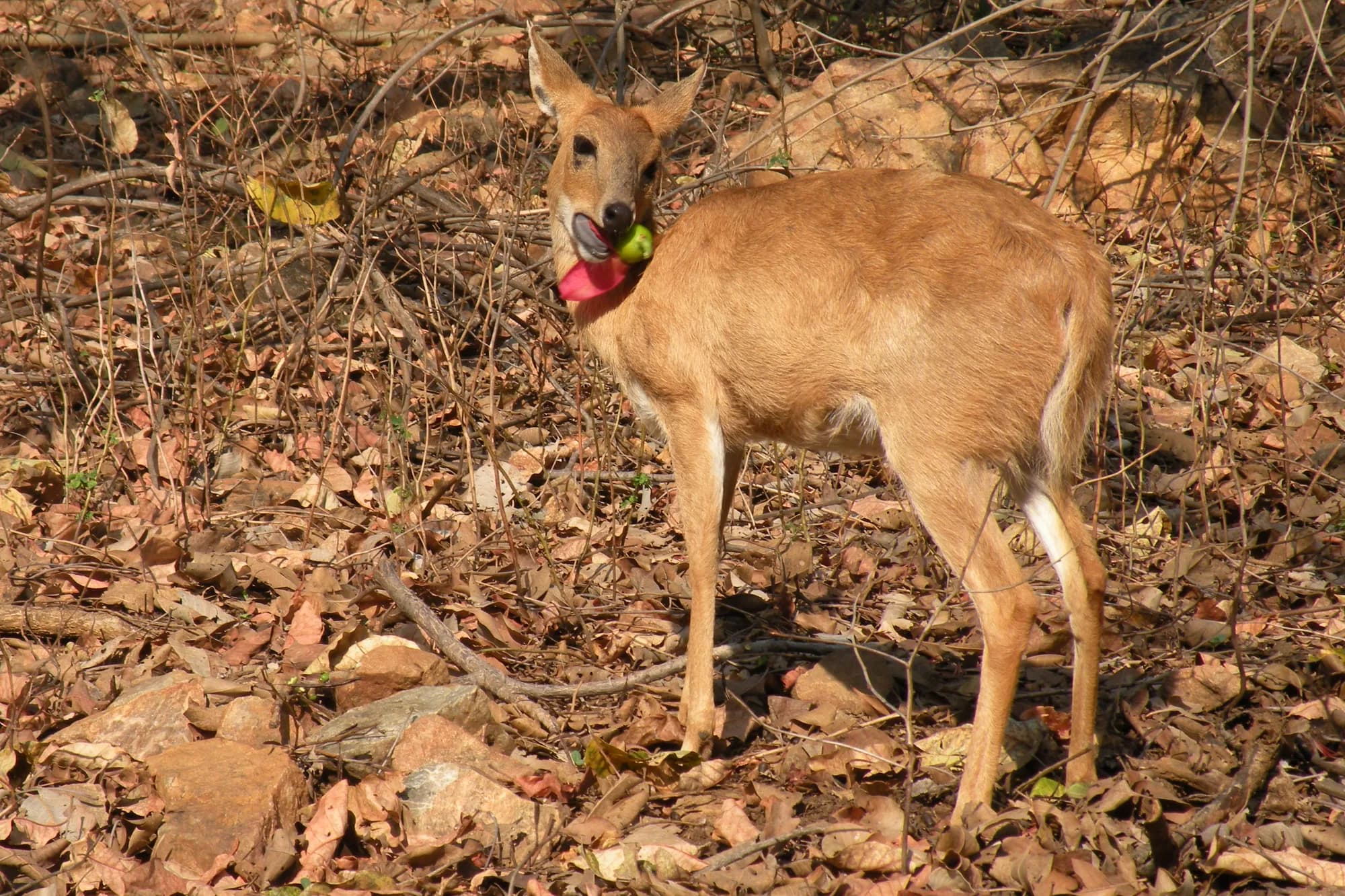 38 · Mammal
Four-horned antelope
The only four-horned antelope in the world, endemic to the subcontinent, small and shy and driven past by every vehicle heading for a tiger.
Central India, and walked past daily
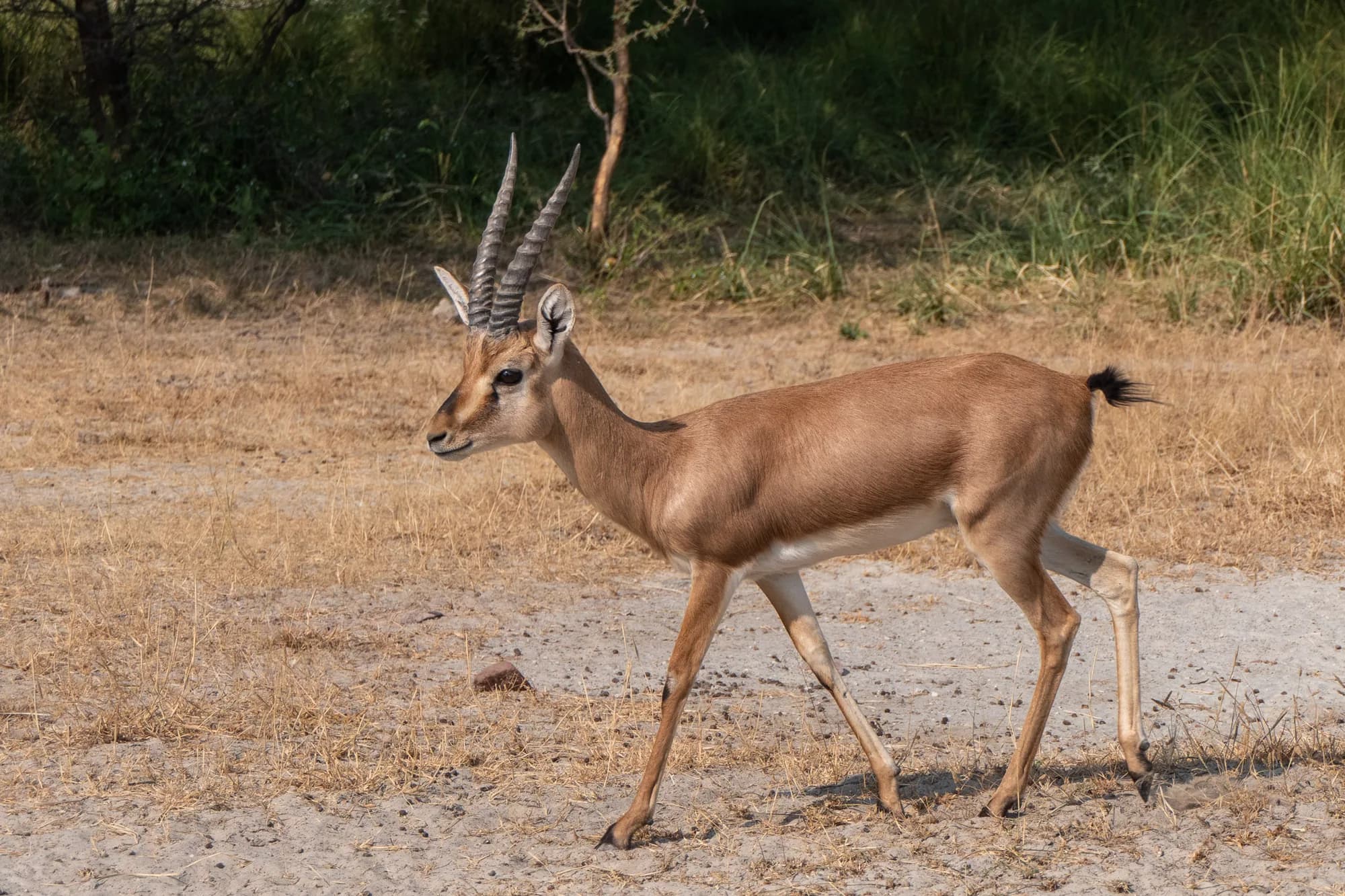 39 · Mammal
Chinkara
India's gazelle — small, sandy and built for heat, going long stretches without drinking. The animal that makes Ranthambore and Jawai look like the dry country they are.
The dry country, and it makes it read as desert
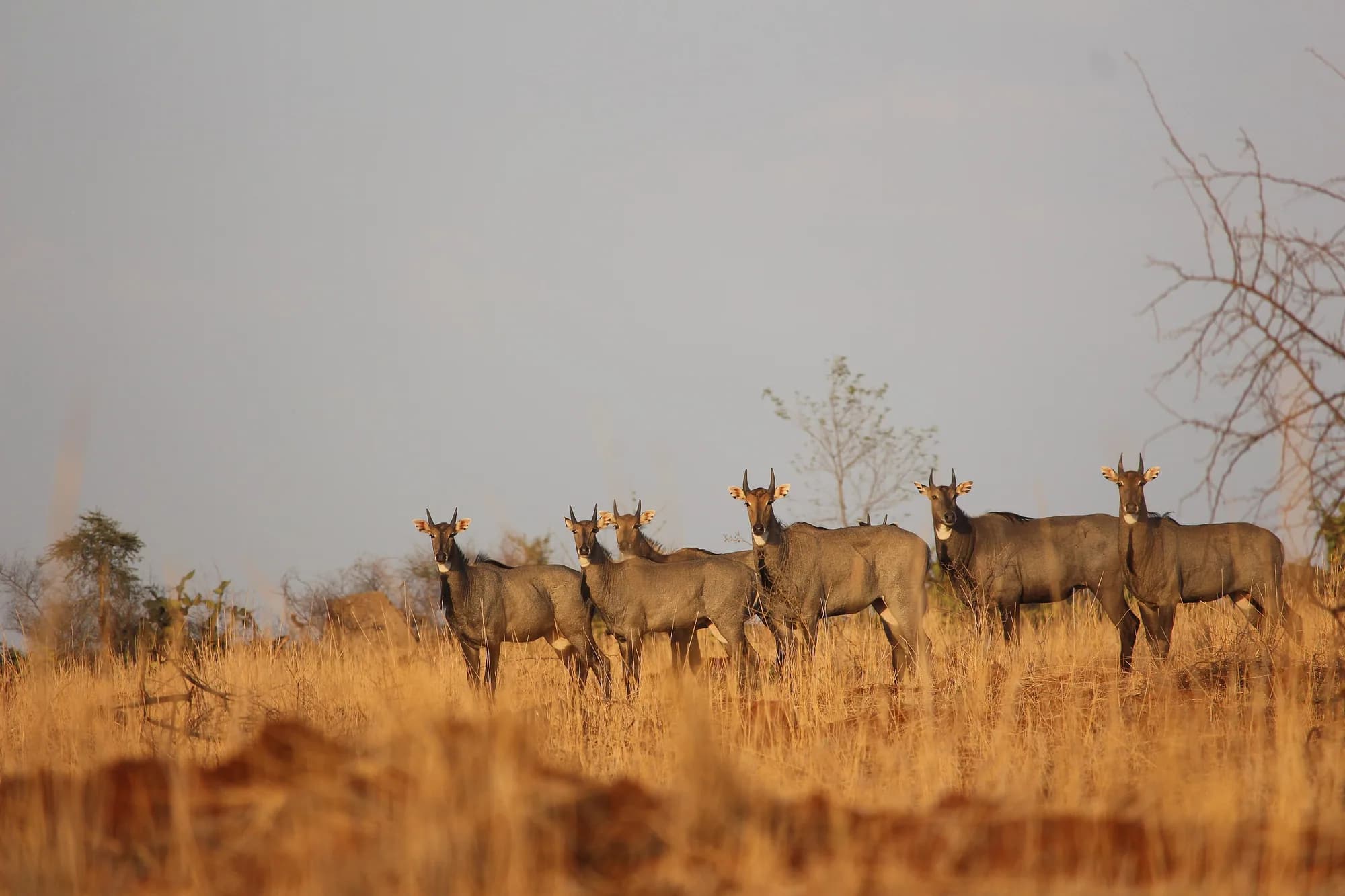 40 · Mammal
Nilgai
Asia's largest antelope, seen by every visitor to northern India and looked at by almost none of them. The bulls are slate blue-grey and genuinely strange animals.
Everywhere in the north, and ignored
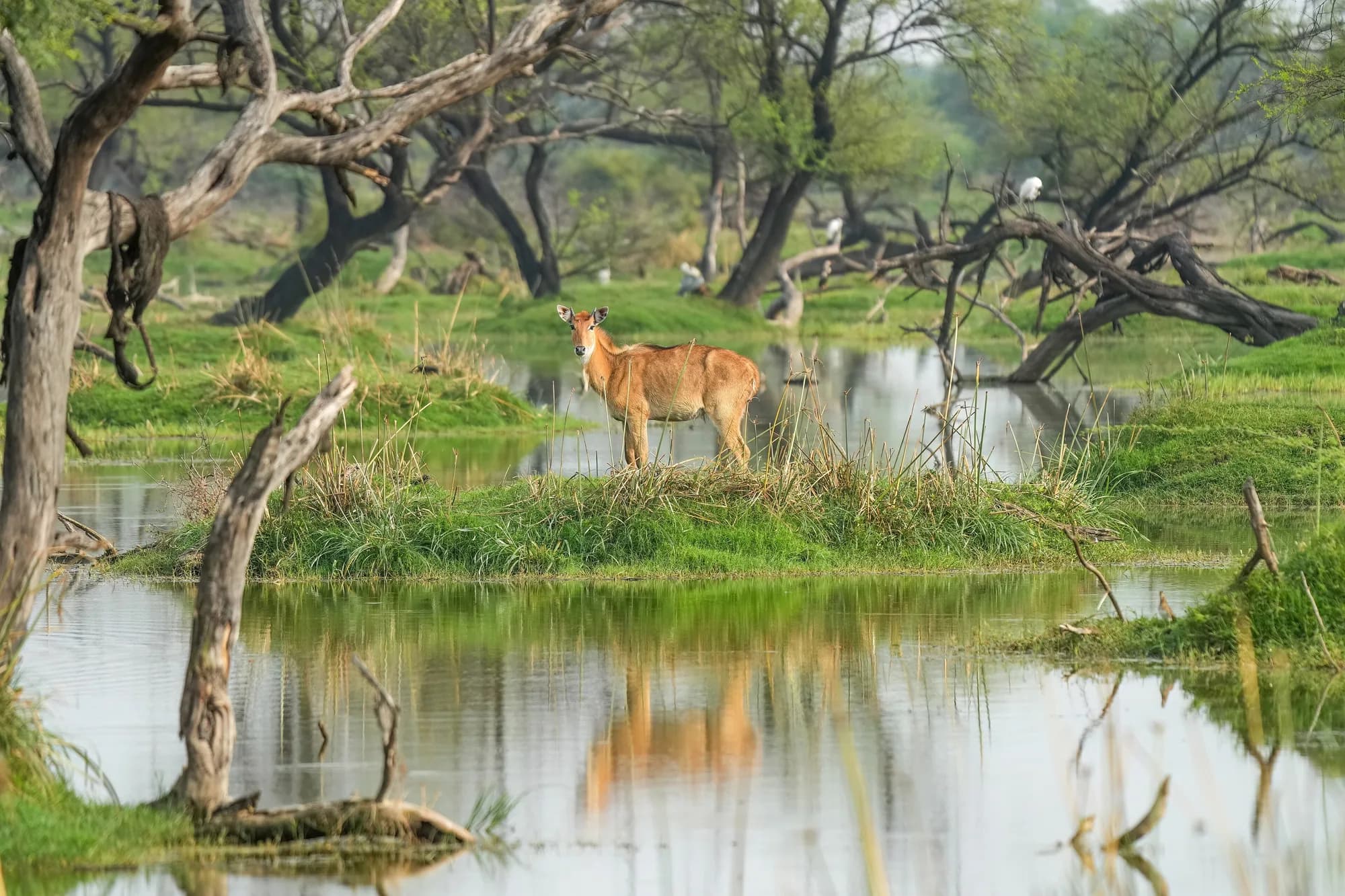 41 · Mammal
Sambar
India's largest deer, and the animal whose alarm call is worth more to you than any pugmark. When a sambar honks, the vehicle should stop.
Every reserve, and the call that matters most
 42 · Mammal
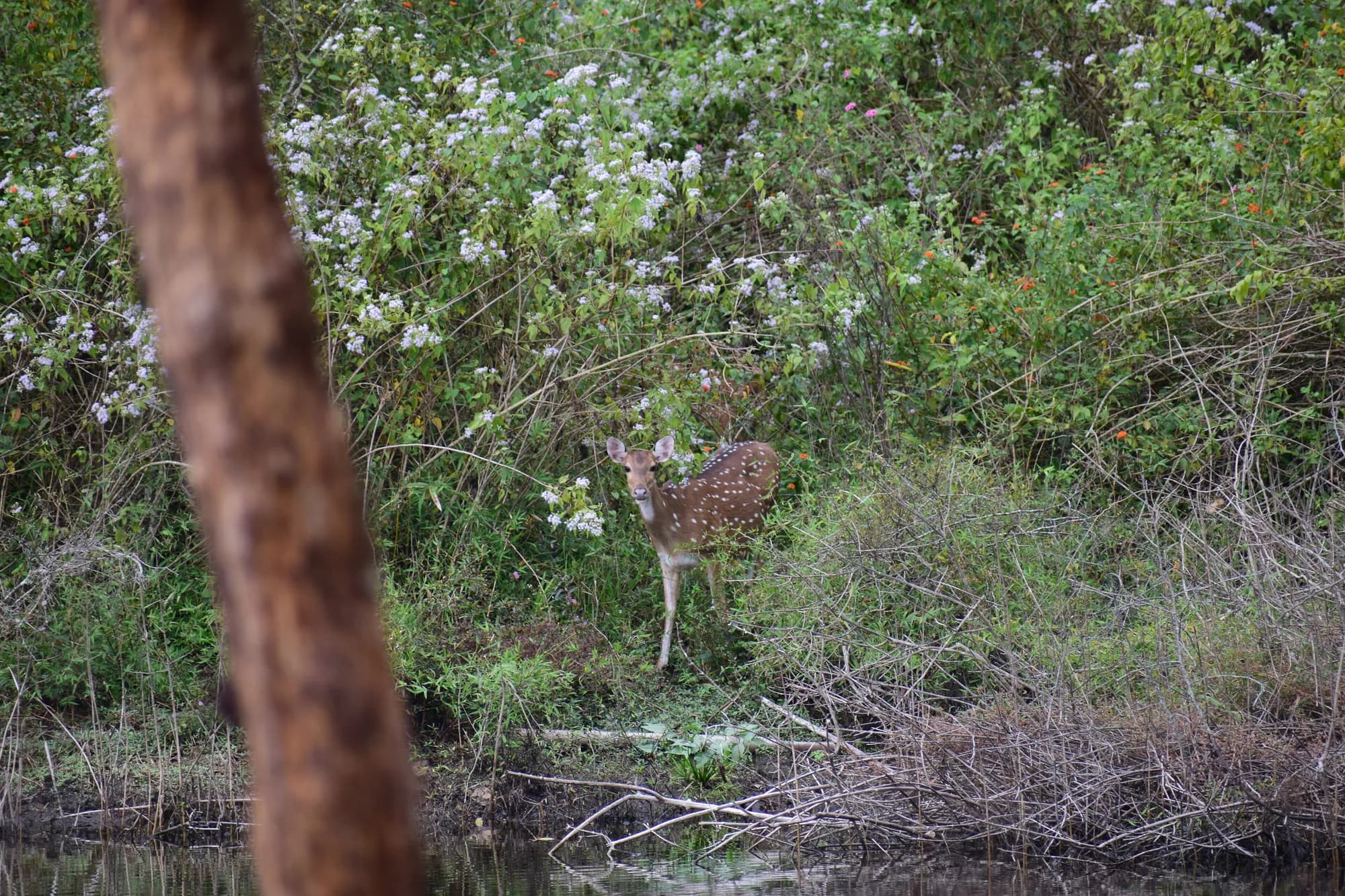
Chital
The spotted deer everyone sees within ten minutes and stops noticing by the second drive. Also the most common alarm call in central India, and the main reason tigers eat.
Every reserve, in very large numbers
 43 · Mammal
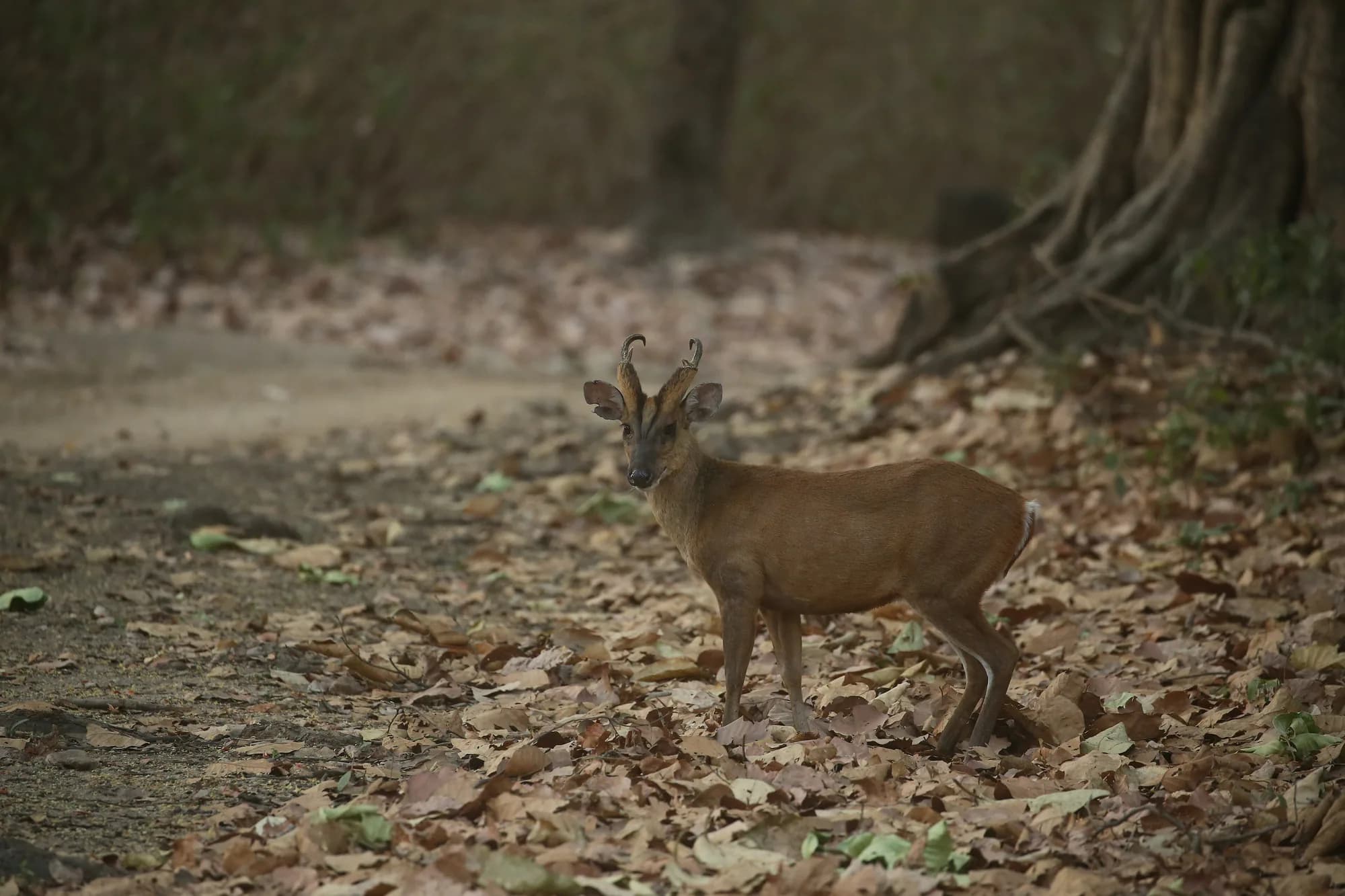
Indian muntjac
A small russet deer with tusks and a bark like a dog, solitary in thick cover. Its call is routinely mistaken for an alarm, and usually is not one.
Heard far more than seen
 44 · Mammal
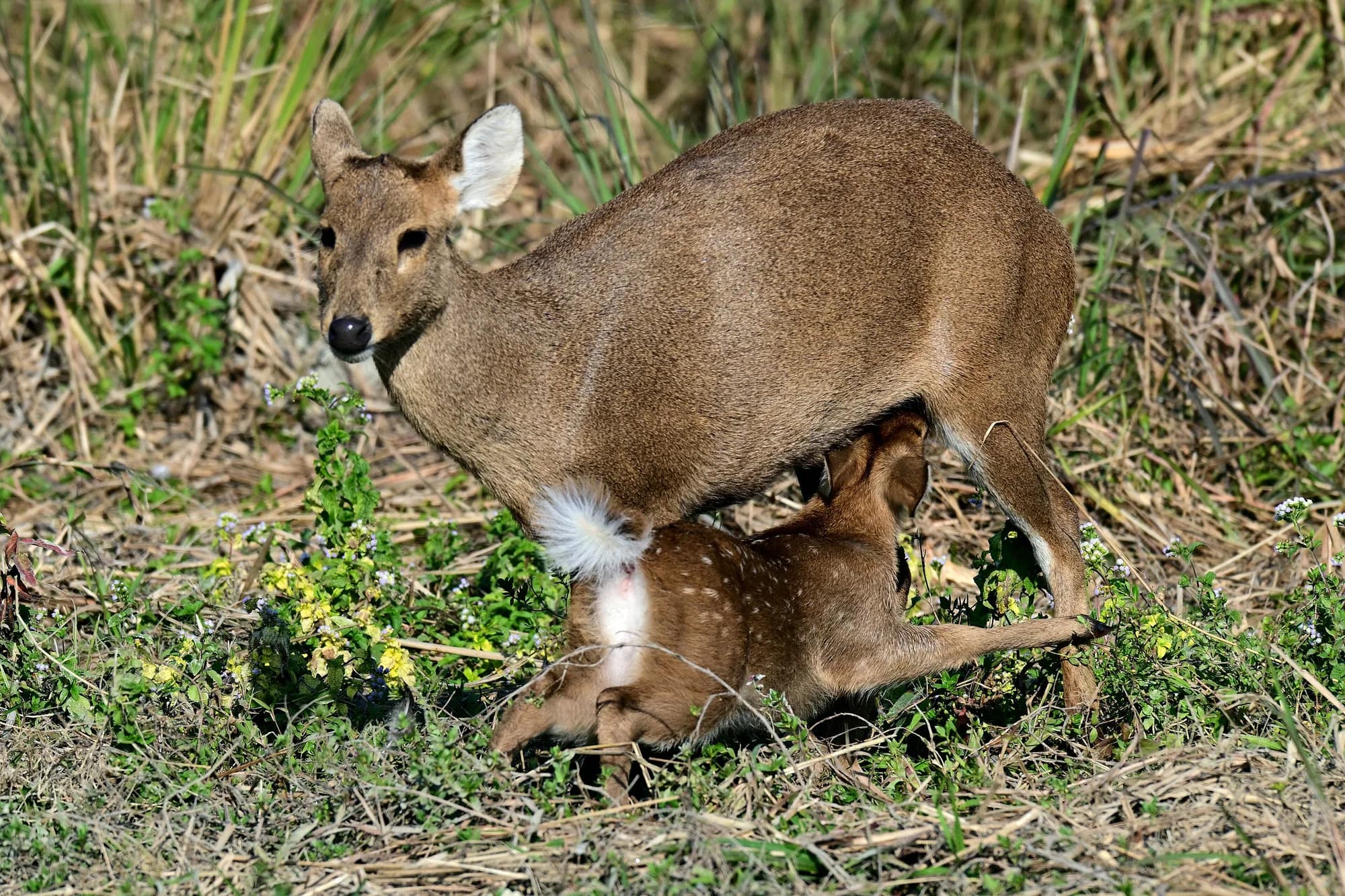
Hog deer
A small, heavy-bodied deer that runs with its head down instead of leaping. It is endangered, it is common where it survives, and in Kaziranga it is the animal chital gets called by mistake.
Tall grassland of the terai and Assam
 45 · Mammal
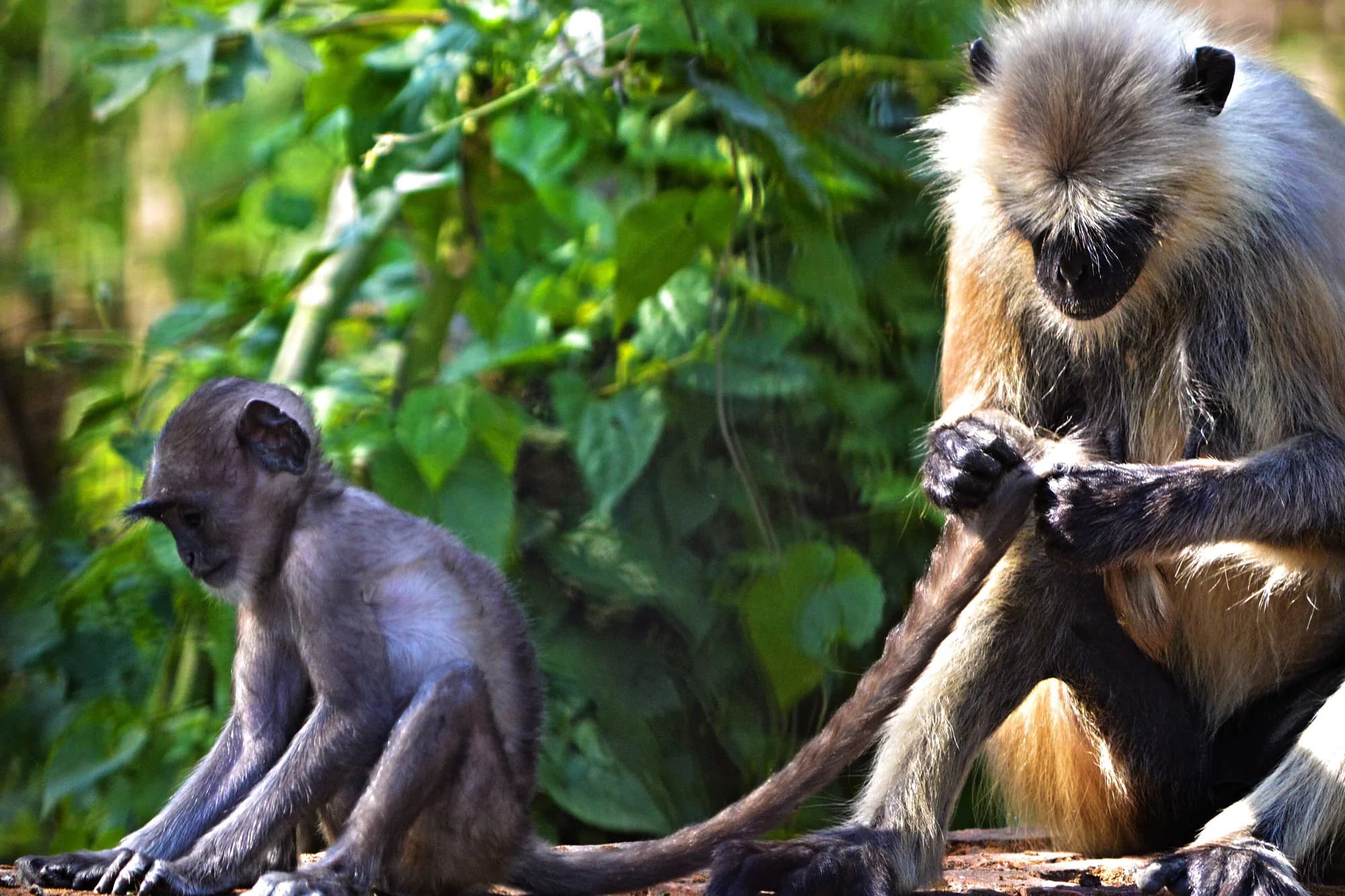
Hanuman langur
Grey, long-tailed and everywhere, and the single most useful animal on a drive. A langur troop has seen the leopard long before your guide has.
Every reserve, and your best spotter
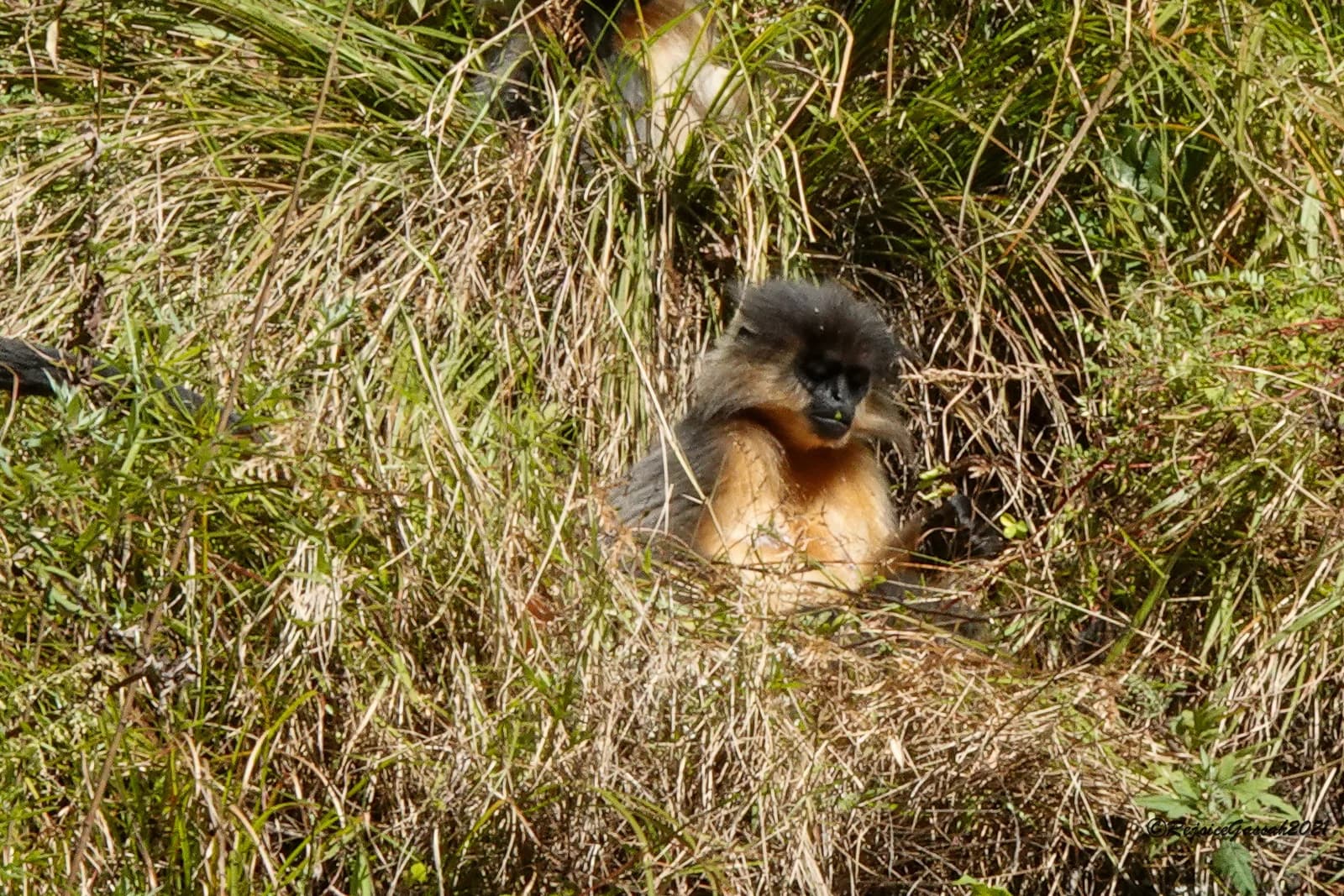 46 · Mammal
Capped langur
The common langur of the Northeast, dark-capped with orange underparts that only show when it moves. It is easy to see and easy to name wrong, because three langurs share that corner of India.
Northeast canopy, above the road
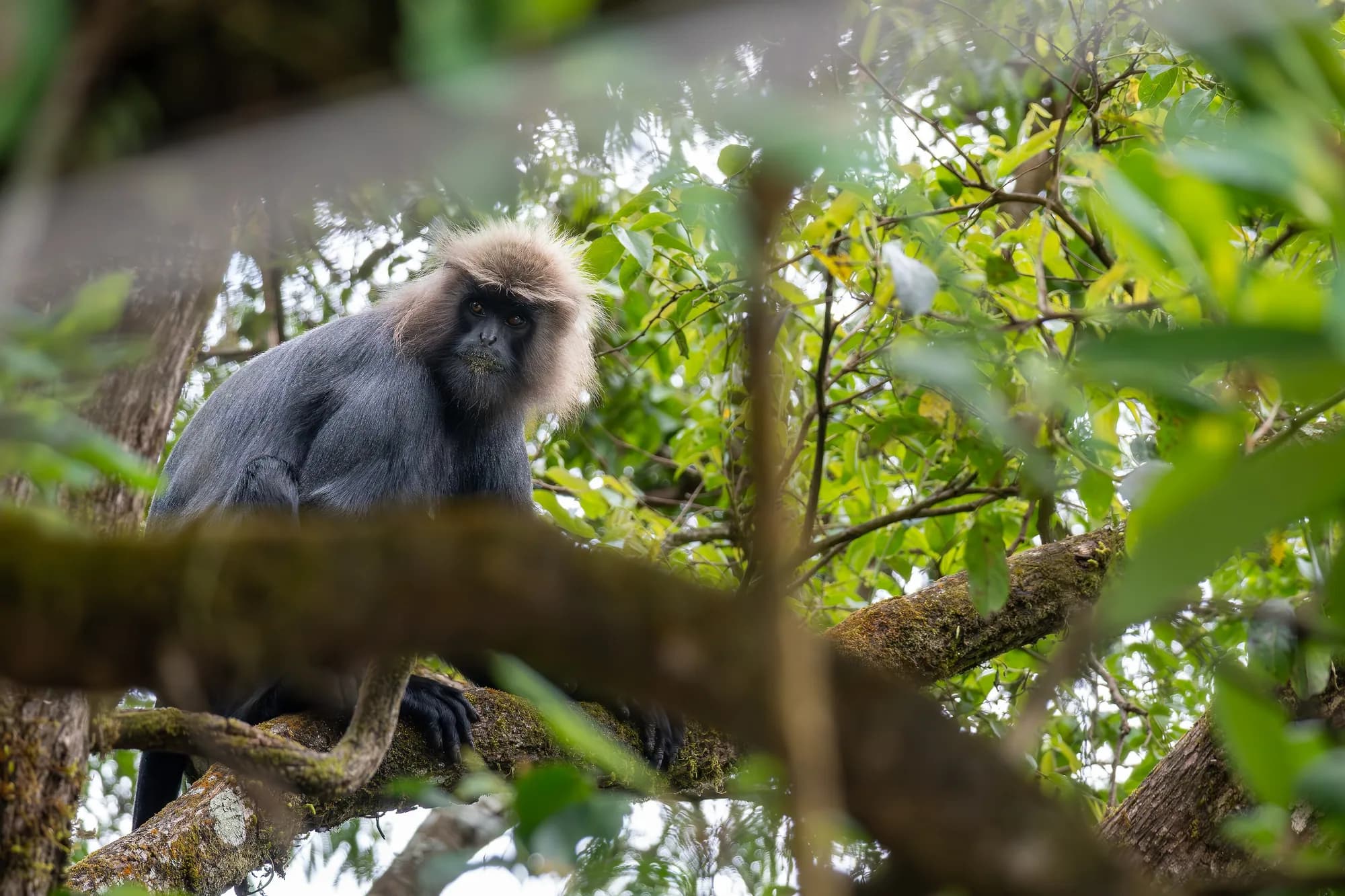 47 · Mammal
Nilgiri langur
Glossy black with a golden head, endemic to the Western Ghats and loud enough to find by ear. It is the easiest Ghats endemic to see, and the one most often mistaken for the lion-tailed macaque people came for.
Western Ghats, and only there
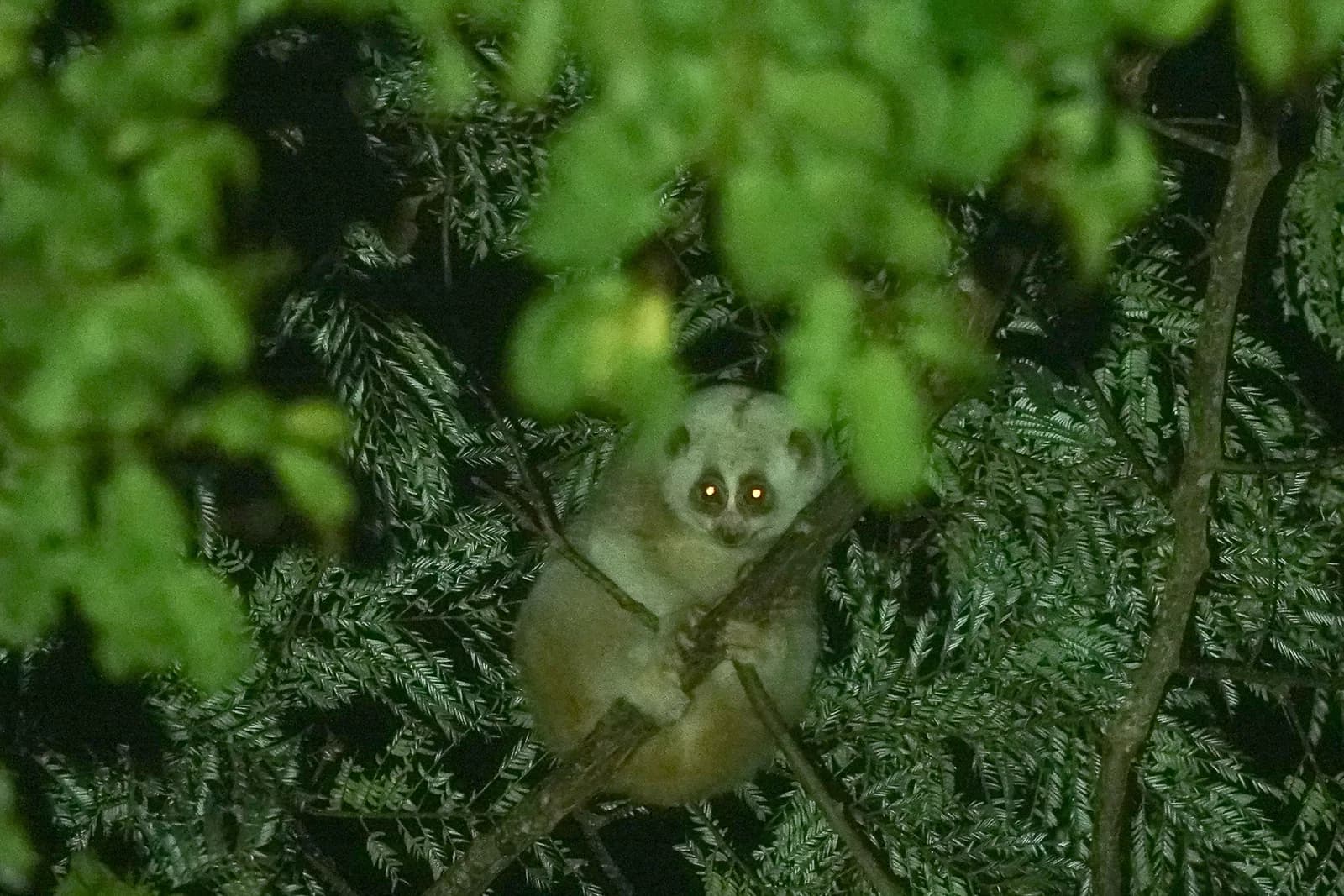 48 · Mammal
Bengal slow loris
India's only nocturnal primate outside the bushbabies of the imagination — slow, silent, and found by eyeshine. It is the single best reason to do a night walk in Assam.
Northeast forest, by torchlight
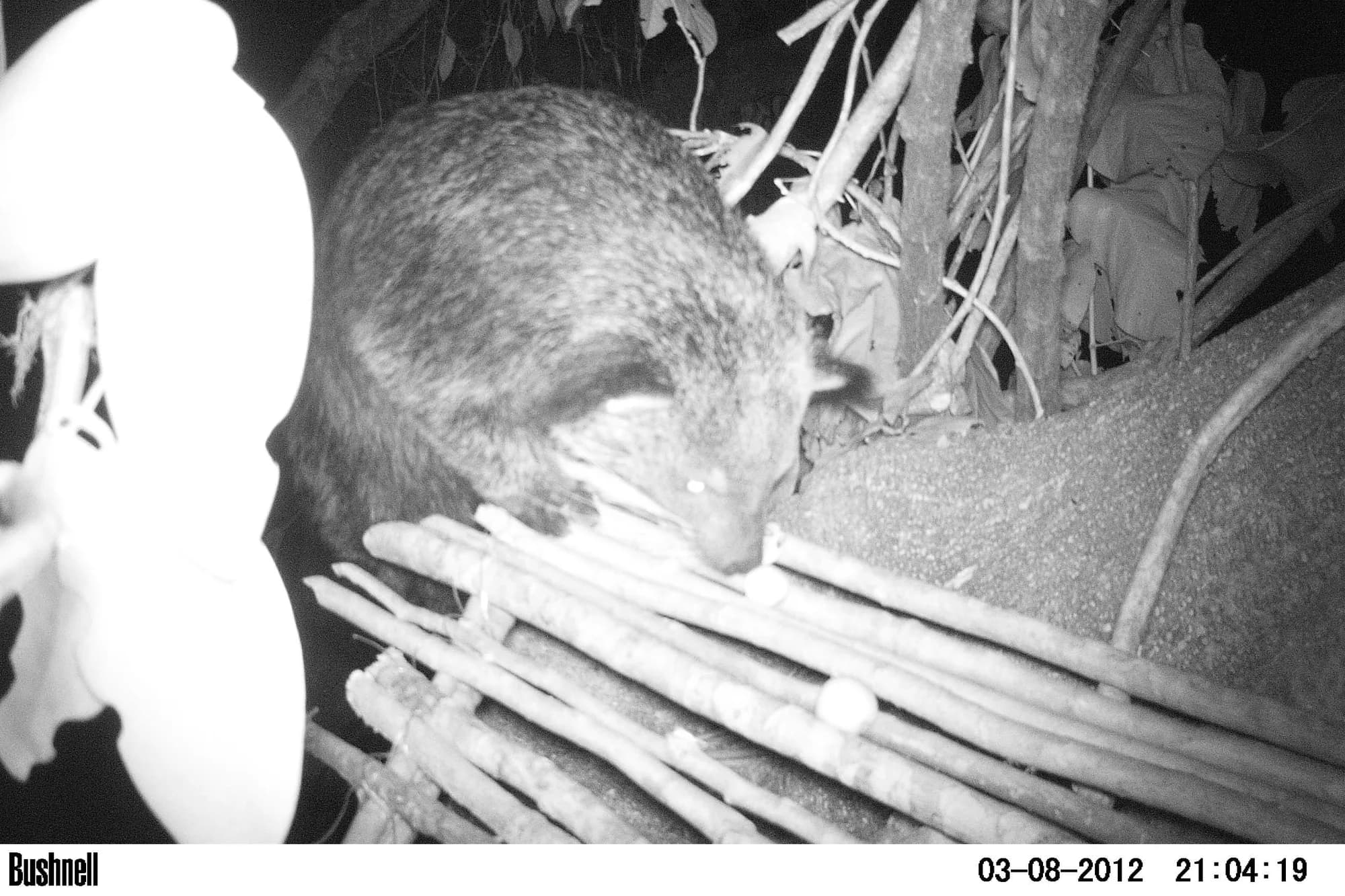 49 · Mammal
Binturong
A shaggy black civet the size of a dog, with a prehensile tail and a smell like hot popcorn. Everyone wants one. Almost nobody gets one.
Northeast canopy, and rarely
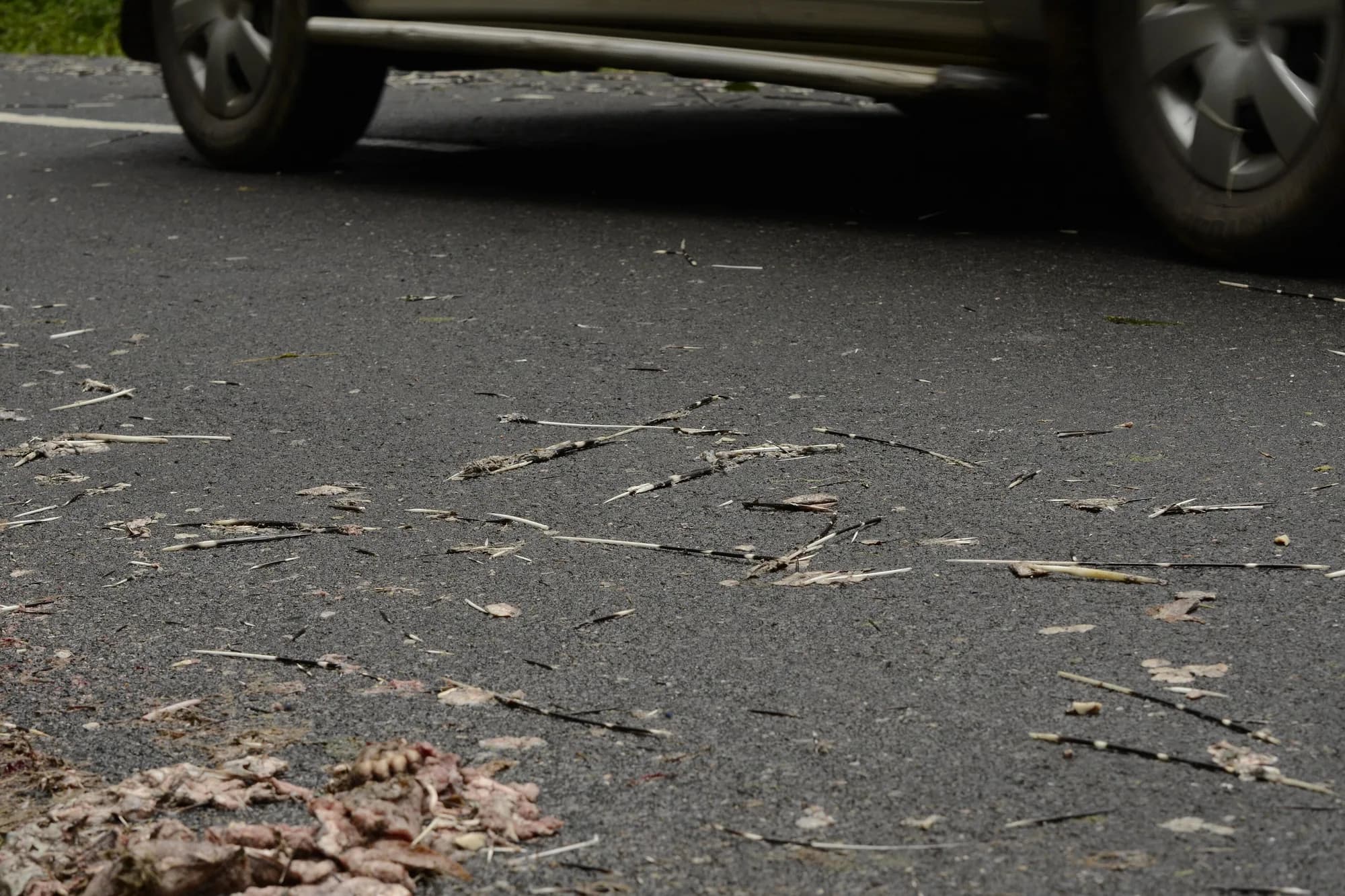 50 · Mammal
Indian crested porcupine
You will find the quills long before you find the animal. A large nocturnal rodent that walks off tigers, and the source of the most commonly picked-up field sign in India.
Quills on the track, animal rarely
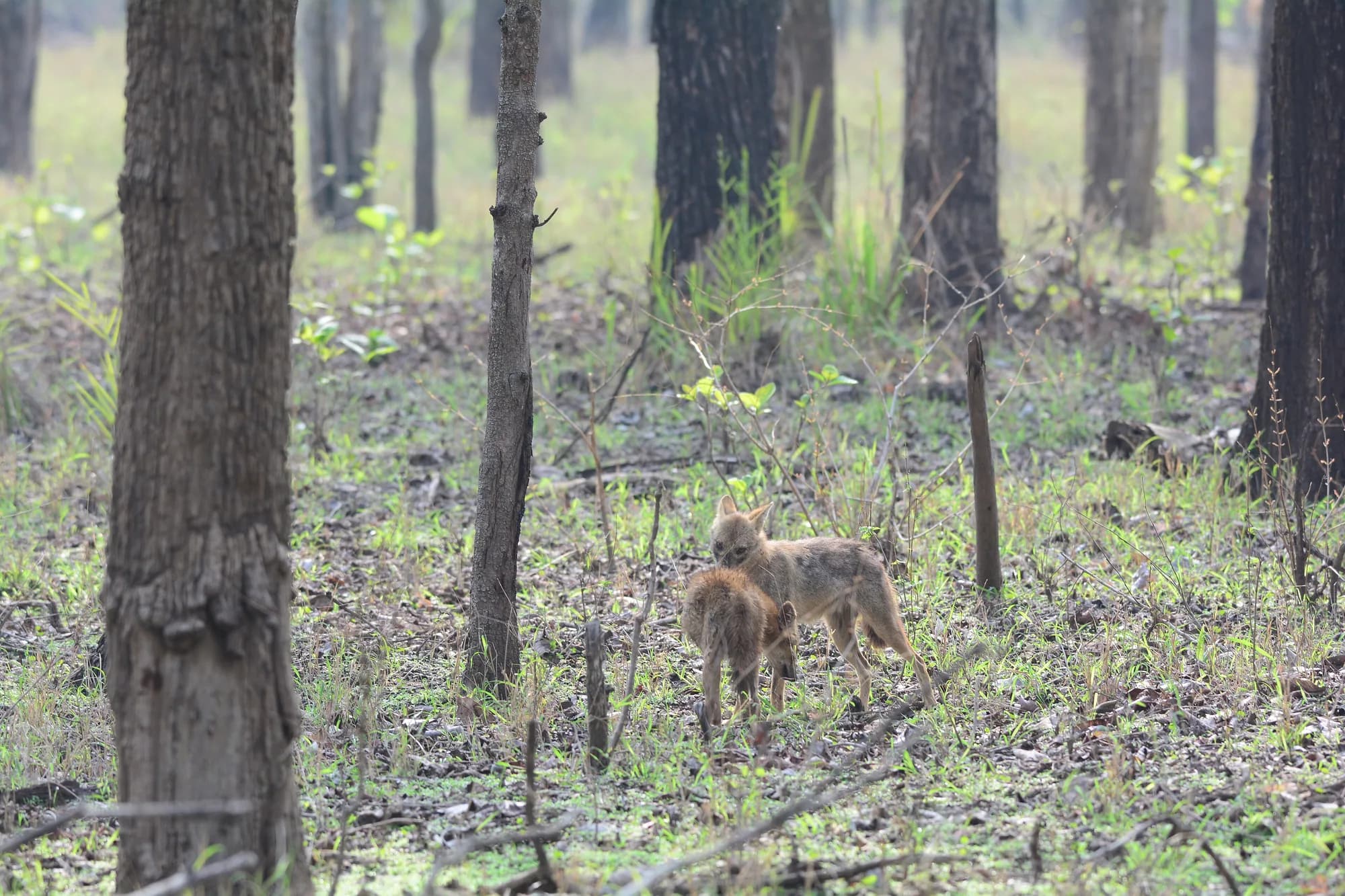 51 · Mammal
Golden jackal
The most widespread wild canid in India, seen on almost every drive and identified as almost everything else. The howling that wakes you at the lodge is this.
Every reserve, and the night chorus
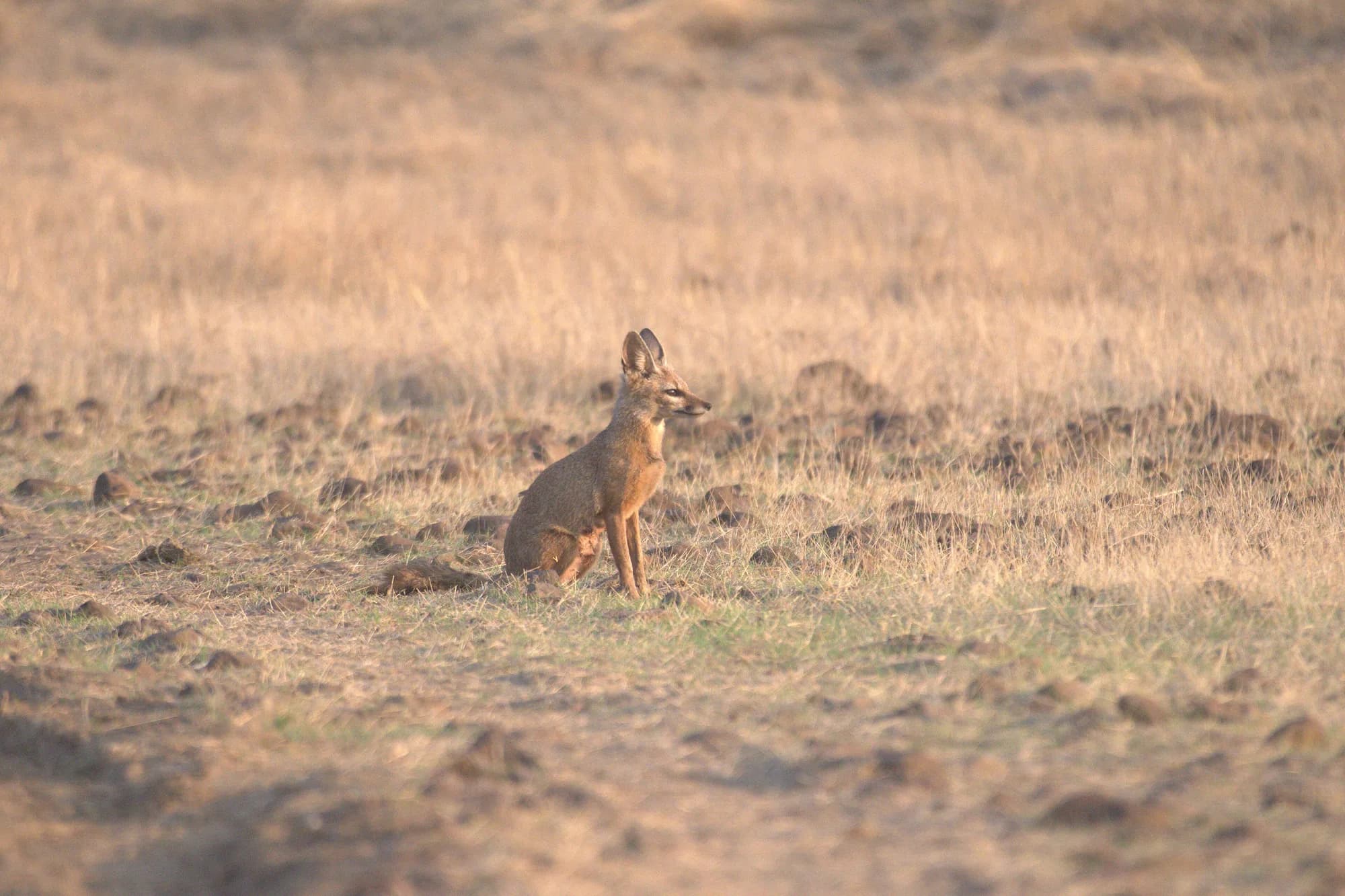 52 · Mammal
Indian fox
A small grassland fox with an enormous bushy black-tipped tail, endemic to the subcontinent, living on ground nobody protects.
Grassland at dusk, and overlooked
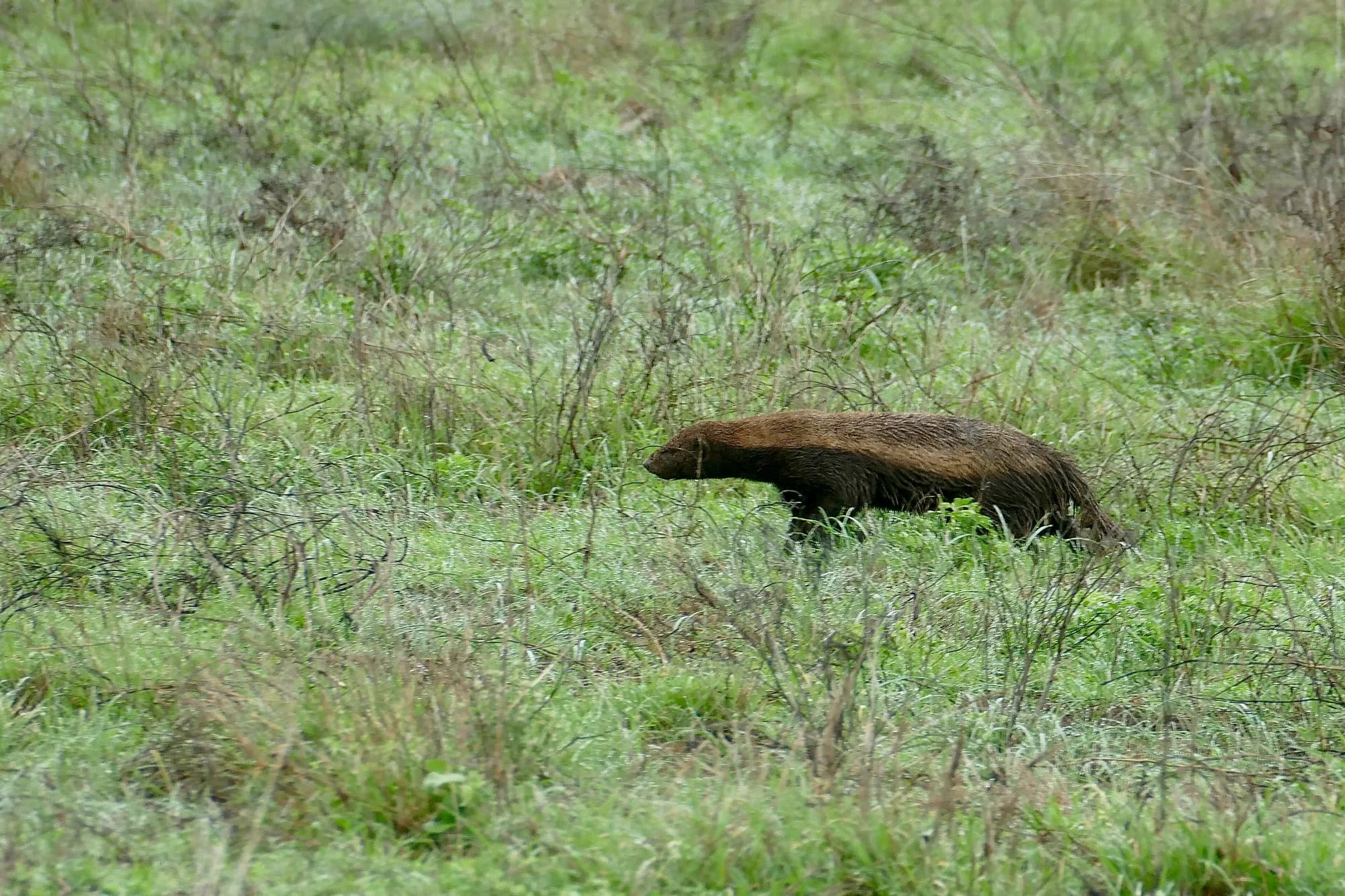 53 · Mammal
Honey badger
Global name recognition from television and near-zero sighting rate in India. Nocturnal, solitary, and genuinely as belligerent as advertised.
Present, and almost never seen
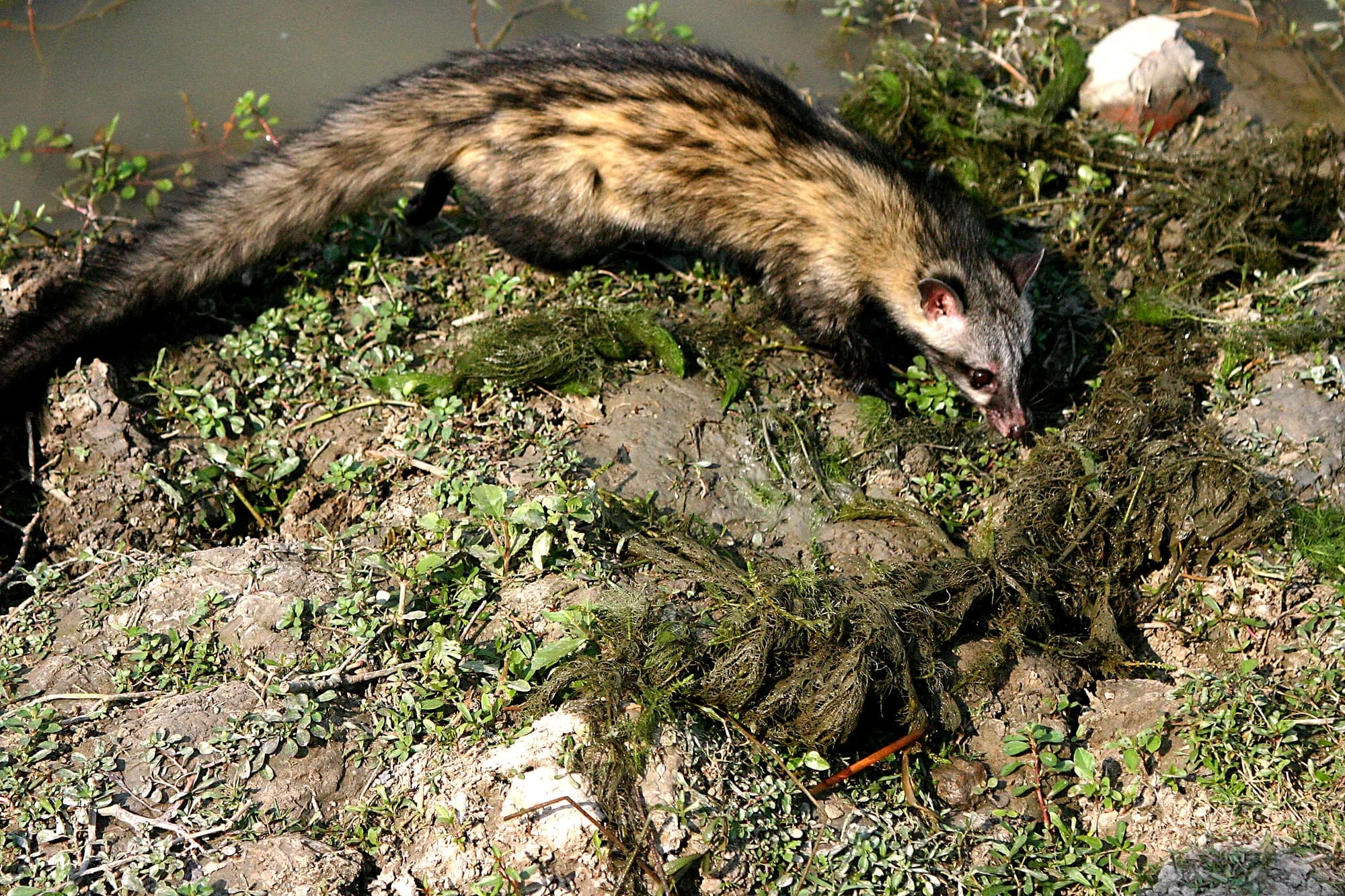 54 · Mammal
Asian palm civet
Grey, long-bodied and entirely nocturnal, sleeping in a roof beam by day and eating fruit by night. The mammal you are most likely to actually see after dark in India.
The most likely animal on a night drive
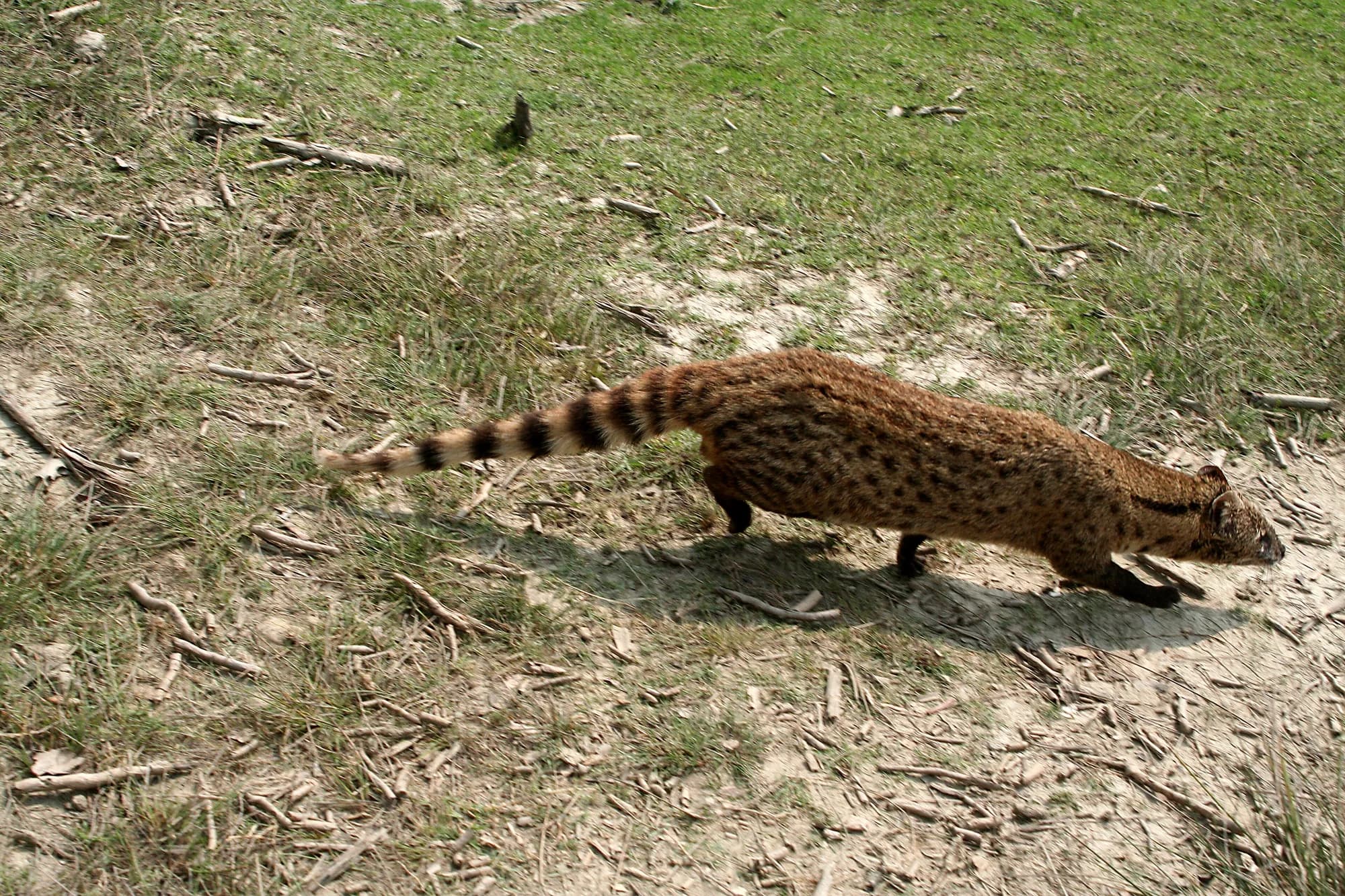 55 · Mammal
Small Indian civet
Spotted, banded-tailed and far more terrestrial than the palm civet it is constantly confused with. A regular on any Indian night drive, and rarely named correctly.
Night drives, on the ground
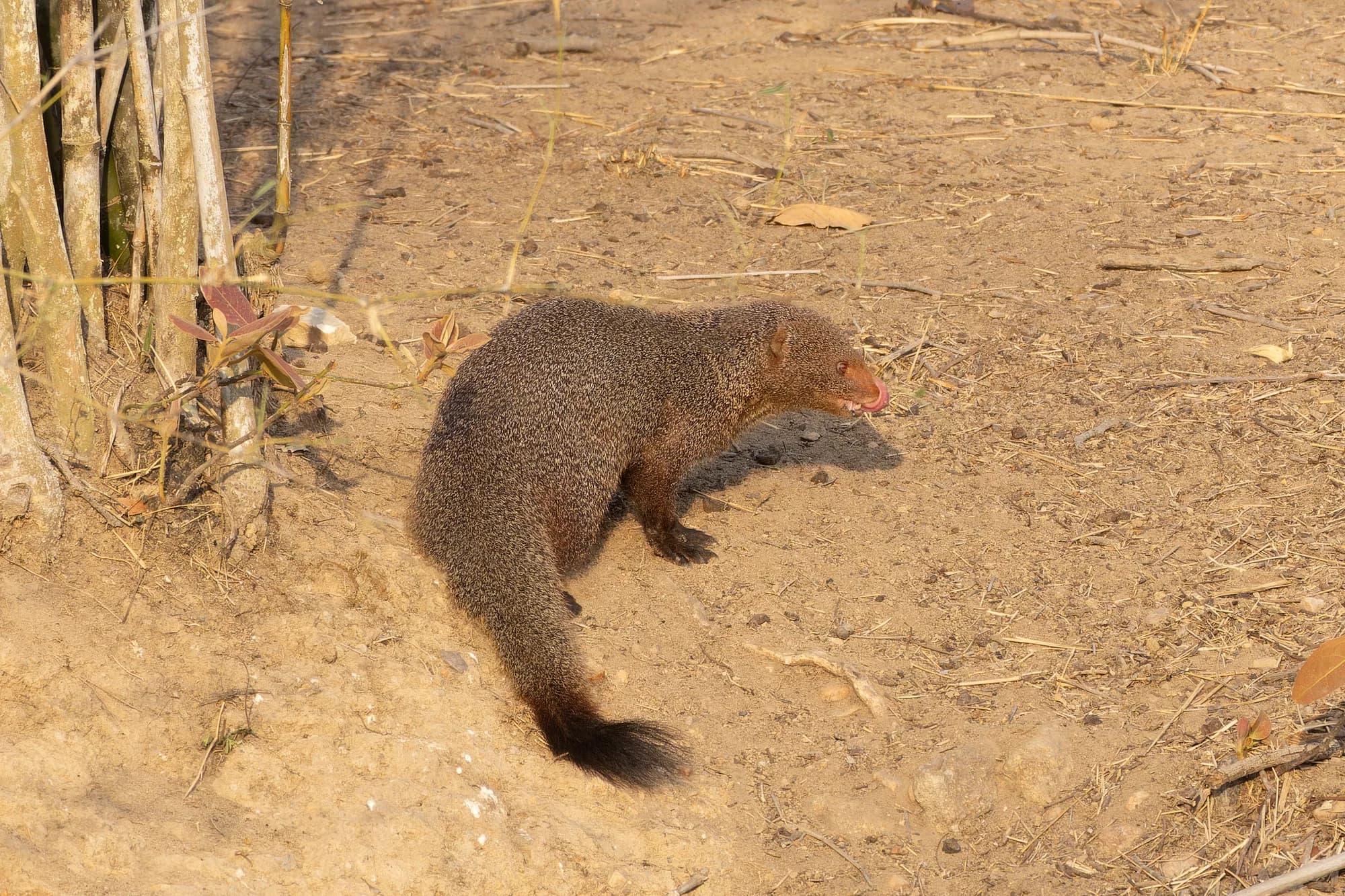 56 · Mammal
Ruddy mongoose
The forest mongoose, told from the common grey one by a black-tipped tail carried curled upward. Diurnal, confiding, and on almost every drive.
Forest tracks, tail held curled
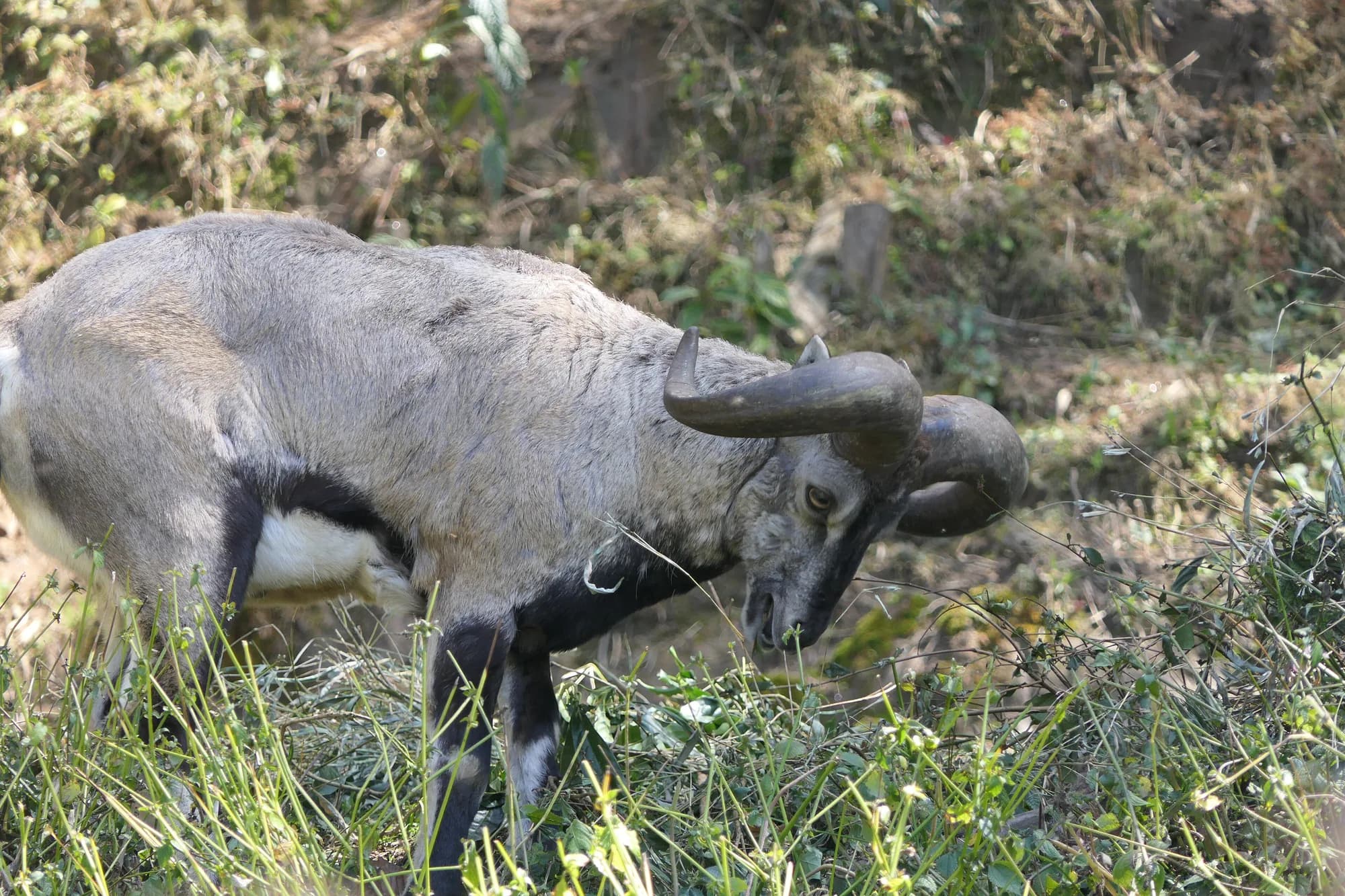 57 · Mammal
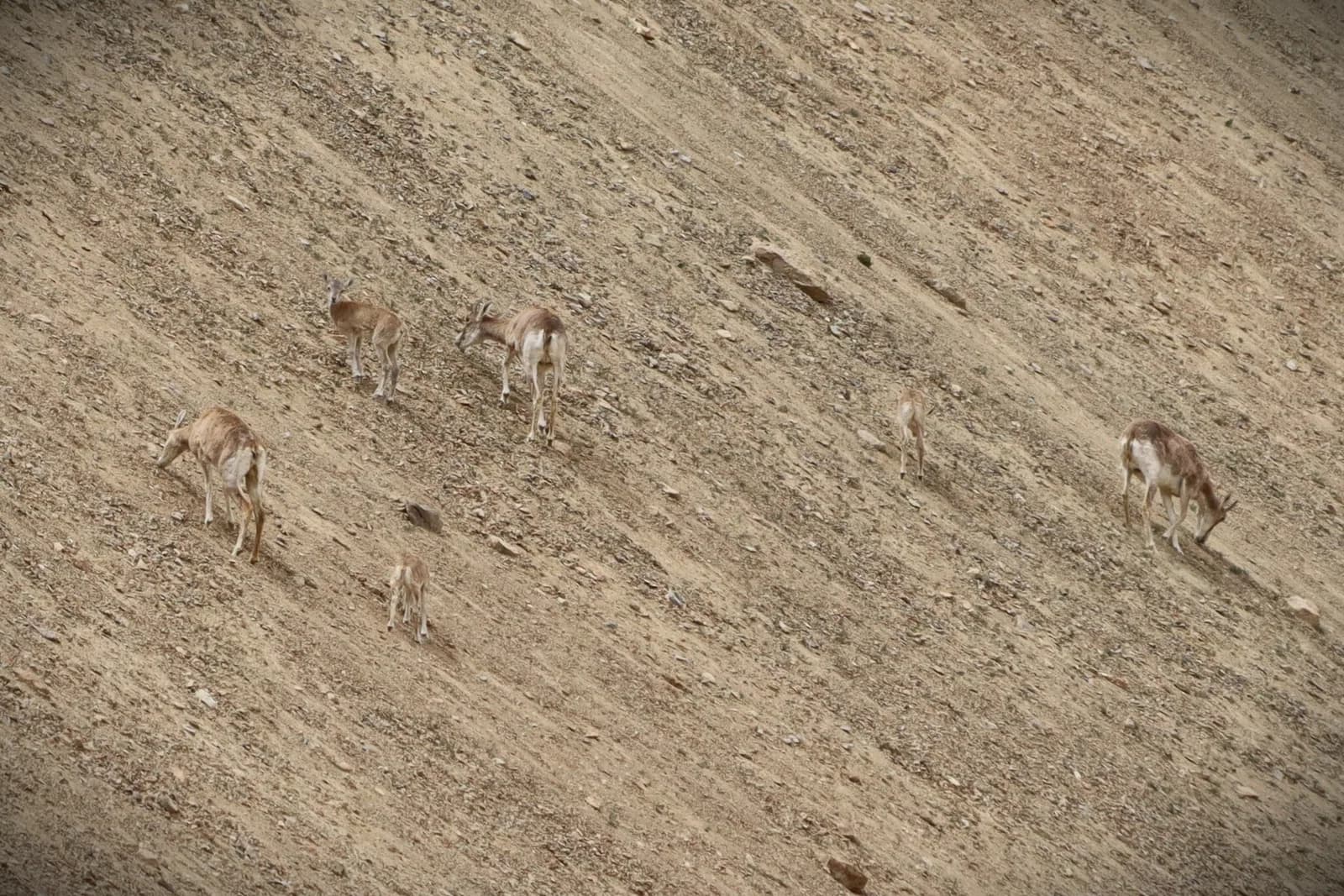
Blue sheep
Neither blue nor a sheep, and the animal a snow leopard trip actually revolves around. If you are watching bharal, you are watching the right slope.
Ladakh and Spiti, above the treeline
 58 · Mammal
Asiatic ibex
A big wild goat with scimitar horns, living on ground steep enough that nothing can follow it. It is the prey base that puts a snow leopard on a slope in Spiti, the way bharal does in Ladakh.
Cliff and crag above Spiti and Ladakh
 59 · Mammal
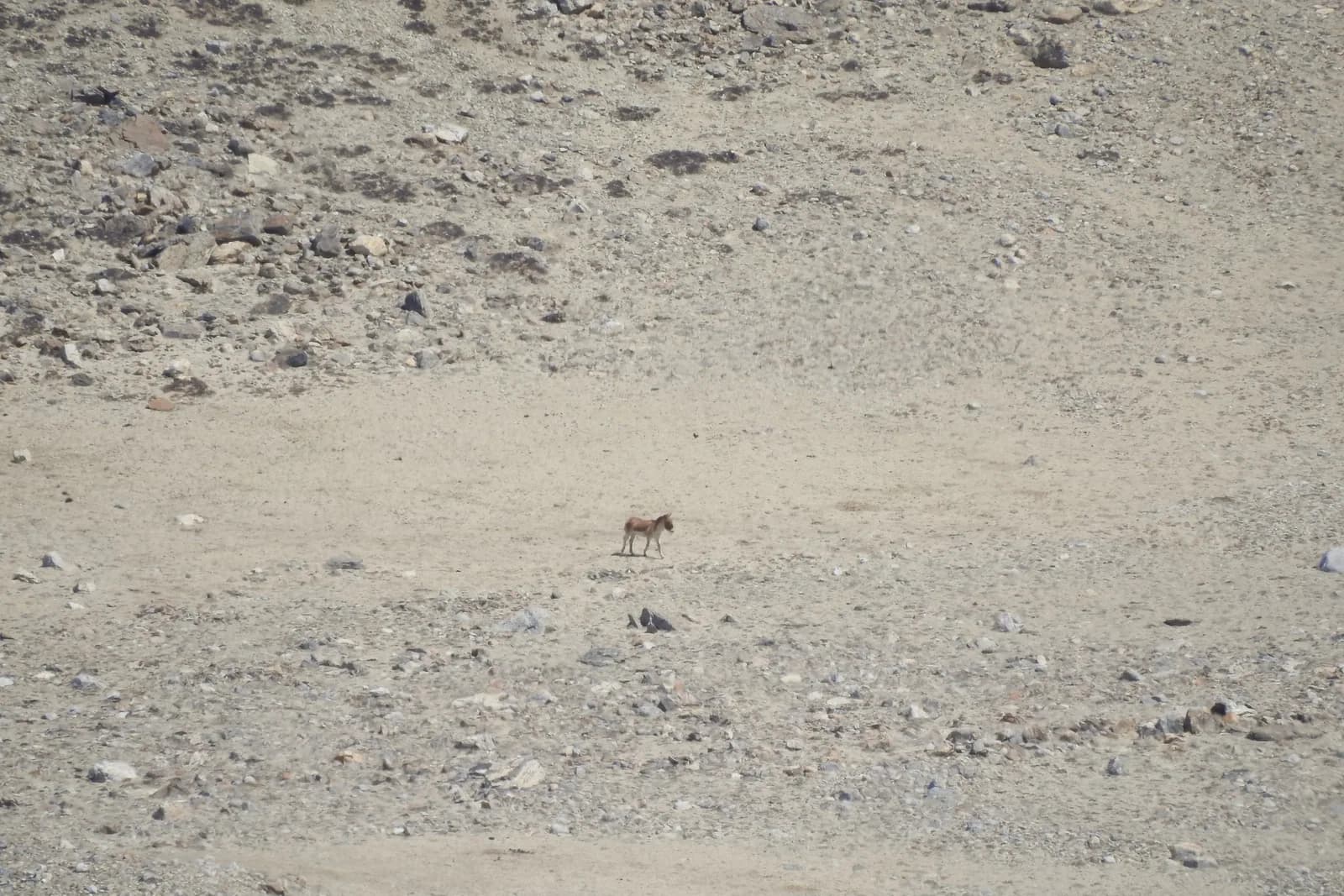
Kiang
The Tibetan wild ass — chestnut, white-bellied, and the defining large mammal of eastern Ladakh. It is the one big animal on the Changthang you are almost certain to see.
The Changthang plains, in herds
 60 · Mammal
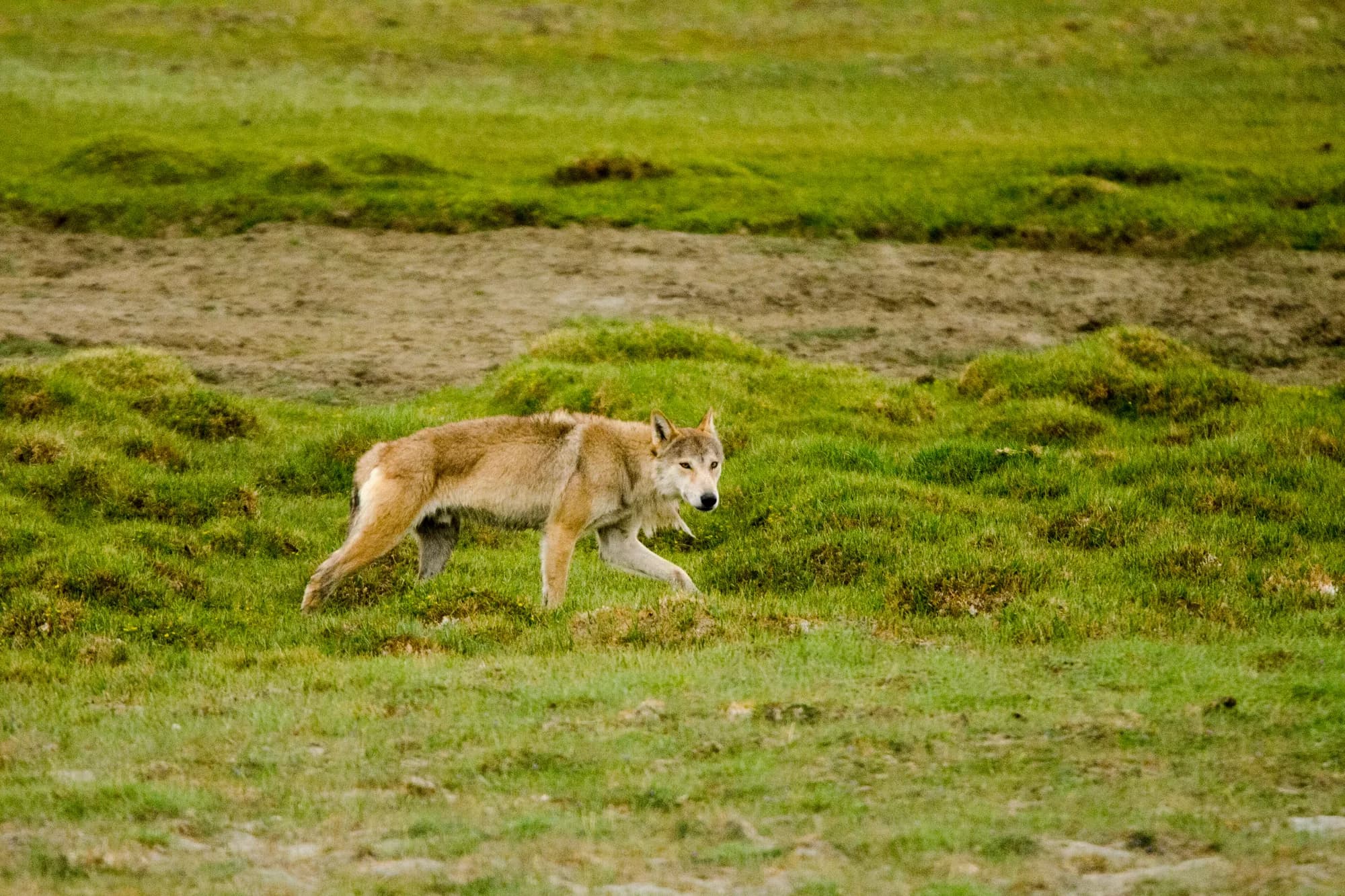
Tibetan wolf
The wolf of the high plateau — woolly, pale, and far more often seen on a snow leopard trip than anyone books it for. It is also the most persecuted large carnivore in Ladakh.
Open plateau, crossing at distance
 61 · Mammal
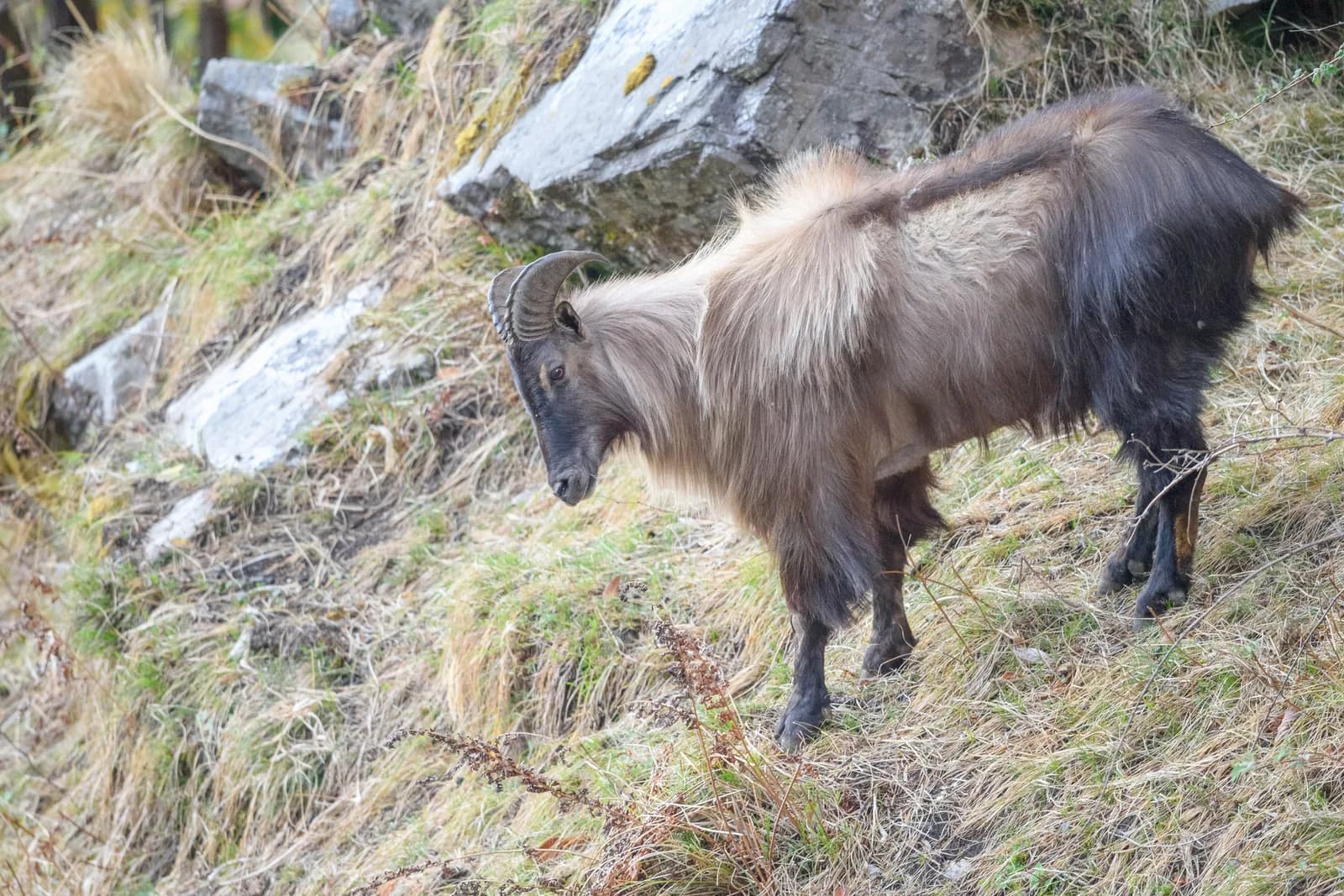
Himalayan tahr
A shaggy red-brown goat of the western and central Himalaya, the males maned like something from a bestiary. It shares a name with the Nilgiri tahr and nothing else — they live 2,000 kilometres apart.
Steep forested slopes below the crags
 62 · Mammal
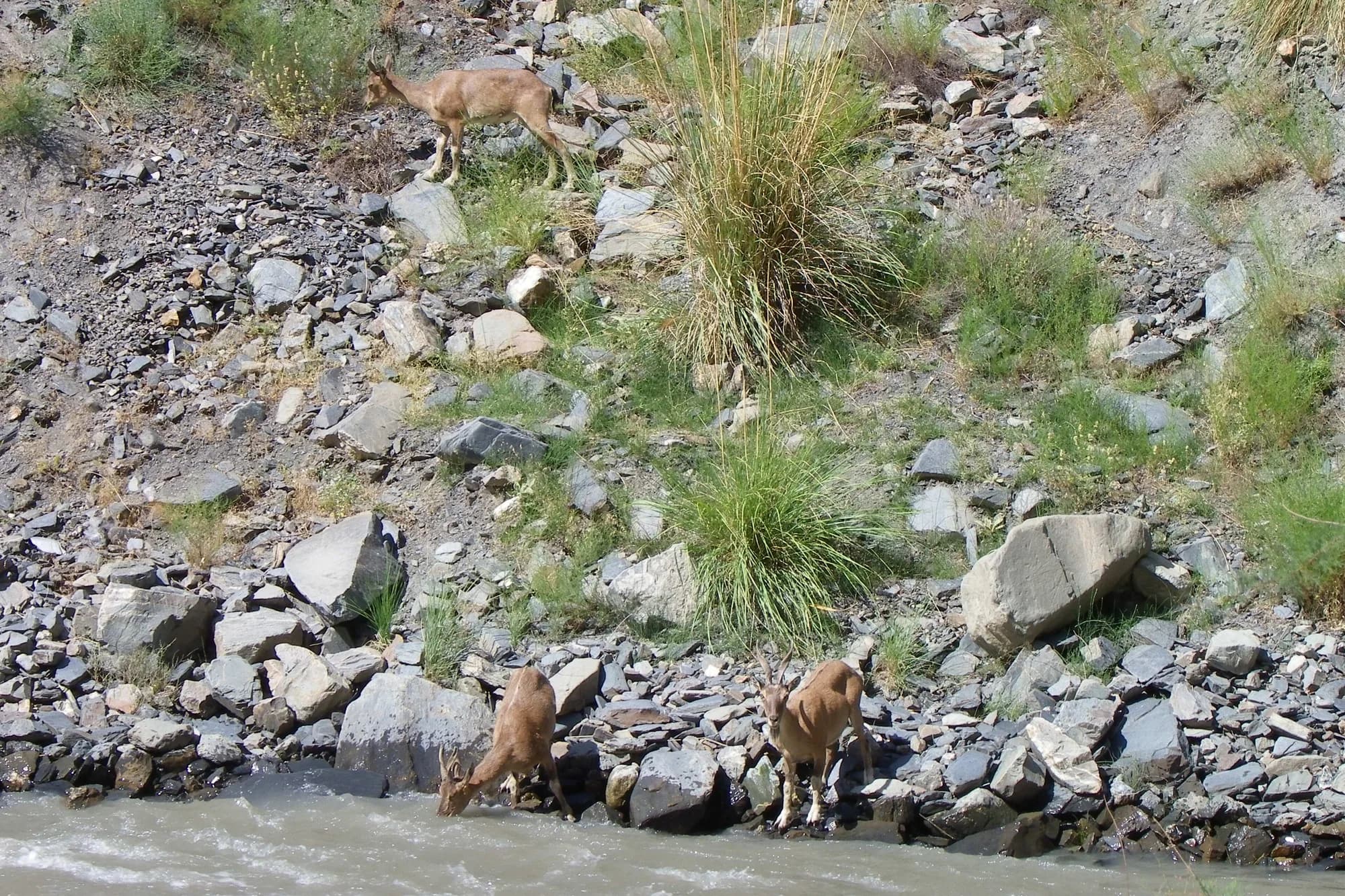
Markhor
The corkscrew-horned wild goat, and the scarcest large mammal in this catalogue. India holds a few hundred animals in a handful of Kashmir valleys, and seeing one takes a permit, a guide and a good deal of luck.
A few valleys in the Pir Panjal
 63 · Mammal
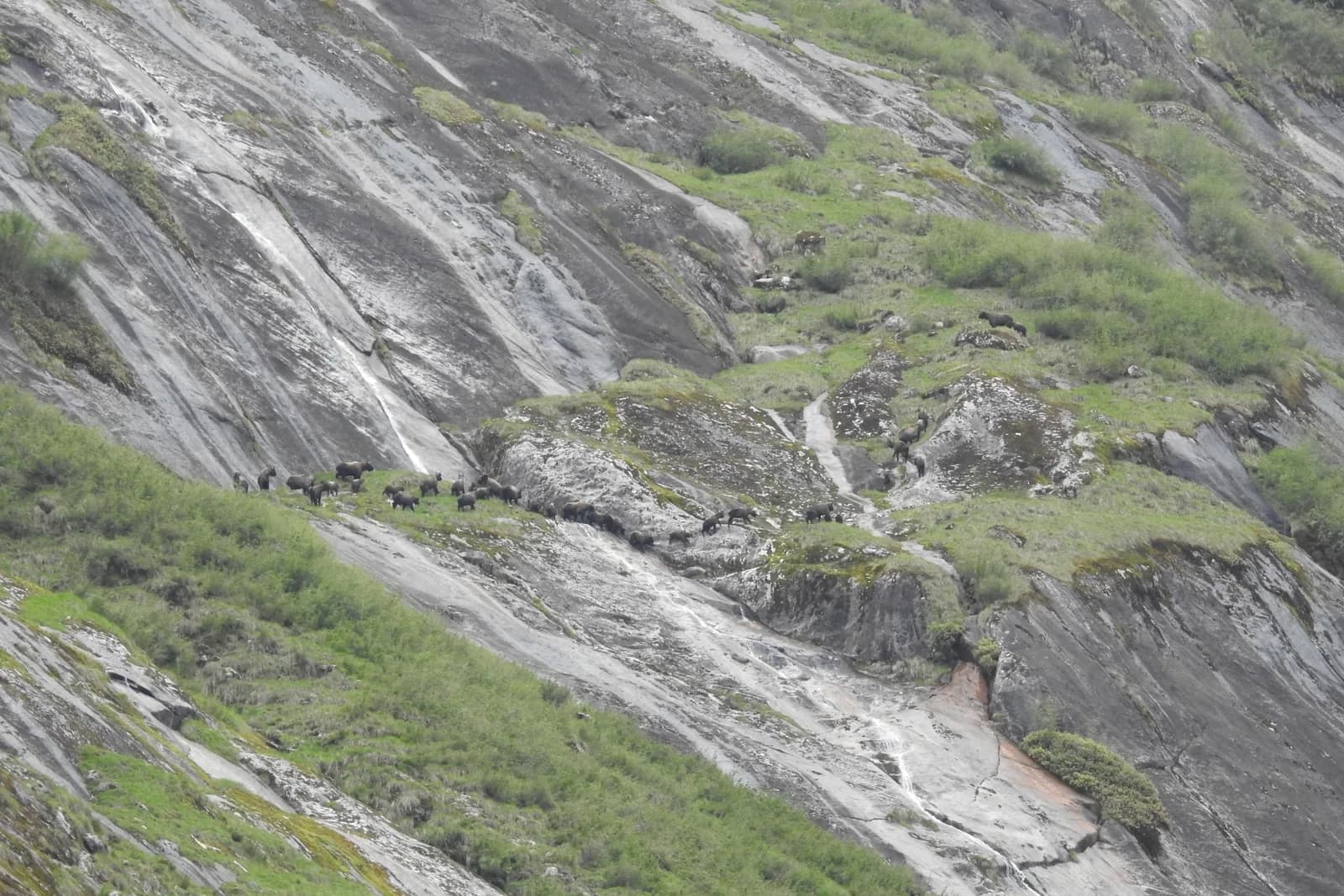
Mishmi takin
A heavy, humped, Roman-nosed animal that looks assembled from spare parts, in one of the least-visited corners of India. Almost no wildlife trip in the country goes anywhere near it.
Eastern Arunachal, and very few visitors
 64 · Mammal
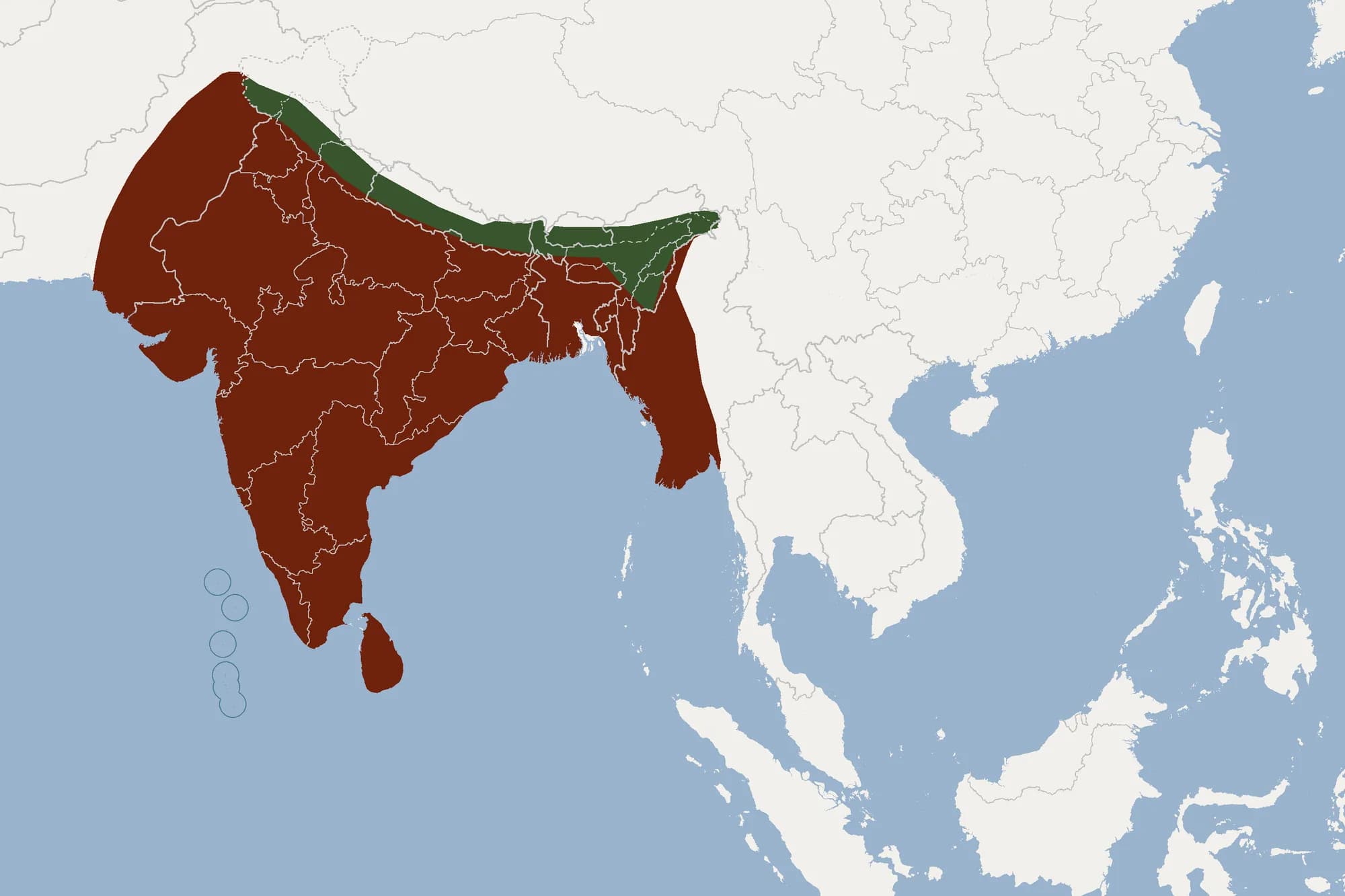
Indian flying fox
One of the largest bats in the world, hanging in hundreds from a single roost tree in broad daylight. The mammal most visitors photograph without meaning to.
A daytime roost, and it is a spectacle
 65 · Mammal
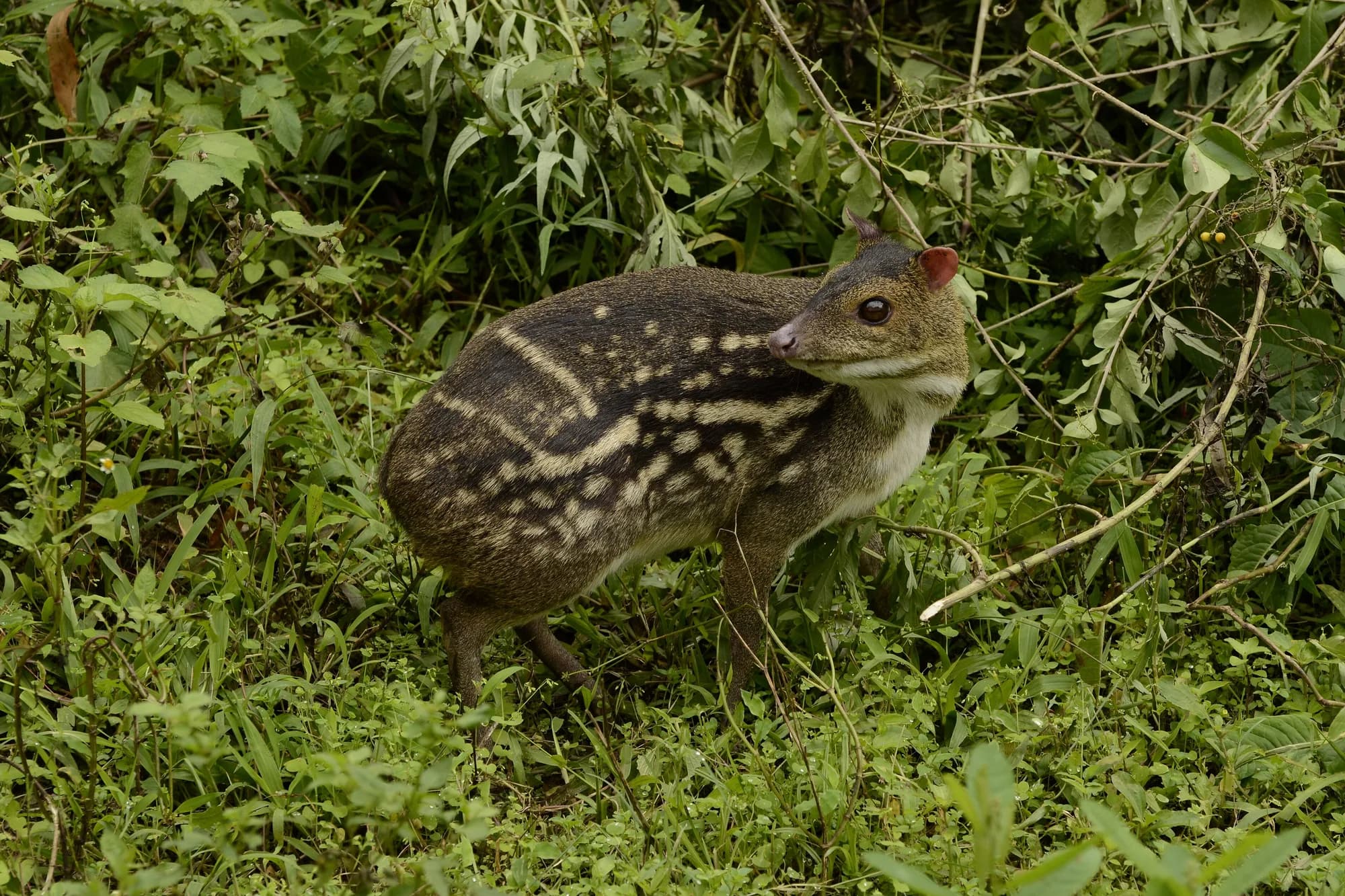
Indian chevrotain
Neither a mouse nor a deer, the size of a hare, spotted and striped, on legs the thickness of a pencil. One of the oldest ruminant lineages alive, and a night-drive prize.
A night drive in the Ghats, in the torch beam
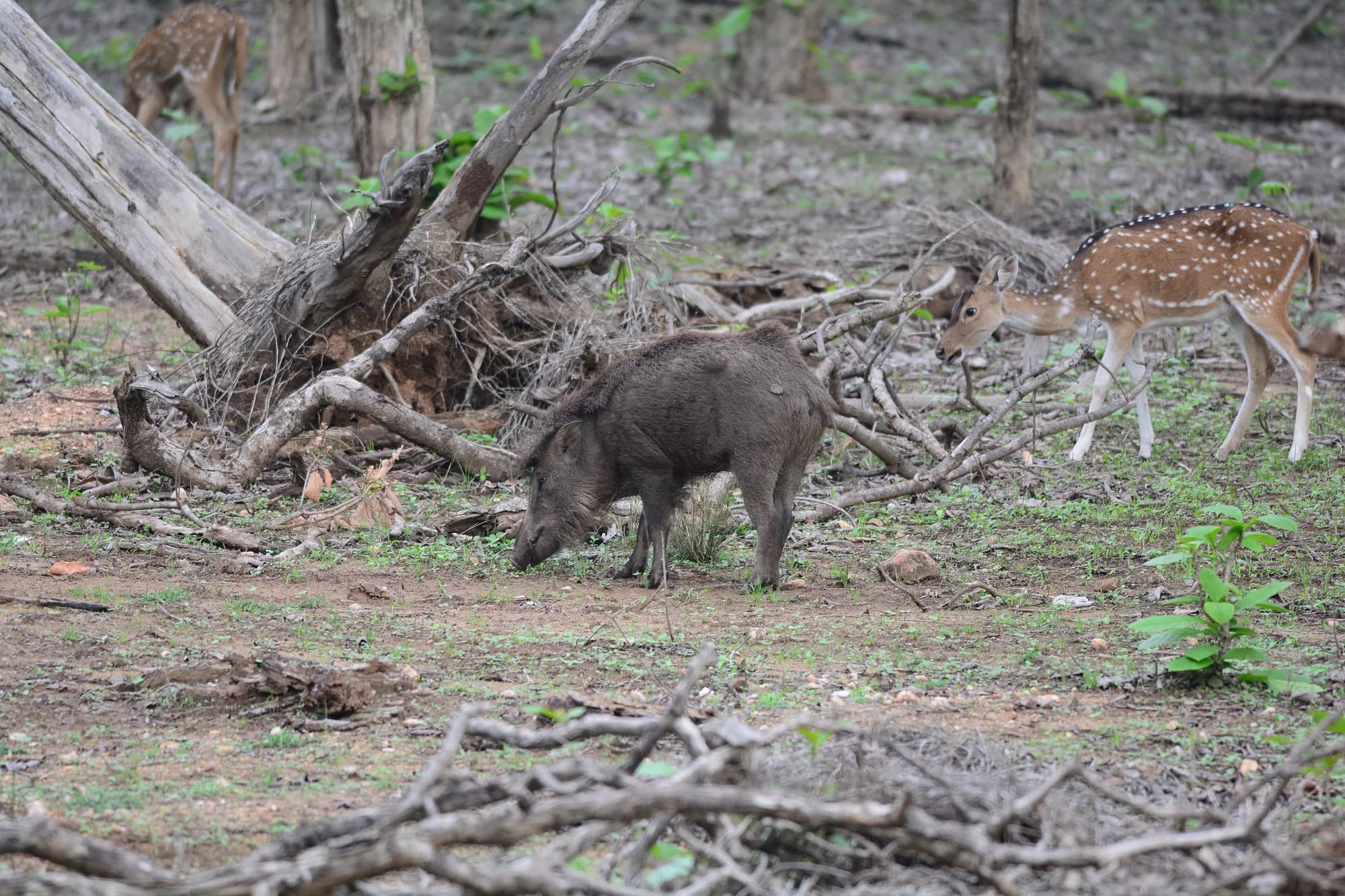 66 · Mammal
Indian wild boar
Seen on every drive, respected by every guide, and the animal that most often explains an alarm call that was not about a cat.
Every reserve, and major prey
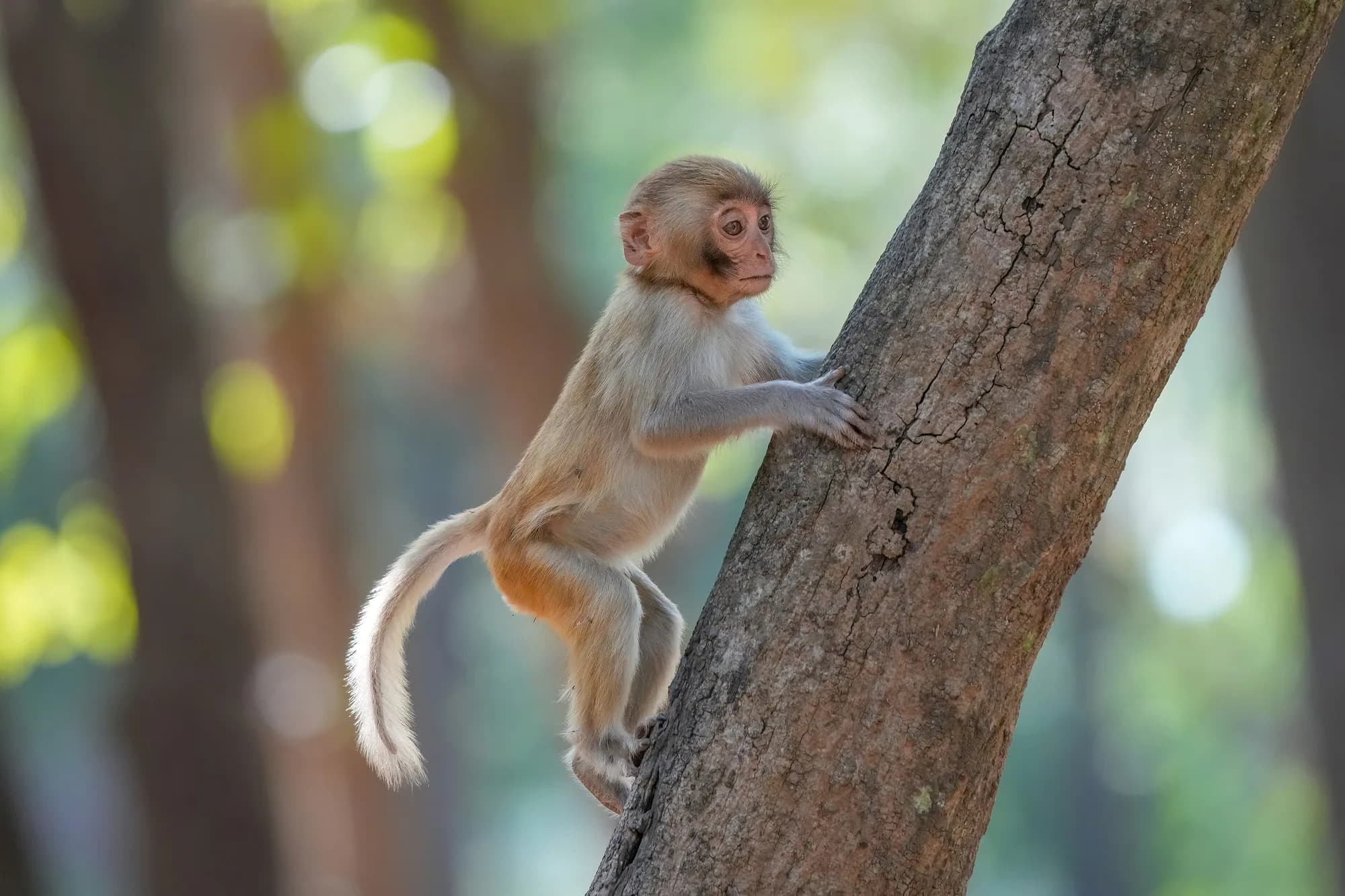 67 · Mammal
Rhesus macaque
The monkey you will actually meet: at temples, on roadsides, at park gates and on your lodge roof. Not a target species, and the one most likely to cost you a hospital visit.
Everywhere in the north — including the car park
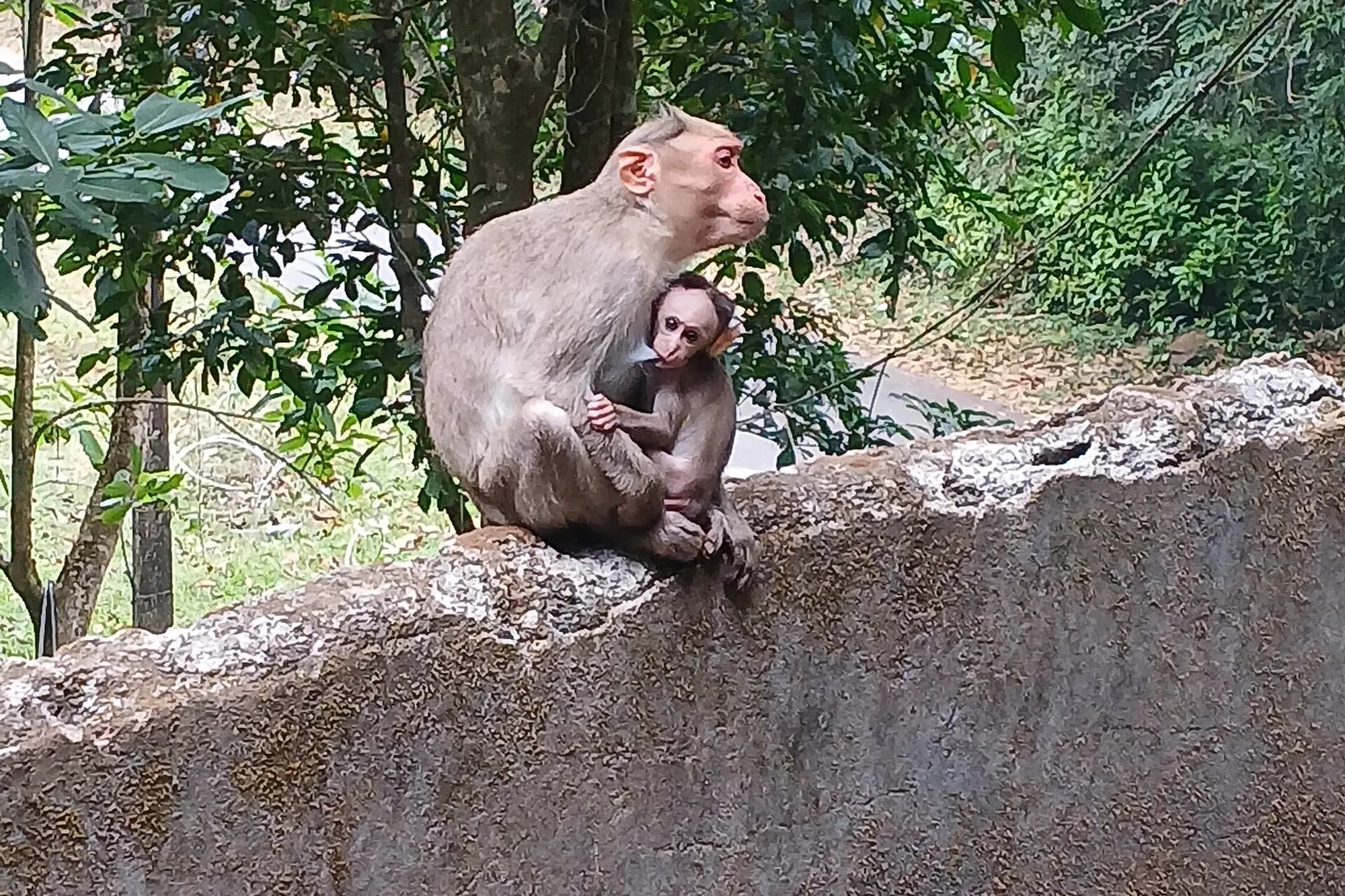 68 · Mammal
Bonnet macaque
The southern macaque, named for the neat parting of hair on its crown. It is the monkey on every Ghats roadside, it is now formally in decline, and almost nobody photographs it on purpose.
Peninsular India, usually on the road
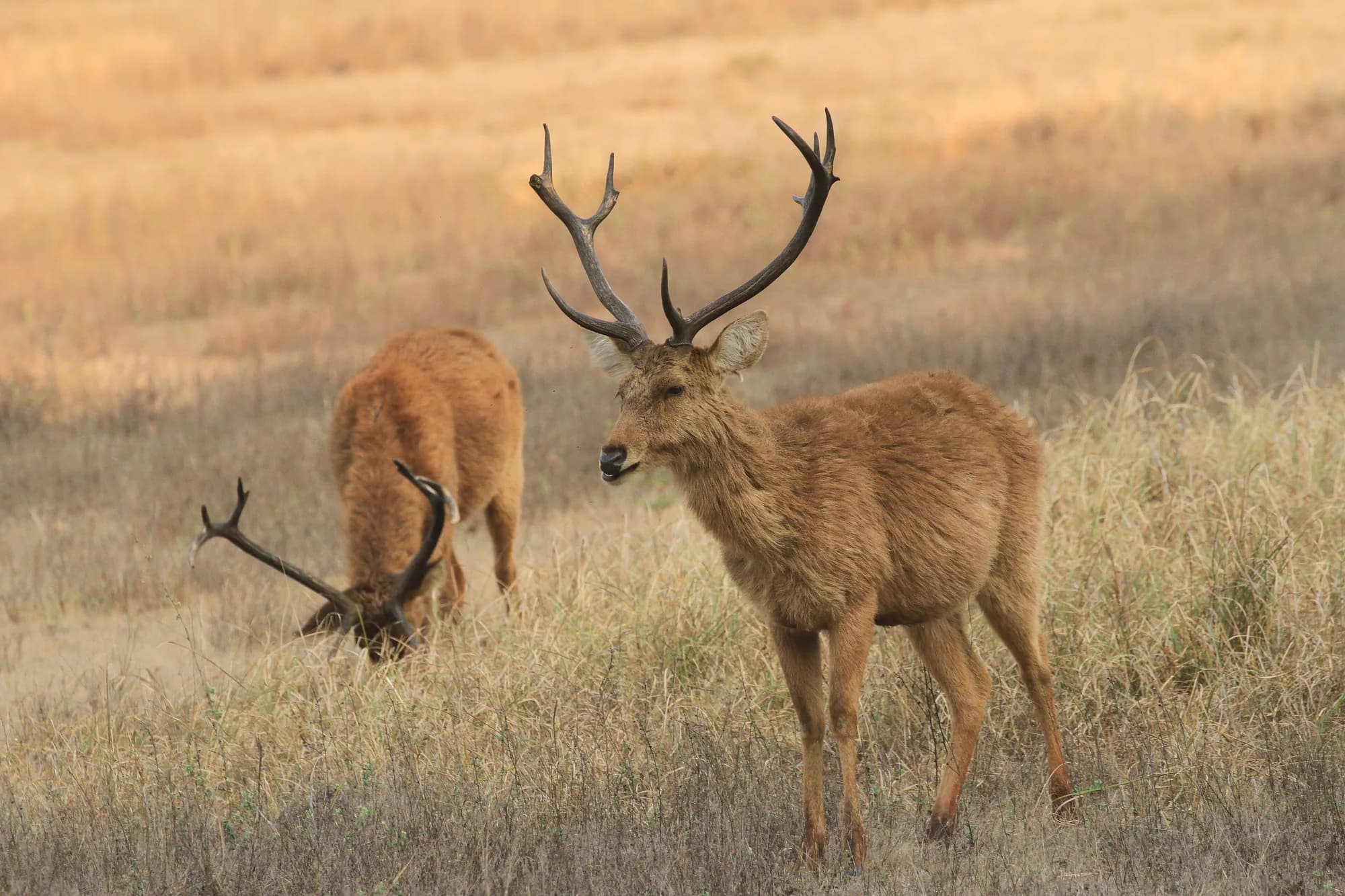 69 · Mammal
Northern swamp deer
The wetland barasingha — splay-hoofed, stag-antlered, standing in water. It is one of three subspecies that get called barasingha interchangeably, and the differences decide which park you should book.
Terai wetland, in Dudhwa and Kishanpur
 70 · Mammal
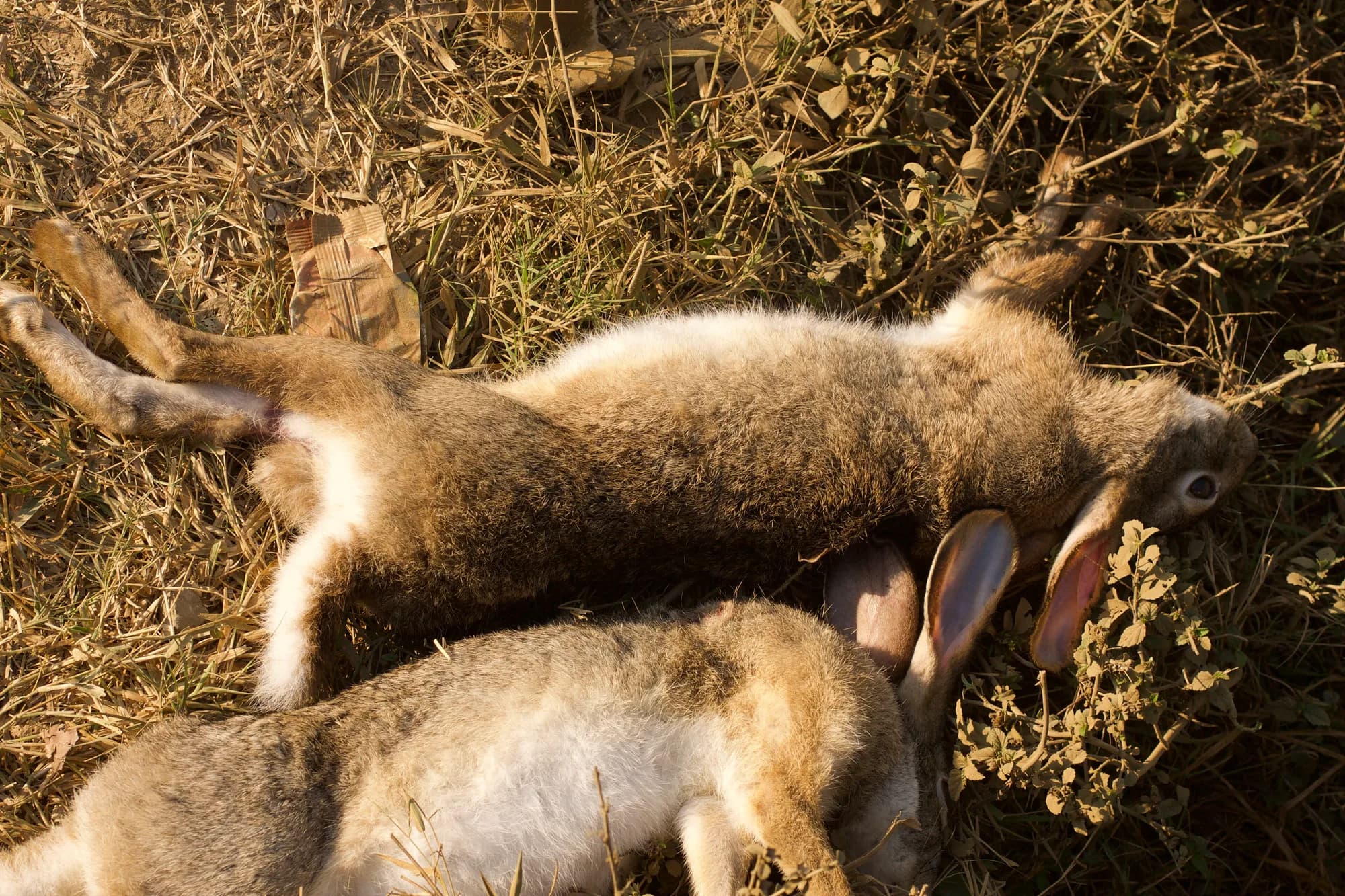
Indian hare
The most-seen mammal on an evening drive after the deer, and prey for almost everything with teeth. Worth a look for the black nape that names it.
Evening drives, in the headlights
 71 · Bird
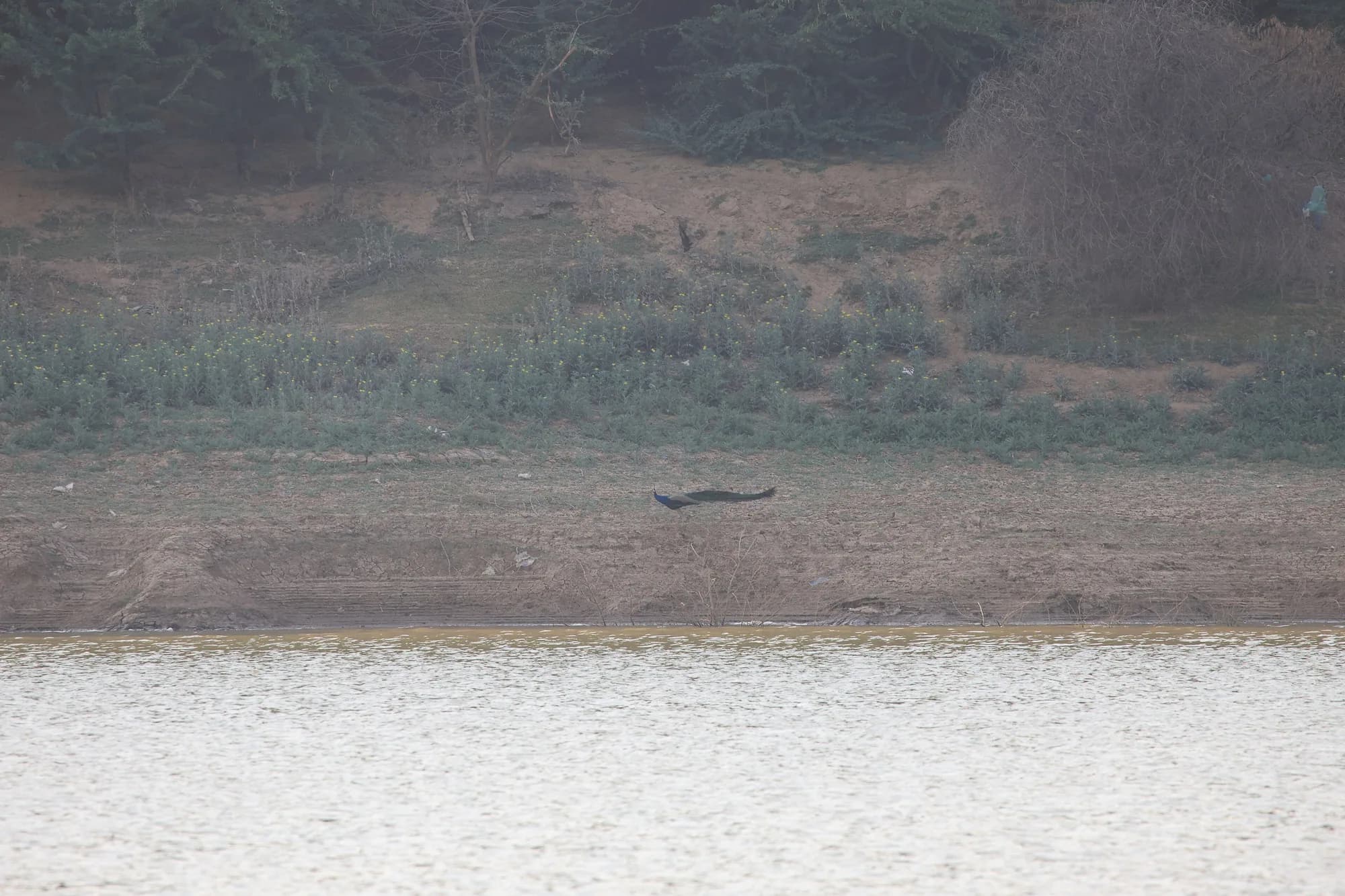
Indian peafowl
The national bird, in every reserve and most villages, and a genuine part of the alarm-call system that finds you a leopard.
Every reserve, and an alarm caller
 72 · Bird
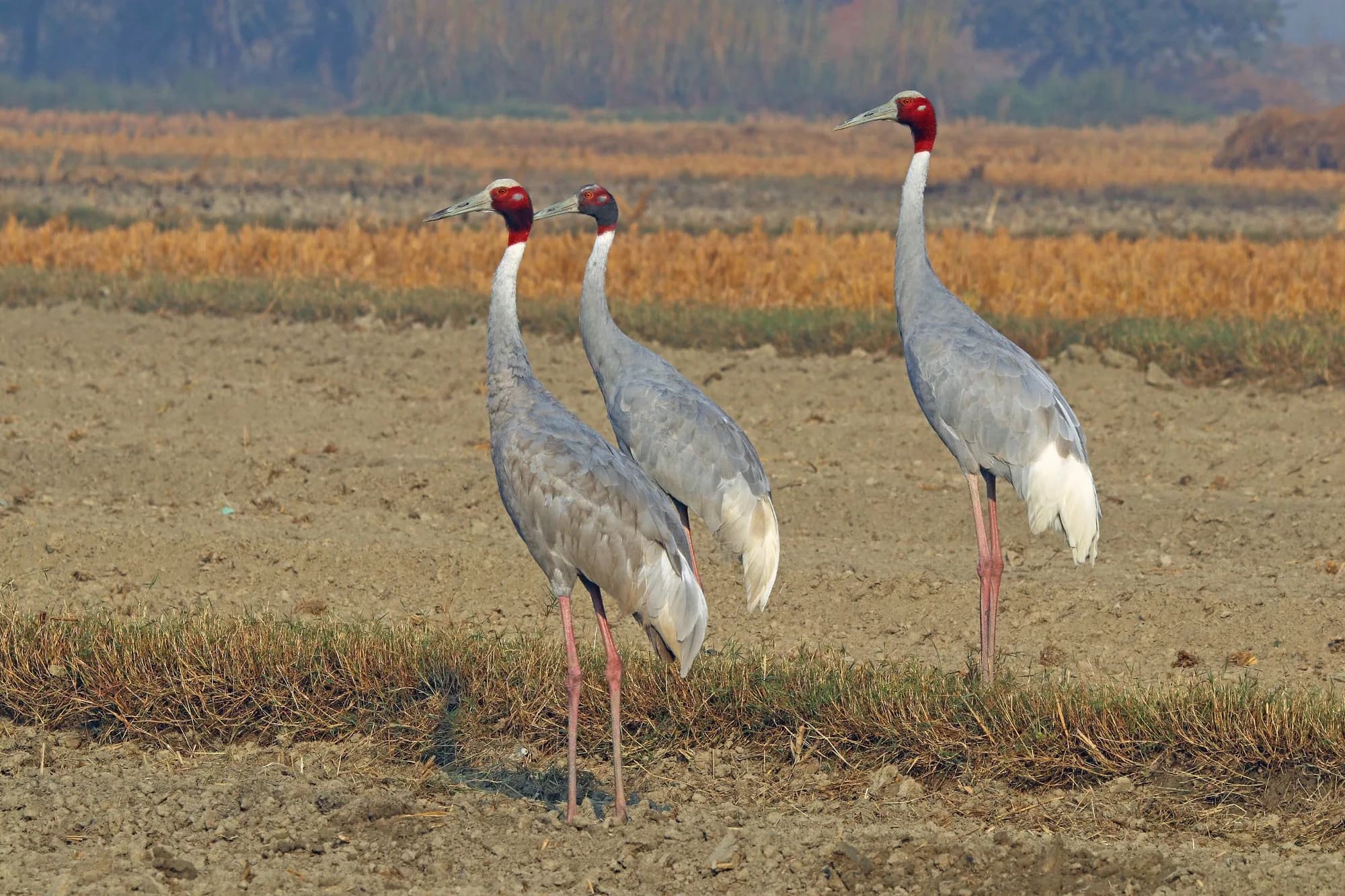
Sarus crane
The tallest flying bird on earth, standing nearly as high as a person, living in farmland rather than wilderness and pairing for life.
Wetlands and paddy, in pairs for life
 73 · Bird
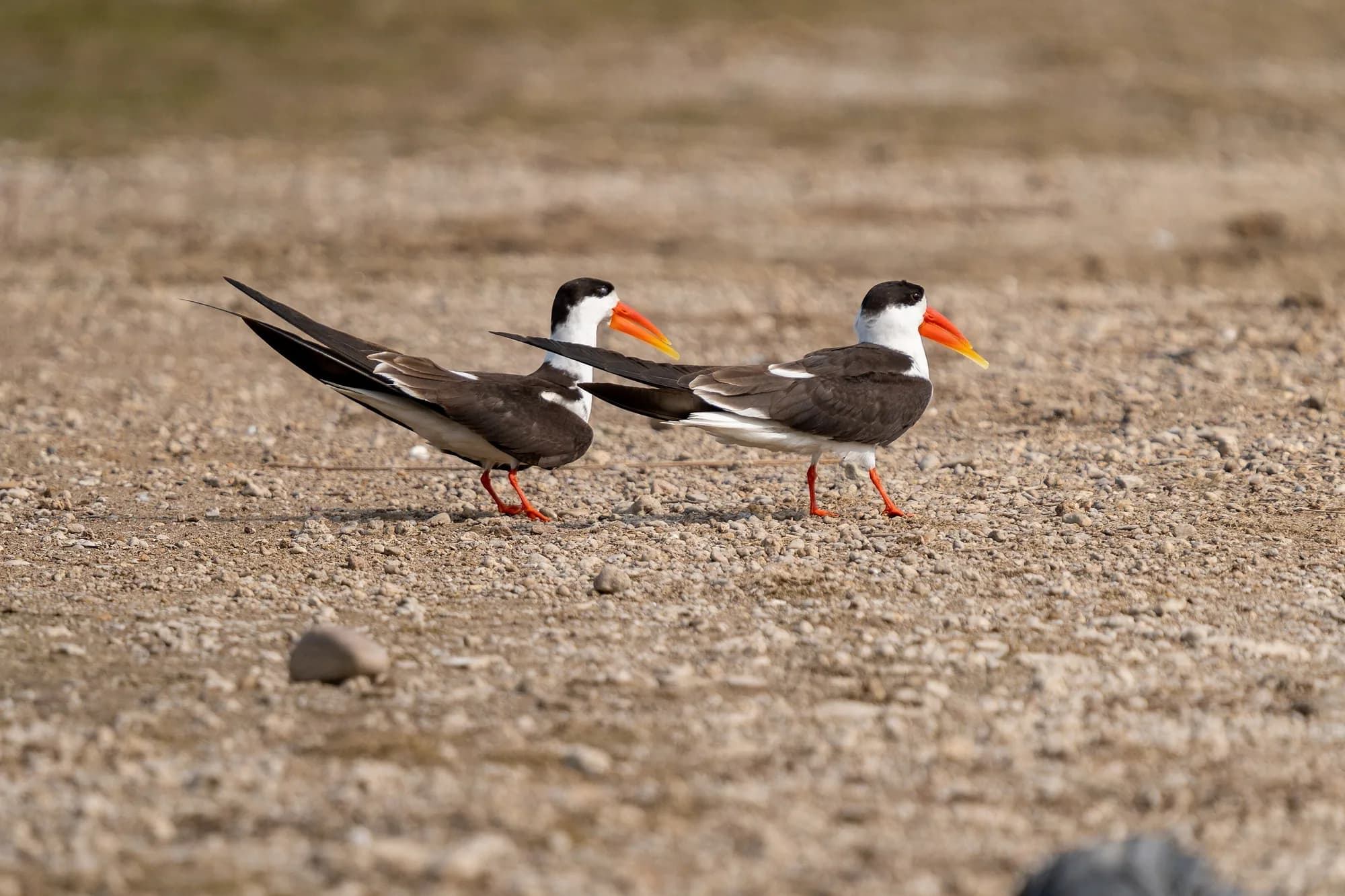
Indian skimmer
A tern-like bird with an orange bill whose lower half is longer than the upper, feeding by ploughing the water surface at speed. The Chambal holds most of what is left.
The Chambal, and few rivers else
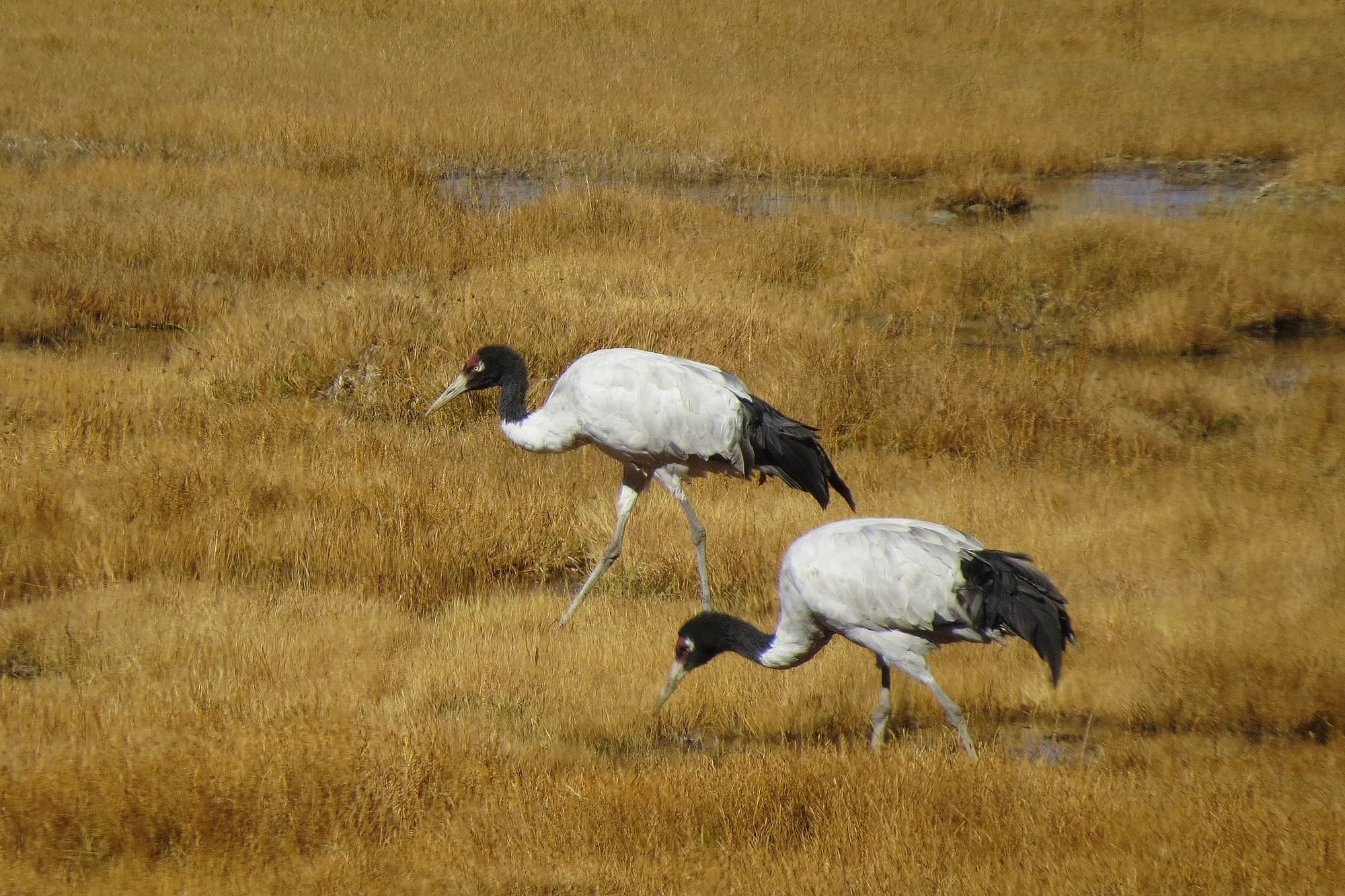 74 · Bird
Black-necked crane
The only crane that breeds on the Tibetan plateau, and in India only in Ladakh. A handful of pairs, on wetlands at four thousand metres, in the months everyone else visits for snow leopard's opposite season.
High-altitude marsh in Ladakh, in summer
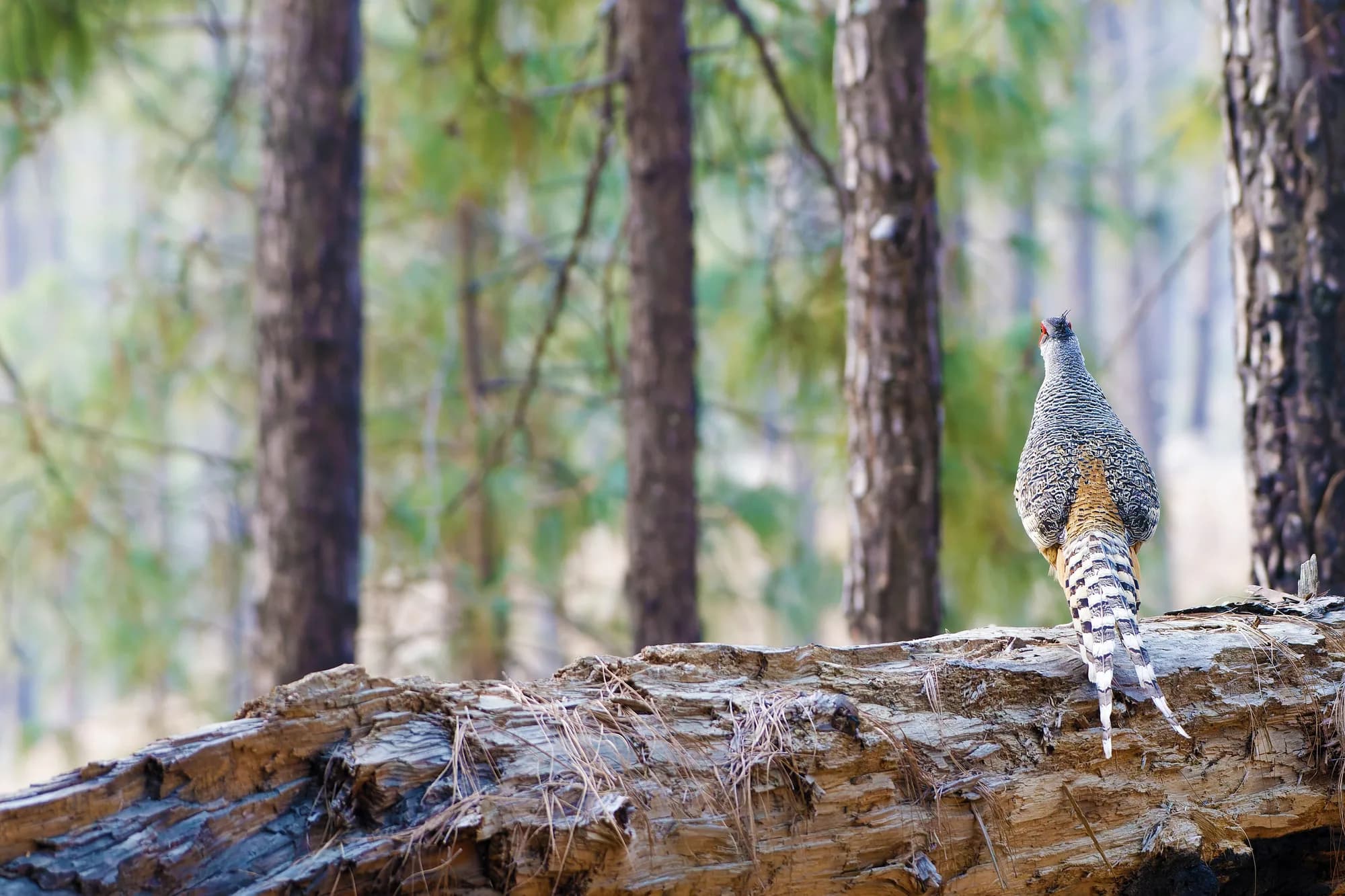 75 · Bird
Cheer pheasant
A long-tailed, pale barred pheasant on steep grass slopes, found by its dawn calling and named on every serious Himalayan birding itinerary.
Steep grassy scrub, western Himalaya
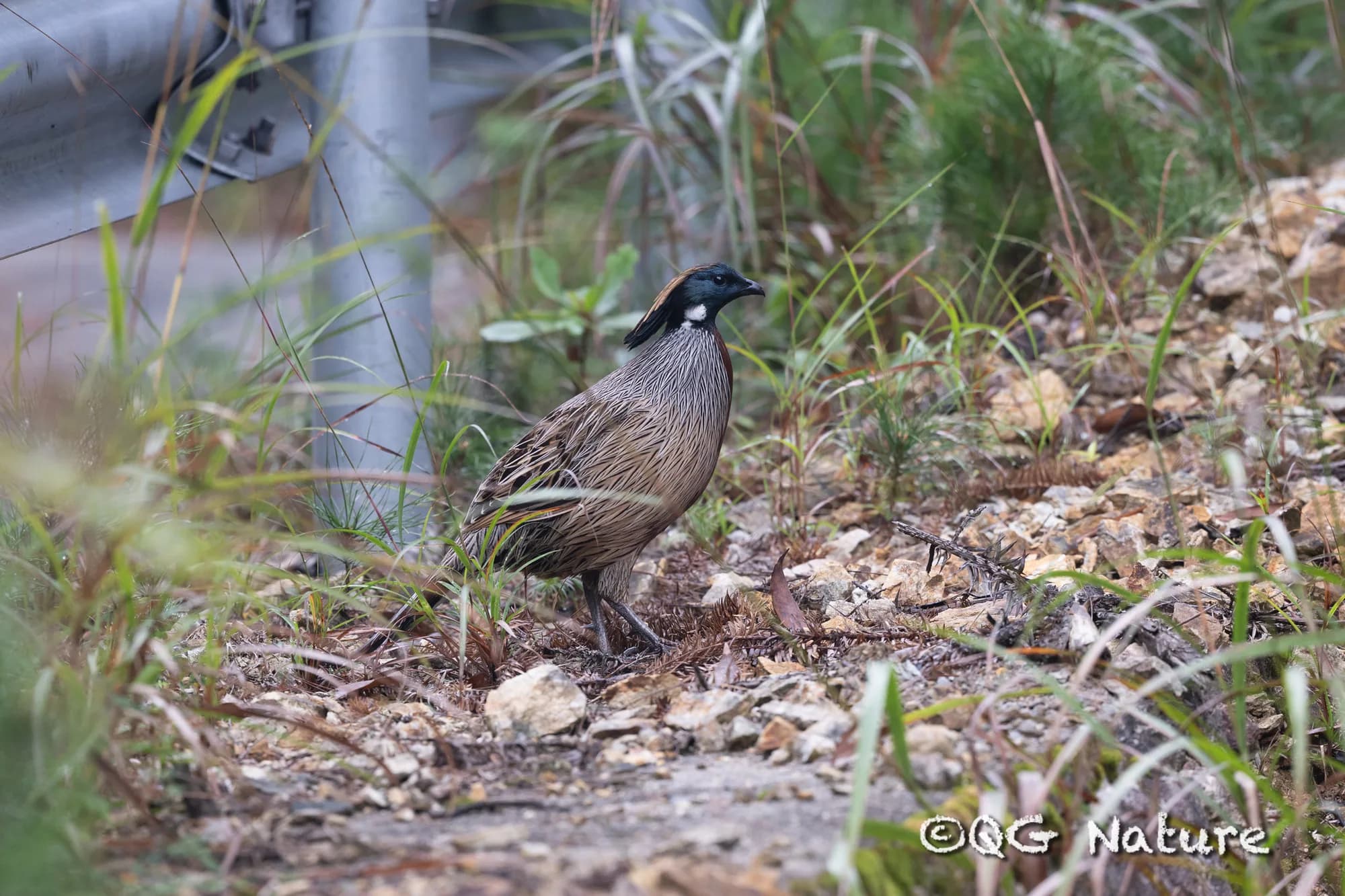 76 · Bird
Koklass pheasant
Drab, secretive and forest-bound, and named on the same operator itineraries as the monal. You will hear it long before you have any chance of seeing it.
Himalayan oak forest, heard at dawn
- 77 · Bird
Western tragopan
A black-headed, white-spotted pheasant in dense western Himalayan forest, and the hardest galliforme in India to see. A trip-defining bird for the people who want it.
Himachal, and the hardest of them
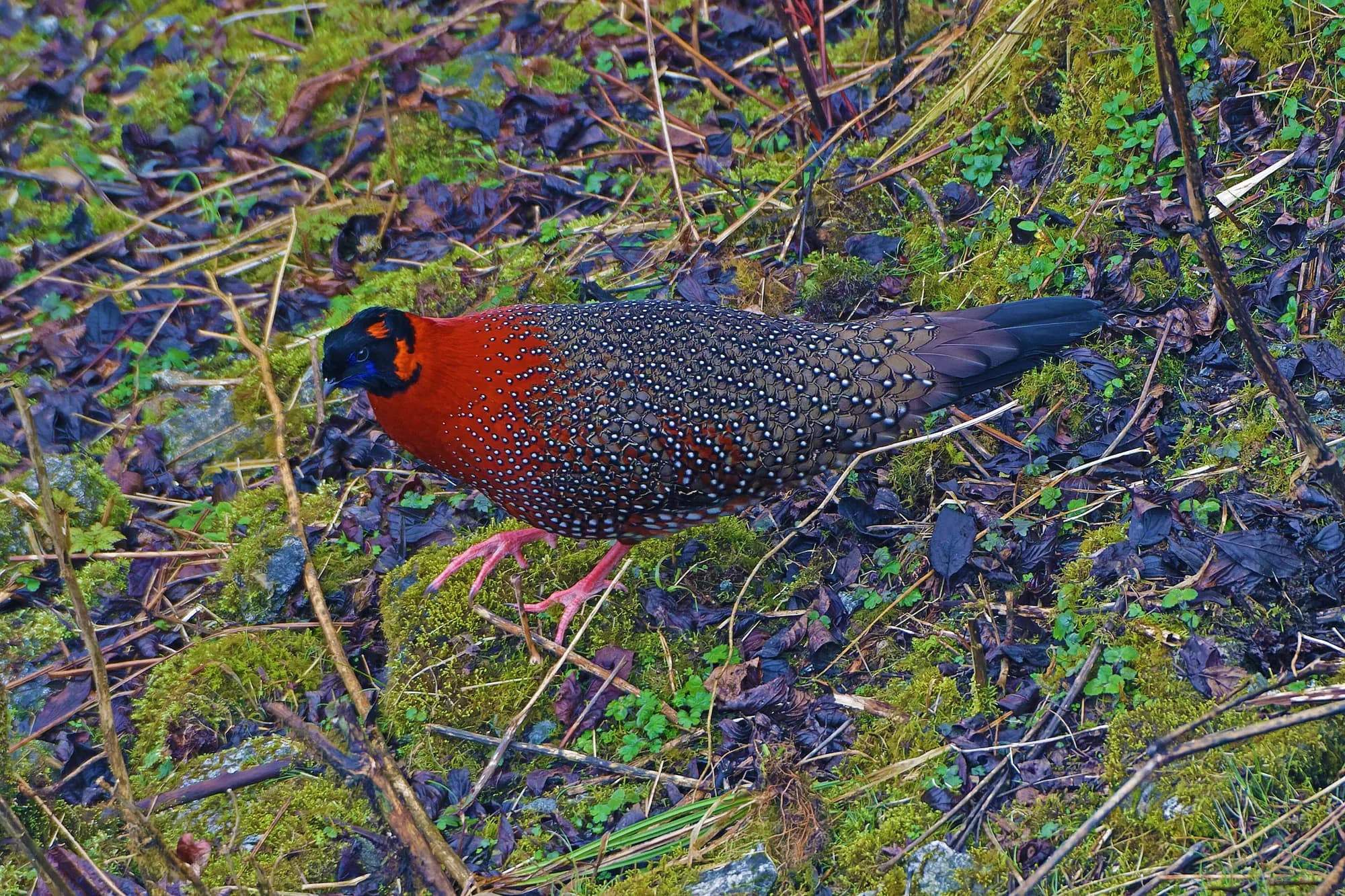 78 · Bird
Satyr tragopan
A crimson, white-spotted pheasant in eastern Himalayan rhododendron forest, and the other reason to walk the Singalila ridge in spring.
Singalila and Sikkim, in spring
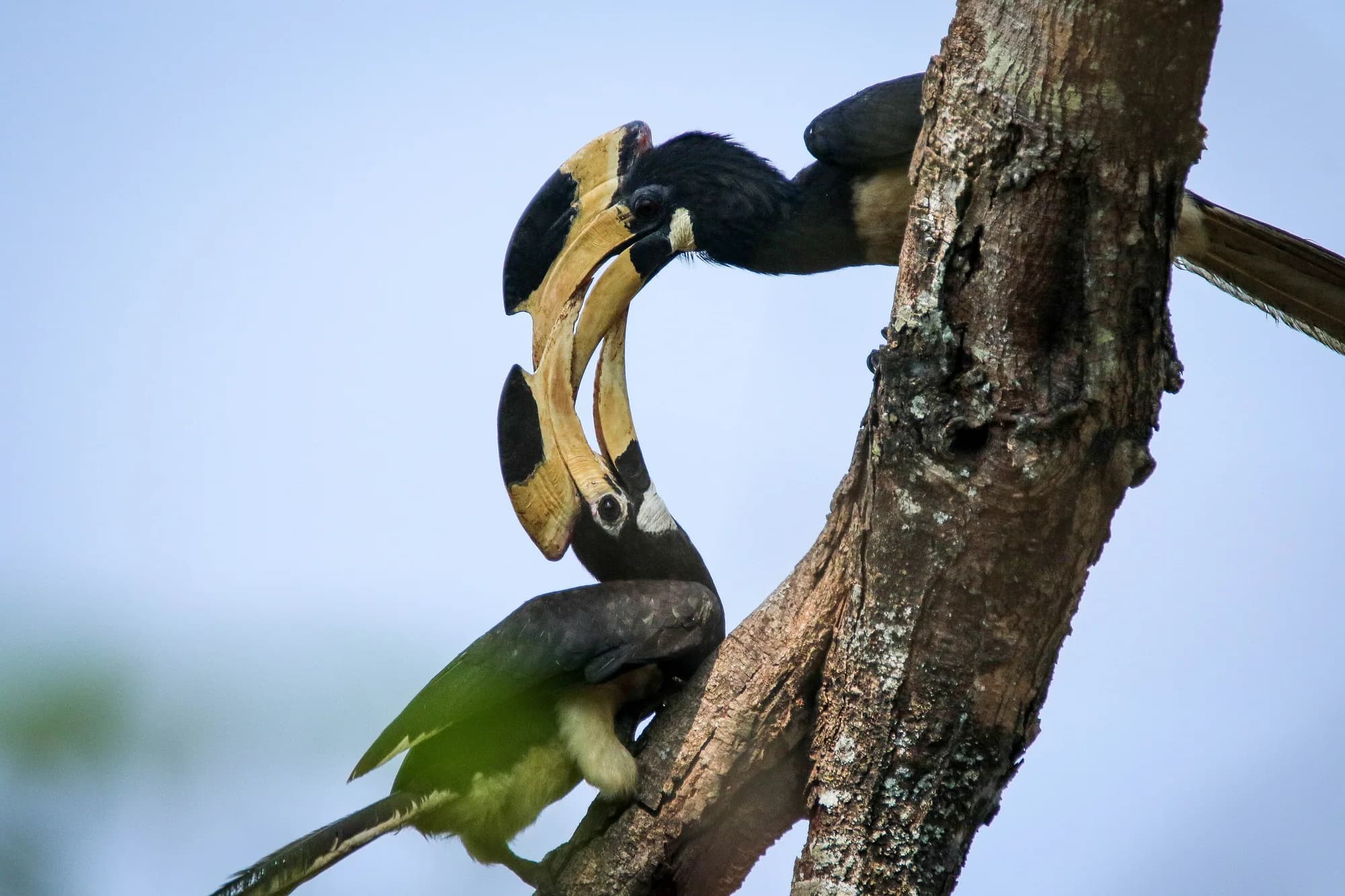 79 · Bird
Malabar pied hornbill
The hornbill most people actually see. Black and white, loudly present, and tied to fruiting fig trees along watercourses in the Western Ghats and central India.
Fruiting figs along a river
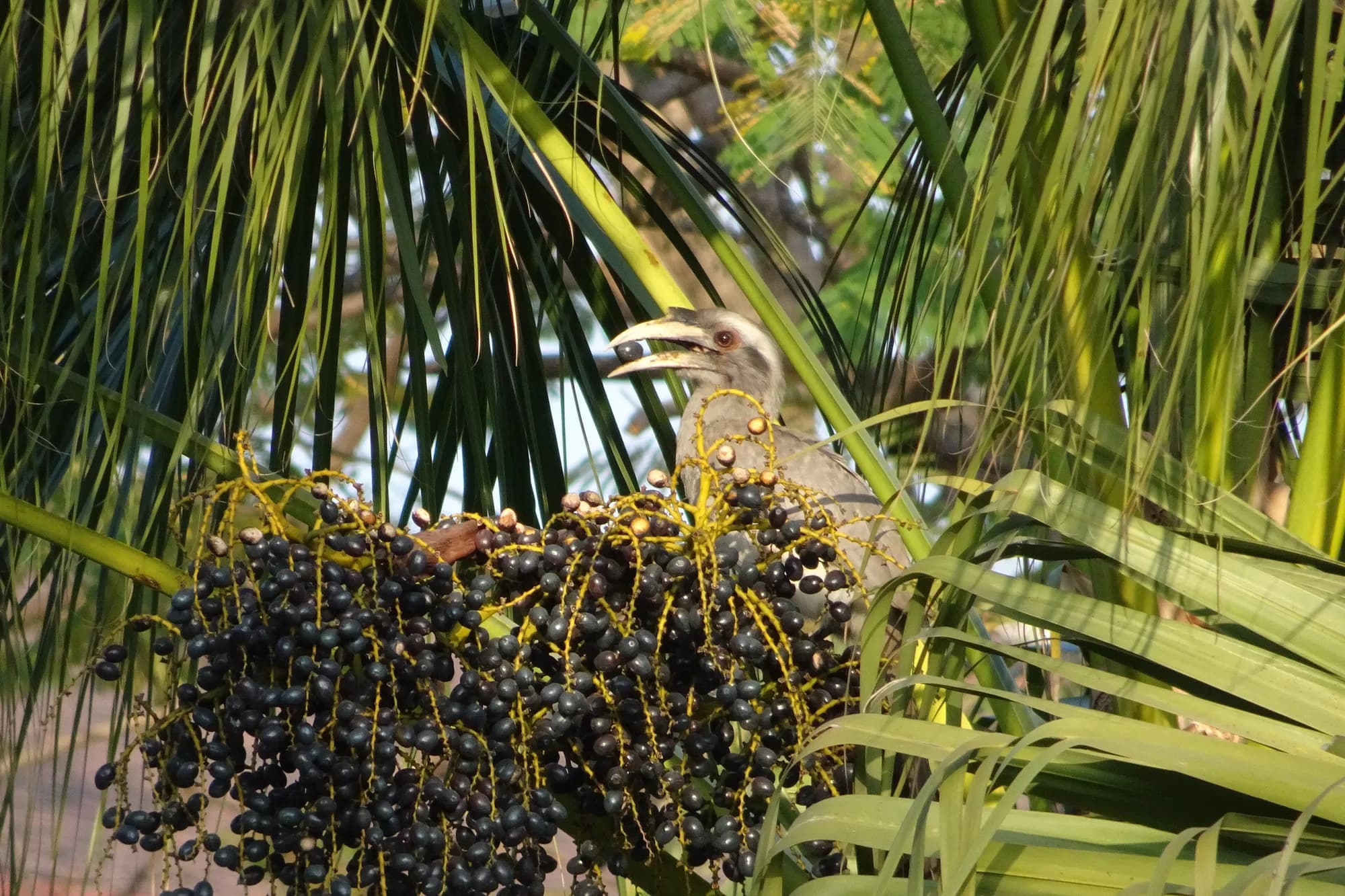 80 · Bird
Indian grey hornbill
The hornbill that turns up on the first morning of almost any north or central Indian safari, and in the trees outside the lodge. Small, grey, undramatic, and the one people actually photograph.
Dry forest, and the edges of towns
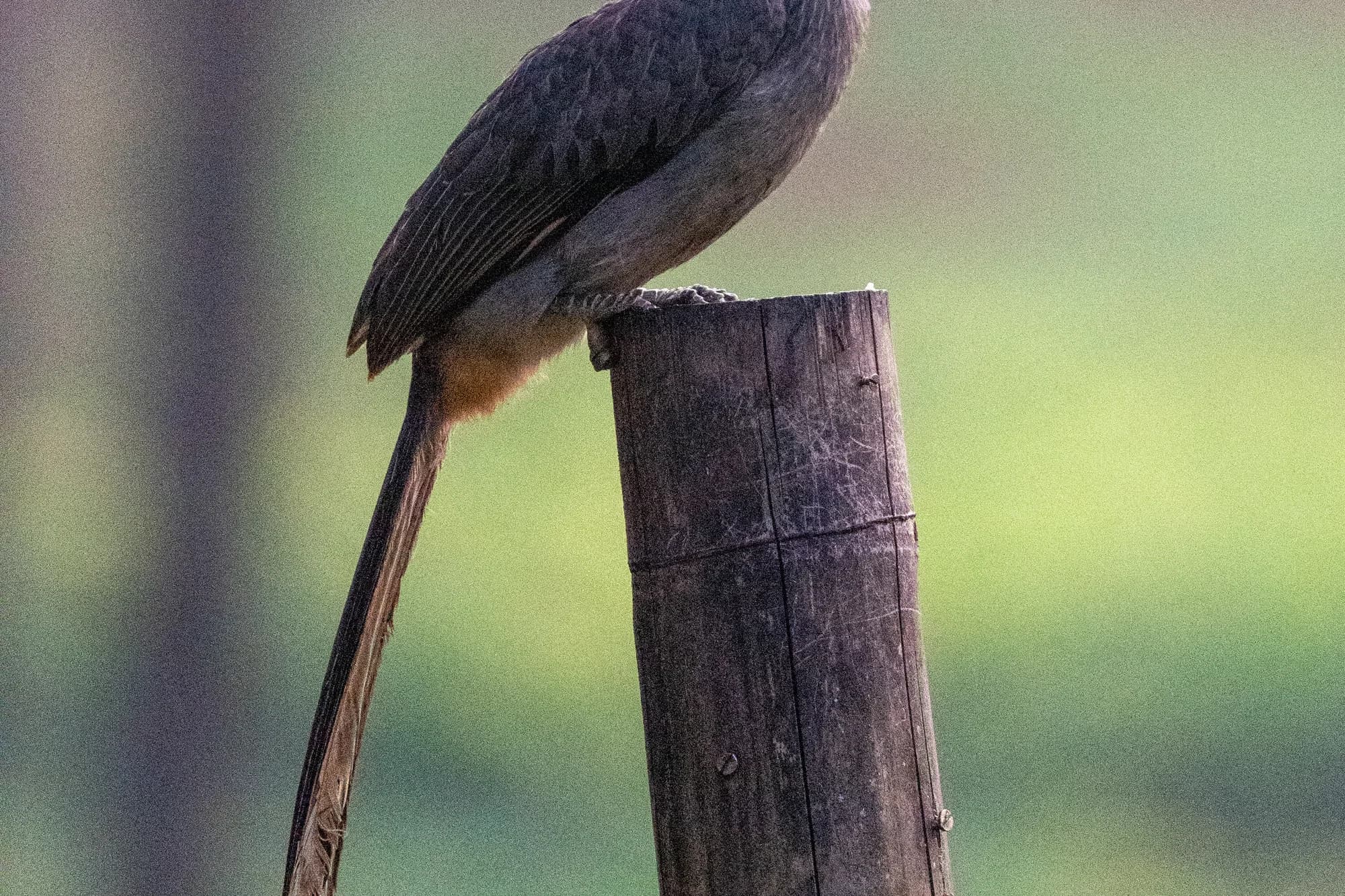 81 · Bird
Malabar grey hornbill
The Western Ghats' own hornbill — small, casque-less and endemic. It is common where the forest is intact, it announces itself constantly, and it is the easiest of India's four widespread hornbills to see badly and hardest to see well.
Western Ghats canopy, in noisy parties
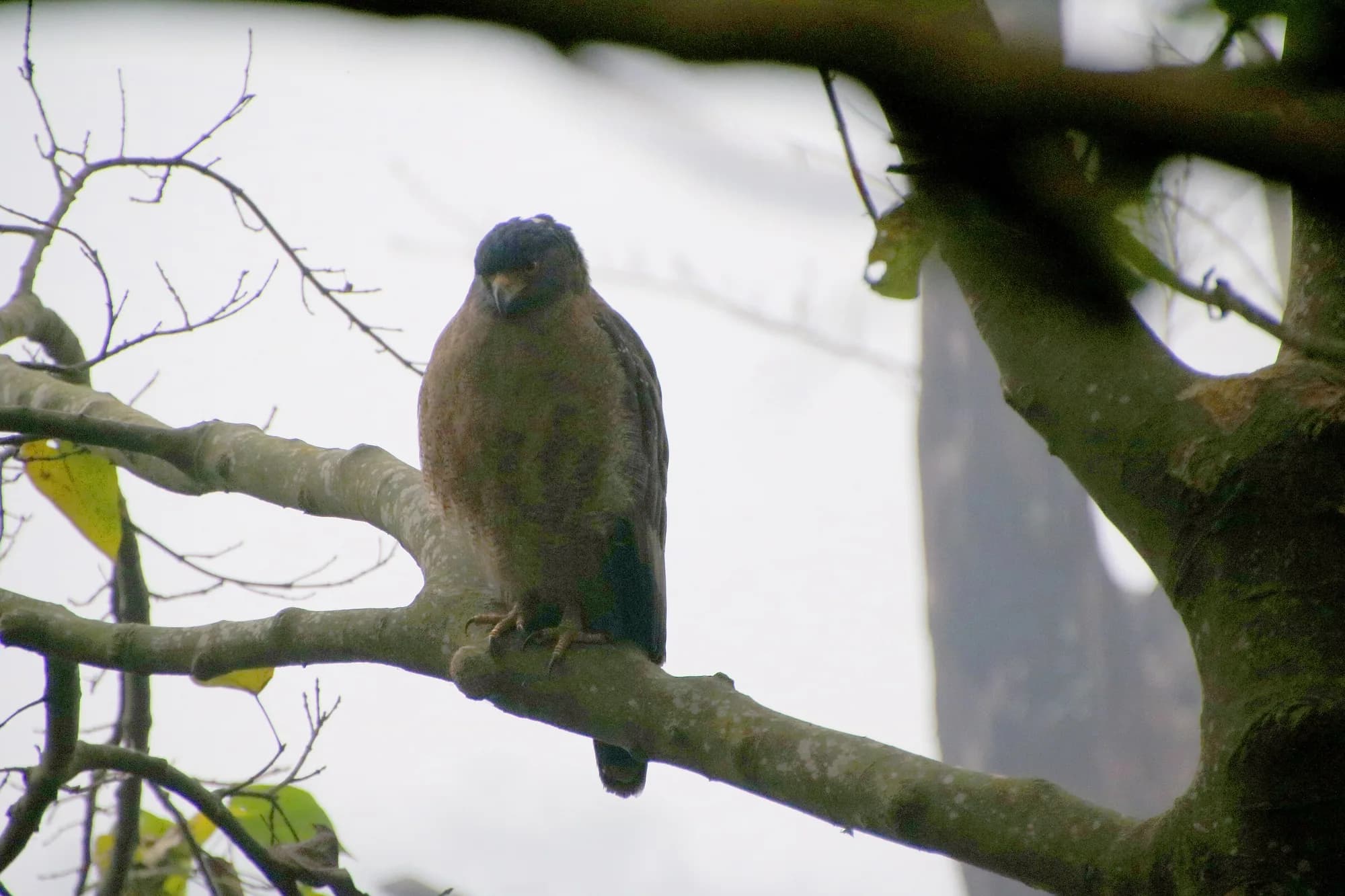 82 · Bird
Crested serpent eagle
The raptor every visitor photographs and nobody can identify. Its whistling call is part of the soundtrack of an Indian forest.
Every reserve, and nobody names it
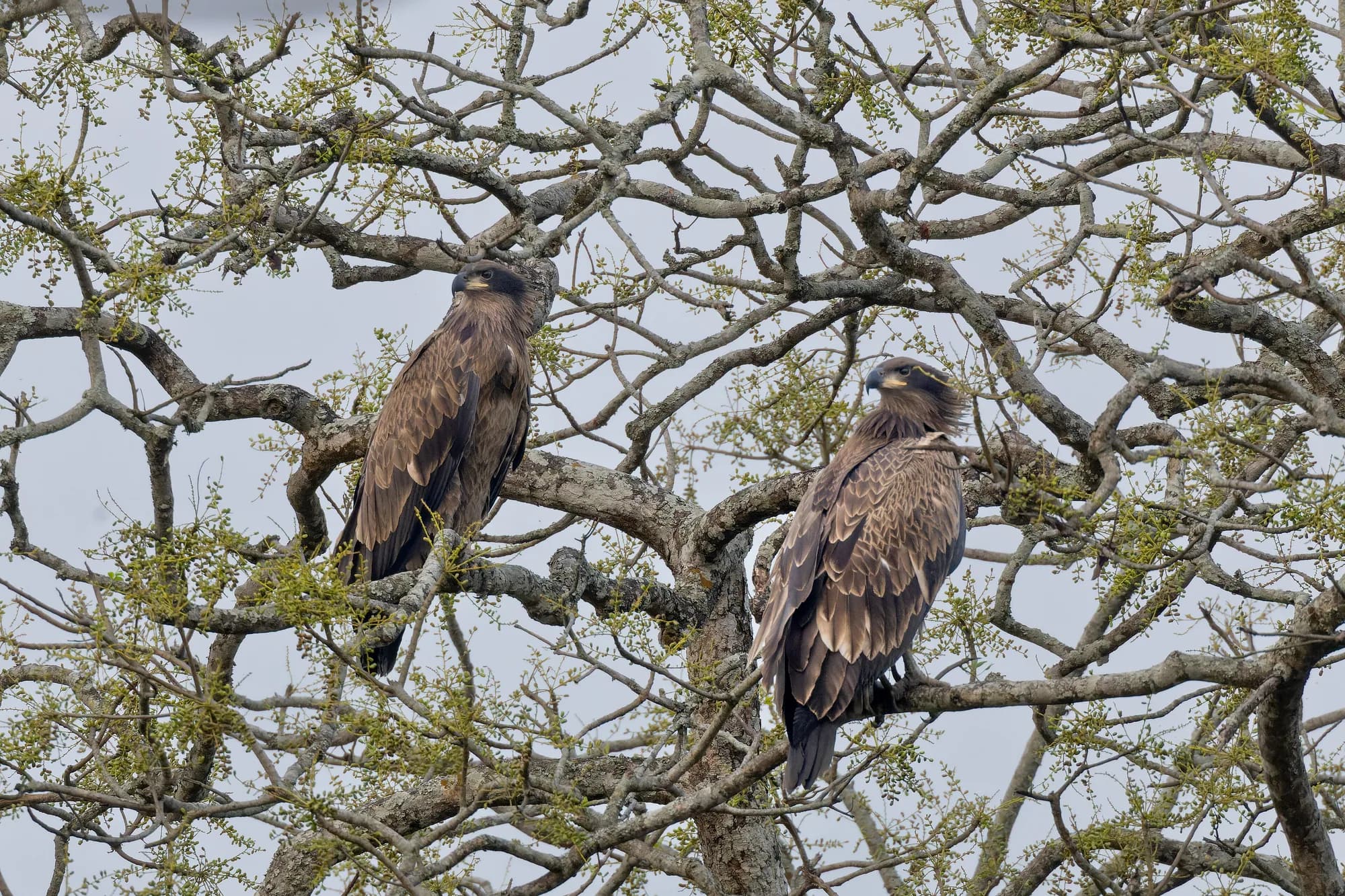 83 · Bird
Pallas's fish eagle
A huge, endangered fish eagle with a pale sandy head and one broad white band across a black tail. It breeds in the terai in winter, which is exactly when you will be there.
Big water — Corbett's reservoir, Kaziranga's beels
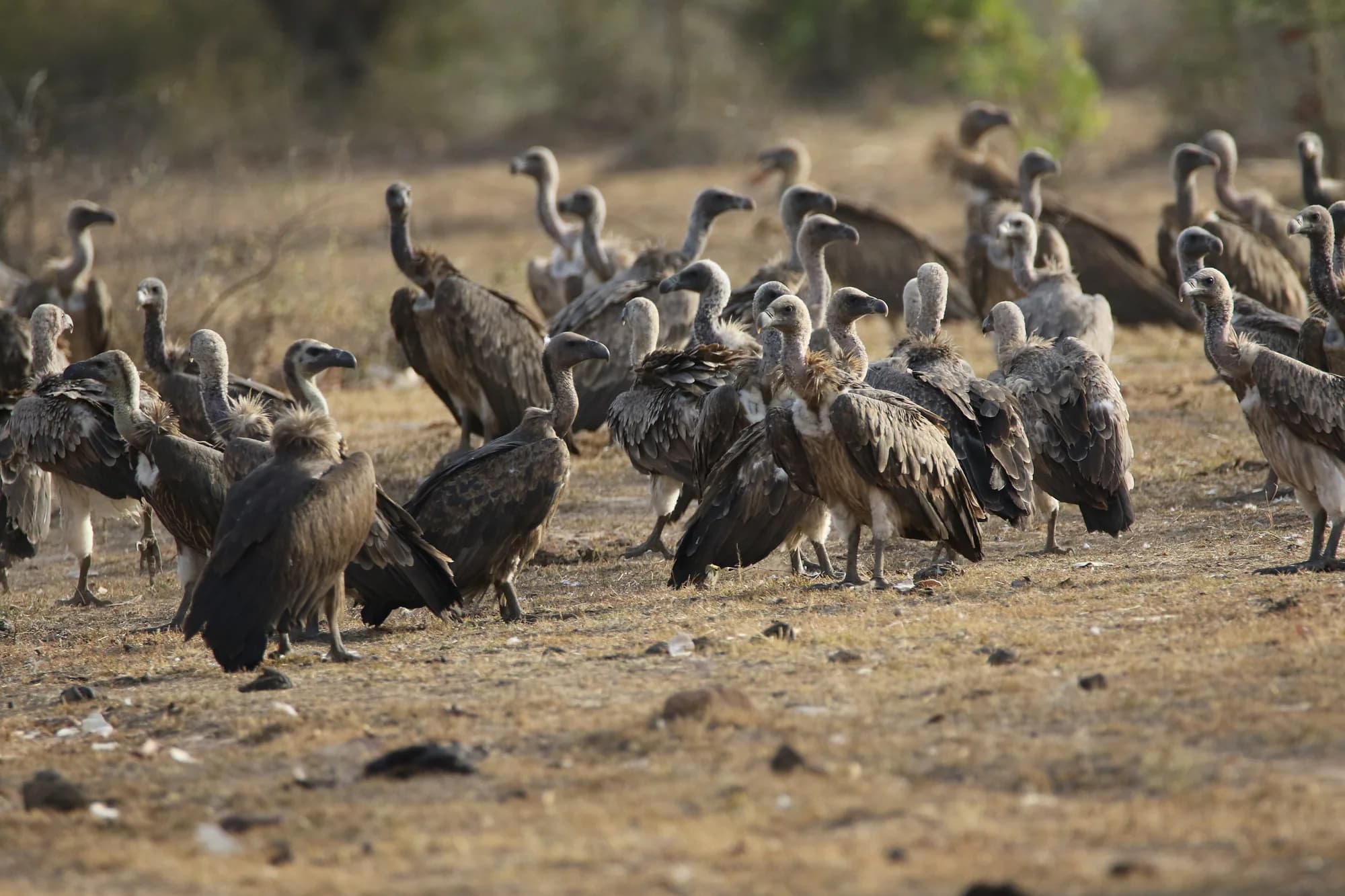 84 · Bird
Indian vulture
The cliff-nesting Gyps of peninsular India, hit by the same drug as its white-rumped cousin, and now most reliably found on the fort escarpments people drive past.
Cliffs at Ranthambore and Bandhavgarh
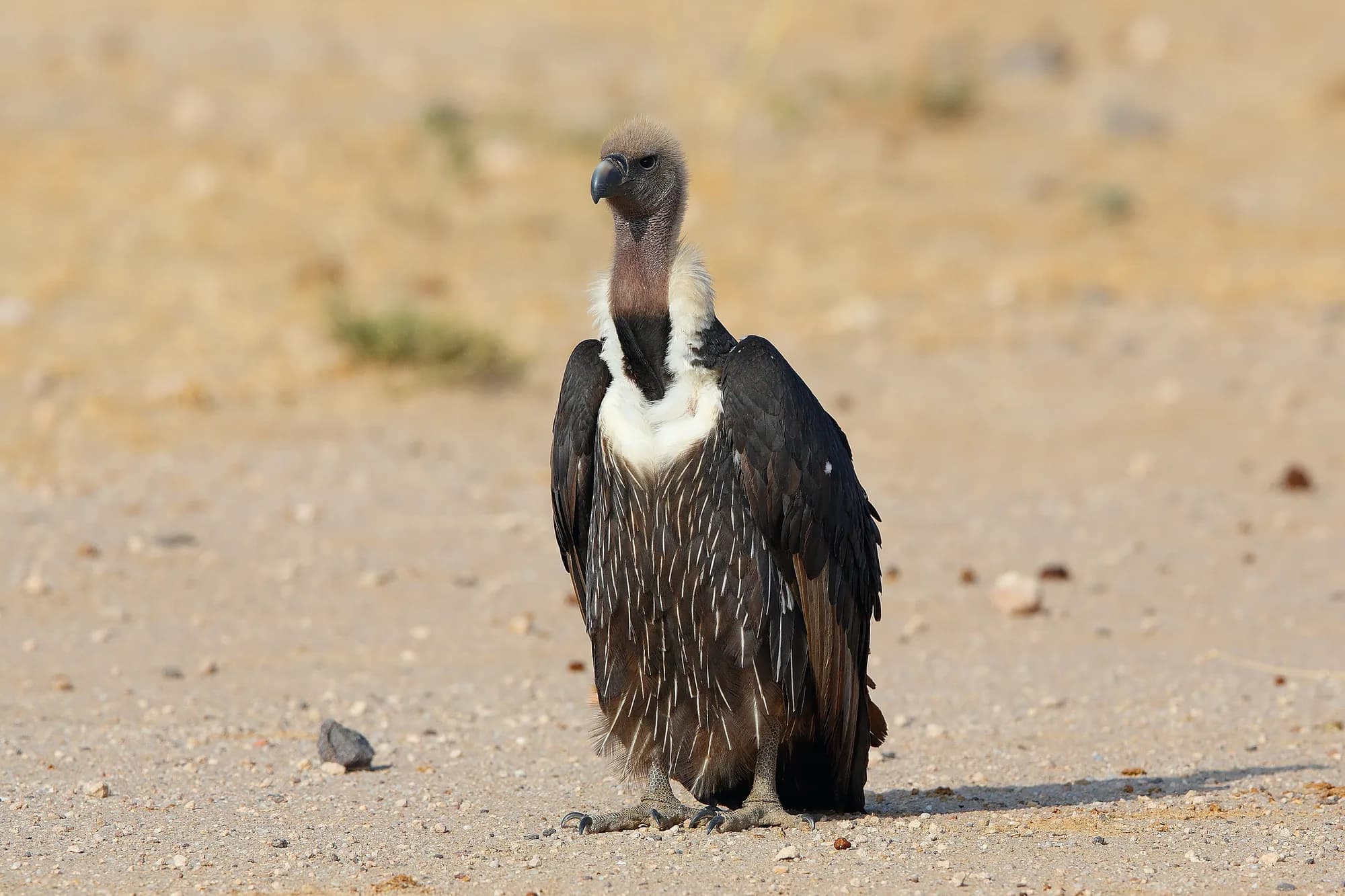 85 · Bird
White-rumped vulture
A bird that numbered in the tens of millions and lost more than ninety-nine per cent of its population in about a decade. The fastest collapse of any bird species ever recorded.
Once the commonest large raptor on earth
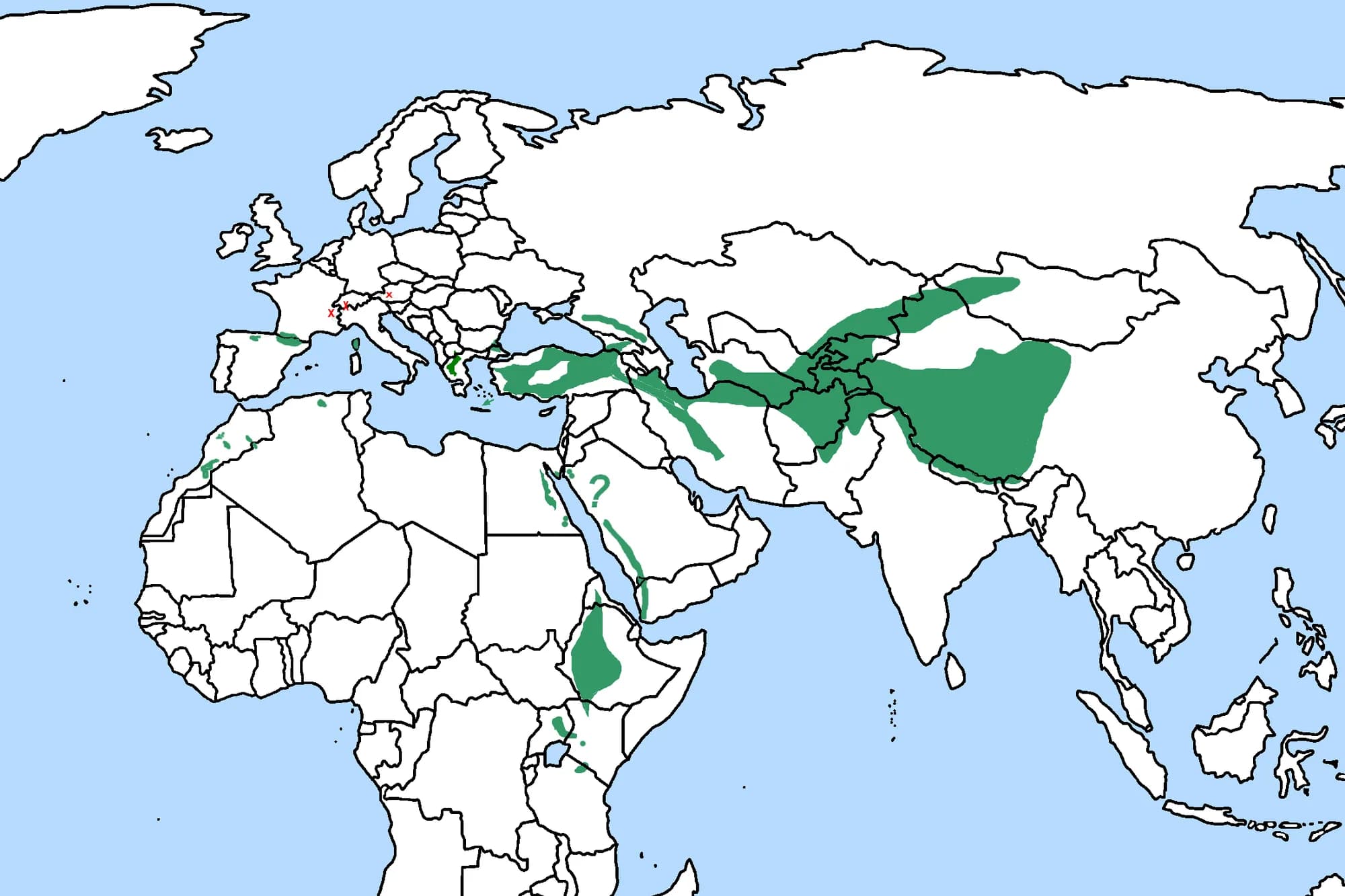 86 · Bird
Bearded vulture
Nearly three metres of wing passing below you on a ridge, orange-stained, with a diamond tail. The only bird in the world that lives mainly on bone, and the standard consolation on a blank snow leopard morning.
A Himalayan ridge, at eye level
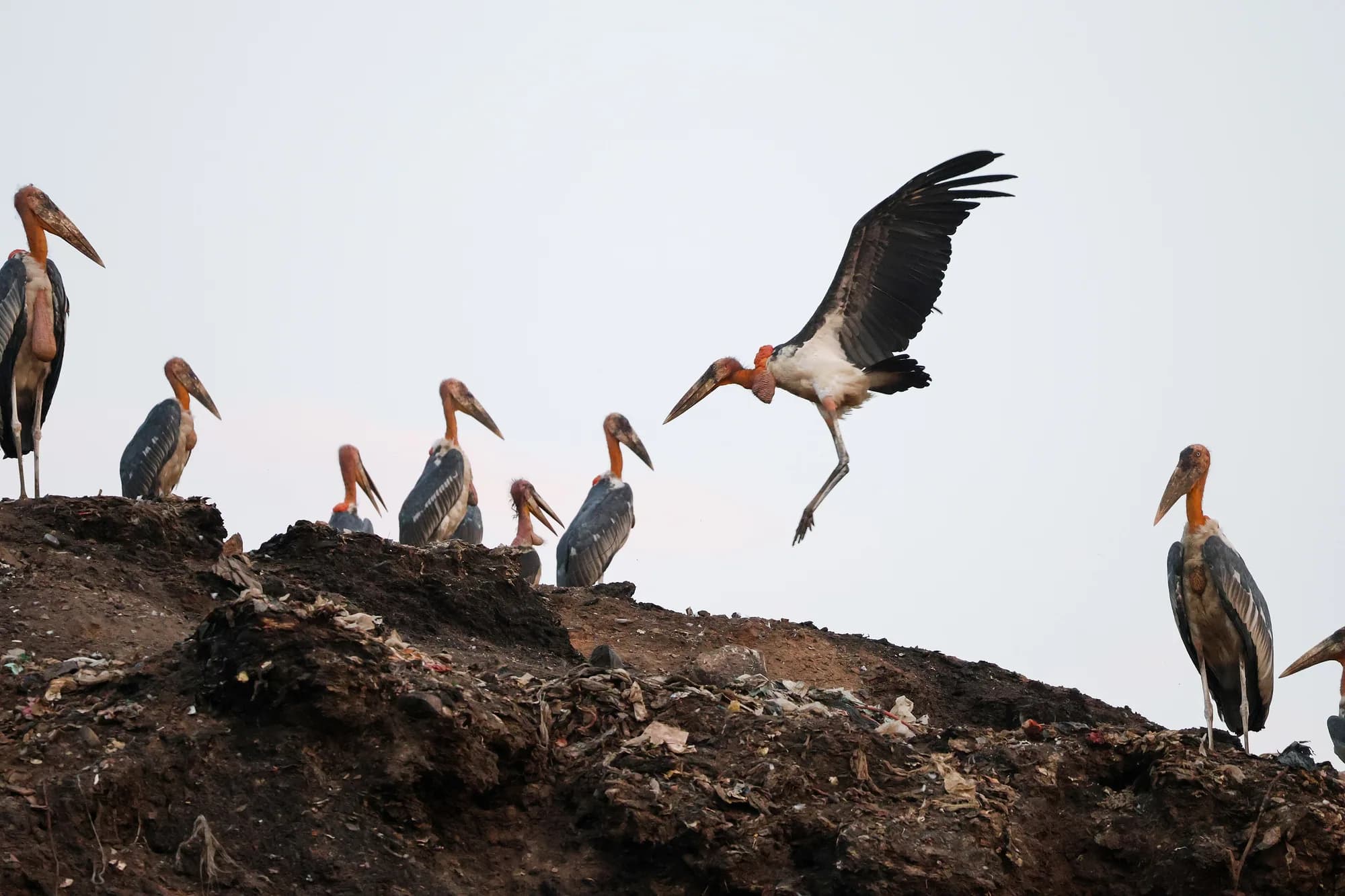 87 · Bird
Greater adjutant
One of the rarest storks alive, standing a metre and a half tall, and most of the world population lives around Guwahati — a good deal of it on a landfill.
Assam, and a rubbish dump
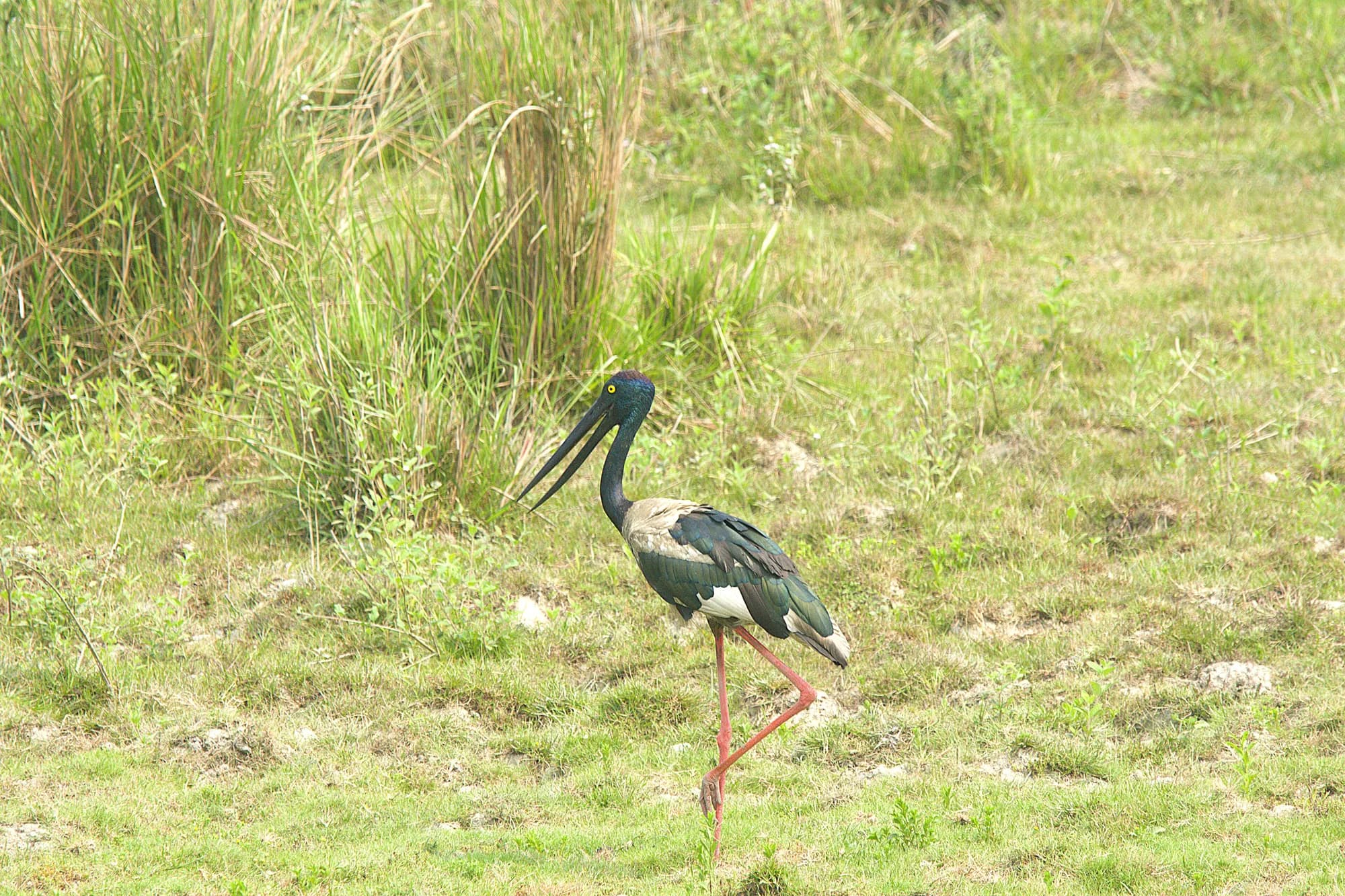 88 · Bird
Black-necked stork
A huge iridescent stork that holds the same wetland territory year after year. If your guide knows where the pair is, you will see them.
One pair, one wetland, for years
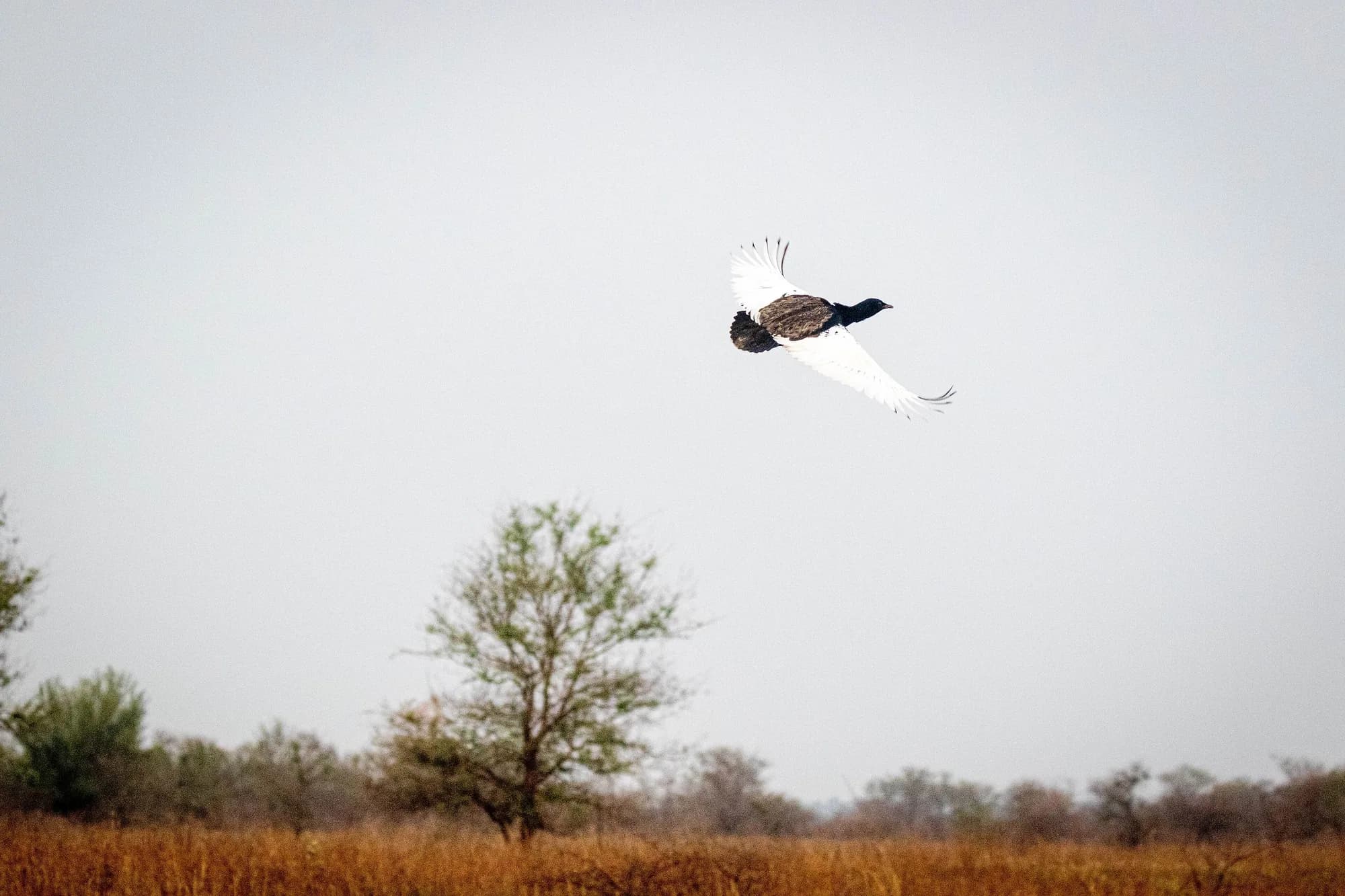 89 · Bird
Bengal florican
One of the rarest birds anyone reading this will realistically see. A few hundred remain in India, almost all of them in a handful of grasslands that are burned and cut on a schedule the bird depends on.
Tall terai grassland, from an elephant
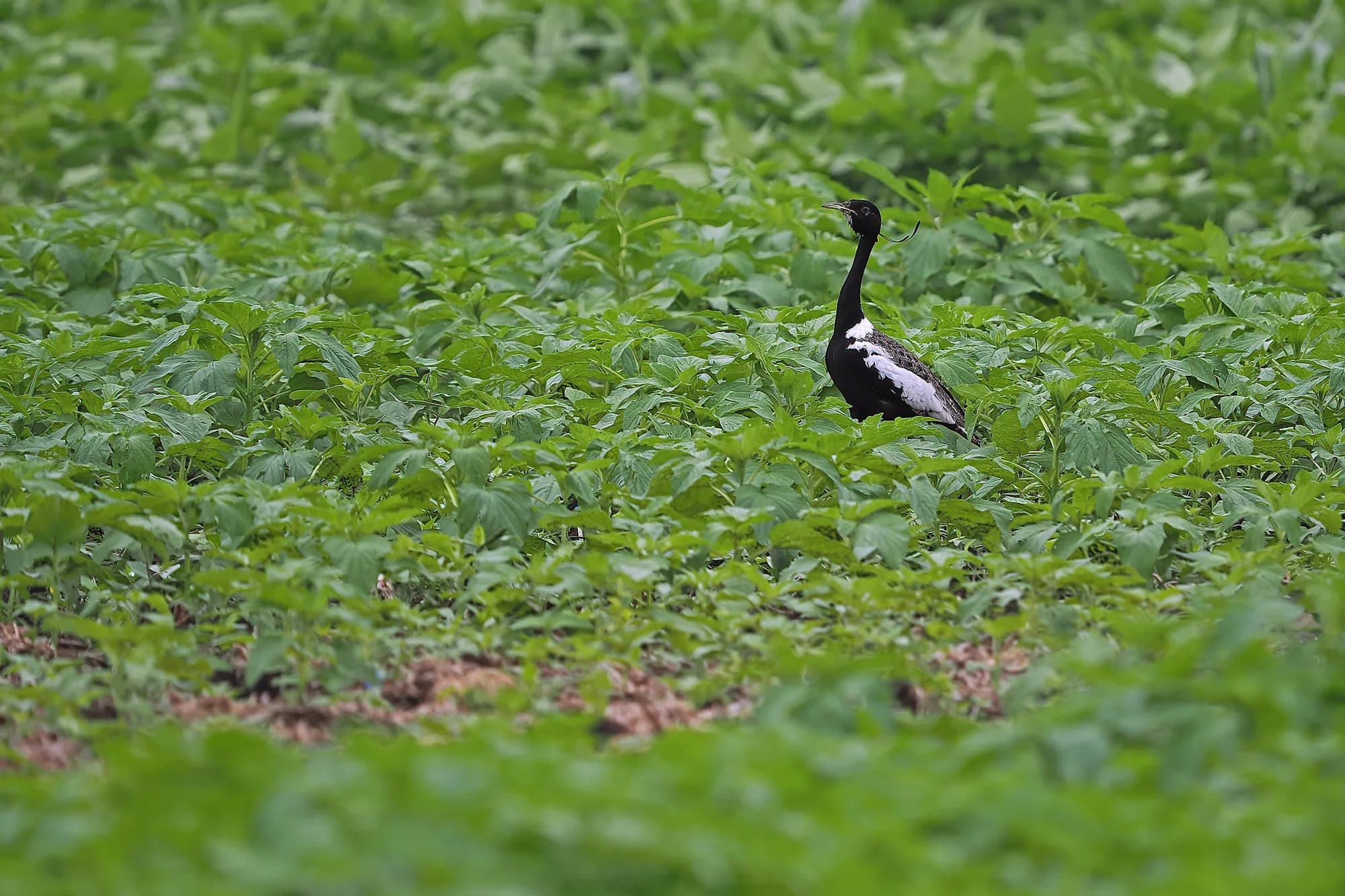 90 · Bird
Lesser florican
A small bustard whose male leaps two metres out of tall grass, several hundred times a day, for about eight weeks a year. Outside those weeks it is functionally invisible.
Standing grass in the monsoon, and nowhere else
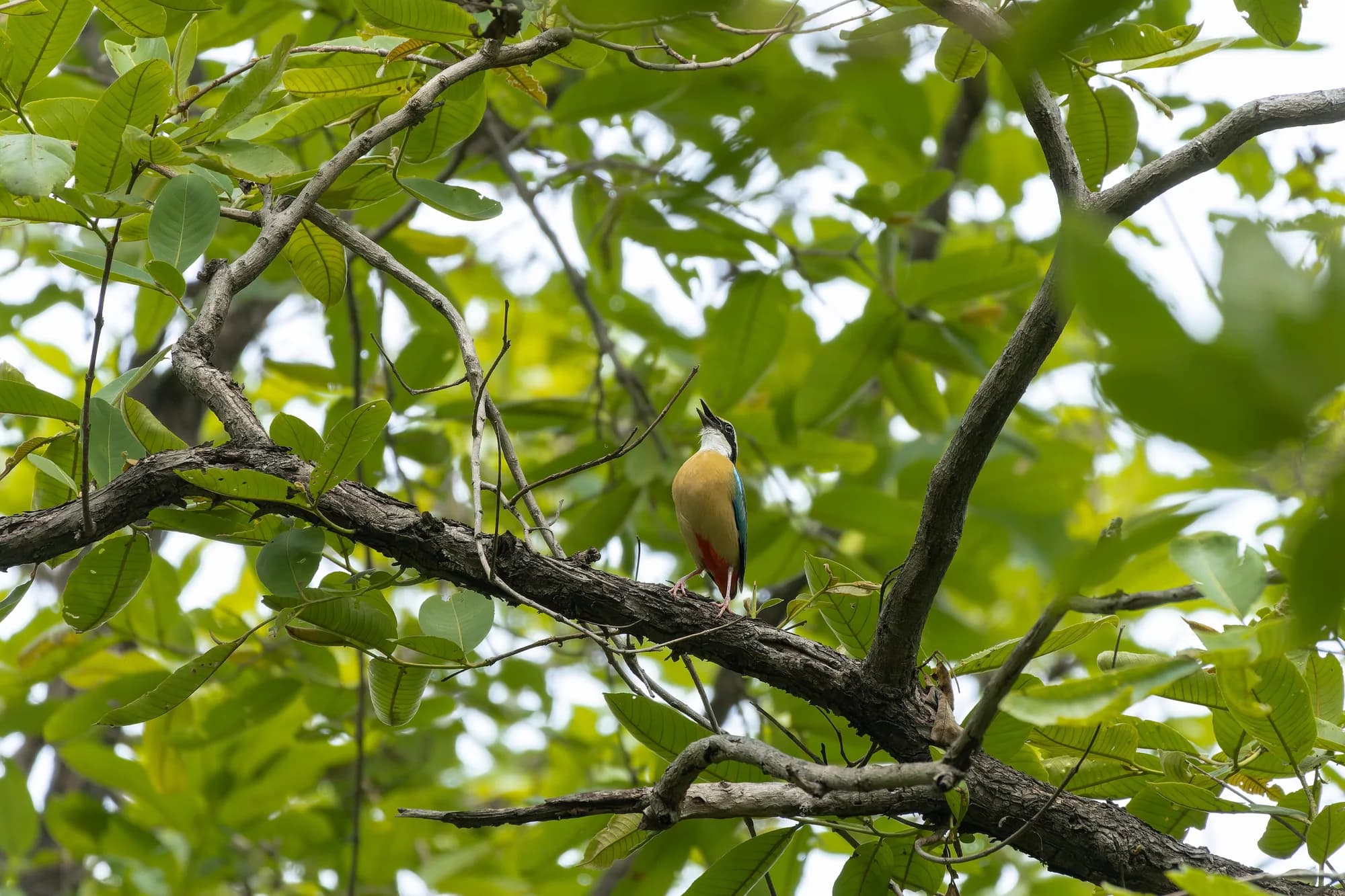 91 · Bird
Indian pitta
A ground bird in nine colours that most people hear and never see. The two-note dusk call is one of the defining sounds of the Indian monsoon.
Nine colours, two notes, and a monsoon arrival
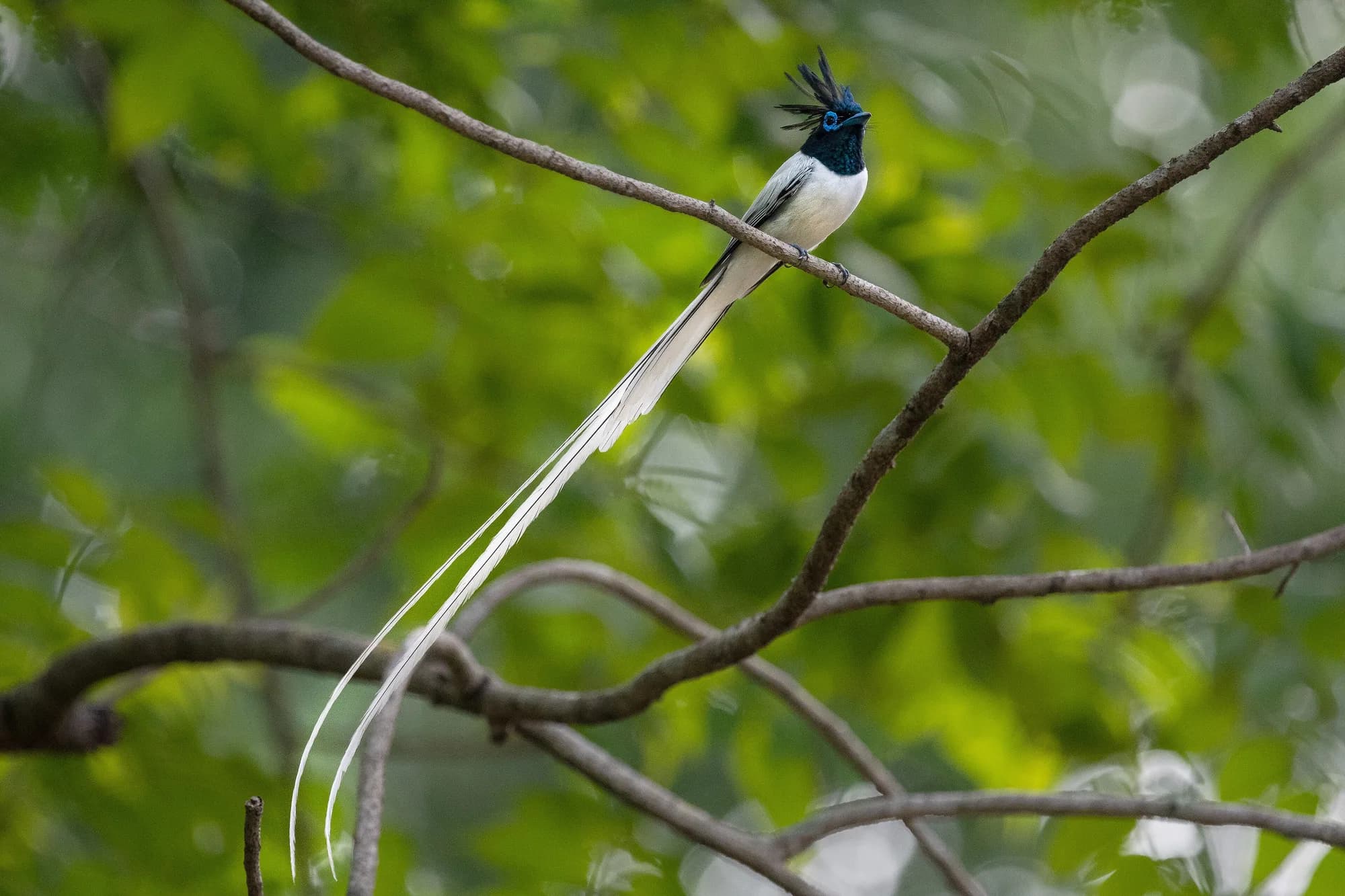 92 · Bird
Indian paradise flycatcher
The male trails two tail streamers twice his body length and turns white with age. The most photographed small bird in Indian reserves, and worth the frames.
The white ribbon through the forest
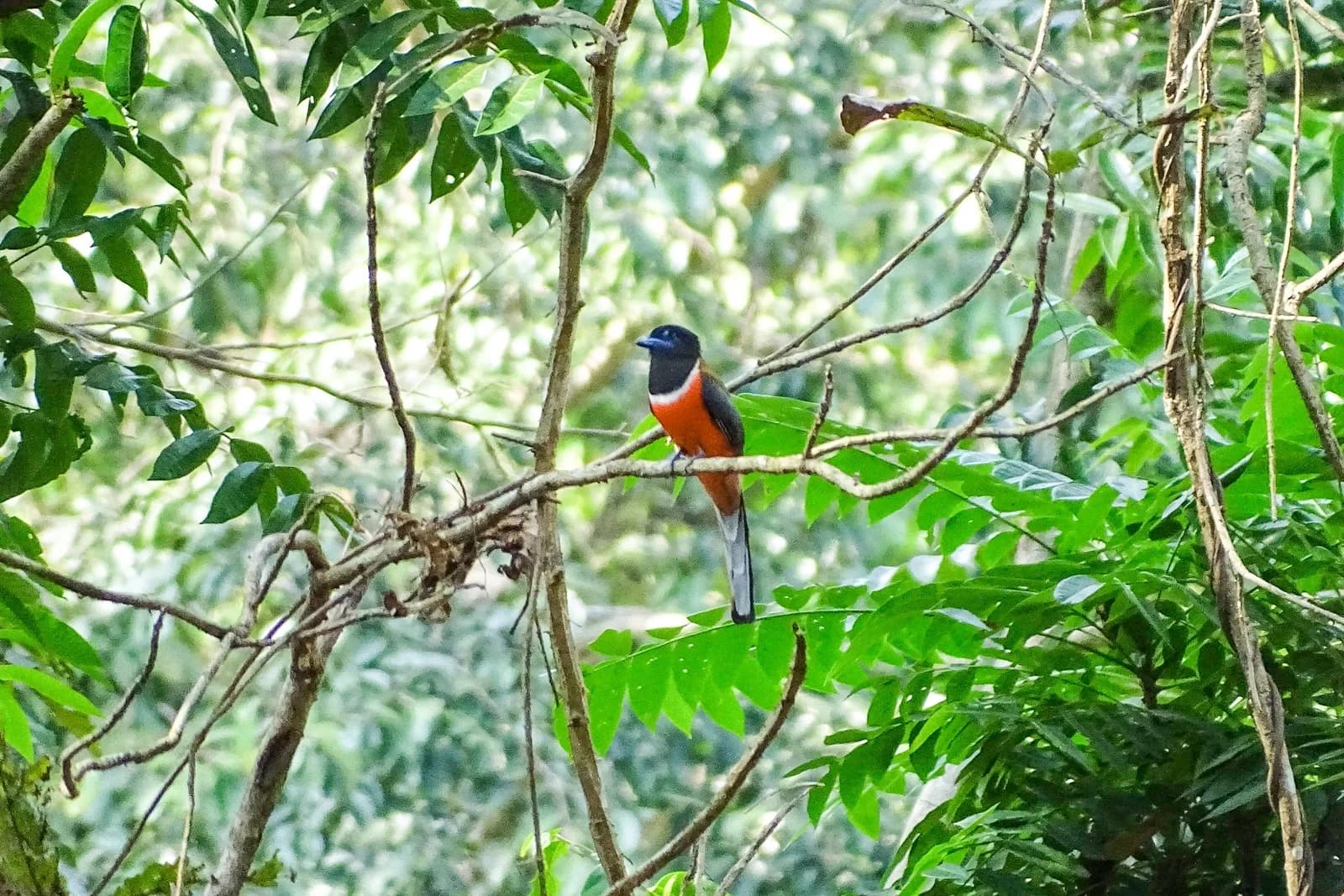 93 · Bird
Malabar trogon
Crimson, black and white, and almost impossible to see until it moves. It is the bird that teaches people the difference between looking at a forest and reading one.
Ghats understorey, sitting perfectly still
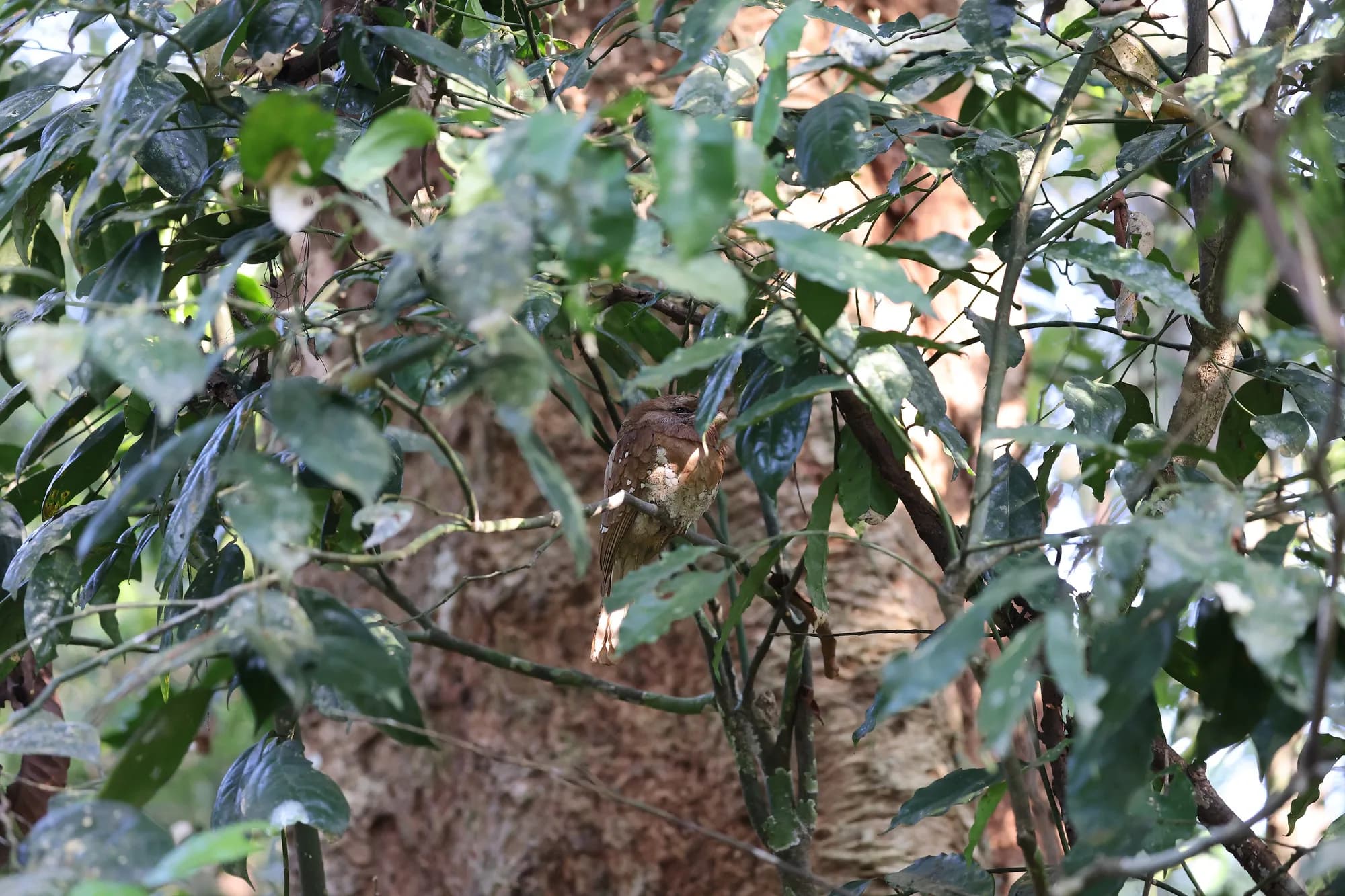 94 · Bird
Sri Lanka frogmouth
A bird you do not find. Local guides in the Western Ghats know individual roost trees and the pairs that use them, and a sighting is somebody walking you to a specific branch.
A known roost tree, shown to you
 95 · Bird
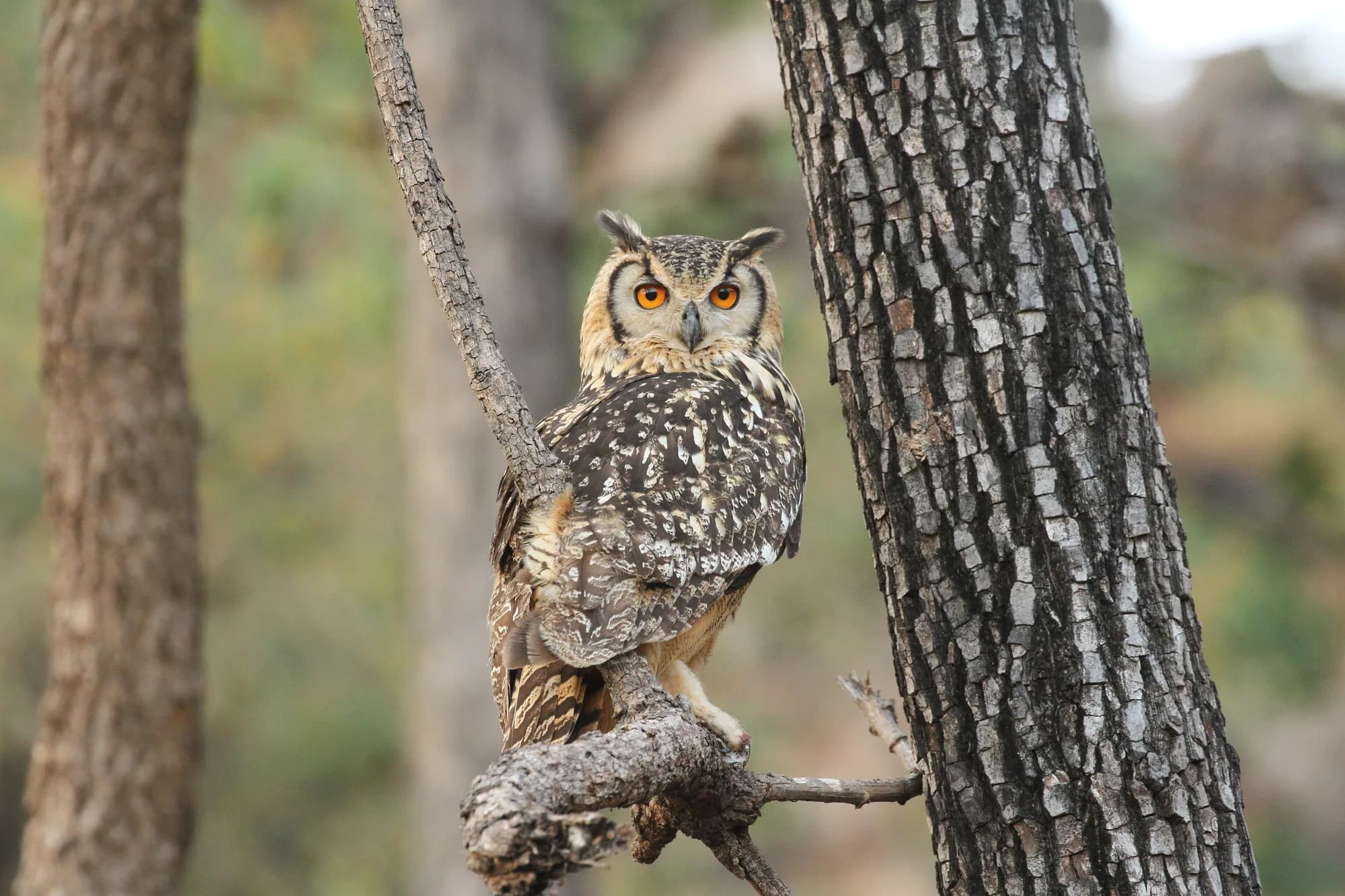
Indian eagle-owl
A large horned owl of ravines and rocky ground, frequently found roosting in the open in daylight — which makes it the easiest big owl in India to see properly.
Ravines and fort walls, often in daylight
 96 · Bird
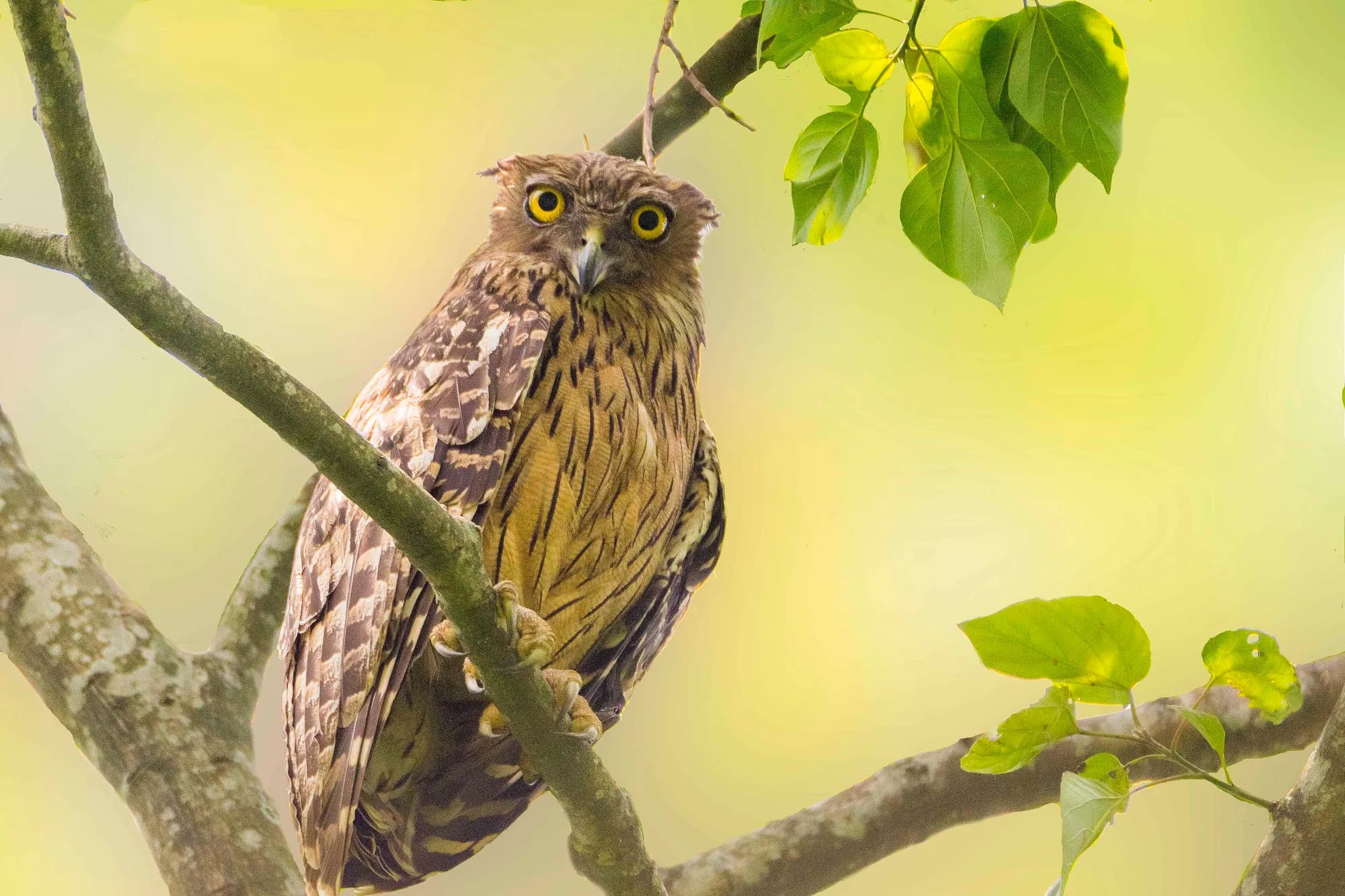
Brown fish owl
A large owl that hunts fish from riverside branches and roosts above the crossings every vehicle drives through. Regularly overhead, and almost always missed.
Over a river crossing, in plain sight
 97 · Reptile
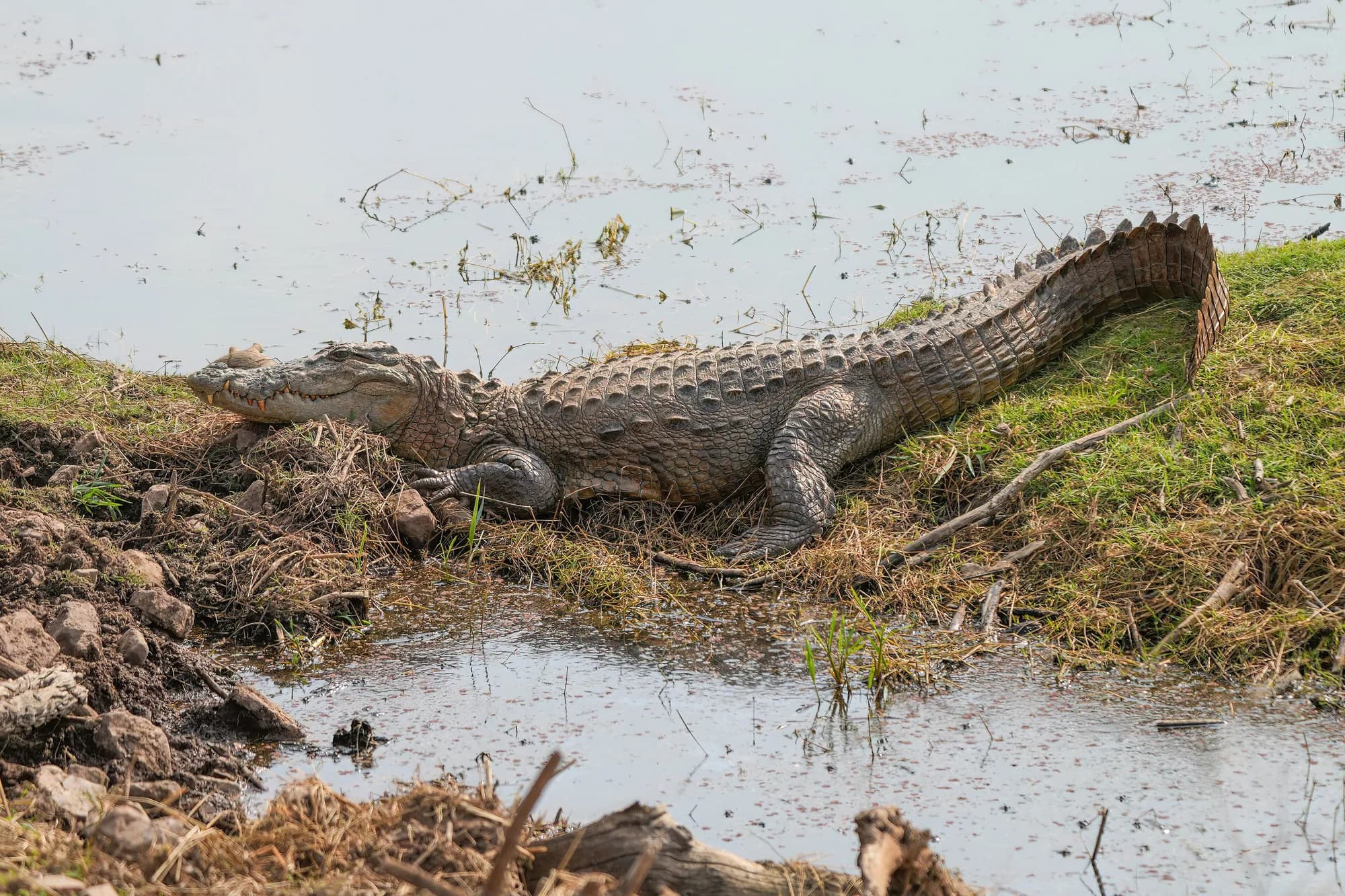
Mugger crocodile
The crocodile you will actually see in India — broad-snouted, common, and basking on the bank of every dry-forest lake while everyone photographs the deer behind it.
Every waterhole in the dry reserves
 98 · Reptile
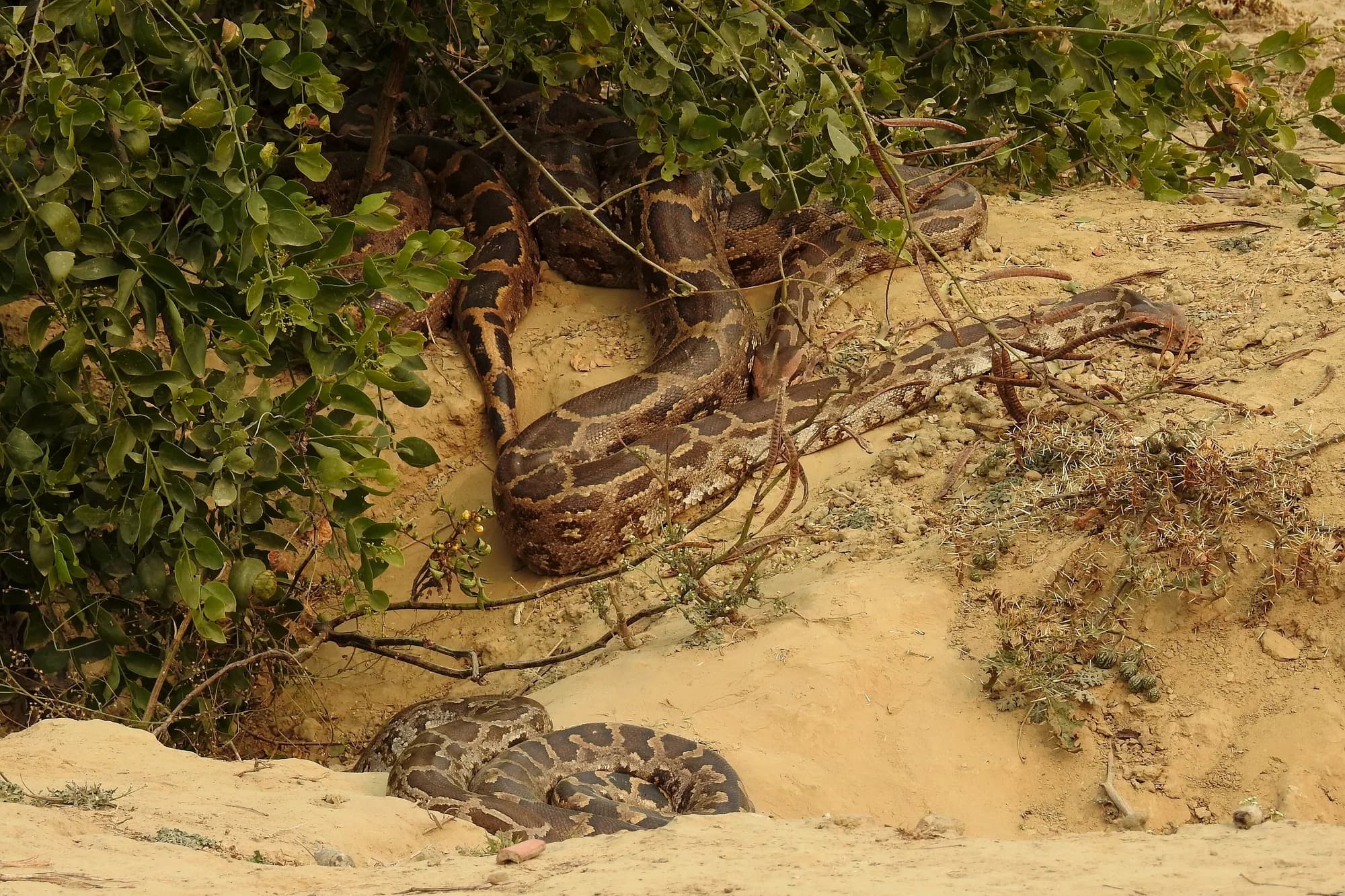
Indian rock python
A heavy-bodied constrictor up to four metres, and one of the few large snakes in India you can plan to see — on cold mornings, at known burrows.
Basking at a burrow mouth on a cold morning
 99 · Reptile
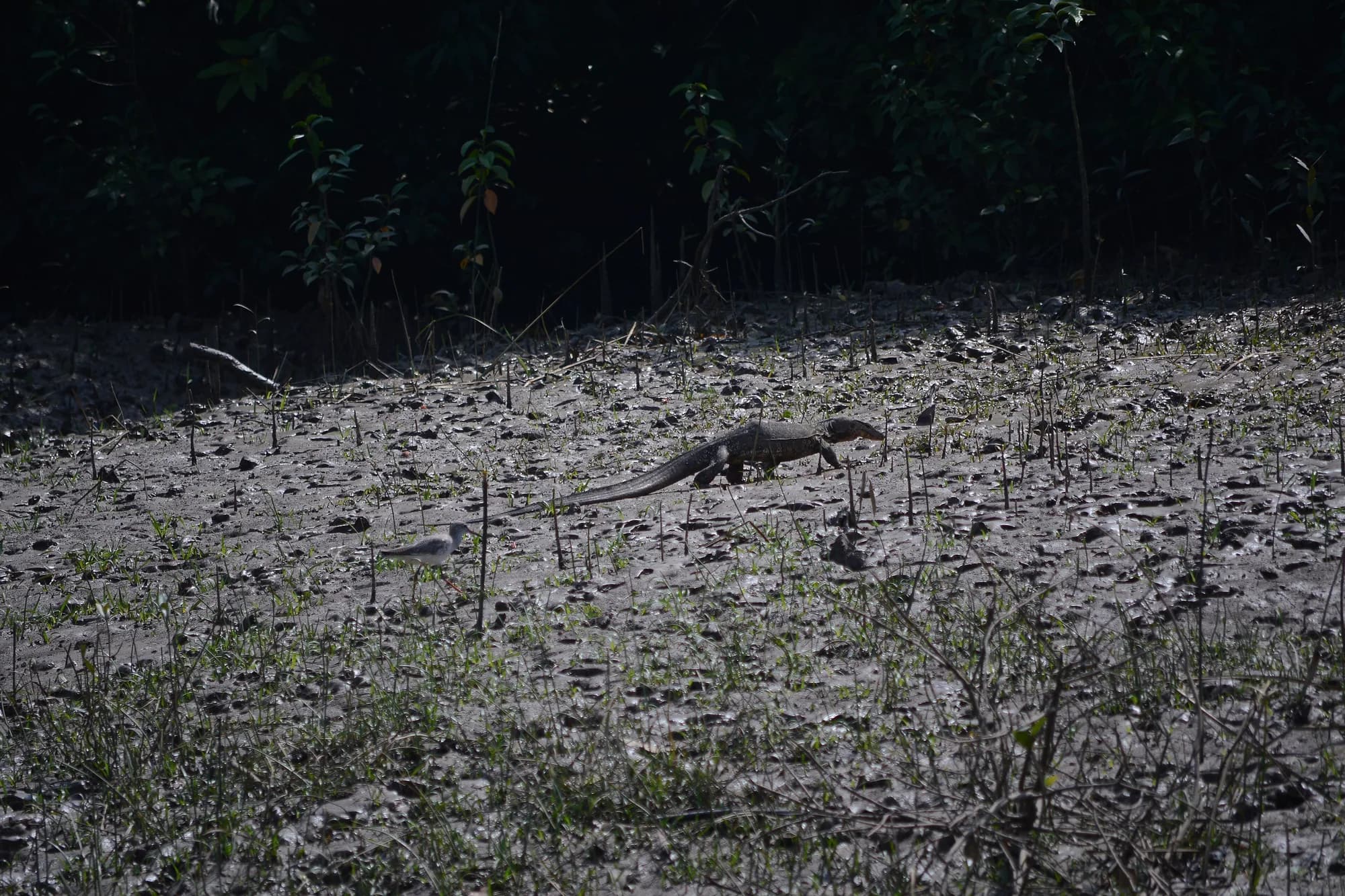
Bengal monitor
The large lizard everyone sees crossing a forest road and nobody can name. Up to a metre and a half, a strong climber, and entirely harmless.
Crossing the track, and nobody knows what it is
 100 · Marine
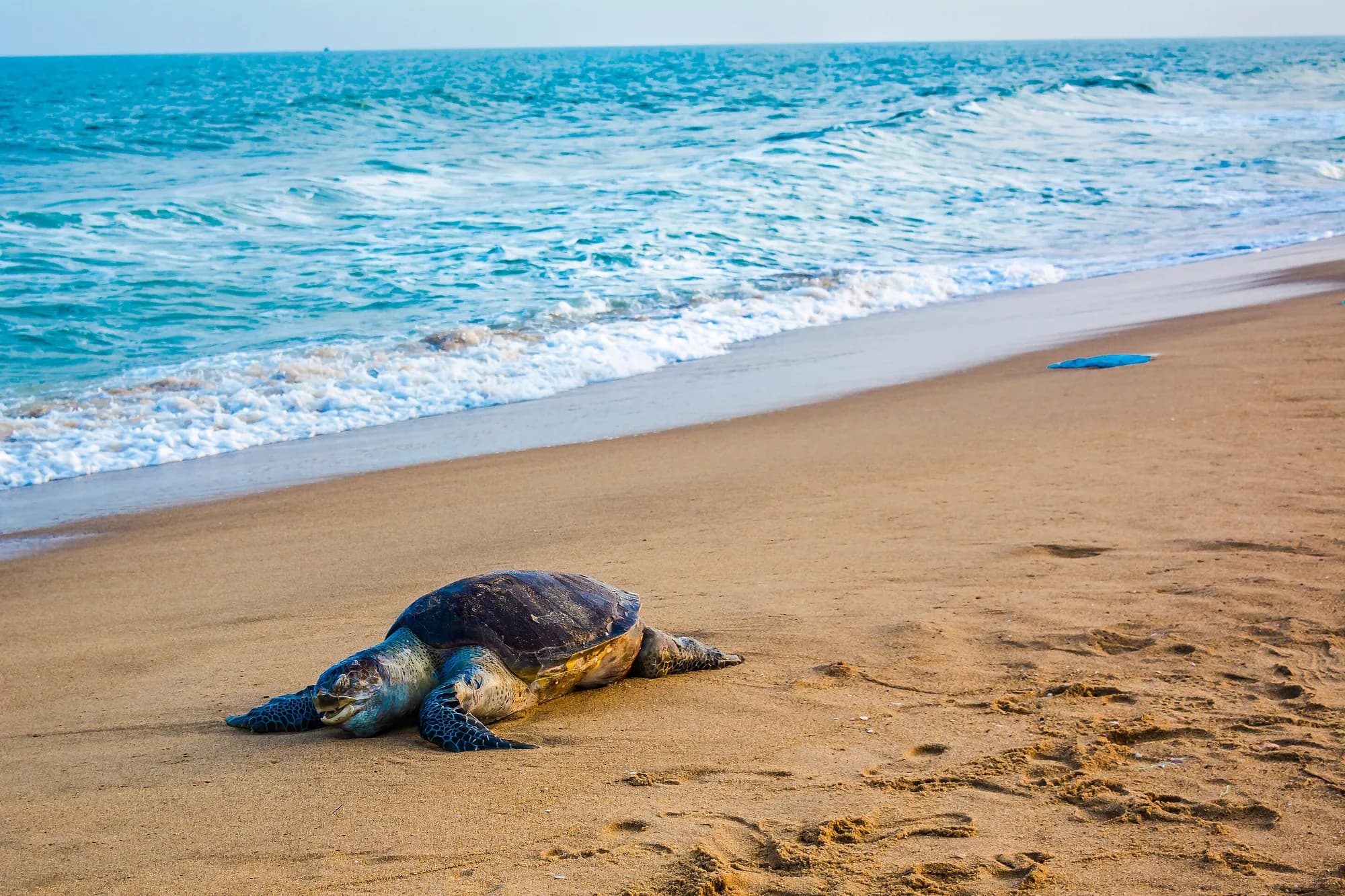
Olive ridley turtle
The arribada is one of the largest wildlife aggregations on earth: hundreds of thousands of turtles coming ashore over a few nights to nest on the same stretch of sand. It has nothing to do with a safari, and that is why most visitors never hear about it.
An Odisha beach, at night, in the tens of thousands
A species is listed here when one of India’s parks is a documented destination for it — not merely because the animal occurs in the country. Several of these animals are found in a dozen countries, so a page will send you elsewhere if elsewhere is better; that is the point of it. Every species page carries its IUCN category with the year it was assessed.