
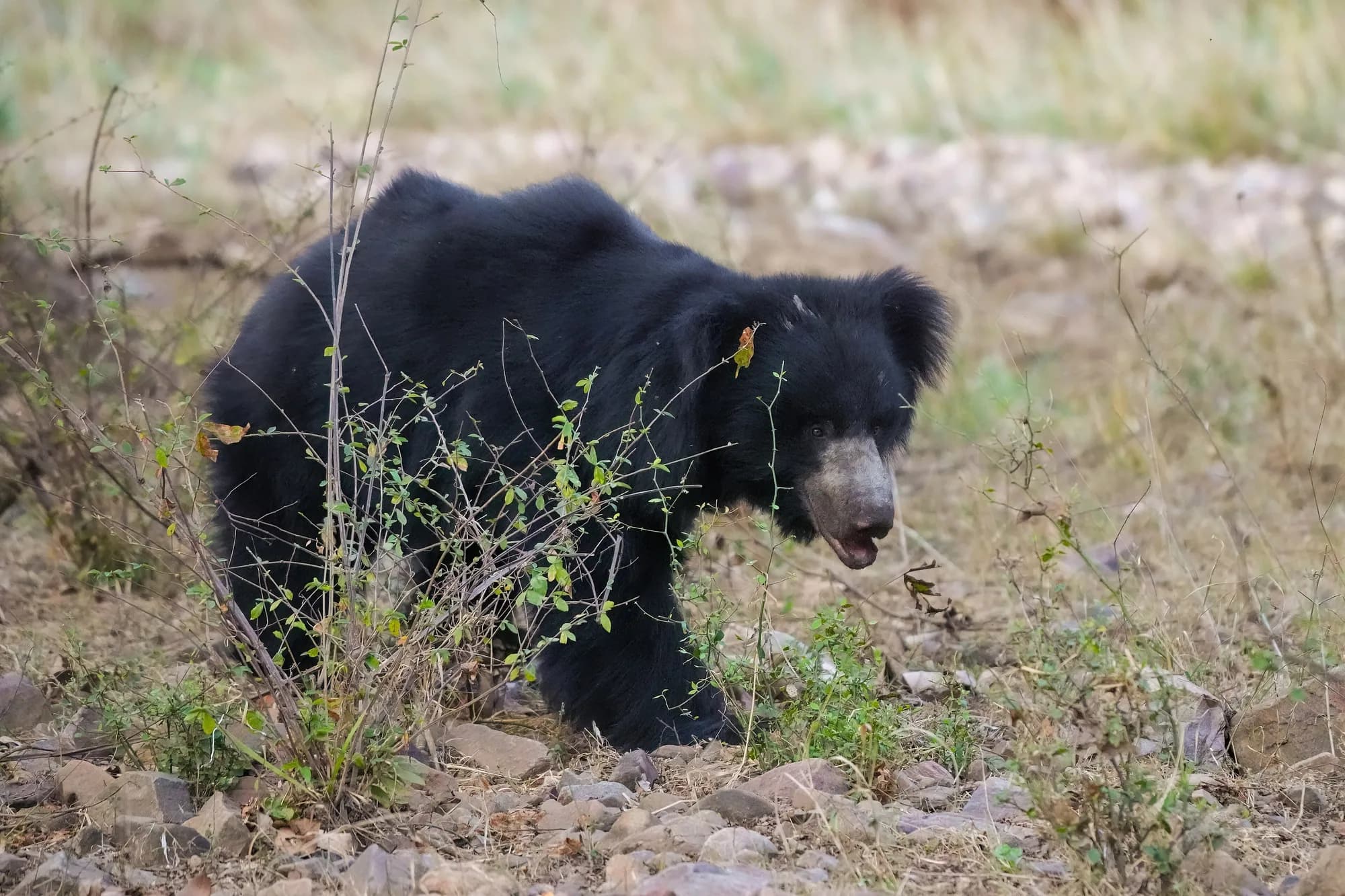
Species · Melursus ursinus
Sloth bear
The animal most guides would rather show you than a tiger, and the one most likely to be walked past in the dark. Where the diggings are, and why the odds are better on foot.
Also called
- Bhalu (भालू) · Hindi
- Aswal · Marathi
- Karadi · Kannada
- Rinch · Gujarati
Checked 30 Aug 2026
- Where
- Central & western India
- Best months
- March–June
- Best seen
- On foot, at Satpura
- Diet
- Termites, ants and fruit
A dry-forest and rocky-outcrop animal, and one of the few large mammals here that is genuinely Indian rather than shared with the rest of Asia.
Where it is
Where to actually go
Ranked, with the reason each — these are not interchangeable.
- 01SatpuraMadhya PradeshThe only major reserve in India where you can walk, and sloth bear is the animal walking is best for. Guides here read diggings the way guides elsewhere read pugmarks.Book the walking safari, not just the jeep
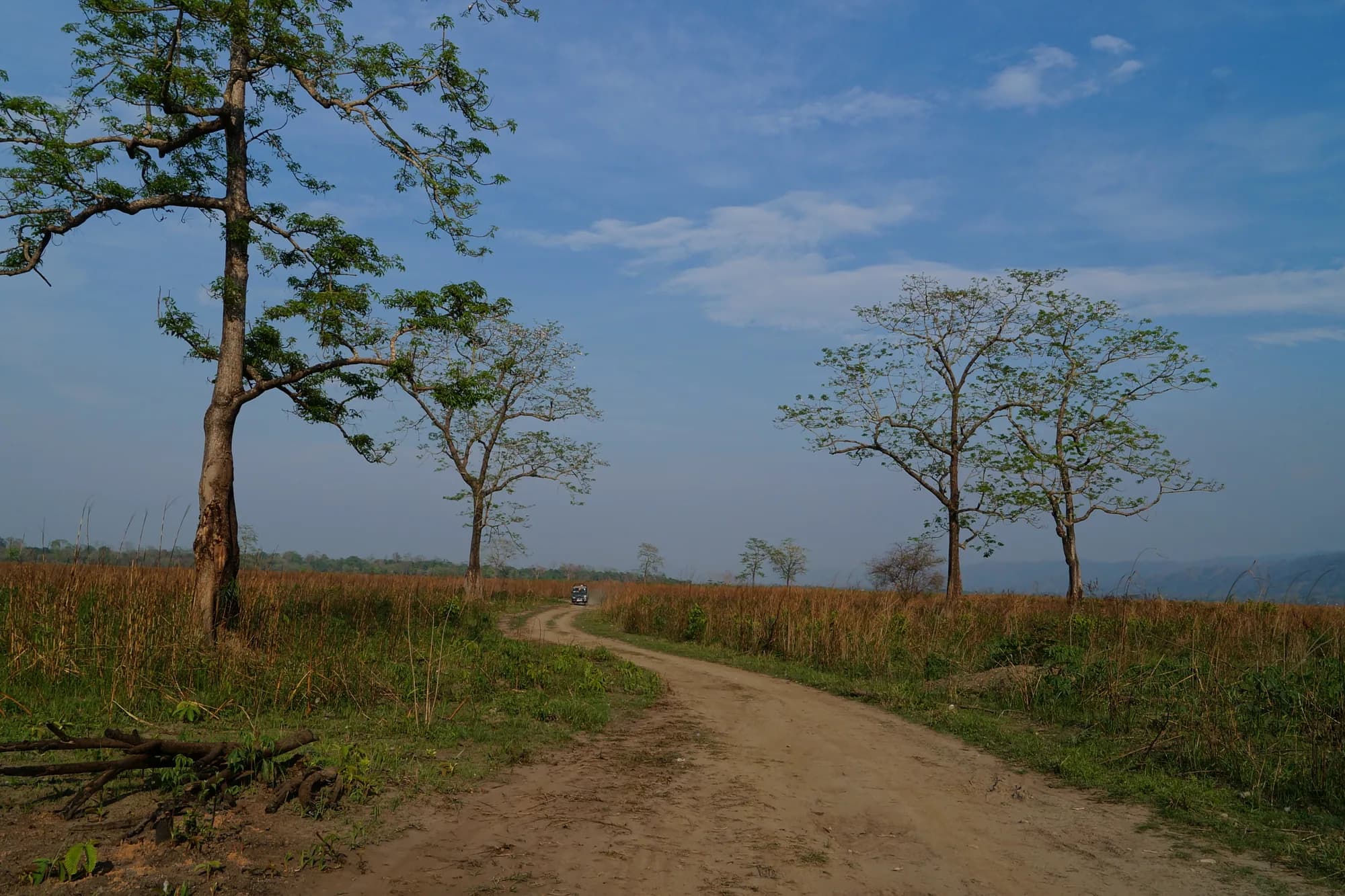
- 02TadobaMaharashtraOpen teak with enough visibility that a bear crossing at last light is a sighting rather than a rumour. Regular daylight records, which is rare for this animal.Evening shift, and stay out to the last legal minute
- 03RanthamboreRajasthanRavines and fort walls give exactly the broken ground they like, and the bears here are more used to vehicles than most.A genuine bonus on a trip booked for tigers
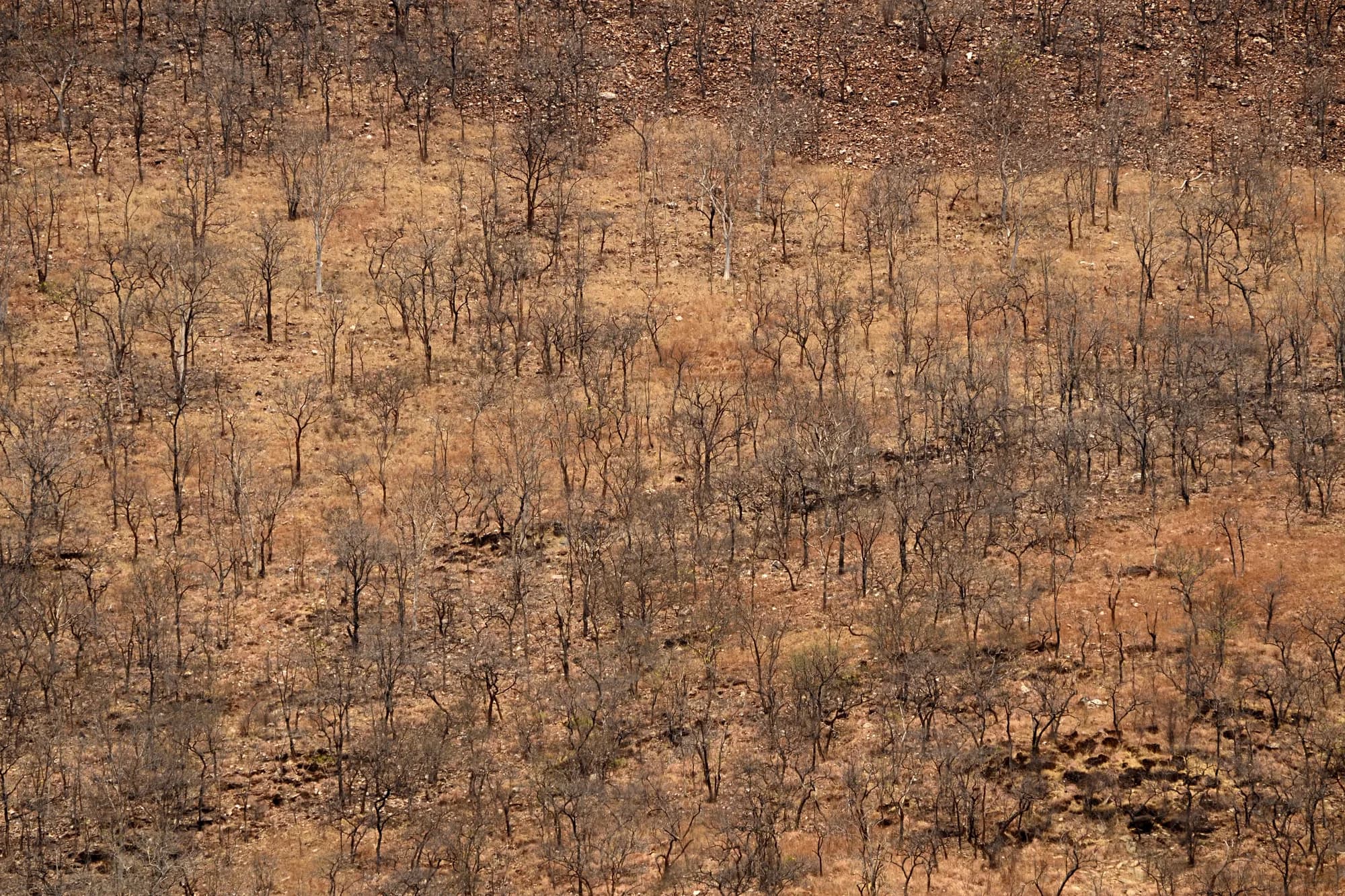
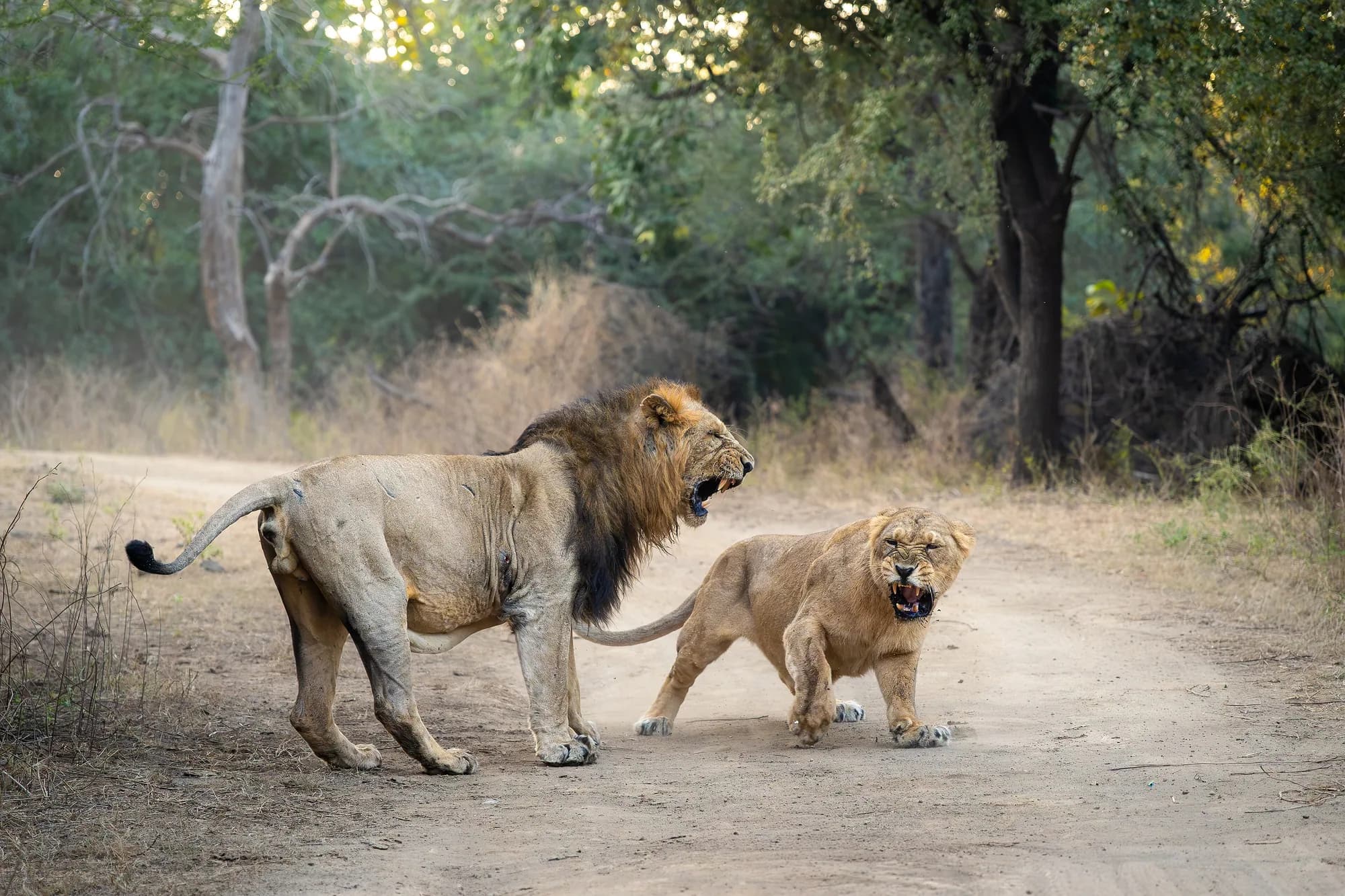
- 04GirGujaratShares the forest with the lions, and rarely looked for because everyone is facing the other way.Ask your guide before the drive, or it will not be looked for
Where you will not see one
- The HimalayaThe bear in the hills is the Asiatic black bear, a different animal with a clean white chest crescent and a completely different build. Sloth bears are a lowland and plateau animal and do not go up there.
- Anywhere expecting a slow, docile bearThe name comes from an eighteenth-century misidentification as a sloth, and it has caused two centuries of wrong expectations. This is among the most unpredictable large animals in India and injures more people annually than tigers do.
- A tiger core zone at middayYou are looking in the wrong place at the wrong hour. Buffer, broken ground, and the edges of the shift are where the sightings actually happen.
When to go
When to go
- J
- F
- M
- A
- M
- J
- J
- A
- S
- O
- N
- D
January: good. February: good. March: best. April: best. May: best. June: good. July: closed or unproductive. August: closed or unproductive. September: closed or unproductive. October: marginal. November: good. December: good.
Through the day
- Dawn
- Morning
- Midday
- Afternoon
- Dusk
- Night
Dawn: most active. Morning: active. Midday: usually resting. Afternoon: active. Dusk: most active. Night: not normally seen.
Realistic odds on a three-day trip
- Near-certain
- Likely
- Lucky
- Expedition
Telling it apart
Told apart from
Asiatic black bear
Only where the Himalayan foothills meet the plains
A clean, sharply-edged white V on the chest and a smooth coat. The sloth bear's chest mark is a ragged pale Y or U and the coat is long and unkempt, especially over the shoulders. Ranges barely overlap, so location settles most cases before markings do.
Wild boar
Dusk, in every central Indian reserve
The commonest mistake in poor light, and it is about gait: a boar trots with its head low and level, a sloth bear shambles with a rolling, front-heavy walk and a visible hump over the shoulders.
Marks chosen to be usable from a moving vehicle — a sloth bear is rarely still and never close enough for anything subtler.
What it looks like in the field
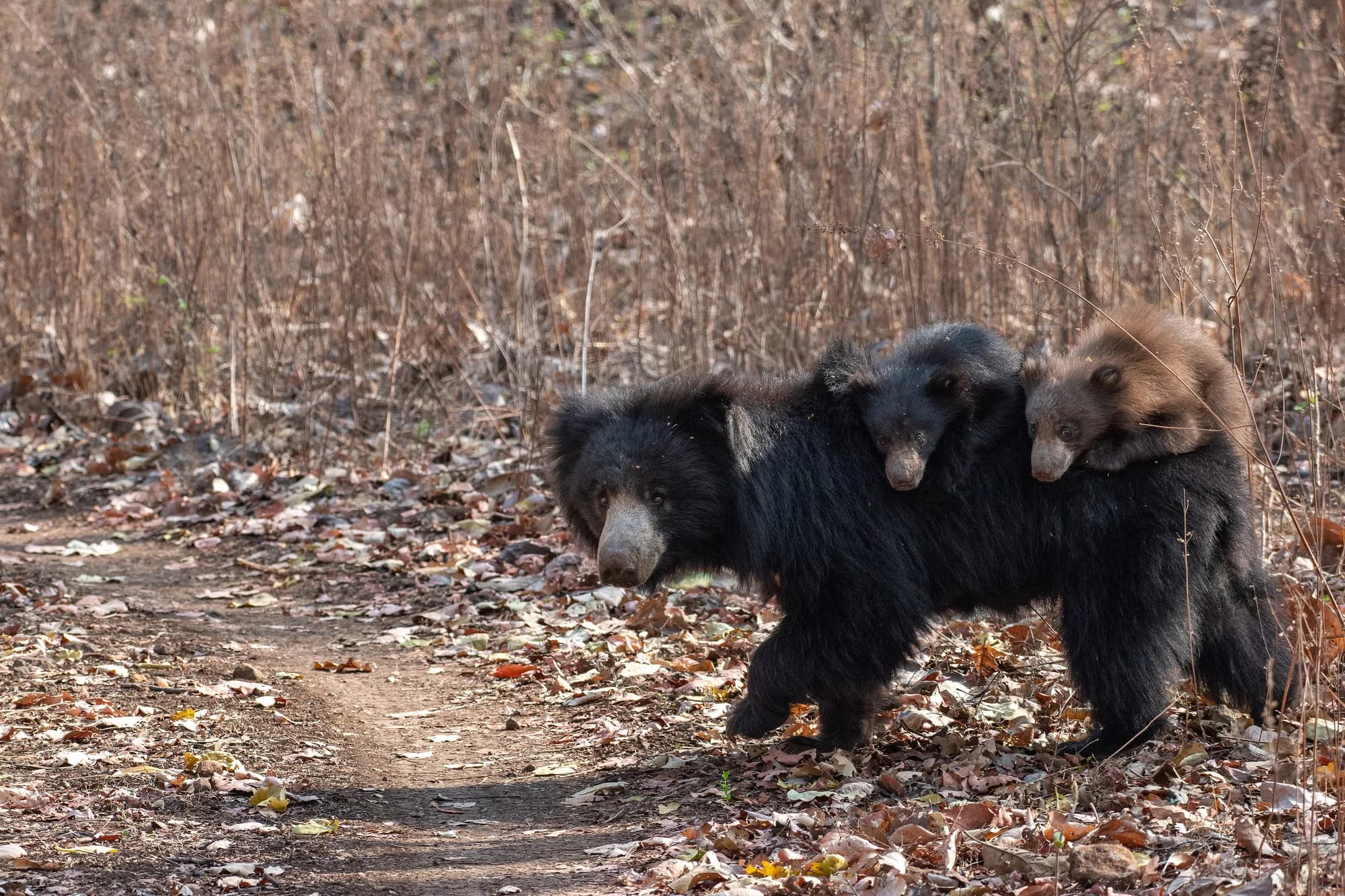
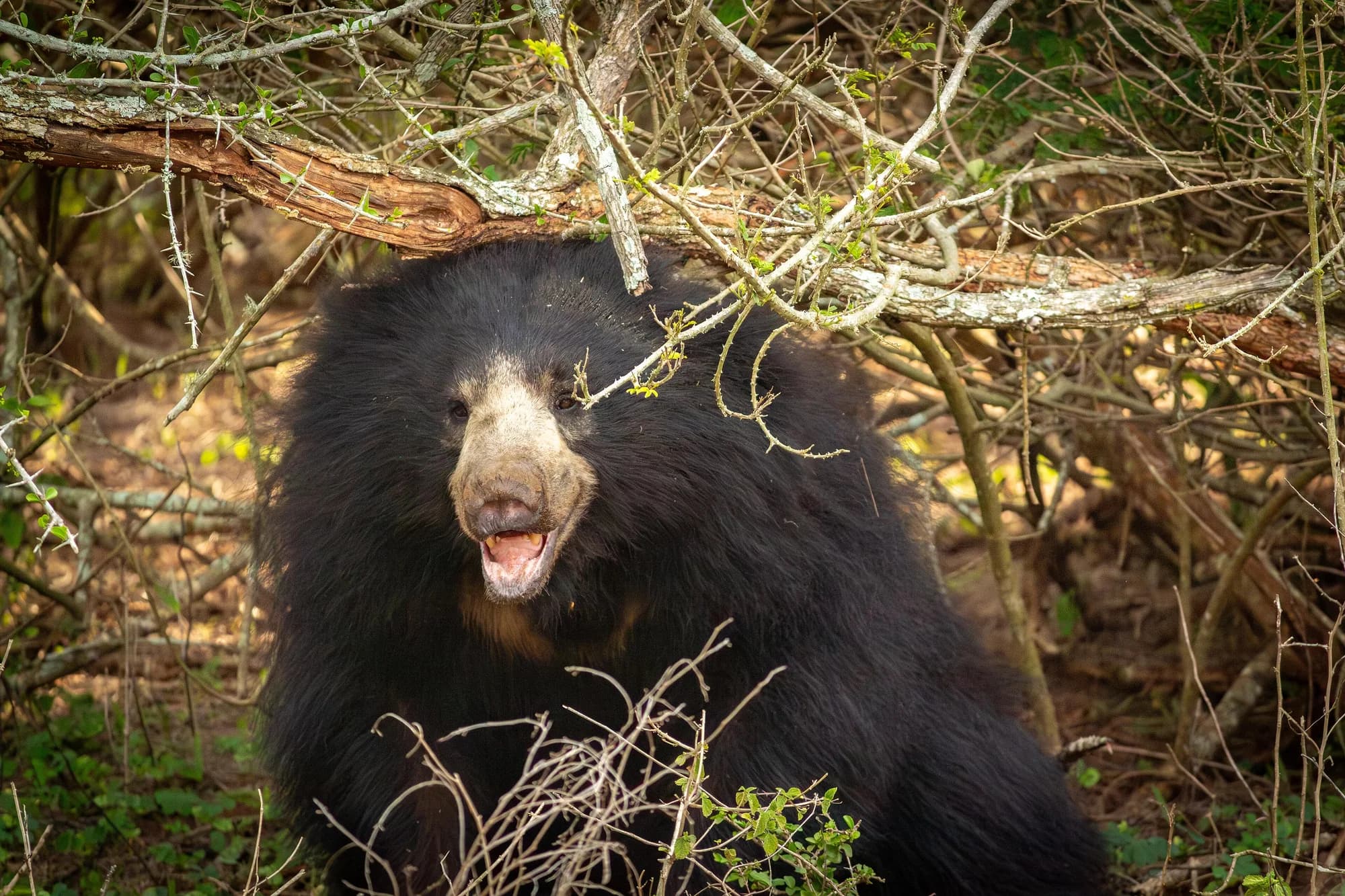
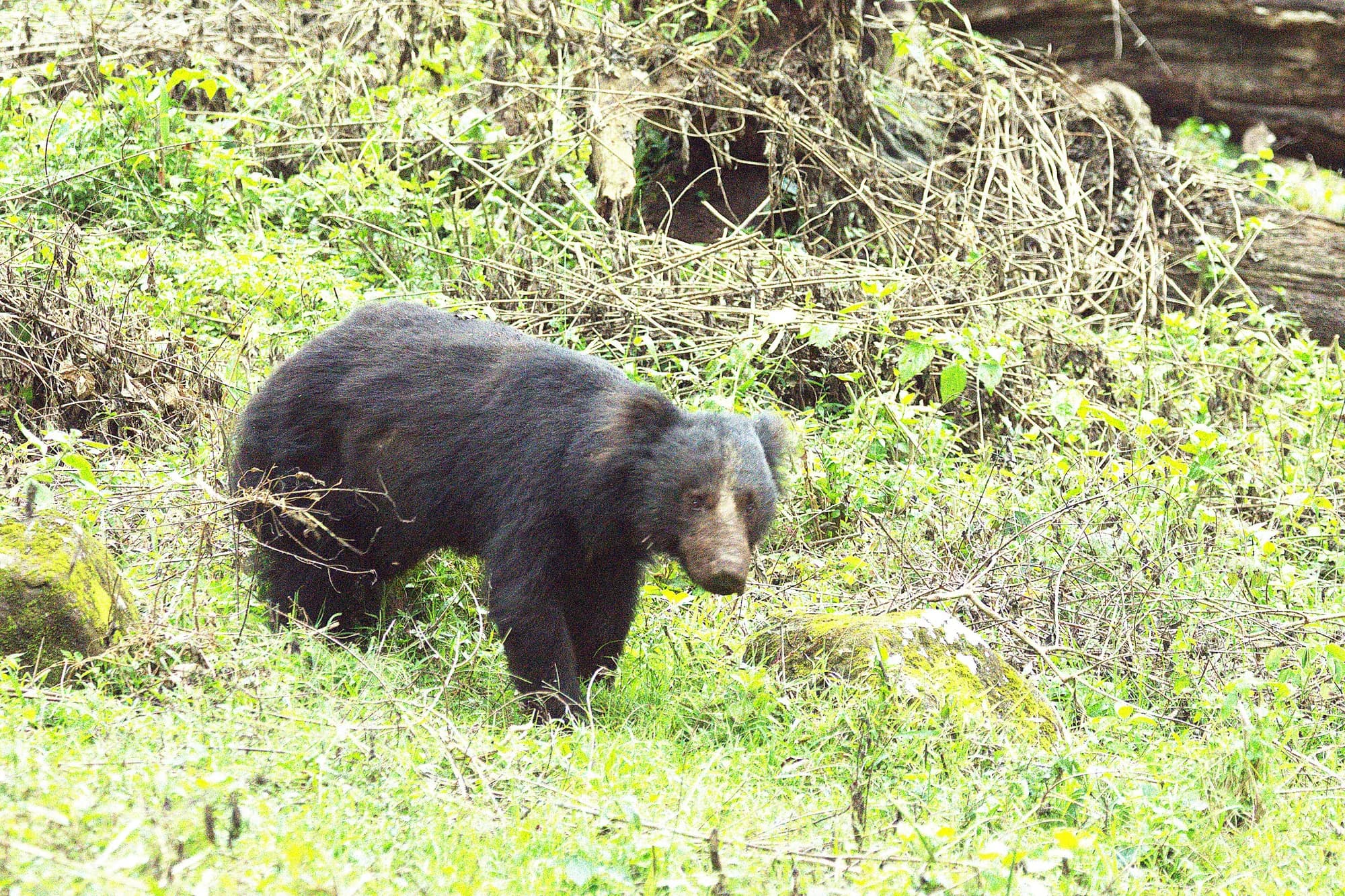
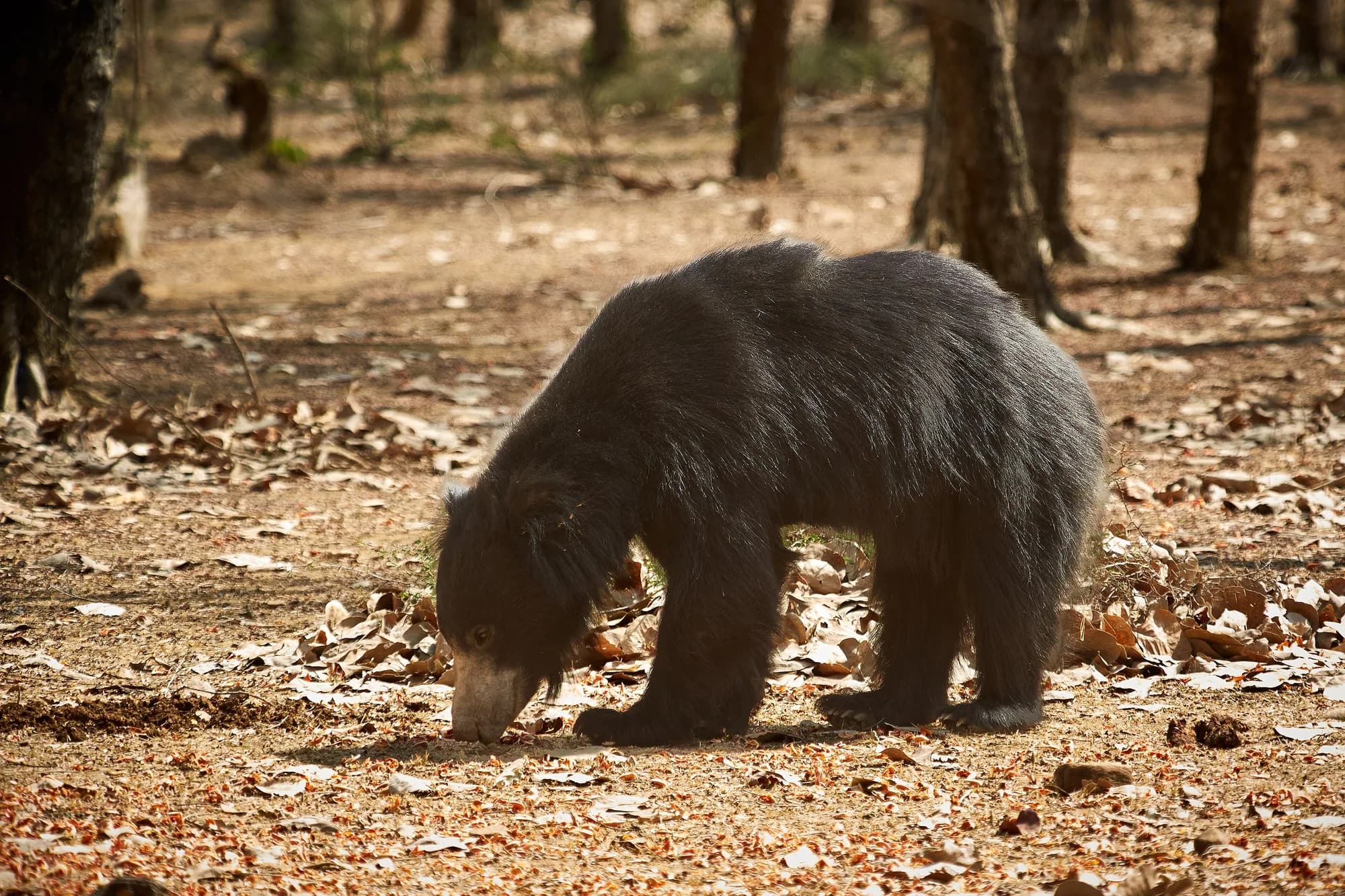
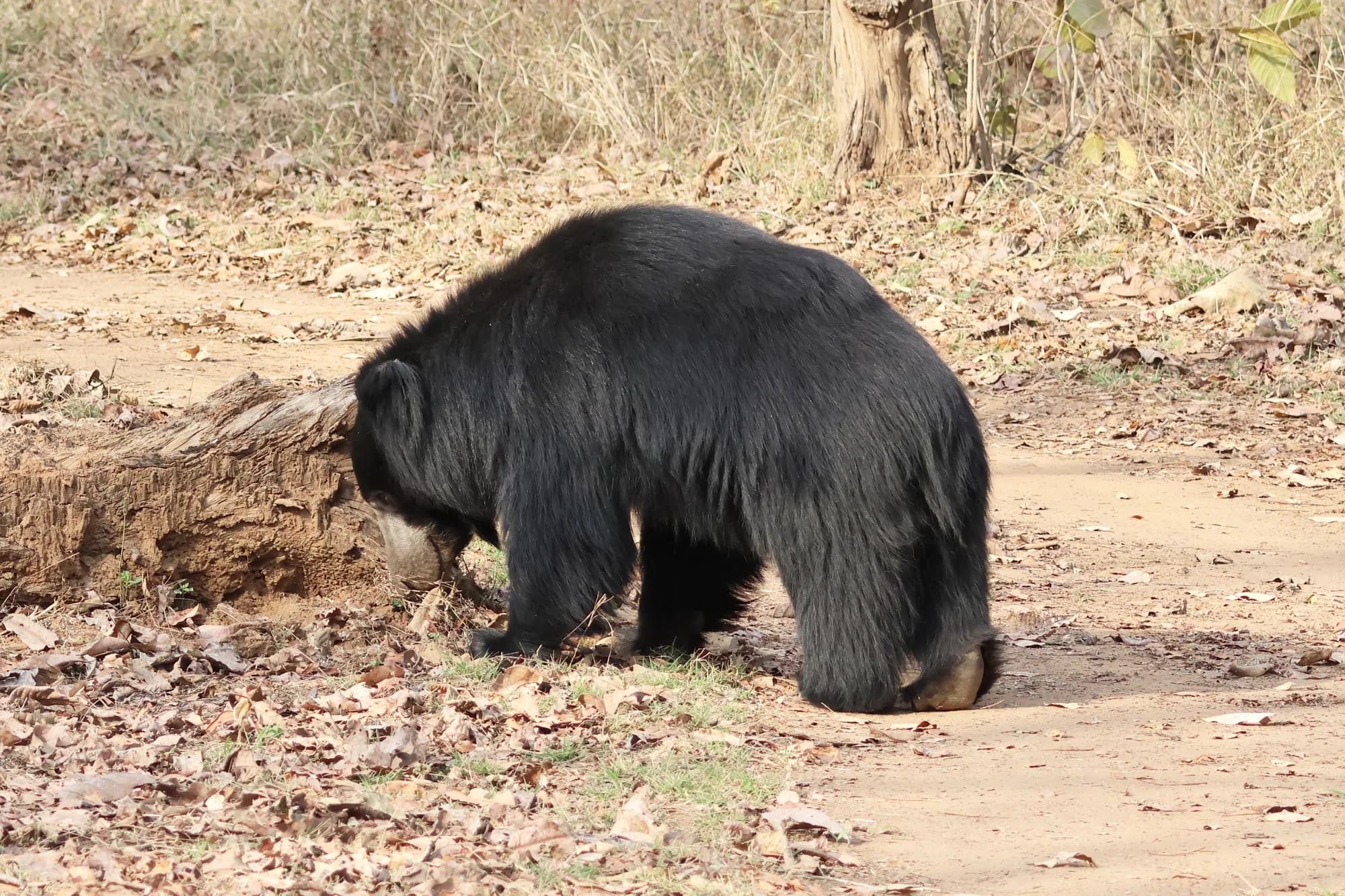
Photographs of Sloth bear in the wild, in Indian reserves. We publish no captive, baited or digitally composited images, and no photograph whose licence we cannot show.
Photographing it
- Lens
- 400mm, and accept that most frames will be at the edge of the light. A bear in dust at dusk is a high-ISO photograph or it is nothing.
- Typical distance
- Thirty to eighty metres, and closing it is not worth what it costs.
- Light
- The worst of any large Indian mammal. The animal is black, the hour is dark, and the dust it throws up scatters what light there is.
Where to stopNever position a vehicle between a female and a cub, and never between a bear and the cover it is heading for. A sloth bear that feels cornered charges rather than retreats, and the fault in almost every recorded incident lies with the person who removed its exit.
Signs and calls
- Diggings
- A termite mound torn open on one side with deep parallel claw furrows. Fresh diggings have loose damp soil and no leaf litter fallen back in — the single most useful sign, and the reason walking works.
- Track
- Five toes and long claw marks well ahead of the pad, quite unlike a cat's clawless four. The hind foot leaves a broad, almost human heel.
- Scat
- Loose and full of undigested termite parts, or in season almost entirely fruit pulp and seeds. Easy to identify and easy to walk past.
- Claw marks
- Deep parallel scores on smooth-barked trees, higher and more widely spaced than a leopard's, often on a tree beside a fruiting mahua.
What a sighting is actually like
Almost always brief, and almost always at the wrong end of the light. A shape that reads as a boar until it stands, a lot of dust, and then nothing — sloth bears do not pose and do not linger, and the ones that have learned about vehicles leave before you have the camera up.
You will smell the torn termite mound long after the animal has gone.
The exception is a female with cubs on her back, which is the sighting everybody wants and the one nobody should crowd. Cubs ride for the first nine months or so, and a mother carrying two is both the best photograph in the Indian forest and the most dangerous animal in it.
Why walking changes the odds
Sloth bears are found by sign, not by sight. From a jeep you are moving too fast, sitting too high, and looking at the wrong scale — the evidence is on the ground and it is small.
Go in the mahua season if you can. When the trees drop their flowers in March and April the bears come to them nightly and stay late into the morning, which is the closest thing to a predictable sloth bear anywhere in the country.
Status and protection
Status and protection
- IUCN Red List
- Vulnerable
- Population trend
- ↓ Decreasing
- Wildlife Protection Act 1972
- Schedule I (post-2022 amendment numbering)
- CITES
- Appendix I
Species-level assessment for Melursus ursinus (e.T13143A166519315; published 2020 as an amended version of the 2016 assessment, last assessed 18 March 2016).
Assessed 2020 · IUCN Red List assessment
What to book to see one
What you would be booking
- How it is seen
- Jeep safari everywhere, but a walking safari at Satpura is the one that changes the odds — this is a bear you find by its diggings, and you cannot read the ground from a vehicle.
- Drives to book
- Six across three days if it is the target. Sloth bear is a bonus on most itineraries and a plan on very few, which is why so many people miss one.
- Zone or shift
- Broken, rocky ground with termite mounds beats good tiger forest every time.
If you walk, walk behind your guide and do not close distance for a photograph. A surprised sloth bear at short range with a cub on its back is the single most dangerous encounter in an Indian forest, and surprise is the whole mechanism.
Satpura — the park in fullOn the same trip you would also get
- Tiger — the same reserves, and the reason most people booked
- Indian leopard — shares the rocky, broken ground the bears prefer
- Dhole — Satpura and Tadoba both hold packs
Questions people ask
What is the best place to see a sloth bear in India?
Are sloth bears dangerous?
Why is it called a sloth bear?
Read next
Madhya Pradesh
Satpura — where walking is the point
The one central Indian reserve that permits walking and boat safaris. You see less and understand considerably more.
Satpura, and few others
Walking safaris in India
You see less and understand more. Tracks, scat, alarm calls — the things a vehicle passes at speed.
58 reserves, six worth the trip
Tiger — where and when
The animal most people come for, and the one most often missed. Where the odds actually are, and how they move by month and by zone.
Twelve months, cross-park
When to go, month by month
The single decision that moves the odds most. Heat, crowds, closures and what is actually open, one page per month.