
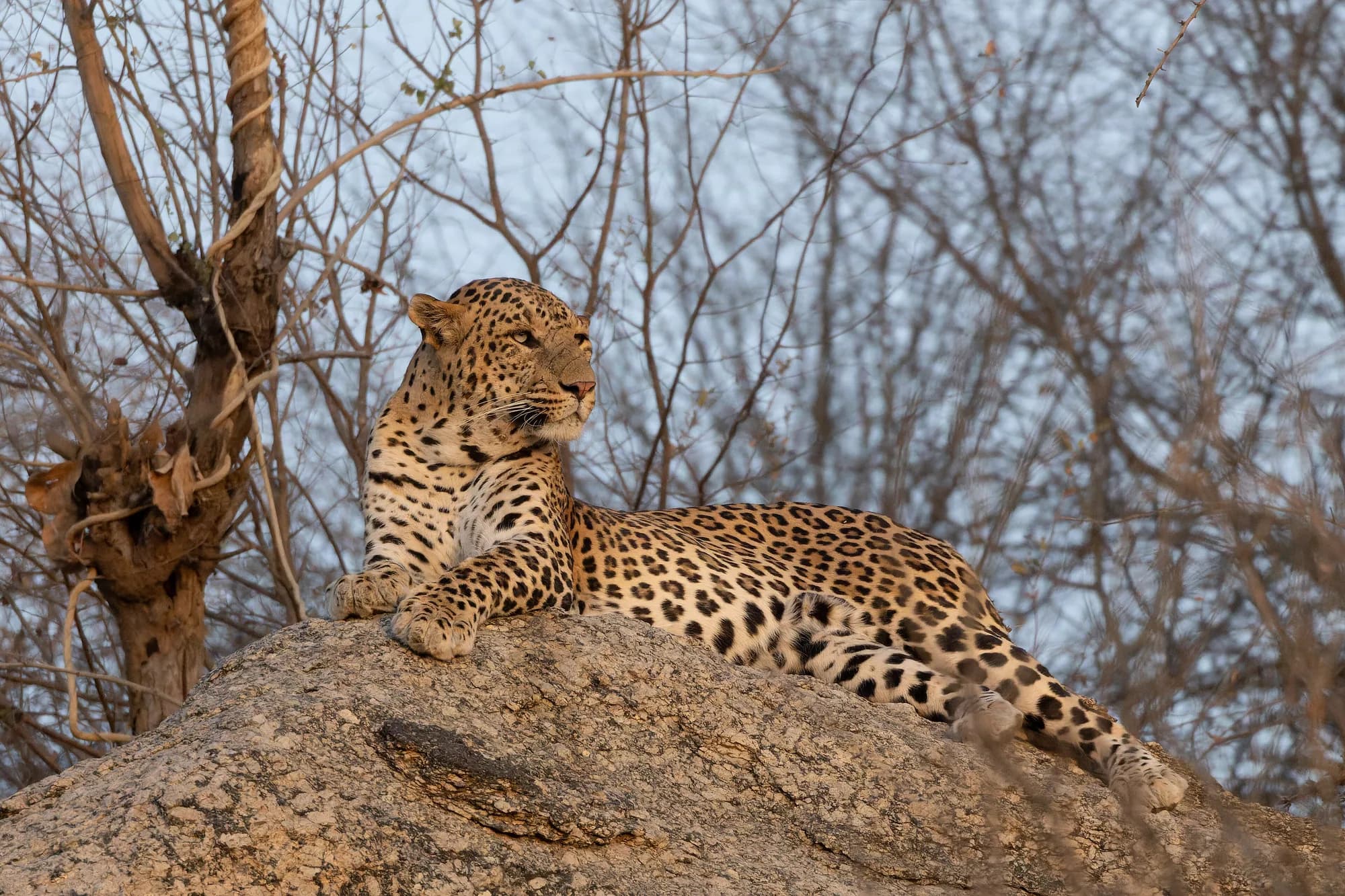
Species · Panthera pardus fusca
Indian leopard
Present in almost every reserve on this site and reliably seen in almost none of them. The two landscapes that change that, and why they do.
Also called
- Tendua (तेंदुआ) · Hindi
- Guldar · Hindi, northern
- Bibtya · Marathi
- Chirathe · Kannada
Checked 14 Aug 2026
- Where
- Nationwide
- Best months
- February–May
- Best odds
- Jawai, Kabini
- Population
- 13,874Status of Leopards in India, NTCA & Wildlife Institute of India, 2022 cycle, published 2024Covers ~70% of range; the Himalaya and semi-arid zones were not surveyed.
The widest range of any large cat here, and the one where range tells you least about your chances.
Where it is
Where to actually go
Ranked, with the reason each — these are not interchangeable.
- 01JawaiRajasthanGranite hill country where leopards den in caves in full view and have coexisted with the local community for generations. Nothing else in India works like it.Not a national park — a working landscape
- 02KabiniKarnatakaA well-documented population and a reservoir edge that pulls animals into the open through the dry months.March to May, or it is an ordinary forest
Where you will not see one
- The core of a high-density tiger reserveBandhavgarh has excellent leopard numbers and Tala is a poor place to look for one. Leopards concede the best ground to tigers and hold to edges, rocks and buffer. The park with the most leopards is often not the park where you will see one.
- Kabini, expecting the black leopardThe melanistic leopard at Kabini is a small number of individual animals, not a population or a subspecies. Arriving expecting one is arriving expecting a specific animal to walk out, which is a lottery rather than a plan.
- Ladakh and the high HimalayaThat is the snow leopard, a separate species on separate ground. The two barely overlap, and no Ladakh trip is an Indian leopard trip.
When to go
When to go
- J
- F
- M
- A
- M
- J
- J
- A
- S
- O
- N
- D
January: good. February: best. March: best. April: best. May: best. June: marginal. July: closed or unproductive. August: closed or unproductive. September: closed or unproductive. October: marginal. November: good. December: good.
Through the day
- Dawn
- Morning
- Midday
- Afternoon
- Dusk
- Night
Dawn: most active. Morning: active. Midday: usually resting. Afternoon: active. Dusk: most active. Night: not normally seen.
Realistic odds on a three-day trip
- Near-certain
- Likely
- Lucky
- Expedition
Telling it apart
Told apart from
Poor light in any central Indian reserve
Bulk, not pattern. A leopard is a cat you could imagine lifting; a tiger is not. At distance the giveaway is the tail carriage and the way a leopard moves — lower, quicker, and constantly checking behind it.
Jungle cat
Grassland edges and scrub at dusk, everywhere in India
Half the size again smaller, plain sandy coat with no rosettes at all, and noticeably long legs for its body. Most roadside jungle cats get reported as leopard cubs; almost none of them are.
Clouded leopard
Only in the Northeast, and only in theory
Not a size problem but a range one — clouded leopards are Northeast forest animals and effectively never seen. Large cloud-shaped blotches rather than rosettes, and a tail as long as the body.
Marks chosen to be usable from a moving vehicle — a indian leopard is rarely still and never close enough for anything subtler.
What it looks like in the field
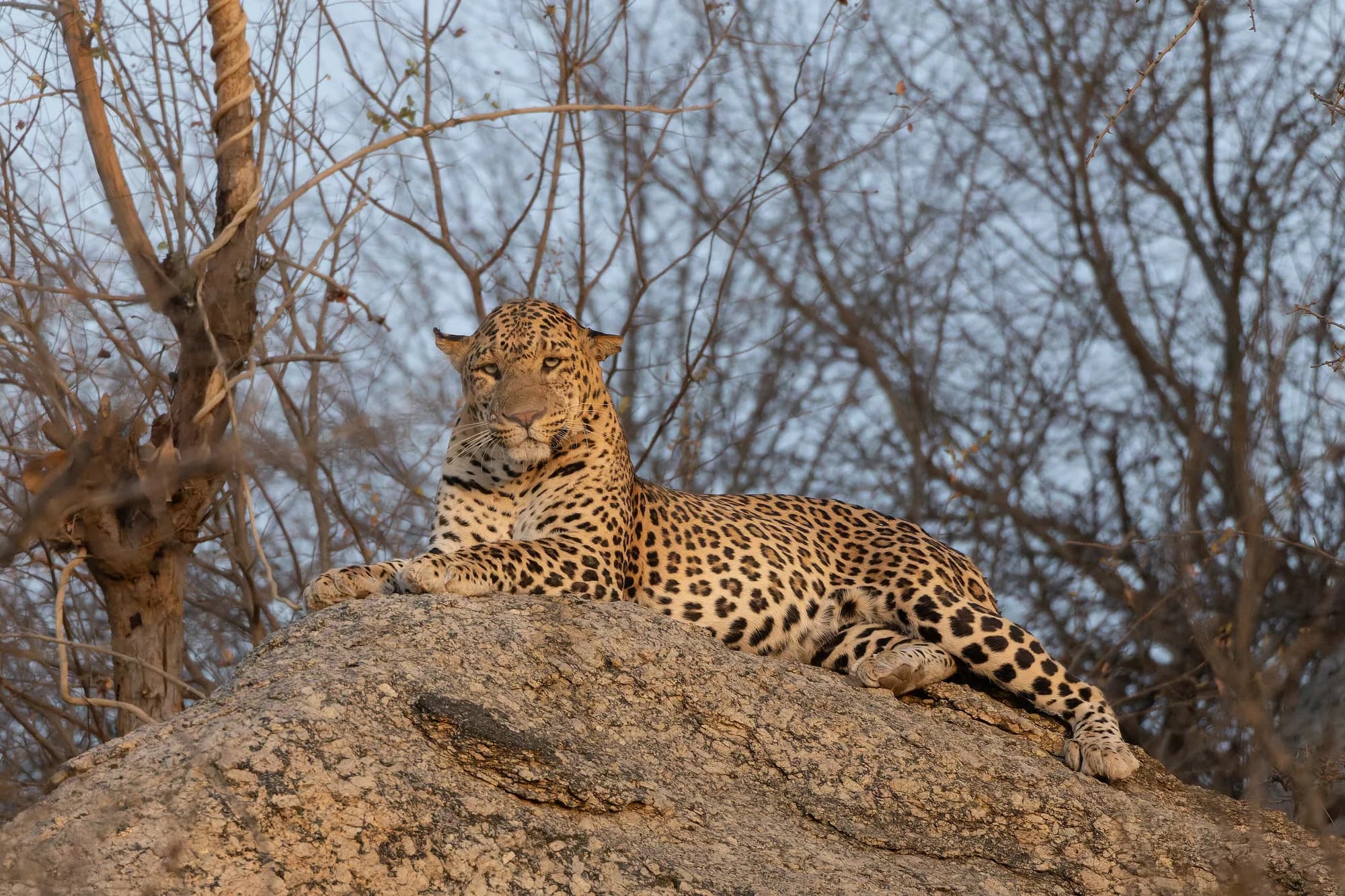
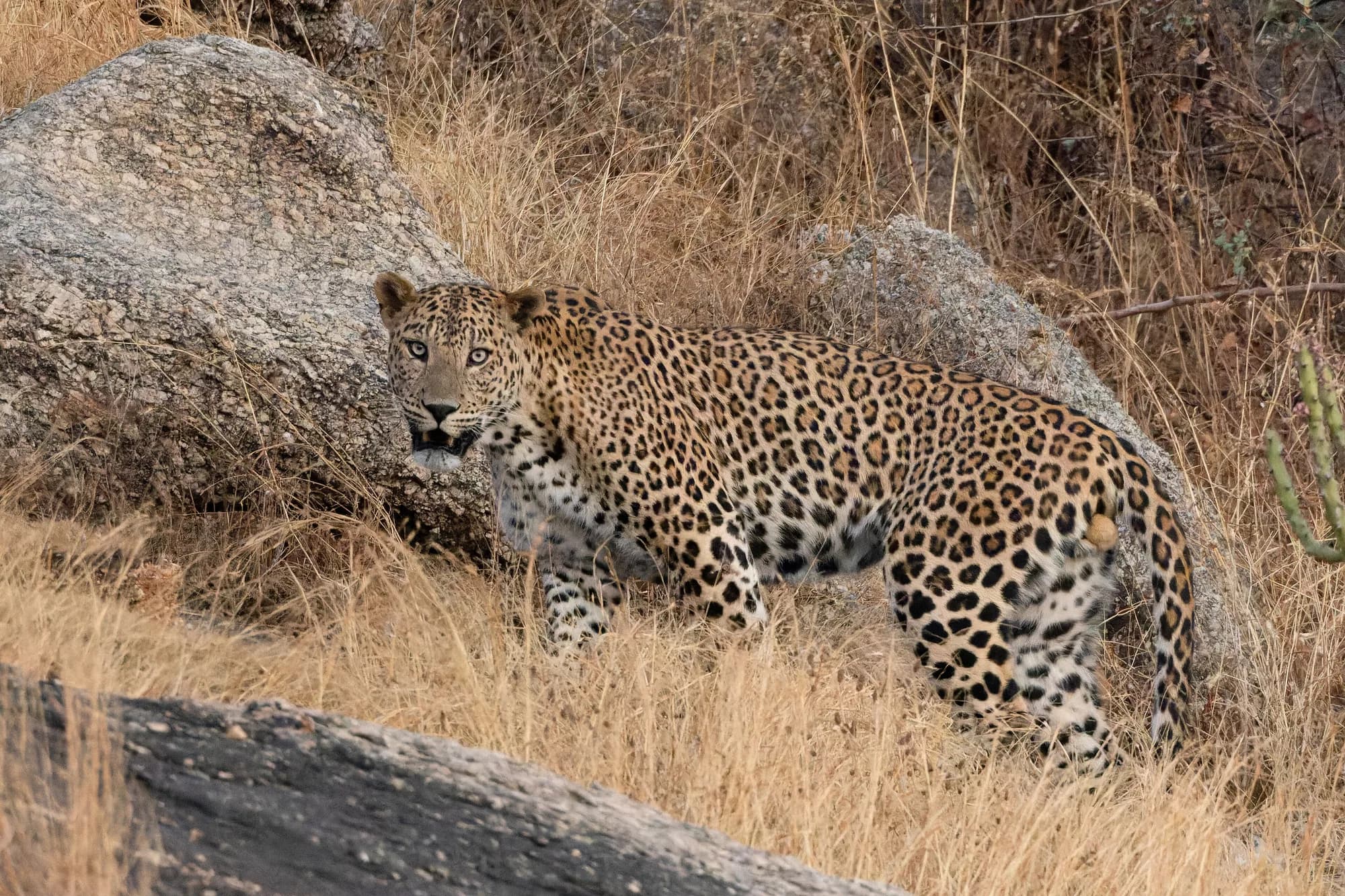
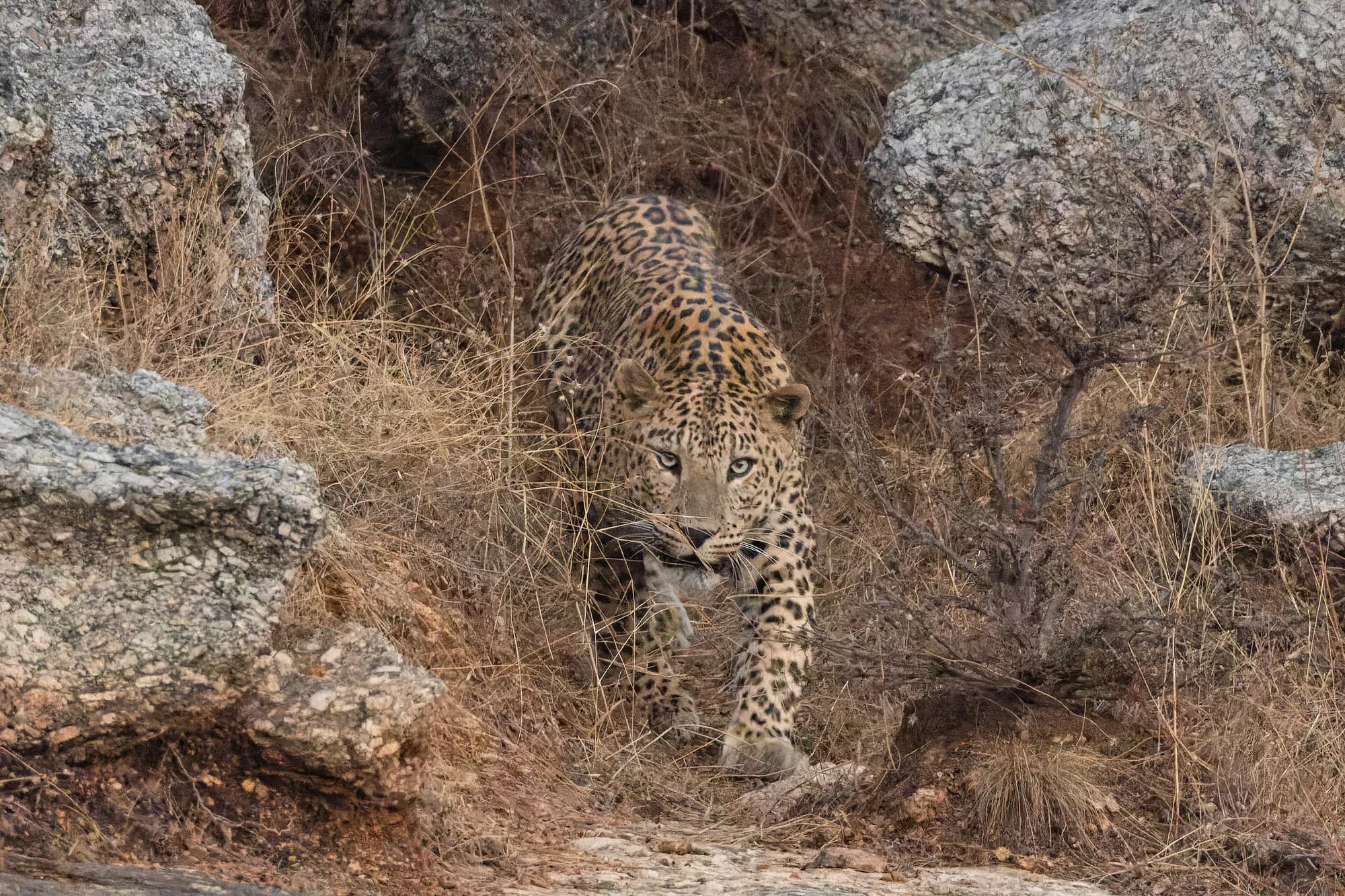
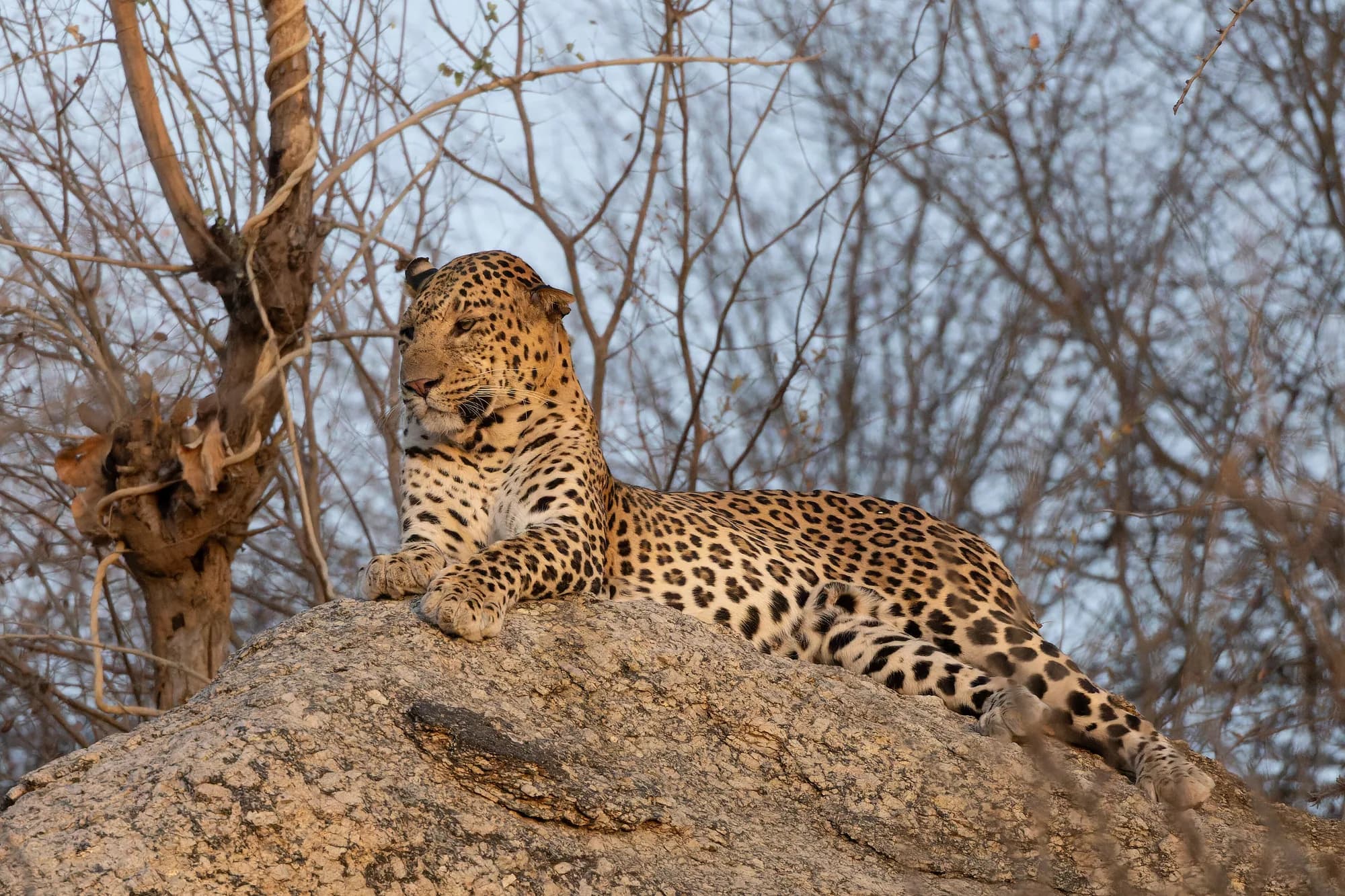
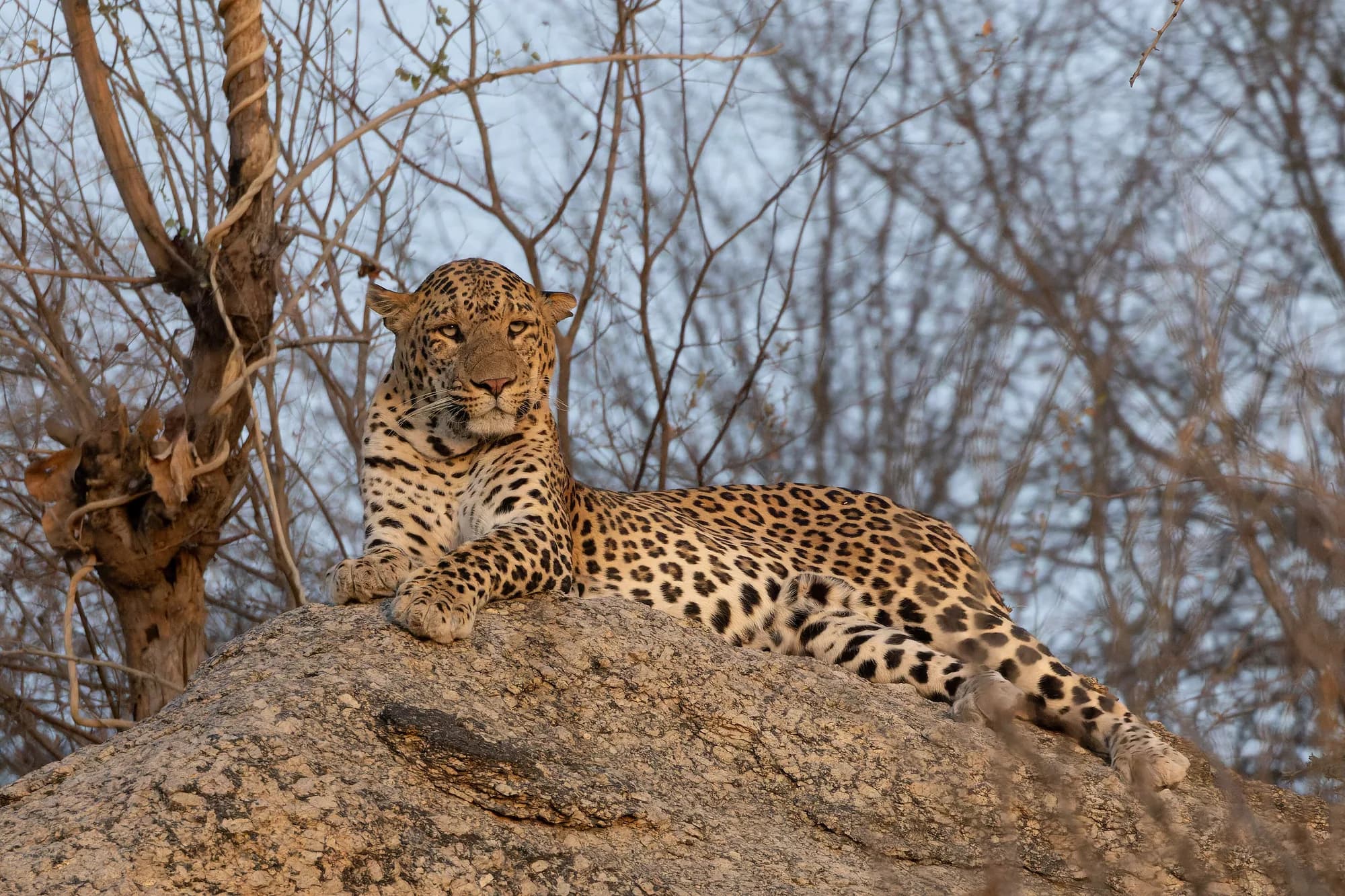
Photographs of Indian leopard in the wild, in Indian reserves. We publish no captive, baited or digitally composited images, and no photograph whose licence we cannot show.
Photographing it
- Lens
- 400–600mm, and expect to be shooting it wide open in bad light more often than not. A fast prime earns its price on this animal more than on any other in India.
- Typical distance
- Thirty to a hundred metres, frequently through branches. The clean line of sight is the rare part, not the animal.
- Light
- The worst of any species here — leopards are most active exactly when there is least light. Push the ISO and accept the grain; a sharp noisy frame beats a clean blurred one.
Where to stopDo not use a spotlight on a leopard, and do not ask for one. Night lamping is restricted for good reason and a light in a nocturnal predator's eyes at the moment it is hunting is a real cost to the animal for a mediocre photograph.
Signs and calls
- Pugmark
- The same rounded, clawless cat shape as a tiger at roughly half the width. Side by side on the same track the difference is obvious; alone, it is the most commonly misread sign in India.
- Kill in a tree
- A carcass wedged in a fork three or four metres up is diagnostic. No other Indian predator caches food this way, and a fresh one means the animal is close and will return.
- Scat
- Hair-packed and segmented like a tiger's but slimmer, and much more often placed on a rock or a raised point than in the middle of a track.
- Rake marks
- Claw scores lower on the trunk than a tiger's, and frequently on the underside of a leaning branch the animal habitually uses.
Who gives it away
Langur
The same hacking whoop they give for a tiger, usually more sustained — langurs and leopards have a long argument with each other, and a troop will follow a leopard through the canopy shouting at it.
The best single indicator there is
Chital
Sharp repeated bark, indistinguishable from the tiger alarm. What it is announcing is a predator, not which one.
Reliable that something is moving
Peafowl and jungle fowl
A sudden explosion of calling and a bird going up. Often the first thing that happens, and the easiest to dismiss.
Worth stopping for when a deer follows it
Alarm calls announce a predator, not specifically a indian leopard, and a great many of them announce nothing at all. They are a reason to stop the vehicle, which is most of what finding one takes.
Why they are so hard
A leopard's entire strategy is not being seen, and it is very good at it. In a tiger reserve there is a second pressure: leopards avoid tigers, which pushes them to the margins and into the hours around dark. They also climb, so the animal you just drove past was frequently above your eye line.
Range tells you almost nothing here. Landscape tells you everything.
What changes it
Both of the places that work do so for the same reason — the leopards there are not hiding from anything. Jawai has no tigers and a community that has tolerated leopards for generations. Kabini has water that concentrates every animal in the forest into a narrow strip for three months of the year.
Book a tiger reserve and treat a leopard as a bonus. Book Jawai and treat it as the point.
Status and protection
Status and protection
- IUCN Red List
- Near Threatened
- Population trend
- ↓ Decreasing
- Wildlife Protection Act 1972
- Schedule I (post-2022 amendment numbering)
- CITES
- Appendix I
A subspecies-level assessment EXISTS for the binomial given and is what is reported here: Panthera pardus ssp.
Assessed 2025 · IUCN Red List assessment
What to book to see one
What you would be booking
- How it is seen
- Jeep safari. For leopards specifically, a buffer-zone or dedicated leopard-country drive beats a core tiger permit.
- Drives to book
- Four across two days at a dedicated site like Jawai; six if you are hoping to pick one up alongside tigers, where it is a bonus rather than the plan.
- Zone or shift
- Rocky, broken country is the tell. Jawai is granite hills and no tigers at all, which is exactly why the leopards there behave as though they own the place.
The one animal on this list you might also see from a hotel roof in a small Indian city. That is not a recommendation, but it does tell you how adaptable they are and why the parks are not the only ground.
Jawai — leopards on graniteOn the same trip you would also get
- Tiger — the same reserves, and the reason most people are there
- Sloth bear — shares the rocky broken country leopards prefer, at Jawai especially
- Striped hyena — the same dusk hour and the same granite at Jawai, and far less often looked for
Questions people ask
Where is the best place to see a leopard in India?
Can I see leopards in tiger reserves?
Read next
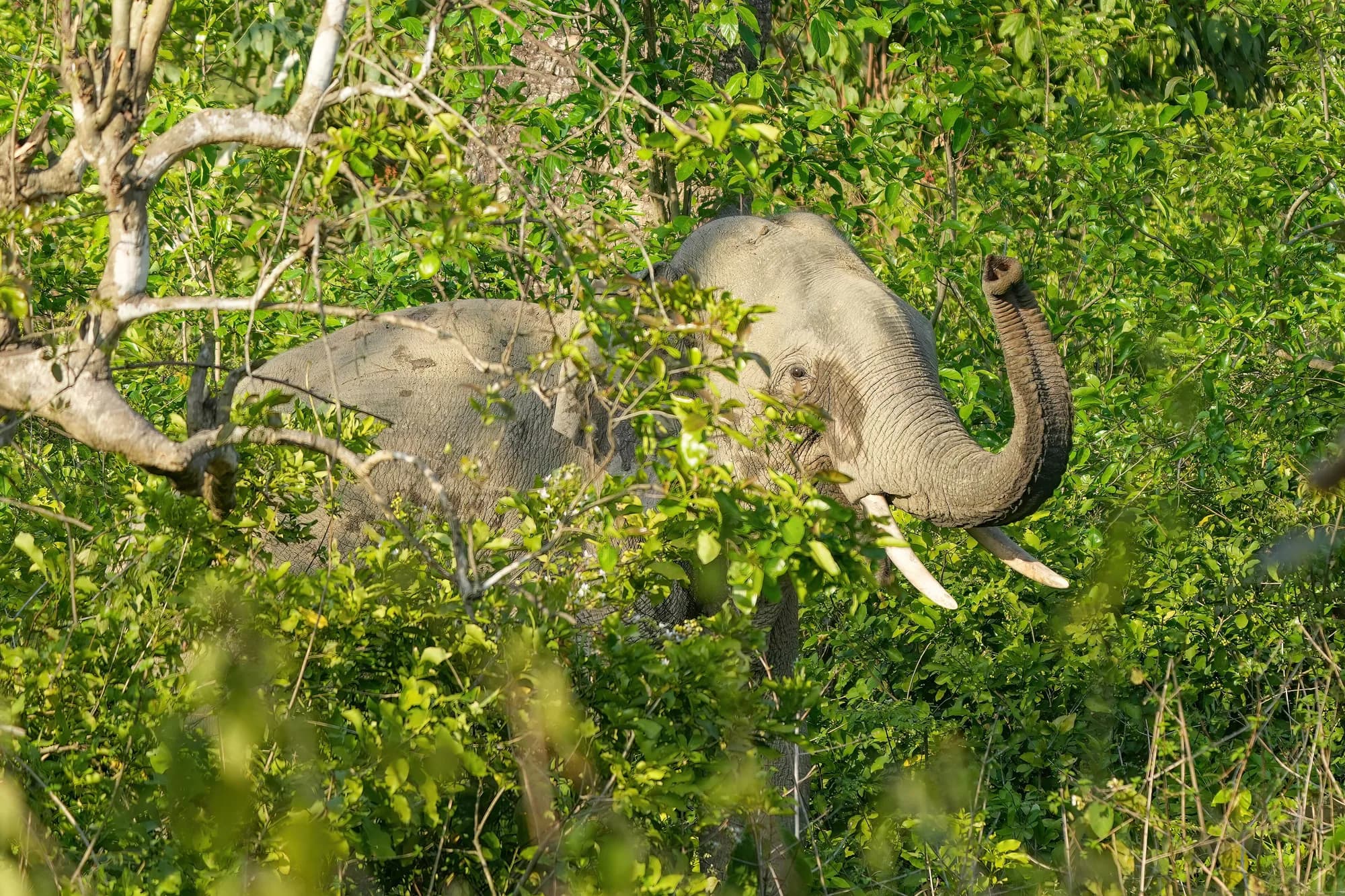
Reservoir edge, dry season
Kabini
A reservoir edge that pulls every animal in the forest into a narrow strip through the dry months. The best elephants in India.
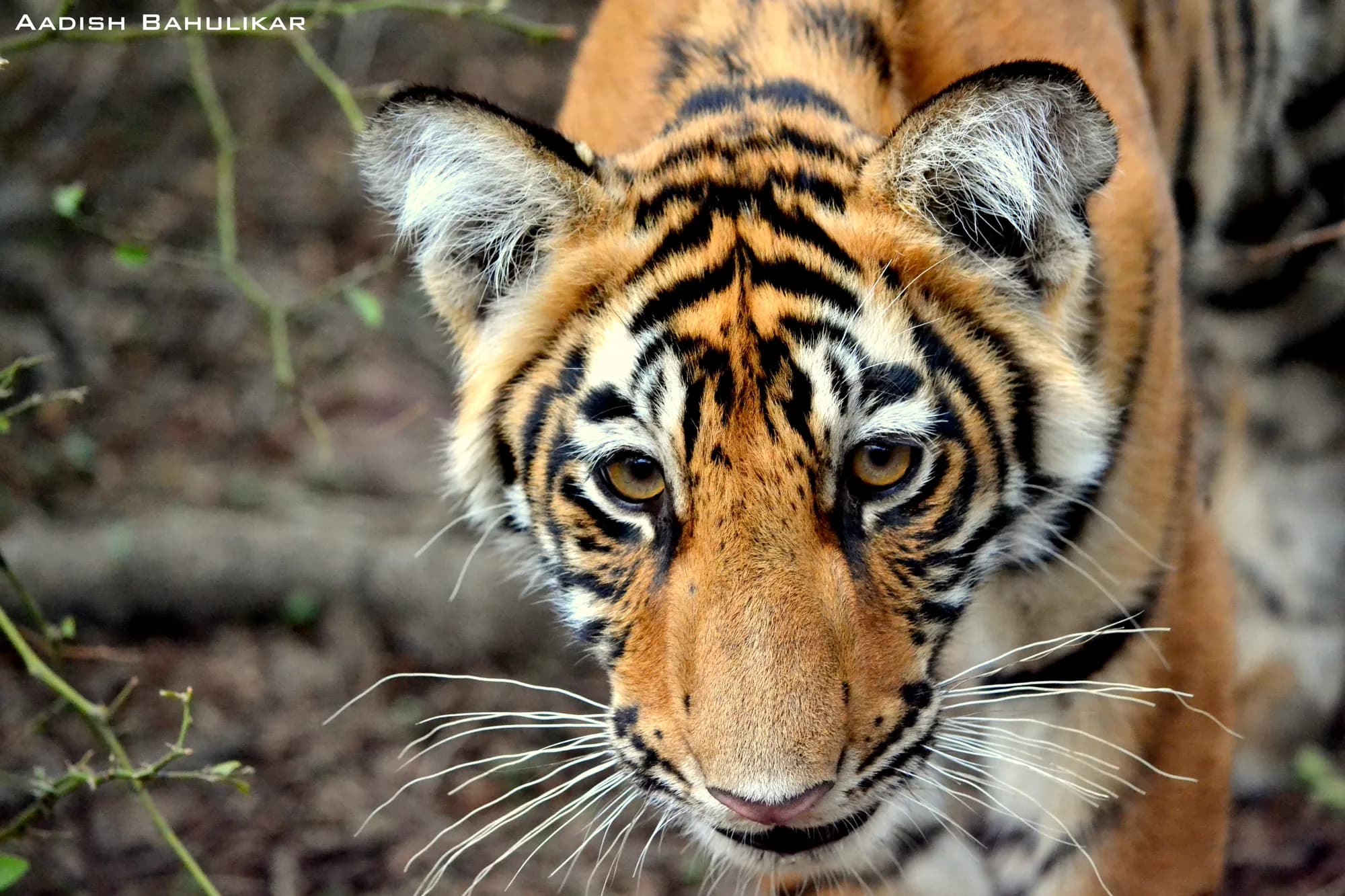
The other cat
Tiger
The animal most people come for, and the one most often missed. Where the odds actually are, and how they move by month and by zone.