
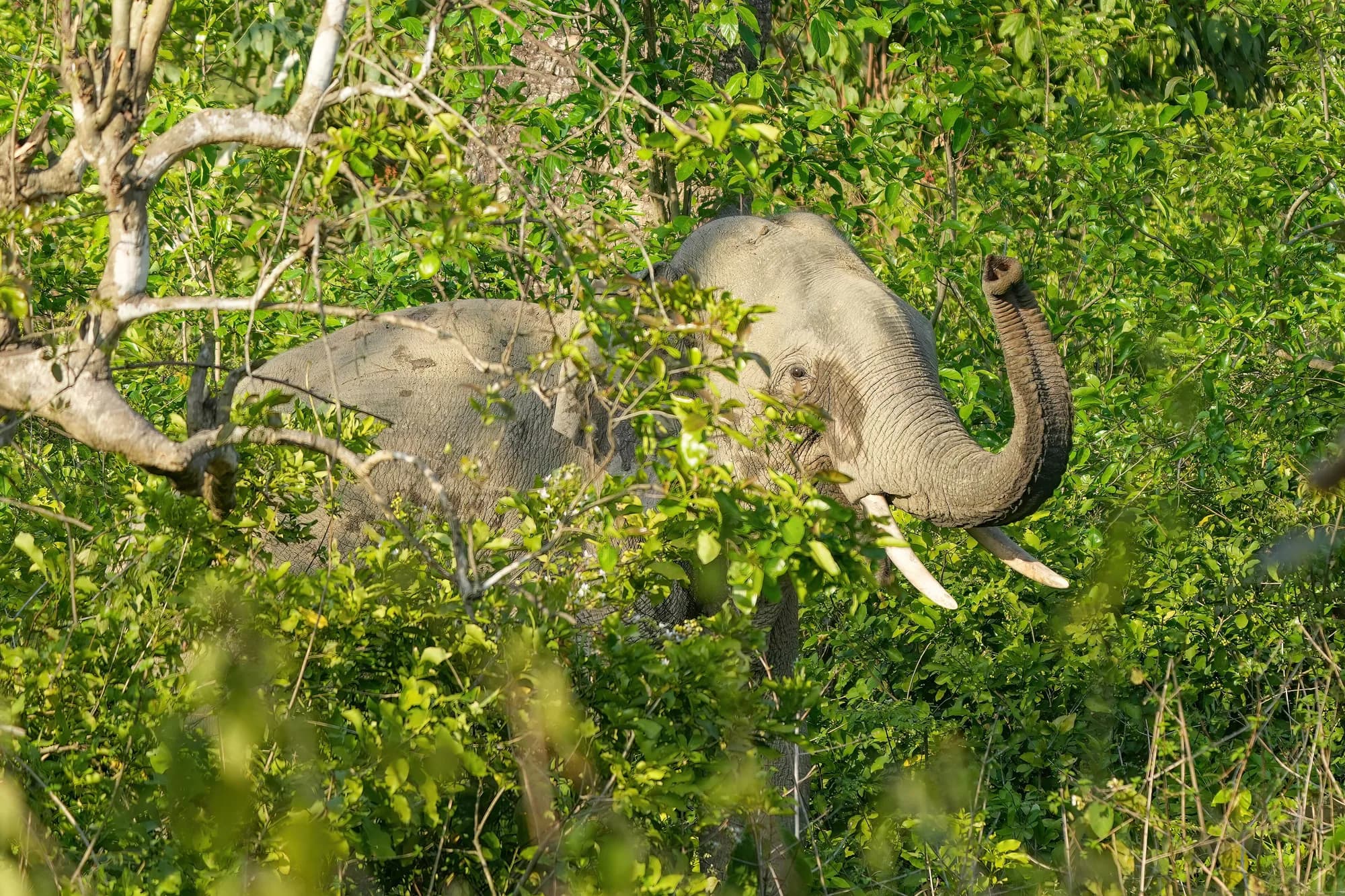
Species · Elephas maximus indicus
Indian elephant
One of the few sightings that is better in a herd than alone. Where the numbers gather, and the three months they are actually there.
Also called
- Hathi (हाथी) · Hindi
- Aana · Malayalam
- Yaanai · Tamil
- Hati · Assamese
- Aane · Kannada
Checked 14 Aug 2026
- Where
- South & north-east
- Best months
- March–May
- Best odds
- Kabini
- Population
- 27,312Synchronised Elephant Population Estimation, Project Elephant, 2017The first all-India synchronised count; earlier figures are not comparable.
Two separate populations — the southern hills and the north-east — in very different country.
Where it is
Where to actually go
Ranked, with the reason each — these are not interchangeable.
- 01KabiniKarnatakaThe reservoir edge in late dry season draws the largest congregations in the country. A boat here beats a jeep, which is true almost nowhere else.March to May only — outside that it is an ordinary forest
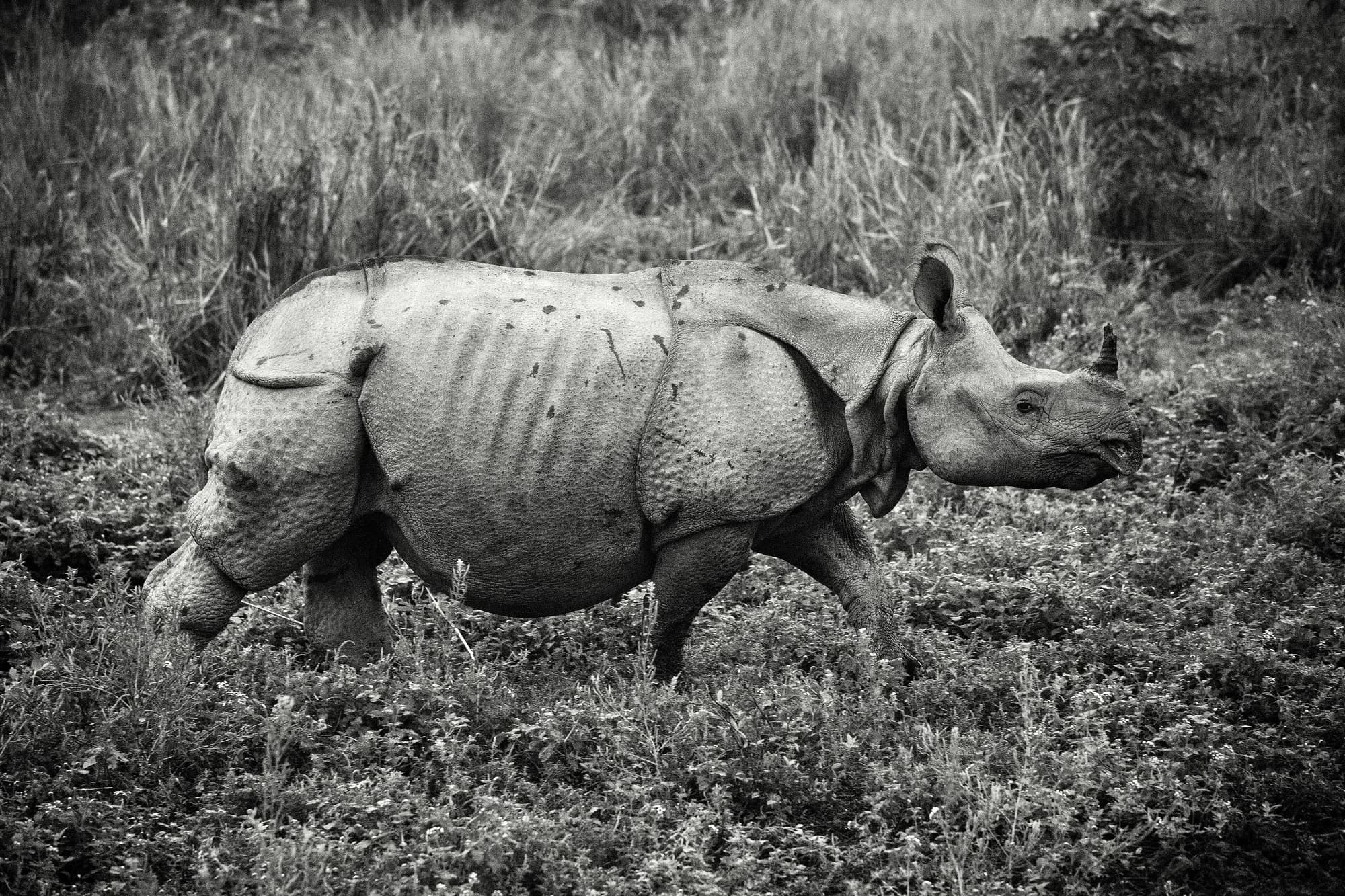
- 02KazirangaAssamLarge herds moving through floodplain grassland, in country that looks nothing like the southern forests.Comes free with the rhinos
Where you will not see one
- The central Indian tiger reservesKanha, Bandhavgarh, Tadoba, Pench, Ranthambore — effectively no wild elephants in any of them. India's elephants are in the south, the Northeast, and the northern foothills, and the map surprises almost everybody.
- Temple and camp elephantsThe elephants most visitors to India actually meet are captive. They are not a sighting, and a photograph of one is not a photograph of wild India.
- Expecting African earsThe Asian elephant has small rounded ears, a domed head with two crown bumps, and one finger on the trunk tip rather than two. Most Asian females and many males carry no tusks at all.
When to go
When to go
- J
- F
- M
- A
- M
- J
- J
- A
- S
- O
- N
- D
January: good. February: good. March: best. April: best. May: best. June: marginal. July: closed or unproductive. August: closed or unproductive. September: closed or unproductive. October: marginal. November: good. December: good.
Through the day
- Dawn
- Morning
- Midday
- Afternoon
- Dusk
- Night
Dawn: most active. Morning: active. Midday: usually resting. Afternoon: active. Dusk: most active. Night: not normally seen.
What it looks like in the field
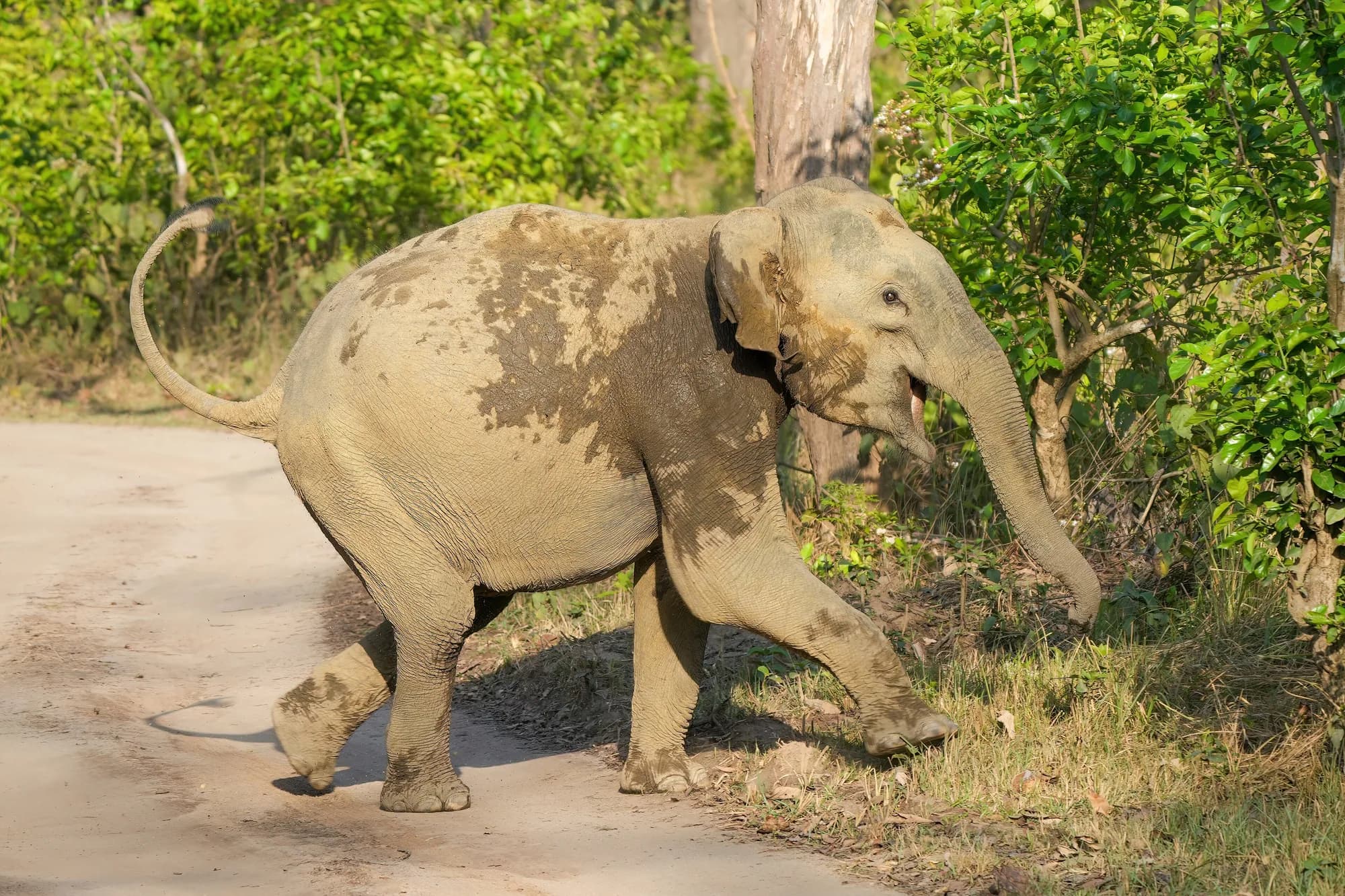
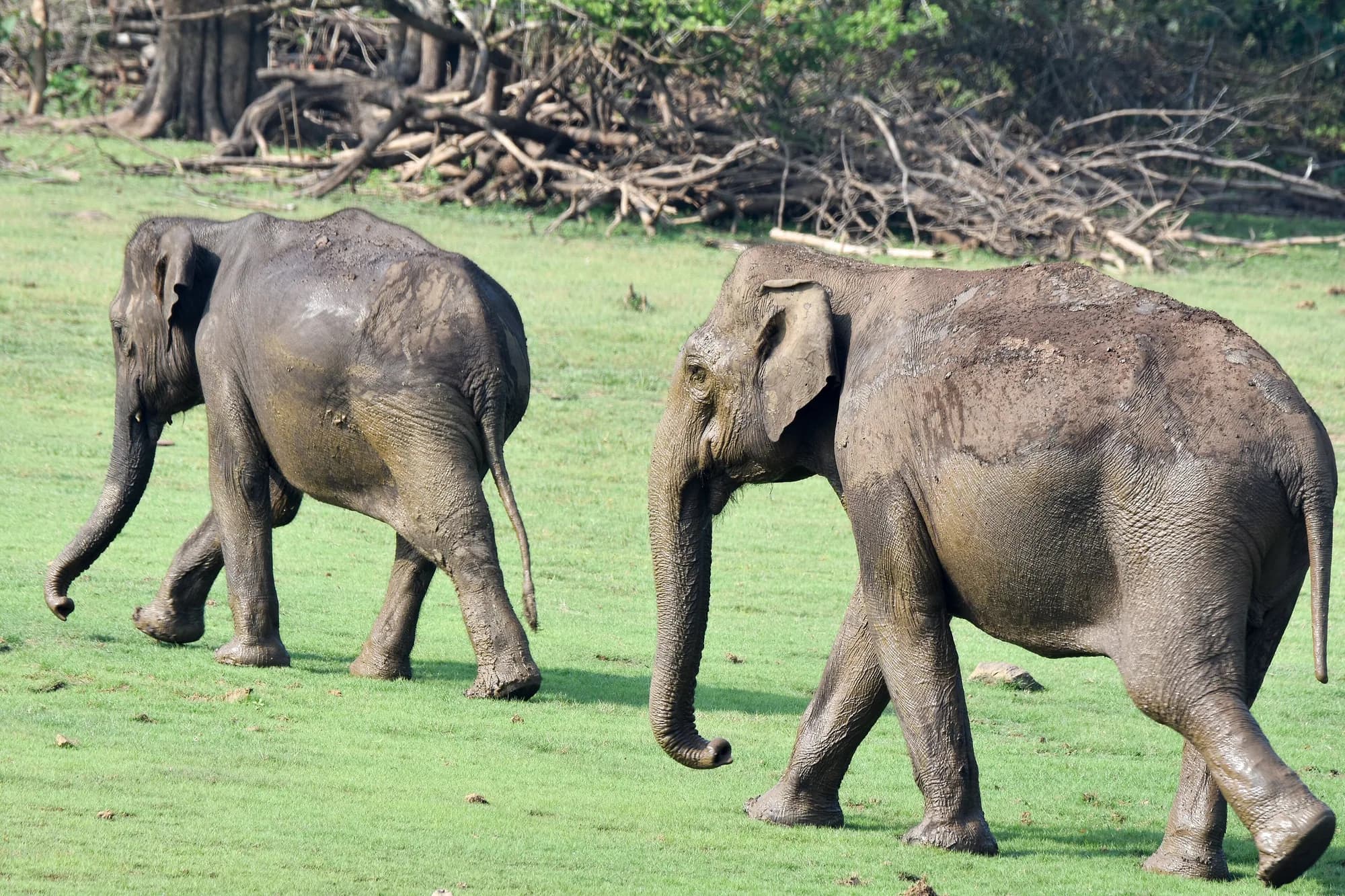
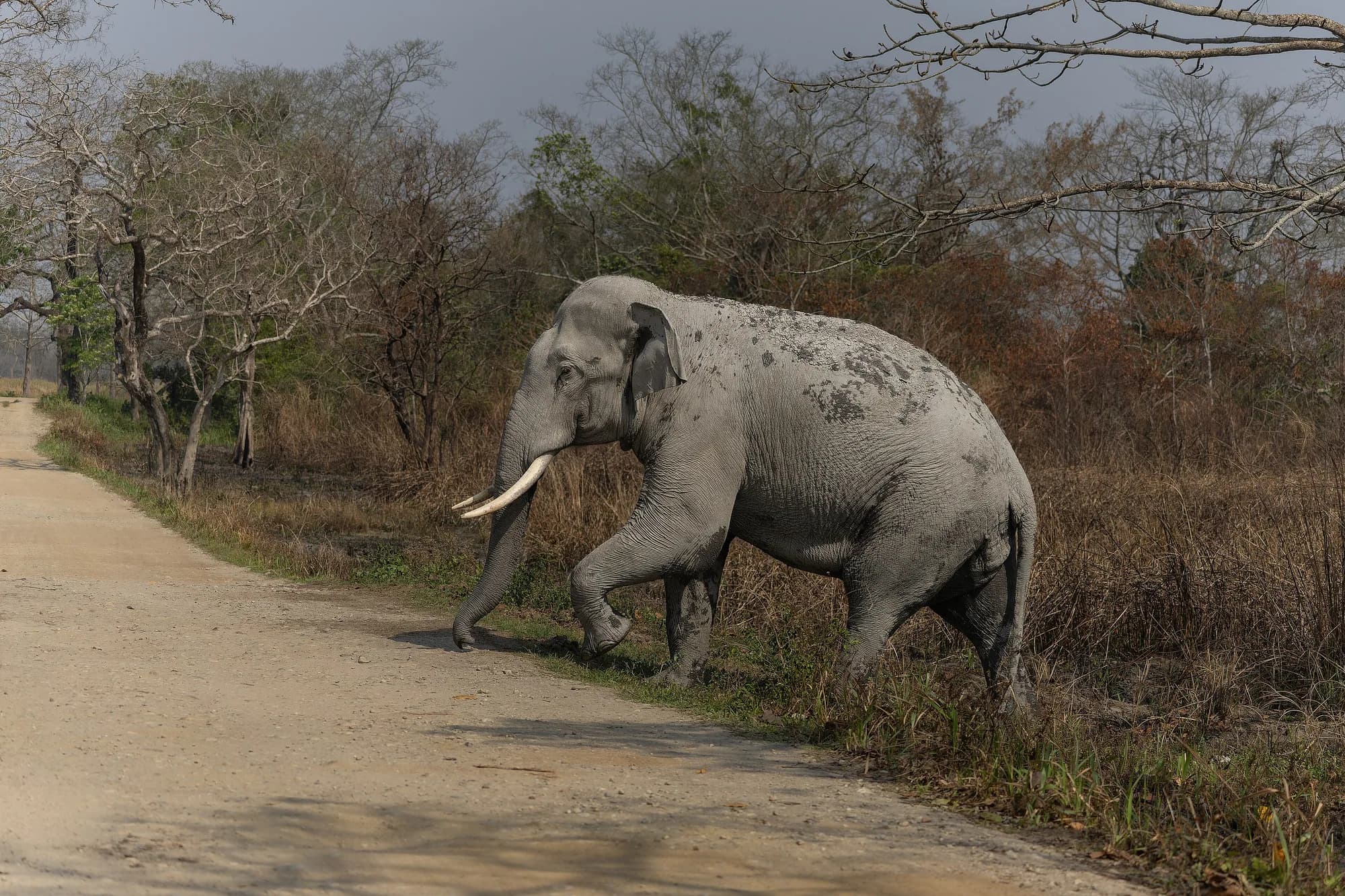
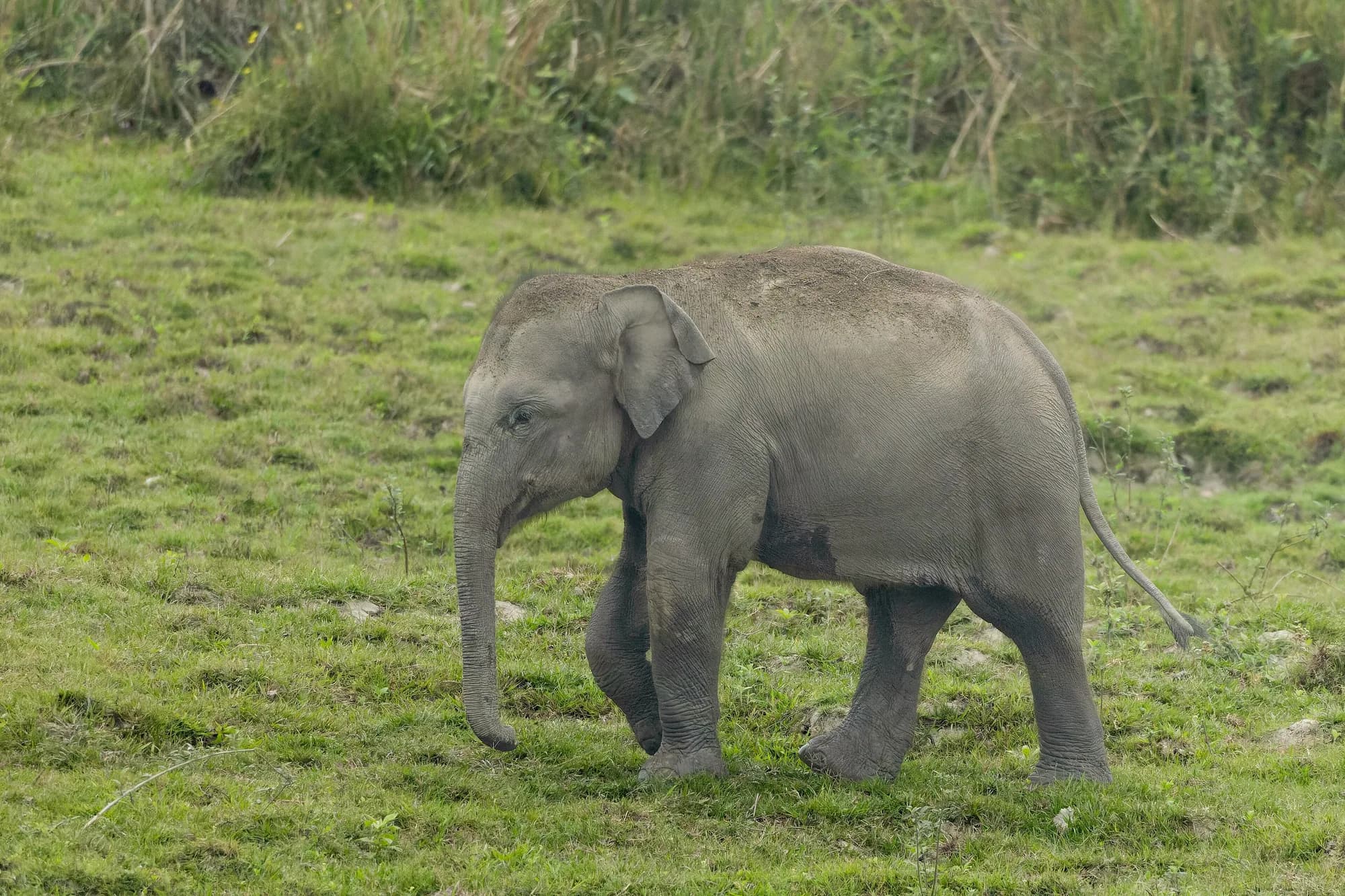
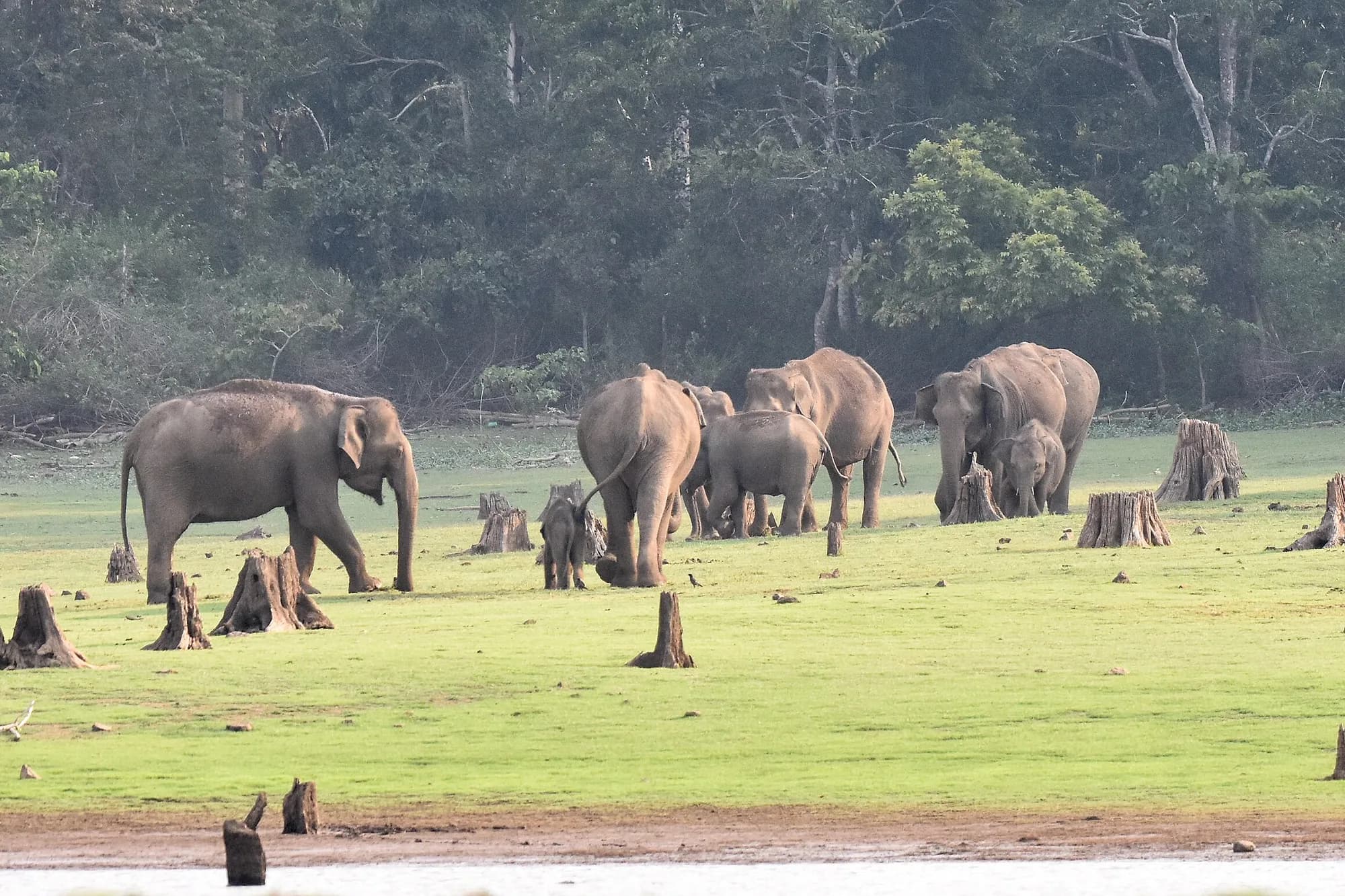
Photographs of Indian elephant in the wild, in Indian reserves. We publish no captive, baited or digitally composited images, and no photograph whose licence we cannot show.
What to look for
A herd is a structure, not a group. Matriarch in front, calves in the middle, the whole thing moving at the speed of the slowest animal. Watching one for forty minutes tells you more than six separate sightings of single bulls, which is why the concentration at Kabini matters more than raw numbers elsewhere.
Where you stand matters more than how many there are.
Downwind, engine off, and far enough back that the herd does not change what it was doing. An elephant that has noticed you is an elephant you are no longer watching.
Status and protection
Status and protection
- IUCN Red List
- Endangered
- Population trend
- ↓ Decreasing
- Wildlife Protection Act 1972
- Schedule I (post-2022 amendment numbering)
- CITES
- Appendix I
Species-level assessment for Elephas maximus (e.T7140A45818198; last assessed 18 September 2019, published 2020; criteria A2c).
Assessed 2020 · IUCN Red List assessment
What to book to see one
What you would be booking
- How it is seen
- Jeep safari in the southern and northern parks; a boat on the Periyar lake, which is the one place a boat is the better vehicle.
- Drives to book
- Three or four, weighted to the afternoons in the dry months when herds come to water.
- Zone or shift
- Kabini in the summer, as the backwaters drop, is the single most reliable elephant congregation in the country.
Give them room. Elephants account for far more human deaths in India than tigers and leopards combined, and almost every incident involves someone closing distance. A herd with calves that stops feeding and turns to face you is telling you something specific.
Kabini — the park in full