
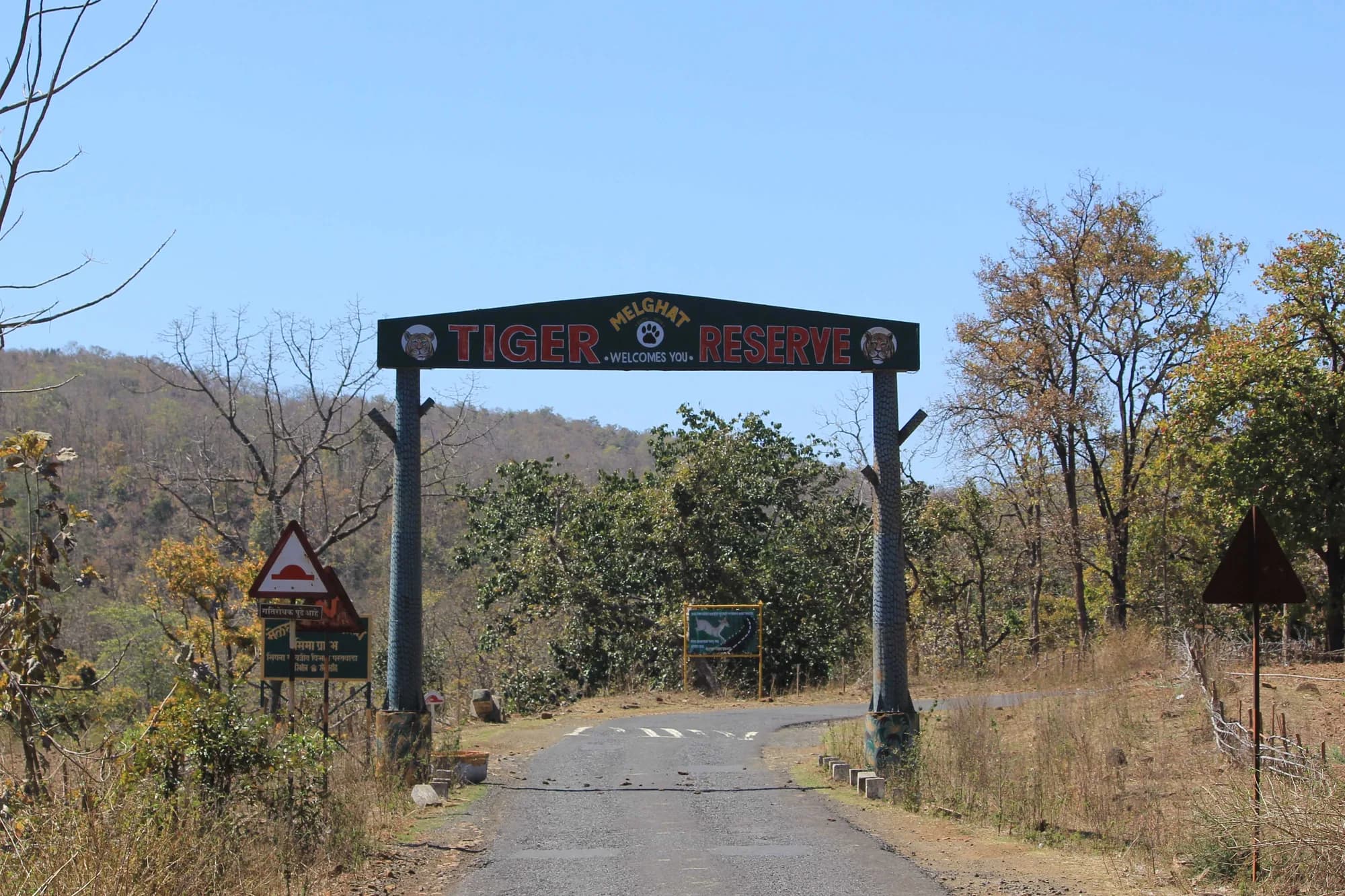
India / Melghat / Melghat Tiger Reserve wildlife
Melghat Tiger Reserve wildlife
Steep Satpura hill ravines, Tapti river basin, one of India's original 1973 tiger reserves, and sanctuary of the Forest Owlet. Home to key flagship populations including Bengal Tiger, rich predator diversity, and endemic bird species.
Species at a glance
| Species | Conservation Status | Sighting Odds | Best Months |
|---|---|---|---|
| Bengal Tiger | Endangered | Moderate — rugged hill ravines & river basins | Feb–May |
| Forest Owlet | Endangered | Rare — endemic rediscovered owl in teak forests | Nov–Mar |
| Gaur (Indian Bison) | Vulnerable | High — central plateau & bamboo ravines | Nov–May |
| Indian Leopard | Vulnerable | High — rocky ridges & forest borders | Round the year |
| Sloth Bear | Vulnerable | High — mahua flowering season & termitaria | Mar–May |
| Indian Giant Squirrel | Least Concern | Good — dense canopy along river valleys | Oct–May |
Bengal Tiger in native habitat at Melghat Tiger Reserve
Ratio 16:9 · Wildlife profile image
Flagship mammal profile — Bengal Tiger
Bengal Tiger serves as the ecological anchor for Melghat Tiger Reserve. The habitat structure provides essential foraging, breeding, and water access across core and buffer ranges.
Predators & carnivores
The apex carnivore guild includes Bengal tiger, Indian leopard, and smaller mesopredators like fishing cat and jungle cat.
Herbivores & prey base
Abundant prey species such as spotted deer (chital), sambar, wild boar, and barking deer maintain the healthy predator population.
Avifauna & birding highlights
Over 200 species of resident and migratory birds inhabit the canopy, riverbanks, and grasslands, making the reserve an excellent birding hub.
Habitat profile & forest vegetation
The terrain transitions across sal canopy forest, riverine grasslands, moist deciduous patches, and seasonal stream beds.
Sighting odds by species
Early morning safaris along core waterhole tracks offer the highest overall mammal sighting probabilities.
Best season for wildlife photography
February to May provides bright natural light, dry forest understorey, and animal tracking along sandy waterbeds.
Wildlife viewing guidelines & ethics
Maintain low noise levels, remain seated in safari vehicles, avoid flash photography, and respect animal space at all times.