
India / Singalila / Singalila wildlife
Singalila wildlife
A sub-alpine ridge trek park with the best red panda viewing odds in India. Satyr tragopan, Himalayan monal and blood pheasant in the rhododendron-bamboo zone. No jeep safari — wildlife is encountered on foot.
Species at a glance
| Species | Status | Sighting Odds | Best Months |
|---|---|---|---|
| Red panda | Endangered (IUCN) | Moderate — with guide, April | Mar–May |
| Satyr tragopan | Near Threatened | Moderate — dawn calling | Apr–May, Oct |
| Himalayan monal | Least Concern | Good near Sandakphu | Mar–May, Oct–Nov |
| Blood pheasant | Least Concern | Common below 3,200 m | Mar–May, Oct |
| Yellow-throated marten | Least Concern | Occasional | Apr–May |
Red panda in bamboo grove on Singalila ridge at dawn with rhododendron flowers in foreground
Ratio 16:9 · Alt: Red panda (Ailurus fulgens) feeding in bamboo grove on Singalila ridge with flowering rhododendron in foreground and morning mist
Key mammals
Red panda is the flagship species — found in the bamboo-rhododendron zone between Tumling and Sandakphu at 2,900–3,400 m. The animals are solitary and largely arboreal; sightings require an experienced guide who knows individual territories. Yellow-throated marten is occasionally seen hunting pheasants along the ridge trail.
Sighting odds by species
Red panda: moderate odds (40–60% over a 4-day guided trek in April). Satyr tragopan: moderate odds in April — heard more often than seen. Himalayan monal: high odds near Sandakphu in good weather. Blood pheasant: common in lower forest sections. Yellow-throated marten: occasional.
Birdlife
Singalila holds 150+ bird species. Satyr tragopan, blood pheasant, Himalayan monal and kalij pheasant are the pheasant quartet of the ridge. Ward's trogon — one of India's most sought-after birds — has been recorded in the lower mixed forest near Rimbik. Rufous-bellied niltava and various bush warblers are common.
Habitat profile
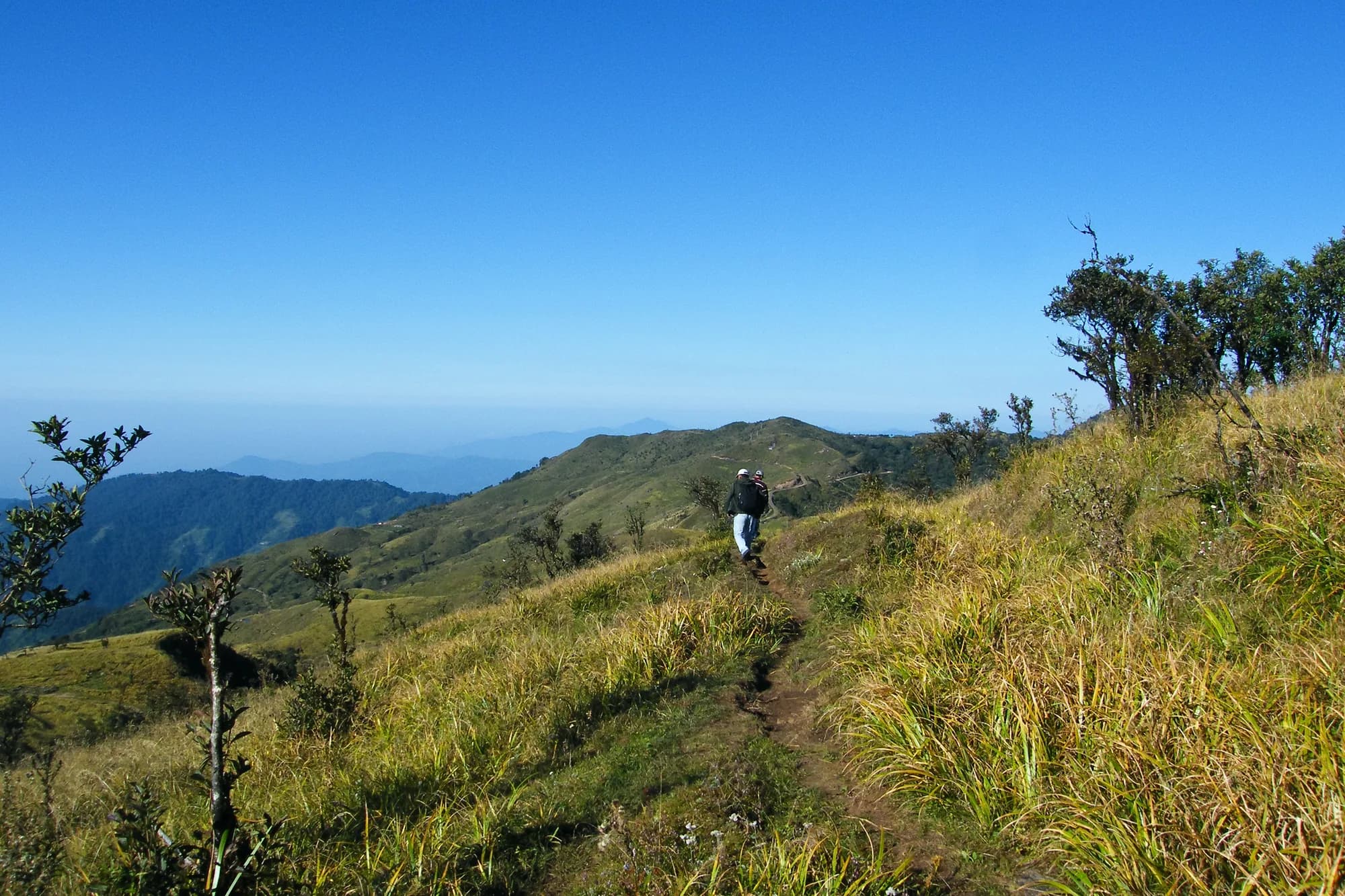
Singalila is a sub-alpine ridge park running along the Nepal border at 2,130–3,636 m. Habitat zones include mixed oak-laurel forest (lower), bamboo and rhododendron (mid), and sub-alpine scrub (near summit). The ridge is exposed and receives high rainfall (3,000+ mm), creating a dense, moss-draped forest.
Best time by species
April: red panda most active and visible, rhododendron bloom. October: Himalayan monal and blood pheasant active in post-monsoon weather; clearest views. November: best Kanchenjunga visibility but cold (near 0°C nights); pheasants still active.
What not to expect
Bengal tiger: not present at this altitude. Indian leopard: not confirmed in core, occasional in buffer. No large predators on the ridge. The park is primarily for birds and red panda — it is not a big cat destination.
Photography and viewing ethics
Red panda viewing: observe from a distance of at least 20 m. Do not follow a panda if it retreats. No flash photography. Pheasant calls: do not use playback calls in the park — this disrupts territorial behaviour and is prohibited.
Conservation notes
Red panda populations in Singalila are connected to Nepal's Ilam district populations across the border. Cross-border movement is essential for genetic diversity. The main threat is habitat degradation in the buffer zone below 2,000 m from firewood collection and agricultural expansion.
Data source
Species data from WII and Forest Dept records
Species distribution and population estimates from Wildlife Institute of India (WII) surveys and state forest department census records. Sighting odds based on guide field reports and operator data. Checked 8 Sep 2026.