
India / Sundarbans / Wildlife of Sundarbans
Wildlife of Sundarbans
Species catalogue and ecological guide to the mangrove tigers, estuarine crocodiles, and aquatic mammals of Sundarbans Delta.
Mangrove delta ecosystem & tidal mudflat habitat
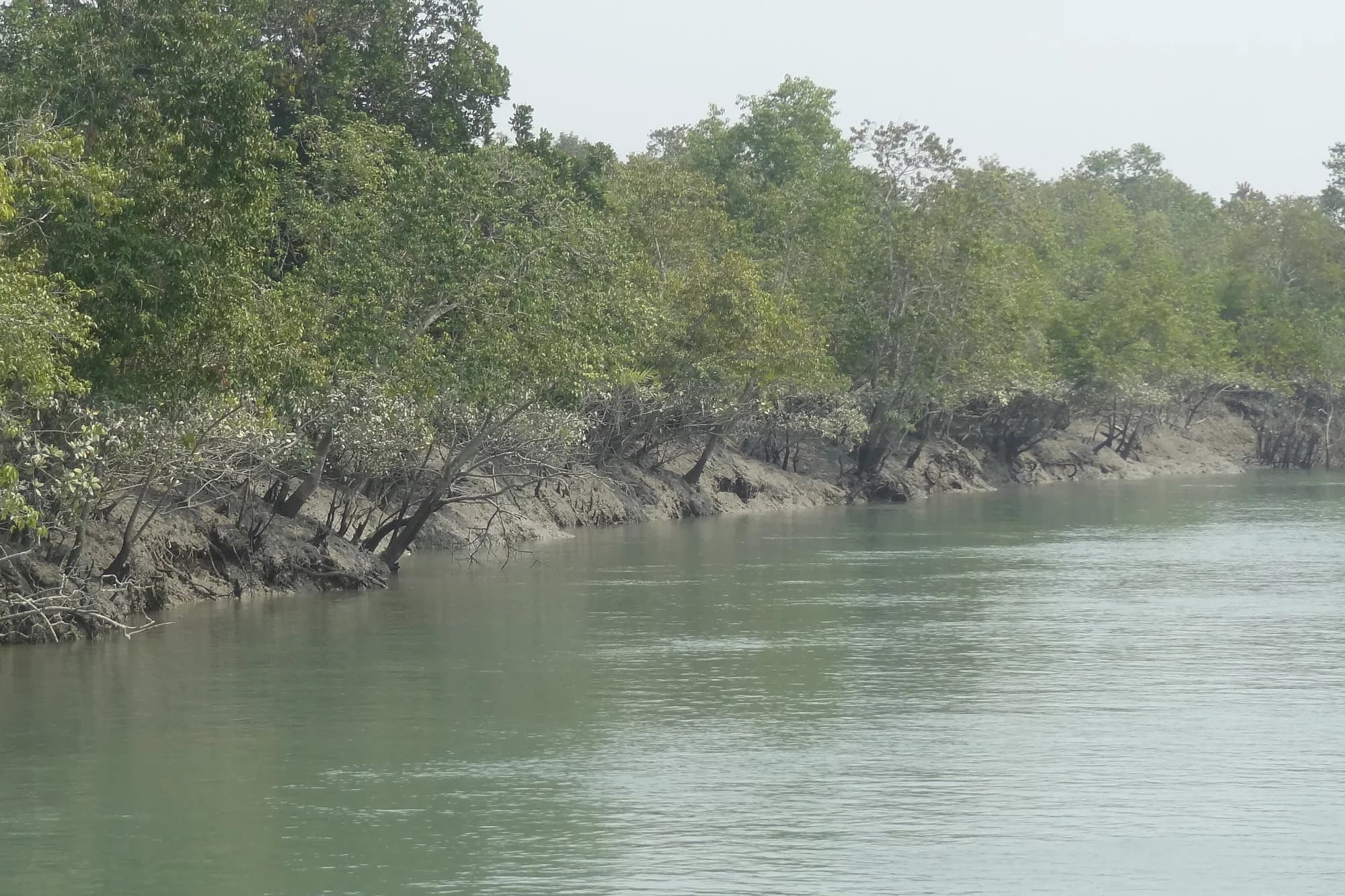
The Sundarbans forms the world's largest mangrove delta, shaped by tidal inundations of brackish water, aerial stilt roots (pneumatophores), and dense mudflats. Animals here have evolved specialized amphibious adaptations to survive severe tidal shifts.
Royal Bengal Tiger swimming across a tidal estuary channel
Ratio 4:3 · Alt: Royal Bengal Tiger swimming in Sundarbans mangrove waterway
| Species | Category | Status | Primary Zone / Habitat | Odds |
|---|---|---|---|---|
| Royal Bengal Tiger | Mammal | Endangered | Mangrove Estuary Creek | Moderate |
| Estuarine Crocodile | Reptile | Least Concern | Mudflats & Creeks | Very High |
| Smooth-coated Otter | Mammal | Vulnerable | Sajnekhali Waterways | High |
| Spotted Deer (Chital) | Mammal | Least Concern | Sudhanyakhali Watchtower | Very High |
| Brown Fish Owl | Bird | Least Concern | Mangrove Forest Edge | High |
Mangrove Bengal Tiger: Swimming habits & saline adaptation
Over 90 Royal Bengal Tigers (*Panthera tigris tigris*) inhabit the Indian Sundarbans. Famous for their ability to swim across wide turbulent estuarine rivers up to 5 km across, these tigers drink brackish water and hunt both terrestrial deer and aquatic prey.
Estuarine Crocodile: Mudbank sunbathing & tidal hunting
Massive Estuarine Crocodiles (*Crocodylus porosus*), reaching lengths over 16 feet, dominate the brackish river banks. Visitors on winter boat safaris regularly observe them sunbathing on low-tide mudbanks.
Irrawaddy & Gangetic Dolphins: Estuarine river channels
The estuarine waterways serve as a critical sanctuary for both Irrawaddy Dolphins (*Orcaella brevirostris*) and Gangetic River Dolphins, which surface for air near river junctions like Netidhopani and Sajnekhali.
Spotted Deer (Chital) & Wild Boar: Mangrove prey base
Spotted Deer (*Axis axis*) and Wild Boars form the main prey for mangrove tigers. Herds gather at sweet-water ponds behind watchtowers and browse leaves from sundari and keora mangrove trees.
Water Monitor Lizard: Mudflat scavenger & egg predator
Large Asian Water Monitor Lizards (*Varanus salvator*) grow up to 7 feet long, patrolling mudflats to scavenge fish and raid crocodile or turtle nests.
King Cobra & mangrove reptile diversity
The mangrove forest is a sanctuary for the King Cobra (*Ophiophagus hannah*), dog-faced water snakes, and olive ridley sea turtles nesting near coastal islands.
Estuarine birds, kingfishers & winter migrants
The delta supports 9 species of kingfishers (including the rare brown-winged and ruddy kingfishers), white-bellied sea eagles, mask finfoots, and thousands of wintering waders.
Observing boat-accessible wildlife safely
All wildlife viewing takes place from the upper decks of motor launches or fenced watchtowers. Tourists are strictly barred from disembarking onto forest ground.
How we checked this
Verification Note
Tiger census figures and species profiles are cross-checked against West Bengal Forest Department wildlife census documents. Official standing withheld pending fee status publication.