
India / Buxa / Zones of Buxa Tiger Reserve — Dooars forest and the Bhutan corridor
Zones of Buxa Tiger Reserve — Dooars forest and the Bhutan corridor
Buxa has three accessible zones: Rajabhatkhawa (jeep safari base), Jayanti (river and grassland), and Buxa Fort (hill trek). The reserve borders Bhutan and forms part of the transboundary elephant corridor.
The zones at a glance
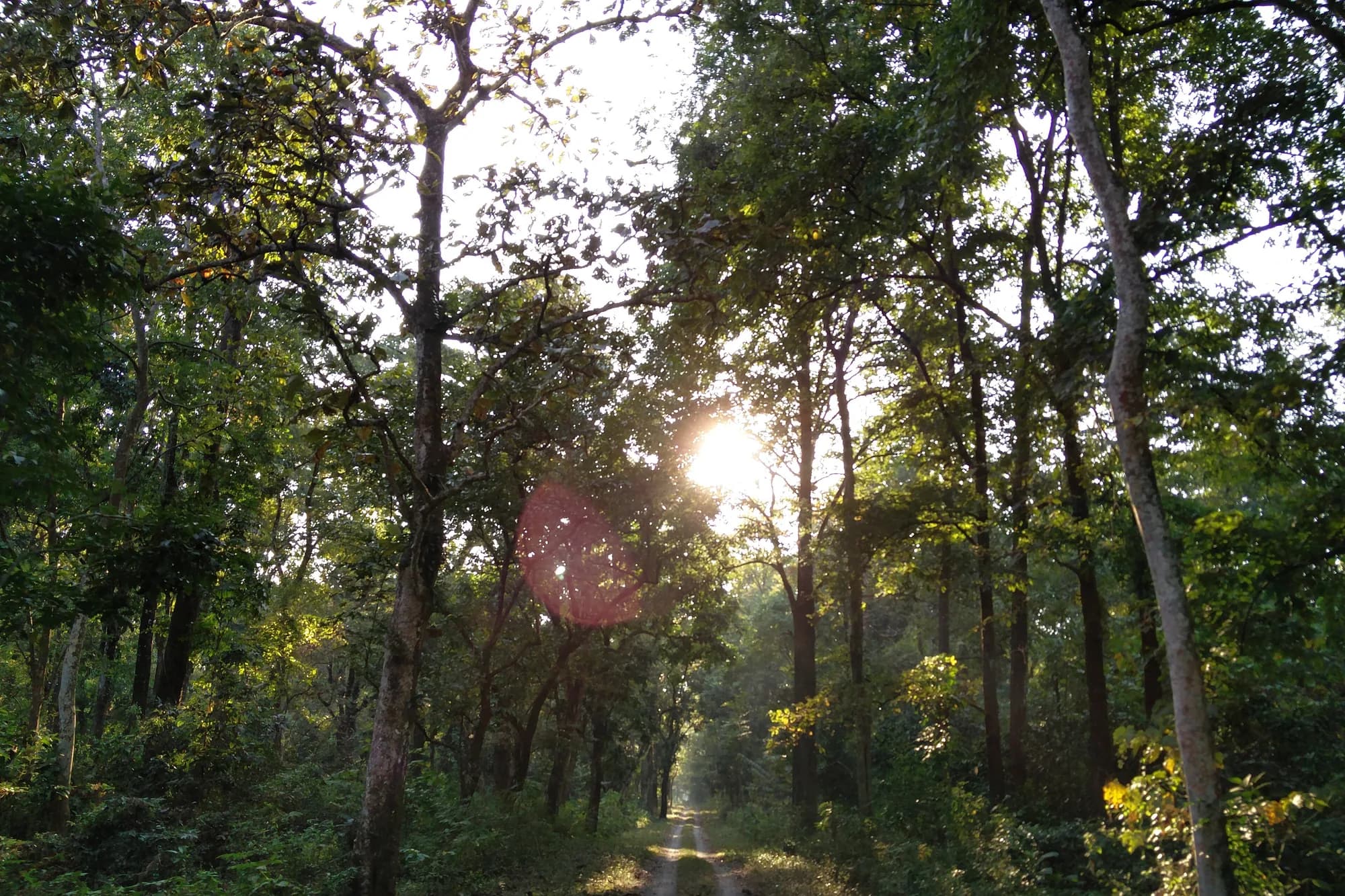
Jayanti river flowing through the Buxa Dooars with sal forest on both banks
Ratio 16:9 · Alt: Jayanti river in Buxa Tiger Reserve with dense sal forest lining the banks · Why: The Jayanti zone is the most productive for wildlife sightings.
| Zone | Type | Morning | Evening | Open |
|---|---|---|---|---|
| Rajabhatkhawa (Core) | Jeep safari base, Eco Camp | 06:00–10:00 | 14:30–18:00 | Nov – May |
| Jayanti (River / Grassland) | Riverine grassland, elephant area | 06:00–09:30 | 15:00–17:30 | Nov – May |
| Buxa Fort (Hill zone) | Trek route, historic fort | Trek at dawn | N/A | Nov – Apr |
| Bhutan corridor buffer | Elephant transit route | Restricted | Restricted | Permit only |
Rajabhatkhawa — the main zone
Rajabhatkhawa is the park's main gate and the location of the Rajabhatkhawa Forest Museum and Eco Camp. Most jeep safaris depart from here. The surrounding sal forest holds leopard, jungle cat, elephant, and gaur — and the Nature Interpretation Centre is worth a visit before the morning shift.
Jayanti — the river and grassland zone
The Jayanti zone, centred on the Jayanti river, is the most productive for wildlife sightings. Elephants come to the river banks in the early morning. Gaur are seen in the riverine grasslands. The boulders and clear water of the upper Jayanti attract great pied kingfisher and Indian skimmer. This zone stays partially open even during the monsoon.
Buxa Fort zone — the high range
Buxa Fort (1,000 m) is accessible by a 4-hour trek from Santrabari. The route passes through the transition zone from Dooars sal to eastern Himalaya forest. The fort itself is a colonial-era prison ruin. The trail offers excellent birding — jungle bush quail, rufous-bellied niltava and black eagle are regularly seen. Elephants are sometimes seen on the higher trail sections.
The elephant corridor to Bhutan
Buxa is one of the few parks in India where a transboundary elephant corridor is actively maintained. Herds move seasonally between the Dooars and Bhutan's Royal Manas. This movement peaks in summer (April–May) before the monsoon. The corridor area is restricted but elephants are often visible near the Jayanti zone during corridor movement months.
Vehicle caps and access
No formal vehicle quota has been published for Buxa. The Rajabhatkhawa Range Office manages entry informally. Permits are obtained at the gate; guide hire is recommended but not always compulsory. No ILP is required for non-Indian nationals holding a valid visa; all Indians can enter freely.
What to expect by zone
Rajabhatkhawa: frequent elephant, gaur, and leopard cat. Good birding year-round. Jayanti: best for elephant river crossings and kingfisher species. Buxa Fort trek: best for altitude-zone birds and forest views. The corridor buffer is not accessible for standard visits.
Photography positions
Jayanti river banks at dawn provide open-sky conditions for elephant photography. The Rajabhatkhawa sal forest offers filtered morning light for forest birding. The Fort trek is best for landscape photography. Bring a wide angle for riverscape images and a 400–600 mm for wildlife.
The Bhutan border fringe
The northern boundary of Buxa abuts Bhutan. This is an actively used transboundary area and is managed jointly between the West Bengal Forest Department and Bhutan's Department of Forests. Visitor access to the immediate border zone requires a written permit from the DFO Alipurduar. This area is not included in standard safari routes.
Which zone to choose
For wildlife: start with Jayanti zone (best elephants and kingfishers) on day 1 morning, then Rajabhatkhawa evening and day 2. For birding specialists: add the Buxa Fort trek on day 3. A 3-day visit covers all three zones comfortably. Stay at the Rajabhatkhawa Eco Camp or Jayanti nature camp.