
India / Jawai / Wildlife of Jawai
Wildlife of Jawai
Species catalogue and ecological guide to Jawai's granite hillock leopards, striped hyenas, and reservoir crocodiles.
Granite hillock & dry scrub ecosystem
Jawai's landscape in southern Rajasthan is defined by billion-year-old granite inselbergs rising above thorny acacia scrublands and human settlements. This rocky terrain creates thousands of natural cave shelters, supporting one of the highest densities of Indian leopards on earth outside protected national parks.
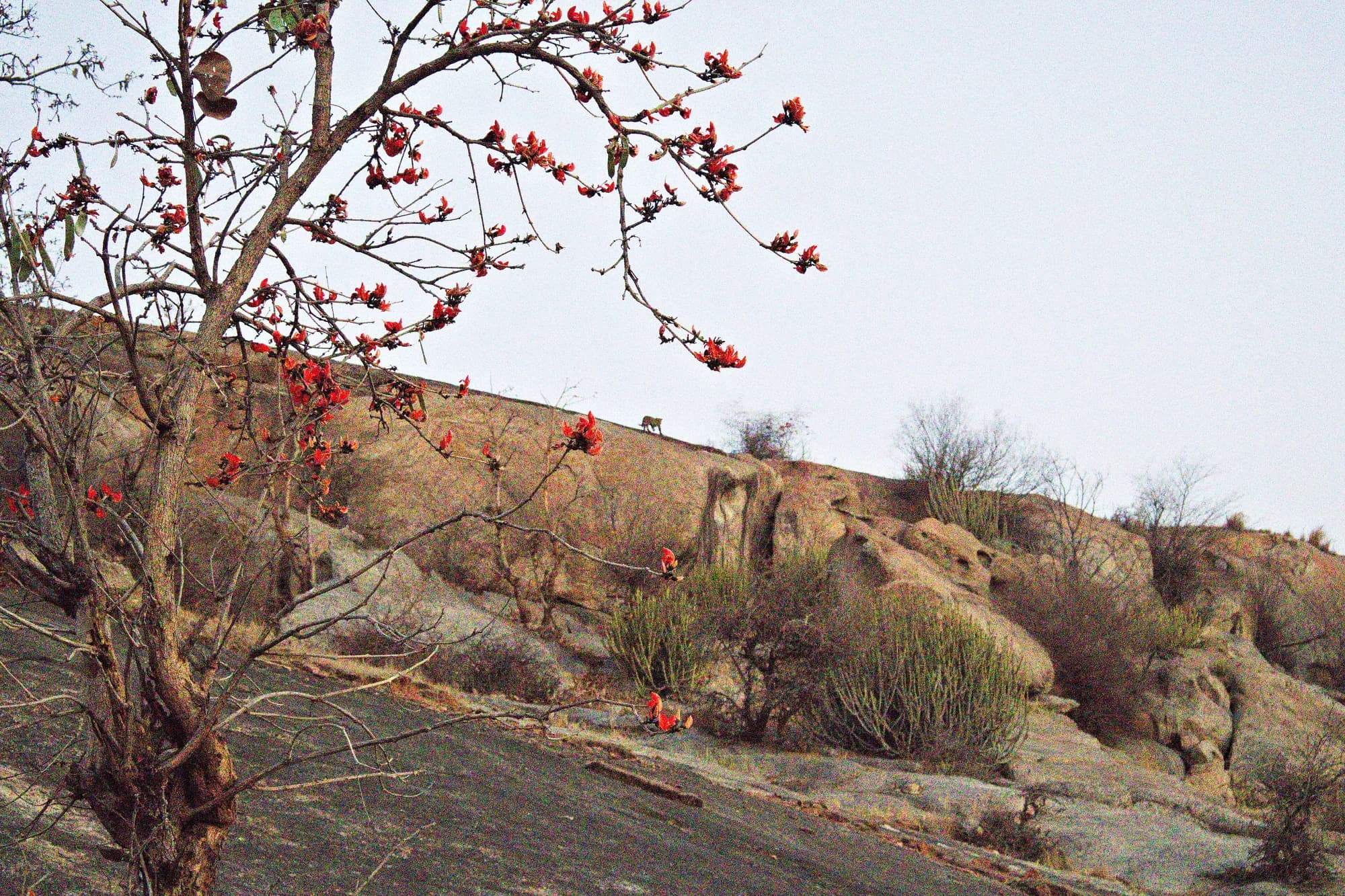
Wild Indian Leopard basking on a granite hillock near Bera
Ratio 4:3 · Alt: Indian Leopard resting on granite rocks in Jawai hills
| Species | Category | Status | Primary Zone / Habitat | Odds |
|---|---|---|---|---|
| Indian Leopard | Mammal | Vulnerable | Bera & Perwa Granite Hills | Very High |
| Striped Hyena | Mammal | Near Threatened | Cave Denning Rocks | High |
| Mugger Crocodile | Reptile | Vulnerable | Jawai Dam Reservoir | Very High |
| Indian Eagle-Owl | Bird | Least Concern | Granite Cliff Escarpment | High |
| Chinkara (Indian Gazelle) | Mammal | Least Concern | Scrubland Plains | High |
Indian Leopard: High-density granite cave dwelling
Over 60 Indian leopards (*Panthera pardus fusca*) inhabit the Jawai hillocks. The cats utilize narrow granite fissures and deep rock caverns to escape daytime heat. Uniquely, Jawai leopards exhibit remarkable tolerance toward humans, co-existing peacefully with local Rabari herders.
Striped Hyena: Nocturnal cave and ridge inhabitant
The elusive Striped Hyena (*Hyaena hyaena*) shares the granite cave systems with leopards. Operating primarily after dark, hyenas scavenge remains of leopard kills and forage along sandy valley dry beds bordering the hills.
Mugger Crocodile: Jawai Dam reservoir population
Jawai Bandh reservoir harbors a booming population of over 300 freshwater Mugger Crocodiles (*Crocodylus palustris*). During winter months, large crocodiles bask openly on sandy islands and rocky banks near the dam water's edge.
Nilgai & Chinkara: Primary wild prey base
Wild prey includes Nilgai (Bluebull antelope), Chinkara (Indian Gazelle), wild boar, and peafowl that feed among agricultural fields and acacia scrublands surrounding the hill bases.
Rabari livestock & leopard prey dynamics
Domestic goats and sheep belonging to Rabari herders occasionally fall prey to leopards. Local cultural veneration of leopards as sacred guardians of hill temples has prevented retaliatory killings for generations.
Migratory waterbirds & raptors of Jawai Dam
From October to March, the reservoir becomes an important wetland habitat in Rajasthan, hosting Greater Flamingos, Bar-headed Geese, Demoiselle Cranes, pelicans, osprey, and peregrine falcons.
Reptiles & nocturnal fauna of the rocky crags
The granite crevices shelter Indian Rock Pythons, saw-scaled vipers, desert monitor lizards, crested porcupines, and small Indian civets that emerge after nightfall.
Responsible wildlife watching around granite hillocks
Visitors must remain inside open 4x4 vehicles during hillock tracking. Spotlights during night drives must use red filters to avoid blinding resting leopards or nocturnal foragers.
How we checked this
Verification Note
Species data and leopard census numbers for Jawai are compiled from local naturalist records and Rajasthan Forest Dept wildlife surveys. Standing status withheld pending formal government publication.