
India / Radhanagari / When to go to Radhanagari Wildlife Sanctuary
When to go to Radhanagari Wildlife Sanctuary
UNESCO World Heritage Site and India's first declared sanctuary landscape (1953), spanning 351 sq km of Western Ghats evergreen forest holding Gaur (Indian Bison) and Malabar Giant Squirrel. The core park season runs from October–May, with peak mammal viewing between February and May as waterholes dry up.
The season, in one line
The prime window to visit Radhanagari Wildlife Sanctuary is October–May. Core safari ranges shut for monsoon between June–September (Torrential Western Ghats monsoon rainfall).
Open · Crisp Skies
Open · Excellent Wildlife
Open · Warming
Open · High Sighting Odds
Open · Waterhole Activity
Open · Core closes Jun 15
Closed · Core shut
Closed · Heavy Rains
Closed · Forest Recovery
Closed / Transition
Open · Lush Vegetation
Open · Cool & Pleasant
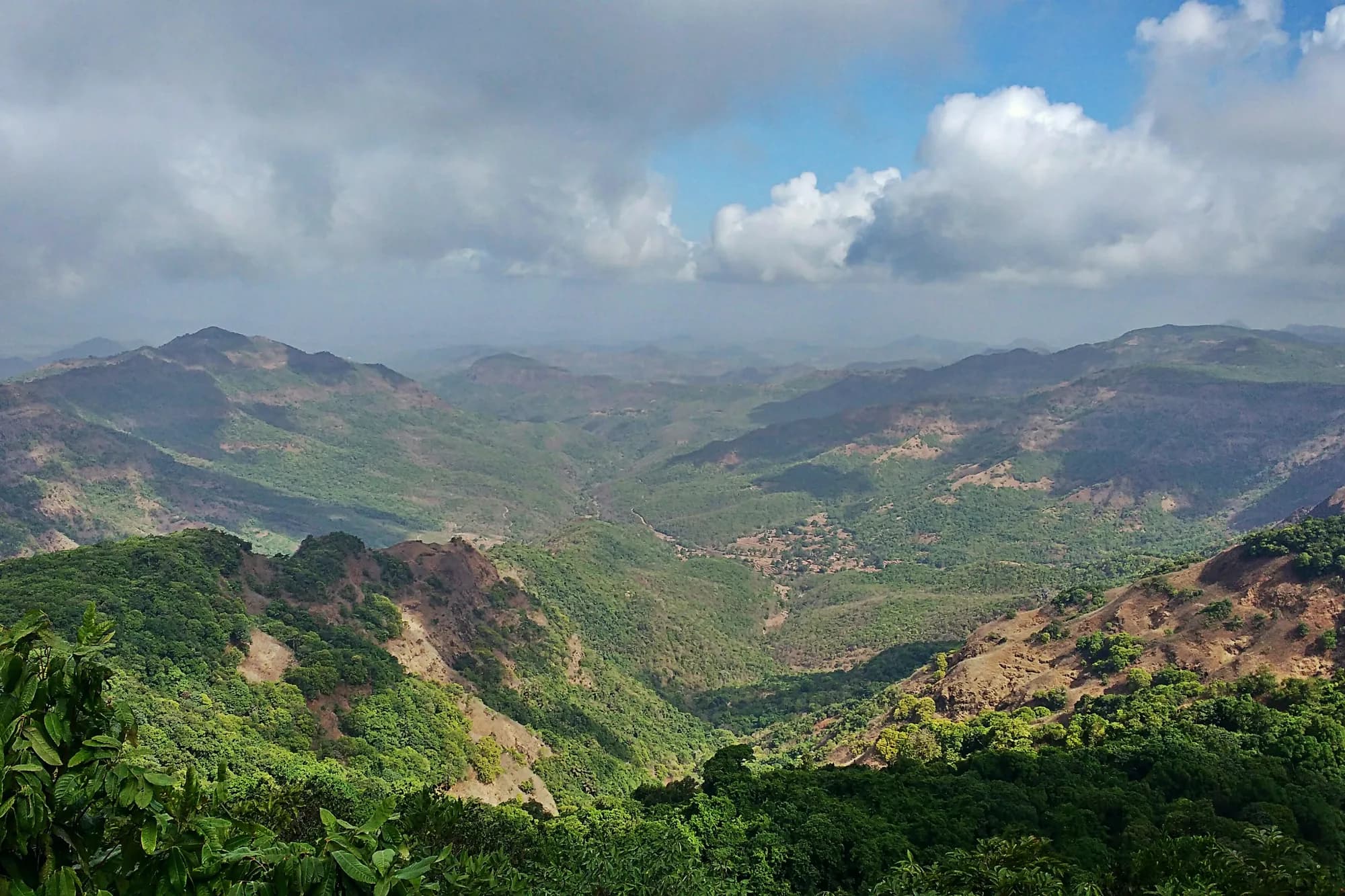
Radhanagari Wildlife Sanctuary landscape in peak safari season
Ratio 16:9 · Representative habitat shot
Season overview & climate pattern
Radhanagari Wildlife Sanctuary in Maharashtra experiences distinct winter, spring, summer, and monsoon climate phases. Winter morning temperatures drop noticeably, while summer days reach high thermal levels, forcing wildlife toward central streams and perennial waterbodies.
Month-by-month climate & safari conditions
| Month | Max °C | Min °C | Status | Wildlife Sighting Potential |
|---|---|---|---|---|
| Jan | 20°C | 5°C | Open | Good — Winter mist & active prey herds |
| Feb | 24°C | 8°C | Open | High — Clear skies & comfortable safaris |
| Mar | 30°C | 14°C | Open | High — Pleasant weather & blooming forest |
| Apr | 36°C | 20°C | Peak | Very High — Animals gather around waterholes |
| May | 40°C | 25°C | Peak | Maximum — Peak predator & mammal sightings |
| Jun | 38°C | 26°C | Open (Partial) | Good — Pre-monsoon showers begin |
| Jul–Oct | 32°C | 22°C | Closed | Monsoon closure for forest rejuvenation |
| Nov | 26°C | 12°C | Open | Good — Fresh green canopy post-monsoon |
| Dec | 21°C | 6°C | Open | Good — Cold mornings & active avifauna |
Winter season (November to February)
Winter brings cool weather, mist-covered grasslands, and excellent bird watching. Heavy jackets are essential for early morning open-top jeep safaris.
Spring & Summer (March to June)
As water sources dry out in April and May, wildlife concentrations around streams and waterholes spike significantly, yielding the highest sighting probabilities.
Monsoon closure & rain patterns
The core reserve closes from mid-June to mid-November during the monsoon to allow animal breeding and road repair across rivers and streams.
Clothing & safari gear guide
Wear khaki, olive green, or neutral earth tones. Carry warm layers in winter (Nov–Feb) and sun protection, hats, and light cottons in summer (Apr–Jun).
Best months for tiger & mammal sightings
February through May offers the best combination of leaf fall, clear ground visibility, and active animal movements near waterpoints.
When to book advance permits
Safari permit slots for weekend dates and peak months (December, March, April) should be secured 30 to 60 days in advance via the official state forest e-portal.