
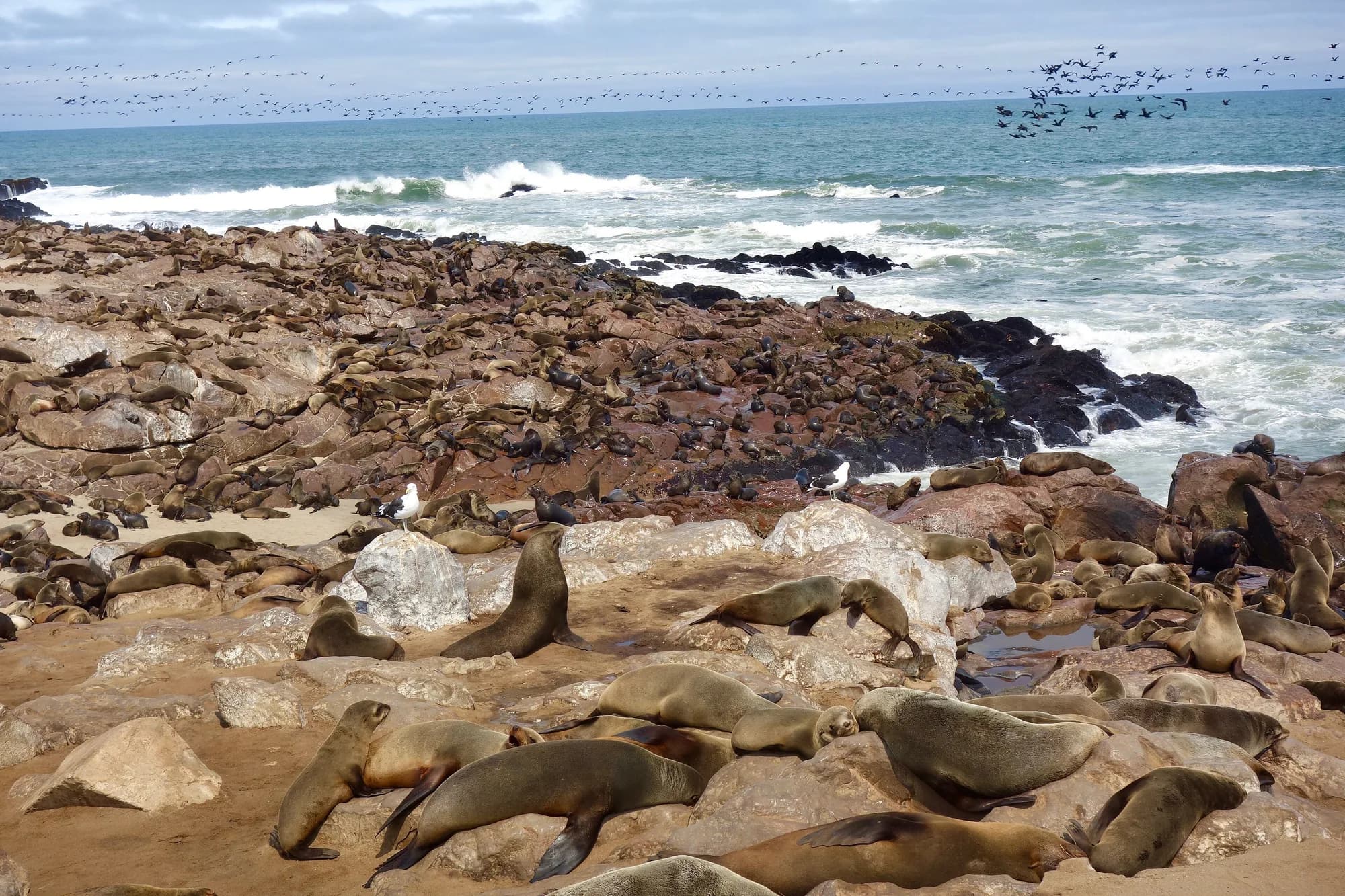
Cape Cross Seal Reserve
One of the largest seal colonies anywhere
Up to two hundred thousand Cape fur seals on one stretch of rock, and the spot where Diogo Cão planted a stone cross in 1486 — the first European landfall on this coast. You will smell it before you see it.
Cape Cross Seal Reserve at a glance
- Region
- Erongo
- Area
- Not publishedNot recorded
- Best months
- November–December for pups, year-round otherwiseOur reading, not a departmental statement
- Safari zones
- Not publishedNot verified from the department yet
- Permit
- See fee tableRates vary by gate · read 30 August 2026
- Booking
- Namibia Wildlife ResortsBook direct — we take no commission
Permit data last verified .
When to go
- J
- F
- M
- A
- M
- J
- J
- A
- S
- O
- N
- D
January: marginal. February: marginal. March: marginal. April: marginal. May: marginal. June: marginal. July: marginal. August: marginal. September: marginal. October: marginal. November: best. December: marginal.
Everything on Cape Cross Seal Reserve
These ten pages are written park by park, each figure carrying the department document it came from and the date it was read. For Cape Cross Seal Reserve they are not written yet, so they are listed here rather than linked — we would rather show you the shape of the work than send you to an empty page.
- Being written
Safari booking
How to book, which portal, when slots open
Know more - Being written
Permits & fees
Fee table by nationality, with the source and date
Know more - Being written
Zones
Every zone, its gate, and what people actually see
Know more - Being written
Best time to visit
Month by month, closures and sighting patterns
Know more - Being written
Where to stay
Lodges and camps by tier, and what each is near
Know more - Being written
Wildlife
Species present, populations, realistic odds
Know more - Being written
How to reach
Rail, air and road, with verified transfer times
Know more - Being written
Itineraries
Two, three and five night trips a partner can deliver
Know more - Being written
Safari cost
The full trip budget, not the headline number
Know more - Being written
Sightings log
What guests reported, and when
Know more
What Cape Cross Seal Reserve is a destination for


Questions people ask about Cape Cross Seal Reserve
What is the best time to visit Cape Cross Seal Reserve?
November–December for pups, year-round otherwise. That is our reading of when the park rewards a trip. Its official closure window is not something we have verified from the department, so confirm the dates before you book.
How much does a safari at Cape Cross Seal Reserve cost?
Park entrance plus conservation fee, gazetted per person. This is a Group 1 park — the premium tier. An adult of 16 or over who is not Namibian or SADC pays N$140 entrance plus N$140 conservation, N$280 in total; a SADC national pays N$180; a Namibian citizen N$60. Children between 8 and 16 pay N$180 (other foreign) or N$100 (SADC). Vehicles are charged separately and by size: N$60 for ten seats or fewer, N$150 for 11–25, N$600 for 26–50 and N$1,000 for 51 or more. Children of 8 and under enter free whatever their nationality, and Namibian children under 16 are free. The gazette states no VAT treatment, so the total is simply what is payable. The fee is per person per park per entry; the twenty-four-hour validity rule comes from MEFT's earlier published conditions rather than from this notice. Source: Government Gazette of the Republic of Namibia No. 8877, 1 April 2026 — Government Notice No. 115, Amendment of Regulations Relating to Nature Conservation, read 30 August 2026.
How do I book a safari at Cape Cross Seal Reserve?
Through Namibia Wildlife Resorts. MEFT runs no online portal for park permits — they are issued at the gate or at a MEFT office. Namibia Wildlife Resorts sells the accommodation inside the parks separately, and its "book now" currently resolves to an email request rather than a live booking engine. Book direct: we take no payment from travellers and earn nothing from this answer.