
Species · Platanista gangetica
Ganges river dolphin
A blind dolphin that swims on its side and finds everything by sound, in some of the most crowded river water on earth. India's national aquatic animal, and one most Indians have never seen.
Also called
- Susu (सूंस) · Hindi
- Xihu · Assamese
- Shushuk · Bengali
Checked 30 Aug 2026
- Where
- Ganges & Brahmaputra basins
- Best months
- November–March
- Sight
- Functionally blind
- Note
- National aquatic animal
Deep pools and confluences in the Ganges and Brahmaputra systems. They concentrate where the water is deep and slow, which is what makes them findable at all.
Where it is
Where to actually go
Ranked, with the reason each — these are not interchangeable.
- 01National Chambal SanctuaryMadhya Pradesh & Uttar PradeshClear water, low boat traffic, and the chance to see dolphins, gharials and skimmers in one morning. The easiest introduction to the species by a distance.Same boat as the gharials
- 02VikramshilaBiharA sanctuary declared specifically for this animal, with the highest densities in the Ganges proper. Working river, real dolphins, no tourism infrastructure to speak of.The serious option
- 03The Brahmaputra at GuwahatiAssamGenuinely sighted from the city river front and from ferries. Pairs with Kaziranga, which is three hours away.Easiest to add to an existing trip
Where you will not see one
- The sea and the coastStrictly a freshwater animal. The dolphins off Goa or the Andamans are marine species, and the one in Chilika lagoon is an Irrawaddy dolphin — a different animal entirely.
- Peninsular riversThe Godavari, Krishna, Cauvery and the Western Ghats rivers have never held them. This is a Gangetic and Brahmaputra species and nothing further south.
- Expecting a bottlenoseNo leaping, no bow-riding, no pod acrobatics. A Ganges dolphin surfaces for about a second, rolls, and is gone. People who have seen dolphins at sea often do not recognise the sighting when they get one.
When to go
When to go
- J
- F
- M
- A
- M
- J
- J
- A
- S
- O
- N
- D
January: best. February: best. March: best. April: good. May: marginal. June: marginal. July: marginal. August: marginal. September: marginal. October: good. November: best. December: best.
Through the day
- Dawn
- Morning
- Midday
- Afternoon
- Dusk
- Night
Dawn: active. Morning: most active. Midday: active. Afternoon: active. Dusk: active. Night: not normally seen.
Realistic odds on a three-day trip
- Near-certain
- Likely
- Lucky
- Expedition
Telling it apart
Told apart from
Irrawaddy dolphin
Chilika, where only the Irrawaddy occurs
A range question. Irrawaddy dolphins are in Chilika lagoon in Odisha, have a rounded head with no beak at all, and a small dorsal fin. Ganges dolphins have a long thin beak and only a low ridge.
Gharial at the surface
The Chambal, constantly
The genuine field mix-up on the Chambal. A gharial's snout lies flat and still on the water; a dolphin's beak appears and is gone in a second, with a rolling back behind it.
Large fish or a turtle
Every river trip
Any surface disturbance gets called a dolphin on a slow morning. The tell is the sequence — beak, then arched back, then nothing, in about a second, in that order.
Marks chosen to be usable from a moving vehicle — a ganges river dolphin is rarely still and never close enough for anything subtler.
What it looks like in the field


Photographs of Ganges river dolphin in the wild, in Indian reserves. We publish no captive, baited or digitally composited images, and no photograph whose licence we cannot show.
Photographing it
- Lens
- 400mm and fast reactions, or a wider lens and patience for a habitat frame. This is among the hardest photographic subjects in Indian wildlife.
- Typical distance
- Twenty to a hundred metres, and never predictable.
- Light
- Flat calm morning water. Any wind removes both the visibility and the ripple cue, and by midday the glare off the river makes the whole exercise futile.
Where to stopNever have a boat chase a surfacing. Pursuit forces shorter dives and separates calves from mothers, and in a species with this much boat traffic already the marginal harm is real. Sit still and let them come past.
Signs and calls
- The surfacing
- A brief roll with an audible breath, often the only evidence you get. Learn the sound and you will detect twice as many as you see.
- Ripple ring
- A smooth circular slick left where an animal has gone down, distinct from wind chop. Marks where to keep watching.
- Side-swimming shadow
- In shallow clearer water they can be seen swimming on one side, trailing a flipper along the bottom to feel for prey. Rare to witness and unmistakable.
What a sighting is actually like
Brief to the point of being unsatisfying, and then oddly moving. A beak breaks the surface, a back rolls after it, there is a soft exhalation, and the river is flat again. The whole thing takes about a second.
Nobody photographs their first one. Almost nobody photographs their tenth.
What makes it land is where it happens. This is not a wilderness animal — you are watching an endangered cetacean surface between fishing boats, with a road bridge in the frame, and it has been doing that here for a very long time.
A dolphin that cannot see
The eye has no lens. In water this turbid, sight is worthless, so the animal navigates and hunts entirely by echolocation, and often swims on one side trailing a flipper along the riverbed to feel for fish.
The dams are the structural problem. Barrages cut the river into segments and isolate small populations that cannot move past them, and a species this dispersed does badly when it is broken into pieces.
Status and protection
Status and protection
- IUCN Red List
- Endangered
- Population trend
- ↓ Decreasing
- Wildlife Protection Act 1972
- Schedule I (post-2022-amendment numbering)
- CITES
- Appendix I
The page renders as a species-level assessment of Platanista gangetica (Ganges River Dolphin) and carries no supersession warning.
Assessed 2021 (published 2022) · IUCN Red List assessment
What to book to see one
What you would be booking
- How it is seen
- A boat, slow and quiet, on a stretch of deep water. On the Chambal it is the same trip as the gharials; in Bihar it is a dedicated river outing.
- Drives to book
- A half day on the water. Sightings are frequent but brief, so the number of surfacings you see is roughly the time you spend looking.
- Zone or shift
- Deep pools, confluences and the outside of river bends. Ask the boatman for the deep water rather than the pretty water.
Cut the engine. These animals navigate entirely by sound in water that is already full of boat noise, and a drifting boat gets closer surfacings than a running one — as well as being the decent thing to do.
Boat safaris in IndiaOn the same trip you would also get
- Gharial — the same Chambal boat, on the sandbanks
- Indian skimmer — the same river, and equally dependent on undisturbed sandbanks
- Greater one-horned rhino — if you are on the Brahmaputra rather than the Chambal
Questions people ask
Where can I see a Ganges river dolphin?
Is it really blind?
Is it the same as the dolphin in Chilika lake?
Read next
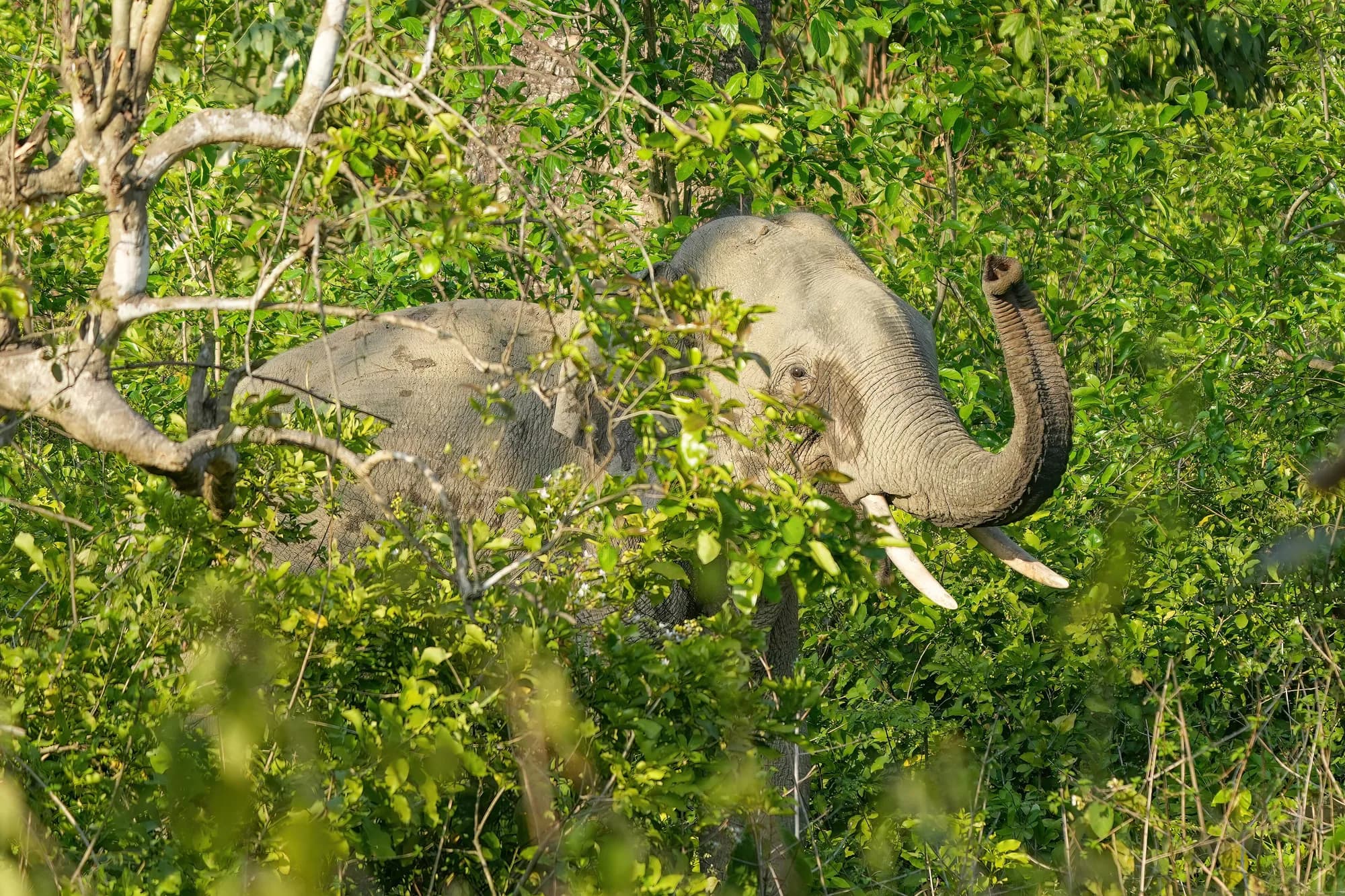
Kabini, Satpura, Periyar
Boat safaris in India
Quiet, low, and no engine note. In late dry season at Kabini it is the best two hours in the park.
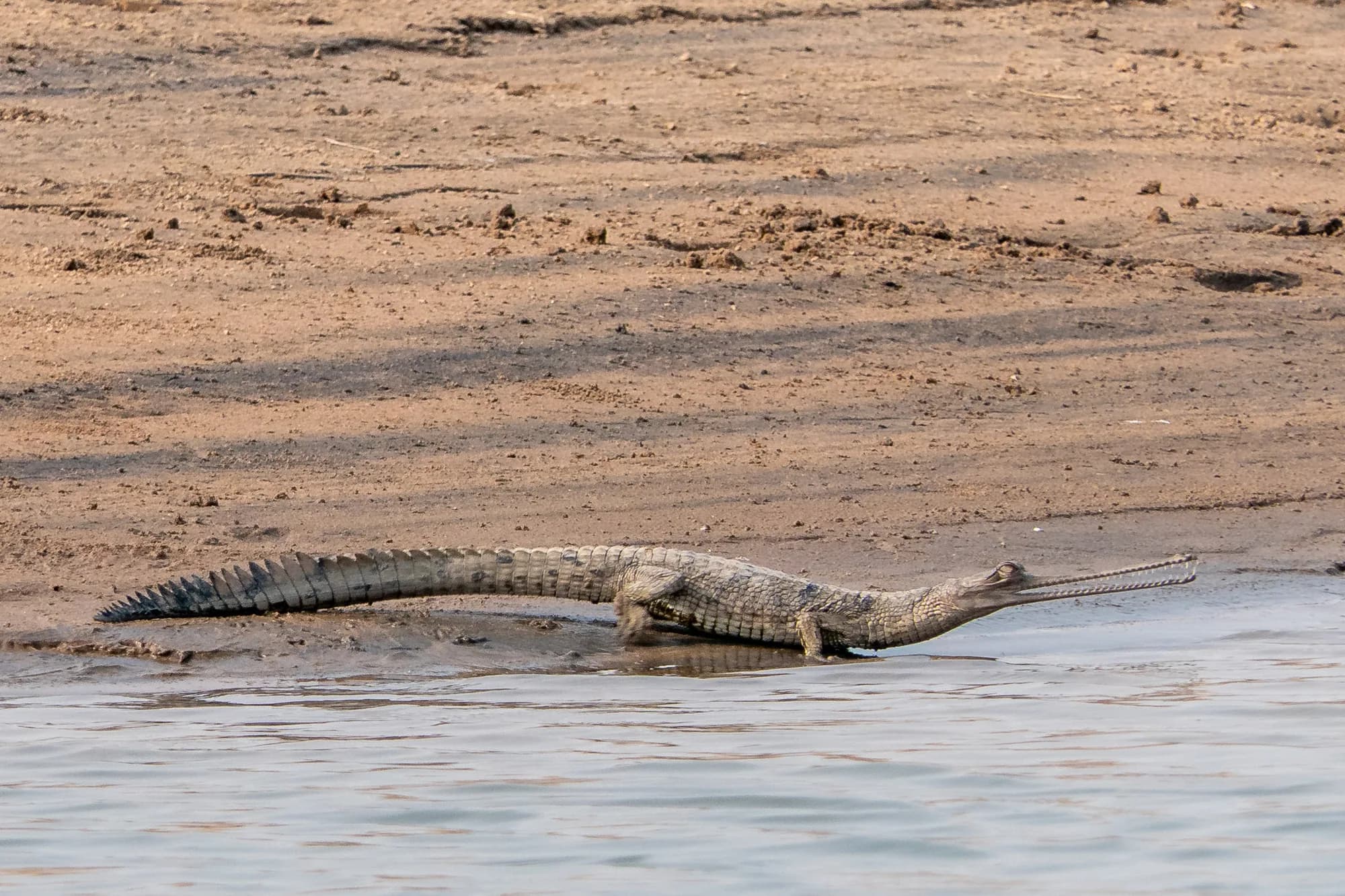
The Chambal, above all
Gharial — the same river
A fish-eating crocodilian with a snout like a pair of tongs, down to a few hundred breeding adults, and hauled out on Chambal sandbanks in winter in numbers that make it look common.
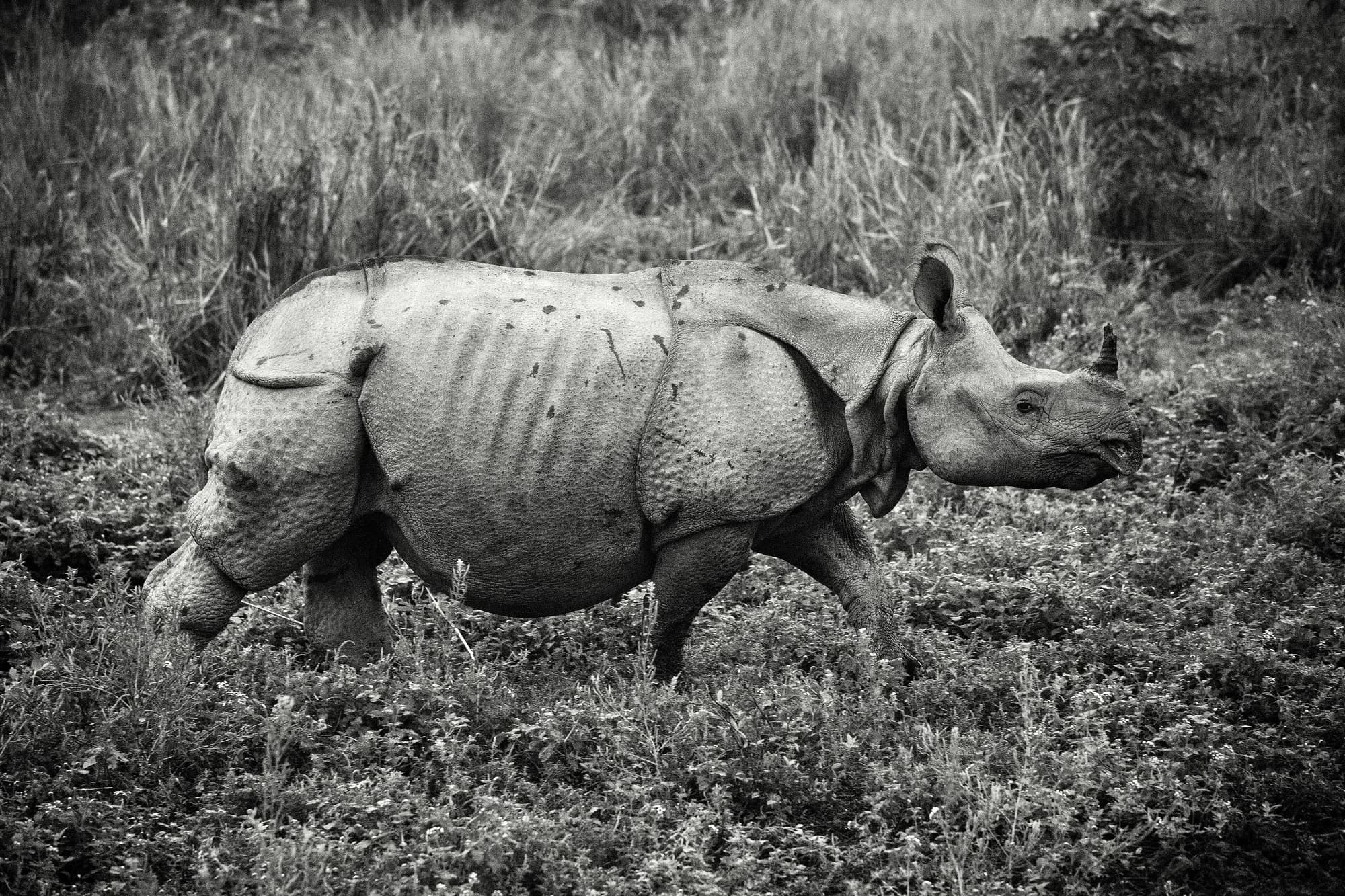
Assam
Kaziranga — the park in full
Floodplain grassland, one-horned rhino in daylight, and the one Indian park where the headline animal is close to certain.
Twelve months, cross-park
When to go, month by month
The single decision that moves the odds most. Heat, crowds, closures and what is actually open, one page per month.