
Species · Rynchops albicollis
Indian skimmer
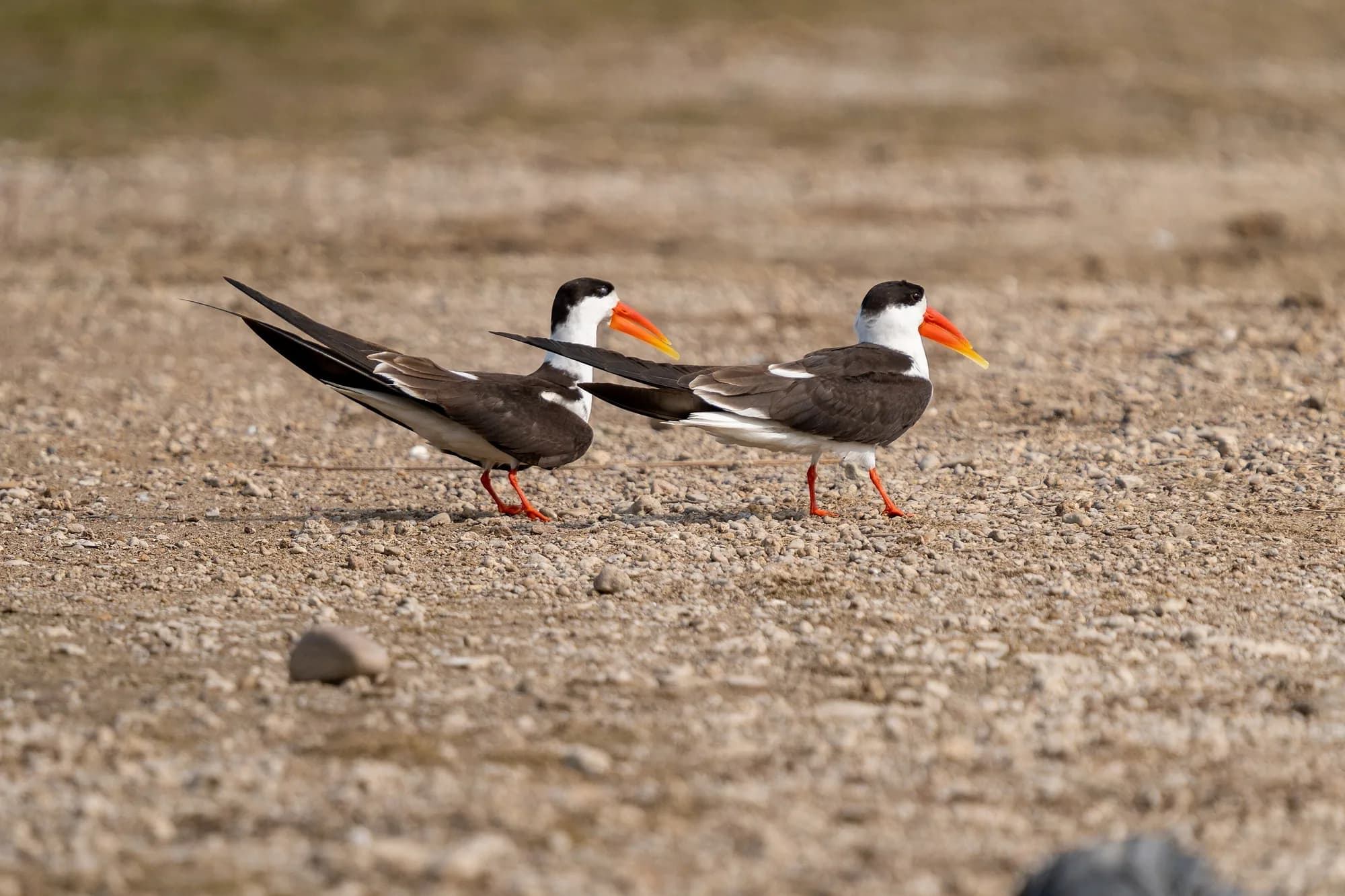
A tern-like bird with an orange bill whose lower half is longer than the upper, feeding by ploughing the water surface at speed. The Chambal holds most of what is left.
Also called
- Panchira (पनचिरा) · Hindi
Checked 30 Aug 2026
- Where
- Chambal & a few northern rivers
- Best months
- November–March
- Bill
- Lower half is longer
- Nests
- On bare sandbanks
Large rivers with exposed sandbanks to nest on. The same requirement as the gharial, and the same reason both are in trouble.
Where it is
Where to actually go
Ranked, with the reason each — these are not interchangeable.
- 01National Chambal SanctuaryMadhya Pradesh & Uttar PradeshThe stronghold, with flocks on the sandbanks and skimming at first light. The same boat gives you gharial and river dolphin.November to March, early
- 02Ganga at BhagalpurBiharA smaller population on a working river, alongside dolphins.For a second look
Where you will not see one
- Confused with a ternTerns dive; skimmers plough. The bill settles it instantly — no tern has a lower mandible longer than the upper.
- Anywhere without exposed sandbanksNo sandbank, no skimmer. Dammed and sand-mined rivers lose them quickly, which is most of the range contraction.
When to go
When to go
- J
- F
- M
- A
- M
- J
- J
- A
- S
- O
- N
- D
January: best. February: best. March: best. April: good. May: marginal. June: marginal. July: marginal. August: marginal. September: marginal. October: good. November: best. December: best.
Through the day
- Dawn
- Morning
- Midday
- Afternoon
- Dusk
- Night
Dawn: most active. Morning: most active. Midday: active. Afternoon: active. Dusk: most active. Night: usually resting.
What it looks like in the field
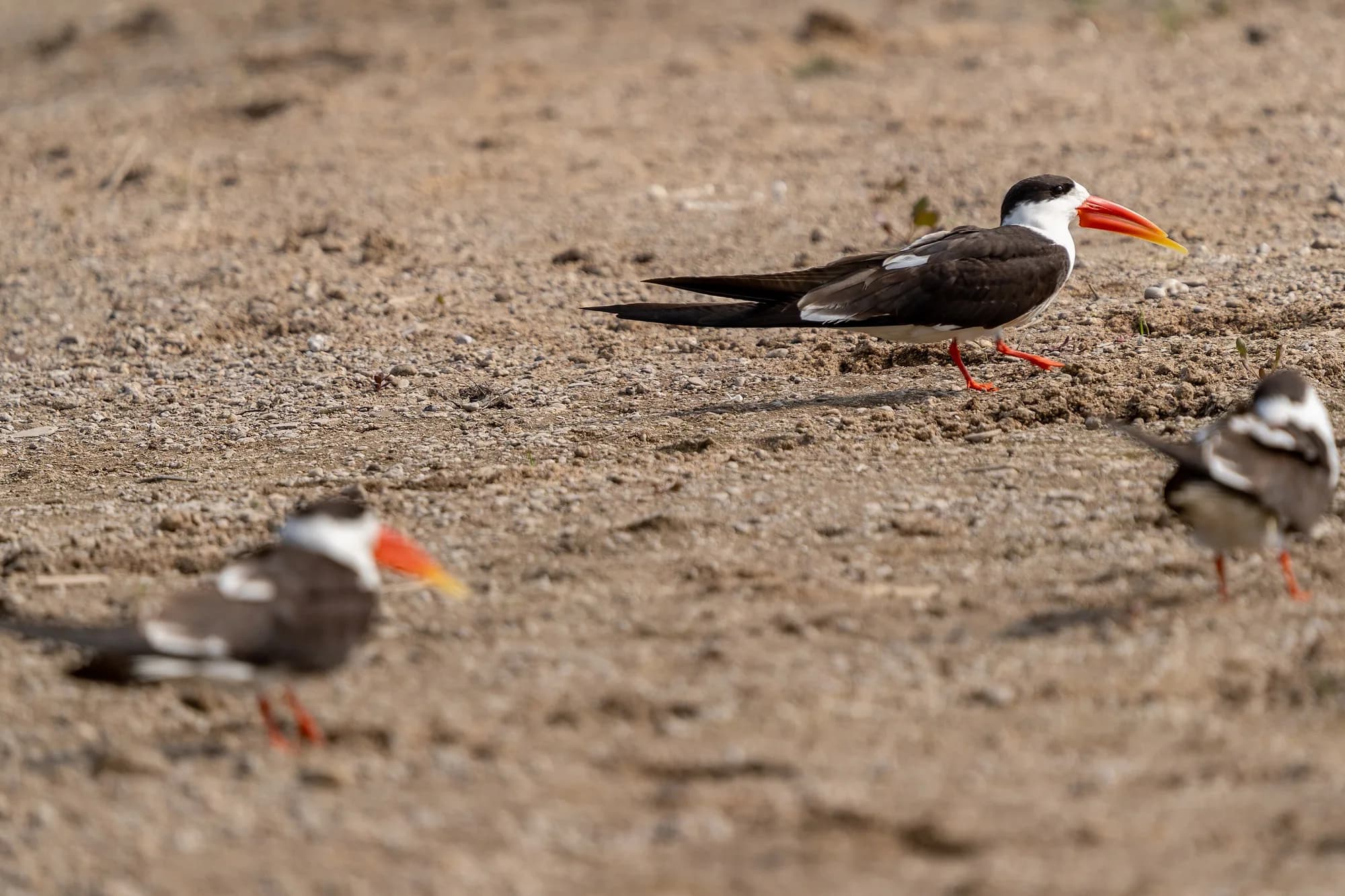
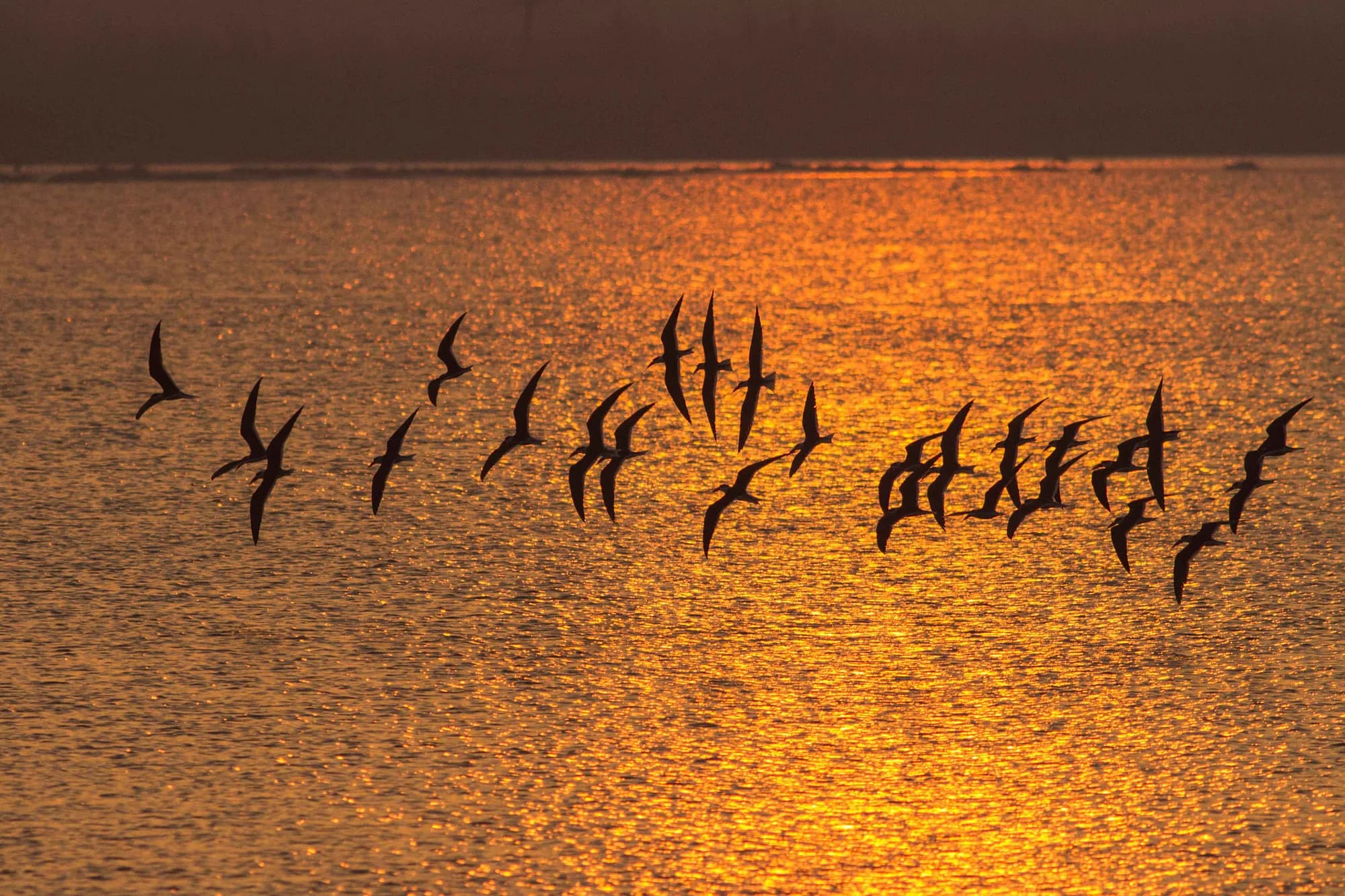
Photographs of Indian skimmer in the wild, in Indian reserves. We publish no captive, baited or digitally composited images, and no photograph whose licence we cannot show.
What a sighting is actually like
Fast and low. A bird flying a straight line a few centimetres above flat water with the lower mandible cutting a visible line, then snapping shut on contact.
It is one of very few birds whose feeding technique you can watch working.
Why sandbanks decide it
Skimmers nest in shallow scrapes on bare sand, which means they need rivers that still deposit sandbanks and still expose them in the dry season.
Status and protection
Status and protection
- IUCN Red List
- Endangered
- Population trend
- ↓ Decreasing
- Wildlife Protection Act 1972
- Schedule I
- CITES
- Not listed (no CITES Appendix)
Global, species-level assessment of Rynchops albicollis; binomial matches exactly. Criteria C1+2a(ii); last assessed 09 July 2020.
Assessed 2020 · IUCN Red List assessment
What to book to see one
What you would be booking
- How it is seen
- The same Chambal boat as the gharials and the dolphins.
- Drives to book
- One morning boat trip. All three species on one outing.
Never let a boat approach a nesting sandbank. Skimmers nest in scrapes on bare sand and a flushed colony leaves eggs to the sun within minutes.
Boat safaris in IndiaOn the same trip you would also get
- Gharial — the same Chambal sandbanks
- Ganges river dolphin — the same boat, in the deeper pools
- Mugger crocodile — on the same banks
- Black-necked stork — the same river margins
Questions people ask
Where can I see Indian skimmers?
Why is the bill shaped like that?
When should I go?
Read next
The Chambal, above all
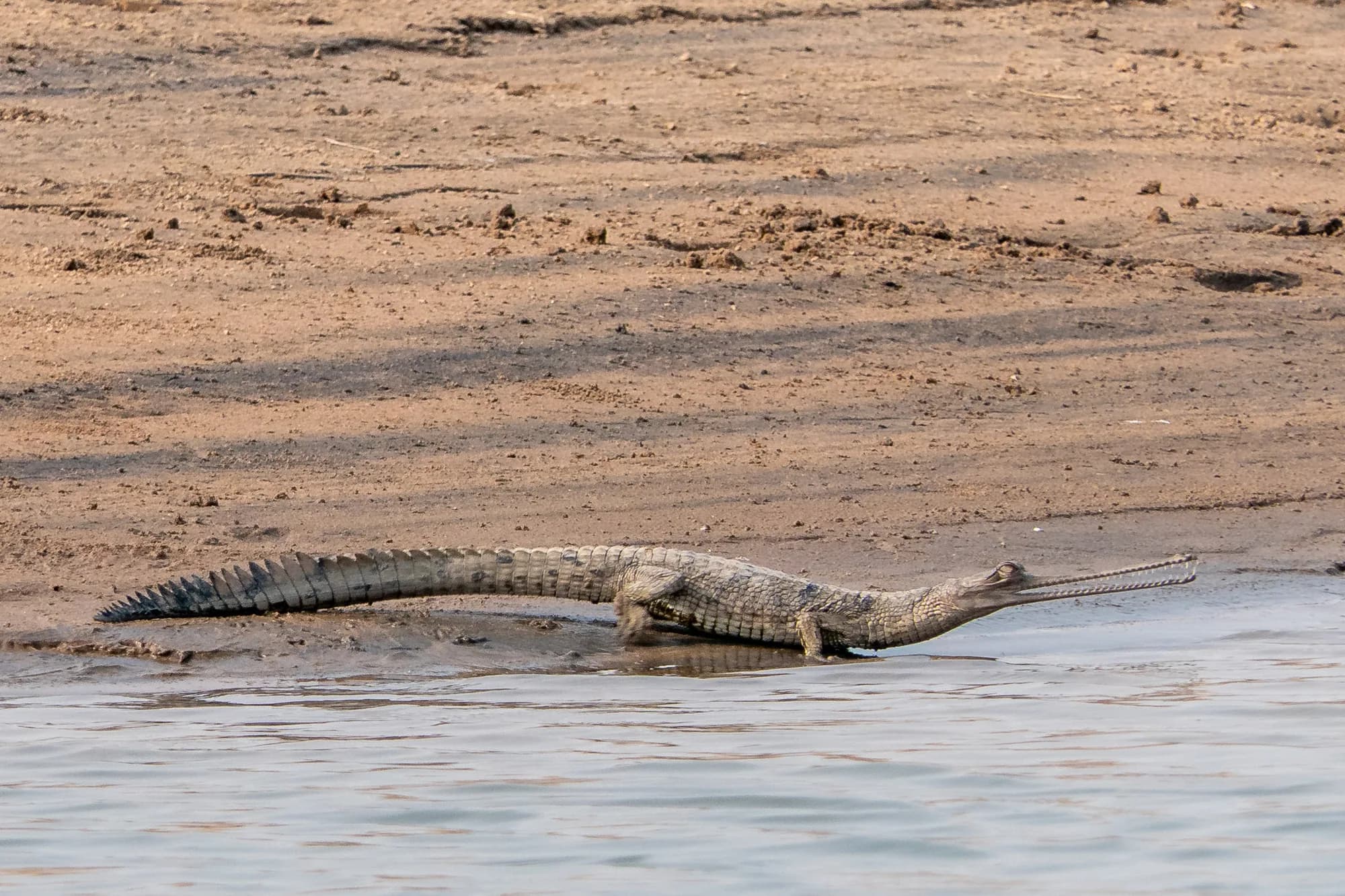
Gharial — the same river
A fish-eating crocodilian with a snout like a pair of tongs, down to a few hundred breeding adults, and hauled out on Chambal sandbanks in winter in numbers that make it look common.
The Ganges, Brahmaputra and Chambal
Ganges river dolphin — the same boat
A blind dolphin that swims on its side and finds everything by sound, in some of the most crowded river water on earth. India's national aquatic animal, and one most Indians have never seen.
Kabini, Satpura, Periyar
Boat safaris in India
Quiet, low, and no engine note. In late dry season at Kabini it is the best two hours in the park.
November to February
Birding on an Indian safari
Every reserve here is a birding destination whether or not it is sold as one. Say so when you book.