
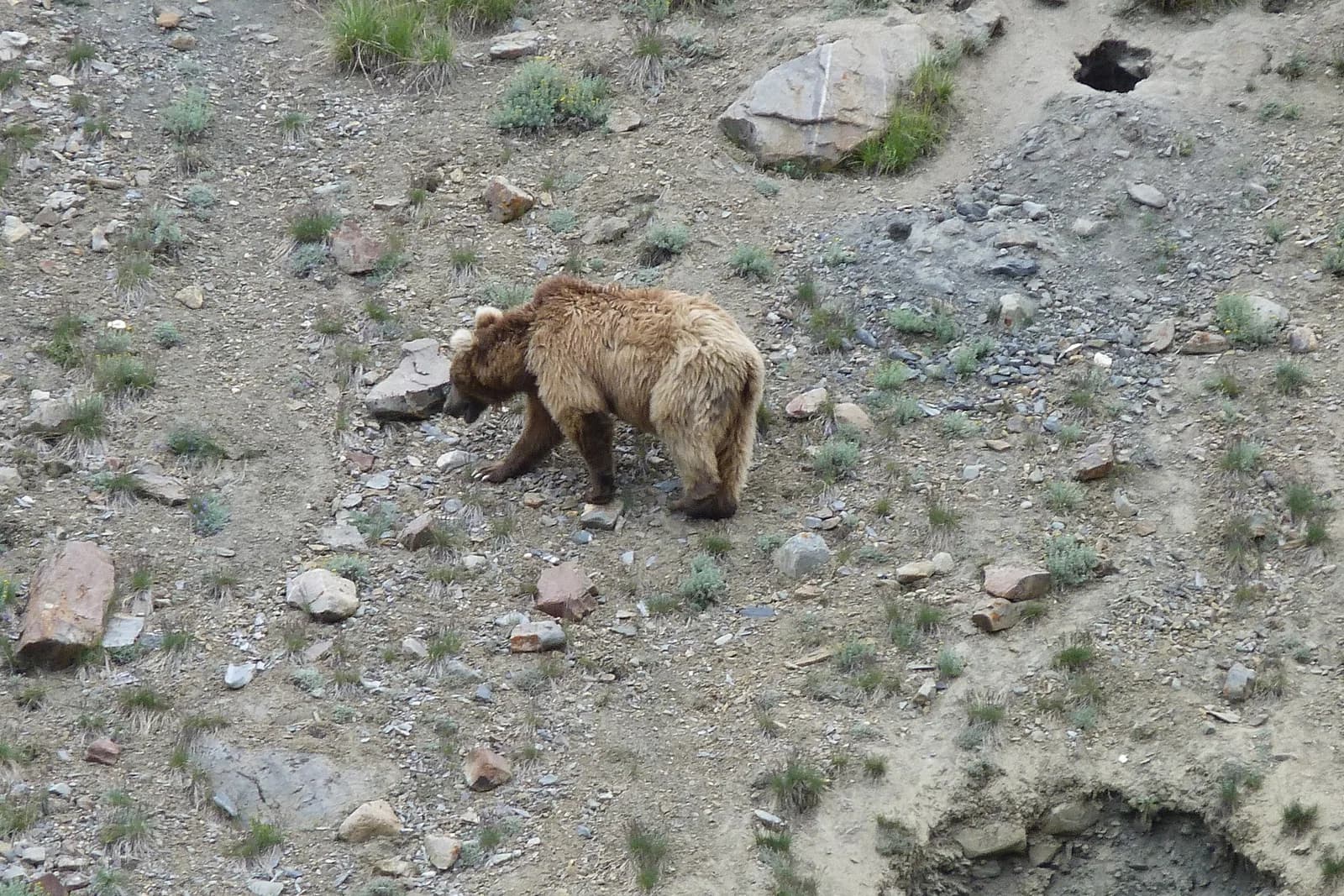
Species · Ursus arctos isabellinus
Himalayan brown bear
India's largest carnivore by weight, sandy-brown and confined to a handful of high valleys. It is sold as a bonus on snow leopard trips, and in the snow leopard season it is asleep.
Also called
- Drenmo · Ladakhi
- Lal bhalu (लाल भालू) · Hindi
- Haput (used for both bears) · Kashmiri
Checked 31 Aug 2026
- Where
- Ladakh, Kashmir and high Himachal
- Best months
- June–September
- Altitude
- About 3,000–5,000 m
- Note
- Dens through the winter
Alpine meadow and scree above the treeline, in the Suru and Zanskar valleys, the Deosai-facing slopes of Kargil, upper Kashmir, and high Himachal. The Indian population is small and fragmented — a few hundred animals in total.
Where it is
- Hemis
- Spiti
Where to actually go
Ranked, with the reason each — these are not interchangeable.
- 01Suru and Zanskar valleysLadakhThe most consistent brown bear country in India, worked in summer by a small number of guides who know the meadows.July and August
- 02Upper KashmirJammu & KashmirBears in the high meadows above the forest, most often reported by shepherds rather than seen by visitors.Needs local knowledge
- 03SpitiHimachal PradeshPresent in the high side valleys in small numbers. A genuine possibility on a long summer trip, not a plan.Very low odds
Where you will not see one
- A February snow leopard tripThe single most common mistake on this species. Brown bears are in the den from late autumn to spring. Every winter Ladakh itinerary that lists it as a possible sighting is listing an animal that is underground.
- Forested Himalayan valleysThat is Asiatic black bear country. Brown bears live above the trees, not in them.
When to go
When to go
- J
- F
- M
- A
- M
- J
- J
- A
- S
- O
- N
- D
January: closed or unproductive. February: closed or unproductive. March: closed or unproductive. April: marginal. May: good. June: best. July: best. August: best. September: best. October: marginal. November: closed or unproductive. December: closed or unproductive.
Through the day
- Dawn
- Morning
- Midday
- Afternoon
- Dusk
- Night
Dawn: active. Morning: most active. Midday: usually resting. Afternoon: active. Dusk: most active. Night: usually resting.
Telling it apart
Told apart from
The forest–meadow boundary in Kashmir
Colour, altitude and chest. The black bear is sleek black with a white chevron and lives in forest; the brown bear is sandy with a shoulder hump and no chest mark, above the treeline.
Marks chosen to be usable from a moving vehicle — a himalayan brown bear is rarely still and never close enough for anything subtler.
What it looks like in the field
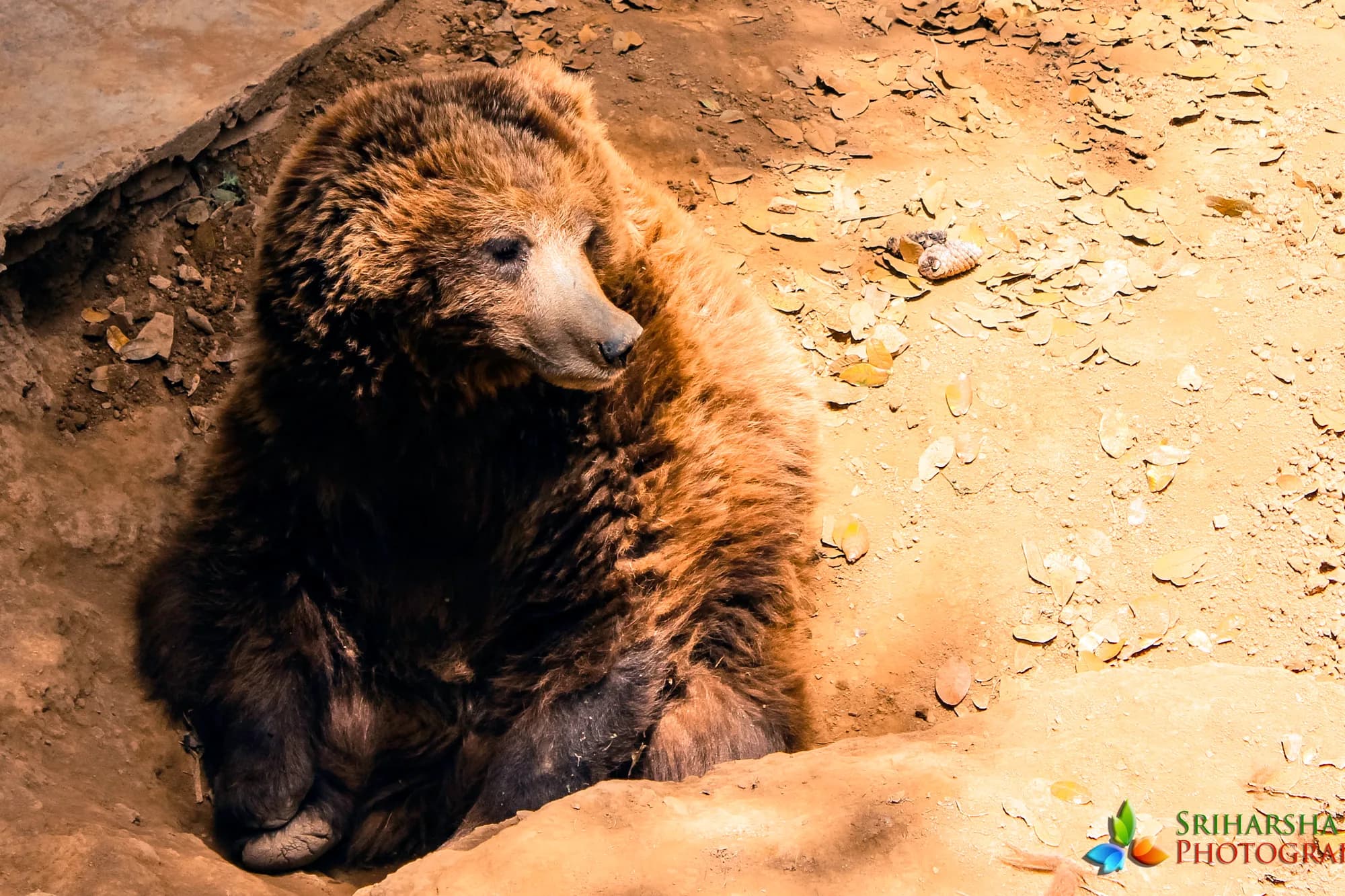
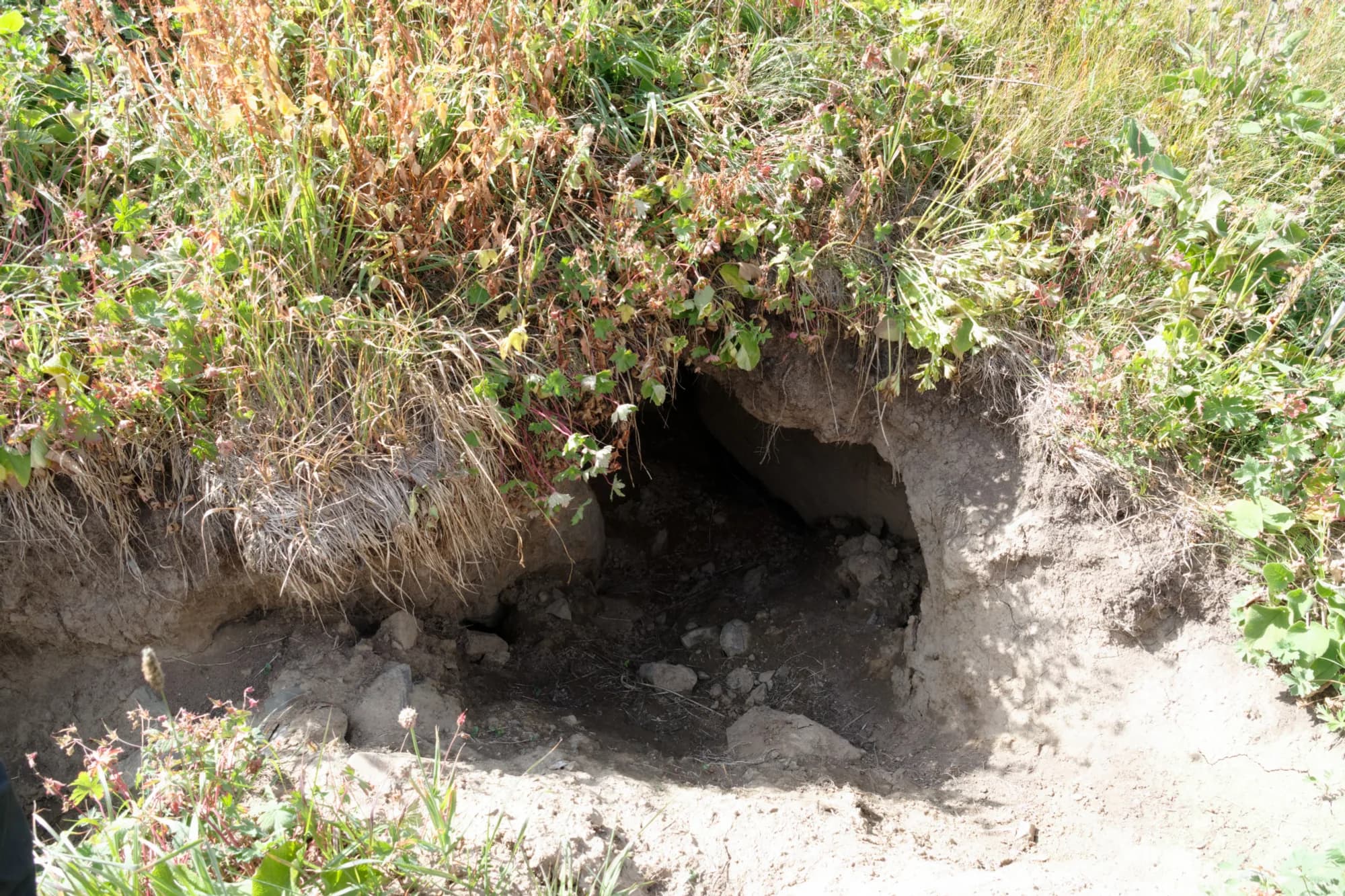
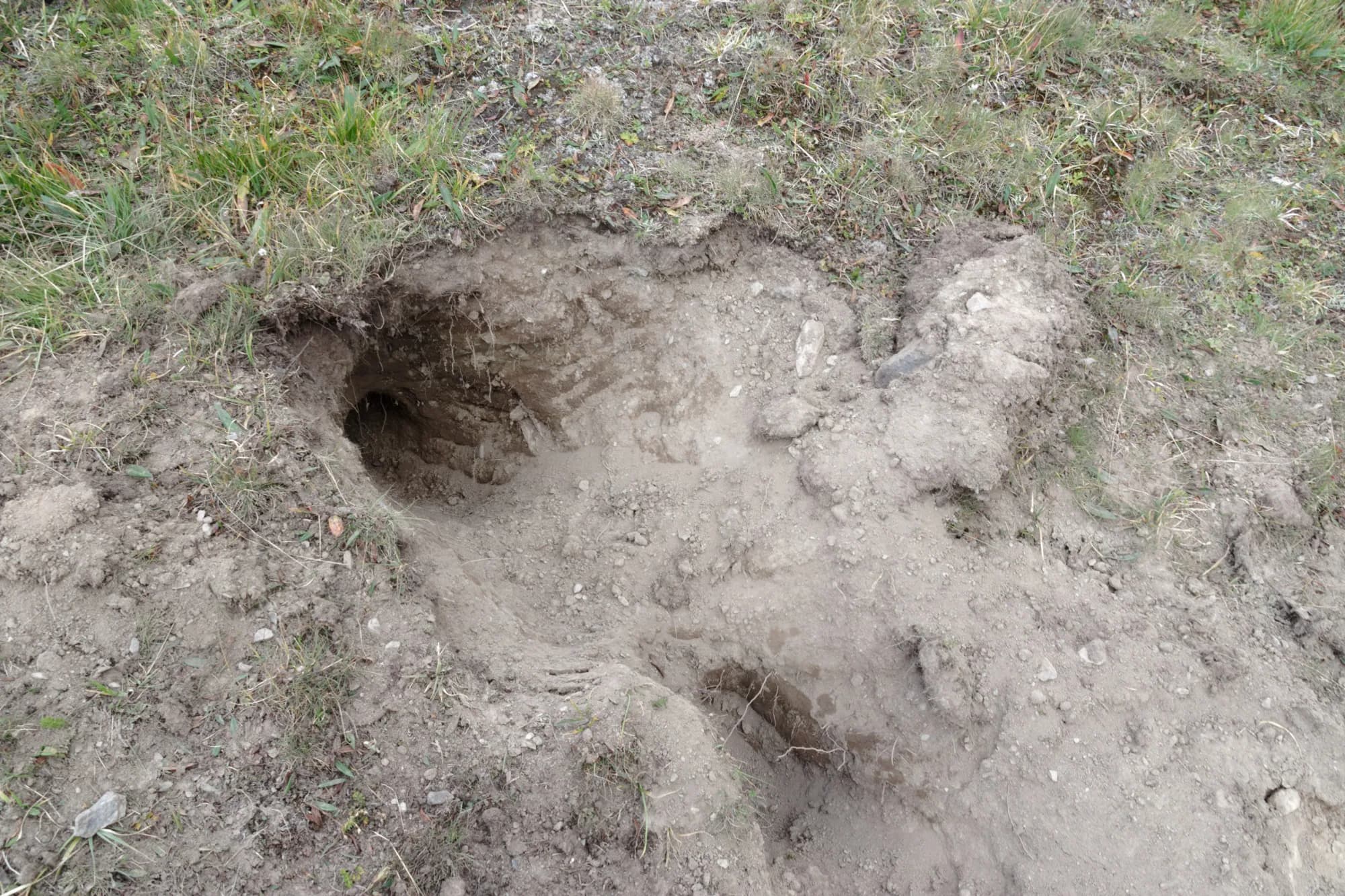
Photographs of Himalayan brown bear in the wild, in Indian reserves. We publish no captive, baited or digitally composited images, and no photograph whose licence we cannot show.
The season nobody prices honestly
Ladakh’s wildlife season is winter, because that is when snow leopards come low and the trips are sold. The brown bear does not participate in that season. It dens from late October and comes out around April.
Marmots, and how you find a bear
Much of a summer bear’s day is spent digging — roots, and Himalayan marmots out of their burrows. A meadow with fresh excavations and thrown spoil is a meadow a bear is working, and it will very likely be back.
You find the digging first and the bear second. Looking for the animal directly, across country that size, is how a week goes by.
Status and protection
Status and protection
- IUCN Red List
- Least Concern
- Population trend
- → Stable
- Wildlife Protection Act 1972
- Schedule I (post-2022 amendment numbering)
- CITES
- Appendix I
Species-level assessment only, and a poor proxy for the animal this page is about.
Assessed 2017 · IUCN Red List assessment
What to book to see one
What you would be booking
- How it is seen
- Summer trekking or a vehicle-supported camp in a high valley, with a local spotter who knows which meadows the bears are working.
- Drives to book
- Budget four or five days in one valley. This is not a species that rewards moving around.
Rubbish pits at road camps and army posts draw bears and create the encounters that get animals killed. Do not go looking at one.
Hemis — the park in fullQuestions people ask
Can I see a Himalayan brown bear on a snow leopard trip?
Where are they found in India?
How is it different from the Asiatic black bear?
Read next
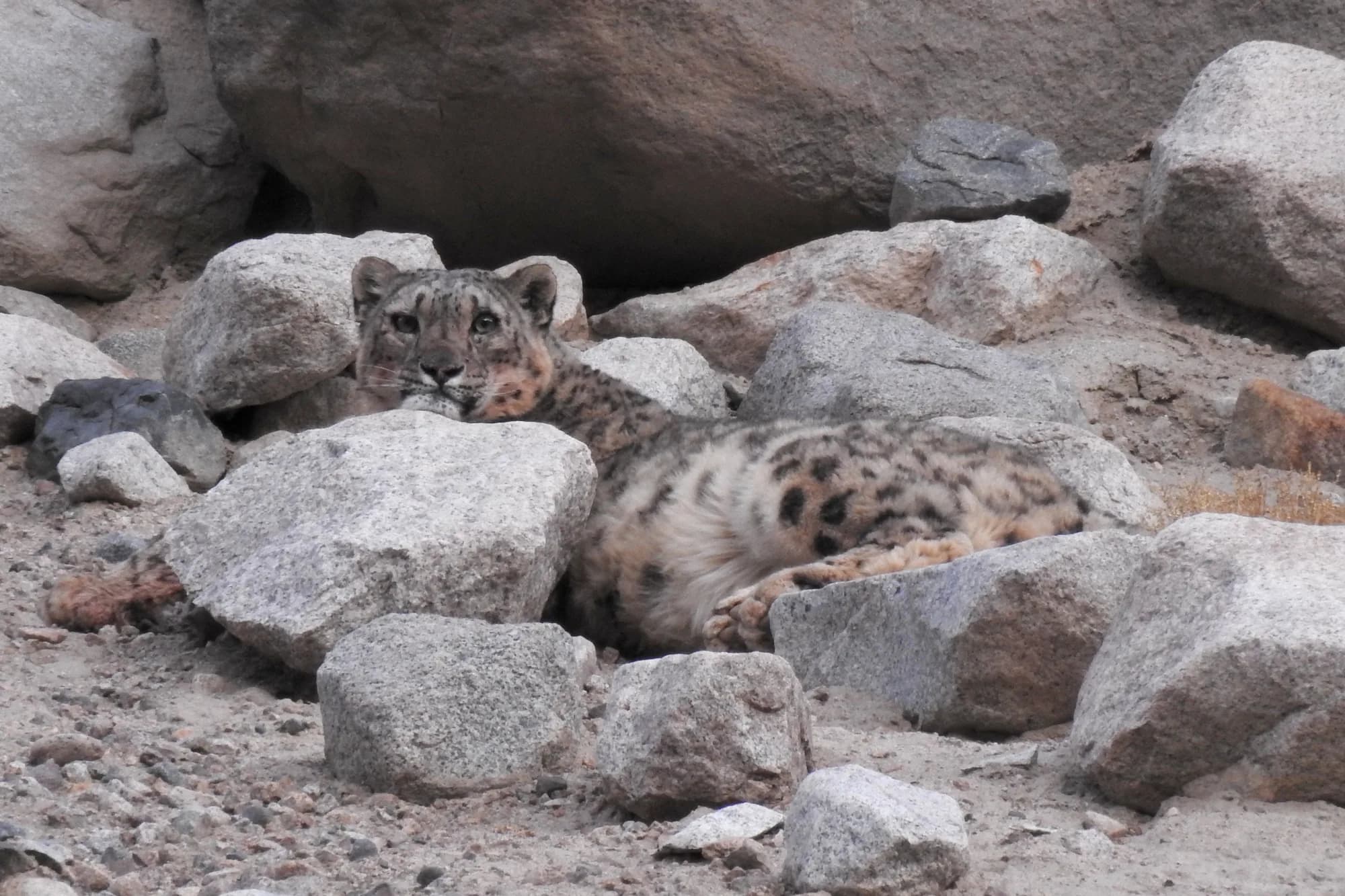
Ladakh and Spiti, in winter
Snow leopard — the winter season
Not a safari. A mountain expedition with a chance of the animal — cold, high, and measured in days of patience rather than in drives.
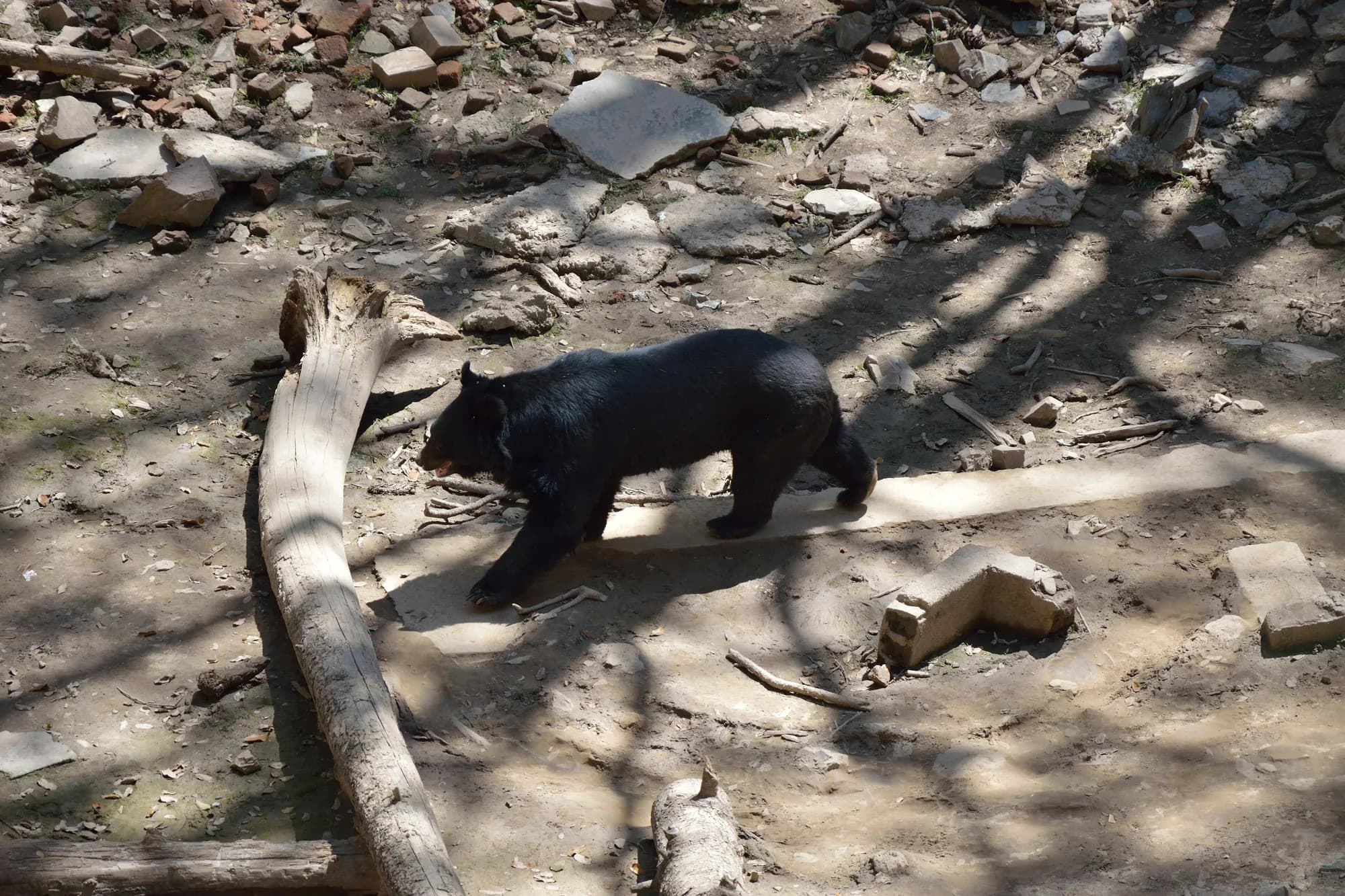
Himalayan oak forest, not the plains
Asiatic black bear — the forest bear
The Himalayan bear, black with a white chevron on the chest. It is confused with the sloth bear constantly in trip reports, and the two do not overlap anywhere you are likely to be.
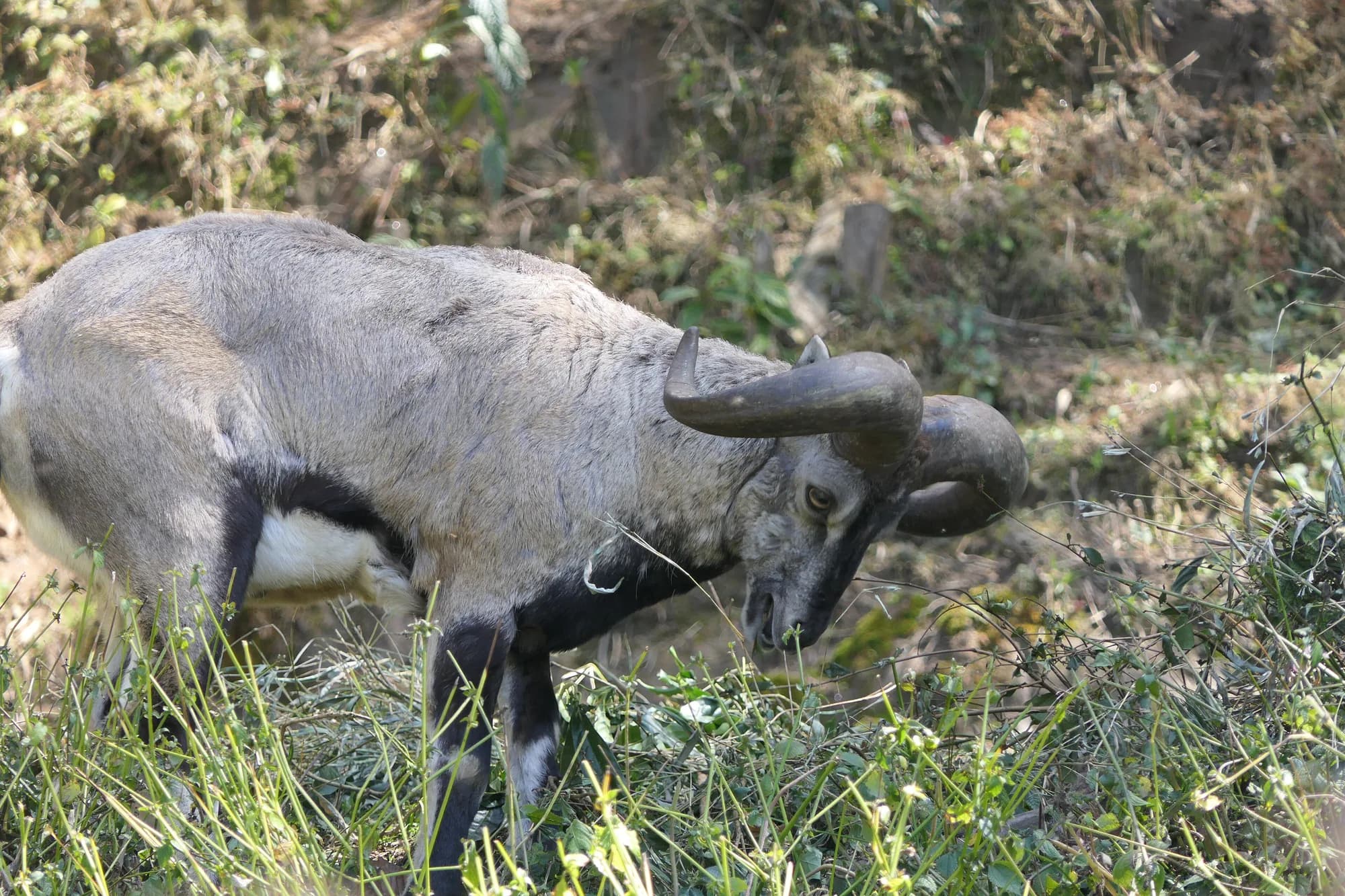
Ladakh and Spiti, above the treeline
Bharal — what the slopes hold
Neither blue nor a sheep, and the animal a snow leopard trip actually revolves around. If you are watching bharal, you are watching the right slope.
Hemis — the park in full