
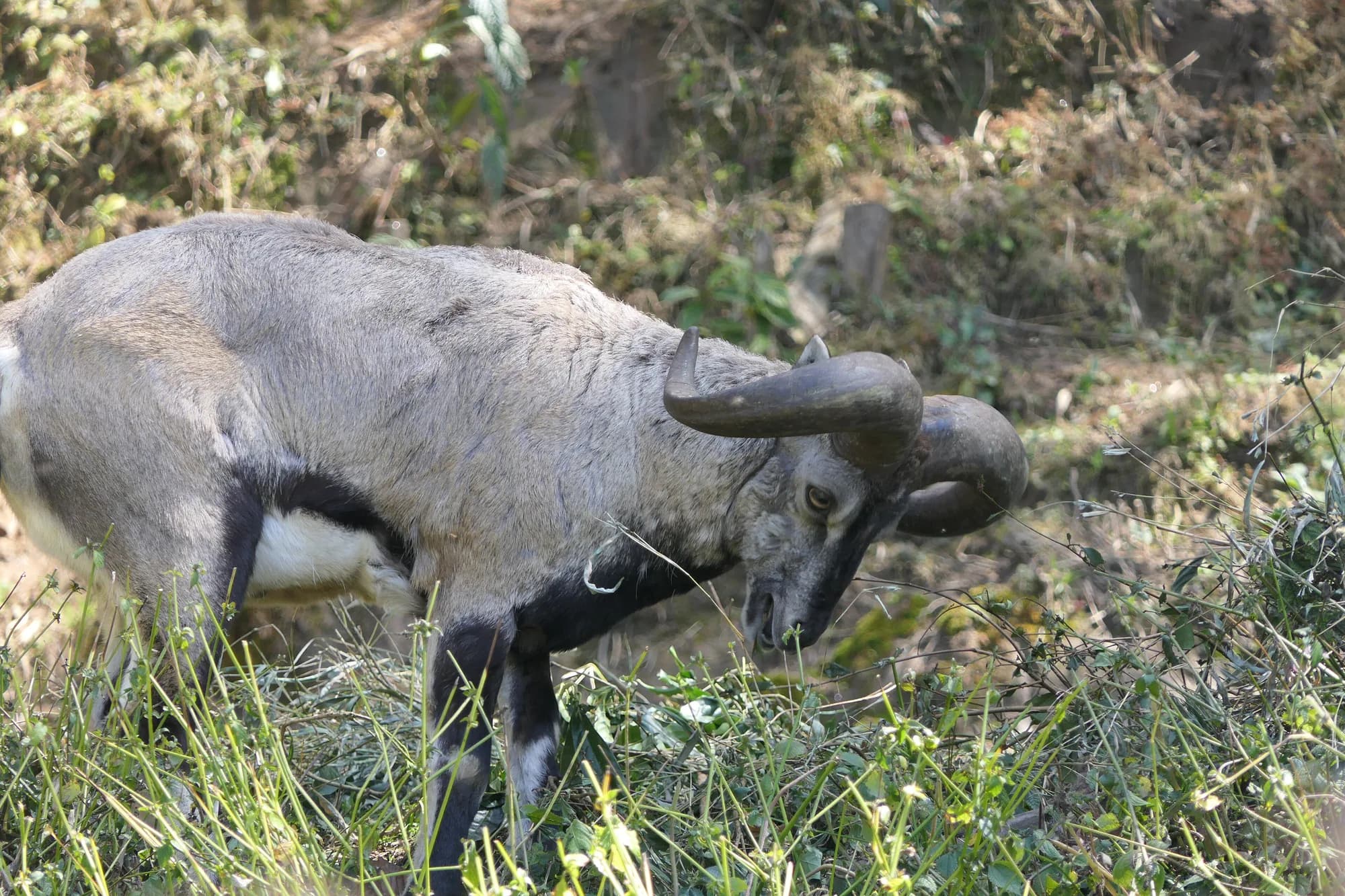
Species · Pseudois nayaur
Blue sheep
Neither blue nor a sheep, and the animal a snow leopard trip actually revolves around. If you are watching bharal, you are watching the right slope.
Also called
- Napo · Ladakhi
- Bharal (भरल) · Hindi
- Na · Tibetan
Checked 30 Aug 2026
- Where
- Ladakh, Spiti, high Himalaya
- Best months
- December–March
- Altitude
- About 3,000–5,500 m
- Note
- The snow leopard's prey
Open alpine slopes and scree above the treeline in the trans-Himalaya. The distribution of bharal is very close to the distribution of snow leopards, for obvious reasons.
Where it is
- Hemis
Where to actually go
Ranked, with the reason each — these are not interchangeable.
- 01HemisLadakhLarge herds on the slopes above the Rumbak and Ulley valleys, and the reason the cats are there.The winter snow leopard trip
- 02SpitiHimachal PradeshKibber and the surrounding slopes hold good numbers in a colder, emptier setting.Harder, quieter
Where you will not see one
- Below the treelineA high open-slope animal. Nothing in forest, and nothing in the Indian lowlands at all.
- Expecting something blueThe name comes from a slaty sheen on the winter coat in certain light. In practice they are grey-brown and almost invisible against scree, which is the point.
When to go
When to go
- J
- F
- M
- A
- M
- J
- J
- A
- S
- O
- N
- D
January: best. February: best. March: best. April: good. May: marginal. June: marginal. July: marginal. August: marginal. September: marginal. October: good. November: best. December: best.
Through the day
- Dawn
- Morning
- Midday
- Afternoon
- Dusk
- Night
Dawn: most active. Morning: most active. Midday: active. Afternoon: active. Dusk: most active. Night: not normally seen.
What it looks like in the field
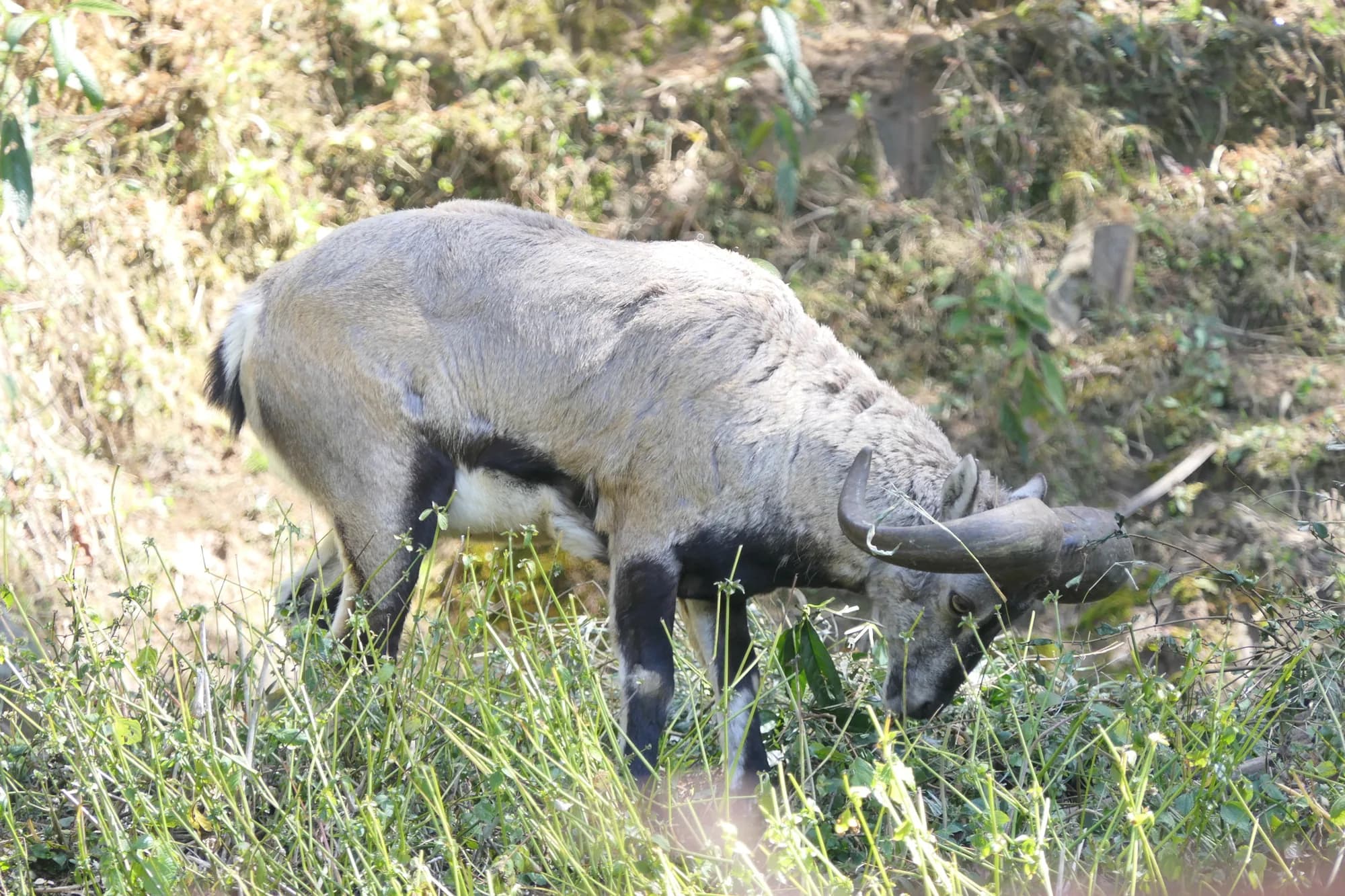
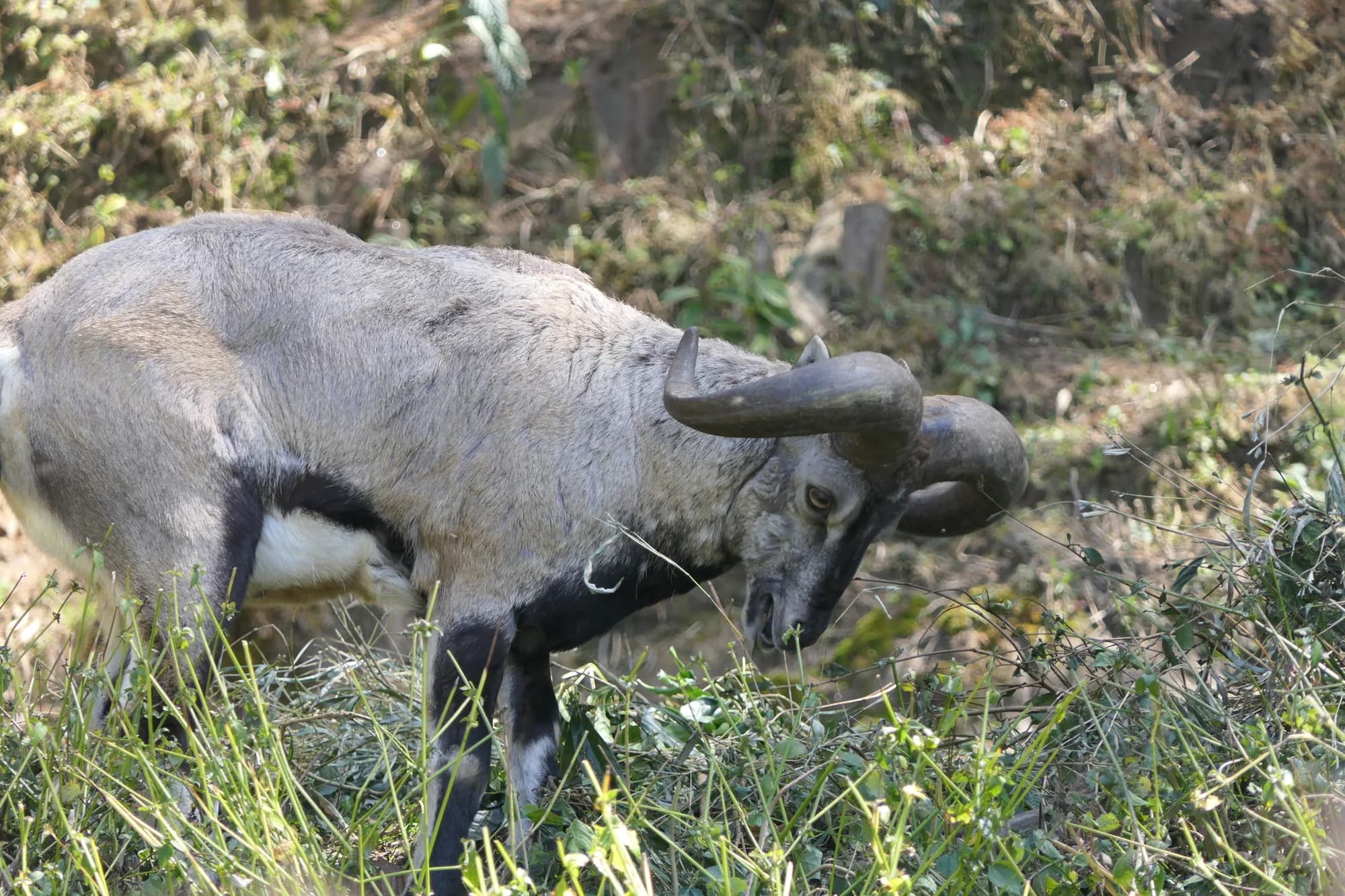
Photographs of Blue sheep in the wild, in Indian reserves. We publish no captive, baited or digitally composited images, and no photograph whose licence we cannot show.
What a sighting is actually like
A grey slope that turns out to have forty animals on it. Bharal are almost perfectly matched to scree, and the usual experience is failing to see a herd for several minutes after it has been pointed out to you.
Learning to see bharal is learning to see the mountain properly.
Why the spotters watch them
Snow leopards are effectively invisible; bharal are merely difficult. So the search runs through the prey — find the herds, watch how they behave, and the cat announces itself through them.
Status and protection
Status and protection
- IUCN Red List
- Least Concern
- Population trend
- · Unknown
- Wildlife Protection Act 1972
- Schedule I
- CITES
- Appendix III
Assessment is for the full species Pseudois nayaur, which is the binomial given. Global scope.
Assessed 2014 · IUCN Red List assessment
What to book to see one
What you would be booking
- How it is seen
- The same winter trip as the snow leopard — spotters, scopes, homestays.
- Drives to book
- Any day in the right valley. Bharal are the easy part.
They are also how the cat is found. Spotters watch bharal behaviour — a herd suddenly alert and all facing one way has seen something you have not.
When to go, month by monthOn the same trip you would also get
- Snow leopard — the predator you are really watching for
- Himalayan monal — lower down the same slopes
- Red panda — the eastern equivalent trip
- Cheer pheasant — western Himalayan slopes
Questions people ask
Why is it called blue sheep?
Where can I see bharal?
Why do snow leopard guides watch bharal?
Read next
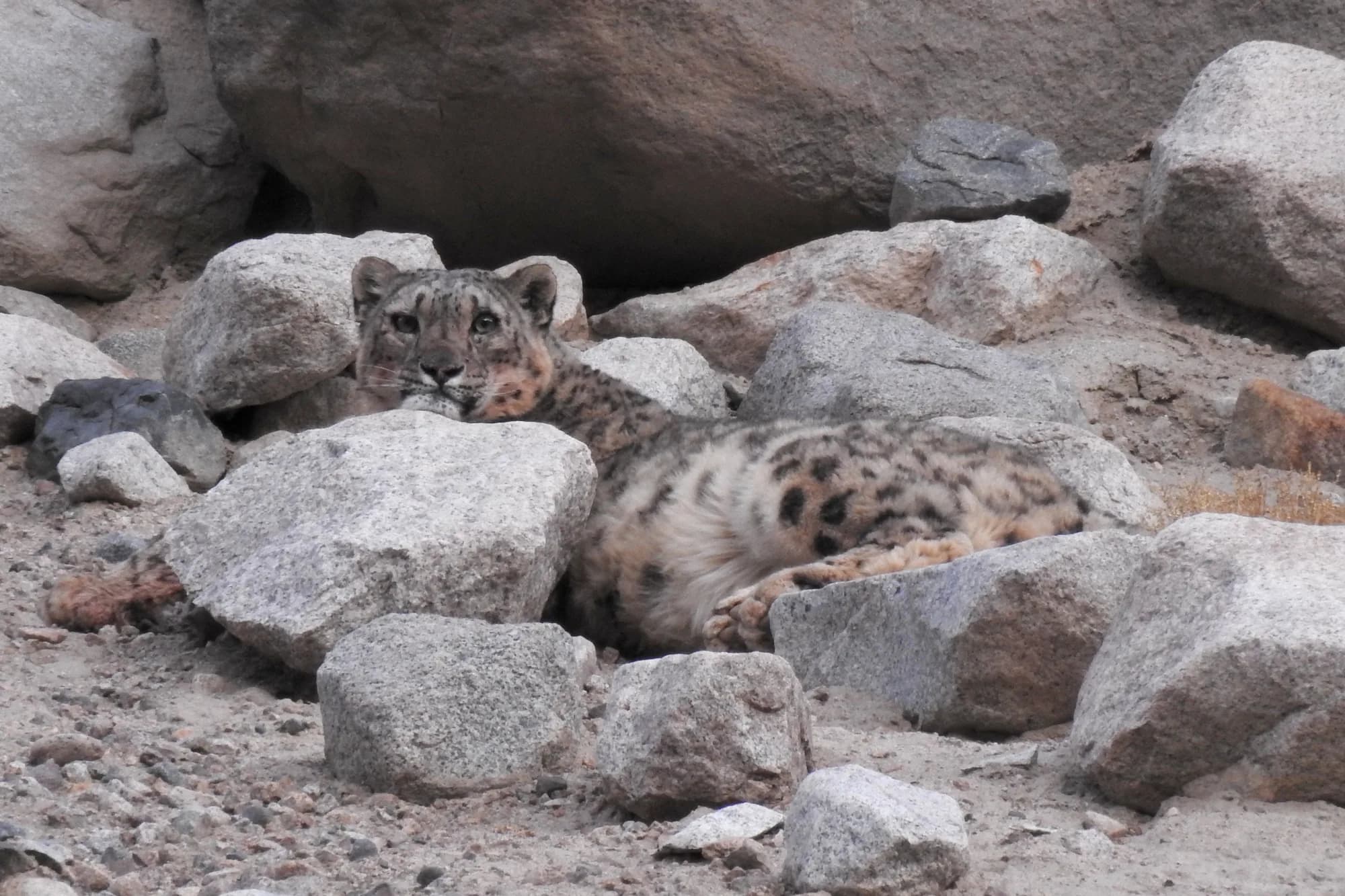
Ladakh and Spiti, in winter
Snow leopard — the predator
Not a safari. A mountain expedition with a chance of the animal — cold, high, and measured in days of patience rather than in drives.
One short list
What to pack for cold ground
Most of what gets recommended online is sold by whoever is recommending it. This is the list that is actually short.
Twelve months, cross-park
When to go, month by month
The single decision that moves the odds most. Heat, crowds, closures and what is actually open, one page per month.
A Himalayan ridge, at eye level
Bearded vulture — the same ridges
Nearly three metres of wing passing below you on a ridge, orange-stained, with a diamond tail. The only bird in the world that lives mainly on bone, and the standard consolation on a blank snow leopard morning.