
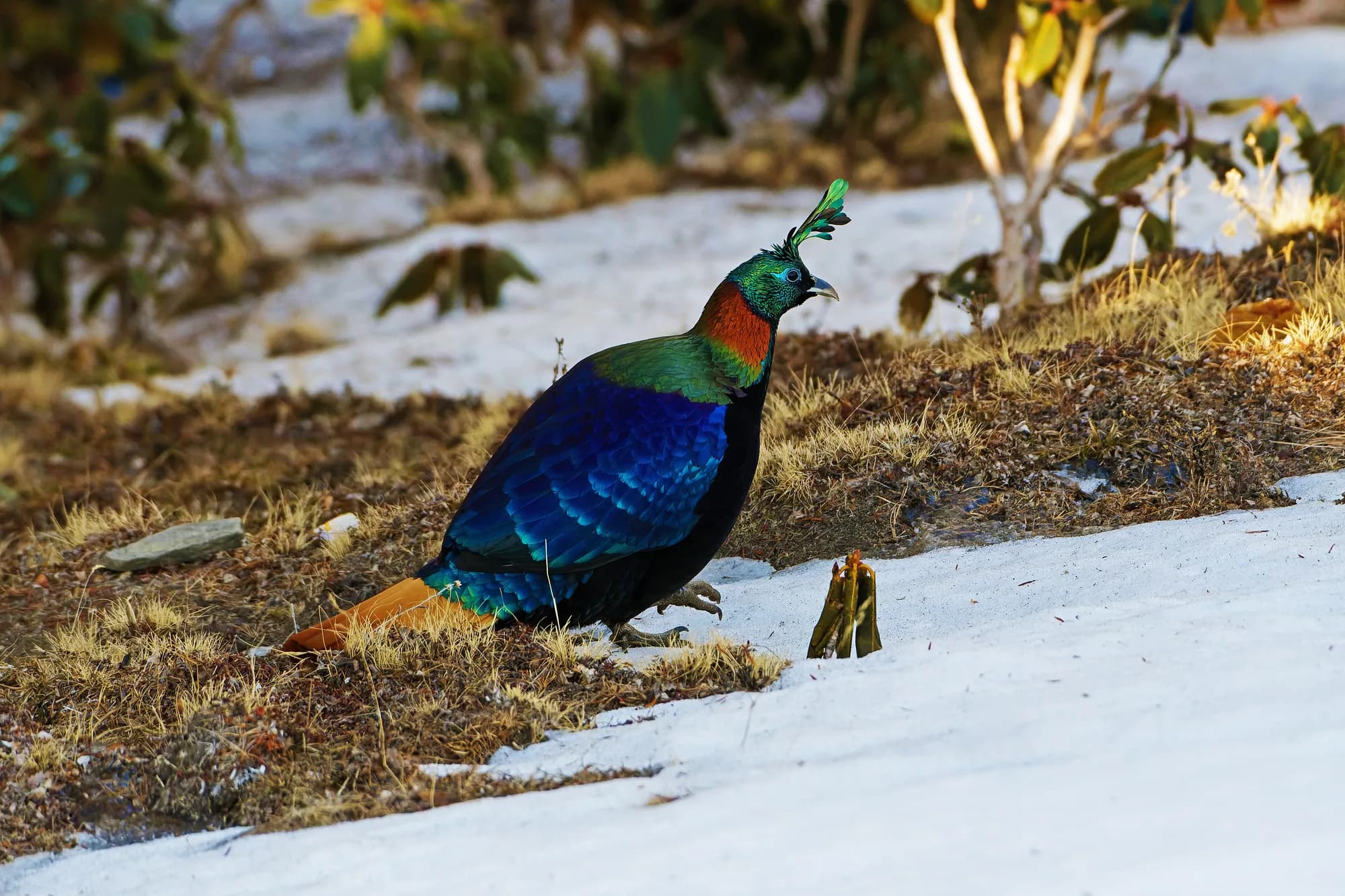
Species · Lophophorus impejanus
Himalayan monal
A pheasant that looks like spilled petrol in sunlight, digging for roots on a snowy slope at three thousand metres. The bird international operators build entire Himalayan itineraries around.
Also called
- Monal (मोनाल) · Hindi
- Munal · Garhwali
- Danphe · Nepali
Checked 30 Aug 2026
- Where
- The western & central Himalaya
- Best months
- December–April
- Altitude
- About 2,400–4,500 m
- Note
- State bird of Uttarakhand
High oak, rhododendron and birch up to the treeline, dropping lower in deep winter when snow pushes the birds down to where you can reach them.
Where it is
Where to actually go
Ranked, with the reason each — these are not interchangeable.
- 01Chopta and TungnathUttarakhandThe established site, reachable by road, with birds on slopes either side of a walkable trail. The best combination of odds and effort anywhere in the range.Be on the slope before sunrise, two mornings running
- 02Great Himalayan National ParkHimachal PradeshWilder, higher, and a genuine multi-day walk. Better forest and fewer people; more work for the same bird.For a trek rather than a trip
- 03SingalilaWest BengalThe eastern end of the range, on the same ridge that produces red panda and satyr tragopan. Fewer monal, more everything else.The best pairing if you want both
Where you will not see one
- Any lowland reserveCorbett, Kaziranga, the central Indian parks — nothing. This is a bird of the high Himalaya and it does not come below about 2,000 m even in the hardest winter.
- Ladakh and the trans-HimalayaToo dry and too far past the treeline. Monal need forest and alpine meadow, not cold desert, so a snow leopard trip will not produce one.
- The high passes in midsummerWrong season rather than wrong place. In summer the birds move up and disperse into thick cover; the reliable window is winter and early spring when snow concentrates them on open ground.
When to go
When to go
- J
- F
- M
- A
- M
- J
- J
- A
- S
- O
- N
- D
January: best. February: best. March: best. April: best. May: good. June: marginal. July: marginal. August: marginal. September: marginal. October: good. November: good. December: best.
Through the day
- Dawn
- Morning
- Midday
- Afternoon
- Dusk
- Night
Dawn: most active. Morning: most active. Midday: usually resting. Afternoon: active. Dusk: active. Night: not normally seen.
Realistic odds on a three-day trip
- Near-certain
- Likely
- Lucky
- Expedition
Telling it apart
Told apart from
Koklass pheasant
The same Himalayan oak forest
Far drabber — grey-brown streaked plumage with a dark head and white neck patches, and no iridescence at all. Koklass call at dawn from cover and are heard far more than seen; monal feed in the open.
Cheer pheasant
Lower, drier western Himalayan slopes
Long barred tail, pale buff-grey body, and a preference for steep grassy scrub rather than forest slopes. No metallic colour anywhere.
Female monal versus other pheasants
Every monal sighting that is not a male
The real field problem, since females are plain streaked brown. Look for the white throat patch and the short white band on the tail — and for the male, who is rarely far away.
Marks chosen to be usable from a moving vehicle — a himalayan monal is rarely still and never close enough for anything subtler.
What it looks like in the field
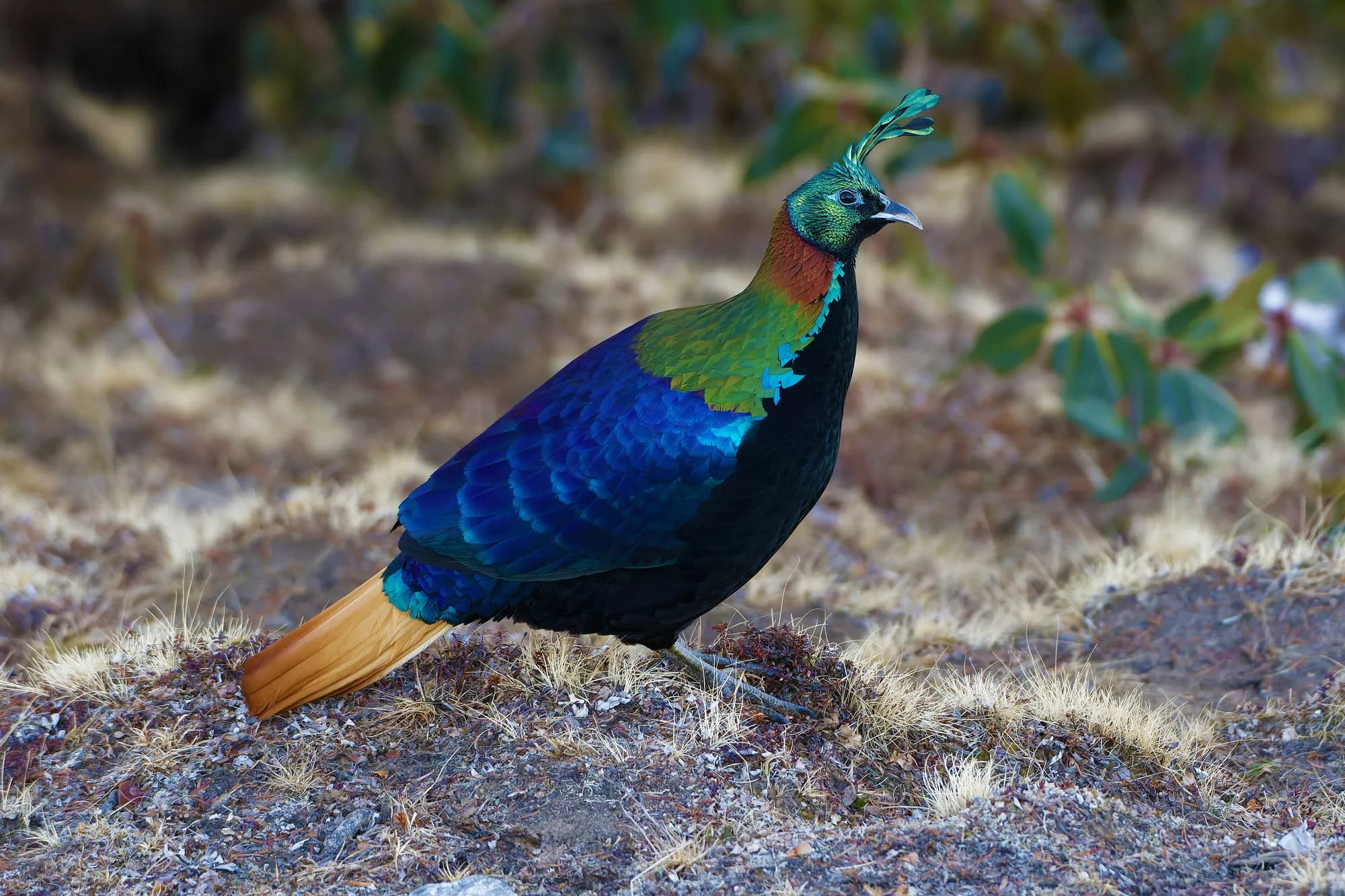
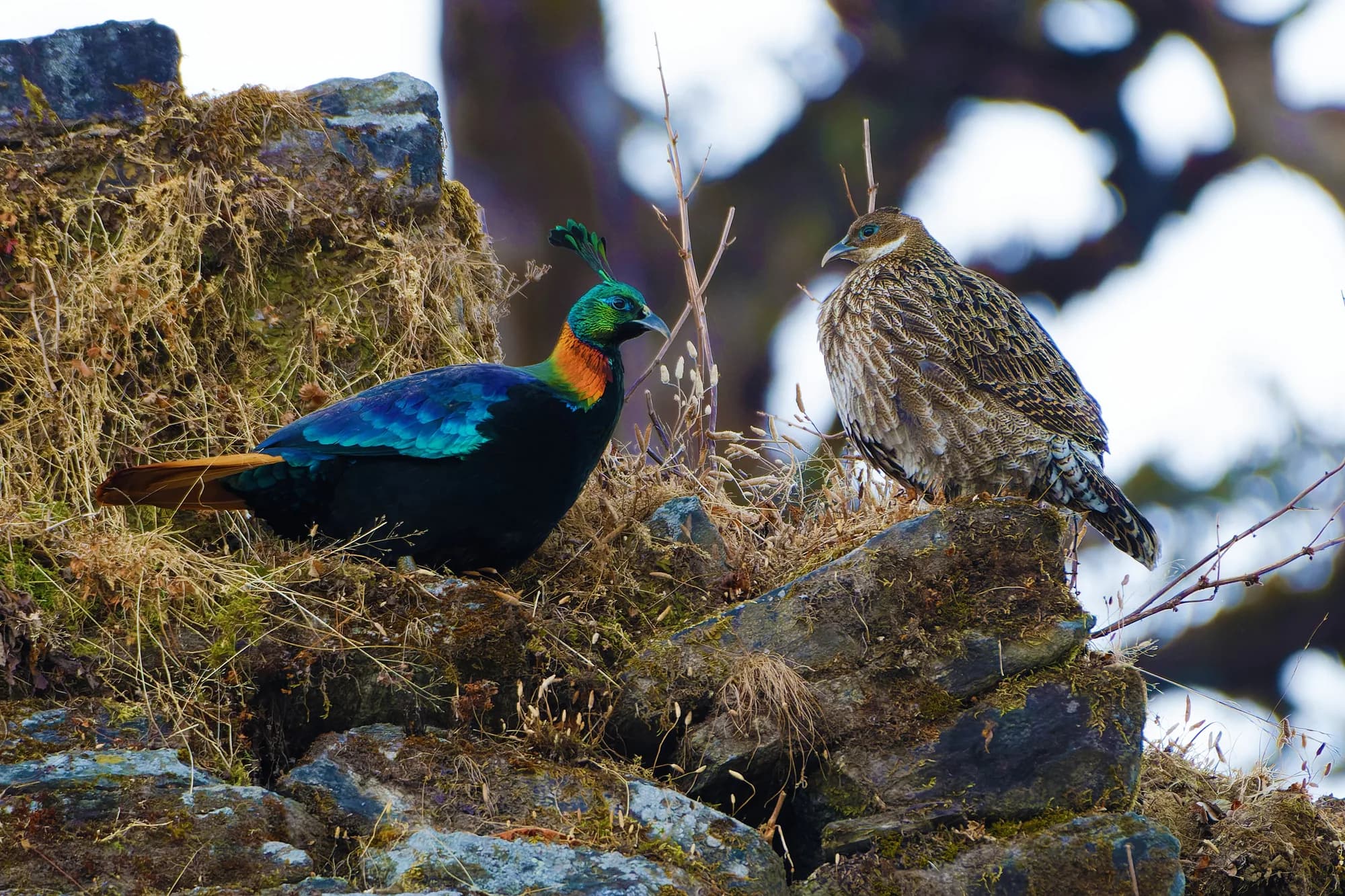
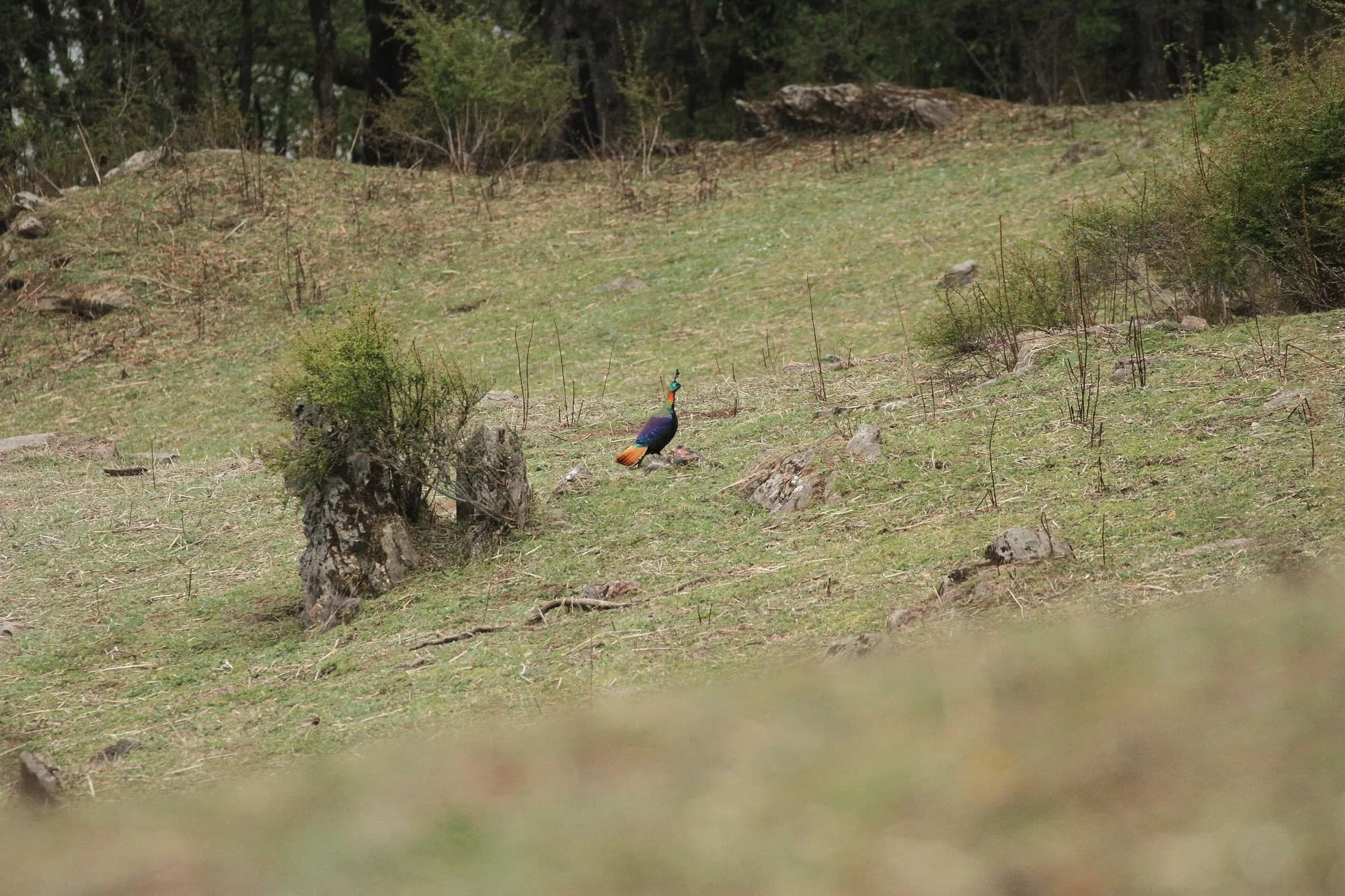
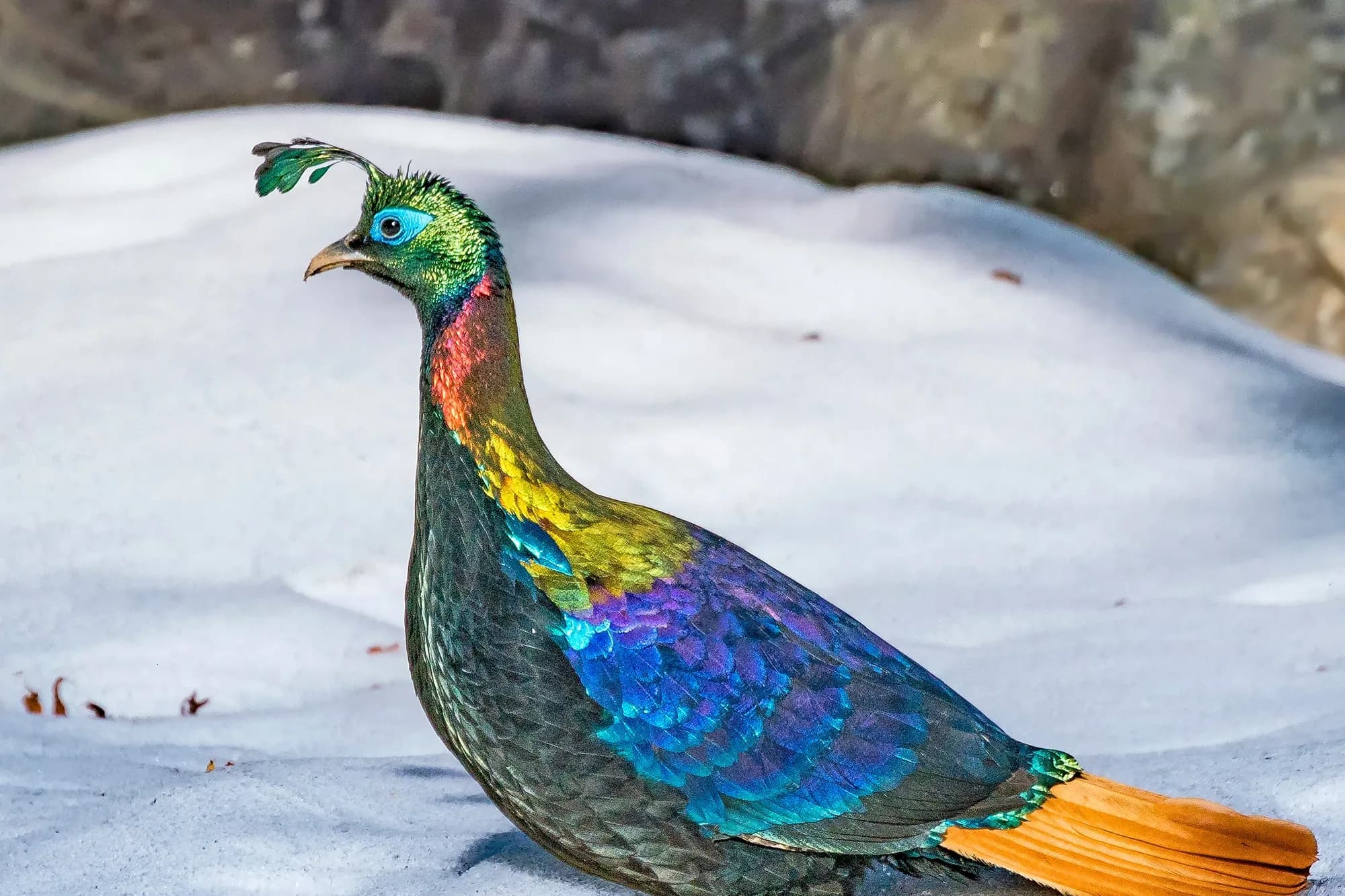
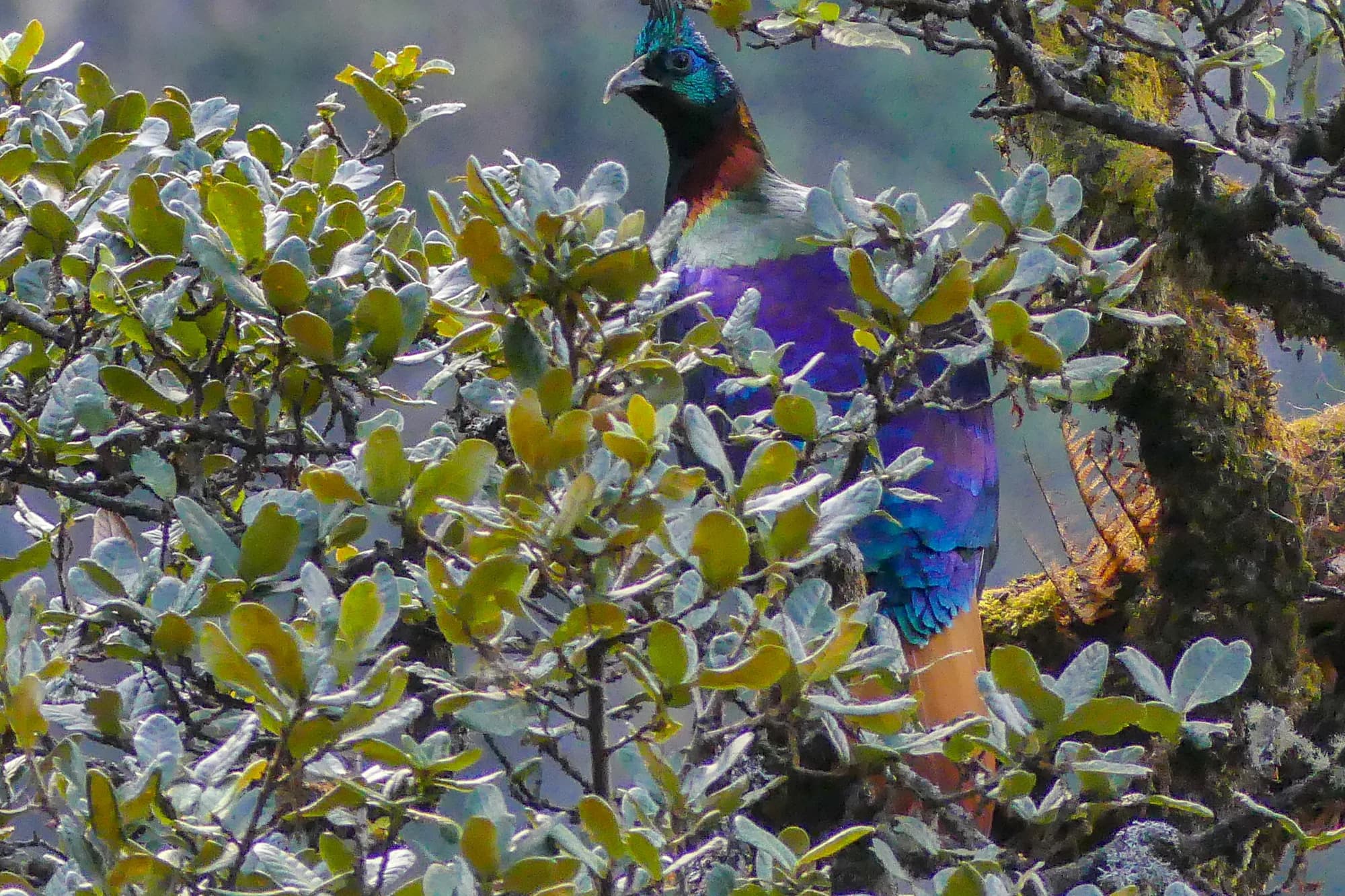
Photographs of Himalayan monal in the wild, in Indian reserves. We publish no captive, baited or digitally composited images, and no photograph whose licence we cannot show.
Photographing it
- Lens
- 500–600mm if you want a portrait; 300mm if you would rather have the bird in the mountain, which is often the better photograph.
- Typical distance
- Thirty to eighty metres. They are wary on open ground and closing distance simply ends the sighting.
- Light
- Everything. The plumage is structural rather than pigmented, so it goes from black to full iridescence depending on the angle between the sun, the bird and you. Low side-light is the only condition that shows what this bird actually is.
Where to stopDo not flush a bird downslope for a flight shot. The escape flight is expensive in deep winter at altitude, and driving birds off the feeding slopes at dawn takes away the one productive part of their day.
Signs and calls
- Digging scrapes
- Shallow pits in soil or snow where a bird has dug for roots and tubers with its bill, soil thrown back in a fan. Fresh scrapes on a slope at dawn are the most useful sign there is.
- Droppings
- Coarse and fibrous, often concentrated at a roost tree base. Roosts are reused, which makes them worth marking.
- Call
- A loud, plaintive, curlew-like whistle given from a slope, often before first light and frequently the first indication a bird is present.
What a sighting is actually like
Cold, early, and over quickly. You are on a slope in the dark, the light comes up, and somewhere below you a shape that has been a black lump for ten minutes turns its head and becomes the most colourful bird in Asia.
Then it walks behind a rhododendron and you are looking at a snowy slope again.
The display flight is the other thing worth waiting for — a male launching off a ridge and gliding down the slope with the white rump flashing, calling as he goes. It happens in the first hour and almost never later.
Why the colour changes
Monal plumage has almost no pigment in it. The green, copper, bronze and violet are structural — microscopic layers in the feather that interfere with light — so what you see depends entirely on the angle between the sun, the bird and your eye.
It is also why the females are worth a look. Plain streaked brown, entirely cryptic on the same slope, and far harder to find — a fair test of whether you are actually birding or just waiting for the obvious one.
Status and protection
Status and protection
- IUCN Red List
- Least Concern
- Population trend
- ↓ Decreasing
- Wildlife Protection Act 1972
- Schedule I (post-2022-amendment numbering)
- CITES
- Appendix I
Species-level assessment of Lophophorus impejanus; binomial matches. This is the current assessment — the earlier assessment at /species/22679182/92806166 is flagged by IUCN as…
Assessed 2024 · IUCN Red List assessment
What to book to see one
What you would be booking
- How it is seen
- A walk, not a safari. Chopta is a road-head with a trail up to Tungnath, and the birds are found on foot in the first light on the slopes either side.
- Drives to book
- Two or three mornings. One is a genuine coin toss, because a single bad-weather dawn removes your whole chance.
- Zone or shift
- The Chopta to Tungnath trail in Uttarakhand, and the oak slopes below it, between roughly 2,700 and 3,600 m.
Cold and altitude are the constraints. You are standing still on a snowy slope before sunrise at three thousand metres, and most people underestimate what that requires in the way of layers and boots.
What to pack for cold groundOn the same trip you would also get
- Koklass pheasant — the same oak forest at the same hour, heard more than seen
- Cheer pheasant — lower on the same mountain, in grassy scrub
- Snow leopard — a different range and a different trip, but the same appetite for cold
Questions people ask
Where can I see a Himalayan monal?
What is the best time of year?
Why does the colour look different in photographs?
Read next
One short list
What to pack
Most of what gets recommended online is sold by whoever is recommending it. This is the list that is actually short.
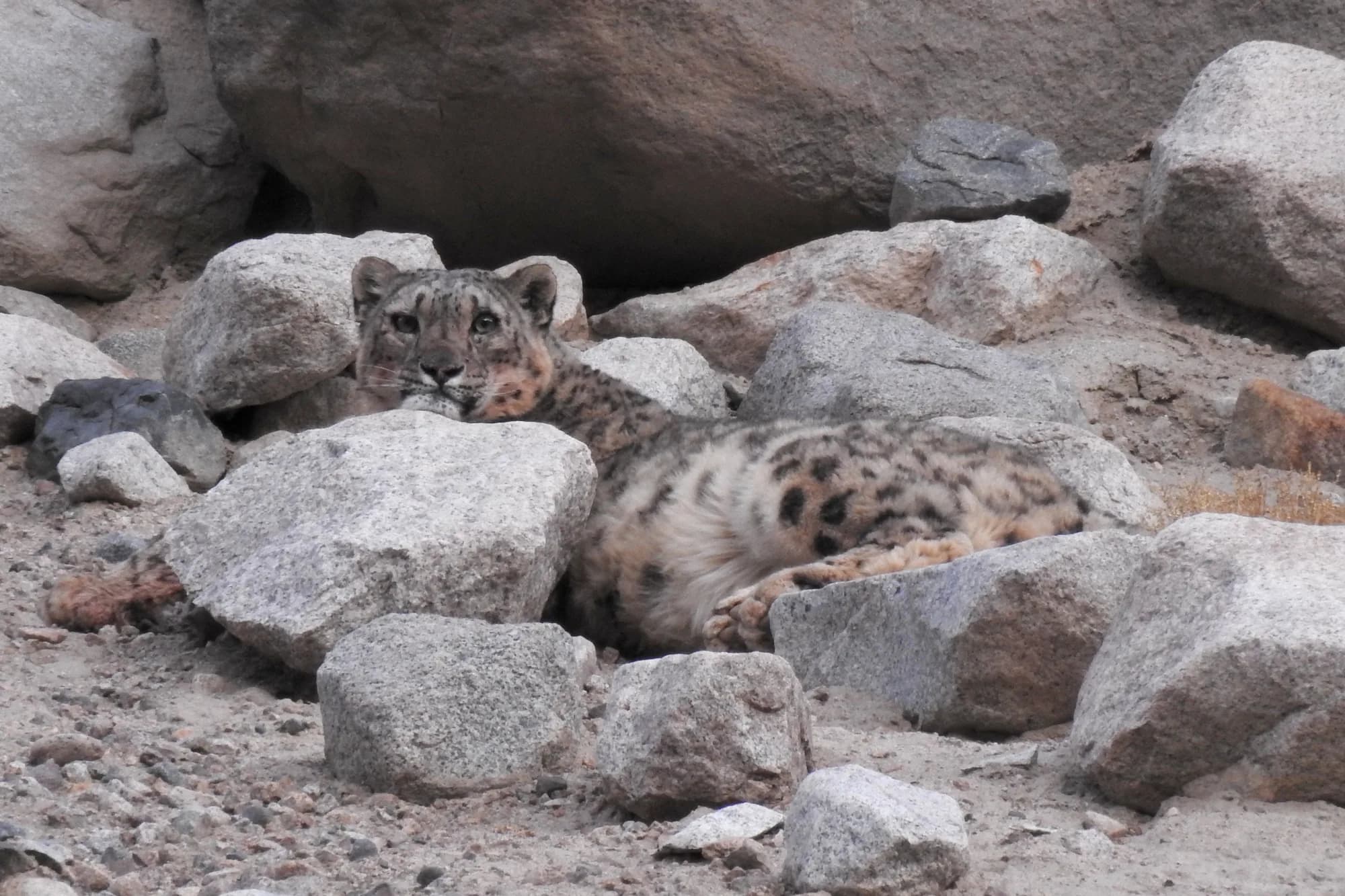
Ladakh and Spiti, in winter
Snow leopard — the other mountain trip
Not a safari. A mountain expedition with a chance of the animal — cold, high, and measured in days of patience rather than in drives.
November to February
Birding on an Indian safari
Every reserve here is a birding destination whether or not it is sold as one. Say so when you book.
Twelve months, cross-park
When to go, month by month
The single decision that moves the odds most. Heat, crowds, closures and what is actually open, one page per month.