
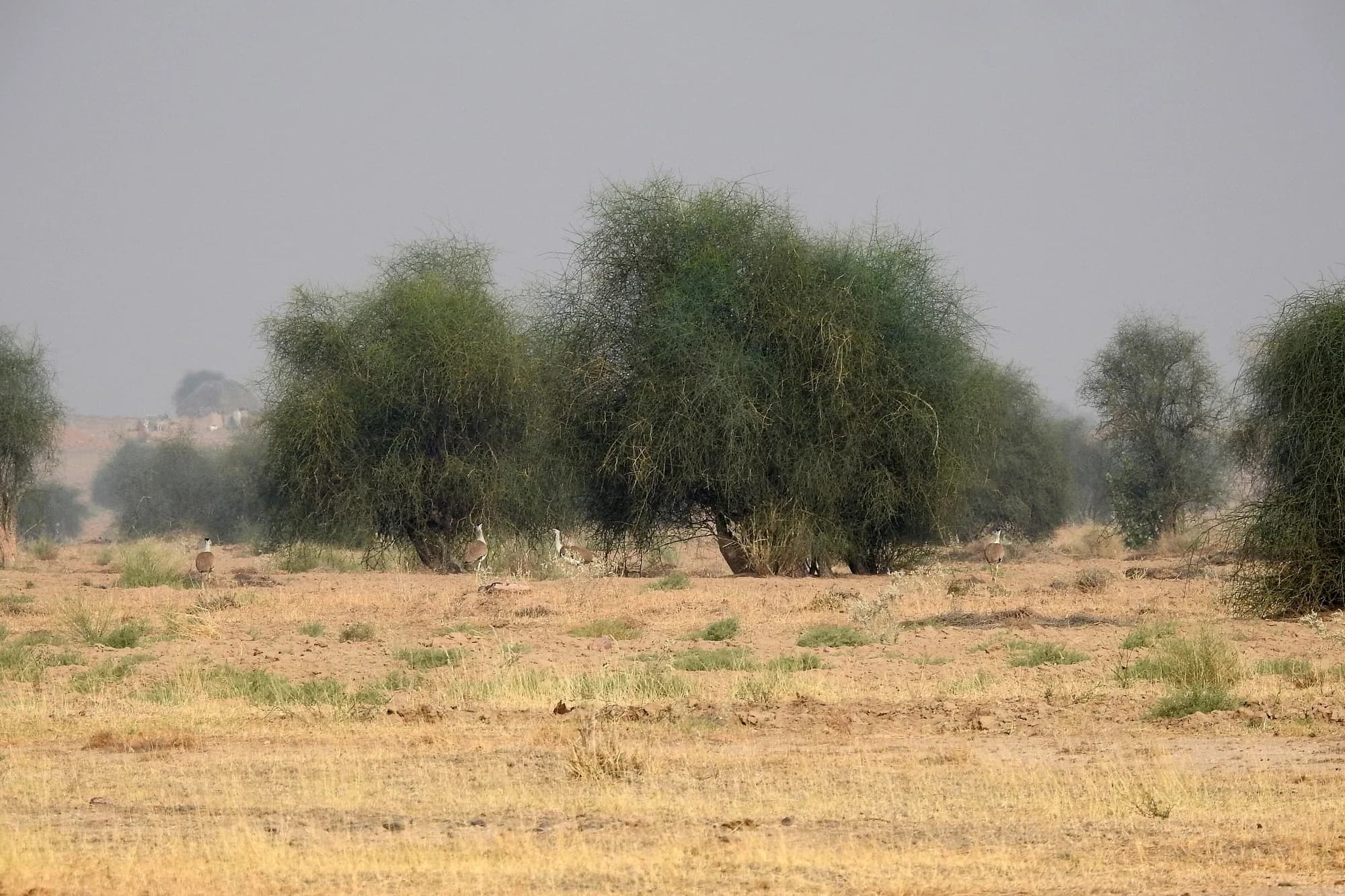
Species · Ardeotis nigriceps
Great Indian bustard
A metre-tall grassland bird down to double figures in the wild, killed mainly by power lines. The most urgent conservation emergency in Indian birding, and a sighting that will not be available much longer.
Also called
- Godawan (गोडावण) · Hindi
- Hukna · Hindi
- Ghorad · Gujarati
Checked 30 Aug 2026
- Where
- Western Rajasthan
- Best months
- November–March
- Height
- About a metre
- Kills it
- Power lines
Open, dry, short grassland with no tall structures. Almost all of what is left is a handful of enclosures in and around Desert National Park.
Where it is
Where to actually go
Ranked, with the reason each — these are not interchangeable.
- 01Desert National ParkRajasthanThe last stronghold. The fenced enclosures near Jaisalmer hold most of what remains of the wild population, and a specialist local guide is the difference between a sighting and two days of grassland.A guide who works these grasslands, not a desert-safari operator
- 02Naliya and the Abdasa grasslandsGujaratA tiny remnant population in Kachchh, clinging on. Worth knowing about, and not somewhere to plan a trip around.For completeness, not for odds
- 03RollapaduAndhra PradeshA sanctuary declared for the species that has effectively lost it. Included here because the story of what happened to this grassland is the story of the bird.Historical, in the saddest sense
Where you will not see one
- Any forest or tiger reserveThis is a bird of open, treeless, dry grassland. Ranthambore is three hours from bustard country and holds none — the habitat is wrong in every respect.
- Most of its historical rangeIt once occurred across the dry grasslands of at least eleven states. Maharashtra, Karnataka, Andhra Pradesh and Madhya Pradesh have effectively lost it, and the entire wild population is now concentrated in western Rajasthan.
- Anywhere marketed as guaranteedWith a wild population this small there is no such thing. An operator promising a bustard is either selling you a captive-bred bird at a breeding centre or is not being straight with you.
When to go
When to go
- J
- F
- M
- A
- M
- J
- J
- A
- S
- O
- N
- D
January: best. February: best. March: best. April: good. May: marginal. June: marginal. July: marginal. August: good. September: good. October: good. November: best. December: best.
Through the day
- Dawn
- Morning
- Midday
- Afternoon
- Dusk
- Night
Dawn: most active. Morning: most active. Midday: usually resting. Afternoon: active. Dusk: most active. Night: not normally seen.
Realistic odds on a three-day trip
- Near-certain
- Likely
- Lucky
- Expedition
Telling it apart
Told apart from
MacQueen's bustard
The Thar in winter, in the same fields
A winter visitor to the same deserts, smaller, sandier, with a black-and-white ruff down the side of the neck and no black crown cap. Frequently reported as a great Indian bustard by visitors who have found their bird.
Lesser florican
Western India grasslands, in the monsoon
Much smaller — under half the height — and a monsoon breeder with a black head and long head plumes in the male. Different season, different size, same grassland.
Indian peafowl
Anywhere in the range, at distance
At long range across heat shimmer, a peahen on open ground gets called a bustard surprisingly often. The bustard has a heavy horizontal carriage and long pale legs; a peahen looks fussier and holds its neck differently.
Marks chosen to be usable from a moving vehicle — a great indian bustard is rarely still and never close enough for anything subtler.
What it looks like in the field
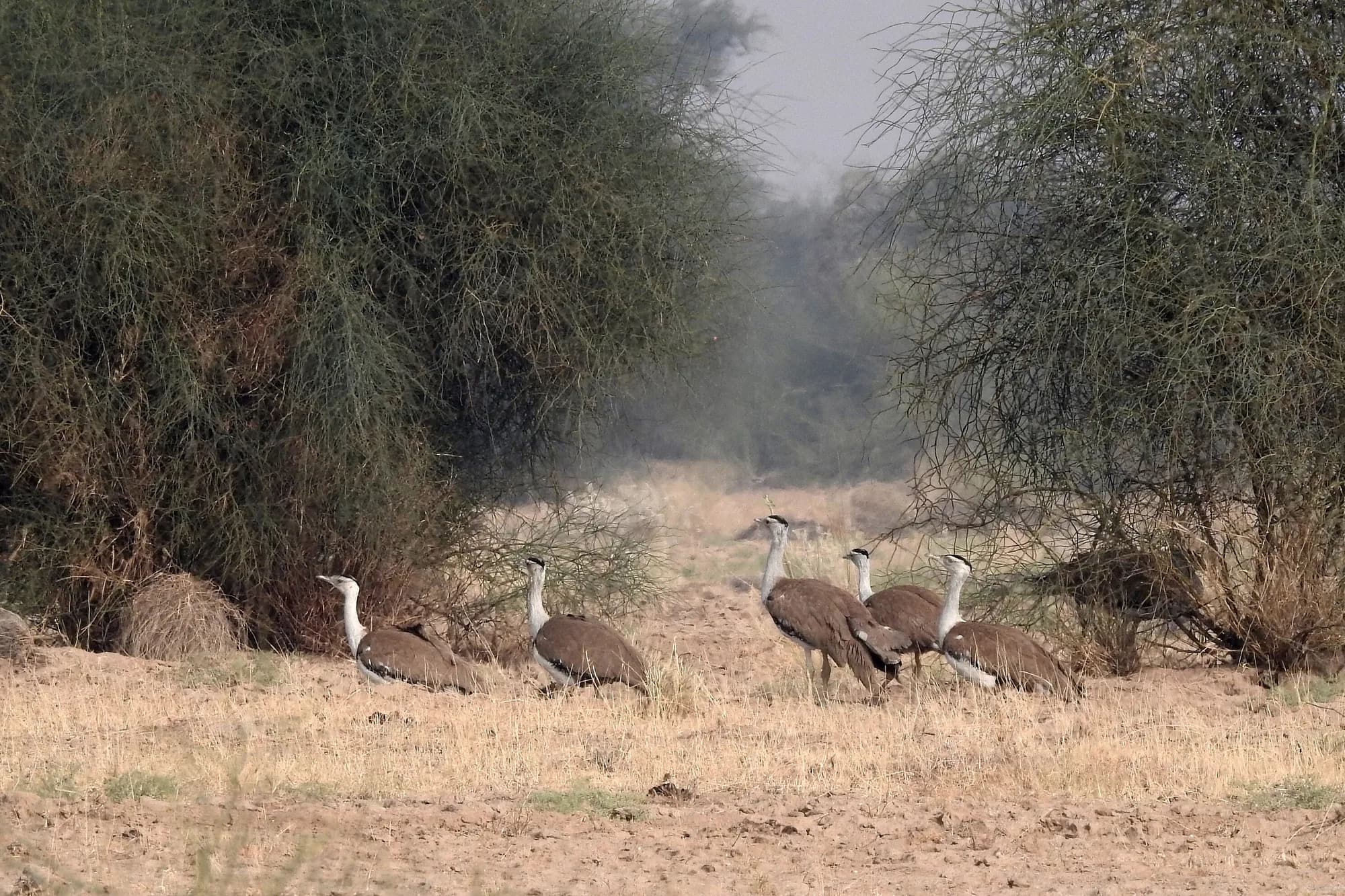
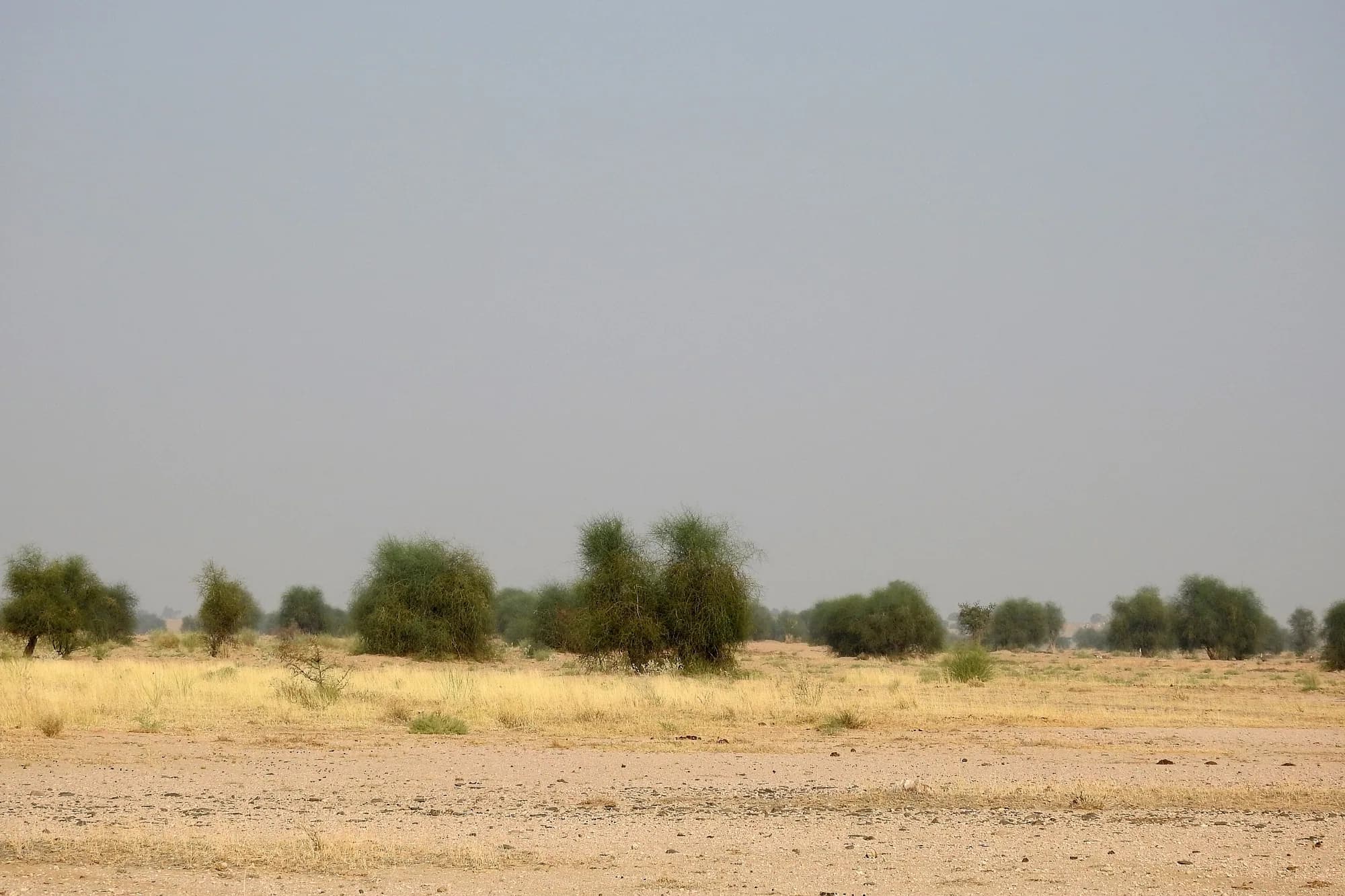
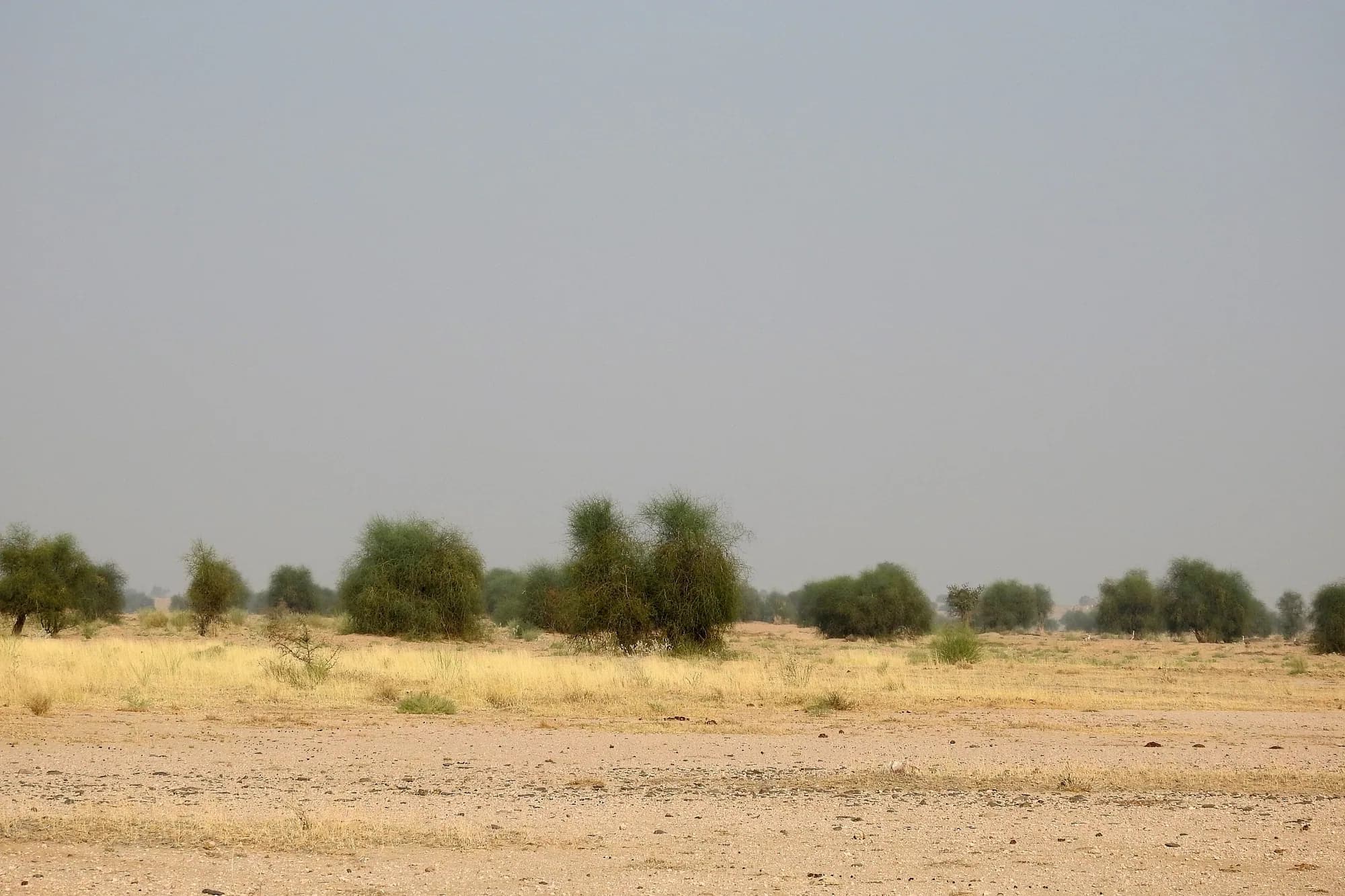
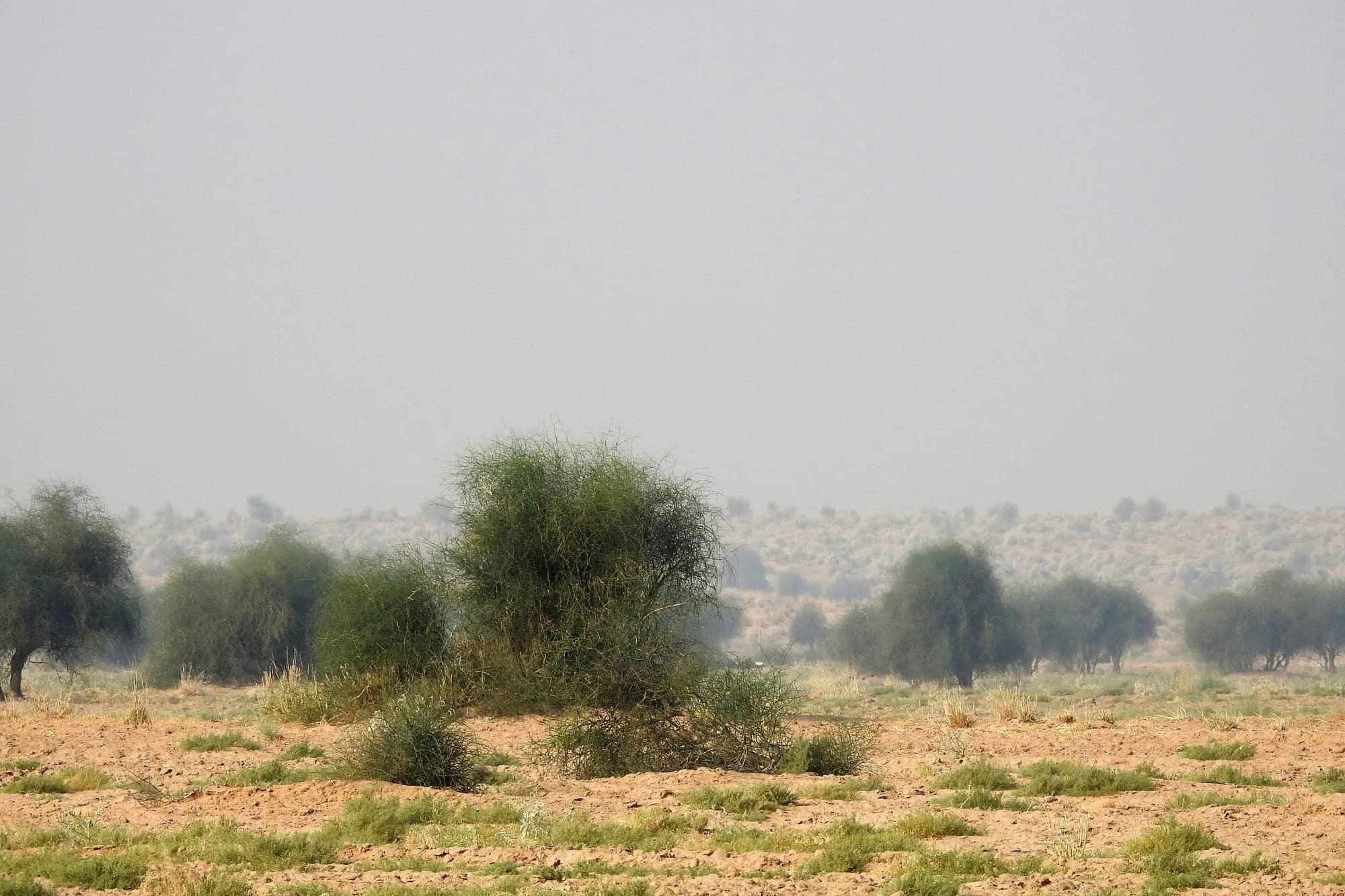
Photographs of Great Indian bustard in the wild, in Indian reserves. We publish no captive, baited or digitally composited images, and no photograph whose licence we cannot show.
Photographing it
- Lens
- 600mm and upward. These are wary birds on open ground and the honest working distance is long.
- Typical distance
- Two hundred metres and more. Any attempt to close it flushes the bird.
- Light
- First light across flat grassland, before the heat shimmer sets in. After about nine in the morning the air itself destroys resolution at the distances involved.
Where to stopDo not approach, do not follow, and do not leave the track. Every flush costs a bird from a population that may be under a hundred, and the wide habitat photograph with the bird small in it is both the more honest picture and the only defensible one.
Signs and calls
- Tracks
- Large three-toed prints in fine sand, considerably bigger than any other bird's in that habitat. Often the only evidence a bird used a field overnight.
- Droppings
- Large and accumulated at habitual standing spots. Guides use these to work out which enclosure to search first.
- Display boom
- A deep, far-carrying resonant call from a displaying male with the gular pouch inflated. Audible over a kilometre across flat ground, and rare enough now to be remarkable.
What a sighting is actually like
Distant, and quieter than the significance of it. A pale upright shape a long way out on flat ground, walking steadily, seen through a scope. There is no drama and there is no approach — you watch it for as long as it stays and then it walks over a rise.
People go quiet afterwards, which is not the usual reaction to a bird.
What lands is the arithmetic. It is entirely possible that you have just looked at one per cent of a species, and everybody in the vehicle works that out at about the same moment.
The power lines
This is the specific thing killing them. A bustard is heavy, flies low, and has poor frontal vision — it cannot see a wire ahead in time to lift over it. Collisions with transmission lines crossing the Thar have been the leading cause of adult deaths.
Which is the honest tension worth sitting with. This is not a poaching story or a deforestation story. It is a case of two things India needs badly occupying the same flat, empty, windy ground, and the bird losing.
Status and protection
Status and protection
- IUCN Red List
- Critically Endangered
- Population trend
- ↓ Decreasing
- Wildlife Protection Act 1972
- Schedule I (post-2022-amendment numbering)
- CITES
- Appendix I
Species-level assessment of Ardeotis nigriceps; binomial matches, monotypic, no subspecies issue.
Assessed 2018 · IUCN Red List assessment
What to book to see one
What you would be booking
- How it is seen
- A jeep on the tracks and enclosures of Desert National Park with a local guide, arranged from Jaisalmer.
- Drives to book
- Three or four across two days, weighted heavily to first light. This is a needle-in-a-haystack search across very large, very flat ground.
- Zone or shift
- The fenced grassland enclosures within Desert National Park, where the remaining birds are concentrated and protected from dogs and grazing.
Take a guide who works these grasslands specifically. General Jaisalmer desert-safari operators run camel and dune trips and will not find this bird; the people who can are a small and known group.
Birding on an Indian safariOn the same trip you would also get
- MacQueen's bustard — the same fields in winter, and the identification you should expect to make
- Indian wolf — the same grassland system, and equally overlooked
- Chinkara — common across the Thar, and often in the same frame
Questions people ask
Where can I see a great Indian bustard?
How many are left?
What is killing them?
Read next
November to February
Birding on an Indian safari
Every reserve here is a birding destination whether or not it is sold as one. Say so when you book.
Rajasthan
Ranthambore — the usual pairing
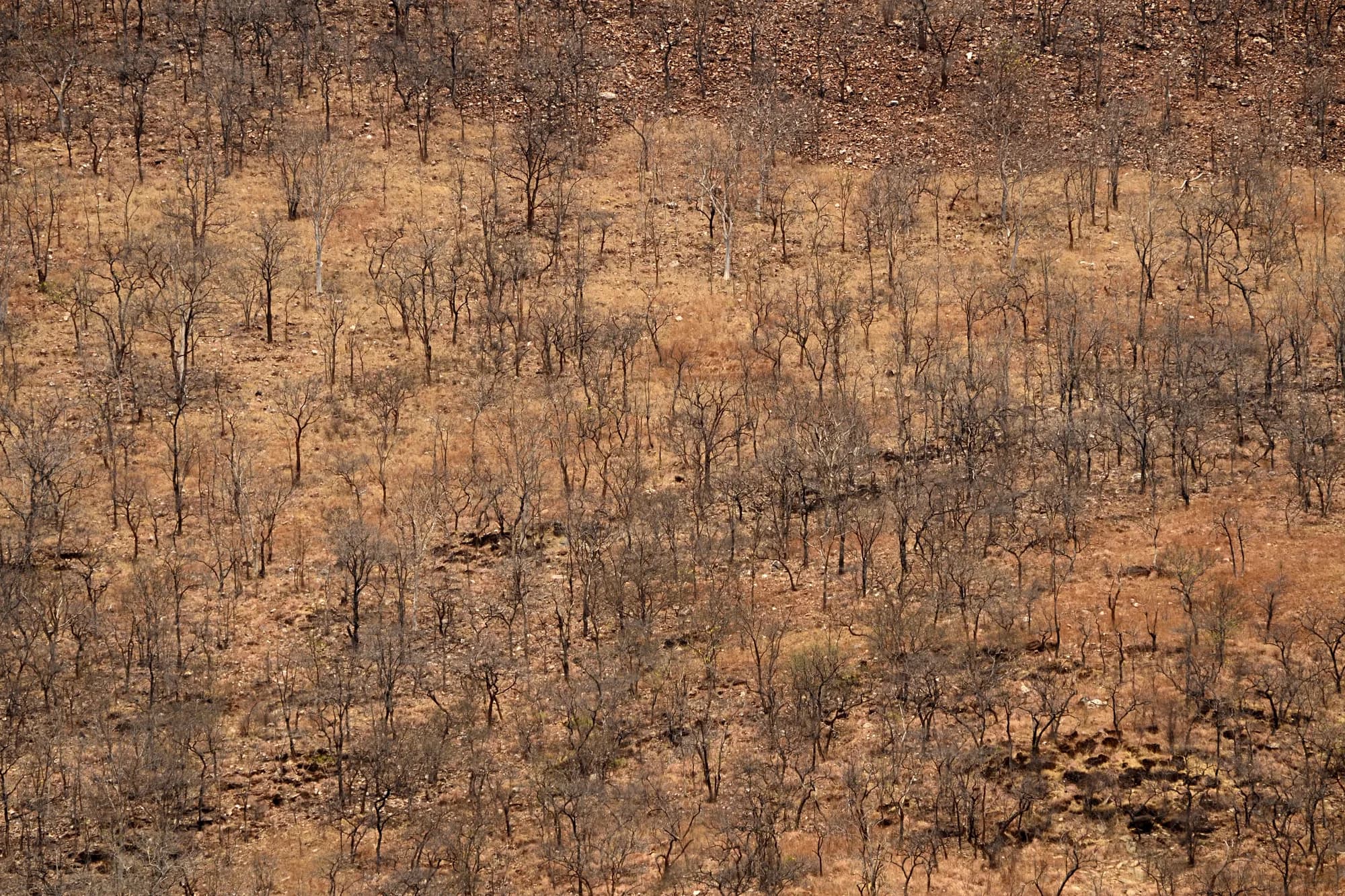
Dry forest around a fort, and the easiest reserve to reach from Delhi — which is exactly why it is the busiest.
Our position
Travelling responsibly
Where we stand on vehicle crowding, baiting and playback — and what we will not link to, whoever is paying.
Twelve months, cross-park
When to go, month by month
The single decision that moves the odds most. Heat, crowds, closures and what is actually open, one page per month.