
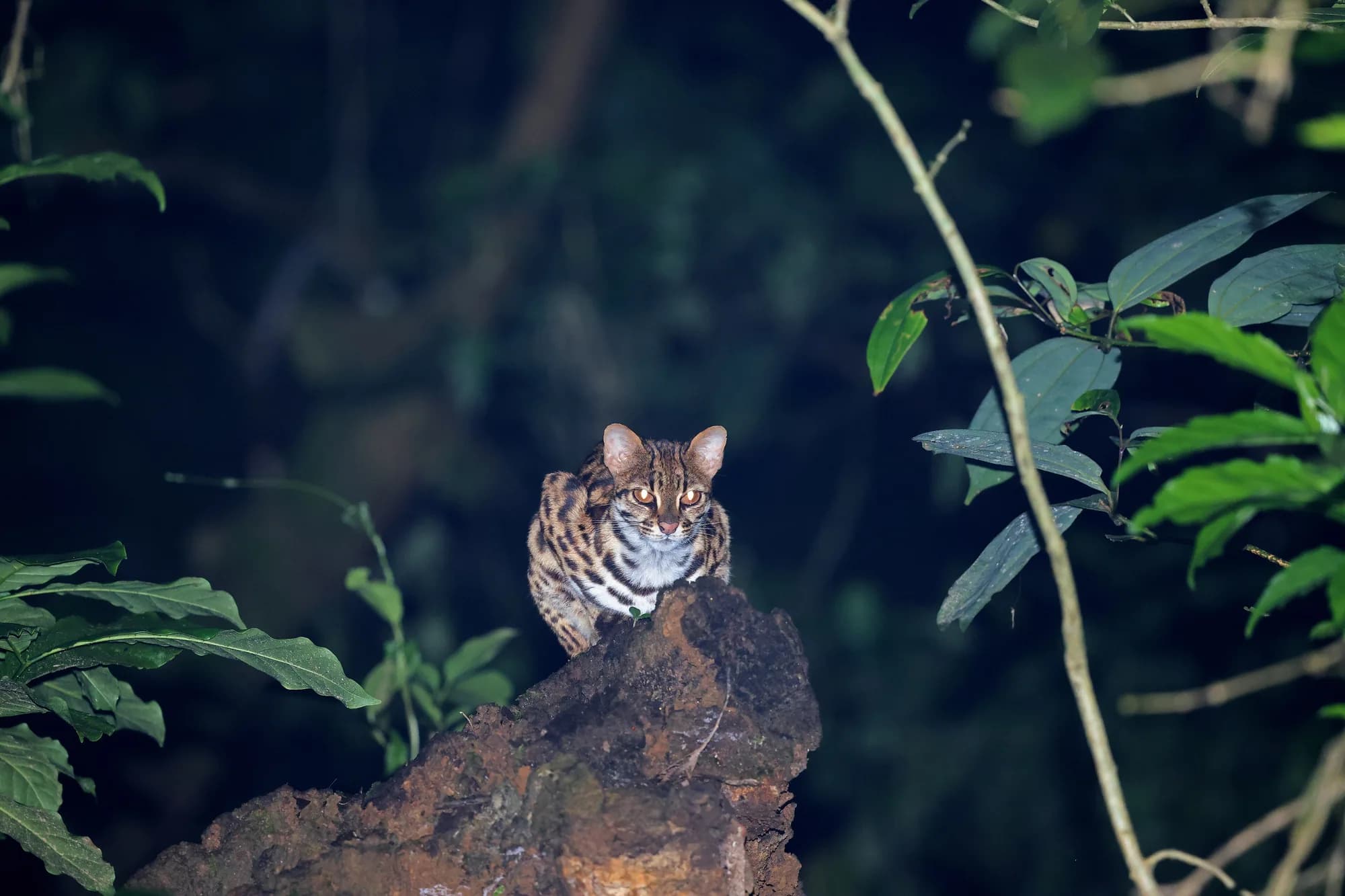
Species · Prionailurus bengalensis
Leopard cat
A house-cat-sized spotted cat with bold white face stripes, common across forested India, and the animal most often reported as a leopard cub.
Also called
- Chita billi (चीता बिल्ली) · Hindi
- Bon mekuri · Assamese
Checked 30 Aug 2026
- Where
- Forested India, widely
- Best months
- November–April
- Size
- About a domestic cat
- Active
- Night, mostly
Widely distributed through forested India, north and south, and genuinely common where forest persists — far commoner than sightings suggest.
Where it is
Where to actually go
Ranked, with the reason each — these are not interchangeable.
- 01CorbettUttarakhandRegular night records along the riverine tracks, in a park most people are visiting anyway.Evening shift, last light
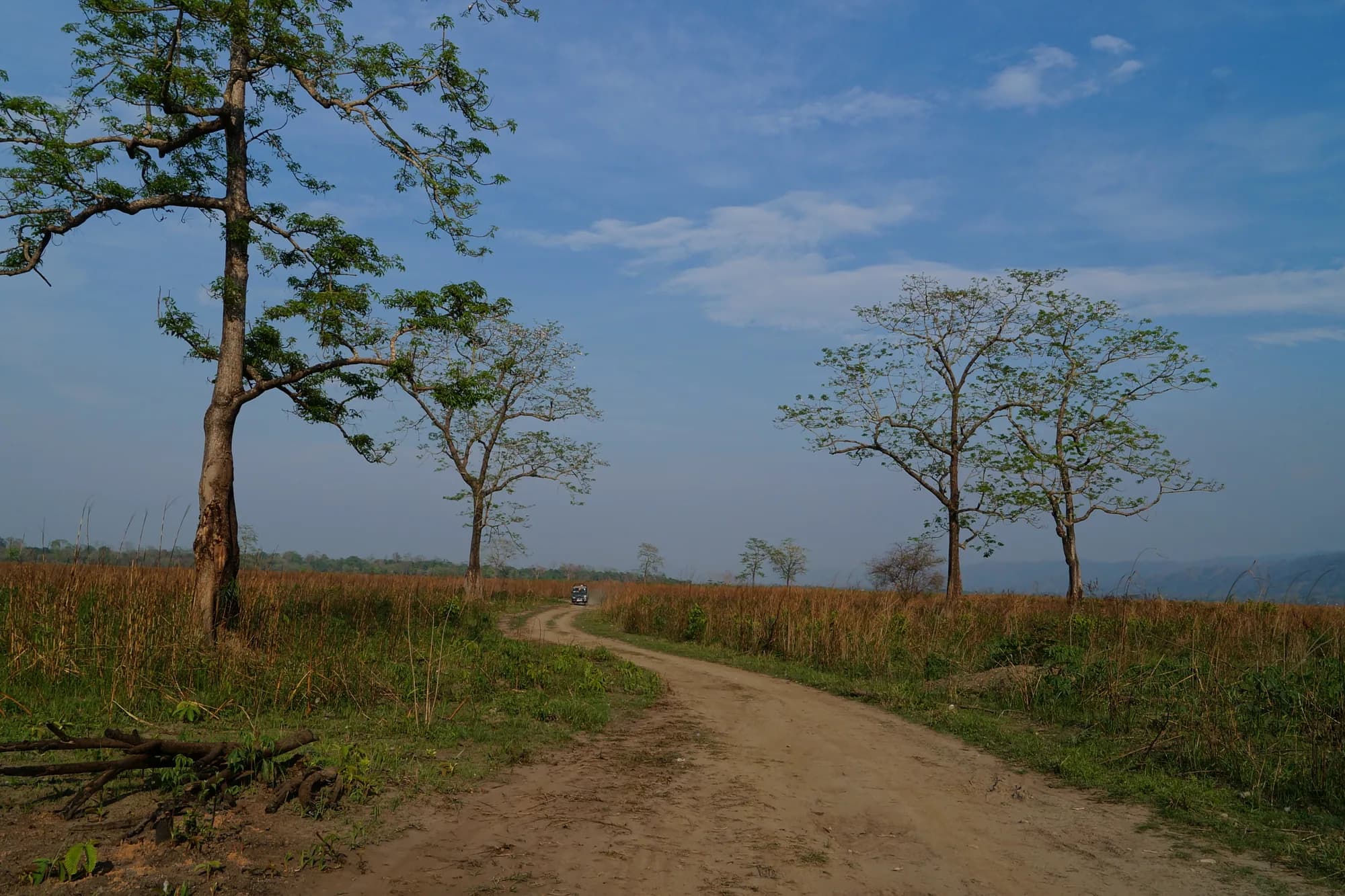
- 02KazirangaAssamCommon in the forest blocks, and a good bonus on a rhino trip.Forest ranges, not grassland
- 03PeriyarKeralaGhats forest, with regular records on the trails and roads.Ask about night walks
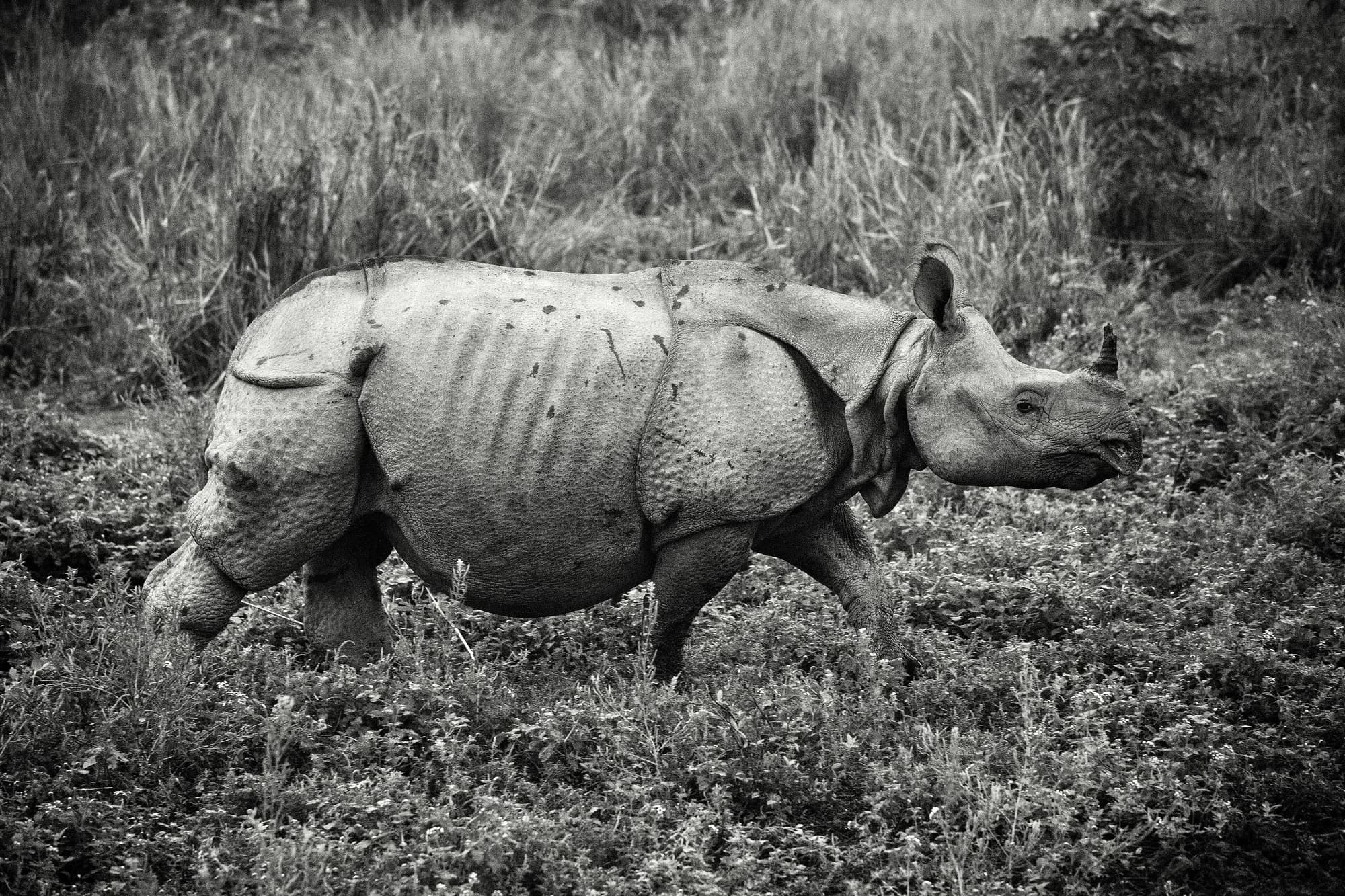
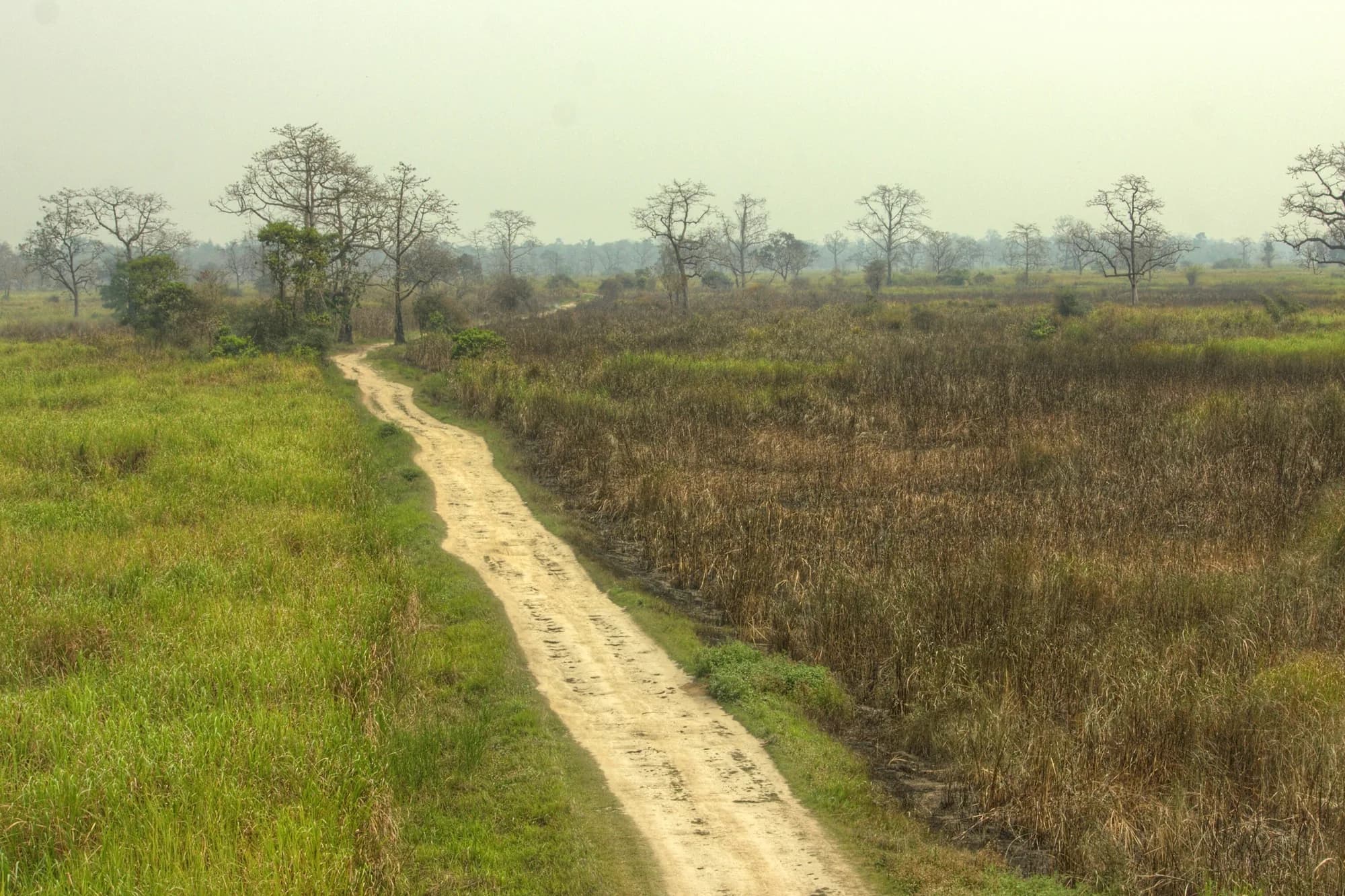
Where you will not see one
- As a leopard cubThe single most common misidentification in Indian wildlife reporting. Leopard cubs are never alone, are much larger, and have rosettes rather than solid spots.
- The dry northwestLargely absent from Rajasthan and the arid zone. This is a forest cat and it needs cover.
When to go
When to go
- J
- F
- M
- A
- M
- J
- J
- A
- S
- O
- N
- D
January: best. February: best. March: best. April: good. May: marginal. June: marginal. July: marginal. August: marginal. September: marginal. October: good. November: best. December: best.
Through the day
- Dawn
- Morning
- Midday
- Afternoon
- Dusk
- Night
Dawn: usually resting. Morning: usually resting. Midday: usually resting. Afternoon: usually resting. Dusk: active. Night: most active.
Telling it apart
Told apart from
Everywhere, and the classic error
Solid dark spots versus true rosettes, and size. A leopard cat is fully grown at house-cat size; a leopard cub of that size would not be alone and would not be out on a track.
Central Indian night drives
Half the size, with soft rusty blotches instead of bold black spots, and a much finer face without the strong white stripes.
Forest edges
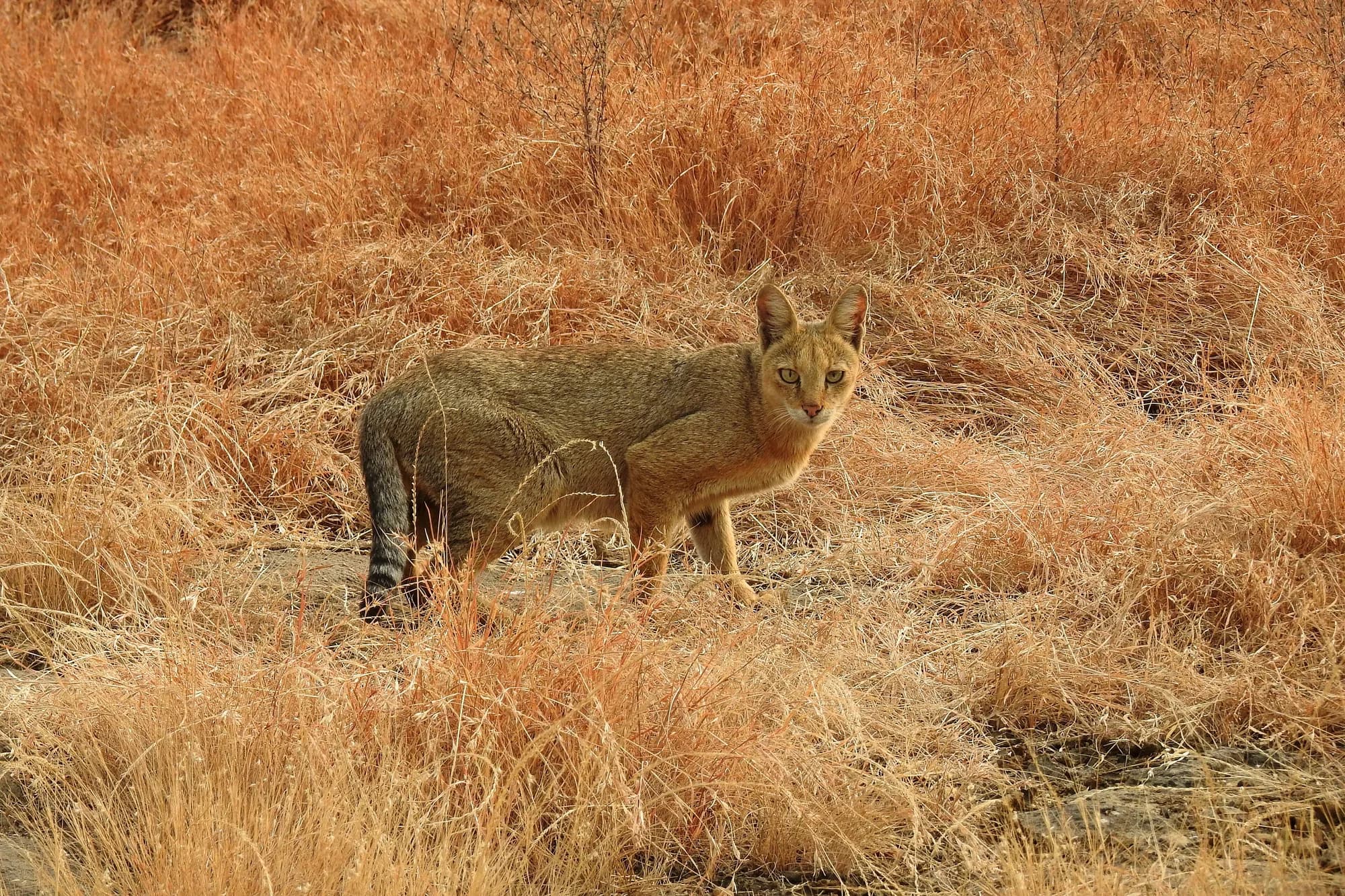
Plain sandy coat with no spots at all on the body, longer legs, and a shorter tail. Jungle cats also use open scrub; leopard cats stay in forest.
Marks chosen to be usable from a moving vehicle — a leopard cat is rarely still and never close enough for anything subtler.
What it looks like in the field
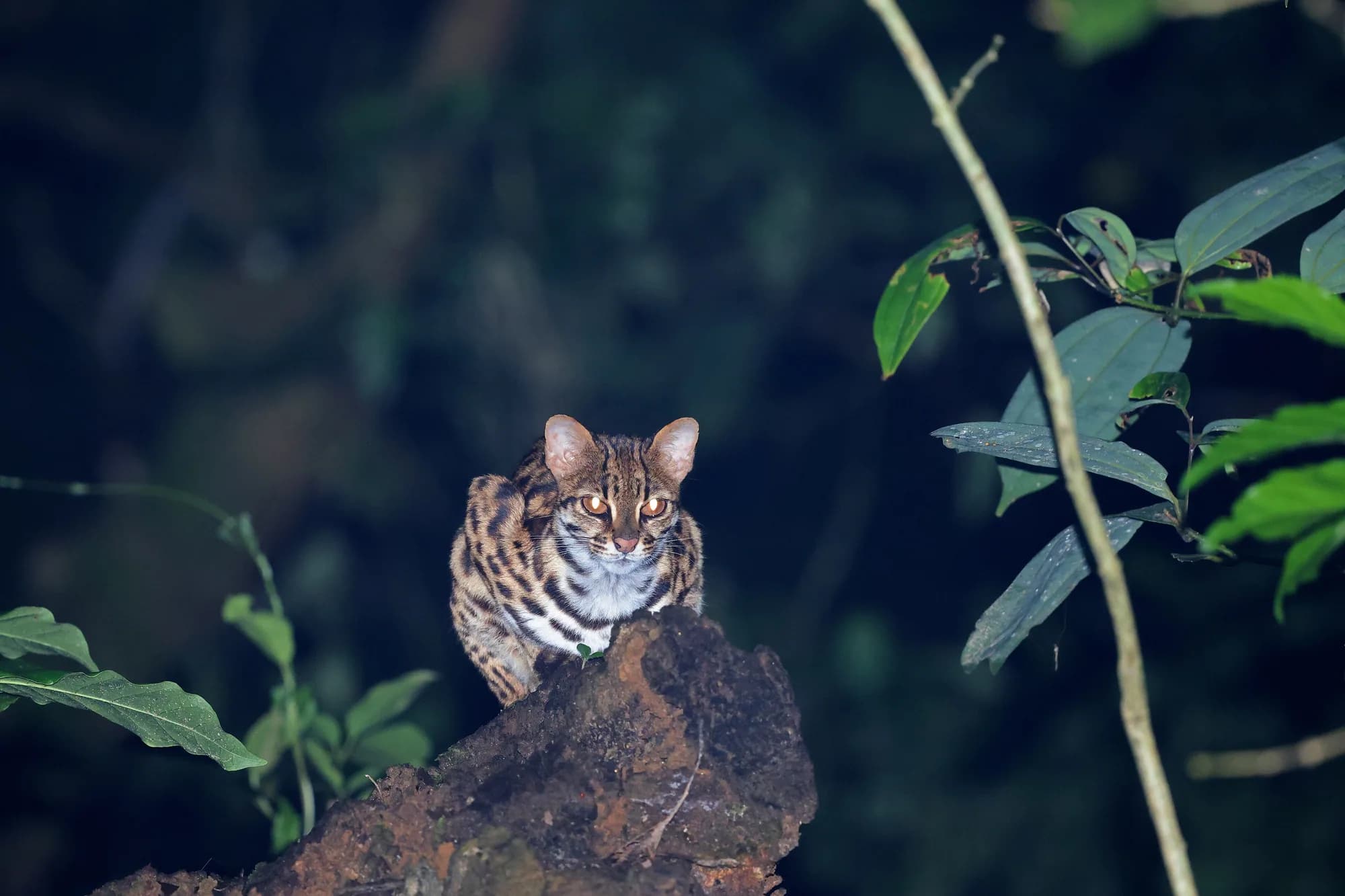
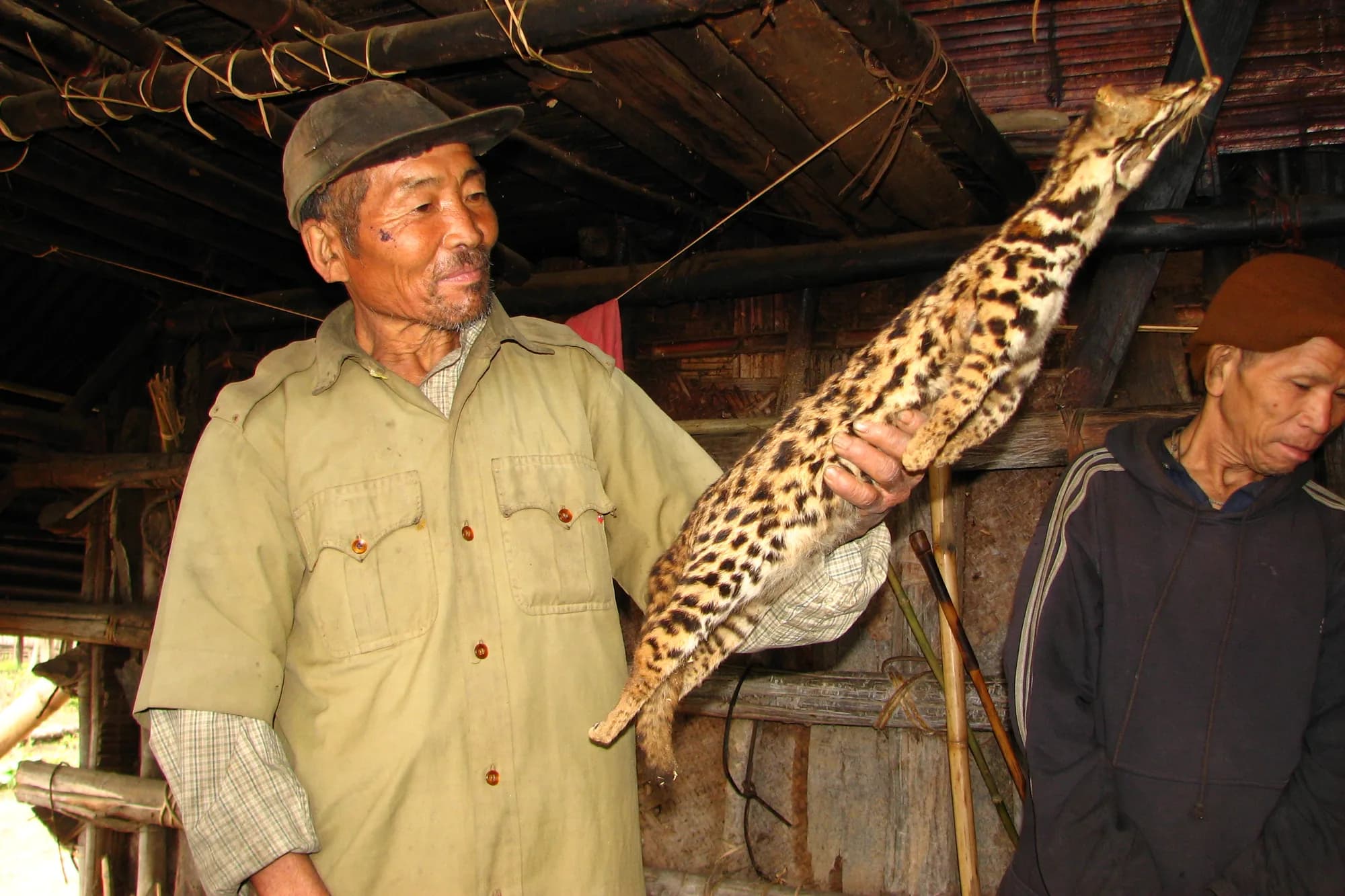
Photographs of Leopard cat in the wild, in Indian reserves. We publish no captive, baited or digitally composited images, and no photograph whose licence we cannot show.
What a sighting is actually like
Quick and low. A spotted cat crosses the track in a lamp beam, stops for a second with the white face stripes catching the light, and slips into cover. Ten seconds is a good sighting.
It is beautiful, common, and almost always written up as something rarer.
The most misreported cat in India
A very large share of reported leopard-cub sightings, and a decent share of reported clouded leopards in the Northeast, are this animal.
Status and protection
Status and protection
- IUCN Red List
- Least Concern
- Population trend
- → Stable
- Wildlife Protection Act 1972
- Schedule I (post-2022 amendment numbering)
- CITES
- Appendix I
Species-level assessment. IUCN lists Prionailurus bengalensis under the common name 'Mainland Leopard Cat', following the separation of the Sunda Leopard Cat (P.
Assessed 2021 (amended version of the 2022 assessment, published in the 2023 Red List) · IUCN Red List assessment
What to book to see one
What you would be booking
- How it is seen
- Night drives, or the last light of an evening shift.
- Drives to book
- Two or three night drives where they are offered. Otherwise it is chance.
If you see a small spotted cat on an Indian night drive, this is the most likely answer by a wide margin. Photograph the face — the white stripes settle the identification.
Corbett — the park in fullQuestions people ask
Is a leopard cat a baby leopard?
Where can I see one?
How do I tell it from a rusty-spotted cat?
Read next
Uttarakhand
Corbett — the park in full
River, sal and grassland in the Himalayan foothills, and the oldest national park in India. The most varied terrain on this list and the hardest tigers to see because of it.
Tadoba, and the smallest cat alive
Rusty-spotted cat — the smaller one
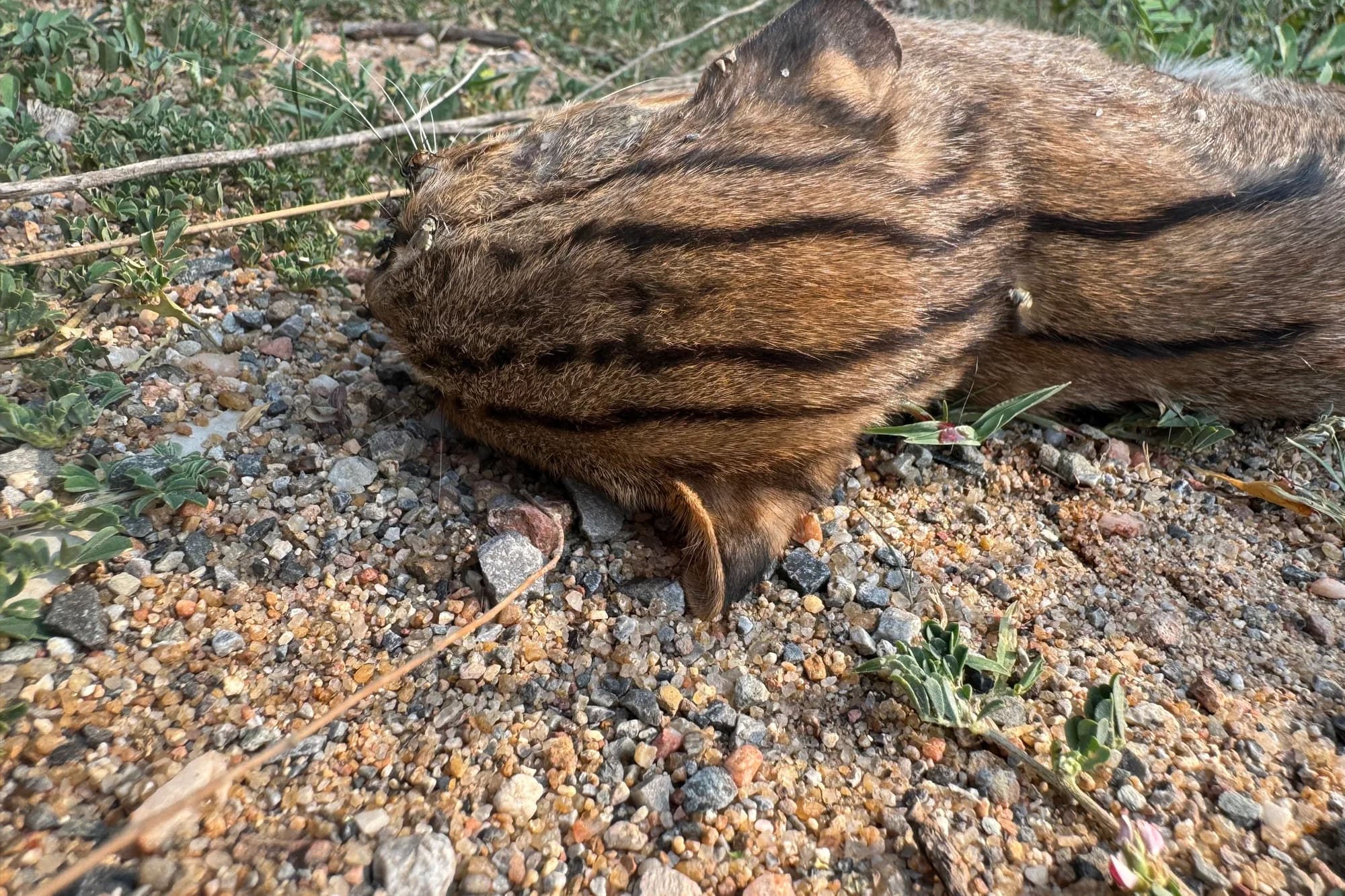
The smallest wild cat in the world, roughly half the weight of a house cat, and Tadoba is the most reliable place on earth to see one.
Everywhere, and reliably nowhere
Indian leopard — where and when
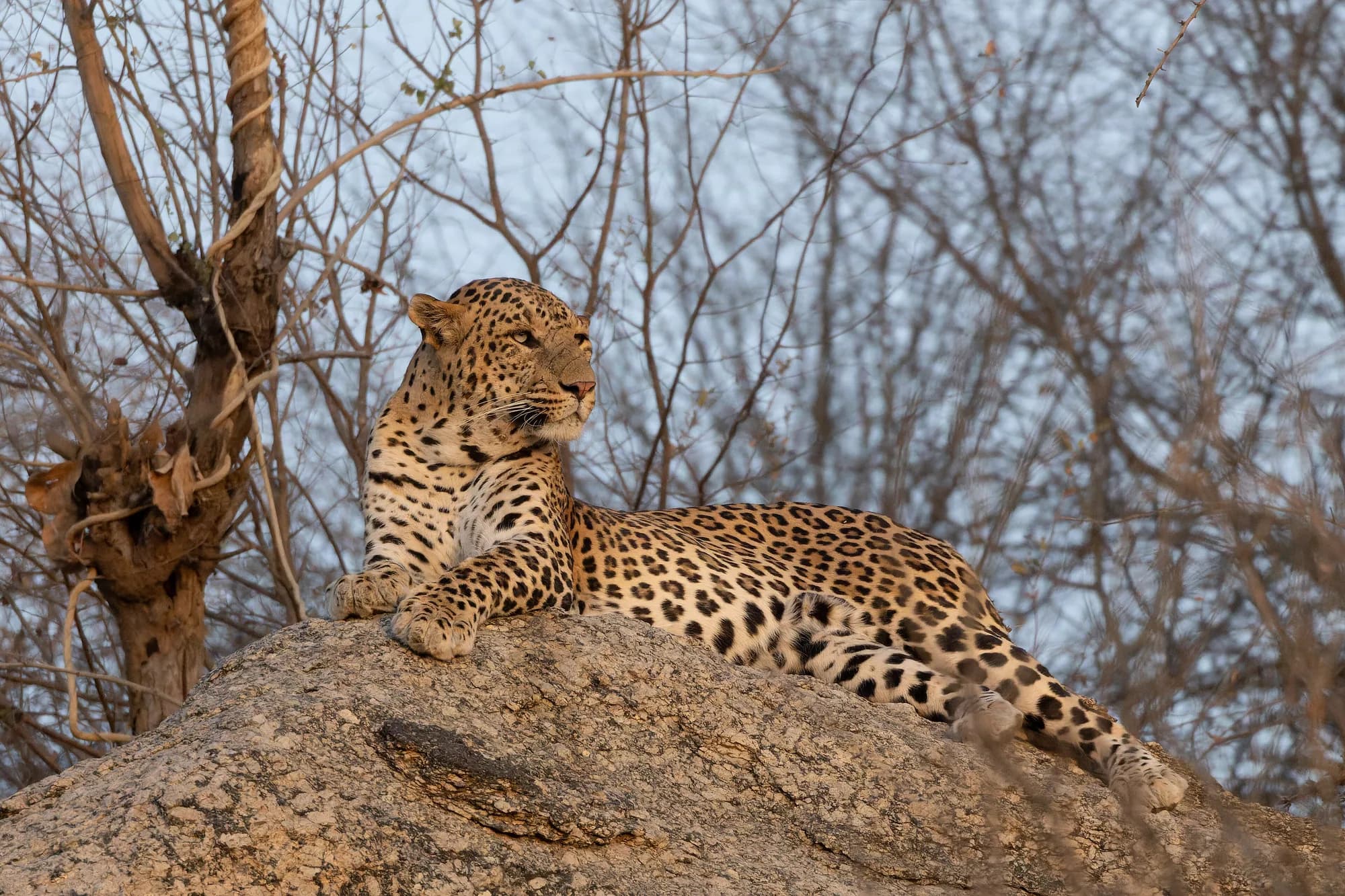
Present in almost every reserve on this site and reliably seen in almost none of them. The two landscapes that change that, and why they do.
Everywhere, and always misnamed
Jungle cat — the plain one
India's most-seen wild cat and its most misidentified. Long-legged, plain sandy, tuft-eared, and reported variously as a caracal, a leopard cub and somebody's escaped tabby.