
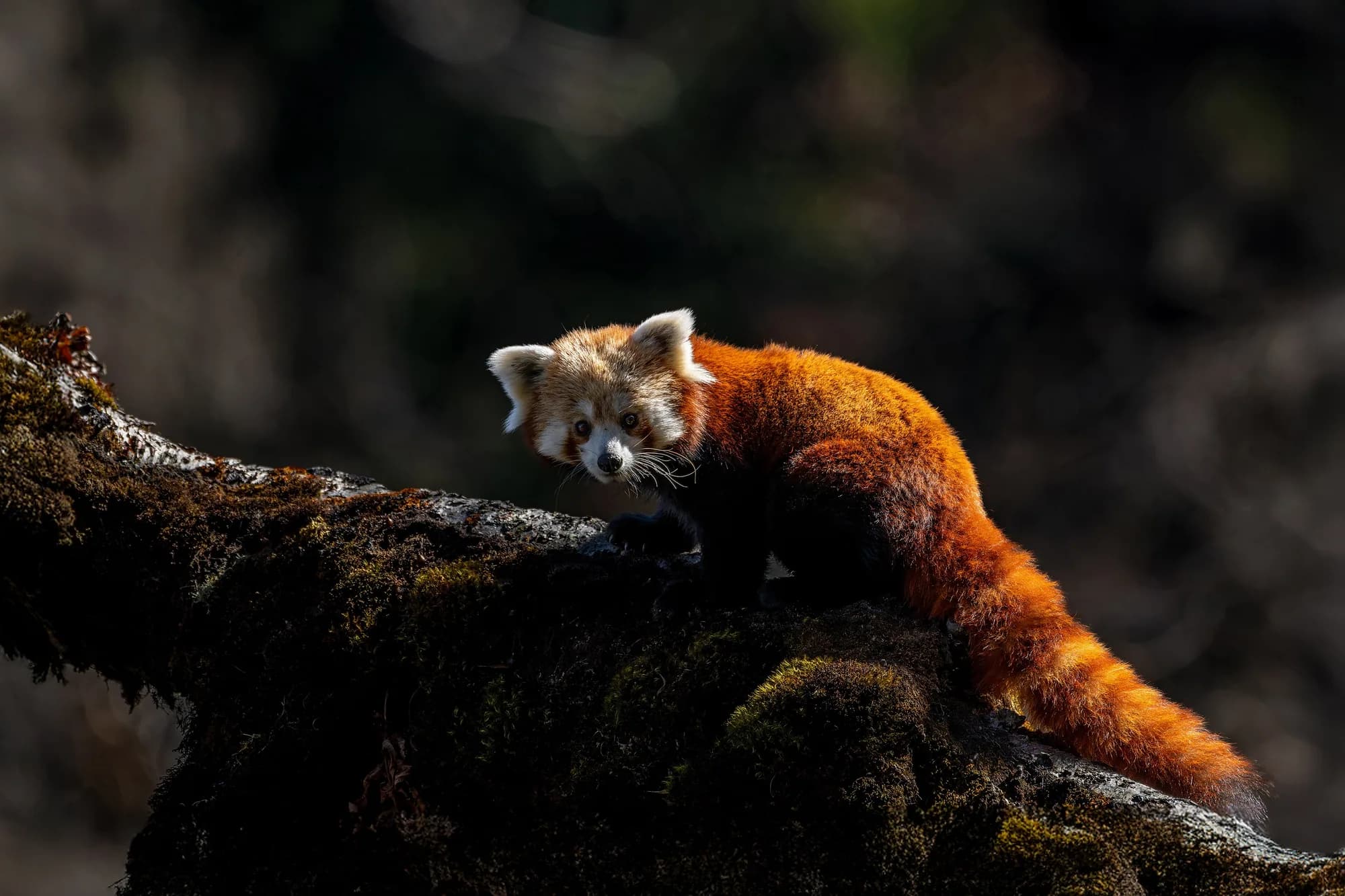
Species · Ailurus fulgens
Red panda
Enormous recognition, almost no sightings. A bamboo-eating carnivore in cold cloud forest, found by walking a ridge in the wet and looking at the undersides of branches.
Also called
- Habre · Nepali
- Lal panda (लाल पांडा) · Hindi
Checked 30 Aug 2026
- Where
- Sikkim, north Bengal, Arunachal
- Best months
- March–May, October–November
- Altitude
- About 2,400–3,800 m
- Eats
- Bamboo, mostly
A narrow altitude band in the eastern Himalaya, tied to temperate broadleaf forest with bamboo beneath it. Above or below that band there is nothing.
Where it is
Where to actually go
Ranked, with the reason each — these are not interchangeable.
- 01SingalilaWest BengalThe ridge trek from Manebhanjan is the established red panda route in India, with spotters who know individual animals and their trees. The best odds in the country, which is not the same as good odds.Five days minimum, with local spotters, in spring
- 02Neora ValleyWest BengalBetter forest and thicker bamboo, and correspondingly worse visibility. A place for a second attempt rather than a first.Wetter, wilder, harder
- 03KhangchendzongaSikkimVast, high and genuinely wild, with a real population and a very low encounter rate. Go for the mountain and treat a panda as a gift.Not a species trip
Where you will not see one
- Ladakh, Spiti and the western HimalayaNo bamboo, so no red pandas. This is an eastern Himalayan animal and the western mountains hold nothing of it — a snow leopard trip is not a red panda trip in any sense.
- Any tiger reserveWrong altitude by two and a half thousand metres. Nothing in central India, Rajasthan, Assam's floodplain or the Ghats.
- Expecting anything to do with a giant pandaNot closely related. The red panda is the only living member of its own family, and it was named first — the giant panda took the name afterwards. It is nearer to weasels and raccoons than to a bear.
When to go
When to go
- J
- F
- M
- A
- M
- J
- J
- A
- S
- O
- N
- D
January: marginal. February: marginal. March: best. April: best. May: good. June: marginal. July: marginal. August: marginal. September: good. October: best. November: best. December: marginal.
Through the day
- Dawn
- Morning
- Midday
- Afternoon
- Dusk
- Night
Dawn: most active. Morning: active. Midday: usually resting. Afternoon: active. Dusk: most active. Night: usually resting.
Realistic odds on a three-day trip
- Near-certain
- Likely
- Lucky
- Expedition
Telling it apart
Told apart from
Yellow-throated marten
Singalila and Neora Valley, constantly
The commonest false alarm on the ridge. A marten is longer, lower and much faster, with a yellow-cream throat and chest and no white face markings. If it crossed the trail at speed it was a marten.
Himalayan palm civet
The same forest at night
Grey-brown rather than rust, with a plain dark tail rather than a boldly ringed one, and strictly nocturnal. Any red-brown animal in daylight is the better bet.
Red giant flying squirrel
Eastern Himalayan forest after dark
Also rust-red, also arboreal, also in the same forest — but far larger-eyed, strictly nocturnal, and it glides. A red animal seen at dusk sailing between trunks is not a panda.
Marks chosen to be usable from a moving vehicle — a red panda is rarely still and never close enough for anything subtler.
What it looks like in the field
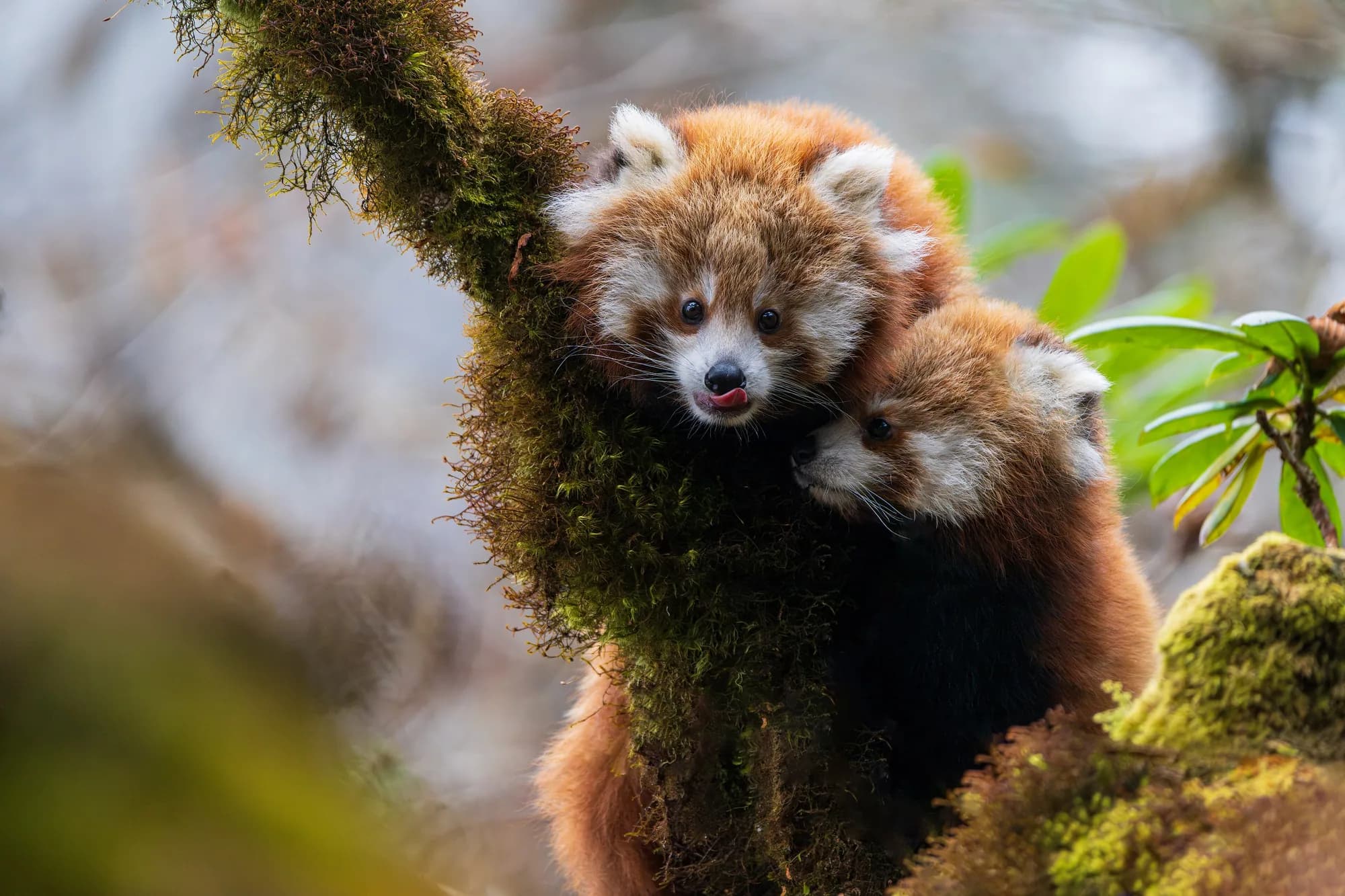
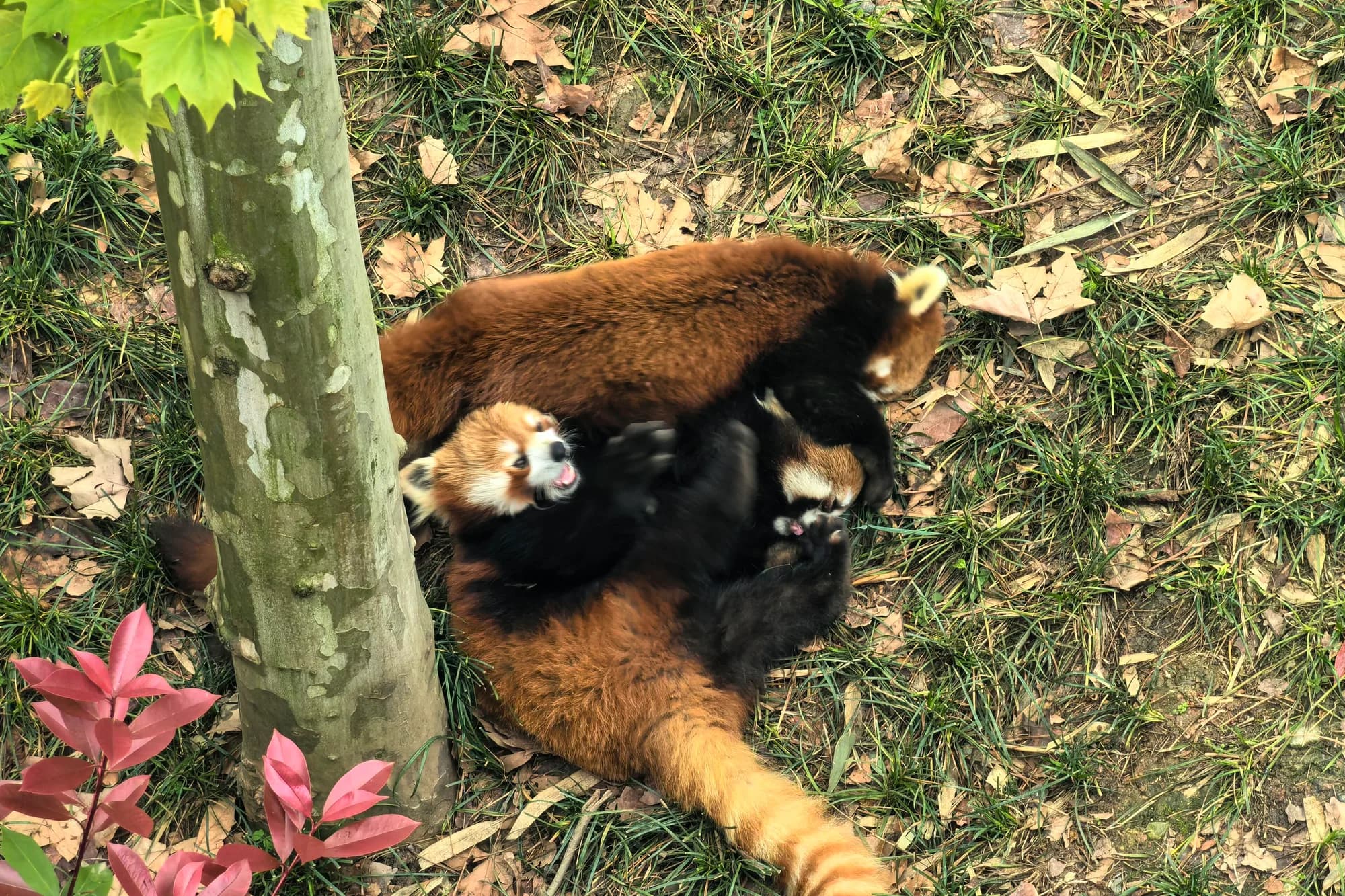
Photographs of Red panda in the wild, in Indian reserves. We publish no captive, baited or digitally composited images, and no photograph whose licence we cannot show.
Photographing it
- Lens
- 400mm, and a body that works at high ISO in flat, wet light. A monopod is more use than a tripod on a ridge trail.
- Typical distance
- Fifteen to forty metres, vertical, usually through moss and branches.
- Light
- Consistently poor. Cloud forest is dim by definition and the animal is most active at the darkest ends of the day. Wet lenses and fogged eyepieces are the normal condition rather than bad luck.
Where to stopDo not surround a tree. A red panda that comes down and finds people on every side will bolt, and repeated disturbance at a known tree is why some previously reliable spots no longer produce sightings. One side, quiet, and leave first.
Signs and calls
- Droppings
- Deposited habitually on mossy fallen logs and stumps rather than on the ground, and full of bamboo fragments. The single most reliable sign, and what spotters actually search for.
- Bamboo browse
- Leaf stems cleanly clipped at a consistent height. Distinguishable from ungulate browse, which tears rather than cuts.
- Claw marks
- Fine parallel scratches on mossy trunks where an animal has climbed, often with the moss disturbed in a line.
- Alarm from birds
- Laughingthrushes and yuhinas mob a moving red panda in the canopy. A sudden concentration of scolding at head height is worth stopping for.
What a sighting is actually like
Usually static, and usually asleep. The classic sighting is a rust-coloured shape curled in a fork twenty metres up, identified by a spotter who has been looking at that tree for ten minutes while everyone else looked at the wrong one.
Half the people who see one see the underside of a sleeping animal, and are delighted anyway.
The good sighting is an animal moving — descending a trunk head-first, or picking along a branch clipping bamboo with one forepaw. That takes patience at a tree that is already known to be occupied, which is why the spotters matter more than the itinerary.
Being honest about the odds
This is the hardest animal on the flagship list after the clouded leopard, and the marketing around it is not always honest about that. A red panda trek is several days of cold, wet walking at altitude with a genuine chance of no sighting at all.
Go for the forest as well. The Singalila ridge in rhododendron flower with satyr tragopan calling below the trail is worth the walk on its own, and treating the panda as a bonus rather than the point is the difference between a good holiday and a disappointing one.
Status and protection
Status and protection
- IUCN Red List
- Endangered
- Population trend
- ↓ Decreasing
- Wildlife Protection Act 1972
- Schedule I (post-2022-amendment numbering)
- CITES
- Appendix I
Species-level assessment of Ailurus fulgens. The 2015 assessment predates the split of the red panda into Ailurus fulgens (Himalayan) and Ailurus styani (Chinese), so it covers A.
Assessed 2015 · IUCN Red List assessment
What to book to see one
What you would be booking
- How it is seen
- A trek with local spotters, staying in homestays or trekkers' huts along the ridge. Not a safari, not a jeep, and not a park permit in the usual sense.
- Drives to book
- Five to seven days walking. Two or three days is a lottery ticket on an expensive and physically demanding trip.
- Zone or shift
- The Singalila ridge, between roughly 2,600 and 3,200 m, where the bamboo understorey is thickest.
Altitude and cold are the real constraints. The ridge sits above 3,000 m in places and the forest is wet even in the dry season. Spotters matter more here than anywhere else on this list — they know individual trees.
What to pack for cold, wet groundOn the same trip you would also get
- Satyr tragopan — the same Singalila ridge in spring, and the other reason to walk it
- Himalayan monal — higher on the same trek, in the open above the treeline
- Yellow-throated marten — seen far more often than the panda, and worth appreciating in its own right
Questions people ask
Where can I see a red panda in India?
How likely am I to see one?
Is it related to the giant panda?
Read next
One short list
What to pack
Most of what gets recommended online is sold by whoever is recommending it. This is the list that is actually short.
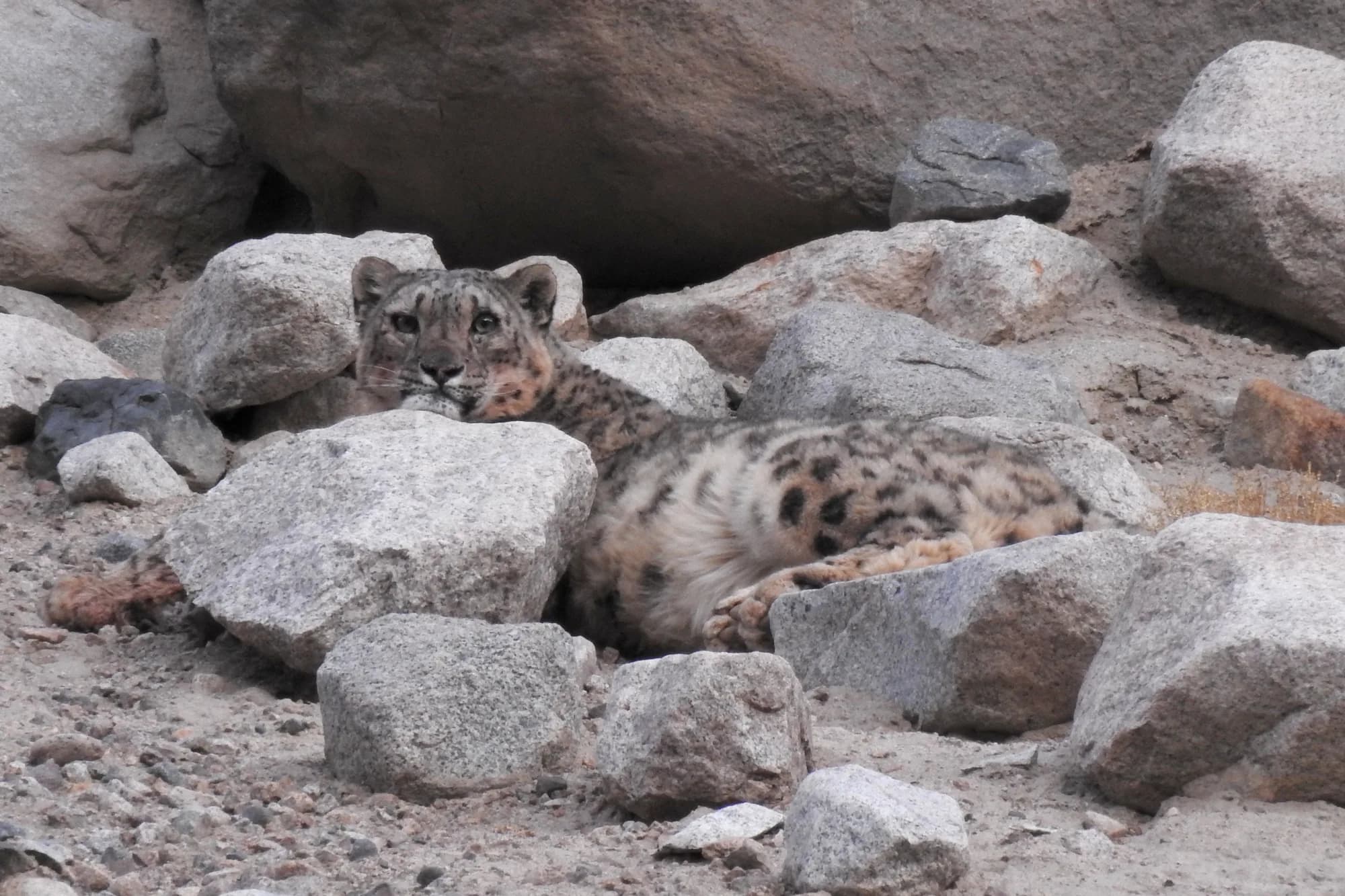
Ladakh and Spiti, in winter
Snow leopard — the other mountain trip
Not a safari. A mountain expedition with a chance of the animal — cold, high, and measured in days of patience rather than in drives.
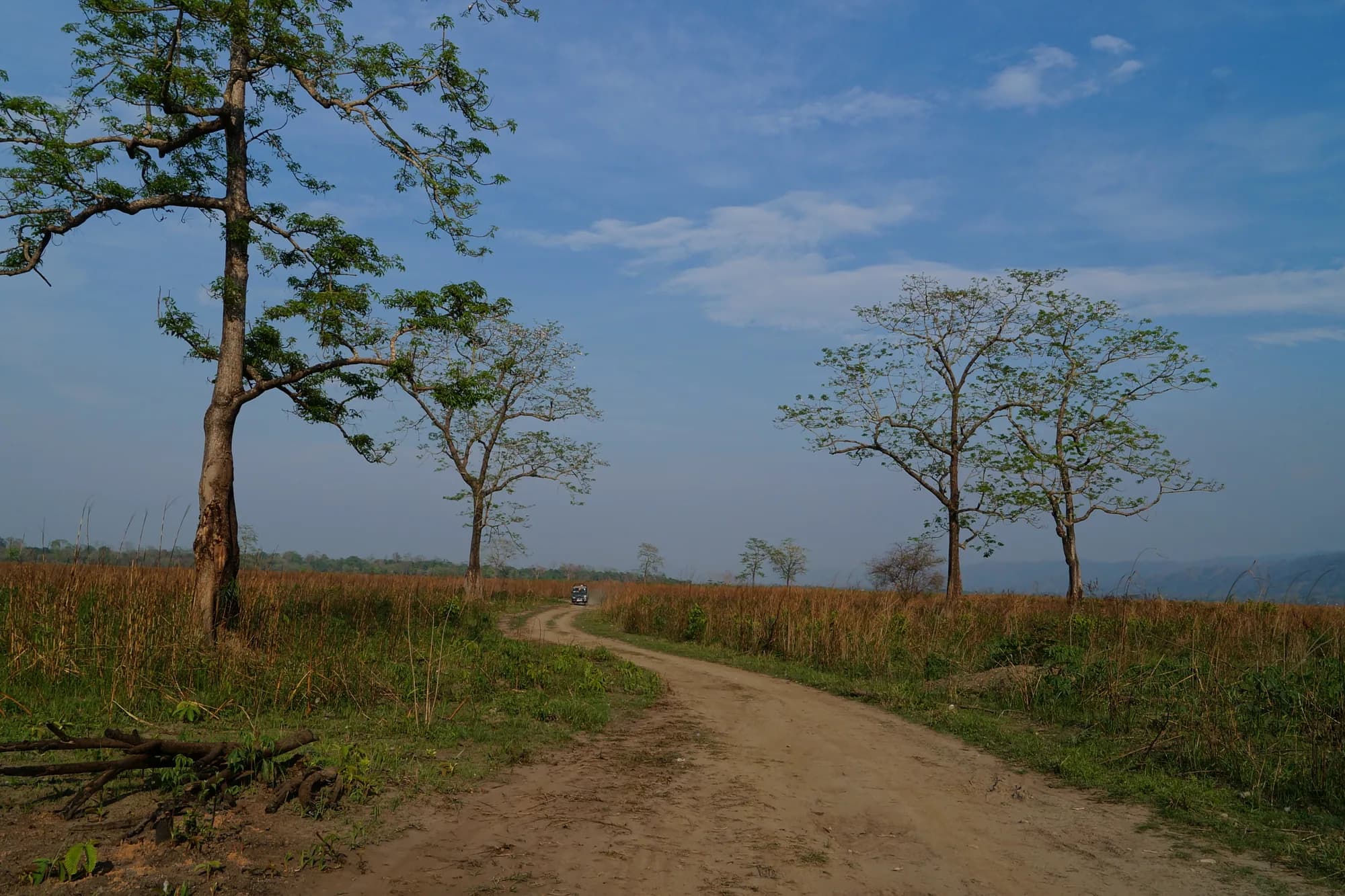
Satpura, and few others
Walking safaris in India
You see less and understand more. Tracks, scat, alarm calls — the things a vehicle passes at speed.
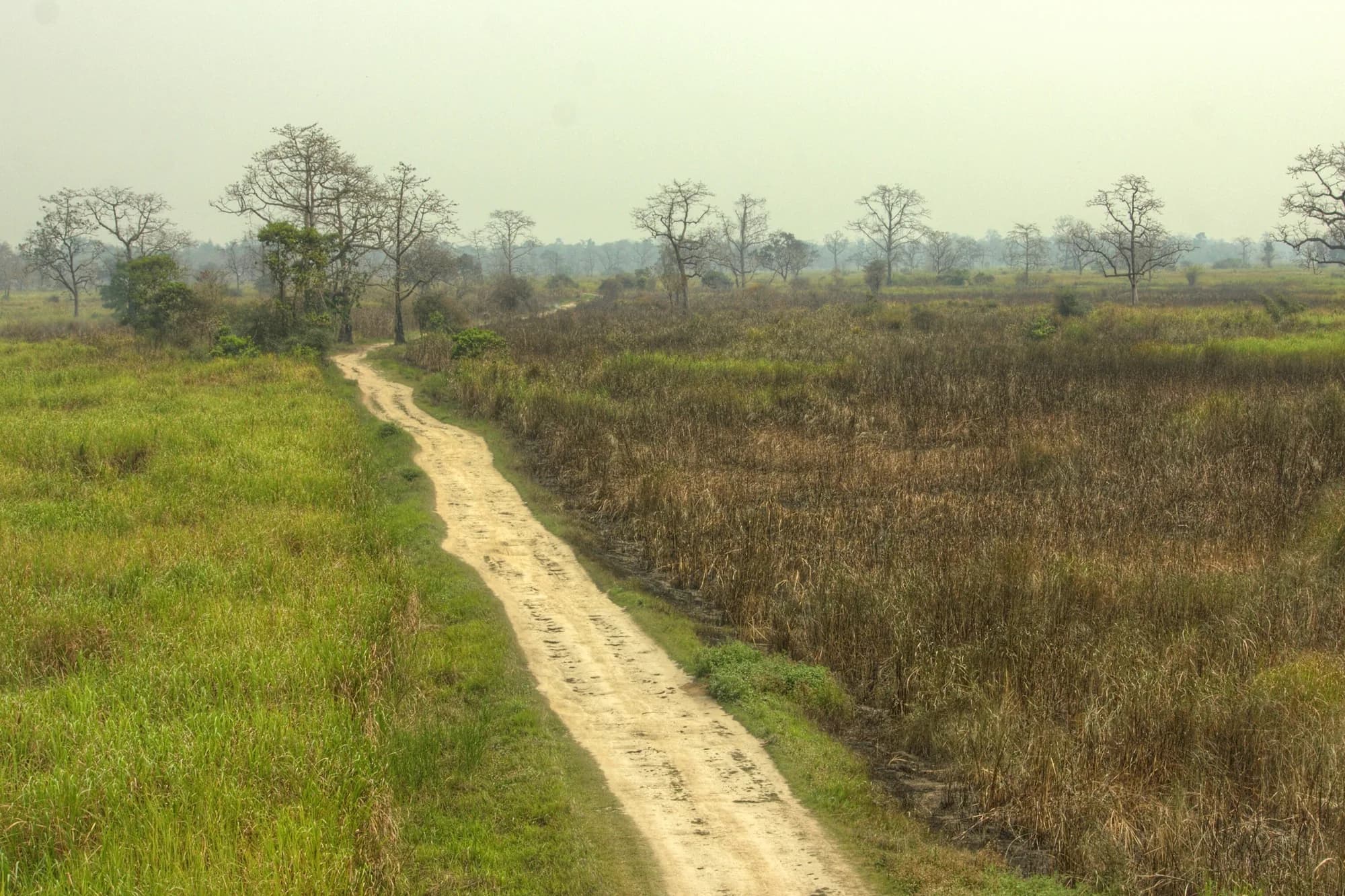
Twelve months, cross-park
When to go, month by month
The single decision that moves the odds most. Heat, crowds, closures and what is actually open, one page per month.