
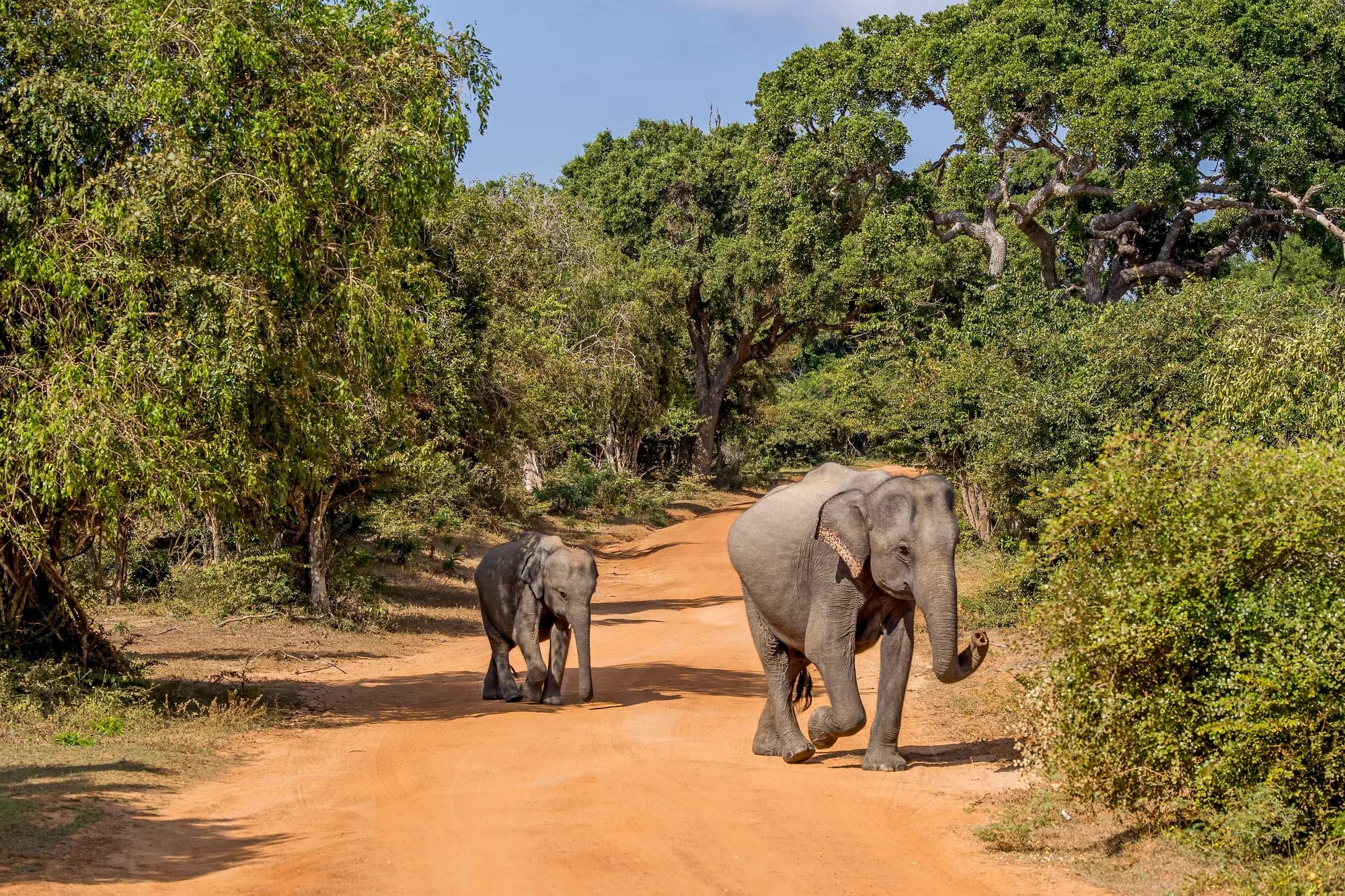
Species · Elephas maximus maximus
Sri Lankan elephant
The largest of the Asian elephant subspecies, on an island small enough that you can see several hundred in one afternoon. The Minneriya and Kaudulla gathering is the largest concentration of wild Asian elephants anywhere, and almost nobody outside Sri Lanka has heard of it.
Also called
- Aliya (අලියා) · Sinhala
- Yaanai (யானை) · Tamil
Checked 27 Sept 2026
- Where
- Sri Lanka, eight parks here
- Best months
- July–October for the Gathering
- Tusks
- Fewer than 10% of males carry them
- Odds
- Very high in the dry-zone parks
The dry zone of Sri Lanka — the lowland north, east and south-east — around the ancient reservoir systems. The wet-zone forests of the south-west hold very few. It is a small island with a large elephant population, which is also why human-elephant conflict is the central conservation issue here.
Where it is
HabitatThe dry zone of Sri Lanka — the lowland north, east and south-east, around the ancient reservoir systems.
Worth travelling for
Gone from
The wet-zone forests of the south-west, largelyMuch of the central hill country
Range this species has been lost from. It is the fact a map of where it currently lives cannot show you.
Where to actually go
Ranked, with the reason each — these are not interchangeable.
- 01MinneriyaNorth CentralThe Gathering: several hundred elephants on the exposed reservoir bed in the late dry season, the largest concentration of wild Asian elephants anywhere.August–September, late afternoon
- 02UdawalaweSabaragamuwa & UvaThe most consistent elephant viewing on the island all year, in open country, with far fewer vehicles than Yala.Reliable in any month
- 03KaudullaNorth CentralThe Gathering's second reservoir. Herds move between here and Minneriya with the water, so ask at the gate which one has them.The alternative gate
- 04WilpattuNorth WesternLarge, forested and quiet, with elephants around the villus. Lower density than Udawalawe and a much better park generally.For solitude
- 05YalaSouthern & UvaElephants are present and the park is really about leopards. Included because everyone goes, not because it is the elephant park.Not the reason to come here
Where you will not see one
- The hill countryNuwara Eliya, Horton Plains and the tea districts are the wrong altitude and habitat. Elephants are a dry-zone lowland animal here.
- Pinnawala and the orphanagesCaptive animals, and a separate question entirely. Nothing on this site treats them as a wildlife sighting.
- Yala block 1, for the elephantsYala is busy and is really a leopard park. Udawalawe an hour away gives far better elephant viewing with a fraction of the vehicles.
When to go
When to go
- J
- F
- M
- A
- M
- J
- J
- A
- S
- O
- N
- D
January: marginal. February: marginal. March: marginal. April: marginal. May: good. June: good. July: best. August: best. September: best. October: best. November: good. December: marginal.
Through the day
- Dawn
- Morning
- Midday
- Afternoon
- Dusk
- Night
Dawn: most active. Morning: active. Midday: usually resting. Afternoon: active. Dusk: most active. Night: usually resting.
What it looks like in the field
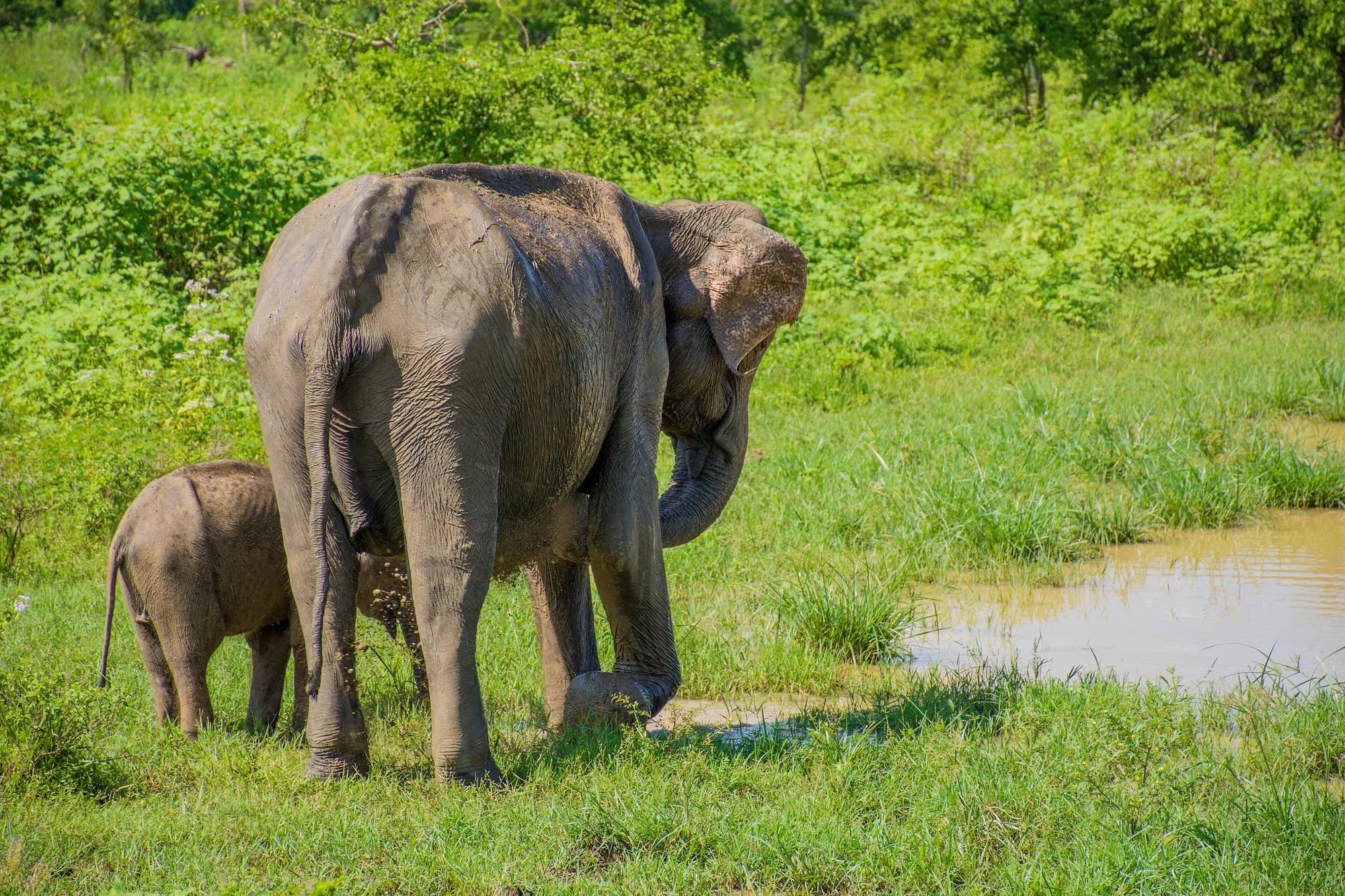
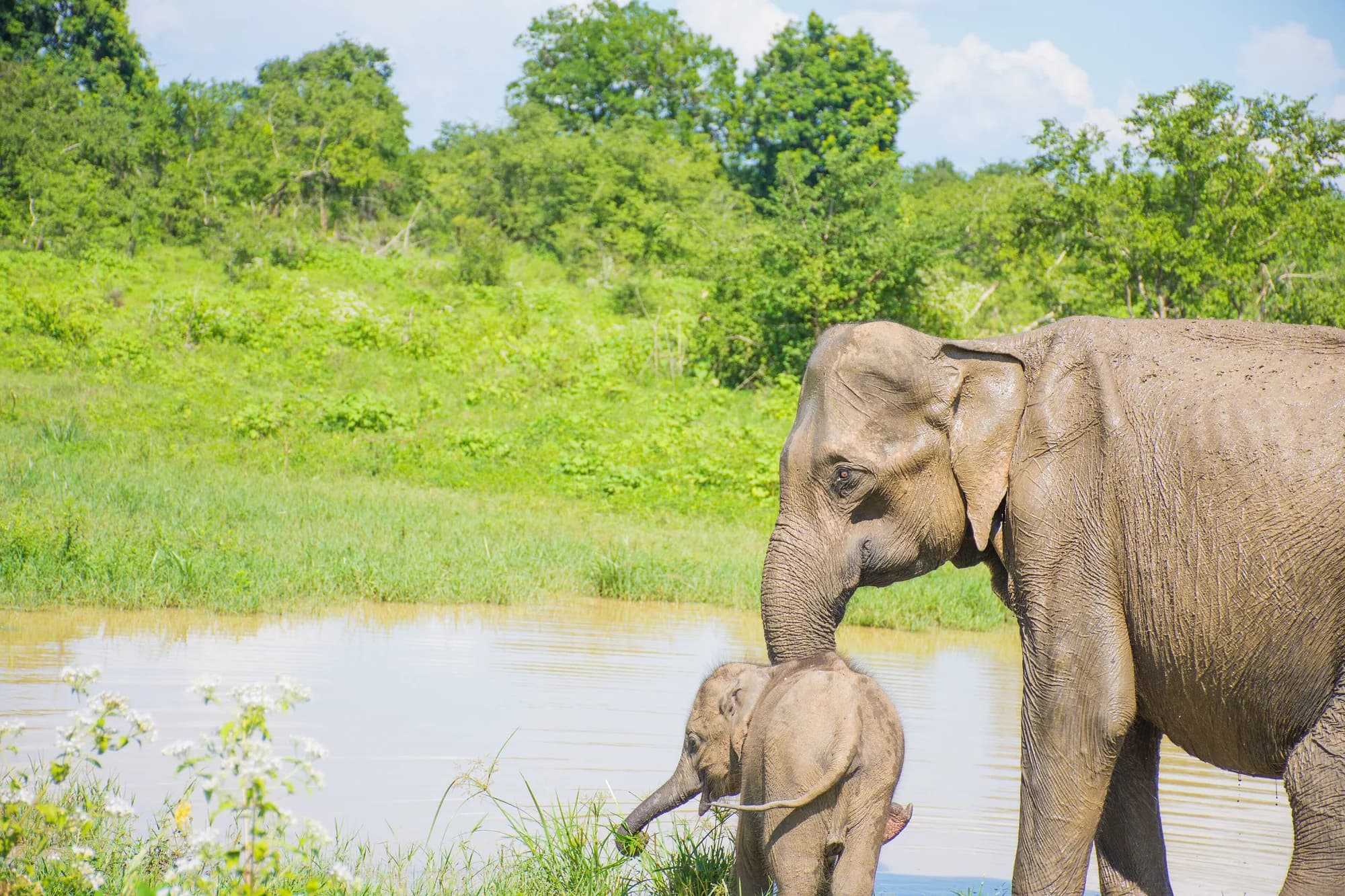
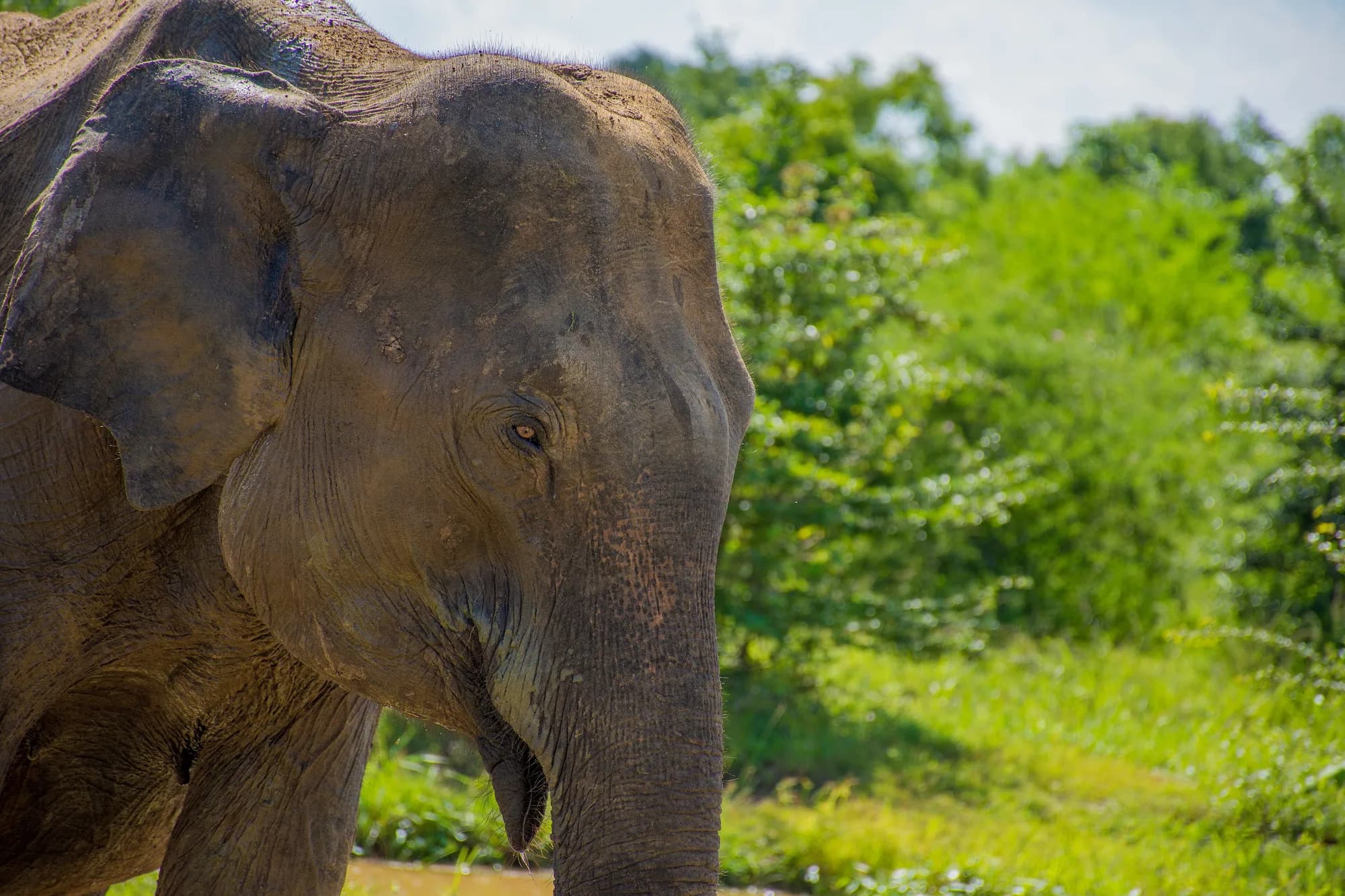
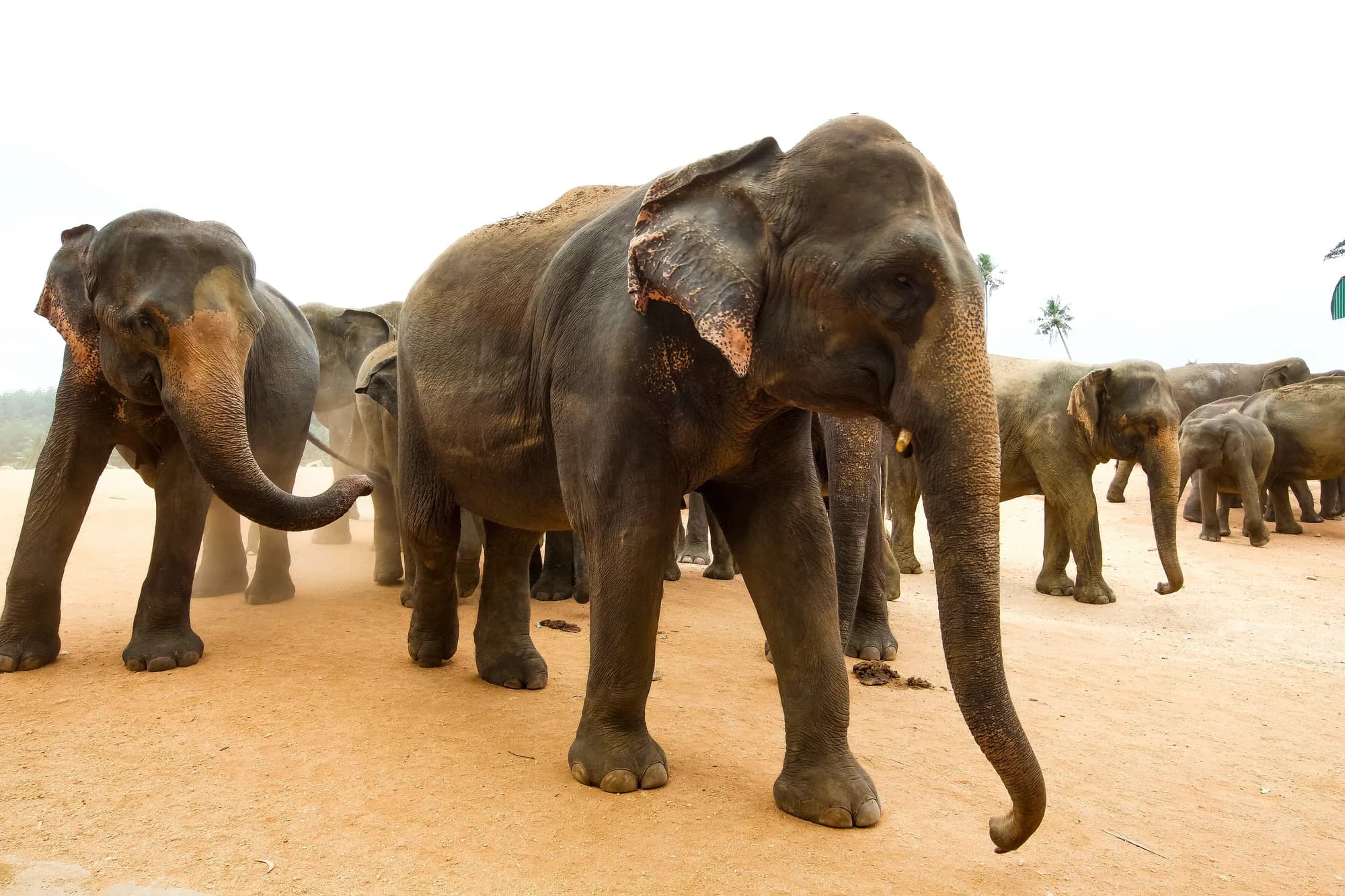
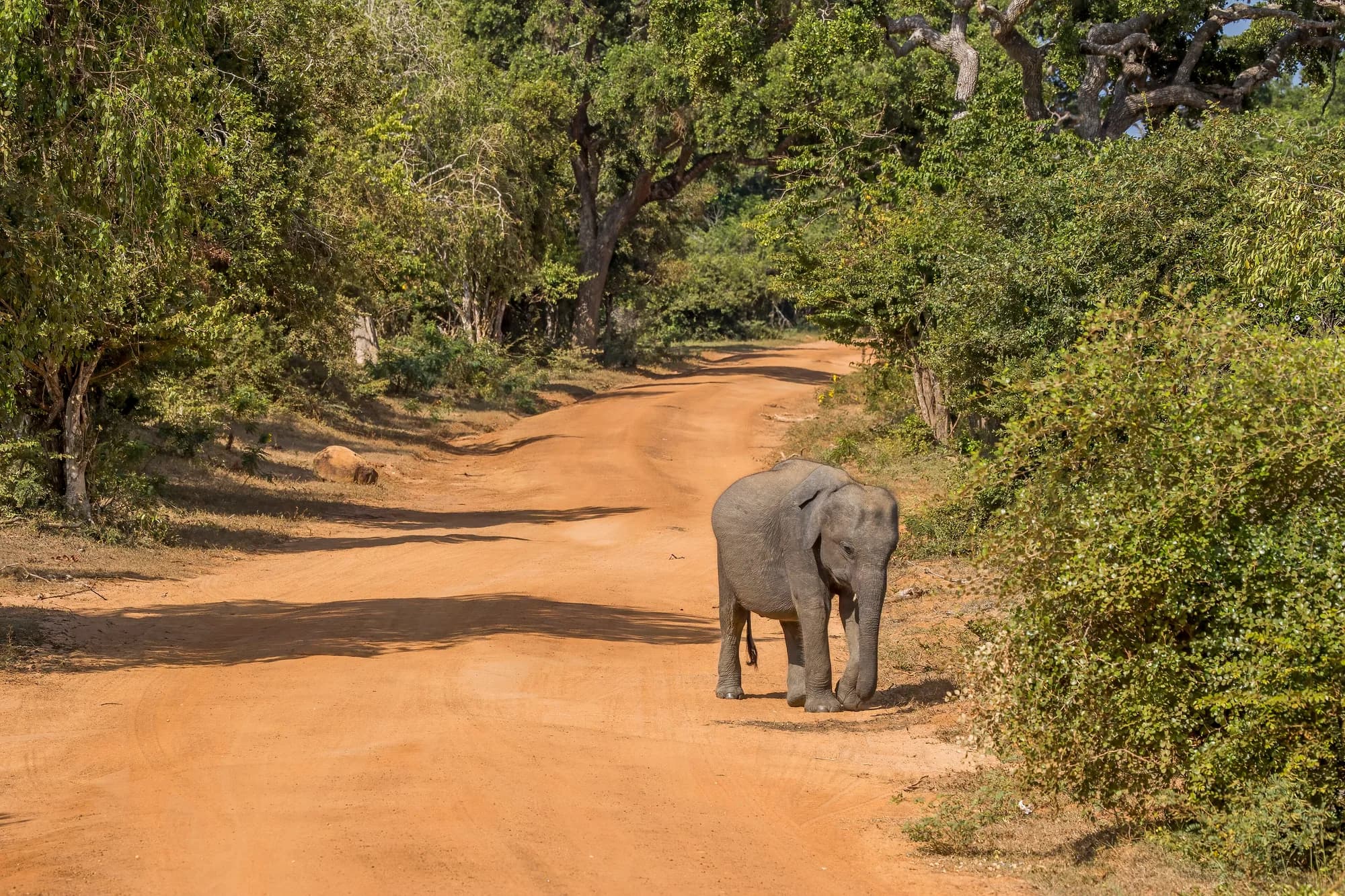
Photographs of Sri Lankan elephant in the wild, in Indian reserves. We publish no captive, baited or digitally composited images, and no photograph whose licence we cannot show.
The Gathering
Sri Lanka’s dry-zone reservoirs are ancient — many are irrigation tanks built over a thousand years ago — and as the dry season draws them down, grass grows on the exposed bed. Elephants converge on it from the surrounding forest, and by August and September several hundred can be on one reservoir at once.
It builds through July and holds into October, and it moves between Minneriya, Kaudulla and Hurulu depending on where the water has dropped to. The gate staff know which reservoir has the herds on any given week, which is worth asking before you commit to a park.
Tuskers, and why there are so few
Only a small minority of male Asian elephants carry tusks at all — under one in ten in Sri Lanka — and females never do. A tusked male here is a genuine event, and individual animals are known and named.
The usual explanation offered is selective removal of tusked males over centuries, for ivory and for capture, leaving a population skewed toward tuskless males. Whatever the weighting of causes, the practical point for a visitor is that the image of an Asian elephant with big tusks is not what you will see.
Status and protection
Status and protection
- IUCN Red List
- Endangered
- Population trend
- ↓ Decreasing
- CITES
- Appendix I
Species-level assessment for Elephas maximus. The page's binomial is the Sri Lankan subspecies E. m.
Assessed 2020 · IUCN Red List assessment
What to book to see one
What you would be booking
- How it is seen
- A jeep safari from a park gate, usually a half day. Udawalawe and Minneriya are both straightforward and cheap by African standards.
- Drives to book
- Two. One at Udawalawe for close daylight viewing, one at Minneriya or Kaudulla in the late afternoon for the Gathering.
- Zone or shift
- For the Gathering, whichever of Minneriya, Kaudulla and Hurulu the herds are on — it moves between the reservoirs with the water level, and the gate staff know.
Jeep crowding at the Gathering is a real problem and has been the subject of official limits. Go at the start of the afternoon slot rather than the peak, and pick an operator who will hold back rather than push to the front.
MinneriyaOn the same trip you would also get
- Sri Lankan leopard — Yala and Wilpattu
- Sloth bear — Wilpattu, in the fruiting months
Questions people ask
Where is the best place to see elephants in Sri Lanka?
What is the Elephant Gathering?
Why do so few Sri Lankan elephants have tusks?
Read next
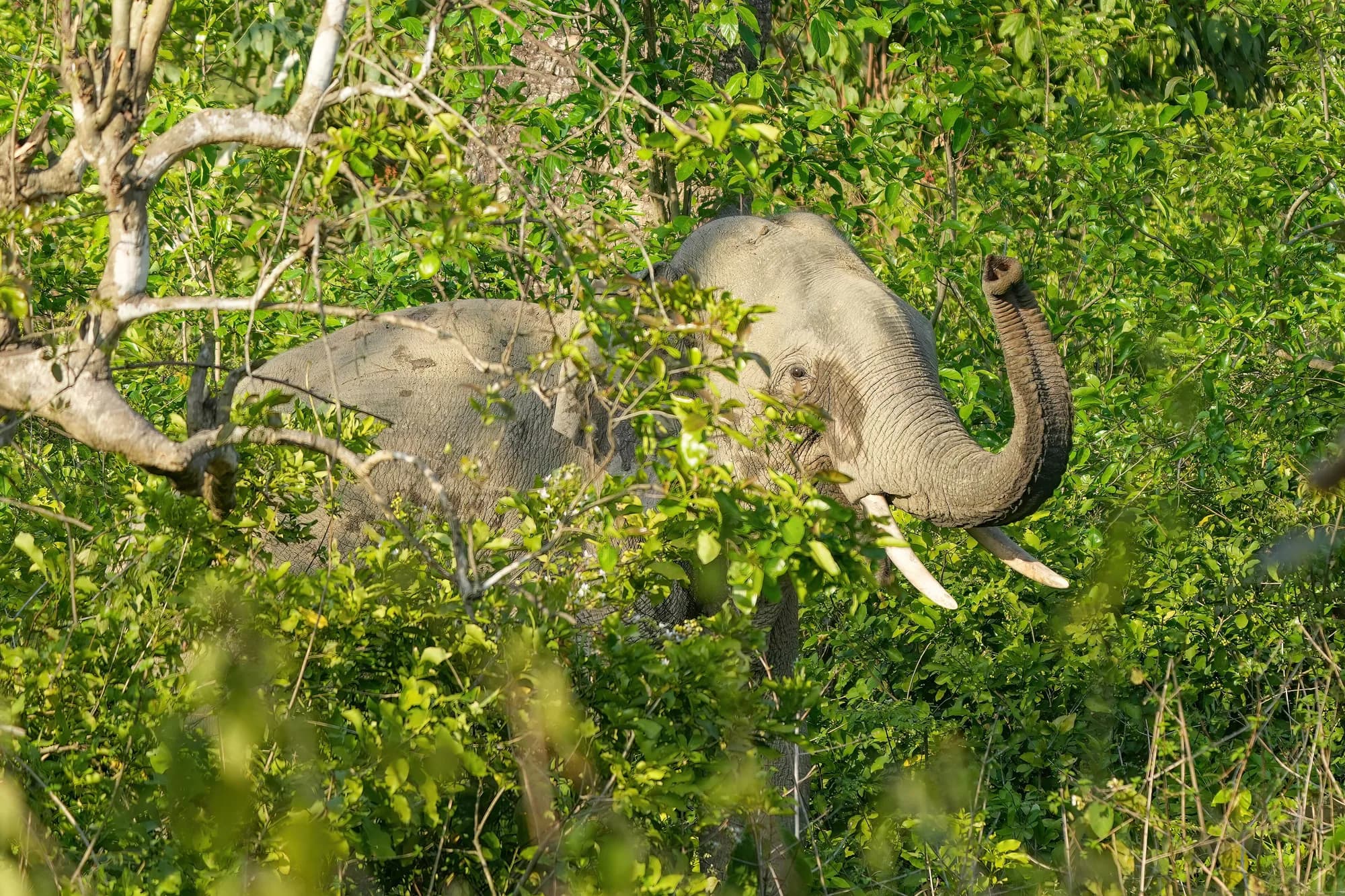
Kabini backwaters at dusk
Indian elephant — the mainland subspecies
One of the few sightings that is better in a herd than alone. Where the numbers gather, and the three months they are actually there.

One island, three dry-zone parks, and no competition
Sri Lankan leopard
The only big cat on the island and the top of the food chain with nothing to argue with — no tiger, no lion, no hyena, no wild dog. That absence is the whole difference between this leopard and the African one: it works the ground rather than the canopy, it moves more freely in daylight, and it does not have to haul a kill into a tree to keep it.
Udawalawe