
India / Pakke / When to go to Pakke
When to go to Pakke
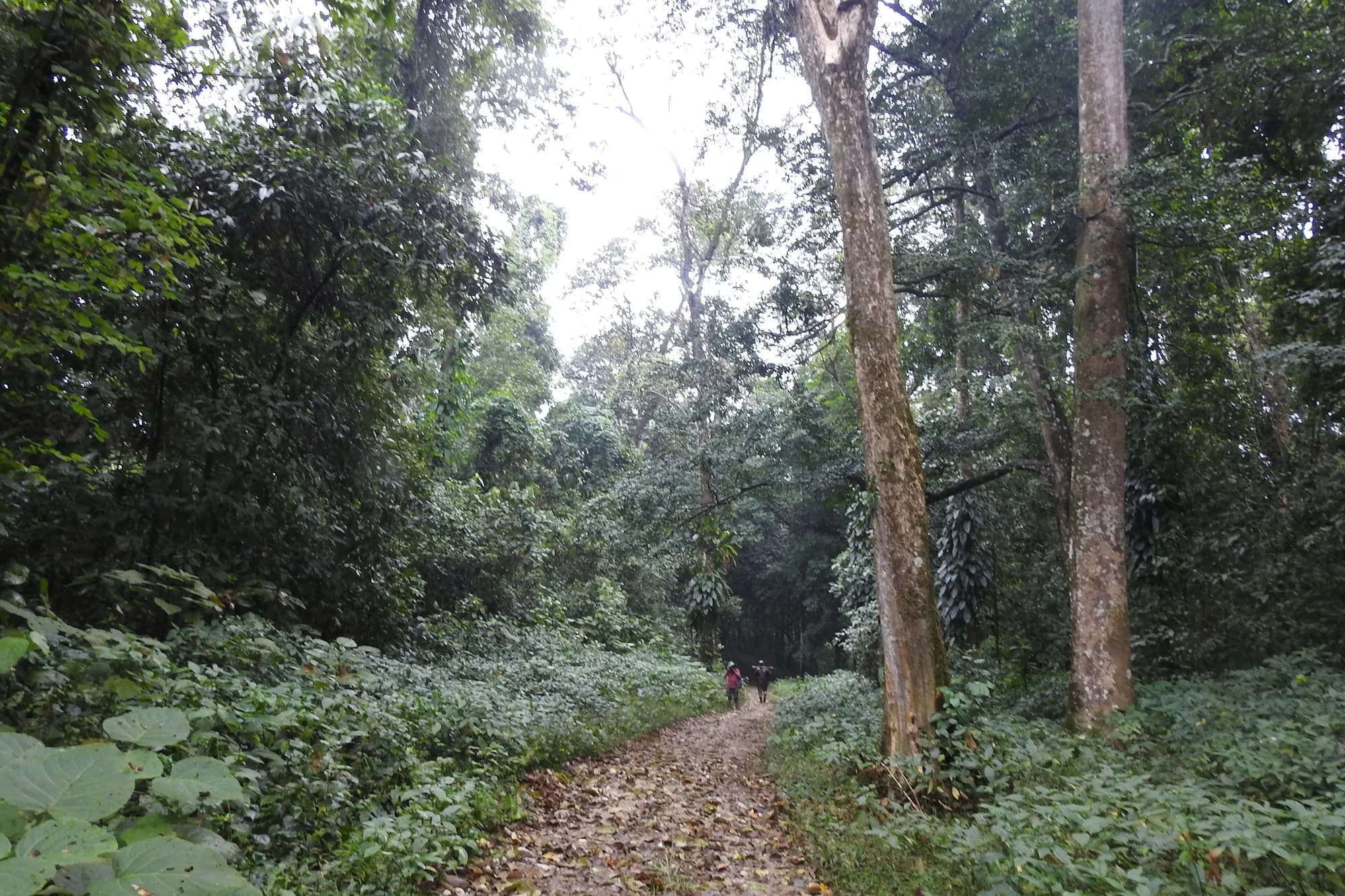
Pakke's foothill rainforest is open November to April. The hornbill nest protection programme — run by the local Nyishi community — makes February to April its most rewarding stretch.
The season, in one line
November to April is the accessible season. May to October the park is effectively closed by monsoon flooding of the Pakke river.
Open · Core & Buffer
Open · Core & Buffer
Open · Core & Buffer
Open · Core & Buffer
Open · Restricted
Core Closed
Core Closed
Core Closed
Core Closed
Open · Core & Buffer
Open · Core & Buffer
Open · Core & Buffer
Great hornbill perched in a fruiting fig tree in Pakke Tiger Reserve
Ratio 16:9 · Alt: Great hornbill perched in a fig tree inside Pakke Tiger Reserve · Why: Hornbills are the defining species and the reason for the nest protection programme.
Why the hornbill nest season matters
Pakke hosts four species of hornbill — Great, Wreathed, Oriental Pied and Rufous-necked. Nesting begins in February, with males sealing females into tree cavities and feeding them through a slit. The Nyishi 'Hornbill Nest Adoption Programme' pays community members to protect nests. February to May is when this activity peaks, making it the most meaningful season to visit.
Month by month, in full
| Month | Mean min °C | Mean max °C | Record min | Record max | Rainfall mm | Core |
|---|---|---|---|---|---|---|
| January | 8.5 | 22.0 | 4.0 | 28.0 | 12.0 | Open |
| February | 11.0 | 25.5 | 6.0 | 31.0 | 28.0 | Open — Nesting begins |
| March | 15.0 | 29.0 | 9.0 | 35.0 | 55.0 | Peak Open |
| April | 18.5 | 32.0 | 13.0 | 37.5 | 140.0 | Peak Open |
| May | 21.5 | 33.5 | 16.0 | 38.5 | 310.0 | Restricted |
| June | 23.0 | 31.5 | 19.0 | 35.0 | 520.0 | Closed |
| July | 23.5 | 30.5 | 20.0 | 34.0 | 620.0 | Closed |
| August | 23.0 | 30.0 | 19.5 | 33.0 | 590.0 | Closed |
| September | 22.0 | 29.5 | 18.0 | 33.5 | 380.0 | Closed |
| October | 18.5 | 28.0 | 13.0 | 32.5 | 145.0 | Opens Oct |
| November | 12.5 | 24.5 | 7.0 | 29.0 | 22.0 | Open |
| December | 8.5 | 21.0 | 4.0 | 26.0 | 9.0 | Open |
November to April — the open window
November is when the forest starts drying out after the monsoon and both access tracks and animal movement become predictable. February and March are ideal — hornbill nesting is active, canopy is dense with fruiting figs, and daytime temperatures are comfortable (25–32°C).
Winter conditions in the Pakke foothills
January is the coolest month at 8.5°C minimum. Mornings can be misty until 08:00, particularly in the Pakke river valley. A fleece is sufficient; no heavy-duty cold weather gear is needed at this elevation (200–500 m).
Closure rules
Inner Line Permit
Required for all non-Arunachali visitors
Pakke is in East Kameng district. All visitors from outside Arunachal Pradesh require a valid ILP. Apply via the Arunachal Pradesh e-ILP portal before travel.
Monsoon closure
May – October
The Pakke river floods all vehicle access tracks between May and September. The forest department restricts access during this period.
Safari timings
Pakke operates jeep safaris from Rangapara (near the main camp). Morning safaris depart around 06:00 and return by 10:00. Evening shifts run from 14:30 to 18:00. All vehicles must have an assigned forest guide.
The monsoon and what it means
Pakke receives around 2,800 mm annually. June and July peak at 520–620 mm per month. The river breaches its banks and renders all tracks unpassable. Unlike some parks where only the core closes, Pakke is inaccessible end-to-end in this period.
When to book
- February and March — best hornbill observation. Book accommodation at Seijosa (nearest town) and guides 30–45 days ahead.
- November — good shoulder entry. Forest is green, birding is excellent.
- ILP — apply via Arunachal Pradesh e-ILP portal at least 10–14 days before arrival.
Notes on data
Climate data sourced from IMD district records
Pakke-specific station data is unavailable from IMD publicly. Figures above use East Kameng district data (Seppa station). Microclimate inside the reserve may differ, particularly along the Pakke river corridor.