
India / Pakke / Wildlife of Pakke — hornbills, dholes and forest mammals
Wildlife of Pakke — hornbills, dholes and forest mammals
Pakke is India's premier hornbill reserve. All four hornbill species nest in the Pakke river corridor. The reserve also supports Asiatic wild dog (dhole) packs, elephant herds, and gaur — making it one of the finest mixed forest wildlife experiences in northeast India.
Flagship species — the hornbills
Great Hornbill pair at a nesting cavity in Pakke — the park's iconic image
Ratio 16:9 · Alt: Great Hornbill pair at nest cavity in tall forest tree, Pakke Tiger Reserve · Why: The Great Hornbill is the primary draw for visitors and the symbol of the Hornbill Nest Adoption Programme.
| Species | IUCN status | Best months | Probability |
|---|---|---|---|
| Great Hornbill | Vulnerable | Feb – Mar (nesting) | Very high |
| Wreathed Hornbill | Least Concern | Nov – Mar | High |
| Oriental Pied Hornbill | Least Concern | Year-round | Very high |
| Rufous-necked Hornbill | Vulnerable | Jan – Mar | Moderate (upper forest) |
The Hornbill Nest Adoption species
The Hornbill Nest Adoption Programme (run by NCF and local Nyishi communities) actively monitors and protects nesting cavities of Great, Wreathed and Rufous-necked hornbills. Visitors can observe nest monitoring on foot walks during the nesting season (February–April). The programme has significantly increased nesting success rates since 2008.
Mammals — big and small
Gaur (Indian bison) is the most frequently seen large mammal — herds graze the river floodplain. Elephant herds (20–40 individuals) are regularly seen on the Pakke river banks. Sambar, barking deer, and hog badger are common. Small cat species — leopard cat, jungle cat — are seen on evening drives.
Primates
Hoolock gibbons are present but less easily sighted than at Namdapha — the forest is more disturbed near the buffer. Capped langurs (Trachypithecus pileatus) are common in the upper canopy. Rhesus and Assamese macaques are seen at the forest edge. Slow loris has been documented in camera traps.
Asiatic wild dog — the pack hunter
Pakke holds 2–3 resident dhole packs. Sightings are occasional but reliable in February–March when dholes hunt sambar in the open floodplain. The Pakke river crossing is the best location — dholes often swim across the river in pursuit of prey. A dhole sighting is a highlight of any Pakke visit.
Tiger and leopard
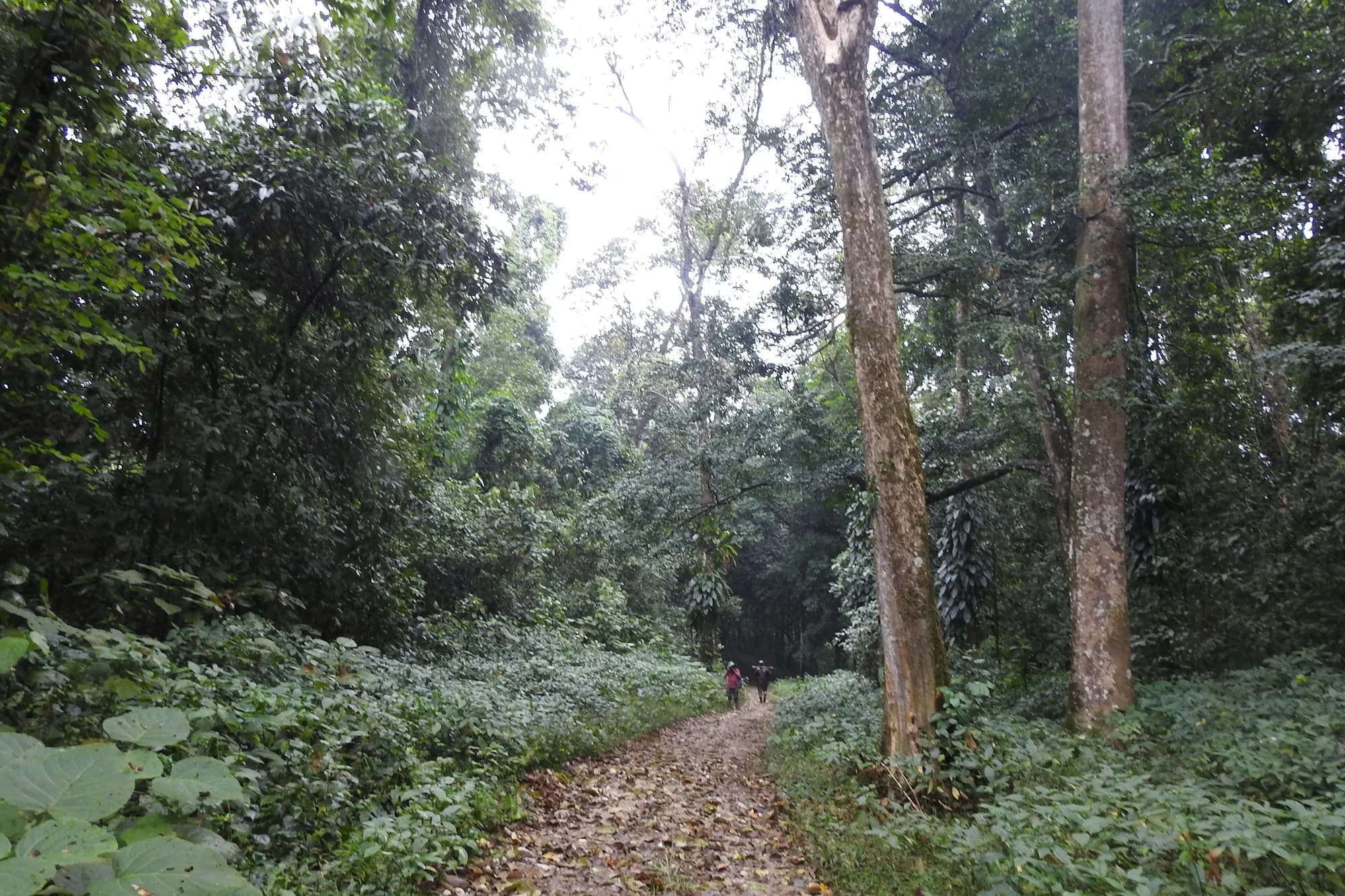
Tiger is confirmed by camera traps but sightings from vehicles are extremely rare — the forest is too dense. Leopard is more frequently encountered; night drives (where permitted) occasionally produce sightings near the forest edge. Clouded leopard has been camera-trapped but is not reliably sighted.
River and wetland species
The Pakke river supports Gangetic river otter. Blyth's kingfisher and Crested kingfisher are seen on river boulders. Indian skimmer is occasional. River lapwing and River tern breed on the gravel bars. The river gravel bars in March–April are excellent for shorebird activity.
Birds beyond hornbills
Pakke's 300+ species include the gorgeous Blue-naped pitta, which is regularly seen on the Rangapara track in February. Sultan tit, Coral-billed scimitar babbler, and various species of wren-babbler are forest specialities. The dawn chorus in January–February is extraordinary — up to 40 species can be logged in a single morning shift.
Reptiles
King cobra is confirmed in the park. Indian rock python and Burmese python are present. The Pakke river has gharial records though sightings are rare. Monitor lizard (Bengal and water) are common on the river banks. The reptile fauna is rich but under-surveyed.
What to realistically expect
Certain: All four hornbill species; elephant; gaur; kingfishers. Probable: Dhole sightings Feb–Mar; Blue-naped pitta; Asiatic black bear sign. Possible: Leopard; clouded leopard tracks; Indian giant squirrel. Unlikely: Tiger sighting from vehicle. Note: Pakke rewards birders more than mammal watchers; the hornbill experience is unmatched anywhere in India.