
India / Pakke / Zones of Pakke Tiger Reserve — core and buffer
Zones of Pakke Tiger Reserve — core and buffer
Pakke's core is the Pakke river floodplain forest — the hornbill nesting territory. The buffer adjoins Nyishi community forests. One entry gate, two jeep routes.
The two zones at a glance
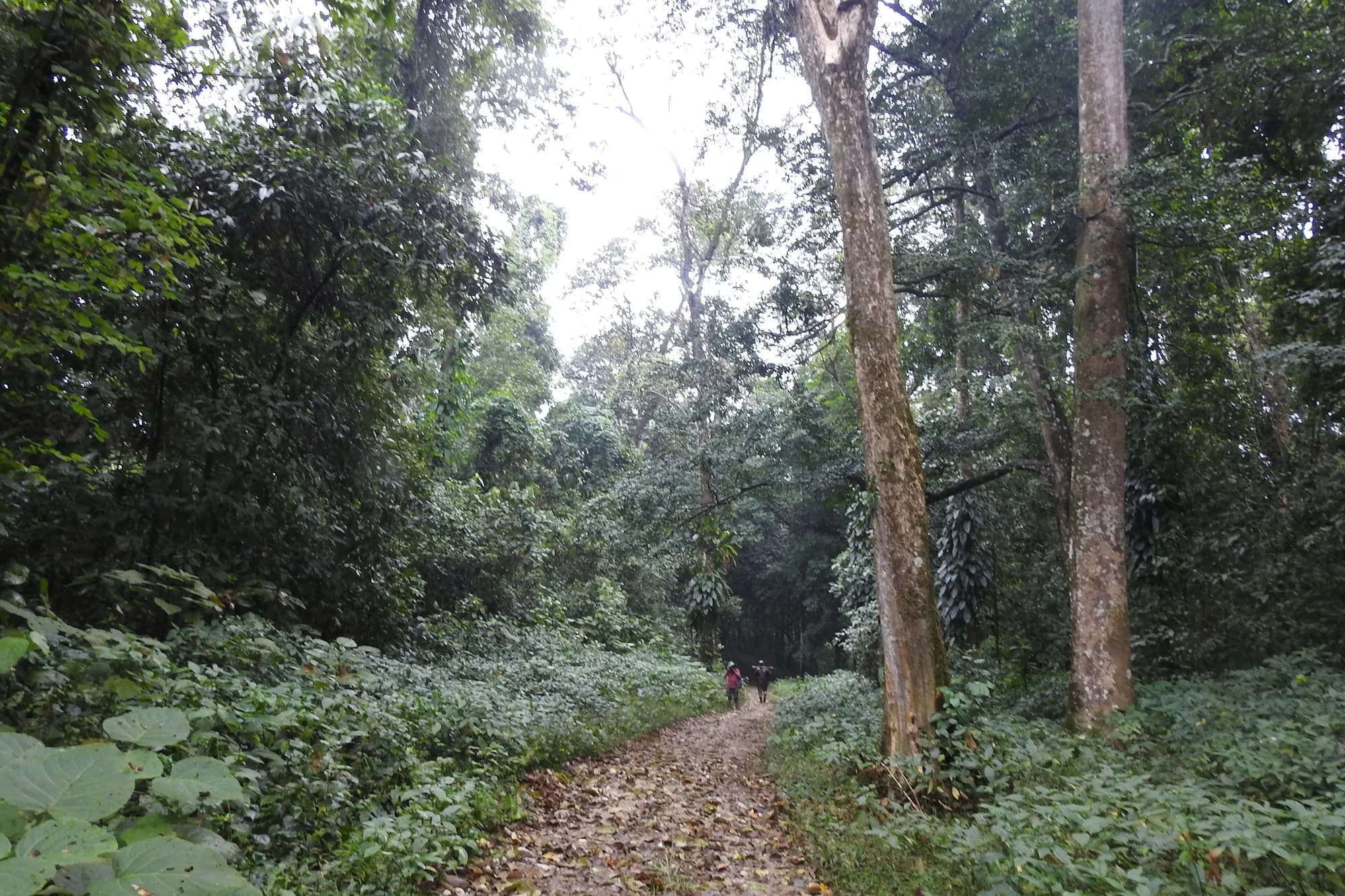
Pakke river flowing through the hornbill forest — the core zone corridor
Ratio 16:9 · Alt: Pakke river flowing through dense forest in Pakke Tiger Reserve · Why: The river corridor is the key wildlife zone and the reason hornbills concentrate here.
| Zone | Type | Morning shift | Evening shift | Open |
|---|---|---|---|---|
| Pakke Core (Rangapara route) | Core forest, hornbill nesting | 06:00–10:00 | 14:30–18:00 | Nov – Apr |
| Buffer Zone (Nyishi boundary) | Community forest edge | Guided only | Guided only | Nov – Apr |
Rangapara — the accessible core
The main camp at Rangapara is the departure point for all jeep safaris. Routes follow the Pakke river floodplain through tall mixed deciduous forest. The Rangapara track passes through confirmed hornbill nesting territory — Great hornbill nests are visible from the jeep track in February and March.
The Pakke river corridor
The Pakke river runs through the centre of the reserve. River beaches and gravel bars along the corridor are excellent for mammals — elephant, Asiatic wild dog, gaur and leopard cat. Clouded leopard is present but rarely sighted; tracks are seen regularly on the sandy banks.
Buffer zone and Nyishi boundary
The eastern buffer zone adjoins Nyishi community land. The Hornbill Nest Adoption Programme operates along this boundary — local Nyishi families are paid to monitor and protect nesting trees. Visitors wishing to join nest monitoring walks must coordinate with the camp and Nyishi community liaison.
Hornbill habitat by zone
All four hornbill species concentrate in the core along the river. Great hornbills prefer emergent trees at the forest edge; Wreathed hornbills move in fruiting fig flocks; Oriental Pied hornbills are the most commonly seen. Rufous-necked hornbills favour higher forest and are the hardest to find.
Vehicle caps and access rules
There is no published per-zone vehicle cap for Pakke. Entry is managed by the Forest Range Office at Seijosa; vehicles require a guide. The park is small enough that overcrowding is not currently an issue, but the number of vehicles is informally limited by the Range Officer.
What to expect by zone
Core zone morning safaris routinely yield hornbills, kingfishers, and elephant. Asiatic wild dog sightings are occasional but reliable in February–March. Gaur are seen near the river banks. Leopard sightings are infrequent. Tiger is present but extremely rarely seen.
Photography positions
The river gravel bars at the Pakke river crossing provide open light for mammal photography. The Rangapara forest track gives backlit morning shots of hornbills in fruiting figs. A 500mm lens handles hornbill portraits at nest trees (20–30 m range typical).
Community-managed areas
The Hornbill Nest Adoption Programme is one of India's most successful community conservation models. Families earn income from nest protection which directly reduces egg poaching. Visitors who pay the nest monitoring fee contribute to this scheme. Book through the Seijosa Range Office.
Which zone to choose
For hornbills: focus on the Rangapara core zone in February–March. For mammals: the Pakke river crossing at dawn in March–April. For a comprehensive experience: request a combined jeep route and nest monitoring walk. The park is compact enough to cover both core and buffer in a 3-day visit.