
Namibia / Etosha / Best time to visit — Etosha
Best time to visit — Etosha
Etosha works because in the dry season there is no water except at the waterholes. Everything about when to come follows from that one fact, including the price.
The dry season is the whole argument
From roughly June the seasonal pans dry out and the animals are pushed onto the permanent waterholes. Concentration does the work that tracking does elsewhere: you are not finding animals, you are sitting where they have to come. By September and October, at the end of the dry, the pressure is at its highest and so is the traffic at every pump.
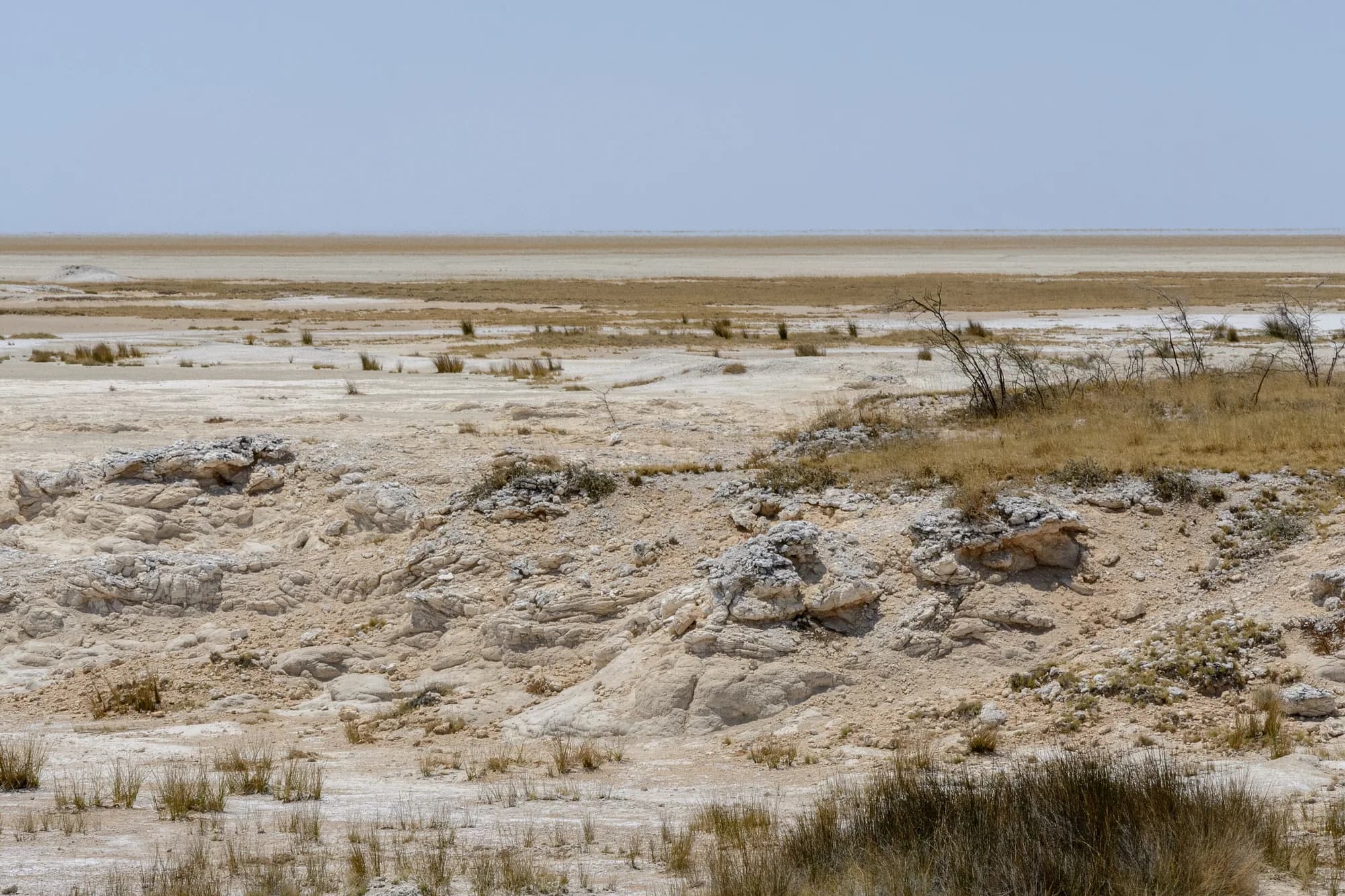
The counter-argument is heat and dust. Late in the dry season the middle of the day is punishing, the pan glares white, and the light between about nine and four is hard for photography. That is a real cost, and it is why the dawn and dusk hours matter more here than the hours in between.
The year, month by month
What each part of the year is like
| Months | Conditions | Game viewing | NWR rate |
|---|---|---|---|
| November to February | Hot, wet, storms; the pan can fill | Dispersed and hard | Low |
| March to May | Drying out, green, mild | Improving week by week | Low |
| June to August | Cold nights, dry, clear | Very good and getting better | High from July |
| September to October | Hot, very dry, dusty | The peak | High |
The rate column is NWR's own two-season split, not our judgement: high season runs July to October and everything else is low. Note that June is a dry month at a low-season price, which is the single best-value window in the year.
June is the arbitrage
NWR's high season starts in July, but the park is already dry and cold-nighted in June and the game is already concentrating. You get most of the dry-season advantage at the low rate. It is the one clear inefficiency in the calendar and almost nobody uses it.
NWR — Okaukuejo Resort
Read 28 September 2026. Each resort page carries its own rate table in Namibian dollars, split into two seasons — July 2026 to October 2026, and November 2026 to June 2027 — together with unit counts, facilities, contact numbers and distances from Windhoek, Swakopmund, Sossusvlei or Tsumeb. Rates are per person sharing unless the row says single.
https://www.nwr.com.na/resorts/okaukuejo-resort/What the price calendar tells you
If you want an objective read on when Namibia thinks Etosha is busy, look at the state accommodation company's rate split rather than at anyone's opinion. NWR runs two seasons and the high one is four months long.
Okaukuejo, per person sharing, bed and breakfast
| Room | Jul to Oct 2026 | Nov 2026 to Jun 2027 | Difference |
|---|---|---|---|
| Double room | N$2,380 | N$1,900 | N$480 |
| Bush chalet, 2 beds | N$2,680 | N$2,210 | N$470 |
| Family chalet, minimum 2 | N$2,850 | N$2,130 | N$720 |
| Waterhole chalet, 2 beds | N$3,480 | N$2,380 | N$1,100 |
| Premier waterhole chalet, minimum 2 | N$5,930 | N$3,960 | N$1,970 |
| Campsite, per person | N$560 | N$460 | N$100 |
The more expensive the unit, the harder the season discounts it. A premier waterhole chalet falls by a third out of season; a campsite falls by less than a fifth. Guided drives do not change price at all between the two seasons.
NWR — Okaukuejo Resort
Read 28 September 2026. Each resort page carries its own rate table in Namibian dollars, split into two seasons — July 2026 to October 2026, and November 2026 to June 2027 — together with unit counts, facilities, contact numbers and distances from Windhoek, Swakopmund, Sossusvlei or Tsumeb. Rates are per person sharing unless the row says single.
https://www.nwr.com.na/resorts/okaukuejo-resort/The case for the rains
- Beds are materially cheaper and far easier to get, and the park is emptier at every waterhole.
- The pan can hold water, and NWR describes flamingos on it in the rainy season — a completely different picture from the white glare of September.
- NWR says four of the Big Five can be found around Onkoshi in the rainy season, so the green months are not empty of game, only less predictable.
- Newborn antelope, green grass and dramatic skies. This is the photography argument rather than the game-count argument, and it is a good one.
- Against all of that: the game disperses away from the waterholes, and the method that makes Etosha work stops working as well. That is the trade and it is not small.
Which one you want depends on what you came for
If this is a first African trip and you want to see large animals reliably, come in the dry and accept the dust and the crowding. If you have done that and want the park as a landscape — flamingos, storm light, nobody at the waterhole — the green season is the better trip and it costs less. The mistake is coming in February expecting September.
NWR — Onkoshi Resort
Read 28 September 2026. Each resort page carries its own rate table in Namibian dollars, split into two seasons — July 2026 to October 2026, and November 2026 to June 2027 — together with unit counts, facilities, contact numbers and distances from Windhoek, Swakopmund, Sossusvlei or Tsumeb. Rates are per person sharing unless the row says single.
https://www.nwr.com.na/resorts/onkoshi-resort/Heat, cold and the shape of a day
The legal day runs sunrise to sunset, so the length of your usable day changes across the year without anyone publishing a timetable. In June and July the day is short and the nights are genuinely cold — the camps are on a high, dry plateau and a floodlit waterhole at ten at night in July needs a fleece and a hat. In October and November it is the opposite problem, and the middle of the day is unusable for anything except a swimming pool.
- Winter, June to August: cold before dawn, pleasant by mid-morning, cold again within an hour of sunset. Layers, and something warm for the waterhole after dinner.
- Late dry, September to October: the hardest month for heat. Out early, back by ten, out again at four.
- Wet, December to March: humid, thunderstorms in the afternoon, and gravel roads that can deteriorate quickly after heavy rain.
- Whatever the month, more water in the car than you think. There are no shops between camps.
How far ahead to book
The email loop lengthens everything
With NWR's booking system unavailable and requests going to reservations by email, every exchange in the loop is a day or more. Build that into the lead time: three emails to settle a five-night, three-camp itinerary is normal, and three emails is a week.
Namibia Wildlife Resorts — site notice
Read 28 September 2026. A site-wide notice on nwr.com.na read: "Our booking system is currently unavailable. Please forward your booking request to reservations@nwr.com.na". We record it because it changes how far ahead you have to plan, and because it may not be true by the time you read this page.
https://www.nwr.com.na/