
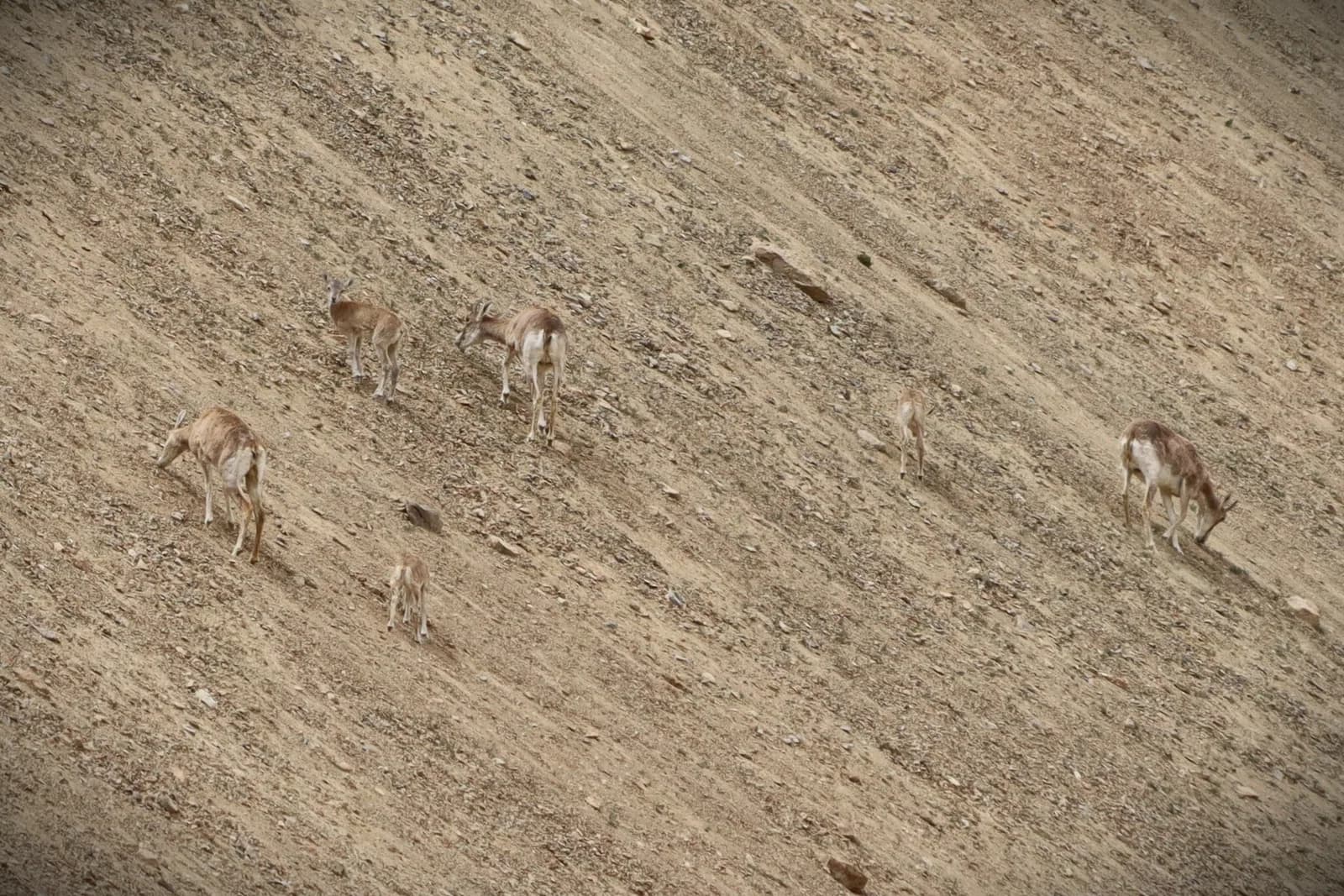
Species · Capra sibirica
Asiatic ibex
A big wild goat with scimitar horns, living on ground steep enough that nothing can follow it. It is the prey base that puts a snow leopard on a slope in Spiti, the way bharal does in Ladakh.
Also called
- Skin · Ladakhi
- Skin / Tangrol · Spiti Bhoti
Checked 31 Aug 2026
- Where
- Ladakh, Himachal, Jammu & Kashmir
- Best months
- December–March
- Altitude
- About 3,500–5,000 m
- Note
- Snow leopard prey in Spiti
Cliff, crag and steep scree in the trans-Himalaya from Ladakh through Zanskar, Lahaul and Spiti into Kinnaur. It occupies the broken ground; bharal takes the open rolling slopes, and where both occur they divide the mountain between them.
Where it is
- Spiti
- Hemis
Where to actually go
Ranked, with the reason each — these are not interchangeable.
- 01SpitiHimachal PradeshThe Kibber and Pin catchments hold good numbers on ground you can scope from the road, in the same season as the snow leopard trips.Winter, from the valley
- 02Kargil and ZanskarLadakhStrong populations on the big cliffs, seen from the road in winter when they come down.Roadside cliffs
- 03HemisLadakhPresent, though bharal is the dominant prey species here. Worth knowing which you are looking at.Secondary to bharal
Where you will not see one
- The Western GhatsThat is the Nilgiri tahr, 2,000 kilometres away and a different genus. The names get swapped constantly in trip reports.
- Forested Himalayan valleysIbex are above the treeline on rock. In oak and deodar forest you are looking for goral, serow or Himalayan tahr instead.
When to go
When to go
- J
- F
- M
- A
- M
- J
- J
- A
- S
- O
- N
- D
January: best. February: best. March: good. April: marginal. May: marginal. June: marginal. July: marginal. August: marginal. September: good. October: good. November: best. December: best.
Through the day
- Dawn
- Morning
- Midday
- Afternoon
- Dusk
- Night
Dawn: most active. Morning: active. Midday: usually resting. Afternoon: active. Dusk: most active. Night: not normally seen.
Telling it apart
Told apart from
Ladakh and Spiti, constantly
Horns and colour. Bharal horns curve outward and back in a short arc from a blue-grey animal; ibex horns are long, ridged and sweep back over the shoulders from a chocolate-brown one.
Only in a book
Horn shape. Markhor horns are corkscrew spirals; ibex horns are simple backward arcs. They do not overlap in India anyway.
The treeline
Coat and horns. Tahr are shaggy reddish with a heavy mane and short horns, on forested slopes; ibex are on bare rock with long ridged horns.
Marks chosen to be usable from a moving vehicle — a asiatic ibex is rarely still and never close enough for anything subtler.
What it looks like in the field
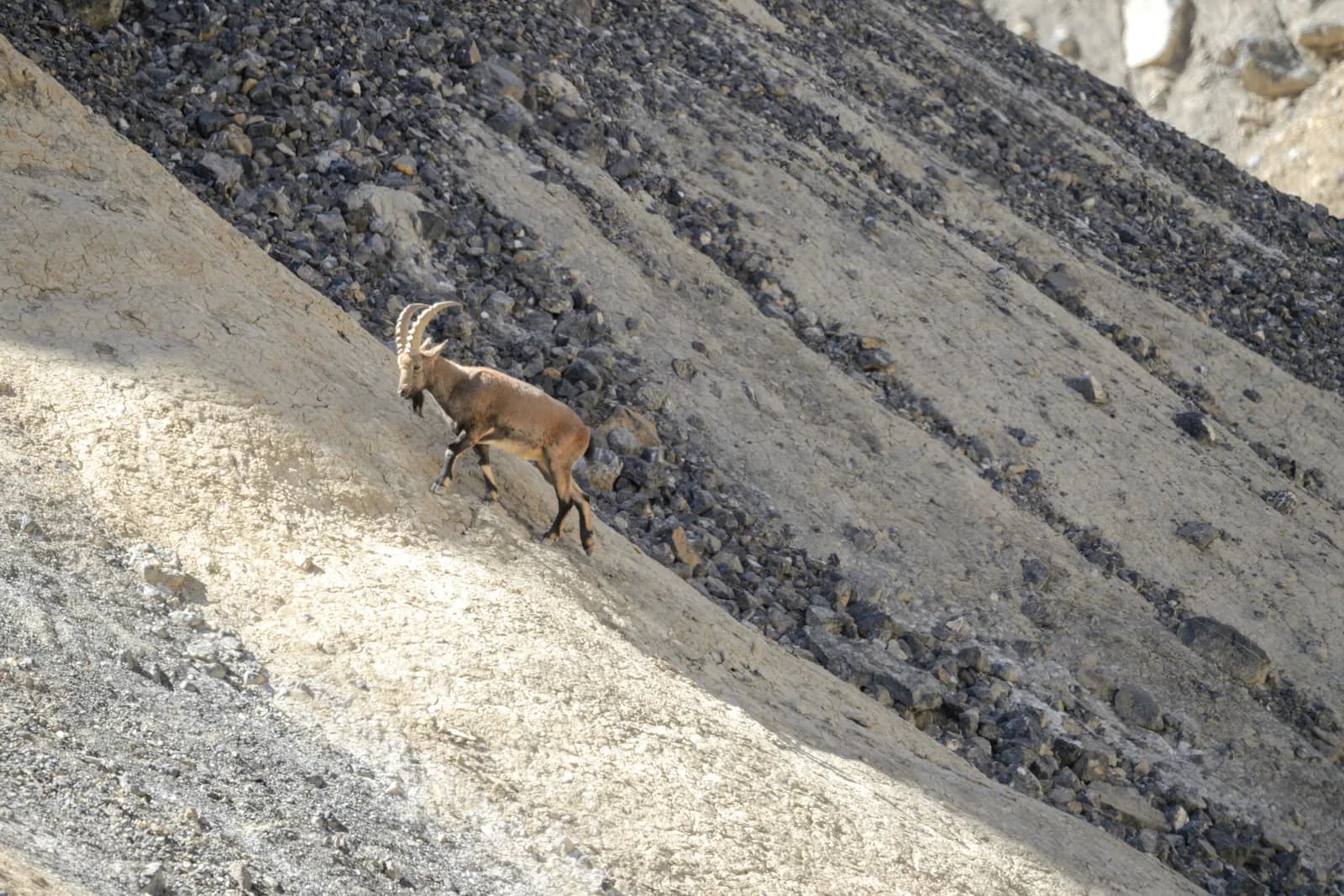
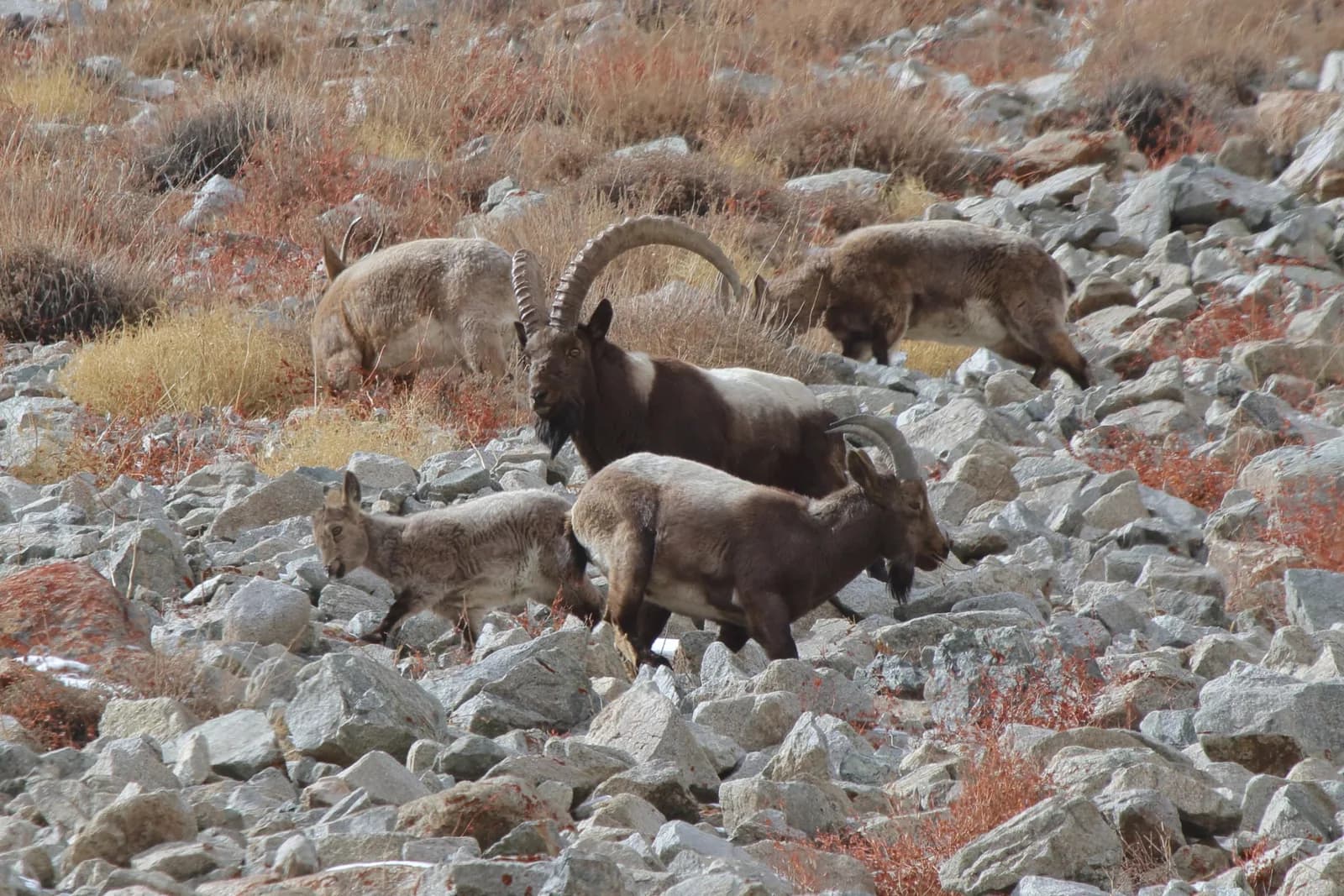
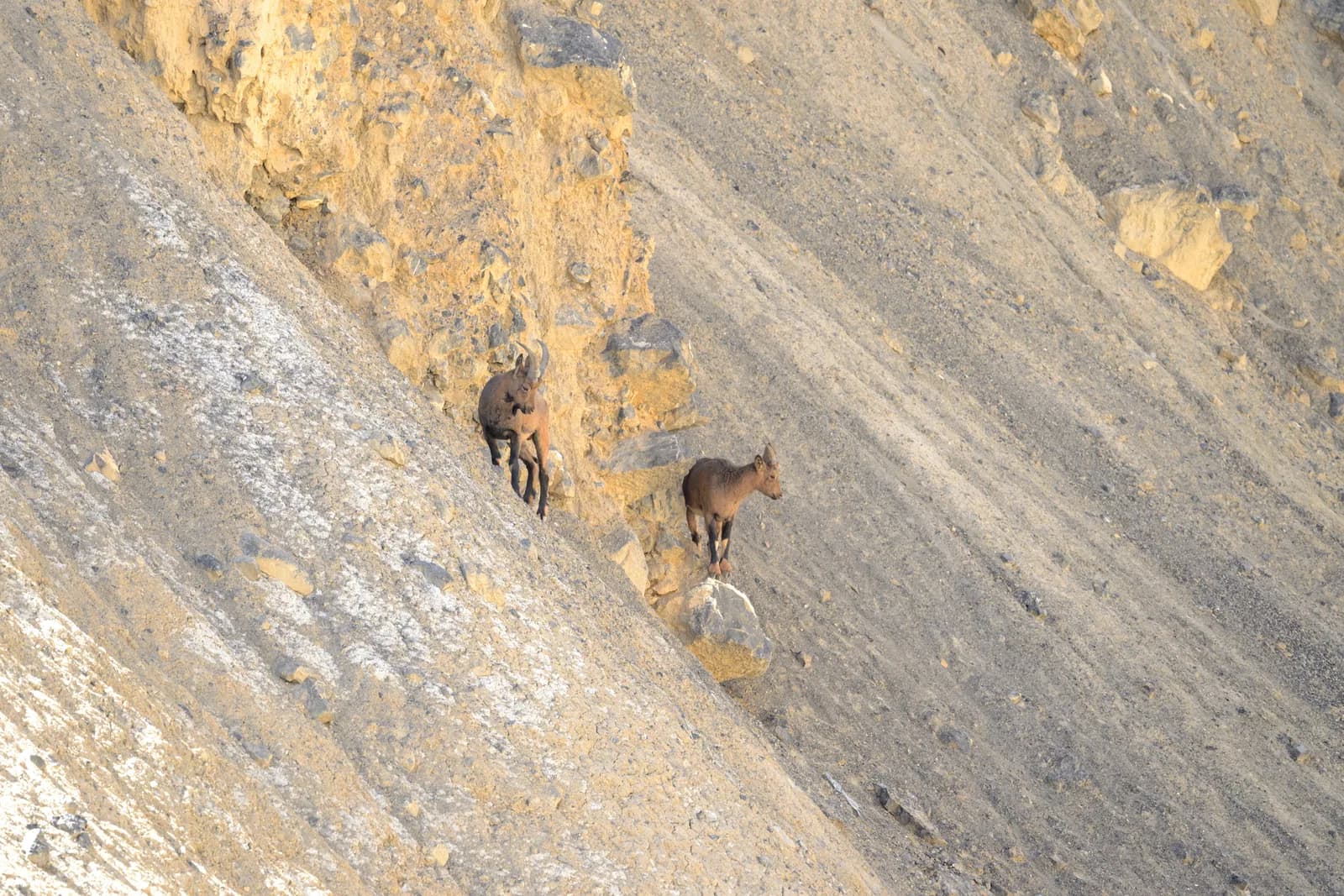
Photographs of Asiatic ibex in the wild, in Indian reserves. We publish no captive, baited or digitally composited images, and no photograph whose licence we cannot show.
Why the ground matters
An ibex is not fast. Its whole defence is terrain: it feeds within a short sprint of ground that no wolf and few snow leopards can work, and it will climb into a place that looks impossible rather than run across open slope.
The prey-base question
Snow leopard density follows wild ungulate density. In Ladakh that is mostly bharal; in Spiti and Kinnaur it is substantially ibex. It is the most useful thing to ask about a valley before you commit a week to it.
Ask a guide how many ibex a valley holds, not how many leopards. The first number is knowable and it predicts the second.
Status and protection
Status and protection
- IUCN Red List
- Near Threatened
- Population trend
- ↓ Decreasing
- Wildlife Protection Act 1972
- Schedule I
- CITES
- Appendix III
Assessment is for the full species Capra sibirica (Siberian Ibex), which is the binomial given.
Assessed 2020 · IUCN Red List assessment
What to book to see one
What you would be booking
- How it is seen
- Winter trans-Himalayan trips, scoping from a valley road or a fixed vantage. The same trips that look for snow leopards.
- Drives to book
- Any snow leopard itinerary in Spiti will produce ibex within a day or two. You do not need to plan for the species separately.
Learn the difference from bharal before you go. Half the time your spotter says ibex you will be looking at bharal, and knowing which is which is what makes the prey-base story readable.
Pin Valley — the park in fullQuestions people ask
Where can I see Asiatic ibex in India?
How do I tell an ibex from a bharal?
Is it related to the Nilgiri tahr?
Read next
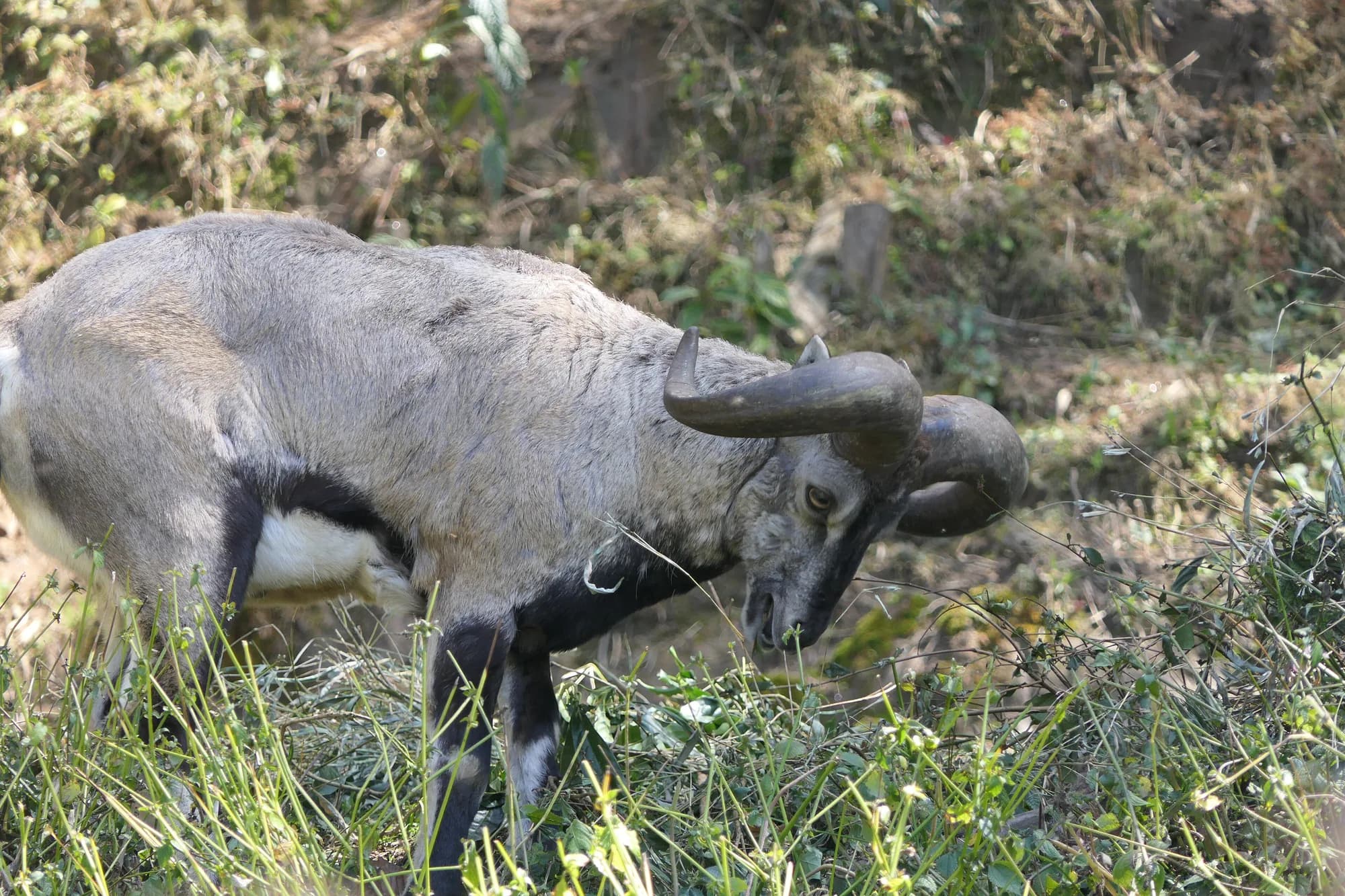
Ladakh and Spiti, above the treeline
Bharal — the confusion pair
Neither blue nor a sheep, and the animal a snow leopard trip actually revolves around. If you are watching bharal, you are watching the right slope.
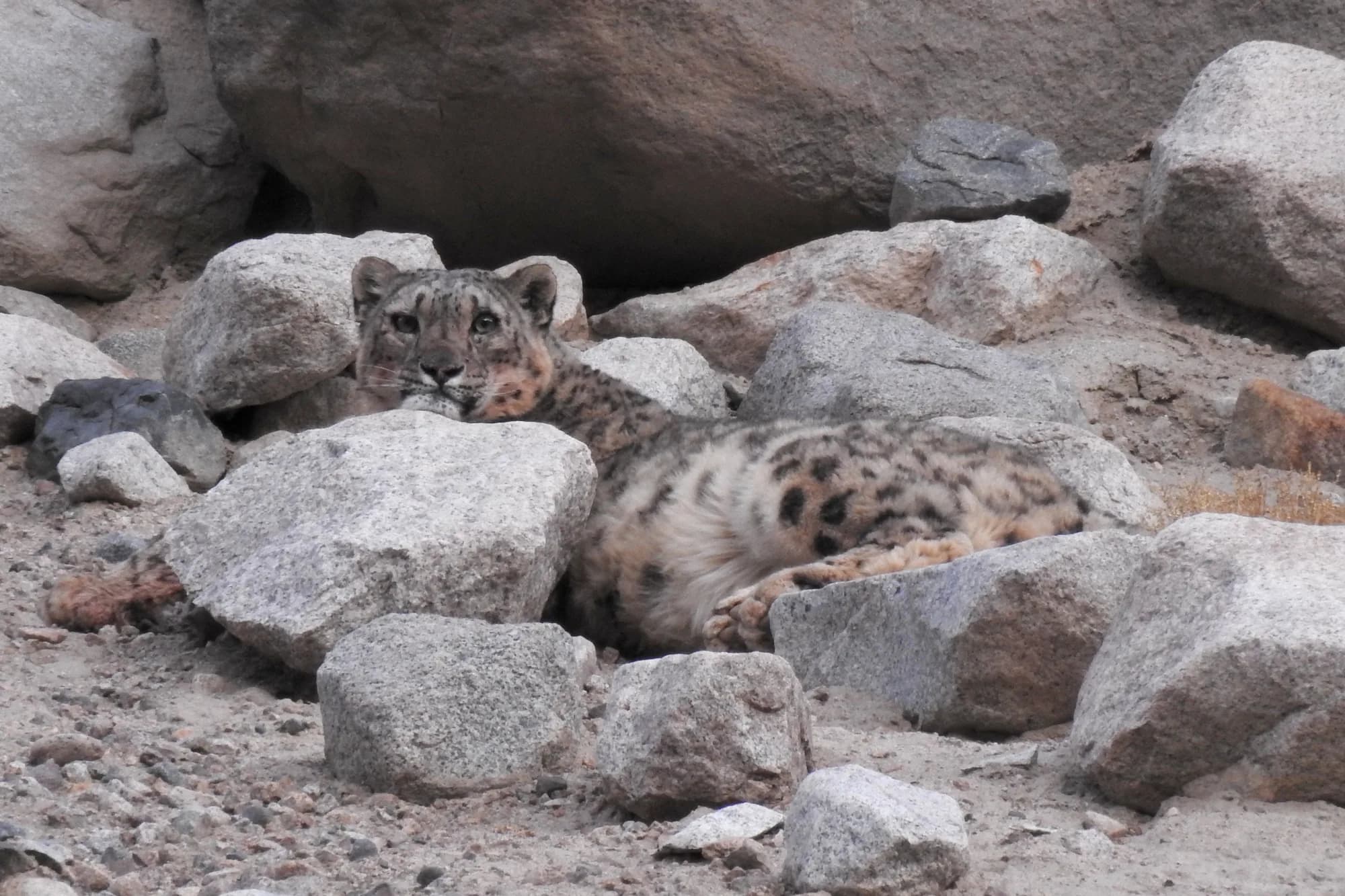
Ladakh and Spiti, in winter
Snow leopard — what the ibex feed
Not a safari. A mountain expedition with a chance of the animal — cold, high, and measured in days of patience rather than in drives.
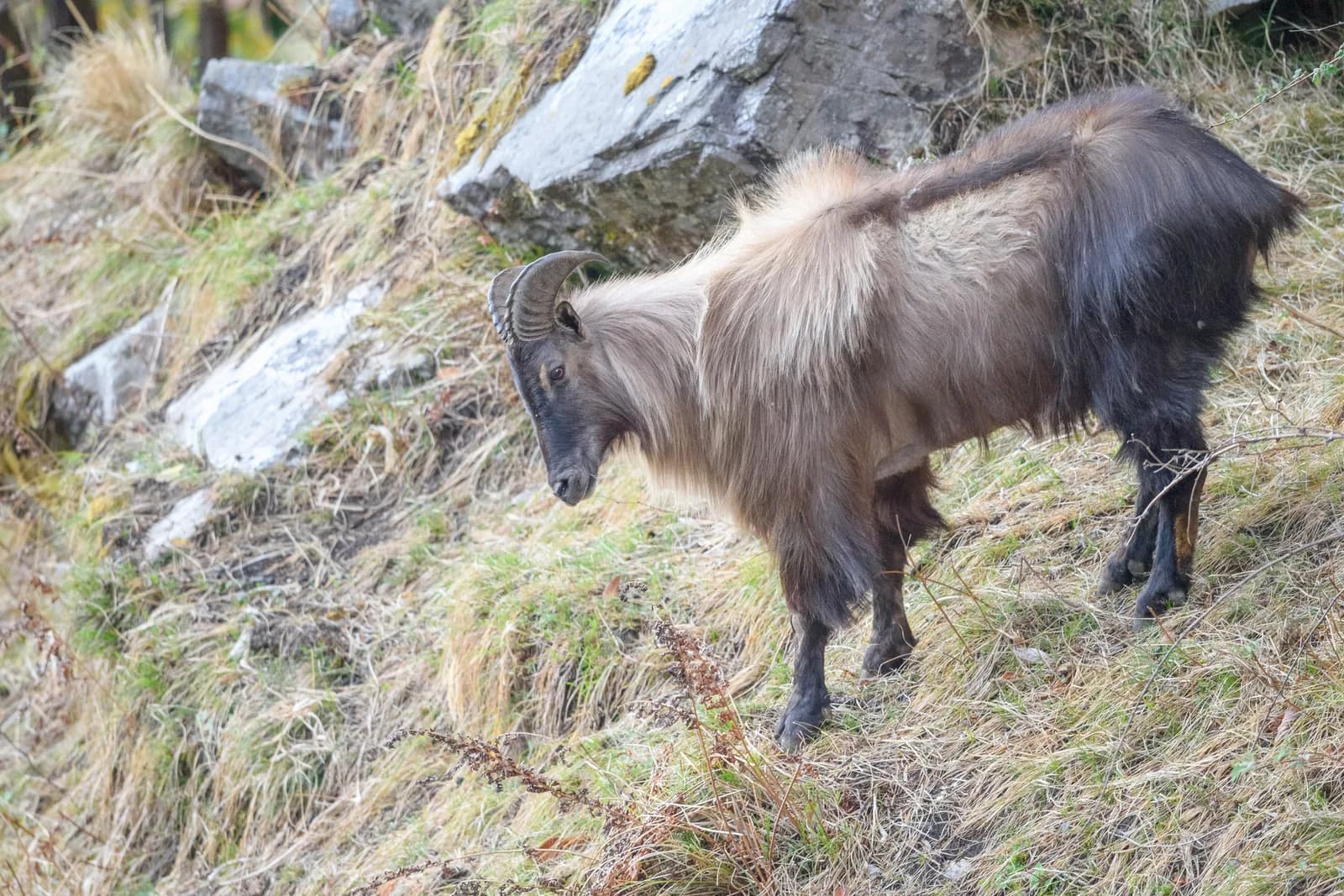
Steep forested slopes below the crags
Himalayan tahr — the forested slopes
A shaggy red-brown goat of the western and central Himalaya, the males maned like something from a bestiary. It shares a name with the Nilgiri tahr and nothing else — they live 2,000 kilometres apart.
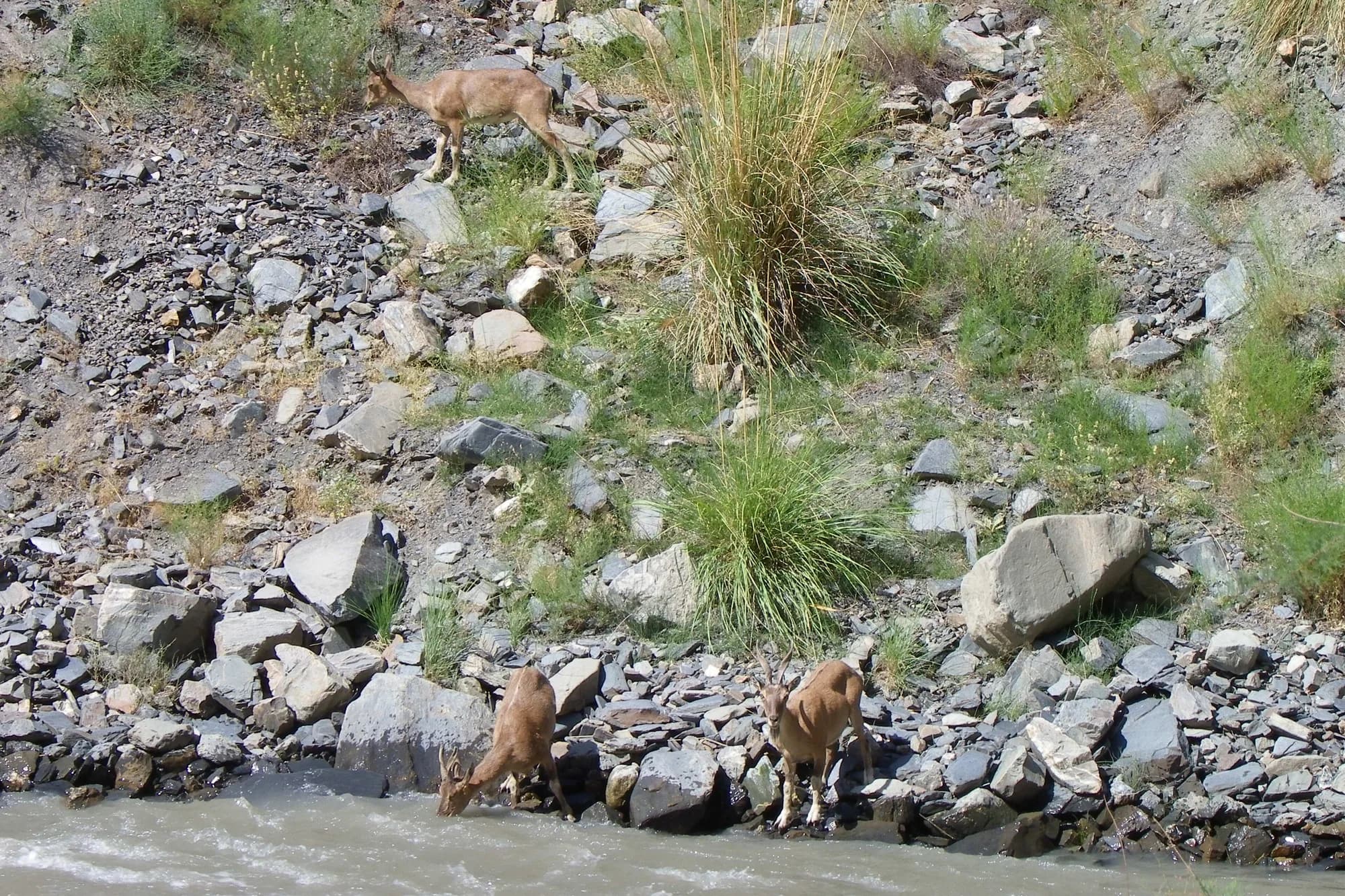
A few valleys in the Pir Panjal
Markhor — the spiral-horned goat
The corkscrew-horned wild goat, and the scarcest large mammal in this catalogue. India holds a few hundred animals in a handful of Kashmir valleys, and seeing one takes a permit, a guide and a good deal of luck.