
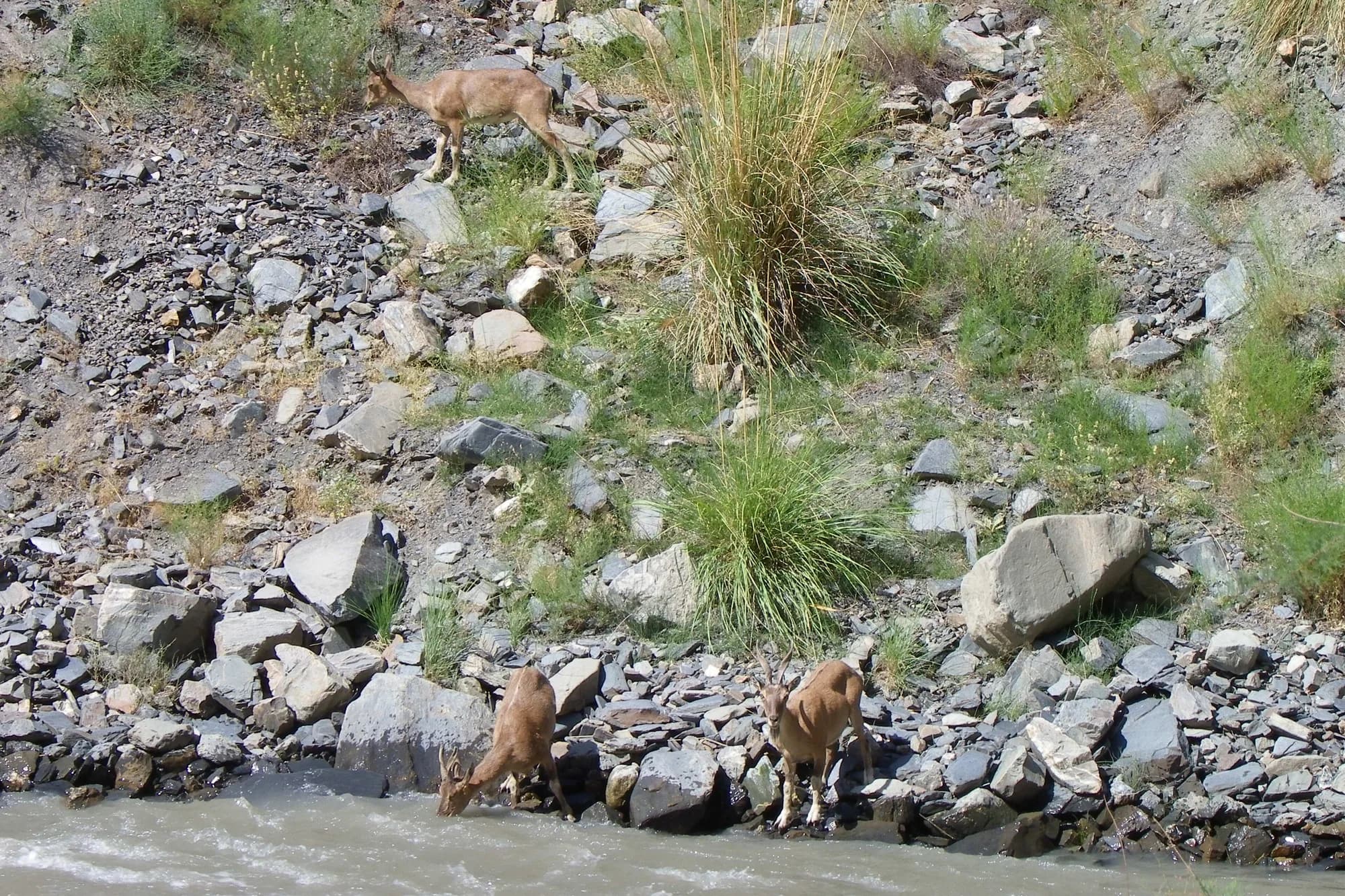
Species · Capra falconeri
Markhor
The corkscrew-horned wild goat, and the scarcest large mammal in this catalogue. India holds a few hundred animals in a handful of Kashmir valleys, and seeing one takes a permit, a guide and a good deal of luck.
Also called
- Rache · Kashmiri
- Markhor (مارخور) · Urdu
Checked 31 Aug 2026
- Where
- Pir Panjal and the Kashmir valleys
- Best months
- November–March
- Population
- A few hundred in India
- Note
- Spiral horns, unmistakable
A narrow Indian range along the Pir Panjal and the valleys of Poonch, Shopian and Kupwara, plus the Kazinag massif north of the Jhelum. The species is far more numerous in Pakistan, where community conservancies have driven a real recovery.
Where it is
Where to actually go
Ranked, with the reason each — these are not interchangeable.
- 01KazinagJammu & KashmirThe largest Indian population, monitored by the forest department, on cliffs above the Jhelum.Winter, with permission
- 02HirporaJammu & KashmirA small Pir Panjal population on the old Mughal Road corridor, studied intermittently.Very small numbers
- 03Poonch and Shopian valleysJammu & KashmirScattered animals in the side valleys, recorded mostly by survey teams rather than visitors.Survey country
Where you will not see one
- LadakhMarkhor do not occur in Ladakh. The big goat on those cliffs is the Asiatic ibex, with long ridged horns that arc backwards rather than spiral.
- Any commercial safari itineraryThere is no tourism product for this species in India. Reaching the ground needs permissions in a sensitive border region, and no operator runs it as a routine trip.
When to go
When to go
- J
- F
- M
- A
- M
- J
- J
- A
- S
- O
- N
- D
January: best. February: best. March: good. April: marginal. May: marginal. June: closed or unproductive. July: closed or unproductive. August: closed or unproductive. September: marginal. October: good. November: best. December: best.
Through the day
- Dawn
- Morning
- Midday
- Afternoon
- Dusk
- Night
Dawn: most active. Morning: active. Midday: usually resting. Afternoon: active. Dusk: most active. Night: not normally seen.
Telling it apart
Told apart from
In photographs, not in the field
Horn shape settles it instantly. Ibex horns sweep back in a single ridged arc; markhor horns twist in a corkscrew spiral.
Marks chosen to be usable from a moving vehicle — a markhor is rarely still and never close enough for anything subtler.
What it looks like in the field
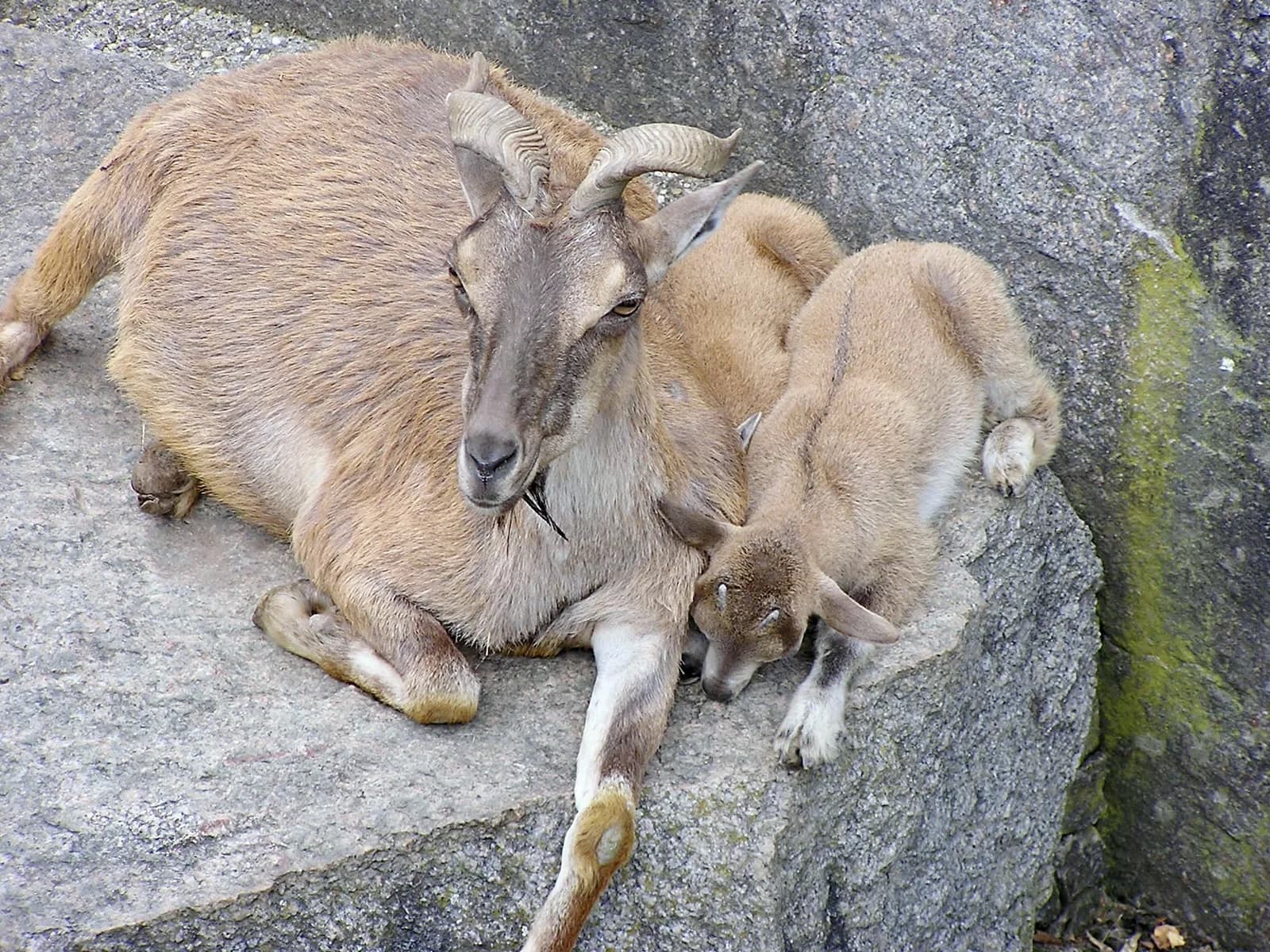
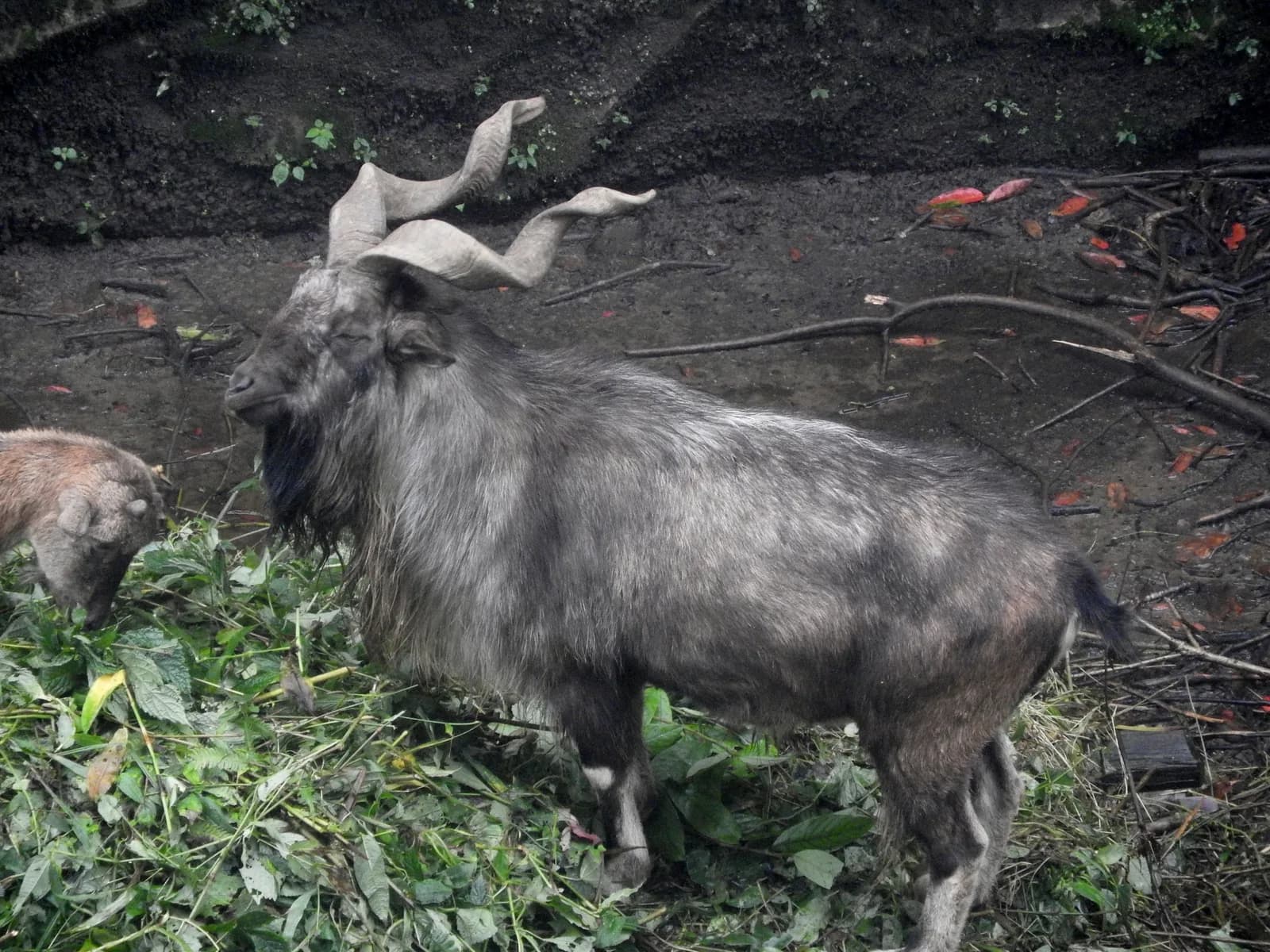
Photographs of Markhor in the wild, in Indian reserves. We publish no captive, baited or digitally composited images, and no photograph whose licence we cannot show.
The horns
Nothing else in India carries anything like them: a tight open spiral in the Pir Panjal animals, twisting up and out, and in a mature male more than a metre along the curve. They are also the reason the species was shot down to its present numbers.
The recovery that happened next door
Across the line of control, community-managed conservancies in Gilgit-Baltistan and Chitral turned markhor from a collapsing population into an increasing one, by giving villages a direct stake in the animals on their slopes.
India’s markhor live in the same mountains under a different model, and the difference in trajectory is the most instructive comparison in Himalayan conservation.
Status and protection
Status and protection
- IUCN Red List
- Near Threatened
- Population trend
- ↑ Increasing
- Wildlife Protection Act 1972
- Schedule I
- CITES
- Appendix I
Species-level assessment of Capra falconeri, matching the binomial given. Date assessed 20 September 2014; year published 2015;
Assessed 2014 · IUCN Red List assessment
What to book to see one
What you would be booking
- How it is seen
- Only through the Jammu & Kashmir forest department or a research or conservation group working in Kazinag or Hirpora, with permissions arranged well ahead.
- Drives to book
- Plan a week. Most people who go looking do not see one, and that is the honest expectation.
This is a militarised border landscape as well as a wildlife one. Access depends on the security situation as much as on the animals, and both can change between planning and travelling.
Questions people ask
Can I see a markhor in India?
How do I tell a markhor from an ibex?
Why is it so rare in India?
Read next
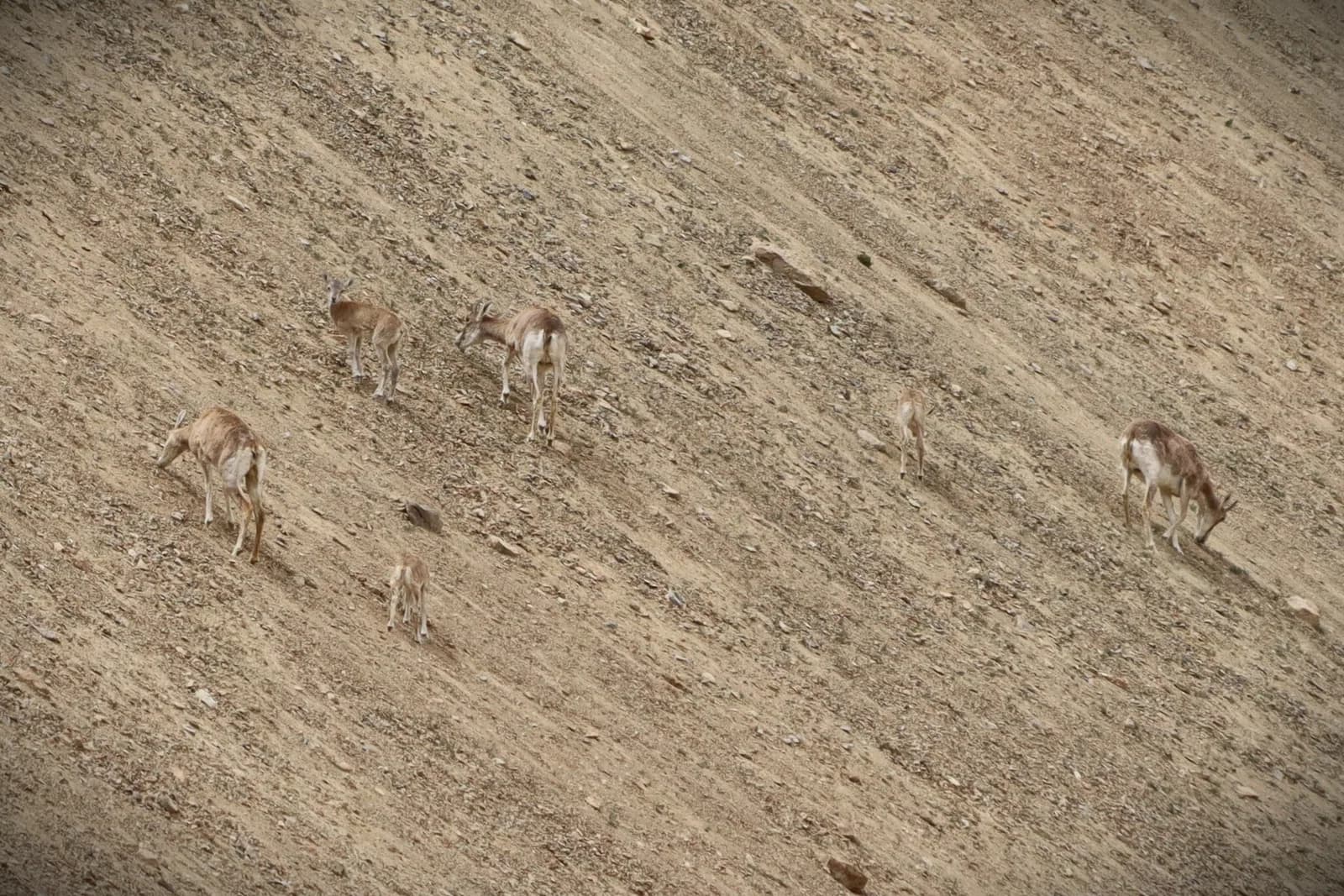
Cliff and crag above Spiti and Ladakh
Asiatic ibex — the confusion pair
A big wild goat with scimitar horns, living on ground steep enough that nothing can follow it. It is the prey base that puts a snow leopard on a slope in Spiti, the way bharal does in Ladakh.
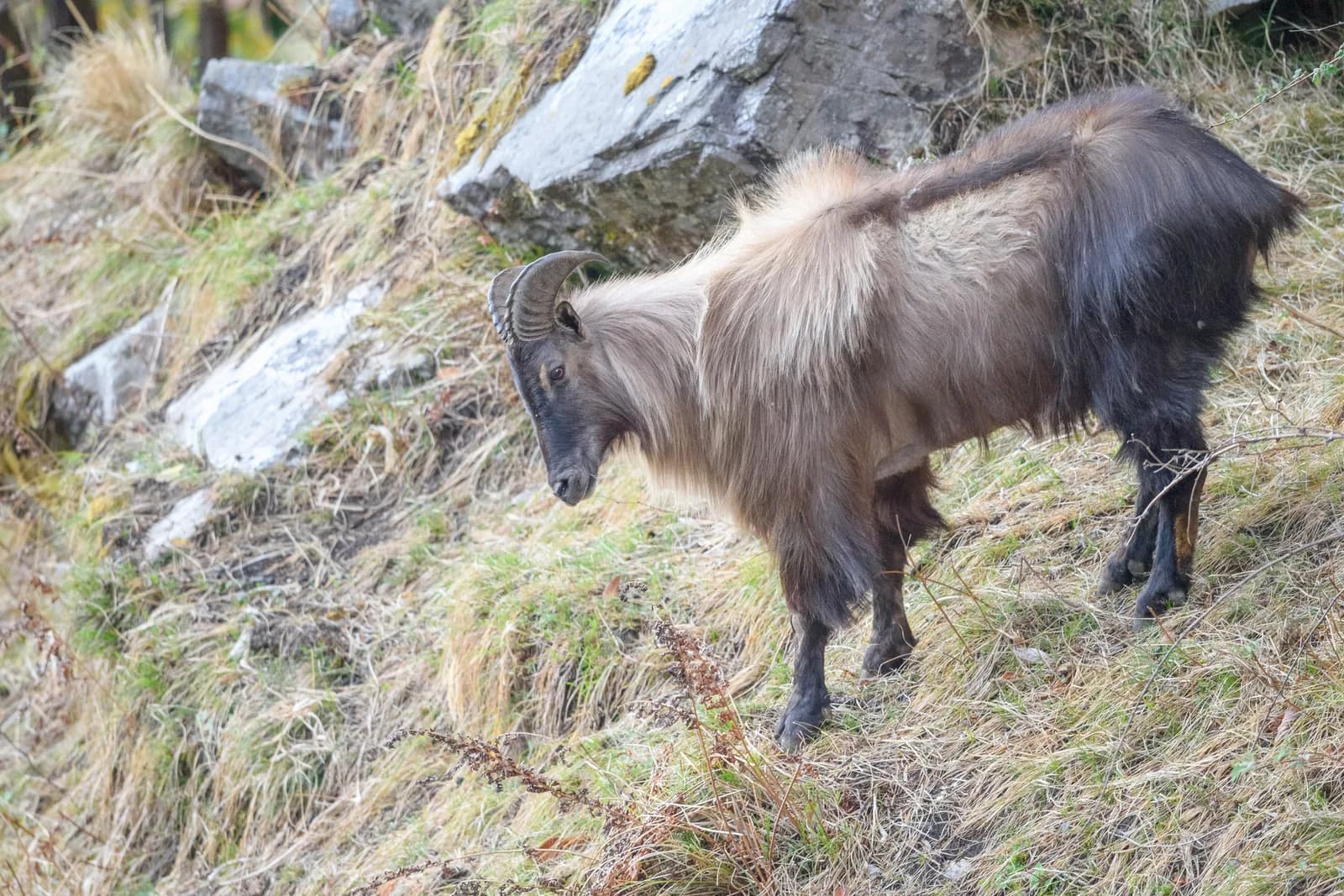
Steep forested slopes below the crags
Himalayan tahr — the forested slopes
A shaggy red-brown goat of the western and central Himalaya, the males maned like something from a bestiary. It shares a name with the Nilgiri tahr and nothing else — they live 2,000 kilometres apart.
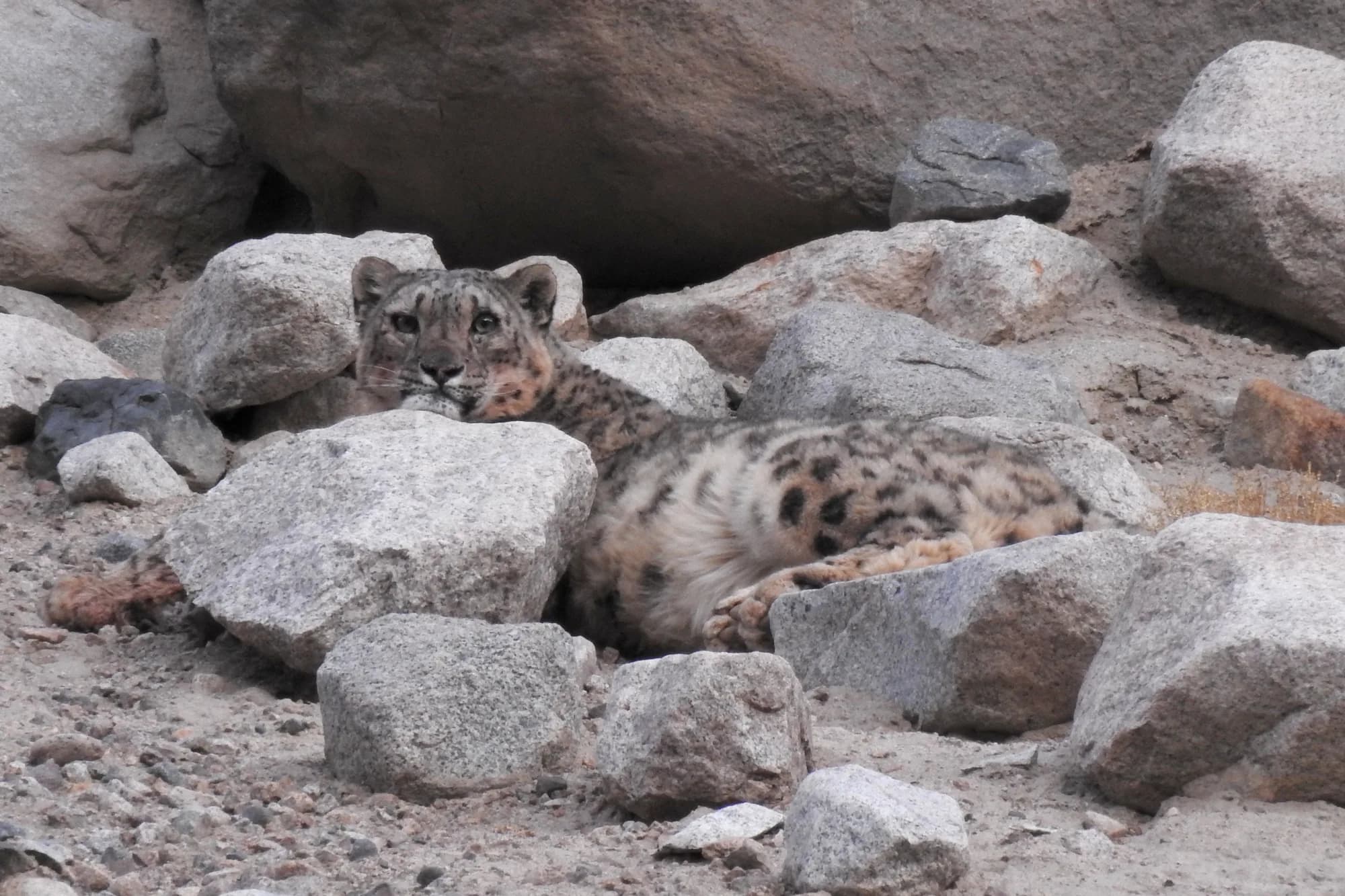
Ladakh and Spiti, in winter
Snow leopard — the predator above
Not a safari. A mountain expedition with a chance of the animal — cold, high, and measured in days of patience rather than in drives.
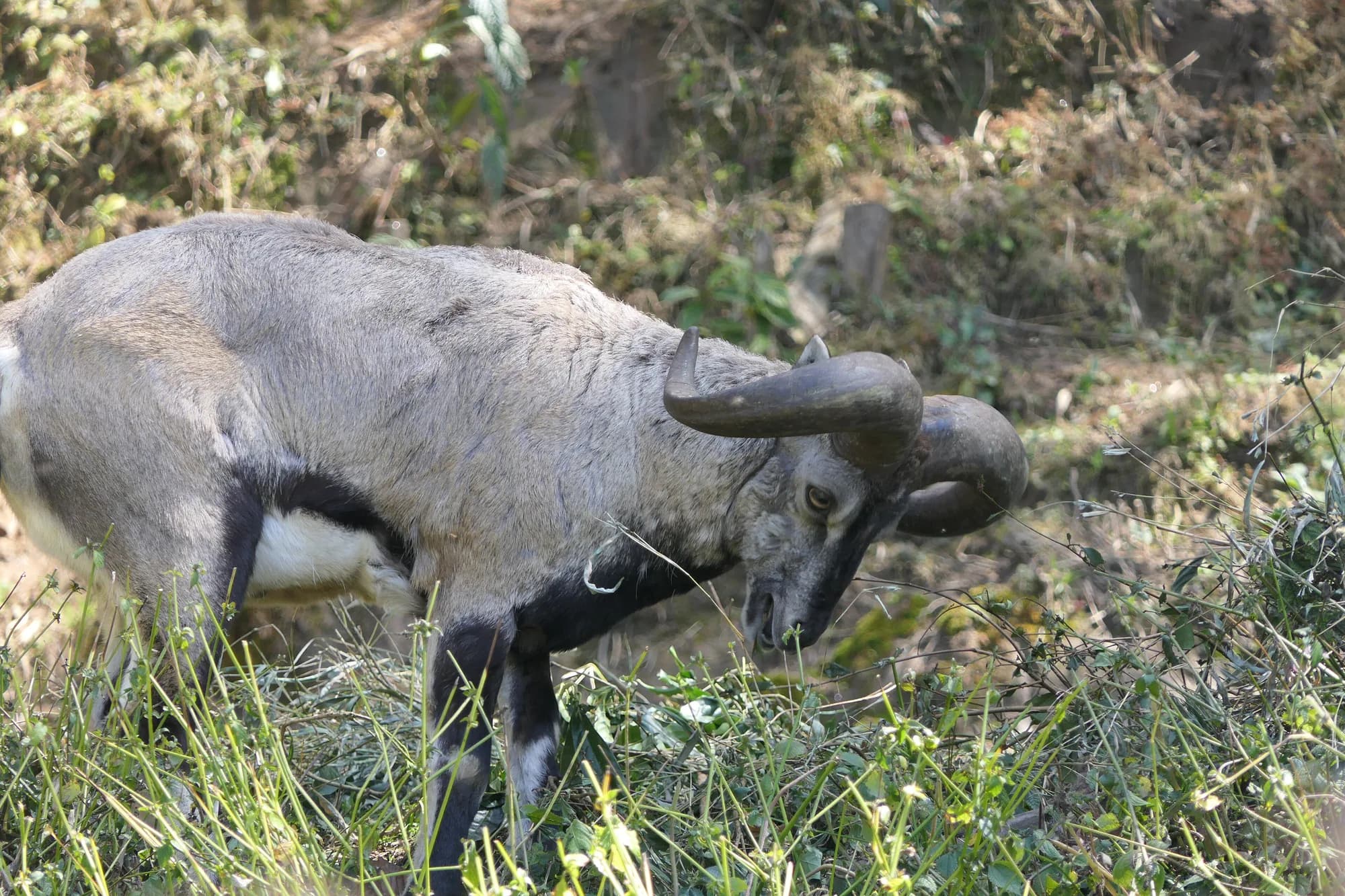
Ladakh and Spiti, above the treeline
Bharal — the common wild sheep
Neither blue nor a sheep, and the animal a snow leopard trip actually revolves around. If you are watching bharal, you are watching the right slope.