
Species · Hemitragus jemlahicus
Himalayan tahr
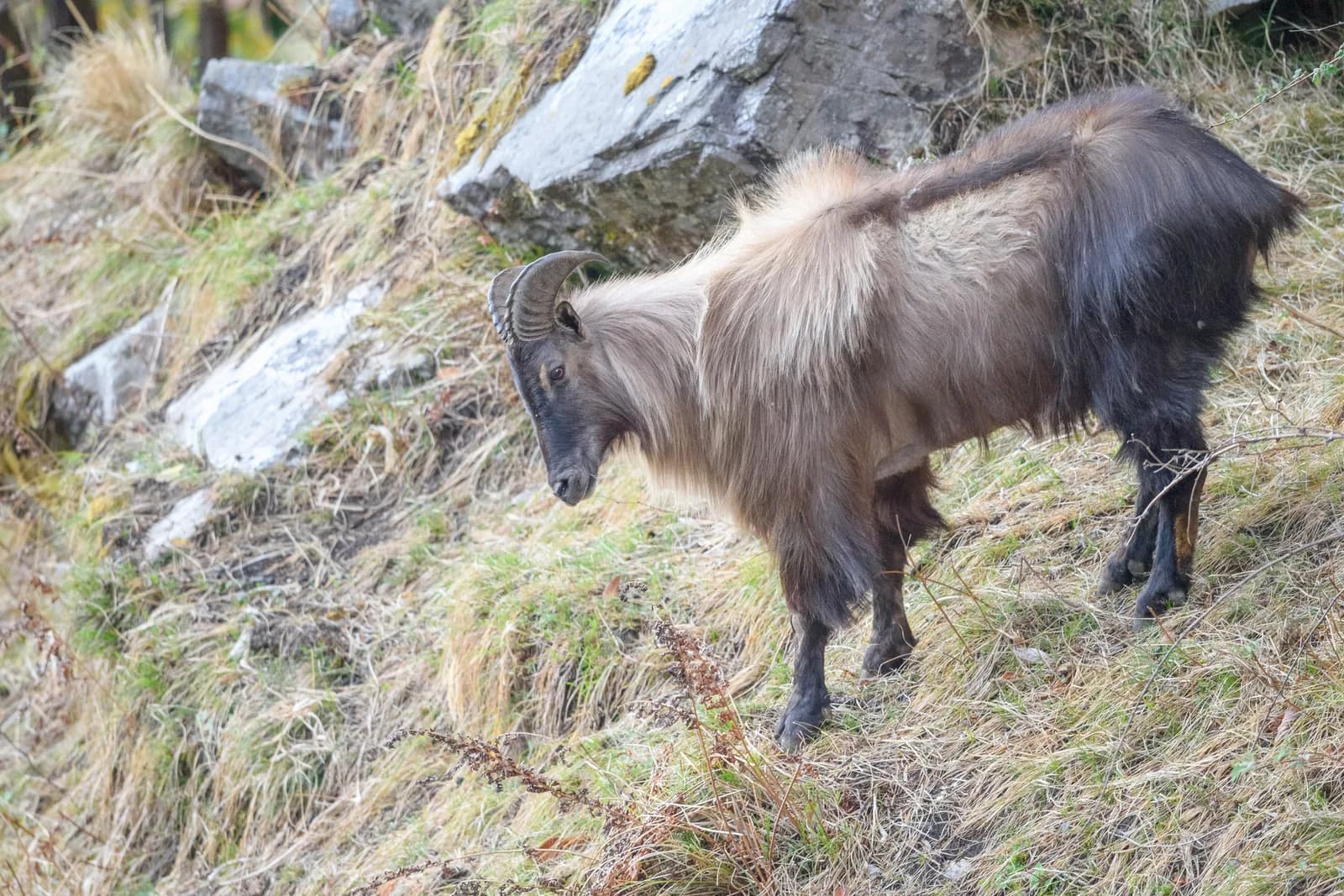
A shaggy red-brown goat of the western and central Himalaya, the males maned like something from a bestiary. It shares a name with the Nilgiri tahr and nothing else — they live 2,000 kilometres apart.
Also called
- Jharal · Garhwali
- Kart / Jhural (कार्ट) · Hindi
- Jharal · Nepali
Checked 31 Aug 2026
- Where
- Uttarakhand, Himachal, Sikkim
- Best months
- October–December
- Altitude
- About 2,500–4,500 m
- Note
- Not related to the Nilgiri tahr's range
Steep, often forested slopes between about 2,500 and 4,500 metres along the Himalayan arc from Kashmir east to Sikkim. It sits below the ibex and above the goral, on ground too broken for either to bother with.
Where it is
- Spiti
Where to actually go
Ranked, with the reason each — these are not interchangeable.
- 01Kedarnath Wildlife SanctuaryUttarakhandGood numbers on the steep catchments, and trekking routes that put you on the right slopes.Autumn rut
- 02Great Himalayan National ParkHimachal PradeshExcellent tahr country in the Tirthan and Sainj catchments, walked with sanctuary guides.Multi-day trek
- 03KhangchendzongaSikkimPresent in the high forested valleys, seen occasionally from the trekking routes.Incidental
Where you will not see one
- The Nilgiris and EravikulamThat is the Nilgiri tahr, a Western Ghats endemic on grassy montane slopes. The shared name is the whole of the relationship as far as a trip is concerned.
- Open trans-Himalayan plateauTahr want steep ground with cover. On the bare Ladakh plateau you are looking at ibex, bharal or urial instead.
When to go
When to go
- J
- F
- M
- A
- M
- J
- J
- A
- S
- O
- N
- D
January: marginal. February: marginal. March: good. April: good. May: good. June: marginal. July: closed or unproductive. August: closed or unproductive. September: good. October: best. November: best. December: marginal.
Through the day
- Dawn
- Morning
- Midday
- Afternoon
- Dusk
- Night
Dawn: most active. Morning: active. Midday: usually resting. Afternoon: active. Dusk: most active. Night: not normally seen.
Telling it apart
Told apart from
Only in the name
Range, first. Then coat: the Nilgiri tahr is short-coated dark grey-brown with a pale saddle in old males; the Himalayan tahr is long-coated copper-red with a heavy shoulder mane.
The treeline in Himachal
Horns. Ibex horns are long, ridged and sweep back over the shoulders; tahr horns are short, smooth and curve back tightly.
Himalayan goral
The same slopes, lower down
Size and build. Goral are much smaller and greyer with short straight horns; tahr are heavy, red and maned.
Marks chosen to be usable from a moving vehicle — a himalayan tahr is rarely still and never close enough for anything subtler.
What it looks like in the field
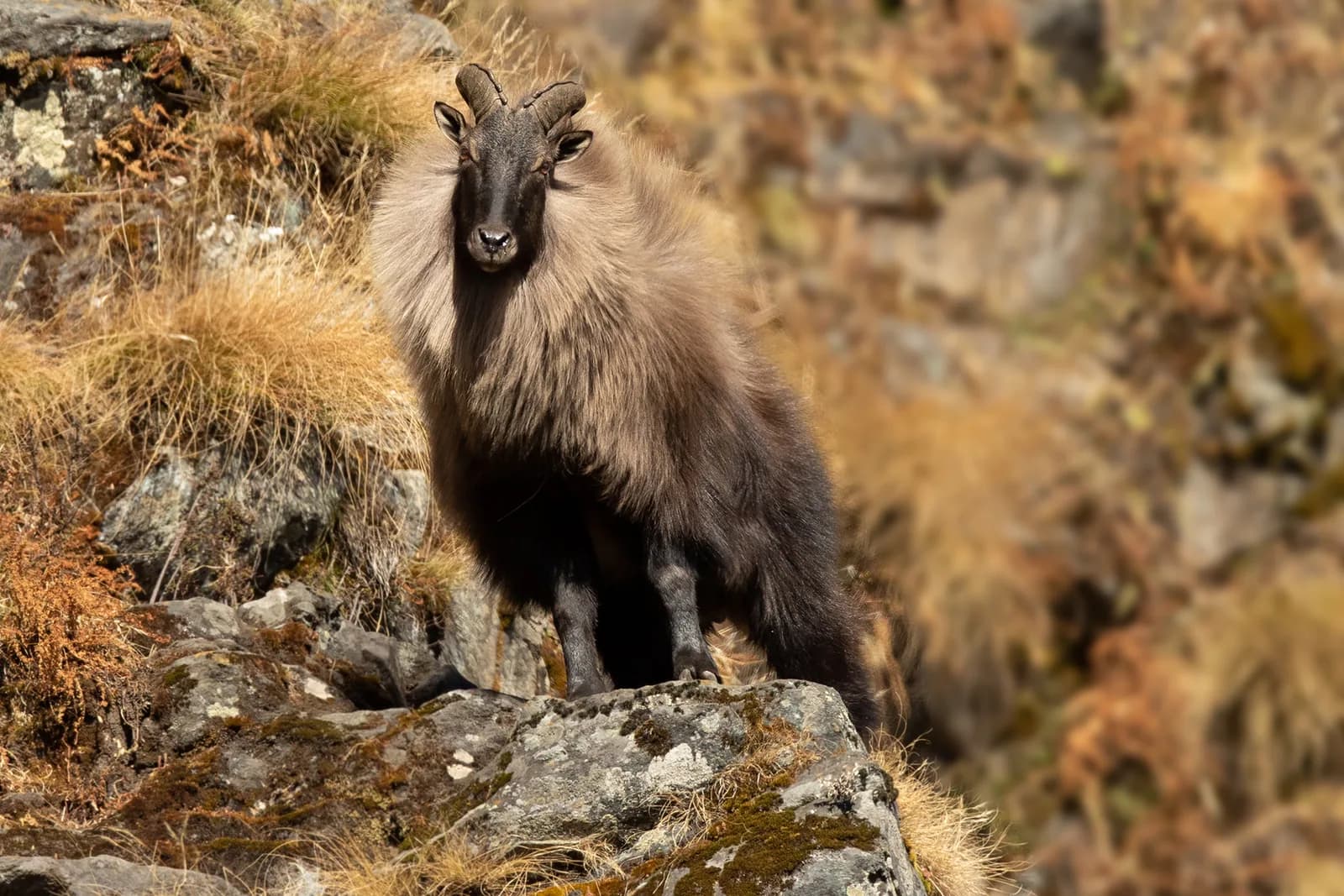
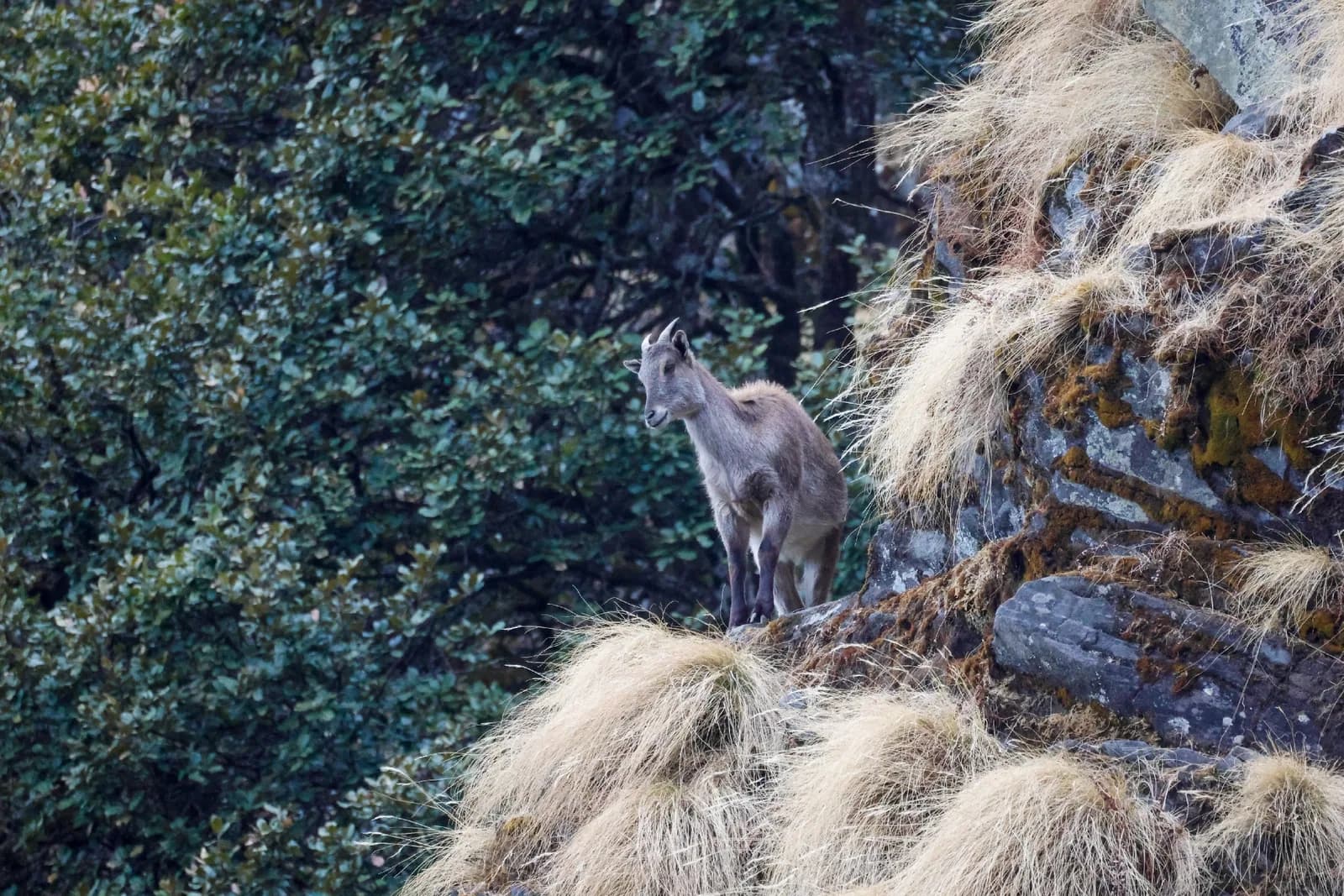
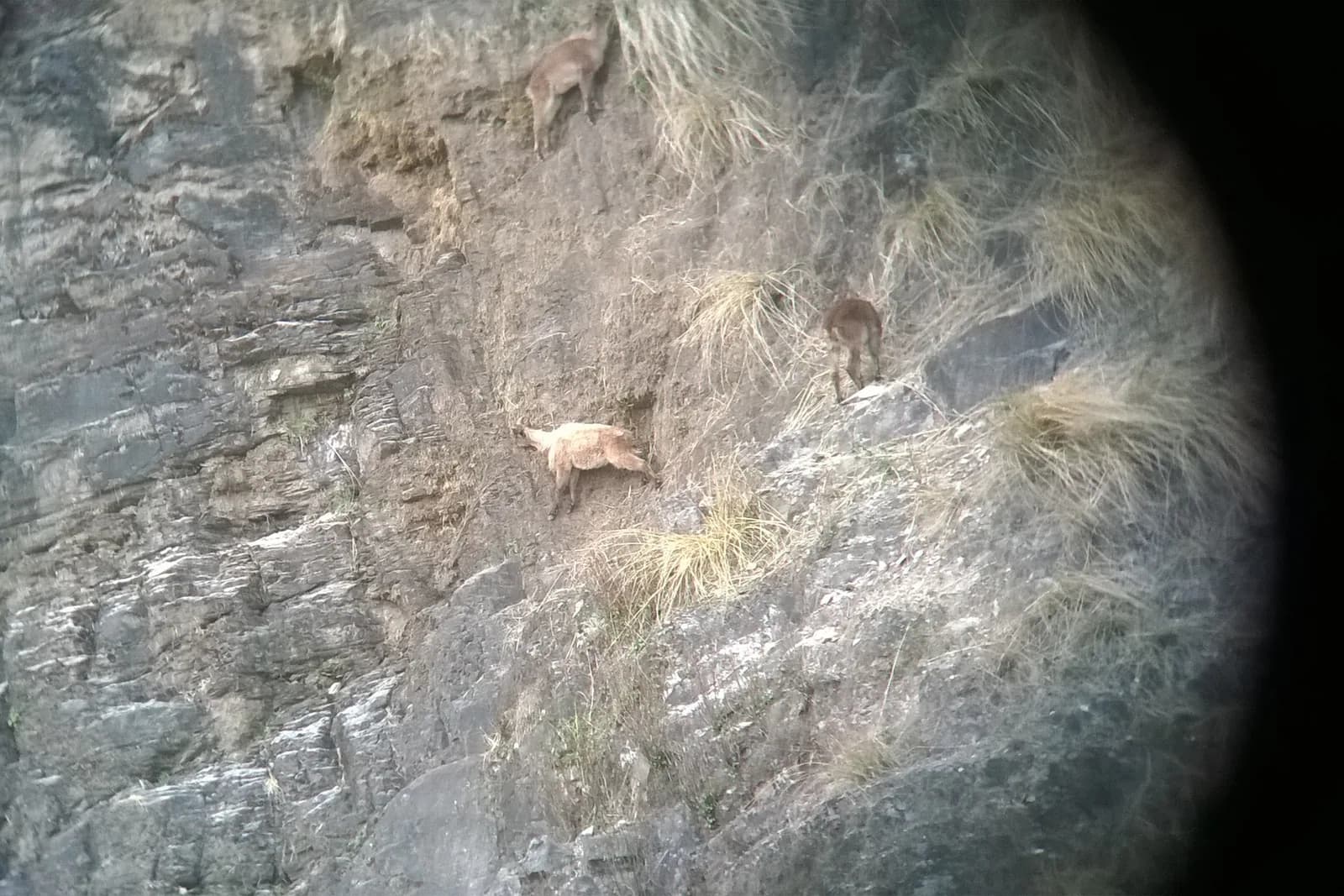
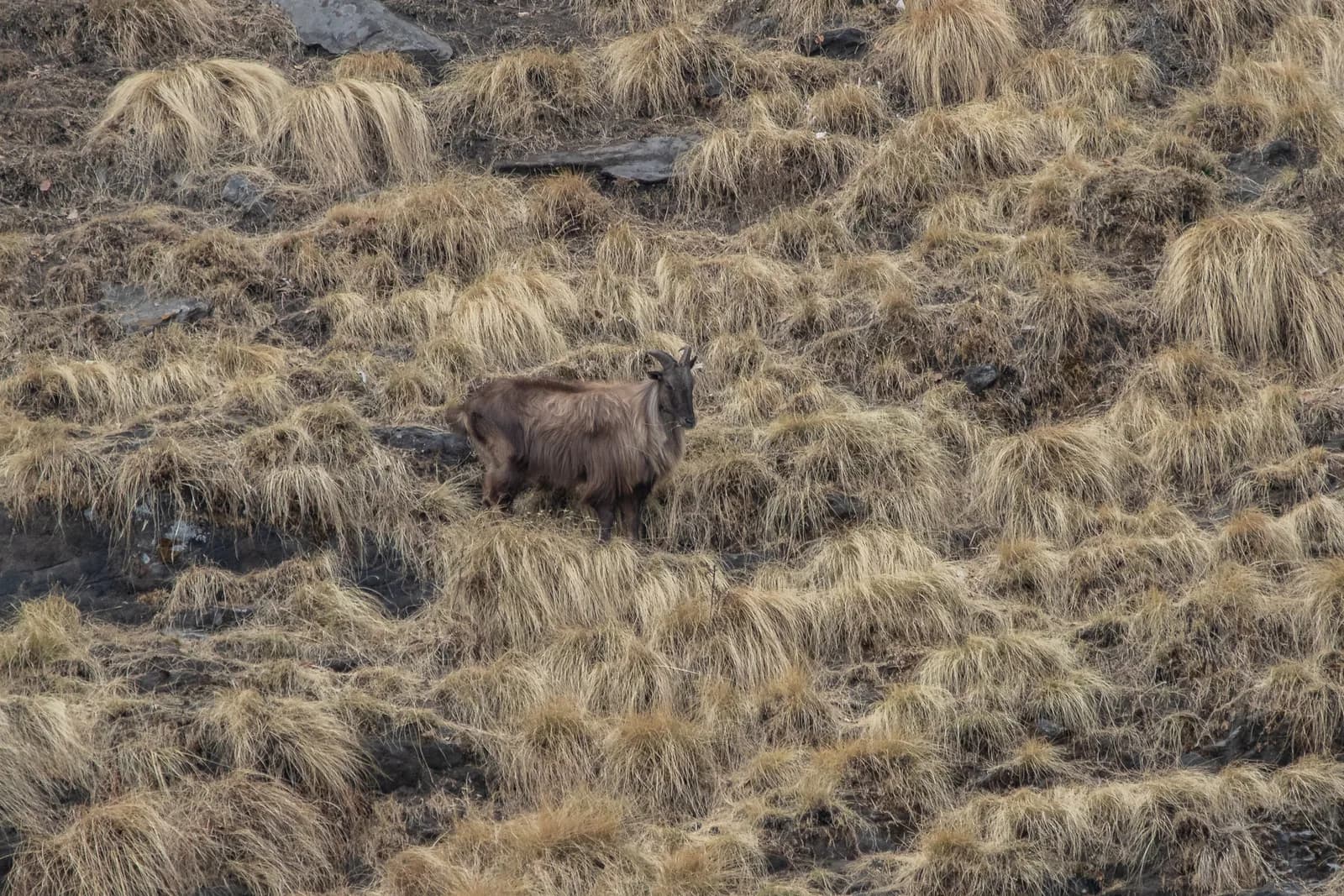
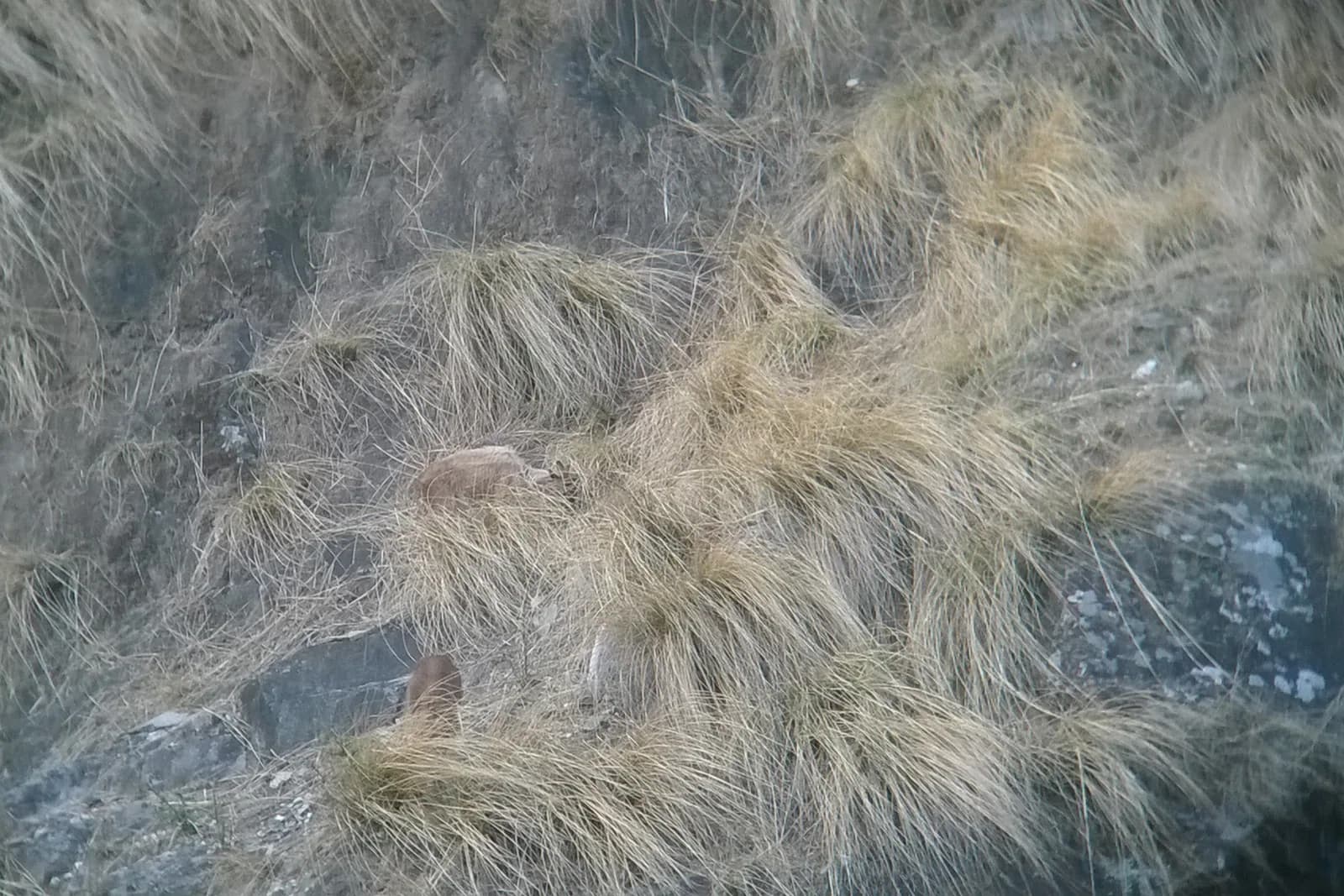
Photographs of Himalayan tahr in the wild, in Indian reserves. We publish no captive, baited or digitally composited images, and no photograph whose licence we cannot show.
Two tahr, one name
The Himalayan tahr and the Nilgiri tahr are not the same animal, are not in the same genus, and do not live within two thousand kilometres of each other. The name is the only thing they share, and it produces a steady stream of misfiled photographs.
The autumn rut
Through late autumn the males come into full coat, the manes lengthen, and animals that spend the rest of the year scattered gather on the same slopes. It is a short window and it is the one worth planning around.
A tahr in November looks like a different species from the same animal in June. Go in the right month and it is a genuinely spectacular goat.
Status and protection
Status and protection
- IUCN Red List
- Near Threatened
- Population trend
- ↓ Decreasing
- Wildlife Protection Act 1972
- Schedule I
- CITES
- Not listed
Species-level assessment of Hemitragus jemlahicus, which matches the binomial given. Criteria A2bcde; date assessed 30 January 2020, year published 2020;
Assessed 2020 · IUCN Red List assessment
What to book to see one
What you would be booking
- How it is seen
- Trekking, or a hill road that runs along a steep catchment. Kedarnath Wildlife Sanctuary and the Great Himalayan National Park are the practical starting points.
- Drives to book
- Not a vehicle animal. Plan three or four days walking in one catchment with a local guide.
Autumn is both the rut and the clearest weather. After the first heavy snow the animals drop lower and become easier, but access gets harder at the same rate.
Great Himalayan — the park in fullQuestions people ask
Where can I see a Himalayan tahr?
Is it the same as the Nilgiri tahr?
When is the best time?
Read next
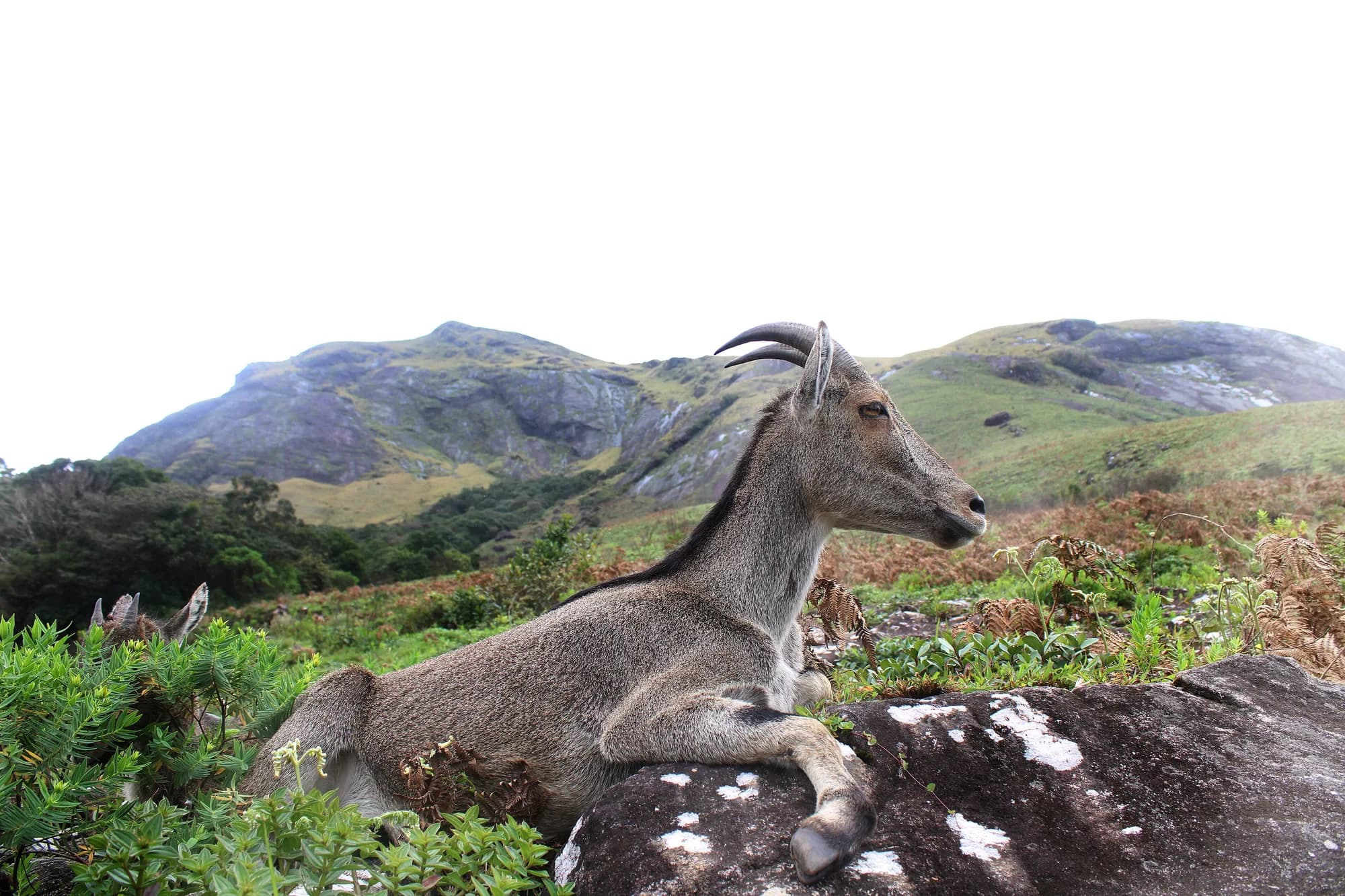
Eravikulam, and the high Ghats grasslands
Nilgiri tahr — the other tahr
A wild goat on cliff grassland above two thousand metres, endemic to the Western Ghats, and the one endangered Indian endemic you can more or less count on seeing.
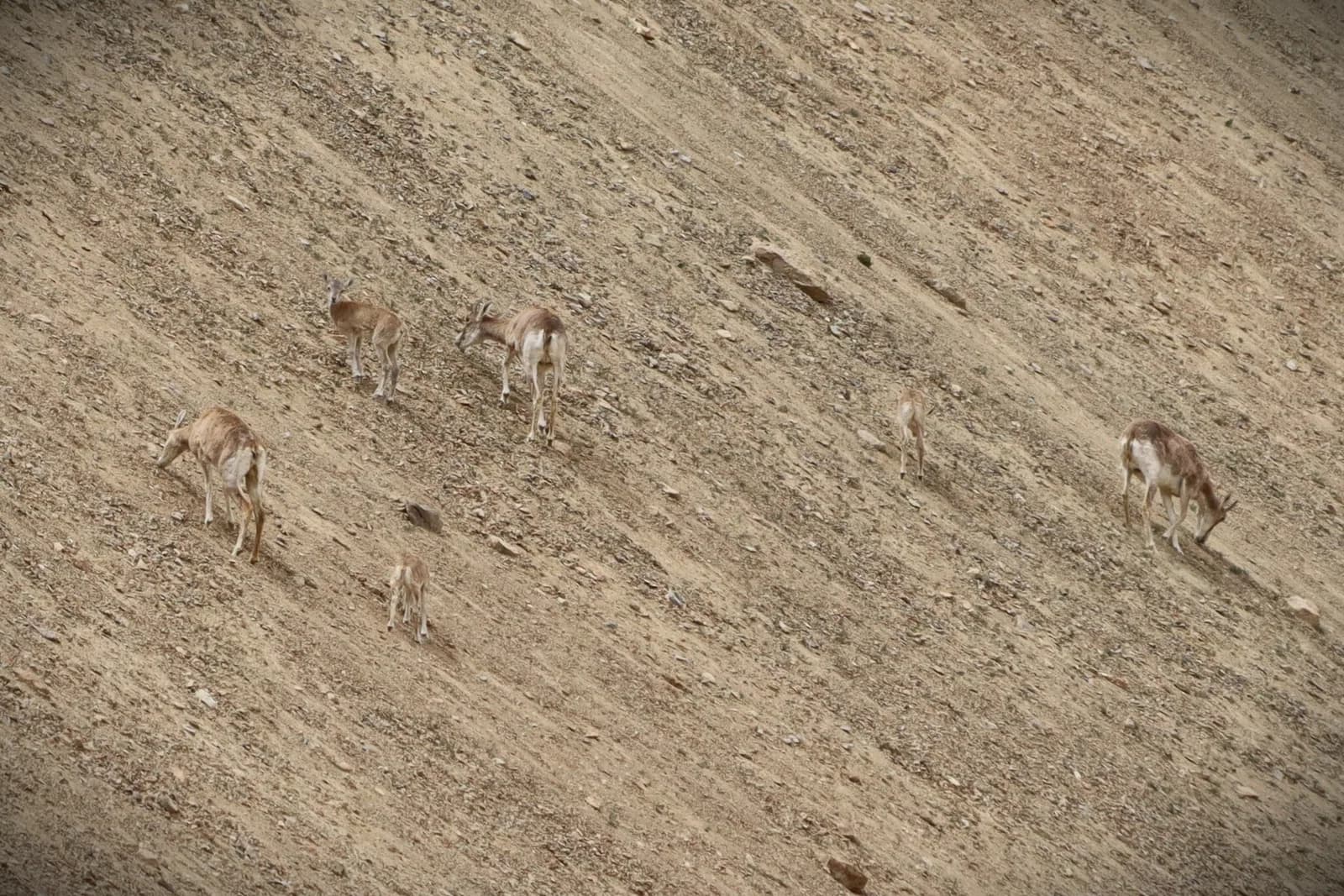
Cliff and crag above Spiti and Ladakh
Asiatic ibex — the ground above
A big wild goat with scimitar horns, living on ground steep enough that nothing can follow it. It is the prey base that puts a snow leopard on a slope in Spiti, the way bharal does in Ladakh.
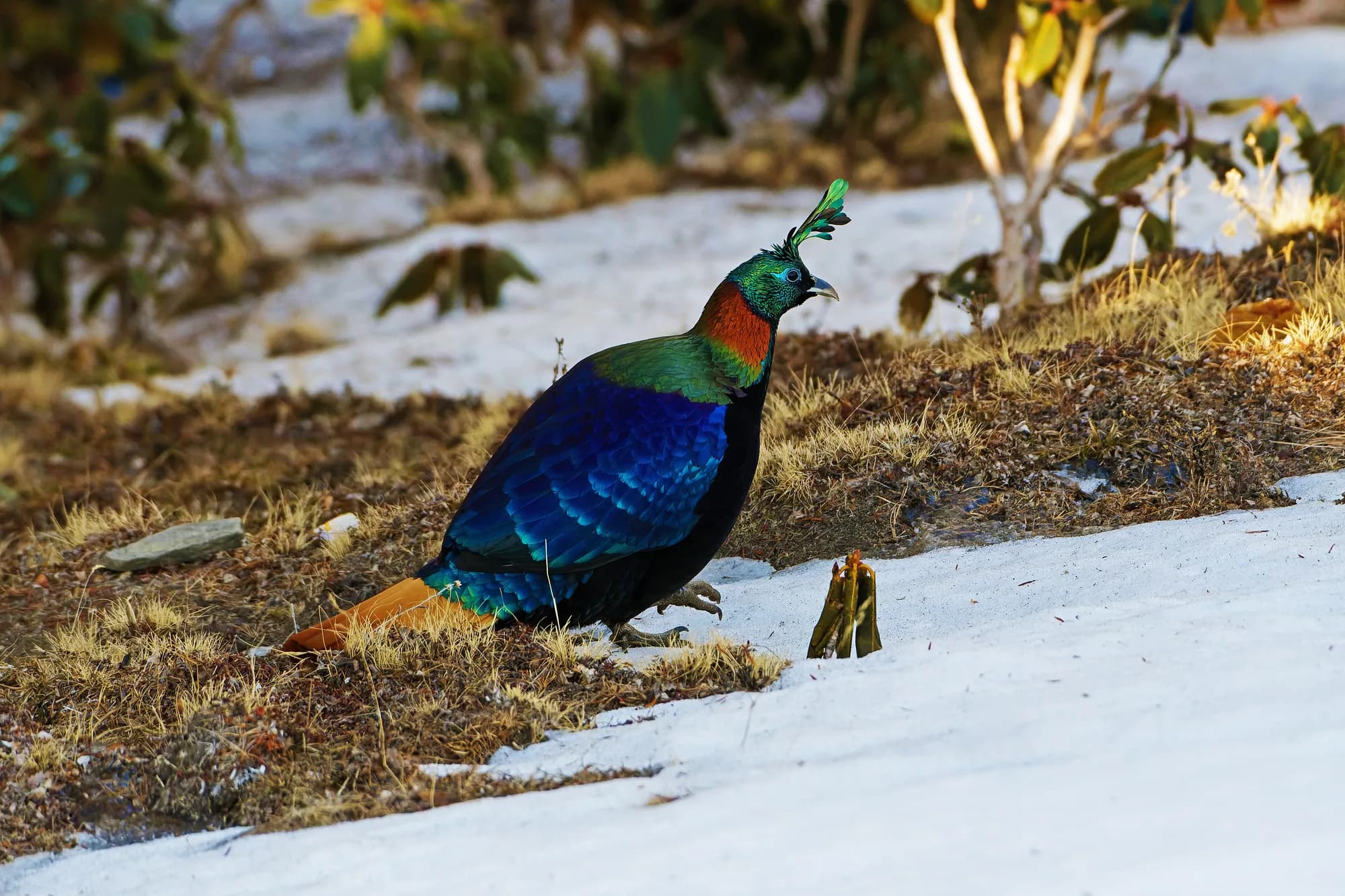
Chopta, Tungnath and the high oak
Himalayan monal — the same slopes
A pheasant that looks like spilled petrol in sunlight, digging for roots on a snowy slope at three thousand metres. The bird international operators build entire Himalayan itineraries around.
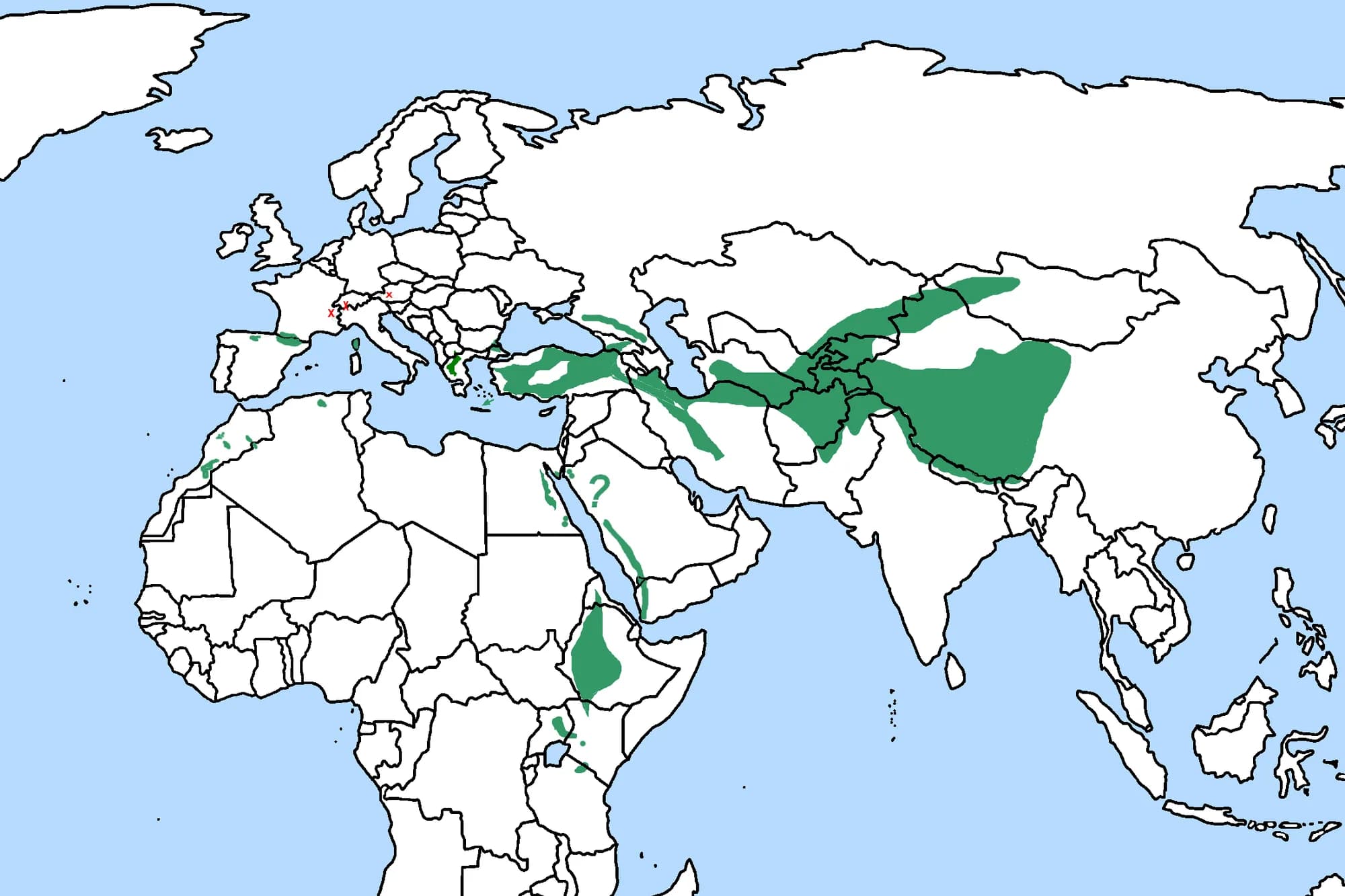
A Himalayan ridge, at eye level
Lammergeier — overhead
Nearly three metres of wing passing below you on a ridge, orange-stained, with a diamond tail. The only bird in the world that lives mainly on bone, and the standard consolation on a blank snow leopard morning.