
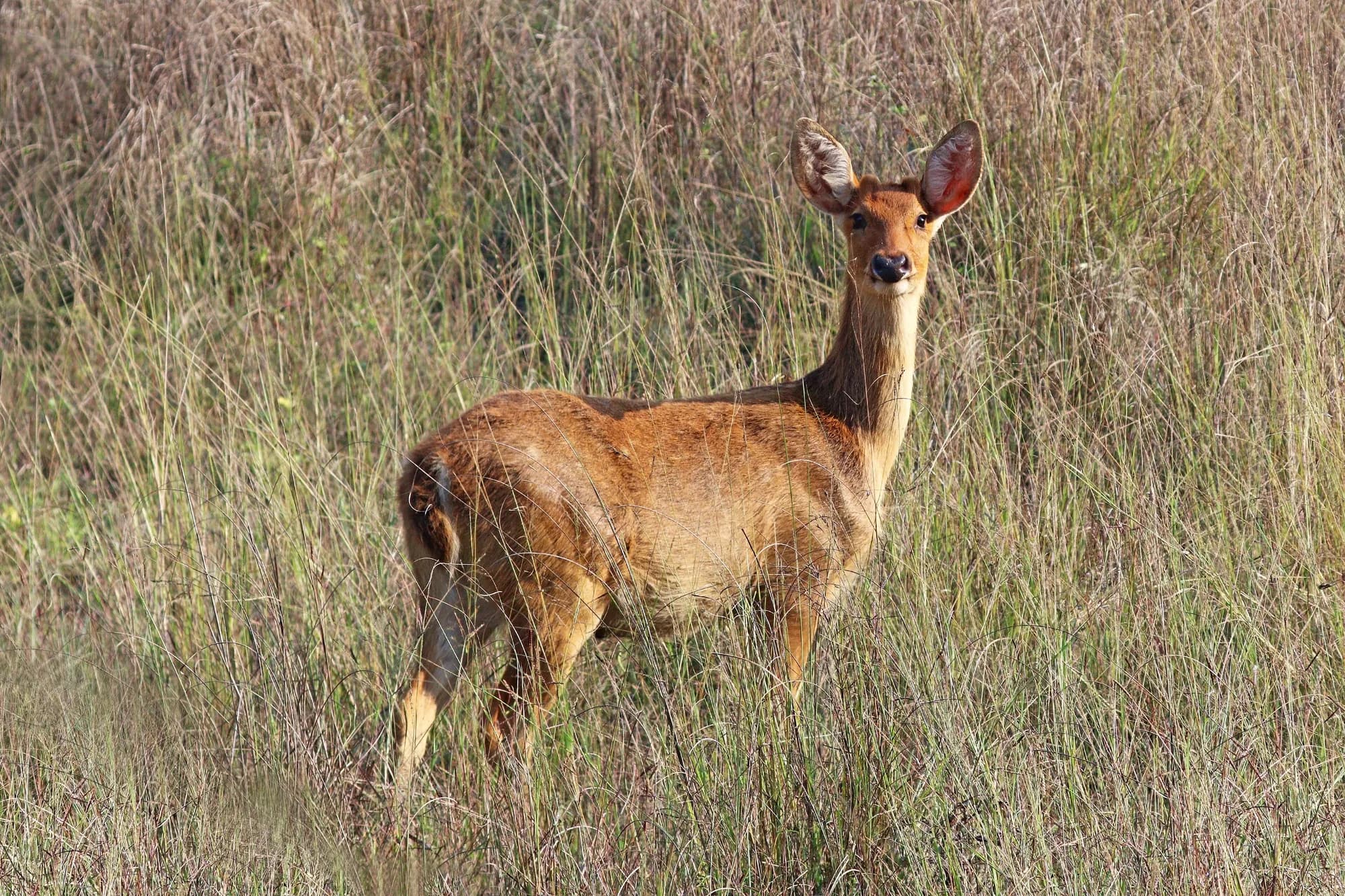
Species · Rucervus duvaucelii branderi
Barasingha
The hard-ground swamp deer was down to about sixty-six animals in the early 1970s. It survives in one reserve, and its recovery is the best thing that has happened in an Indian national park.
Also called
- Barasingha (बारहसिंगा) · Hindi
- Barah singha — twelve horns · Hindi
Checked 30 Aug 2026
- Where
- Kanha, Madhya Pradesh
- Best months
- November–March
- Rut
- December–January
- Note
- A single-park subspecies
One reserve, and a second population moved to Satpura as insurance against a single catastrophe wiping out the subspecies.
Where it is
Where to actually go
Ranked, with the reason each — these are not interchangeable.
- 01KanhaMadhya PradeshThe whole world population, on open meadows that the standard safari routes cross. You are close to certain to see them, and they are the reason the park's grassland is managed the way it is.Kanha and Mukki zones, in the December rut
- 02SatpuraMadhya PradeshA translocated herd establishing itself, and an insurance policy against Kanha suffering a single bad year. Far fewer animals and a much better forest to walk.Only if you are there anyway
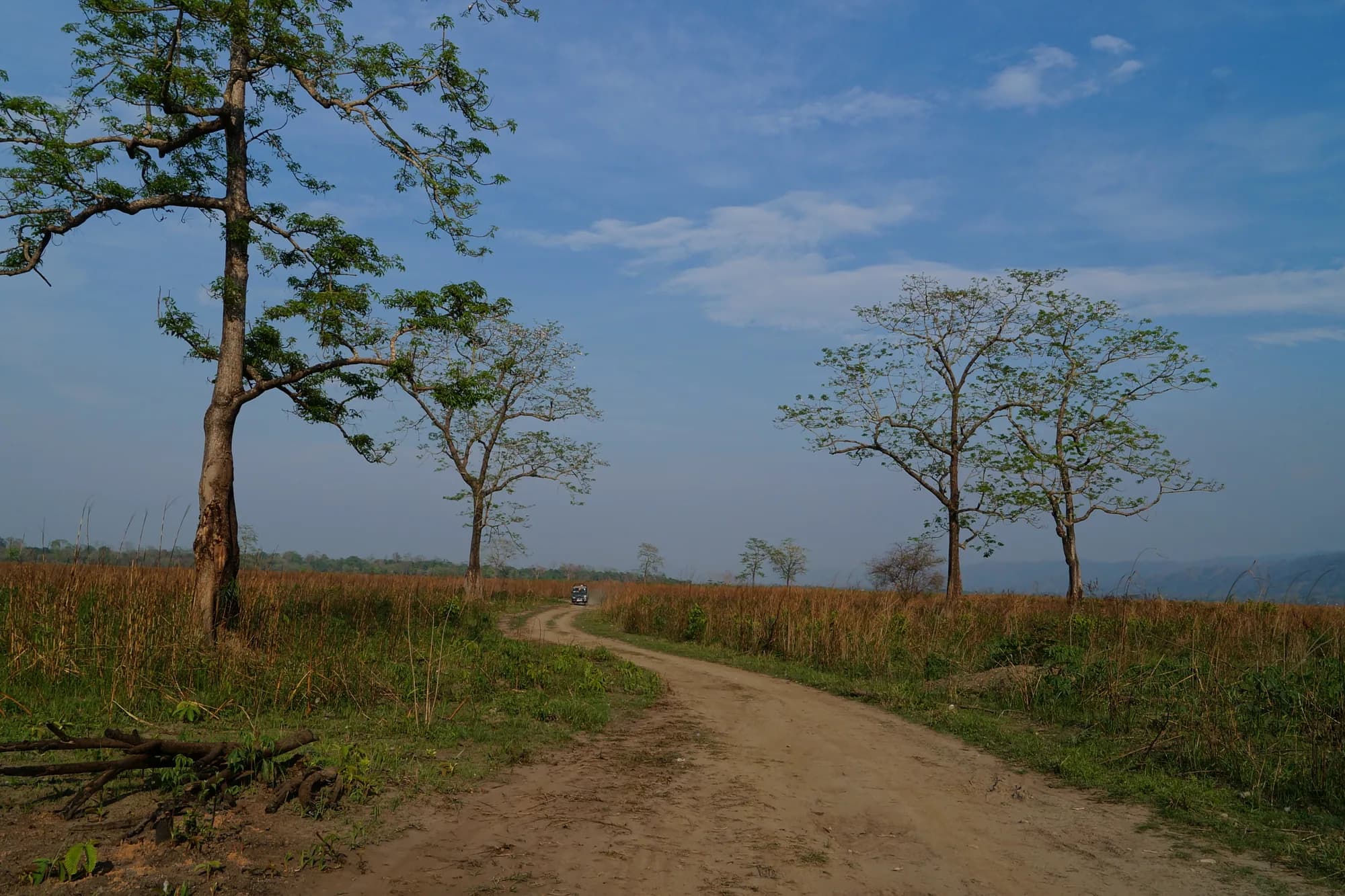
Where you will not see one
- Kaziranga and the teraiThere are swamp deer in Assam and in Uttar Pradesh, but they are different subspecies — the eastern and northern swamp deer. The hard-ground animal is Kanha's alone, and the three are routinely conflated.
- Anywhere outside Madhya PradeshThis subspecies has no other wild population. Everything you read about barasingha elsewhere in India refers to a different animal on wetter ground.
- Expecting a sambarBarasingha are paler, more golden, and carry many-tined antlers rather than the sambar's three points. They also stand in open meadow, where sambar keep to cover.
When to go
When to go
- J
- F
- M
- A
- M
- J
- J
- A
- S
- O
- N
- D
January: best. February: best. March: good. April: marginal. May: marginal. June: marginal. July: closed or unproductive. August: closed or unproductive. September: closed or unproductive. October: marginal. November: best. December: best.
Through the day
- Dawn
- Morning
- Midday
- Afternoon
- Dusk
- Night
Dawn: most active. Morning: most active. Midday: usually resting. Afternoon: active. Dusk: most active. Night: not normally seen.
What it looks like in the field
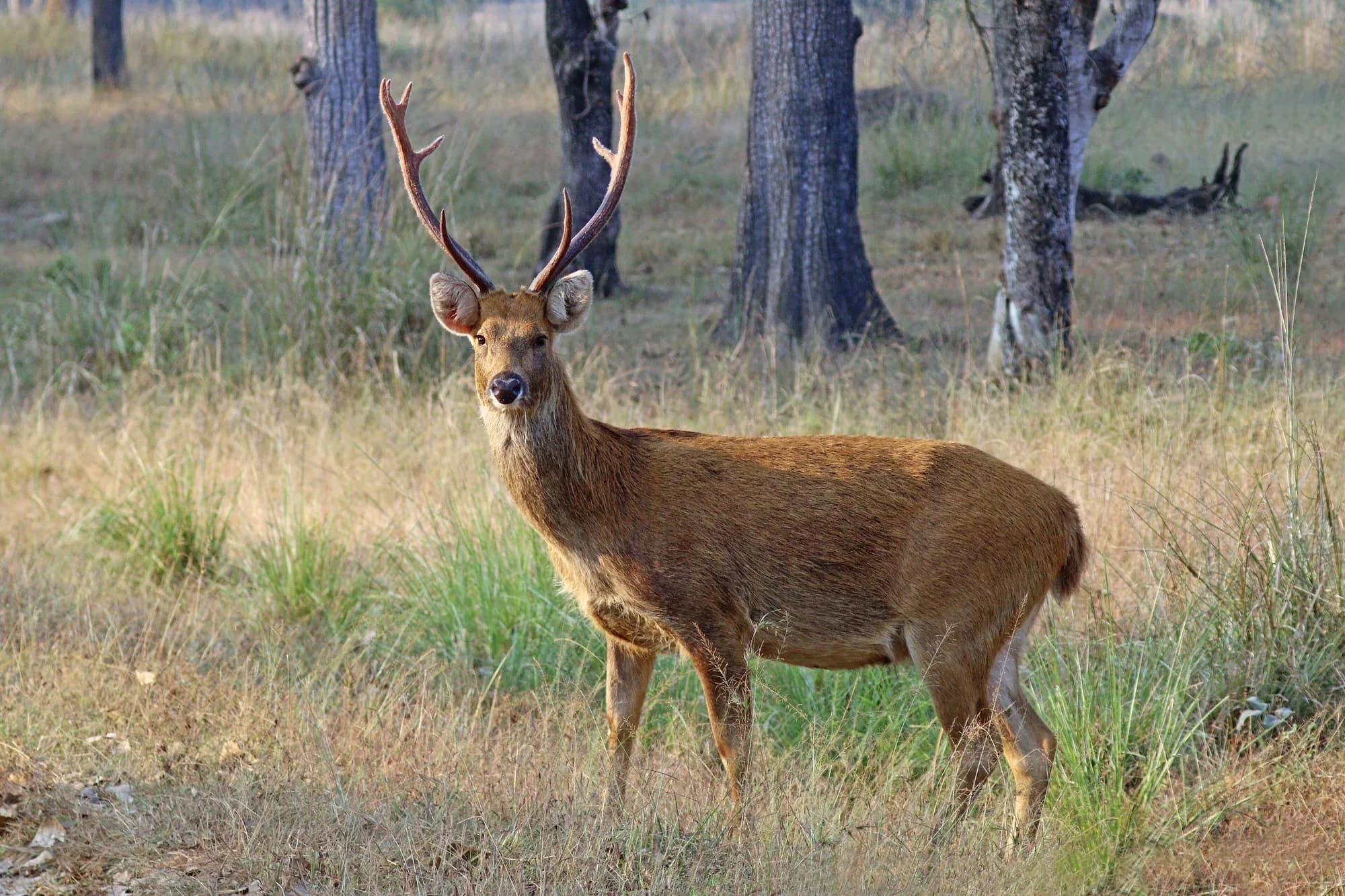
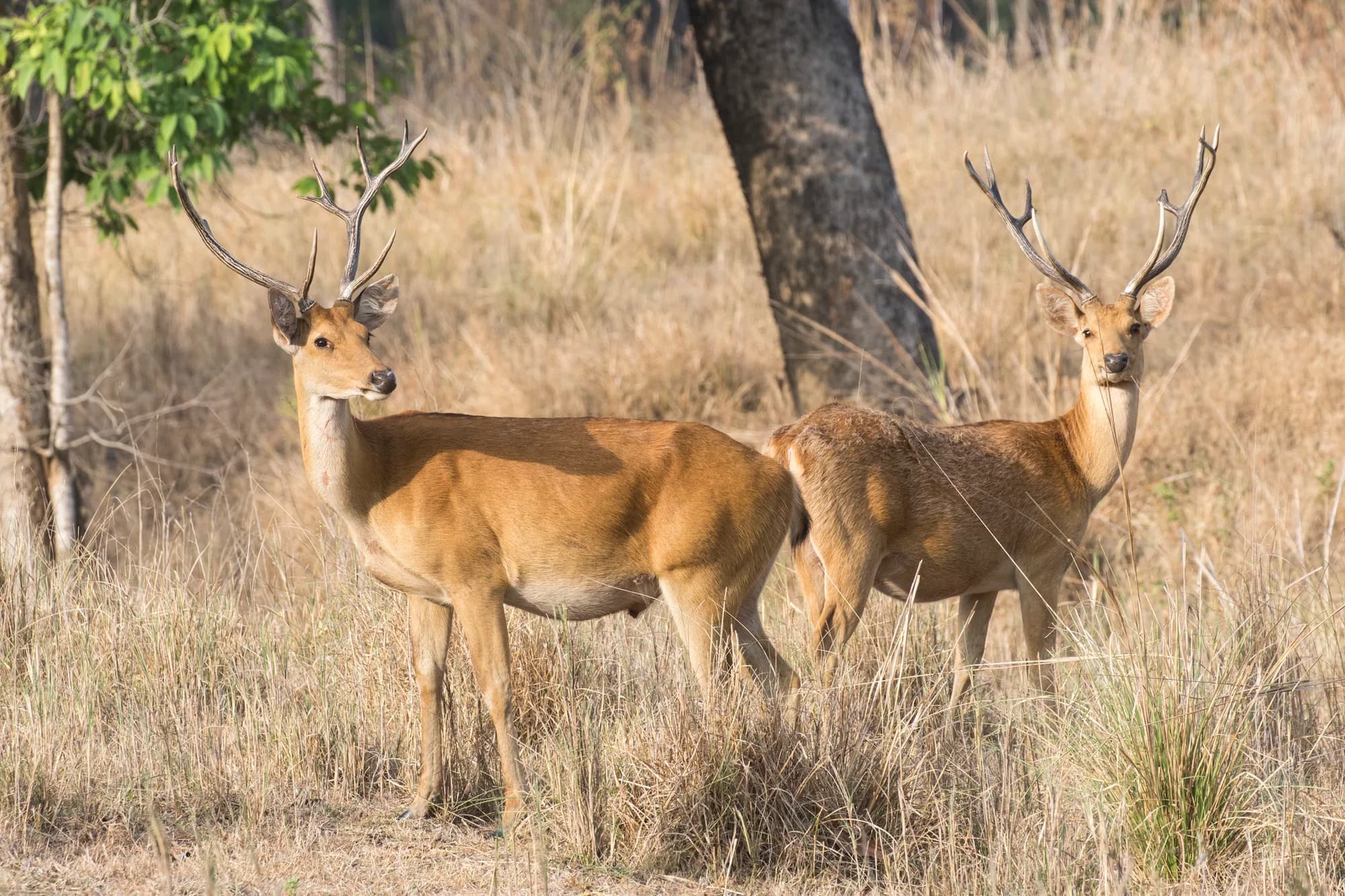
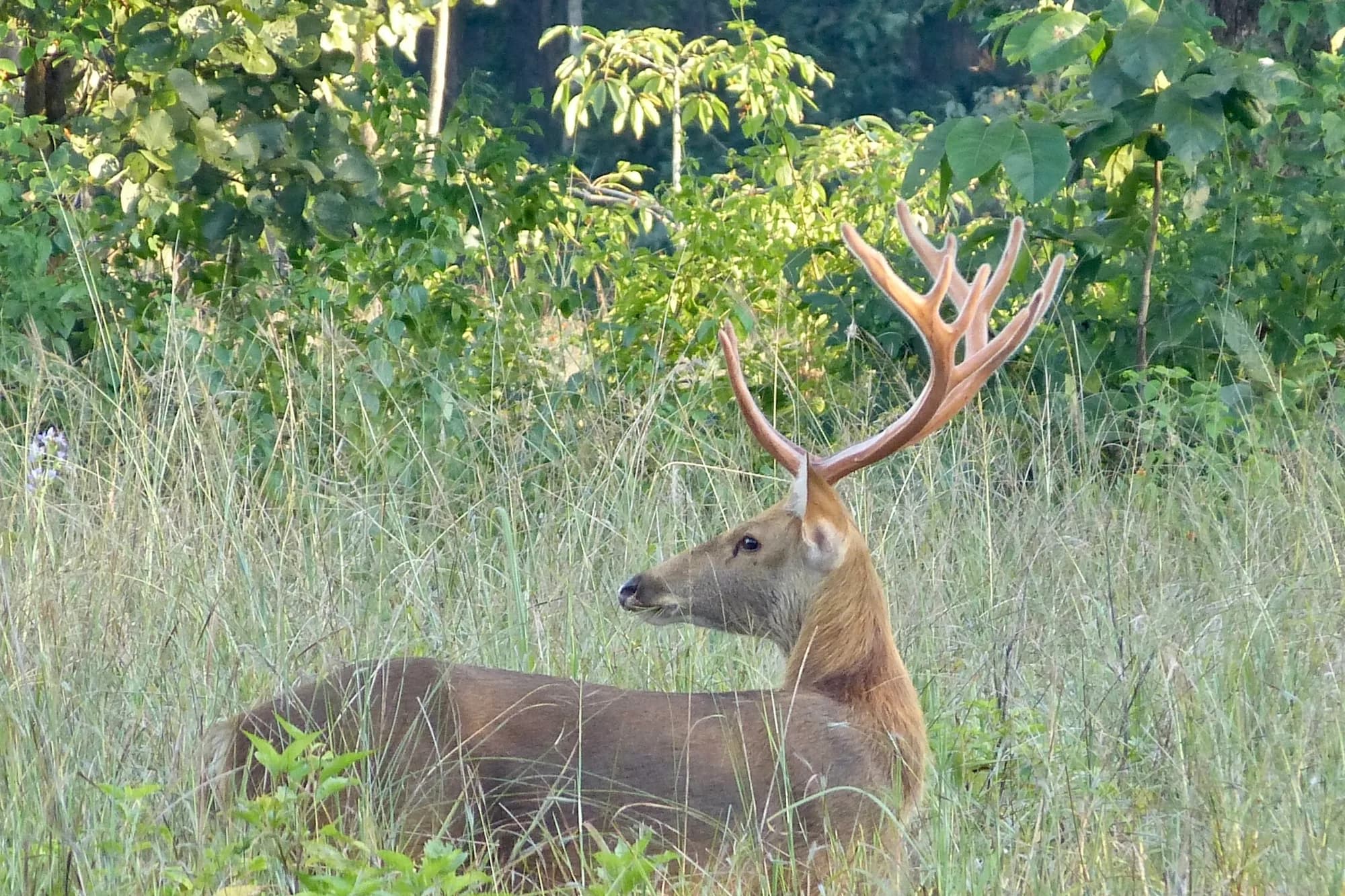
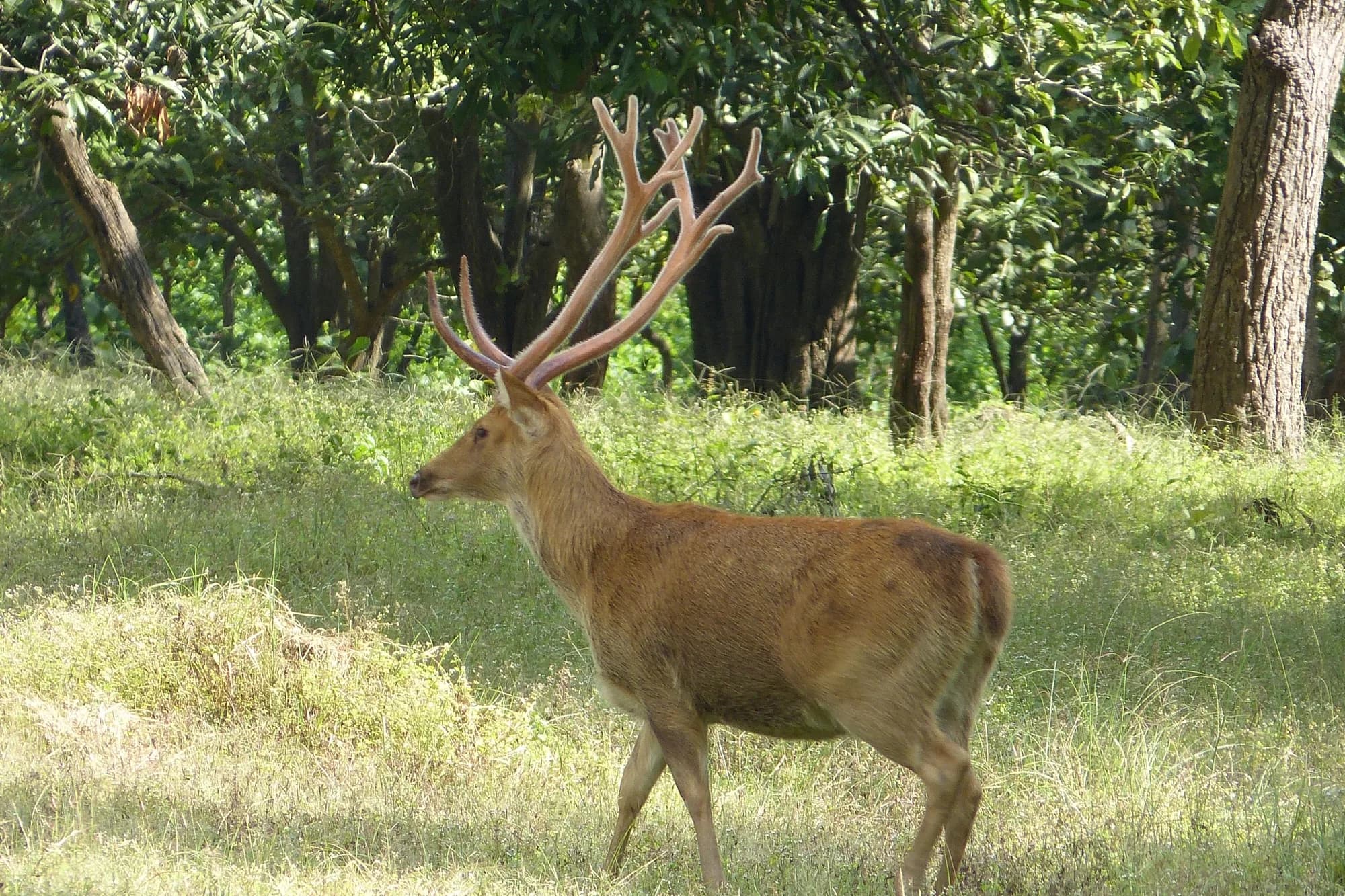
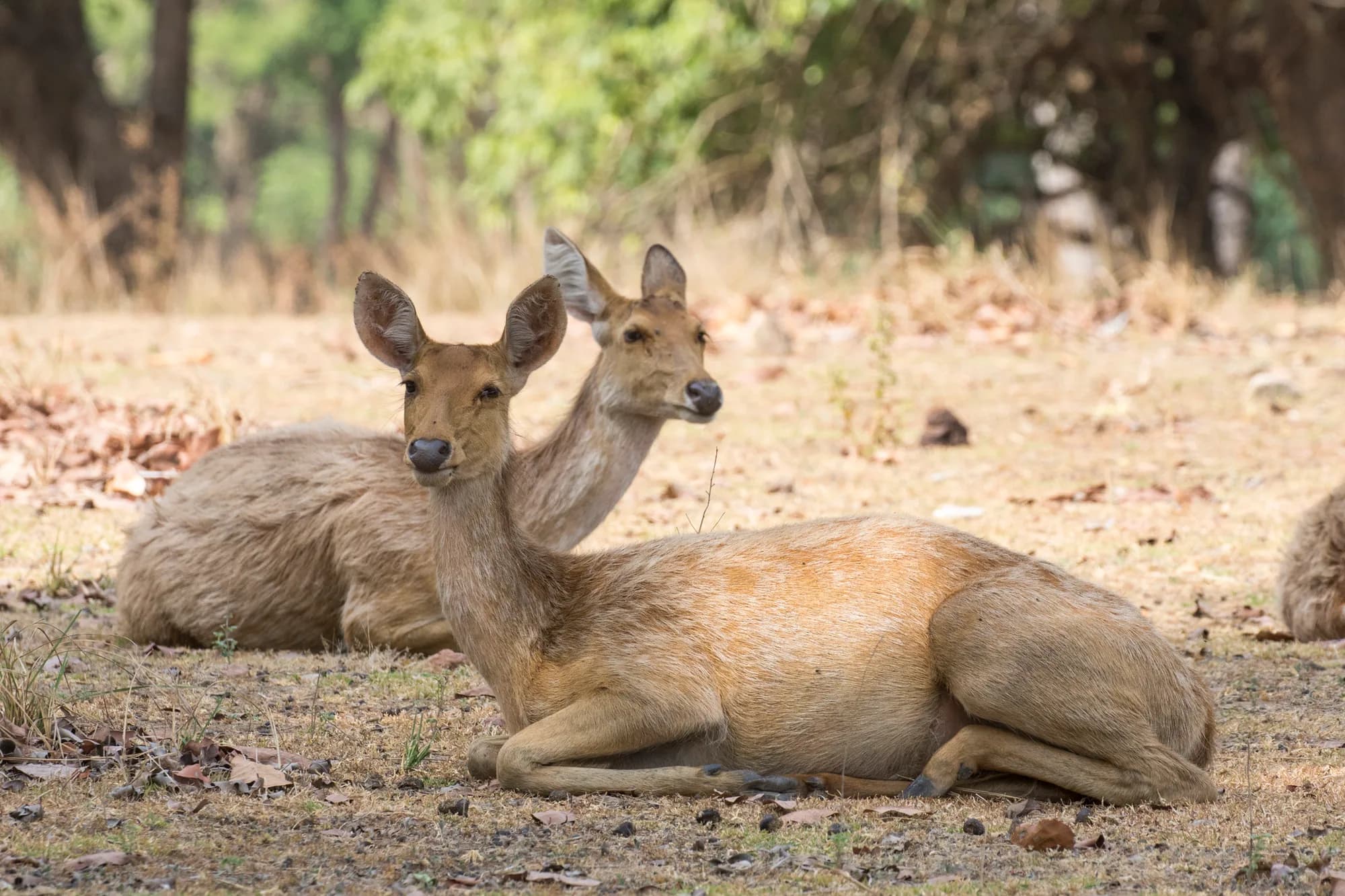
Photographs of Barasingha in the wild, in Indian reserves. We publish no captive, baited or digitally composited images, and no photograph whose licence we cannot show.
What a sighting is actually like
Easy, open and unhurried — which is unusual on this list. A herd out on a Kanha maidan in the early morning will graze while a line of vehicles watches, and the stags in December carry antlers you can count the points on from fifty metres.
The whole subspecies is in front of you, and it fits in one meadow.
The colour is what separates them from the chital sharing the grass — a warmer, more golden brown, and a heavier animal standing noticeably taller.
Sixty-six animals
That is roughly what was left in the early 1970s. Habitat management, the removal of grazing pressure and a great deal of patient work took the population back into the hundreds, and it is now stable enough to have supplied animals for Satpura.
Status and protection
Status and protection
- IUCN Red List
- Vulnerable
- Population trend
- ↓ Decreasing
- Wildlife Protection Act 1972
- Schedule I (post-2022 amendment numbering)
- CITES
- Appendix I
Species-level assessment. The Red List has no assessment for the Indian hard-ground subspecies Rucervus duvaucelii branderi;
Assessed 2015 · IUCN Red List assessment
What to book to see one
What you would be booking
- How it is seen
- Jeep safari at Kanha. No special arrangement — the animals are on the meadows the standard routes cross.
- Drives to book
- Two or three. This is among the most reliable large-mammal sightings in central India.
- Zone or shift
- The Kanha and Mukki meadows. Kanha zone in particular is built around the maidans these deer graze.
Go in the rut if you can. December and January put stags in full antler and in the open, roaring — a much better sighting than the same animals grazing quietly in March.
Kanha — the park in fullQuestions people ask
Where can I see barasingha?
Is it the same as the swamp deer in Assam?
What is the best time to see them?
Read next
Madhya Pradesh
Kanha — the park in full
Sal forest and wide meadows, larger and calmer than Bandhavgarh. Repays four or five drives far more than two.
58 reserves, six worth the trip
Tiger — where and when
The animal most people come for, and the one most often missed. Where the odds actually are, and how they move by month and by zone.
Madhya Pradesh
Satpura — the second population
The one central Indian reserve that permits walking and boat safaris. You see less and understand considerably more.
Twelve months, cross-park
When to go, month by month
The single decision that moves the odds most. Heat, crowds, closures and what is actually open, one page per month.