
Species · Gypaetus barbatus
Bearded vulture
Nearly three metres of wing passing below you on a ridge, orange-stained, with a diamond tail. The only bird in the world that lives mainly on bone, and the standard consolation on a blank snow leopard morning.
Also called
- Shagoon · Ladakhi
- Daadhi gidh (दाढ़ी गिद्ध) · Hindi
- Hadphor · Nepali
Checked 31 Aug 2026
- Where
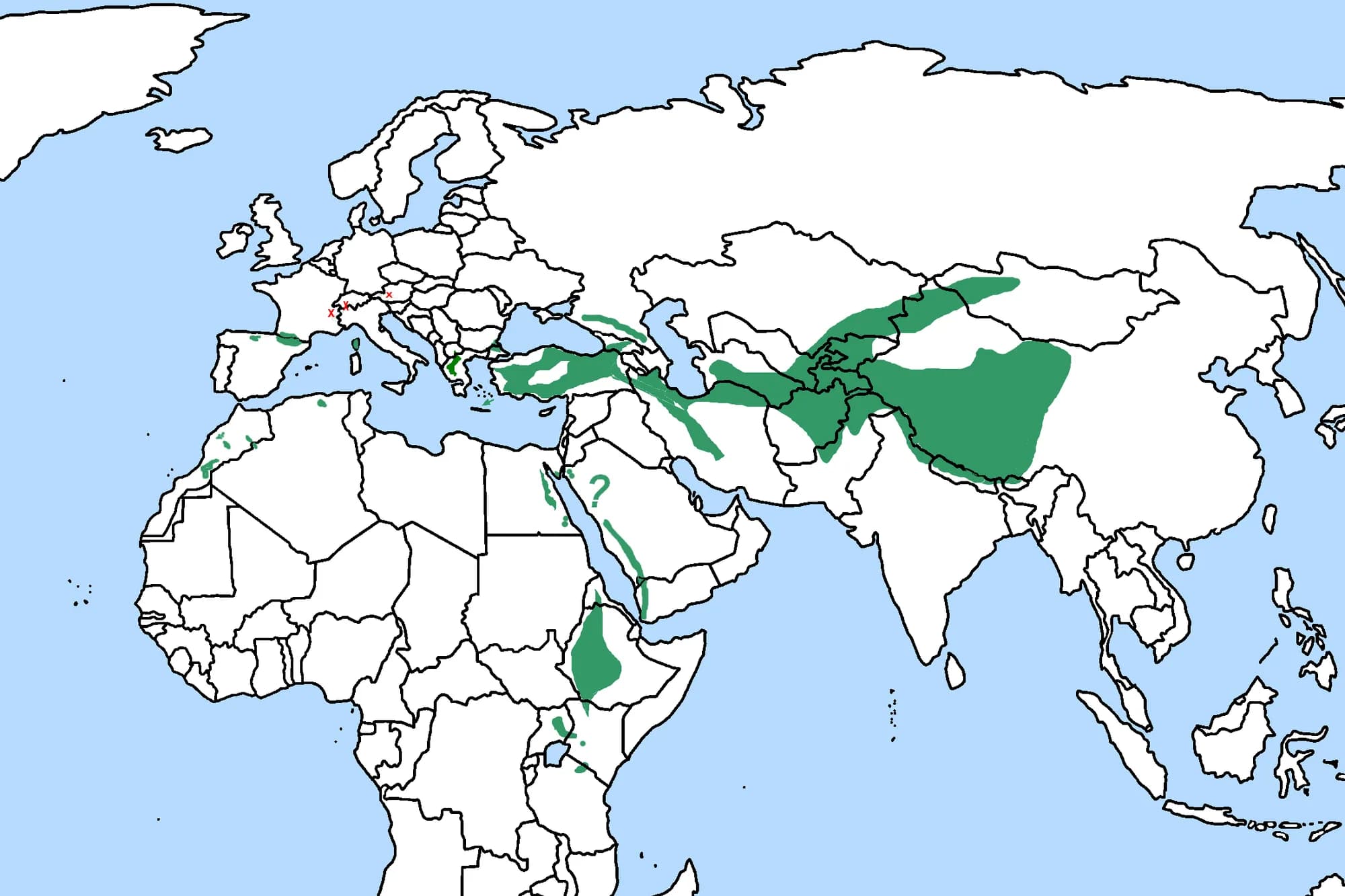
- Himalaya, above about 2,000 m
- Best months
- Year-round; February–April easiest
- Wingspan
- Up to about 2.8 m
- Diet
- Mostly bone
Thinly spread along the whole Indian Himalaya wherever there are cliffs, carcasses and thermals. Not rare in range, but never numerous anywhere.
Where it is
Where to actually go
Ranked, with the reason each — these are not interchangeable.
- 01HemisLadakhDeep gorges, constant scanning, and hours of ridge-watching that produce this bird repeatedly.You are already looking up
- 02Pin ValleyHimachal PradeshSpiti's open valleys give long clean sightlines along cliff faces.Sightlines
- 03Kedarnath Wildlife SanctuaryUttarakhandReliable along the higher ridges, and reachable without a Ladakh flight.Easiest to reach
Where you will not see one
- The plainsA Himalayan bird. Vultures over lowland India are griffons, white-rumped or Indian vultures — none of them has this shape.
- Confused with a Himalayan griffonTail and jizz. Griffons have short square tails and hold their wings in a shallow V; this bird has a long diamond tail and flat, unhurried wings.
When to go
When to go
- J
- F
- M
- A
- M
- J
- J
- A
- S
- O
- N
- D
January: good. February: best. March: best. April: best. May: good. June: marginal. July: marginal. August: marginal. September: good. October: good. November: good. December: good.
Through the day
- Dawn
- Morning
- Midday
- Afternoon
- Dusk
- Night
Dawn: usually resting. Morning: active. Midday: most active. Afternoon: most active. Dusk: active. Night: not normally seen.
What it looks like in the field


Photographs of Bearded vulture in the wild, in Indian reserves. We publish no captive, baited or digitally composited images, and no photograph whose licence we cannot show.
The bone-eater
Almost its entire diet is bone. It waits for other scavengers to finish a carcass, takes what is left, and where a bone is too large to swallow it carries it up and drops it on rock until it breaks. Sites used for that build up scatters of shattered bone over generations.
The rust-orange colour on the head and underparts is not pigment. The bird bathes in iron-rich mud and stains itself, and how strongly it does so seems to vary between individuals and populations.
What a sighting is actually like
Usually below you, not above. You are on a ridge or a road cut into a gorge wall, and the bird comes along the face at your level or lower, moving fast without flapping. It is past in under a minute, and the diamond tail is what confirms it.
Status and protection
Status and protection
- IUCN Red List
- Near Threatened
- Population trend
- ↓ Decreasing
- Wildlife Protection Act 1972
- Schedule I
- CITES
- Appendix II
Species-level global assessment covering the full Old World range, taxon id 22695174.
Assessed 2021 · IUCN Red List assessment
What to book to see one
What you would be booking
- How it is seen
- Any Himalayan trip with time on a ridge. No special permit beyond the park's own.
- Drives to book
- Mid-morning onward, once thermals build. Spotting from a vantage point beats driving.
On a snow leopard trip you will spend hours scanning ridges anyway. This is the bird that most often crosses the scope while you wait, and it is worth knowing what you are looking at.
Hemis — the park in fullQuestions people ask
Where can I see a bearded vulture in India?
Is it seen on snow leopard trips?
How do I tell it from a griffon?
Read next
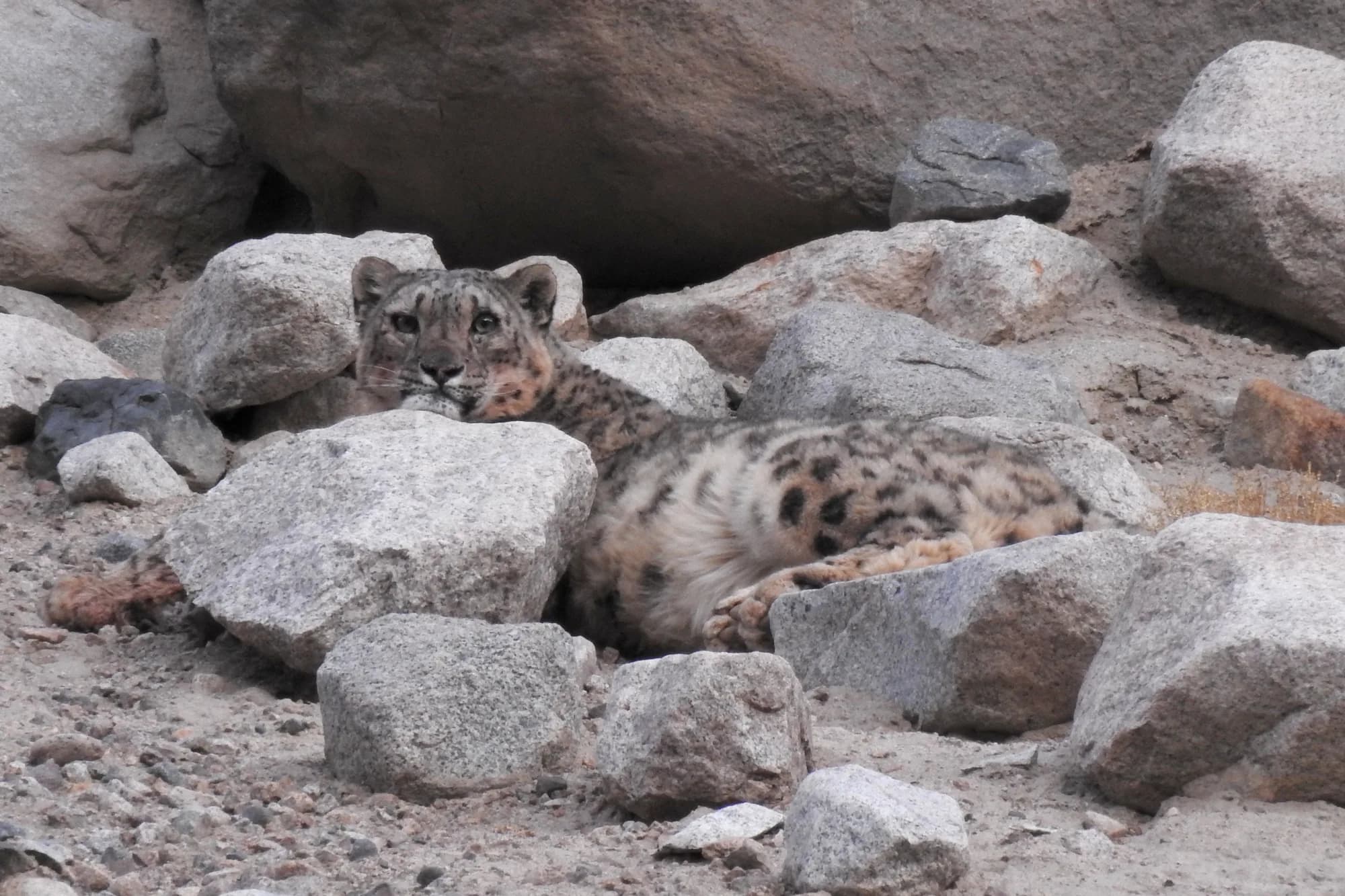
Ladakh and Spiti, in winter
Snow leopard — the same ridges
Not a safari. A mountain expedition with a chance of the animal — cold, high, and measured in days of patience rather than in drives.
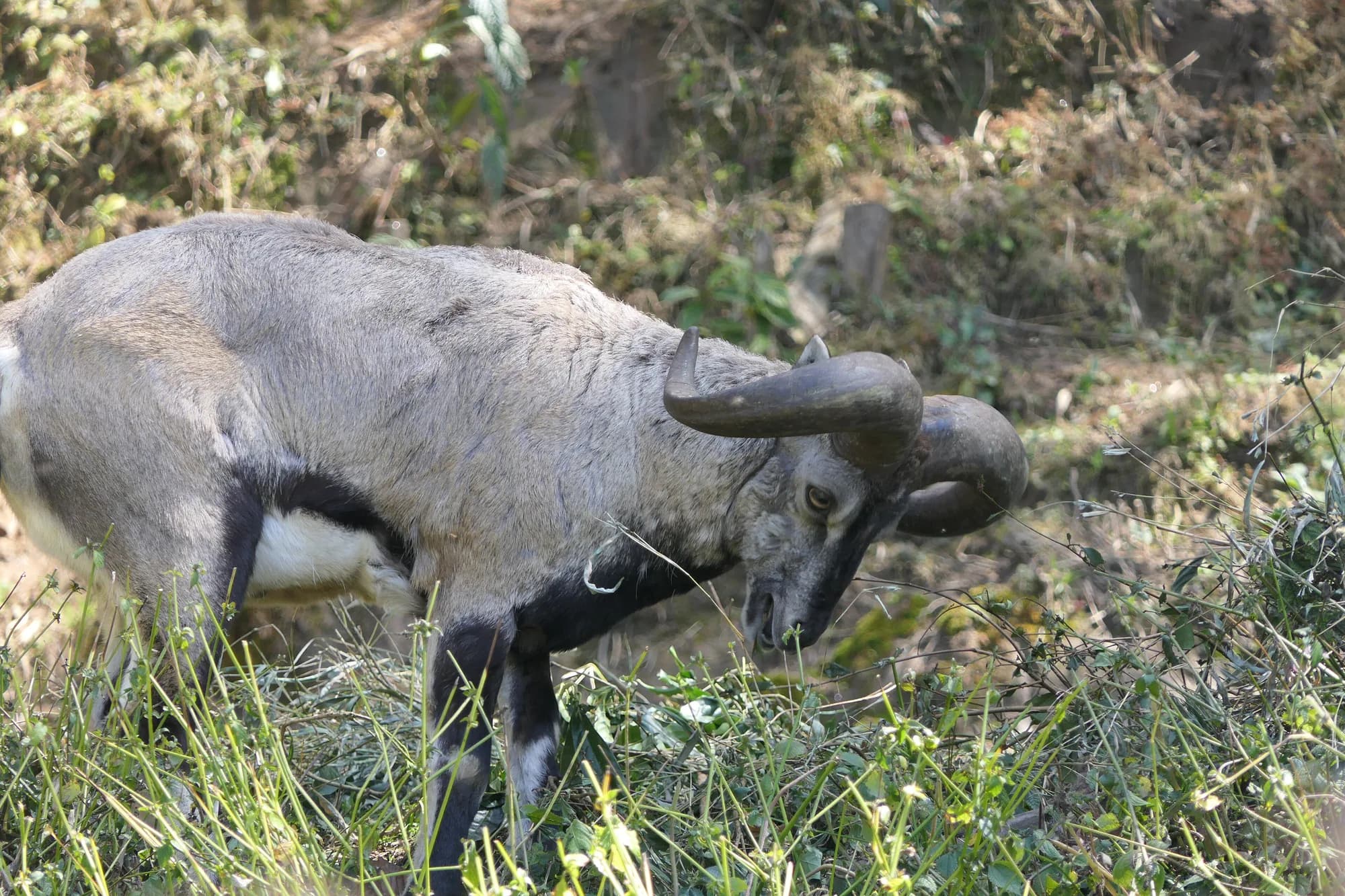
Ladakh and Spiti, above the treeline
Blue sheep — what it eventually eats
Neither blue nor a sheep, and the animal a snow leopard trip actually revolves around. If you are watching bharal, you are watching the right slope.
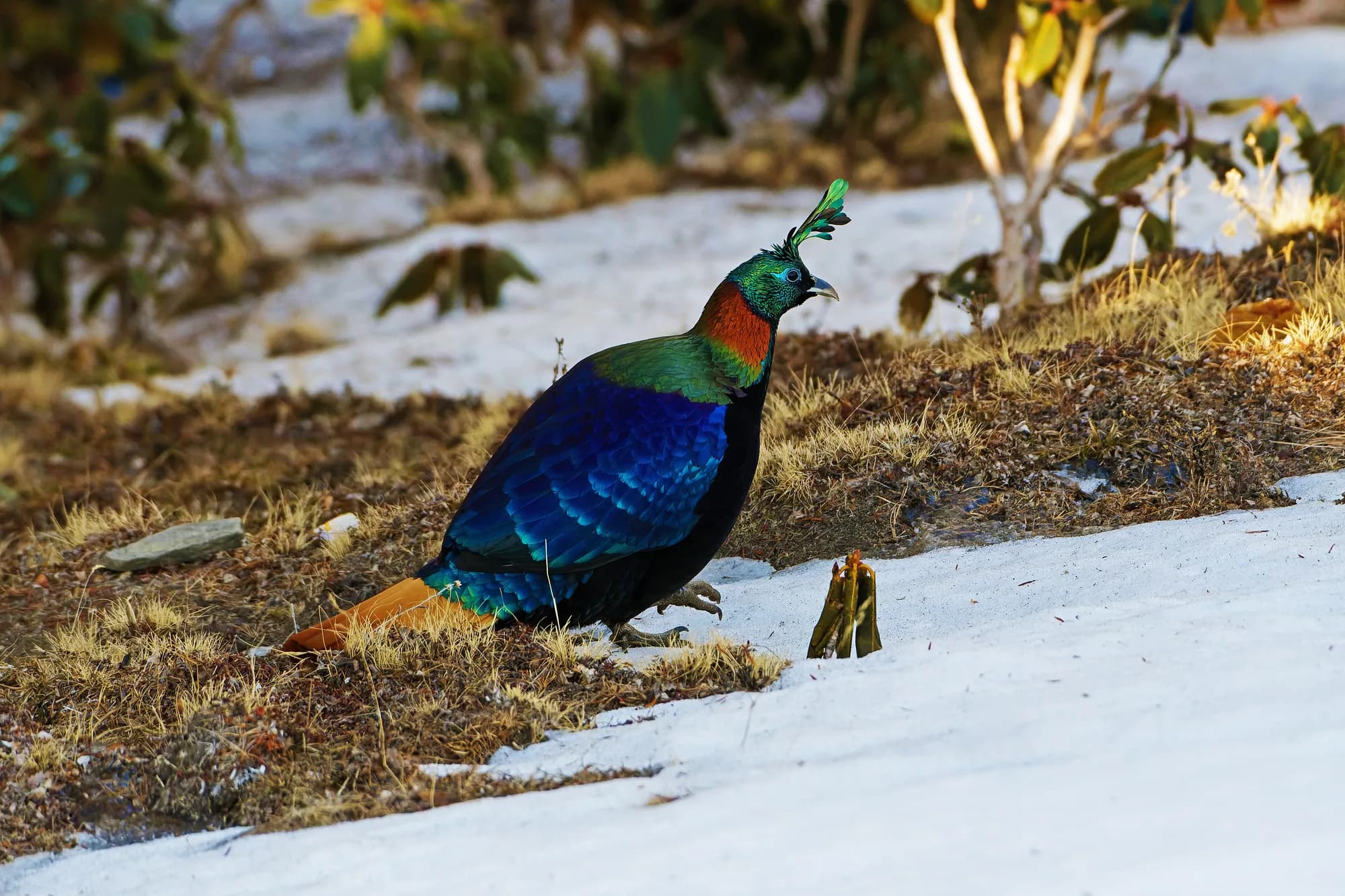
Chopta, Tungnath and the high oak
Himalayan monal — the same slopes, lower
A pheasant that looks like spilled petrol in sunlight, digging for roots on a snowy slope at three thousand metres. The bird international operators build entire Himalayan itineraries around.
Hemis — the park in full