
Species · Arctictis binturong
Binturong
A shaggy black civet the size of a dog, with a prehensile tail and a smell like hot popcorn. Everyone wants one. Almost nobody gets one.
Also called
- Bhaluk-nesa · Assamese
- Bhalu-billi (भालू-बिल्ली) · Hindi
Checked 31 Aug 2026
- Where
- Northeast India only
- Best months
- November–March
- Diet
- Mostly figs
- Note
- A prehensile tail, unique in Asia
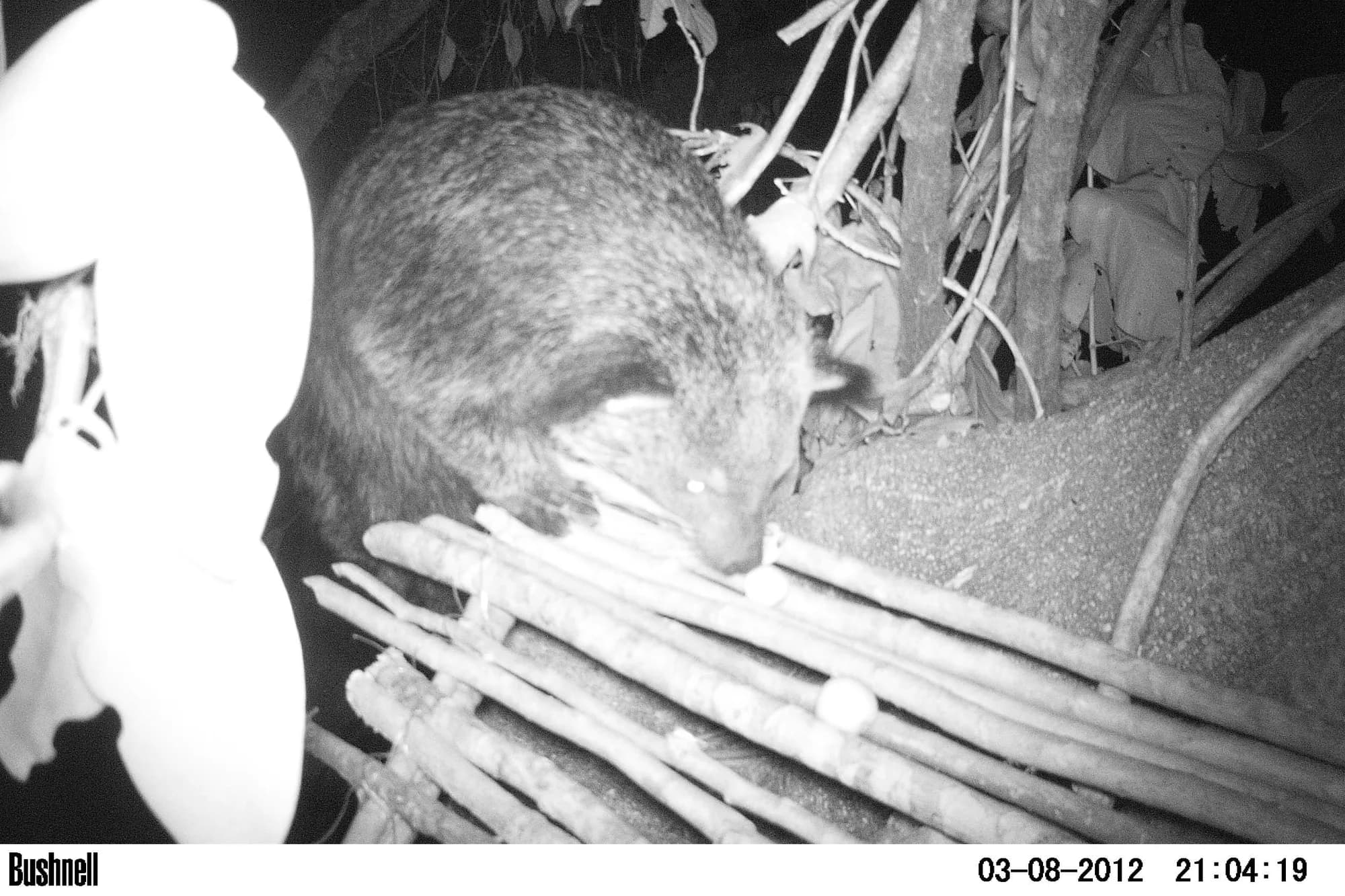
Tall evergreen and semi-evergreen forest through the Northeast hills. It has never been common in India and is now scarce enough that most reserve records are camera-trap images rather than sightings.
Where it is
Where to actually go
Ranked, with the reason each — these are not interchangeable.
- 01NamdaphaArunachal PradeshThe best remaining lowland evergreen forest in India, and the reserve with the most credible records.Hard to reach, worth it
- 02PakkeArunachal PradeshExcellent hornbill forest with figs everywhere, and a research presence that logs what the camera traps see.Figs and a night vehicle
- 03ManasAssamPresent in the hill forest, occasionally camera-trapped, very seldom seen.Long odds
Where you will not see one
- The Western GhatsBinturongs do not occur in southern India. The large arboreal civet of the Ghats is the brown palm civet, and the Malabar civet is almost certainly gone.
- A standard safari circuitThere is no Indian reserve where a binturong can be planned for. Anyone offering one is selling a fig tree and a hope.
When to go
When to go
- J
- F
- M
- A
- M
- J
- J
- A
- S
- O
- N
- D
January: best. February: best. March: good. April: marginal. May: marginal. June: closed or unproductive. July: closed or unproductive. August: closed or unproductive. September: marginal. October: good. November: best. December: best.
Through the day
- Dawn
- Morning
- Midday
- Afternoon
- Dusk
- Night
Dawn: not normally seen. Morning: not normally seen. Midday: not normally seen. Afternoon: not normally seen. Dusk: active. Night: most active.
Telling it apart
Told apart from
Any fruiting tree at night
Size and tail. The palm civet is house-cat sized with a slim, non-prehensile tail; a binturong is three to four times the weight with a thick tail that grips.
Yellow-throated marten
Northeast forest
Colour and motion. The marten is bright yellow-and-black and moves fast by day; a binturong is uniformly dark and moves slowly at night.
Marks chosen to be usable from a moving vehicle — a binturong is rarely still and never close enough for anything subtler.
What it looks like in the field
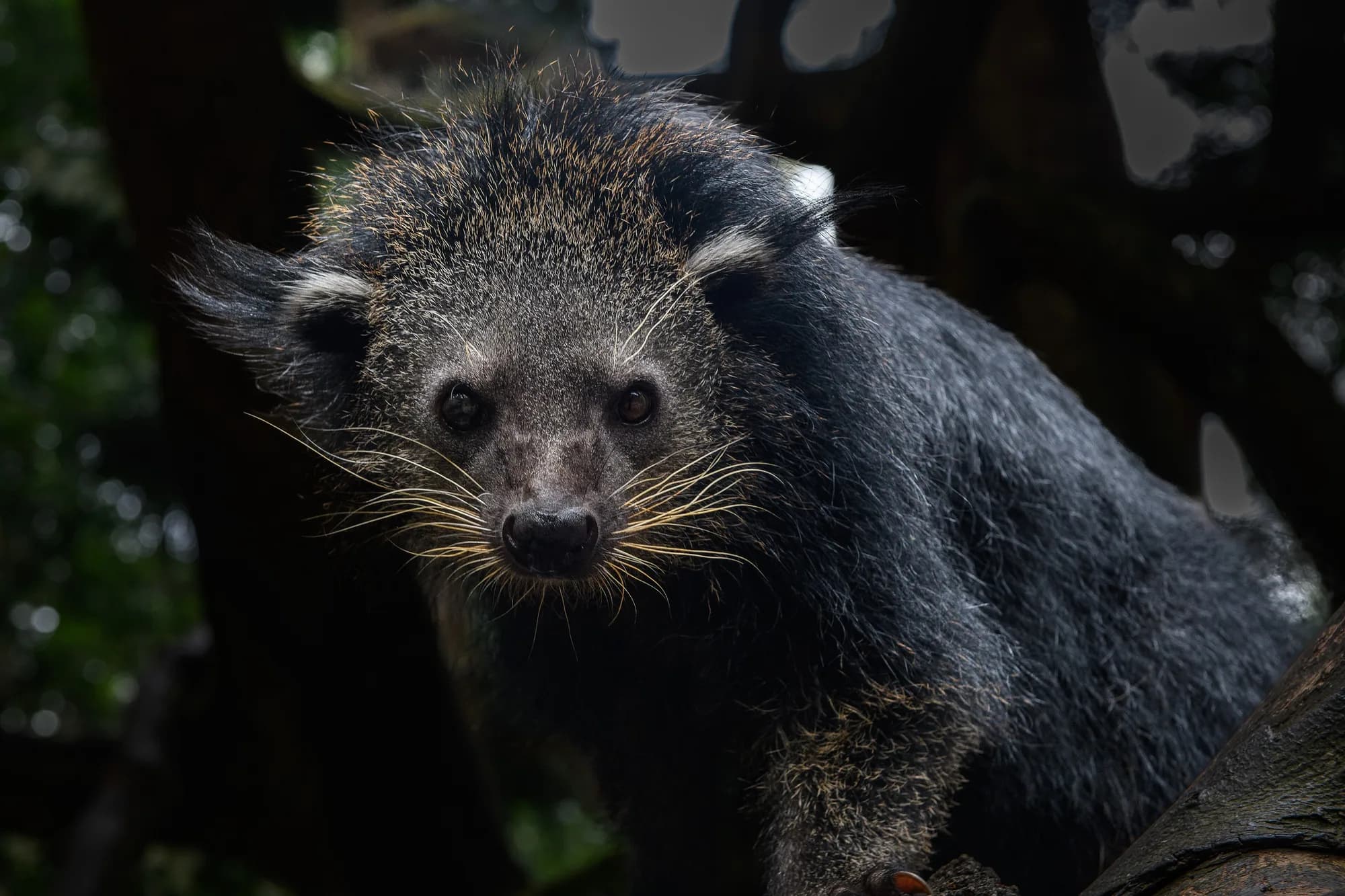
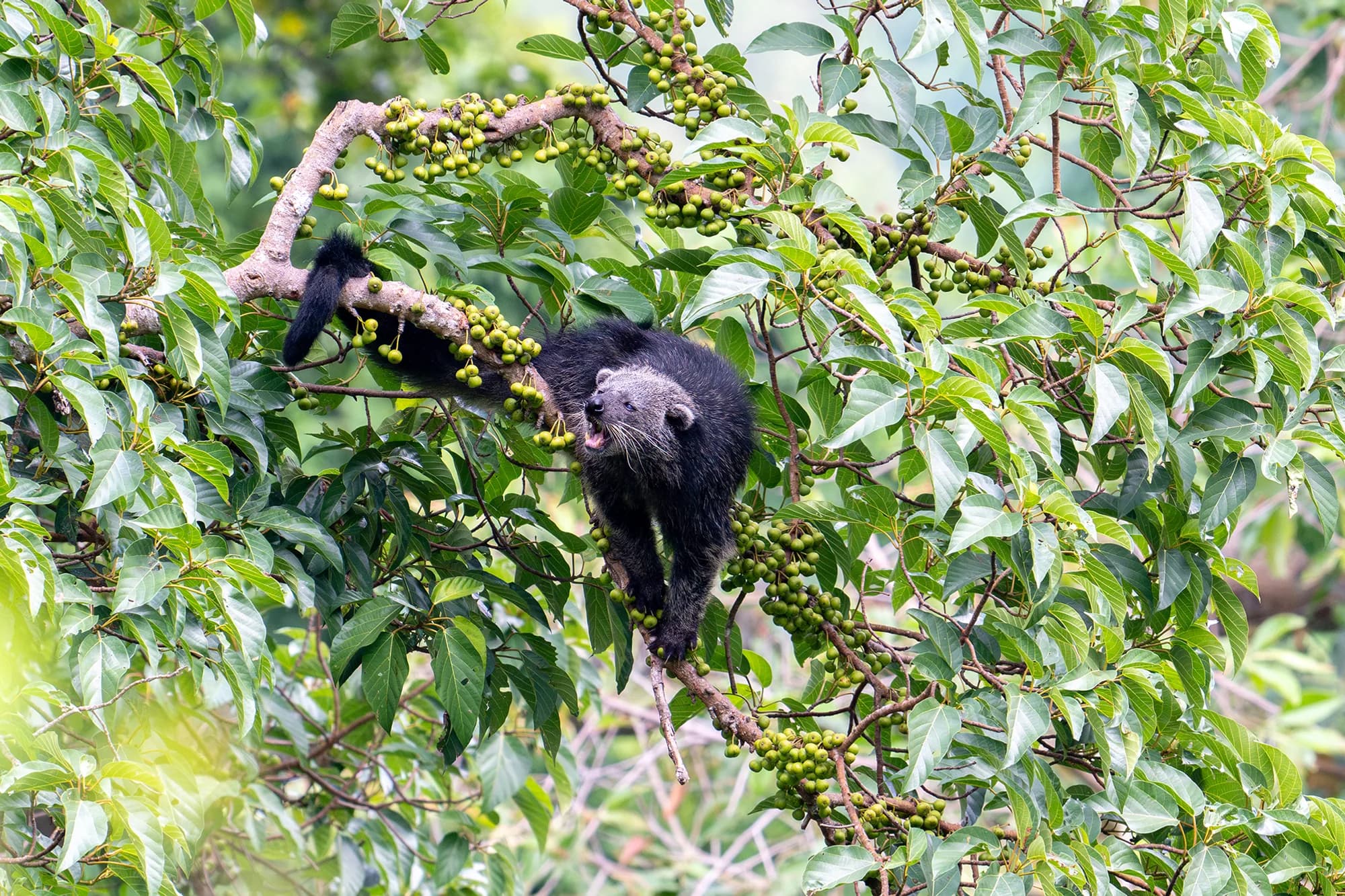
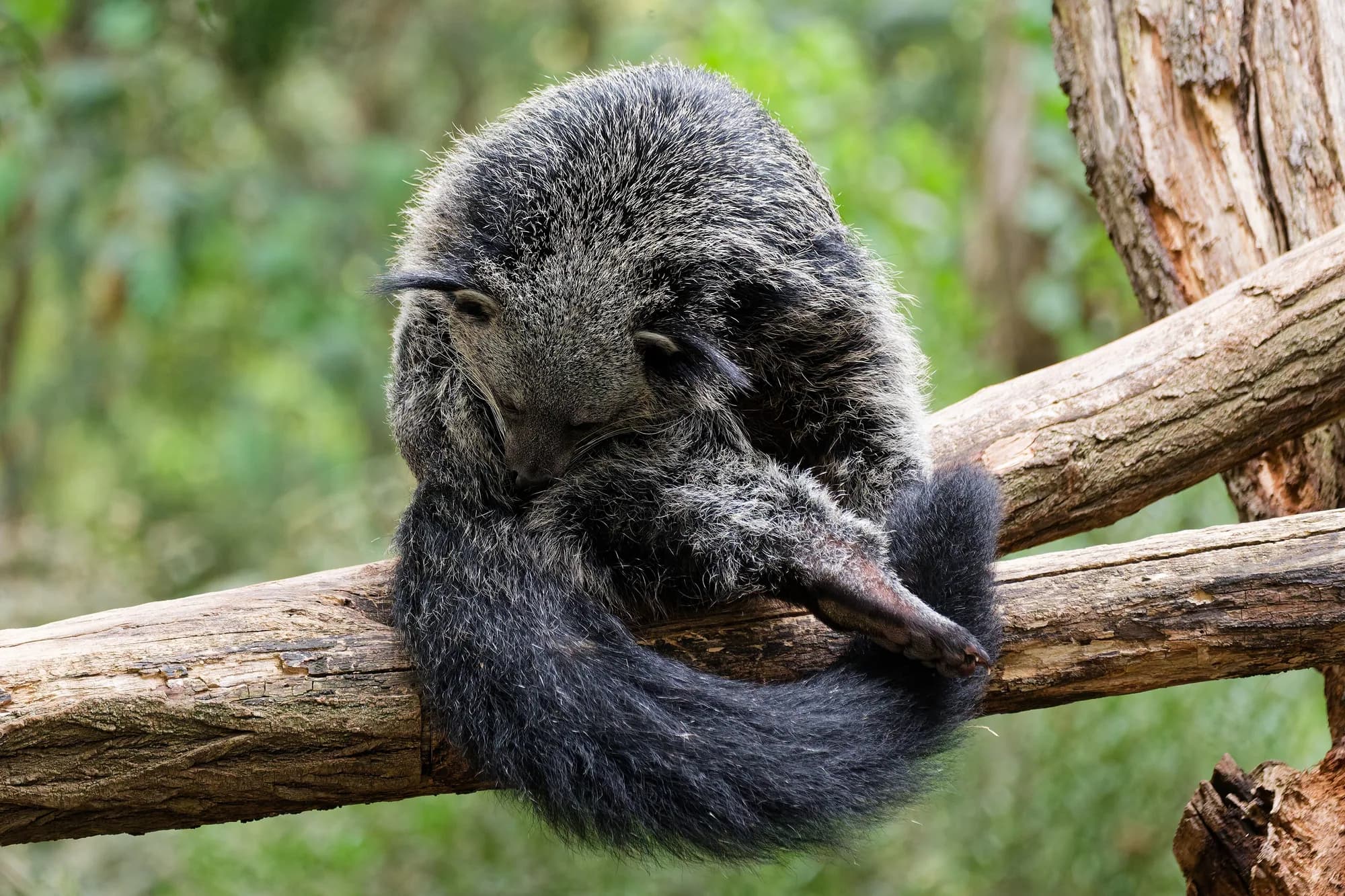
Photographs of Binturong in the wild, in Indian reserves. We publish no captive, baited or digitally composited images, and no photograph whose licence we cannot show.
The tail
No other carnivore in Asia has a prehensile tail. The binturong uses it as a fifth limb — taking full body weight, holding position while both hands work at fruit, and steadying a head-first descent down a trunk.
The smell, and why it matters
Binturong urine contains the compound that gives popcorn its smell, and a scent-marked branch is genuinely, unmistakably recognisable. Guides who work the same forest use it: the smell says an animal has been through, and roughly how recently.
It is the only large mammal in India you are more likely to smell than see.
Status and protection
Status and protection
- IUCN Red List
- Vulnerable
- Population trend
- ↓ Decreasing
- Wildlife Protection Act 1972
- Schedule I (post-2022 amendment numbering)
- CITES
- Appendix III (listed by India, 16/03/1989)
Species-level global assessment for Arctictis binturong; binomial matches exactly. Criteria A2cd+3cd+4cd.
Assessed 2016 · IUCN Red List assessment
What to book to see one
What you would be booking
- How it is seen
- Night walks or a spotlit forest road in Northeast evergreen forest, ideally near a fruiting fig that someone is already watching.
- Drives to book
- Several nights, in good forest, with luck. Most people who see one in India were looking for something else.
The realistic plan is to find a fig in fruit and watch it after dark. That is also how you get civets, martens, flying squirrels and hornbills at dawn, so the night is not wasted either way.
Namdapha — the park in fullQuestions people ask
Where can I see a binturong in India?
Do binturongs really smell of popcorn?
Is it a bear or a cat?
Read next
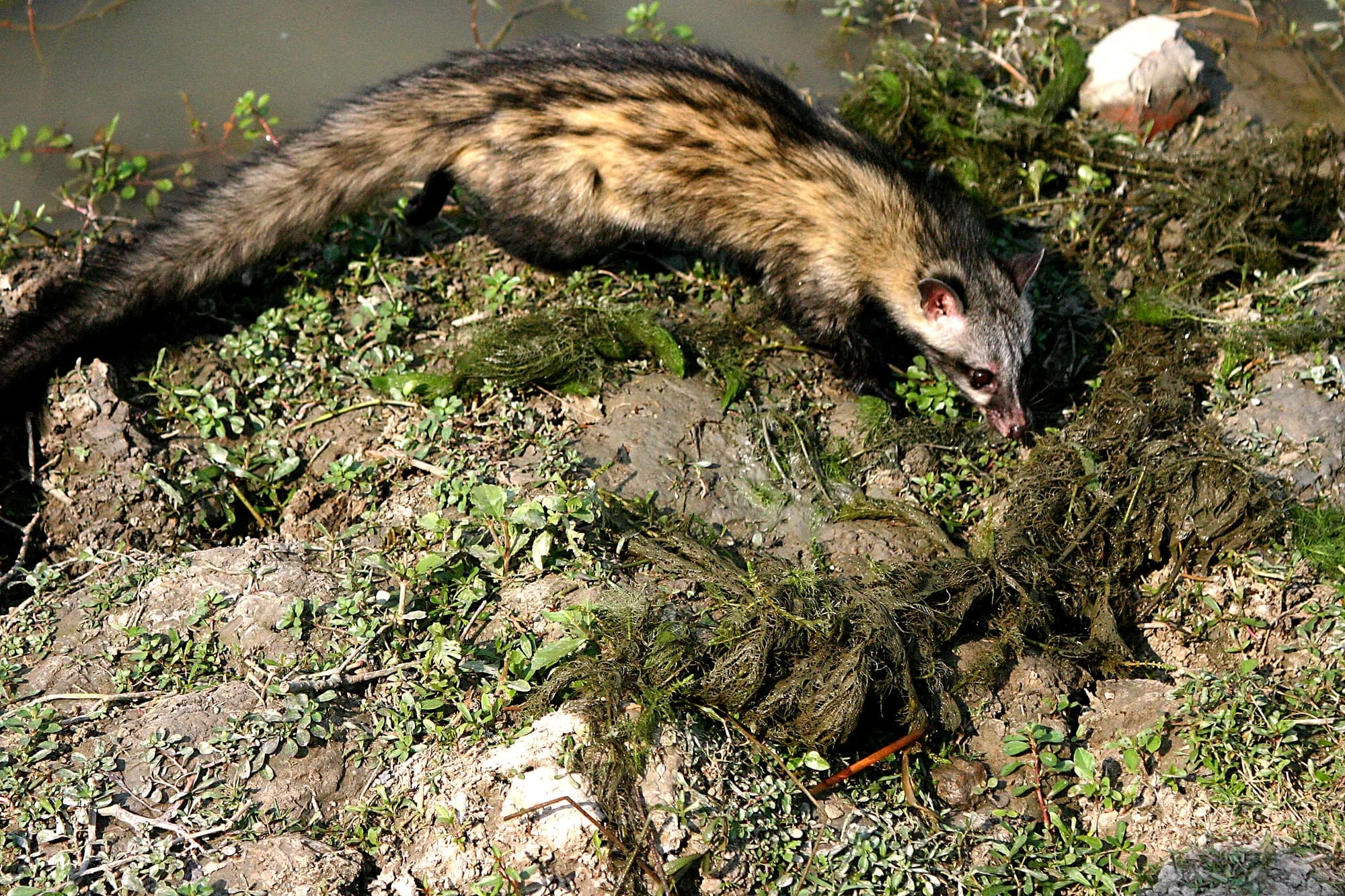
The most likely animal on a night drive
Common palm civet — the one you will see
Grey, long-bodied and entirely nocturnal, sleeping in a roof beam by day and eating fruit by night. The mammal you are most likely to actually see after dark in India.
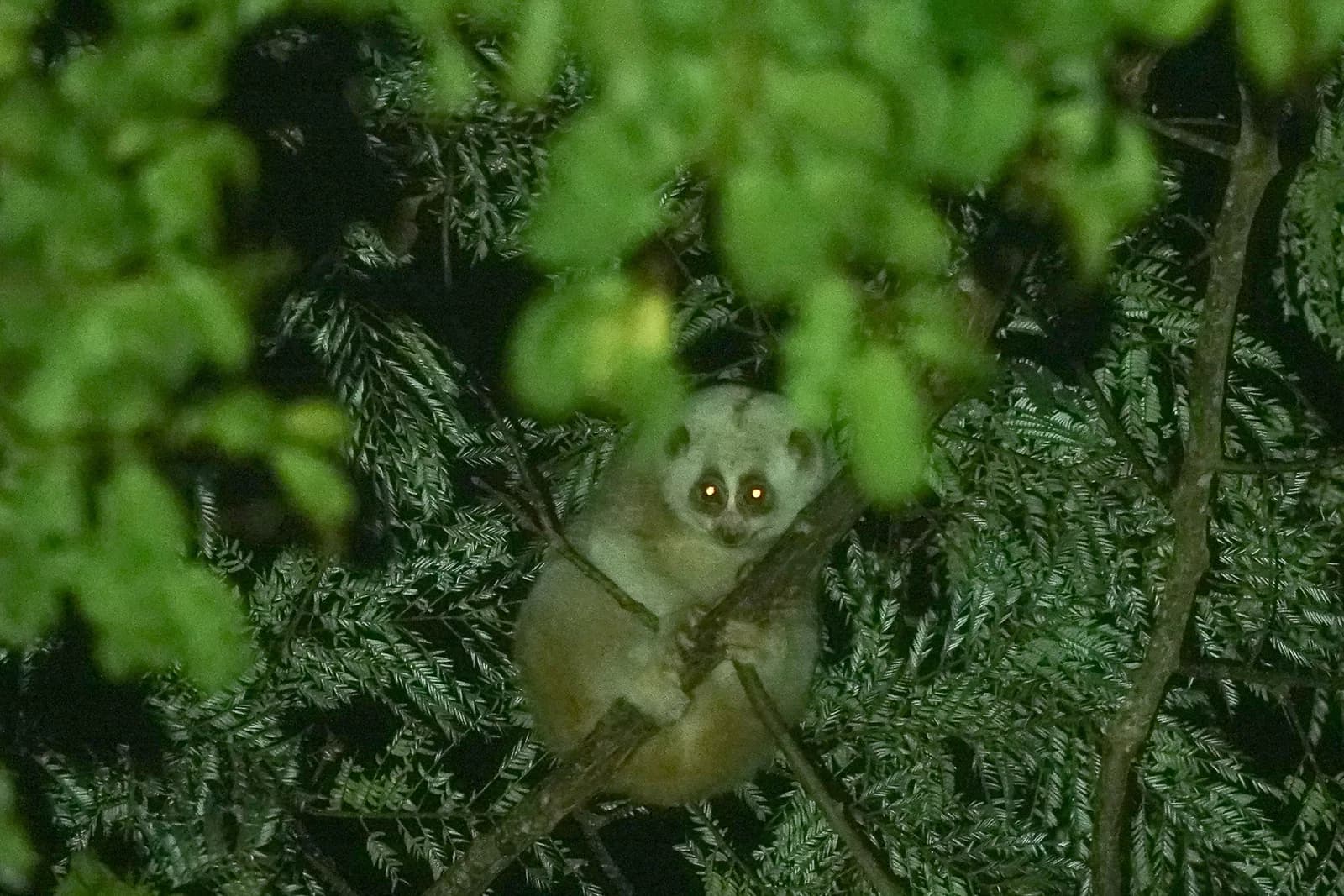
Northeast forest, by torchlight
Bengal slow loris — the same night walk
India's only nocturnal primate outside the bushbabies of the imagination — slow, silent, and found by eyeshine. It is the single best reason to do a night walk in Assam.
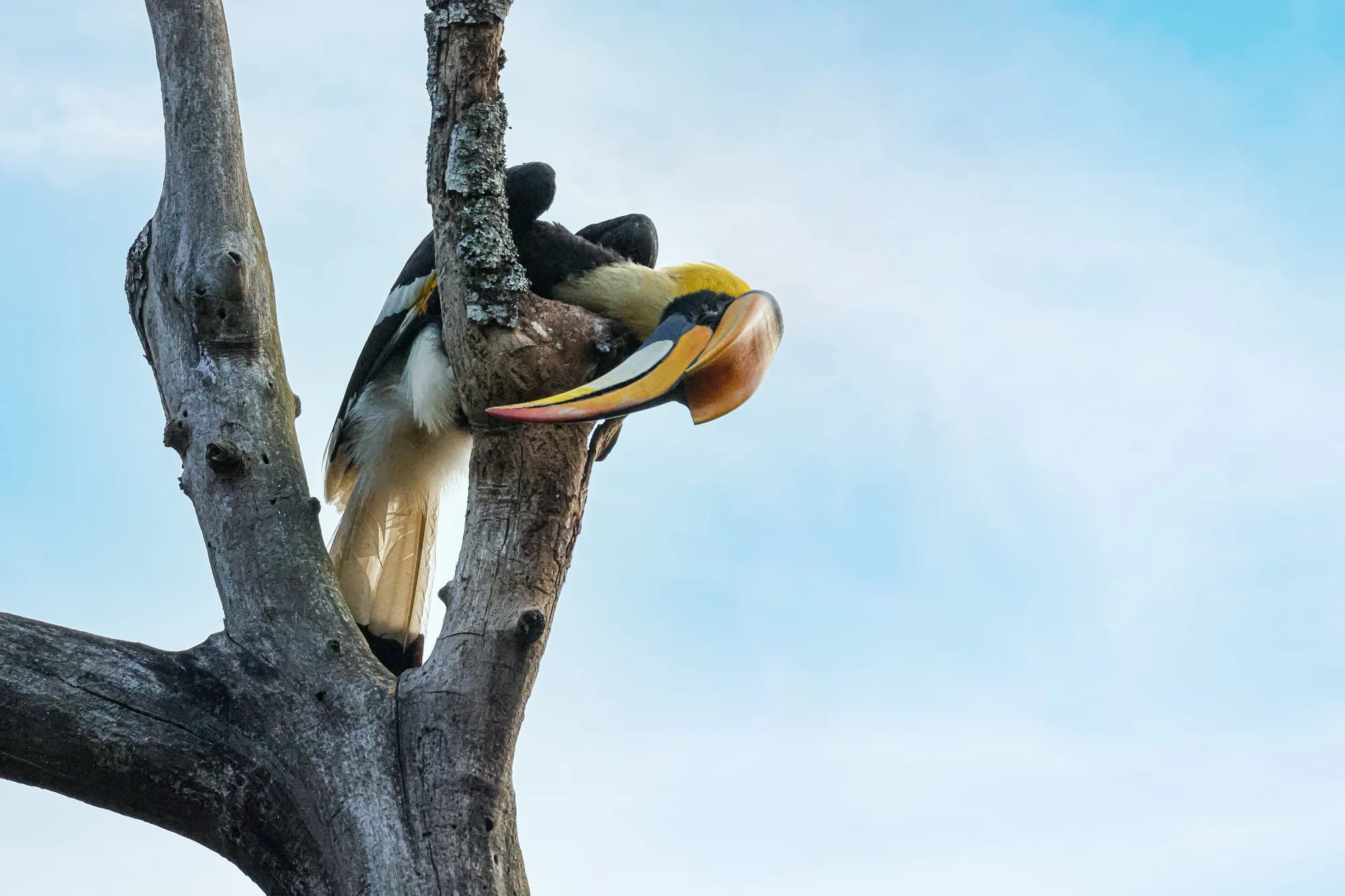
Three reserves, and you hear it first
Great hornbill — the same figs by day
The bird non-birders stop the vehicle for. You hear the wingbeats several hundred metres before you see it, and the nesting behaviour is stranger than anything a mammal in the same forest does.
Namdapha — the park in full