
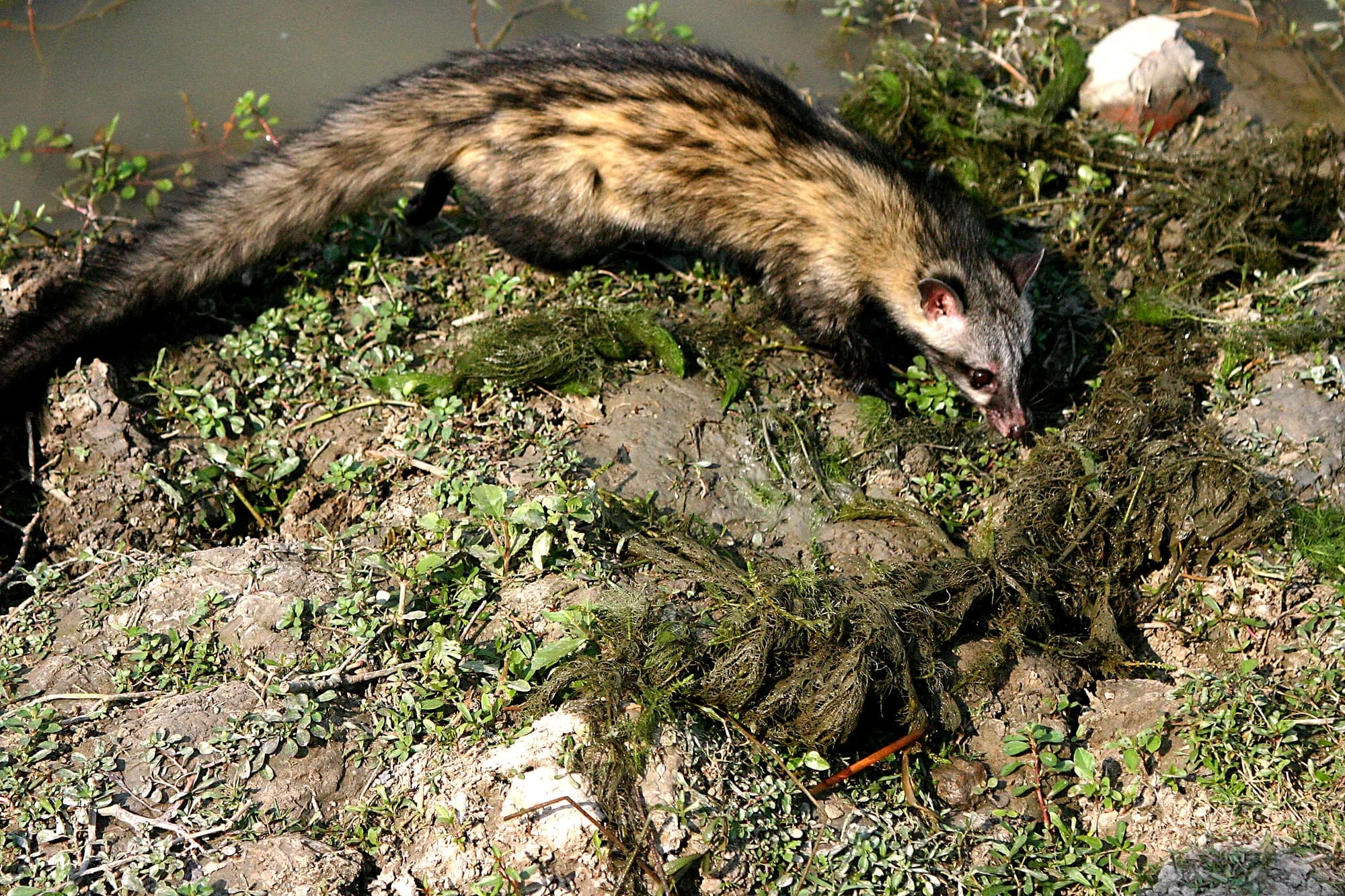
Species · Paradoxurus hermaphroditus
Asian palm civet
Grey, long-bodied and entirely nocturnal, sleeping in a roof beam by day and eating fruit by night. The mammal you are most likely to actually see after dark in India.
Also called
- Khatash (खटाश) · Hindi
- Meru punju · Malayalam
- Ud manjar · Marathi
Checked 30 Aug 2026
- Where
- Across most of India
- Best months
- November–April
- Active
- Night, entirely
- Eats
- Fruit, mostly
Forest, plantation and village across most of India. One of the few wild mammals that lives comfortably in roof spaces.
Where it is
Where to actually go
Ranked, with the reason each — these are not interchangeable.
- 01TadobaMaharashtraBuffer night safaris produce civets reliably, alongside rusty-spotted cat and porcupine.Night safari
- 02SatpuraMadhya PradeshNight drives and quiet buffer tracks.The same drive as everything nocturnal
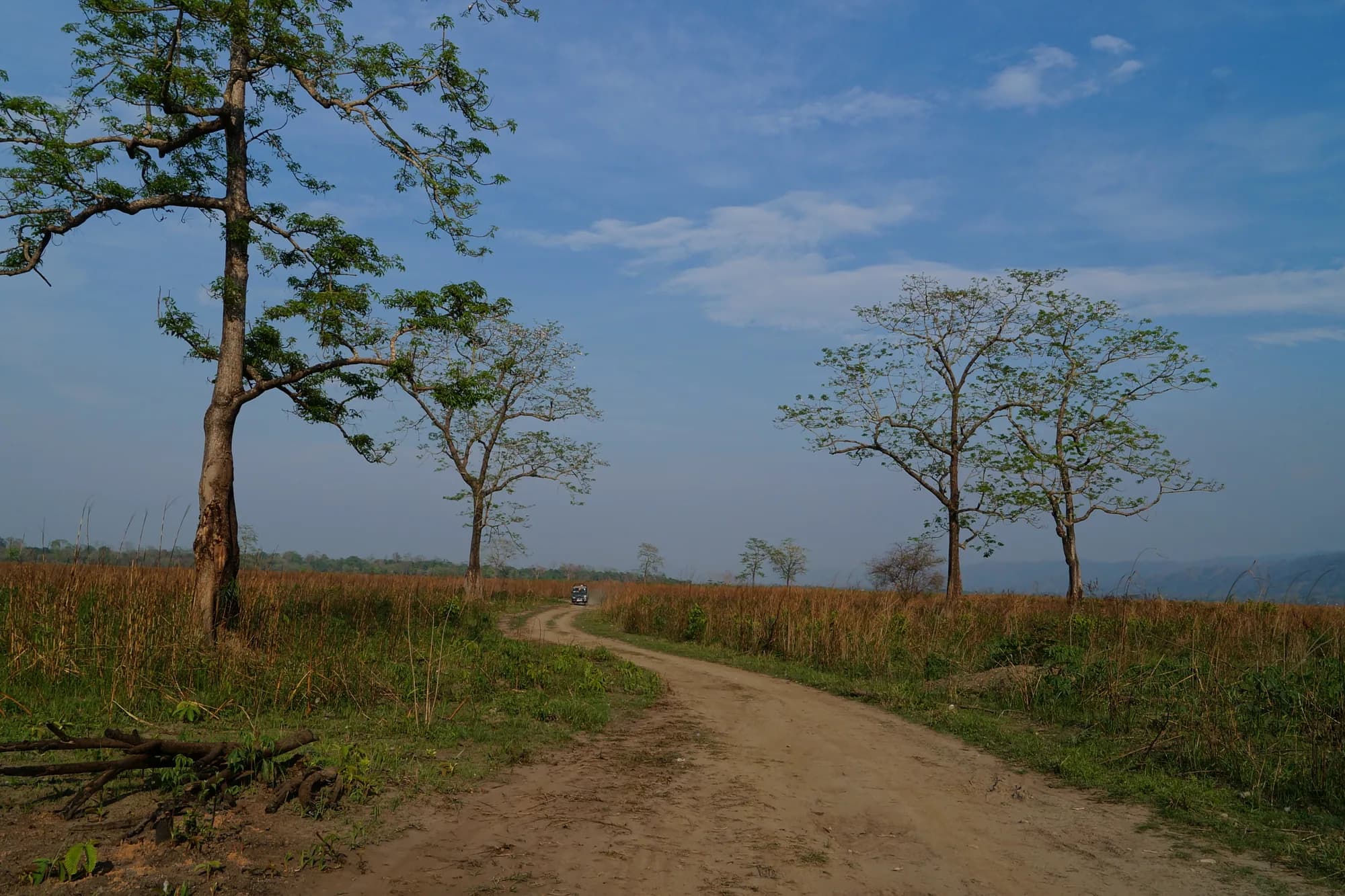
- 03PeriyarKeralaGhats forest, and often around lodge buildings after dark.Look up at the lodge
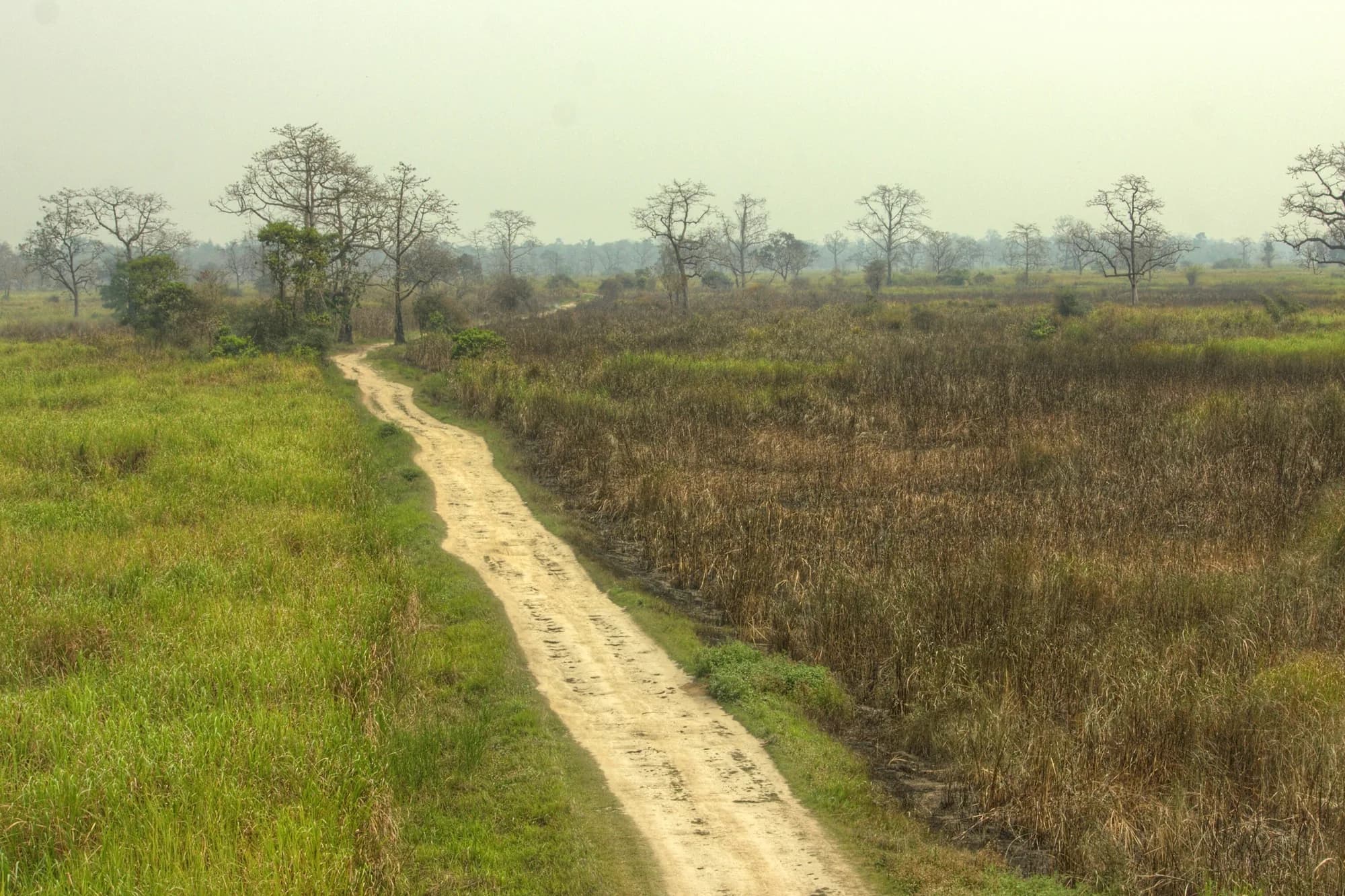
Where you will not see one
- On a day driveNever, practically. They sleep through daylight in a hollow, a roof or a tangle of creeper.
- Confused with the small Indian civetPalm civets are grizzled grey with a dark face mask and a plain tail; small Indian civets are spotted with a boldly banded tail and are far more terrestrial.
When to go
When to go
- J
- F
- M
- A
- M
- J
- J
- A
- S
- O
- N
- D
January: best. February: best. March: best. April: good. May: marginal. June: marginal. July: closed or unproductive. August: closed or unproductive. September: closed or unproductive. October: marginal. November: best. December: best.
Through the day
- Dawn
- Morning
- Midday
- Afternoon
- Dusk
- Night
Dawn: usually resting. Morning: not normally seen. Midday: not normally seen. Afternoon: not normally seen. Dusk: active. Night: most active.
What it looks like in the field
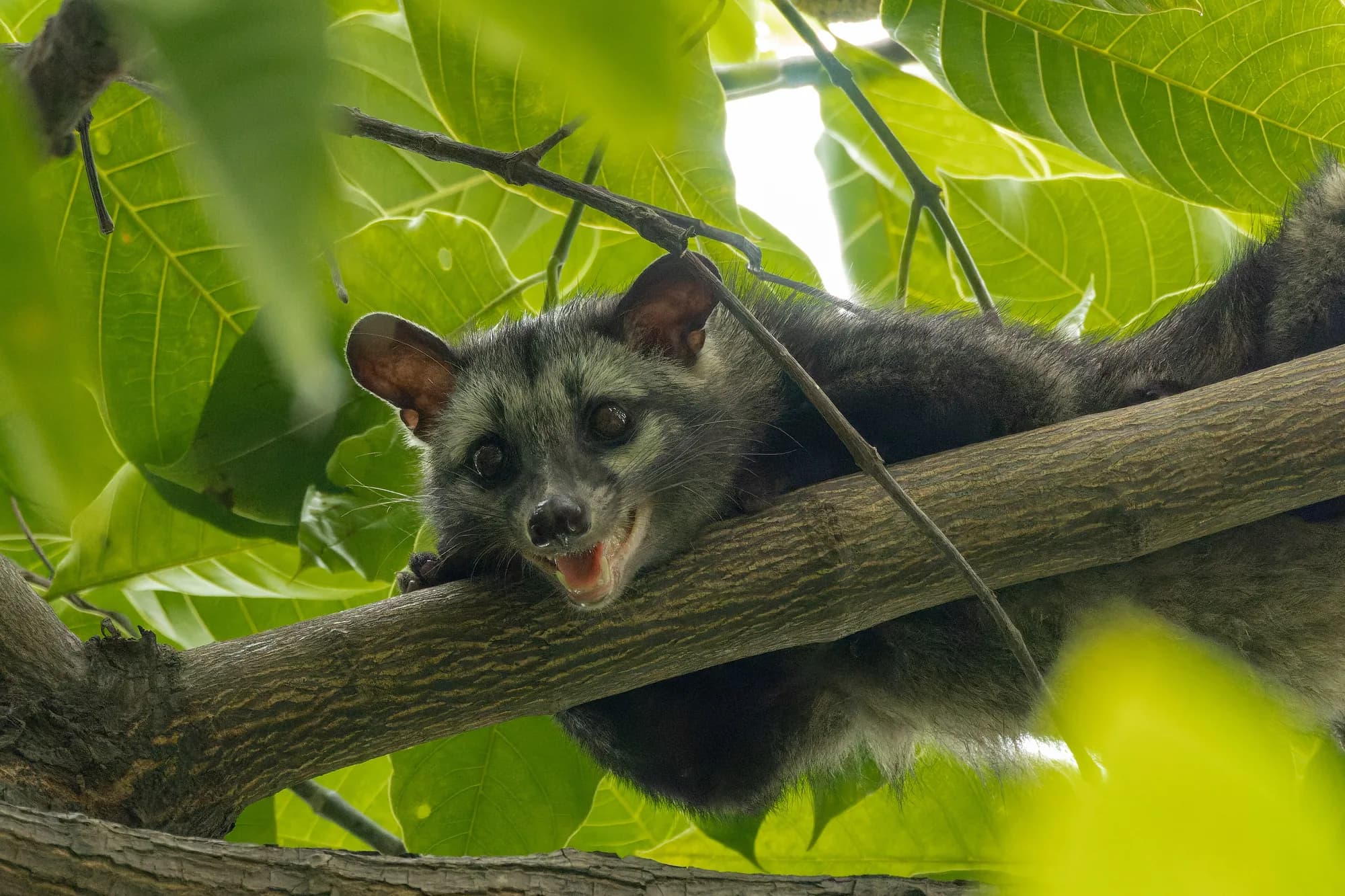
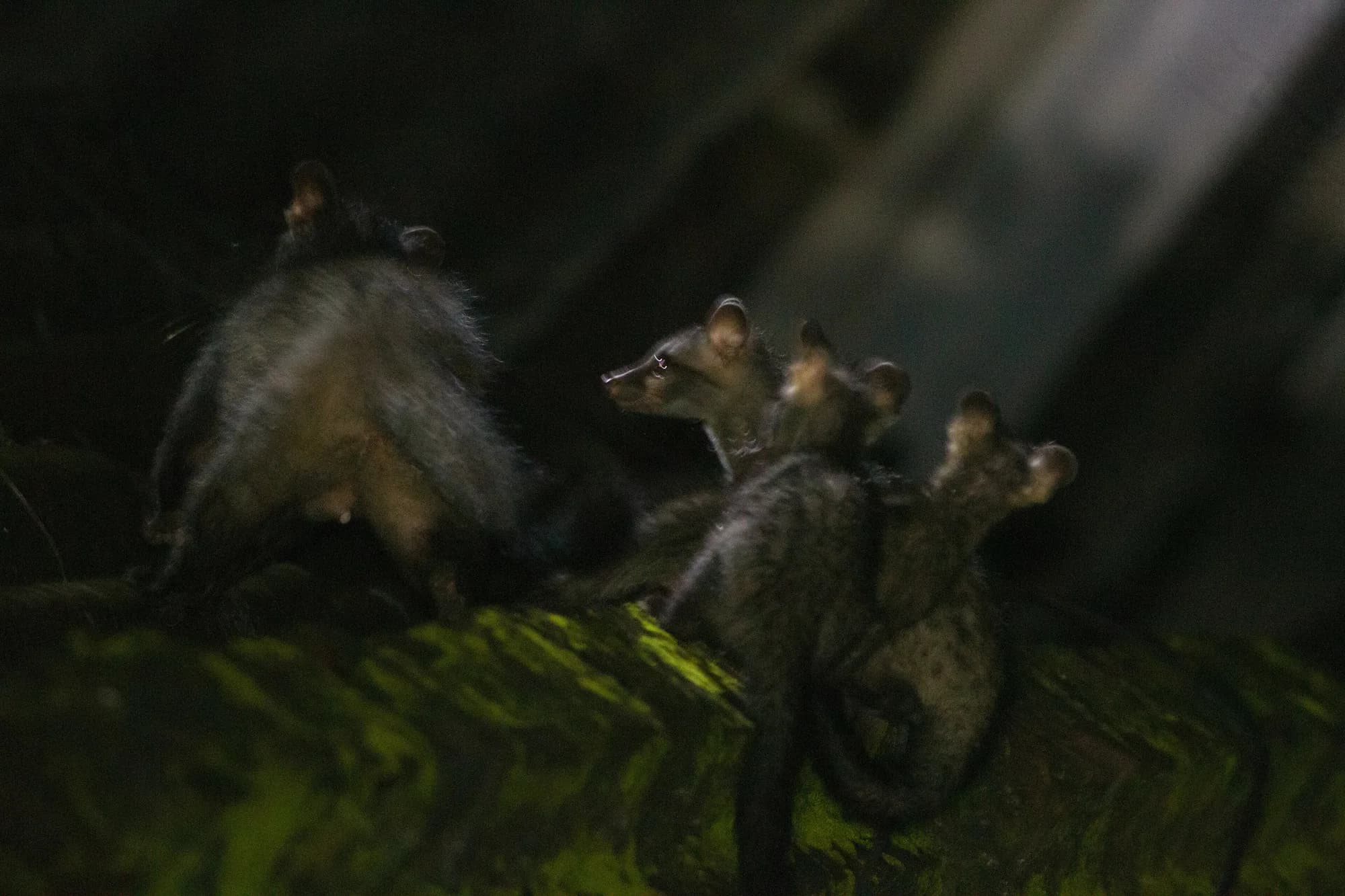
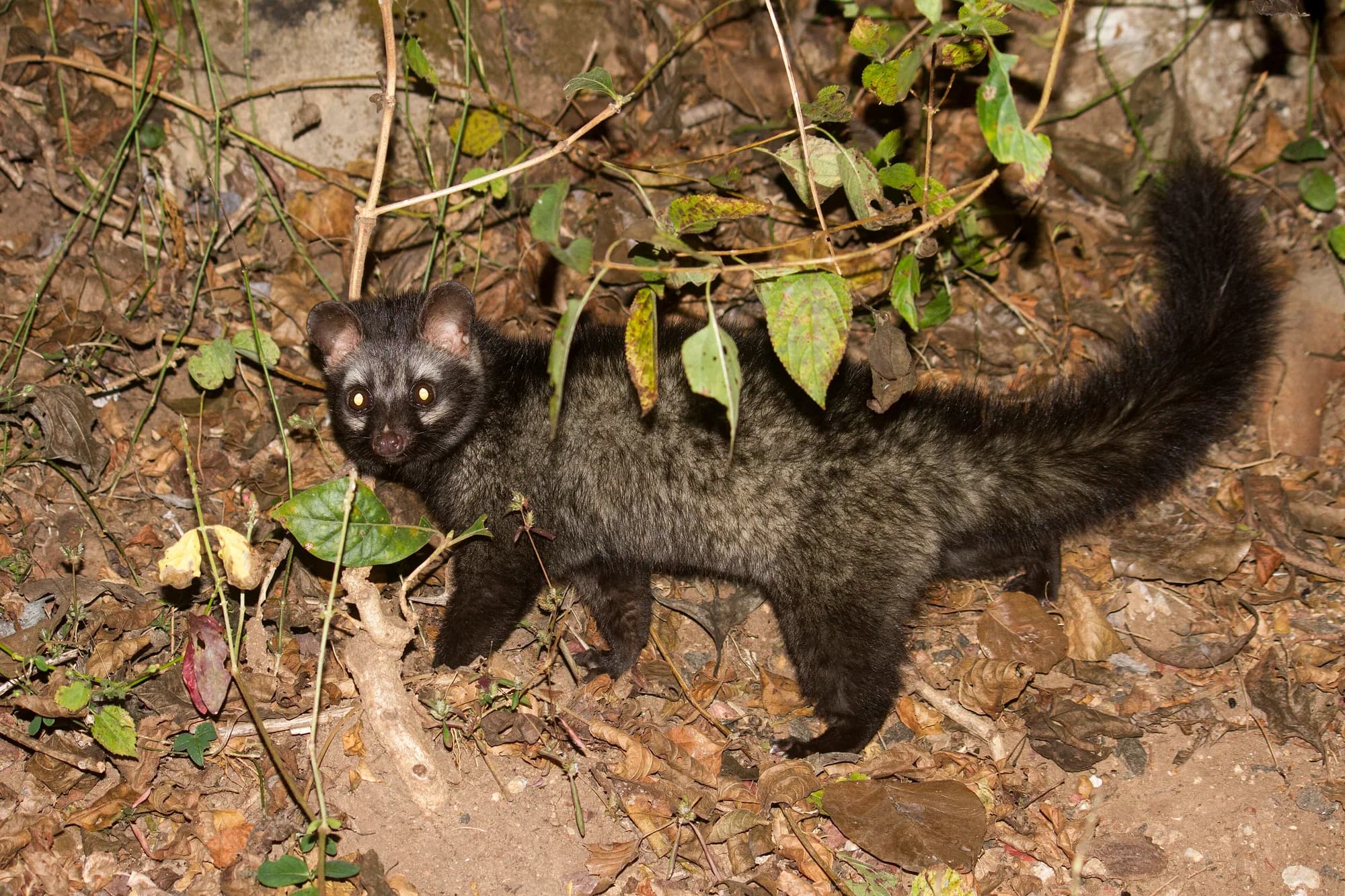
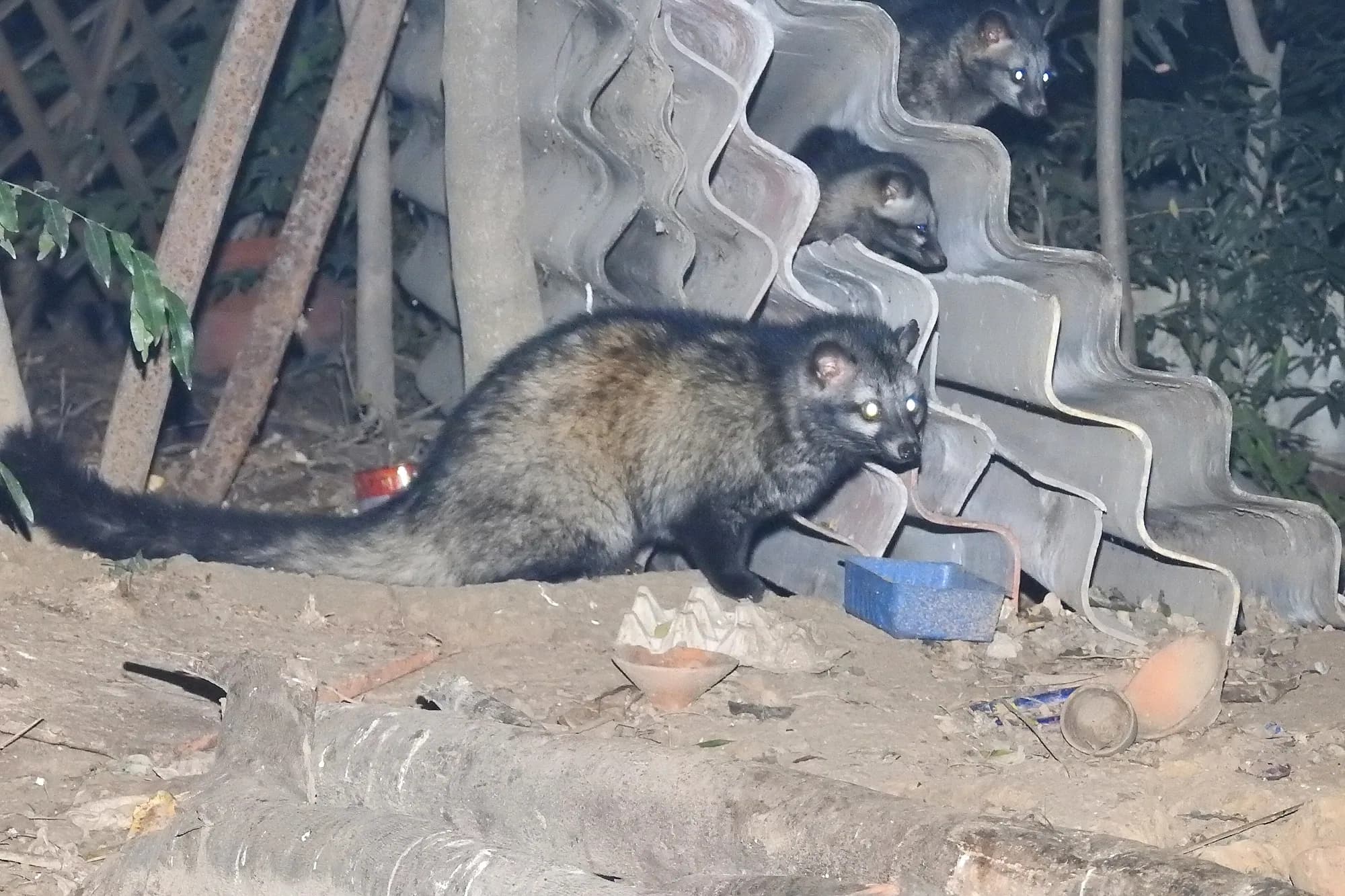
Photographs of Asian palm civet in the wild, in Indian reserves. We publish no captive, baited or digitally composited images, and no photograph whose licence we cannot show.
What a sighting is actually like
Eyes in a lamp beam, high in a fruiting tree, and a long grey body picking along a branch. They are unhurried and reasonably tolerant of light, which makes this one of the better night sightings rather than a two-second crossing.
Half the people who see their first one see it from a lodge veranda.
The coffee problem
Kopi luwak is made from coffee cherries eaten and passed by this animal. In the wild that is a curiosity; commercially it means caged civets force-fed cherries.
Status and protection
Status and protection
- IUCN Red List
- Least Concern
- Population trend
- ↓ Decreasing
- Wildlife Protection Act 1972
- Schedule I
- CITES
- Appendix III
Assessment is for the full species Paradoxurus hermaphroditus, which is the binomial given. Global scope.
Assessed 2015 · IUCN Red List assessment
What to book to see one
What you would be booking
- How it is seen
- A buffer night drive, or simply looking up at your lodge after dark.
- Drives to book
- One or two night drives will usually produce one.
This is the animal behind kopi luwak coffee, and the civet farms that trade produces are a genuine welfare problem. Seeing a wild one on a branch is the better version of that encounter in every sense.
Tadoba — the park in fullQuestions people ask
Where will I see a palm civet?
How is it different from a small Indian civet?
Is this the coffee animal?
Read next
Night drives, on the ground
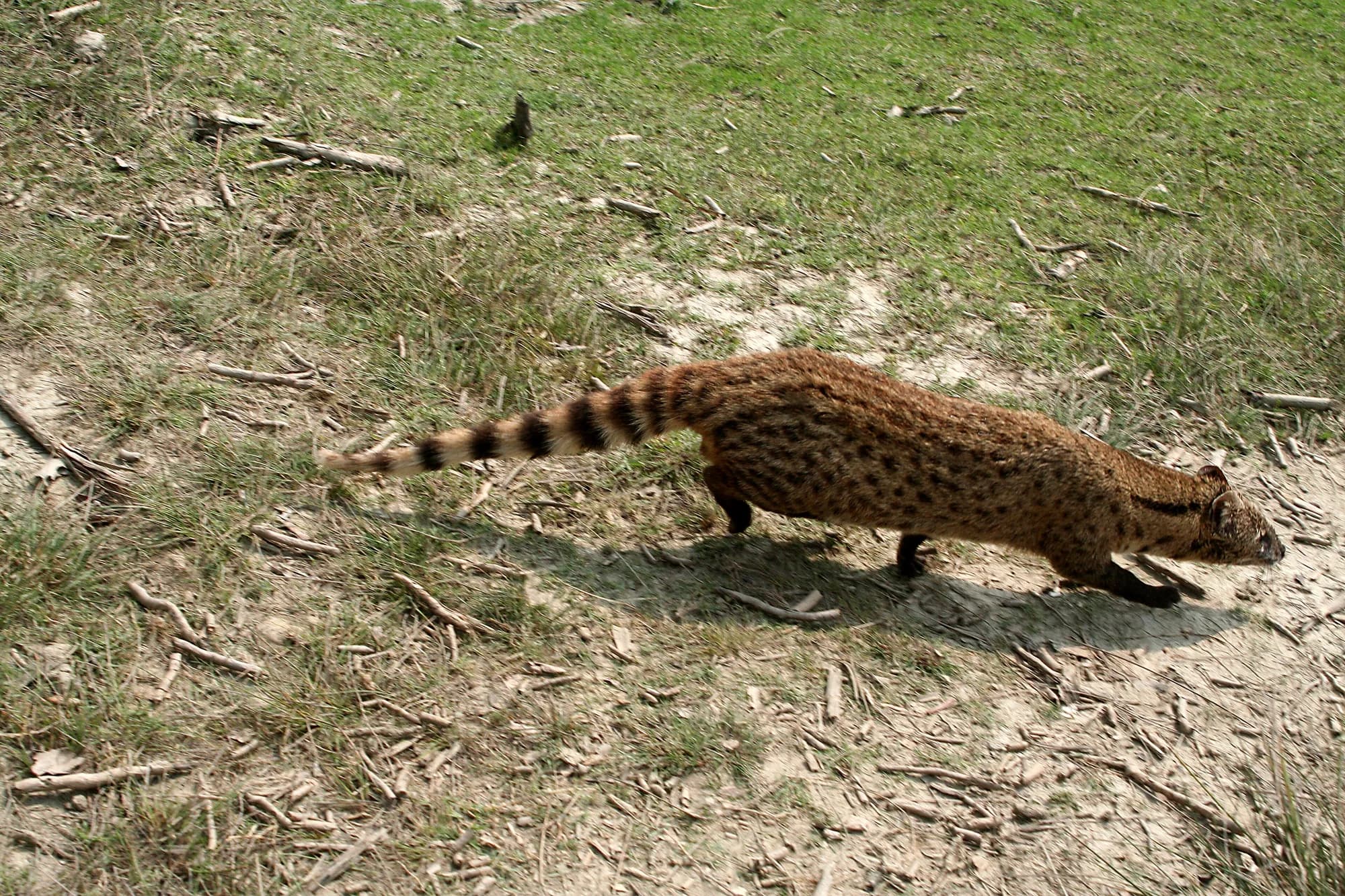
Small Indian civet — the confusion
Spotted, banded-tailed and far more terrestrial than the palm civet it is constantly confused with. A regular on any Indian night drive, and rarely named correctly.
Maharashtra
Tadoba — the park in full
Open teak and bamboo, and a reputation for daylight sightings that has been earned rather than marketed.
Tadoba, and the smallest cat alive
Rusty-spotted cat — the same night drive
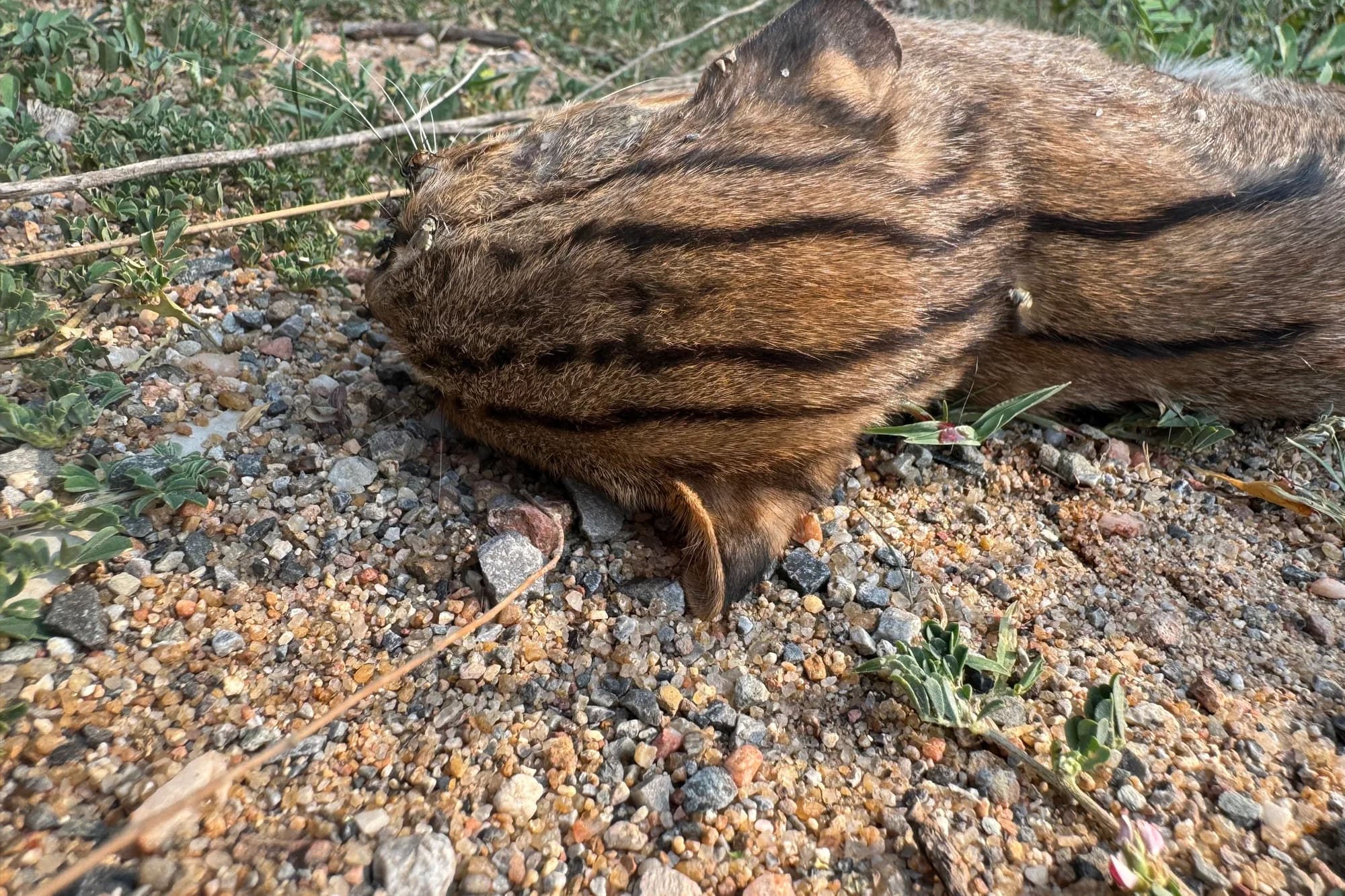
The smallest wild cat in the world, roughly half the weight of a house cat, and Tadoba is the most reliable place on earth to see one.
Our position
Travelling responsibly
Where we stand on vehicle crowding, baiting and playback — and what we will not link to, whoever is paying.