
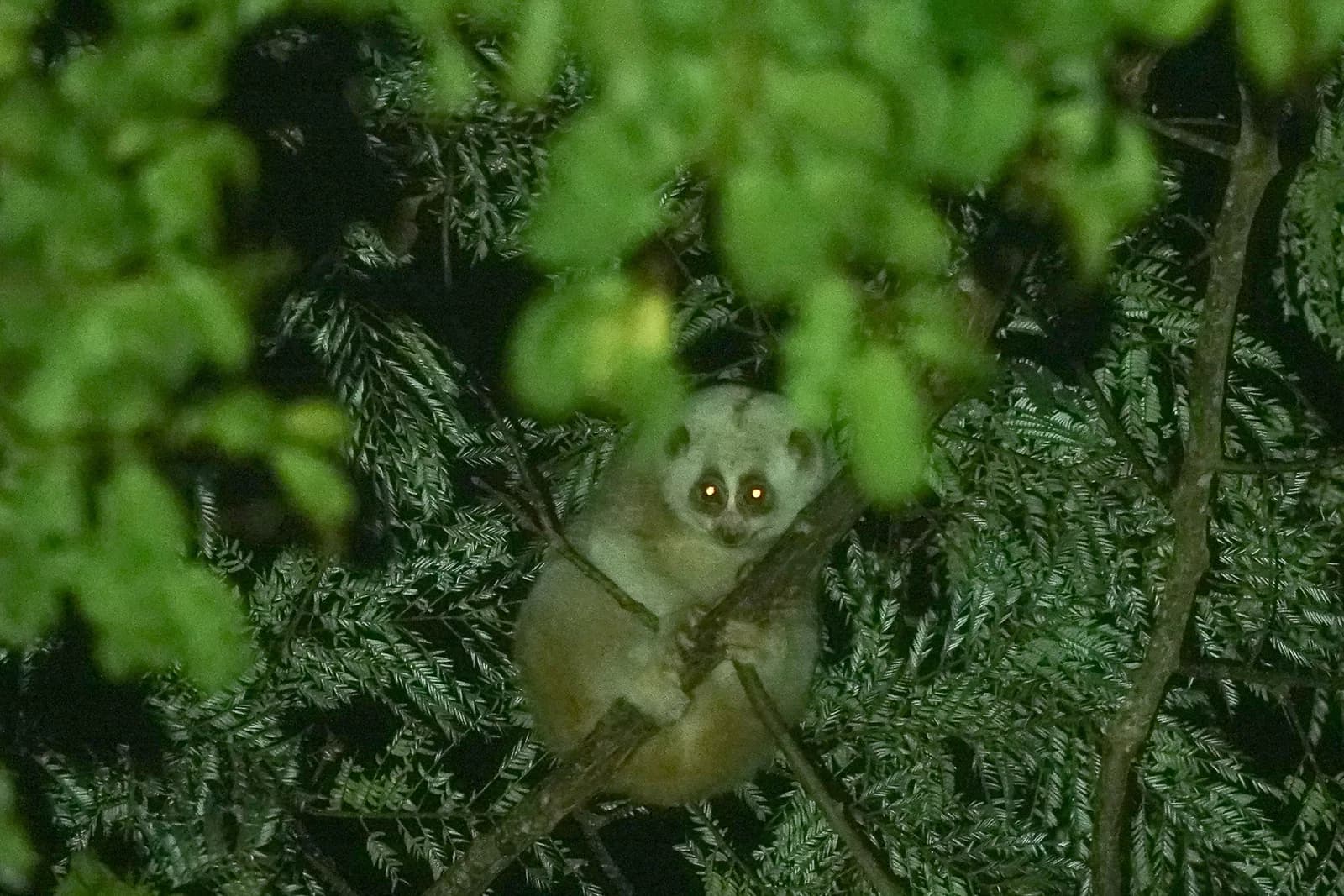
Species · Nycticebus bengalensis
Bengal slow loris
India's only nocturnal primate outside the bushbabies of the imagination — slow, silent, and found by eyeshine. It is the single best reason to do a night walk in Assam.
Also called
- Lajuki bandar (লাজুকী বান্দৰ) · Assamese
- Lajjabati banar · Bengali
Checked 31 Aug 2026
- Where
- Assam and the Northeast hills
- Best months
- November–March
- Time
- Two hours after dark onwards
- Note
- The only venomous primate
Evergreen and semi-evergreen forest across the Northeast, up to about 1,500 metres. It needs continuous canopy — a loris cannot cross a gap it cannot reach across, so a road through its forest is a wall.
Where it is
Where to actually go
Ranked, with the reason each — these are not interchangeable.
- 01HollongaparAssamA small, well-worked forest with a guiding tradition, and the best-known place in India to look for one deliberately.Night walks are routine here
- 02Panbari, KazirangaAssamThe forest block at Kaziranga's eastern end, walkable with a guide and holding a real population.Add a night to a Kaziranga trip
- 03NamdaphaArunachal PradeshExcellent forest and genuine lorises, but the logistics are the hardest of any reserve in this list.Expedition, not a trip
Where you will not see one
- Anywhere outside the NortheastThere are no slow lorises in central, western or southern India. The small nocturnal primate of the south is the grey slender loris, a different animal in a different genus.
- A daytime forest walkIt sleeps balled up in dense creeper tangles through the day and is effectively invisible. The species is a night walk or nothing.
When to go
When to go
- J
- F
- M
- A
- M
- J
- J
- A
- S
- O
- N
- D
January: best. February: best. March: good. April: marginal. May: marginal. June: closed or unproductive. July: closed or unproductive. August: closed or unproductive. September: marginal. October: good. November: best. December: best.
Through the day
- Dawn
- Morning
- Midday
- Afternoon
- Dusk
- Night
Dawn: not normally seen. Morning: not normally seen. Midday: not normally seen. Afternoon: not normally seen. Dusk: usually resting. Night: most active.
What it looks like in the field


Photographs of Bengal slow loris in the wild, in Indian reserves. We publish no captive, baited or digitally composited images, and no photograph whose licence we cannot show.
Eyeshine, and how you find one
A loris has a reflective layer behind the retina, and at night it throws back a pair of bright orange-red points that hang in the canopy and do not move. Almost everything else that shines at you in a Northeast forest moves within a second or two.
The bite
A gland on the inside of the elbow produces a secretion the animal draws into its mouth. The bite that follows can cause severe reactions in people, which makes this the only primate on earth that is meaningfully venomous.
It has no speed and no escape, so it evolved a chemical answer instead. Handling one is a genuinely bad idea, quite apart from being illegal.
Status and protection
Status and protection
- IUCN Red List
- Endangered
- Population trend
- ↓ Decreasing
- Wildlife Protection Act 1972
- Schedule I (post-2022 amendment numbering)
- CITES
- Appendix I
Species-level global assessment for Nycticebus bengalensis; binomial matches exactly. Criteria A2acd+3cd+4acd.
Assessed 2020 · IUCN Red List assessment
What to book to see one
What you would be booking
- How it is seen
- A guided night walk on a forest track — Hollongapar and the Panbari block near Kaziranga are the two places set up for it.
- Drives to book
- Two or three nights. Eyeshine does most of the work, but you need someone who knows which trees the animals use.
Keep the torch off the face and use the weakest beam that works. Slow lorises are caught for the pet trade precisely because they do not run, and a habituated animal on a known route is an easy target for the next person along.
Kaziranga — the park in fullQuestions people ask
Where can I see a Bengal slow loris?
Is it dangerous?
Why is it endangered?
Read next
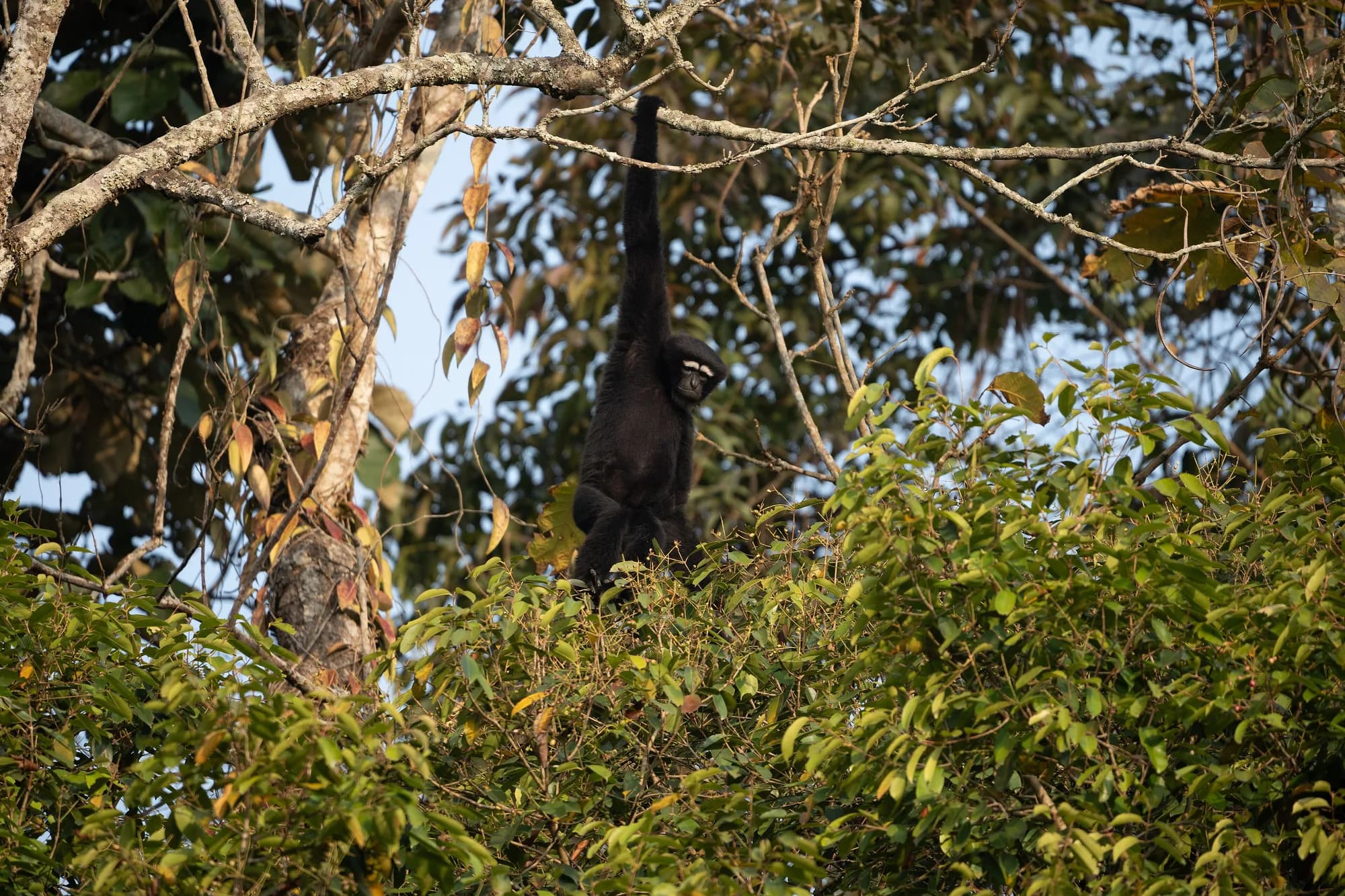
Assam, and India's only ape
Hoolock gibbon — the same forest by day
The only ape in India, in a forest island surrounded by tea. You will hear the pair duet across a kilometre of canopy before you have any idea where to look.
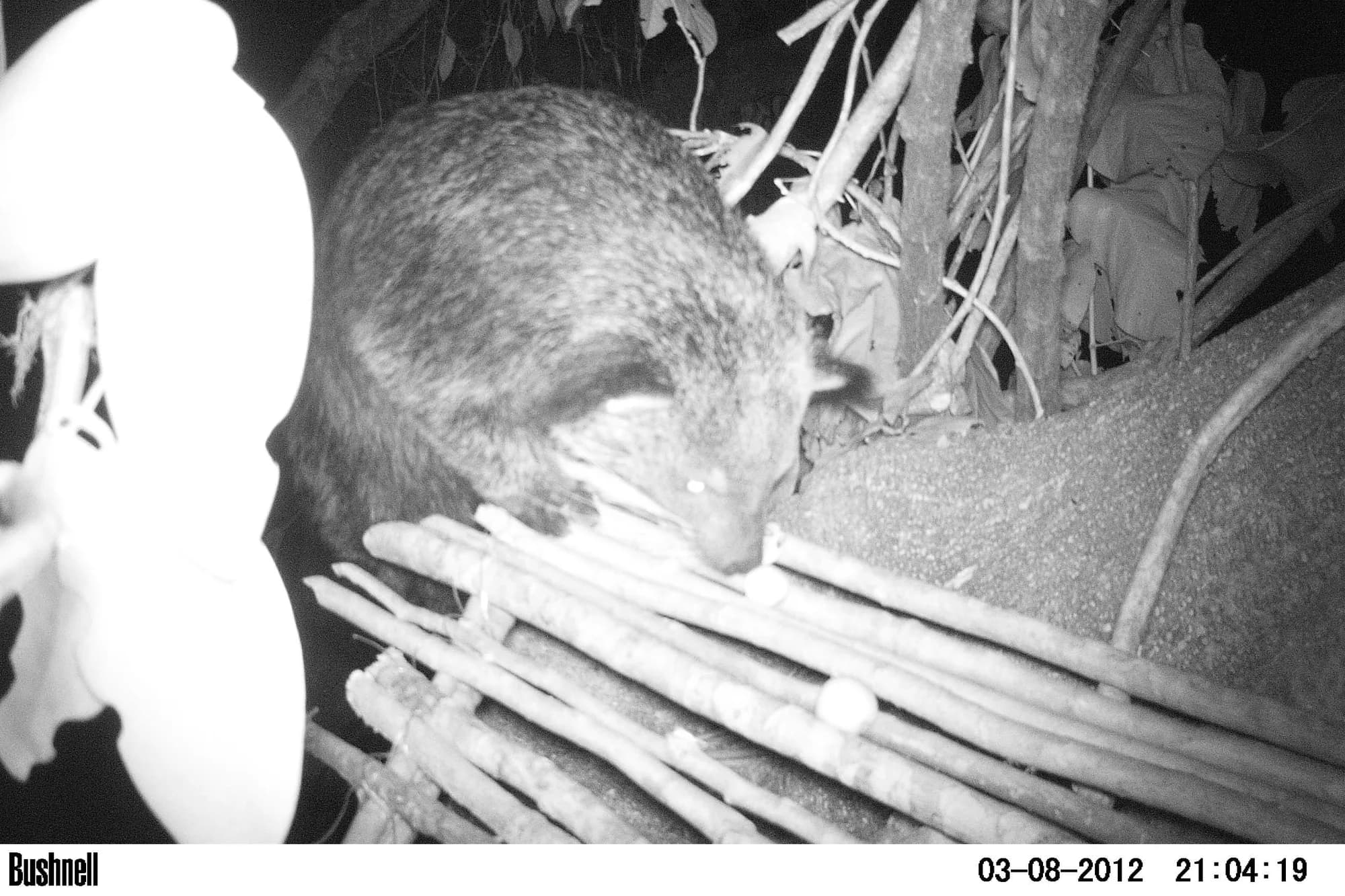
Northeast canopy, and rarely
Binturong — the other night climber
A shaggy black civet the size of a dog, with a prehensile tail and a smell like hot popcorn. Everyone wants one. Almost nobody gets one.
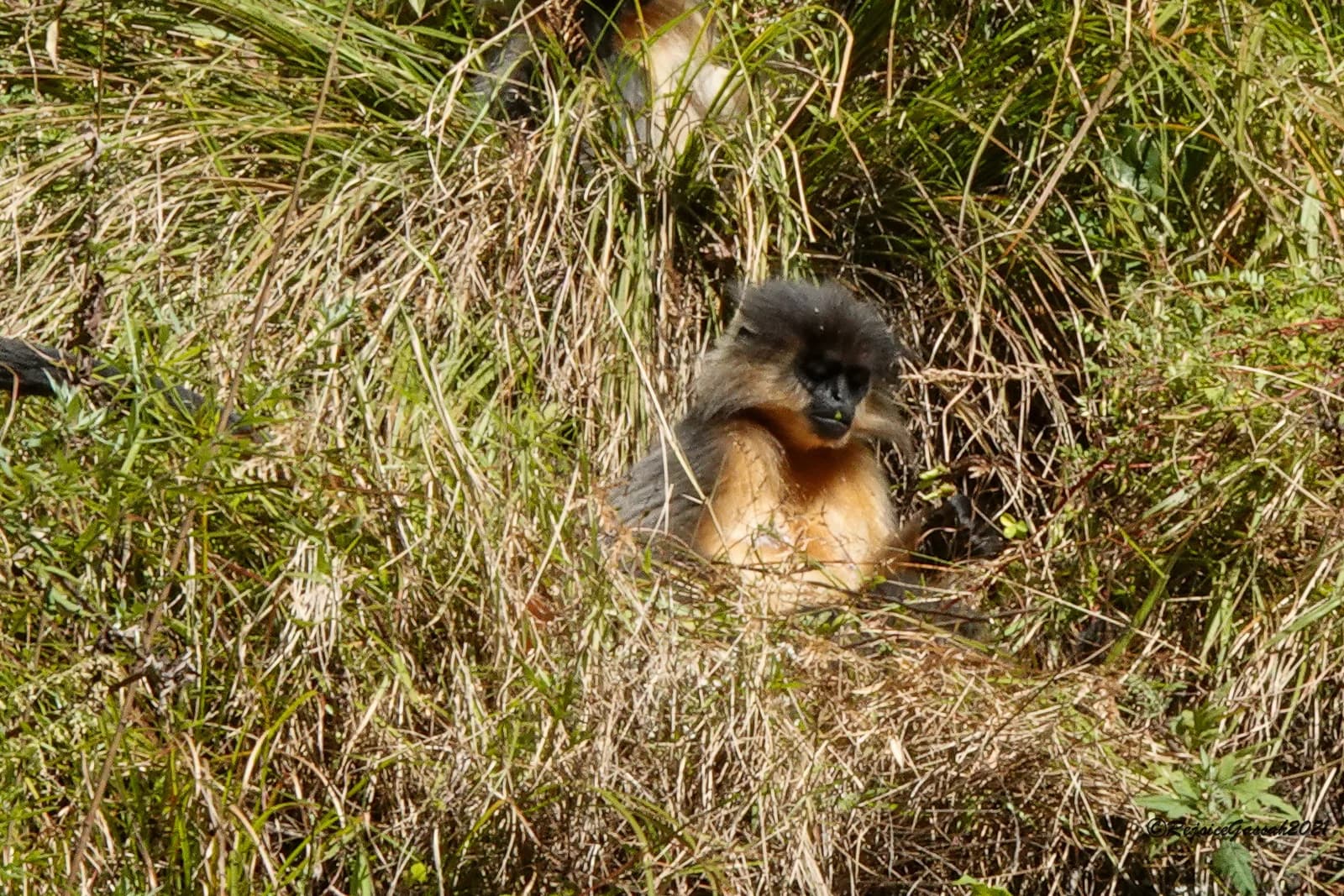
Northeast canopy, above the road
Capped langur — the common one
The common langur of the Northeast, dark-capped with orange underparts that only show when it moves. It is easy to see and easy to name wrong, because three langurs share that corner of India.
Assam
Kaziranga — the park in full
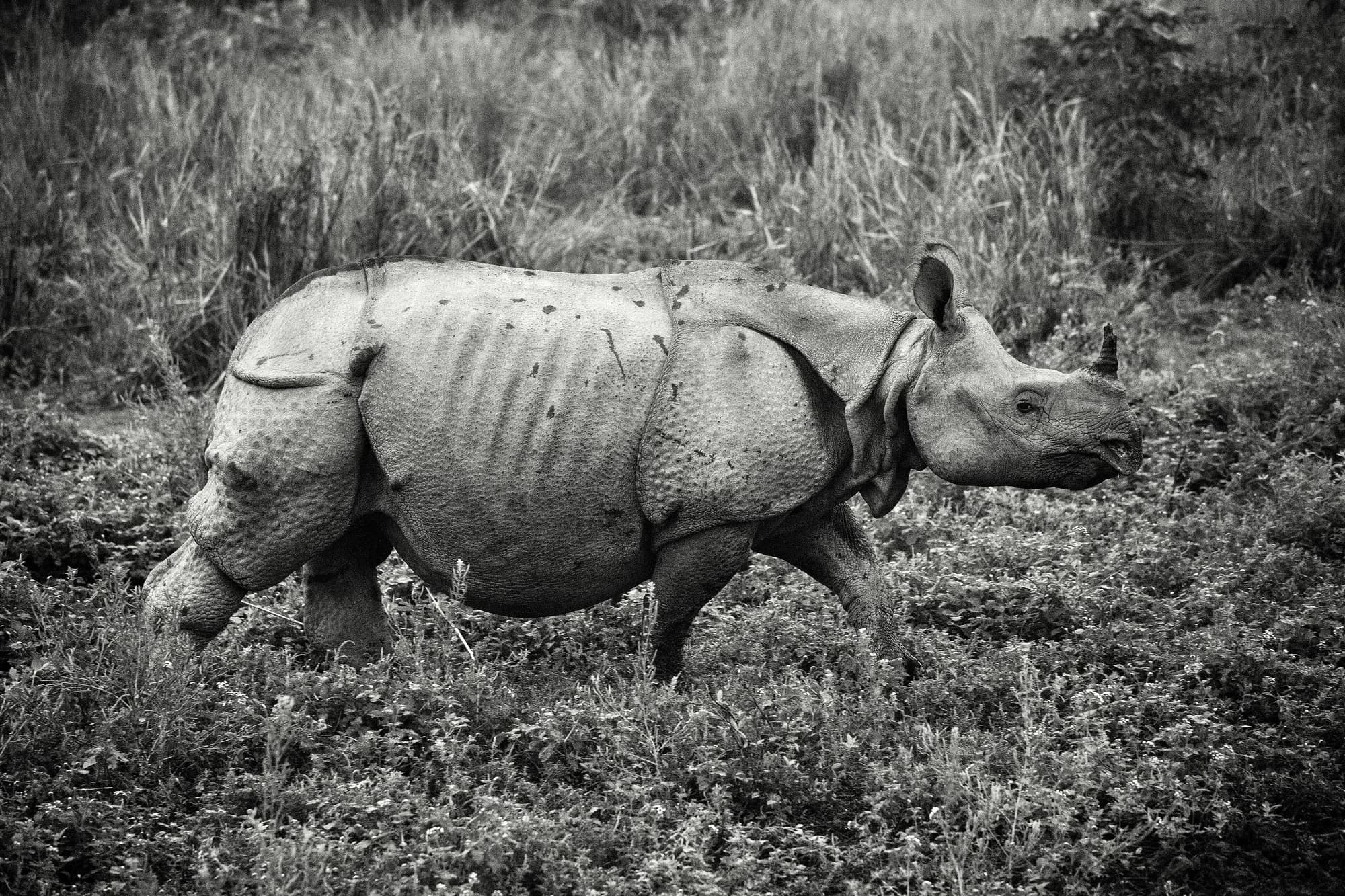
Floodplain grassland, one-horned rhino in daylight, and the one Indian park where the headline animal is close to certain.