
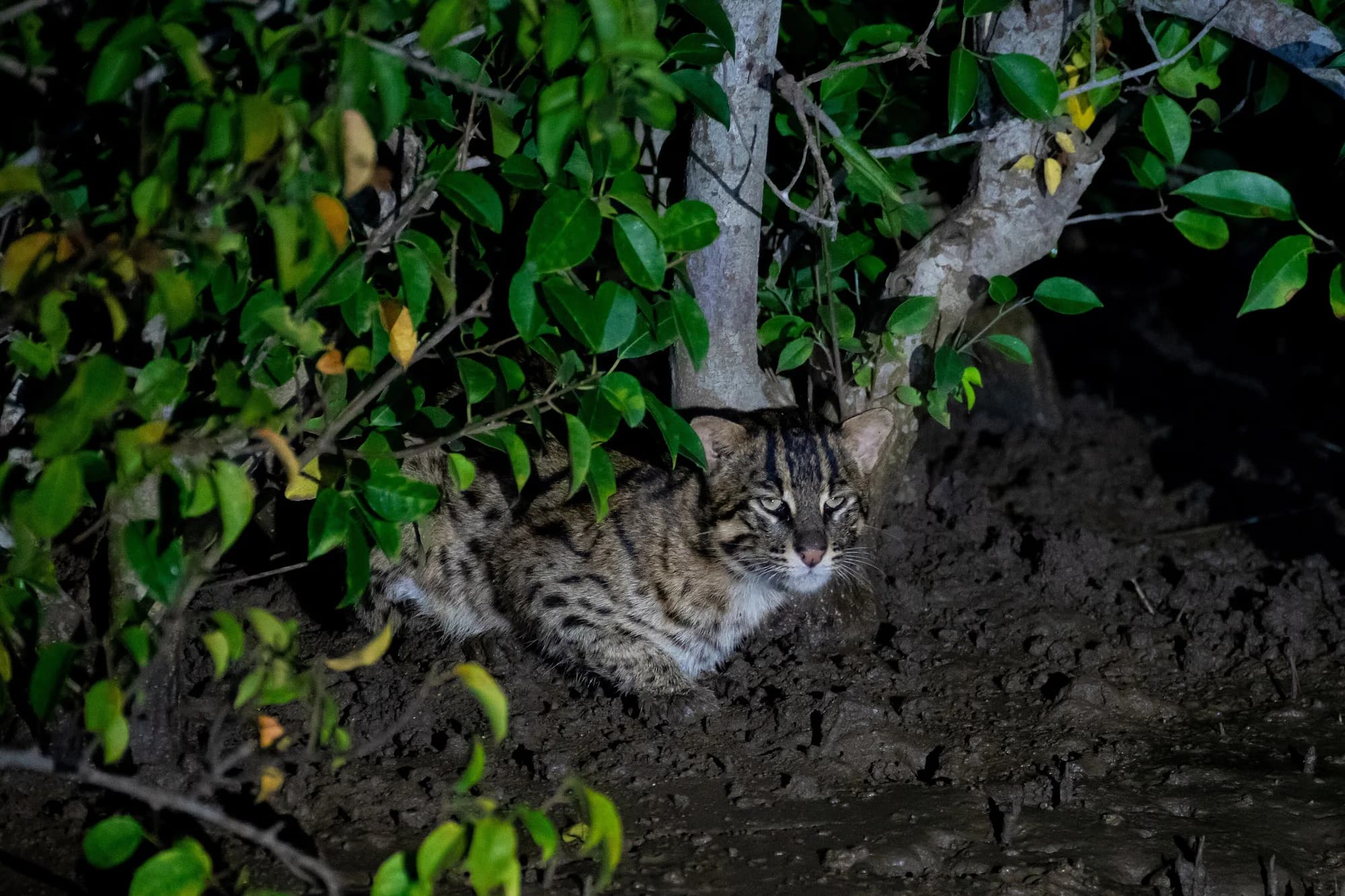
Species · Prionailurus viverrinus
Fishing cat
A stocky, short-tailed wetland cat that hunts in the water. It is not a forest animal, which is why safari parks are the wrong place to look and Odisha's marshes are the right one.
Also called
- Mach-baghrol (মাছ বাঘরোল) · Bengali
- Bagha bilei · Odia
- Machhli billi (मछली बिल्ली) · Hindi
Checked 31 Aug 2026
- Where
- Wetlands of the east and the terai
- Best months
- November–March
- Time
- After dark, almost without exception
- Note
- Partly webbed feet
Marsh, reed bed, mangrove and the edges of aquaculture ponds. The strongholds are the Chilika fringe in Odisha, the Howrah and Hooghly wetlands in West Bengal, the Sundarbans, and the terai. Much of the population lives outside protected areas entirely, on farmland.
Where it is
Where to actually go
Ranked, with the reason each — these are not interchangeable.
- 01Chilika fringeOdishaThe best-studied population in India, with local guides who know individual animals and their channels.Night, on foot, with a group
- 02Howrah and Hooghly wetlandsWest BengalA large population living on aquaculture land, watched by a long-running local project.Entirely outside a park
- 03BhitarkanikaOdishaMangrove creeks with fishing cats through them, and boats that can be on the water at the right hour.Creek edges at dusk
Where you will not see one
- Central Indian tiger reservesKanha, Bandhavgarh, Tadoba and Pench are dry deciduous forest. Fishing cats are not there. A small spotted cat on a central Indian night drive is a jungle cat or a leopard cat.
- A morning jeep safariThe animal is nocturnal and the parks close at night. Almost every genuine fishing cat sighting in India happens outside a national park, on a marsh edge, with a torch.
When to go
When to go
- J
- F
- M
- A
- M
- J
- J
- A
- S
- O
- N
- D
January: best. February: best. March: good. April: marginal. May: marginal. June: closed or unproductive. July: closed or unproductive. August: closed or unproductive. September: closed or unproductive. October: marginal. November: best. December: best.
Through the day
- Dawn
- Morning
- Midday
- Afternoon
- Dusk
- Night
Dawn: usually resting. Morning: not normally seen. Midday: not normally seen. Afternoon: not normally seen. Dusk: active. Night: most active.
Telling it apart
Told apart from
Terai grassland, where both occur
Build and tail. The jungle cat is tall, leggy and plain sandy with a thin ringed tail; the fishing cat is low, heavy and olive-grey with rows of solid spots and a short thick tail.
Northeast forest edge
Size and markings. The leopard cat is house-cat sized with bold blotched rosettes and a long tail; the fishing cat is twice its weight with small aligned spots.
Marks chosen to be usable from a moving vehicle — a fishing cat is rarely still and never close enough for anything subtler.
What it looks like in the field
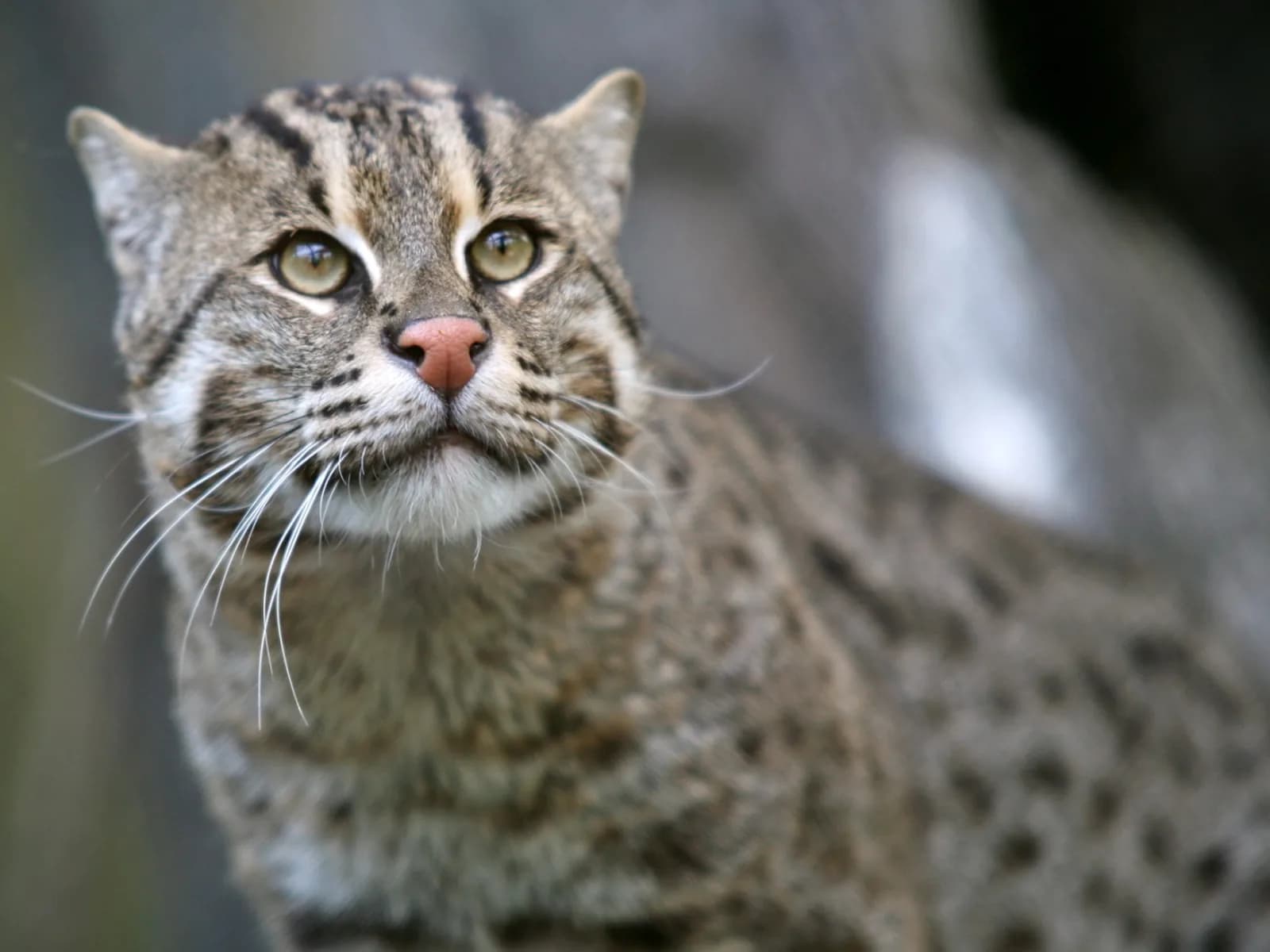
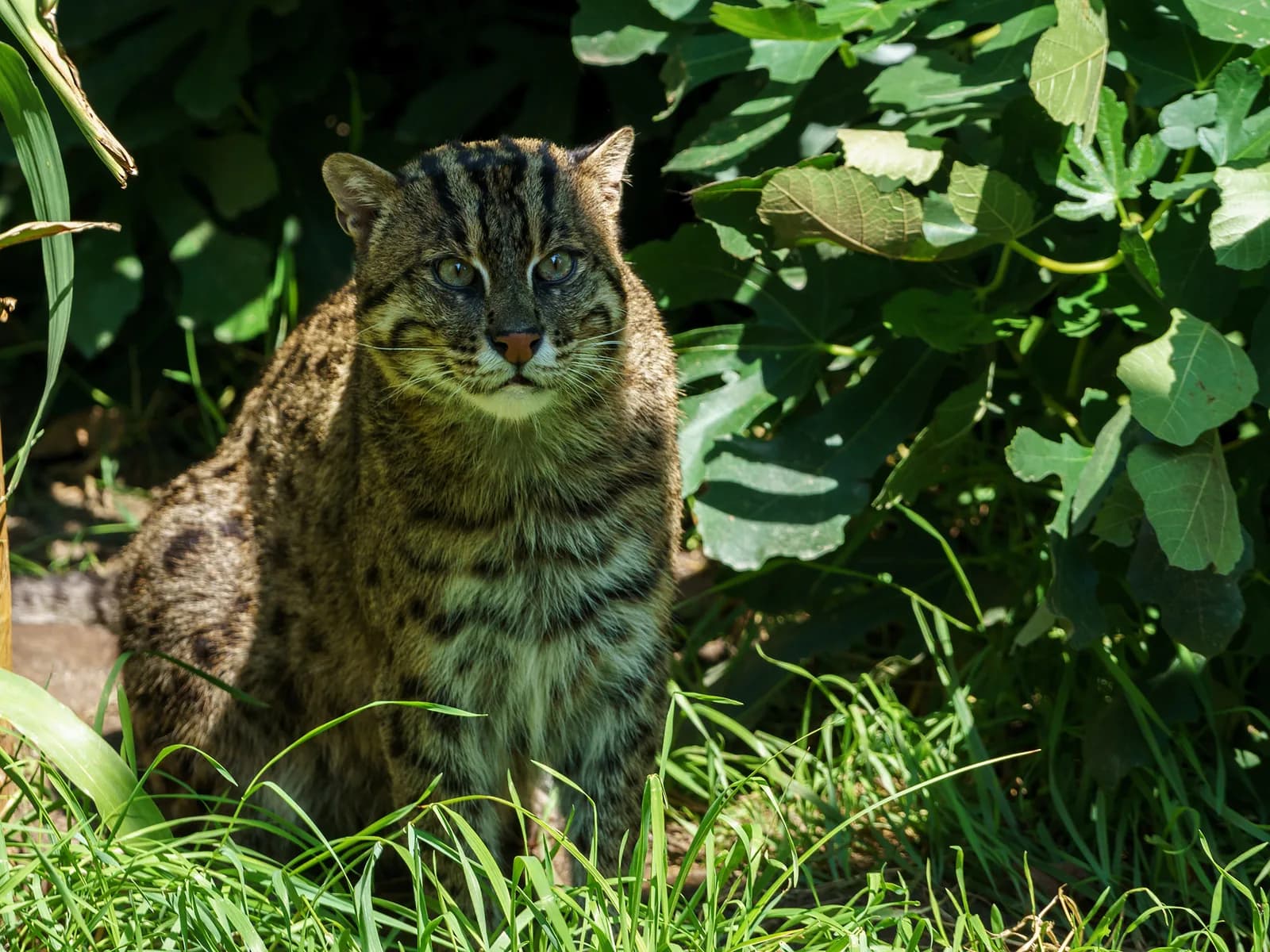
Photographs of Fishing cat in the wild, in Indian reserves. We publish no captive, baited or digitally composited images, and no photograph whose licence we cannot show.
A cat that goes in
Most cats will cross water. This one hunts in it — wading, ducking the head under, and swimming when it needs to. The feet are partly webbed and the coat is double-layered, so the skin stays dry through a long night at a channel edge.
Why the range map understates it
A great deal of India’s fishing cat population lives on fish ponds, paddy bunds and canal banks, well outside any reserve. That is where the animals are and it is also where they are killed, because a cat taking farmed fish is a cat with a price on it.
The conservation problem and the sighting opportunity are the same place: private land, at night, by permission.
Status and protection
Status and protection
- IUCN Red List
- Vulnerable
- Population trend
- ↓ Decreasing
- Wildlife Protection Act 1972
- Schedule I (post-2022 amendment numbering)
- CITES
- Appendix II
Species-level global assessment of Prionailurus viverrinus; the binomial given is the full species, not an Indian subspecies.
Assessed 2024 (published in the 2025 Red List) · IUCN Red List assessment
What to book to see one
What you would be booking
- How it is seen
- A night walk or boat with a local conservation group, on wetland outside the reserve system. Chilika and the Howrah wetlands both have people doing this properly.
- Drives to book
- Three or four nights, and accept that many people do the trip and see tracks. This is one of the hardest cats in India to see deliberately.
Fishing cats live alongside fish farmers, and the relationship is tense. Go with a group that has that relationship already; turning up with a spotlight on someone's ponds does damage.
Bhitarkanika — the park in fullQuestions people ask
Where is the best place to see a fishing cat in India?
Can I see one on a safari?
How do I tell it from a jungle cat?
Read next
Everywhere, and always misnamed
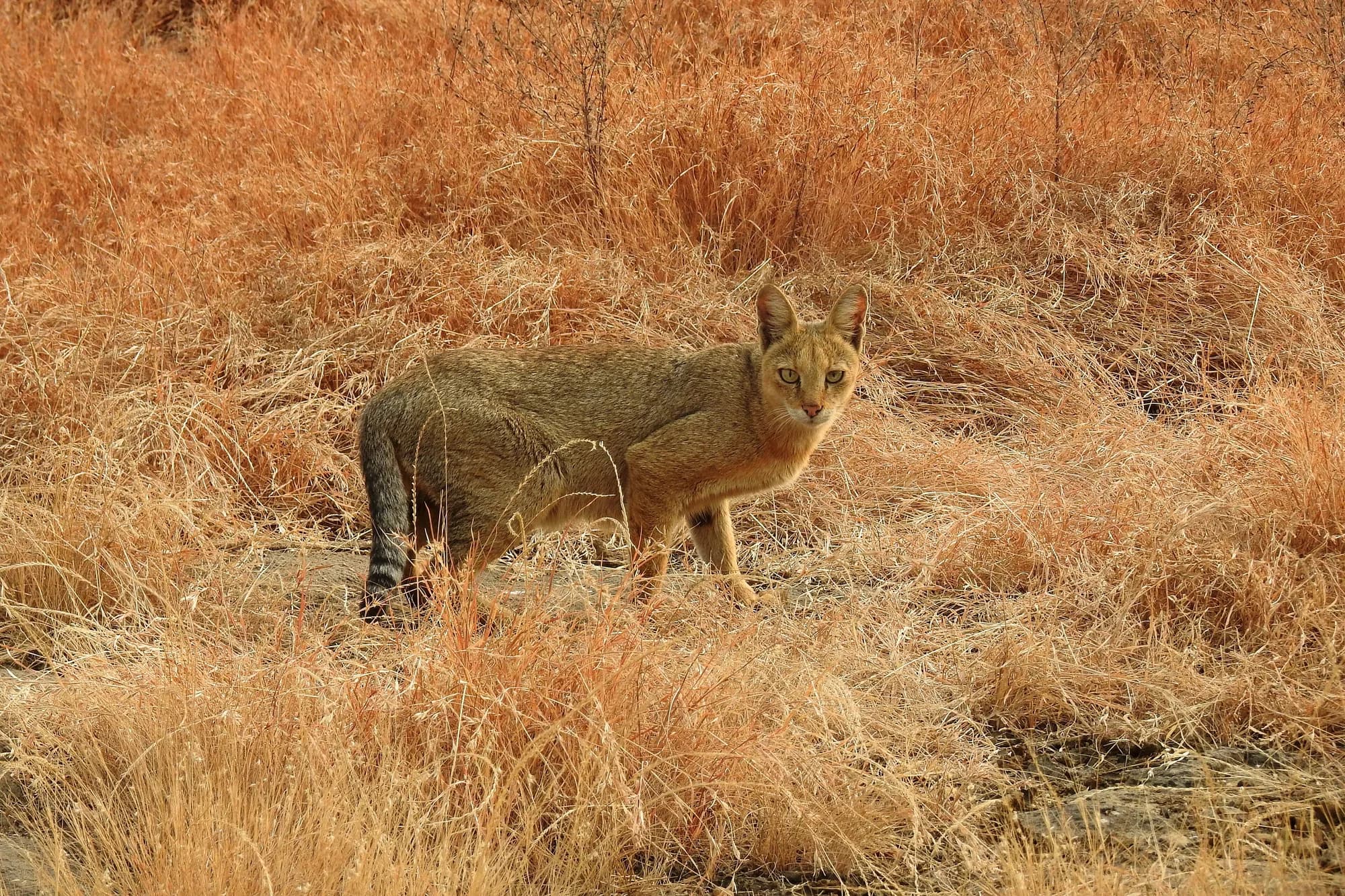
Jungle cat — the confusion pair
India's most-seen wild cat and its most misidentified. Long-legged, plain sandy, tuft-eared, and reported variously as a caracal, a leopard cub and somebody's escaped tabby.
Night drives, and misreported constantly
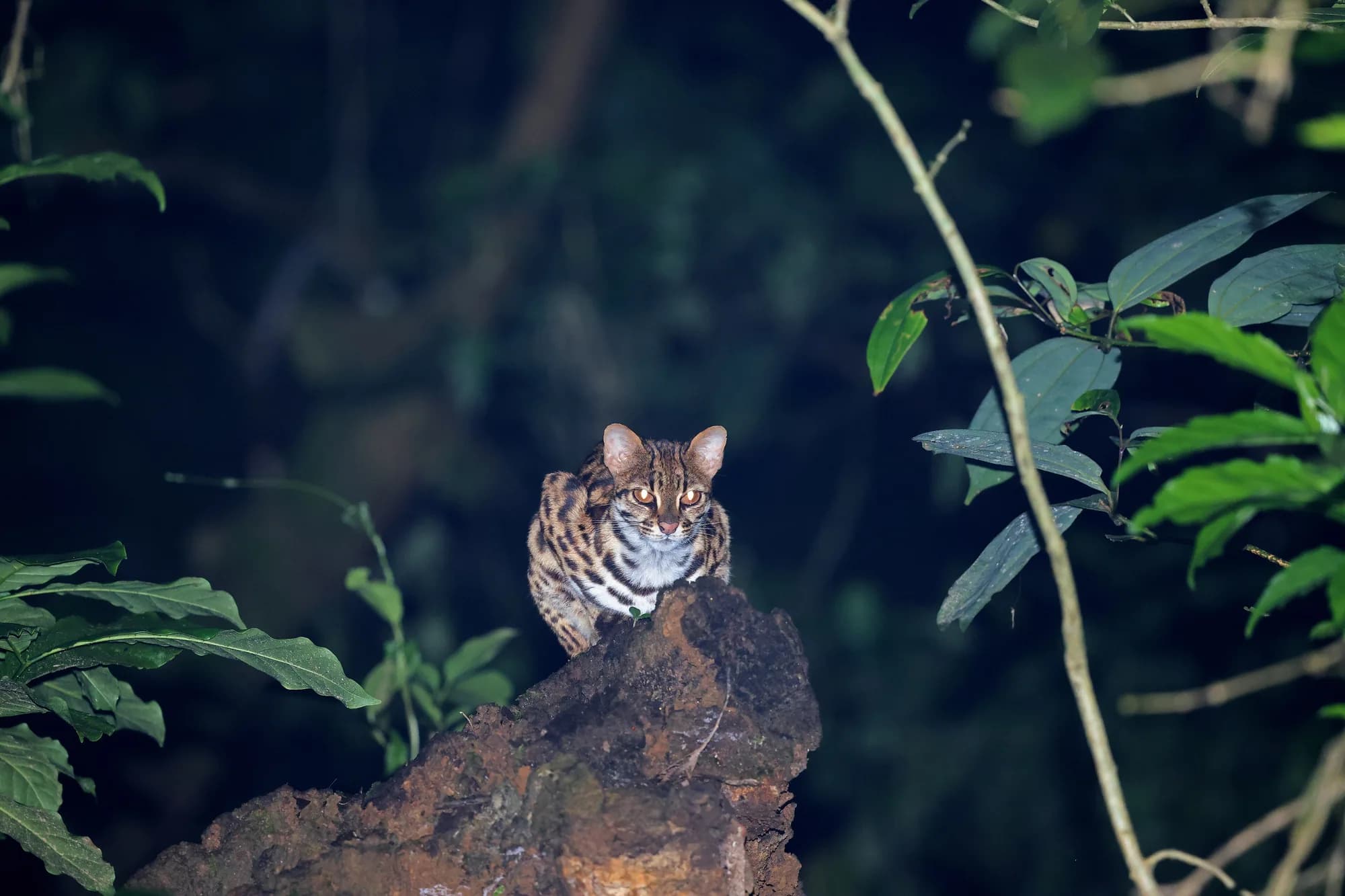
Leopard cat — the other small spotted cat
A house-cat-sized spotted cat with bold white face stripes, common across forested India, and the animal most often reported as a leopard cub.
Rivers, in noisy family groups
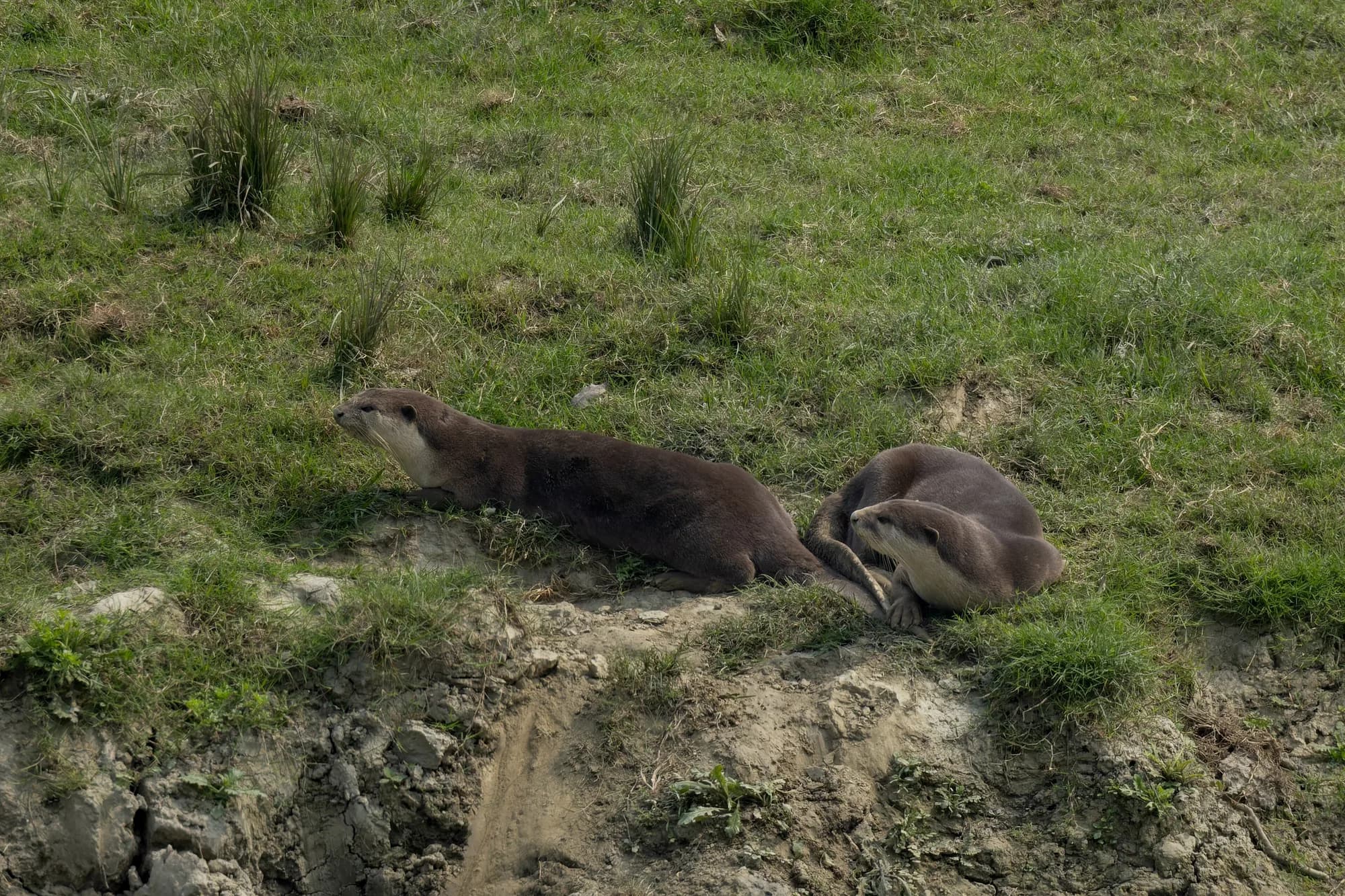
Smooth-coated otter — same water, by day
A family of otters working a river is one of the best sightings in India and almost nobody books for it. Loud, social, and easier to hear than to see.
Bhitarkanika — the park in full