
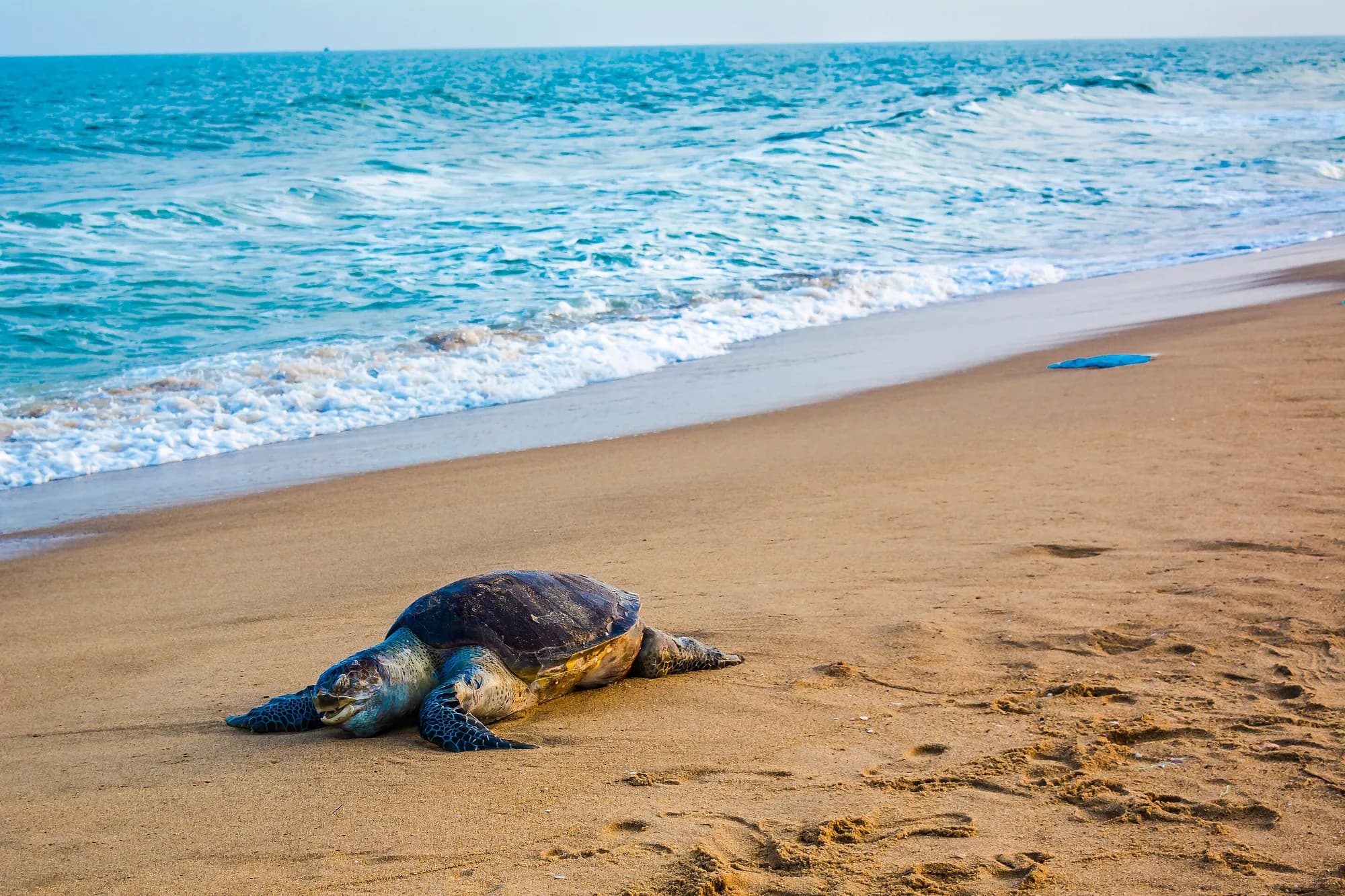
Species · Lepidochelys olivacea
Olive ridley turtle
The arribada is one of the largest wildlife aggregations on earth: hundreds of thousands of turtles coming ashore over a few nights to nest on the same stretch of sand. It has nothing to do with a safari, and that is why most visitors never hear about it.
Also called
- Olive ridley kachhapa · Odia
- Samudri kachhua (समुद्री कछुआ) · Hindi
- Kadal aamai · Tamil
Checked 31 Aug 2026
- Where
- Odisha coast, chiefly Rushikulya and Gahirmatha
- Best months
- February–April
- Arribada
- Hundreds of thousands over a few nights
- Not a park
- Beaches, permits and forest department escorts
Nests along much of the Indian coast in small numbers, but the mass arribada happens on a handful of Odisha beaches and effectively nowhere else in the country.
Where it is
Where to actually go
Ranked, with the reason each — these are not interchangeable.
Where you will not see one
- On a safari itineraryThis is a coastal trip in its own right. It cannot be added to a tiger circuit without a long detour and a separate set of arrangements.
- Predictably, on chosen datesThe arribada is triggered by conditions nobody can forecast. It may not happen at all in a given year at a given beach. Book knowing that.
When to go
When to go
- J
- F
- M
- A
- M
- J
- J
- A
- S
- O
- N
- D
January: marginal. February: best. March: best. April: good. May: closed or unproductive. June: closed or unproductive. July: closed or unproductive. August: closed or unproductive. September: closed or unproductive. October: closed or unproductive. November: closed or unproductive. December: marginal.
Through the day
- Dawn
- Morning
- Midday
- Afternoon
- Dusk
- Night
Dawn: active. Morning: usually resting. Midday: not normally seen. Afternoon: not normally seen. Dusk: active. Night: most active.
What it looks like in the field
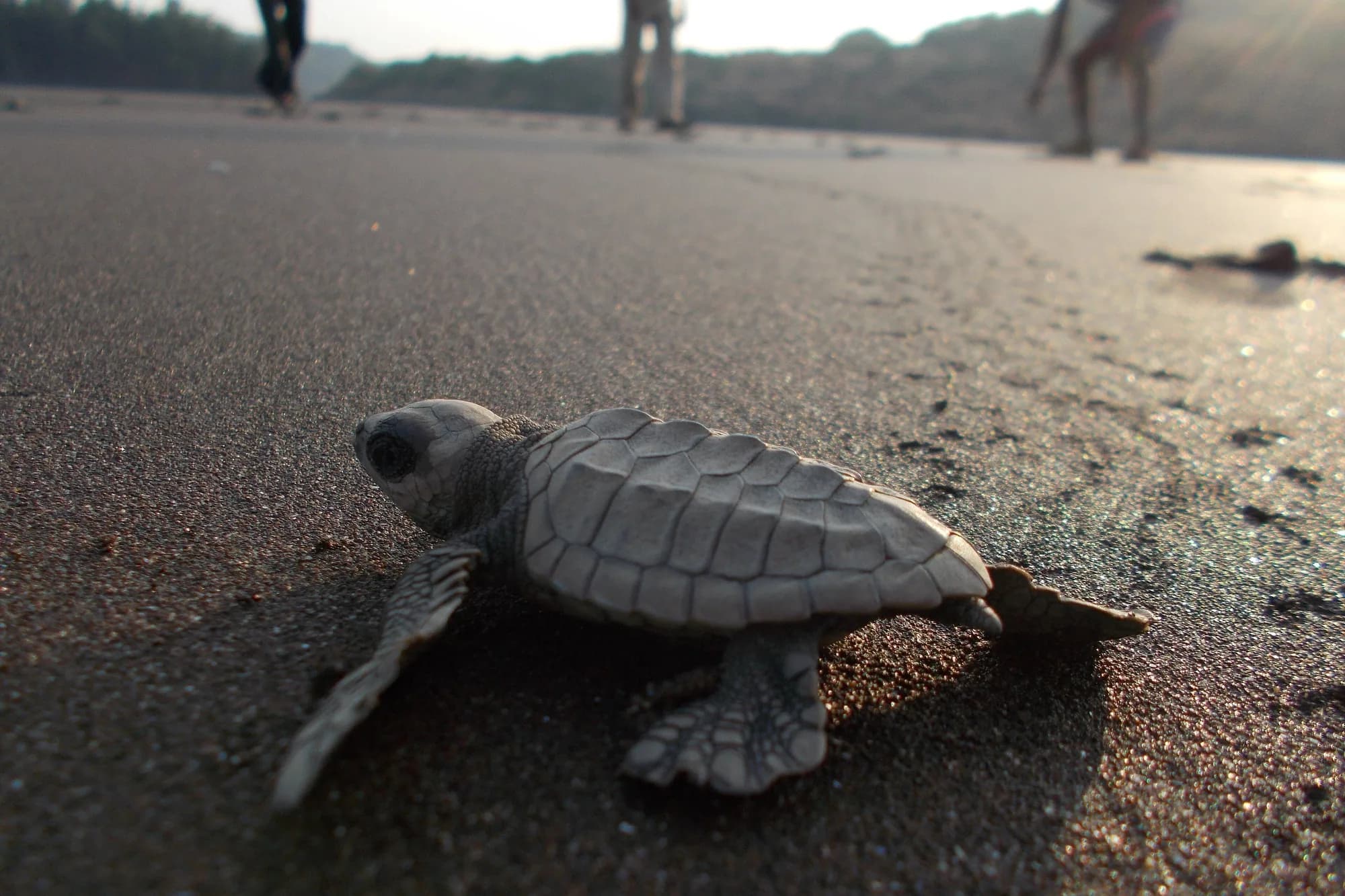
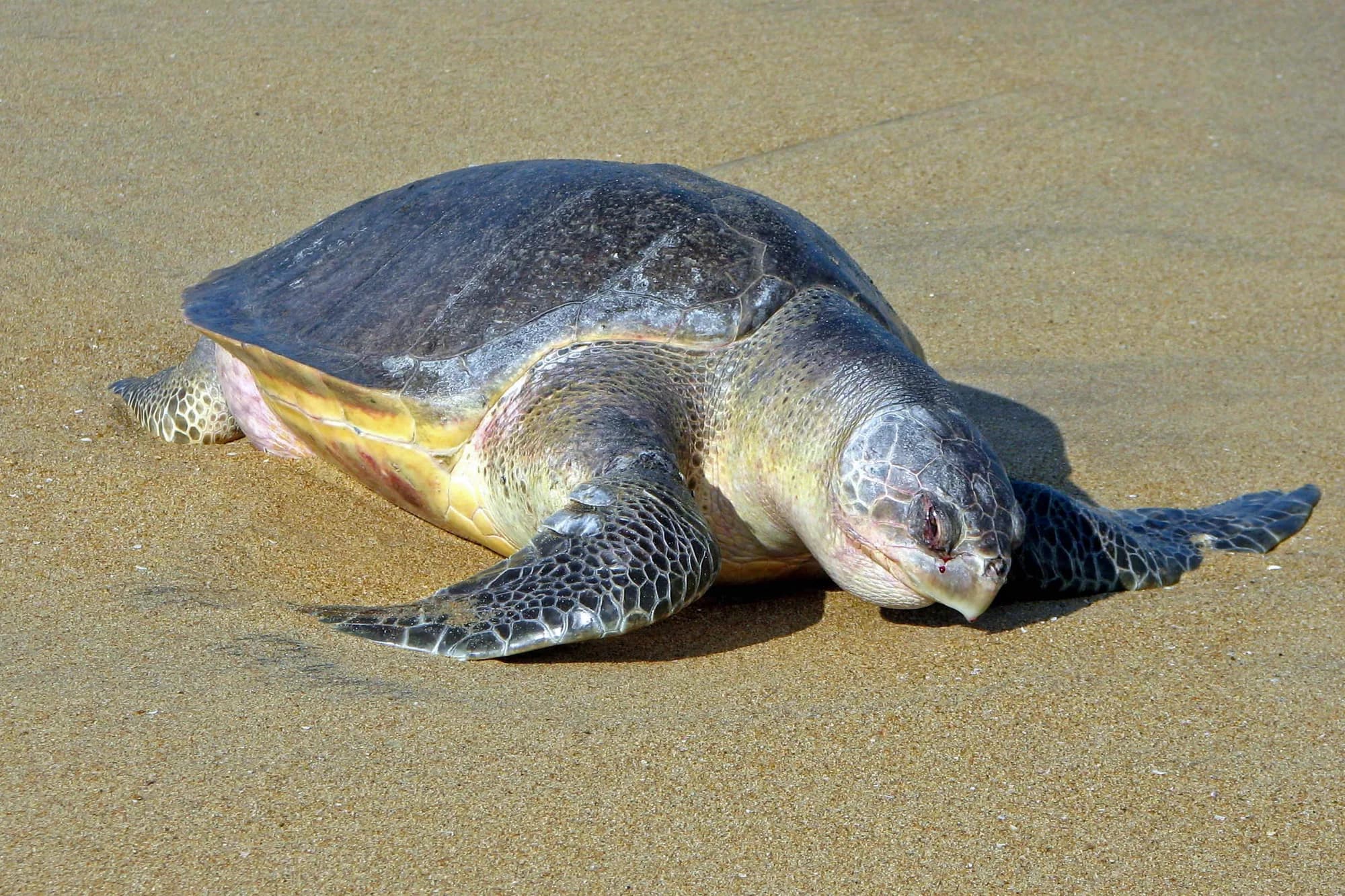
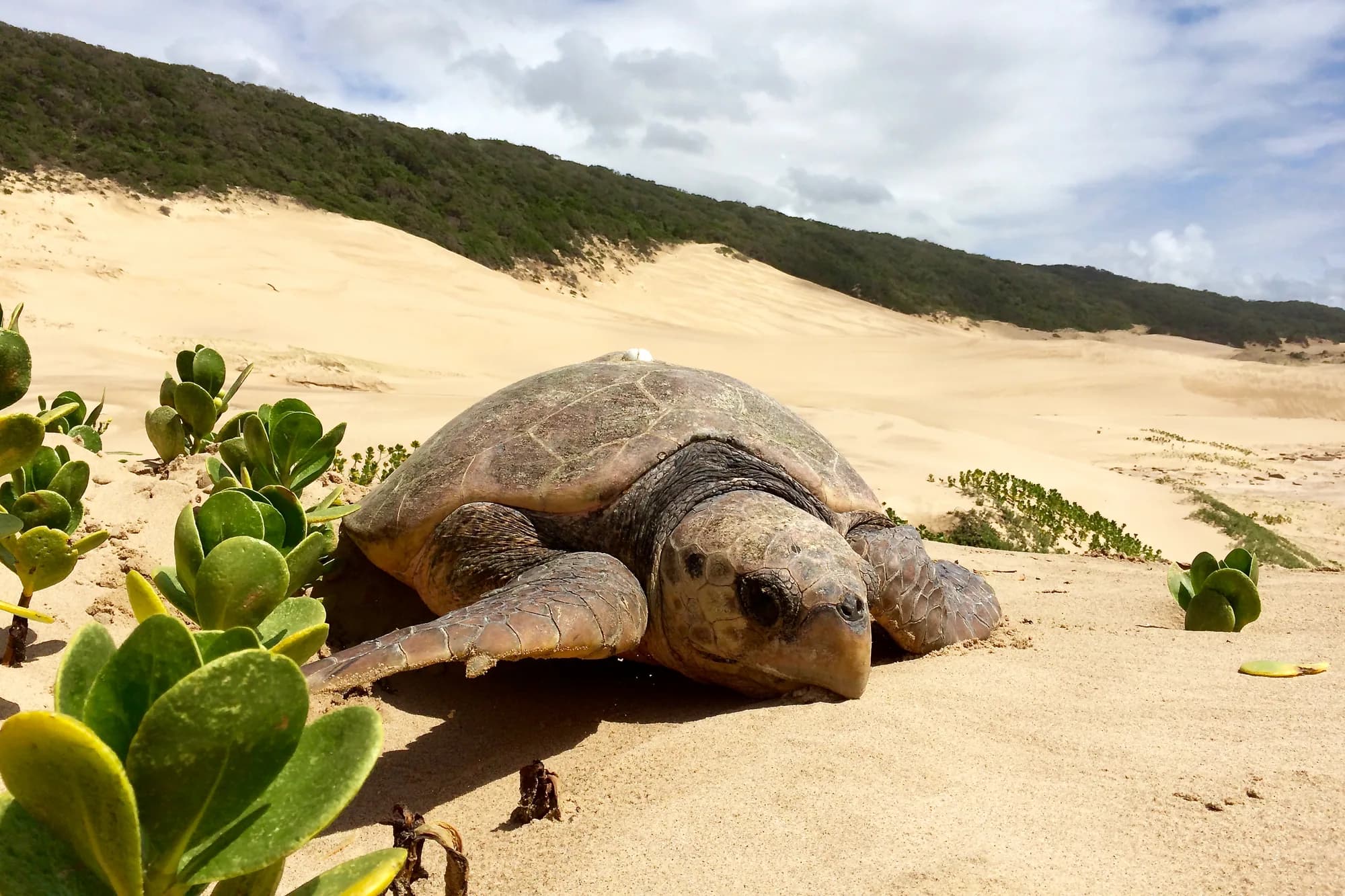
Photographs of Olive ridley turtle in the wild, in Indian reserves. We publish no captive, baited or digitally composited images, and no photograph whose licence we cannot show.
What an arribada is
Most sea turtles nest alone. Ridleys do it together — the females wait offshore and then come up in a single mass over a few nights, in numbers that can reach the hundreds of thousands on one beach. The word is Spanish for arrival, and there is no English equivalent because nothing else does this.
It cannot be scheduled. It is triggered by some combination of moon, wind and sea state that is still not fully understood, and in a poor year a beach may see no mass nesting at all. Any trip built around it is a gamble taken knowingly.
Watching without wrecking it
A nesting female that is disturbed before she starts laying will turn around and go back to the sea, and the eggs are wasted. Hatchlings orient to the brightest horizon, which should be the sea — a torch or a phone screen pointing inland walks them the wrong way.
Status and protection
Status and protection
- IUCN Red List
- Vulnerable
- Population trend
- ↓ Decreasing
- Wildlife Protection Act 1972
- Schedule I
- CITES
- Appendix I
Species-level assessment for Lepidochelys olivacea; binomial matches exactly. Listed as Vulnerable under criteria A2bd. Assessor Abreu-Grobois, A. & Plotkin, P.
Assessed 2008 · IUCN Red List assessment
What to book to see one
What you would be booking
- How it is seen
- Through the Odisha forest department or a local conservation group, in season.
- Drives to book
- None. This is a supervised night visit to a beach, on foot.
Access is controlled and rightly so. Go with the forest department or an established local group, not with whoever offers on the day — an unsupervised crowd on a nesting beach does real damage.
Bhitarkanika — the park in fullQuestions people ask
Where can I see the olive ridley arribada?
When does it happen?
Can I combine it with a tiger safari?
Read next
The Ganges, Brahmaputra and Chambal
Ganges river dolphin — the other water one
A blind dolphin that swims on its side and finds everything by sound, in some of the most crowded river water on earth. India's national aquatic animal, and one most Indians have never seen.
The Chambal, above all
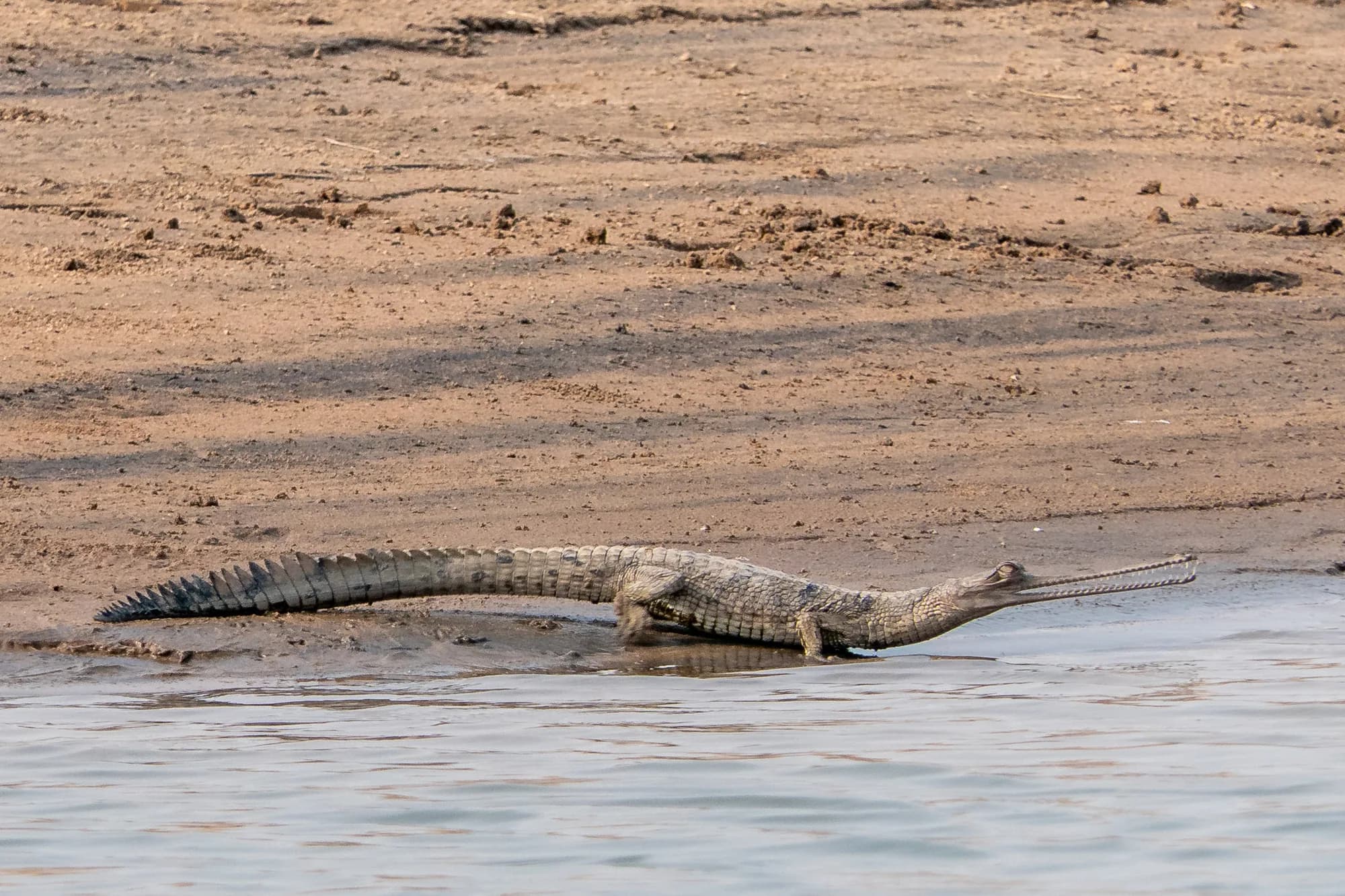
Gharial — the other reptile worth a detour
A fish-eating crocodilian with a snout like a pair of tongs, down to a few hundred breeding adults, and hauled out on Chambal sandbanks in winter in numbers that make it look common.
Every waterhole in the dry reserves
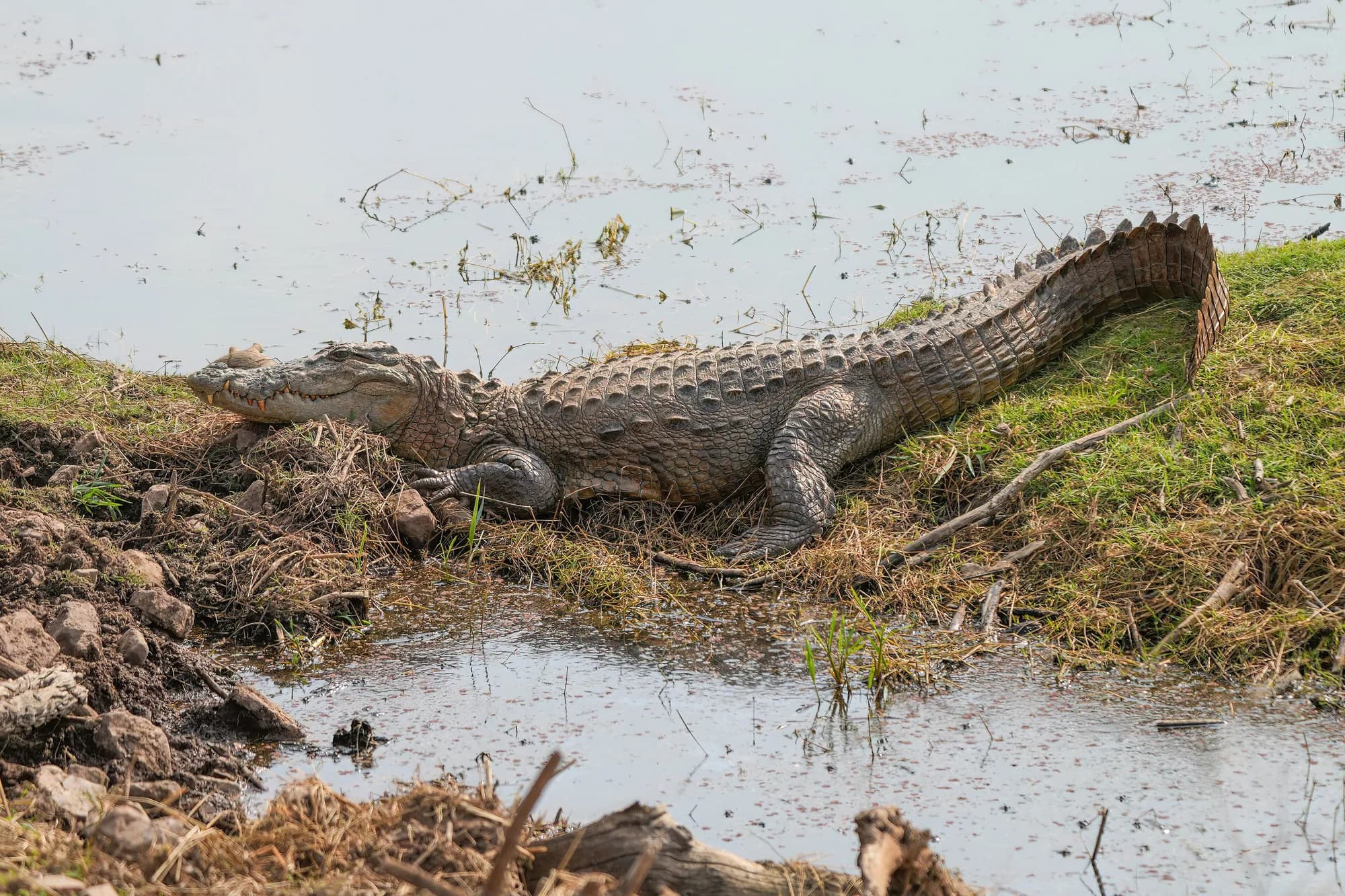
Mugger crocodile — also at Bhitarkanika
The crocodile you will actually see in India — broad-snouted, common, and basking on the bank of every dry-forest lake while everyone photographs the deer behind it.
Our position
Responsible safari
Where we stand on vehicle crowding, baiting and playback — and what we will not link to, whoever is paying.