
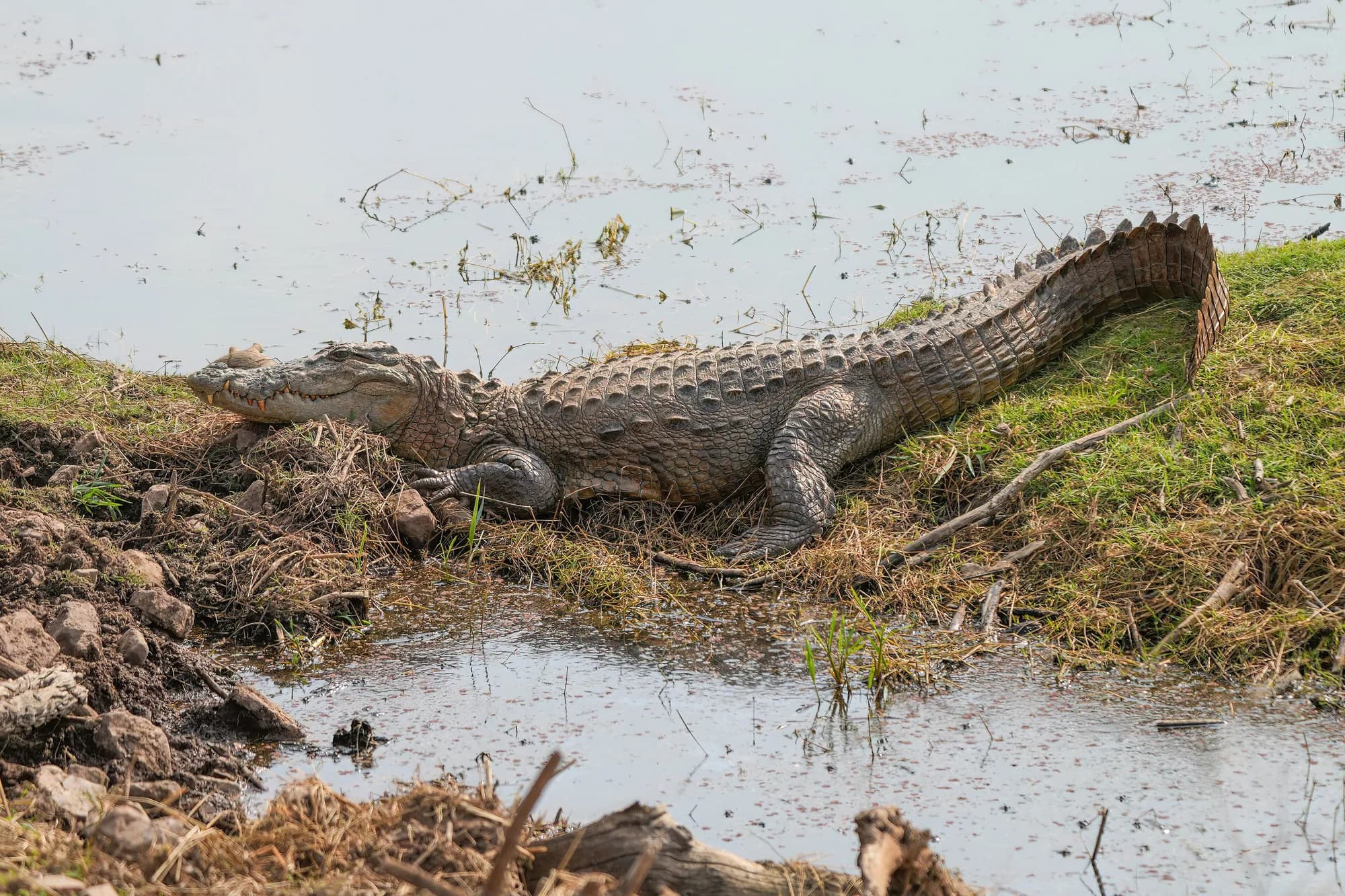
Species · Crocodylus palustris
Mugger crocodile
The crocodile you will actually see in India — broad-snouted, common, and basking on the bank of every dry-forest lake while everyone photographs the deer behind it.
Also called
- Magar (मगर) · Hindi
- Magar · Gujarati
- Sunsar · Marathi
Checked 30 Aug 2026
- Where
- Across most of India
- Best months
- November–April
- Snout
- Broad, not narrow
- Note
- The common crocodile here
Lakes, rivers, reservoirs and village tanks across most of India. Far more adaptable than the gharial, which is why it is still common.
Where it is
Where to actually go
Ranked, with the reason each — these are not interchangeable.
- 01RanthamboreRajasthanThe lakes below the fort hold large muggers in plain view, often with sambar standing in the same water.Padam Talao, mid-morning
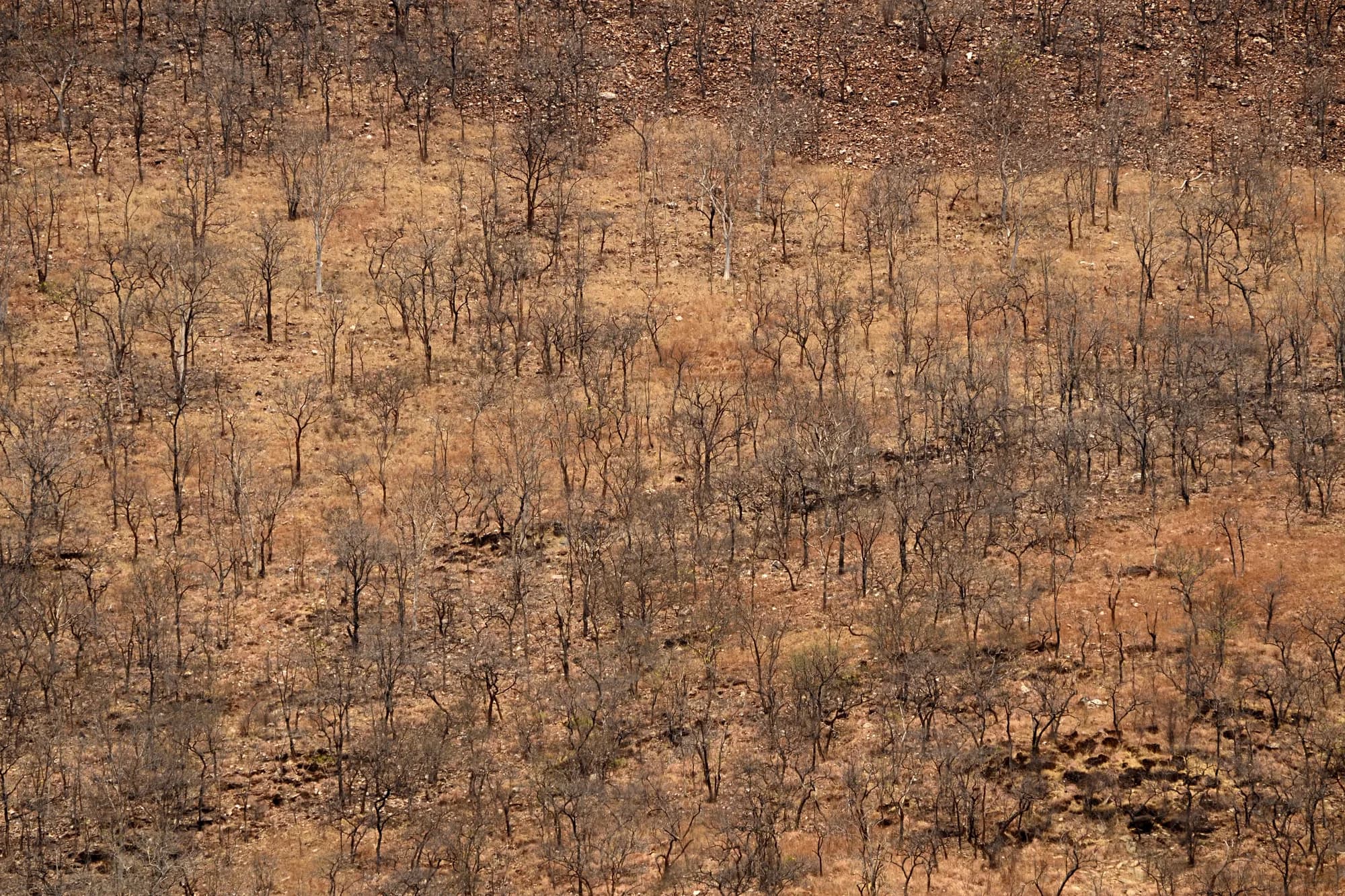
- 02SatpuraMadhya PradeshThe Denwa from a boat, which is a better angle than any bank.The boat
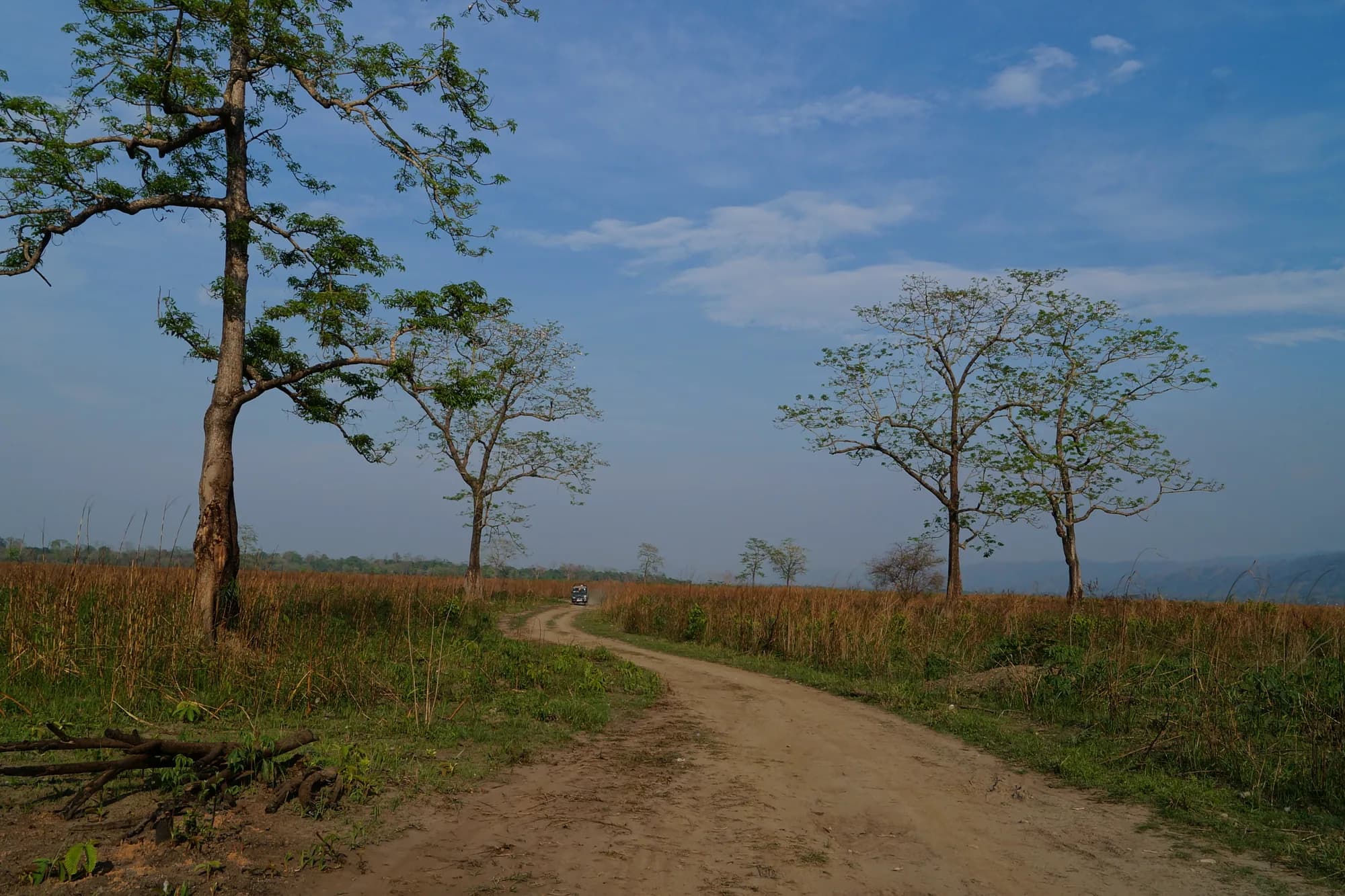
- 03PeriyarKeralaBasking on the lake shoreline, seen from the boat.The lake trip
Where you will not see one
- Confused with a gharialThe snout settles it instantly — a mugger's is broad and triangular, a gharial's is pencil-thin. They share Chambal banks, which is where the mistake happens.
- Confused with a saltwater crocodileSalties are coastal and estuarine — Odisha, the Sundarbans, the Andamans — and are far larger and considerably more dangerous. No overlap with the dry-forest reserves.
When to go
When to go
- J
- F
- M
- A
- M
- J
- J
- A
- S
- O
- N
- D
January: best. February: best. March: best. April: best. May: good. June: marginal. July: closed or unproductive. August: closed or unproductive. September: closed or unproductive. October: marginal. November: best. December: best.
Through the day
- Dawn
- Morning
- Midday
- Afternoon
- Dusk
- Night
Dawn: usually resting. Morning: most active. Midday: most active. Afternoon: active. Dusk: usually resting. Night: not normally seen.
What it looks like in the field
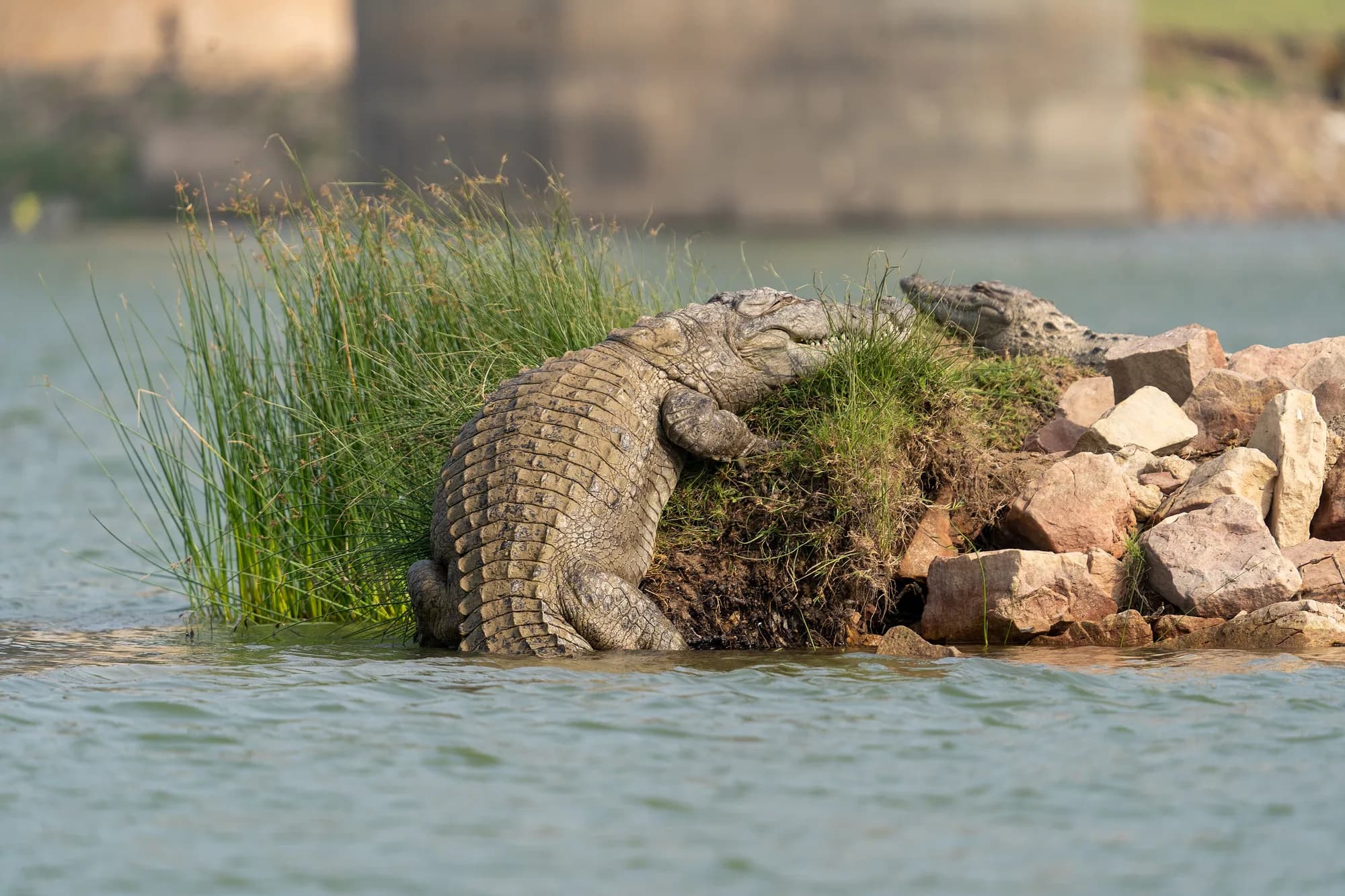
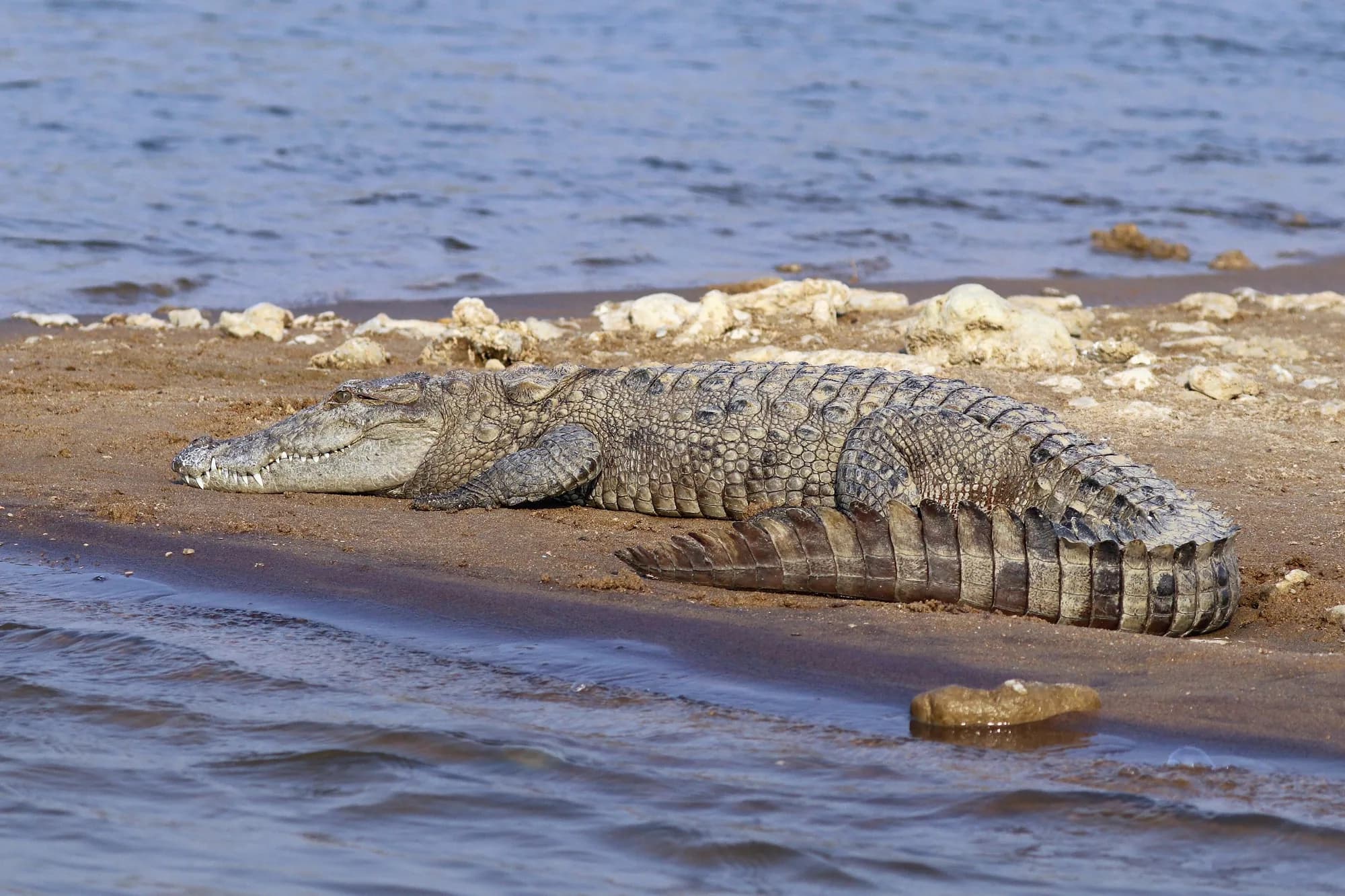
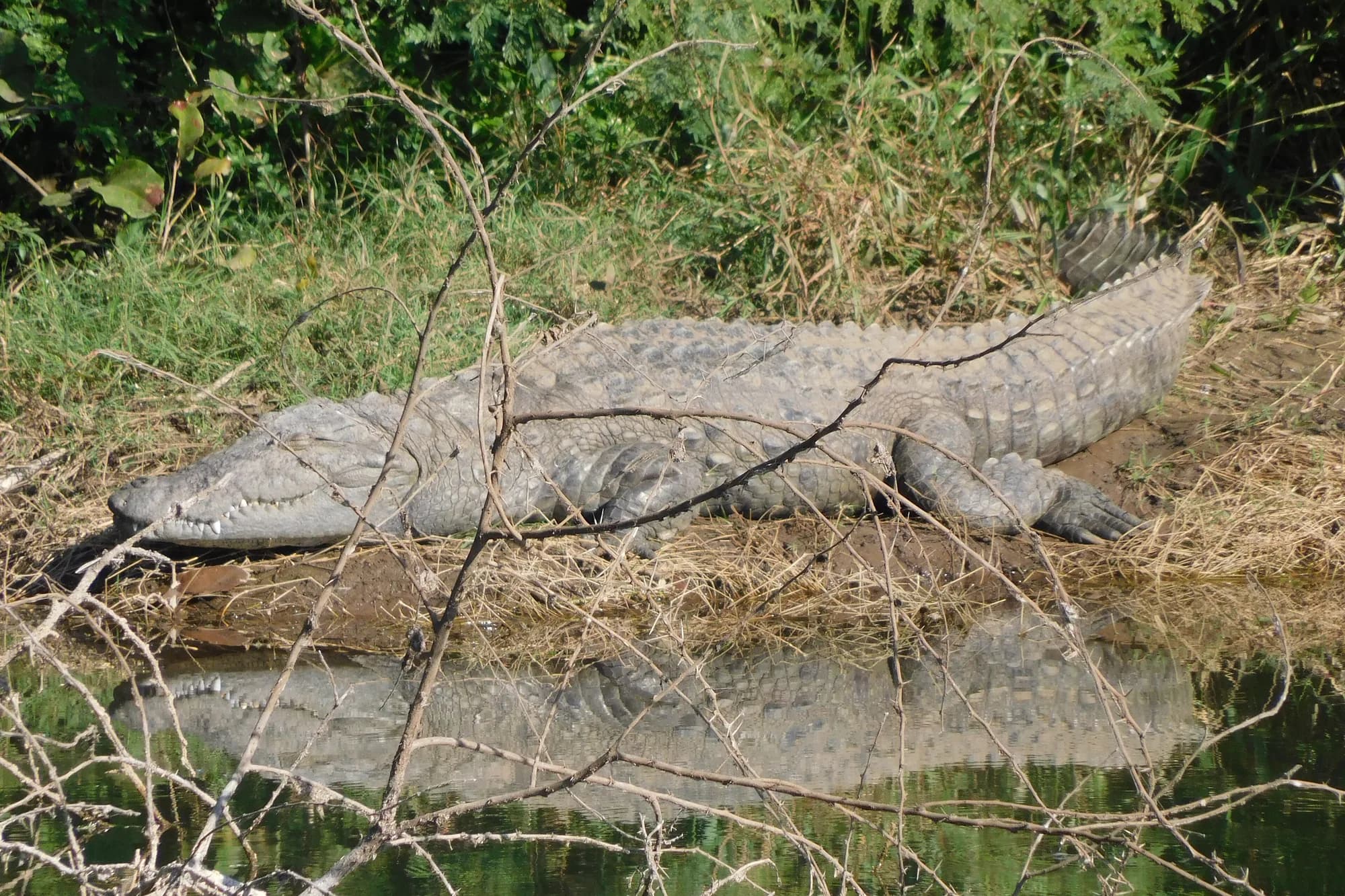
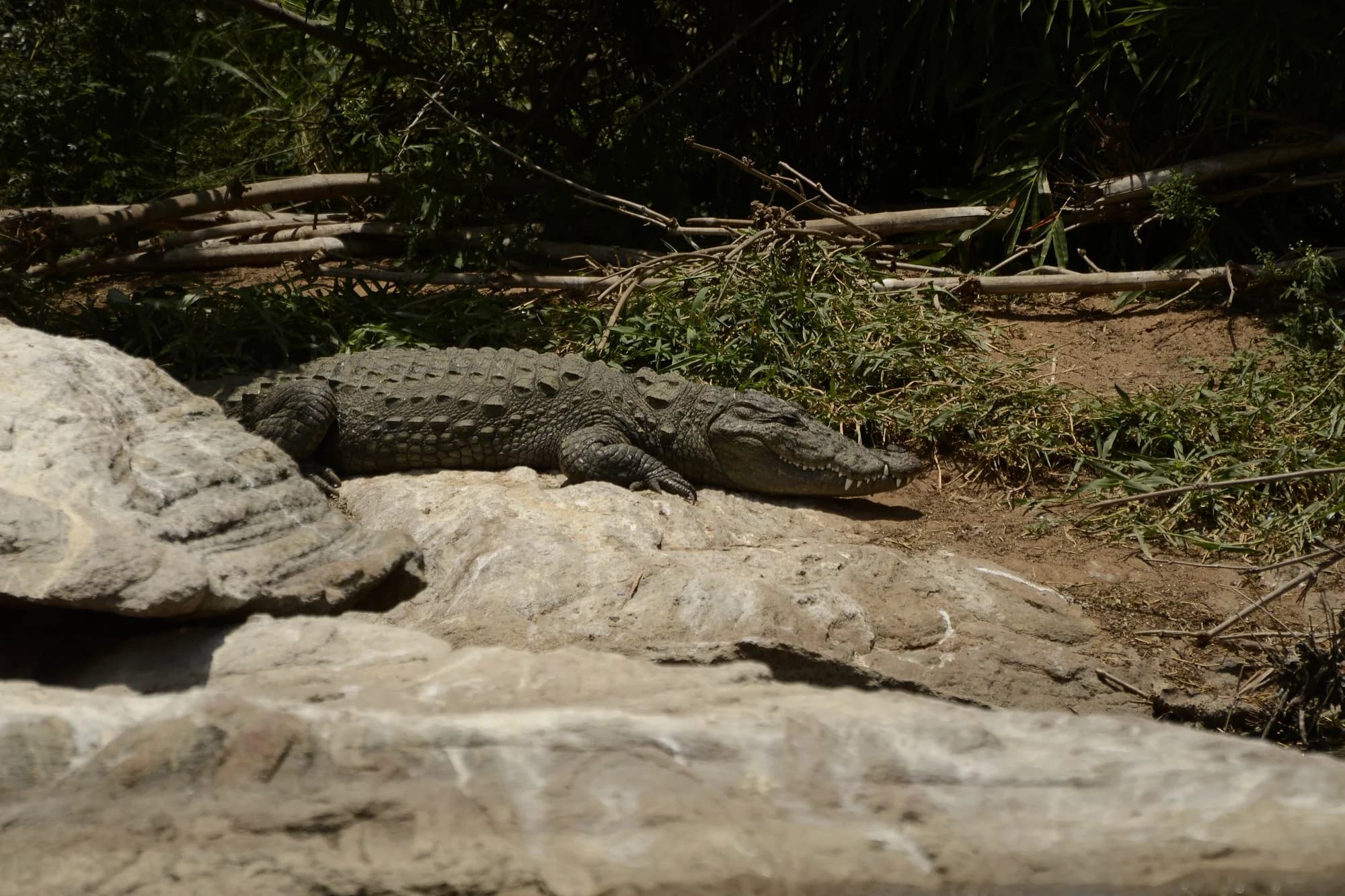
Photographs of Mugger crocodile in the wild, in Indian reserves. We publish no captive, baited or digitally composited images, and no photograph whose licence we cannot show.
What a sighting is actually like
Motionless, and larger than photographs suggest. A mugger hauled out with its jaws wide open is thermoregulating rather than threatening, and it will hold that pose for an hour while everyone in the vehicle looks at the deer instead.
Status and protection
Status and protection
- IUCN Red List
- Vulnerable
- Population trend
- → Stable
- Wildlife Protection Act 1972
- Schedule I
- CITES
- Appendix I
Species-level assessment for Crocodylus palustris; binomial matches exactly. Listed as Vulnerable under criteria A2cd. Number of mature individuals given as 5,700-8,700.
Assessed 2009 · IUCN Red List assessment
What to book to see one
What you would be booking
- How it is seen
- Any jeep drive past water, or a boat at Periyar and Satpura.
- Drives to book
- None needed. You will see them.
Keep away from the water's edge at reserve lakes, including on foot at picnic points. Muggers are ambush predators and the risk in India is almost entirely to people standing at the waterline, not to people in boats or vehicles.
Ranthambore — the park in fullQuestions people ask
How do I tell a mugger from a gharial?
Are muggers dangerous?
Where will I see one?
Read next
The Chambal, above all
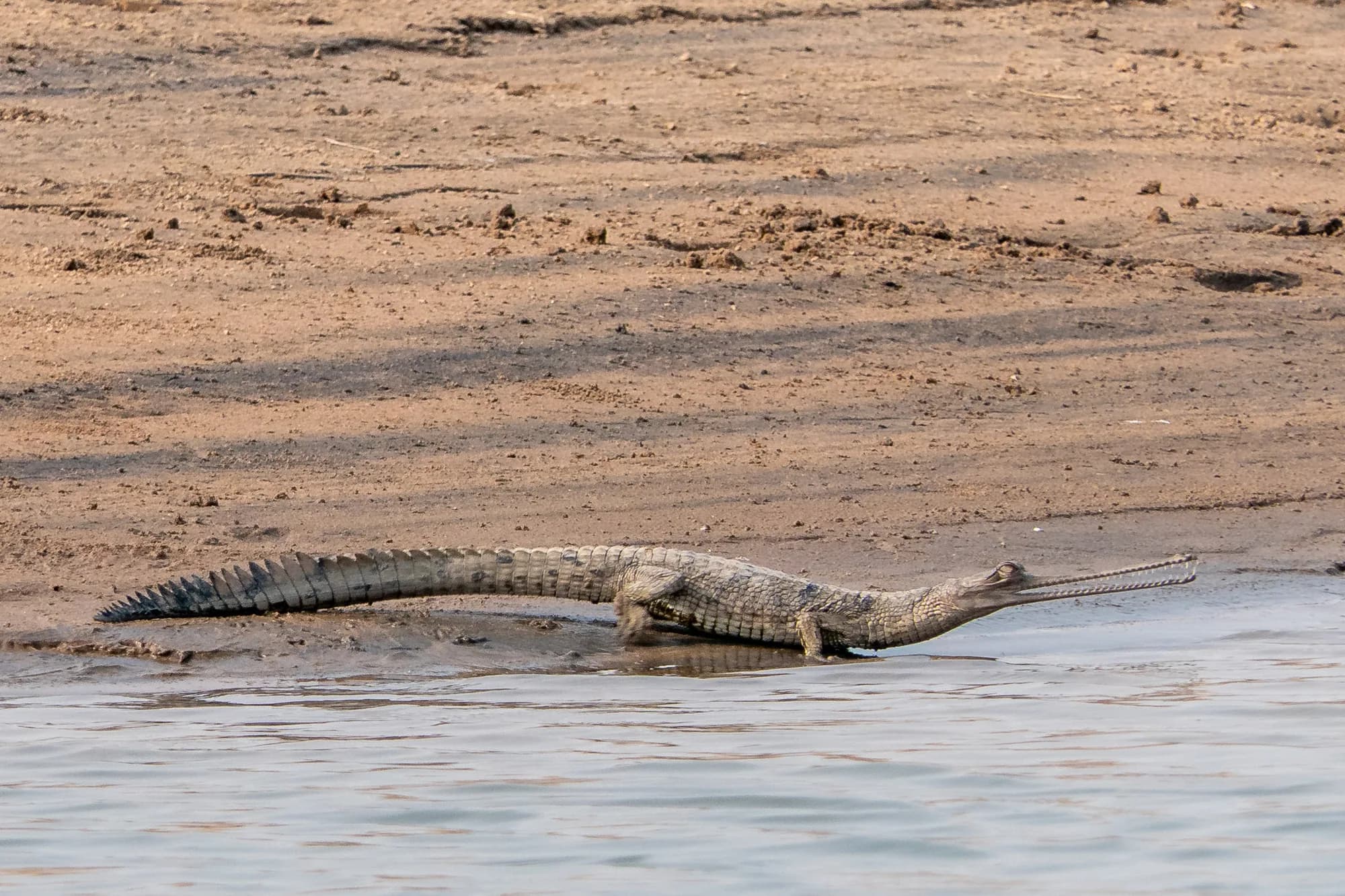
Gharial — the narrow-snouted one
A fish-eating crocodilian with a snout like a pair of tongs, down to a few hundred breeding adults, and hauled out on Chambal sandbanks in winter in numbers that make it look common.
Rajasthan
Ranthambore — the park in full
Dry forest around a fort, and the easiest reserve to reach from Delhi — which is exactly why it is the busiest.
Kabini, Satpura, Periyar
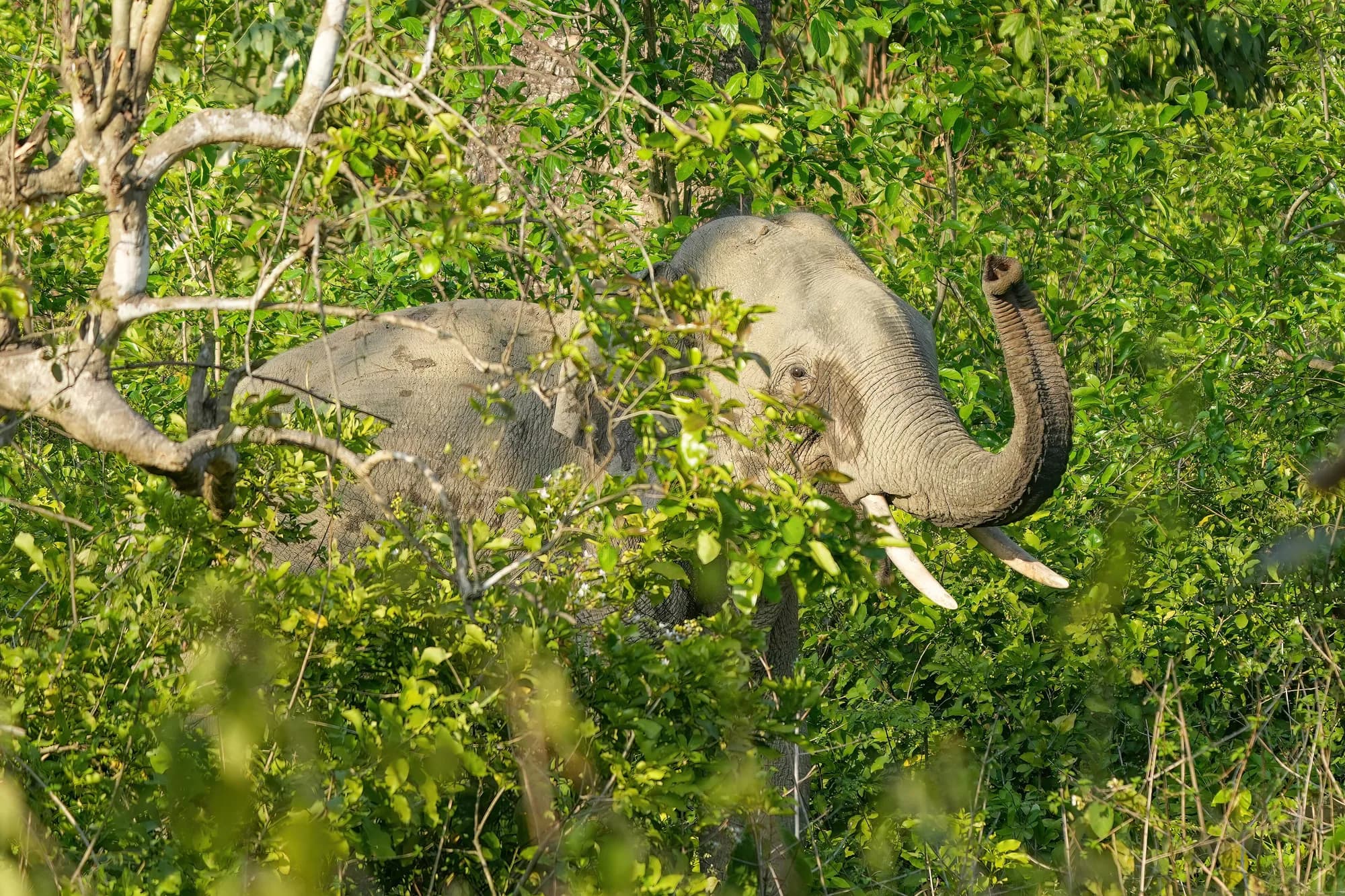
Boat safaris in India
Quiet, low, and no engine note. In late dry season at Kabini it is the best two hours in the park.
Every reserve, and the call that matters most
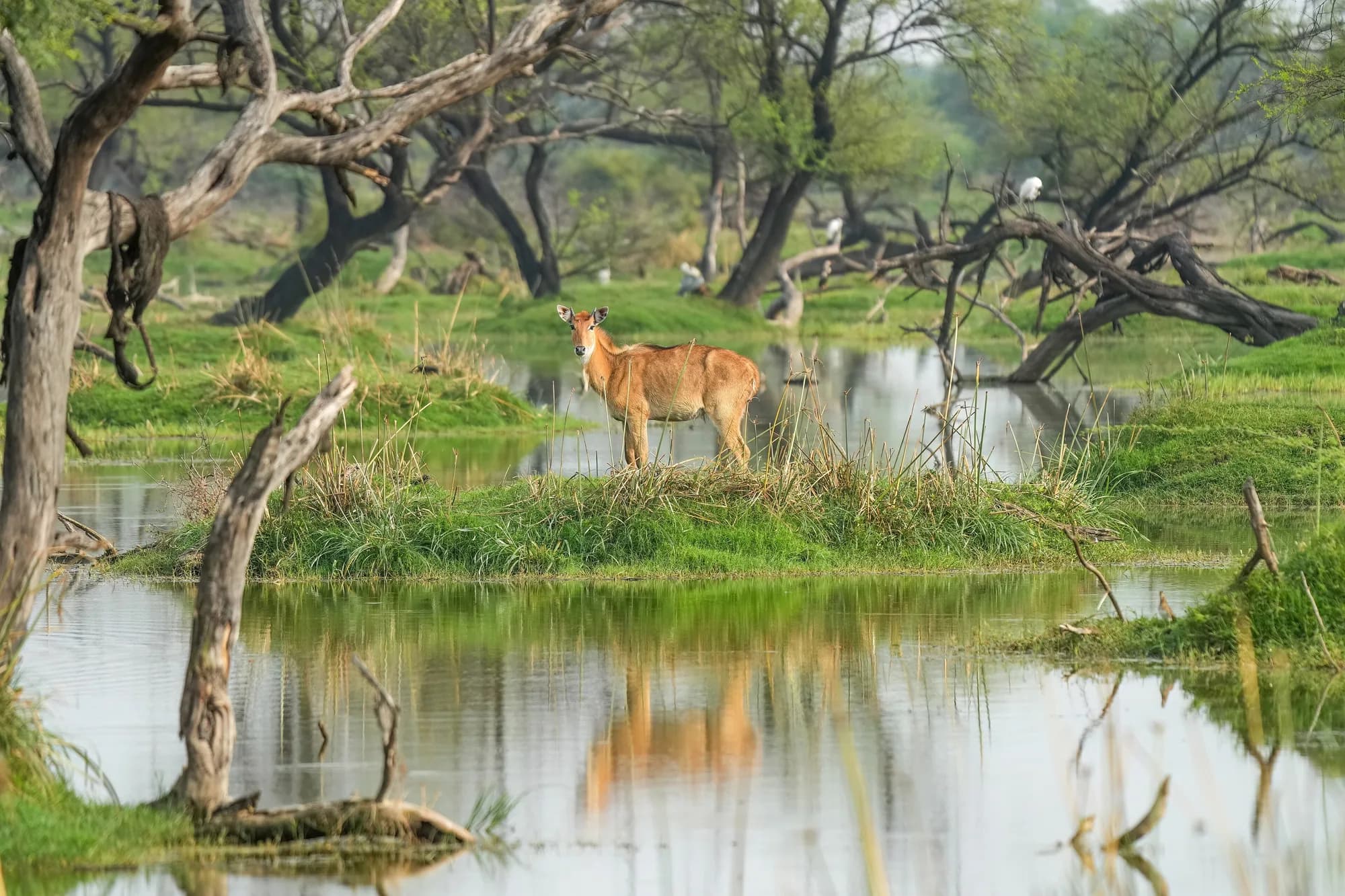
Sambar — the deer in the lake
India's largest deer, and the animal whose alarm call is worth more to you than any pugmark. When a sambar honks, the vehicle should stop.