
Species · Budorcas taxicolor
Mishmi takin
A heavy, humped, Roman-nosed animal that looks assembled from spare parts, in one of the least-visited corners of India. Almost no wildlife trip in the country goes anywhere near it.
Also called
- Ampu · Idu Mishmi
- Takin (टाकिन) · Hindi
Checked 31 Aug 2026
- Where
- Eastern Arunachal Pradesh only
- Best months
- November–March
- Altitude
- About 1,500–4,000 m, seasonally
- Note
- Bhutan's national animal
The Mishmi Hills and the Dibang and Lohit catchments of eastern Arunachal, with animals moving between high summer meadows and lower forest in winter. This is the western end of a range that runs east into Myanmar and China.
Where it is
Where to actually go
Ranked, with the reason each — these are not interchangeable.
- 01Mishmi HillsArunachal PradeshThe Mayodia and Anini road, worked by a small number of birding guides who also know where takin cross.The only realistic option
- 02Dibang ValleyArunachal PradeshThe core of the Indian range, with a community reserve system and almost no visitor infrastructure.Expedition country
- 03NamdaphaArunachal PradeshPresent in the higher reaches, though effectively unreachable within a normal trip.In theory
Where you will not see one
- Kaziranga and the Assam plainsTakin are a hill animal of the eastern Arunachal ranges. Nothing in the Brahmaputra valley is one.
- Any standard Northeast itineraryKaziranga, Manas and Nameri circuits do not come within a long day's drive of takin country, and no operator sells this species as a target.
When to go
When to go
- J
- F
- M
- A
- M
- J
- J
- A
- S
- O
- N
- D
January: best. February: best. March: good. April: marginal. May: closed or unproductive. June: closed or unproductive. July: closed or unproductive. August: closed or unproductive. September: closed or unproductive. October: marginal. November: good. December: best.
Through the day
- Dawn
- Morning
- Midday
- Afternoon
- Dusk
- Night
Dawn: active. Morning: most active. Midday: usually resting. Afternoon: active. Dusk: active. Night: usually resting.
What it looks like in the field
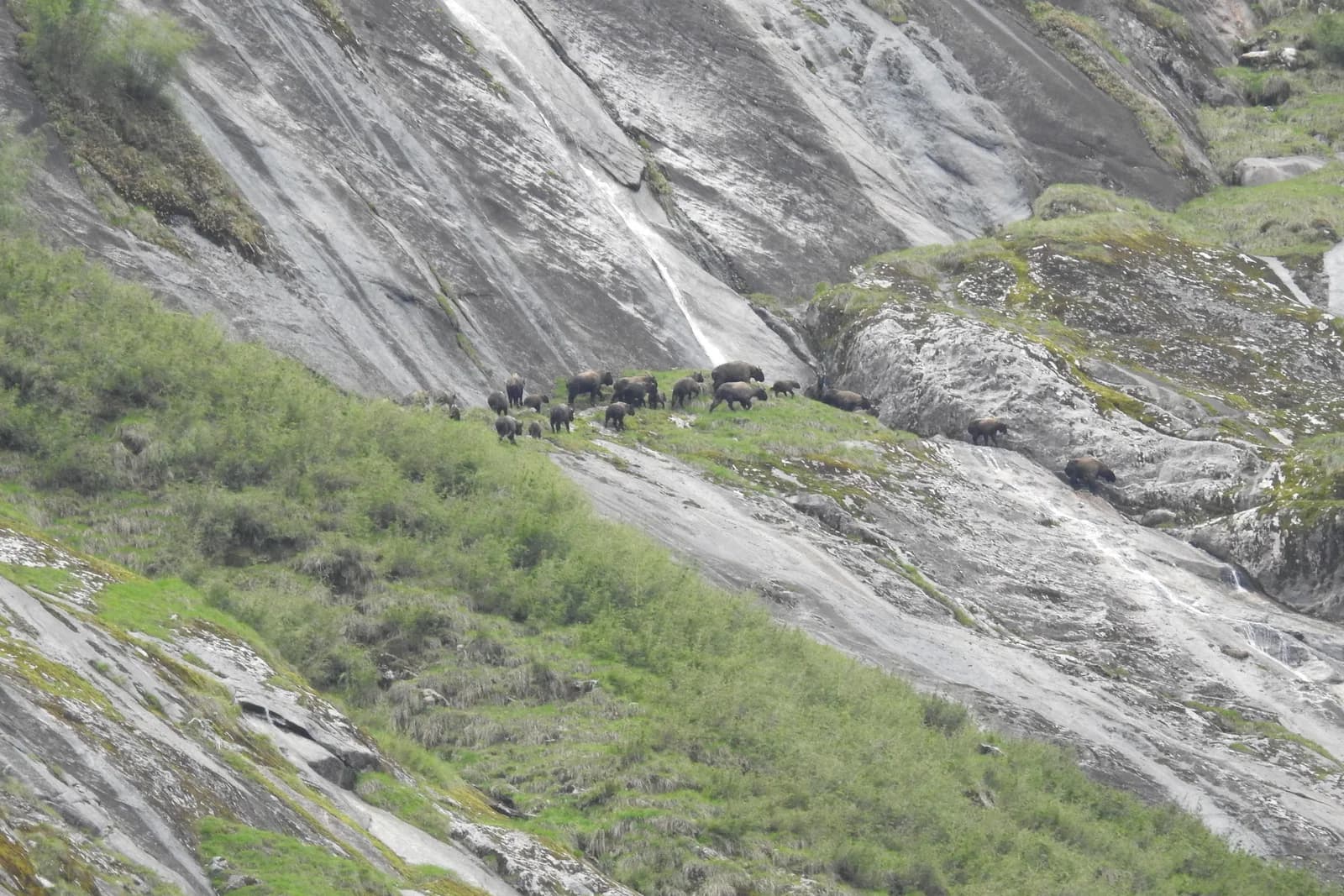
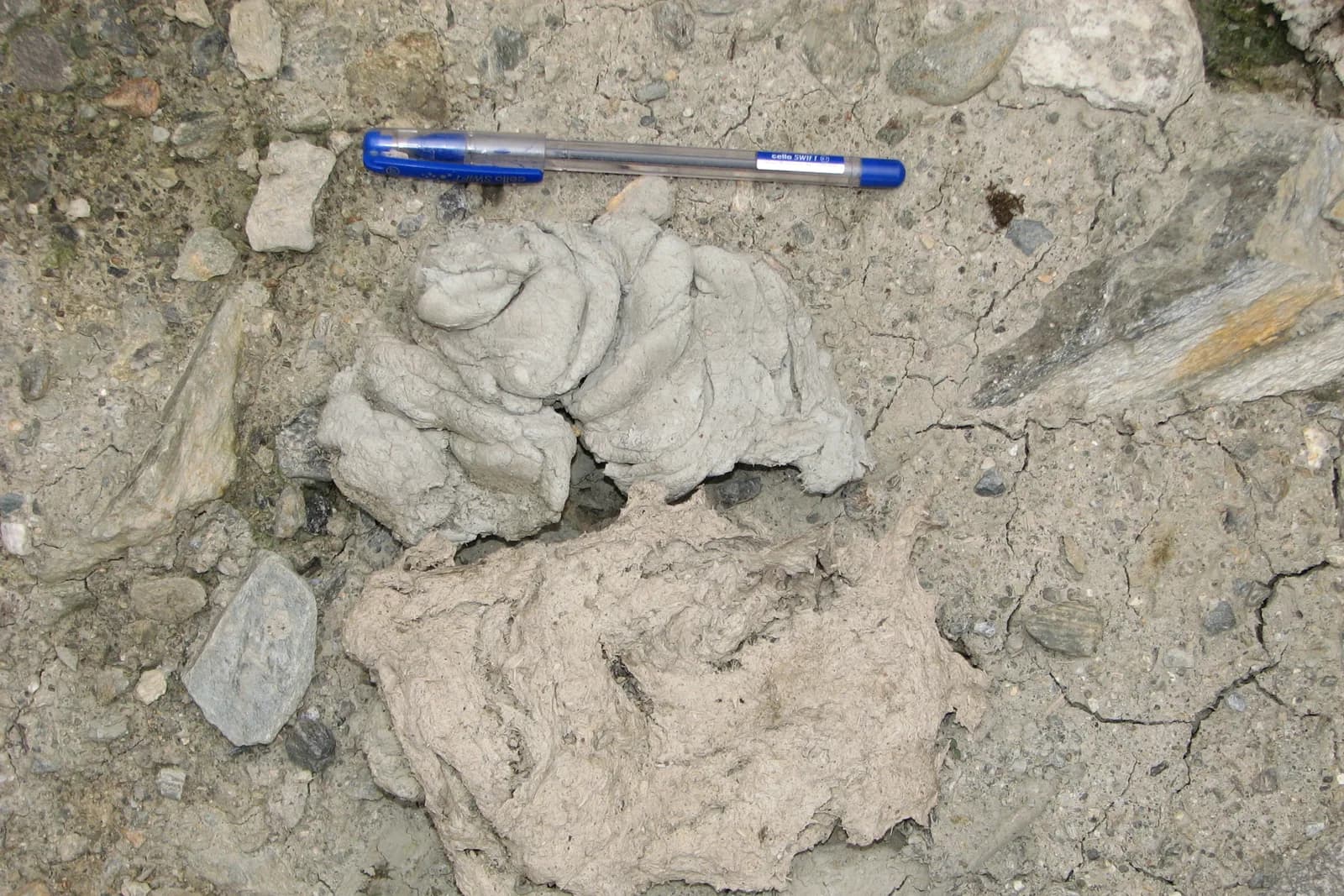
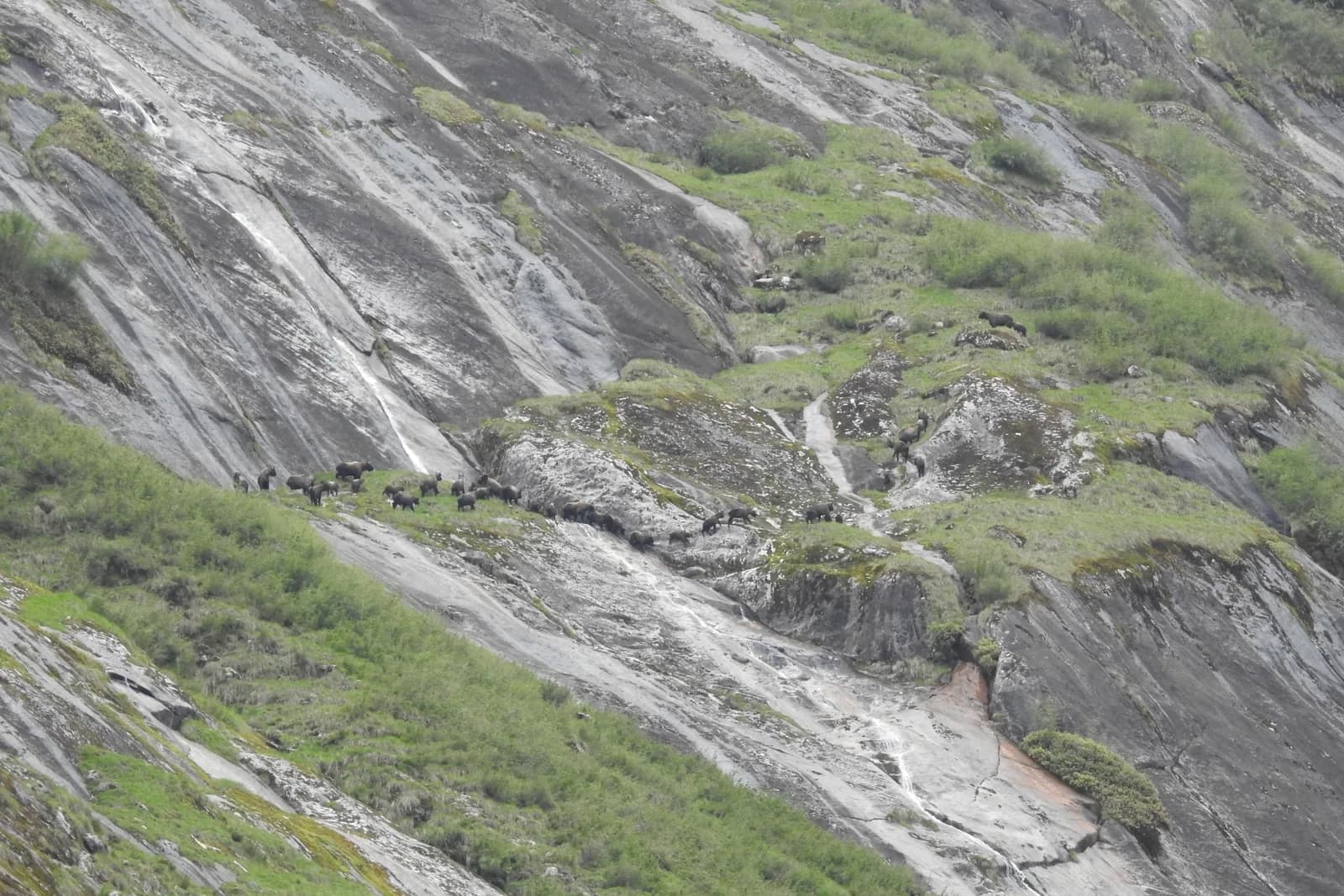
Photographs of Mishmi takin in the wild, in Indian reserves. We publish no captive, baited or digitally composited images, and no photograph whose licence we cannot show.
What it actually looks like
Big, humped at the shoulder, with a deeply arched nose and short horns that leave the head sideways before turning back. It is a goat-antelope, related to the serow and the muskox line rather than to anything it resembles.
Getting there is the whole problem
The species is not especially wary and it uses predictable mineral licks. The reason nobody sees one is that eastern Arunachal is among the hardest country in India to travel in, and no commercial trip goes there for mammals.
Go for the Mishmi Hills birding, which is world-class and well organised, and let the takin be the thing that might happen.
Status and protection
Status and protection
- IUCN Red List
- Vulnerable
- Population trend
- ↓ Decreasing
- Wildlife Protection Act 1972
- Schedule I
- CITES
- Appendix II
SPECIES-LEVEL ASSESSMENT. The binomial supplied (Budorcas taxicolor) is the species; 'Mishmi takin' is the nominate subspecies B. t.
Assessed 2008 · IUCN Red List assessment
What to book to see one
What you would be booking
- How it is seen
- A self-organised trip into the Mishmi Hills — Roing, Anini, Mayodia — with local guides who work the birding circuit there.
- Drives to book
- A week, minimum, and treat any sighting as a bonus on a trip built around Mishmi Hills birding and the wren-babbler.
Arunachal requires an Inner Line Permit for Indian nationals and a Protected Area Permit for foreign visitors. Arrange both well before travelling, and expect the roads to be the hardest part of the trip.
Questions people ask
Where can I see a takin in India?
What is a takin related to?
Do I need a permit?
Read next
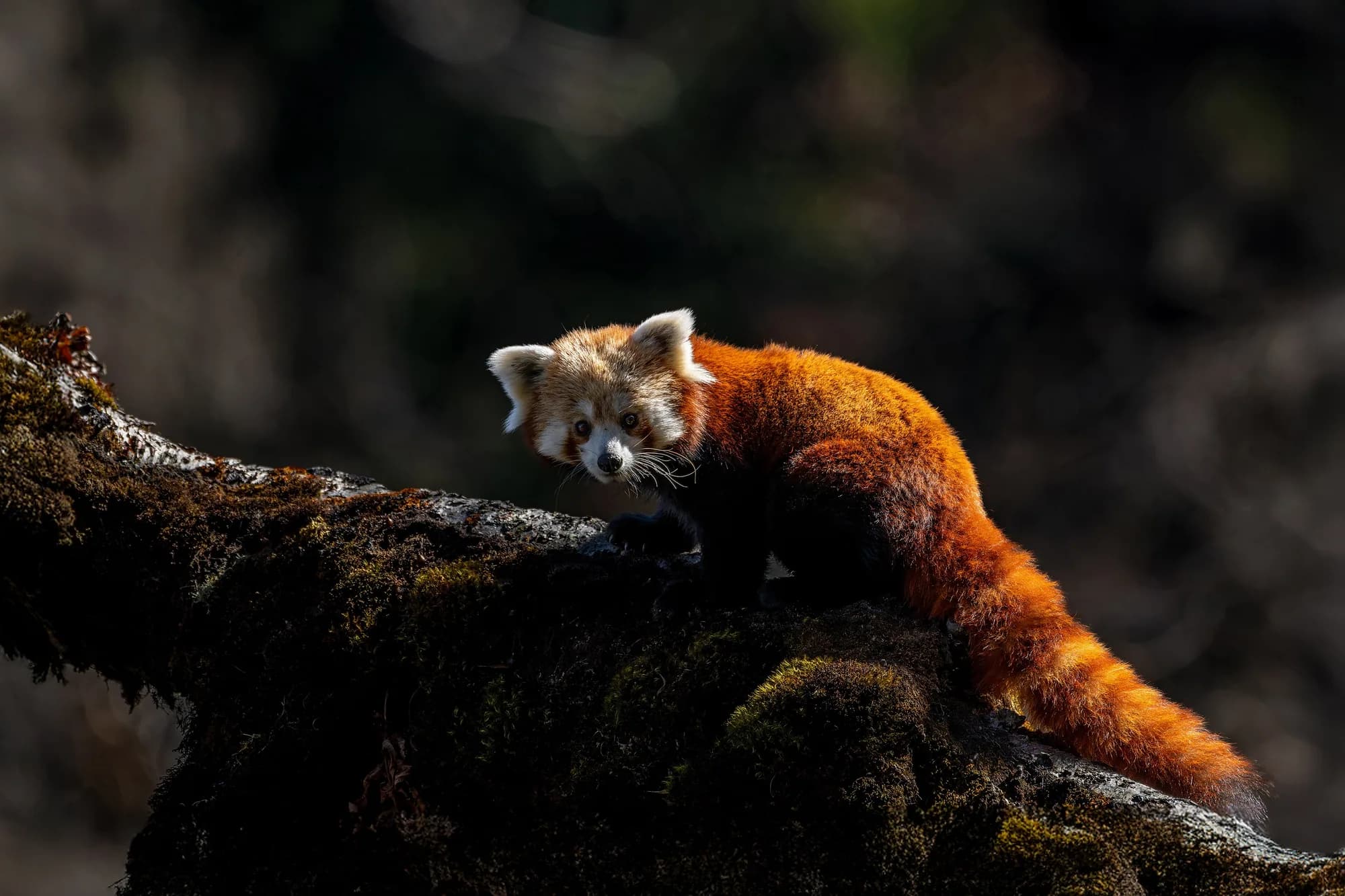
Singalila and Sikkim, above 2,400 m
Red panda — the same eastern hills
Enormous recognition, almost no sightings. A bamboo-eating carnivore in cold cloud forest, found by walking a ridge in the wet and looking at the undersides of branches.
Northeast canopy, and rarely
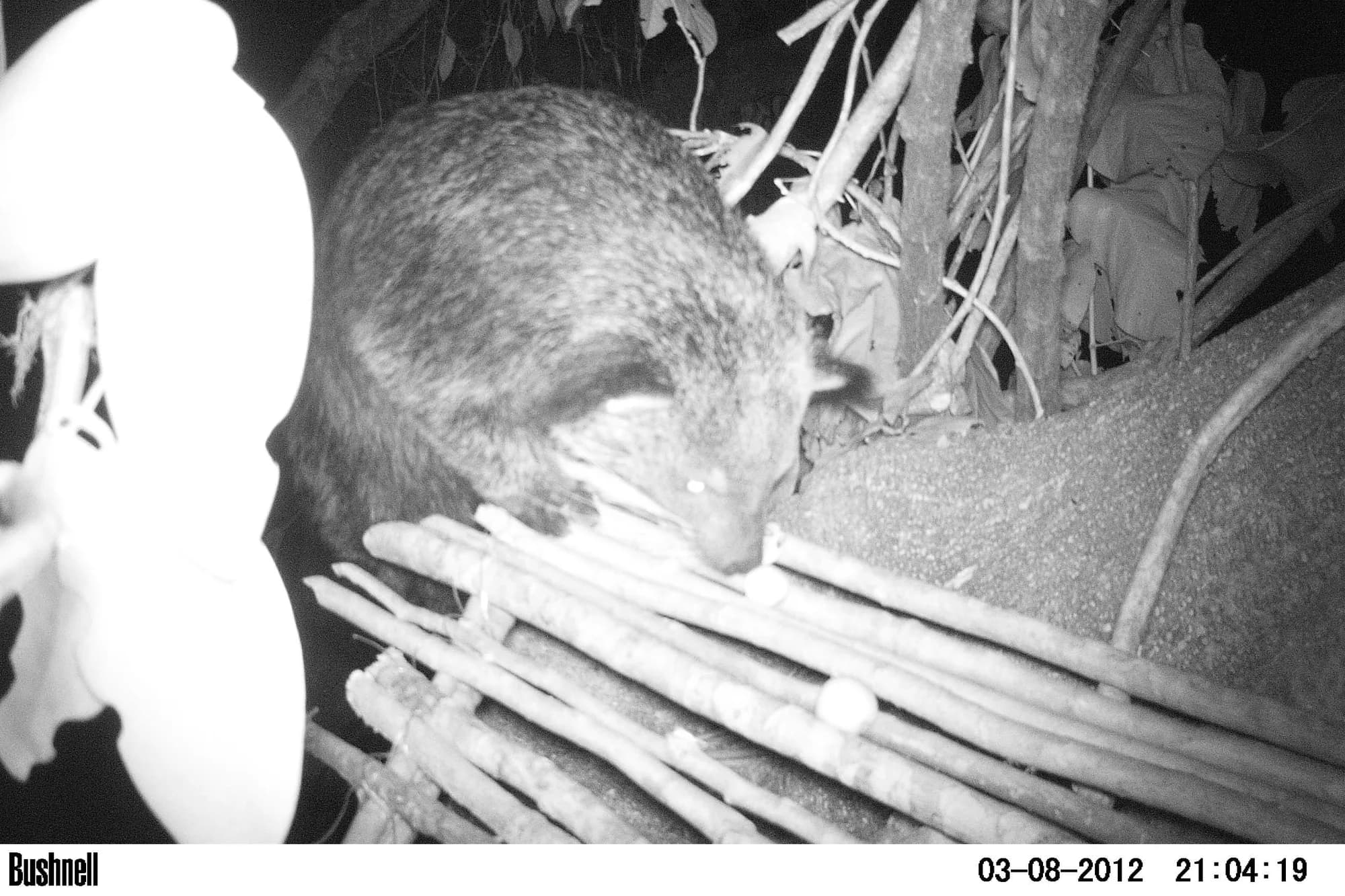
Binturong — the same forest at night
A shaggy black civet the size of a dog, with a prehensile tail and a smell like hot popcorn. Everyone wants one. Almost nobody gets one.
Assam, and India's only ape
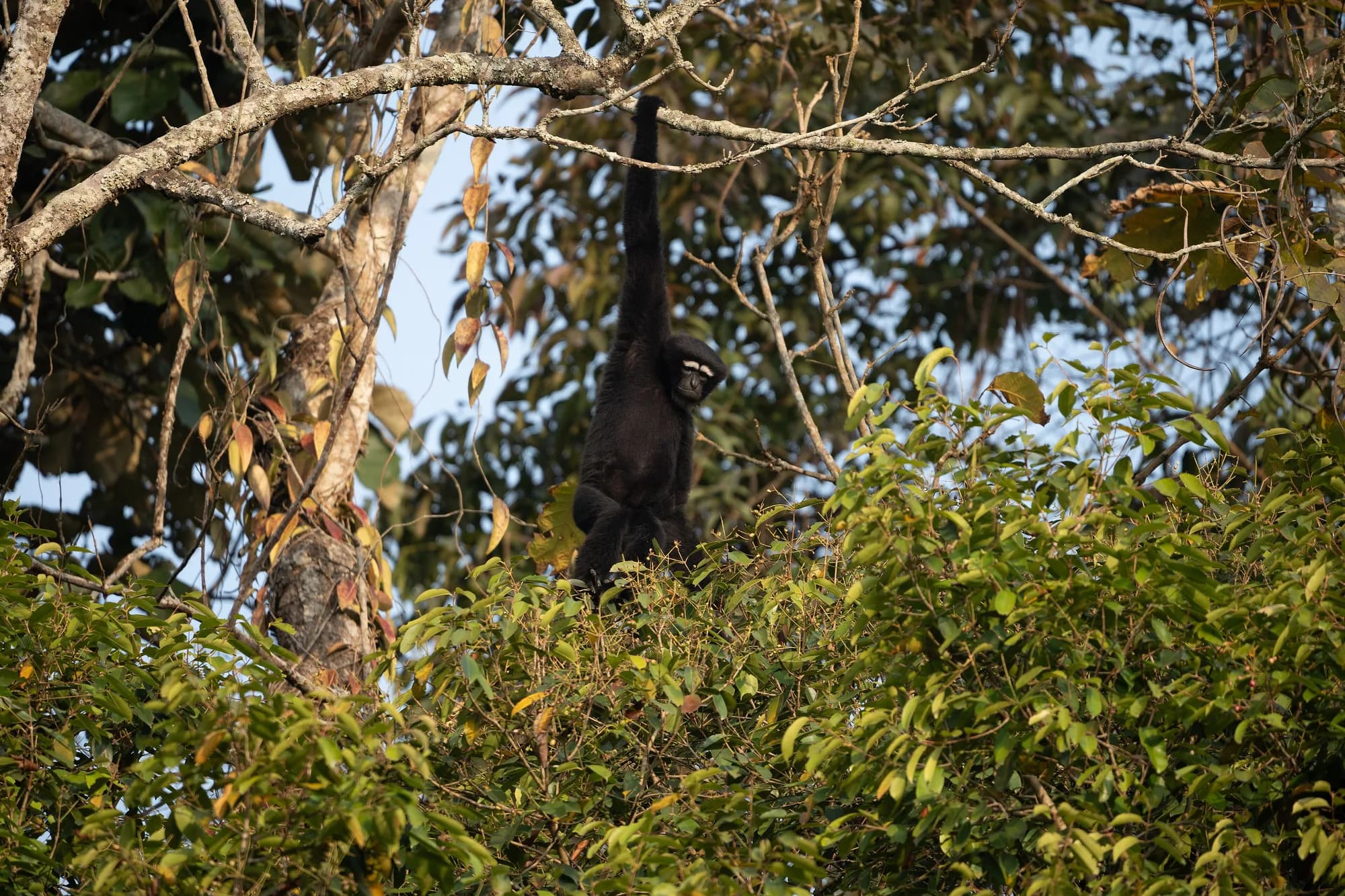
Hoolock gibbon — the Northeast canopy
The only ape in India, in a forest island surrounded by tea. You will hear the pair duet across a kilometre of canopy before you have any idea where to look.
Namdapha — the park in full