
Species · Tragopan melanocephalus
Western tragopan
A black-headed, white-spotted pheasant in dense western Himalayan forest, and the hardest galliforme in India to see. A trip-defining bird for the people who want it.
Also called
- Jujurana (जुजुराना) — king of birds · Hindi
- Jewar · Himachali
Checked 30 Aug 2026
- Where
- Himachal & Kashmir
- Best months
- April–June
- Altitude
- About 2,400–3,600 m
- Odds
- Very low, honestly
Dense, moist temperate forest with thick understorey in the western Himalaya. A small world range, most of it in Himachal Pradesh.
Where it is
Where to actually go
Ranked, with the reason each — these are not interchangeable.
- 01Great Himalayan National ParkHimachal PradeshThe stronghold, and a genuine multi-day trek. The best odds anywhere, which remain low.Spring, with trackers
- 02DaranghatiHimachal PradeshA smaller known site, less walking and lower numbers.For a second attempt
Where you will not see one
- The eastern HimalayaThat is the satyr tragopan, a different species. The two do not meet.
- On a short tripMulti-day trekking into dense forest with a real chance of nothing. Nobody can arrange this one.
When to go
When to go
- J
- F
- M
- A
- M
- J
- J
- A
- S
- O
- N
- D
January: marginal. February: marginal. March: marginal. April: best. May: best. June: best. July: marginal. August: marginal. September: marginal. October: good. November: marginal. December: marginal.
Through the day
- Dawn
- Morning
- Midday
- Afternoon
- Dusk
- Night
Dawn: most active. Morning: active. Midday: usually resting. Afternoon: active. Dusk: active. Night: not normally seen.
What it looks like in the field
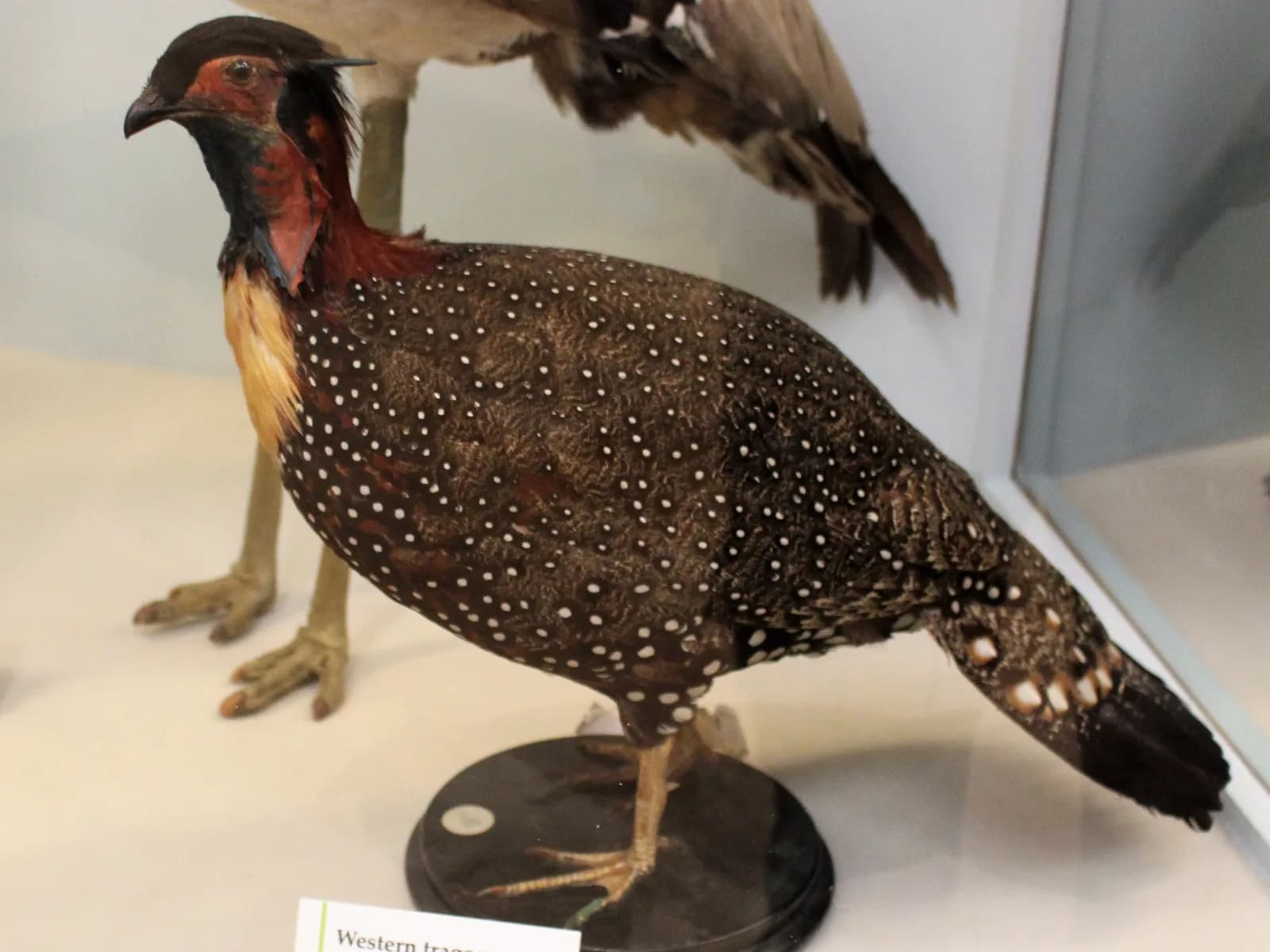
Photographs of Western tragopan in the wild, in Indian reserves. We publish no captive, baited or digitally composited images, and no photograph whose licence we cannot show.
What a sighting is actually like
Usually a call and nothing more. The forest is dense, the bird is wary, and the people who do see one generally get a few seconds of something crimson moving through undergrowth.
Status and protection
Status and protection
- IUCN Red List
- Vulnerable
- Population trend
- ↓ Decreasing
- Wildlife Protection Act 1972
- Schedule I
- CITES
- Appendix I
Global, species-level assessment of Tragopan melanocephalus; binomial matches exactly. Criteria C2a(ii); last assessed 03 June 2025.
Assessed 2025 · IUCN Red List assessment
What to book to see one
What you would be booking
- How it is seen
- A trek into the Great Himalayan National Park with local trackers, in spring.
- Drives to book
- Five days or more. Fewer is a gamble on an expensive and physically demanding trip.
The local name jujurana — king of birds — tells you how it is regarded in Himachal, and it is also the state bird. That standing has helped protect it.
Birding on an Indian safariOn the same trip you would also get
- Himalayan monal — the same forest, far easier
- Koklass pheasant — the same understorey
- Cheer pheasant — lower, on grass slopes
- Satyr tragopan — the eastern species
Questions people ask
Where can I see a western tragopan?
What is jujurana?
Is it the same as a satyr tragopan?
Read next
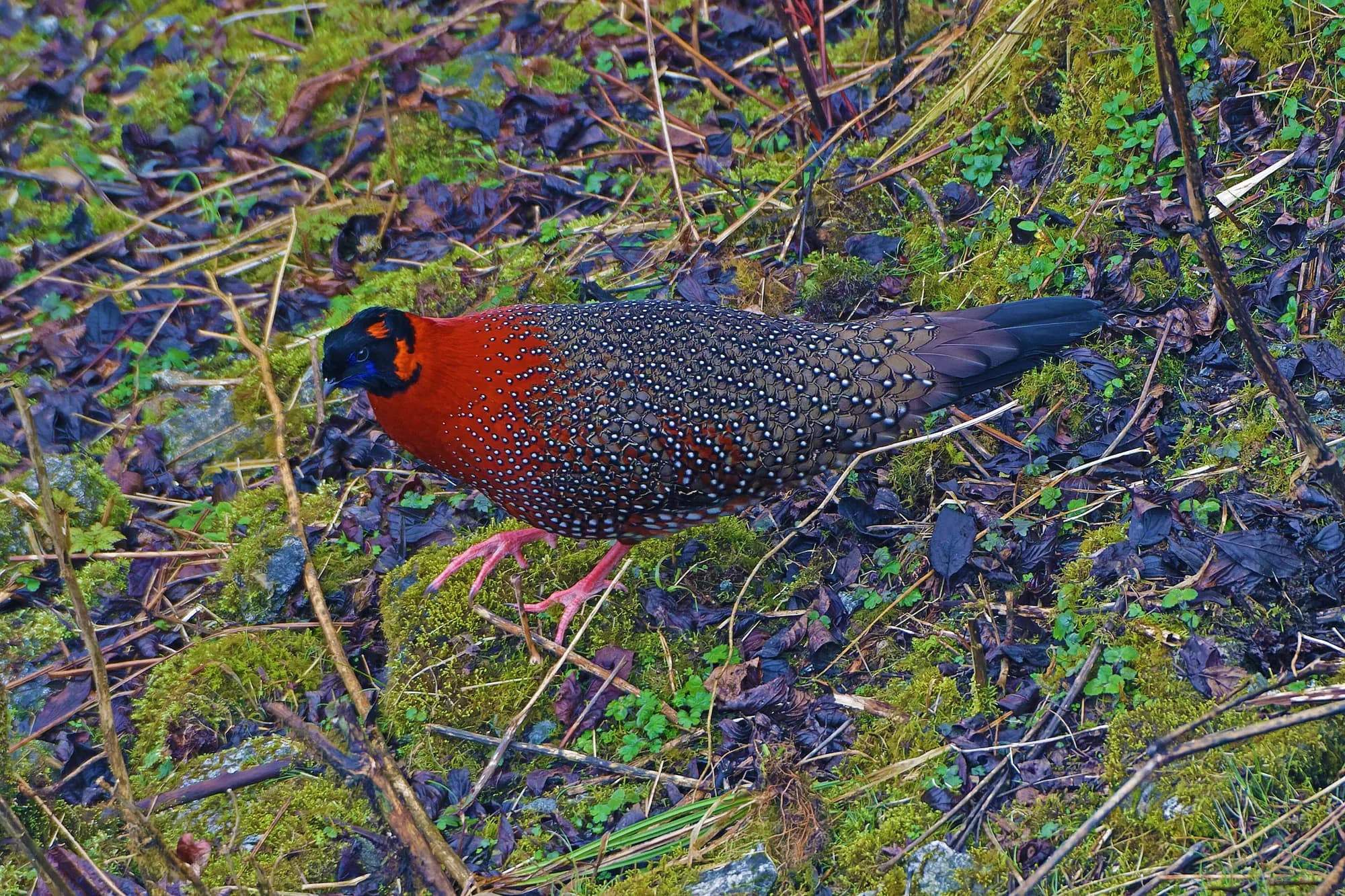
Singalila and Sikkim, in spring
Satyr tragopan — the eastern one
A crimson, white-spotted pheasant in eastern Himalayan rhododendron forest, and the other reason to walk the Singalila ridge in spring.
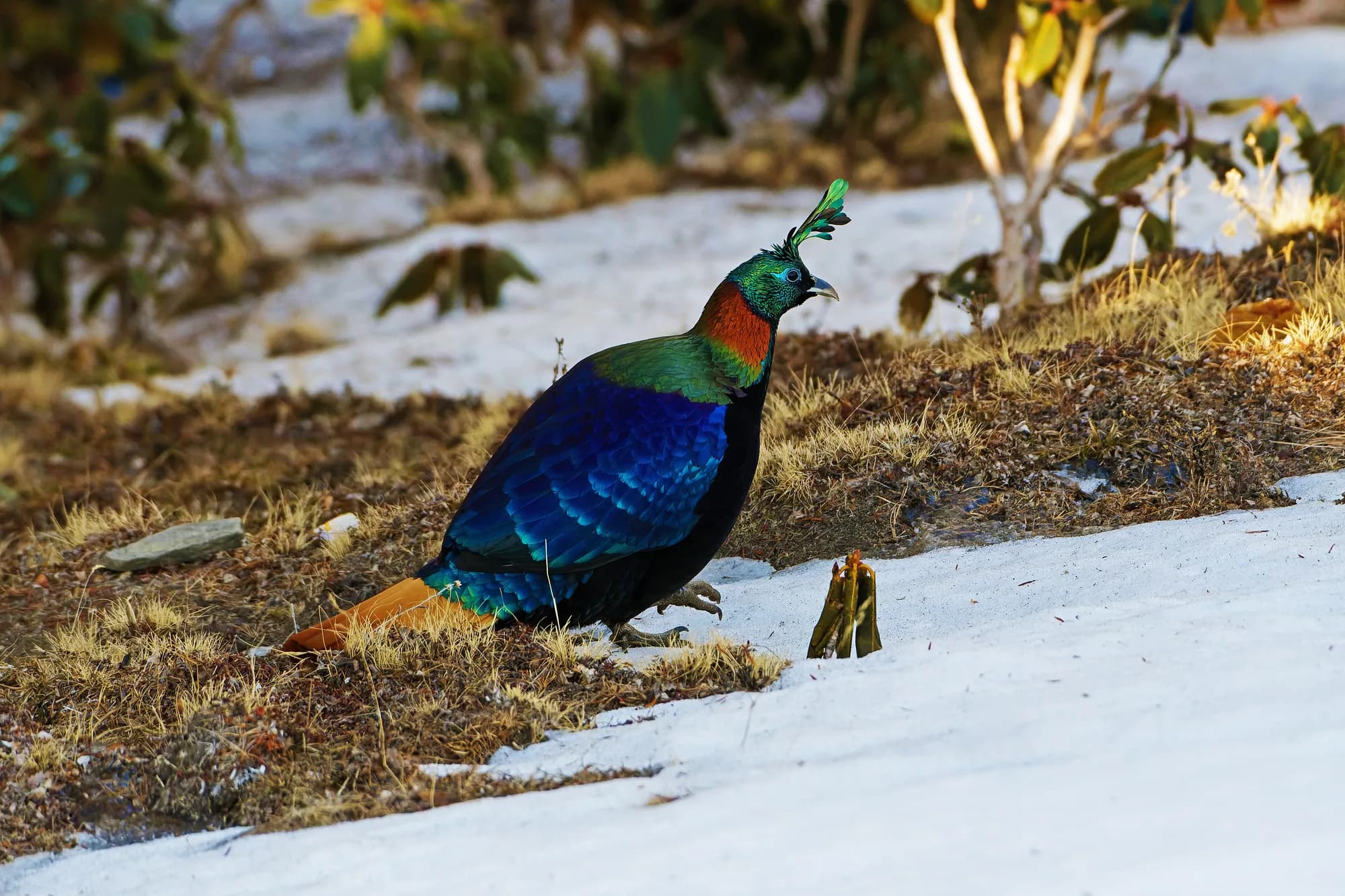
Chopta, Tungnath and the high oak
Himalayan monal — the easy one
A pheasant that looks like spilled petrol in sunlight, digging for roots on a snowy slope at three thousand metres. The bird international operators build entire Himalayan itineraries around.
November to February
Birding on an Indian safari
Every reserve here is a birding destination whether or not it is sold as one. Say so when you book.
One short list
What to pack
Most of what gets recommended online is sold by whoever is recommending it. This is the list that is actually short.