
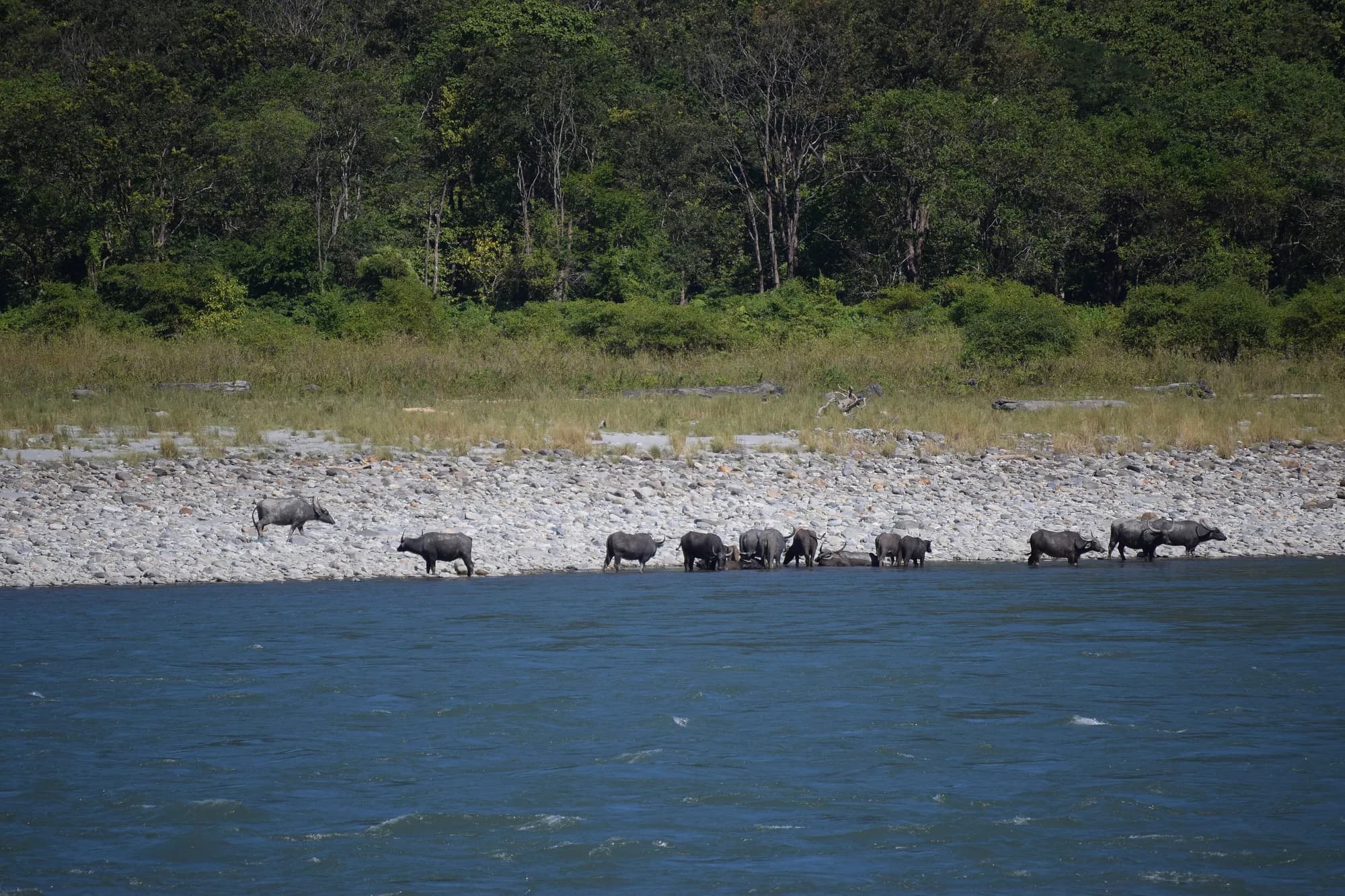
Species · Bubalus arnee
Wild water buffalo
The true wild buffalo, carrying the widest horn spread of any living bovid, standing in the same grassland as the rhinos and constantly written off as livestock.
Also called
- Bon mohish · Assamese
- Jangli bhains (जंगली भैंस) · Hindi
Checked 30 Aug 2026
- Where
- Assam
- Best months
- November–April
- Horns
- Widest of any bovid
- Note
- Not a domestic buffalo
The IUCN assessment describes the Indian range as central India and the Northeast, predominantly Assam, without naming the central states — so we do not name them either.
Where it is
- Kaziranga
- Manas
Where to actually go
Ranked, with the reason each — these are not interchangeable.
- 01KazirangaAssamThe world stronghold, and a near-certain sighting on any grassland drive. Also the best place to see how close wild and domestic animals now graze to one another.Central and Western ranges
- 02ManasAssamPresent in the grasslands, in far smaller numbers, in a reserve worth visiting for a dozen other reasons.A bonus, not a plan
Where you will not see one
- The central Indian tiger reservesKanha, Bandhavgarh, Tadoba and Ranthambore have none. The buffalo you see near those parks are domestic stock.
- Anywhere expecting a gaurDifferent animal. Gaur have upswept horns from a pale domed forehead and white stockings; wild buffalo have wide sweeping crescents and no stockings. They barely share ground.
- In the villages around KazirangaDomestic buffalo graze right up to the park boundary and interbreed with wild animals where they meet. Genetic dilution is one of the species' real threats, and a roadside buffalo is not a sighting.
When to go
When to go
- J
- F
- M
- A
- M
- J
- J
- A
- S
- O
- N
- D
January: best. February: best. March: best. April: good. May: marginal. June: marginal. July: closed or unproductive. August: closed or unproductive. September: closed or unproductive. October: marginal. November: best. December: best.
Through the day
- Dawn
- Morning
- Midday
- Afternoon
- Dusk
- Night
Dawn: most active. Morning: active. Midday: usually resting. Afternoon: active. Dusk: most active. Night: not normally seen.
Telling it apart
Told apart from
Domestic water buffalo
The Kaziranga boundary, constantly
Horn shape and body condition. Wild animals are much larger, with a far wider horn sweep and a lean, rangy build; domestic stock are stockier with shorter, tighter horns. Hybrids at the park edge are genuinely ambiguous, which is the conservation problem in one sentence.
Only in the planning — they rarely share ground
Gaur horns curve up and inward from a pale forehead patch, and gaur have white stockings below the knee. Buffalo horns sweep out and back in a wide crescent and there are no stockings.
Marks chosen to be usable from a moving vehicle — a wild water buffalo is rarely still and never close enough for anything subtler.
What it looks like in the field
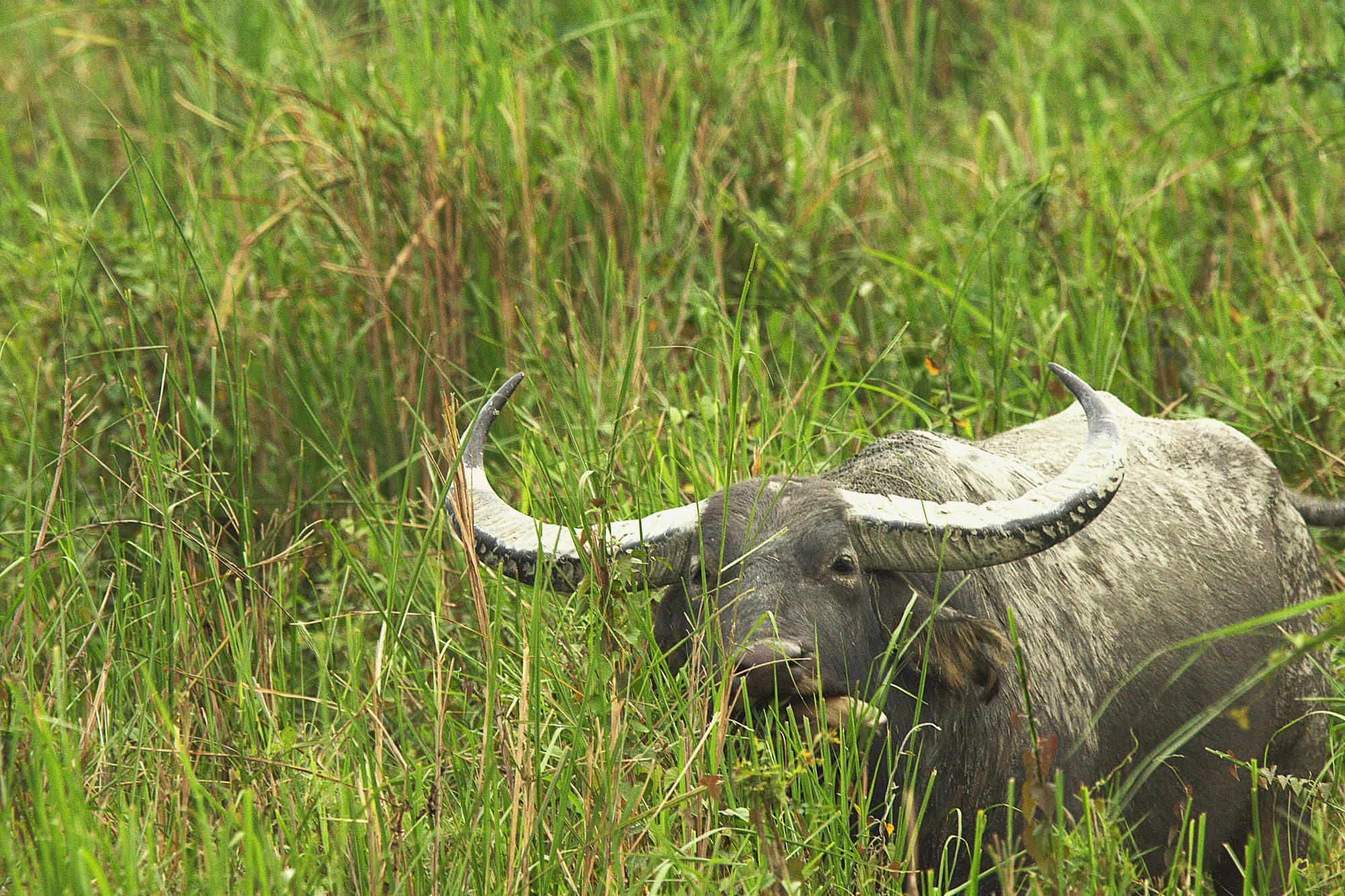
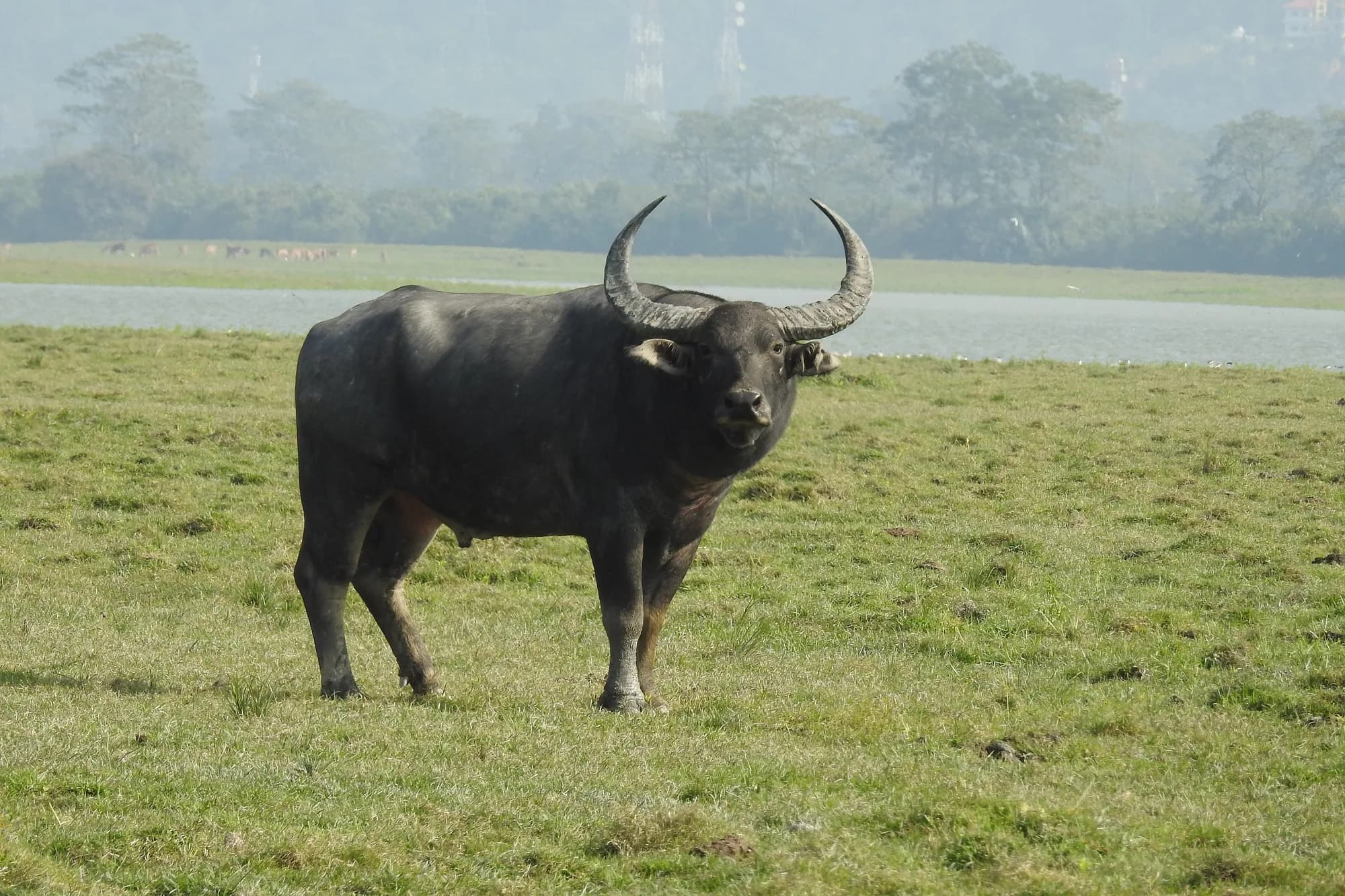
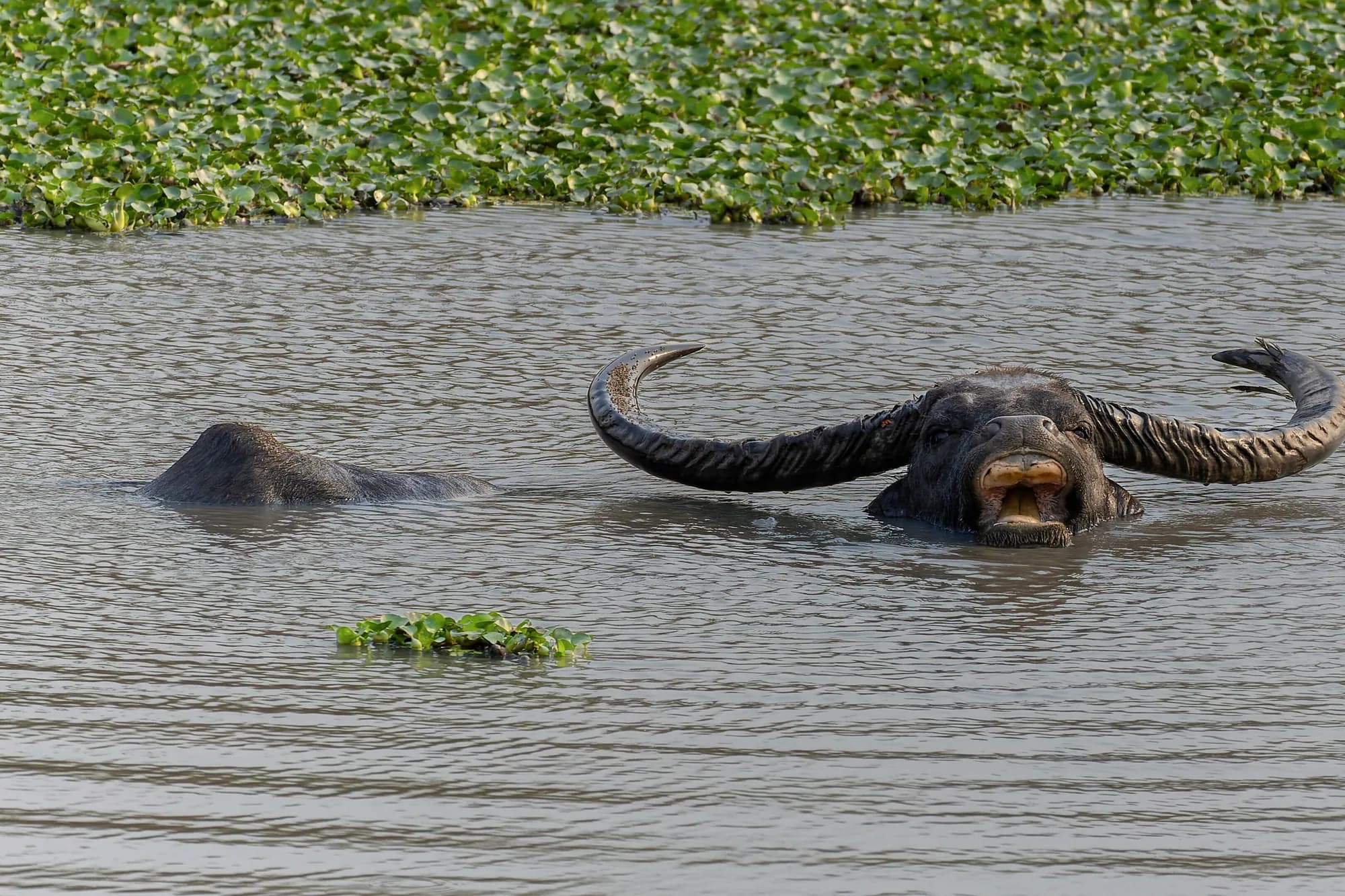
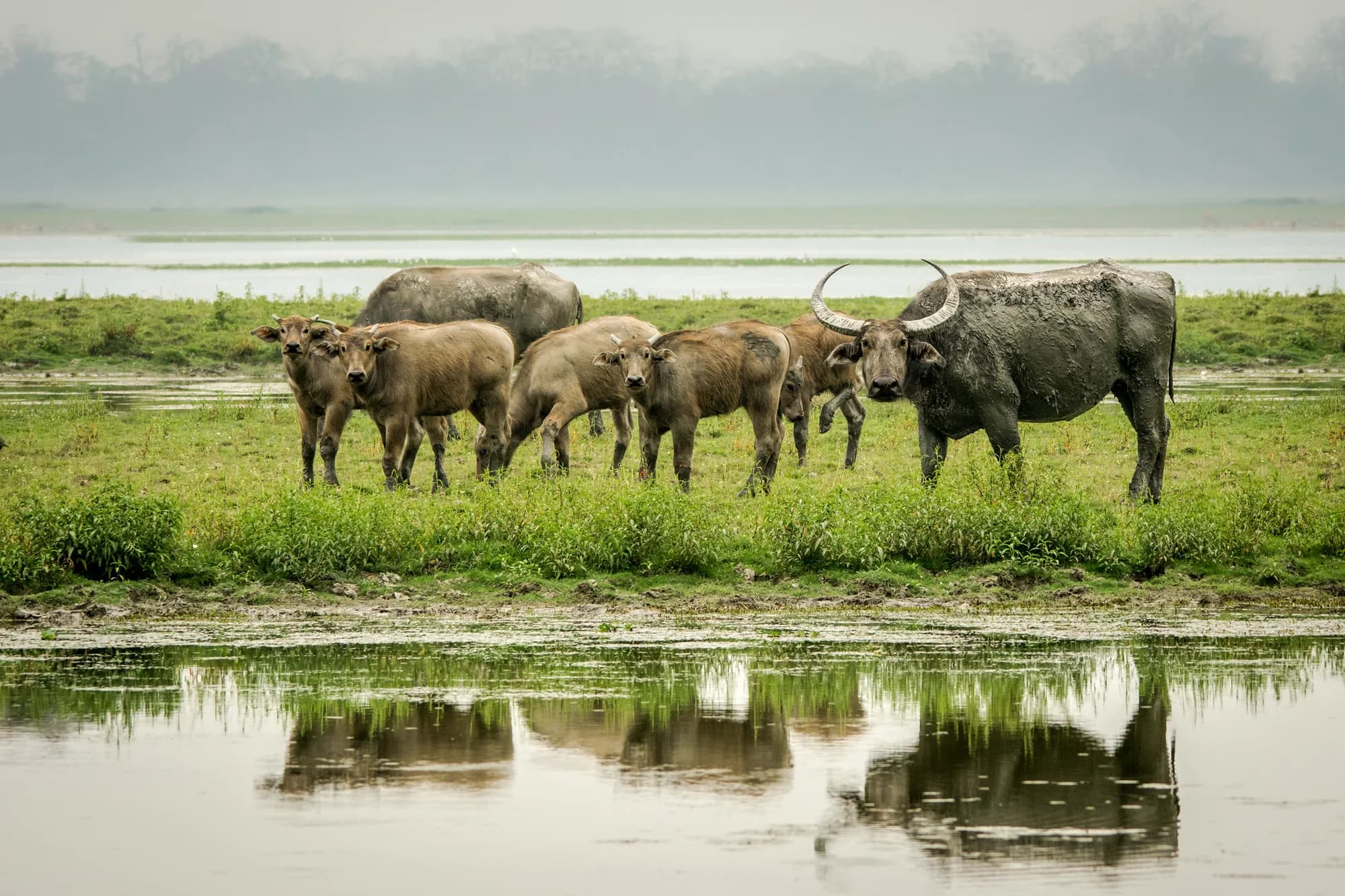
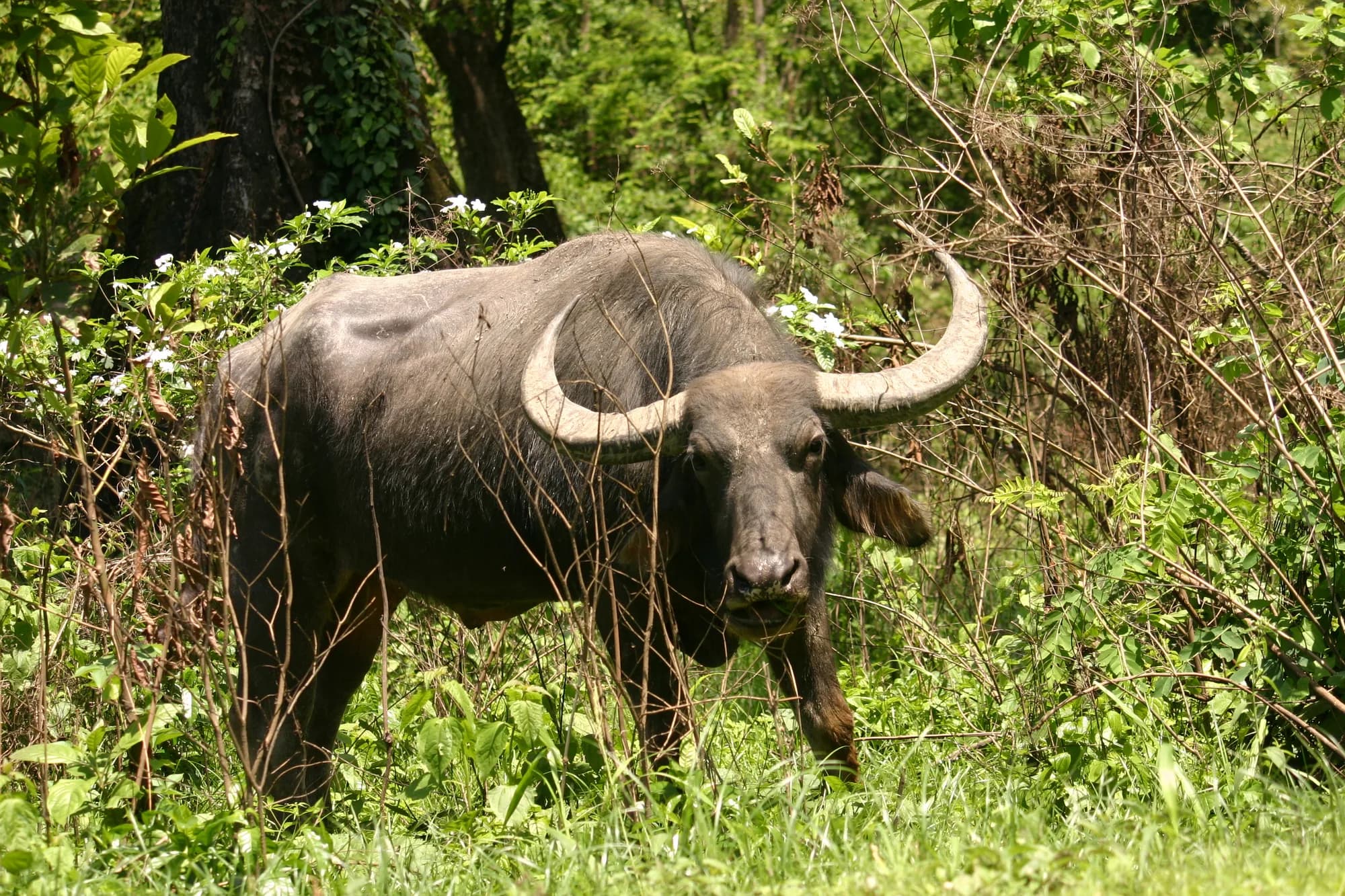
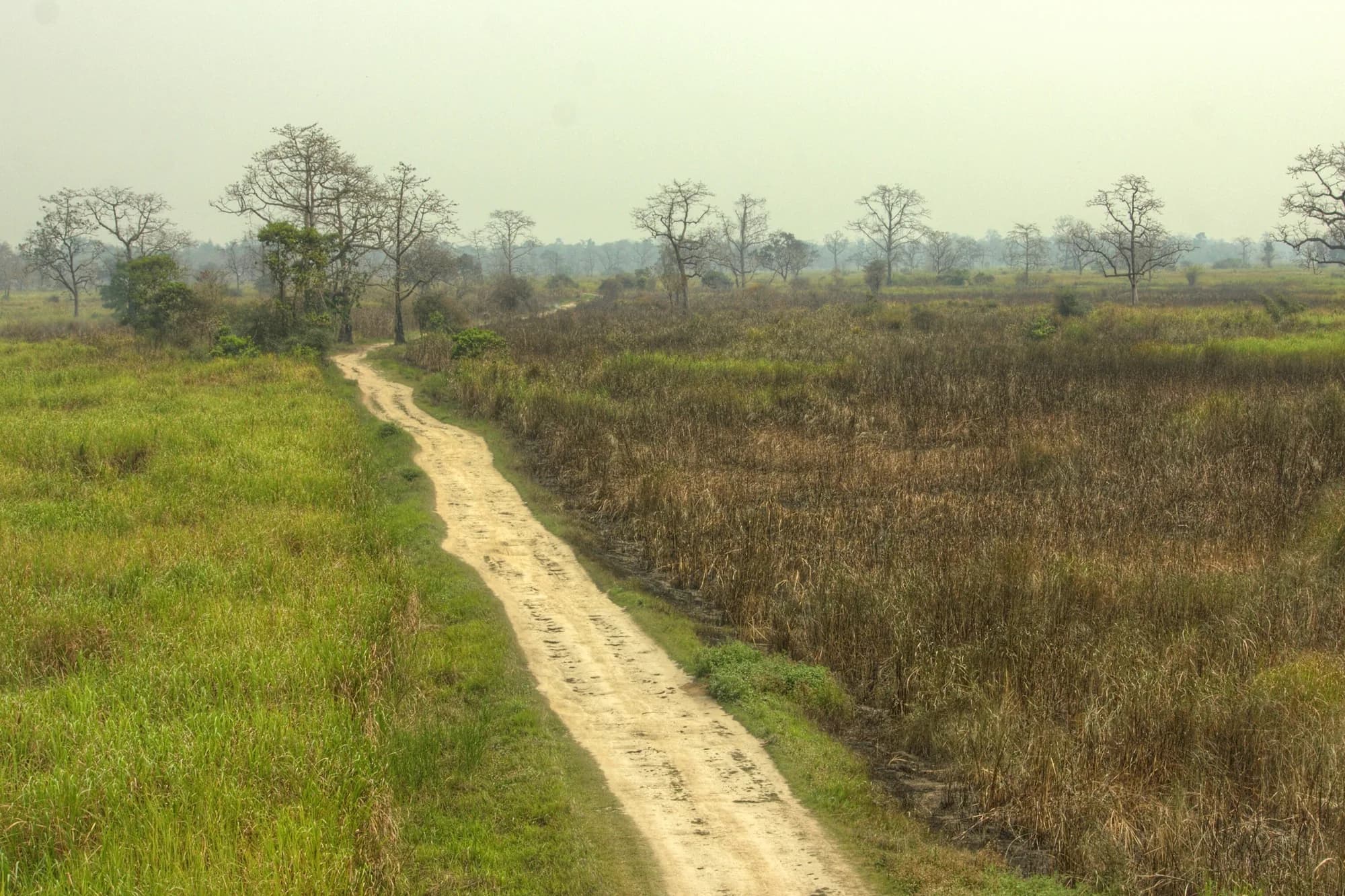
Photographs of Wild water buffalo in the wild, in Indian reserves. We publish no captive, baited or digitally composited images, and no photograph whose licence we cannot show.
What a sighting is actually like
Underwhelming until you look at the horns. A grey-black bovid standing in grass reads as farm animal to most visitors, and the guide has usually moved on before anyone has registered that the horn spread is wider than the vehicle.
Ask your guide to stop. It is the largest horn spread of any animal alive.
The problem with the boundary
Domestic buffalo graze right up to Kaziranga’s edge, and where wild bulls meet village herds they interbreed. The result is a population whose genetic integrity is measurably eroding at the margins.
Status and protection
Status and protection
- IUCN Red List
- Endangered
- Population trend
- ↓ Decreasing
- Wildlife Protection Act 1972
- Schedule I (post-2022 amendment numbering)
- CITES
- Appendix III
Species-level assessment matching the binomial given (Bubalus arnee). Criteria A2de+3de; C1.
Assessed 2019 · IUCN Red List assessment
What to book to see one
What you would be booking
- How it is seen
- Jeep safari in Kaziranga's grassland ranges, or from an elephant if you take that option.
- Drives to book
- Two or three. In Kaziranga you will see them whether or not you are looking.
- Zone or shift
- Central and Western ranges, where the grassland and beels are.
Keep your distance from lone bulls. Wild buffalo are among the more genuinely dangerous animals in Kaziranga, and a solitary bull disturbed at close range is not something a jeep outruns easily.
Kaziranga — the park in fullOn the same trip you would also get
- Greater one-horned rhino — the same grassland, in the same frame
- Greater adjutant — on the beels alongside them
- Gaur — the other big bovid, for the horn comparison
- Black-necked stork — the same wetlands
Questions people ask
Where can I see wild water buffalo?
How do I know it is not a domestic buffalo?
Are they dangerous?
Read next
Assam
Kaziranga — the park in full
Floodplain grassland, one-horned rhino in daylight, and the one Indian park where the headline animal is close to certain.
Assam floodplain, near-certain
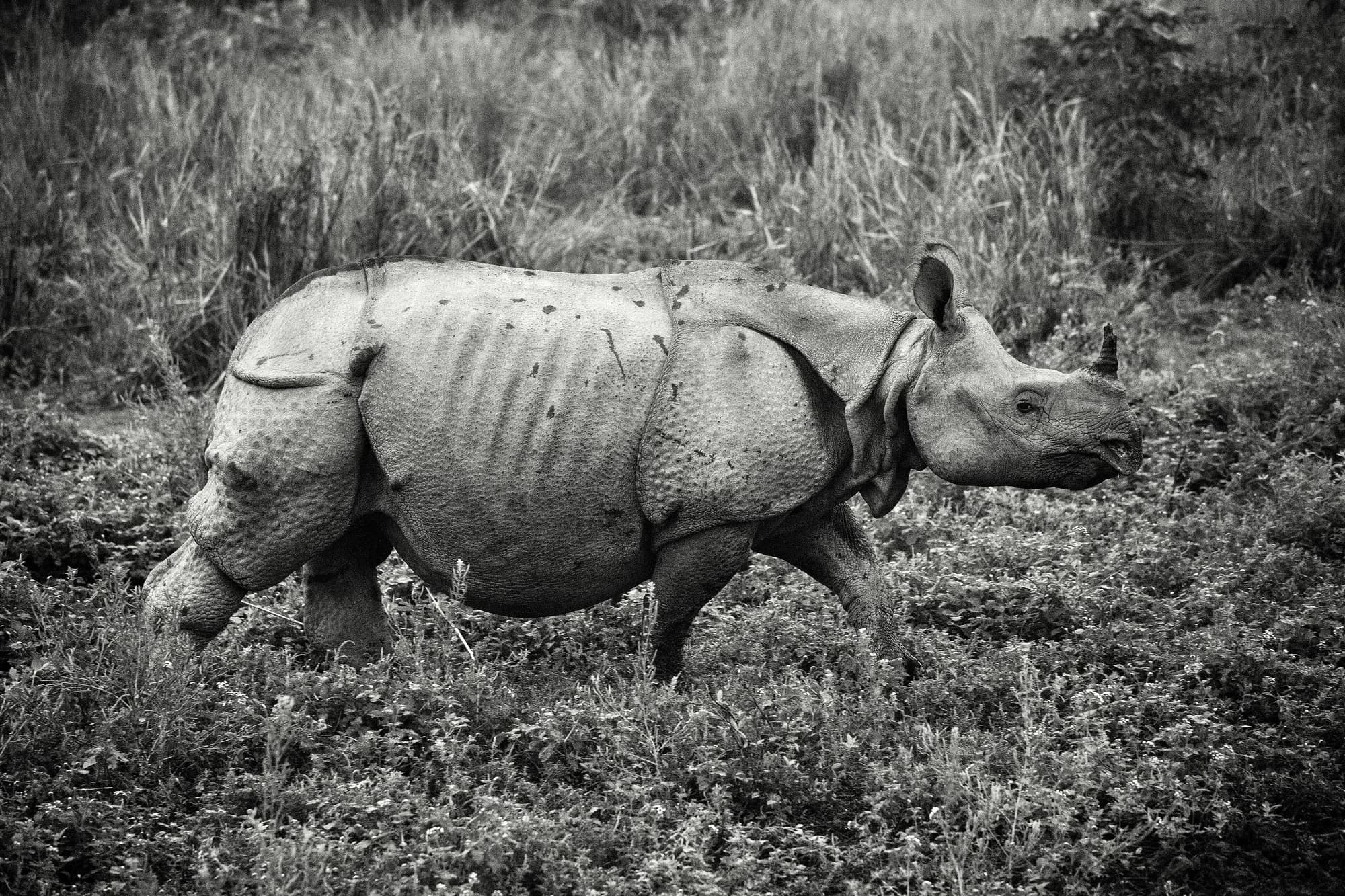
One-horned rhino — the same grassland
The easiest large mammal in India to see well. Two-thirds of the world's population stands in open grass, in daylight, in one Assam floodplain.
Six reserves, and it is not a bison
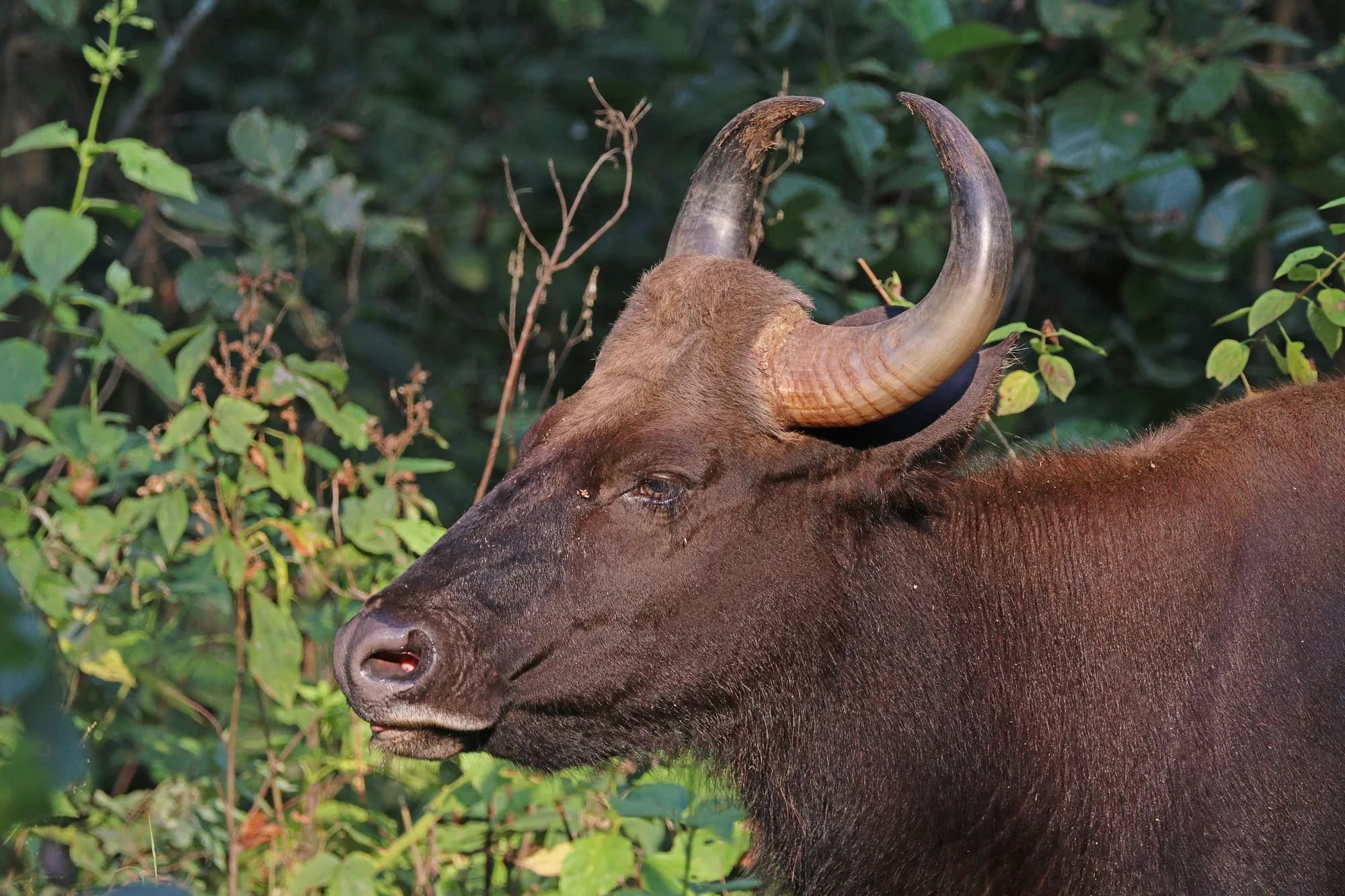
Gaur — the other big bovid
The largest wild cattle on earth, standing taller at the shoulder than any bison, and routinely dismissed as livestock by people who have travelled a long way to see it.
Twelve months, cross-park
When to go, month by month
The single decision that moves the odds most. Heat, crowds, closures and what is actually open, one page per month.