
Species · Leptoptilos dubius
Greater adjutant
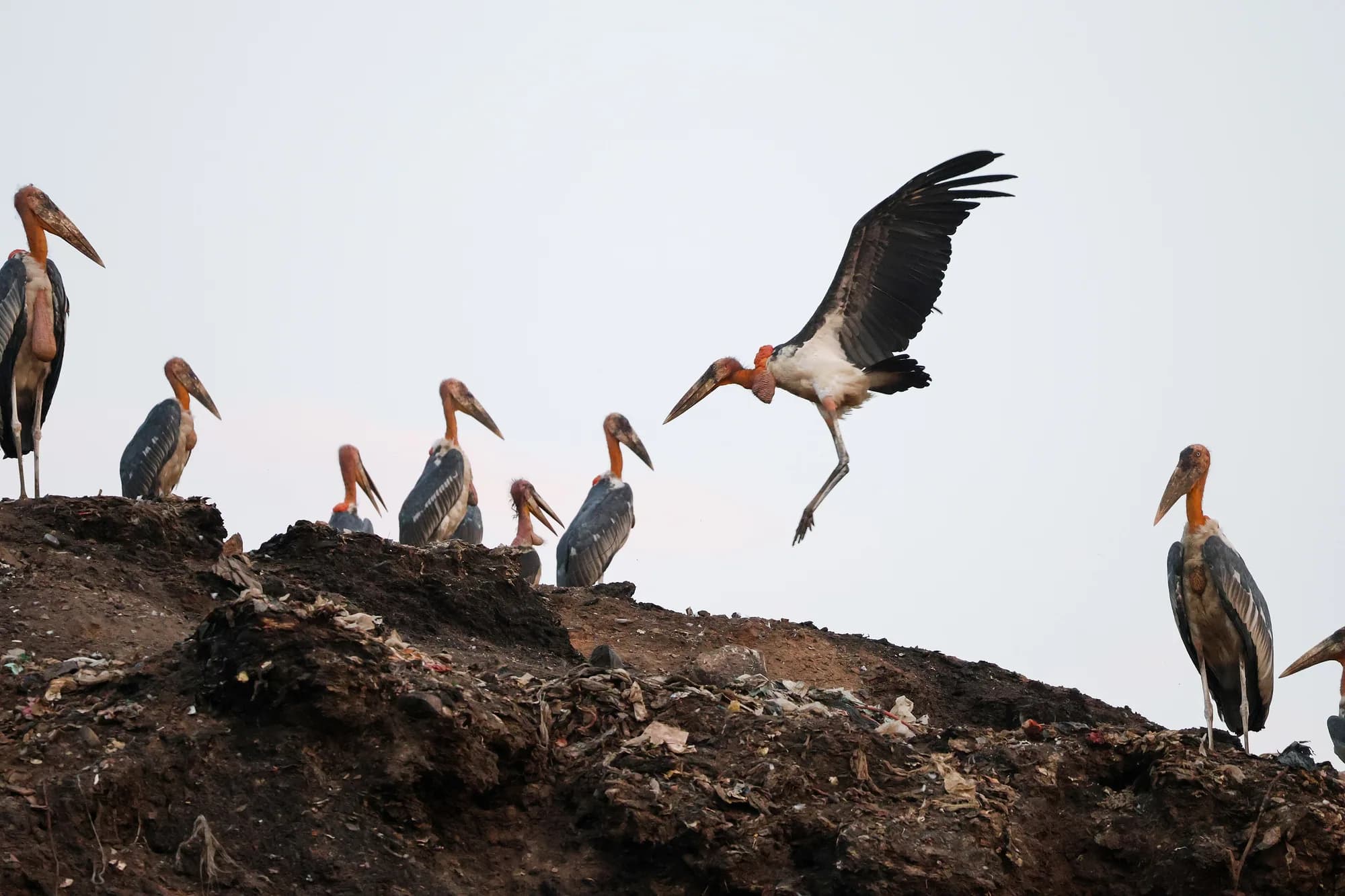
One of the rarest storks alive, standing a metre and a half tall, and most of the world population lives around Guwahati — a good deal of it on a landfill.
Also called
- Hargila (হাৰগিলা) — bone swallower · Assamese
- Garur · Hindi
Checked 30 Aug 2026
- Where
- Assam, mostly
- Best months
- November–March
- Height
- About 1.5 m
- Nests
- In village trees
Effectively one landscape — the Brahmaputra valley in Assam, with a small population in Bihar. Nests colonially in tall trees in villages, not in reserves.
Where it is
Where to actually go
Ranked, with the reason each — these are not interchangeable.
- 01Around GuwahatiAssamThe nesting colonies at Dadara and Pacharia, and the wetlands and waste ground the birds feed on. Most of the world population is here.With a local conservation group
- 02KazirangaAssamBirds on the grassland and beels, easily added to a rhino trip.A bonus on the standard trip
Where you will not see one
- In a pristine wildernessWorth being straight about: a large share of the world population feeds on a municipal landfill outside Guwahati and nests in village trees. That is the conservation story, not a failure of it.
- Confused with a lesser adjutantLesser adjutants lack the huge pendulous neck pouch and have a darker, less bare head. The greater is noticeably bigger and cruder-looking.
When to go
When to go
- J
- F
- M
- A
- M
- J
- J
- A
- S
- O
- N
- D
January: best. February: best. March: best. April: good. May: marginal. June: marginal. July: marginal. August: marginal. September: marginal. October: good. November: best. December: best.
Through the day
- Dawn
- Morning
- Midday
- Afternoon
- Dusk
- Night
Dawn: active. Morning: most active. Midday: most active. Afternoon: active. Dusk: active. Night: not normally seen.
What it looks like in the field
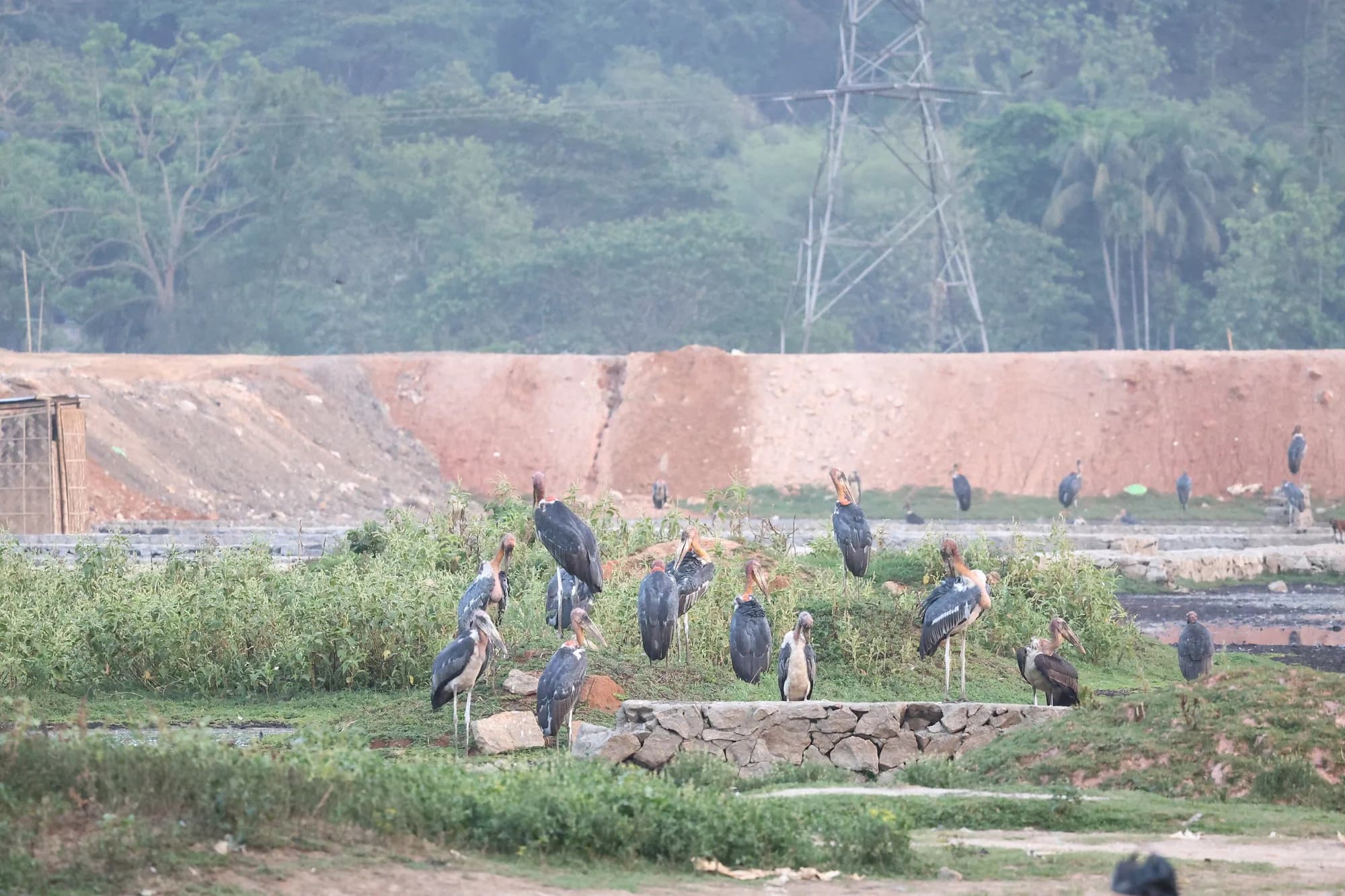
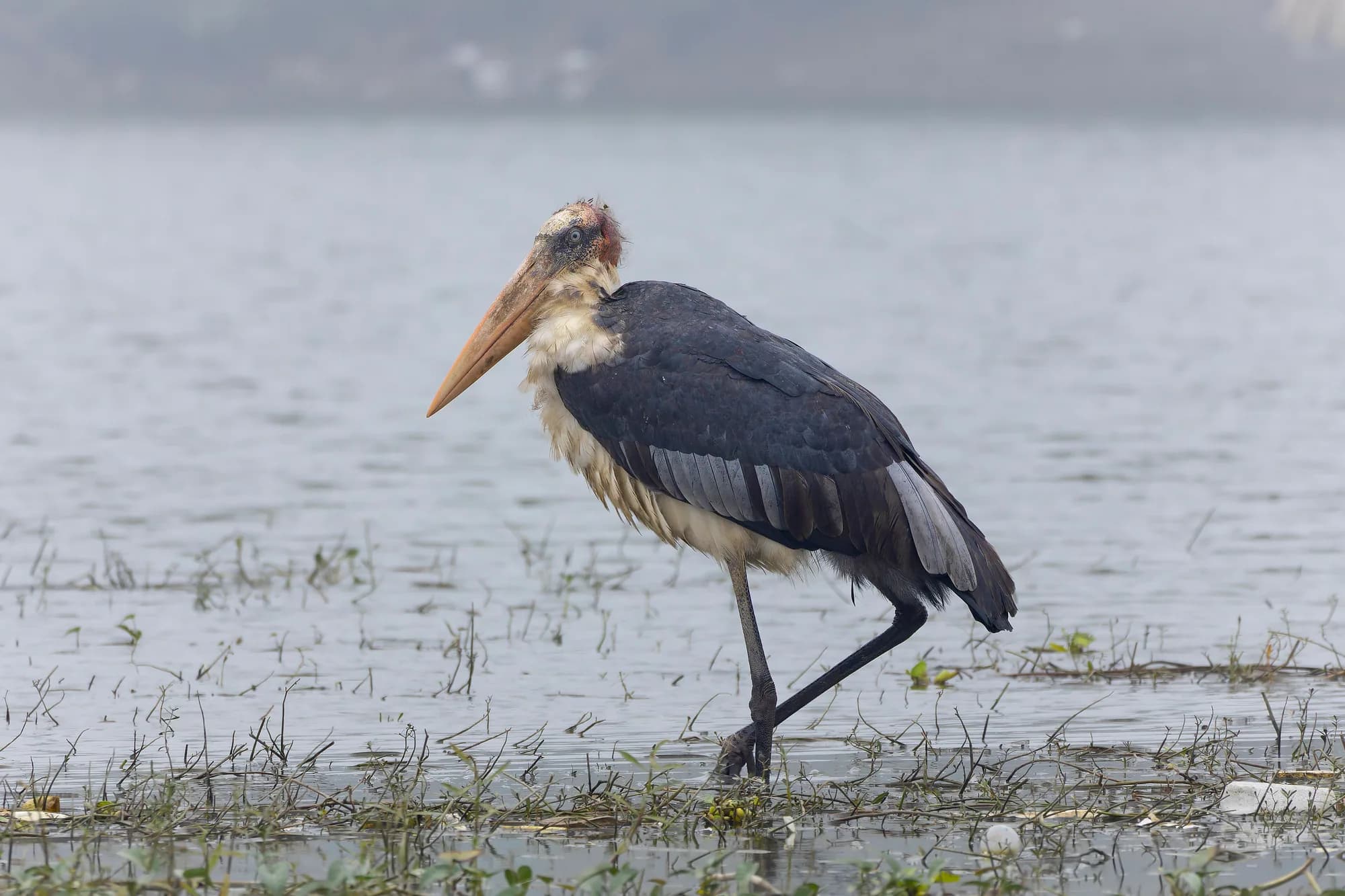
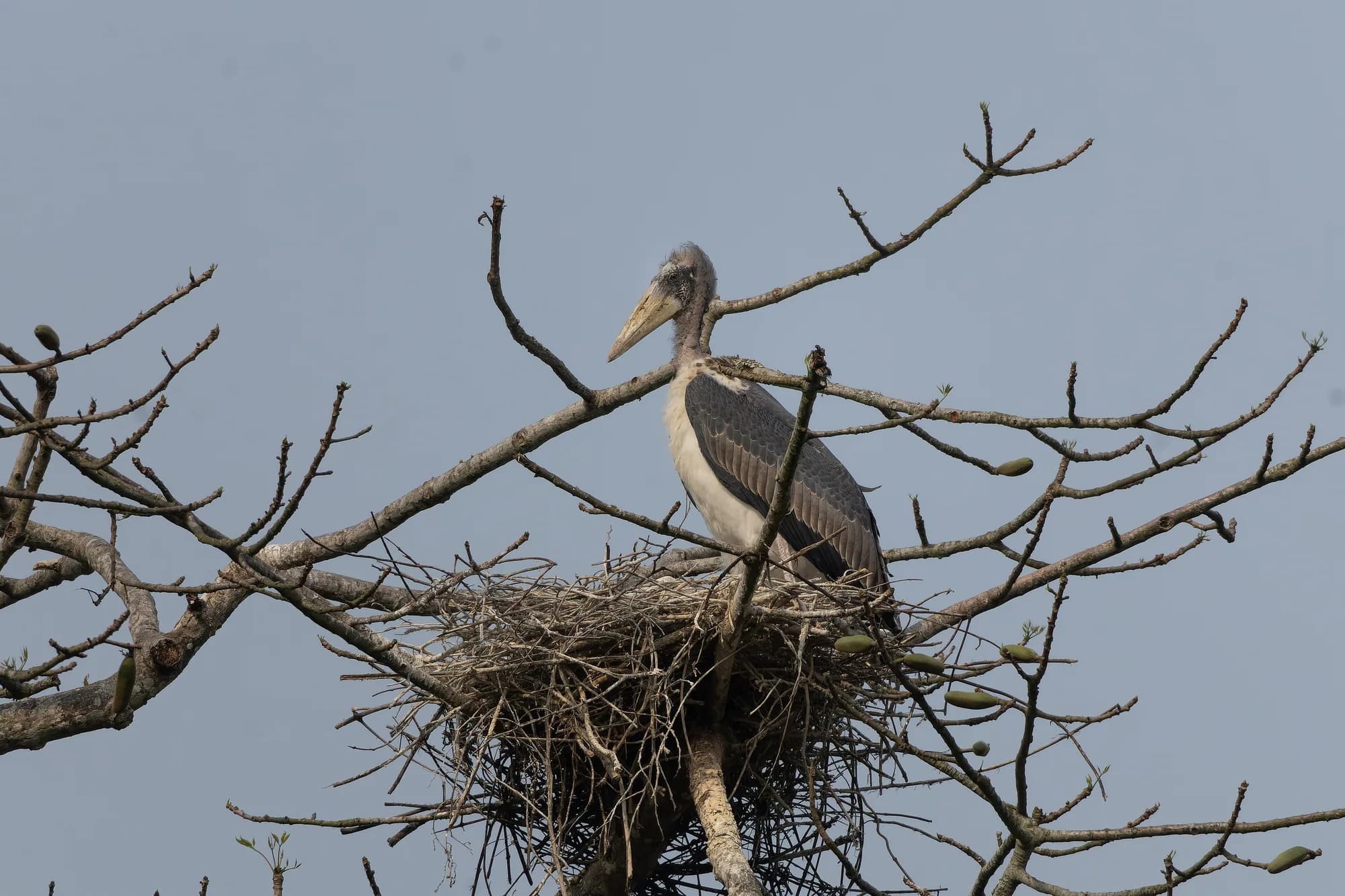
Photographs of Greater adjutant in the wild, in Indian reserves. We publish no captive, baited or digitally composited images, and no photograph whose licence we cannot show.
The village recovery
The greater adjutant was regarded as a filthy nuisance for decades and its nesting trees were routinely cut. The turnaround came from organising the villages that held the colonies rather than from fencing anything off.
Status and protection
Status and protection
- IUCN Red List
- Near Threatened
- Population trend
- ↑ Increasing
- Wildlife Protection Act 1972
- Schedule I
- CITES
- Not listed
Species-level assessment; monotypic, binomial as given. Taxon id 22697721.
Assessed 2023 · IUCN Red List assessment
What to book to see one
What you would be booking
- How it is seen
- A local outing from Guwahati to the nesting villages and wetlands, or grassland drives at Kaziranga.
- Drives to book
- A morning. The birds are large, static and easy once you are in the right district.
Go with the local conservation groups if you can. The recovery of this species has been driven by village women in Dadara and Pacharia protecting nest trees, and visiting through them puts money where the work is.
Kaziranga — the natural pairingOn the same trip you would also get
- Greater one-horned rhino — Kaziranga, an hour or two east
- Black-necked stork — the same Assam wetlands
- Wild water buffalo — the same beels
- Sarus crane — the other giant wader, further west
Questions people ask
Where can I see a greater adjutant?
Why do they live near a rubbish dump?
What is the Hargila Army?
Read next
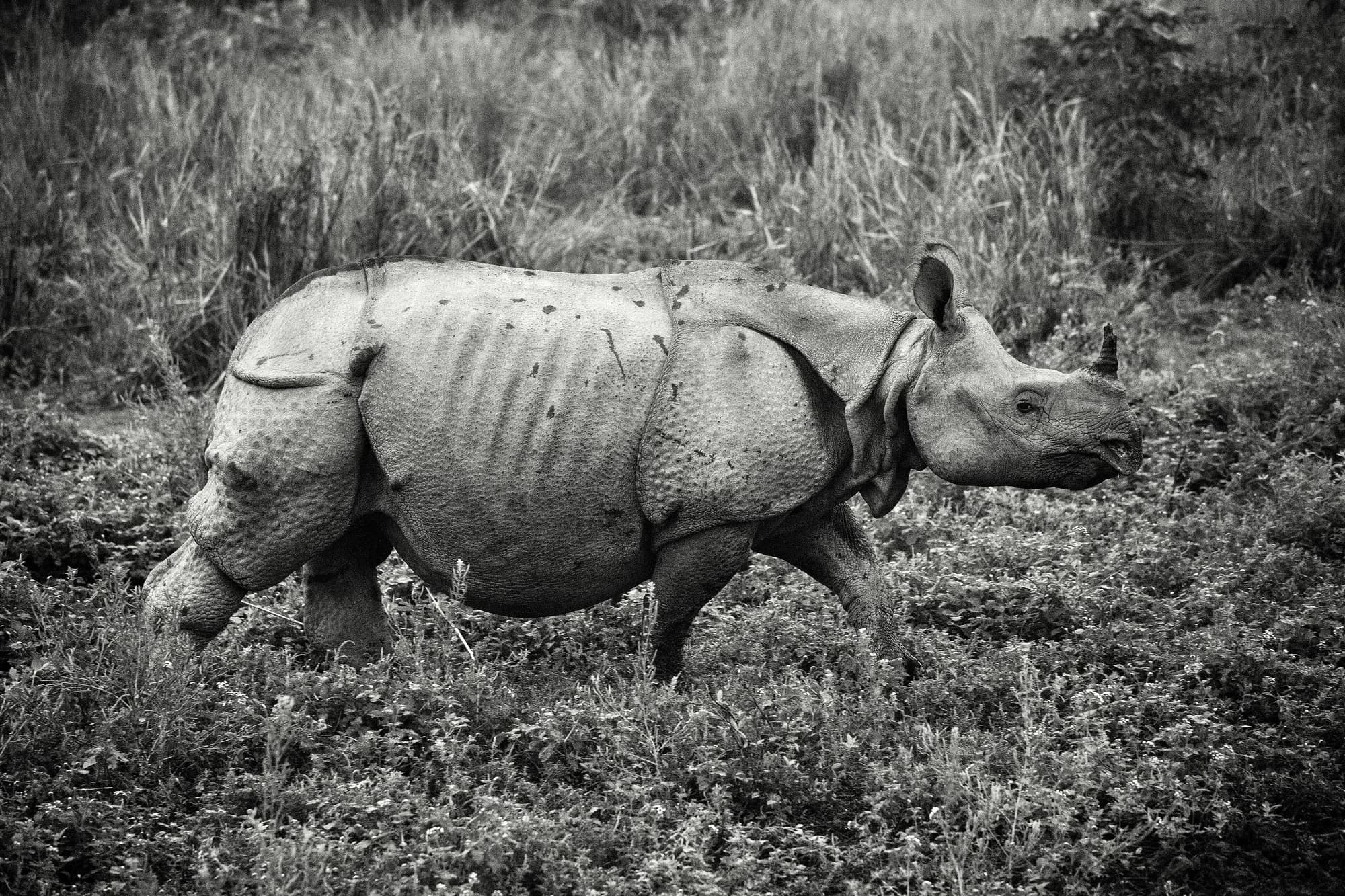
Assam
Kaziranga — the natural pairing
Floodplain grassland, one-horned rhino in daylight, and the one Indian park where the headline animal is close to certain.
Assam floodplain, near-certain
One-horned rhino — the same trip
The easiest large mammal in India to see well. Two-thirds of the world's population stands in open grass, in daylight, in one Assam floodplain.
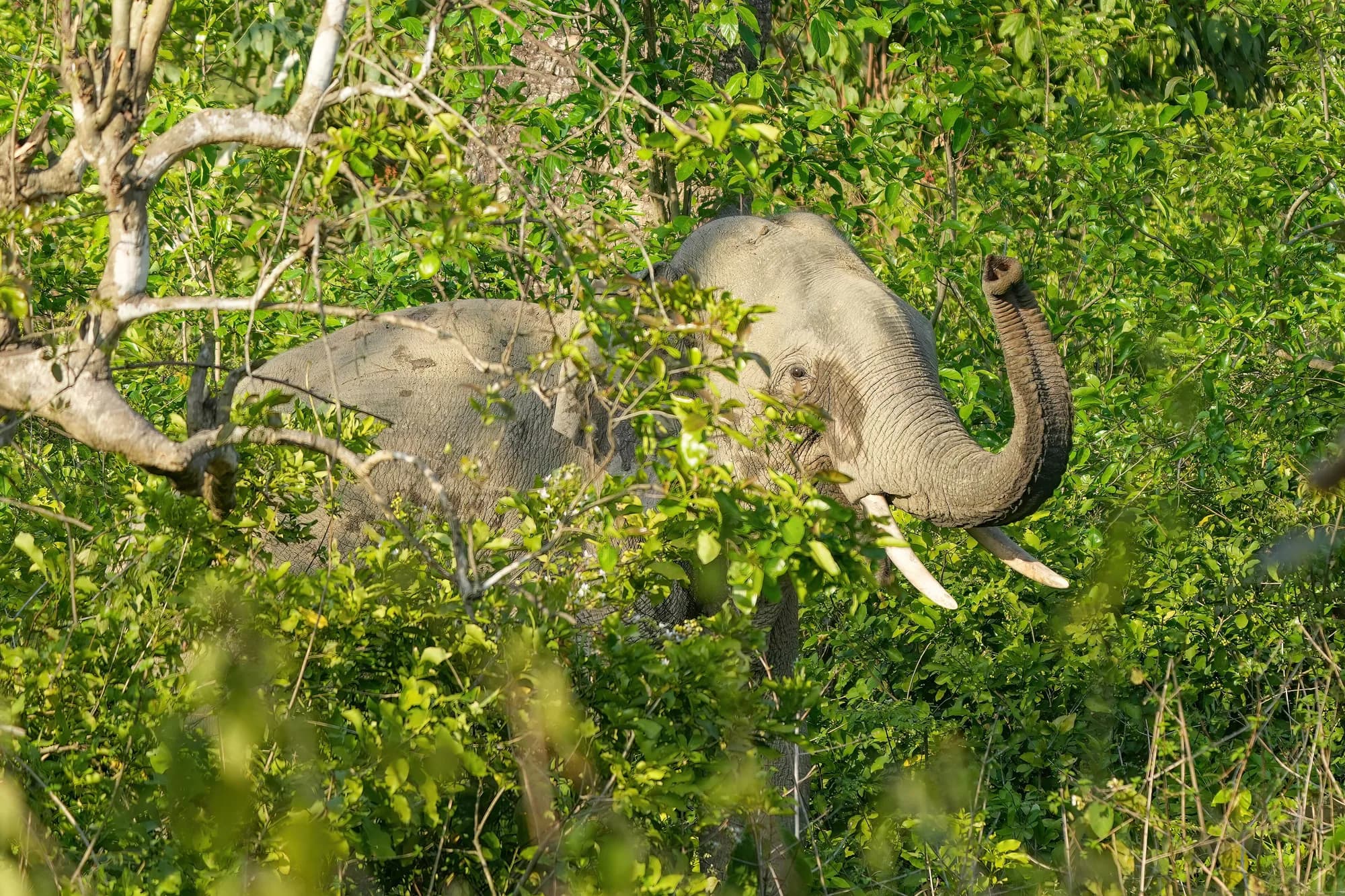
Our position
Travelling responsibly
Where we stand on vehicle crowding, baiting and playback — and what we will not link to, whoever is paying.
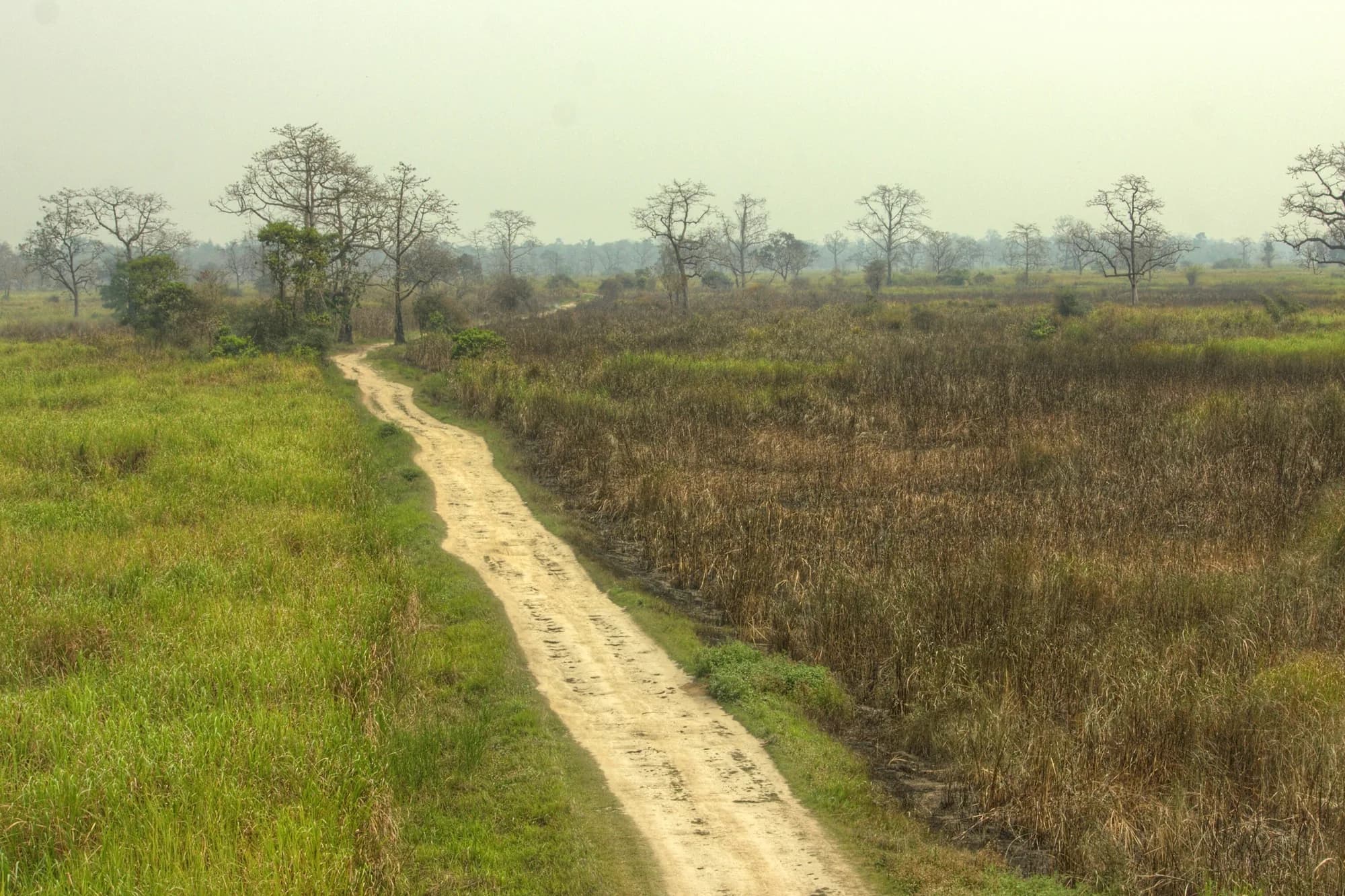
November to February
Birding on an Indian safari
Every reserve here is a birding destination whether or not it is sold as one. Say so when you book.