
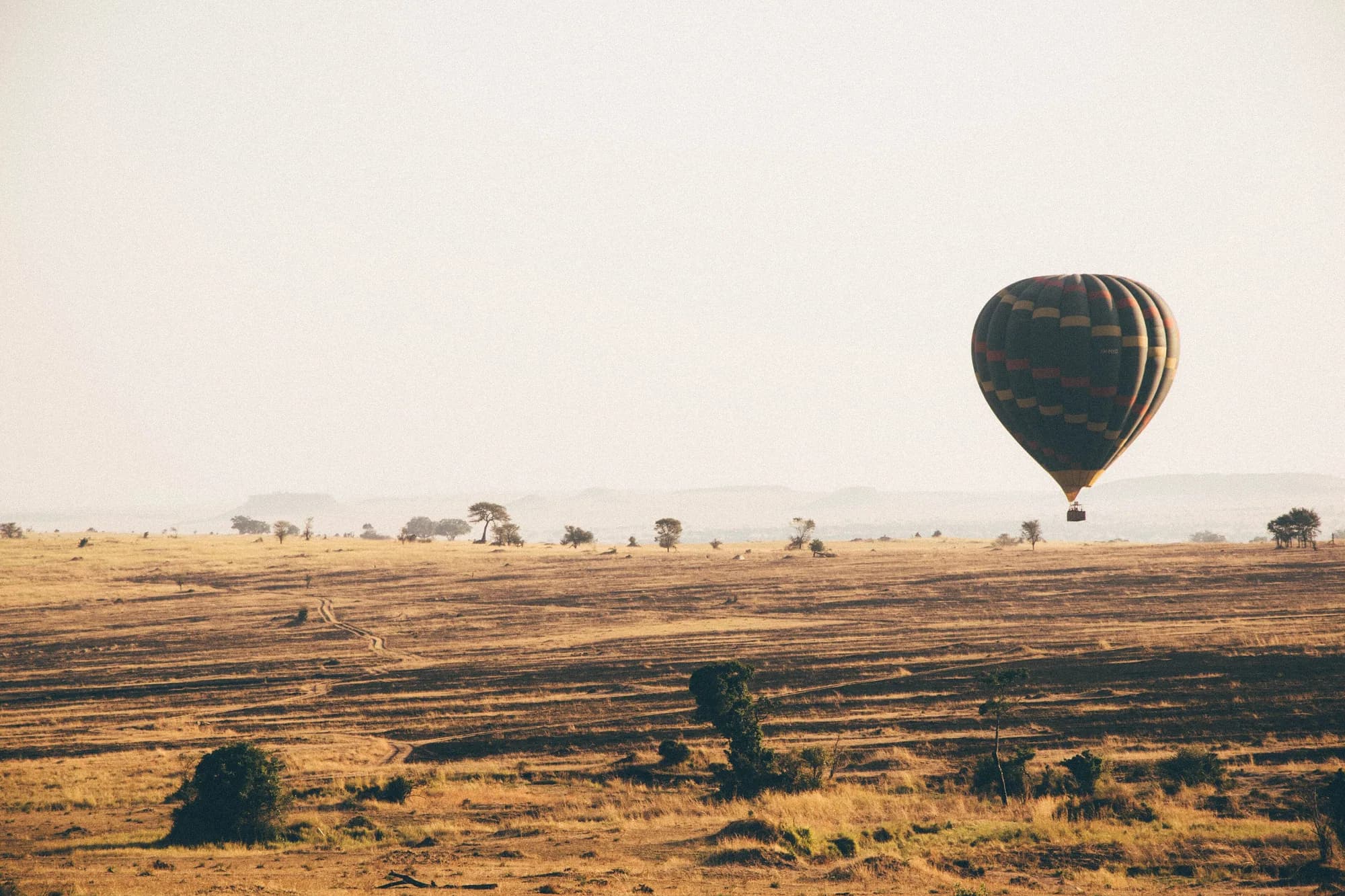
Tanzania / Serengeti / Itineraries — Serengeti
Itineraries — Serengeti
Length matters less here than matching the sector to the month. A well-placed three nights beats a badly placed five.
Two nights — Seronera only
Two nights works if you stay central. Fly into Seronera, spend both full days in the valley and the kopjes, and fly out. You will very likely see lion, have a real chance at leopard, and see cheetah on the open ground — none of which depends on where the migration is.
Two nights in the north in September is the mistake
A river crossing cannot be scheduled. Two nights at Kogatende is a coin toss on the one thing you went for, and people routinely spend a great deal of money to watch a herd decline to cross. If crossings are the point, budget four nights.
Three nights — one sector, properly
- January to March: three nights at Ndutu on the southern plains. Calving, cheetah, and short grass you can see across.
- June to July: three nights in the western corridor for the Grumeti.
- August to October: three nights in the north, which gives two full days at the river.
- Any month with no strong preference: three nights Seronera, which never fails.
Three nights in one sector beats three nights split across two. Moving costs half a day each time, and the Serengeti's sectors are far enough apart that a transfer is a game drive at best and a long drive at worst.
Five nights, and the classic circuit
Five nights allows two sectors, or the Serengeti plus Ngorongoro properly. The standard northern-circuit trip runs Arusha, Tarangire, Ngorongoro, Serengeti — and the honest note is that Ngorongoro deserves one full day and no more. The crater is spectacular and small, and a second day repeats the first.
A five-night shape that works in most months
| Nights | Where | Why |
|---|---|---|
| 1 | Tarangire | Elephants and baobabs; far quieter than the Serengeti |
| 1 | Ngorongoro rim | One crater descent, early, before the vehicles |
| 3 | Serengeti, sector by month | The bulk of the trip, in one place |
What that five-night shape costs in authority fees alone, two adults
| Park | Working | Amount |
|---|---|---|
| Tarangire, 1 day | USD 50 x 2 | USD 100.00 |
| Ngorongoro entry, 2 days in and out | USD 70.80 x 2 x 2 | USD 283.20 |
| Ngorongoro crater descent | USD 295 per vehicle | USD 295.00 |
| Serengeti conservation, 3 days | USD 70 x 2 x 3 | USD 420.00 |
| Serengeti concession, 3 nights, peak | USD 60 x 2 x 3 | USD 360.00 |
| Serengeti vehicle, 3 days | USD 150 x 3 | USD 450.00 |
| Total | Before VAT, before beds, before the vehicle outside the Serengeti | USD 1,908.20 |
Tarangire's concession fee, its vehicle fee and the Ngorongoro vehicle permit and rim concession are not in this total. Nor is the 18% the TANAPA tariff says its charges exclude, which on the USD 1,330 of TANAPA lines alone would add USD 239.40.
TANAPA — Tanzania National Parks Tariffs, 1 July 2023 to 30 June 2024
This is the most recent tariff TANAPA has published and it expired on 30 June 2024. No replacement has been issued, and TANAPA's own fees page still badges it "Financial Year 2023/2024". Treat these as a floor rather than as current rates: Tanzanian park fees have risen at every revision, and the document states no VAT treatment, so 18% may be added at the gate. Read 28 September 2026.
https://www.tanzaniaparks.go.tz/uploads/publications/en-1688147569-TARIFFS%20Design%20202324.pdfNgorongoro Conservation Area Authority — Tariffs
NCAA publishes no effective date and no expiry on its tariff; the page carries only its own note that rates may change without notice, and it states no VAT treatment at all. It does state that a "Permit once issued is valid for one entry within 24 hours only" — single entry, where TANAPA's equivalent permit allows multiple. Read 28 September 2026.
https://www.ncaa.go.tz/tariffs/Seven to nine nights — two sectors and a real chance
This is the length at which the Serengeti stops being a highlights reel. Two sectors done properly, with a flight rather than a drive between them, and enough days at whichever one you came for that a bad morning does not ruin the trip.
Two shapes that work
| Months | Shape | What the extra nights buy |
|---|---|---|
| August to October | 4 nights north at Kogatende or Lamai, fly to Seronera, 3 nights central | Four days at the river is the difference between likely and lucky. Seronera then guarantees the cats the river cannot |
| January to March | 4 nights Ndutu and the southern plains, 3 nights Seronera or Moru | Calving and cheetah on the plains, then leopard and the kopjes. Moru adds the rhino at USD 100 a trip |
| June to July | 3 nights western corridor, 4 nights central or Lobo | The Grumeti without betting the whole trip on it, and Lobo for the quiet |
The cost of each additional night in the Serengeti is knowable before you ask anyone: USD 70 of conservation fee plus USD 60 of concession fee in July to September, so USD 130 a person a night in authority fees, or USD 153.40 with the 18% the tariff says is excluded. Everything the camp charges is on top of that. Two people adding two nights to a trip are committing at least USD 520 to the state before the beds.
TANAPA — Tanzania National Parks Tariffs, 1 July 2023 to 30 June 2024
This is the most recent tariff TANAPA has published and it expired on 30 June 2024. No replacement has been issued, and TANAPA's own fees page still badges it "Financial Year 2023/2024". Treat these as a floor rather than as current rates: Tanzanian park fees have risen at every revision, and the document states no VAT treatment, so 18% may be added at the gate. Read 28 September 2026.
https://www.tanzaniaparks.go.tz/uploads/publications/en-1688147569-TARIFFS%20Design%20202324.pdfThe four itineraries that go wrong
These are not hypothetical. They are the four shapes that arrive in our inbox already booked, and in each case the fix costs nothing at the planning stage and a great deal afterwards.
What goes wrong, what it costs, what to do instead
| The booking | Why it fails | Instead |
|---|---|---|
| Ndutu in August | The herds left the southern plains in April. The country is dry, short of water and short of animals, and the camps that follow the migration are 300 km north | Ndutu in late January to mid-March, or the north in August. Never the two crossed over |
| Two nights at Kogatende in September | A crossing is not a scheduled event. Two nights is one and a half days at the river, and the herd may cross the day after you fly out | Four nights, or treat the crossing as a bonus on a central trip |
| A fixed central lodge in February, for the calving | Seronera to the calving grounds is a long day each way, and if the camp you reach is on the Ngorongoro side you are paying the NCAA's fee to get there | Sleep on the southern plains. The whole point of a mobile camp is this month |
| Two nights on the Ngorongoro rim | The crater is spectacular and small. A second descent repeats the first, at USD 70.80 a person and USD 295 a vehicle | One rim night, one early descent, then move. Put the saved night in the Serengeti |
The pattern behind all four
Each one is a booking made in the right park, at the right time of year, in the wrong sector — or the right sector for the wrong number of nights. Nothing about the invoice or the camp is defective. That is exactly why nobody catches it: there is no error to spot, only a mismatch between a month and a map.
Ngorongoro Conservation Area Authority — Tariffs
NCAA publishes no effective date and no expiry on its tariff; the page carries only its own note that rates may change without notice, and it states no VAT treatment at all. It does state that a "Permit once issued is valid for one entry within 24 hours only" — single entry, where TANAPA's equivalent permit allows multiple. Read 28 September 2026.
https://www.ncaa.go.tz/tariffs/A day in the Serengeti, and the clock on your permit
A game-viewing day here is shaped by two things: the heat, and the fact that the tariff prices a permit in hours rather than dates.
- Before six, coffee at the tent and out at first light. The first two hours are the best of the day for predators — lion still at a kill, leopard still down from the tree, cheetah hunting before the ground heats.
- Mid-morning to mid-afternoon, very little moves. This is when a full-day drive with a packed lunch and a bush meal permit at USD 5 a head earns its place, and when a half-day itinerary goes back to camp.
- From about four, out again until dusk. The light is the reason the photographs on every brochure were taken in this window.
- At dusk it ends. The Serengeti is not named in TANAPA's night game drive schedule, so unlike Tarangire or Ruaha there is no second act after dark.
Twelve daylight hours or twenty-four
The tariff offers two permits: a day-trip permit valid for twelve daylight hours, and a sleep-over permit valid for twenty-four. Both allow multiple entries within the window. If you are staying outside the park and driving in — from Ikoma, say — the day-trip permit is the one that fits, and it means the gate, not the sunset, sets the end of your day.
TANAPA — Tanzania National Parks Tariffs, 1 July 2023 to 30 June 2024
This is the most recent tariff TANAPA has published and it expired on 30 June 2024. No replacement has been issued, and TANAPA's own fees page still badges it "Financial Year 2023/2024". Treat these as a floor rather than as current rates: Tanzanian park fees have risen at every revision, and the document states no VAT treatment, so 18% may be added at the gate. Read 28 September 2026.
https://www.tanzaniaparks.go.tz/uploads/publications/en-1688147569-TARIFFS%20Design%20202324.pdf