
Tanzania / Serengeti / Zones — Serengeti
Zones — Serengeti
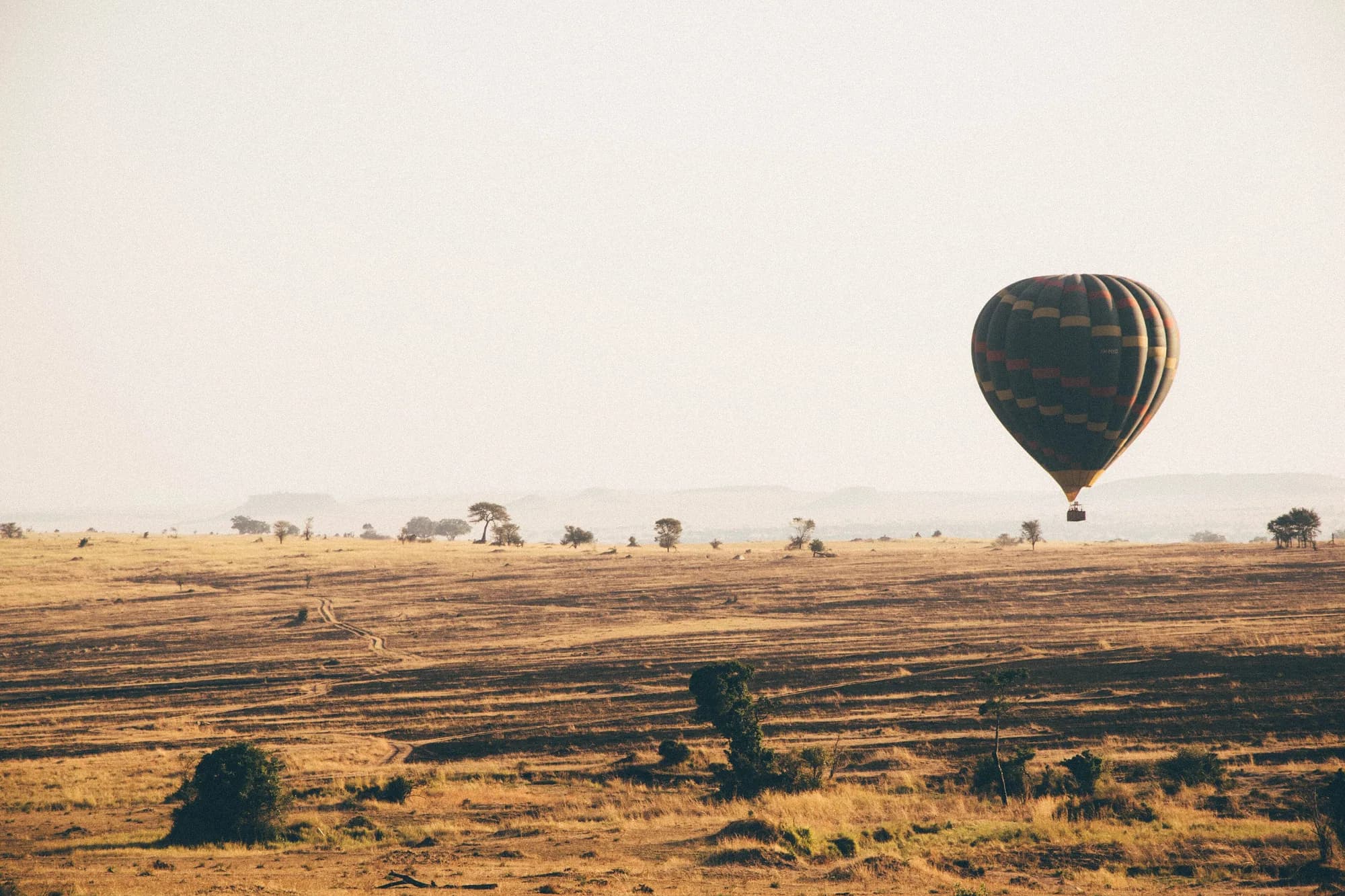
The Serengeti is not zoned the way an Indian tiger reserve is. It is divided by geography and by where the herds are, and the sectors are a day apart.
Sectors, not zones
There is no numbered core zone, no gate-allocated quota and no jeep permit tied to a block. Entry is to the whole park. What divides the Serengeti is distance — it covers roughly 15,000 square kilometres, and the northern and southern ends are most of a day apart by road.
The five sectors
| Sector | Character | Strongest months |
|---|---|---|
| Southern plains / Ndutu | Open short grass, few trees | January – March, calving |
| Seronera / central | Acacia, kopjes, river valley | Any month — resident predators |
| Western corridor | Grumeti river, thicker bush | June – July |
| Northern / Kogatende | Rolling hills, Mara river | August – October, crossings |
| Lobo / north-east | Rocky, quiet, few vehicles | June – October |
What each sector actually gives you
- Seronera is the safe choice and the busiest. Resident lion, the most reliable daylight leopard in East Africa in the sausage trees, and cheetah on the open ground — none of it dependent on the migration.
- The southern plains in calving season are the best predator viewing in Africa, and the short grass means you can see across them. Almost empty by comparison with the north in September.
- The northern sector is crossing country and is worth going to only in season. Out of season it is quiet, beautiful and thin.
- Lobo and the north-east are where people go to escape vehicles, and they trade density for solitude.
Pick the sector before the camp
The commonest planning error is choosing a camp on its photographs and then discovering it is four hours from where the animals are that month. Fix the month, then the sector, then the camp — in that order.
Ndutu, and the boundary that changes your bill
Ndutu is the name on every calving-season itinerary and it is the one sector on this page that may not be in the national park. The short-grass plains run continuously across the boundary between the Serengeti and the Ngorongoro Conservation Area, and the lakes and the woodland strip most Ndutu camps sit against lie on the Ngorongoro side of it.
- If your camp is inside the NCAA, your daily fee is the NCAA's USD 70.80, not TANAPA's USD 70 — close enough in headline to pass unnoticed and a different authority entirely.
- The NCAA permit is single entry within twenty-four hours. TANAPA's is multiple entry. A day that starts at an NCAA camp, drives north onto the TANAPA plains and comes back has crossed two fee regimes with different rules.
- The concession fee on your bed follows the same logic. The NCAA lists a lodge concession fee of USD 59 a night; TANAPA's Serengeti figure is USD 60 in July to September and USD 50 otherwise.
- Camping rates diverge more sharply. An NCAA special campsite is USD 70.80 a person a night against TANAPA's USD 60 at peak, and an NCAA public campsite is USD 35.40 against TANAPA's USD 30.
What we could not verify
Neither authority publishes a visitor-facing boundary map, and neither tariff mentions Ndutu by name. That a given Ndutu camp is inside the Ngorongoro Conservation Area rather than the national park is the settled understanding among operators, but we could not confirm it from a published document. Ask your operator one specific question — which authority issues the permit for my camp, and which fee appears on it — and take the answer in writing. It is the difference between two tariffs on a four-night stay.
Ngorongoro Conservation Area Authority — Tariffs
NCAA publishes no effective date and no expiry on its tariff; the page carries only its own note that rates may change without notice, and it states no VAT treatment at all. It does state that a "Permit once issued is valid for one entry within 24 hours only" — single entry, where TANAPA's equivalent permit allows multiple. Read 28 September 2026.
https://www.ncaa.go.tz/tariffs/TANAPA — Tanzania National Parks Tariffs, 1 July 2023 to 30 June 2024
This is the most recent tariff TANAPA has published and it expired on 30 June 2024. No replacement has been issued, and TANAPA's own fees page still badges it "Financial Year 2023/2024". Treat these as a floor rather than as current rates: Tanzanian park fees have risen at every revision, and the document states no VAT treatment, so 18% may be added at the gate. Read 28 September 2026.
https://www.tanzaniaparks.go.tz/uploads/publications/en-1688147569-TARIFFS%20Design%20202324.pdfMoving between sectors, and what it costs
Because there is no zone permit, moving around inside the Serengeti costs you nothing in fees — the conservation fee and the vehicle fee are both explicitly multiple entry, so a sector transfer that exits and re-enters the park does not buy a second permit inside the same twenty-four hours. What it costs is time, and time in the Serengeti is expensive because you are paying USD 70 a day for it.
The three ways to change sector
| Method | What it takes | What it costs you |
|---|---|---|
| Drive it as a game drive | Most of a day between distant sectors, half a day between neighbours | A day's conservation fee spent largely on transit, but you are game viewing throughout |
| Fly between airstrips | Under an hour in the air, longer with intermediate stops | A fare per person per leg, and a baggage limit that constrains what you brought |
| Let the camp move instead | Nothing — a mobile camp repositions between seasons, not between your nights | Nothing, but it only helps if your dates sit inside one of its placements |
The arithmetic that matters: a day spent driving from Kogatende to Seronera is a day you paid USD 70 for and did not spend at a river or in a valley. Three nights in one sector beats four nights split across two more often than people expect.
TANAPA — Tanzania National Parks Tariffs, 1 July 2023 to 30 June 2024
This is the most recent tariff TANAPA has published and it expired on 30 June 2024. No replacement has been issued, and TANAPA's own fees page still badges it "Financial Year 2023/2024". Treat these as a floor rather than as current rates: Tanzanian park fees have risen at every revision, and the document states no VAT treatment, so 18% may be added at the gate. Read 28 September 2026.
https://www.tanzaniaparks.go.tz/uploads/publications/en-1688147569-TARIFFS%20Design%20202324.pdfCamping tiers — the closest thing the park has to zoning
If you want a formal, published, authority-defined division of the Serengeti, this is it. TANAPA's tariff classifies where you may sleep on the ground into five tiers, each with its own rate and its own booking rule, and the Serengeti sits in the most expensive band of every one.
Camping in the Serengeti, per person per night, non-EA adult
| Tier | Peak — Jul to Sep | Low — Oct to Jun | Booking |
|---|---|---|---|
| Public campsite | USD 30 | USD 30 | No season, no prior booking listed |
| Special campsite | USD 60 | USD 50 | Prior booking required |
| Seasonal campsite | USD 60 | USD 50 | Prior booking required |
| Fly campsite | USD 50 | USD 50 | Prior booking required |
| Premium special campsite | USD 300 | USD 300 | Serengeti and other applicable parks |
Children aged 5 to 15 are USD 5 at a special campsite in peak and USD 10 in low, USD 5 at a public campsite, and USD 50 at a premium special campsite. Under-fives are free throughout. East African citizens pay in shillings — TSh 5,000 at a public campsite, TSh 100,000 at a premium one.
- A public campsite is shared ground with shared facilities, and in the Serengeti that means the sites around Seronera. This is where a genuinely budget Serengeti trip happens.
- A special campsite is exclusive-use, undeveloped and booked in advance — no facilities at all, so you arrive self-sufficient or with an operator who is.
- A seasonal campsite is the tier the mobile camps use, which is why a mobile camp's placement is a booking made with the authority and not just a decision about where to park.
- The premium tier at USD 300 a head a night is the only place in the whole schedule where TANAPA charges more for a patch of ground than most parks charge for a lodge bed.
TANAPA — Tanzania National Parks Tariffs, 1 July 2023 to 30 June 2024
This is the most recent tariff TANAPA has published and it expired on 30 June 2024. No replacement has been issued, and TANAPA's own fees page still badges it "Financial Year 2023/2024". Treat these as a floor rather than as current rates: Tanzanian park fees have risen at every revision, and the document states no VAT treatment, so 18% may be added at the gate. Read 28 September 2026.
https://www.tanzaniaparks.go.tz/uploads/publications/en-1688147569-TARIFFS%20Design%20202324.pdfMoru, Lobo and the corners the circuit skips
Two named places inside the sectors are worth going out of your way for, and both are usually skipped because the standard three-night central itinerary has no room for them.
- The Moru kopjes, south-west of Seronera. Granite outcrops on the plain, San-style rock paintings and a rock gong, and the Serengeti's small protected black rhino population. TANAPA prices a special rhino viewing trip at Moru at USD 100 per trip — the same figure for every nationality — which tells you the animals are known, located and managed rather than stumbled upon.
- Lobo and the north-east, between the central valley and Kogatende. Rockier, greener and far quieter than either. In June to October it holds resident game and a fraction of the vehicles, and it is the sector people move to when Seronera disappoints them on crowding.
Moru is a half-day, and you have to ask for it
A Moru run from Seronera takes most of a morning each way and nobody will volunteer it on a three-night itinerary because it competes with the valley. If the rock art or the rhino matter to you, say so at booking and accept that it costs you a session in the sector everyone else is in.
TANAPA — Tanzania National Parks Tariffs, 1 July 2023 to 30 June 2024
This is the most recent tariff TANAPA has published and it expired on 30 June 2024. No replacement has been issued, and TANAPA's own fees page still badges it "Financial Year 2023/2024". Treat these as a floor rather than as current rates: Tanzanian park fees have risen at every revision, and the document states no VAT treatment, so 18% may be added at the gate. Read 28 September 2026.
https://www.tanzaniaparks.go.tz/uploads/publications/en-1688147569-TARIFFS%20Design%20202324.pdf