
India / Hemis / Hemis wildlife
Hemis wildlife
The global headquarters for snow leopard tracking — Rumbak valley offers 70–80% sighting odds in February. Bharal, Ladakh urial, kiang and wolf in one of India's most extreme wilderness parks.
Species at a glance
| Species | Status | Sighting Odds | Best Months |
|---|---|---|---|
| Snow leopard | Vulnerable (IUCN) | High (70–80%, 5 days, Feb) | Jan–Mar |
| Bharal (blue sheep) | Least Concern | Reliable year-round | Year-round |
| Ladakh urial | Vulnerable (IUCN) | Good at 3,500–4,000 m | Oct–Apr |
| Kiang (Tibetan wild ass) | Least Concern | Good — eastern plateau | Jun–Sep |
| Wolf | Least Concern | Occasional near bharal | Nov–Mar |
Snow leopard carrying bharal prey across snow-covered rocky terrain in Hemis National Park Rumbak valley in February
Ratio 16:9 · Alt: Snow leopard carrying bharal carcass across snow-covered rocky slope in Rumbak valley, Hemis National Park, February morning
Key mammals
Hemis has one of the highest snow leopard densities in the world for this habitat type. An estimated 200–300 snow leopards inhabit the greater Hemis landscape. The Rumbak and Husing valleys hold 8–12 resident individuals that can be reliably tracked in winter. Bharal (blue sheep) populations are substantial — herds of 50–200 animals are seen on the alpine meadows above 4,000 m. Ladakh urial occupy lower rocky slopes and are reliably seen in Rumbak and Markha valleys.
Sighting odds by species
Snow leopard: very high odds in February (70–80% over 5 days with experienced trackers). January: moderate-high odds. March: dropping odds as bharal move higher. Bharal: reliable year-round. Ladakh urial: good odds in Rumbak valley. Wolf: occasional winter sighting near bharal herds.
Birdlife
Hemis has 200+ recorded bird species. Lammergeier (bearded vulture) is the charismatic aerial predator — regularly seen riding updrafts above Rumbak cliffs. Himalayan griffon vulture, cinereous vulture and golden eagle are common. Tibetan snowcock, horned lark, rufous-necked snowfinch and Mongolian finch are Ladakh specialities. Winter brings snow bunting.
Habitat profile
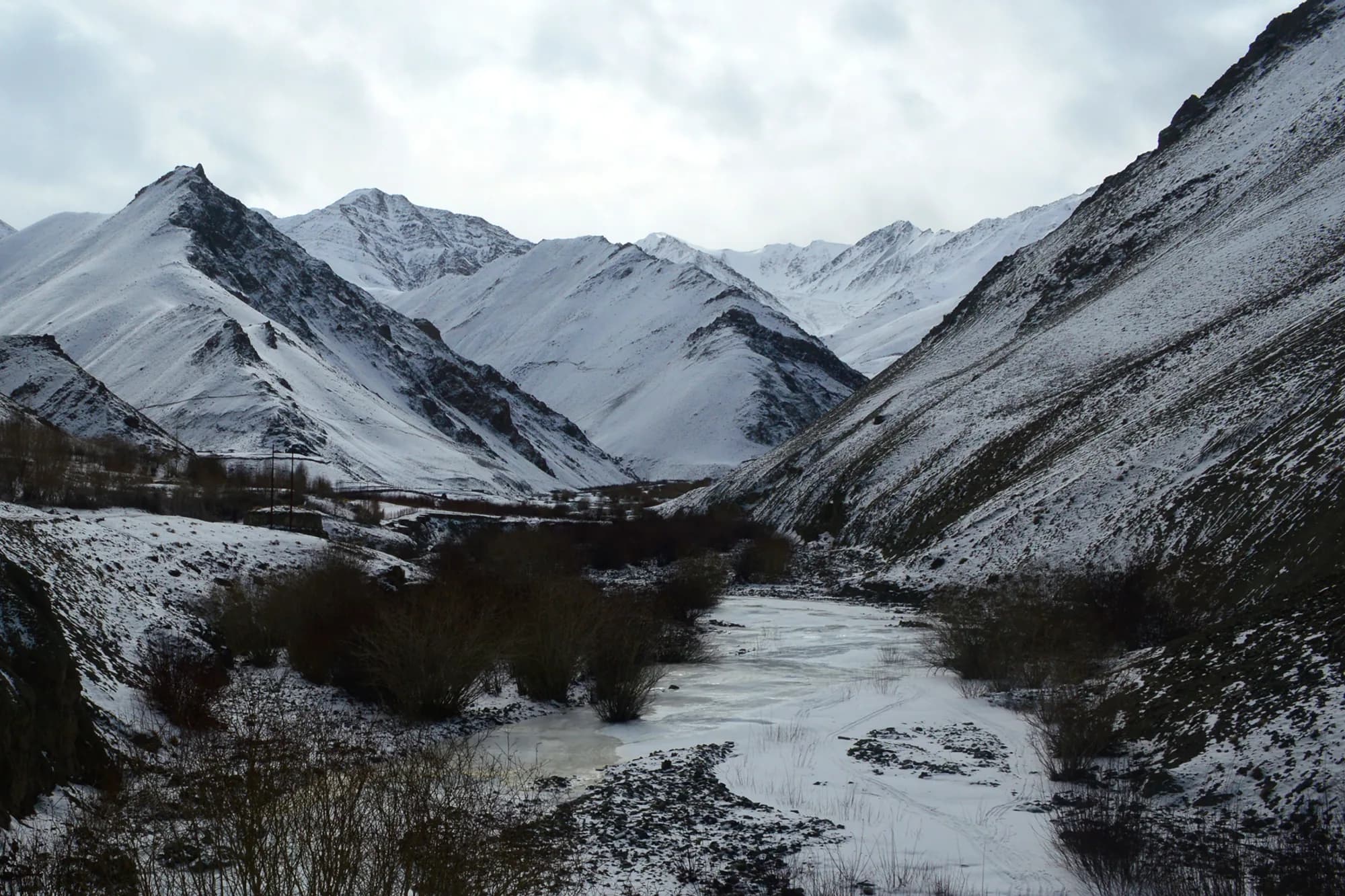
Cold Ladakh desert at 3,000–6,000 m elevation in the rain shadow of the Great Himalaya. Annual precipitation under 100 mm. Vegetation is sparse: alpine steppe, dwarf willow and cushion plants. River valleys (Rumbak, Husing, Markha) support willow scrub and offer relatively sheltered habitat for prey species. Rock, scree and cliff faces are snow leopard hunting terrain.
Best time by species
January–March: snow leopard season. The bharal rut in February triggers maximum snow leopard activity. Summer (May–September): bharal and kiang on high meadows; general trekking and Markha valley circuit. October: bharal rut begins; good weather; Markha valley circuit in clear conditions.
What not to expect
Tiger: not present (wrong altitude and habitat). Sloth bear: not present. Gaur or elephant: not present. Indian leopard: not at this altitude. Hemis is strictly a cold-desert species park — snow leopard, bharal, kiang and the associated bird community.
Photography and viewing ethics
Snow leopard tracking: minimum 50 m distance from sighted cat. No approaching; use spotting scopes. Operators enforce this strictly — getting too close risks ending the sighting. Do not use drones. Flash photography prohibited. Bharal: do not approach or disturb feeding herds.
Conservation notes
Hemis is the global centre of snow leopard research. WWF and Snow Leopard Trust have conducted studies here since 1990s. Rumbak home-stay community tourism has been demonstrated to directly reduce retaliatory killing of snow leopards by herders. This model — community revenue from tourism incentivising protection — is replicated across the Himalaya.
Data source
Species data from WII and Forest Dept records
Species distribution and population estimates from Wildlife Institute of India (WII) surveys and state forest department census records. Sighting odds based on guide field reports and operator data. Checked 8 Sep 2026.